Catégorie: Vie et folklore

  • Le calendrier lunaire

    Vie et folklore

    Le calendrier lunaire

    Mesure du temps par la lune et le soleil

    Le calendrier traditionnel chinois associe les mois lunaires aux saisons solaires, et les fêtes aux deux.

    Section
    Vie et folklore
    Région
    Pékin
    Ère
    À travers les époques
    Étiquettes
    Douane

    Le calendrier chinois est luni-solaire : ses mois suivent les phases de la lune, tandis que ses années suivent celles du soleil. Pendant plus de deux millénaires, les astronomes de la cour et les paysans ont utilisé ce même système à des fins différentes : dater les règnes et déterminer les périodes de semailles.

    Comment fonctionne le calendrier

    Chaque mois lunaire commence le jour de la nouvelle lune astronomique et dure 29 ou 30 jours. Douze mois lunaires totalisent donc environ 354 jours, soit environ onze jours de moins qu'une année solaire. Pour que le printemps reste au printemps, des mois intercalaires sont insérés : sept mois supplémentaires tous les dix-neuf ans, selon un cycle appelé cycle métonique. Un mois répété est numéroté après celui qui le précède, d'où l'existence d'un quatrième mois intercalaire. Les jours sont à nouveau comptés séparément selon le cycle sexagésimal, une association de dix tiges célestes et de douze branches terrestres qui attribue à chaque jour et à chaque année une combinaison telle que jiachen.
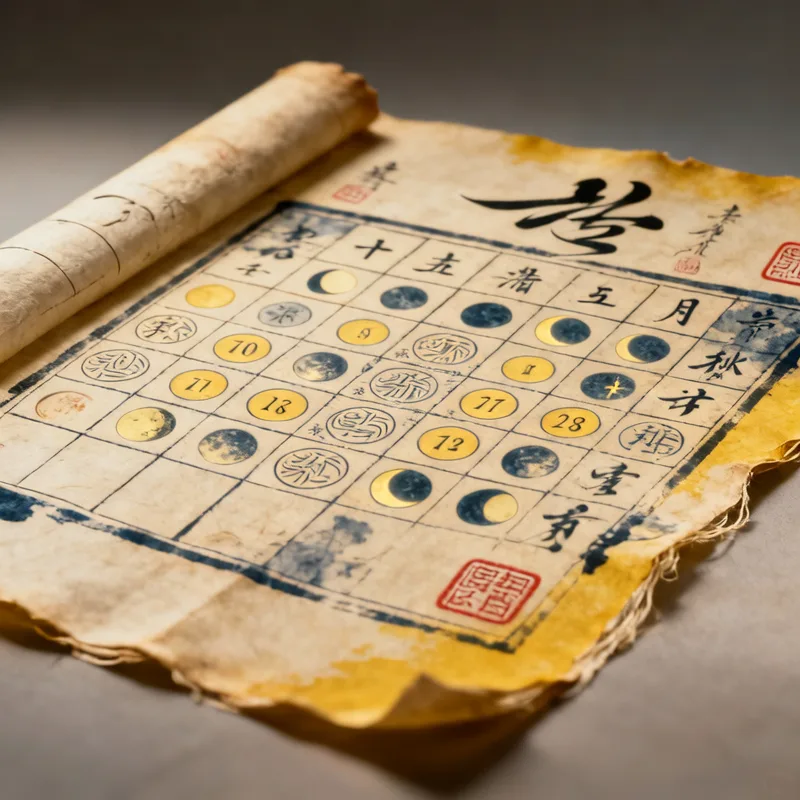
    Page d'un almanach chinois traditionnel indiquant les mois lunaires, les termes solaires et les jours propices
    Un mois lunaire s'étend d'une nouvelle lune à la suivante ; un terme solaire marque la position du soleil. Illustration générée par IA · SinoViz

    L'observation devient science

    Ce système est issu de l'observation. Les inscriptions sur os oraculaires de la dynastie Shang (env. 1600-1046 av. J.-C.) consignent les mois lunaires, les éclipses et les mois intercalaires, et les Annales des Printemps et des Automnes conservent d'anciens relevés d'éclipses utilisés ultérieurement pour tester les calculs. Le calendrier Taichu, adopté en 104 av. J.-C. sous l'empereur Wu de Han, fixait le début de l'année au premier mois lunaire et établissait la règle de l'intercalation de dix-neuf ans. Des réformes ultérieures l'ont perfectionné : le calendrier Shoushi de Guo Shoujing, datant de 1281 et conçu pour la capitale Yuan, Dadu (Pékin), utilisait une année tropique de 365,2425 jours – la même durée que celle adoptée plus tard par la réforme grégorienne.

    La maîtrise du calendrier était un enjeu politique. Un souverain capable de prédire les éclipses et d'annoncer la nouvelle lune s'arrogeait le mandat du ciel ; la diffusion de l'almanach aux États vassaux constituait un acte d'autorité. L'Observatoire antique de Pékin, construit en 1442, conserve encore des sphères armillaires Ming et un gnomon utilisés à cette fin. Au XVIIe siècle, les astronomes y travaillaient aux côtés de missionnaires jésuites, lorsque la cour Qing adopta les méthodes européennes de prédiction des éclipses tout en conservant la structure des mois lunaires. Le calendrier était ainsi un point de convergence entre la politique, les mathématiques et l'observation.

    Les vingt-quatre termes solaires

    Parallèlement aux mois lunaires, un calendrier solaire de vingt-quatre termes, espacés de quinze degrés le long de la course annuelle du soleil, est utilisé. La séquence commence par Lichun, le début du printemps, vers le 4 février, et comprend Qingming (la pureté de la lumière) début avril, Xiazhi (le solstice d'été), Bailu (la rosée blanche) et Dongzhi (le solstice d'hiver). Développés dans la région du fleuve Jaune et appliqués dans tout le pays, ces termes indiquent aux agriculteurs les périodes à prévoir pour le gel ou la pluie ; des proverbes les associent encore aux semailles et aux récoltes. L'UNESCO a inscrit ce savoir et cette pratique sur sa Liste représentative en 2016.
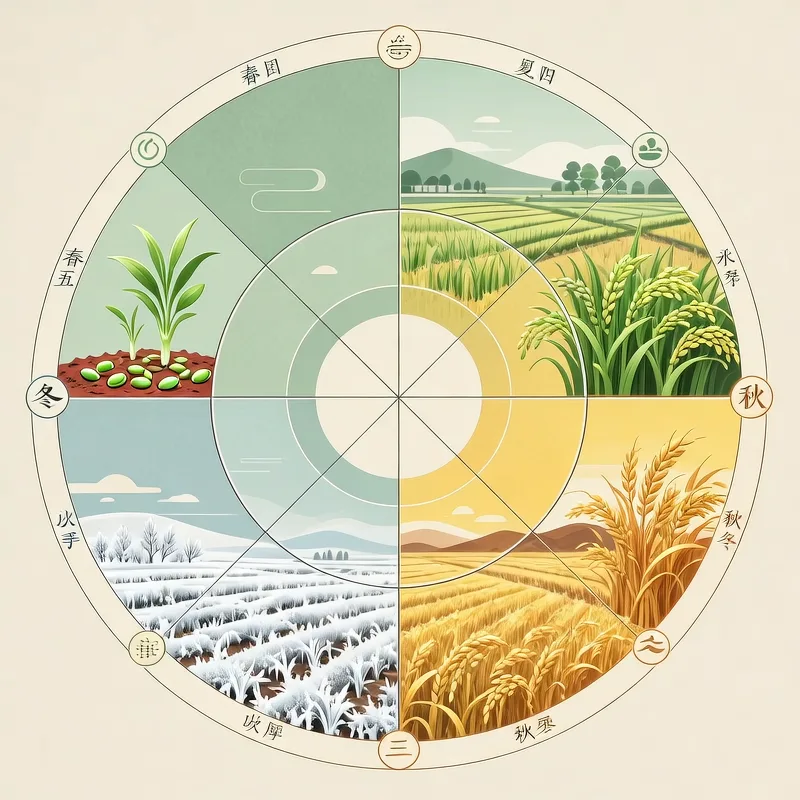
    Diagramme de la trajectoire annuelle du soleil divisée en vingt-quatre segments avec des étiquettes agricoles
    Chaque terme solaire couvre quinze degrés de la trajectoire du soleil, espacés d'environ quinze jours. Illustration générée par IA · SinoViz

    Un calendrier des festivals

    Les dates étant calculées selon le calendrier lunaire, les fêtes ont lieu à l'inverse du calendrier grégorien. La Fête du Printemps commence le premier jour du premier mois lunaire et se termine avec la Fête des Lanternes, le quinzième jour, où les rues s'illuminent de lanternes. La Fête des Bateaux-Dragons a lieu le cinquième jour du cinquième mois, la Fête des Fantômes le quinzième jour du septième mois et la Fête de la Mi-Automne le quinzième jour du huitième mois, où les familles se réunissent sous la pleine lune.

    • Fête du Printemps — premier jour du premier mois lunaire
    • Fête des Lanternes — quinzième jour du premier mois
    • Fête des bateaux-dragons — cinquième jour du cinquième mois
    • Fête de la mi-automne — quinzième jour du huitième mois
    • Qingming — un terme solaire autour du 4 au 6 avril

    Pourquoi cela reste important

    Le calendrier lunaire perdure car il intègre le temps social autant que le temps astronomique. On honore les ancêtres à Qingming et à l'anniversaire d'un décès, calculé selon le calendrier lunaire ; les mariages et les funérailles sont souvent planifiés à l'aide de l'almanach. L'animal du zodiaque de l'année, les huit caractères d'une naissance et les jours propices à un déménagement reposent tous sur cette même structure. À Pékin, les fêtes des temples et les expositions de lanternes suivent encore le premier mois lunaire, tandis que les communautés rurales consultent les termes solaires pour les travaux des champs. Deux systèmes, un seul calendrier.
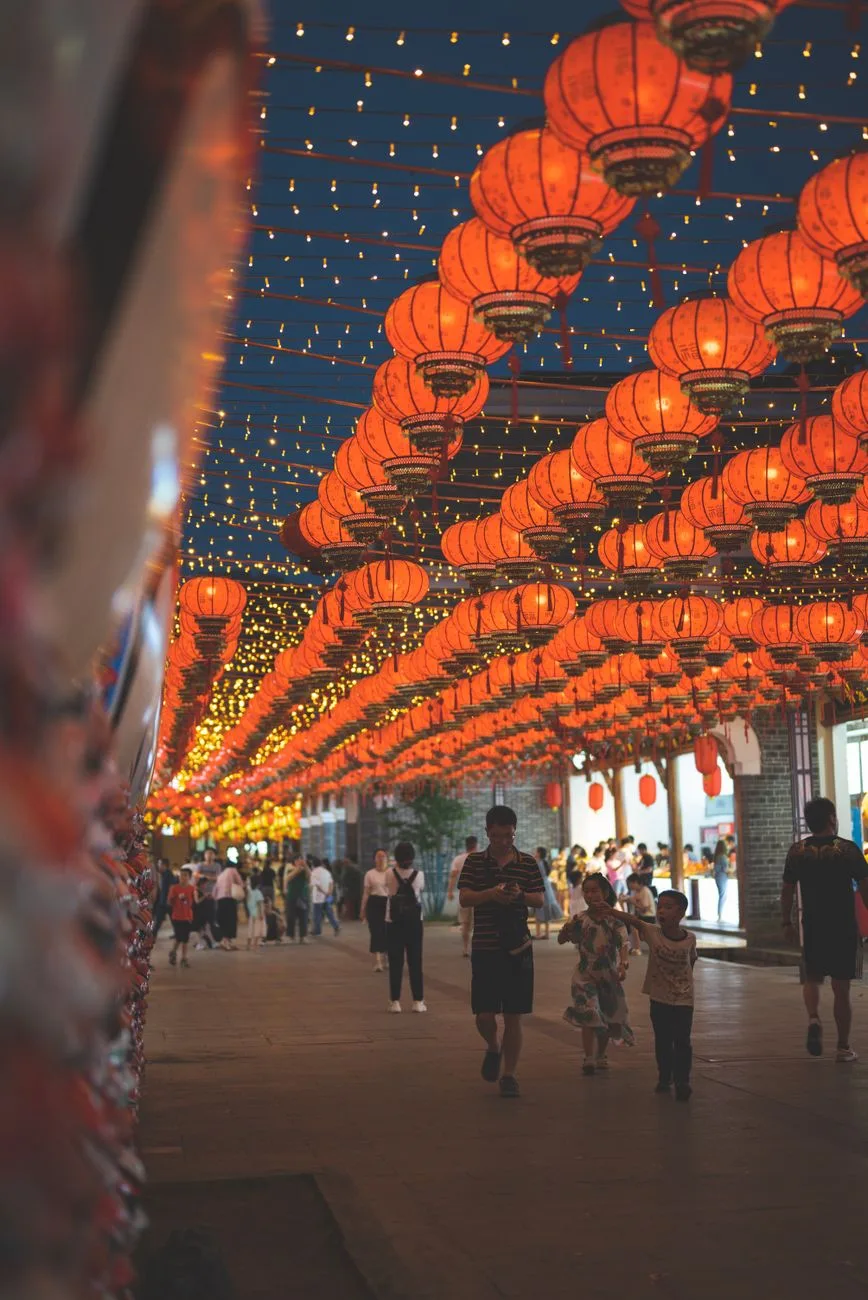
    Lanternes suspendues dans une rue de Pékin durant le premier mois lunaire
    Les fêtes foraines et les expositions de lanternes marquent encore les premières semaines de l'année lunaire. Cz Jen | Licence Pexels (https://www.pexels.com/license/)
    Les mois suivent la lune, mais l'année doit répondre au soleil.

    Sources et lectures complémentaires

    1. Les vingt-quatre termes solaires, connaissances et pratiques temporelles en Chine, développées grâce à l'observation du mouvement annuel du soleil. — Patrimoine culturel immatériel de l'UNESCO.
    2. calendrier chinois — Encyclopædia Britannica.
    3. Nouvel An chinois — Encyclopædia Britannica.

    Voyez-le sur place

    Suivez ce lien jusqu'à la région correspondante.

    Explorer par carte

    Suivez le fil de discussion

    Consultez les autres articles qui partagent les mêmes étiquettes.

    Parcourir l'étiquette
  • Le zodiaque chinois

    Vie et folklore

    Le zodiaque chinois

    Douze animaux, cycle de soixante ans

    Les douze animaux associent les années, les heures et la personnalité à un cycle répétitif.

    Section
    Vie et folklore
    Région
    Pékin
    Ère
    À travers les époques
    Étiquettes
    Douane

    Le zodiaque chinois associe un animal à chaque année d'un cycle de douze ans. Il ne s'agit pas d'un horoscope indépendant, mais d'une composante du calendrier luni-solaire, où douze branches terrestres se combinent à dix tiges célestes pour former un cycle complet de soixante ans.

    Les douze animaux

    La séquence est la suivante : rat, bœuf, tigre, lapin, dragon, serpent, cheval, chèvre, singe, coq, chien et cochon, chacun associé à l'une des douze branches terrestres : zi, chou, yin, mao, chen, si, wu, wei, shen, you, xu et hai. La chèvre est également traduite par mouton ou bélier. Un conte populaire bien connu explique cet ordre comme le résultat d'une course à travers une rivière : le rat, chevauchant le bœuf, saute en avant sur la rive, tandis que le chat, dans certaines versions, rate complètement la traversée. Ce conte est postérieur au système qu'il décrit.

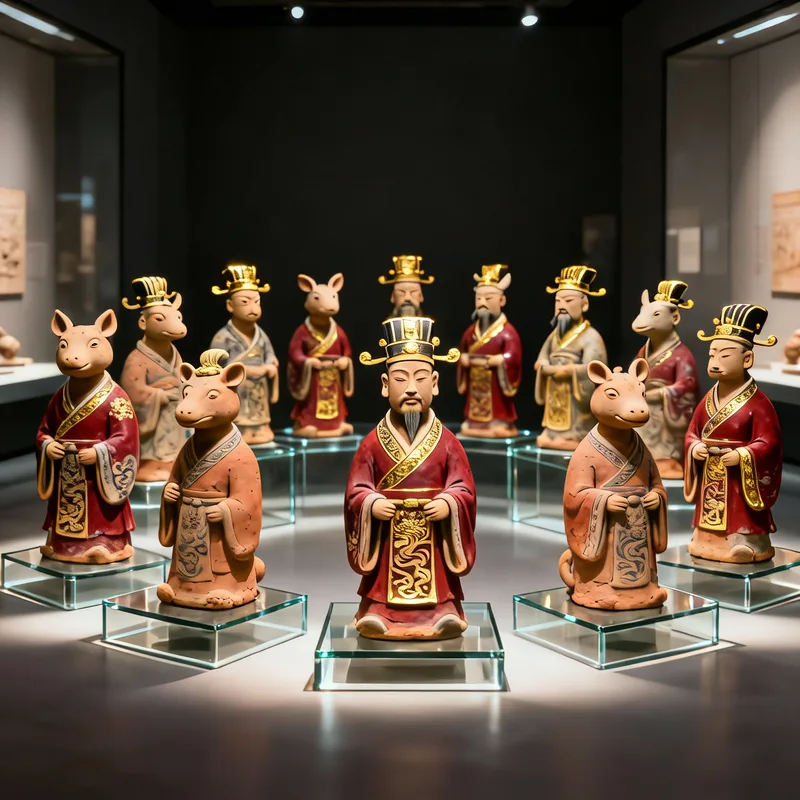
    Ensemble de douze figurines zodiacales en faïence de la dynastie Tang, vêtues en dignitaires.
    L'ordre des animaux a été fixé par les Han orientaux et apparaît dans la céramique funéraire Tang. Illustration générée par IA · SinoViz

    Des branches aux symboles animaliers

    Les branches elles-mêmes sont anciennes ; les animaux qui y sont attachés apparaissent plus progressivement. Le Metropolitan Museum of Art note que les douze furent d’abord associés au calendrier lunaire en Chine vers le IIIe siècle avant notre ère et s’établirent fermement au Ier siècle de notre ère. Sous la dynastie des Han orientaux (25-220 de notre ère), l’ordre conventionnel fut fixé, et des textes tels que le Lunheng de Wang Chong mentionnent les mêmes animaux qu’aujourd’hui. Ce système d’association se répandit en Asie de l’Est et du Sud-Est, où les traditions locales modifièrent la composition.

    L'art funéraire confirme la datation. Les sépultures de la dynastie Tang (618-907) contiennent des ensembles de douze animaux en terre cuite vêtus de robes officielles, déposés en offrande pour le renouveau et la protection. Les exemples de la dynastie Song sont des figurines plus petites en grès émaillé, représentant des fonctionnaires ou des pratiquants taoïstes, avec l'animal distinctif tenu dans la main ou ornant le chapeau. Le zodiaque n'a jamais été qu'une simple tradition du Nouvel An ; il structurait le temps dans la tombe comme dans la vie quotidienne.

    Tiges, branches et destin

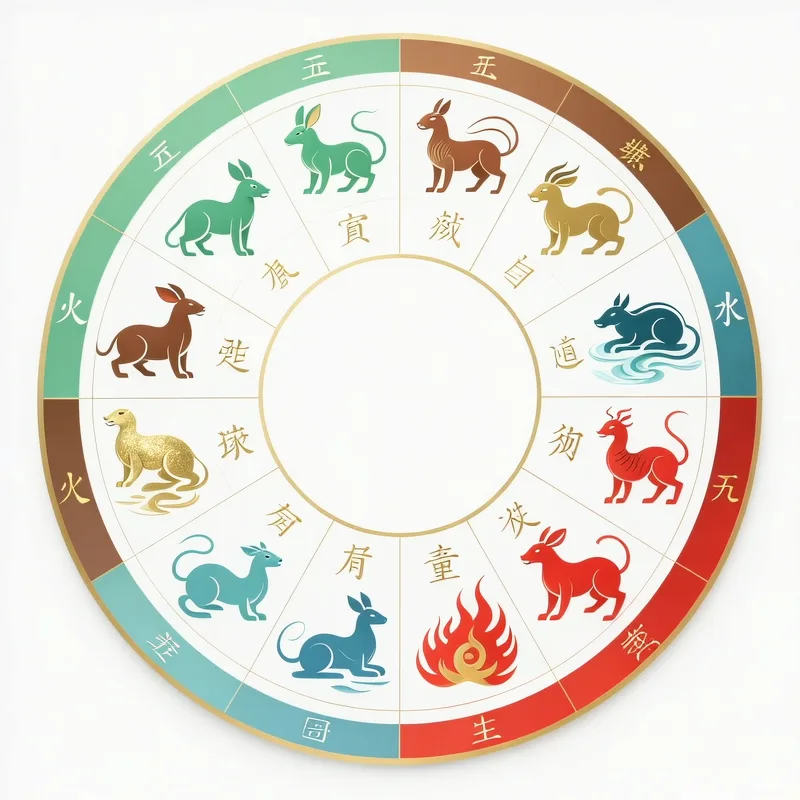
    Puisque les dix tiges et les douze branches progressent de concert, une année est décrite par une paire telle que bingwu, le Cheval de Feu de 2026 ; cette même paire ne se répète que tous les soixante ans. Les branches divisent également la journée en douze périodes de deux heures, l’heure zi s’étendant de 23 h à 1 h du matin. Les quatre piliers du destin — année, mois, jour et heure — sont constitués de quatre de ces paires. Les praticiens du bazi les interprètent pour déterminer le tempérament et la fortune, et les familles les consultaient autrefois pour organiser les mariages.

    Diagramme circulaire des douze animaux du zodiaque chinois et des cinq éléments
    Combinaison animal-élément : 2026 est bingwu, le Cheval de Feu. Illustration générée par IA · SinoViz

    Dans la vie quotidienne

    Les signes astrologiques servent davantage de langage commun que de croyance stricte. L'année du retour de l'animal associé à une personne (benming nian) est abordée avec prudence ; porter des vêtements et des cordons rouges est une précaution courante, surtout pour les enfants et les personnes âgées. Les estampes, les découpages en papier et les fêtes religieuses du Nouvel An mettent en scène l'animal de l'année, et les vœux le mentionnent généralement. Les affirmations concernant la compatibilité s'appuient sur le cycle des branches, les signes séparés de six positions étant considérés comme incompatibles.

    • 2026 est Bingwu, l'année du Cheval de Feu.
    • Chaque branche gère une période de deux heures ; zi couvre la plage horaire de 23h à 1h du matin.
    • Les quatre piliers du destin combinent l'année, le mois, le jour et l'heure.
    • Au Vietnam, on remplace le lapin par un chat.

    Variations régionales

    Le cycle a voyagé avec la colonisation et le commerce chinois. Au Vietnam, le lapin devient un chat et le bœuf un buffle d'eau ; ailleurs, la chèvre peut être appelée mouton. Les animaux du zodiaque figurent sur des pièces de monnaie, des miroirs, des laques et des céramiques dans toute la région, et les calendriers coréen et japonais ont adopté les mêmes branches avec leurs propres listes d'animaux. Ces variations sont importantes : elles témoignent d'un système calendaire en pleine traduction, et non d'une simple copie. La séquence chinoise demeure la référence pour le Nouvel An lunaire célébré à Pékin et dans les communautés de la diaspora à travers le monde.

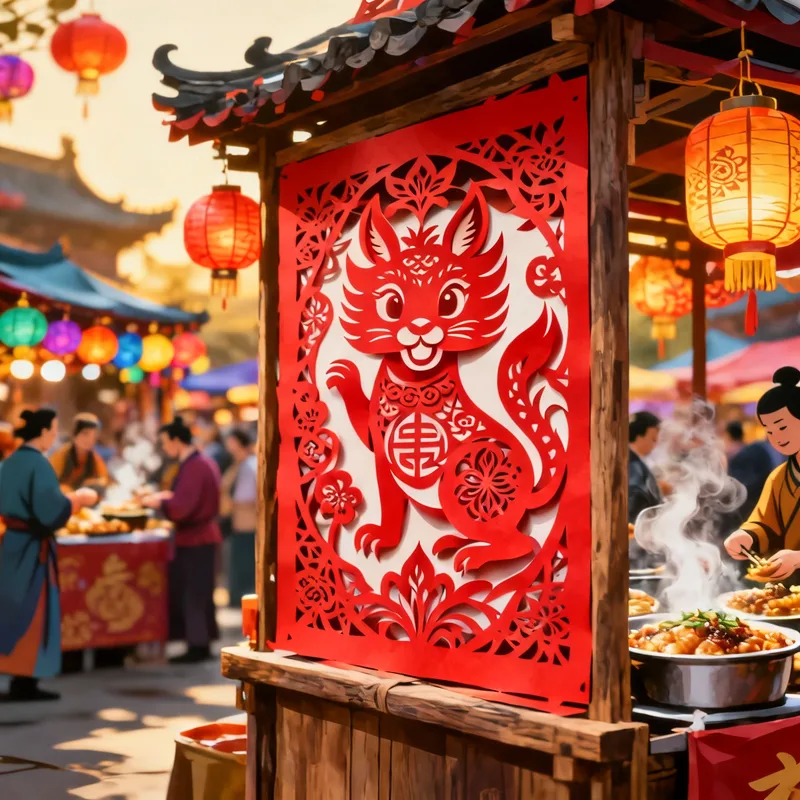
    Découpage de papier rouge représentant l'animal du zodiaque de l'année sur un étal de foire du temple
    Chaque Nouvel An lunaire apporte un nouvel animal aux imprimés, aux découpages de papier et aux cartes de vœux. Illustration générée par IA · SinoViz
    Le rat gagne la course parce qu'il sait quand sauter — une histoire inventée bien après que le cycle ait déjà été utilisé.

    Sources et lectures complémentaires

    1. zodiaque chinois — Encyclopædia Britannica.
    2. Ensemble de douze animaux du zodiaque, dynastie Tang — Le Metropolitan Museum of Art.
    3. Célébrons l'Année du Chien — Le Metropolitan Museum of Art.

    Voyez-le sur place

    Suivez ce lien jusqu'à la région correspondante.

    Explorer par carte

    Suivez le fil de discussion

    Consultez les autres articles qui partagent les mêmes étiquettes.

    Parcourir l'étiquette
  • Vénération des ancêtres

    Vie et folklore

    Vénération des ancêtres

    Lignée, rituel et mémoire

    Les rites ancestraux relient le foyer, la salle de lignage et le cimetière du village.

    Section
    Vie et folklore
    Région
    Fujian
    Ère
    À travers les époques
    Étiquettes
    Douane

    Le culte des ancêtres est la pratique consistant à honorer les parents défunts par des offrandes, de l'encens et des rites prescrits. Dans le Fujian, il a servi de cadre à l'organisation des lignages, à la propriété foncière et aux migrations, liant les villages à des ancêtres ayant souvent vécu des siècles auparavant.

    Un devoir envers les morts

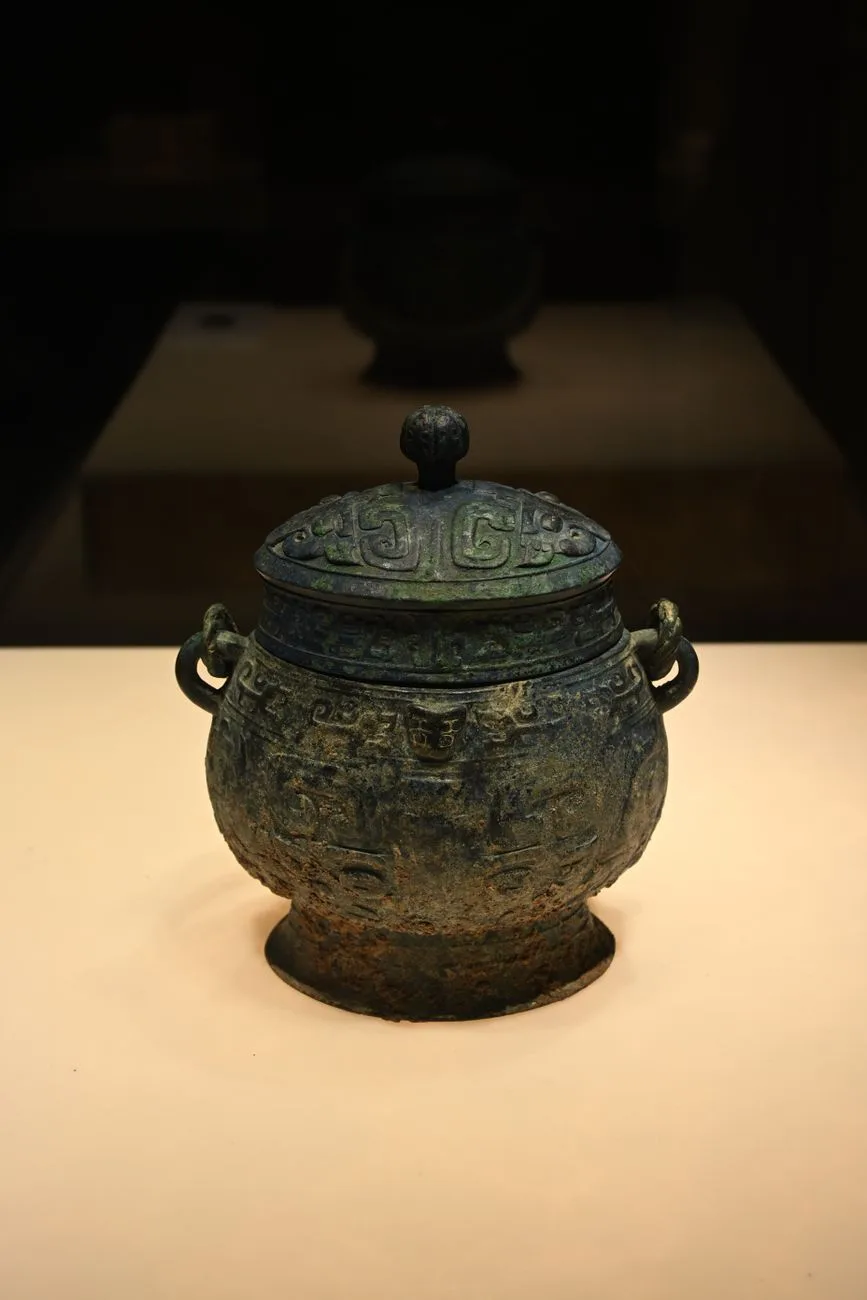
    L'enseignement confucéen a conféré à cette pratique son langage moral. Les Analectes exhortent les vivants à respecter scrupuleusement les rites funéraires et à suivre le chemin des ancêtres, même lointains, et décrivent les sacrifices comme si les esprits étaient présents. Le Livre des Rites et les textes rituels associés définissent les degrés de deuil, les offrandes et l'ordre approprié des défunts. Les archéologues font remonter les cultes des ancêtres au Néolithique final, et des vases de bronze Shang étaient coulés avec des inscriptions nommant l'ancêtre pour lequel du vin ou des céréales étaient offerts. La vénération était autant une obligation qu'une marque d'affection.

    Vase rituel en bronze de la dynastie Shang portant une inscription le dédiant à un ancêtre.
    Des vases en bronze indiquaient le destinataire des offrandes, officialisant ainsi la relation par écrit. K ZHAO | Licence Pexels (https://www.pexels.com/license/)

    L'autel domestique

    Dans une maison traditionnelle, un petit autel abrite des tablettes ancestrales – des plaques de bois gravées de noms et de titres – disposées par génération. On y brûle de l'encens le premier et le quinzième jour du mois lunaire, ainsi qu'à l'anniversaire d'un décès. Les offrandes peuvent comprendre du thé, du vin, des fruits, du riz et trois sortes de viande, présentés selon un ordre précis ; les membres de la famille s'inclinent ou se prosternent par ordre d'âge. La tablette n'est pas une représentation de la personne, mais un lieu où l'on peut évoquer les liens de parenté.

    Le temps des rituels suit le calendrier. Qingming, le terme solaire de Pure Clarté début avril, est le grand jour du nettoyage des tombes : on les désherbe, on y dépose des offrandes et on brûle de la fausse monnaie. Le solstice d’hiver est l’occasion de nouvelles offrandes dans de nombreux foyers du Fujian, souvent accompagnées de tangyuan, des boulettes de riz sucrées. Durant le septième mois lunaire, la Fête des Fantômes étend l’attention portée aux esprits errants, au-delà de la famille, avec des festins communautaires et des effigies en papier.

    Salles de lignée du Fujian

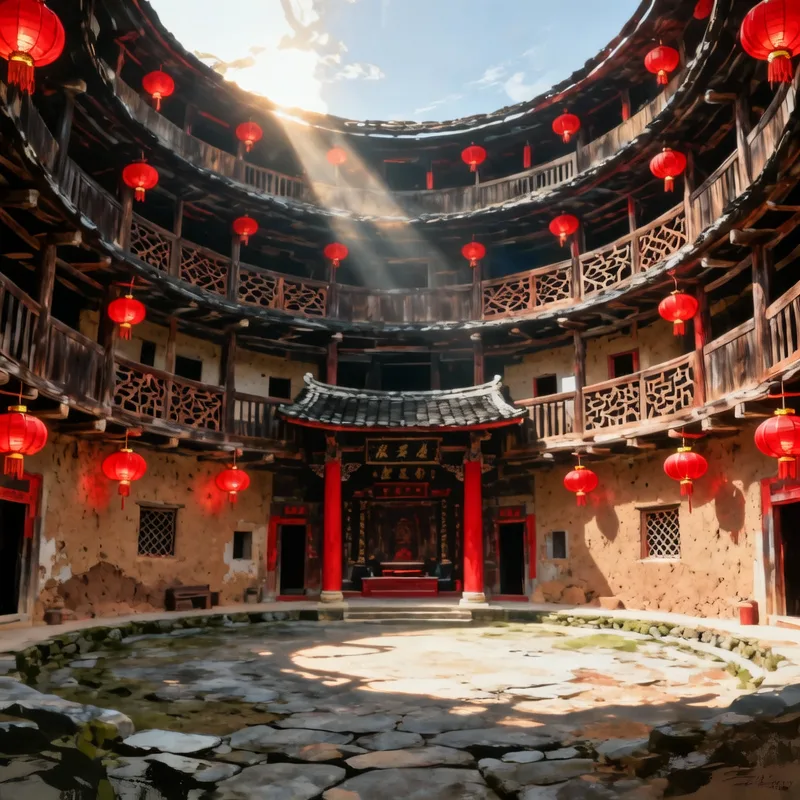
    Nulle part ailleurs la hiérarchie sociale n'est plus manifeste qu'au Fujian. Dès le XVIe siècle, les salles ancestrales – les citang – se sont répandues au-delà de l'élite, jusque dans les villages du sud-est de la Chine, et dans les régions d'origine des émigrants, elles ont fini par dominer le paysage bâti. Une salle abrite les tablettes collectives d'un groupe patronymique, conserve la généalogie et gère les terres communes dont les revenus servent à financer les réparations, les sacrifices et les écoles. À l'intérieur de certains tulou hakka, ces grandes maisons communautaires en terre du sud-ouest du Fujian, une salle ancestrale occupe une place centrale dans l'enceinte fortifiée.

    Cour intérieure et salle ancestrale d'une maison communautaire tulou en terre du Fujian
    Une salle de lignage à l'intérieur d'un tulou servait un clan entier, et non une seule famille. Illustration générée par IA · SinoViz

    Migration et retour

    La côte du Fujian a vu s'échouer des migrants vers l'Asie du Sud-Est dès la fin de la dynastie Qing, emportant avec eux les rites ancestraux. Les émigrants rejoignaient des associations de familles et construisaient des salles commémoratives à Singapour, en Malaisie et en Indonésie ; les transferts de fonds permettaient de financer de nouvelles salles et la restauration des tombes dans leurs villages d'origine. Les chercheurs qualifient ces liens de réseaux de lignage transnationaux : un même vocabulaire rituel reliait l'autel du village, l'association clanique à l'étranger et le cimetière. Après les années 1980, de nombreux descendants sont revenus pour reconstruire les salles, faisant de la généalogie un pont entre les générations et par-delà les frontières.

    • Qingming : les tombes ont été nettoyées et des offrandes déposées début avril
    • Septième mois lunaire : Rites du Festival des Fantômes pour les esprits anonymes
    • Citang : une salle généalogique abritant des tablettes, des archives généalogiques et des documents d'entreprise
    • Tulou du Fujian : patrimoine mondial de l'UNESCO depuis 2008

    Changements et continuités

    Le XXe siècle a bouleversé le système institutionnel. La réforme agraire et la collectivisation ont privé les domaines lignagers de leurs revenus, et durant la Révolution culturelle, de nombreuses salles furent fermées ou endommagées. Depuis les années 1980, des initiatives locales ont restauré des bâtiments et fait revivre des rites, tantôt dans le cadre du tourisme patrimonial, tantôt par devoir familial. La pratique perdure sous une forme adaptée : de l’encens sur une étagère, une tombe nettoyée avant Qingming, un nom inscrit dans une généalogie reconstituée. Ce qui subsiste, c’est la conviction que les morts demeurent partie intégrante de l’ordre social.

    Des membres d'une famille brûlent des offrandes de papier sur une tombe pendant la fête de Qingming dans le sud de la Chine
    Le nettoyage des tombes et les offrandes restent la partie la plus visible des rites de Qingming. Man Fong Wong | Licence Pexels (https://www.pexels.com/license/)
    Une tablette n'est pas un portrait du défunt. C'est une adresse où les vivants peuvent encore lui parler.

    Sources et lectures complémentaires

    1. Chine : Croyances religieuses et organisation sociale — Encyclopædia Britannica.
    2. Tulou du Fujian — Centre du patrimoine mondial de l'UNESCO.
    3. Diasporas chinoises : tendances du début de l'époque moderne, 1500-1740 — Cambridge University Press.

    Voyez-le sur place

    Suivez ce lien jusqu'à la région correspondante.

    Explorer par carte

    Suivez le fil de discussion

    Consultez les autres articles qui partagent les mêmes étiquettes.

    Parcourir l'étiquette
  • Porcelaine

    Vie et folklore

    Porcelaine

    Clay, fire, and the white of Dehua

    Fujian’s kilns turned local clay into porcelain that travelled across the sea and changed how the world pictured China.

    Section
    Vie et folklore
    Région
    Fujian
    Ère
    À travers les époques
    Étiquettes
    Customs, History, Scenic Sites

    Porcelain is defined by its body and its firing: a pale, fine clay heated to temperatures that vitrify the material and make it ring when struck. Fujian’s Dehua kilns made a version so white it seemed translucent, known in Europe as blanc de Chine.

    What Makes Porcelain

    Porcelain differs from ordinary pottery in both material and firing. Potters use kaolin, a white clay, mixed with feldspar and quartz, then fire the shaped vessel at roughly 1,200 to 1,400 degrees Celsius. At that temperature the body vitrifies: it becomes dense, non-porous, and slightly translucent at the edges. A glassy glaze is usually applied before firing, bonding to the body rather than sitting on it as a separate layer. Chinese potters had reached this threshold by the Tang and Song periods, and Jingdezhen in Jiangxi became the great production centre. The English word china stuck to the ware because the country was the source of the finest examples. A light tap on a good cup gives a clear ring, a quick test that still works in a shop.

    A porcelain bowl with a pale glaze photographed against light
    True porcelain is fired hot enough to vitrify the body, giving it a hard, resonant wall. lee c | Pexels License (https://www.pexels.com/license/)

    Dehua White

    Dehua, a county in Fujian’s Quanzhou prefecture, developed a white porcelain with a warm, creamy tone. Its clay is low in iron, which lets the glaze fire almost colourless, and its potters mastered figures as well as vessels. From the Ming dynasty onward, Dehua workshops produced small statues of Guanyin, the bodhisattva of compassion, with soft modelling and a smooth, almost waxy surface. European traders called the ware blanc de Chine, and by the seventeenth century it was collected in royal cabinets and copied by potters in Meissen and elsewhere. Tea wares also left the kilns: small cups, gaiwan lids and bowls, and white vessels that showed the colour of tea clearly. Local museums trace the kiln sequence from Song-period celadons through the white wares that made Dehua famous.

    A milky white porcelain figurine of Guanyin from Dehua
    Dehua’s porcelain figures of Guanyin became known in Europe as blanc de Chine. Quý Hoàng | Pexels License (https://www.pexels.com/license/)

    A Port for Porcelain

    Porcelain shaped trade as much as taste. Fujian’s coast faced the South China Sea, and Quanzhou became one of the busiest ports of the Song and Yuan dynasties, a place where merchants, monks, and ship crews exchanged goods and techniques. Archaeologists have recovered Chinese ceramics from ports and shipwrecks across Southeast Asia, the Indian Ocean, and East Africa; the fragments are dated by glaze and shape, making them a record of demand as well as production. UNESCO listed Quanzhou in 2021 as an emporium of the world in Song-Yuan China, with surviving mosques and temples. The export ware was not always the finest court piece. Sturdy bowls and jars packed in straw travelled in bulk, reaching households that never saw the kiln but knew the clay by its colour.

    Blue-and-white porcelain packed as cargo in a ship’s hold
    Quanzhou was a major Song and Yuan port from which Fujian ceramics were shipped abroad. Illustration générée par IA · SinoViz

    Using and Collecting

    Porcelain entered daily ritual as well as trade. A gaiwan, a bowl with a lid and saucer, is used for brewing tea in northern China; the lid controls the leaves and the saucer protects the fingers. White Dehua cups make the colour of a tea liquor easy to judge. Collectors look for a clean foot ring, an even glaze, and a mark painted on the base, though many imitations copy famous reign marks. Visit a kiln museum in Dehua or a ceramic gallery in Quanzhou to see the sequence from raw clay to finished piece. Handling a cup with a saucer and a steady hand is still the simplest way to understand why this material travelled so far.

    A clear ring and a translucent edge tell you what the fire has done.

    Sources et lectures complémentaires

    1. Chinese Porcelain — Le Metropolitan Museum of Art.
    2. Quanzhou: Emporium of the World in Song-Yuan China — Centre du patrimoine mondial de l'UNESCO.
    3. Blanc de Chine — Encyclopædia Britannica.

    Voyez-le sur place

    Suivez ce lien jusqu'à la région correspondante.

    Explorer par carte

    Suivez le fil de discussion

    Consultez les autres articles qui partagent les mêmes étiquettes.

    Parcourir l'étiquette
  • Calligraphie

    Vie et folklore

    Calligraphie

    The brush as a record of the hand

    Chinese calligraphy turns writing into an art of pressure, rhythm, and restraint.

    Section
    Vie et folklore
    Région
    Shaanxi
    Ère
    À travers les époques
    Étiquettes
    Coutumes, Histoire

    A line of Chinese calligraphy is made once: the brush touches paper, and the mark cannot be corrected. That irreversibility is part of its appeal. In Xi’an, the city’s stone steles preserve the work of centuries of calligraphers in a form anyone can still read.

    The Four Treasures

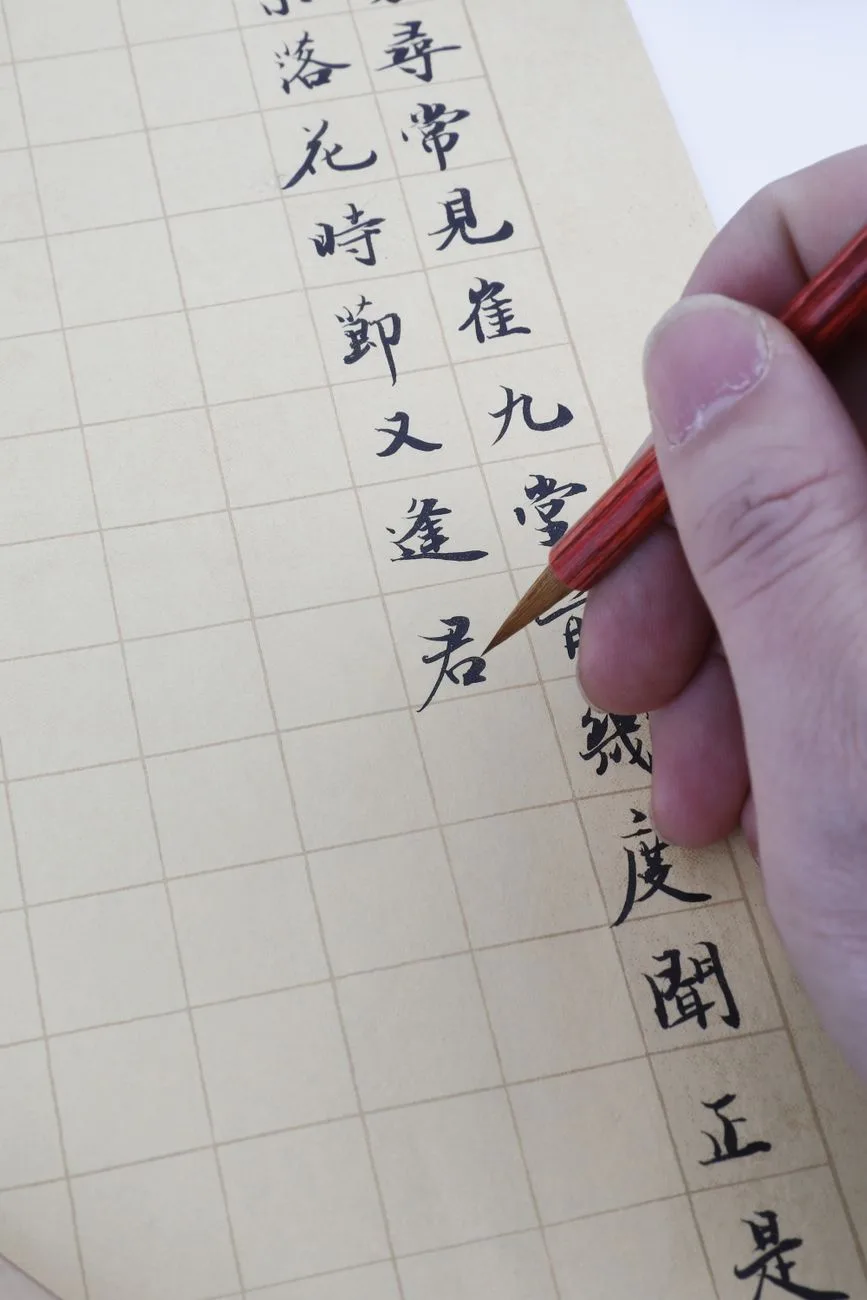
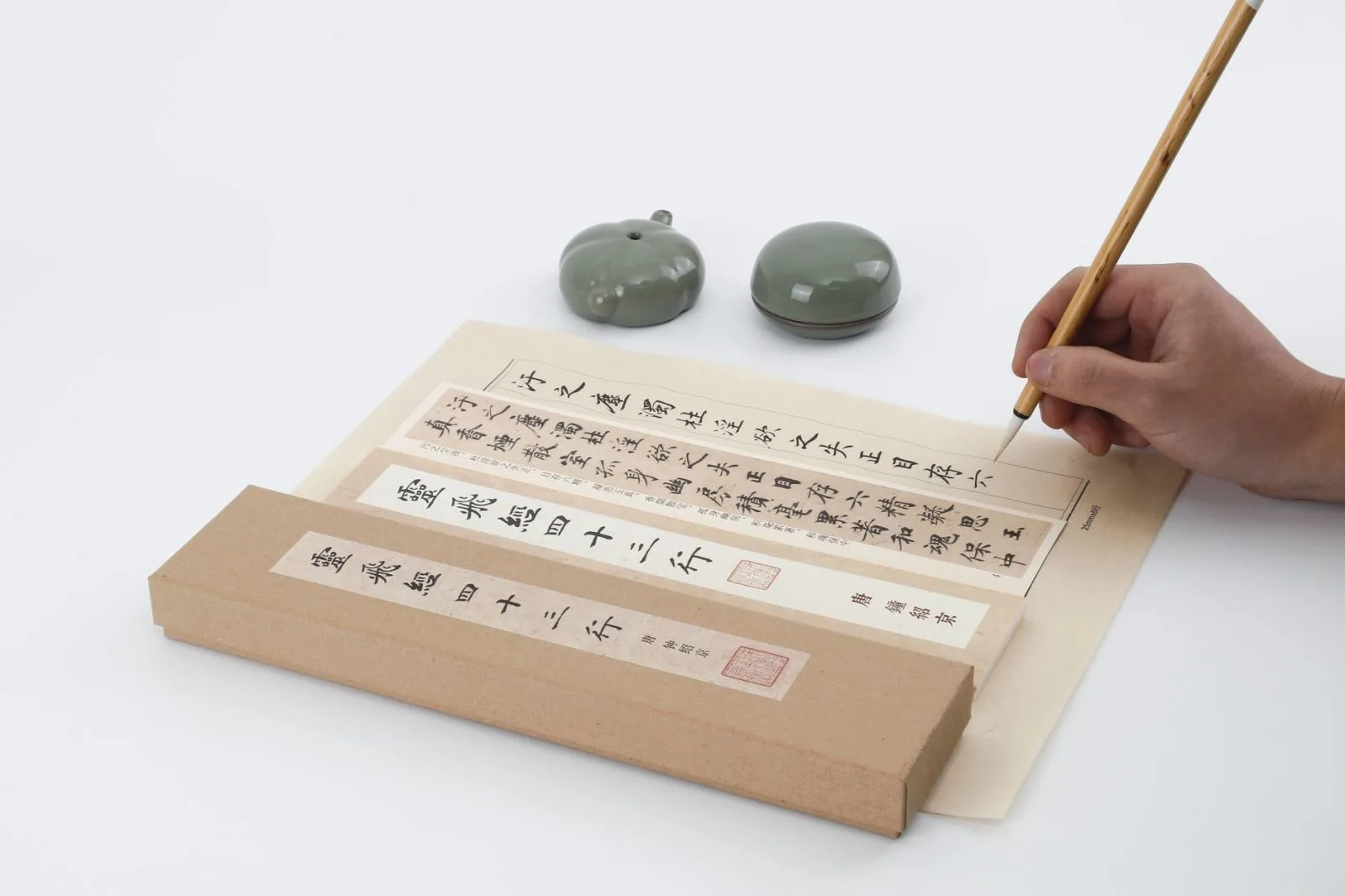
    The tools are known as the Four Treasures of the Study: brush, ink, paper, and inkstone. A brush of animal hair is held upright between thumb and fingers, and pressure makes the stroke swell and thin. Ink comes as a solid stick ground with water on a stone; the density of the mixture changes the character of the line. Paper is absorbent, so hesitation shows as a blot. Practice begins with the basic strokes, then with copying a model character hundreds of times until the hand remembers its proportions. Students still learn by tracing the regular script of Tang dynasty masters such as Yan Zhenqing and Ouyang Xun. The aim is not decorative flourish but control: a steady wrist, an even rhythm, and a line that holds its centre.

    Calligrapher’s brush, ink stick, paper, and inkstone laid on a desk
    Brush, ink, paper, and inkstone are the traditional Four Treasures of the Study. Feng Zou | Pexels License (https://www.pexels.com/license/)

    Scripts and Masters

    Chinese writing moved through several scripts, and calligraphers kept them all alive as styles. Seal script, with even, rounded lines, comes from the inscriptions on bronze and stone of the Zhou and Qin periods. Clerical script, formalised in the Han dynasty, flattened characters with a distinctive flared stroke. Regular script, settled by the Tang, is the model still taught in schools; each part of a character sits in a clear frame. Running script links strokes without losing legibility, while cursive script reduces them to rapid, connected gestures. Wang Xizhi’s Lantingji Xu, written in 353, is the famous example of running script; the original is lost, but copies carry its reputation. Later Song and Yuan artists, including Su Shi and Zhao Mengfu, made personal expression as important as correct form.

    Close view of flowing cursive calligraphy on a hanging scroll
    Cursive script compresses characters into gestures that reward slow reading. Feng Zou | Pexels License (https://www.pexels.com/license/)

    Stone Records in Xi’an

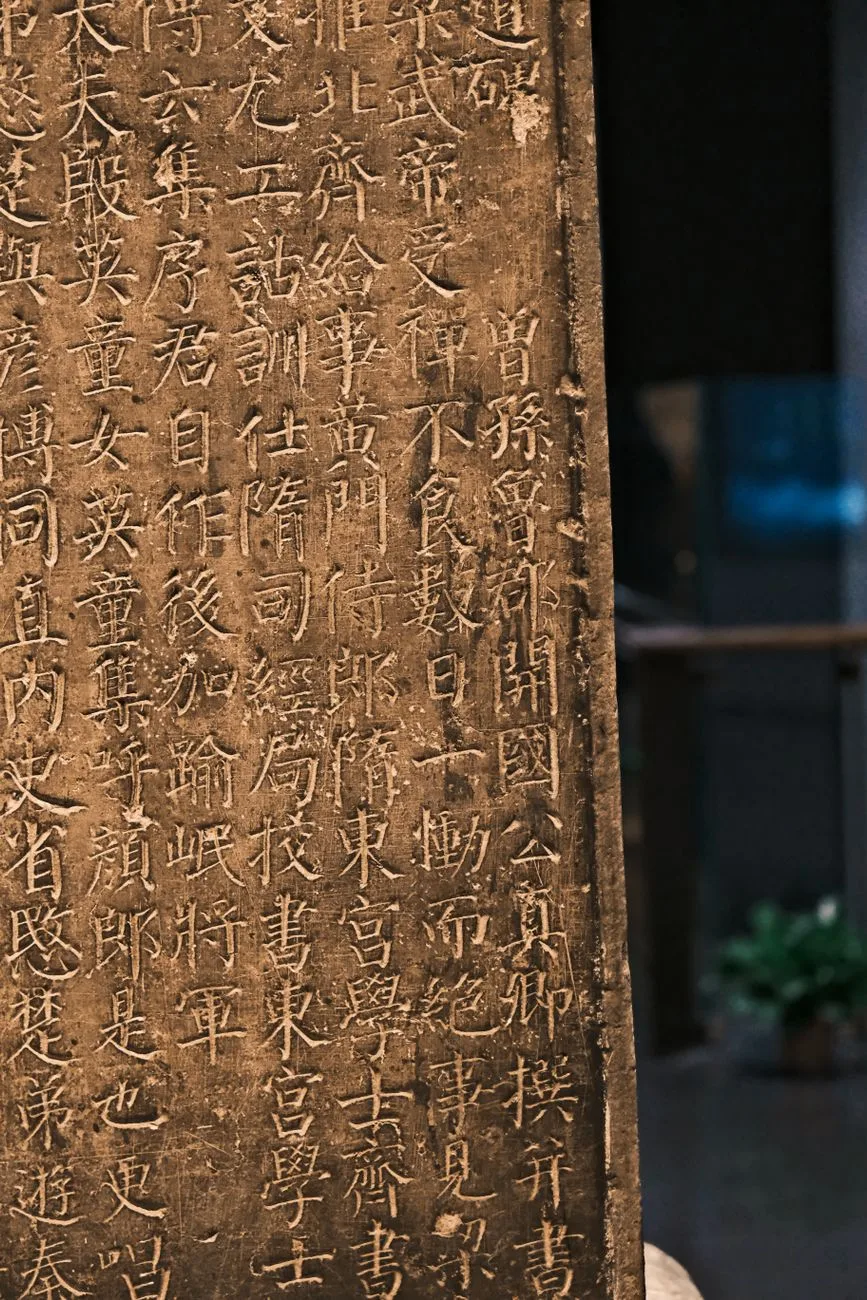
    Xi’an, the former Chang’an, preserves calligraphy on stone at the Beilin Museum, the Forest of Stone Steles. The collection began in 1087, when the Confucian classics were carved onto more than a hundred steles and installed beside the city’s Confucius Temple. Centuries of additions followed: tombstones, imperial edicts, Buddhist texts, and poems cut in several scripts. Rubbing a stele with damp paper and ink was the traditional way to study and circulate a model, and museums still demonstrate the technique. One slab records a Tang emperor’s visit to a Nestorian Christian church; another carries a Song dynasty city diagram. Walking the covered galleries, you can compare the same character written in seal, clerical, and regular forms across a thousand years.

    Rows of carved stone steles at the Beilin Museum in Xi’an
    The Beilin Museum holds thousands of steles, including Confucian classics cut into stone. Lily Lili | Pexels License (https://www.pexels.com/license/)

    Living Practice

    Calligraphy remains a daily practice rather than a museum relic. Around Spring Festival, shops sell red paper couplets, and a single character for good fortune is pasted on doors, sometimes upside down to suggest that fortune has arrived. Temple names, shop signs, and station plaques are often lettered by accomplished hands. Schoolchildren practise copying characters in grid books, and older residents gather in parks to write with large water brushes on the pavement, where the characters dry in minutes. Workshops in Xi’an let visitors try a brush and learn how a stroke begins with a pause and ends with a lift. You need not read every character to see the differences: one script sits square and calm, the next leans and races.

    A stroke begins with a pause and ends with a lift; the paper keeps the record.

    Sources et lectures complémentaires

    1. Chinese calligraphy — Encyclopædia Britannica.
    2. Chinese Calligraphy — Le Metropolitan Museum of Art.
    3. Beilin Museum, Xi’an — Faits saillants de la Chine.

    Voyez-le sur place

    Suivez ce lien jusqu'à la région correspondante.

    Explorer par carte

    Suivez le fil de discussion

    Consultez les autres articles qui partagent les mêmes étiquettes.

    Parcourir l'étiquette
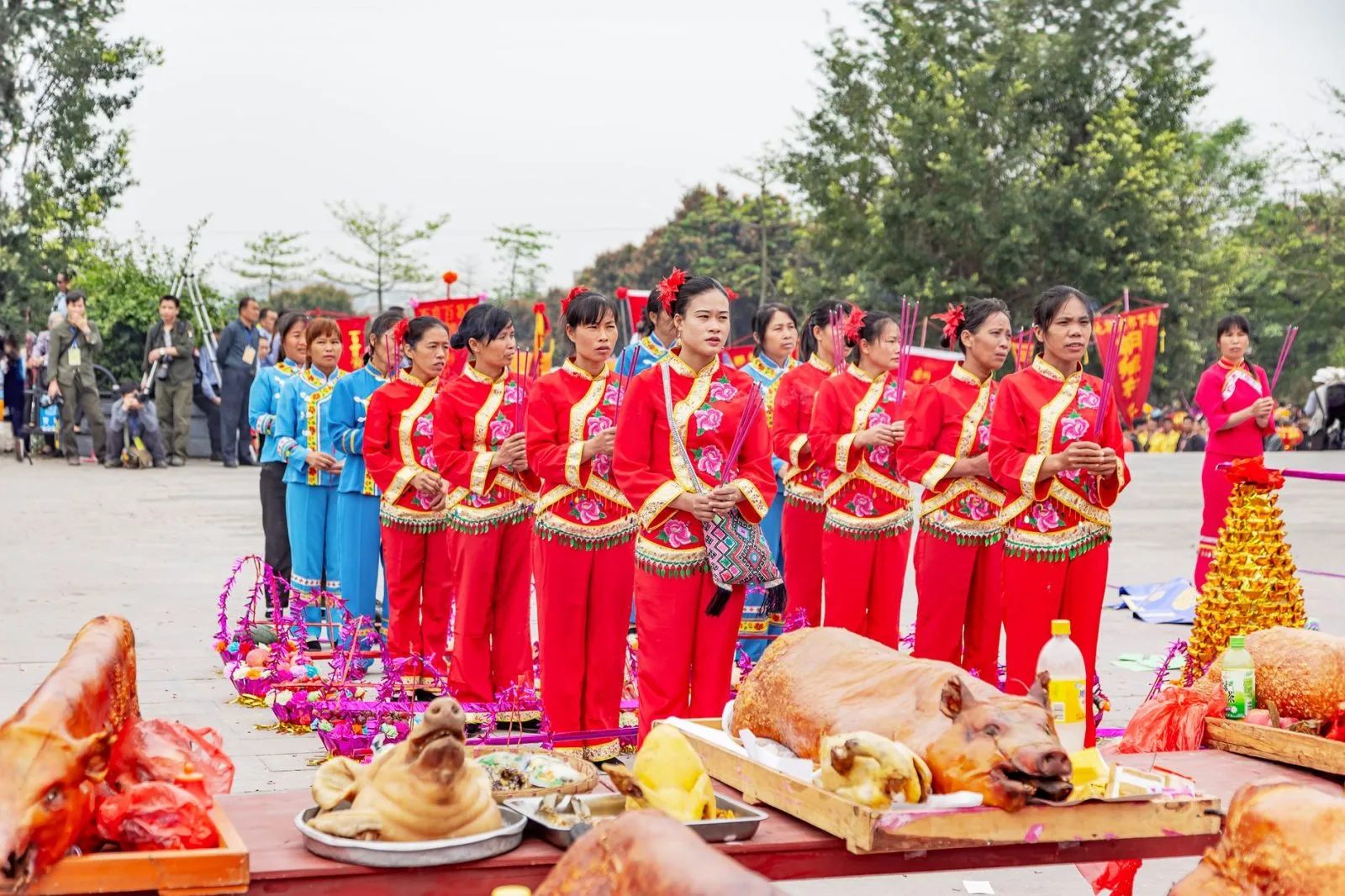
  • Qingming

    Vie et folklore

    Qingming

    Des tombes balayées, un printemps accueillant

    Qingming pairs the remembrance of ancestors with the first serious outings of spring.

    Section
    Vie et folklore
    Région
    Zhejiang
    Ère
    À travers les époques
    Étiquettes
    Customs, Geography

    Qingming arrives around 4 or 5 April, when the sun reaches fifteen degrees of the spring equinox on the traditional solar-term calendar. Its two halves belong together: cleaning a family grave, then walking out into the greening countryside.

    A Solar Term and a Day of Remembrance

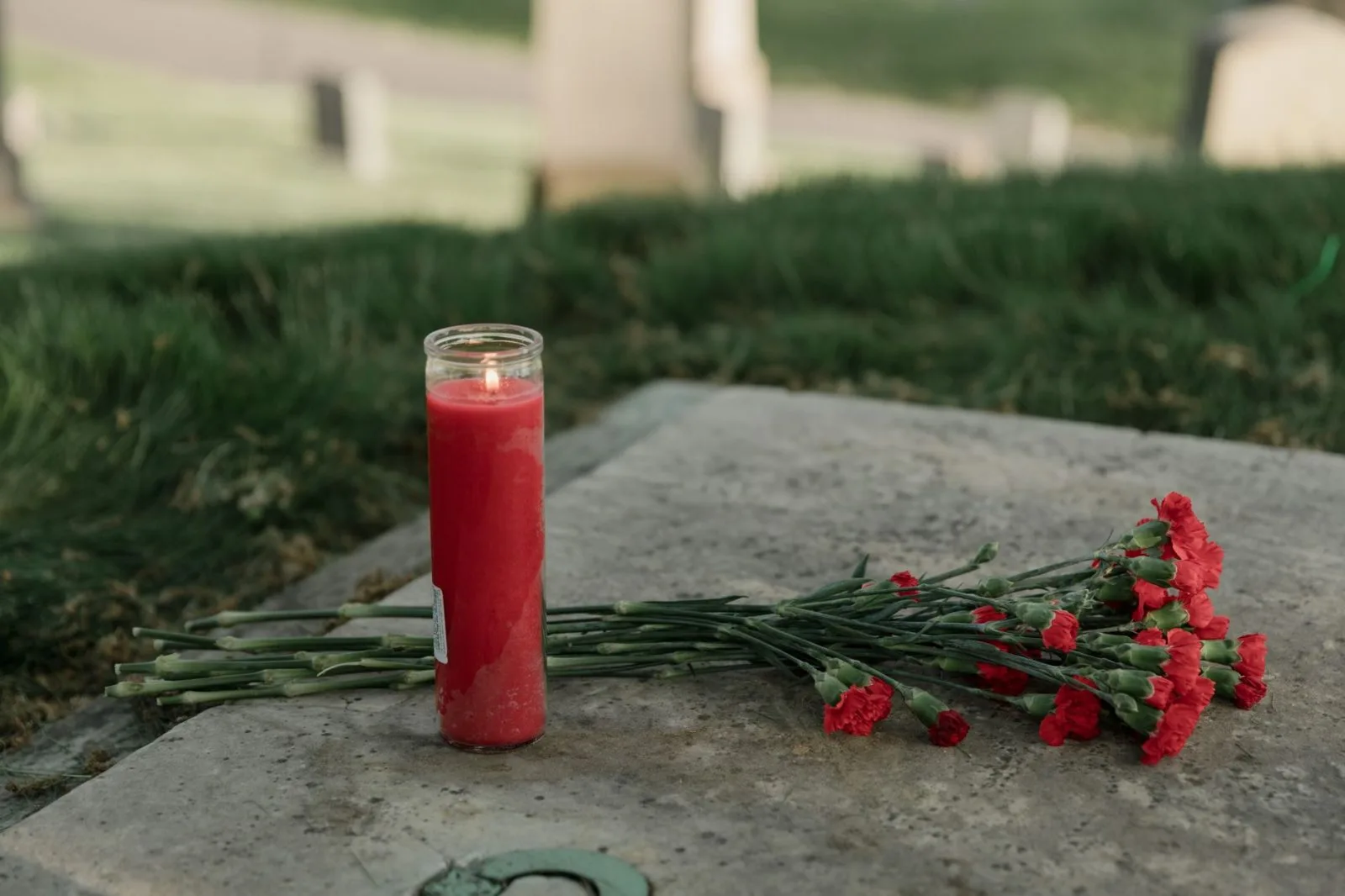
    Qingming means clear and bright, a name drawn from the twenty-four solar terms, the calendar that divides the year by the sun’s position. The term falls around 4 or 5 April, when temperatures rise and rain becomes frequent in the lower Yangtze. Families visit ancestral graves to sweep away leaves and weeds, repaint inscriptions, and lay out food, tea, and paper money. Offerings are followed by bows or a few words addressed to the dead. Paper money may be burned in a designated container, depending on local rules. The act is not a celebration of death but a maintenance of family continuity: the dead remain part of the household’s obligations. In Zhejiang, hillside graves make the visit a walk as much as a ritual.

    A family tending a grave with flowers on a hillside in spring
    Tomb sweeping means cleaning the grave, making offerings, and bowing before ancestors. RDNE Stock project | Pexels License (https://www.pexels.com/license/)

    The Cold Food Connection

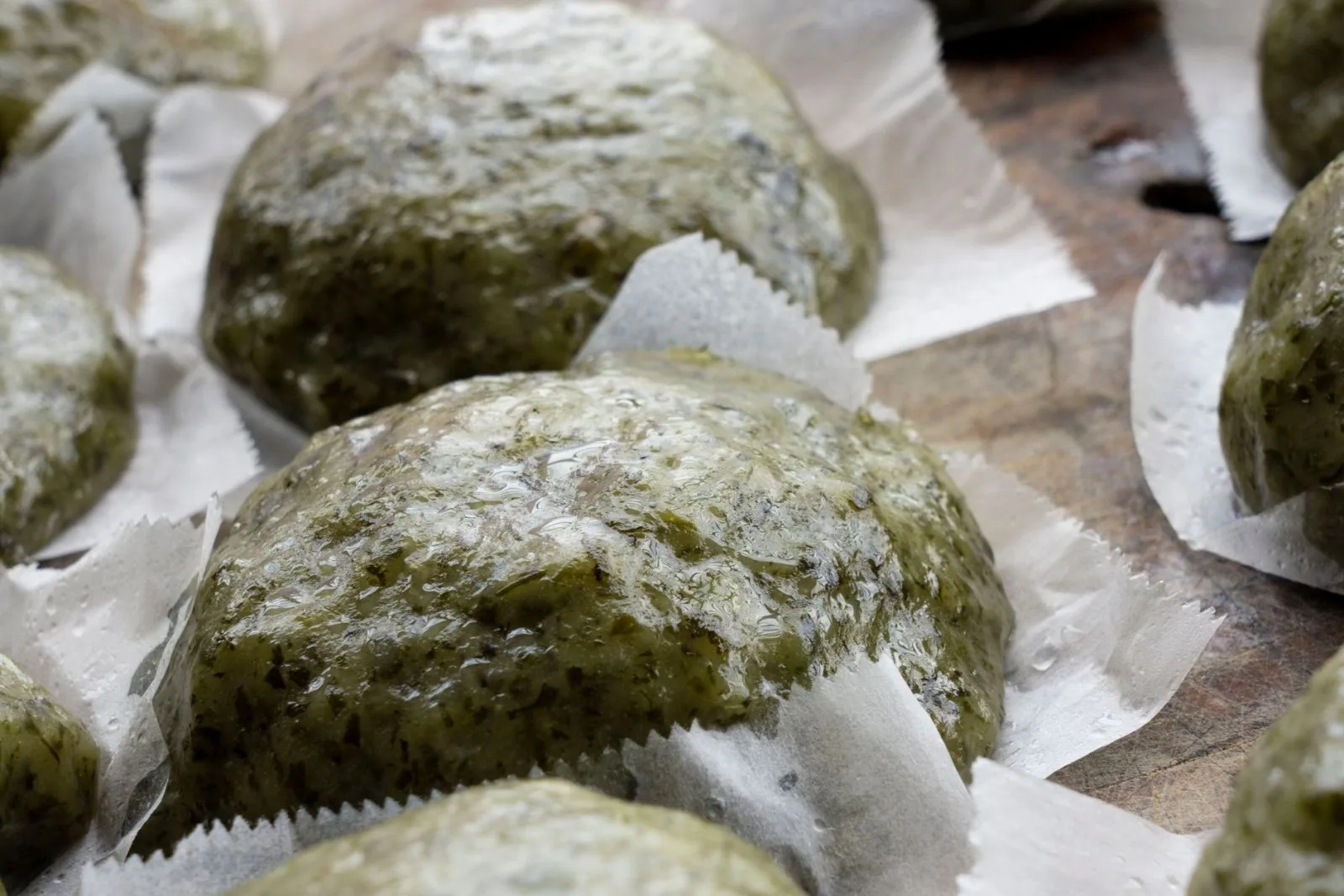
    Earlier custom linked this season with the Cold Food Festival, when fires were forbidden and families ate food prepared in advance. One traditional explanation connects the practice to Jie Zitui, a loyal follower of a Spring and Autumn duke who died in a forest fire; later historians treat the story as one among several local traditions rather than a single origin. In practice, the cold-food element has faded, but special foods remain. In Zhejiang and neighbouring Jiangnan, people eat qingtuan, soft green dumplings made with glutinous rice and mugwort juice, often filled with sweet red bean paste. Their colour comes from the first spring growth, and they are sold in markets for only a short season. Eating one links the memory of the dead to the first green.

    Qingming dumplings and cold food arranged on a table
    Qingming foods in Zhejiang include qingtuan, green rice cakes flavoured with mugwort. Jimmy Liao | Pexels License (https://www.pexels.com/license/)

    Spring Outings in Zhejiang

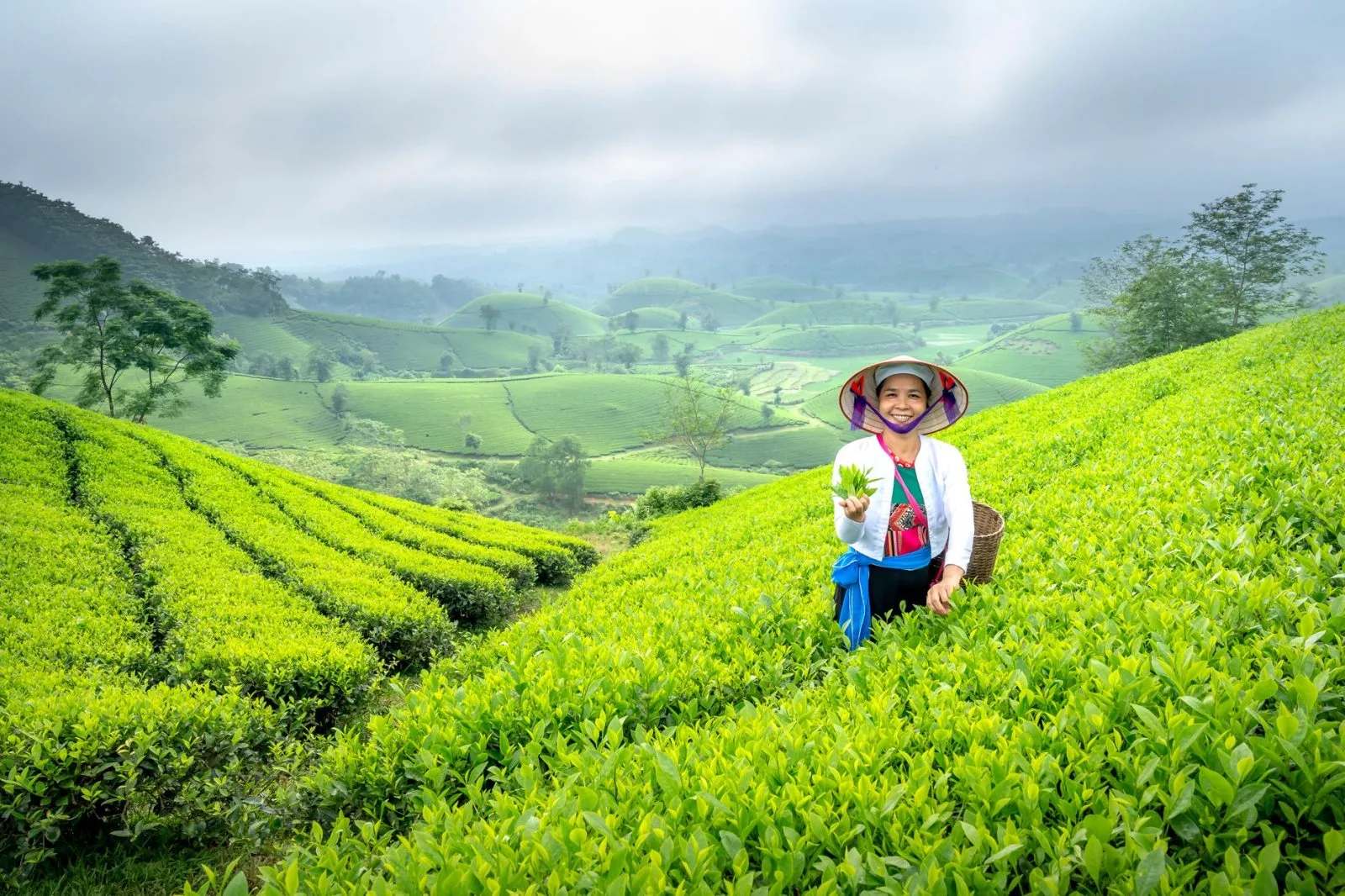
    The second half of Qingming is an outing, known as taqing, when families walk in parks, visit temples, or climb hills. Willow branches were once tucked into hair or hung at doors. In Zhejiang, the festival coincides with the first tea harvest around Hangzhou. Longjing, the tea from the hills near West Lake, is at its most valued when picked before Qingming; the tender buds of pre-Qingming pickings command higher prices. Visitors can see pickers between rows, and lakeside tea houses serve the new leaves. Qingming became a public holiday in 2008, giving the outing a practical boost. Combined with tomb sweeping, the day makes an unusual pair: a visit to the ancestors in the morning, a walk among new leaves in the afternoon.

    Tea pickers gathering early spring leaves in Zhejiang hills
    Pre-Qingming tea from Zhejiang’s hills is prized for its tender leaves. Quang Nguyen Vinh | Pexels License (https://www.pexels.com/license/)

    Poetry and Practice Today

    Qingming has a fixed place in Chinese literature. The Tang poet Du Mu wrote of drizzling rain on the Mourning Day and a traveller asking where wine could be bought, a poem that schoolchildren still memorise. The lines capture the day’s two moods: rain and sorrow, and the impulse to go out despite them. For a visitor, the details matter. Cemeteries can be crowded, so go early and keep to marked paths. Bring water and wear shoes suitable for muddy slopes. In Hangzhou, traffic around West Lake builds by mid-morning, and the metro is simpler than a taxi. Tea villages welcome visitors, but a field is a working crop, not a garden; wait for an invitation before touching the leaves. Respect anyone burning offerings, and never photograph a grave close-up.

    In the morning the family tends the grave; in the afternoon it walks among new leaves.

    Sources et lectures complémentaires

    1. Les vingt-quatre termes solaires — Patrimoine culturel immatériel de l'UNESCO.
    2. West Lake Cultural Landscape of Hangzhou — Centre du patrimoine mondial de l'UNESCO.
    3. Qingming Festival — Faits saillants de la Chine.

    Voyez-le sur place

    Suivez ce lien jusqu'à la région correspondante.

    Explorer par carte

    Suivez le fil de discussion

    Consultez les autres articles qui partagent les mêmes étiquettes.

    Parcourir l'étiquette
  • Festival des bateaux-dragons

    Vie et folklore

    Festival des bateaux-dragons

    Racing, rice dumplings, and the fifth moon

    The Dragon Boat Festival joins boat races, sticky rice parcels, and a story of loyalty to a poet.

    Section
    Vie et folklore
    Région
    Guangdong
    Ère
    À travers les époques
    Étiquettes
    Douanes, alimentation

    Duanwu falls on the fifth day of the fifth lunar month, when the heat of early summer arrives in Guangdong. The holiday is best known for dragon boat racing and zongzi, but its smaller customs reveal as much about how the day is understood.

    Qu Yuan and the River

    The festival is commonly linked to Qu Yuan, a poet and minister of the state of Chu who died in 278 BCE after his advice was rejected and his state fell. Legend says that fishermen raced out in boats to find his body and threw bundles of rice into the river to keep fish from eating it. Historians note that the custom of racing boats and the fifth-month observance existed before this story attached to it; the legend explains a practice rather than creating it. Either way, the pairing of boat and rice dumpling gives the holiday its two enduring symbols. In school lessons and public ceremonies, Qu Yuan is presented as a figure of loyalty and moral independence, a poet whose writing still reads as political dissent.

    A dragon boat with a carved head and paddlers in formation
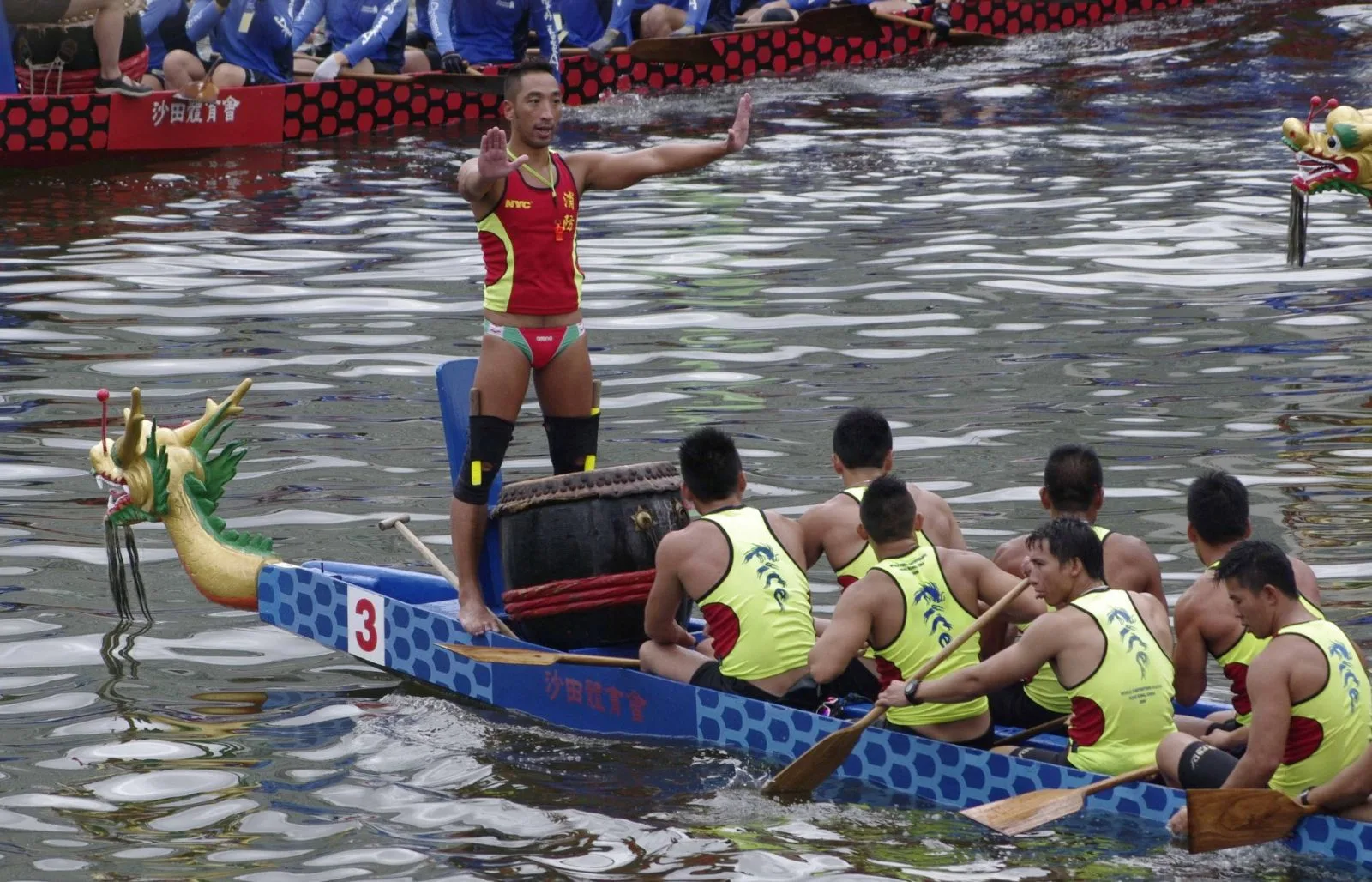
    Dragon boats are painted and carved; crews race to the beat of a drum. Kamus Cheung | Pexels License (https://www.pexels.com/license/)

    Zongzi and Household Charms

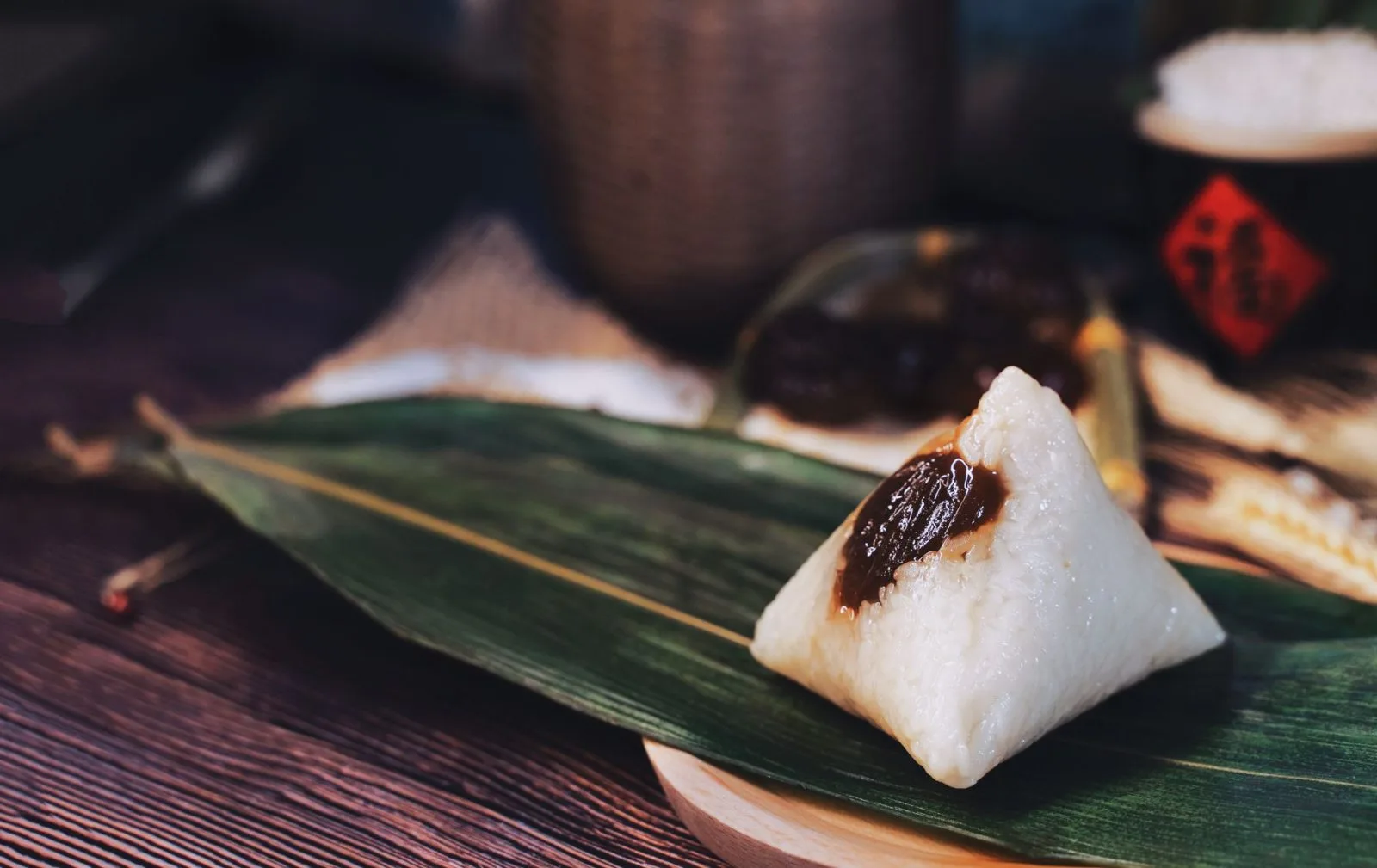
    Zongzi are parcels of glutinous rice wrapped in bamboo or reed leaves and tied with string, then boiled for hours. Fillings vary by region: Guangdong versions may include pork, salted egg, and mushrooms, while northern ones are often sweet with dates or red bean. Families make them in batches and give them to neighbours. The festival also has a protective side. In older practice, people hung mugwort and calamus at doorways to keep away illness and insects and tied five-coloured silk around children’s wrists. Realgar wine, a yellow mixture with a strong smell, was sprinkled around the house or dabbed on a child’s forehead, though modern safety advice discourages drinking it. These acts belong to a time when the fifth moon was thought to carry dampness, snakes, and fever.

    Pyramidal zongzi wrapped in bamboo leaves and tied with string
    Zongzi are filled with sticky rice and tied with string before boiling. zhen tang | Pexels License (https://www.pexels.com/license/)

    Guangdong on the Water

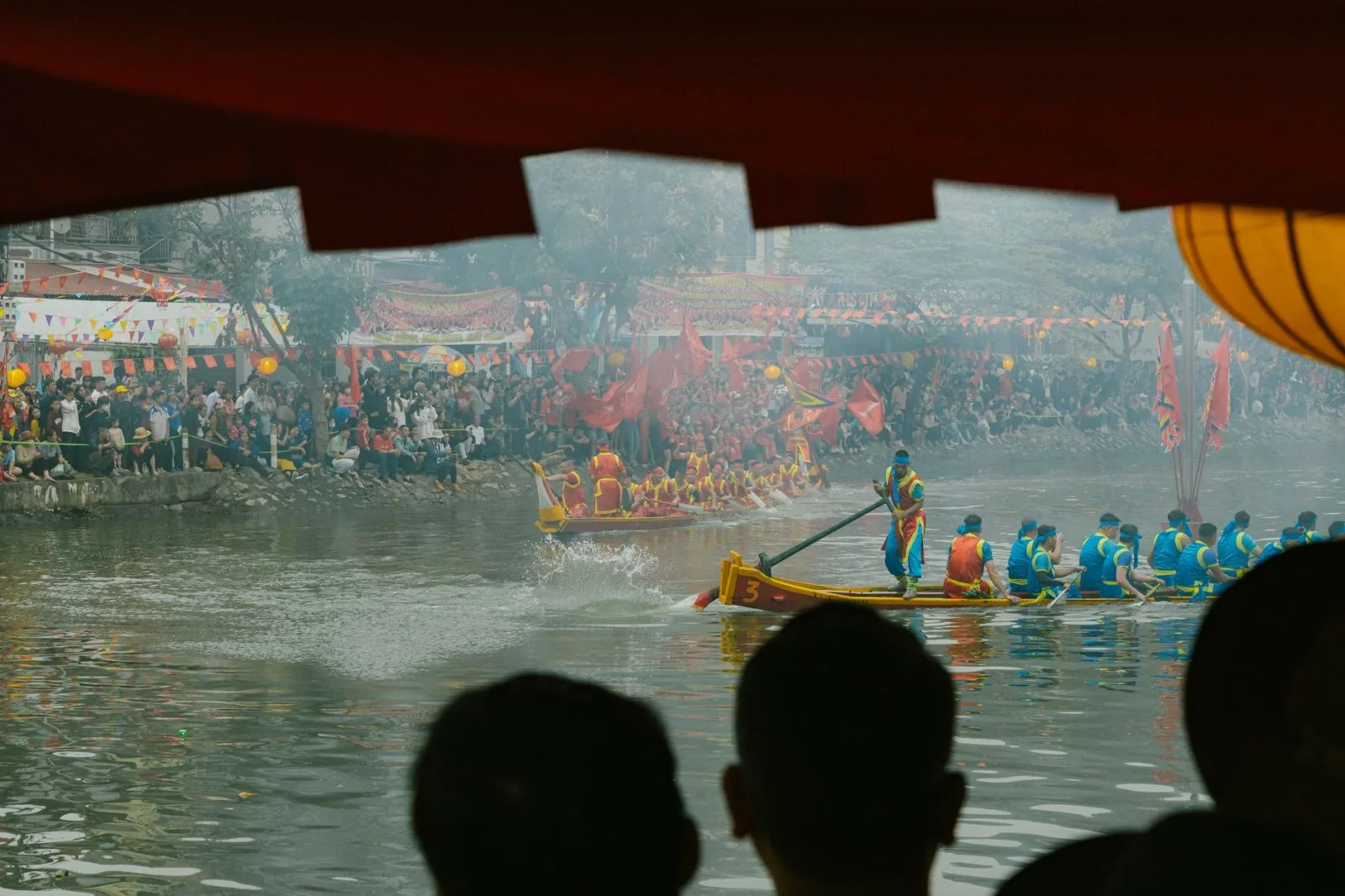
    In Guangdong, dragon boat racing is not a single event but a season. Villages and districts along the Pearl River Delta prepare boats through the spring, then race on rivers and creeks in the weeks around Duanwu. A long narrow boat carries a crew of paddlers, a drummer who sets the stroke, and a helmsman; the painted head and tail give the craft its name. Races are loud, crowded, and local, with teams known by village or temple affiliation. Spectators line bridges and banks, and the best vantage points fill early. The custom was inscribed on UNESCO’s intangible cultural heritage list in 2009. For a visitor, check local listings rather than assuming one central race: events are spread across Guangzhou and Foshan, and dates shift with the lunar calendar.

    Dragon boat crews racing on a Guangdong river before a crowd
    Pearl River Delta races draw village crews and large crowds in the weeks around Duanwu. HONG SON | Pexels License (https://www.pexels.com/license/)

    Observing the Day Today

    Duanwu is an official public holiday, so transport and tourist sites are busy. In Guangdong, the weather is hot and wet by May or June; bring water, a hat, and insect repellent if you plan to watch a race from an open bank. Respect the crews’ space at the water’s edge and do not step onto a boat or touch a drum without being invited. Many families still put mugwort at the door, and zongzi are easy to buy from markets in the days before the holiday. The festival is also an occasion for calling on relatives, though on a smaller scale. For travellers, the pleasure lies in the combination: a public spectacle on the river and a quiet, food-filled custom at home, both tied to the same lunar date.

    The drum sets the stroke, and the village supplies the crew.

    Sources et lectures complémentaires

    1. Dragon boat festival — Patrimoine culturel immatériel de l'UNESCO.
    2. Festival des bateaux-dragons — Encyclopædia Britannica.
    3. Qu Yuan — Encyclopædia Britannica.

    Voyez-le sur place

    Suivez ce lien jusqu'à la région correspondante.

    Explorer par carte

    Suivez le fil de discussion

    Consultez les autres articles qui partagent les mêmes étiquettes.

    Parcourir l'étiquette
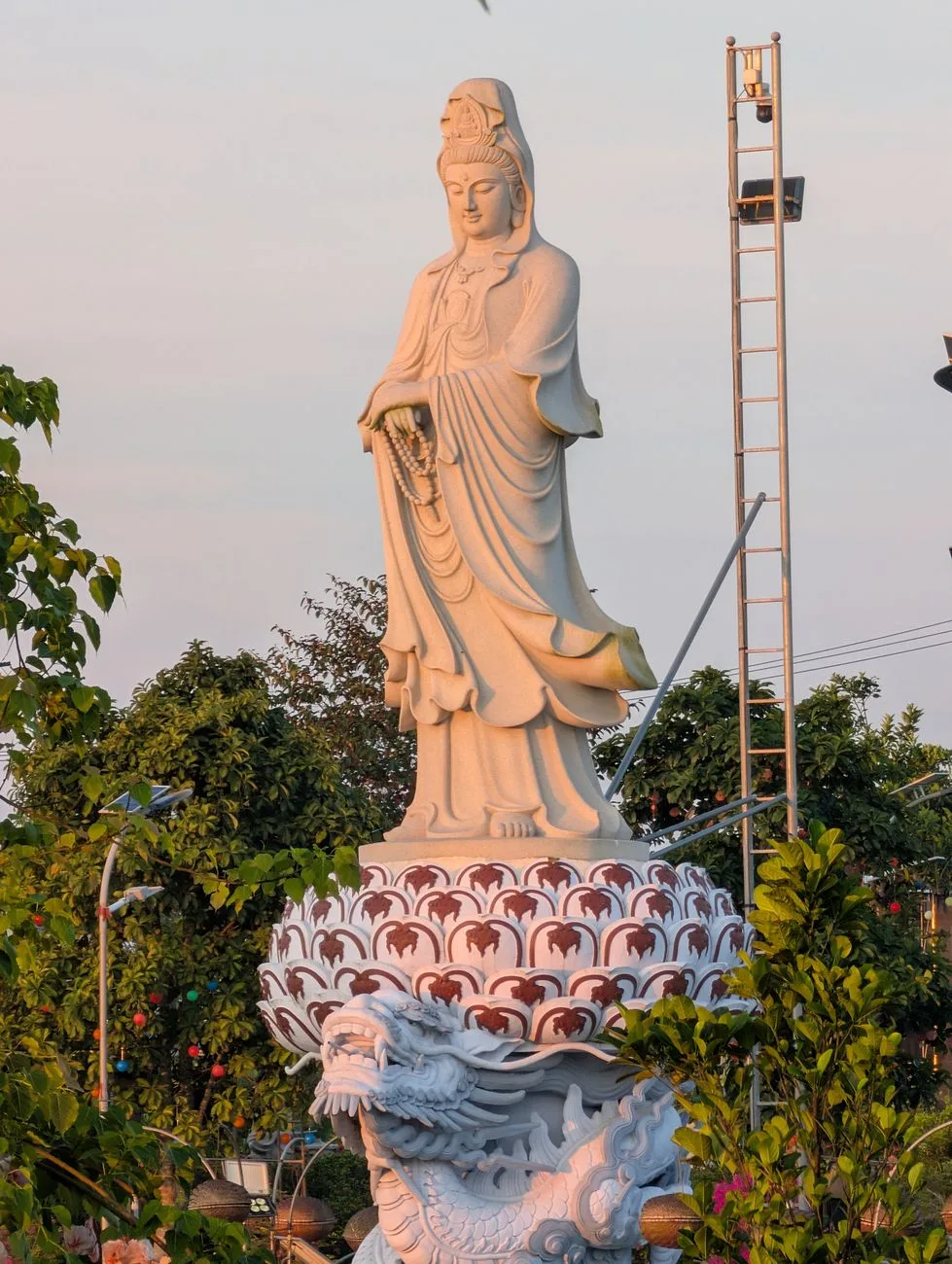
  • Fête de la mi-automne

    Vie et folklore

    Fête de la mi-automne

    Mooncakes under a full moon

    The Mid-Autumn Festival gathers families around the full moon, mooncakes, and a long tradition of watching the night sky.

    Section
    Vie et folklore
    Région
    Pékin
    Ère
    À travers les époques
    Étiquettes
    Douanes, alimentation

    Falling on the fifteenth day of the eighth lunar month, the Mid-Autumn Festival is a harvest celebration and a family reunion. In Beijing, the holiday is marked in courtyards, parks, and moon-viewing spots that fill after sunset.

    The Date and the Moon

    The festival follows the lunar calendar, so its date moves between early September and early October. The fifteenth day of the eighth month is chosen because the moon should be full, and roundness stands for completeness and family unity. Chinese tradition reads the moon’s surface as the figure of Chang’e, a woman who, in one version of the myth, drank an elixir and rose to live there with a rabbit that pounds medicine. Another story tells of Wu Gang cutting a tree that regrows each time. These tales are not scripture; they are the stories families retell while looking up. Around the festival, parks stay open late and lakes reflect the moon, giving city dwellers a quiet reason to be outdoors after dinner.

    A full moon rising over a Beijing park lake
    The festival falls on the full moon of the eighth lunar month, usually in September or October. marnock | Pexels License (https://www.pexels.com/license/)

    Mooncakes and Their Fillings

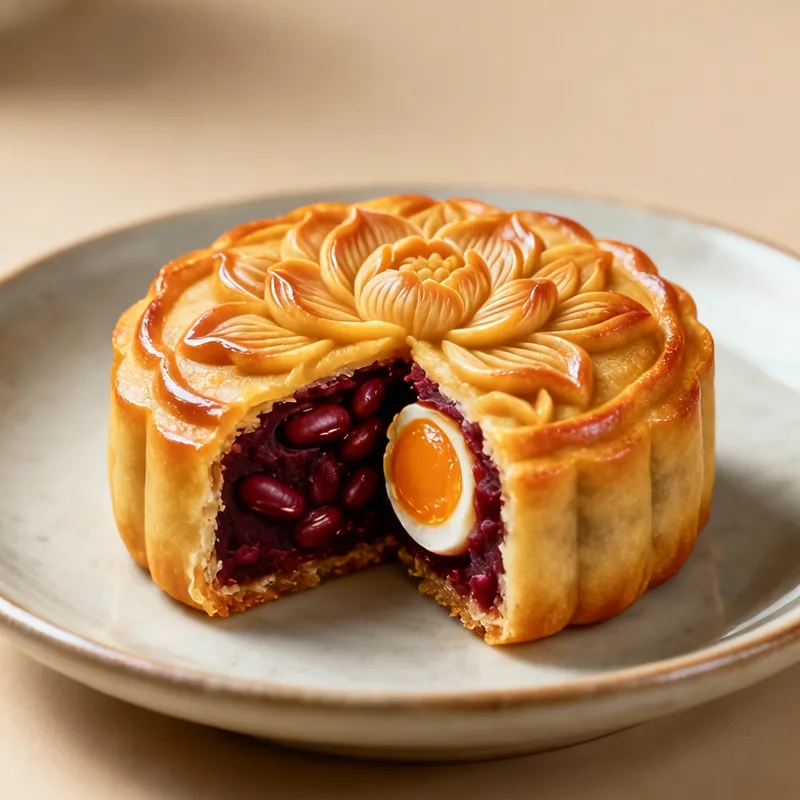
    Mooncakes are small, dense pastries with a thin crust and a heavy filling, traditionally cut into wedges and shared. The round shape echoes the moon, and the top is stamped with a pattern or characters such as longevity or harmony. Cantonese-style cakes often hold lotus seed paste and a salted duck egg yolk, whose yellow centre stands for the moon; other fillings include red bean, five nuts, and preserved fruit. Suzhou-style pastries use flaky layers, while snow-skin mooncakes are chilled and made with a glutinous rice wrapper. Because the cakes are rich, a sliver is usually enough, and tea helps. Prices rise in the weeks before the holiday, and elaborate boxes are made for gifting rather than eating. In Beijing, bakeries sell both traditional versions and small cakes.

    A round mooncake with a stamped pattern cut open to show the filling
    Mooncakes are dense pastries stamped with characters for longevity or harmony. Illustration générée par IA · SinoViz

    Beijing After Dark

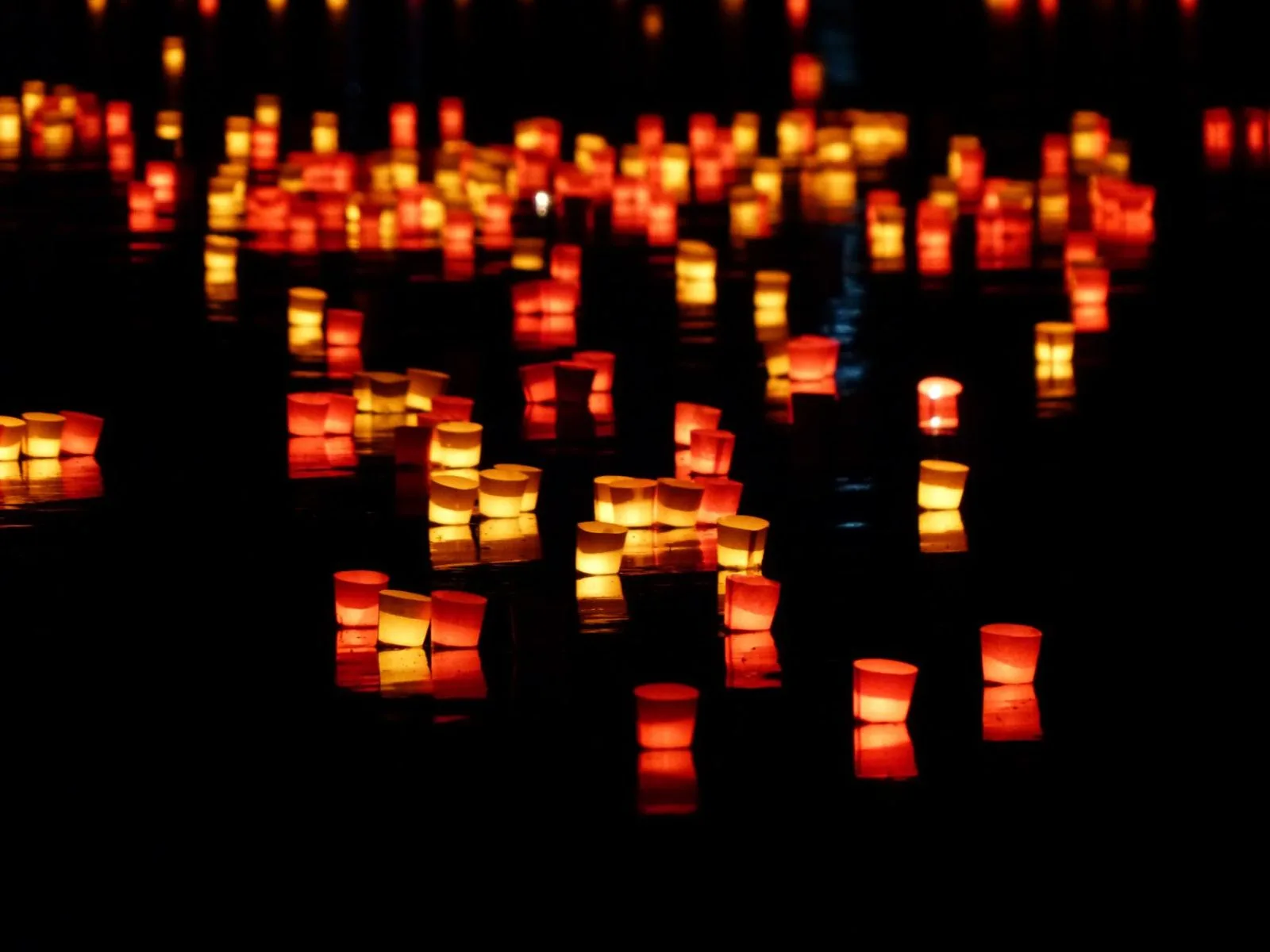
    Beijing’s moon-viewing spots fill quickly after dark. Beihai Park, with its lake and white stupa, and the Summer Palace, with Kunming Lake and the Long Corridor, are classic places to walk and watch the reflection. The Temple of Heaven also draws visitors. Families may light paper lanterns, and children carry them through the lanes; in some neighbourhoods, lantern riddles are posted for anyone who wants to try. Public holiday crowds mean metro stations near the parks stay busy late, so allow time to get back. Camping or bringing a barbecue is not appropriate in these historic grounds. A practical plan is to visit in the late afternoon, walk as the light fades, and take a seat by the water before the moon clears the rooftops.

    Lanterns reflected in a lake at a Beijing park during the Mid-Autumn Festival
    Parks such as Beihai and the Summer Palace draw moon-viewing crowds after sunset. Pixabay | Pexels License (https://www.pexels.com/license/)

    Gifts, Holiday, and Meaning

    Mooncakes are exchanged as gifts, often in boxes of four or six, and carrying a box to a family dinner is normal. The act matters more than the price; a modest cake from a favourite bakery can be more welcome than a lavish tin. Since 2008, the festival has been an official public holiday, reinforcing its role as a reunion, with millions travelling to see relatives. The deeper theme is tuanyuan, reunion, expressed by the circle of the cake and the full moon. Not everyone can be at the table, and the holiday acknowledges that absence as much as presence. If you are invited to a Beijing home, bring the cakes, arrive on time, and expect the evening to centre on a long meal rather than on speeches.

    Roundness carries the argument: a full moon, a round cake, a family gathered in one room.

    Sources et lectures complémentaires

    1. Fête de la mi-automne — Encyclopædia Britannica.
    2. Fête de la mi-automne — Faits saillants de la Chine.

    Voyez-le sur place

    Suivez ce lien jusqu'à la région correspondante.

    Explorer par carte

    Suivez le fil de discussion

    Consultez les autres articles qui partagent les mêmes étiquettes.

    Parcourir l'étiquette
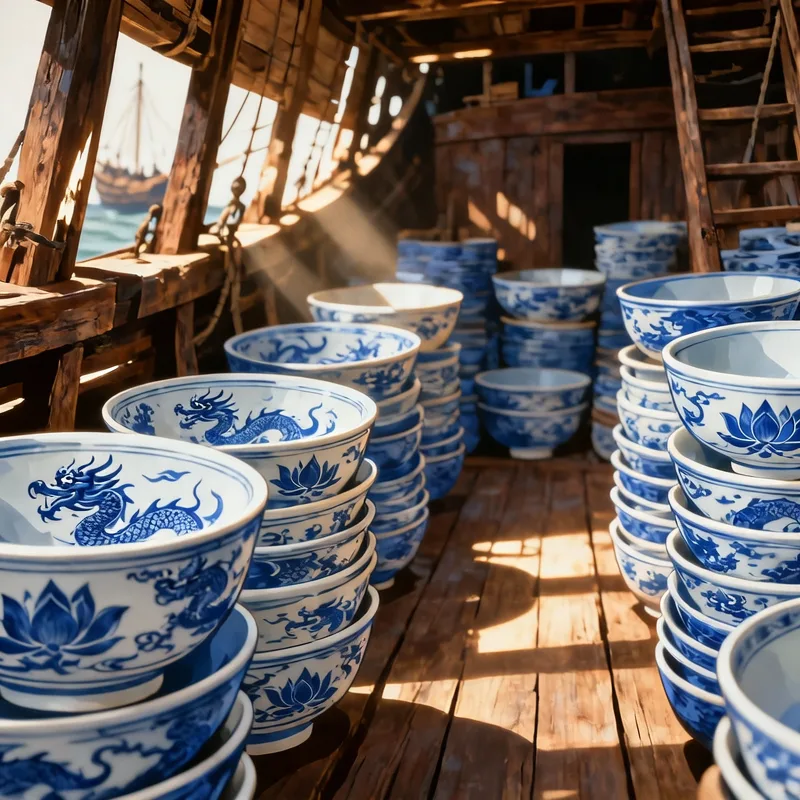
  • Découpage de papier chinois

    Vie et folklore

    Découpage de papier chinois

    Papier rouge, plié et découpé

    Une paire de ciseaux et une feuille de papier rouge peuvent contenir tout un vocabulaire de souhaits.

    Section
    Vie et folklore
    Région
    Shaanxi
    Ère
    À travers les époques
    Étiquettes
    Coutumes, ethnies

    Le découpage de papier chinois, ou jianzhi, transforme une feuille plate en un motif de figures, de fleurs et de caractères. Pratiqué depuis des siècles dans les foyers ruraux, il marque encore aujourd'hui les mariages et le Nouvel An, et les motifs audacieux des fenêtres du Shaanxi comptent parmi ses formes régionales les plus reconnaissables.

    Origines et techniques

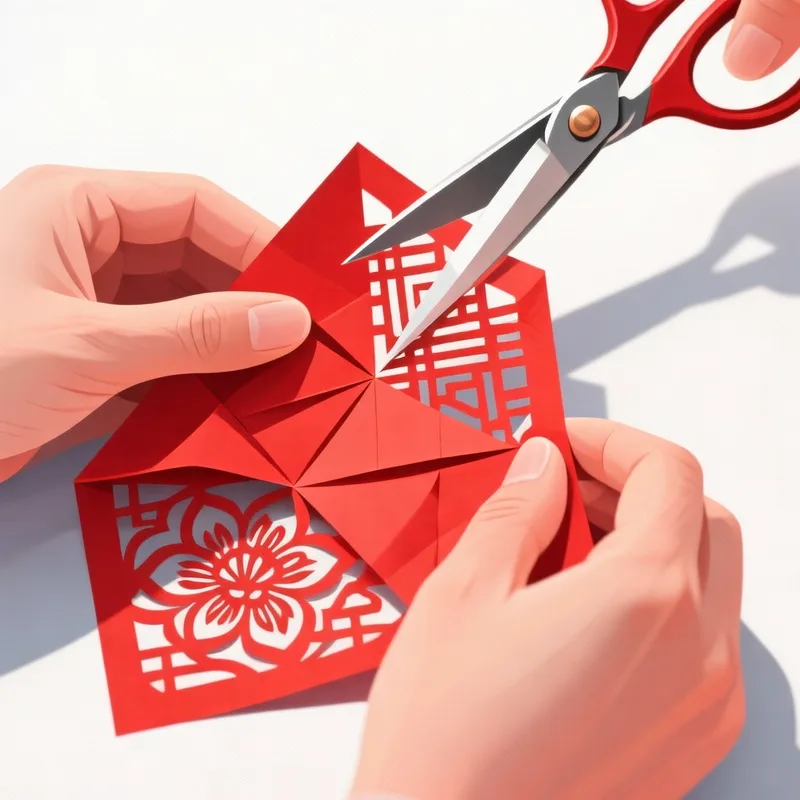
    Le papier arriva en Chine sous la dynastie des Han orientaux, et les premières découpes suivirent dès que le matériau devint suffisamment bon marché pour permettre des expérimentations. Les premiers exemples servaient d'offrandes et de modèles pour la broderie ; un morceau de papier découpé datant du VIe siècle témoigne que la technique était déjà bien établie à cette époque. Deux méthodes se développèrent. On découpait une feuille pliée aux ciseaux, créant ainsi un motif symétrique en un seul geste. On découpait une pile de papier à l'aide d'un couteau tenu verticalement contre une planche cirée, une méthode adaptée aux lignes fines et aux motifs répétitifs. Pour de nombreux motifs traditionnels, les artistes ne dessinaient pas de contour ; ils découpaient directement, préservant ainsi les fils de liaison qui empêchent le motif de se défaire. La pièce finie est légère, peu coûteuse et facile à coller sur une fenêtre ou une porte.

    Des mains découpent un motif en papier rouge avec de petits ciseaux.
    Le pliage du papier avant la découpe permet d'obtenir les motifs symétriques typiques des décorations de fenêtres. Illustration générée par IA · SinoViz

    Un langage de motifs

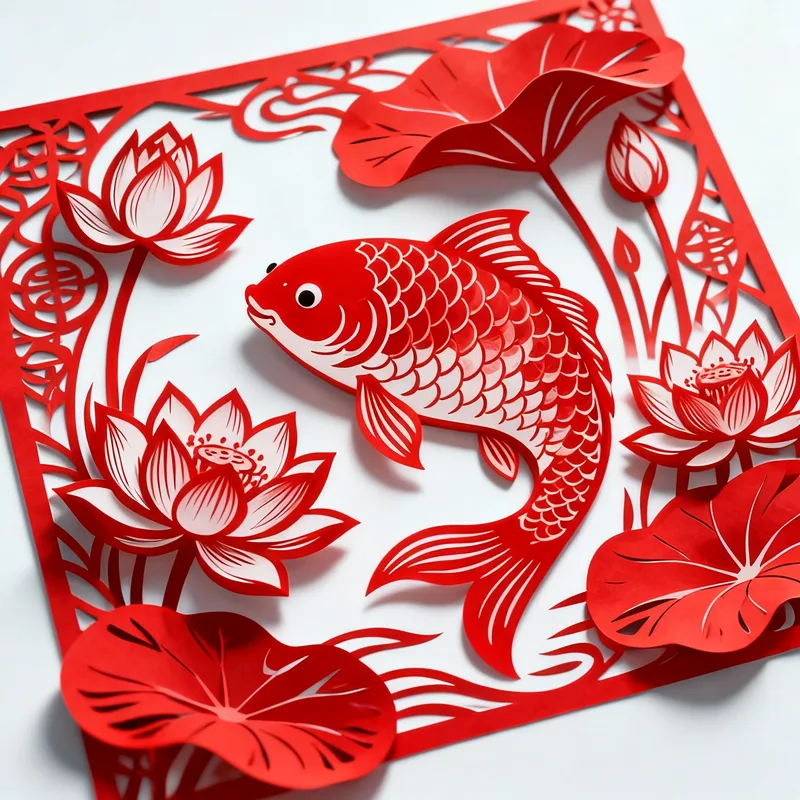
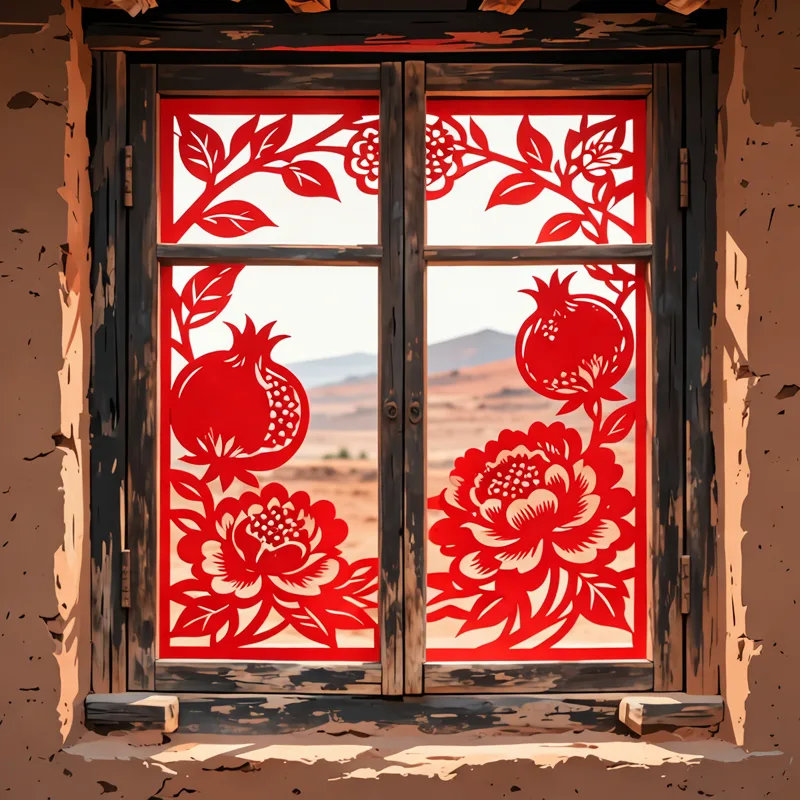
    Ces images forment un système de jeux visuels. Un poisson symbolise l'abondance, car sa prononciation est proche de celle du mot « abondance » ; le lotus évoque la pureté. Une grenade représente une nombreuse descendance, une chauve-souris la bonne fortune et une pêche une longue vie. Le caractère « fu », signifiant bonne fortune, apparaît seul ou inscrit dans un motif circulaire, tandis que « shuangxi », double bonheur, est associé aux mariages. Animaux du zodiaque, figures d'opéra et scènes d'enfants jouant se mêlent harmonieusement aux motifs. La couleur est aussi importante que la forme : le rouge est la couleur par excellence pour les célébrations, tandis que les découpages de papier blanc sont plus rares et liés à d'anciens rituels. Dans une vitrine de village du Shaanxi, la disposition de ces motifs révèle au visiteur les espoirs de la famille pour l'année à venir.

    Red paper-cut window decoration showing a fish and lotus flowers
    Fish and lotus form a rebus for abundance; motifs are chosen for the wish they carry. Illustration générée par IA · SinoViz

    Shaanxi Windows

    Paper cutting in Shaanxi is associated with rural life on the Loess Plateau, especially around Yan’an. Windows there were once small and deeply set, so designs favoured bold silhouettes and broad, connected shapes that could be read from across a room. Local artists talk of cutting with the heart rather than measuring with a ruler, and compositions often show figures, animals, and plants together in a single dense frame. Window grilles, or chuanghua, are pasted at New Year and replaced when they fade. Wedding cuts carry double happiness characters and images of fertility; birthday cuts use peaches and cranes. Women were the main practitioners in many villages, passing patterns from mother to daughter, and village fairs still sell sheets cut in the old local style.

    A Shaanxi farmhouse window with bold red paper cutouts
    Shaanxi cuts favour strong silhouettes and broad shapes, designed to read from a distance. Illustration générée par IA · SinoViz

    Recognition and Travel

    Chinese paper-cut was inscribed on UNESCO’s Representative List of the Intangible Cultural Heritage of Humanity in 2009, a recognition that named both the craft and the communities that sustain it. The listing does not freeze the art. Contemporary artists cut portraits, cityscapes, and political images with the same tools, and paper cuts appear in graphic design and animation. For a visitor, the appeal is that the work is easy to find and easy to try. Museum shops sell small sheets, market stalls sell single motifs, and workshops in Xi’an and rural Shaanxi teach the basic fold-and-cut method in an hour. Bring a sharp pair of scissors and practice on cheap red paper before attempting a detailed pattern. A finished cut pasted on glass changes with the light.

    The pattern holds together because the cutter leaves just enough paper between the lines.

    Sources et lectures complémentaires

    1. Chinese paper-cut — Patrimoine culturel immatériel de l'UNESCO.
    2. Découpage de papier chinois — Faits saillants de la Chine.
    3. Paper cutting — Encyclopædia Britannica.

    Voyez-le sur place

    Suivez ce lien jusqu'à la région correspondante.

    Explorer par carte

    Suivez le fil de discussion

    Consultez les autres articles qui partagent les mêmes étiquettes.

    Parcourir l'étiquette
  • Cuisine cantonaise

    Vie et folklore

    Cuisine cantonaise

    Steam, Wok Heat, and Coastal Markets

    Guangdong cooking turns local seafood and temple fair foods into a refined restaurant tradition.

    Section
    Vie et folklore
    Région
    Guangdong
    Ère
    À travers les époques
    Étiquettes
    Food, Geography

    Cantonese cuisine is the cooking of Guangdong and its diaspora, built on river deltas, coastal markets, and the heat of the wok. Its best-known dishes—roast goose, dim sum, and steamed fish—sit beside home-style soups and street snacks.

    The Pearl River Pantry

    The Pearl River Delta gave Cantonese cooking an unusually broad pantry. Rice grows in the lowlands, fish and shellfish come from the estuary, and hills behind Guangzhou supply vegetables, pork, and poultry. Guangzhou was a major port under the Tang and again after European traders arrived in the seventeenth and eighteenth centuries. Merchants, officials, and temple fairs supported restaurants that could pay for skilled chefs. By the Qing period, Guangzhou’s tea houses served small plates known as dim sum through the morning and midday. Emigrants from Guangdong later carried these dishes to Southeast Asia, North America, and Europe, adapting them to local supplies.

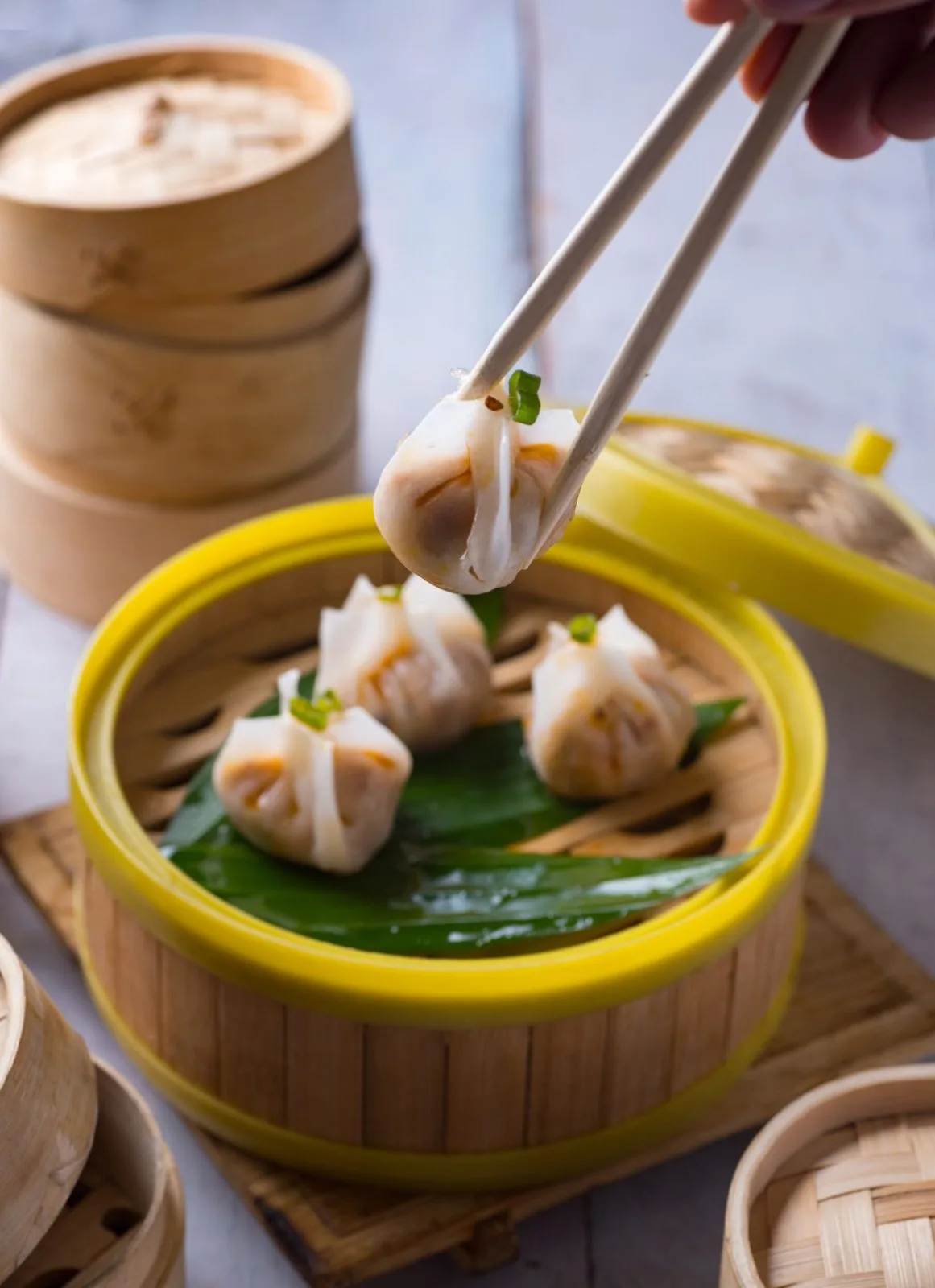
    Bamboo steamers filled with dim sum
    Dim sum developed in the teahouses of Guangzhou and spread with Cantonese migration. parveen tasud | Pexels License (https://www.pexels.com/license/)

    Wok Hei and the Roast House

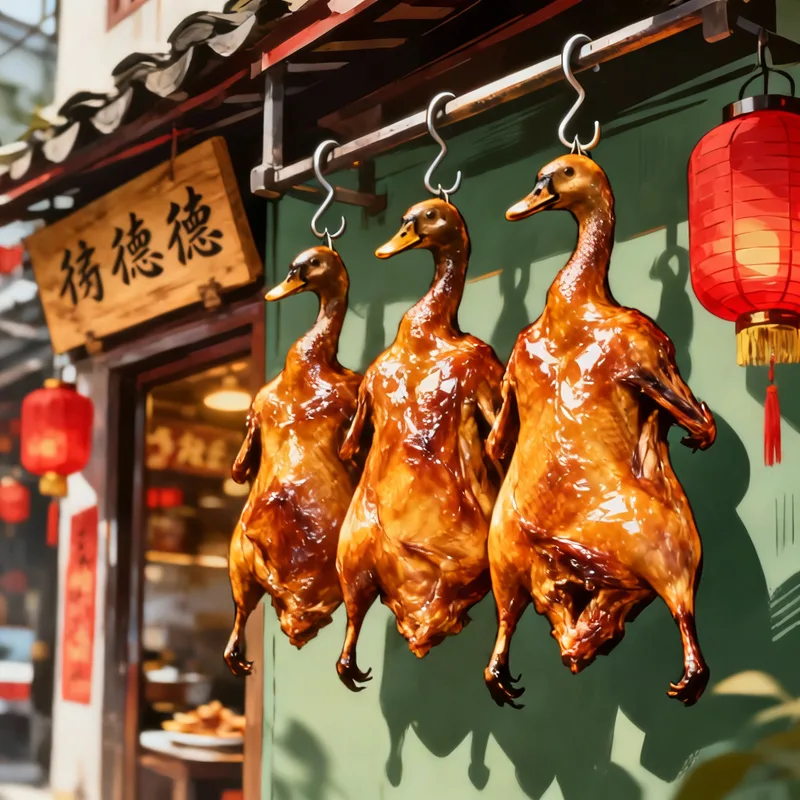
    Cantonese stir-frying depends on wok hei, the barely definable aroma produced when hot oil, vapours, and food meet a very hot wok. Chefs toss ingredients to keep them moving and prevent scorching; sauces are added late, often with cornstarch to give a light coating. Roasting is another speciality. Guangzhou-style white-cut chicken is poached and served with ginger and spring onion, while roast goose from Shunde is glazed, air-dried, and hung in a brick oven until the skin blisters. Char siu pork is marinated with honey and red fermented bean curd, then roasted with sugar caramelising at the edges.

    Roast geese hung to dry before roasting outside a Shunde restaurant
    Air-drying the skin is a key step in Shunde’s roast goose. Illustration générée par IA · SinoViz

    Dim Sum and Morning Ritual

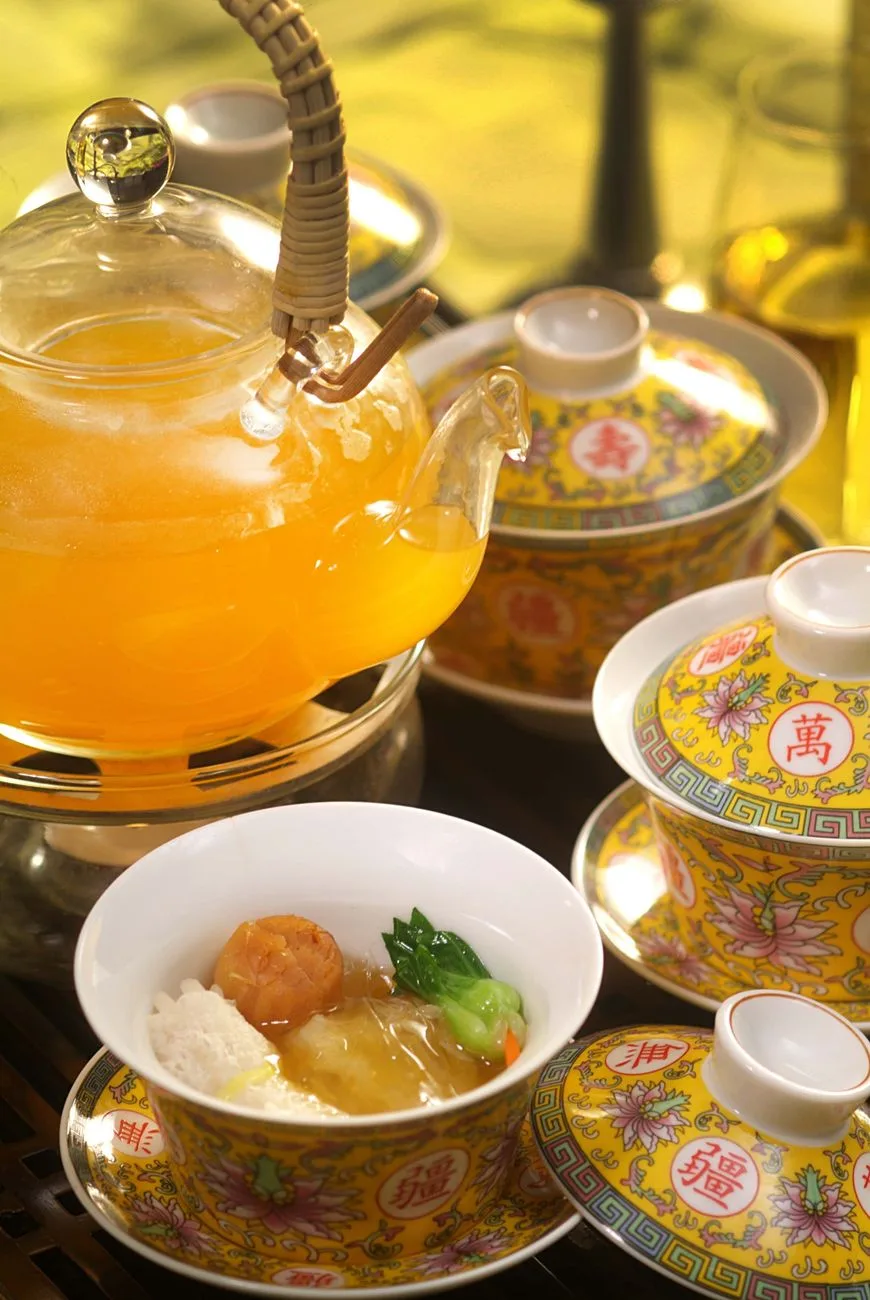
    Dim sum means a light snack, but in Cantonese practice it describes a meal of small portions ordered from trolleys or a paper card. Har gow wrap shrimp in a translucent wheat-starch skin; siu mai open-topped dumplings hold pork and shrimp; char siu bao are soft steamed buns with sweet roast-pork filling. Cheung fun are broad rice-noodle sheets rolled around shrimp, pork, or beef and dressed in soy sauce. Tea accompanies the meal, and the old custom of tapping a pot’s lid to signal for a refill is still performed, though younger diners may simply ask. The ritual is social as much as culinary, filling teahouses from early morning.

    • Har gow with translucent shrimp filling
    • Siu mai topped with a single shrimp
    • Cheung fun rice rolls with soy dressing
    • Egg tarts adapted from British custard pastry
    A trolley of bamboo steamers and tea pots beside a crowded Guangzhou dining room
    A dim sum meal is ordered in small dishes and shared across the table. minchephoto photography | Pexels License (https://www.pexels.com/license/)

    Regional Range and Diaspora

    Cantonese food is not one style. Shunde is known for delicate dairy desserts and fish dishes, Chaozhou nearby has a separate tradition of braised goose, seafood, and strong oolong tea, and Hakka communities in the hills favour preserved vegetables and stuffed tofu. Teochew and Hainanese migrants carried their own versions abroad. In Chinatowns from San Francisco to Singapore, Cantonese restaurants adapted to local tastes while keeping techniques such as steaming, roasting, and long simmered double-boiled soups. The resulting cuisines are mixed, but they preserve a central idea: fresh ingredients, precise heat, and a sauce that supports rather than hides them.

    Cantonese cooking asks a wok to do in seconds what other traditions give hours of stewing.

    Sources et lectures complémentaires

    1. Chinese Cuisine — Encyclopædia Britannica.
    2. Cantonese cuisine — Encyclopædia Britannica.
    3. Guangzhou — Centre du patrimoine mondial de l'UNESCO.

    Voyez-le sur place

    Suivez ce lien jusqu'à la région correspondante.

    Explorer par carte

    Suivez le fil de discussion

    Consultez les autres articles qui partagent les mêmes étiquettes.

    Parcourir l'étiquette