Category: Cuộc sống & Văn hóa dân gian

  • Lịch âm lịch

    Cuộc sống & Văn hóa dân gian

    Lịch âm lịch

    Việc xác định thời gian dựa vào Mặt Trăng và Mặt Trời.

    Lịch truyền thống của Trung Quốc liên kết các tháng âm lịch với các mùa dương lịch, và các lễ hội với cả hai.

    Phần
    Cuộc sống & Văn hóa dân gian
    Vùng đất
    Bắc Kinh
    Kỷ nguyên
    Xuyên suốt các thời đại
    Thẻ
    Hải quan

    Lịch Trung Quốc là lịch âm dương: các tháng theo chu kỳ mặt trăng, còn các năm theo chu kỳ mặt trời. Trong hơn hai thiên niên kỷ, các nhà thiên văn học cung đình và nông dân làng quê đã sử dụng cùng một hệ thống này cho các mục đích khác nhau — để xác định niên đại trị vì và biết khi nào nên gieo trồng.

    Cách thức hoạt động của lịch

    Mỗi tháng bắt đầu vào ngày trăng non theo thiên văn và kéo dài 29 hoặc 30 ngày, vì vậy mười hai tháng âm lịch có tổng cộng khoảng 354 ngày — ngắn hơn khoảng mười một ngày so với một năm dương lịch. Để giữ mùa xuân ở lại mùa xuân, người ta chèn thêm các tháng nhuận: bảy tháng bổ sung trong mỗi mười chín năm, một chu kỳ được gọi là chu kỳ Metonic. Tháng lặp lại được đánh số sau tháng trước đó, do đó có tháng nhuận thứ tư. Các ngày được tính riêng biệt theo chu kỳ lục thập phân, một cặp gồm mười thiên can và mười hai địa chi, dùng để đánh dấu mỗi ngày và mỗi năm bằng một tổ hợp như gia chân.
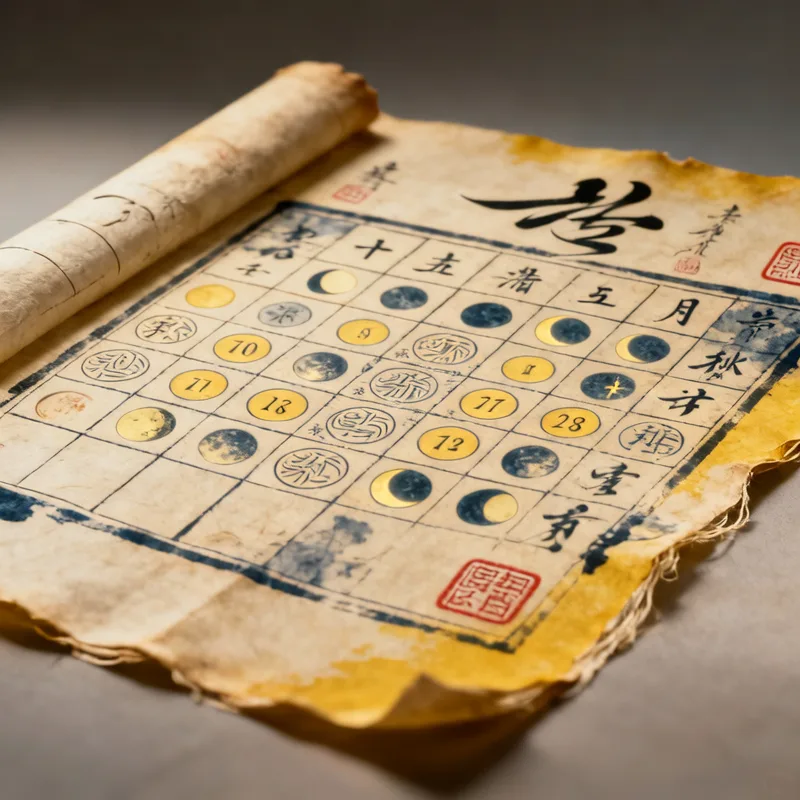
    Trang trích từ một cuốn lịch truyền thống Trung Quốc, thể hiện các tháng âm lịch, tiết khí và ngày lành tháng.
    Một tháng âm lịch kéo dài từ lần trăng non này đến lần trăng non tiếp theo; còn một tiết khí đánh dấu vị trí của mặt trời. Hình minh họa do AI tạo ra · SinoViz

    Quan sát trở thành khoa học.

    Hệ thống này phát triển từ sự quan sát. Các văn khắc trên xương oracle từ triều đại Thương (khoảng 1600–1046 TCN) ghi lại các tháng âm lịch, nhật thực và nguyệt thực, và bộ sách Xuân Thu lưu giữ các ghi chép về nhật thực và nguyệt thực thời kỳ đầu được sử dụng sau này để kiểm tra các phép tính. Lịch Thái Chu, được áp dụng vào năm 104 TCN dưới thời Hoàng đế Vũ của nhà Hán, đã ấn định ngày bắt đầu năm là tháng đầu tiên của âm lịch và thiết lập quy tắc thêm 19 năm. Các cuộc cải cách sau này đã tinh chỉnh nó: Lịch Thọ Thi của Quách Thọ Kinh năm 1281, được lập cho kinh đô nhà Nguyên tại Đại Đô (Bắc Kinh), sử dụng năm nhiệt đới gồm 365,2425 ngày — cùng độ dài sau này được áp dụng bởi cuộc cải cách lịch Gregorian.

    Kỹ năng tính toán lịch mang tính chính trị. Một vị vua có thể dự đoán nhật thực và nguyệt thực, cũng như công bố trăng non, sẽ được coi là nắm giữ thiên mệnh; việc ban hành lịch cho các nước chư hầu là một hành động thể hiện quyền lực. Đài thiên văn cổ Bắc Kinh, được xây dựng năm 1442, vẫn còn lưu giữ các quả cầu thiên văn và kim chỉ giờ thời nhà Minh được sử dụng cho công việc này. Các nhà thiên văn học ở đó đã làm việc cùng với các nhà truyền giáo dòng Tên vào thế kỷ XVII, khi triều đình nhà Thanh áp dụng các phương pháp dự đoán nhật thực và nguyệt thực của châu Âu trong khi vẫn giữ nguyên cấu trúc tháng âm lịch. Do đó, lịch là điểm giao thoa giữa nghệ thuật cai trị, toán học và quan sát thiên văn.

    Hai mươi bốn tiết khí

    Song song với lịch âm lịch là lịch dương lịch gồm 24 tiết, mỗi tiết cách nhau 15 độ dọc theo quỹ đạo hàng năm của mặt trời. Chuỗi tiết bắt đầu với Lichun, tức là Khởi đầu mùa xuân, vào khoảng ngày 4 tháng 2, và bao gồm Thanh Minh (Ánh sáng thuần khiết) vào đầu tháng 4, Hạ Chí (Hạ chí), Bạch Lộ (Sương trắng) và Đông Chí (Đông chí). Được phát triển ở vùng Hoàng Hà và áp dụng trên toàn quốc, các tiết này cho nông dân biết khi nào nên đón sương giá hoặc mưa; các tục ngữ vẫn còn liên hệ chúng với việc gieo trồng và thu hoạch. UNESCO đã ghi nhận kiến thức và thực tiễn này vào Danh sách tiêu biểu của mình năm 2016.
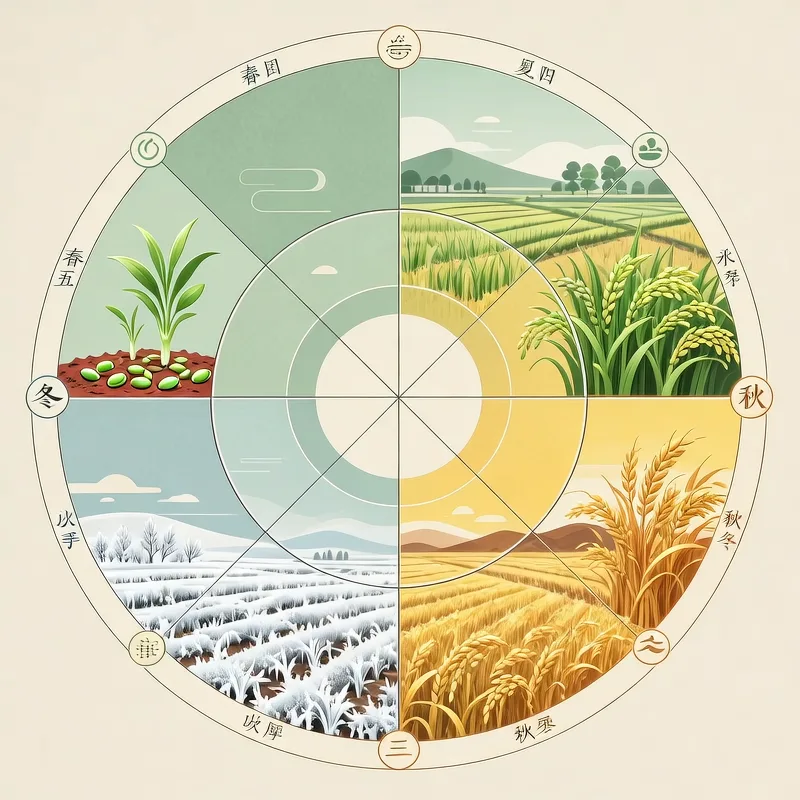
    Sơ đồ quỹ đạo hàng năm của mặt trời được chia thành hai mươi bốn đoạn với các nhãn nông nghiệp.
    Mỗi tiết khí bao phủ mười lăm độ trên quỹ đạo của mặt trời, cách nhau khoảng mười lăm ngày. Hình minh họa do AI tạo ra · SinoViz

    Lịch các lễ hội

    Vì ngày tháng được tính theo tháng âm lịch, các lễ hội diễn ra ngược với lịch dương. Tết Nguyên đán bắt đầu vào ngày đầu tiên của tháng Giêng âm lịch và kết thúc bằng Lễ hội đèn lồng vào ngày 15, khi đường phố tràn ngập đèn lồng. Lễ hội đua thuyền rồng diễn ra vào ngày 5 tháng 5, Tết ma vào ngày 15 tháng 7, và Tết Trung thu vào ngày 15 tháng 8, khi các gia đình quây quần dưới ánh trăng tròn.

    • Tết Nguyên Đán — ngày đầu tiên của tháng đầu tiên âm lịch
    • Lễ hội đèn lồng — ngày 15 tháng 1
    • Lễ hội Thuyền Rồng — ngày thứ năm của tháng thứ năm
    • Tết Trung Thu — ngày 15 tháng 8
    • Thanh Minh — một tiết khí vào khoảng ngày 4-6 tháng 4

    Vì sao điều đó vẫn quan trọng

    Lịch âm lịch vẫn tồn tại bởi vì nó bao hàm cả thời gian xã hội lẫn thời gian thiên văn. Tổ tiên được tôn kính vào ngày Thanh Minh và vào ngày giỗ được tính theo lịch âm; đám cưới và đám tang thường được lên lịch theo lịch âm. Con giáp của năm, bát tự của ngày sinh và ngày lành tháng chuyển nhà đều dựa trên cùng một hệ thống thiên văn. Ở Bắc Kinh, các hội chợ chùa chiền và lễ hội đèn lồng vẫn tuân theo tháng Giêng âm lịch, trong khi các cộng đồng nông thôn tham khảo lịch dương để làm việc đồng áng. Hai hệ thống, một lịch.
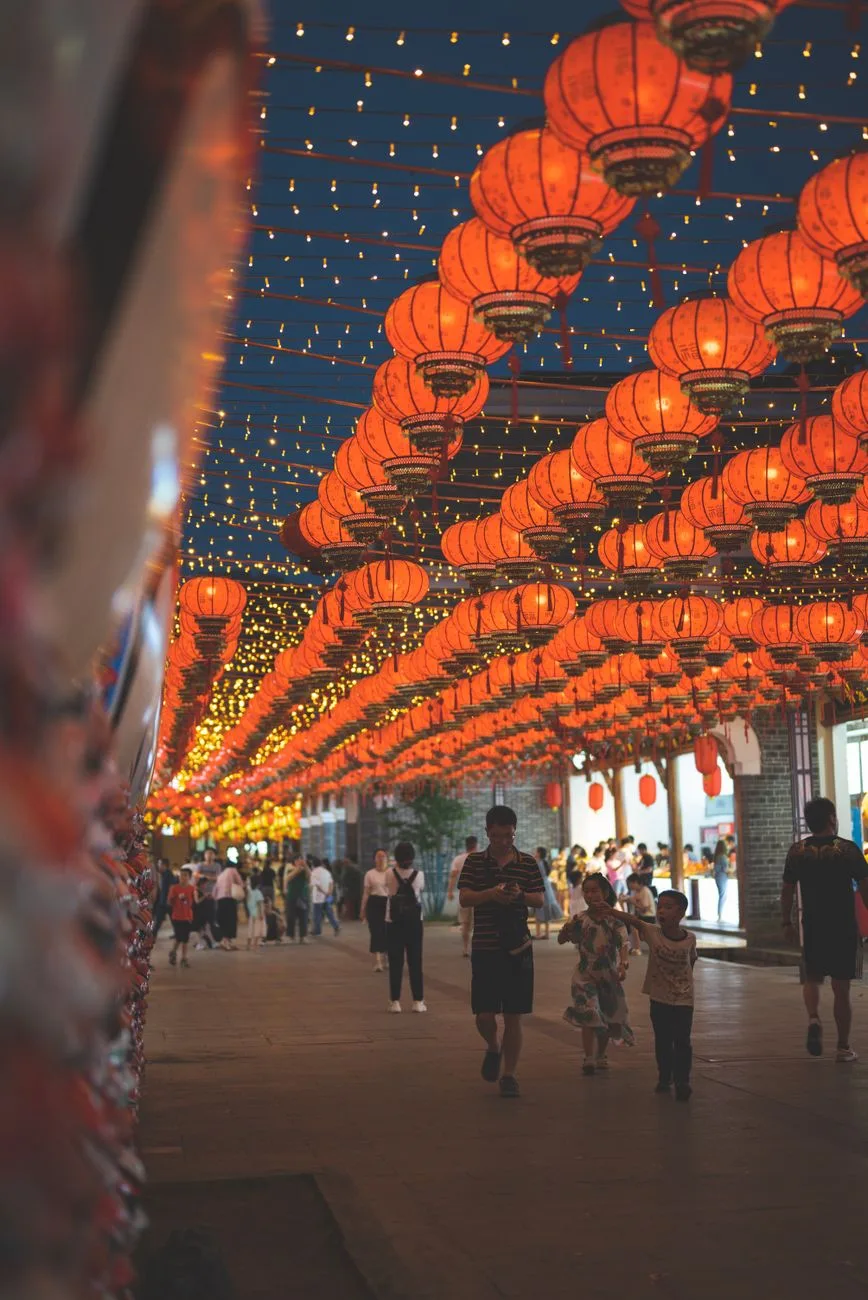
    Những chiếc đèn lồng treo trên đường phố Bắc Kinh trong tháng Giêng âm lịch
    Các hội chợ chùa chiền và lễ hội đèn lồng vẫn là những hoạt động đánh dấu những tuần đầu tiên của năm âm lịch. Cz Jen | Giấy phép Pexels (https://www.pexels.com/license/)
    Các tháng theo chu kỳ của mặt trăng, nhưng năm lại phải tuân theo chu kỳ của mặt trời.

    Nguồn tham khảo & tài liệu đọc thêm

    1. Hai mươi bốn tiết khí là kiến thức về thời gian và các tập quán được phát triển ở Trung Quốc thông qua việc quan sát chuyển động hàng năm của mặt trời. — Di sản văn hóa phi vật thể của UNESCO.
    2. lịch Trung Quốc — Bách khoa toàn thư Britannica.
    3. Tết Nguyên Đán Trung Quốc — Bách khoa toàn thư Britannica.
    Hãy xem nó tại chỗ.

    Hãy theo dõi mục này đến khu vực mà nó thuộc về.

    Khám phá bằng bản đồ

    Hãy theo dõi chủ đề này.

    Xem các bài viết khác có cùng thẻ với bài viết này.

    Duyệt thẻ
  • 12 con giáp Trung Quốc

    Cuộc sống & Văn hóa dân gian

    12 con giáp Trung Quốc

    Mười hai loài động vật, chu kỳ sáu mươi năm

    Mười hai con vật tượng trưng cho năm, giờ và tính cách, được thể hiện qua một chu kỳ lặp đi lặp lại.

    Phần
    Cuộc sống & Văn hóa dân gian
    Vùng đất
    Bắc Kinh
    Kỷ nguyên
    Xuyên suốt các thời đại
    Thẻ
    Hải quan

    Lịch âm dương Trung Quốc gán cho mỗi năm một con vật trong chu kỳ mười hai năm. Nó không phải là một lá số tử vi độc lập mà là một phần của lịch âm dương, trong đó mười hai địa chi kết hợp với mười thiên can để tạo thành một chu kỳ sáu mươi năm.

    Mười hai loài động vật

    Trình tự là chuột, trâu, hổ, thỏ, rồng, rắn, ngựa, dê, khỉ, gà trống, chó và lợn, mỗi con được ghép với một trong mười hai địa chi: tử, chu, âm, mao, chen, tư, wu, vi, thần, you, xu và hải. Dê cũng được dịch là cừu hoặc cừu đực. Một câu chuyện dân gian nổi tiếng giải thích thứ tự này là kết quả của một cuộc đua qua sông: chuột cưỡi trâu và nhảy vượt lên trước ở bờ, trong khi mèo, trong một số phiên bản, hoàn toàn không qua được bờ. Câu chuyện này ra đời sau hệ thống mà nó giải thích.

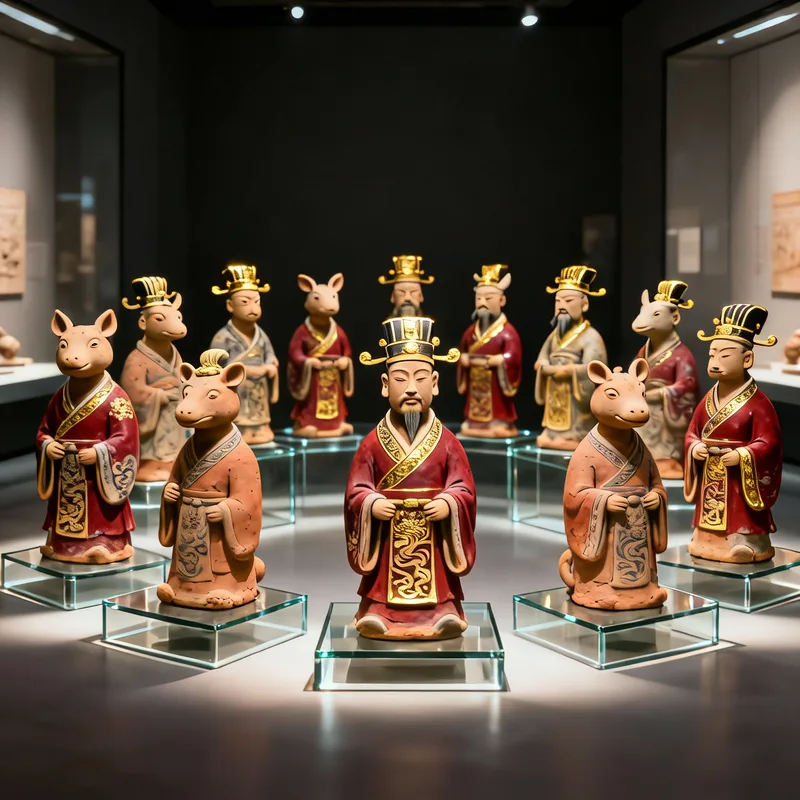
    Bộ mười hai tượng 12 con giáp bằng gốm sứ thời nhà Đường, mặc trang phục quan lại.
    Thứ tự các con vật được quy định bởi thời Đông Hán và xuất hiện trên đồ gốm mộ thời Đường. Hình minh họa do AI tạo ra · SinoViz

    Từ cành cây đến biểu tượng động vật

    Các cành cây thì đã có từ lâu; còn các con vật gắn liền với chúng xuất hiện dần dần hơn. Bảo tàng Nghệ thuật Metropolitan ghi nhận rằng mười hai con vật này lần đầu tiên được liên kết với lịch âm ở Trung Quốc vào khoảng thế kỷ thứ 3 trước Công nguyên và được thiết lập vững chắc vào thế kỷ thứ nhất sau Công nguyên. Đến thời Đông Hán (25–220 sau Công nguyên), thứ tự thông thường đã được cố định, và các văn bản như Lunheng của Vương Trùng Khánh liệt kê các con vật giống như được sử dụng ngày nay. Sự ghép đôi này lan rộng khắp Đông và Đông Nam Á, nơi các truyền thống địa phương đã thay đổi cách sắp xếp.

    Nghệ thuật trong lăng mộ xác nhận niên đại. Các ngôi mộ thời nhà Đường (618–907) chứa bộ mười hai con vật bằng đất nung mặc y phục quan lại, được đặt làm vật phẩm cúng dường cầu mong sự đổi mới và bảo vệ. Các ví dụ thời nhà Tống là những bức tượng nhỏ hơn bằng gốm tráng men, thể hiện hình ảnh quan lại hoặc người tu hành Đạo giáo, với con vật tượng trưng được cầm trên tay hoặc đội trên mũ. 12 con giáp không chỉ là một điều mới lạ trong dịp năm mới; nó còn định hình thời gian trong lăng mộ cũng như đối với người sống.

    Thân cây, cành cây và số phận

    Vì mười can và mười hai chi cùng phát triển, một năm được mô tả bằng một cặp như bingwu, Ngựa Lửa năm 2026; cặp này chỉ lặp lại sau sáu mươi năm. Các chi cũng chia ngày thành mười hai canh hai tiếng, giờ zi chạy từ mười một giờ đêm đến một giờ sáng. Bốn trụ vận mệnh — năm, tháng, ngày và giờ — được xây dựng từ bốn cặp như vậy. Những người xem bát tự đọc chúng để biết tính khí và vận mệnh, và các gia đình từng tham khảo chúng khi sắp xếp hôn nhân.

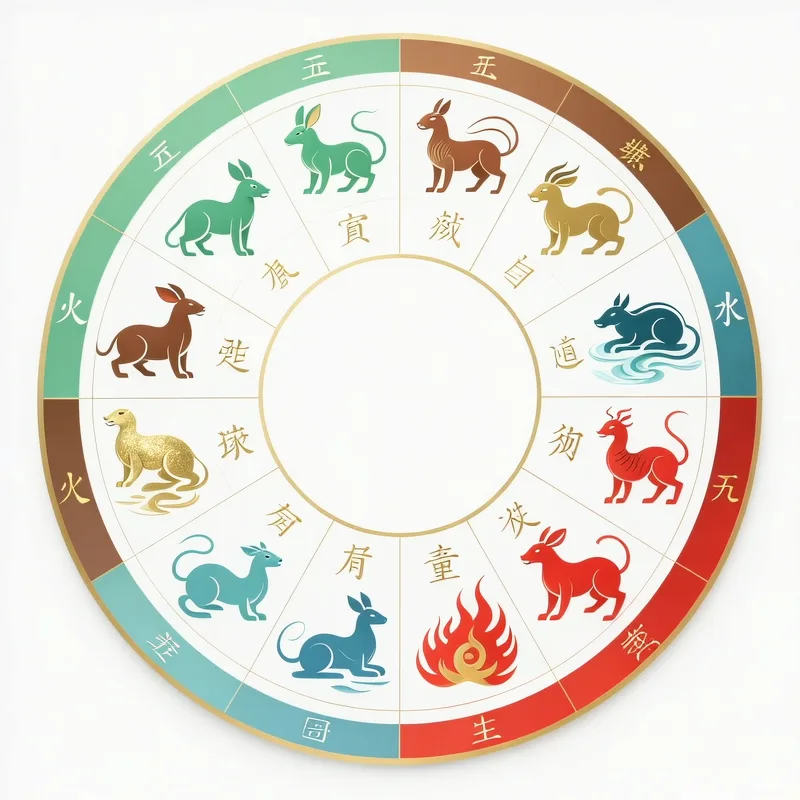
    Sơ đồ hình tròn của mười hai con vật trong cung hoàng đạo Trung Quốc và năm yếu tố.
    Sự kết hợp giữa động vật và nguyên tố: 2026 là Kim Ngưu, Ngựa Lửa. Hình minh họa do AI tạo ra · SinoViz

    Trong cuộc sống thường nhật

    Các cung hoàng đạo hoạt động như một cách nói ngắn gọn chung hơn là một niềm tin nghiêm ngặt. Năm con giáp tương ứng của một người, tức năm con giáp đó trở về, được đối xử thận trọng; quần áo màu đỏ và dây đỏ là những biện pháp phòng ngừa phổ biến, đặc biệt là đối với trẻ em và người già. Tranh in, tranh cắt giấy và hội chợ chùa chiền năm mới đều trưng bày con giáp của năm đó, và lời chúc mừng thường xuyên nhắc đến tên con giáp. Các tuyên bố về sự tương hợp dựa trên chu kỳ chi, với những cung cách nhau sáu vị trí được cho là xung khắc.

    • Năm 2026 là năm Kim Ngưu (năm Ngựa Lửa).
    • Mỗi nhánh quản lý một khoảng thời gian hai tiếng; zi bao gồm khoảng thời gian từ 11 giờ đêm đến 1 giờ sáng.
    • Bốn trụ cột của vận mệnh bao gồm năm, tháng, ngày và giờ.
    • Việt Nam dùng con mèo thay cho con thỏ.

    Sự khác biệt theo vùng miền

    Chu kỳ này theo chân người Hoa đến định cư và buôn bán khắp nơi. Ở Việt Nam, thỏ được thay bằng mèo, trâu được thay bằng bò nước; ở những nơi khác, dê có thể được gọi là cừu. Các con vật trong 12 con giáp xuất hiện trên tiền xu, gương, đồ sơn mài và đồ gốm sứ khắp khu vực, và lịch của Hàn Quốc và Nhật Bản cũng sử dụng cùng các nhánh lịch này với danh sách con vật riêng của họ. Những biến thể này rất quan trọng: chúng cho thấy một hệ thống lịch đang được chuyển dịch, chứ không chỉ đơn thuần là sao chép. Chuỗi lịch của Trung Quốc vẫn là điểm tham chiếu cho Tết Nguyên đán âm lịch được tổ chức ở Bắc Kinh và trong các cộng đồng người Hoa hải ngoại trên toàn thế giới.

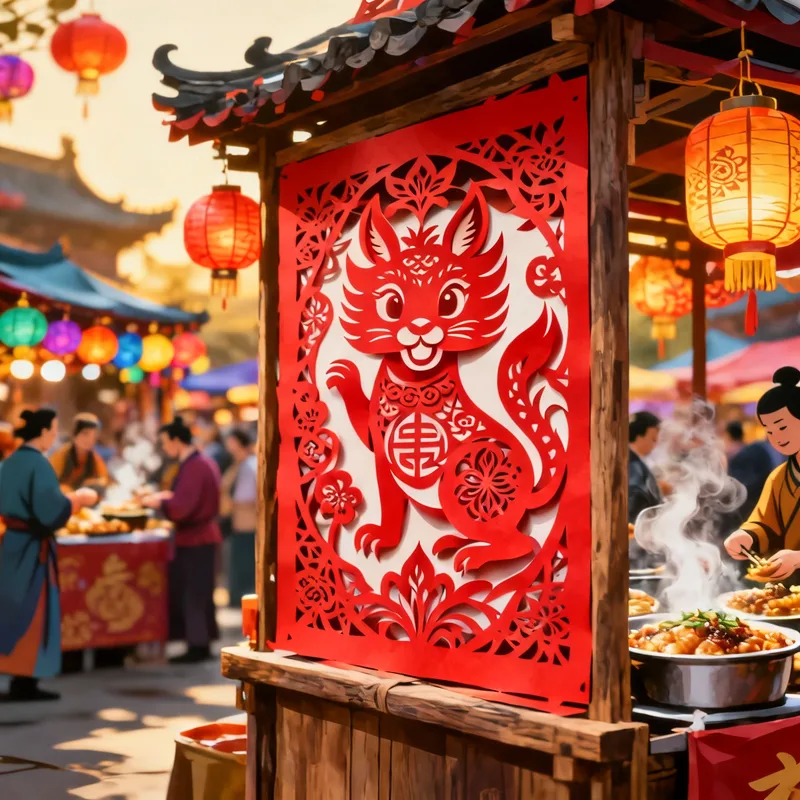
    Hình cắt giấy màu đỏ thể hiện con giáp của năm trên một gian hàng hội chợ chùa.
    Mỗi dịp Tết Nguyên Đán lại mang đến một loài động vật mới xuất hiện trong các bản in, tranh cắt giấy và thiệp chúc mừng. Hình minh họa do AI tạo ra · SinoViz
    Con chuột thắng cuộc đua vì nó biết khi nào cần nhảy — một câu chuyện được bịa đặt rất lâu sau khi chiếc xe đạp đã được sử dụng.

    Nguồn tham khảo & tài liệu đọc thêm

    1. con giáp Trung Quốc — Bách khoa toàn thư Britannica.
    2. Bộ mười hai con giáp, thời nhà Đường. — Bảo tàng Nghệ thuật Metropolitan.
    3. Chào mừng năm con Chó — Bảo tàng Nghệ thuật Metropolitan.

    Hãy xem nó tại chỗ.

    Hãy theo dõi mục này đến khu vực mà nó thuộc về.

    Khám phá bằng bản đồ

    Hãy theo dõi chủ đề này.

    Xem các bài viết khác có cùng thẻ với bài viết này.

    Duyệt thẻ
  • Sự tôn kính tổ tiên

    Cuộc sống & Văn hóa dân gian

    Sự tôn kính tổ tiên

    Dòng dõi, nghi lễ và ký ức

    Các nghi lễ thờ cúng tổ tiên liên kết gia đình, nhà dòng họ và nghĩa trang làng.

    Phần
    Cuộc sống & Văn hóa dân gian
    Vùng đất
    Phúc Kiến
    Kỷ nguyên
    Xuyên suốt các thời đại
    Thẻ
    Hải quan

    Tục thờ cúng tổ tiên là việc tôn vinh người thân đã khuất bằng lễ vật, hương trầm và các nghi lễ quy định. Ở Phúc Kiến, tục lệ này trở thành khuôn khổ cho việc tổ chức dòng họ, quyền sở hữu tài sản và sự di cư, gắn kết các làng mạc với tổ tiên, những người thường đã sống từ nhiều thế kỷ trước.

    Bổn phận đối với người đã khuất

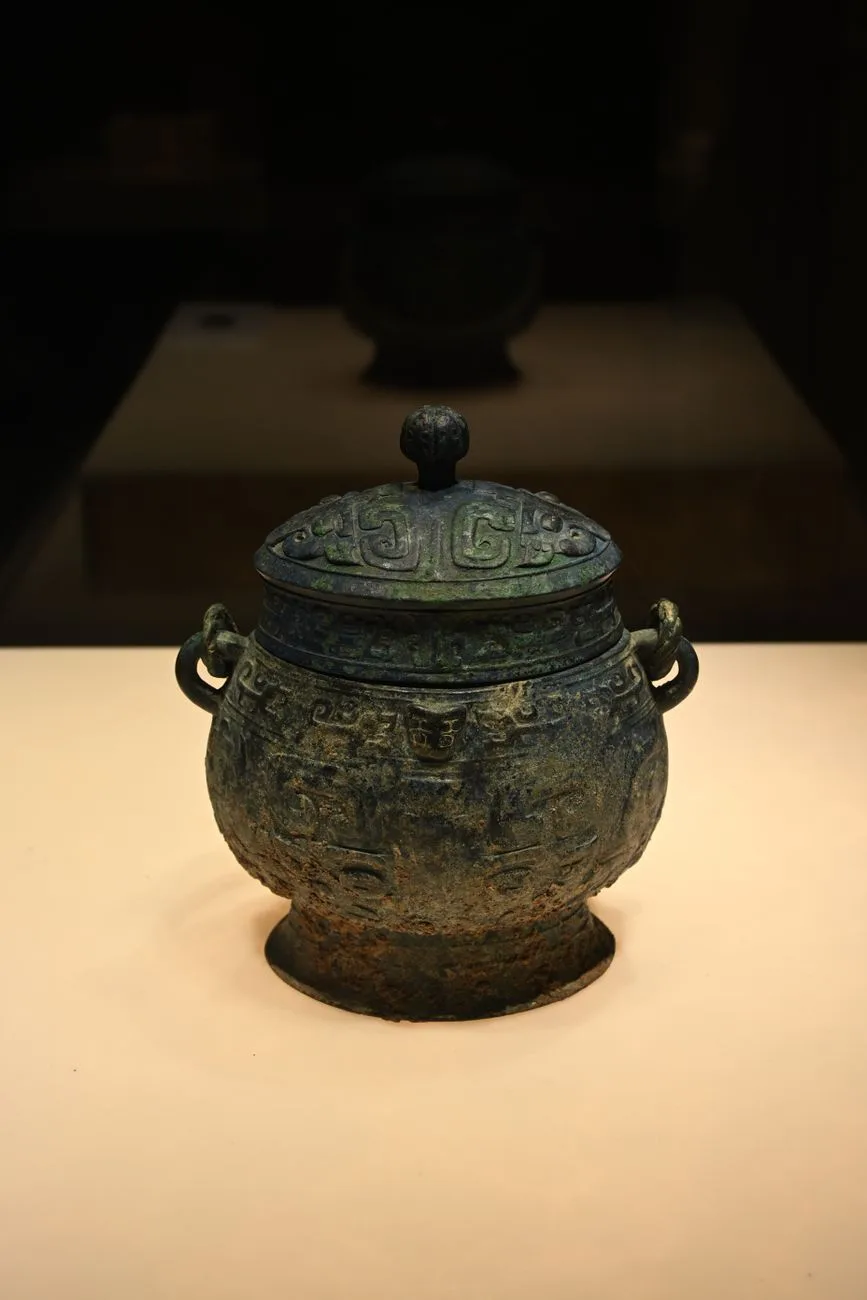
    Giáo lý Nho giáo đã赋予 cho tập tục này ngôn ngữ đạo đức. Luận ngữ khuyên người sống nên cẩn thận trong việc tổ tiên viếng tang và tưởng nhớ tổ tiên từ xa, mô tả việc tế lễ như thể linh hồn tổ tiên đang hiện diện. Kinh Lễ và các văn bản nghi lễ liên quan quy định các cấp bậc tang lễ, lễ vật và thứ tự chôn cất người chết. Các nhà khảo cổ học truy tìm nguồn gốc tục thờ tổ tiên từ cuối thời kỳ đồ đá mới, và các bình đồng thời nhà Thương được đúc với các dòng chữ ghi tên tổ tiên mà người ta dâng rượu hoặc ngũ cốc. Sự tôn kính vừa là nghĩa vụ vừa là tình cảm.

    Bình đồng thờ cúng thời nhà Thương, có khắc dòng chữ dâng cúng cho tổ tiên.
    Những chiếc bình bằng đồng ghi rõ tên người nhận lễ vật, thể hiện mối quan hệ đó bằng văn bản. K ZHAO | Giấy phép Pexels (https://www.pexels.com/license/)

    Bàn thờ gia đình

    Trong một gia đình truyền thống, một bàn thờ nhỏ đặt các bài vị tổ tiên — những tấm bảng gỗ khắc tên và tước hiệu — được sắp xếp theo thế hệ. Hương được thắp vào ngày mùng 1 và ngày 15 âm lịch, và vào ngày giỗ. Lễ vật có thể bao gồm trà, rượu, trái cây, gạo và ba loại thịt, được bày biện theo thứ tự; các thành viên trong gia đình cúi lạy theo thứ tự tuổi tác. Bài vị không phải là hình ảnh của người đó mà là nơi để thể hiện mối quan hệ.

    Thời gian diễn ra các nghi lễ tuân theo lịch. Tiết Thanh Minh, tiết Thuần Khiết vào đầu tháng Tư, là ngày tảo mộ lớn: các ngôi mộ được dọn sạch cỏ dại, lễ vật được dâng cúng và tiền giấy được đốt. Ngày Đông chí mang đến một vòng cúng tế khác trong nhiều gia đình ở Phúc Kiến, thường kèm theo bánh trôi (tangyuan). Trong tháng Bảy âm lịch, Lễ hội Ma hướng sự chú ý không chỉ đến người thân mà còn đến các linh hồn lang thang, với các bữa tiệc cộng đồng và hình nộm bằng giấy.

    Các dòng họ của Phúc Kiến

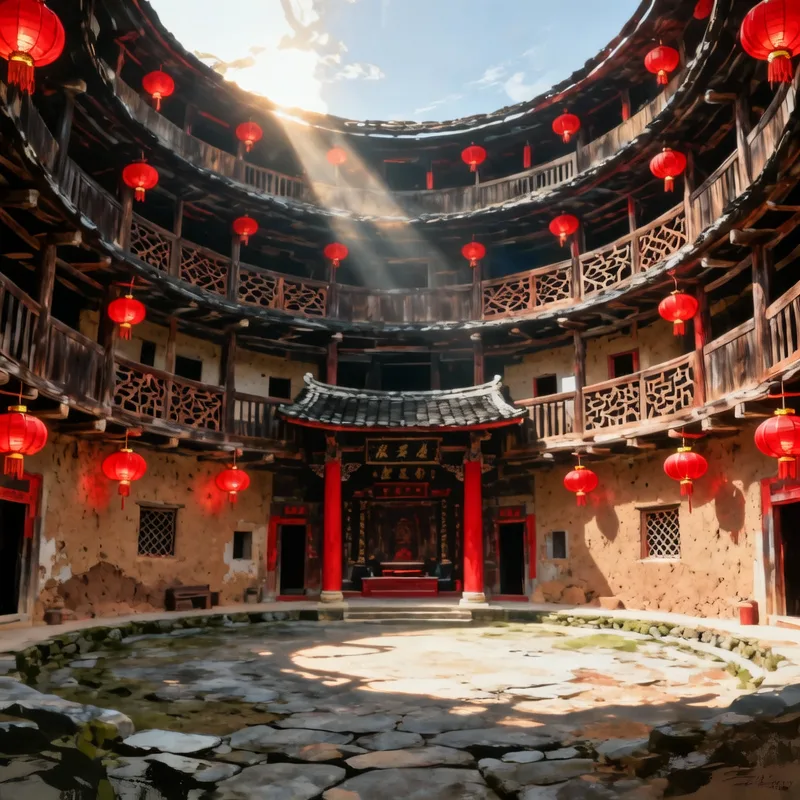
    Không nơi nào thể hiện rõ ràng hơn ở Phúc Kiến. Từ thế kỷ XVI, các điện thờ gia tộc – citang – đã lan rộng ra ngoài tầng lớp thượng lưu đến các làng mạc khắp vùng Đông Nam Trung Quốc, và ở các vùng quê của người di cư, chúng đã trở thành yếu tố chi phối cảnh quan đô thị. Điện thờ gia tộc lưu giữ các bài vị tập thể của một nhóm họ, ghi chép gia phả và quản lý đất đai của tổ chức, thu nhập từ đó được dùng để sửa chữa, cúng tế và xây trường học. Bên trong một số tulou của người Hakka, những ngôi nhà đất lớn dành cho cộng đồng ở Tây Nam Phúc Kiến, điện thờ gia tộc chiếm một vị trí trong vòng phòng thủ.

    Sân trong và nhà thờ tổ tiên của một ngôi nhà tulou đất sét ở Phúc Kiến.
    Một sảnh gia tộc trong tulou phục vụ cho toàn bộ gia tộc, chứ không phải chỉ một hộ gia đình. Hình minh họa do AI tạo ra · SinoViz

    Di cư và trở về

    Vùng bờ biển Phúc Kiến đã đưa người di cư đến Đông Nam Á từ cuối thời nhà Thanh trở đi, và các nghi lễ thờ cúng tổ tiên cũng theo họ. Những người di cư gia nhập các hội họ và xây dựng đền thờ ở Singapore, Malaysia và Indonesia; tiền kiều hối được dùng để xây dựng đền thờ mới và trùng tu mộ phần ở quê nhà. Các học giả mô tả những mối liên hệ này như những mạng lưới dòng họ xuyên quốc gia: cùng một vốn từ nghi lễ đã kết nối bàn thờ làng, hội họ ở nước ngoài và nghĩa trang. Sau những năm 1980, nhiều hậu duệ đã trở về để xây dựng lại đền thờ, biến gia phả thành cầu nối giữa các thế hệ và biên giới.

    • Thanh Minh: quét dọn mộ phần và đặt đồ cúng vào đầu tháng Tư
    • Tháng 7 âm lịch: Lễ hội ma quỷ, nghi lễ cúng bái các linh hồn vô danh.
    • Citang: một điện thờ gia tộc lưu giữ các bia đá, gia phả và hồ sơ gia tộc.
    • Tulou Phúc Kiến: Di sản Thế giới UNESCO từ năm 2008

    Những thay đổi và sự tiếp nối

    Thế kỷ XX đã làm xáo trộn khía cạnh thể chế. Cải cách ruộng đất và tập thể hóa đã tước đoạt thu nhập của các điền trang gia tộc, và trong thời kỳ Cách mạng Văn hóa, nhiều nhà thờ đã bị đóng cửa hoặc hư hại. Từ những năm 1980, các sáng kiến địa phương đã khôi phục lại các công trình và hồi sinh các nghi lễ, đôi khi như một hình thức du lịch di sản và đôi khi như một nghĩa vụ gia đình. Tập tục này vẫn tồn tại dưới hình thức được điều chỉnh: đốt hương trên kệ trong nhà, dọn dẹp mộ trước lễ Thanh Minh, ghi tên vào gia phả được phục dựng. Điều còn lại là niềm tin rằng người chết vẫn là một phần của trật tự xã hội.

    Các thành viên trong gia đình đốt giấy cúng tại mộ trong dịp Thanh Minh ở miền nam Trung Quốc.
    Tục tảo mộ và cúng dường vẫn là phần dễ thấy nhất trong các nghi lễ Thanh Minh. Man Fong Wong | Giấy phép Pexels (https://www.pexels.com/license/)
    Tấm bia mộ không phải là chân dung của người đã khuất. Nó là một địa chỉ mà người sống vẫn có thể liên lạc với họ.

    Nguồn tham khảo & tài liệu đọc thêm

    1. Trung Quốc: Tín ngưỡng tôn giáo và tổ chức xã hội — Bách khoa toàn thư Britannica.
    2. Phúc Kiến Thổ Lâu — Trung tâm Di sản Thế giới UNESCO.
    3. Cộng đồng người Hoa hải ngoại: Các mô hình thời kỳ cận đại, 1500–1740 — Nhà xuất bản Đại học Cambridge.

    Hãy xem nó tại chỗ.

    Hãy theo dõi mục này đến khu vực mà nó thuộc về.

    Khám phá bằng bản đồ

    Hãy theo dõi chủ đề này.

    Xem các bài viết khác có cùng thẻ với bài viết này.

    Duyệt thẻ
  • Sứ

    Cuộc sống & Văn hóa dân gian

    Sứ

    Clay, fire, and the white of Dehua

    Fujian’s kilns turned local clay into porcelain that travelled across the sea and changed how the world pictured China.

    Phần
    Cuộc sống & Văn hóa dân gian
    Vùng đất
    Phúc Kiến
    Kỷ nguyên
    Xuyên suốt các thời đại
    Thẻ
    Customs, History, Scenic Sites

    Porcelain is defined by its body and its firing: a pale, fine clay heated to temperatures that vitrify the material and make it ring when struck. Fujian’s Dehua kilns made a version so white it seemed translucent, known in Europe as blanc de Chine.

    What Makes Porcelain

    Porcelain differs from ordinary pottery in both material and firing. Potters use kaolin, a white clay, mixed with feldspar and quartz, then fire the shaped vessel at roughly 1,200 to 1,400 degrees Celsius. At that temperature the body vitrifies: it becomes dense, non-porous, and slightly translucent at the edges. A glassy glaze is usually applied before firing, bonding to the body rather than sitting on it as a separate layer. Chinese potters had reached this threshold by the Tang and Song periods, and Jingdezhen in Jiangxi became the great production centre. The English word china stuck to the ware because the country was the source of the finest examples. A light tap on a good cup gives a clear ring, a quick test that still works in a shop.

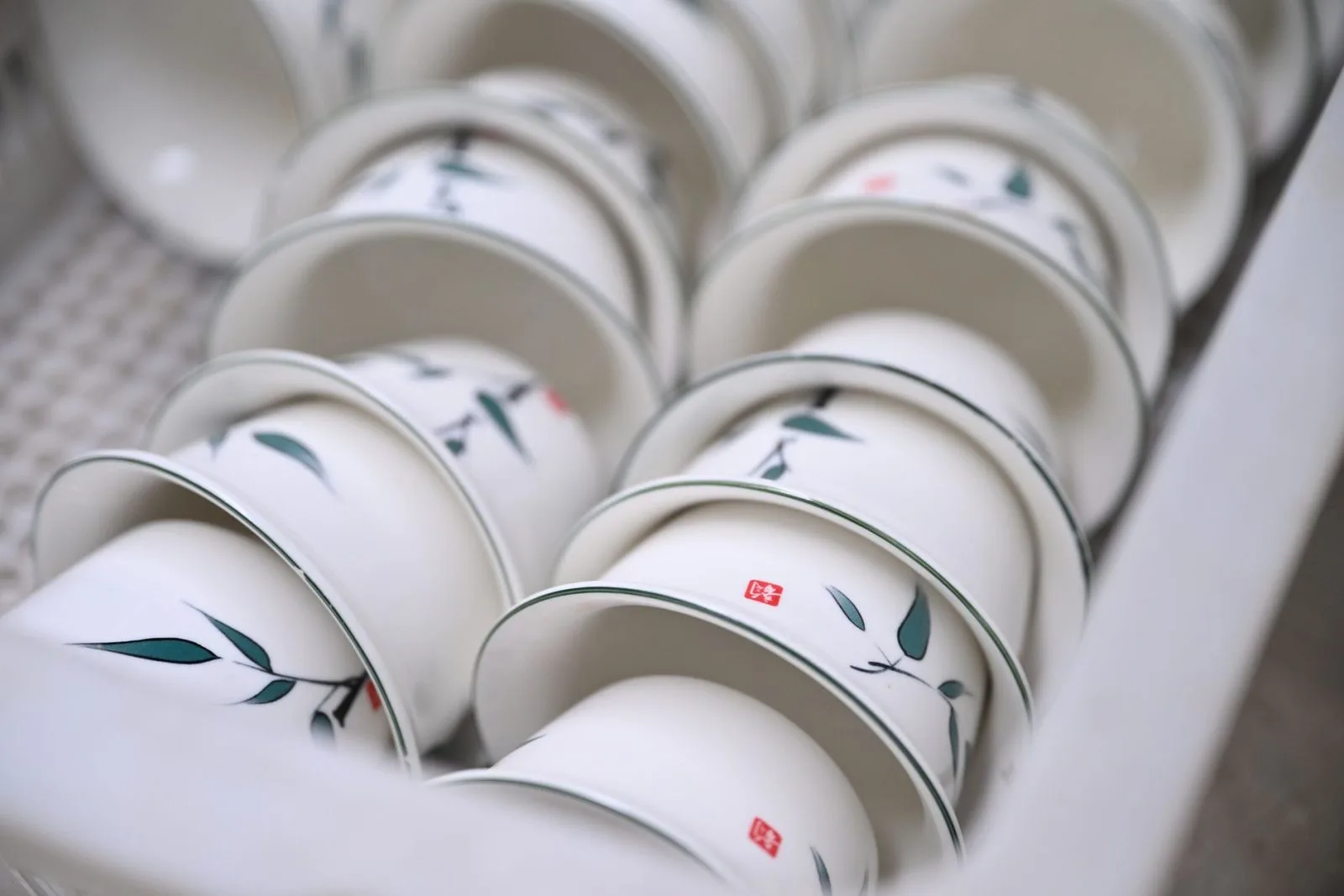
    A porcelain bowl with a pale glaze photographed against light
    True porcelain is fired hot enough to vitrify the body, giving it a hard, resonant wall. lee c | Pexels License (https://www.pexels.com/license/)

    Dehua White

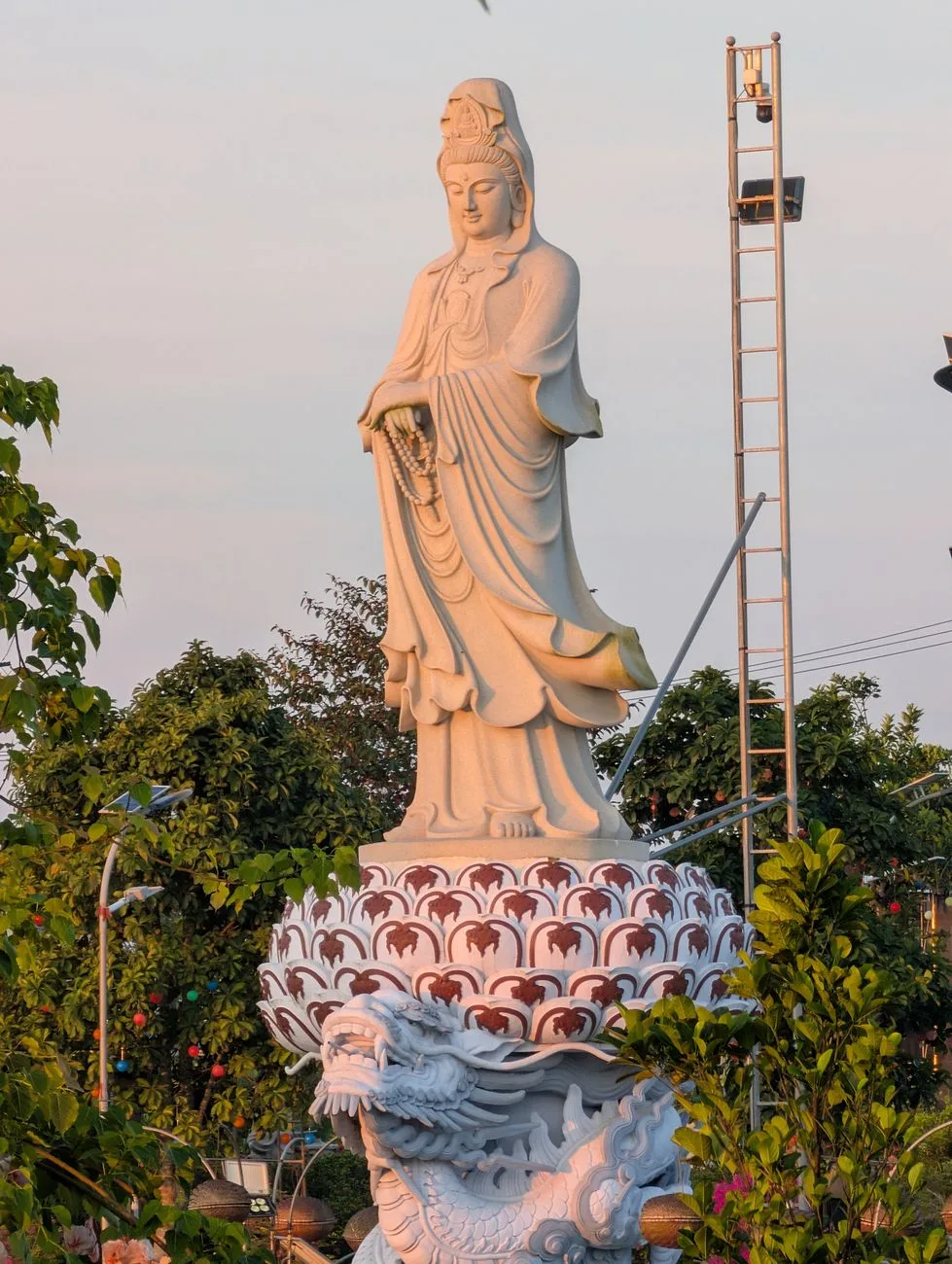
    Dehua, a county in Fujian’s Quanzhou prefecture, developed a white porcelain with a warm, creamy tone. Its clay is low in iron, which lets the glaze fire almost colourless, and its potters mastered figures as well as vessels. From the Ming dynasty onward, Dehua workshops produced small statues of Guanyin, the bodhisattva of compassion, with soft modelling and a smooth, almost waxy surface. European traders called the ware blanc de Chine, and by the seventeenth century it was collected in royal cabinets and copied by potters in Meissen and elsewhere. Tea wares also left the kilns: small cups, gaiwan lids and bowls, and white vessels that showed the colour of tea clearly. Local museums trace the kiln sequence from Song-period celadons through the white wares that made Dehua famous.

    A milky white porcelain figurine of Guanyin from Dehua
    Dehua’s porcelain figures of Guanyin became known in Europe as blanc de Chine. Quý Hoàng | Pexels License (https://www.pexels.com/license/)

    A Port for Porcelain

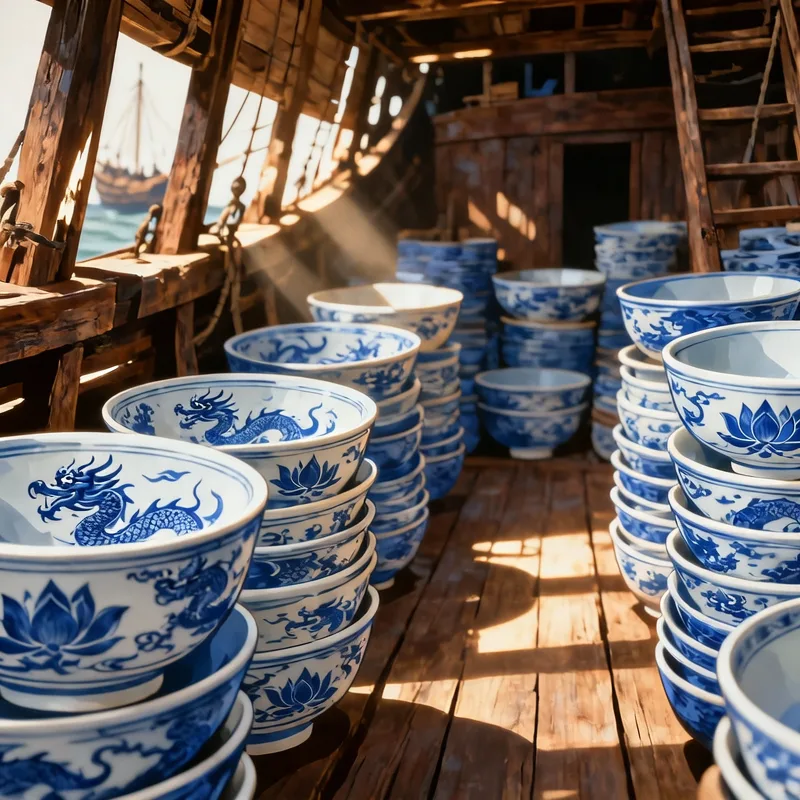
    Porcelain shaped trade as much as taste. Fujian’s coast faced the South China Sea, and Quanzhou became one of the busiest ports of the Song and Yuan dynasties, a place where merchants, monks, and ship crews exchanged goods and techniques. Archaeologists have recovered Chinese ceramics from ports and shipwrecks across Southeast Asia, the Indian Ocean, and East Africa; the fragments are dated by glaze and shape, making them a record of demand as well as production. UNESCO listed Quanzhou in 2021 as an emporium of the world in Song-Yuan China, with surviving mosques and temples. The export ware was not always the finest court piece. Sturdy bowls and jars packed in straw travelled in bulk, reaching households that never saw the kiln but knew the clay by its colour.

    Blue-and-white porcelain packed as cargo in a ship’s hold
    Quanzhou was a major Song and Yuan port from which Fujian ceramics were shipped abroad. Hình minh họa do AI tạo ra · SinoViz

    Using and Collecting

    Porcelain entered daily ritual as well as trade. A gaiwan, a bowl with a lid and saucer, is used for brewing tea in northern China; the lid controls the leaves and the saucer protects the fingers. White Dehua cups make the colour of a tea liquor easy to judge. Collectors look for a clean foot ring, an even glaze, and a mark painted on the base, though many imitations copy famous reign marks. Visit a kiln museum in Dehua or a ceramic gallery in Quanzhou to see the sequence from raw clay to finished piece. Handling a cup with a saucer and a steady hand is still the simplest way to understand why this material travelled so far.

    A clear ring and a translucent edge tell you what the fire has done.

    Nguồn tham khảo & tài liệu đọc thêm

    1. Chinese Porcelain — Bảo tàng Nghệ thuật Metropolitan.
    2. Quanzhou: Emporium of the World in Song-Yuan China — Trung tâm Di sản Thế giới UNESCO.
    3. Blanc de Chine — Bách khoa toàn thư Britannica.
    Hãy xem nó tại chỗ.

    Hãy theo dõi mục này đến khu vực mà nó thuộc về.

    Khám phá bằng bản đồ

    Hãy theo dõi chủ đề này.

    Xem các bài viết khác có cùng thẻ với bài viết này.

    Duyệt thẻ
  • Calligraphy

    Cuộc sống & Văn hóa dân gian

    Calligraphy

    The brush as a record of the hand

    Chinese calligraphy turns writing into an art of pressure, rhythm, and restraint.

    Phần
    Cuộc sống & Văn hóa dân gian
    Vùng đất
    Thiểm Tây
    Kỷ nguyên
    Xuyên suốt các thời đại
    Thẻ
    Customs, History

    A line of Chinese calligraphy is made once: the brush touches paper, and the mark cannot be corrected. That irreversibility is part of its appeal. In Xi’an, the city’s stone steles preserve the work of centuries of calligraphers in a form anyone can still read.

    The Four Treasures

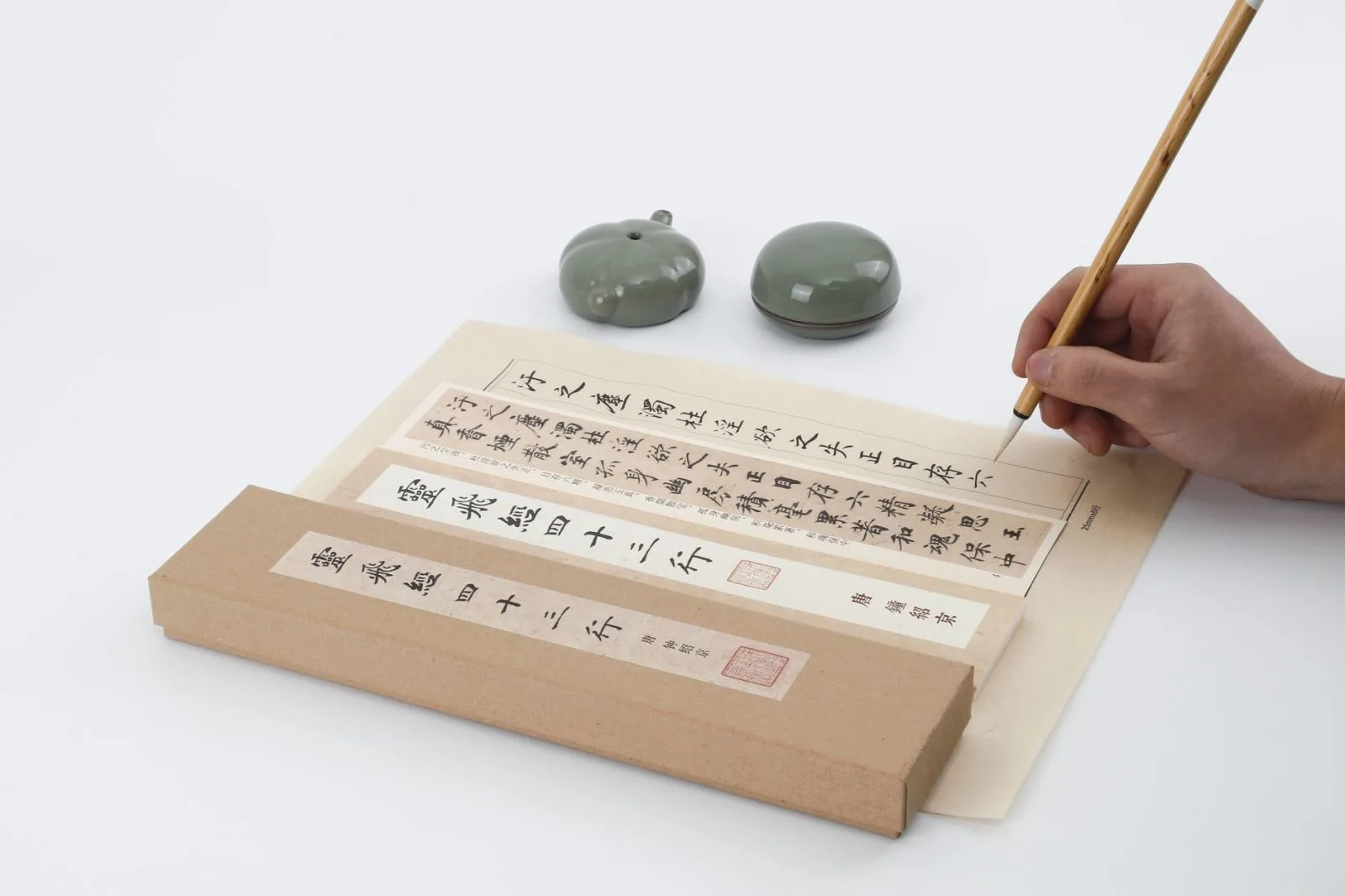
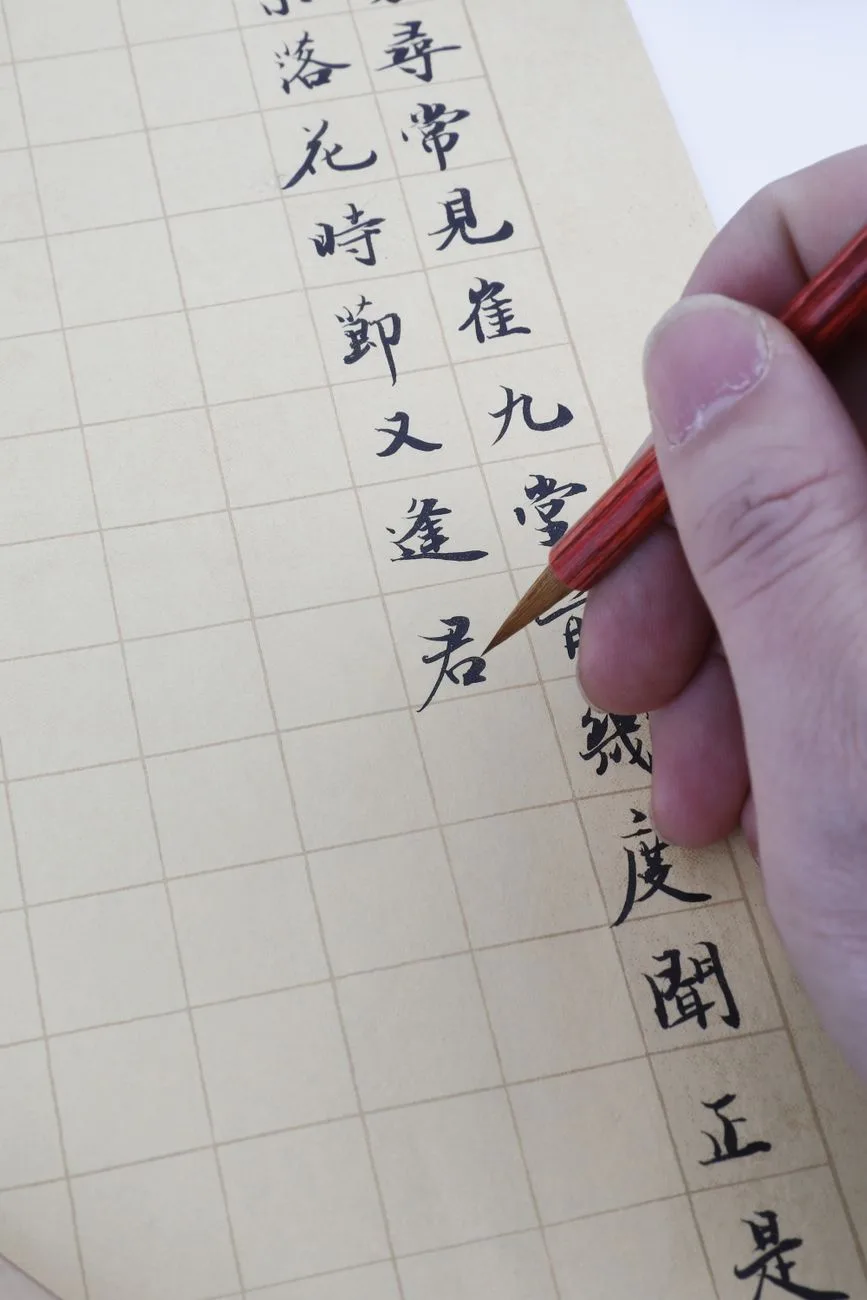
    The tools are known as the Four Treasures of the Study: brush, ink, paper, and inkstone. A brush of animal hair is held upright between thumb and fingers, and pressure makes the stroke swell and thin. Ink comes as a solid stick ground with water on a stone; the density of the mixture changes the character of the line. Paper is absorbent, so hesitation shows as a blot. Practice begins with the basic strokes, then with copying a model character hundreds of times until the hand remembers its proportions. Students still learn by tracing the regular script of Tang dynasty masters such as Yan Zhenqing and Ouyang Xun. The aim is not decorative flourish but control: a steady wrist, an even rhythm, and a line that holds its centre.

    Calligrapher’s brush, ink stick, paper, and inkstone laid on a desk
    Brush, ink, paper, and inkstone are the traditional Four Treasures of the Study. Feng Zou | Pexels License (https://www.pexels.com/license/)

    Scripts and Masters

    Chinese writing moved through several scripts, and calligraphers kept them all alive as styles. Seal script, with even, rounded lines, comes from the inscriptions on bronze and stone of the Zhou and Qin periods. Clerical script, formalised in the Han dynasty, flattened characters with a distinctive flared stroke. Regular script, settled by the Tang, is the model still taught in schools; each part of a character sits in a clear frame. Running script links strokes without losing legibility, while cursive script reduces them to rapid, connected gestures. Wang Xizhi’s Lantingji Xu, written in 353, is the famous example of running script; the original is lost, but copies carry its reputation. Later Song and Yuan artists, including Su Shi and Zhao Mengfu, made personal expression as important as correct form.

    Close view of flowing cursive calligraphy on a hanging scroll
    Cursive script compresses characters into gestures that reward slow reading. Feng Zou | Pexels License (https://www.pexels.com/license/)

    Stone Records in Xi’an

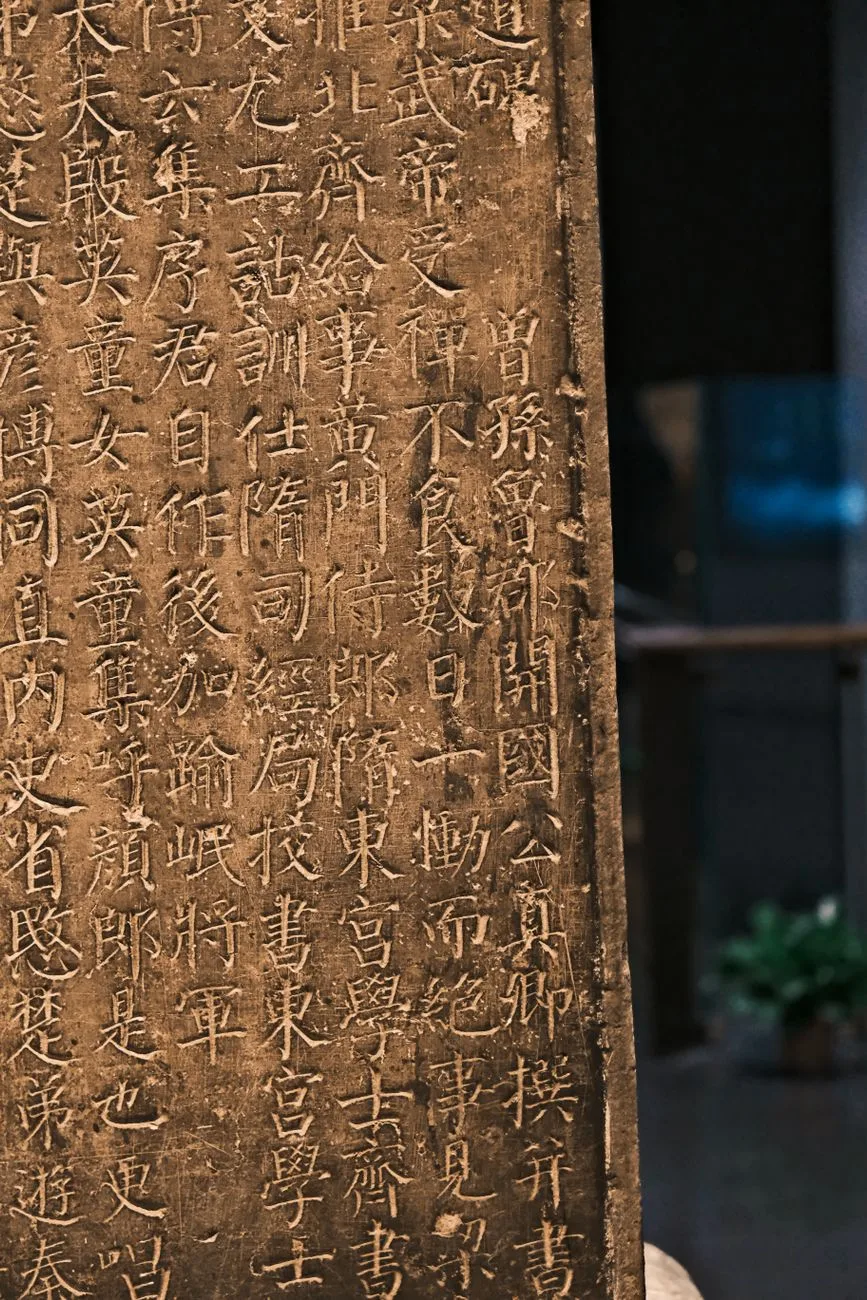
    Xi’an, the former Chang’an, preserves calligraphy on stone at the Beilin Museum, the Forest of Stone Steles. The collection began in 1087, when the Confucian classics were carved onto more than a hundred steles and installed beside the city’s Confucius Temple. Centuries of additions followed: tombstones, imperial edicts, Buddhist texts, and poems cut in several scripts. Rubbing a stele with damp paper and ink was the traditional way to study and circulate a model, and museums still demonstrate the technique. One slab records a Tang emperor’s visit to a Nestorian Christian church; another carries a Song dynasty city diagram. Walking the covered galleries, you can compare the same character written in seal, clerical, and regular forms across a thousand years.

    Rows of carved stone steles at the Beilin Museum in Xi’an
    The Beilin Museum holds thousands of steles, including Confucian classics cut into stone. Lily Lili | Pexels License (https://www.pexels.com/license/)

    Living Practice

    Calligraphy remains a daily practice rather than a museum relic. Around Spring Festival, shops sell red paper couplets, and a single character for good fortune is pasted on doors, sometimes upside down to suggest that fortune has arrived. Temple names, shop signs, and station plaques are often lettered by accomplished hands. Schoolchildren practise copying characters in grid books, and older residents gather in parks to write with large water brushes on the pavement, where the characters dry in minutes. Workshops in Xi’an let visitors try a brush and learn how a stroke begins with a pause and ends with a lift. You need not read every character to see the differences: one script sits square and calm, the next leans and races.

    A stroke begins with a pause and ends with a lift; the paper keeps the record.

    Nguồn tham khảo & tài liệu đọc thêm

    1. Chinese calligraphy — Bách khoa toàn thư Britannica.
    2. Chinese Calligraphy — Bảo tàng Nghệ thuật Metropolitan.
    3. Beilin Museum, Xi’an — China Highlights.

    Hãy xem nó tại chỗ.

    Hãy theo dõi mục này đến khu vực mà nó thuộc về.

    Khám phá bằng bản đồ

    Hãy theo dõi chủ đề này.

    Xem các bài viết khác có cùng thẻ với bài viết này.

    Duyệt thẻ
  • Thanh Minh

    Cuộc sống & Văn hóa dân gian

    Thanh Minh

    Sweeping tombs, welcoming spring

    Qingming pairs the remembrance of ancestors with the first serious outings of spring.

    Phần
    Cuộc sống & Văn hóa dân gian
    Vùng đất
    Chiết Giang
    Kỷ nguyên
    Xuyên suốt các thời đại
    Thẻ
    Customs, Geography

    Qingming arrives around 4 or 5 April, when the sun reaches fifteen degrees of the spring equinox on the traditional solar-term calendar. Its two halves belong together: cleaning a family grave, then walking out into the greening countryside.

    A Solar Term and a Day of Remembrance

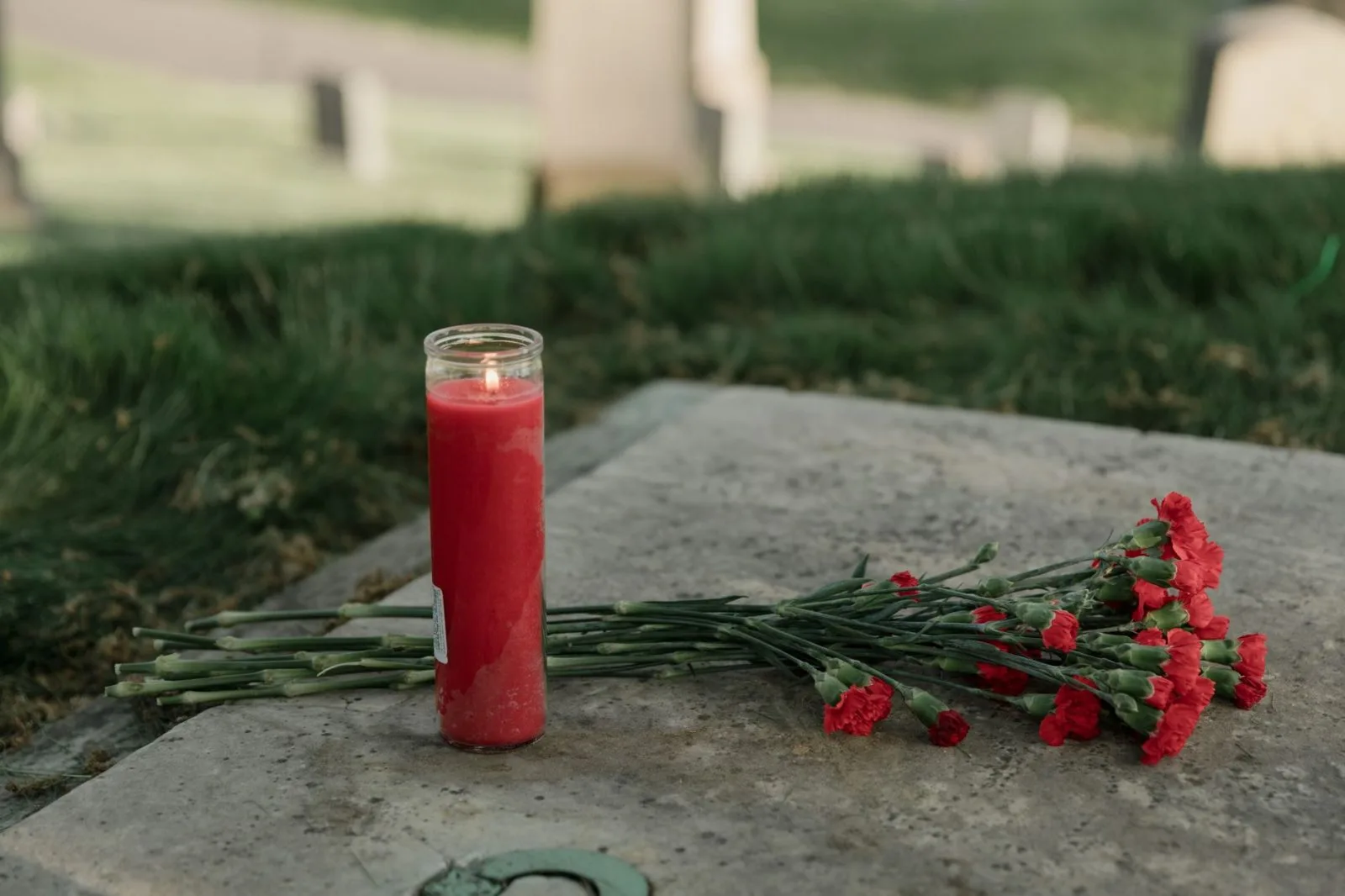
    Qingming means clear and bright, a name drawn from the twenty-four solar terms, the calendar that divides the year by the sun’s position. The term falls around 4 or 5 April, when temperatures rise and rain becomes frequent in the lower Yangtze. Families visit ancestral graves to sweep away leaves and weeds, repaint inscriptions, and lay out food, tea, and paper money. Offerings are followed by bows or a few words addressed to the dead. Paper money may be burned in a designated container, depending on local rules. The act is not a celebration of death but a maintenance of family continuity: the dead remain part of the household’s obligations. In Zhejiang, hillside graves make the visit a walk as much as a ritual.

    A family tending a grave with flowers on a hillside in spring
    Tomb sweeping means cleaning the grave, making offerings, and bowing before ancestors. RDNE Stock project | Pexels License (https://www.pexels.com/license/)

    The Cold Food Connection

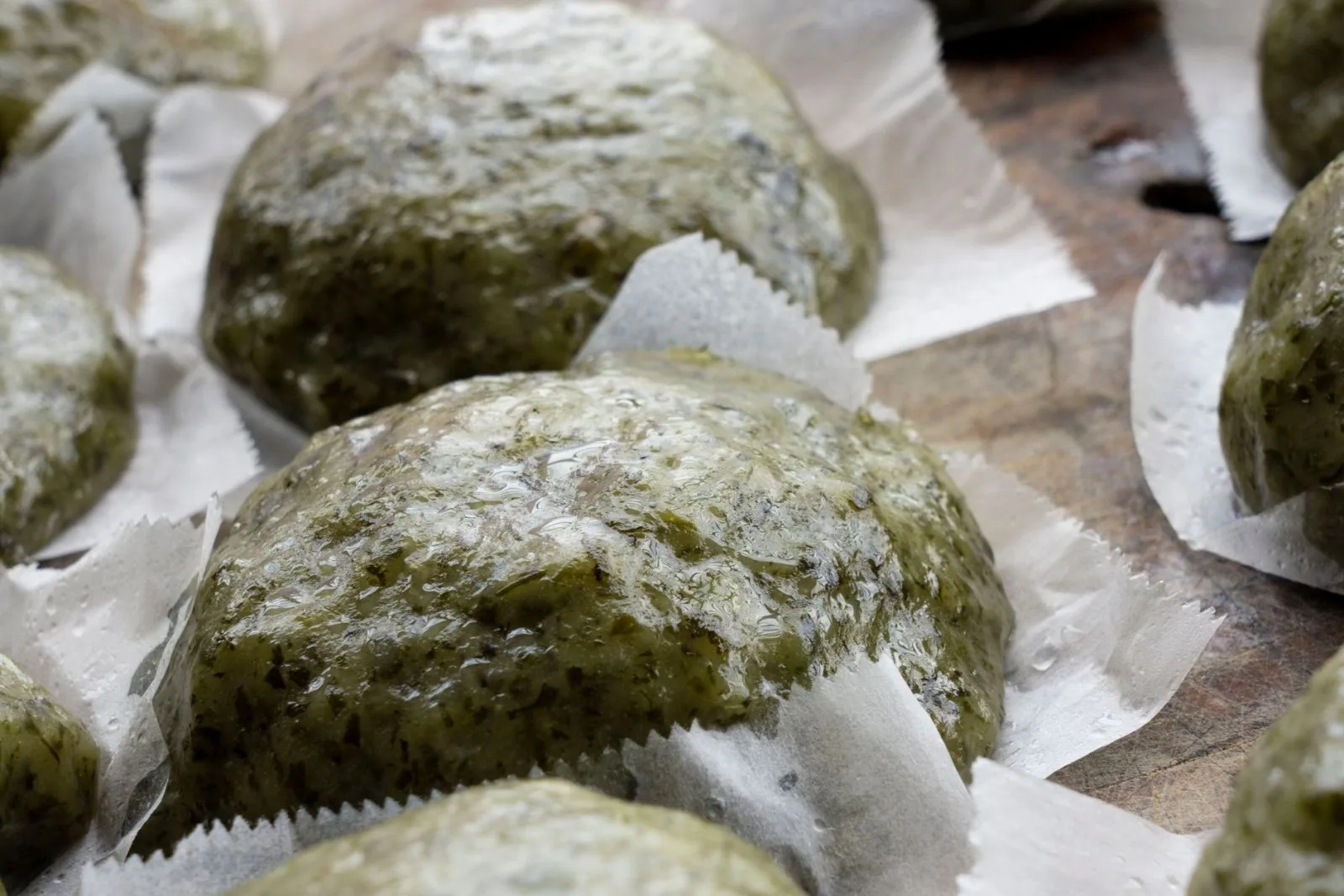
    Earlier custom linked this season with the Cold Food Festival, when fires were forbidden and families ate food prepared in advance. One traditional explanation connects the practice to Jie Zitui, a loyal follower of a Spring and Autumn duke who died in a forest fire; later historians treat the story as one among several local traditions rather than a single origin. In practice, the cold-food element has faded, but special foods remain. In Zhejiang and neighbouring Jiangnan, people eat qingtuan, soft green dumplings made with glutinous rice and mugwort juice, often filled with sweet red bean paste. Their colour comes from the first spring growth, and they are sold in markets for only a short season. Eating one links the memory of the dead to the first green.

    Qingming dumplings and cold food arranged on a table
    Qingming foods in Zhejiang include qingtuan, green rice cakes flavoured with mugwort. Jimmy Liao | Pexels License (https://www.pexels.com/license/)

    Spring Outings in Zhejiang

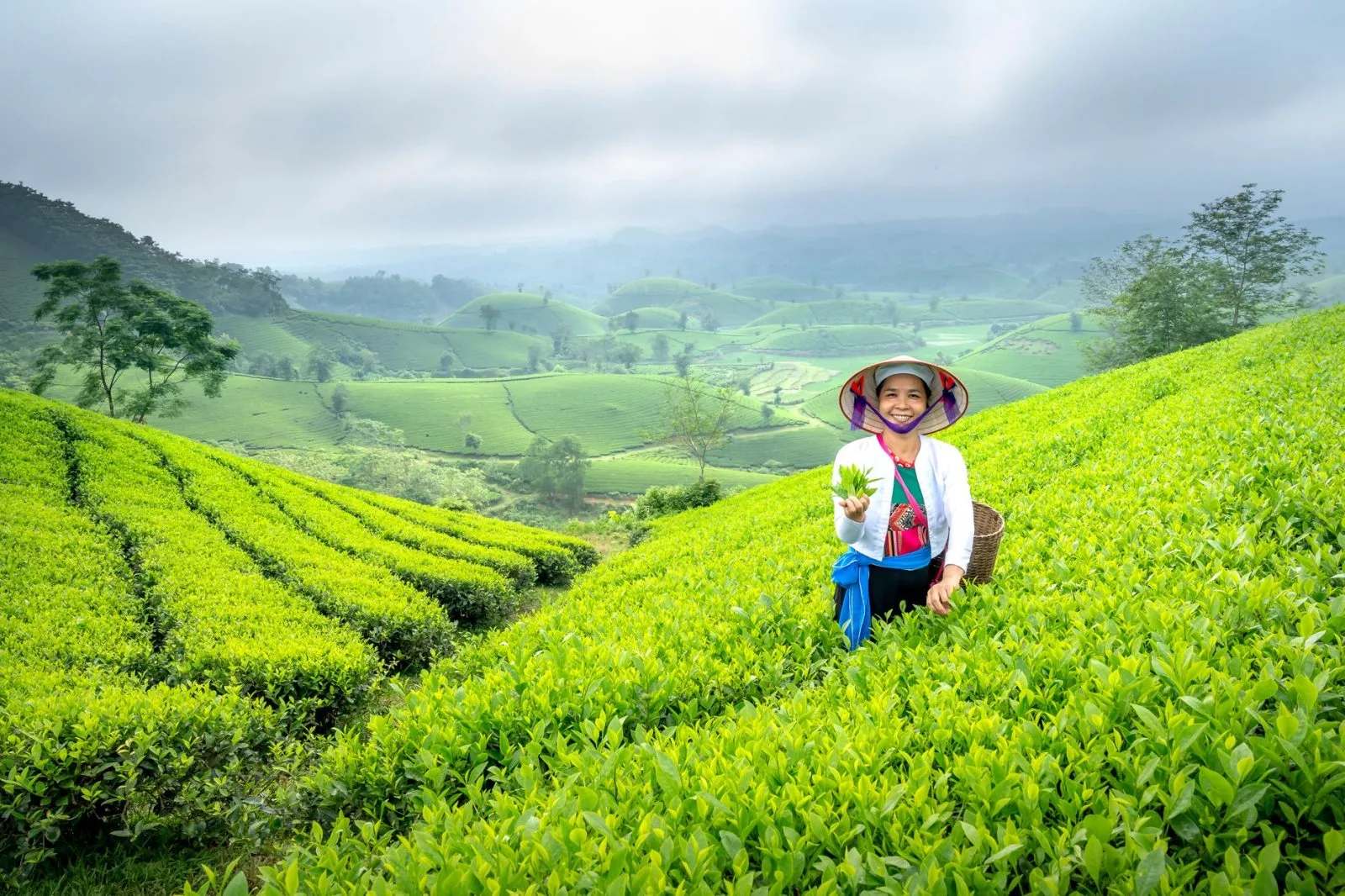
    The second half of Qingming is an outing, known as taqing, when families walk in parks, visit temples, or climb hills. Willow branches were once tucked into hair or hung at doors. In Zhejiang, the festival coincides with the first tea harvest around Hangzhou. Longjing, the tea from the hills near West Lake, is at its most valued when picked before Qingming; the tender buds of pre-Qingming pickings command higher prices. Visitors can see pickers between rows, and lakeside tea houses serve the new leaves. Qingming became a public holiday in 2008, giving the outing a practical boost. Combined with tomb sweeping, the day makes an unusual pair: a visit to the ancestors in the morning, a walk among new leaves in the afternoon.

    Tea pickers gathering early spring leaves in Zhejiang hills
    Pre-Qingming tea from Zhejiang’s hills is prized for its tender leaves. Quang Nguyen Vinh | Pexels License (https://www.pexels.com/license/)

    Poetry and Practice Today

    Qingming has a fixed place in Chinese literature. The Tang poet Du Mu wrote of drizzling rain on the Mourning Day and a traveller asking where wine could be bought, a poem that schoolchildren still memorise. The lines capture the day’s two moods: rain and sorrow, and the impulse to go out despite them. For a visitor, the details matter. Cemeteries can be crowded, so go early and keep to marked paths. Bring water and wear shoes suitable for muddy slopes. In Hangzhou, traffic around West Lake builds by mid-morning, and the metro is simpler than a taxi. Tea villages welcome visitors, but a field is a working crop, not a garden; wait for an invitation before touching the leaves. Respect anyone burning offerings, and never photograph a grave close-up.

    In the morning the family tends the grave; in the afternoon it walks among new leaves.

    Nguồn tham khảo & tài liệu đọc thêm

    1. Hai mươi bốn tiết khí — Di sản văn hóa phi vật thể của UNESCO.
    2. West Lake Cultural Landscape of Hangzhou — Trung tâm Di sản Thế giới UNESCO.
    3. Qingming Festival — China Highlights.

    Hãy xem nó tại chỗ.

    Hãy theo dõi mục này đến khu vực mà nó thuộc về.

    Khám phá bằng bản đồ

    Hãy theo dõi chủ đề này.

    Xem các bài viết khác có cùng thẻ với bài viết này.

    Duyệt thẻ
  • Lễ hội thuyền rồng

    Cuộc sống & Văn hóa dân gian

    Lễ hội thuyền rồng

    Racing, rice dumplings, and the fifth moon

    The Dragon Boat Festival joins boat races, sticky rice parcels, and a story of loyalty to a poet.

    Phần
    Cuộc sống & Văn hóa dân gian
    Vùng đất
    Quảng Đông
    Kỷ nguyên
    Xuyên suốt các thời đại
    Thẻ
    Phong tục, Thực phẩm

    Duanwu falls on the fifth day of the fifth lunar month, when the heat of early summer arrives in Guangdong. The holiday is best known for dragon boat racing and zongzi, but its smaller customs reveal as much about how the day is understood.

    Qu Yuan and the River

    The festival is commonly linked to Qu Yuan, a poet and minister of the state of Chu who died in 278 BCE after his advice was rejected and his state fell. Legend says that fishermen raced out in boats to find his body and threw bundles of rice into the river to keep fish from eating it. Historians note that the custom of racing boats and the fifth-month observance existed before this story attached to it; the legend explains a practice rather than creating it. Either way, the pairing of boat and rice dumpling gives the holiday its two enduring symbols. In school lessons and public ceremonies, Qu Yuan is presented as a figure of loyalty and moral independence, a poet whose writing still reads as political dissent.

    A dragon boat with a carved head and paddlers in formation
    Dragon boats are painted and carved; crews race to the beat of a drum. Kamus Cheung | Pexels License (https://www.pexels.com/license/)

    Zongzi and Household Charms

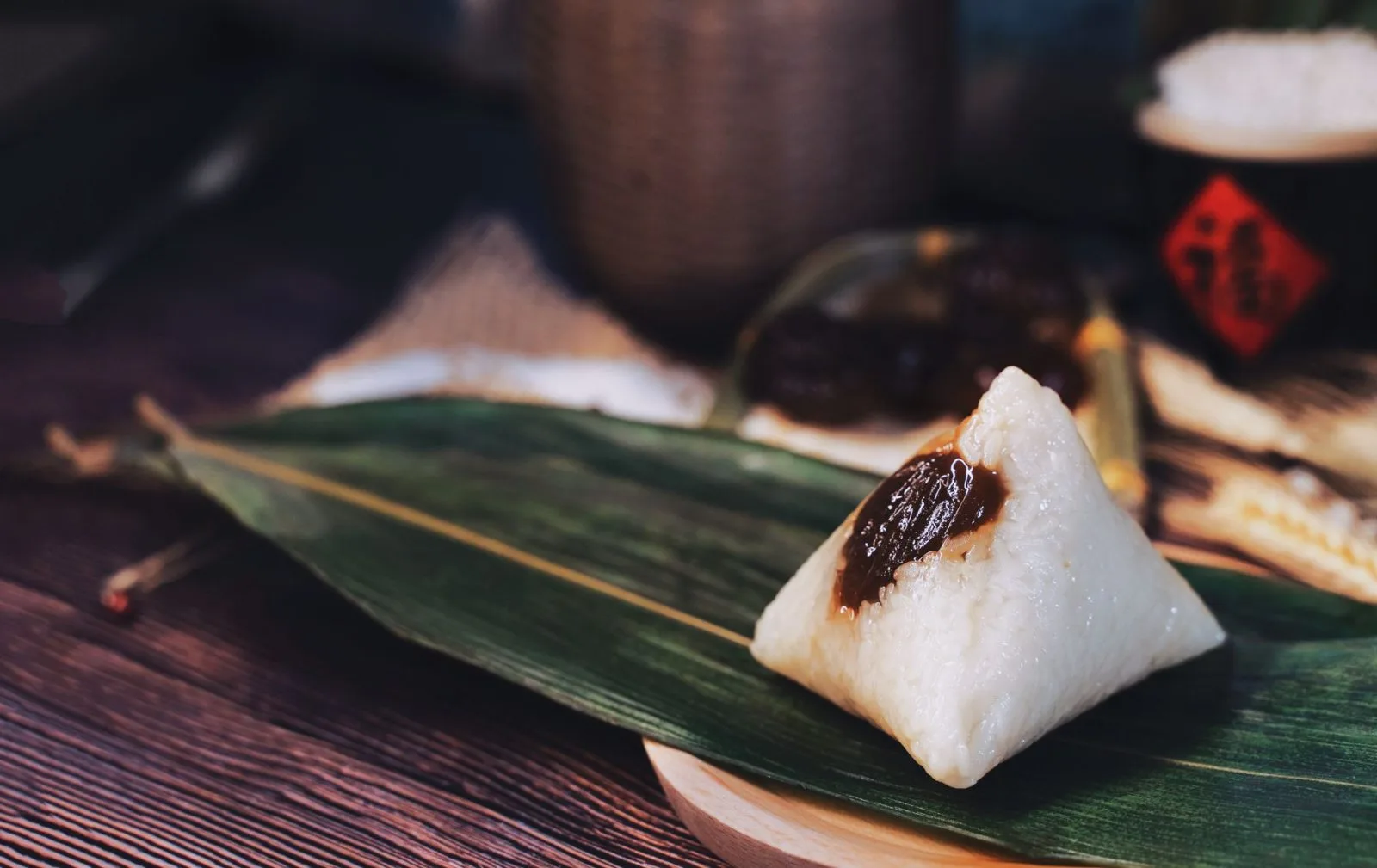
    Zongzi are parcels of glutinous rice wrapped in bamboo or reed leaves and tied with string, then boiled for hours. Fillings vary by region: Guangdong versions may include pork, salted egg, and mushrooms, while northern ones are often sweet with dates or red bean. Families make them in batches and give them to neighbours. The festival also has a protective side. In older practice, people hung mugwort and calamus at doorways to keep away illness and insects and tied five-coloured silk around children’s wrists. Realgar wine, a yellow mixture with a strong smell, was sprinkled around the house or dabbed on a child’s forehead, though modern safety advice discourages drinking it. These acts belong to a time when the fifth moon was thought to carry dampness, snakes, and fever.

    Pyramidal zongzi wrapped in bamboo leaves and tied with string
    Zongzi are filled with sticky rice and tied with string before boiling. zhen tang | Pexels License (https://www.pexels.com/license/)

    Guangdong on the Water

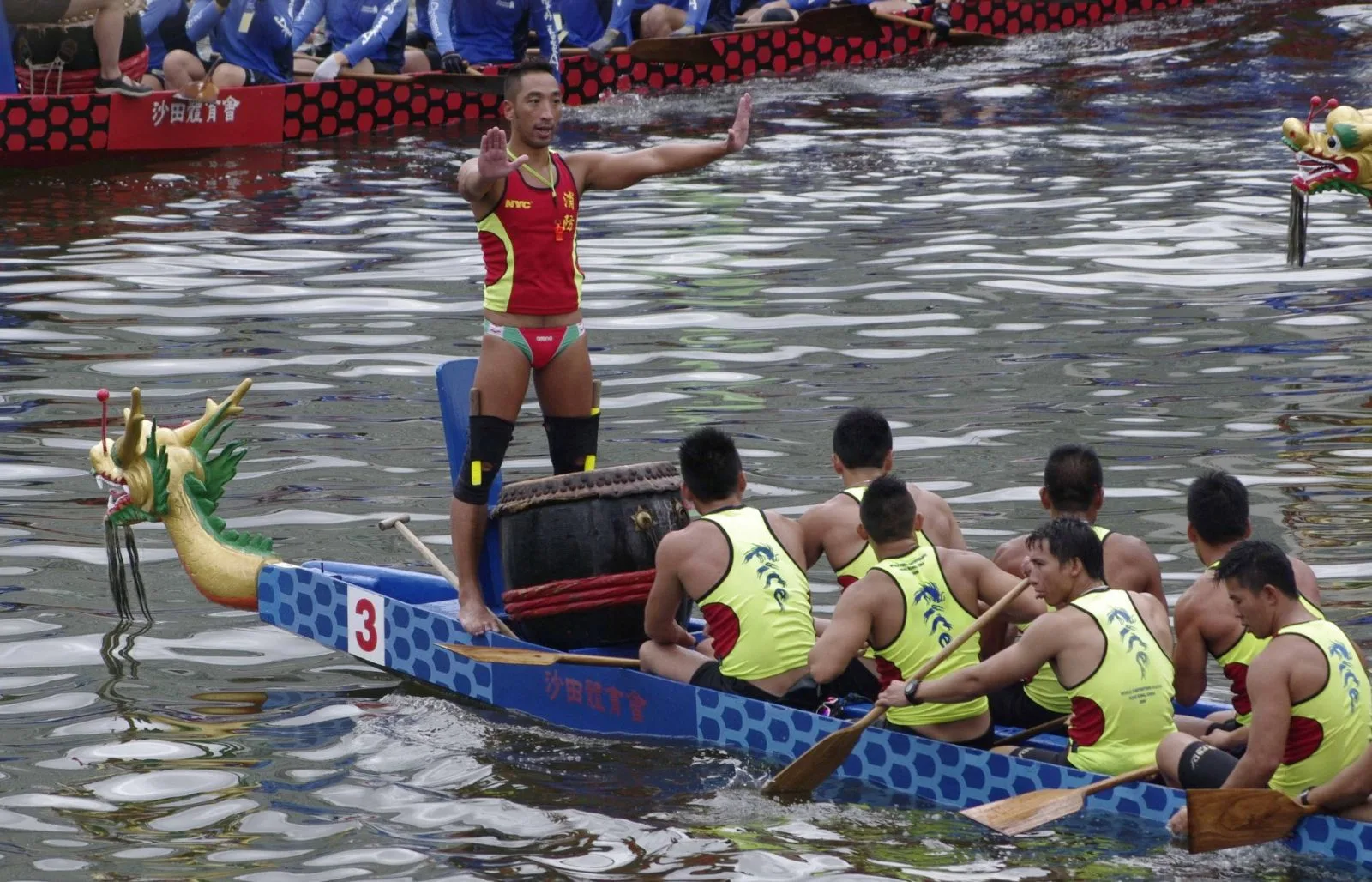
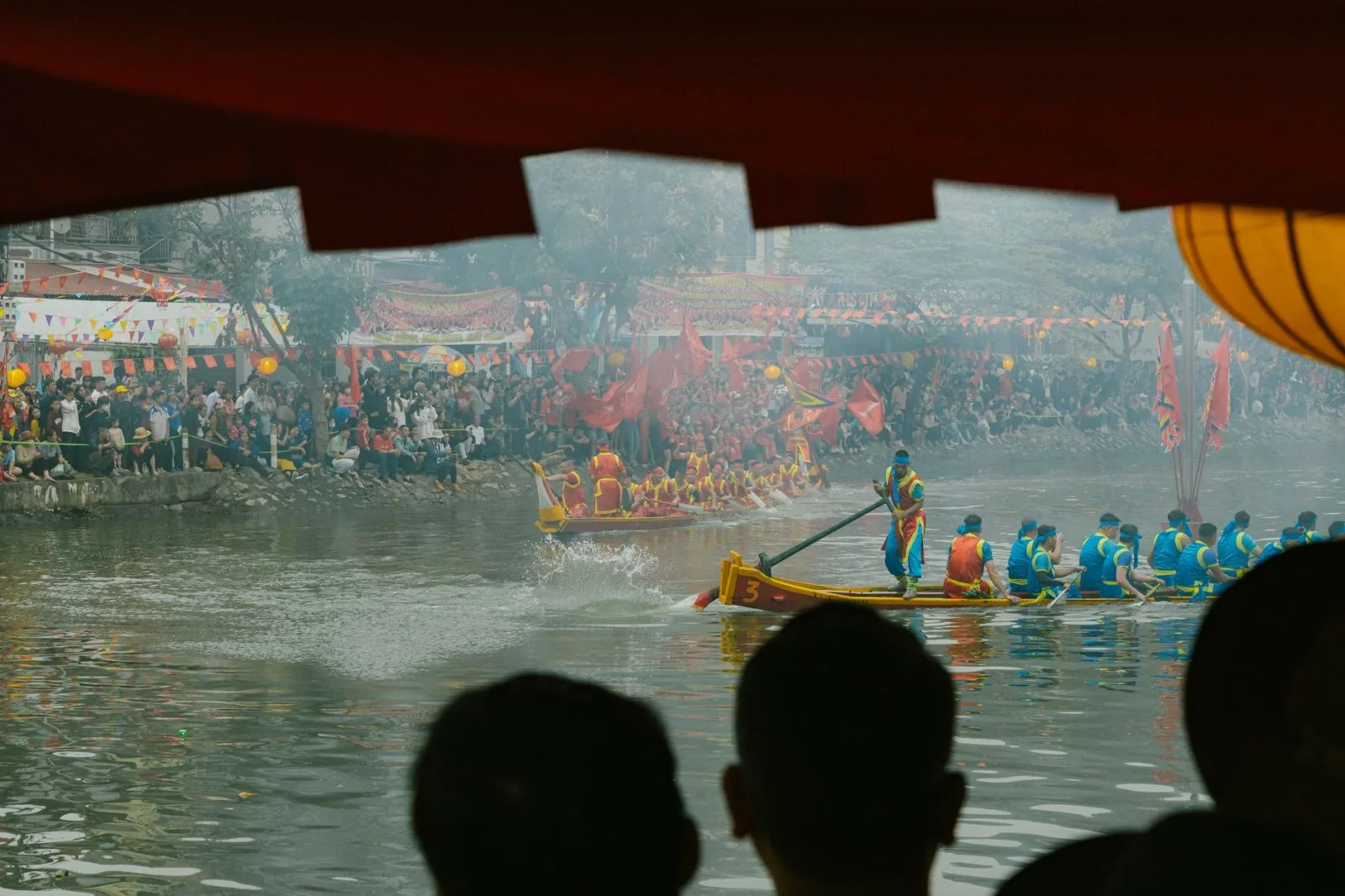
    In Guangdong, dragon boat racing is not a single event but a season. Villages and districts along the Pearl River Delta prepare boats through the spring, then race on rivers and creeks in the weeks around Duanwu. A long narrow boat carries a crew of paddlers, a drummer who sets the stroke, and a helmsman; the painted head and tail give the craft its name. Races are loud, crowded, and local, with teams known by village or temple affiliation. Spectators line bridges and banks, and the best vantage points fill early. The custom was inscribed on UNESCO’s intangible cultural heritage list in 2009. For a visitor, check local listings rather than assuming one central race: events are spread across Guangzhou and Foshan, and dates shift with the lunar calendar.

    Dragon boat crews racing on a Guangdong river before a crowd
    Pearl River Delta races draw village crews and large crowds in the weeks around Duanwu. HONG SON | Pexels License (https://www.pexels.com/license/)

    Observing the Day Today

    Duanwu is an official public holiday, so transport and tourist sites are busy. In Guangdong, the weather is hot and wet by May or June; bring water, a hat, and insect repellent if you plan to watch a race from an open bank. Respect the crews’ space at the water’s edge and do not step onto a boat or touch a drum without being invited. Many families still put mugwort at the door, and zongzi are easy to buy from markets in the days before the holiday. The festival is also an occasion for calling on relatives, though on a smaller scale. For travellers, the pleasure lies in the combination: a public spectacle on the river and a quiet, food-filled custom at home, both tied to the same lunar date.

    The drum sets the stroke, and the village supplies the crew.

    Nguồn tham khảo & tài liệu đọc thêm

    1. Dragon boat festival — Di sản văn hóa phi vật thể của UNESCO.
    2. Lễ hội thuyền rồng — Bách khoa toàn thư Britannica.
    3. Qu Yuan — Bách khoa toàn thư Britannica.
    Hãy xem nó tại chỗ.

    Hãy theo dõi mục này đến khu vực mà nó thuộc về.

    Khám phá bằng bản đồ

    Hãy theo dõi chủ đề này.

    Xem các bài viết khác có cùng thẻ với bài viết này.

    Duyệt thẻ
  • Tết Trung Thu

    Cuộc sống & Văn hóa dân gian

    Tết Trung Thu

    Mooncakes under a full moon

    The Mid-Autumn Festival gathers families around the full moon, mooncakes, and a long tradition of watching the night sky.

    Phần
    Cuộc sống & Văn hóa dân gian
    Vùng đất
    Bắc Kinh
    Kỷ nguyên
    Xuyên suốt các thời đại
    Thẻ
    Phong tục, Thực phẩm

    Falling on the fifteenth day of the eighth lunar month, the Mid-Autumn Festival is a harvest celebration and a family reunion. In Beijing, the holiday is marked in courtyards, parks, and moon-viewing spots that fill after sunset.

    The Date and the Moon

    The festival follows the lunar calendar, so its date moves between early September and early October. The fifteenth day of the eighth month is chosen because the moon should be full, and roundness stands for completeness and family unity. Chinese tradition reads the moon’s surface as the figure of Chang’e, a woman who, in one version of the myth, drank an elixir and rose to live there with a rabbit that pounds medicine. Another story tells of Wu Gang cutting a tree that regrows each time. These tales are not scripture; they are the stories families retell while looking up. Around the festival, parks stay open late and lakes reflect the moon, giving city dwellers a quiet reason to be outdoors after dinner.

    A full moon rising over a Beijing park lake
    The festival falls on the full moon of the eighth lunar month, usually in September or October. marnock | Pexels License (https://www.pexels.com/license/)

    Mooncakes and Their Fillings

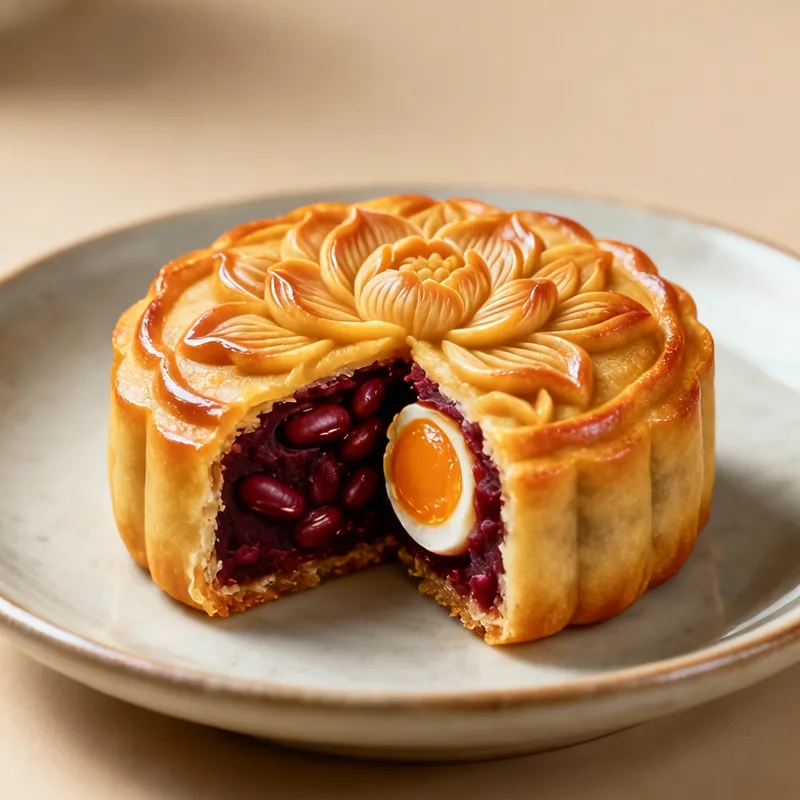
    Mooncakes are small, dense pastries with a thin crust and a heavy filling, traditionally cut into wedges and shared. The round shape echoes the moon, and the top is stamped with a pattern or characters such as longevity or harmony. Cantonese-style cakes often hold lotus seed paste and a salted duck egg yolk, whose yellow centre stands for the moon; other fillings include red bean, five nuts, and preserved fruit. Suzhou-style pastries use flaky layers, while snow-skin mooncakes are chilled and made with a glutinous rice wrapper. Because the cakes are rich, a sliver is usually enough, and tea helps. Prices rise in the weeks before the holiday, and elaborate boxes are made for gifting rather than eating. In Beijing, bakeries sell both traditional versions and small cakes.

    A round mooncake with a stamped pattern cut open to show the filling
    Mooncakes are dense pastries stamped with characters for longevity or harmony. Hình minh họa do AI tạo ra · SinoViz

    Beijing After Dark

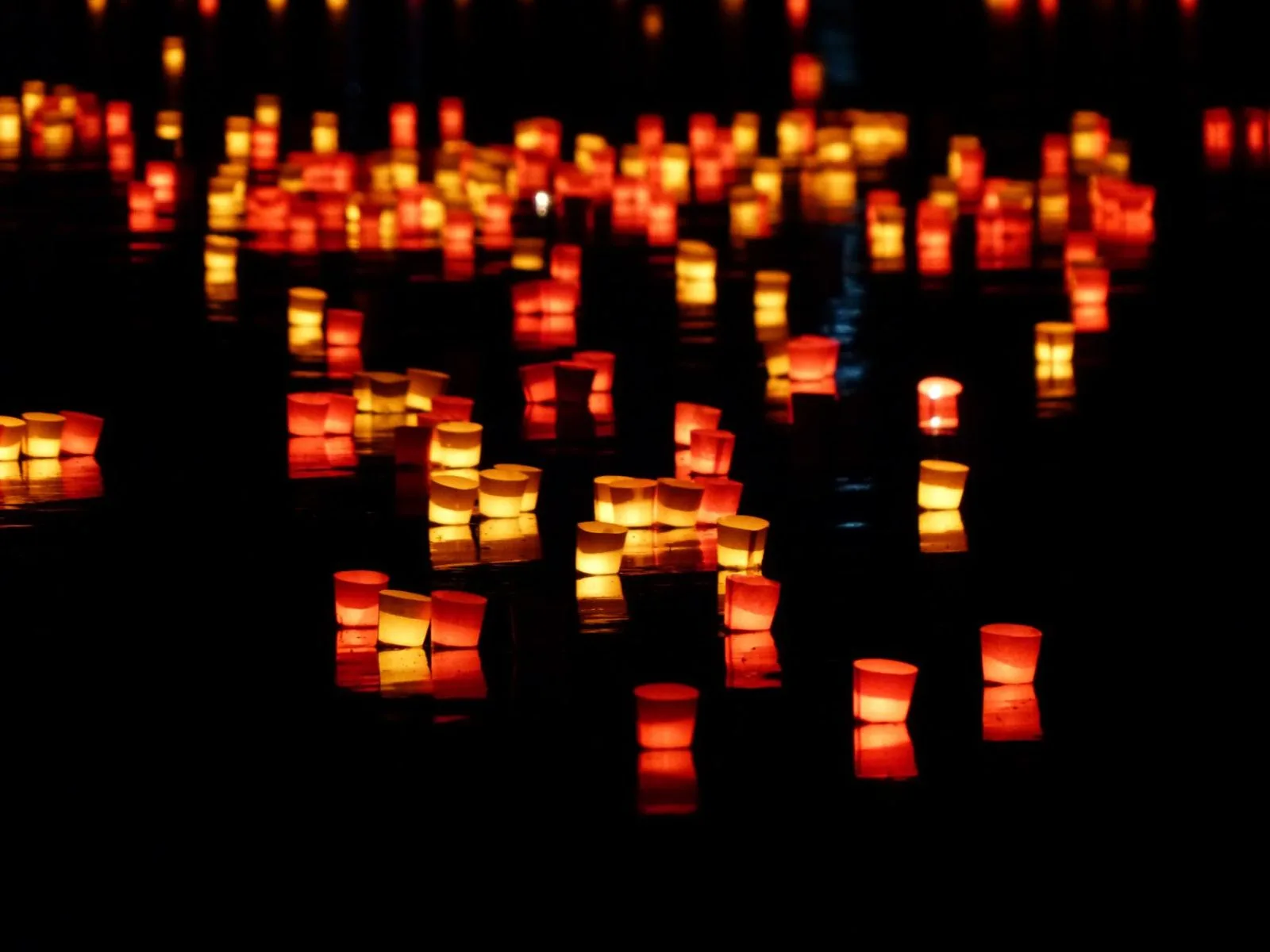
    Beijing’s moon-viewing spots fill quickly after dark. Beihai Park, with its lake and white stupa, and the Summer Palace, with Kunming Lake and the Long Corridor, are classic places to walk and watch the reflection. The Temple of Heaven also draws visitors. Families may light paper lanterns, and children carry them through the lanes; in some neighbourhoods, lantern riddles are posted for anyone who wants to try. Public holiday crowds mean metro stations near the parks stay busy late, so allow time to get back. Camping or bringing a barbecue is not appropriate in these historic grounds. A practical plan is to visit in the late afternoon, walk as the light fades, and take a seat by the water before the moon clears the rooftops.

    Lanterns reflected in a lake at a Beijing park during the Mid-Autumn Festival
    Parks such as Beihai and the Summer Palace draw moon-viewing crowds after sunset. Pixabay | Pexels License (https://www.pexels.com/license/)

    Gifts, Holiday, and Meaning

    Mooncakes are exchanged as gifts, often in boxes of four or six, and carrying a box to a family dinner is normal. The act matters more than the price; a modest cake from a favourite bakery can be more welcome than a lavish tin. Since 2008, the festival has been an official public holiday, reinforcing its role as a reunion, with millions travelling to see relatives. The deeper theme is tuanyuan, reunion, expressed by the circle of the cake and the full moon. Not everyone can be at the table, and the holiday acknowledges that absence as much as presence. If you are invited to a Beijing home, bring the cakes, arrive on time, and expect the evening to centre on a long meal rather than on speeches.

    Roundness carries the argument: a full moon, a round cake, a family gathered in one room.

    Nguồn tham khảo & tài liệu đọc thêm

    1. Tết Trung Thu — Bách khoa toàn thư Britannica.
    2. Tết Trung Thu — China Highlights.

    Hãy xem nó tại chỗ.

    Hãy theo dõi mục này đến khu vực mà nó thuộc về.

    Khám phá bằng bản đồ

    Hãy theo dõi chủ đề này.

    Xem các bài viết khác có cùng thẻ với bài viết này.

    Duyệt thẻ
  • Chinese Paper Cutting

    Cuộc sống & Văn hóa dân gian

    Chinese Paper Cutting

    Red paper, folded and cut

    A pair of scissors and a sheet of red paper can carry a whole vocabulary of wishes.

    Phần
    Cuộc sống & Văn hóa dân gian
    Vùng đất
    Thiểm Tây
    Kỷ nguyên
    Xuyên suốt các thời đại
    Thẻ
    Customs, Ethnic

    Chinese paper cutting, or jianzhi, turns a flat sheet into a pattern of figures, flowers, and characters. Practised for centuries in rural households, it still marks weddings and New Year, and Shaanxi’s bold window designs are among its most recognisable regional forms.

    Origins and Technique

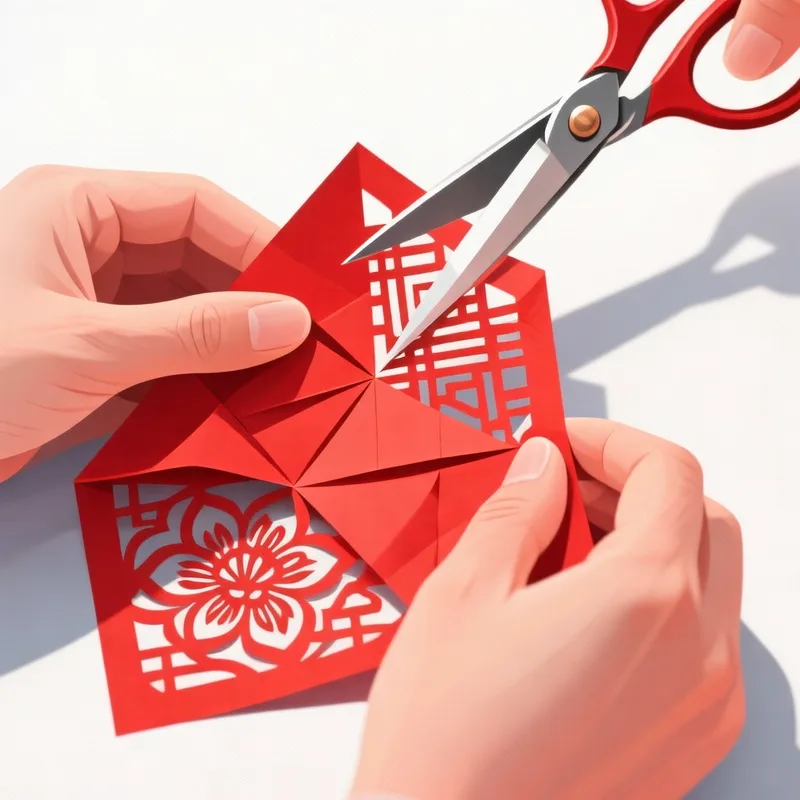
    Paper reached China in the Eastern Han period, and the first cuts followed once the material was cheap enough to experiment with. Early examples were used as offerings and as templates for embroidery; a surviving cut-paper find from the sixth century shows that the technique was established by then. Two methods developed. Scissors cut a folded sheet, creating a mirror-symmetric design with a single sequence of snips. A knife held upright cuts a stack of paper against a wax board, a method suited to finer lines and repeated motifs. Artists draw no outline for many traditional patterns; they cut directly, keeping the connecting threads that stop the design falling apart. The finished piece is light, cheap, and easy to paste on a window or door.

    Hands cutting a red paper design with small scissors
    Folding the paper before cutting produces the symmetrical patterns typical of window decorations. Hình minh họa do AI tạo ra · SinoViz

    A Language of Motifs

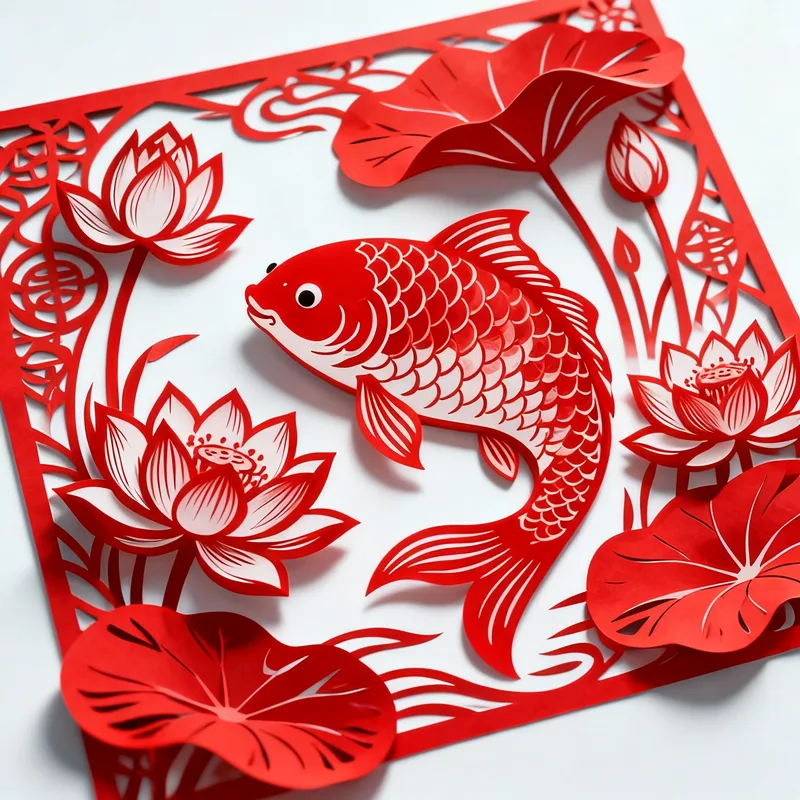
    The images are a system of visual puns. A fish means surplus, because the word for fish sounds like the word for abundance; lotus suggests purity. A pomegranate stands for many children, a bat for good fortune, and a peach for long life. The character fu, meaning good fortune, appears alone or inside a circular design, while shuangxi, double happiness, belongs to weddings. Zodiac animals, opera figures, and scenes of children at play all circulate as patterns. Colour matters as much as shape: red is the default for celebration, while white paper cuts are rarer and tied to older ritual uses. In a Shaanxi village window, the arrangement of these motifs tells a visitor what the household is hoping for in the coming year.

    Red paper-cut window decoration showing a fish and lotus flowers
    Fish and lotus form a rebus for abundance; motifs are chosen for the wish they carry. Hình minh họa do AI tạo ra · SinoViz

    Shaanxi Windows

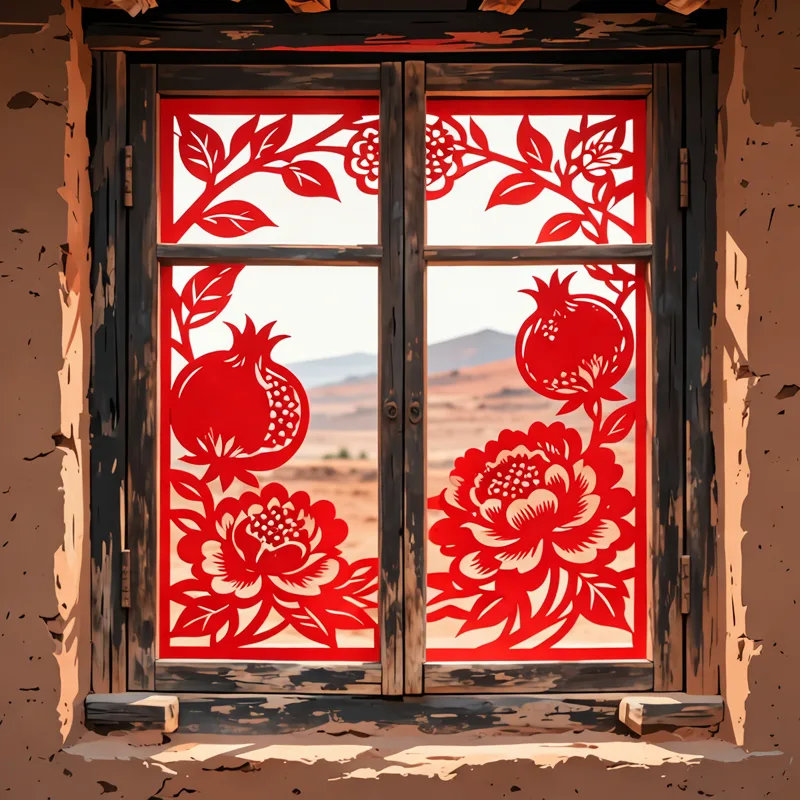
    Paper cutting in Shaanxi is associated with rural life on the Loess Plateau, especially around Yan’an. Windows there were once small and deeply set, so designs favoured bold silhouettes and broad, connected shapes that could be read from across a room. Local artists talk of cutting with the heart rather than measuring with a ruler, and compositions often show figures, animals, and plants together in a single dense frame. Window grilles, or chuanghua, are pasted at New Year and replaced when they fade. Wedding cuts carry double happiness characters and images of fertility; birthday cuts use peaches and cranes. Women were the main practitioners in many villages, passing patterns from mother to daughter, and village fairs still sell sheets cut in the old local style.

    A Shaanxi farmhouse window with bold red paper cutouts
    Shaanxi cuts favour strong silhouettes and broad shapes, designed to read from a distance. Hình minh họa do AI tạo ra · SinoViz

    Recognition and Travel

    Chinese paper-cut was inscribed on UNESCO’s Representative List of the Intangible Cultural Heritage of Humanity in 2009, a recognition that named both the craft and the communities that sustain it. The listing does not freeze the art. Contemporary artists cut portraits, cityscapes, and political images with the same tools, and paper cuts appear in graphic design and animation. For a visitor, the appeal is that the work is easy to find and easy to try. Museum shops sell small sheets, market stalls sell single motifs, and workshops in Xi’an and rural Shaanxi teach the basic fold-and-cut method in an hour. Bring a sharp pair of scissors and practice on cheap red paper before attempting a detailed pattern. A finished cut pasted on glass changes with the light.

    The pattern holds together because the cutter leaves just enough paper between the lines.

    Nguồn tham khảo & tài liệu đọc thêm

    1. Chinese paper-cut — Di sản văn hóa phi vật thể của UNESCO.
    2. Chinese Paper Cutting — China Highlights.
    3. Paper cutting — Bách khoa toàn thư Britannica.
    Hãy xem nó tại chỗ.

    Hãy theo dõi mục này đến khu vực mà nó thuộc về.

    Khám phá bằng bản đồ

    Hãy theo dõi chủ đề này.

    Xem các bài viết khác có cùng thẻ với bài viết này.

    Duyệt thẻ
  • Ẩm thực Quảng Đông

    Cuộc sống & Văn hóa dân gian

    Ẩm thực Quảng Đông

    Steam, Wok Heat, and Coastal Markets

    Guangdong cooking turns local seafood and temple fair foods into a refined restaurant tradition.

    Phần
    Cuộc sống & Văn hóa dân gian
    Vùng đất
    Quảng Đông
    Kỷ nguyên
    Xuyên suốt các thời đại
    Thẻ
    Food, Geography

    Cantonese cuisine is the cooking of Guangdong and its diaspora, built on river deltas, coastal markets, and the heat of the wok. Its best-known dishes—roast goose, dim sum, and steamed fish—sit beside home-style soups and street snacks.

    The Pearl River Pantry

    The Pearl River Delta gave Cantonese cooking an unusually broad pantry. Rice grows in the lowlands, fish and shellfish come from the estuary, and hills behind Guangzhou supply vegetables, pork, and poultry. Guangzhou was a major port under the Tang and again after European traders arrived in the seventeenth and eighteenth centuries. Merchants, officials, and temple fairs supported restaurants that could pay for skilled chefs. By the Qing period, Guangzhou’s tea houses served small plates known as dim sum through the morning and midday. Emigrants from Guangdong later carried these dishes to Southeast Asia, North America, and Europe, adapting them to local supplies.

    Bamboo steamers filled with dim sum
    Dim sum developed in the teahouses of Guangzhou and spread with Cantonese migration. parveen tasud | Pexels License (https://www.pexels.com/license/)

    Wok Hei and the Roast House

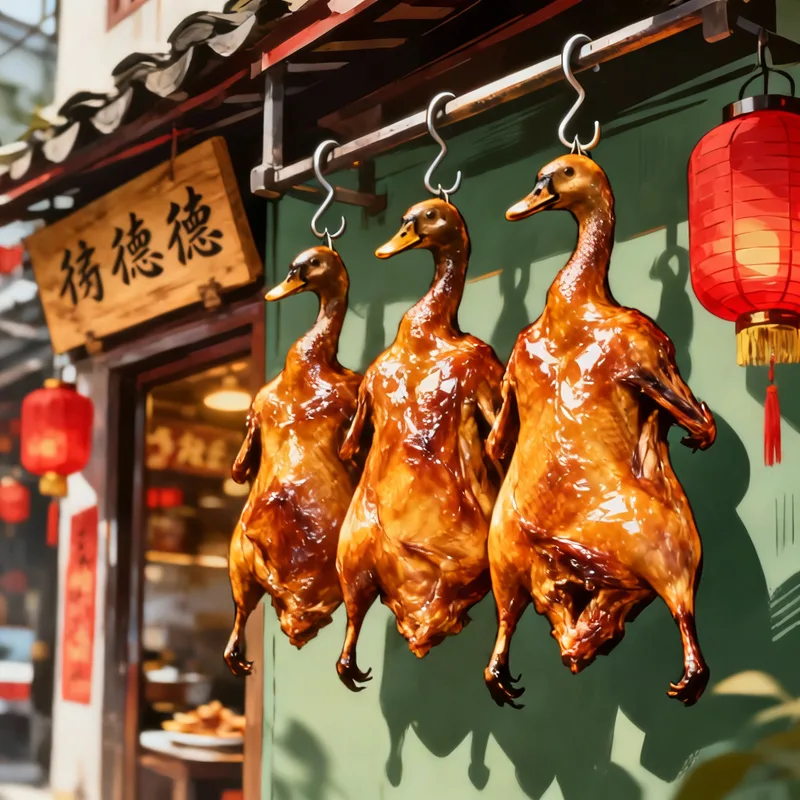
    Cantonese stir-frying depends on wok hei, the barely definable aroma produced when hot oil, vapours, and food meet a very hot wok. Chefs toss ingredients to keep them moving and prevent scorching; sauces are added late, often with cornstarch to give a light coating. Roasting is another speciality. Guangzhou-style white-cut chicken is poached and served with ginger and spring onion, while roast goose from Shunde is glazed, air-dried, and hung in a brick oven until the skin blisters. Char siu pork is marinated with honey and red fermented bean curd, then roasted with sugar caramelising at the edges.

    Roast geese hung to dry before roasting outside a Shunde restaurant
    Air-drying the skin is a key step in Shunde’s roast goose. Hình minh họa do AI tạo ra · SinoViz

    Dim Sum and Morning Ritual

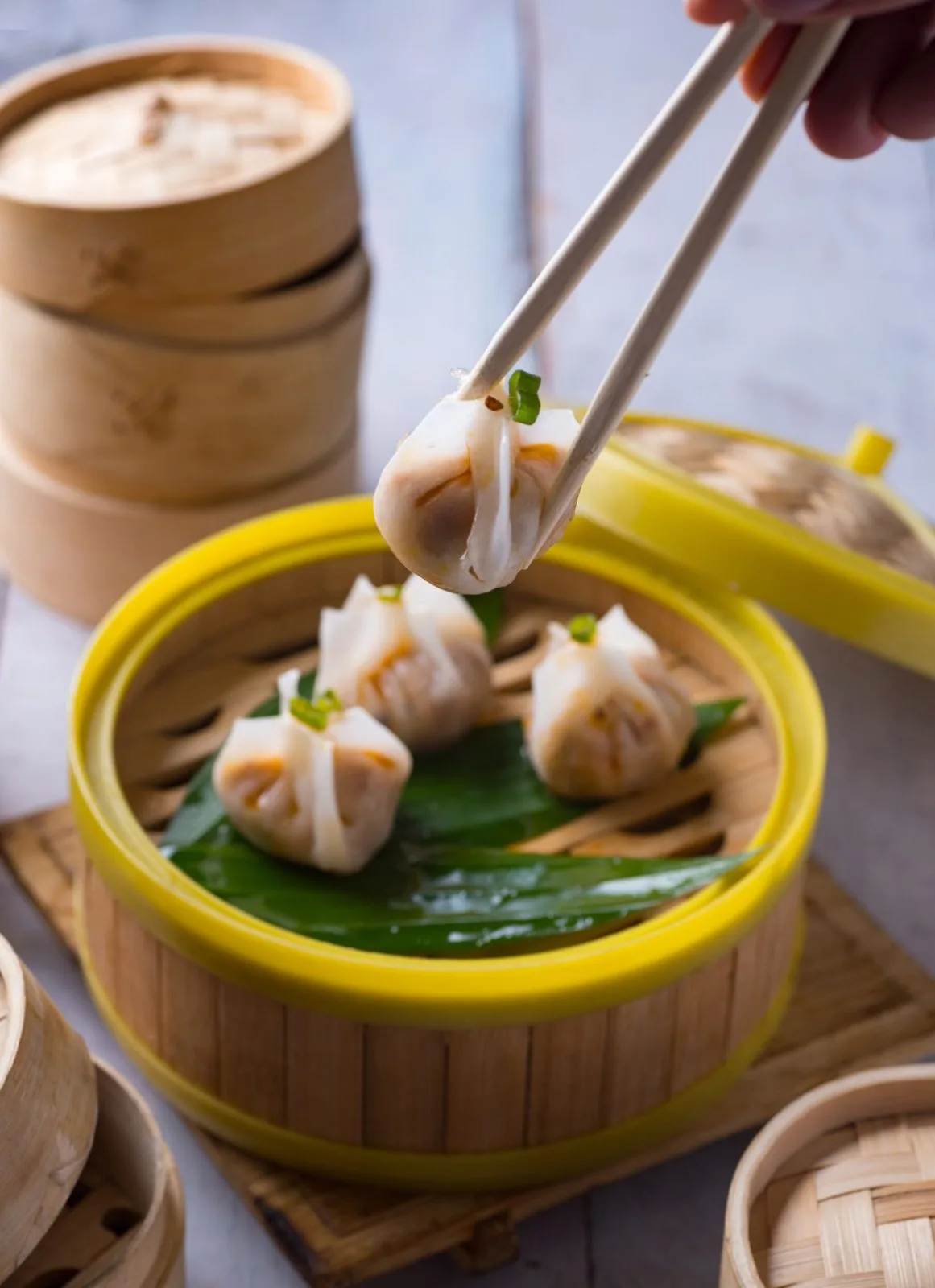
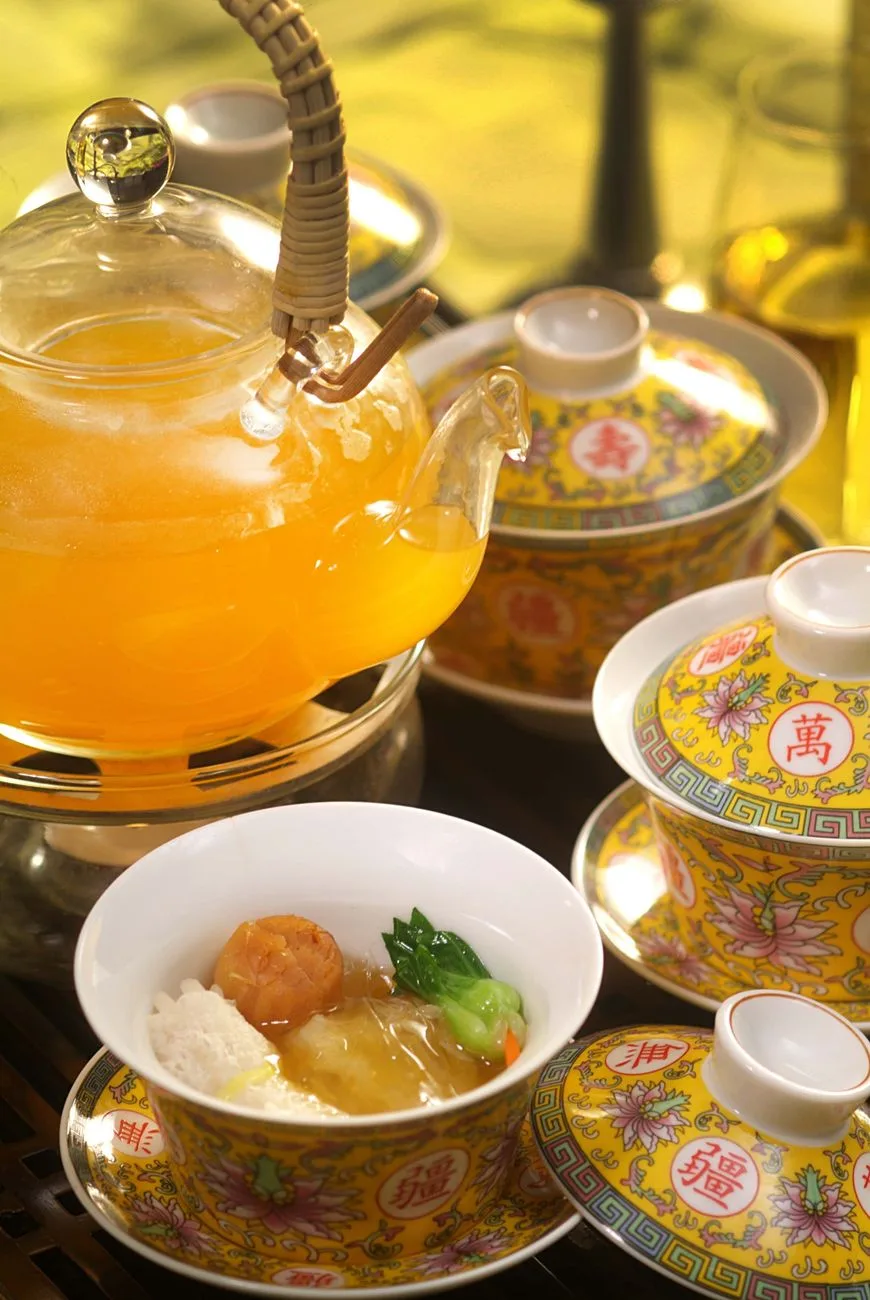
    Dim sum means a light snack, but in Cantonese practice it describes a meal of small portions ordered from trolleys or a paper card. Har gow wrap shrimp in a translucent wheat-starch skin; siu mai open-topped dumplings hold pork and shrimp; char siu bao are soft steamed buns with sweet roast-pork filling. Cheung fun are broad rice-noodle sheets rolled around shrimp, pork, or beef and dressed in soy sauce. Tea accompanies the meal, and the old custom of tapping a pot’s lid to signal for a refill is still performed, though younger diners may simply ask. The ritual is social as much as culinary, filling teahouses from early morning.

    • Har gow with translucent shrimp filling
    • Siu mai topped with a single shrimp
    • Cheung fun rice rolls with soy dressing
    • Egg tarts adapted from British custard pastry
    A trolley of bamboo steamers and tea pots beside a crowded Guangzhou dining room
    A dim sum meal is ordered in small dishes and shared across the table. minchephoto photography | Pexels License (https://www.pexels.com/license/)

    Regional Range and Diaspora

    Cantonese food is not one style. Shunde is known for delicate dairy desserts and fish dishes, Chaozhou nearby has a separate tradition of braised goose, seafood, and strong oolong tea, and Hakka communities in the hills favour preserved vegetables and stuffed tofu. Teochew and Hainanese migrants carried their own versions abroad. In Chinatowns from San Francisco to Singapore, Cantonese restaurants adapted to local tastes while keeping techniques such as steaming, roasting, and long simmered double-boiled soups. The resulting cuisines are mixed, but they preserve a central idea: fresh ingredients, precise heat, and a sauce that supports rather than hides them.

    Cantonese cooking asks a wok to do in seconds what other traditions give hours of stewing.

    Nguồn tham khảo & tài liệu đọc thêm

    1. Chinese Cuisine — Bách khoa toàn thư Britannica.
    2. Cantonese cuisine — Bách khoa toàn thư Britannica.
    3. Guangzhou — Trung tâm Di sản Thế giới UNESCO.

    Hãy xem nó tại chỗ.

    Hãy theo dõi mục này đến khu vực mà nó thuộc về.

    Khám phá bằng bản đồ

    Hãy theo dõi chủ đề này.

    Xem các bài viết khác có cùng thẻ với bài viết này.

    Duyệt thẻ