Category: Vida y folclore

  • El calendario lunar

    Vida y folclore

    El calendario lunar

    Medición del tiempo mediante la Luna y el Sol

    El calendario tradicional chino vincula los meses lunares con las estaciones solares, y las festividades con ambas.

    Sección
    Vida y folclore
    Región
    Pekín
    Era
    A través de las épocas
    Etiquetas
    Aduanas

    El calendario chino es lunisolar: sus meses siguen el ciclo lunar, mientras que sus años siguen el ciclo solar. Durante más de dos milenios, los astrónomos de la corte y los campesinos utilizaron el mismo sistema con distintos fines: para fechar reinados y para saber cuándo sembrar.

    Cómo funciona el calendario

    Cada mes comienza el día de la luna nueva astronómica y dura 29 o 30 días, por lo que doce meses lunares suman aproximadamente 354 días, unos once días menos que un año solar. Para mantener la primavera en la primavera, se insertan meses intercalares: siete meses adicionales cada diecinueve años, un ciclo conocido como ciclo metónico. Un mes repetido se numera después del que le sigue, de ahí el cuarto mes intercalar. Los días se cuentan por separado, de nuevo, mediante el ciclo sexagenario, un emparejamiento de diez troncos celestes y doce ramas terrestres que etiqueta cada día y año con una combinación como jiachen.
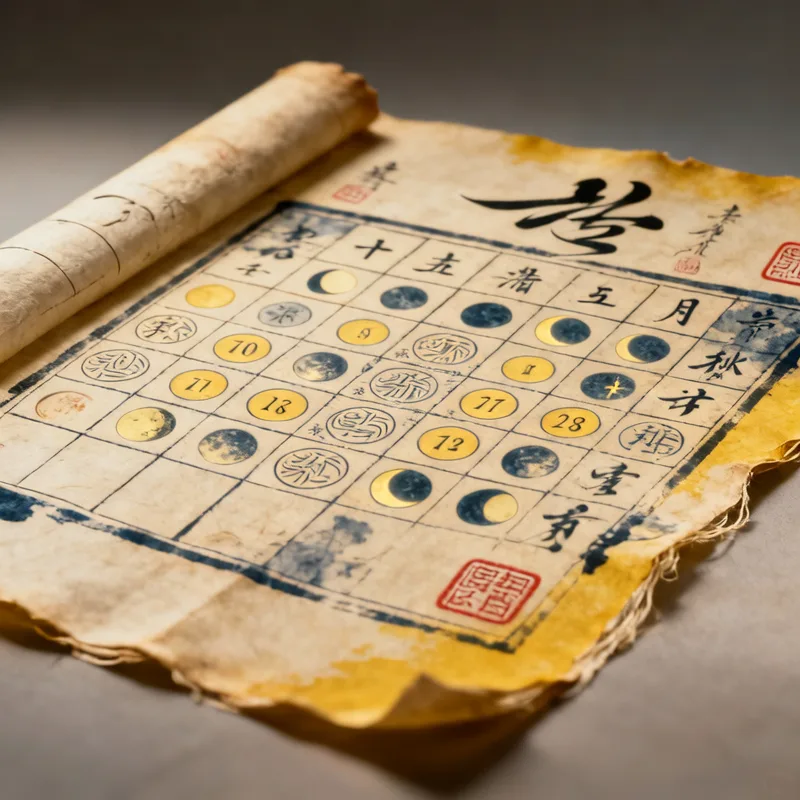
    Página de un almanaque tradicional chino que muestra los meses lunares, los términos solares y los días propicios.
    Un mes lunar va desde una luna nueva hasta la siguiente; un término solar marca la posición del sol. Ilustración generada por IA · SinoViz

    La observación se convierte en ciencia.

    El sistema surgió de la observación. Las inscripciones en huesos oraculares de la dinastía Shang (c. 1600–1046 a. C.) registran los meses lunares, los eclipses y los meses intercalares, y los Anales de Primavera y Otoño conservan registros de eclipses antiguos que se utilizaron posteriormente para comprobar los cálculos. El calendario Taichu, adoptado en el 104 a. C. bajo el emperador Wu de Han, fijó el inicio del año en el primer mes lunar y estableció la regla de intercalación de diecinueve años. Reformas posteriores lo perfeccionaron: el calendario Shoushi de Guo Shoujing de 1281, creado para la capital Yuan en Dadu (Pekín), utilizaba un año tropical de 365,2425 días, la misma duración que adoptó posteriormente la reforma gregoriana.

    El conocimiento del calendario tenía una dimensión política. Un gobernante capaz de predecir eclipses y anunciar la luna nueva reclamaba el mandato divino; la distribución del almanaque a los estados subordinados era un acto de autoridad. El Antiguo Observatorio de Pekín, construido en 1442, aún conserva esferas armilares Ming y un gnomon utilizados para este fin. Los astrónomos que trabajaban allí colaboraron con misioneros jesuitas en el siglo XVII, cuando la corte Qing adoptó métodos europeos para predecir eclipses, manteniendo la estructura del mes lunar. El calendario se convirtió así en un punto de encuentro entre la política, las matemáticas y la observación.

    Los veinticuatro términos solares

    Paralelamente a los meses lunares, existe un calendario solar de veinticuatro términos, cada uno espaciado quince grados a lo largo de la trayectoria anual del sol. La secuencia comienza con Lichun, el comienzo de la primavera, alrededor del 4 de febrero, e incluye Qingming (Brillo puro) a principios de abril, Xiazhi (Solsticio de verano), Bailu (Rocío blanco) y Dongzhi (Solsticio de invierno). Desarrollados en la región del río Amarillo y aplicados en todo el país, estos términos indican a los agricultores cuándo esperar heladas o lluvias; los proverbios aún los vinculan con la siembra y la cosecha. La UNESCO inscribió este conocimiento y práctica en su Lista Representativa en 2016.
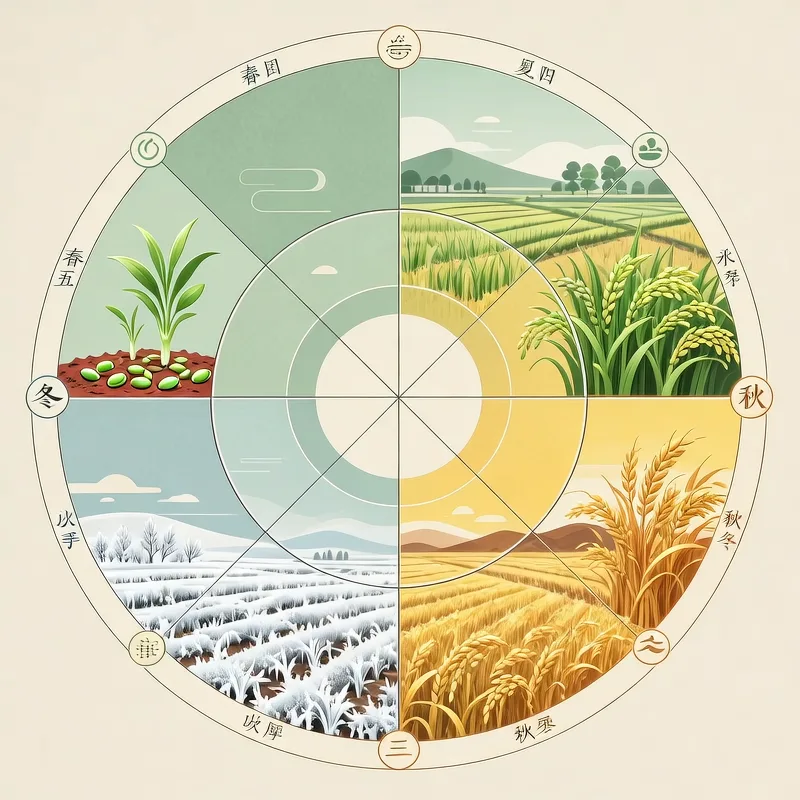
    Diagrama de la trayectoria anual del sol dividido en veinticuatro segmentos con etiquetas agrícolas.
    Cada período solar abarca quince grados de la trayectoria del sol, con una separación de aproximadamente quince días. Ilustración generada por IA · SinoViz

    Un calendario de festivales

    Debido a que las fechas se cuentan a partir de los meses lunares, las festividades se desfasan del calendario gregoriano. El Festival de Primavera comienza el primer día del primer mes lunar y culmina con el Festival de los Faroles el día quince, cuando las calles se llenan de faroles. El Festival de los Botes Dragón se celebra el quinto día del quinto mes, el Festival de los Fantasmas el quince del séptimo, y el Festival de Medio Otoño el quince del octavo, cuando las familias se reúnen bajo la luna llena.

    • Festival de Primavera: primer día del primer mes lunar
    • Festival de los Faroles — decimoquinto día del primer mes
    • Festival del Barco Dragón — quinto día del quinto mes
    • Festival del Medio Otoño — decimoquinto día del octavo mes
    • Qingming — un término solar que abarca aproximadamente del 4 al 6 de abril

    Por qué sigue siendo importante

    El calendario lunar perdura porque abarca tanto el tiempo social como el astronómico. Se honra a los ancestros en Qingming y en el aniversario de una muerte contada en fechas lunares; las bodas y los funerales a menudo se programan según el almanaque. El animal del zodiaco del año, los ocho caracteres de un nacimiento y los días propicios para mudarse dependen de la misma estructura. En Pekín, las ferias de los templos y las exhibiciones de faroles aún siguen el primer mes lunar, mientras que las comunidades rurales consultan los términos solares para las labores del campo. Dos sistemas, un calendario.
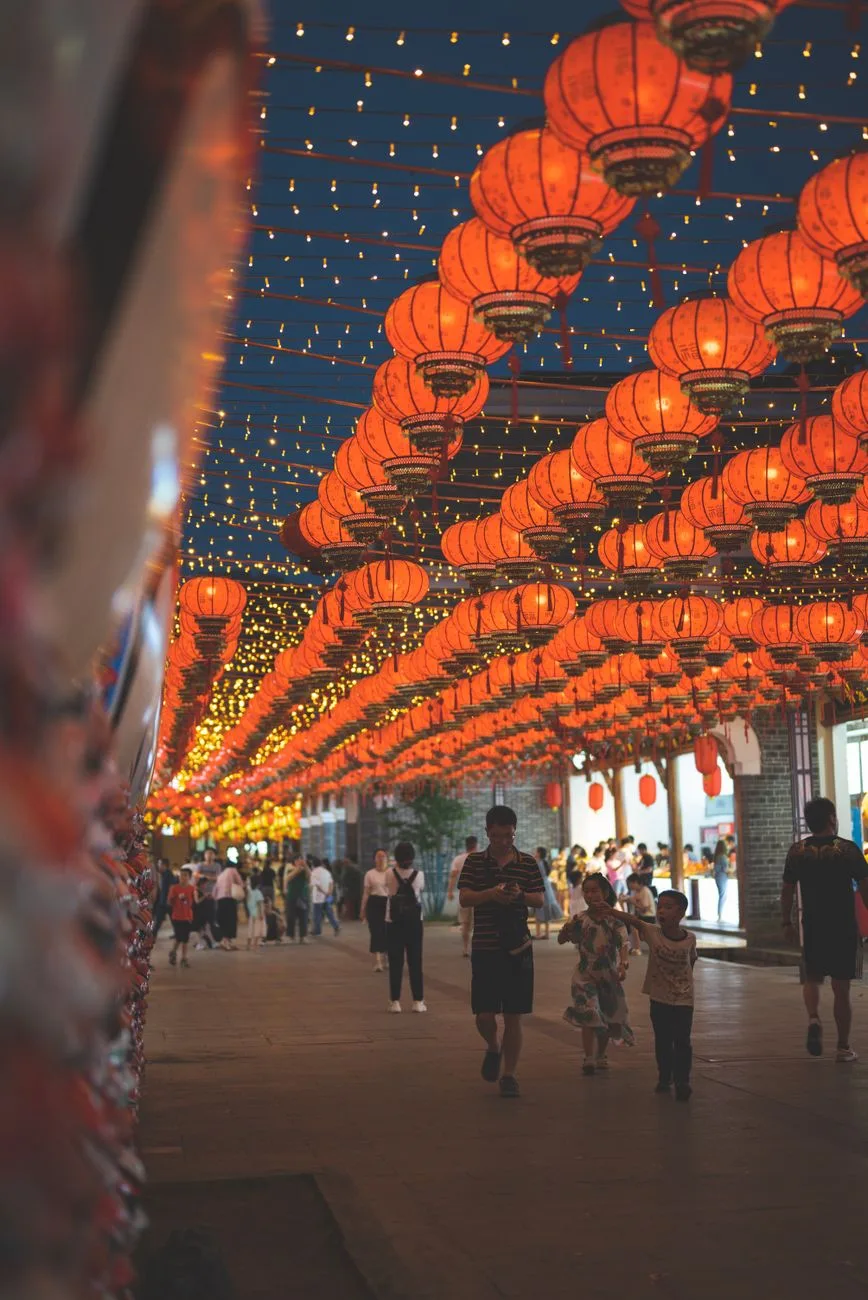
    Faroles colgando en una calle de Pekín durante el primer mes lunar.
    Las ferias en los templos y las exhibiciones de faroles aún marcan las primeras semanas del año lunar. Cz Jen | Licencia de Pexels (https://www.pexels.com/license/)
    Los meses se rigen por la luna, pero el año debe responder al sol.

    Fuentes y lecturas adicionales

    1. Los veinticuatro términos solares, conocimiento del tiempo y prácticas desarrolladas en China a través de la observación del movimiento anual del sol. — Patrimonio Cultural Inmaterial de la UNESCO.
    2. Calendario chino — Enciclopedia Británica.
    3. Año Nuevo Chino — Enciclopedia Británica.
    Véalo en su lugar

    Siga esta entrada a la región a la que pertenece.

    Explorar por mapa

    Sigue el hilo

    Explora otras entradas que compartan sus etiquetas.

    Explorar la etiqueta
  • El zodíaco chino

    Vida y folclore

    El zodíaco chino

    Doce animales, ciclo de sesenta años

    Los doce animales plasman años, horas y personalidad en un ciclo repetitivo.

    Sección
    Vida y folclore
    Región
    Pekín
    Era
    A través de las épocas
    Etiquetas
    Aduanas

    El zodíaco chino asigna un animal a cada año en un ciclo de doce años. No se trata de un horóscopo independiente, sino de una capa del calendario lunisolar, donde doce ramas terrestres se combinan con diez troncos celestiales para formar un ciclo completo de sesenta años.

    Los doce animales

    La secuencia es rata, buey, tigre, conejo, dragón, serpiente, caballo, cabra, mono, gallo, perro y cerdo, cada uno emparejado con una de las doce ramas terrenales: zi, chou, yin, mao, chen, si, wu, wei, shen, you, xu y hai. La cabra también se traduce como oveja o carnero. Un conocido cuento popular explica el orden como el resultado de una carrera a través de un río: la rata cabalga sobre el buey y salta por delante en la orilla, mientras que el gato, en algunas versiones, no logra cruzar. La historia es posterior al sistema que explica.

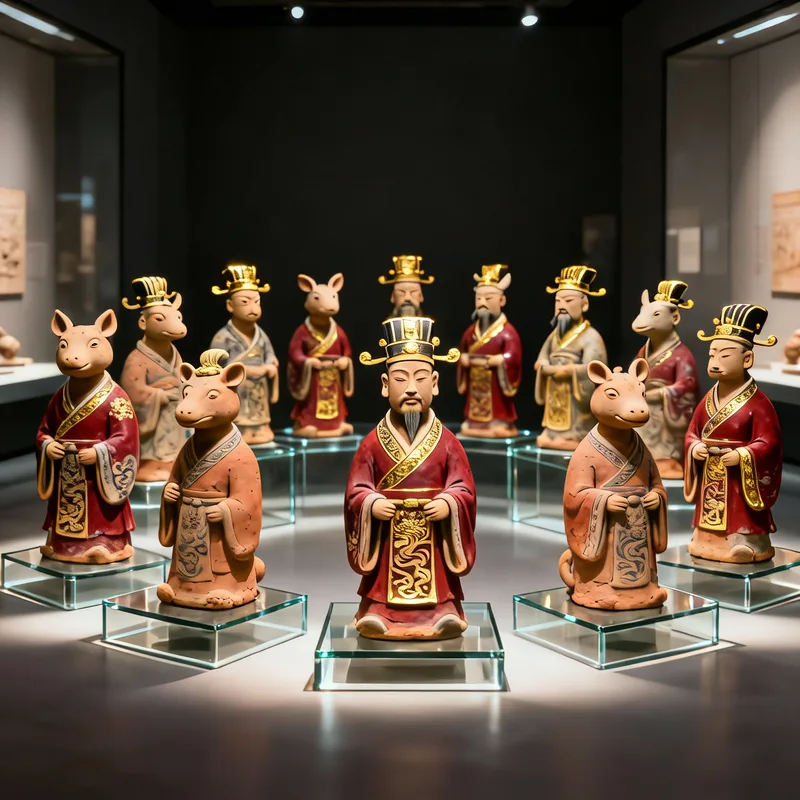
    Conjunto de doce figuras zodiacales de cerámica de la dinastía Tang vestidas como funcionarios.
    El orden de los animales fue establecido por la dinastía Han Oriental y aparece en la cerámica de las tumbas Tang. Ilustración generada por IA · SinoViz

    De las ramas a los letreros de animales

    Las ramas en sí son antiguas; los animales que se adhieren a ellas aparecen de forma más gradual. El Museo Metropolitano de Arte señala que los doce se asociaron por primera vez con el calendario lunar en China alrededor del siglo III a. C. y se establecieron firmemente en el siglo I d. C. Para la dinastía Han Oriental (25-220 d. C.), el orden convencional se fijó, y textos como el Lunheng de Wang Chong enumeran los mismos animales que se usan hoy en día. Esta combinación se extendió por el este y el sudeste asiático, donde las tradiciones locales modificaron la composición.

    El arte funerario confirma la datación. Los enterramientos de la dinastía Tang (618-907) contienen conjuntos de doce animales de barro con vestimentas oficiales, colocados como ofrendas para la renovación y la protección. Los ejemplos de la dinastía Song son figuras más pequeñas de gres vidriado que representan a funcionarios civiles o practicantes taoístas, con el animal que los identifica en la mano o prendido al sombrero. El zodíaco nunca fue solo una novedad de Año Nuevo; estructuraba el tiempo en la tumba, al igual que entre los vivos.

    Tallos, ramas y destino

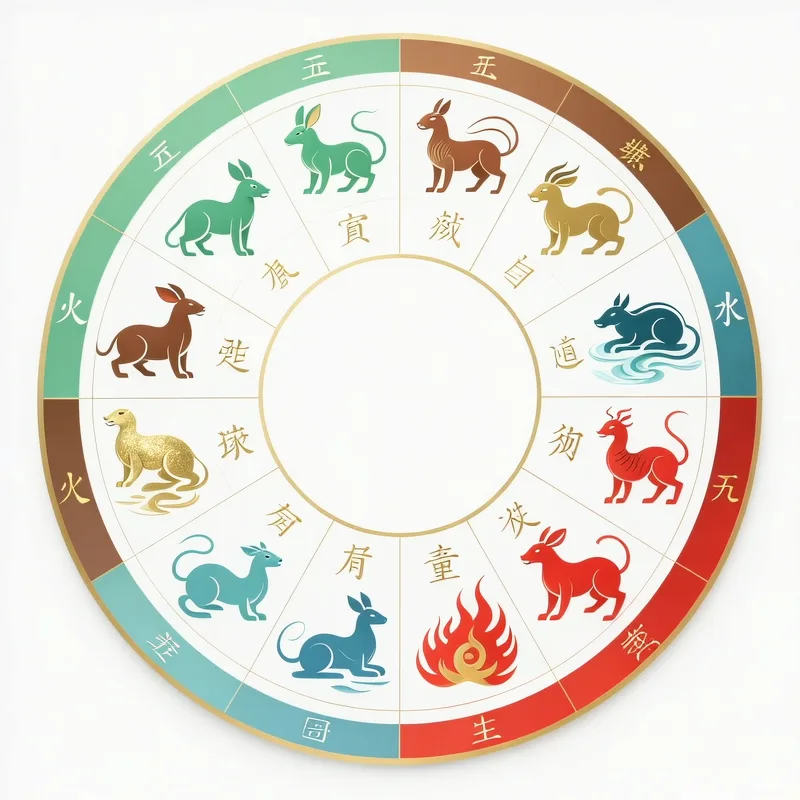
    Debido a que los diez troncos y las doce ramas avanzan juntos, un año se describe mediante un par como bingwu, el Caballo de Fuego de 2026; este mismo par se repite solo después de sesenta años. Las ramas también dividen el día en doce vigilias de dos horas, la hora zi que va desde las once de la noche hasta la una de la mañana. Los cuatro pilares del destino —año, mes, día y hora— se construyen a partir de cuatro de estos pares. Los practicantes de bazi los interpretan para determinar el temperamento y la fortuna, y las familias los consultaban antiguamente al concertar matrimonios.

    Diagrama circular de los doce animales del zodiaco chino y los cinco elementos.
    El animal y el elemento se combinan: 2026 es Bingwu, el Caballo de Fuego. Ilustración generada por IA · SinoViz

    En la vida cotidiana

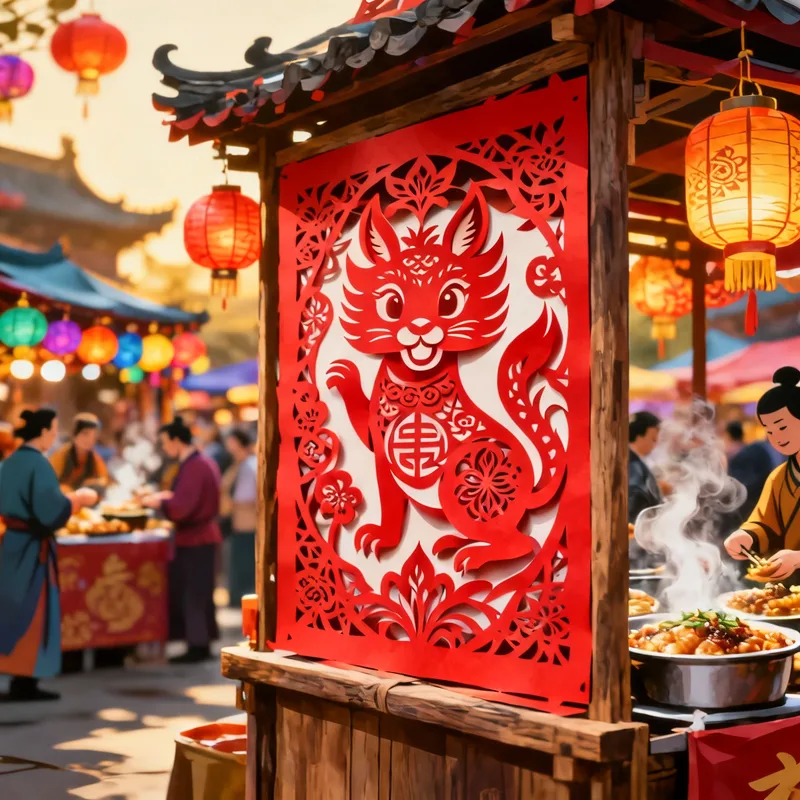
    Los signos del zodíaco funcionan más como una forma abreviada compartida que como una creencia estricta. El benming nian de una persona, el año en que regresa su animal, se trata con precaución; la ropa y los cordones rojos son precauciones comunes, especialmente para niños y ancianos. Las estampas de Año Nuevo, los recortes de papel y las ferias de los templos muestran el animal del año, y los saludos suelen mencionarlo. Las afirmaciones sobre la compatibilidad se basan en el ciclo de las ramas, y se dice que los signos separados por seis lugares chocan.

    • 2026 es Bingwu, el Año del Caballo de Fuego.
    • Cada sucursal rige un período de dos horas; zi abarca de 11 p.m. a 1 a.m.
    • Los cuatro pilares del destino combinan año, mes, día y hora.
    • En Vietnam, el conejo se sustituye por un gato.

    Variaciones regionales

    El ciclo se extendió con la colonización y el comercio chinos. En Vietnam, el conejo se convierte en gato y el buey en búfalo; en otros lugares, la cabra puede llamarse oveja. Los animales del zodiaco aparecen en monedas, espejos, lacas y cerámicas de toda la región, y los calendarios coreano y japonés adoptaron las mismas ramas con sus propias listas de animales. Estas variaciones son importantes: demuestran que el sistema calendárico se tradujo, no simplemente se copió. La secuencia china sigue siendo el punto de referencia para el Año Nuevo lunar que se celebra en Pekín y en las comunidades de la diáspora en todo el mundo.

    Recorte de papel rojo que muestra el animal del zodiaco del año en un puesto de una feria de templo.
    Cada año nuevo lunar trae consigo un nuevo animal para grabados, recortes de papel y tarjetas de felicitación. Ilustración generada por IA · SinoViz
    La rata gana la carrera porque sabe cuándo saltar, una historia inventada mucho después de que el ciclo ya estuviera en uso.

    Fuentes y lecturas adicionales

    1. zodiaco chino — Enciclopedia Británica.
    2. Conjunto de doce animales del zodiaco, dinastía Tang. — El Museo Metropolitano de Arte.
    3. Celebrando el Año del Perro — El Museo Metropolitano de Arte.

    Véalo en su lugar

    Siga esta entrada a la región a la que pertenece.

    Explorar por mapa

    Sigue el hilo

    Explora otras entradas que compartan sus etiquetas.

    Explorar la etiqueta
  • Veneración de los ancestros

    Vida y folclore

    Veneración de los ancestros

    Linaje, ritual y memoria

    Los ritos ancestrales vinculan al hogar, al salón genealógico y al cementerio del pueblo.

    Sección
    Vida y folclore
    Región
    Fujian
    Era
    A través de las épocas
    Etiquetas
    Aduanas

    La veneración de los ancestros es la práctica de honrar a los parientes fallecidos con ofrendas, incienso y ritos prescritos. En Fujian, se convirtió en un marco para la organización del linaje, la propiedad y la migración, vinculando a las aldeas con ancestros que a menudo habían vivido siglos antes.

    Un deber para con los muertos

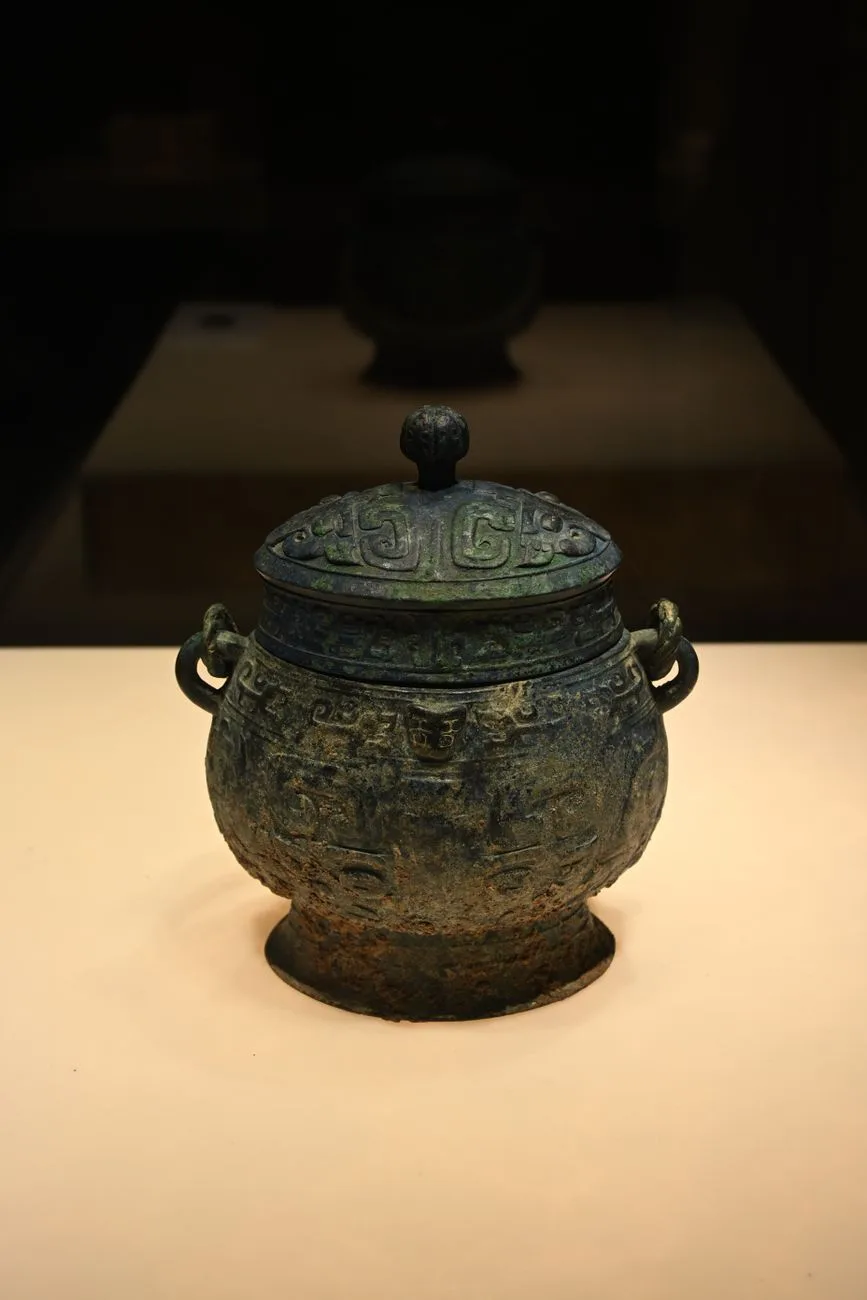
    La enseñanza confuciana dotó a esta práctica de su lenguaje moral. Las Analectas exhortan a los vivos a cuidar con esmero los ritos funerarios y a seguir a sus ancestros, describiendo el sacrificio como si los espíritus estuvieran presentes. El Libro de los Ritos y otros textos rituales relacionados establecen grados de duelo, ofrendas y el orden apropiado para los difuntos. Los arqueólogos sitúan los cultos a los ancestros en el Neolítico tardío, y se encontraron vasijas de bronce de la dinastía Shang con inscripciones que nombraban al ancestro al que se ofrecía vino o grano. La veneración era tanto una obligación como un afecto.

    Vasija ritual de bronce de la dinastía Shang con una inscripción que la dedica a un antepasado.
    Las vasijas de bronce indicaban el nombre del destinatario de las ofrendas, dejando constancia escrita de la relación. K ZHAO | Licencia de Pexels (https://www.pexels.com/license/)

    El altar doméstico

    En un hogar tradicional, un pequeño altar alberga tablillas ancestrales —placas de madera con nombres y títulos— ordenadas por generación. Se enciende incienso el primer y el decimoquinto día del mes lunar, y en el aniversario de un fallecimiento. Las ofrendas pueden incluir té, vino, fruta, arroz y tres tipos de carne, dispuestas en un orden específico; los miembros de la familia se inclinan o hacen una reverencia según su edad. La tablilla no es una imagen de la persona, sino un lugar donde se puede honrar la relación.

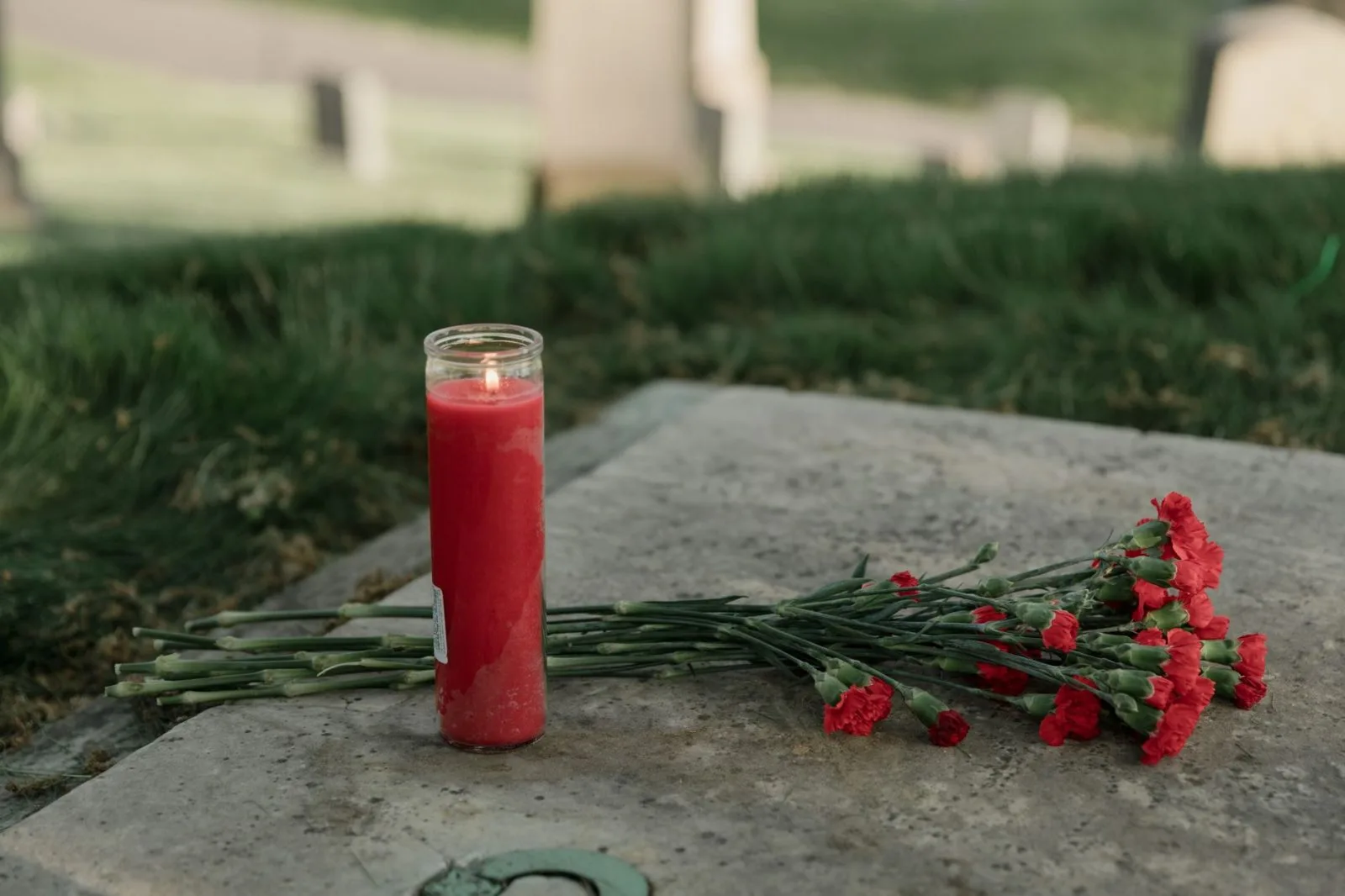
    El tiempo ritual se rige por el calendario. Qingming, el término solar de la Pura Luminosidad a principios de abril, es el gran día de limpieza de tumbas: se limpian las tumbas de maleza, se dejan ofrendas y se quema papel moneda. El solsticio de invierno trae consigo otra ronda de ofrendas en muchos hogares de Fujian, a menudo con tangyuan, bolas de arroz dulce. Durante el séptimo mes lunar, el Festival de los Fantasmas extiende la atención más allá de los propios parientes a los espíritus errantes, con banquetes comunitarios y efigies de papel.

    Salones de linaje de Fujian

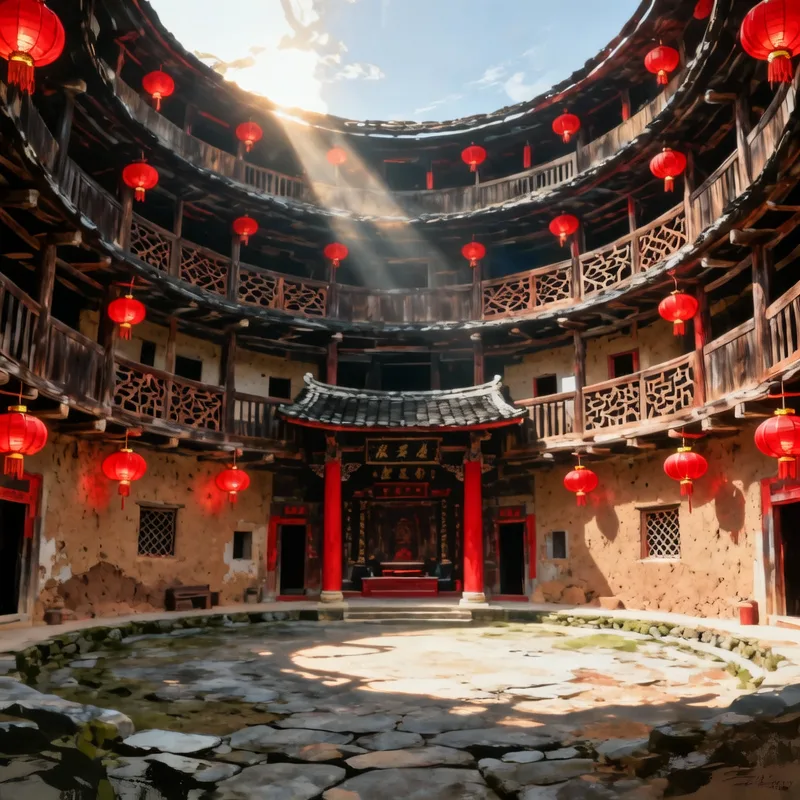
    En ningún otro lugar se aprecia con tanta claridad la escala social como en Fujian. Desde el siglo XVI, los salones de linaje —citang— se extendieron más allá de la élite, llegando a aldeas de todo el sureste de China, y en las regiones de origen de los emigrantes, dominaron el paisaje urbano. Un salón alberga las tablillas colectivas de un grupo familiar, conserva la genealogía y administra tierras comunales cuyos ingresos financian reparaciones, sacrificios y escuelas. Dentro de algunos tulou hakka, las grandes casas comunales de adobe del suroeste de Fujian, un salón ancestral ocupa un lugar dentro del perímetro defensivo.

    Patio interior y salón ancestral de una casa comunal tulou de tierra de Fujian.
    Un salón de linaje dentro de un tulou servía a todo un clan, no a una sola familia. Ilustración generada por IA · SinoViz

    Migración y retorno

    La costa de Fujian envió migrantes al sudeste asiático desde finales de la dinastía Qing, y los ritos ancestrales viajaron con ellos. Los emigrantes se unieron a asociaciones de apellidos y construyeron salones en Singapur, Malasia e Indonesia; las remesas financiaron nuevos salones y la restauración de tumbas en sus lugares de origen. Los estudiosos describen estos vínculos como redes de linaje transnacionales: el mismo vocabulario ritual conectaba el altar de la aldea, la asociación de clanes en el extranjero y el cementerio. Después de la década de 1980, muchos descendientes regresaron para reconstruir los salones, convirtiendo la genealogía en un puente entre generaciones y fronteras.

    • Qingming: se limpiaron las tumbas y se colocaron ofrendas a principios de abril.
    • Séptimo mes lunar: Ritos del Festival de los Fantasmas para espíritus sin nombre.
    • Citang: una sala genealógica que alberga tablillas, registros genealógicos y corporativos.
    • Tulou de Fujian: Patrimonio de la Humanidad de la UNESCO desde 2008.

    Cambios y continuidades

    El siglo XX alteró el orden institucional. La reforma agraria y la colectivización privaron a las propiedades familiares de sus ingresos, y durante la Revolución Cultural muchos templos fueron cerrados o dañados. Desde la década de 1980, iniciativas locales han restaurado edificios y revivido ritos, a veces como turismo cultural y otras como deber familiar. La práctica persiste, aunque adaptada: incienso en una repisa doméstica, una tumba limpiada antes del Qingming, un nombre registrado en una genealogía reconstruida. Lo que perdura es la convicción de que los muertos siguen formando parte del orden social.

    Miembros de una familia quemando ofrendas de papel en una tumba durante el festival Qingming en el sur de China.
    La limpieza de tumbas y las ofrendas siguen siendo la parte más visible de los ritos Qingming. Man Fong Wong | Licencia de Pexels (https://www.pexels.com/license/)
    Una tablilla no es un retrato de los muertos. Es una dirección donde los vivos aún pueden hablarles.

    Fuentes y lecturas adicionales

    1. China: Creencias religiosas y organización social — Enciclopedia Británica.
    2. Fujian Tulou — Centro del Patrimonio Mundial de la UNESCO.
    3. Diásporas chinas: patrones de la Edad Moderna, 1500-1740 — Cambridge University Press.

    Véalo en su lugar

    Siga esta entrada a la región a la que pertenece.

    Explorar por mapa

    Sigue el hilo

    Explora otras entradas que compartan sus etiquetas.

    Explorar la etiqueta
  • Porcelana

    Vida y folclore

    Porcelana

    Clay, fire, and the white of Dehua

    Fujian’s kilns turned local clay into porcelain that travelled across the sea and changed how the world pictured China.

    Sección
    Vida y folclore
    Región
    Fujian
    Era
    A través de las épocas
    Etiquetas
    Customs, History, Scenic Sites

    Porcelain is defined by its body and its firing: a pale, fine clay heated to temperatures that vitrify the material and make it ring when struck. Fujian’s Dehua kilns made a version so white it seemed translucent, known in Europe as blanc de Chine.

    What Makes Porcelain

    Porcelain differs from ordinary pottery in both material and firing. Potters use kaolin, a white clay, mixed with feldspar and quartz, then fire the shaped vessel at roughly 1,200 to 1,400 degrees Celsius. At that temperature the body vitrifies: it becomes dense, non-porous, and slightly translucent at the edges. A glassy glaze is usually applied before firing, bonding to the body rather than sitting on it as a separate layer. Chinese potters had reached this threshold by the Tang and Song periods, and Jingdezhen in Jiangxi became the great production centre. The English word china stuck to the ware because the country was the source of the finest examples. A light tap on a good cup gives a clear ring, a quick test that still works in a shop.

    A porcelain bowl with a pale glaze photographed against light
    True porcelain is fired hot enough to vitrify the body, giving it a hard, resonant wall. lee c | Pexels License (https://www.pexels.com/license/)

    Dehua White

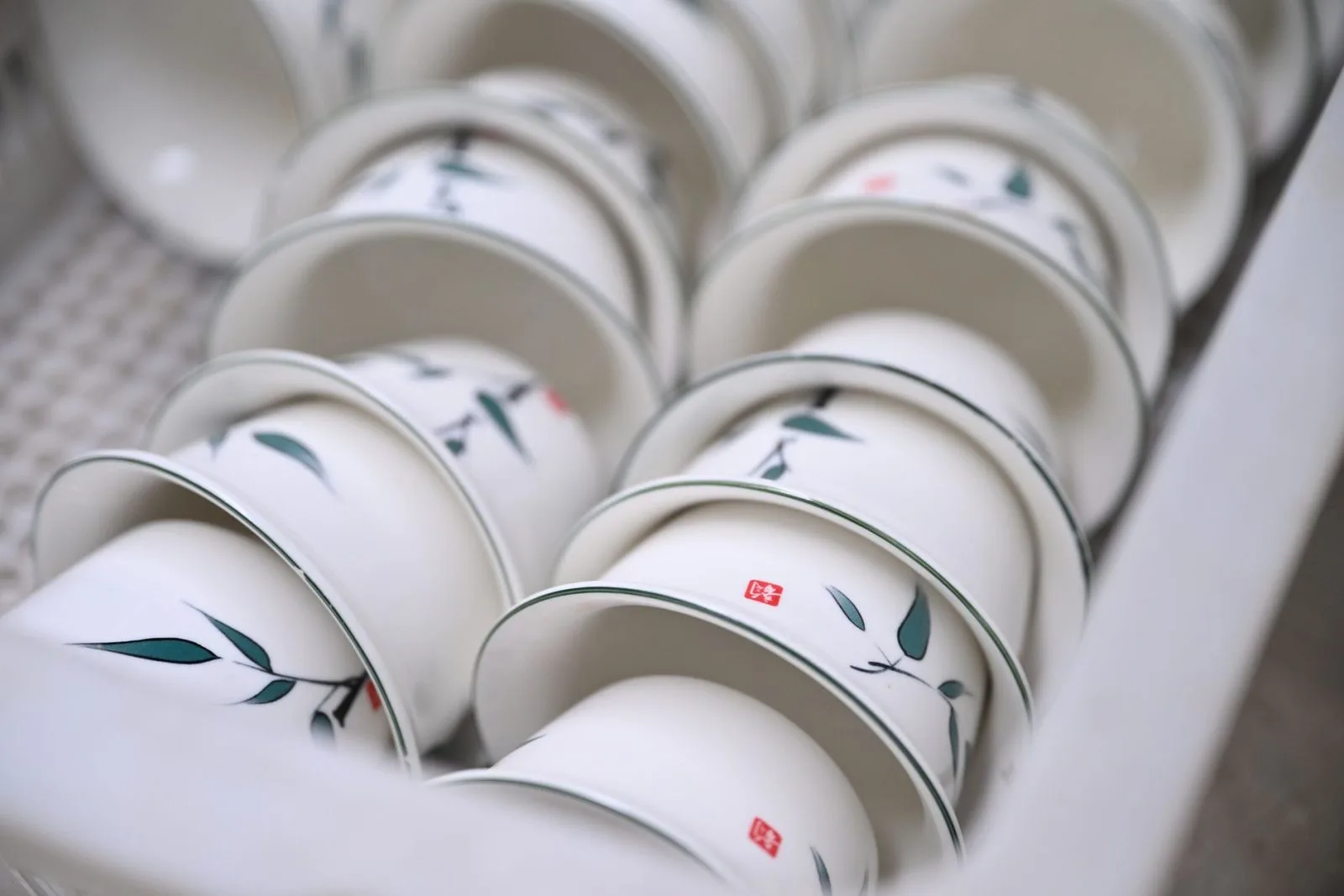
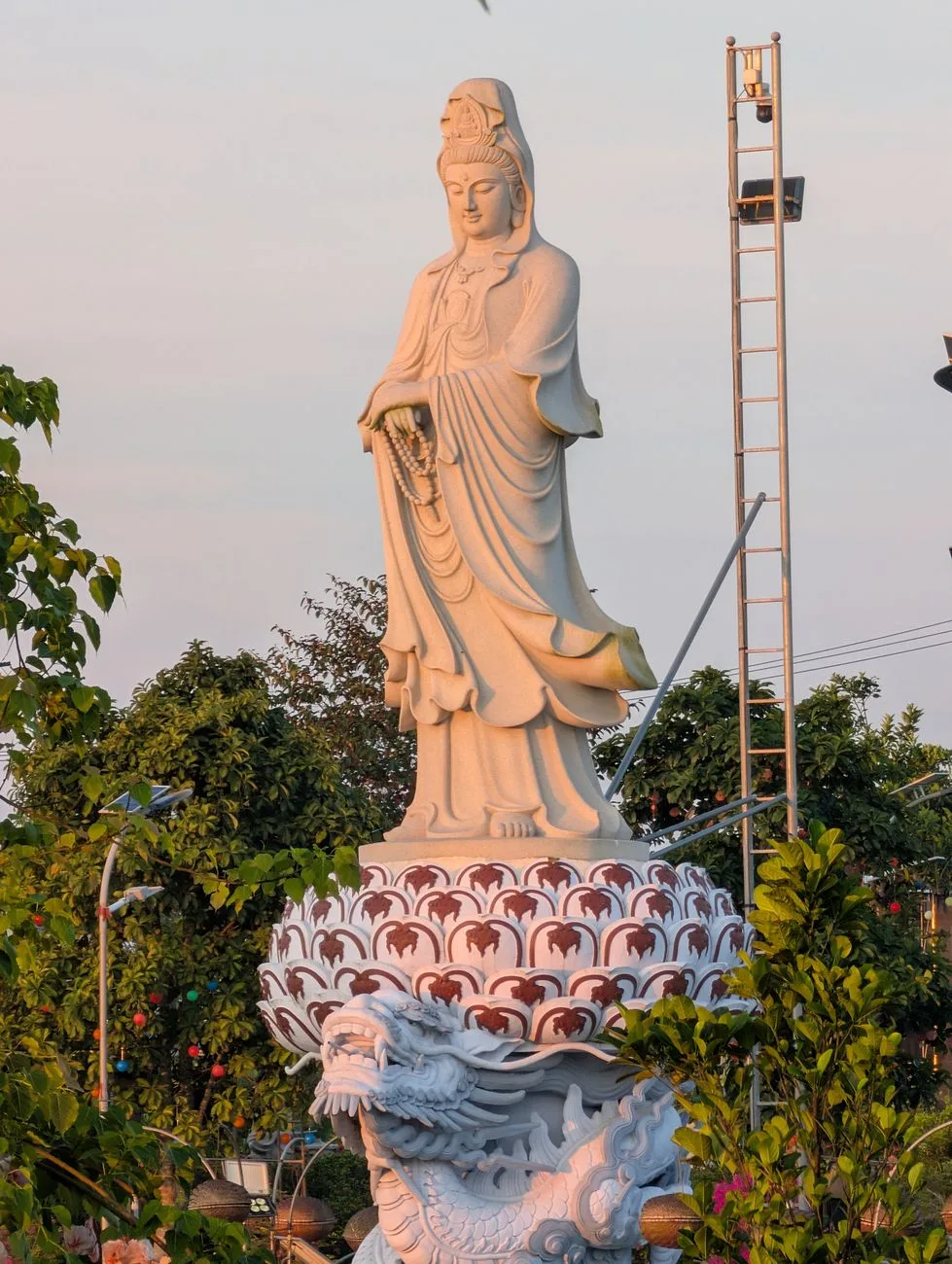
    Dehua, a county in Fujian’s Quanzhou prefecture, developed a white porcelain with a warm, creamy tone. Its clay is low in iron, which lets the glaze fire almost colourless, and its potters mastered figures as well as vessels. From the Ming dynasty onward, Dehua workshops produced small statues of Guanyin, the bodhisattva of compassion, with soft modelling and a smooth, almost waxy surface. European traders called the ware blanc de Chine, and by the seventeenth century it was collected in royal cabinets and copied by potters in Meissen and elsewhere. Tea wares also left the kilns: small cups, gaiwan lids and bowls, and white vessels that showed the colour of tea clearly. Local museums trace the kiln sequence from Song-period celadons through the white wares that made Dehua famous.

    A milky white porcelain figurine of Guanyin from Dehua
    Dehua’s porcelain figures of Guanyin became known in Europe as blanc de Chine. Quý Hoàng | Pexels License (https://www.pexels.com/license/)

    A Port for Porcelain

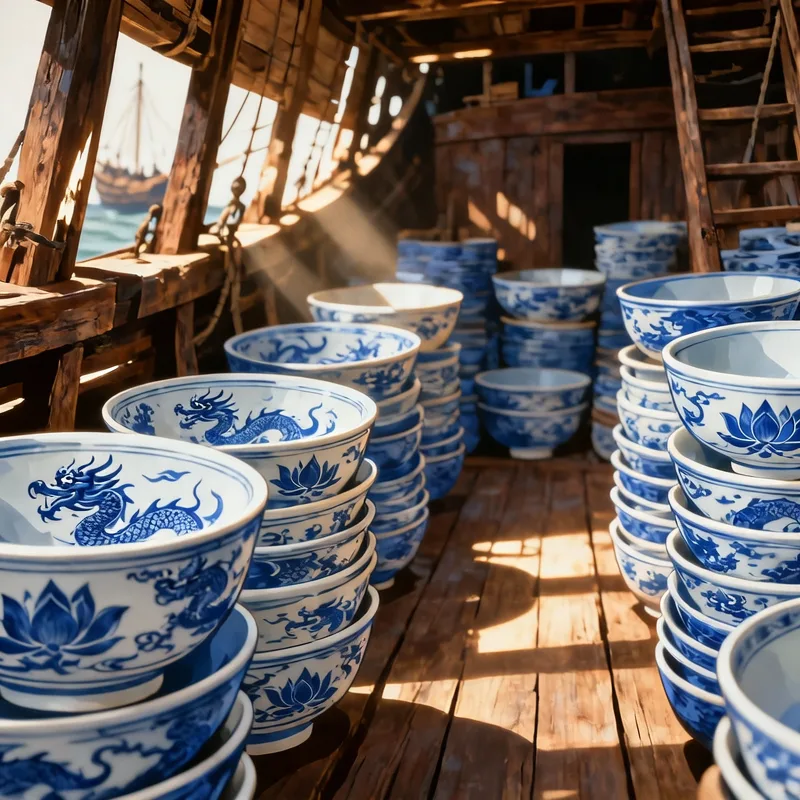
    Porcelain shaped trade as much as taste. Fujian’s coast faced the South China Sea, and Quanzhou became one of the busiest ports of the Song and Yuan dynasties, a place where merchants, monks, and ship crews exchanged goods and techniques. Archaeologists have recovered Chinese ceramics from ports and shipwrecks across Southeast Asia, the Indian Ocean, and East Africa; the fragments are dated by glaze and shape, making them a record of demand as well as production. UNESCO listed Quanzhou in 2021 as an emporium of the world in Song-Yuan China, with surviving mosques and temples. The export ware was not always the finest court piece. Sturdy bowls and jars packed in straw travelled in bulk, reaching households that never saw the kiln but knew the clay by its colour.

    Blue-and-white porcelain packed as cargo in a ship’s hold
    Quanzhou was a major Song and Yuan port from which Fujian ceramics were shipped abroad. Ilustración generada por IA · SinoViz

    Using and Collecting

    Porcelain entered daily ritual as well as trade. A gaiwan, a bowl with a lid and saucer, is used for brewing tea in northern China; the lid controls the leaves and the saucer protects the fingers. White Dehua cups make the colour of a tea liquor easy to judge. Collectors look for a clean foot ring, an even glaze, and a mark painted on the base, though many imitations copy famous reign marks. Visit a kiln museum in Dehua or a ceramic gallery in Quanzhou to see the sequence from raw clay to finished piece. Handling a cup with a saucer and a steady hand is still the simplest way to understand why this material travelled so far.

    A clear ring and a translucent edge tell you what the fire has done.

    Fuentes y lecturas adicionales

    1. Chinese Porcelain — El Museo Metropolitano de Arte.
    2. Quanzhou: Emporium of the World in Song-Yuan China — Centro del Patrimonio Mundial de la UNESCO.
    3. Blanc de Chine — Enciclopedia Británica.
    Véalo en su lugar

    Siga esta entrada a la región a la que pertenece.

    Explorar por mapa

    Sigue el hilo

    Explora otras entradas que compartan sus etiquetas.

    Explorar la etiqueta
  • Calligraphy

    Vida y folclore

    Calligraphy

    The brush as a record of the hand

    Chinese calligraphy turns writing into an art of pressure, rhythm, and restraint.

    Sección
    Vida y folclore
    Región
    Shaanxi
    Era
    A través de las épocas
    Etiquetas
    Customs, History

    A line of Chinese calligraphy is made once: the brush touches paper, and the mark cannot be corrected. That irreversibility is part of its appeal. In Xi’an, the city’s stone steles preserve the work of centuries of calligraphers in a form anyone can still read.

    The Four Treasures

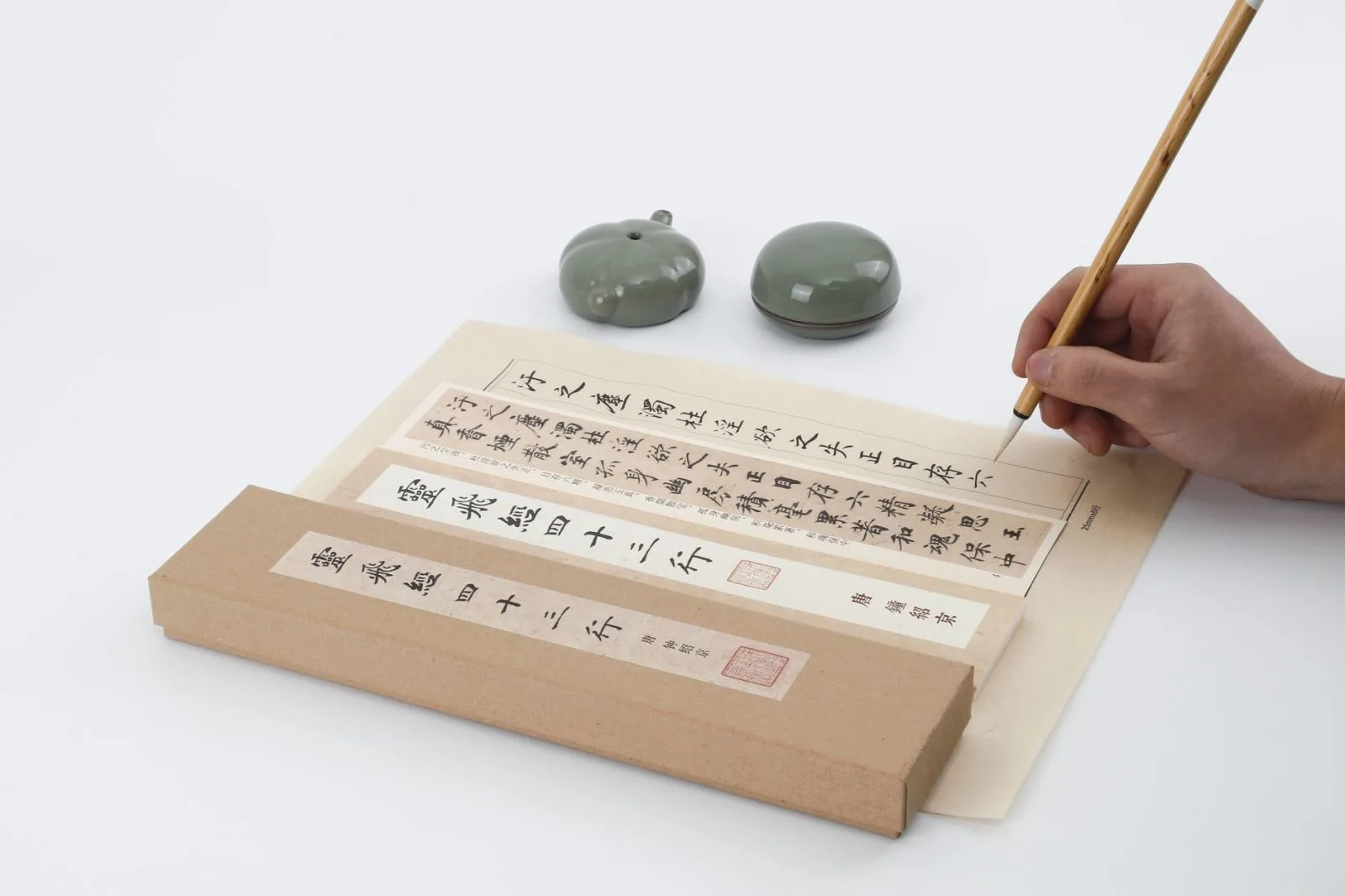
    The tools are known as the Four Treasures of the Study: brush, ink, paper, and inkstone. A brush of animal hair is held upright between thumb and fingers, and pressure makes the stroke swell and thin. Ink comes as a solid stick ground with water on a stone; the density of the mixture changes the character of the line. Paper is absorbent, so hesitation shows as a blot. Practice begins with the basic strokes, then with copying a model character hundreds of times until the hand remembers its proportions. Students still learn by tracing the regular script of Tang dynasty masters such as Yan Zhenqing and Ouyang Xun. The aim is not decorative flourish but control: a steady wrist, an even rhythm, and a line that holds its centre.

    Calligrapher’s brush, ink stick, paper, and inkstone laid on a desk
    Brush, ink, paper, and inkstone are the traditional Four Treasures of the Study. Feng Zou | Pexels License (https://www.pexels.com/license/)

    Scripts and Masters

    Chinese writing moved through several scripts, and calligraphers kept them all alive as styles. Seal script, with even, rounded lines, comes from the inscriptions on bronze and stone of the Zhou and Qin periods. Clerical script, formalised in the Han dynasty, flattened characters with a distinctive flared stroke. Regular script, settled by the Tang, is the model still taught in schools; each part of a character sits in a clear frame. Running script links strokes without losing legibility, while cursive script reduces them to rapid, connected gestures. Wang Xizhi’s Lantingji Xu, written in 353, is the famous example of running script; the original is lost, but copies carry its reputation. Later Song and Yuan artists, including Su Shi and Zhao Mengfu, made personal expression as important as correct form.

    Close view of flowing cursive calligraphy on a hanging scroll
    Cursive script compresses characters into gestures that reward slow reading. Feng Zou | Pexels License (https://www.pexels.com/license/)

    Stone Records in Xi’an

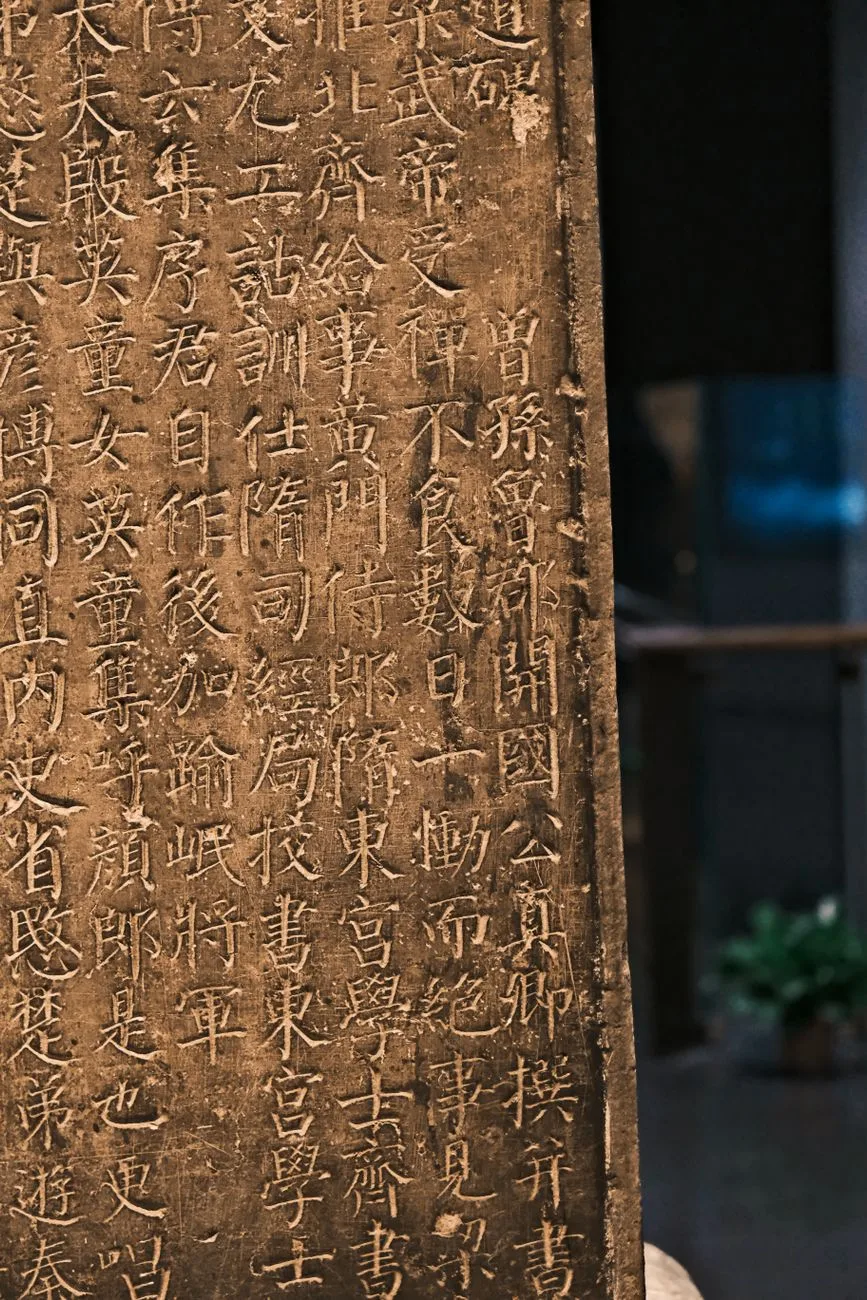
    Xi’an, the former Chang’an, preserves calligraphy on stone at the Beilin Museum, the Forest of Stone Steles. The collection began in 1087, when the Confucian classics were carved onto more than a hundred steles and installed beside the city’s Confucius Temple. Centuries of additions followed: tombstones, imperial edicts, Buddhist texts, and poems cut in several scripts. Rubbing a stele with damp paper and ink was the traditional way to study and circulate a model, and museums still demonstrate the technique. One slab records a Tang emperor’s visit to a Nestorian Christian church; another carries a Song dynasty city diagram. Walking the covered galleries, you can compare the same character written in seal, clerical, and regular forms across a thousand years.

    Rows of carved stone steles at the Beilin Museum in Xi’an
    The Beilin Museum holds thousands of steles, including Confucian classics cut into stone. Lily Lili | Pexels License (https://www.pexels.com/license/)

    Living Practice

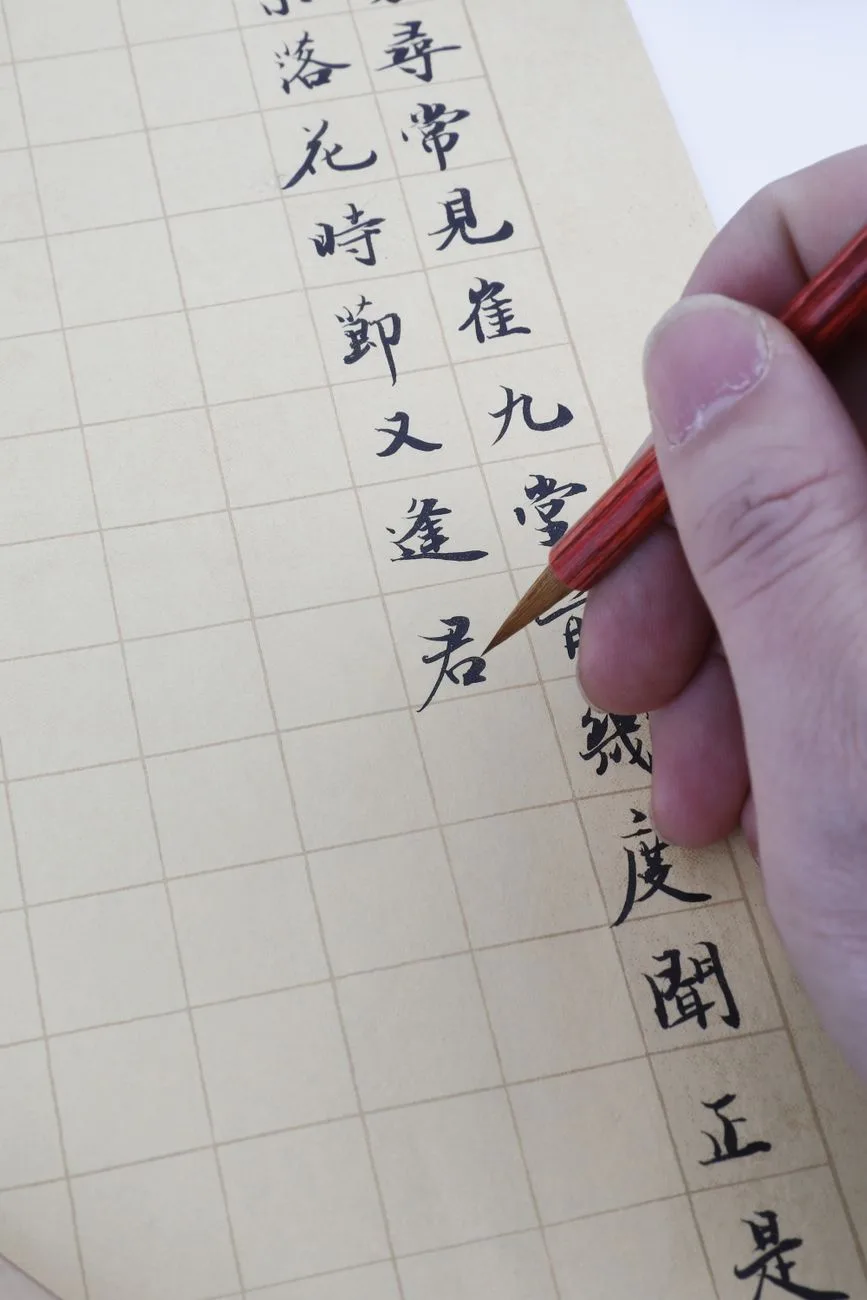
    Calligraphy remains a daily practice rather than a museum relic. Around Spring Festival, shops sell red paper couplets, and a single character for good fortune is pasted on doors, sometimes upside down to suggest that fortune has arrived. Temple names, shop signs, and station plaques are often lettered by accomplished hands. Schoolchildren practise copying characters in grid books, and older residents gather in parks to write with large water brushes on the pavement, where the characters dry in minutes. Workshops in Xi’an let visitors try a brush and learn how a stroke begins with a pause and ends with a lift. You need not read every character to see the differences: one script sits square and calm, the next leans and races.

    A stroke begins with a pause and ends with a lift; the paper keeps the record.

    Fuentes y lecturas adicionales

    1. Chinese calligraphy — Enciclopedia Británica.
    2. Chinese Calligraphy — El Museo Metropolitano de Arte.
    3. Beilin Museum, Xi’an — China Highlights.

    Véalo en su lugar

    Siga esta entrada a la región a la que pertenece.

    Explorar por mapa

    Sigue el hilo

    Explora otras entradas que compartan sus etiquetas.

    Explorar la etiqueta
  • Qingming

    Vida y folclore

    Qingming

    Sweeping tombs, welcoming spring

    Qingming pairs the remembrance of ancestors with the first serious outings of spring.

    Sección
    Vida y folclore
    Región
    Zhejiang
    Era
    A través de las épocas
    Etiquetas
    Customs, Geography

    Qingming arrives around 4 or 5 April, when the sun reaches fifteen degrees of the spring equinox on the traditional solar-term calendar. Its two halves belong together: cleaning a family grave, then walking out into the greening countryside.

    A Solar Term and a Day of Remembrance

    Qingming means clear and bright, a name drawn from the twenty-four solar terms, the calendar that divides the year by the sun’s position. The term falls around 4 or 5 April, when temperatures rise and rain becomes frequent in the lower Yangtze. Families visit ancestral graves to sweep away leaves and weeds, repaint inscriptions, and lay out food, tea, and paper money. Offerings are followed by bows or a few words addressed to the dead. Paper money may be burned in a designated container, depending on local rules. The act is not a celebration of death but a maintenance of family continuity: the dead remain part of the household’s obligations. In Zhejiang, hillside graves make the visit a walk as much as a ritual.

    A family tending a grave with flowers on a hillside in spring
    Tomb sweeping means cleaning the grave, making offerings, and bowing before ancestors. RDNE Stock project | Pexels License (https://www.pexels.com/license/)

    The Cold Food Connection

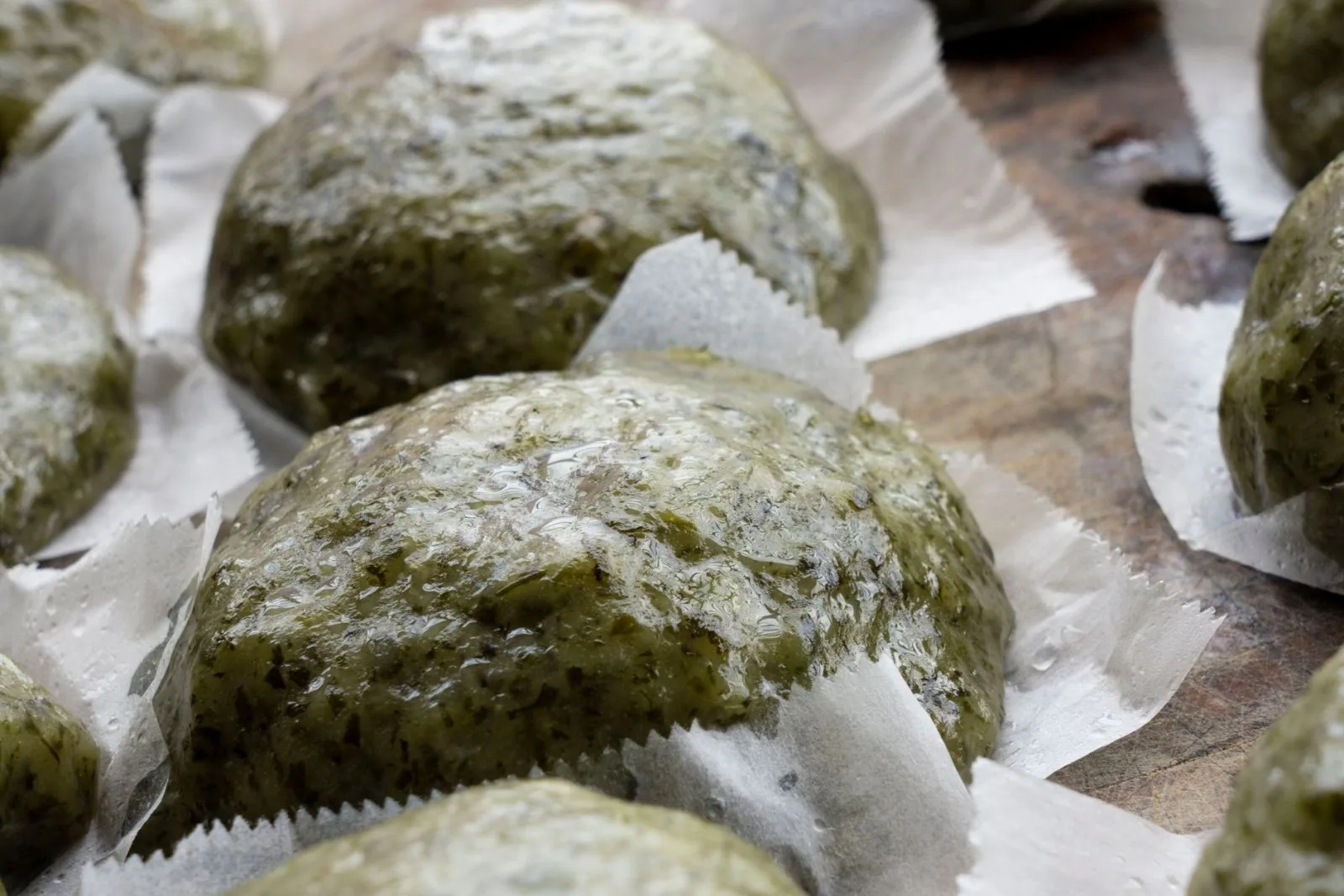
    Earlier custom linked this season with the Cold Food Festival, when fires were forbidden and families ate food prepared in advance. One traditional explanation connects the practice to Jie Zitui, a loyal follower of a Spring and Autumn duke who died in a forest fire; later historians treat the story as one among several local traditions rather than a single origin. In practice, the cold-food element has faded, but special foods remain. In Zhejiang and neighbouring Jiangnan, people eat qingtuan, soft green dumplings made with glutinous rice and mugwort juice, often filled with sweet red bean paste. Their colour comes from the first spring growth, and they are sold in markets for only a short season. Eating one links the memory of the dead to the first green.

    Qingming dumplings and cold food arranged on a table
    Qingming foods in Zhejiang include qingtuan, green rice cakes flavoured with mugwort. Jimmy Liao | Pexels License (https://www.pexels.com/license/)

    Spring Outings in Zhejiang

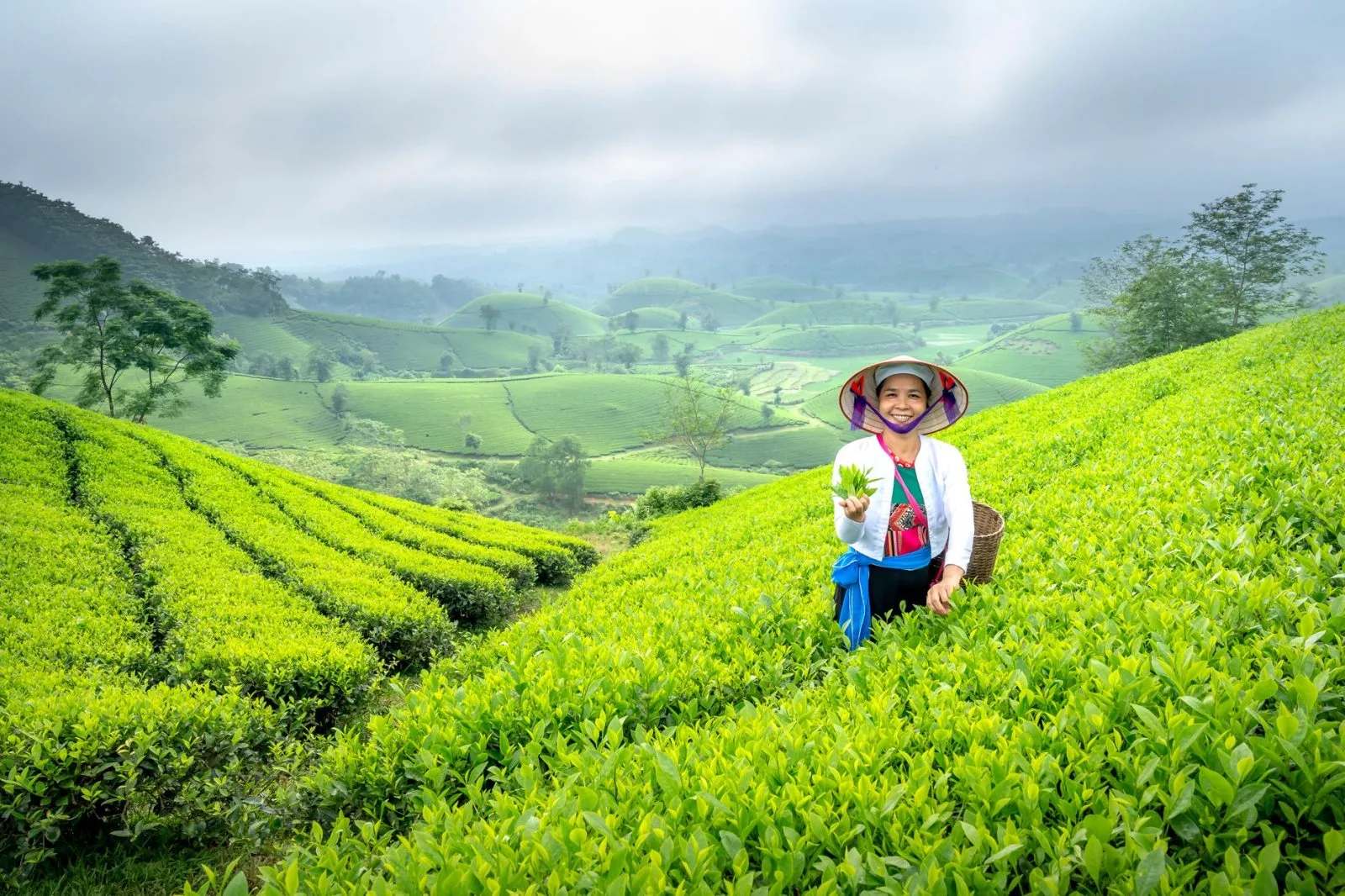
    The second half of Qingming is an outing, known as taqing, when families walk in parks, visit temples, or climb hills. Willow branches were once tucked into hair or hung at doors. In Zhejiang, the festival coincides with the first tea harvest around Hangzhou. Longjing, the tea from the hills near West Lake, is at its most valued when picked before Qingming; the tender buds of pre-Qingming pickings command higher prices. Visitors can see pickers between rows, and lakeside tea houses serve the new leaves. Qingming became a public holiday in 2008, giving the outing a practical boost. Combined with tomb sweeping, the day makes an unusual pair: a visit to the ancestors in the morning, a walk among new leaves in the afternoon.

    Tea pickers gathering early spring leaves in Zhejiang hills
    Pre-Qingming tea from Zhejiang’s hills is prized for its tender leaves. Quang Nguyen Vinh | Pexels License (https://www.pexels.com/license/)

    Poetry and Practice Today

    Qingming has a fixed place in Chinese literature. The Tang poet Du Mu wrote of drizzling rain on the Mourning Day and a traveller asking where wine could be bought, a poem that schoolchildren still memorise. The lines capture the day’s two moods: rain and sorrow, and the impulse to go out despite them. For a visitor, the details matter. Cemeteries can be crowded, so go early and keep to marked paths. Bring water and wear shoes suitable for muddy slopes. In Hangzhou, traffic around West Lake builds by mid-morning, and the metro is simpler than a taxi. Tea villages welcome visitors, but a field is a working crop, not a garden; wait for an invitation before touching the leaves. Respect anyone burning offerings, and never photograph a grave close-up.

    In the morning the family tends the grave; in the afternoon it walks among new leaves.

    Fuentes y lecturas adicionales

    1. Los veinticuatro términos solares — Patrimonio Cultural Inmaterial de la UNESCO.
    2. West Lake Cultural Landscape of Hangzhou — Centro del Patrimonio Mundial de la UNESCO.
    3. Qingming Festival — China Highlights.

    Véalo en su lugar

    Siga esta entrada a la región a la que pertenece.

    Explorar por mapa

    Sigue el hilo

    Explora otras entradas que compartan sus etiquetas.

    Explorar la etiqueta
  • Dragon Boat Festival

    Vida y folclore

    Dragon Boat Festival

    Racing, rice dumplings, and the fifth moon

    The Dragon Boat Festival joins boat races, sticky rice parcels, and a story of loyalty to a poet.

    Sección
    Vida y folclore
    Región
    Guangdong
    Era
    A través de las épocas
    Etiquetas
    Costumbres, Alimentos

    Duanwu falls on the fifth day of the fifth lunar month, when the heat of early summer arrives in Guangdong. The holiday is best known for dragon boat racing and zongzi, but its smaller customs reveal as much about how the day is understood.

    Qu Yuan and the River

    The festival is commonly linked to Qu Yuan, a poet and minister of the state of Chu who died in 278 BCE after his advice was rejected and his state fell. Legend says that fishermen raced out in boats to find his body and threw bundles of rice into the river to keep fish from eating it. Historians note that the custom of racing boats and the fifth-month observance existed before this story attached to it; the legend explains a practice rather than creating it. Either way, the pairing of boat and rice dumpling gives the holiday its two enduring symbols. In school lessons and public ceremonies, Qu Yuan is presented as a figure of loyalty and moral independence, a poet whose writing still reads as political dissent.

    A dragon boat with a carved head and paddlers in formation
    Dragon boats are painted and carved; crews race to the beat of a drum. Kamus Cheung | Pexels License (https://www.pexels.com/license/)

    Zongzi and Household Charms

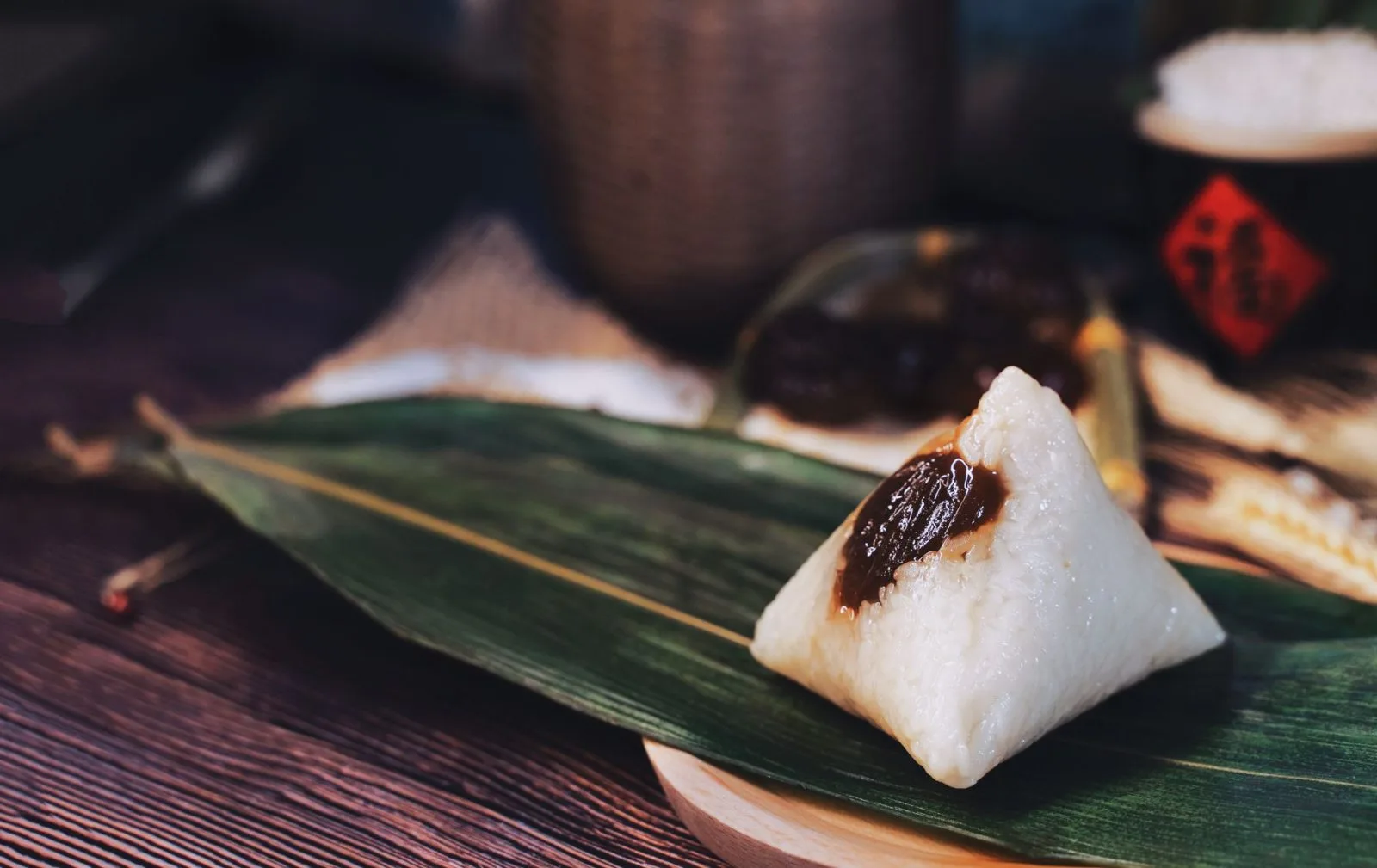
    Zongzi are parcels of glutinous rice wrapped in bamboo or reed leaves and tied with string, then boiled for hours. Fillings vary by region: Guangdong versions may include pork, salted egg, and mushrooms, while northern ones are often sweet with dates or red bean. Families make them in batches and give them to neighbours. The festival also has a protective side. In older practice, people hung mugwort and calamus at doorways to keep away illness and insects and tied five-coloured silk around children’s wrists. Realgar wine, a yellow mixture with a strong smell, was sprinkled around the house or dabbed on a child’s forehead, though modern safety advice discourages drinking it. These acts belong to a time when the fifth moon was thought to carry dampness, snakes, and fever.

    Pyramidal zongzi wrapped in bamboo leaves and tied with string
    Zongzi are filled with sticky rice and tied with string before boiling. zhen tang | Pexels License (https://www.pexels.com/license/)

    Guangdong on the Water

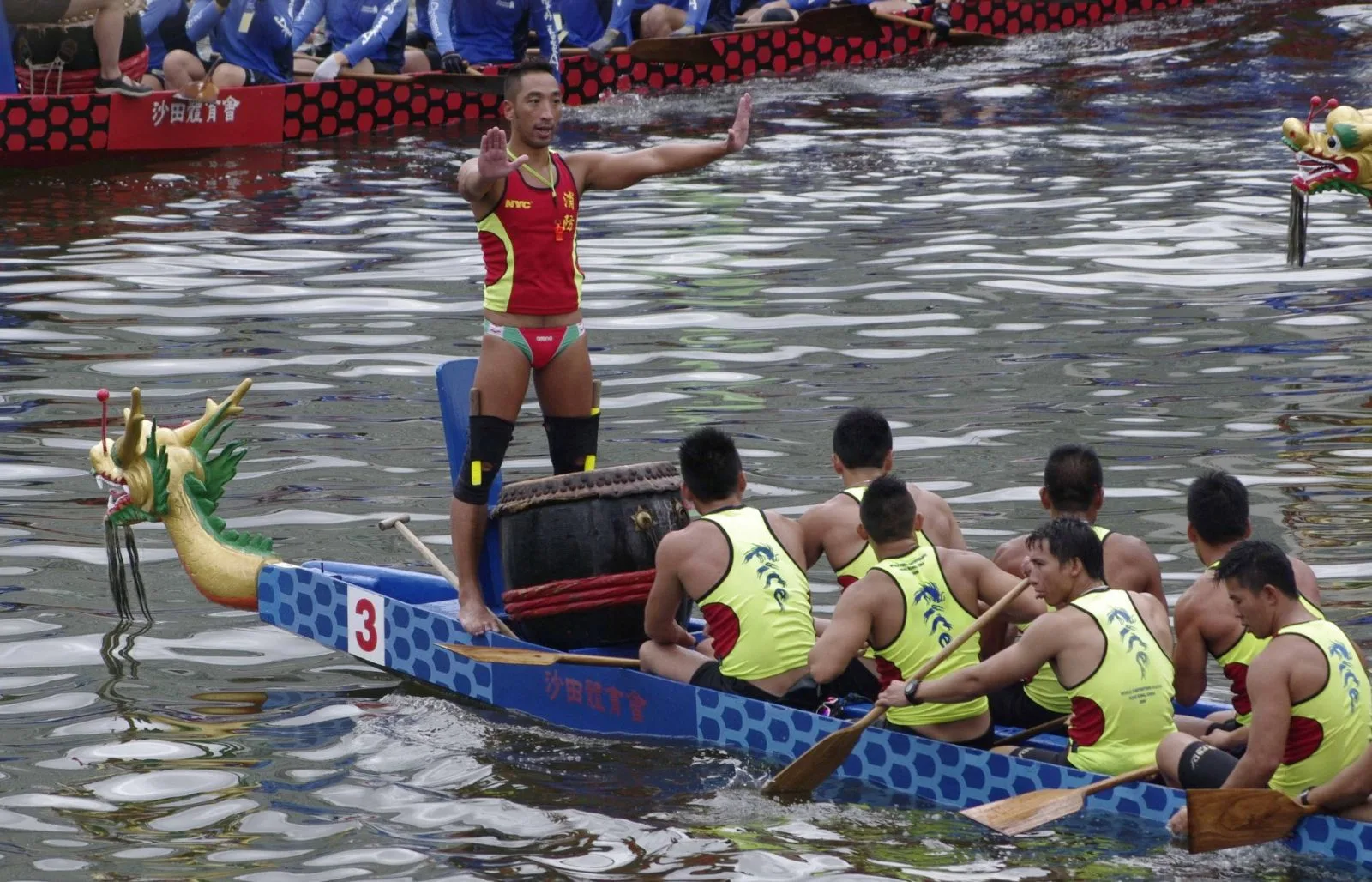
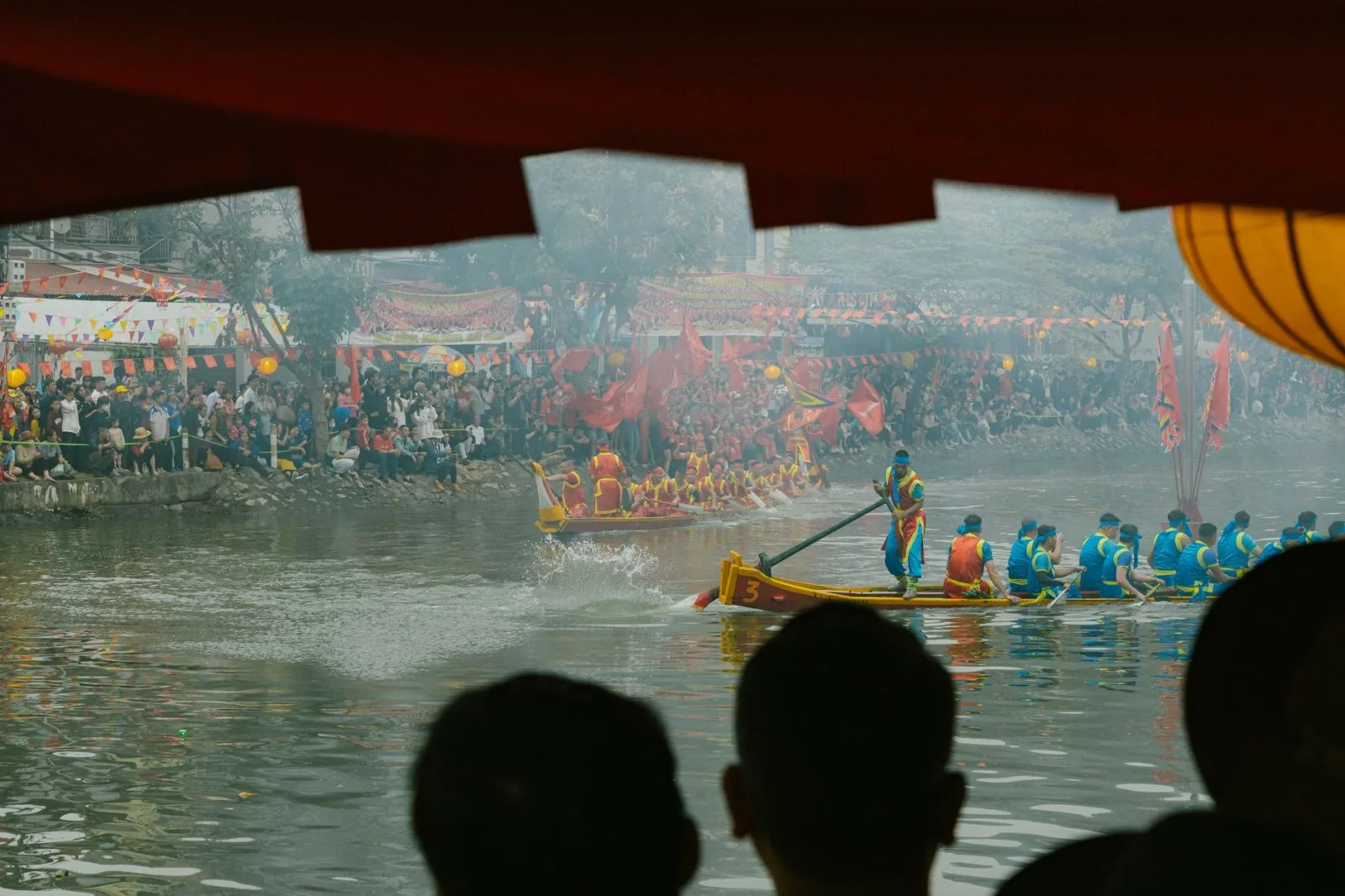
    In Guangdong, dragon boat racing is not a single event but a season. Villages and districts along the Pearl River Delta prepare boats through the spring, then race on rivers and creeks in the weeks around Duanwu. A long narrow boat carries a crew of paddlers, a drummer who sets the stroke, and a helmsman; the painted head and tail give the craft its name. Races are loud, crowded, and local, with teams known by village or temple affiliation. Spectators line bridges and banks, and the best vantage points fill early. The custom was inscribed on UNESCO’s intangible cultural heritage list in 2009. For a visitor, check local listings rather than assuming one central race: events are spread across Guangzhou and Foshan, and dates shift with the lunar calendar.

    Dragon boat crews racing on a Guangdong river before a crowd
    Pearl River Delta races draw village crews and large crowds in the weeks around Duanwu. HONG SON | Pexels License (https://www.pexels.com/license/)

    Observing the Day Today

    Duanwu is an official public holiday, so transport and tourist sites are busy. In Guangdong, the weather is hot and wet by May or June; bring water, a hat, and insect repellent if you plan to watch a race from an open bank. Respect the crews’ space at the water’s edge and do not step onto a boat or touch a drum without being invited. Many families still put mugwort at the door, and zongzi are easy to buy from markets in the days before the holiday. The festival is also an occasion for calling on relatives, though on a smaller scale. For travellers, the pleasure lies in the combination: a public spectacle on the river and a quiet, food-filled custom at home, both tied to the same lunar date.

    The drum sets the stroke, and the village supplies the crew.

    Fuentes y lecturas adicionales

    1. Dragon boat festival — Patrimonio Cultural Inmaterial de la UNESCO.
    2. Dragon Boat Festival — Enciclopedia Británica.
    3. Qu Yuan — Enciclopedia Británica.
    Véalo en su lugar

    Siga esta entrada a la región a la que pertenece.

    Explorar por mapa

    Sigue el hilo

    Explora otras entradas que compartan sus etiquetas.

    Explorar la etiqueta
  • Mid-Autumn Festival

    Vida y folclore

    Mid-Autumn Festival

    Mooncakes under a full moon

    The Mid-Autumn Festival gathers families around the full moon, mooncakes, and a long tradition of watching the night sky.

    Sección
    Vida y folclore
    Región
    Pekín
    Era
    A través de las épocas
    Etiquetas
    Costumbres, Alimentos

    Falling on the fifteenth day of the eighth lunar month, the Mid-Autumn Festival is a harvest celebration and a family reunion. In Beijing, the holiday is marked in courtyards, parks, and moon-viewing spots that fill after sunset.

    The Date and the Moon

    The festival follows the lunar calendar, so its date moves between early September and early October. The fifteenth day of the eighth month is chosen because the moon should be full, and roundness stands for completeness and family unity. Chinese tradition reads the moon’s surface as the figure of Chang’e, a woman who, in one version of the myth, drank an elixir and rose to live there with a rabbit that pounds medicine. Another story tells of Wu Gang cutting a tree that regrows each time. These tales are not scripture; they are the stories families retell while looking up. Around the festival, parks stay open late and lakes reflect the moon, giving city dwellers a quiet reason to be outdoors after dinner.

    A full moon rising over a Beijing park lake
    The festival falls on the full moon of the eighth lunar month, usually in September or October. marnock | Pexels License (https://www.pexels.com/license/)

    Mooncakes and Their Fillings

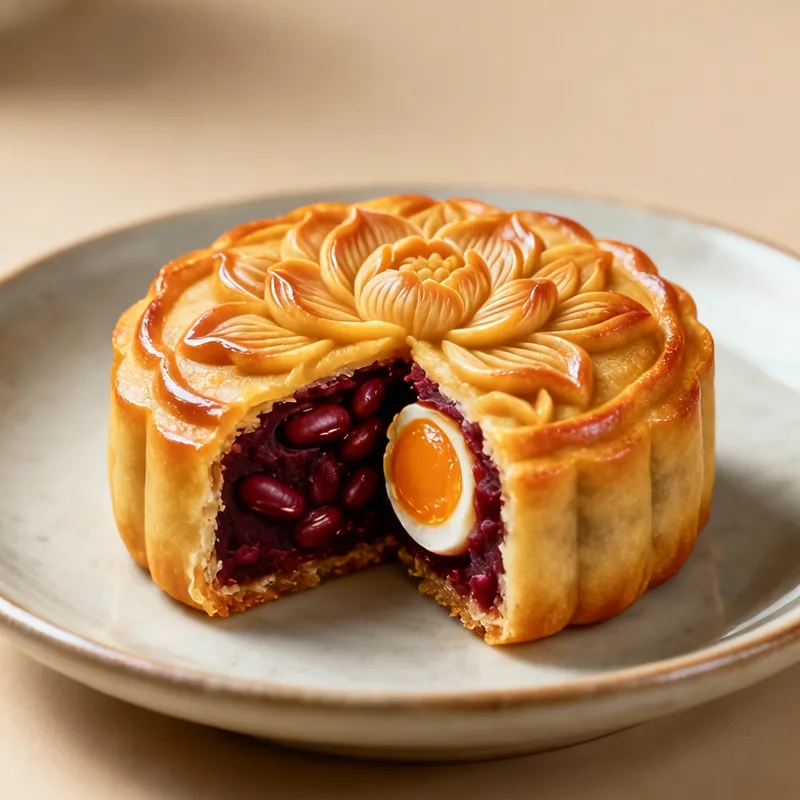
    Mooncakes are small, dense pastries with a thin crust and a heavy filling, traditionally cut into wedges and shared. The round shape echoes the moon, and the top is stamped with a pattern or characters such as longevity or harmony. Cantonese-style cakes often hold lotus seed paste and a salted duck egg yolk, whose yellow centre stands for the moon; other fillings include red bean, five nuts, and preserved fruit. Suzhou-style pastries use flaky layers, while snow-skin mooncakes are chilled and made with a glutinous rice wrapper. Because the cakes are rich, a sliver is usually enough, and tea helps. Prices rise in the weeks before the holiday, and elaborate boxes are made for gifting rather than eating. In Beijing, bakeries sell both traditional versions and small cakes.

    A round mooncake with a stamped pattern cut open to show the filling
    Mooncakes are dense pastries stamped with characters for longevity or harmony. Ilustración generada por IA · SinoViz

    Beijing After Dark

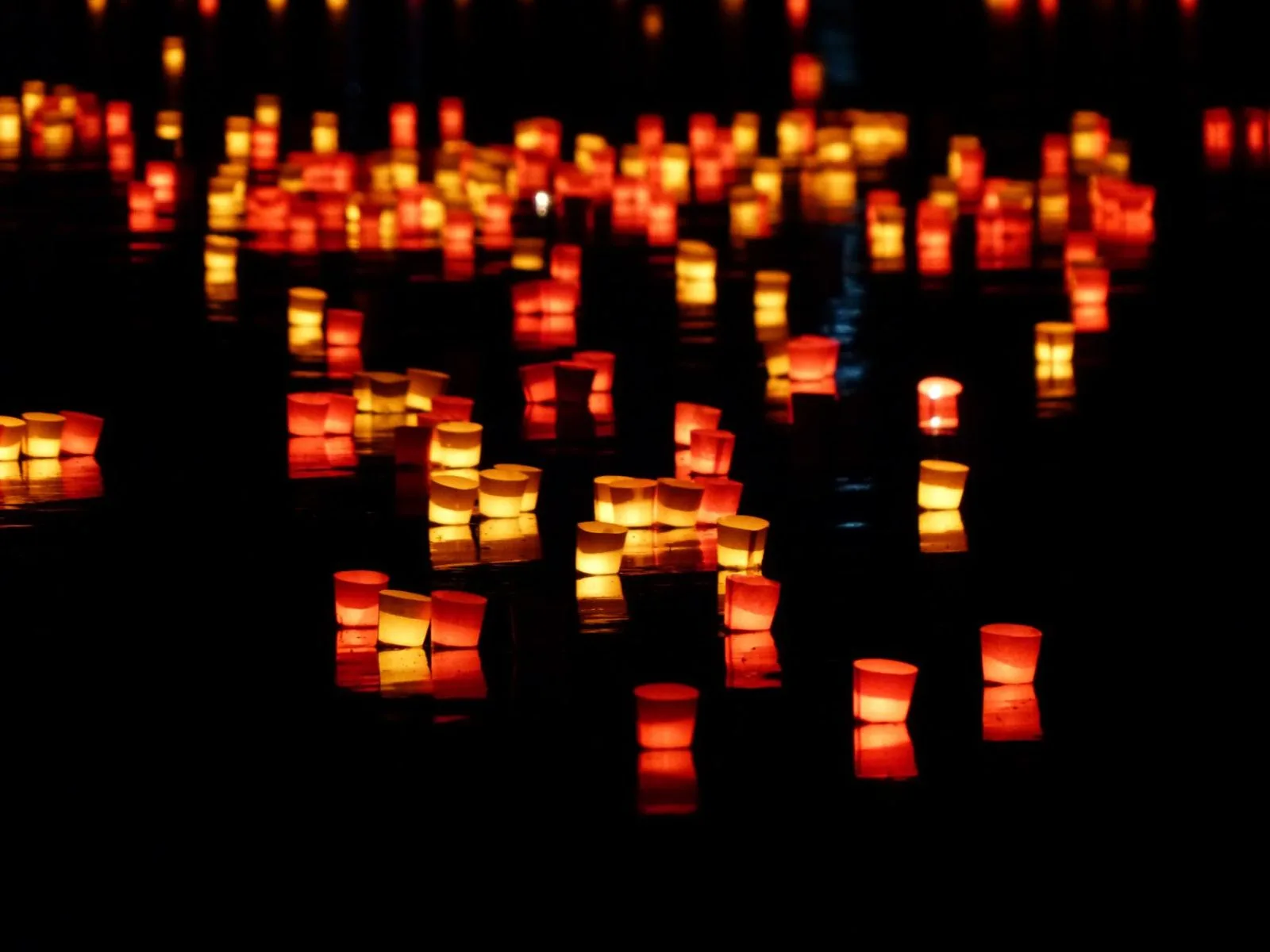
    Beijing’s moon-viewing spots fill quickly after dark. Beihai Park, with its lake and white stupa, and the Summer Palace, with Kunming Lake and the Long Corridor, are classic places to walk and watch the reflection. The Temple of Heaven also draws visitors. Families may light paper lanterns, and children carry them through the lanes; in some neighbourhoods, lantern riddles are posted for anyone who wants to try. Public holiday crowds mean metro stations near the parks stay busy late, so allow time to get back. Camping or bringing a barbecue is not appropriate in these historic grounds. A practical plan is to visit in the late afternoon, walk as the light fades, and take a seat by the water before the moon clears the rooftops.

    Lanterns reflected in a lake at a Beijing park during the Mid-Autumn Festival
    Parks such as Beihai and the Summer Palace draw moon-viewing crowds after sunset. Pixabay | Pexels License (https://www.pexels.com/license/)

    Gifts, Holiday, and Meaning

    Mooncakes are exchanged as gifts, often in boxes of four or six, and carrying a box to a family dinner is normal. The act matters more than the price; a modest cake from a favourite bakery can be more welcome than a lavish tin. Since 2008, the festival has been an official public holiday, reinforcing its role as a reunion, with millions travelling to see relatives. The deeper theme is tuanyuan, reunion, expressed by the circle of the cake and the full moon. Not everyone can be at the table, and the holiday acknowledges that absence as much as presence. If you are invited to a Beijing home, bring the cakes, arrive on time, and expect the evening to centre on a long meal rather than on speeches.

    Roundness carries the argument: a full moon, a round cake, a family gathered in one room.

    Fuentes y lecturas adicionales

    1. Mid-Autumn Festival — Enciclopedia Británica.

    2. Mid-Autumn Festival — China Highlights.

    Véalo en su lugar

    Siga esta entrada a la región a la que pertenece.

    Explorar por mapa

    Sigue el hilo

    Explora otras entradas que compartan sus etiquetas.

    Explorar la etiqueta
  • Chinese Paper Cutting

    Vida y folclore

    Chinese Paper Cutting

    Red paper, folded and cut

    A pair of scissors and a sheet of red paper can carry a whole vocabulary of wishes.

    Sección
    Vida y folclore
    Región
    Shaanxi
    Era
    A través de las épocas
    Etiquetas
    Customs, Ethnic

    Chinese paper cutting, or jianzhi, turns a flat sheet into a pattern of figures, flowers, and characters. Practised for centuries in rural households, it still marks weddings and New Year, and Shaanxi’s bold window designs are among its most recognisable regional forms.

    Origins and Technique

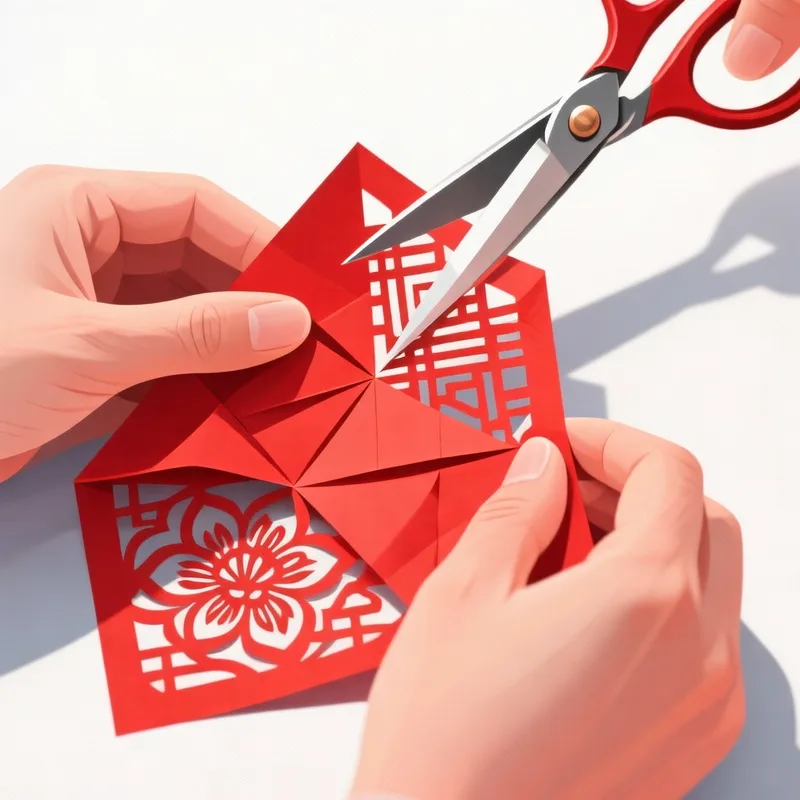
    Paper reached China in the Eastern Han period, and the first cuts followed once the material was cheap enough to experiment with. Early examples were used as offerings and as templates for embroidery; a surviving cut-paper find from the sixth century shows that the technique was established by then. Two methods developed. Scissors cut a folded sheet, creating a mirror-symmetric design with a single sequence of snips. A knife held upright cuts a stack of paper against a wax board, a method suited to finer lines and repeated motifs. Artists draw no outline for many traditional patterns; they cut directly, keeping the connecting threads that stop the design falling apart. The finished piece is light, cheap, and easy to paste on a window or door.

    Hands cutting a red paper design with small scissors
    Folding the paper before cutting produces the symmetrical patterns typical of window decorations. Ilustración generada por IA · SinoViz

    A Language of Motifs

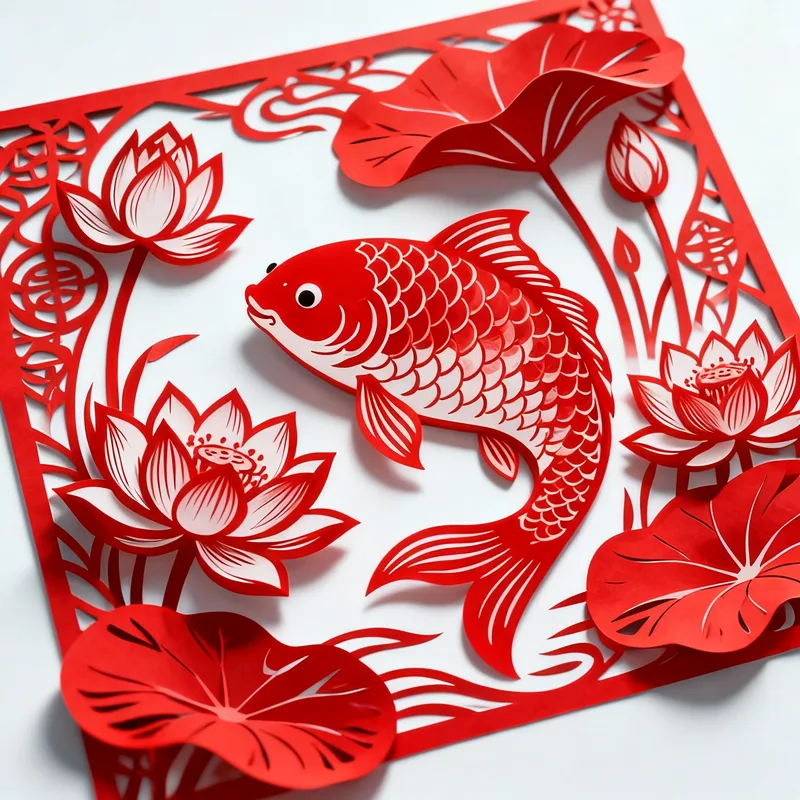
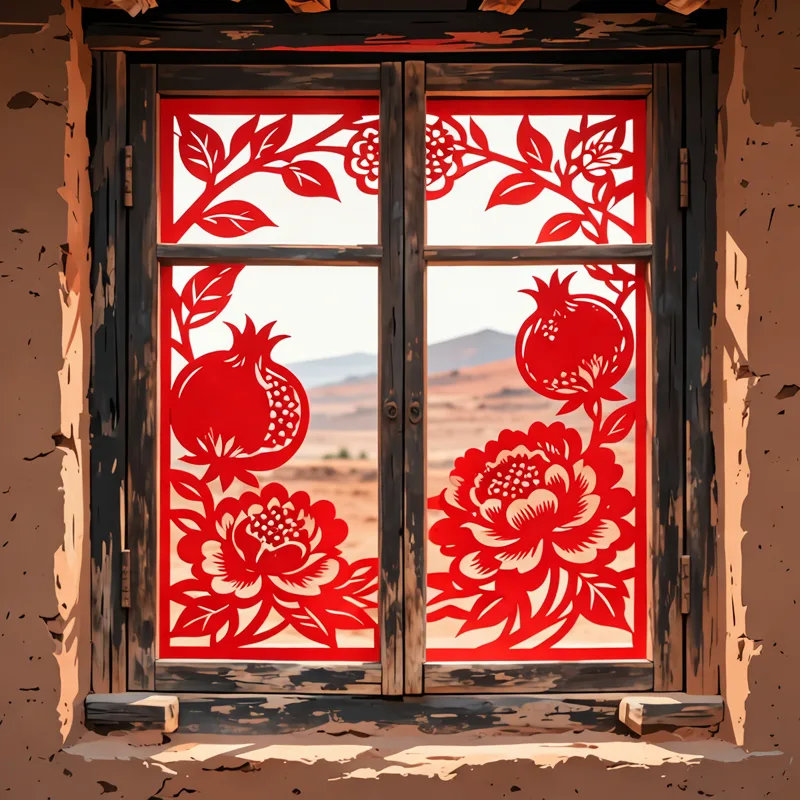
    The images are a system of visual puns. A fish means surplus, because the word for fish sounds like the word for abundance; lotus suggests purity. A pomegranate stands for many children, a bat for good fortune, and a peach for long life. The character fu, meaning good fortune, appears alone or inside a circular design, while shuangxi, double happiness, belongs to weddings. Zodiac animals, opera figures, and scenes of children at play all circulate as patterns. Colour matters as much as shape: red is the default for celebration, while white paper cuts are rarer and tied to older ritual uses. In a Shaanxi village window, the arrangement of these motifs tells a visitor what the household is hoping for in the coming year.

    Red paper-cut window decoration showing a fish and lotus flowers
    Fish and lotus form a rebus for abundance; motifs are chosen for the wish they carry. Ilustración generada por IA · SinoViz

    Shaanxi Windows

    Paper cutting in Shaanxi is associated with rural life on the Loess Plateau, especially around Yan’an. Windows there were once small and deeply set, so designs favoured bold silhouettes and broad, connected shapes that could be read from across a room. Local artists talk of cutting with the heart rather than measuring with a ruler, and compositions often show figures, animals, and plants together in a single dense frame. Window grilles, or chuanghua, are pasted at New Year and replaced when they fade. Wedding cuts carry double happiness characters and images of fertility; birthday cuts use peaches and cranes. Women were the main practitioners in many villages, passing patterns from mother to daughter, and village fairs still sell sheets cut in the old local style.

    A Shaanxi farmhouse window with bold red paper cutouts
    Shaanxi cuts favour strong silhouettes and broad shapes, designed to read from a distance. Ilustración generada por IA · SinoViz

    Recognition and Travel

    Chinese paper-cut was inscribed on UNESCO’s Representative List of the Intangible Cultural Heritage of Humanity in 2009, a recognition that named both the craft and the communities that sustain it. The listing does not freeze the art. Contemporary artists cut portraits, cityscapes, and political images with the same tools, and paper cuts appear in graphic design and animation. For a visitor, the appeal is that the work is easy to find and easy to try. Museum shops sell small sheets, market stalls sell single motifs, and workshops in Xi’an and rural Shaanxi teach the basic fold-and-cut method in an hour. Bring a sharp pair of scissors and practice on cheap red paper before attempting a detailed pattern. A finished cut pasted on glass changes with the light.

    The pattern holds together because the cutter leaves just enough paper between the lines.

    Fuentes y lecturas adicionales

    1. Chinese paper-cut — Patrimonio Cultural Inmaterial de la UNESCO.
    2. Chinese Paper Cutting — China Highlights.
    3. Paper cutting — Enciclopedia Británica.
    Véalo en su lugar

    Siga esta entrada a la región a la que pertenece.

    Explorar por mapa

    Sigue el hilo

    Explora otras entradas que compartan sus etiquetas.

    Explorar la etiqueta
  • Cantonese Cuisine

    Vida y folclore

    Cantonese Cuisine

    Steam, Wok Heat, and Coastal Markets

    Guangdong cooking turns local seafood and temple fair foods into a refined restaurant tradition.

    Sección
    Vida y folclore
    Región
    Guangdong
    Era
    A través de las épocas
    Etiquetas
    Food, Geography

    Cantonese cuisine is the cooking of Guangdong and its diaspora, built on river deltas, coastal markets, and the heat of the wok. Its best-known dishes—roast goose, dim sum, and steamed fish—sit beside home-style soups and street snacks.

    The Pearl River Pantry

    The Pearl River Delta gave Cantonese cooking an unusually broad pantry. Rice grows in the lowlands, fish and shellfish come from the estuary, and hills behind Guangzhou supply vegetables, pork, and poultry. Guangzhou was a major port under the Tang and again after European traders arrived in the seventeenth and eighteenth centuries. Merchants, officials, and temple fairs supported restaurants that could pay for skilled chefs. By the Qing period, Guangzhou’s tea houses served small plates known as dim sum through the morning and midday. Emigrants from Guangdong later carried these dishes to Southeast Asia, North America, and Europe, adapting them to local supplies.

    Bamboo steamers filled with dim sum
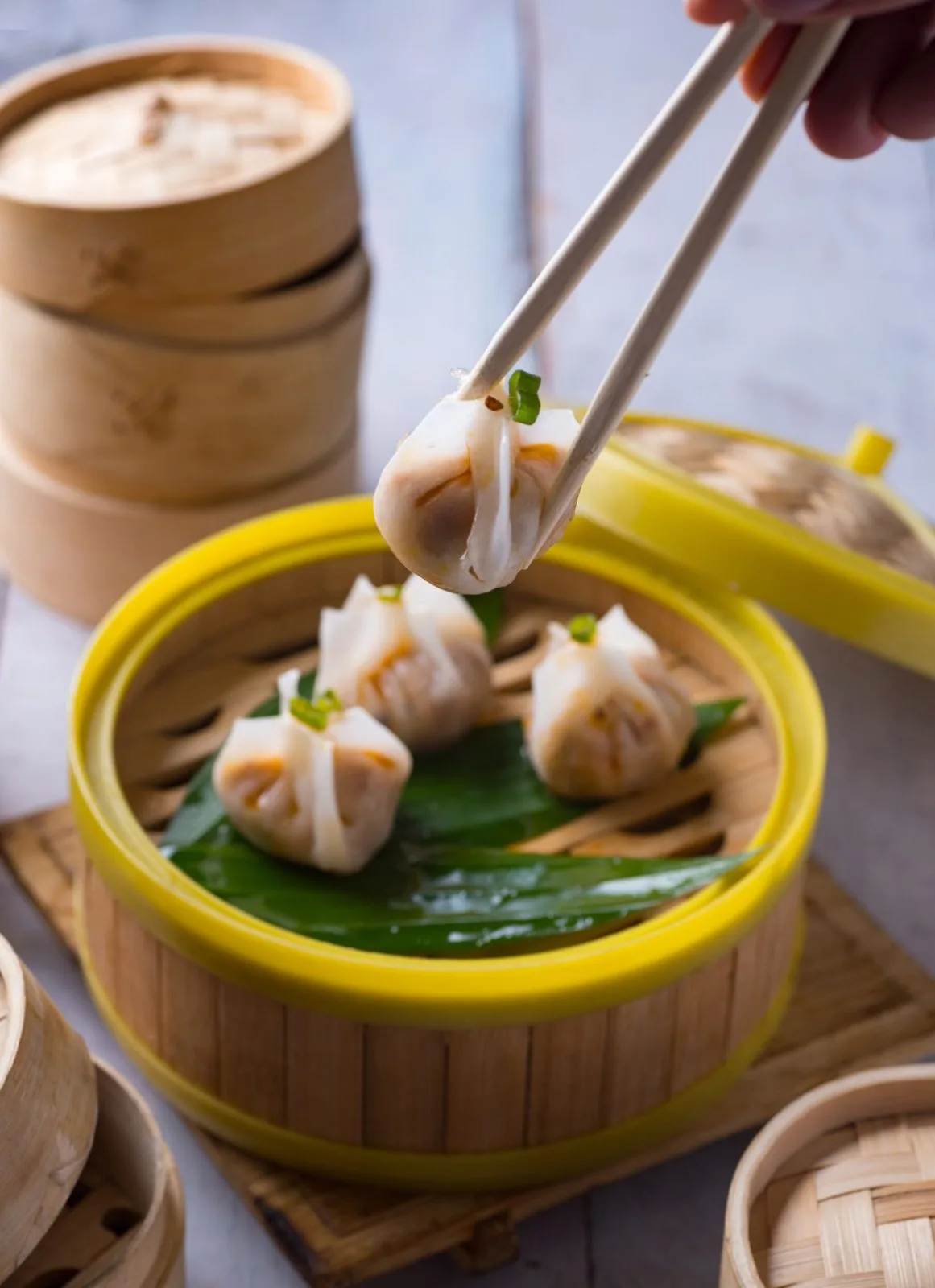
    Dim sum developed in the teahouses of Guangzhou and spread with Cantonese migration. parveen tasud | Pexels License (https://www.pexels.com/license/)

    Wok Hei and the Roast House

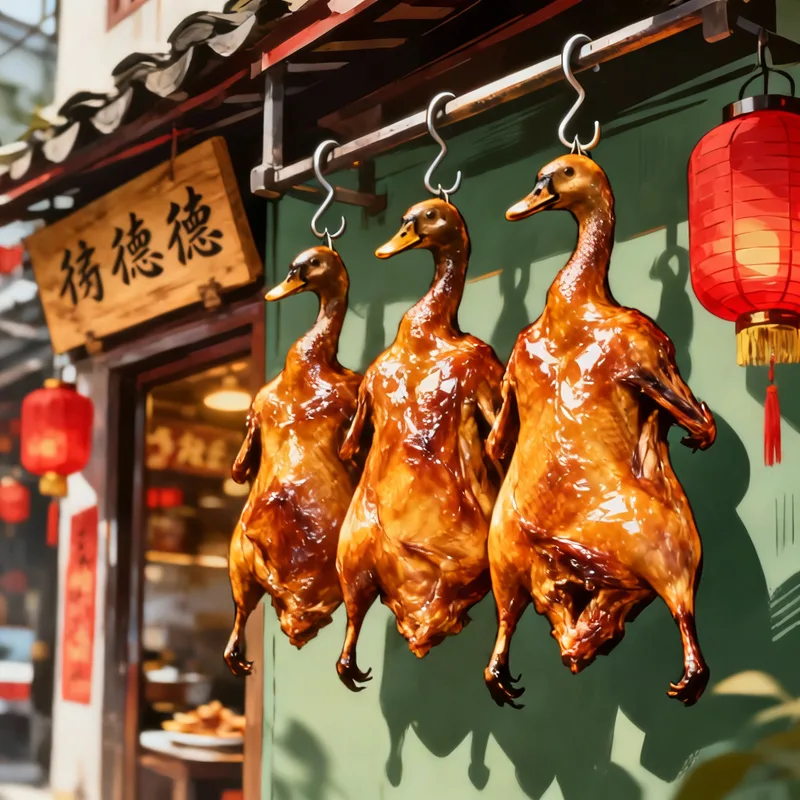
    Cantonese stir-frying depends on wok hei, the barely definable aroma produced when hot oil, vapours, and food meet a very hot wok. Chefs toss ingredients to keep them moving and prevent scorching; sauces are added late, often with cornstarch to give a light coating. Roasting is another speciality. Guangzhou-style white-cut chicken is poached and served with ginger and spring onion, while roast goose from Shunde is glazed, air-dried, and hung in a brick oven until the skin blisters. Char siu pork is marinated with honey and red fermented bean curd, then roasted with sugar caramelising at the edges.

    Roast geese hung to dry before roasting outside a Shunde restaurant
    Air-drying the skin is a key step in Shunde’s roast goose. Ilustración generada por IA · SinoViz

    Dim Sum and Morning Ritual

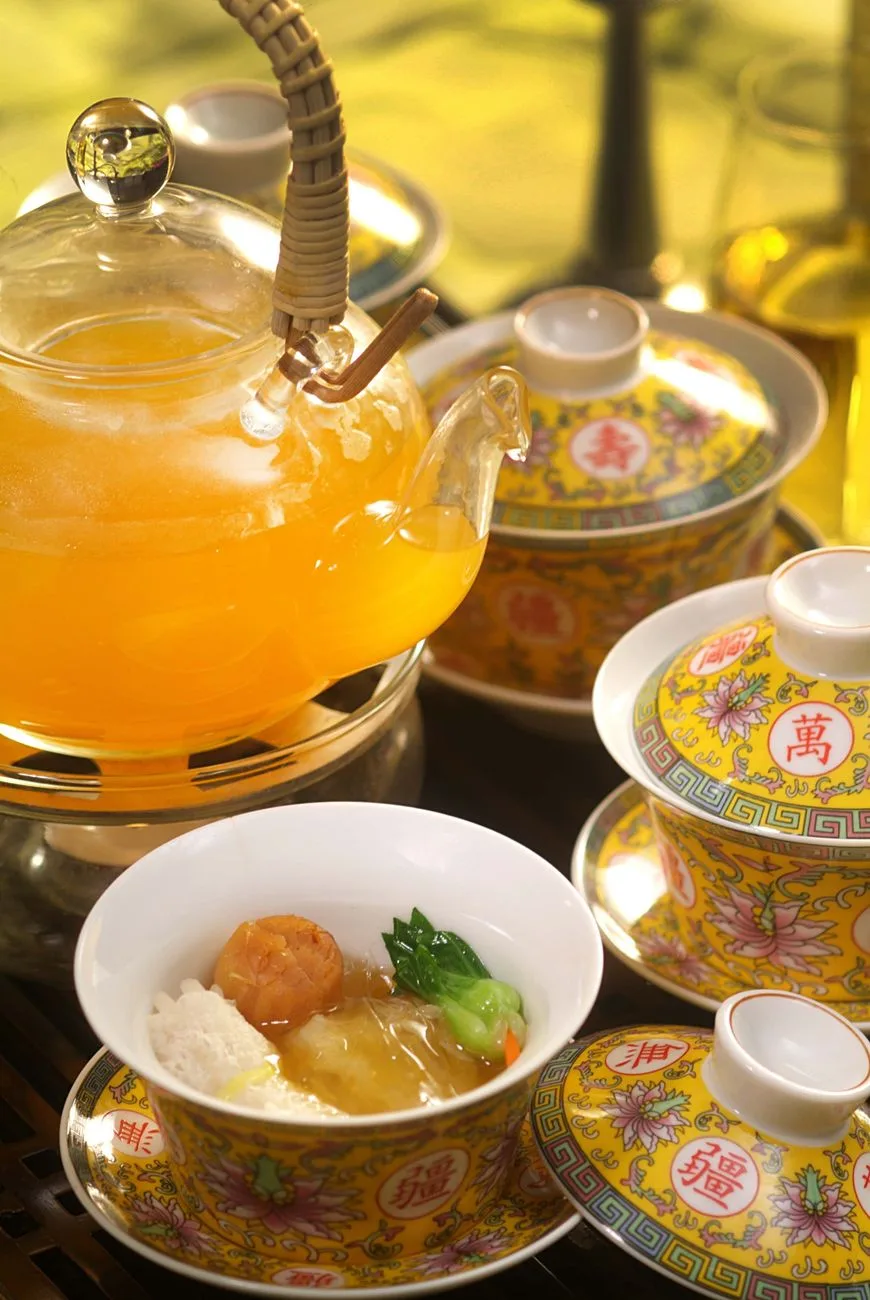
    Dim sum means a light snack, but in Cantonese practice it describes a meal of small portions ordered from trolleys or a paper card. Har gow wrap shrimp in a translucent wheat-starch skin; siu mai open-topped dumplings hold pork and shrimp; char siu bao are soft steamed buns with sweet roast-pork filling. Cheung fun are broad rice-noodle sheets rolled around shrimp, pork, or beef and dressed in soy sauce. Tea accompanies the meal, and the old custom of tapping a pot’s lid to signal for a refill is still performed, though younger diners may simply ask. The ritual is social as much as culinary, filling teahouses from early morning.

    • Har gow with translucent shrimp filling
    • Siu mai topped with a single shrimp
    • Cheung fun rice rolls with soy dressing
    • Egg tarts adapted from British custard pastry
    A trolley of bamboo steamers and tea pots beside a crowded Guangzhou dining room
    A dim sum meal is ordered in small dishes and shared across the table. minchephoto photography | Pexels License (https://www.pexels.com/license/)

    Regional Range and Diaspora

    Cantonese food is not one style. Shunde is known for delicate dairy desserts and fish dishes, Chaozhou nearby has a separate tradition of braised goose, seafood, and strong oolong tea, and Hakka communities in the hills favour preserved vegetables and stuffed tofu. Teochew and Hainanese migrants carried their own versions abroad. In Chinatowns from San Francisco to Singapore, Cantonese restaurants adapted to local tastes while keeping techniques such as steaming, roasting, and long simmered double-boiled soups. The resulting cuisines are mixed, but they preserve a central idea: fresh ingredients, precise heat, and a sauce that supports rather than hides them.

    Cantonese cooking asks a wok to do in seconds what other traditions give hours of stewing.

    Fuentes y lecturas adicionales

    1. Chinese Cuisine — Enciclopedia Británica.
    2. Cantonese cuisine — Enciclopedia Británica.
    3. Guangzhou — Centro del Patrimonio Mundial de la UNESCO.

    Véalo en su lugar

    Siga esta entrada a la región a la que pertenece.

    Explorar por mapa

    Sigue el hilo

    Explora otras entradas que compartan sus etiquetas.

    Explorar la etiqueta