فئة: الحياة والفولكلور

  • التقويم القمري

    الحياة والفولكلور

    التقويم القمري

    ضبط الوقت بواسطة القمر والشمس

    يربط التقويم الصيني التقليدي الأشهر القمرية بالفصول الشمسية، والمهرجانات بكليهما.

    قسم
    الحياة والفولكلور
    منطقة
    بكين
    عصر
    عبر العصور
    الوسوم
    جمارك

    التقويم الصيني قمري شمسي: فشهره تتبع القمر، وسنواته تتبع الشمس. ولأكثر من ألفي عام، استخدم فلكيو البلاط ومزارعو القرى النظام نفسه لأغراض مختلفة - لتحديد تواريخ الحكم ومعرفة مواعيد الزراعة.

    كيف يعمل التقويم

    يبدأ كل شهر في يوم المحاق الفلكي ويستمر من 29 إلى 30 يومًا، وبذلك يبلغ مجموع أيام الأشهر القمرية الاثني عشر حوالي 354 يومًا، أي أقل بنحو 11 يومًا من السنة الشمسية. وللحفاظ على فصل الربيع، تُضاف أشهر كبيسة: سبعة أشهر إضافية كل 19 عامًا، وهي دورة تُعرف بدورة ميتون. يُرقّم الشهر المُكرّر برقم الشهر الذي يليه، ومن هنا جاء اسم الشهر الرابع الكبيس. تُحسب الأيام بشكل منفصل مرة أخرى وفقًا للدورة الستينية، وهي عبارة عن اقتران بين عشرة فروع سماوية واثني عشر فرعًا أرضيًا، تُطلق على كل يوم وسنة اسمًا مُركّبًا مثل "جياشن".
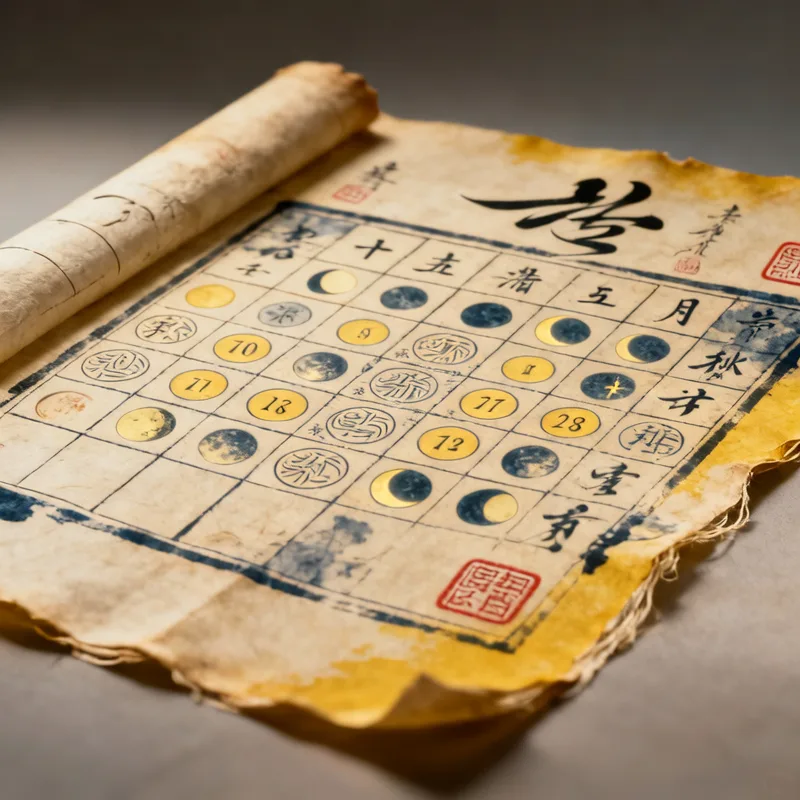
    صفحة من تقويم صيني تقليدي تُظهر الأشهر القمرية والفصول الشمسية والأيام الميمونة
    يمتد الشهر القمري من قمر جديد إلى القمر الجديد التالي؛ ويشير المصطلح الشمسي إلى موقع الشمس. رسم توضيحي مُولّد بالذكاء الاصطناعي · سينوفيز

    الملاحظة تصبح علماً

    نشأ هذا النظام من الملاحظة. تسجل نقوش عظام أوراكل من عهد أسرة شانغ (حوالي 1600-1046 قبل الميلاد) الأشهر القمرية، والخسوف، والأشهر الكبيسة، كما يحفظ كتاب حوليات الربيع والخريف سجلات مبكرة للخسوف استُخدمت لاحقًا لاختبار الحسابات. حدد تقويم تايتشو، الذي اعتُمد عام 104 قبل الميلاد في عهد الإمبراطور وو من أسرة هان، بداية السنة مع الشهر القمري الأول، وأرسى قاعدة إضافة تسعة عشر عامًا. وقد حسّنت إصلاحات لاحقة هذا التقويم: فتقويم شوشي الذي وضعه غو شوجينغ عام 1281، لعاصمة أسرة يوان في دادو (بكين)، استخدم سنة استوائية مدتها 365.2425 يومًا - وهو نفس الطول الذي اعتُمد لاحقًا في الإصلاح الغريغوري.

    كانت البراعة في علم التقويم ذات طابع سياسي. فالحاكم القادر على التنبؤ بالكسوف والخسوف وإعلان الهلال الجديد كان يستمد شرعيته من السماء؛ وكان إصدار التقويم للدول التابعة بمثابة عمل من أعمال السلطة. ولا يزال مرصد بكين القديم، الذي بُني عام ١٤٤٢، يحتفظ بكرات فلكية من عهد أسرة مينغ ومِزْوَلَة استُخدمت لهذا الغرض. وقد عمل علماء الفلك هناك جنبًا إلى جنب مع المبشرين اليسوعيين في القرن السابع عشر، عندما تبنى بلاط أسرة تشينغ الأساليب الأوروبية للتنبؤ بالكسوف والخسوف مع الحفاظ على بنية الشهر القمري. وهكذا، كان التقويم نقطة التقاء بين فن الحكم والرياضيات والرصد.

    الفصول الشمسية الأربعة والعشرون

    إلى جانب الأشهر القمرية، يوجد تقويم شمسي يتألف من أربعة وعشرين فصلاً، يفصل بين كل فصل وآخر خمس عشرة درجة على طول مسار الشمس السنوي. يبدأ هذا التسلسل بـ"ليتشون"، بداية الربيع، حوالي الرابع من فبراير، ويشمل "تشينغمينغ" (السطوع الخالص) في أوائل أبريل، و"شياتشي" (الانقلاب الصيفي)، و"بايلو" (الندى الأبيض)، و"دونغتشي" (الانقلاب الشتوي). طُوِّرت هذه الفصول في منطقة النهر الأصفر، وتُطبَّق على مستوى البلاد، وهي تُعلِّم المزارعين متى يتوقعون الصقيع أو المطر؛ ولا تزال الأمثال الشعبية تربطها بالبذر والحصاد. وقد أدرجت اليونسكو هذه المعرفة والممارسة في قائمتها التمثيلية عام ٢٠١٦.
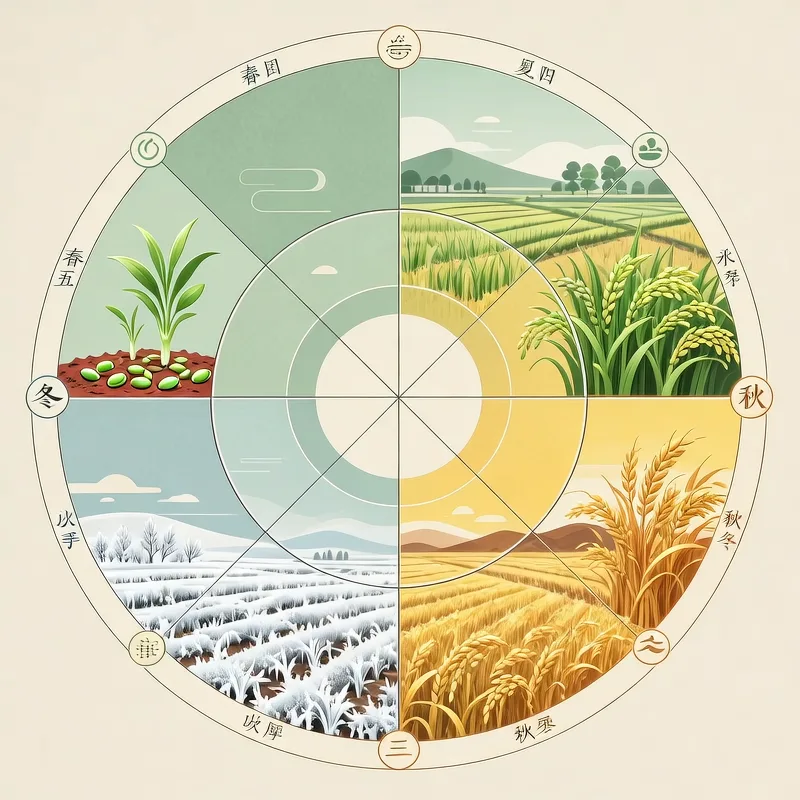
    رسم تخطيطي للمسار السنوي للشمس مقسم إلى أربعة وعشرين جزءًا مع تسميات زراعية
    يغطي كل فصل شمسي خمس عشرة درجة من مسار الشمس، ويفصل بينهما حوالي خمسة عشر يومًا. رسم توضيحي مُولّد بالذكاء الاصطناعي · سينوفيز

    تقويم المهرجانات

    بما أن التواريخ تُحسب من الأشهر القمرية، فإن مواعيد المهرجانات تختلف عن التقويم الميلادي. يبدأ مهرجان الربيع في اليوم الأول من الشهر القمري الأول وينتهي بمهرجان الفوانيس في اليوم الخامس عشر منه، حيث تمتلئ الشوارع بالفوانيس. ويُقام مهرجان قوارب التنين في اليوم الخامس من الشهر الخامس، ومهرجان الأشباح في اليوم الخامس عشر من الشهر السابع، ومهرجان منتصف الخريف في اليوم الخامس عشر من الشهر الثامن، حيث تجتمع العائلات تحت ضوء القمر المكتمل.

    • عيد الربيع - اليوم الأول من الشهر القمري الأول
    • مهرجان الفوانيس - اليوم الخامس عشر من الشهر الأول
    • مهرجان قوارب التنين - اليوم الخامس من الشهر الخامس
    • عيد منتصف الخريف - اليوم الخامس عشر من الشهر الثامن
    • تشينغمينغ - مصطلح شمسي يقع في الفترة ما بين 4 و6 أبريل

    لماذا لا يزال الأمر مهماً

    لا يزال التقويم القمري مستخدماً لأنه يجمع بين التوقيت الاجتماعي والتوقيت الفلكي. يُحتفى بالأجداد في عيد تشينغمينغ وفي ذكرى الوفاة المحسوبة بالتواريخ القمرية؛ وغالباً ما تُحدد مواعيد حفلات الزفاف والجنازات وفقاً للتقويم. يعتمد حيوان البرج الفلكي للسنة، والأحرف الثمانية للميلاد، والأيام الميمونة للانتقال إلى منزل جديد، جميعها على نفس الأساس. في بكين، لا تزال معارض المعابد وعروض الفوانيس تتبع الشهر القمري الأول، بينما تستشير المجتمعات الريفية الفصول الشمسية لأعمال الحقول. نظامان، تقويم واحد.
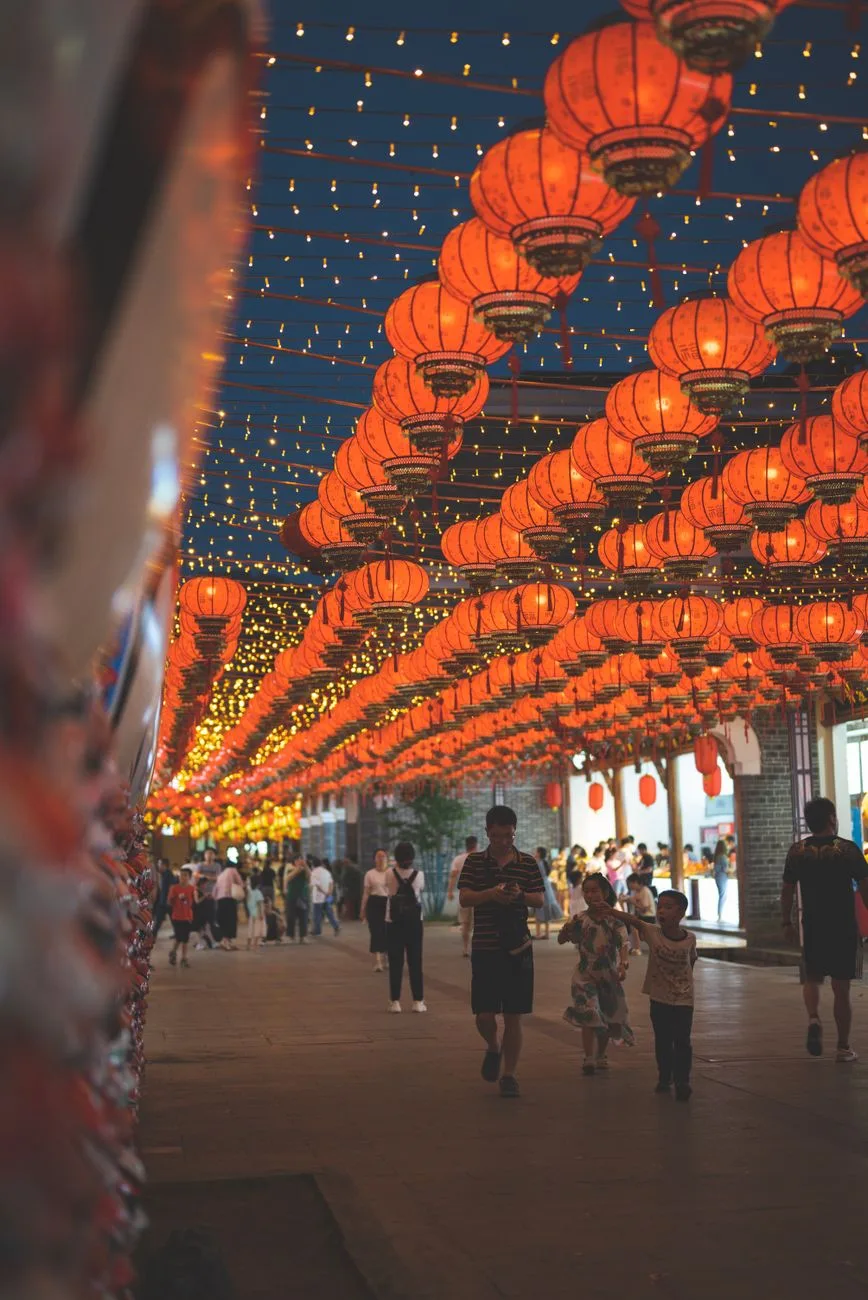
    فوانيس معلقة في أحد شوارع بكين خلال الشهر القمري الأول
    لا تزال معارض المعابد وعروض الفوانيس تُقام احتفالاً بالأسابيع الأولى من السنة القمرية. Cz Jen | رخصة بيكسلز (https://www.pexels.com/license/)
    تتبع الأشهر القمر، لكن السنة يجب أن تخضع للشمس.

    المصادر والمزيد من القراءة

    1. الفصول الشمسية الأربعة والعشرون، المعرفة في الصين بالوقت والممارسات التي تطورت من خلال مراقبة الحركة السنوية للشمس — التراث الثقافي غير المادي لليونسكو.
    2. التقويم الصيني — موسوعة بريتانيكا.
    3. رأس السنة الصينية — موسوعة بريتانيكا.
    شاهدها في مكانها

    اتبع هذا المدخل إلى المنطقة التي ينتمي إليها.

    استكشف عبر الخريطة

    تابع الموضوع

    تصفح الإدخالات الأخرى التي تشترك في نفس الوسوم.

    تصفح الوسم
  • الأبراج الصينية

    الحياة والفولكلور

    الأبراج الصينية

    اثنا عشر حيوانًا، دورة ستون عامًا

    تُمثل الحيوانات الاثنا عشر السنوات والساعات والشخصية في دورة متكررة.

    قسم
    الحياة والفولكلور
    منطقة
    بكين
    عصر
    عبر العصور
    الوسوم
    جمارك

    يُخصص التقويم الصيني حيوانًا لكل عام في دورة مدتها اثنا عشر عامًا. وهو ليس برجًا قائمًا بذاته، بل هو جزء من التقويم القمري الشمسي، حيث تتحد اثنا عشر فرعًا أرضيًا مع عشرة فروع سماوية لتشكيل دورة كاملة مدتها ستون عامًا.

    الحيوانات الاثنا عشر

    التسلسل هو: فأر، ثور، نمر، أرنب، تنين، ثعبان، حصان، ماعز، قرد، ديك، كلب، وخنزير، كل منها مقترن بأحد الفروع الأرضية الاثني عشر: زي، تشو، يين، ماو، تشين، سي، وو، وي، شين، يو، شو، وهاي. يُترجم الماعز أيضًا إلى خروف أو كبش. تشرح حكاية شعبية معروفة هذا الترتيب كنتيجة لسباق عبر نهر: يركب الفأر على ظهر الثور ويقفز إلى الأمام عند الضفة، بينما في بعض الروايات، يفشل القط في العبور تمامًا. هذه القصة أحدث من النظام الذي تشرحه.

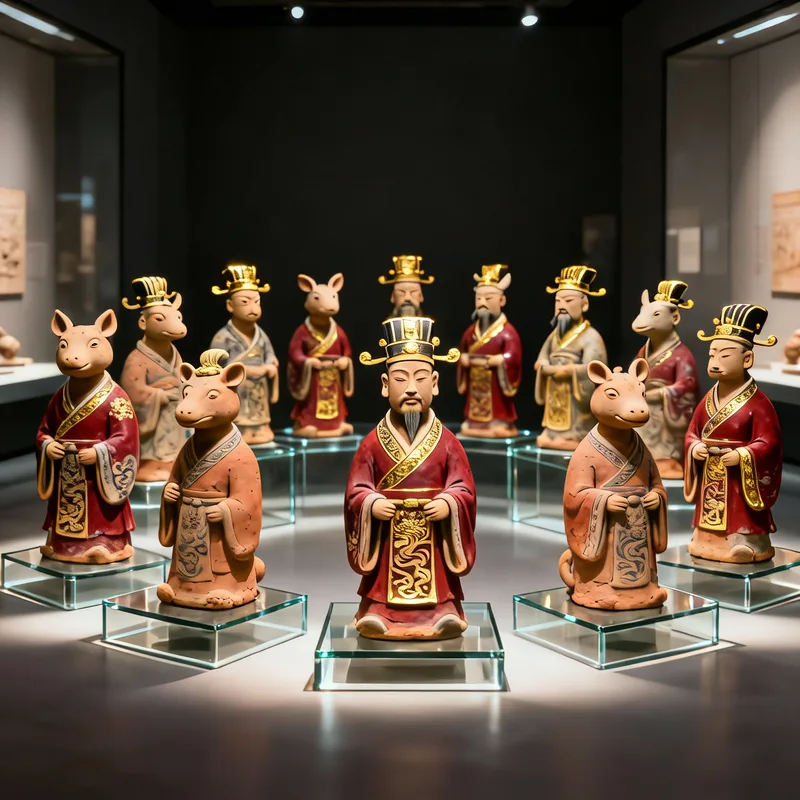
    مجموعة من اثني عشر تمثالاً من الفخار تعود إلى عهد أسرة تانغ، تمثل الأبراج الفلكية، وترتدي زي المسؤولين.
    تم تحديد ترتيب الحيوانات من قبل سلالة هان الشرقية ويظهر في فخار مقابر تانغ. رسم توضيحي مُولّد بالذكاء الاصطناعي · سينوفيز

    من الأغصان إلى علامات الحيوانات

    الأغصان نفسها قديمة، أما الحيوانات المرتبطة بها فتظهر تدريجيًا. ويشير متحف المتروبوليتان للفنون إلى أن هذه الحيوانات الاثني عشر ارتبطت لأول مرة بالتقويم القمري في الصين حوالي القرن الثالث قبل الميلاد، وترسخ هذا الارتباط بحلول القرن الأول الميلادي. وبحلول عهد أسرة هان الشرقية (25-220 ميلادي)، استقر الترتيب التقليدي، وتُدرج نصوص مثل كتاب لونهنغ لوانغ تشونغ الحيوانات نفسها المستخدمة اليوم. وانتشر هذا التزاوج في جميع أنحاء شرق وجنوب شرق آسيا، حيث عدّلت التقاليد المحلية ترتيبها.

    تؤكد فنون المقابر تاريخها. ففي مدافن أسرة تانغ (618-907)، توجد مجموعات من اثني عشر حيوانًا من الفخار ترتدي أزياء رسمية، وُضعت كقرابين للتجديد والحماية. أما في مدافن أسرة سونغ، فتوجد تماثيل أصغر حجمًا من الخزف الحجري المزجج، تُصوّر مسؤولين مدنيين أو ممارسين للطقوس الطاوية، مع حمل الحيوان المميز في اليد أو ارتدائه على القبعة. لم يكن الأبراج مجرد زينة خاصة برأس السنة الجديدة، بل كان يُنظّم الوقت في المقبرة كما كان يُنظّمه بين الأحياء.

    السيقان والفروع والمصير

    لأن الجذوع العشرة والفروع الاثني عشر تتقدم معًا، يُوصف العام بزوجٍ مثل "بينغوو"، حصان النار لعام 2026؛ ولا يتكرر هذا الزوج إلا بعد ستين عامًا. كما تُقسّم الفروع اليوم إلى اثنتي عشرة ساعة، مدة كل منها ساعتان، وتبدأ ساعة "زي" من الحادية عشرة ليلًا إلى الواحدة صباحًا. وتُبنى أركان القدر الأربعة - السنة والشهر واليوم والساعة - من أربعة أزواج كهذه. وكان ممارسو علم "بازي" يقرأونها لمعرفة المزاج والحظ، وكانت العائلات تستشيرها قديمًا عند ترتيب الزيجات.

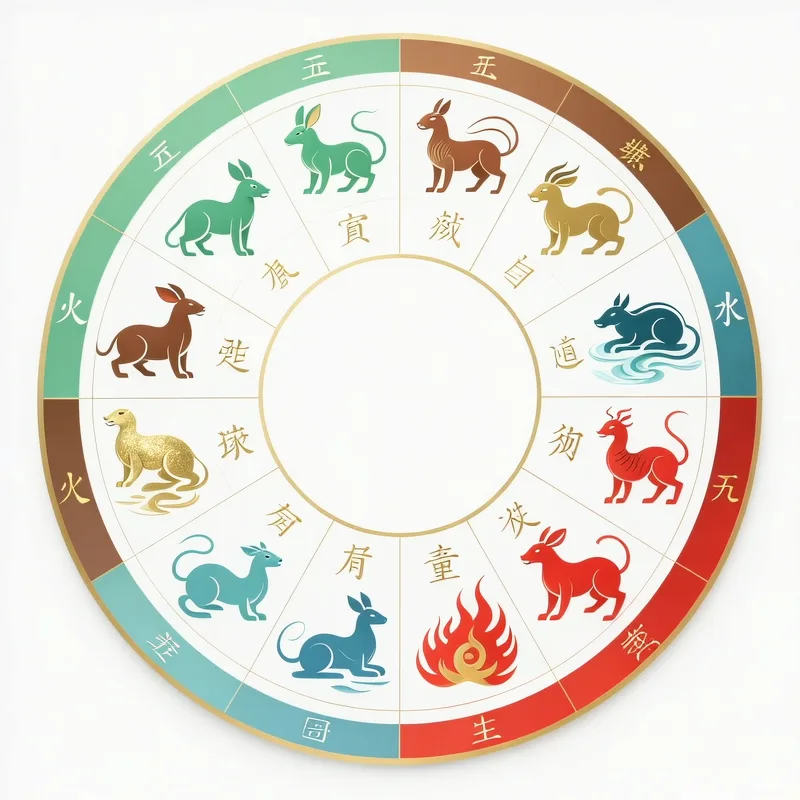
    رسم تخطيطي دائري لحيوانات الأبراج الصينية الاثني عشر والعناصر الخمسة
    يتحد الحيوان والعنصر: عام 2026 هو عام بينغوو، حصان النار. رسم توضيحي مُولّد بالذكاء الاصطناعي · سينوفيز

    في الحياة اليومية

    تُستخدم الأبراج كاختصار شائع أكثر من كونها معتقدًا راسخًا. يُعامل عام عودة حيوان الشخص (بينمينغ نيان) بحذر؛ فالملابس الحمراء والأربطة الحمراء من الاحتياطات الشائعة، خاصةً للأطفال وكبار السن. تُعرض مطبوعات رأس السنة الجديدة، والقصاصات الورقية، ومهرجانات المعابد حيوان العام، وتُذكر أسماؤه عادةً في التهاني. تستند الادعاءات حول التوافق إلى دورة الفروع، حيث يُقال إن الأبراج التي تفصل بينها ستة مراكز تتعارض.

    • عام 2026 هو عام بينغوو، عام الحصان الناري.
    • يُدير كل فرع فترة ساعتين؛ يغطي الفرع zi الفترة من الساعة 11 مساءً إلى الساعة 1 صباحًا.
    • تتحد أركان القدر الأربعة لتشمل السنة والشهر واليوم والساعة.
    • تستبدل فيتنام الأرنب بالقط.

    الاختلافات الإقليمية

    انتقلت دورة الأبراج مع الاستيطان والتجارة الصينية. ففي فيتنام، يُستبدل الأرنب بالقط، والثور بالجاموس، وقد يُطلق على الماعز اسم الخروف في أماكن أخرى. تظهر حيوانات الأبراج على العملات المعدنية والمرايا والورنيش والخزف في جميع أنحاء المنطقة، كما اعتمدت التقاويم الكورية واليابانية الفروع نفسها مع قوائم حيواناتها الخاصة. لهذه الاختلافات أهمية بالغة، فهي تُظهر نظام تقويم يُترجم، لا يُنسخ فحسب. ولا يزال التسلسل الصيني هو المرجع الأساسي للاحتفال برأس السنة القمرية في بكين وفي مجتمعات الشتات حول العالم.

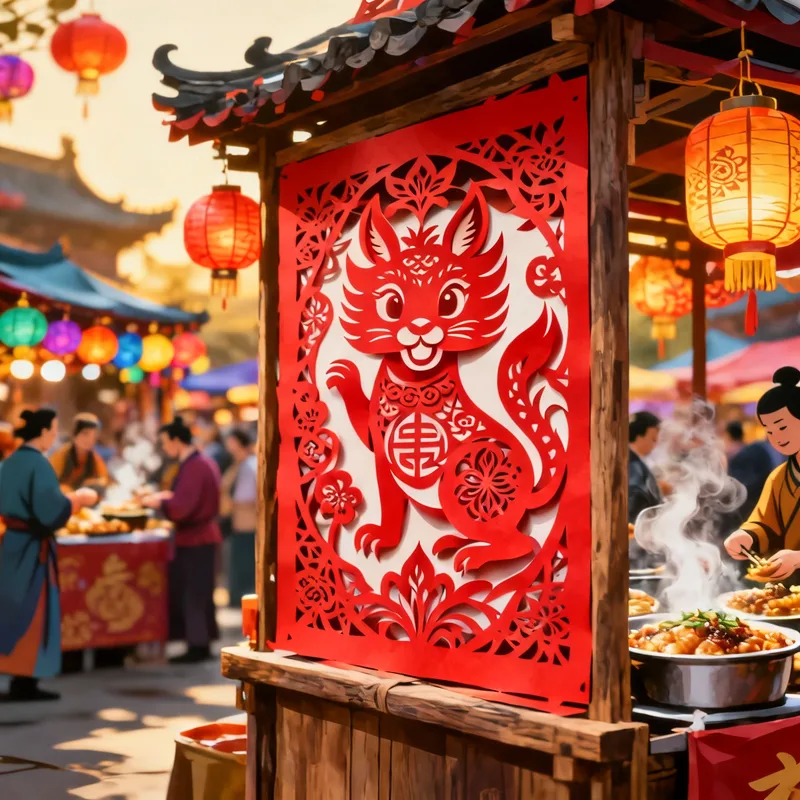
    قصاصة ورقية حمراء تُظهر حيوان الأبراج الصينية لهذا العام على كشك في معرض معبد
    كل عام قمري جديد يجلب حيواناً جديداً إلى المطبوعات والقصاصات الورقية والتهاني. رسم توضيحي مُولّد بالذكاء الاصطناعي · سينوفيز
    يفوز الفأر في السباق لأنه يعرف متى يقفز - وهي قصة تم اختراعها بعد فترة طويلة من استخدام الدورة بالفعل.

    المصادر والمزيد من القراءة

    1. الأبراج الصينية — موسوعة بريتانيكا.
    2. مجموعة من اثني عشر حيوانًا من حيوانات الأبراج الصينية، من عهد أسرة تانغ — متحف متروبوليتان للفنون.
    3. الاحتفال بعام الكلب — متحف متروبوليتان للفنون.

    شاهدها في مكانها

    اتبع هذا المدخل إلى المنطقة التي ينتمي إليها.

    استكشف عبر الخريطة

    تابع الموضوع

    تصفح الإدخالات الأخرى التي تشترك في نفس الوسوم.

    تصفح الوسم
  • تبجيل الأجداد

    الحياة والفولكلور

    تبجيل الأجداد

    النسب والطقوس والذاكرة

    تربط الطقوس العائلية الأسرة، وقاعة النسب، ومقبرة القرية.

    قسم
    الحياة والفولكلور
    منطقة
    فوجيان
    عصر
    عبر العصور
    الوسوم
    جمارك

    يُعدّ تبجيل الأجداد ممارسةً لتكريم الأقارب المتوفين بالقرابين والبخور والطقوس المحددة. وفي فوجيان، أصبح هذا التبجيل إطارًا لتنظيم النسب، وملكية الممتلكات، والهجرة، رابطًا القرى بالأجداد الذين عاشوا في كثير من الأحيان قبل قرون.

    واجب تجاه الموتى

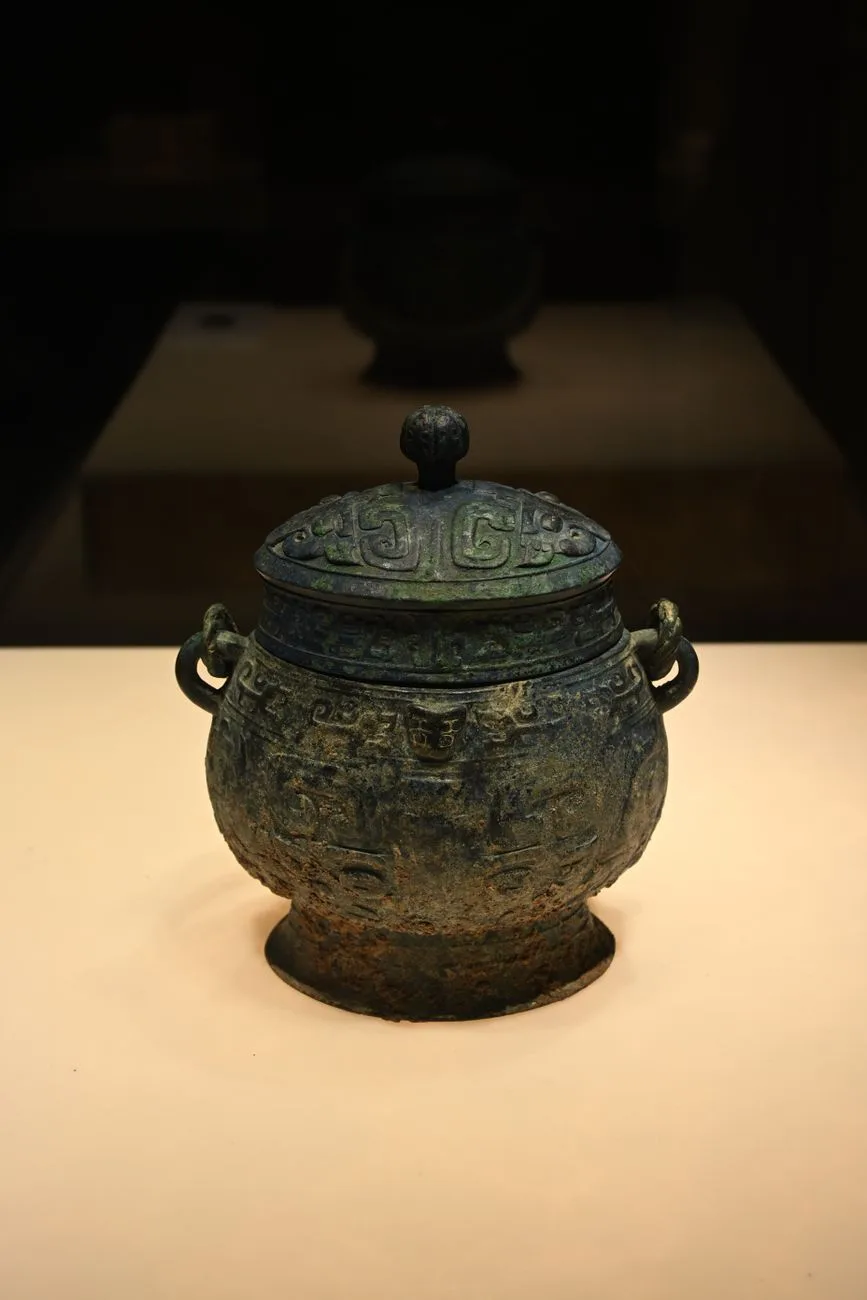
    أعطت التعاليم الكونفوشيوسية هذه الممارسة لغتها الأخلاقية. تحثّ "المنتخبات" الأحياء على الاهتمام الدقيق بطقوس الجنازة واتباع خطى الأجداد، وتصف القرابين كما لو كانت الأرواح حاضرة. يحدد كتاب الطقوس والنصوص الطقسية ذات الصلة درجات الحداد والقرابين والترتيب الصحيح للموتى. ينسب علماء الآثار عبادة الأجداد إلى أواخر العصر الحجري الحديث، وقد صُنعت أوانٍ برونزية من عهد أسرة شانغ بنقوش تُسمّي الجد الذي قُدّم له النبيذ أو الحبوب. كان التبجيل واجبًا بقدر ما كان عاطفة.

    إناء طقسي برونزي من عهد أسرة شانغ، عليه نقش يهديه إلى أحد الأجداد
    أوانٍ برونزية تحمل اسم متلقي القرابين، مما يثبت العلاقة كتابةً. كي تشاو | رخصة بيكسلز (https://www.pexels.com/license/)

    مذبح المنزل

    في البيوت التقليدية، يُوضع مذبح صغير يحوي ألواحًا خشبية منقوشة عليها أسماء وألقاب الأجداد، مرتبة حسب الأجيال. يُشعل البخور في اليوم الأول والخامس عشر من الشهر القمري، وفي ذكرى الوفاة. قد تشمل القرابين الشاي والنبيذ والفواكه والأرز وثلاثة أنواع من اللحوم، مرتبة ترتيبًا دقيقًا؛ وينحني أفراد العائلة أو يسجدون حسب ترتيب أعمارهم. لا يُمثل اللوح صورةً للشخص، بل هو مكانٌ يُعبّر فيه عن صلة القرابة.

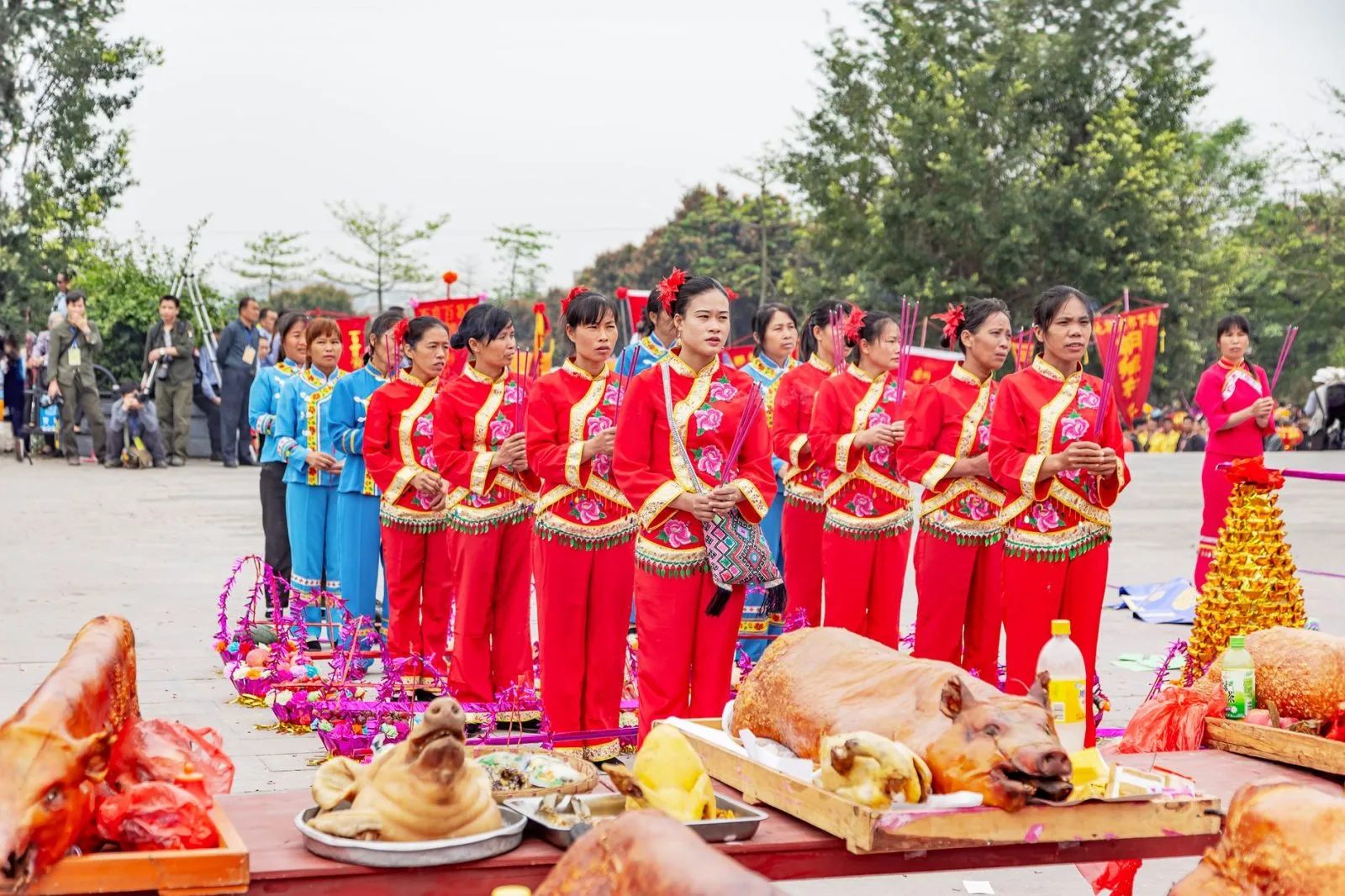
    تتبع الطقوس التقويم. يُعدّ شهر تشينغمينغ، وهو شهر الإشراق الصافي في أوائل أبريل، يوم تنظيف المقابر: حيث تُزال الأعشاب الضارة من القبور، وتُقدّم القرابين، وتُحرق النقود الورقية. يجلب الانقلاب الشتوي جولة أخرى من القرابين في العديد من منازل فوجيان، وغالبًا ما تكون من بينها تانغ يوان، وهي كرات أرز حلوة. خلال الشهر القمري السابع، يمتدّ مهرجان الأشباح ليشمل الأرواح الهائمة، وليس فقط الأقارب، من خلال الولائم الجماعية والتماثيل الورقية.

    قاعات أنساب فوجيان

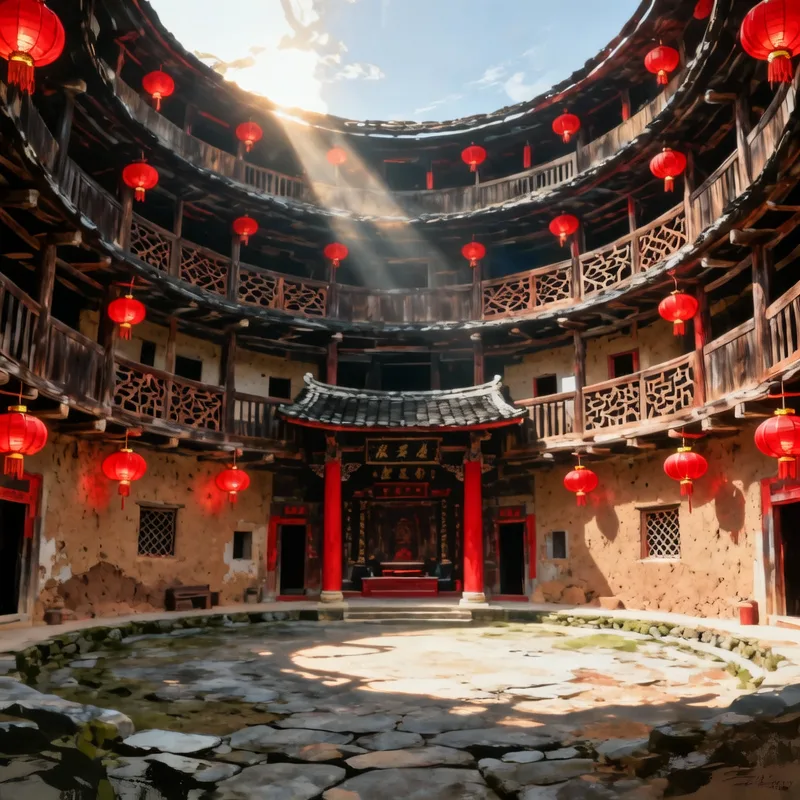
    لا يوجد مكان تتجلى فيه الفوارق الاجتماعية بوضوح أكثر من فوجيان. فمنذ القرن السادس عشر، انتشرت قاعات الأنساب - المعروفة باسم "سيتانغ" - لتتجاوز النخبة إلى القرى في جميع أنحاء جنوب شرق الصين، وفي مناطق هجرة المهاجرين، هيمنت على المشهد العمراني. تضم القاعة ألواحًا جماعية لمجموعة من العائلات، وتحفظ أنسابها، وتدير أراضي الشركات التي يُستخدم دخلها في أعمال الترميم والقرابين والمدارس. وفي بعض بيوت "تولو" الطينية الكبيرة في جنوب غرب فوجيان، يحتل بيت الأجداد مكانًا داخل السور الدفاعي.

    فناء داخلي وقاعة أجداد في منزل تولو طيني جماعي من فوجيان
    كانت قاعة النسب داخل مبنى التولو تخدم عشيرة بأكملها، وليس أسرة واحدة. رسم توضيحي مُولّد بالذكاء الاصطناعي · سينوفيز

    الهجرة والعودة

    استقطب ساحل فوجيان مهاجرين إلى جنوب شرق آسيا منذ أواخر عهد أسرة تشينغ، وانتقلت معهم طقوس الأجداد. انضم المهاجرون إلى جمعيات العائلات وبنوا قاعات في سنغافورة وماليزيا وإندونيسيا؛ وساهمت التحويلات المالية في تمويل بناء قاعات جديدة وترميم القبور في أوطانهم. يصف الباحثون هذه الروابط بأنها شبكات نسب عابرة للحدود: إذ ربطت نفس المصطلحات الطقسية بين مذبح القرية وجمعية العشائر في الخارج والمقبرة. بعد ثمانينيات القرن العشرين، عاد العديد من الأحفاد لإعادة بناء القاعات، محولين علم الأنساب إلى جسر يربط بين الأجيال والحدود.

    • تشينغمينغ: تنظيف القبور ووضع القرابين في أوائل أبريل
    • الشهر القمري السابع: طقوس مهرجان الأشباح للأرواح المجهولة
    • سيتانغ: قاعة أنساب تضم ألواحًا وسجلات الأنساب وسجلات الشركات
    • تولو فوجيان: موقع تراث عالمي لليونسكو منذ عام 2008

    التغييرات والاستمرارية

    أحدث القرن العشرون اضطرابًا في الجانب المؤسسي. فقد جردت الإصلاحات الزراعية والتجميعية مزارع العائلة من دخلها، وخلال الثورة الثقافية، أُغلقت أو تضررت العديد من القاعات. ومنذ ثمانينيات القرن الماضي، عملت مبادرات محلية على ترميم المباني وإحياء الطقوس، أحيانًا كسياحة تراثية وأحيانًا كواجب عائلي. ولا تزال هذه الممارسة قائمة بشكل معدل: البخور على رف المنزل، وتنظيف القبر قبل عيد تشينغمينغ، وتسجيل الاسم في شجرة أنساب مُعاد بناؤها. وما بقي هو الاعتقاد بأن الموتى يظلون جزءًا من النظام الاجتماعي.

    أفراد عائلة يحرقون قرابين ورقية على قبر خلال مهرجان تشينغمينغ في جنوب الصين
    لا يزال تنظيف القبور وتقديم القرابين الجزء الأكثر وضوحًا من طقوس عيد تشينغمينغ. مان فونغ وونغ | رخصة بيكسلز (https://www.pexels.com/license/)
    إن اللوح ليس صورة للموتى، بل هو عنوان يمكن للأحياء من خلاله التحدث إليهم.

    المصادر والمزيد من القراءة

    1. الصين: المعتقدات الدينية والتنظيم الاجتماعي — موسوعة بريتانيكا.
    2. فوجيان تولو — مركز التراث العالمي لليونسكو.
    3. الشتات الصيني: أنماط العصر الحديث المبكر، 1500-1740 — مطبعة جامعة كامبريدج.

    شاهدها في مكانها

    اتبع هذا المدخل إلى المنطقة التي ينتمي إليها.

    استكشف عبر الخريطة

    تابع الموضوع

    تصفح الإدخالات الأخرى التي تشترك في نفس الوسوم.

    تصفح الوسم
  • الخزف

    الحياة والفولكلور

    الخزف

    Clay, fire, and the white of Dehua

    Fujian’s kilns turned local clay into porcelain that travelled across the sea and changed how the world pictured China.

    قسم
    الحياة والفولكلور
    منطقة
    فوجيان
    عصر
    عبر العصور
    الوسوم
    Customs, History, Scenic Sites

    Porcelain is defined by its body and its firing: a pale, fine clay heated to temperatures that vitrify the material and make it ring when struck. Fujian’s Dehua kilns made a version so white it seemed translucent, known in Europe as blanc de Chine.

    What Makes Porcelain

    Porcelain differs from ordinary pottery in both material and firing. Potters use kaolin, a white clay, mixed with feldspar and quartz, then fire the shaped vessel at roughly 1,200 to 1,400 degrees Celsius. At that temperature the body vitrifies: it becomes dense, non-porous, and slightly translucent at the edges. A glassy glaze is usually applied before firing, bonding to the body rather than sitting on it as a separate layer. Chinese potters had reached this threshold by the Tang and Song periods, and Jingdezhen in Jiangxi became the great production centre. The English word china stuck to the ware because the country was the source of the finest examples. A light tap on a good cup gives a clear ring, a quick test that still works in a shop.

    A porcelain bowl with a pale glaze photographed against light
    True porcelain is fired hot enough to vitrify the body, giving it a hard, resonant wall. lee c | Pexels License (https://www.pexels.com/license/)

    Dehua White

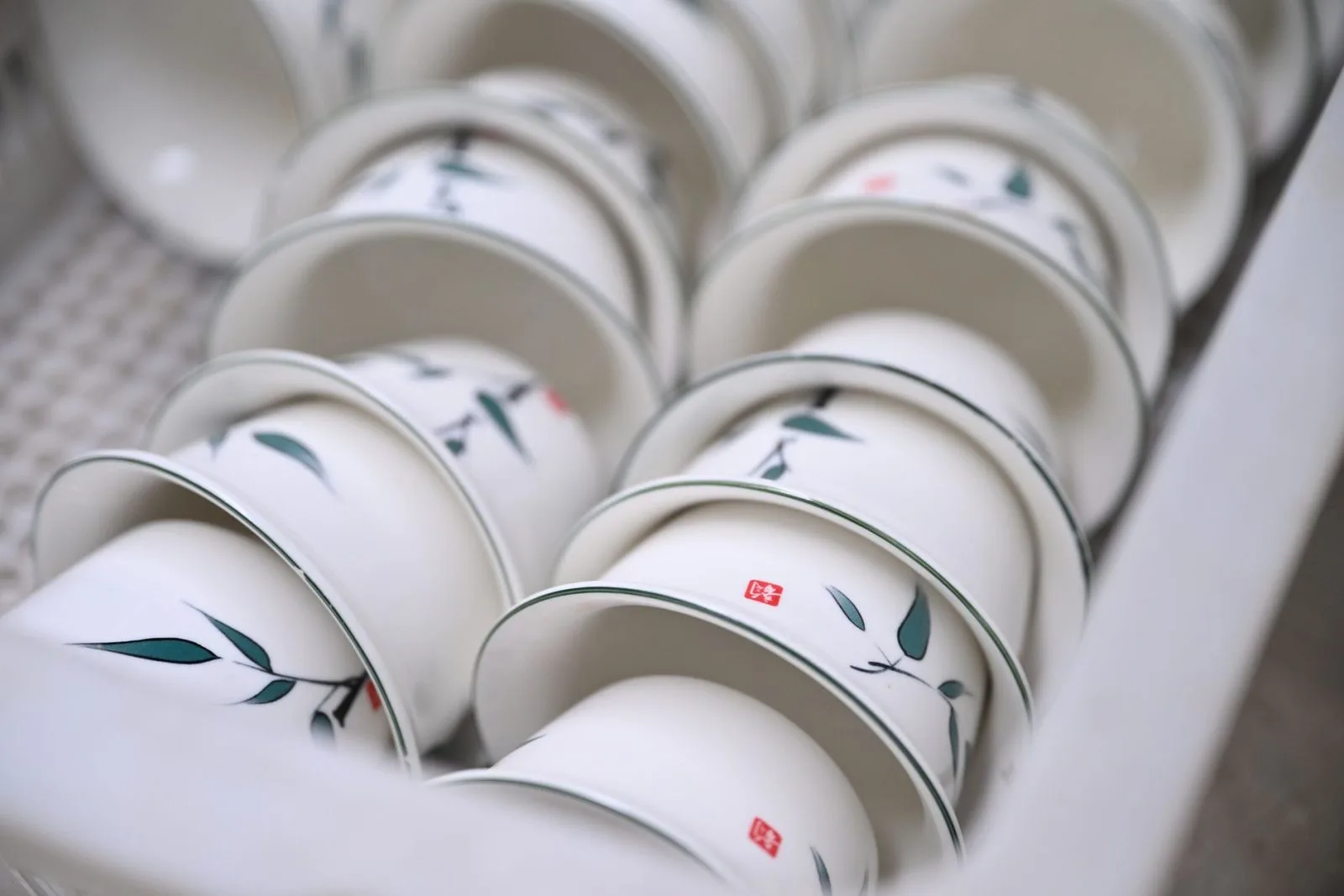
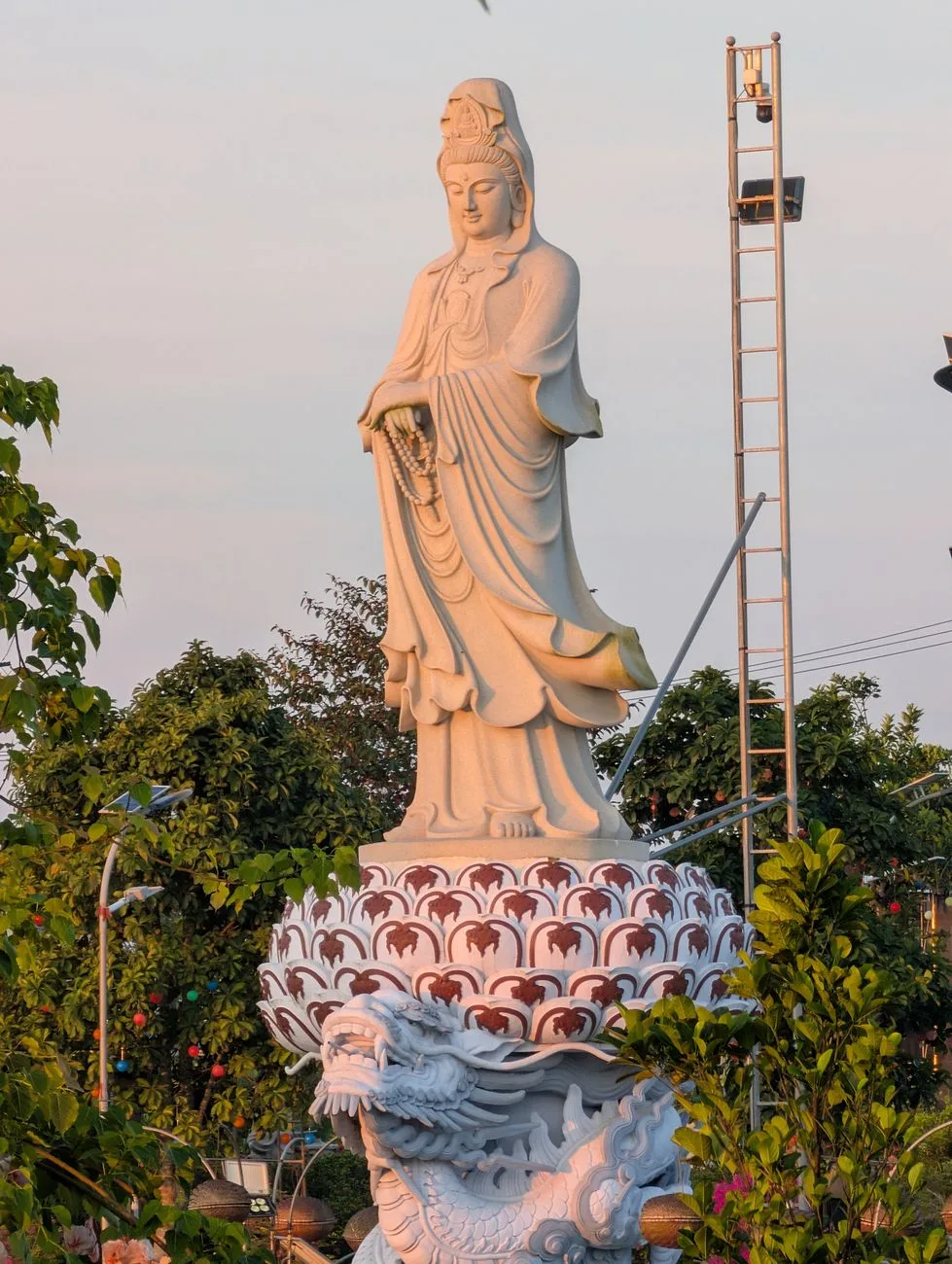
    Dehua, a county in Fujian’s Quanzhou prefecture, developed a white porcelain with a warm, creamy tone. Its clay is low in iron, which lets the glaze fire almost colourless, and its potters mastered figures as well as vessels. From the Ming dynasty onward, Dehua workshops produced small statues of Guanyin, the bodhisattva of compassion, with soft modelling and a smooth, almost waxy surface. European traders called the ware blanc de Chine, and by the seventeenth century it was collected in royal cabinets and copied by potters in Meissen and elsewhere. Tea wares also left the kilns: small cups, gaiwan lids and bowls, and white vessels that showed the colour of tea clearly. Local museums trace the kiln sequence from Song-period celadons through the white wares that made Dehua famous.

    A milky white porcelain figurine of Guanyin from Dehua
    Dehua’s porcelain figures of Guanyin became known in Europe as blanc de Chine. Quý Hoàng | Pexels License (https://www.pexels.com/license/)

    A Port for Porcelain

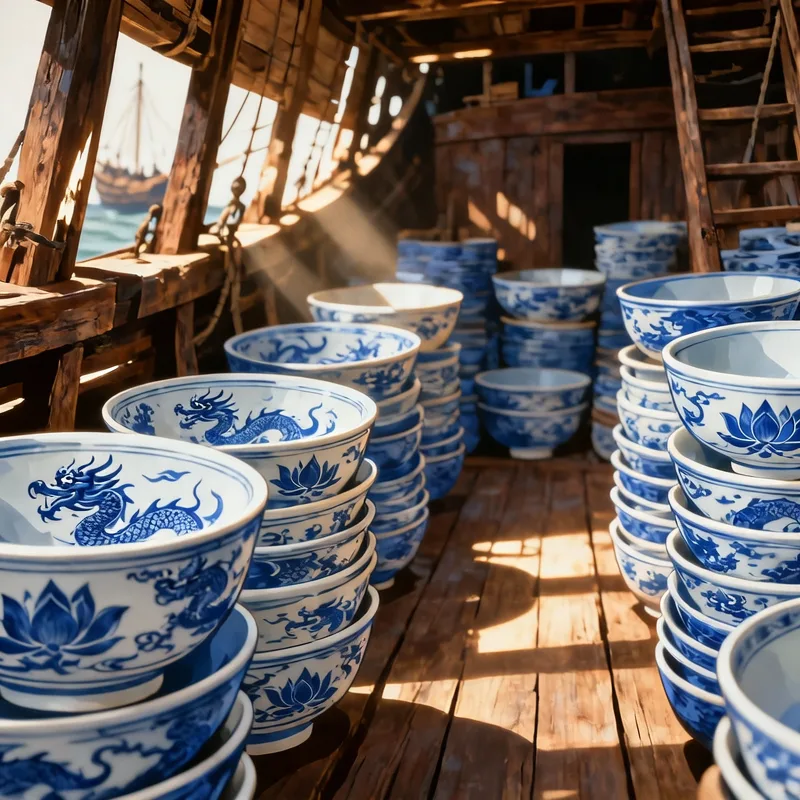
    Porcelain shaped trade as much as taste. Fujian’s coast faced the South China Sea, and Quanzhou became one of the busiest ports of the Song and Yuan dynasties, a place where merchants, monks, and ship crews exchanged goods and techniques. Archaeologists have recovered Chinese ceramics from ports and shipwrecks across Southeast Asia, the Indian Ocean, and East Africa; the fragments are dated by glaze and shape, making them a record of demand as well as production. UNESCO listed Quanzhou in 2021 as an emporium of the world in Song-Yuan China, with surviving mosques and temples. The export ware was not always the finest court piece. Sturdy bowls and jars packed in straw travelled in bulk, reaching households that never saw the kiln but knew the clay by its colour.

    Blue-and-white porcelain packed as cargo in a ship’s hold
    Quanzhou was a major Song and Yuan port from which Fujian ceramics were shipped abroad. رسم توضيحي مُولّد بالذكاء الاصطناعي · سينوفيز

    Using and Collecting

    Porcelain entered daily ritual as well as trade. A gaiwan, a bowl with a lid and saucer, is used for brewing tea in northern China; the lid controls the leaves and the saucer protects the fingers. White Dehua cups make the colour of a tea liquor easy to judge. Collectors look for a clean foot ring, an even glaze, and a mark painted on the base, though many imitations copy famous reign marks. Visit a kiln museum in Dehua or a ceramic gallery in Quanzhou to see the sequence from raw clay to finished piece. Handling a cup with a saucer and a steady hand is still the simplest way to understand why this material travelled so far.

    A clear ring and a translucent edge tell you what the fire has done.

    المصادر والمزيد من القراءة

    1. Chinese Porcelain — متحف متروبوليتان للفنون.
    2. Quanzhou: Emporium of the World in Song-Yuan China — مركز التراث العالمي لليونسكو.
    3. Blanc de Chine — موسوعة بريتانيكا.
    شاهدها في مكانها

    اتبع هذا المدخل إلى المنطقة التي ينتمي إليها.

    استكشف عبر الخريطة

    تابع الموضوع

    تصفح الإدخالات الأخرى التي تشترك في نفس الوسوم.

    تصفح الوسم
  • الخط العربي

    الحياة والفولكلور

    الخط العربي

    The brush as a record of the hand

    Chinese calligraphy turns writing into an art of pressure, rhythm, and restraint.

    قسم
    الحياة والفولكلور
    منطقة
    شانشي
    عصر
    عبر العصور
    الوسوم
    العادات والتاريخ

    A line of Chinese calligraphy is made once: the brush touches paper, and the mark cannot be corrected. That irreversibility is part of its appeal. In Xi’an, the city’s stone steles preserve the work of centuries of calligraphers in a form anyone can still read.

    The Four Treasures

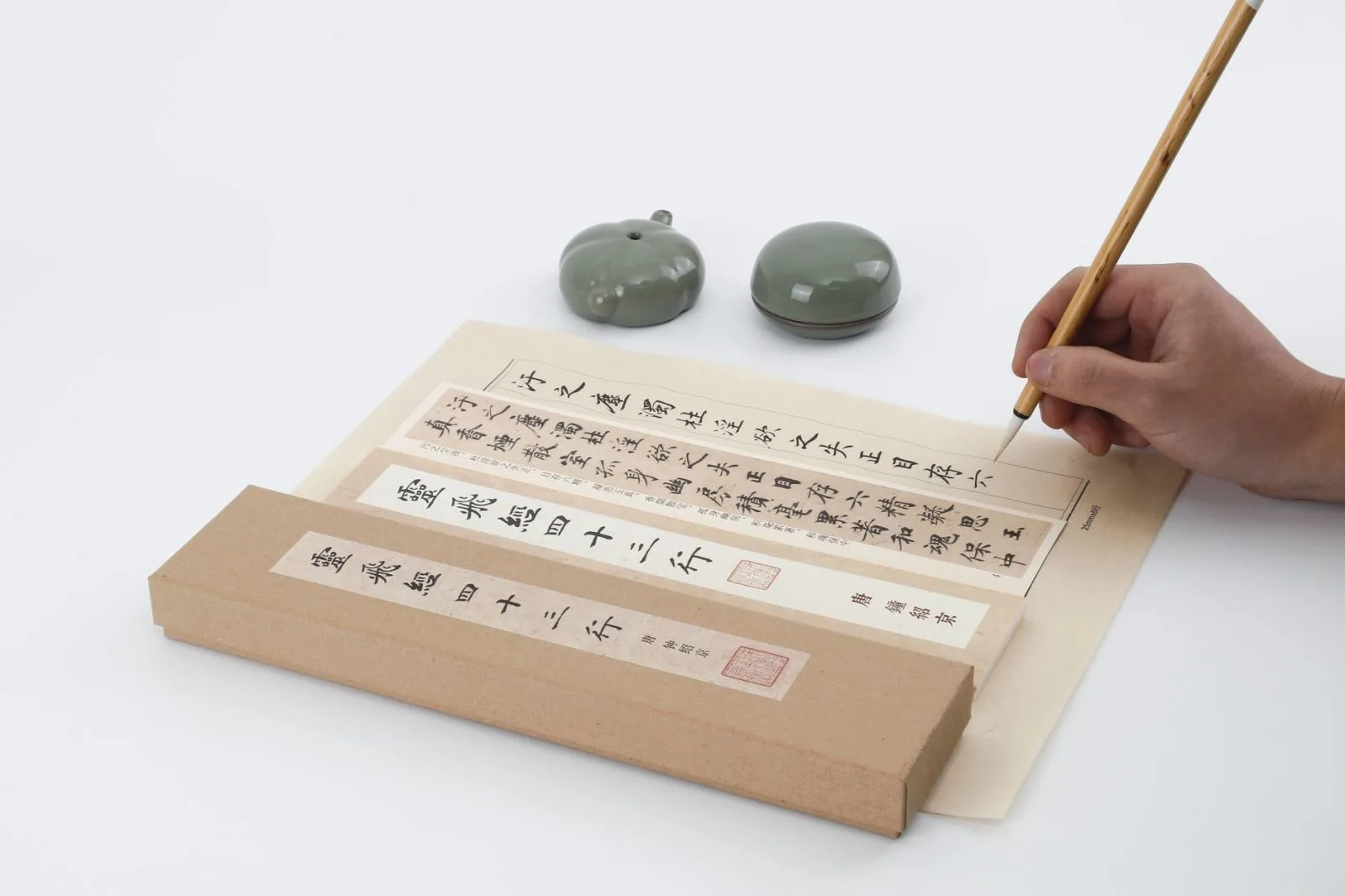
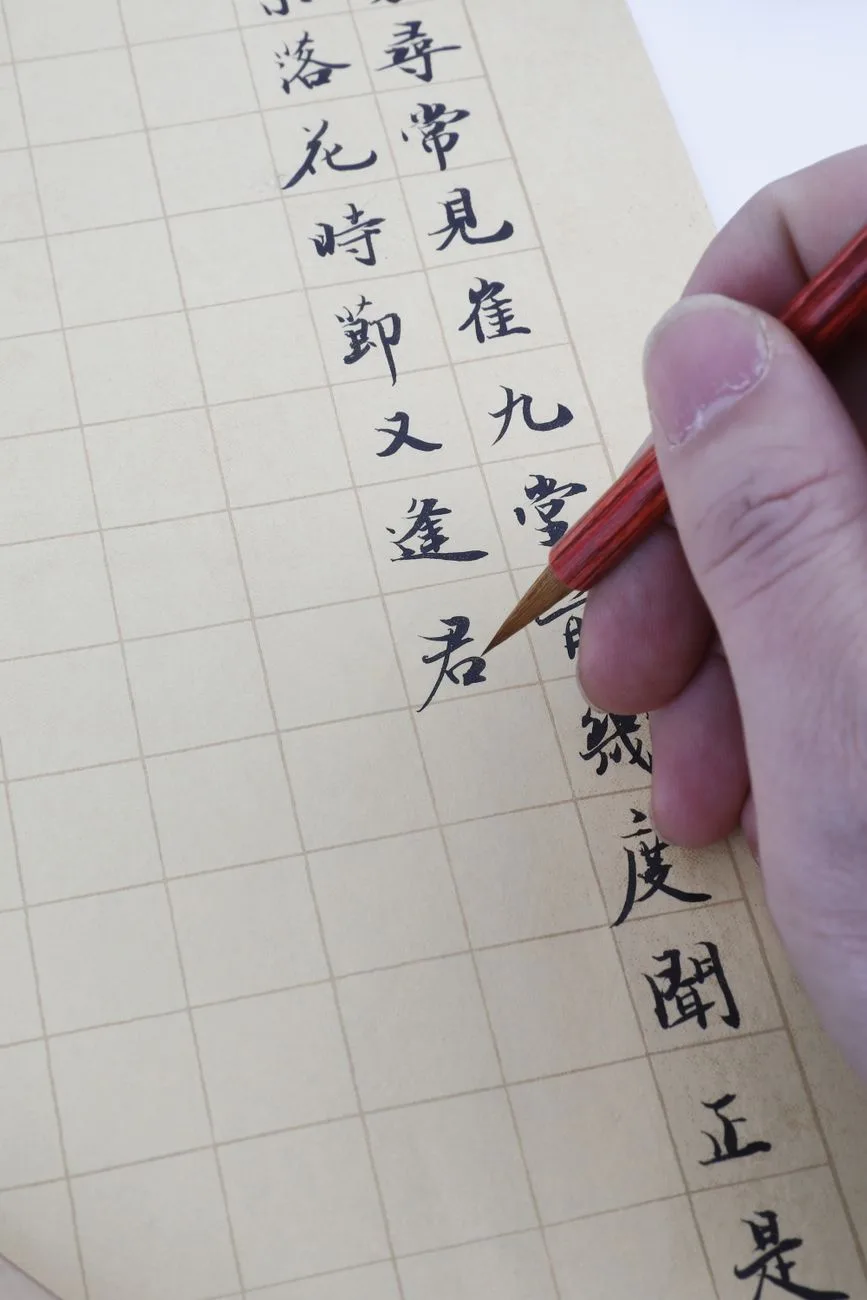
    The tools are known as the Four Treasures of the Study: brush, ink, paper, and inkstone. A brush of animal hair is held upright between thumb and fingers, and pressure makes the stroke swell and thin. Ink comes as a solid stick ground with water on a stone; the density of the mixture changes the character of the line. Paper is absorbent, so hesitation shows as a blot. Practice begins with the basic strokes, then with copying a model character hundreds of times until the hand remembers its proportions. Students still learn by tracing the regular script of Tang dynasty masters such as Yan Zhenqing and Ouyang Xun. The aim is not decorative flourish but control: a steady wrist, an even rhythm, and a line that holds its centre.

    Calligrapher’s brush, ink stick, paper, and inkstone laid on a desk
    Brush, ink, paper, and inkstone are the traditional Four Treasures of the Study. Feng Zou | Pexels License (https://www.pexels.com/license/)

    Scripts and Masters

    Chinese writing moved through several scripts, and calligraphers kept them all alive as styles. Seal script, with even, rounded lines, comes from the inscriptions on bronze and stone of the Zhou and Qin periods. Clerical script, formalised in the Han dynasty, flattened characters with a distinctive flared stroke. Regular script, settled by the Tang, is the model still taught in schools; each part of a character sits in a clear frame. Running script links strokes without losing legibility, while cursive script reduces them to rapid, connected gestures. Wang Xizhi’s Lantingji Xu, written in 353, is the famous example of running script; the original is lost, but copies carry its reputation. Later Song and Yuan artists, including Su Shi and Zhao Mengfu, made personal expression as important as correct form.

    Close view of flowing cursive calligraphy on a hanging scroll
    Cursive script compresses characters into gestures that reward slow reading. Feng Zou | Pexels License (https://www.pexels.com/license/)

    Stone Records in Xi’an

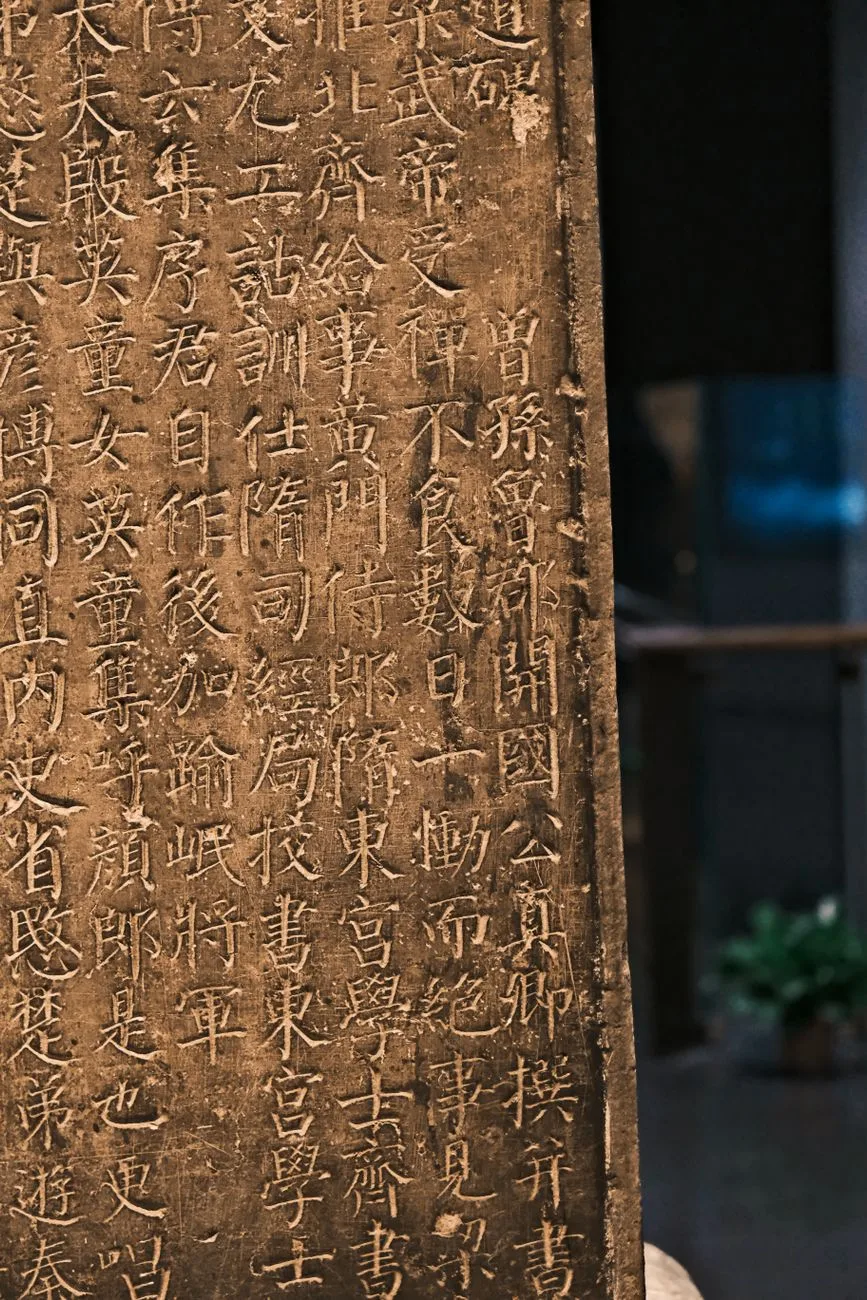
    Xi’an, the former Chang’an, preserves calligraphy on stone at the Beilin Museum, the Forest of Stone Steles. The collection began in 1087, when the Confucian classics were carved onto more than a hundred steles and installed beside the city’s Confucius Temple. Centuries of additions followed: tombstones, imperial edicts, Buddhist texts, and poems cut in several scripts. Rubbing a stele with damp paper and ink was the traditional way to study and circulate a model, and museums still demonstrate the technique. One slab records a Tang emperor’s visit to a Nestorian Christian church; another carries a Song dynasty city diagram. Walking the covered galleries, you can compare the same character written in seal, clerical, and regular forms across a thousand years.

    Rows of carved stone steles at the Beilin Museum in Xi’an
    The Beilin Museum holds thousands of steles, including Confucian classics cut into stone. Lily Lili | Pexels License (https://www.pexels.com/license/)

    Living Practice

    Calligraphy remains a daily practice rather than a museum relic. Around Spring Festival, shops sell red paper couplets, and a single character for good fortune is pasted on doors, sometimes upside down to suggest that fortune has arrived. Temple names, shop signs, and station plaques are often lettered by accomplished hands. Schoolchildren practise copying characters in grid books, and older residents gather in parks to write with large water brushes on the pavement, where the characters dry in minutes. Workshops in Xi’an let visitors try a brush and learn how a stroke begins with a pause and ends with a lift. You need not read every character to see the differences: one script sits square and calm, the next leans and races.

    A stroke begins with a pause and ends with a lift; the paper keeps the record.

    المصادر والمزيد من القراءة

    1. Chinese calligraphy — موسوعة بريتانيكا.
    2. Chinese Calligraphy — متحف متروبوليتان للفنون.
    3. Beilin Museum, Xi’an — China Highlights.

    شاهدها في مكانها

    اتبع هذا المدخل إلى المنطقة التي ينتمي إليها.

    استكشف عبر الخريطة

    تابع الموضوع

    تصفح الإدخالات الأخرى التي تشترك في نفس الوسوم.

    تصفح الوسم
  • تشينغم

    الحياة والفولكلور

    تشينغم

    تنظيف المقابر، واستقبال الربيع

    Qingming pairs the remembrance of ancestors with the first serious outings of spring.

    قسم
    الحياة والفولكلور
    منطقة
    تشجيانغ
    عصر
    عبر العصور
    الوسوم
    Customs, Geography

    Qingming arrives around 4 or 5 April, when the sun reaches fifteen degrees of the spring equinox on the traditional solar-term calendar. Its two halves belong together: cleaning a family grave, then walking out into the greening countryside.

    A Solar Term and a Day of Remembrance

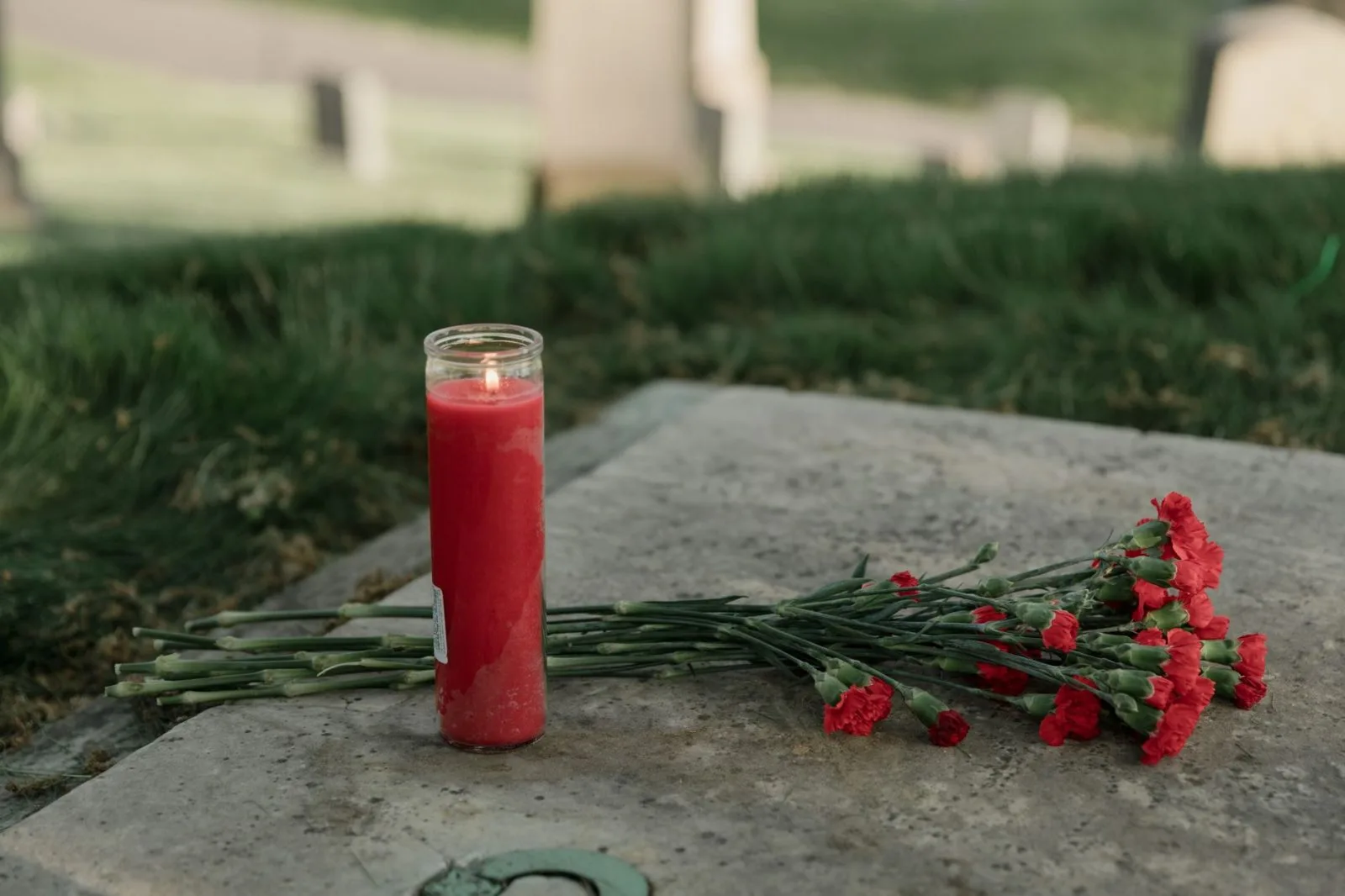
    Qingming means clear and bright, a name drawn from the twenty-four solar terms, the calendar that divides the year by the sun’s position. The term falls around 4 or 5 April, when temperatures rise and rain becomes frequent in the lower Yangtze. Families visit ancestral graves to sweep away leaves and weeds, repaint inscriptions, and lay out food, tea, and paper money. Offerings are followed by bows or a few words addressed to the dead. Paper money may be burned in a designated container, depending on local rules. The act is not a celebration of death but a maintenance of family continuity: the dead remain part of the household’s obligations. In Zhejiang, hillside graves make the visit a walk as much as a ritual.

    A family tending a grave with flowers on a hillside in spring
    Tomb sweeping means cleaning the grave, making offerings, and bowing before ancestors. RDNE Stock project | Pexels License (https://www.pexels.com/license/)

    The Cold Food Connection

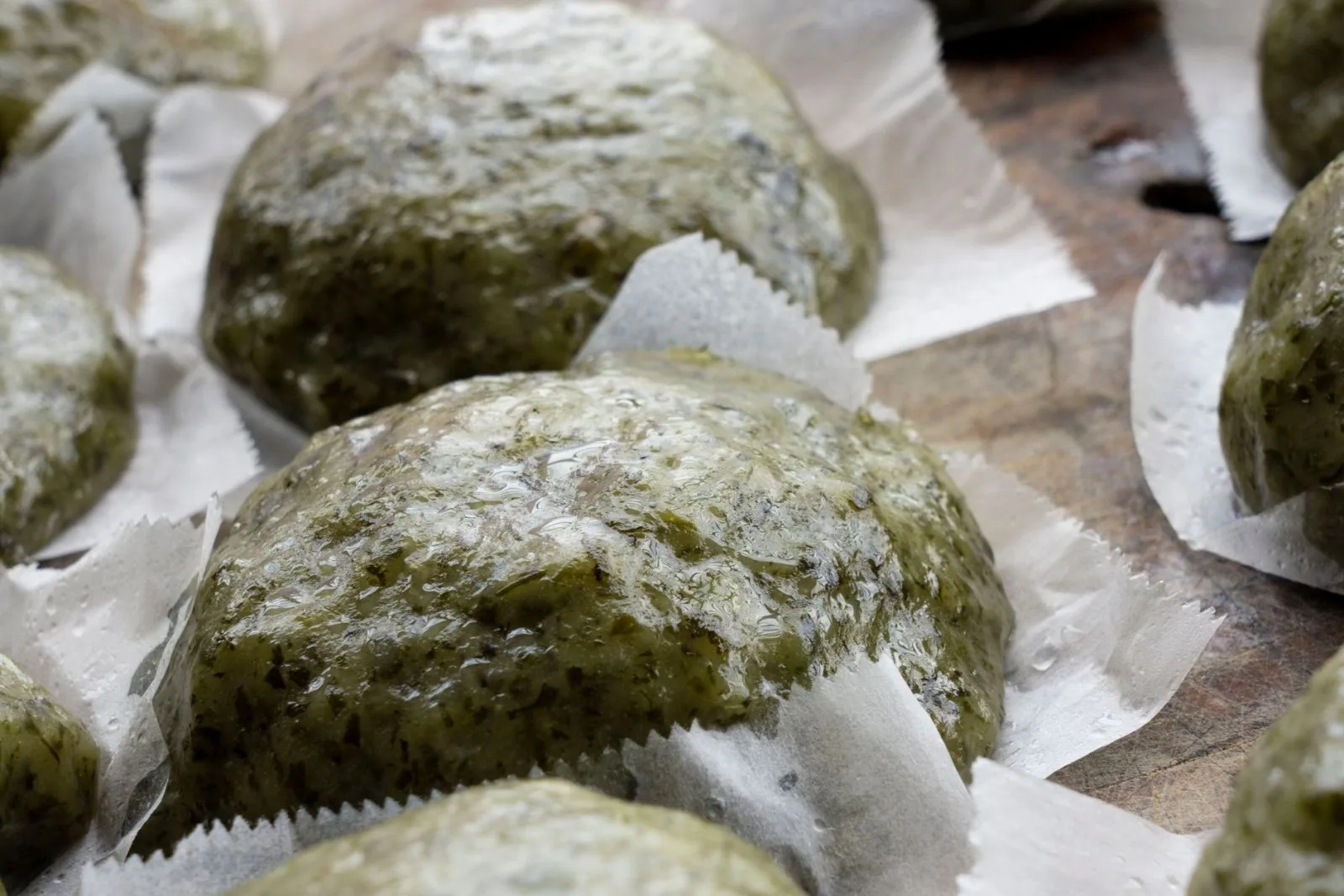
    Earlier custom linked this season with the Cold Food Festival, when fires were forbidden and families ate food prepared in advance. One traditional explanation connects the practice to Jie Zitui, a loyal follower of a Spring and Autumn duke who died in a forest fire; later historians treat the story as one among several local traditions rather than a single origin. In practice, the cold-food element has faded, but special foods remain. In Zhejiang and neighbouring Jiangnan, people eat qingtuan, soft green dumplings made with glutinous rice and mugwort juice, often filled with sweet red bean paste. Their colour comes from the first spring growth, and they are sold in markets for only a short season. Eating one links the memory of the dead to the first green.

    Qingming dumplings and cold food arranged on a table
    Qingming foods in Zhejiang include qingtuan, green rice cakes flavoured with mugwort. Jimmy Liao | Pexels License (https://www.pexels.com/license/)

    Spring Outings in Zhejiang

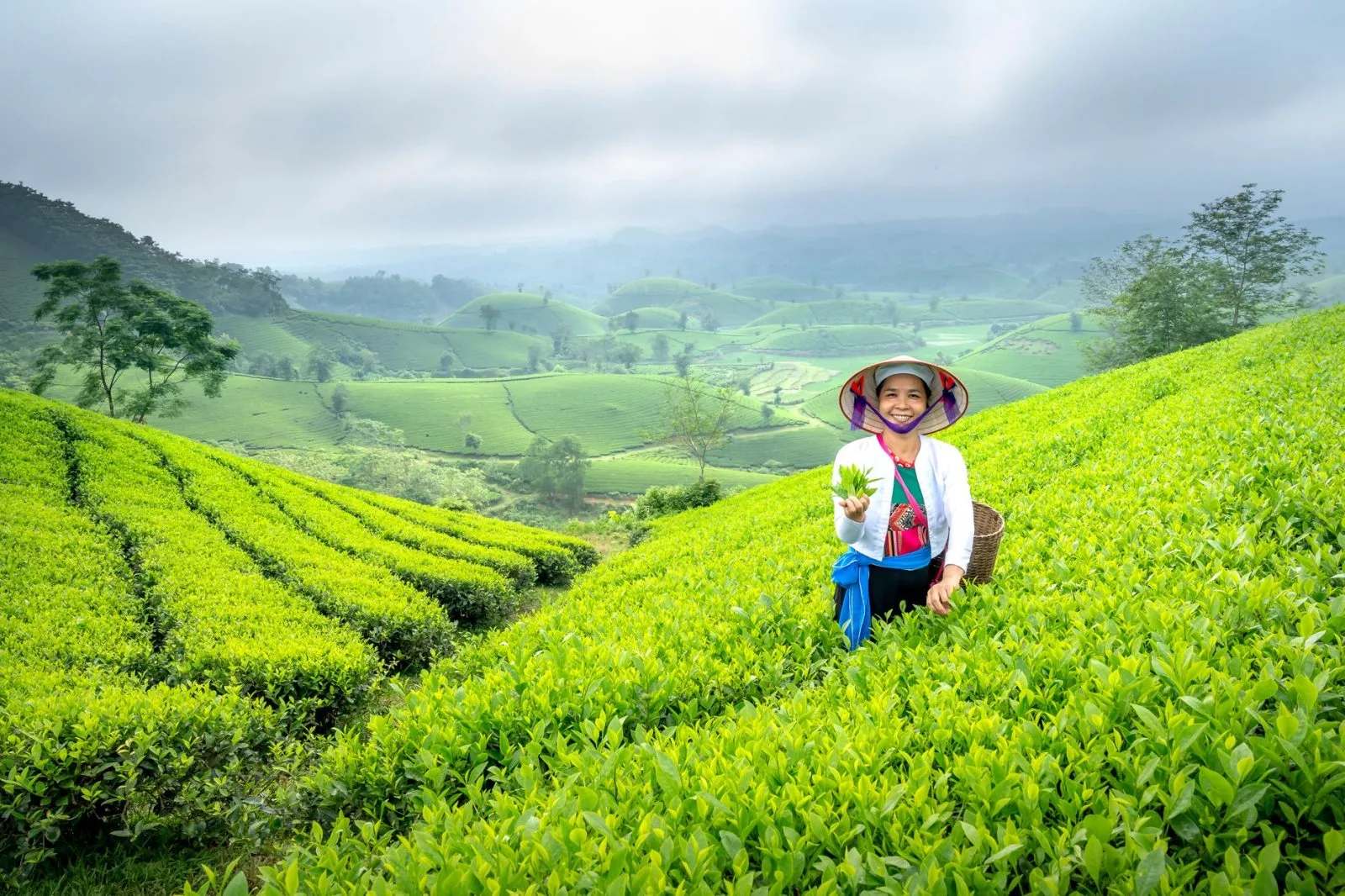
    The second half of Qingming is an outing, known as taqing, when families walk in parks, visit temples, or climb hills. Willow branches were once tucked into hair or hung at doors. In Zhejiang, the festival coincides with the first tea harvest around Hangzhou. Longjing, the tea from the hills near West Lake, is at its most valued when picked before Qingming; the tender buds of pre-Qingming pickings command higher prices. Visitors can see pickers between rows, and lakeside tea houses serve the new leaves. Qingming became a public holiday in 2008, giving the outing a practical boost. Combined with tomb sweeping, the day makes an unusual pair: a visit to the ancestors in the morning, a walk among new leaves in the afternoon.

    Tea pickers gathering early spring leaves in Zhejiang hills
    Pre-Qingming tea from Zhejiang’s hills is prized for its tender leaves. Quang Nguyen Vinh | Pexels License (https://www.pexels.com/license/)

    Poetry and Practice Today

    Qingming has a fixed place in Chinese literature. The Tang poet Du Mu wrote of drizzling rain on the Mourning Day and a traveller asking where wine could be bought, a poem that schoolchildren still memorise. The lines capture the day’s two moods: rain and sorrow, and the impulse to go out despite them. For a visitor, the details matter. Cemeteries can be crowded, so go early and keep to marked paths. Bring water and wear shoes suitable for muddy slopes. In Hangzhou, traffic around West Lake builds by mid-morning, and the metro is simpler than a taxi. Tea villages welcome visitors, but a field is a working crop, not a garden; wait for an invitation before touching the leaves. Respect anyone burning offerings, and never photograph a grave close-up.

    In the morning the family tends the grave; in the afternoon it walks among new leaves.

    المصادر والمزيد من القراءة

    1. الفصول الشمسية الأربعة والعشرون — التراث الثقافي غير المادي لليونسكو.
    2. West Lake Cultural Landscape of Hangzhou — مركز التراث العالمي لليونسكو.
    3. Qingming Festival — China Highlights.

    شاهدها في مكانها

    اتبع هذا المدخل إلى المنطقة التي ينتمي إليها.

    استكشف عبر الخريطة

    تابع الموضوع

    تصفح الإدخالات الأخرى التي تشترك في نفس الوسوم.

    تصفح الوسم
  • مهرجان قوارب التنين

    الحياة والفولكلور

    مهرجان قوارب التنين

    Racing, rice dumplings, and the fifth moon

    The Dragon Boat Festival joins boat races, sticky rice parcels, and a story of loyalty to a poet.

    قسم
    الحياة والفولكلور
    منطقة
    قوانغدونغ
    عصر
    عبر العصور
    الوسوم
    الجمارك، الغذاء

    Duanwu falls on the fifth day of the fifth lunar month, when the heat of early summer arrives in Guangdong. The holiday is best known for dragon boat racing and zongzi, but its smaller customs reveal as much about how the day is understood.

    Qu Yuan and the River

    The festival is commonly linked to Qu Yuan, a poet and minister of the state of Chu who died in 278 BCE after his advice was rejected and his state fell. Legend says that fishermen raced out in boats to find his body and threw bundles of rice into the river to keep fish from eating it. Historians note that the custom of racing boats and the fifth-month observance existed before this story attached to it; the legend explains a practice rather than creating it. Either way, the pairing of boat and rice dumpling gives the holiday its two enduring symbols. In school lessons and public ceremonies, Qu Yuan is presented as a figure of loyalty and moral independence, a poet whose writing still reads as political dissent.

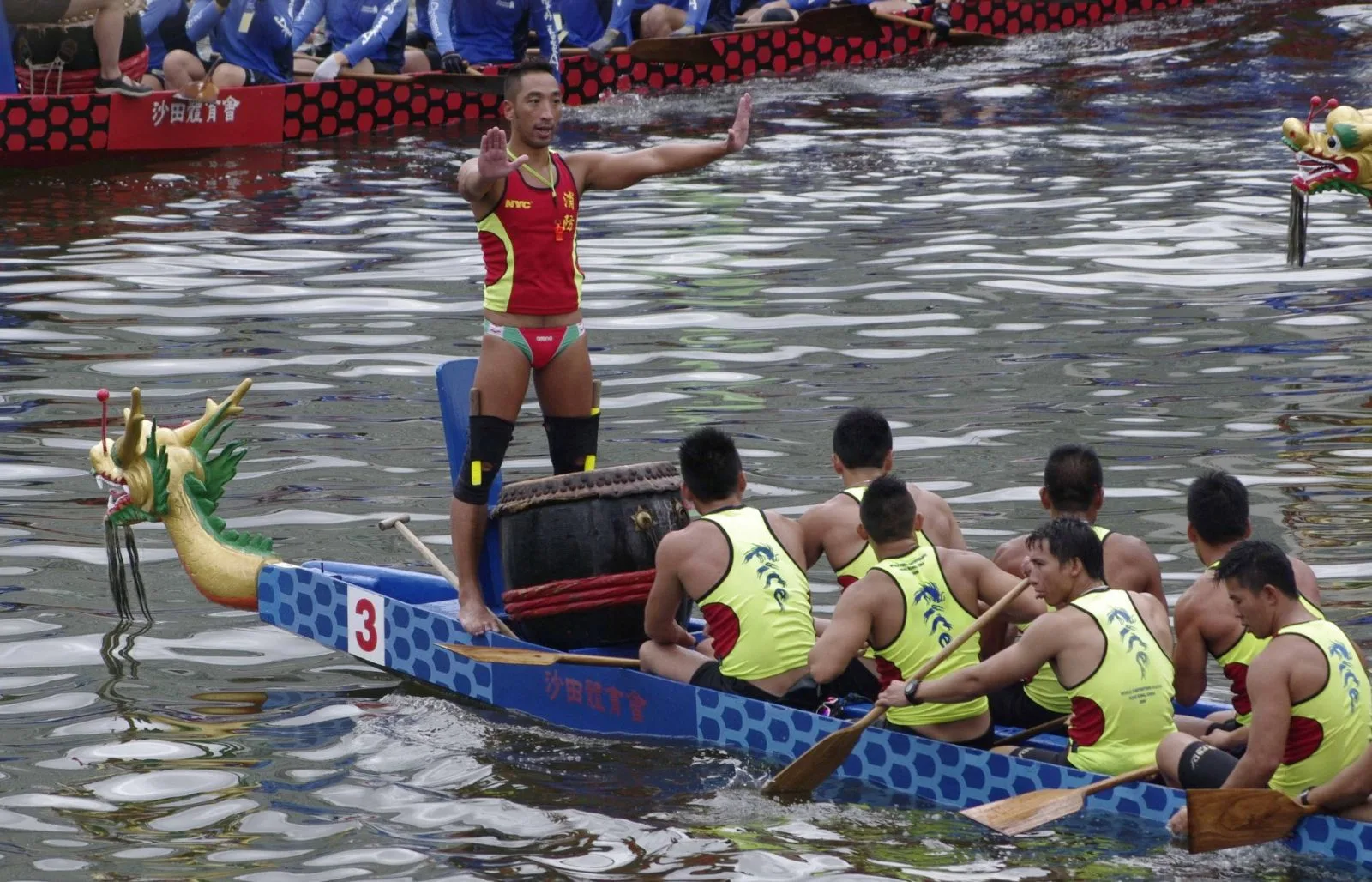
    A dragon boat with a carved head and paddlers in formation
    Dragon boats are painted and carved; crews race to the beat of a drum. Kamus Cheung | Pexels License (https://www.pexels.com/license/)

    Zongzi and Household Charms

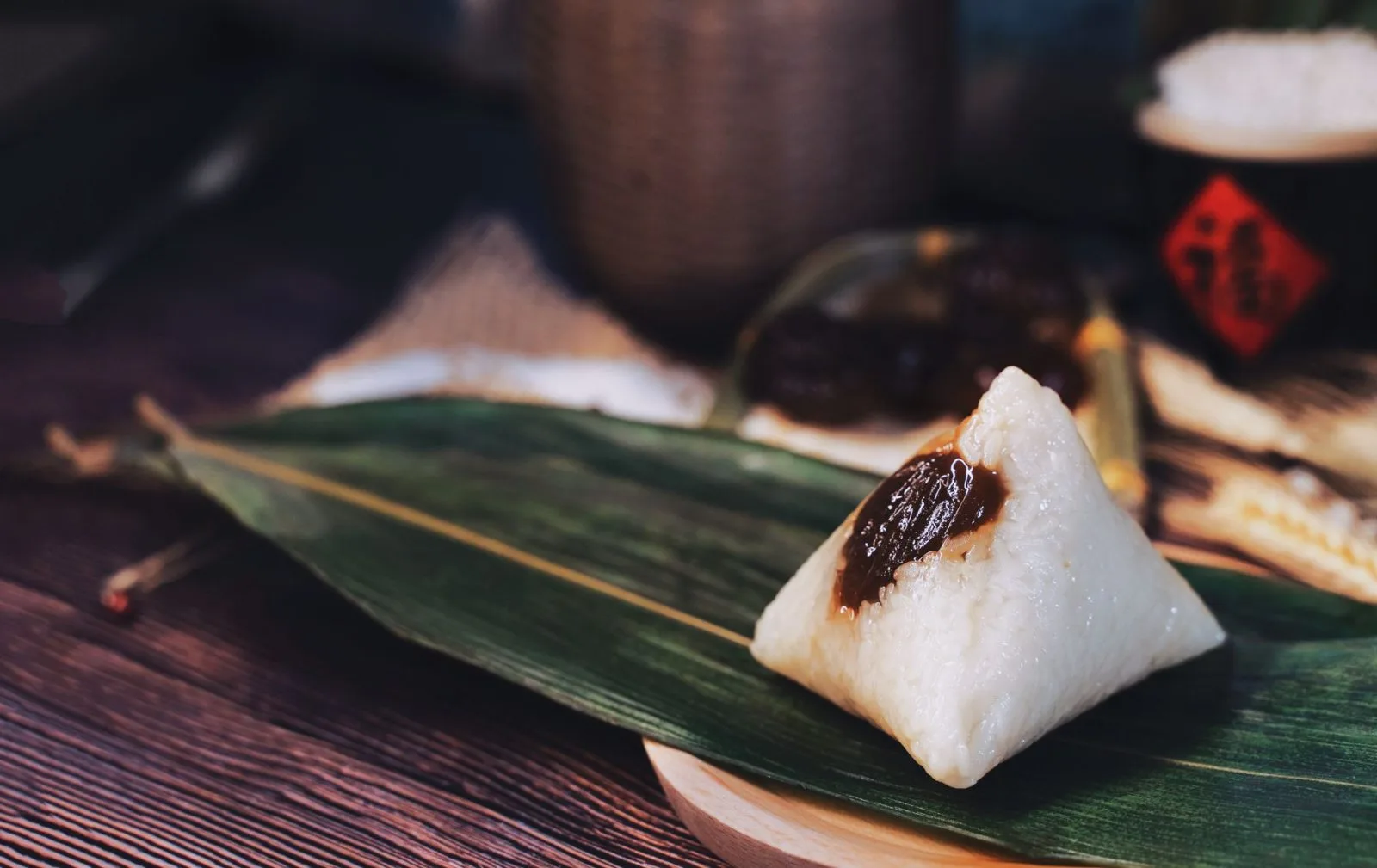
    Zongzi are parcels of glutinous rice wrapped in bamboo or reed leaves and tied with string, then boiled for hours. Fillings vary by region: Guangdong versions may include pork, salted egg, and mushrooms, while northern ones are often sweet with dates or red bean. Families make them in batches and give them to neighbours. The festival also has a protective side. In older practice, people hung mugwort and calamus at doorways to keep away illness and insects and tied five-coloured silk around children’s wrists. Realgar wine, a yellow mixture with a strong smell, was sprinkled around the house or dabbed on a child’s forehead, though modern safety advice discourages drinking it. These acts belong to a time when the fifth moon was thought to carry dampness, snakes, and fever.

    Pyramidal zongzi wrapped in bamboo leaves and tied with string
    Zongzi are filled with sticky rice and tied with string before boiling. zhen tang | Pexels License (https://www.pexels.com/license/)

    Guangdong on the Water

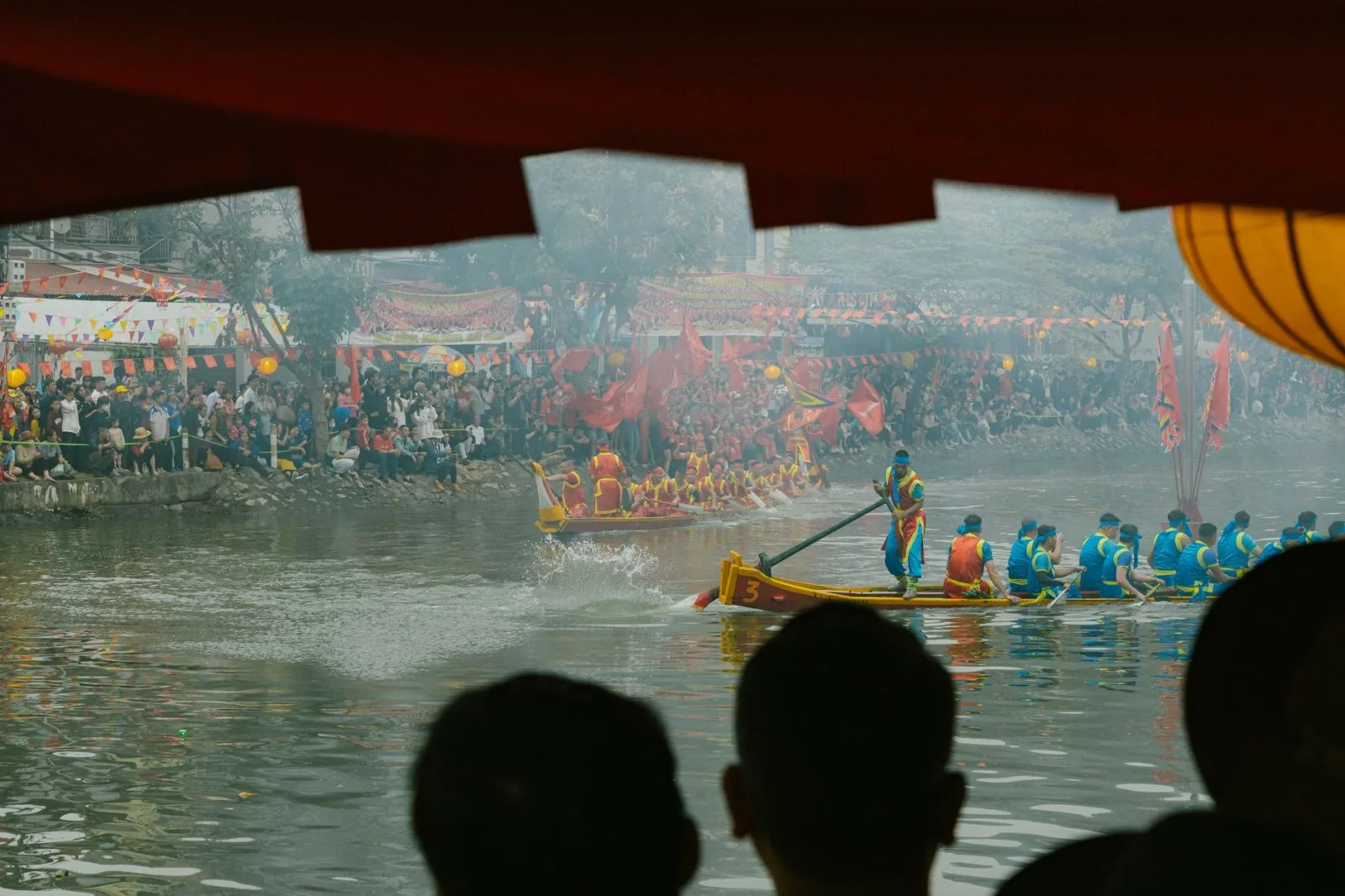
    In Guangdong, dragon boat racing is not a single event but a season. Villages and districts along the Pearl River Delta prepare boats through the spring, then race on rivers and creeks in the weeks around Duanwu. A long narrow boat carries a crew of paddlers, a drummer who sets the stroke, and a helmsman; the painted head and tail give the craft its name. Races are loud, crowded, and local, with teams known by village or temple affiliation. Spectators line bridges and banks, and the best vantage points fill early. The custom was inscribed on UNESCO’s intangible cultural heritage list in 2009. For a visitor, check local listings rather than assuming one central race: events are spread across Guangzhou and Foshan, and dates shift with the lunar calendar.

    Dragon boat crews racing on a Guangdong river before a crowd
    Pearl River Delta races draw village crews and large crowds in the weeks around Duanwu. HONG SON | Pexels License (https://www.pexels.com/license/)

    Observing the Day Today

    Duanwu is an official public holiday, so transport and tourist sites are busy. In Guangdong, the weather is hot and wet by May or June; bring water, a hat, and insect repellent if you plan to watch a race from an open bank. Respect the crews’ space at the water’s edge and do not step onto a boat or touch a drum without being invited. Many families still put mugwort at the door, and zongzi are easy to buy from markets in the days before the holiday. The festival is also an occasion for calling on relatives, though on a smaller scale. For travellers, the pleasure lies in the combination: a public spectacle on the river and a quiet, food-filled custom at home, both tied to the same lunar date.

    The drum sets the stroke, and the village supplies the crew.

    المصادر والمزيد من القراءة

    1. Dragon boat festival — التراث الثقافي غير المادي لليونسكو.
    2. مهرجان قوارب التنين — موسوعة بريتانيكا.
    3. Qu Yuan — موسوعة بريتانيكا.
    شاهدها في مكانها

    اتبع هذا المدخل إلى المنطقة التي ينتمي إليها.

    استكشف عبر الخريطة

    تابع الموضوع

    تصفح الإدخالات الأخرى التي تشترك في نفس الوسوم.

    تصفح الوسم
  • مهرجان منتصف الخريف

    الحياة والفولكلور

    مهرجان منتصف الخريف

    Mooncakes under a full moon

    The Mid-Autumn Festival gathers families around the full moon, mooncakes, and a long tradition of watching the night sky.

    قسم
    الحياة والفولكلور
    منطقة
    بكين
    عصر
    عبر العصور
    الوسوم
    الجمارك، الغذاء

    Falling on the fifteenth day of the eighth lunar month, the Mid-Autumn Festival is a harvest celebration and a family reunion. In Beijing, the holiday is marked in courtyards, parks, and moon-viewing spots that fill after sunset.

    The Date and the Moon

    The festival follows the lunar calendar, so its date moves between early September and early October. The fifteenth day of the eighth month is chosen because the moon should be full, and roundness stands for completeness and family unity. Chinese tradition reads the moon’s surface as the figure of Chang’e, a woman who, in one version of the myth, drank an elixir and rose to live there with a rabbit that pounds medicine. Another story tells of Wu Gang cutting a tree that regrows each time. These tales are not scripture; they are the stories families retell while looking up. Around the festival, parks stay open late and lakes reflect the moon, giving city dwellers a quiet reason to be outdoors after dinner.

    A full moon rising over a Beijing park lake
    The festival falls on the full moon of the eighth lunar month, usually in September or October. marnock | Pexels License (https://www.pexels.com/license/)

    Mooncakes and Their Fillings

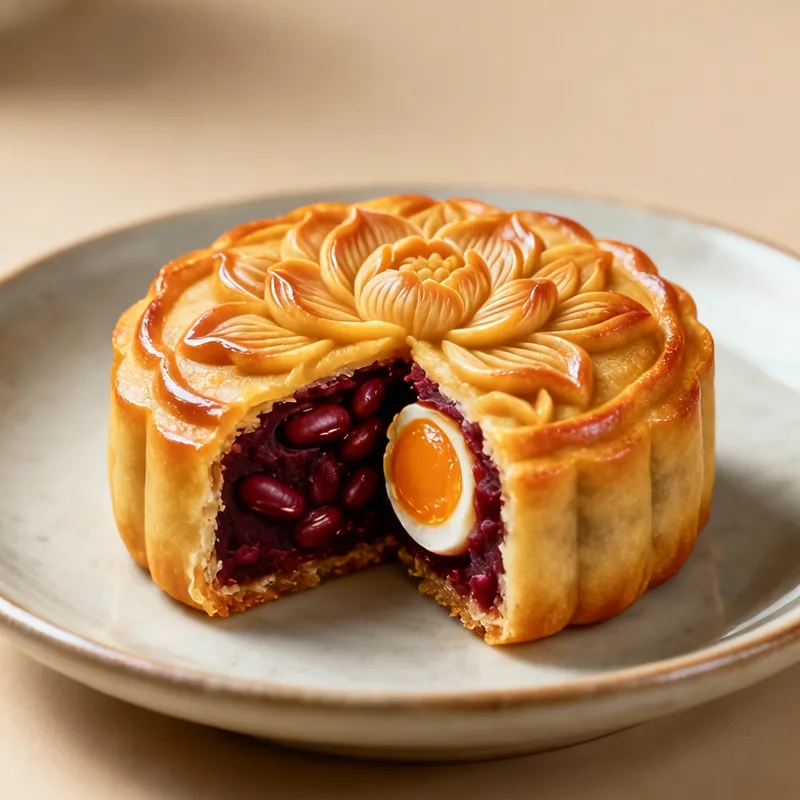
    Mooncakes are small, dense pastries with a thin crust and a heavy filling, traditionally cut into wedges and shared. The round shape echoes the moon, and the top is stamped with a pattern or characters such as longevity or harmony. Cantonese-style cakes often hold lotus seed paste and a salted duck egg yolk, whose yellow centre stands for the moon; other fillings include red bean, five nuts, and preserved fruit. Suzhou-style pastries use flaky layers, while snow-skin mooncakes are chilled and made with a glutinous rice wrapper. Because the cakes are rich, a sliver is usually enough, and tea helps. Prices rise in the weeks before the holiday, and elaborate boxes are made for gifting rather than eating. In Beijing, bakeries sell both traditional versions and small cakes.

    A round mooncake with a stamped pattern cut open to show the filling
    Mooncakes are dense pastries stamped with characters for longevity or harmony. رسم توضيحي مُولّد بالذكاء الاصطناعي · سينوفيز

    Beijing After Dark

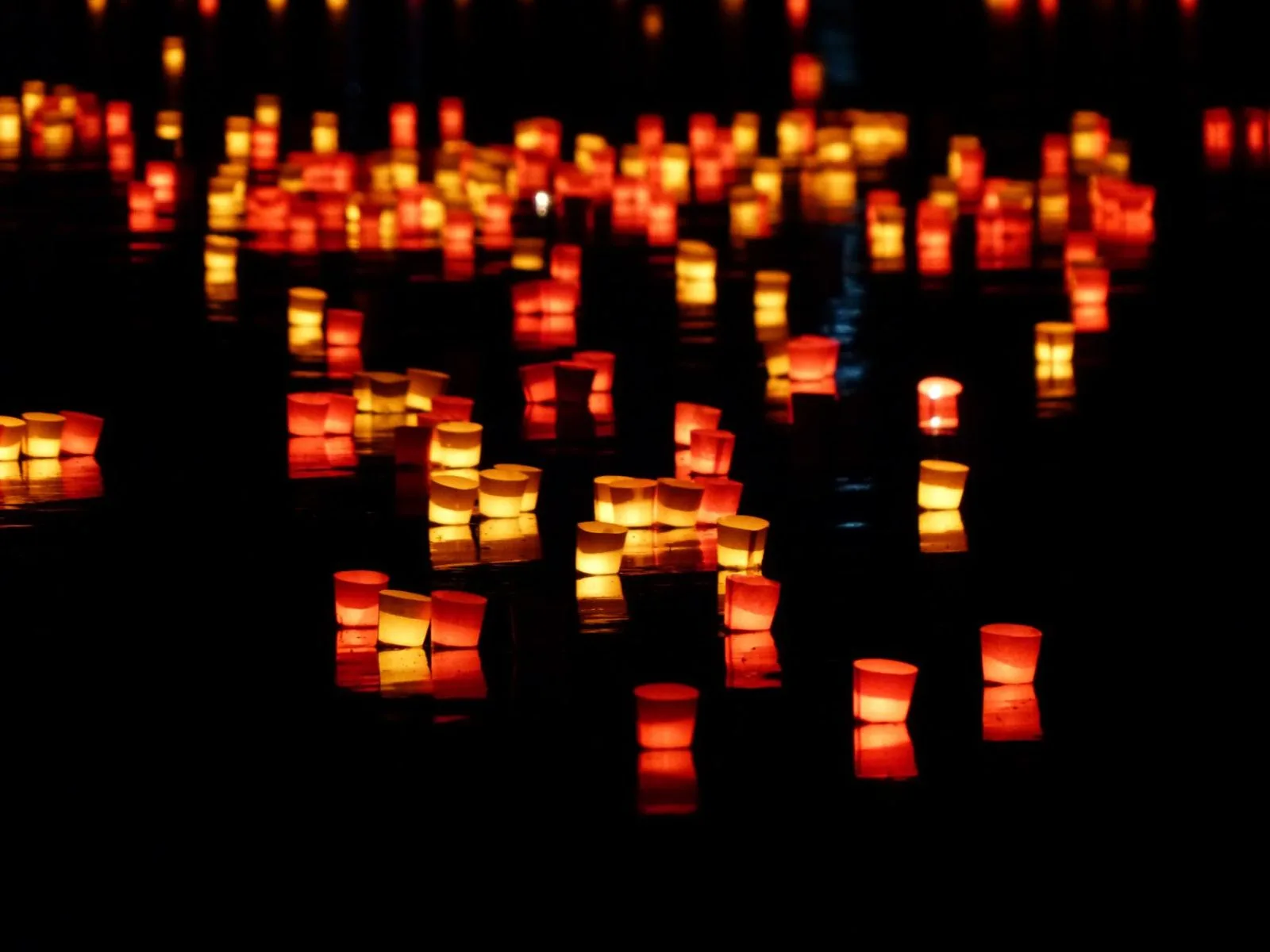
    Beijing’s moon-viewing spots fill quickly after dark. Beihai Park, with its lake and white stupa, and the Summer Palace, with Kunming Lake and the Long Corridor, are classic places to walk and watch the reflection. The Temple of Heaven also draws visitors. Families may light paper lanterns, and children carry them through the lanes; in some neighbourhoods, lantern riddles are posted for anyone who wants to try. Public holiday crowds mean metro stations near the parks stay busy late, so allow time to get back. Camping or bringing a barbecue is not appropriate in these historic grounds. A practical plan is to visit in the late afternoon, walk as the light fades, and take a seat by the water before the moon clears the rooftops.

    Lanterns reflected in a lake at a Beijing park during the Mid-Autumn Festival
    Parks such as Beihai and the Summer Palace draw moon-viewing crowds after sunset. Pixabay | Pexels License (https://www.pexels.com/license/)

    Gifts, Holiday, and Meaning

    Mooncakes are exchanged as gifts, often in boxes of four or six, and carrying a box to a family dinner is normal. The act matters more than the price; a modest cake from a favourite bakery can be more welcome than a lavish tin. Since 2008, the festival has been an official public holiday, reinforcing its role as a reunion, with millions travelling to see relatives. The deeper theme is tuanyuan, reunion, expressed by the circle of the cake and the full moon. Not everyone can be at the table, and the holiday acknowledges that absence as much as presence. If you are invited to a Beijing home, bring the cakes, arrive on time, and expect the evening to centre on a long meal rather than on speeches.

    Roundness carries the argument: a full moon, a round cake, a family gathered in one room.

    المصادر والمزيد من القراءة

    1. مهرجان منتصف الخريف — موسوعة بريتانيكا.
    2. مهرجان منتصف الخريف — China Highlights.

    شاهدها في مكانها

    اتبع هذا المدخل إلى المنطقة التي ينتمي إليها.

    استكشف عبر الخريطة

    تابع الموضوع

    تصفح الإدخالات الأخرى التي تشترك في نفس الوسوم.

    تصفح الوسم
  • فن قص الورق الصيني

    الحياة والفولكلور

    فن قص الورق الصيني

    Red paper, folded and cut

    A pair of scissors and a sheet of red paper can carry a whole vocabulary of wishes.

    قسم
    الحياة والفولكلور
    منطقة
    شانشي
    عصر
    عبر العصور
    الوسوم
    Customs, Ethnic

    Chinese paper cutting, or jianzhi, turns a flat sheet into a pattern of figures, flowers, and characters. Practised for centuries in rural households, it still marks weddings and New Year, and Shaanxi’s bold window designs are among its most recognisable regional forms.

    Origins and Technique

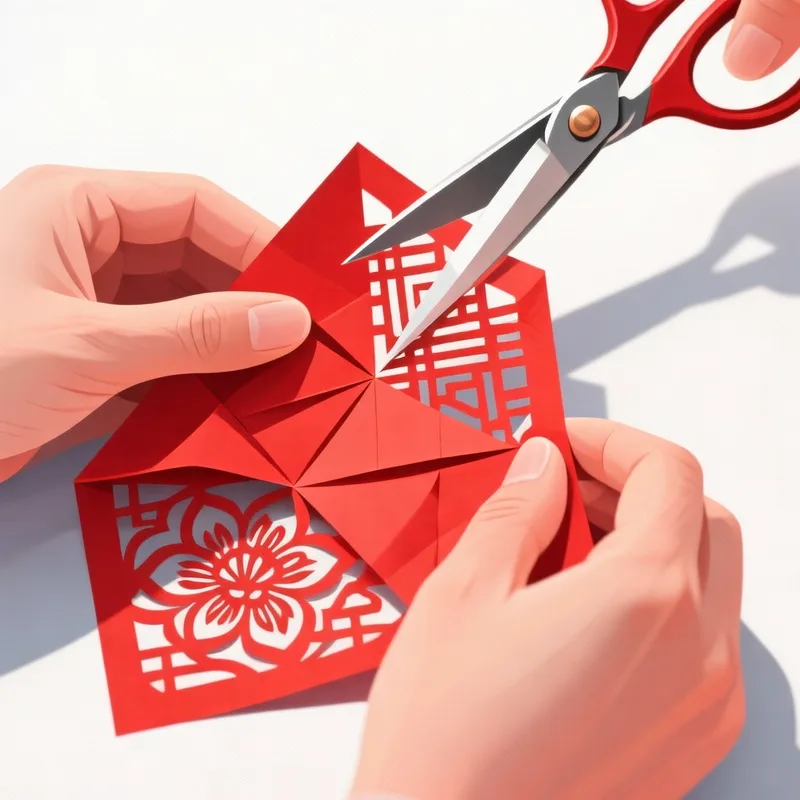
    Paper reached China in the Eastern Han period, and the first cuts followed once the material was cheap enough to experiment with. Early examples were used as offerings and as templates for embroidery; a surviving cut-paper find from the sixth century shows that the technique was established by then. Two methods developed. Scissors cut a folded sheet, creating a mirror-symmetric design with a single sequence of snips. A knife held upright cuts a stack of paper against a wax board, a method suited to finer lines and repeated motifs. Artists draw no outline for many traditional patterns; they cut directly, keeping the connecting threads that stop the design falling apart. The finished piece is light, cheap, and easy to paste on a window or door.

    Hands cutting a red paper design with small scissors
    Folding the paper before cutting produces the symmetrical patterns typical of window decorations. رسم توضيحي مُولّد بالذكاء الاصطناعي · سينوفيز

    A Language of Motifs

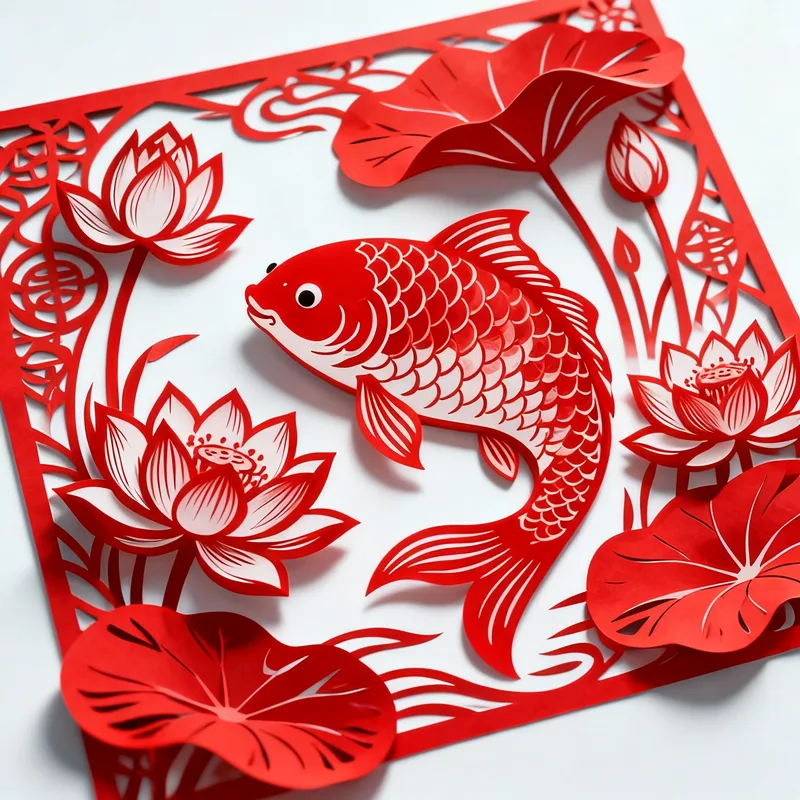
    The images are a system of visual puns. A fish means surplus, because the word for fish sounds like the word for abundance; lotus suggests purity. A pomegranate stands for many children, a bat for good fortune, and a peach for long life. The character fu, meaning good fortune, appears alone or inside a circular design, while shuangxi, double happiness, belongs to weddings. Zodiac animals, opera figures, and scenes of children at play all circulate as patterns. Colour matters as much as shape: red is the default for celebration, while white paper cuts are rarer and tied to older ritual uses. In a Shaanxi village window, the arrangement of these motifs tells a visitor what the household is hoping for in the coming year.

    Red paper-cut window decoration showing a fish and lotus flowers
    Fish and lotus form a rebus for abundance; motifs are chosen for the wish they carry. رسم توضيحي مُولّد بالذكاء الاصطناعي · سينوفيز

    Shaanxi Windows

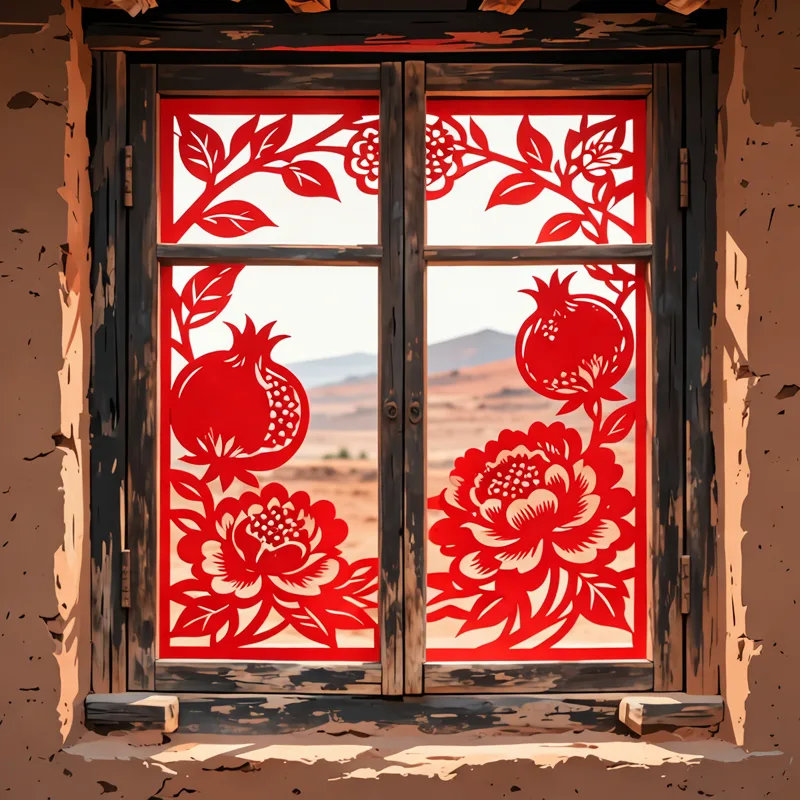
    Paper cutting in Shaanxi is associated with rural life on the Loess Plateau, especially around Yan’an. Windows there were once small and deeply set, so designs favoured bold silhouettes and broad, connected shapes that could be read from across a room. Local artists talk of cutting with the heart rather than measuring with a ruler, and compositions often show figures, animals, and plants together in a single dense frame. Window grilles, or chuanghua, are pasted at New Year and replaced when they fade. Wedding cuts carry double happiness characters and images of fertility; birthday cuts use peaches and cranes. Women were the main practitioners in many villages, passing patterns from mother to daughter, and village fairs still sell sheets cut in the old local style.

    A Shaanxi farmhouse window with bold red paper cutouts
    Shaanxi cuts favour strong silhouettes and broad shapes, designed to read from a distance. رسم توضيحي مُولّد بالذكاء الاصطناعي · سينوفيز

    Recognition and Travel

    Chinese paper-cut was inscribed on UNESCO’s Representative List of the Intangible Cultural Heritage of Humanity in 2009, a recognition that named both the craft and the communities that sustain it. The listing does not freeze the art. Contemporary artists cut portraits, cityscapes, and political images with the same tools, and paper cuts appear in graphic design and animation. For a visitor, the appeal is that the work is easy to find and easy to try. Museum shops sell small sheets, market stalls sell single motifs, and workshops in Xi’an and rural Shaanxi teach the basic fold-and-cut method in an hour. Bring a sharp pair of scissors and practice on cheap red paper before attempting a detailed pattern. A finished cut pasted on glass changes with the light.

    The pattern holds together because the cutter leaves just enough paper between the lines.

    المصادر والمزيد من القراءة

    1. Chinese paper-cut — التراث الثقافي غير المادي لليونسكو.
    2. فن قص الورق الصيني — China Highlights.
    3. Paper cutting — موسوعة بريتانيكا.
    شاهدها في مكانها

    اتبع هذا المدخل إلى المنطقة التي ينتمي إليها.

    استكشف عبر الخريطة

    تابع الموضوع

    تصفح الإدخالات الأخرى التي تشترك في نفس الوسوم.

    تصفح الوسم
  • المطبخ الكانتوني

    الحياة والفولكلور

    المطبخ الكانتوني

    Steam, Wok Heat, and Coastal Markets

    Guangdong cooking turns local seafood and temple fair foods into a refined restaurant tradition.

    قسم
    الحياة والفولكلور
    منطقة
    قوانغدونغ
    عصر
    عبر العصور
    الوسوم
    Food, Geography

    Cantonese cuisine is the cooking of Guangdong and its diaspora, built on river deltas, coastal markets, and the heat of the wok. Its best-known dishes—roast goose, dim sum, and steamed fish—sit beside home-style soups and street snacks.

    The Pearl River Pantry

    The Pearl River Delta gave Cantonese cooking an unusually broad pantry. Rice grows in the lowlands, fish and shellfish come from the estuary, and hills behind Guangzhou supply vegetables, pork, and poultry. Guangzhou was a major port under the Tang and again after European traders arrived in the seventeenth and eighteenth centuries. Merchants, officials, and temple fairs supported restaurants that could pay for skilled chefs. By the Qing period, Guangzhou’s tea houses served small plates known as dim sum through the morning and midday. Emigrants from Guangdong later carried these dishes to Southeast Asia, North America, and Europe, adapting them to local supplies.

    Bamboo steamers filled with dim sum
    Dim sum developed in the teahouses of Guangzhou and spread with Cantonese migration. parveen tasud | Pexels License (https://www.pexels.com/license/)

    Wok Hei and the Roast House

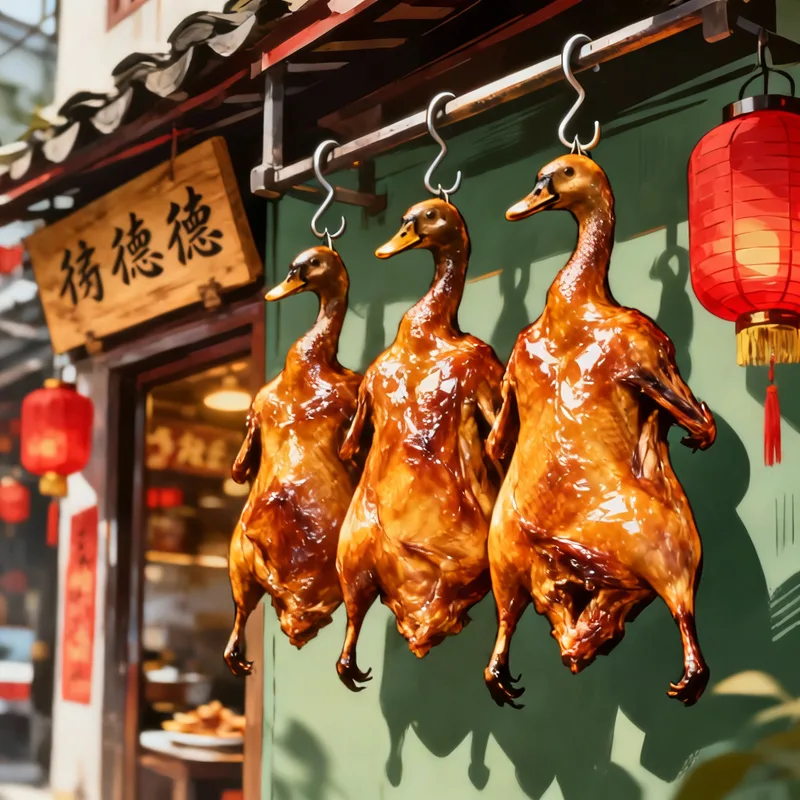
    Cantonese stir-frying depends on wok hei, the barely definable aroma produced when hot oil, vapours, and food meet a very hot wok. Chefs toss ingredients to keep them moving and prevent scorching; sauces are added late, often with cornstarch to give a light coating. Roasting is another speciality. Guangzhou-style white-cut chicken is poached and served with ginger and spring onion, while roast goose from Shunde is glazed, air-dried, and hung in a brick oven until the skin blisters. Char siu pork is marinated with honey and red fermented bean curd, then roasted with sugar caramelising at the edges.

    Roast geese hung to dry before roasting outside a Shunde restaurant
    Air-drying the skin is a key step in Shunde’s roast goose. رسم توضيحي مُولّد بالذكاء الاصطناعي · سينوفيز

    Dim Sum and Morning Ritual

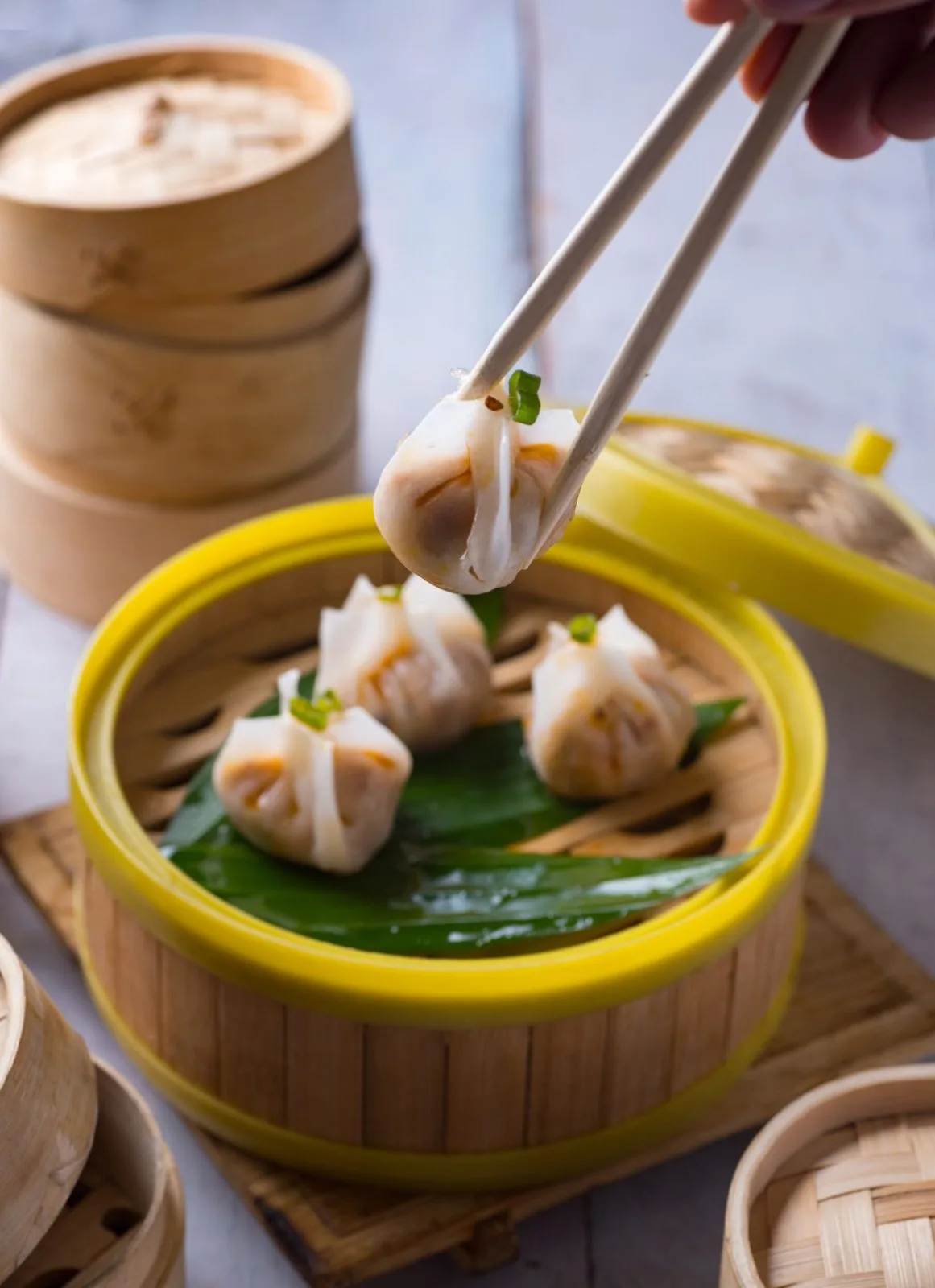
    Dim sum means a light snack, but in Cantonese practice it describes a meal of small portions ordered from trolleys or a paper card. Har gow wrap shrimp in a translucent wheat-starch skin; siu mai open-topped dumplings hold pork and shrimp; char siu bao are soft steamed buns with sweet roast-pork filling. Cheung fun are broad rice-noodle sheets rolled around shrimp, pork, or beef and dressed in soy sauce. Tea accompanies the meal, and the old custom of tapping a pot’s lid to signal for a refill is still performed, though younger diners may simply ask. The ritual is social as much as culinary, filling teahouses from early morning.

    • Har gow with translucent shrimp filling
    • Siu mai topped with a single shrimp
    • Cheung fun rice rolls with soy dressing
    • Egg tarts adapted from British custard pastry
    A trolley of bamboo steamers and tea pots beside a crowded Guangzhou dining room
    A dim sum meal is ordered in small dishes and shared across the table. minchephoto photography | Pexels License (https://www.pexels.com/license/)

    Regional Range and Diaspora

    Cantonese food is not one style. Shunde is known for delicate dairy desserts and fish dishes, Chaozhou nearby has a separate tradition of braised goose, seafood, and strong oolong tea, and Hakka communities in the hills favour preserved vegetables and stuffed tofu. Teochew and Hainanese migrants carried their own versions abroad. In Chinatowns from San Francisco to Singapore, Cantonese restaurants adapted to local tastes while keeping techniques such as steaming, roasting, and long simmered double-boiled soups. The resulting cuisines are mixed, but they preserve a central idea: fresh ingredients, precise heat, and a sauce that supports rather than hides them.

    Cantonese cooking asks a wok to do in seconds what other traditions give hours of stewing.

    المصادر والمزيد من القراءة

    1. Chinese Cuisine — موسوعة بريتانيكا.
    2. Cantonese cuisine — موسوعة بريتانيكا.
    3. Guangzhou — مركز التراث العالمي لليونسكو.

    شاهدها في مكانها

    اتبع هذا المدخل إلى المنطقة التي ينتمي إليها.

    استكشف عبر الخريطة

    تابع الموضوع

    تصفح الإدخالات الأخرى التي تشترك في نفس الوسوم.

    تصفح الوسم