Category: Vida e Folclore

  • O Calendário Lunar

    Vida e Folclore

    O Calendário Lunar

    Medição do tempo pela Lua e pelo Sol

    O calendário tradicional da China relaciona os meses lunares às estações solares, e os festivais a ambos.

    Seção
    Vida e Folclore
    Região
    Pequim
    Era
    Ao longo das eras
    Etiquetas
    Alfândega

    O calendário chinês é lunissolar: seus meses seguem a lua, enquanto seus anos seguem o sol. Por mais de dois milênios, astrônomos da corte e agricultores de aldeias usaram o mesmo sistema para diferentes propósitos — para datar reinados e para saber quando semear.

    Como funciona o calendário

    Cada mês começa no dia da lua nova astronômica e dura 29 ou 30 dias, portanto, doze meses lunares totalizam cerca de 354 dias — aproximadamente onze dias a menos que um ano solar. Para manter a primavera, são inseridos meses intercalares: sete meses extras a cada dezenove anos, um ciclo conhecido como ciclo metônico. Um mês repetido é numerado após o mês que o precede, daí o quarto mês bissexto. Os dias são contados separadamente pelo ciclo sexagenário, um par de dez troncos celestes e doze ramos terrestres que identifica cada dia e ano com uma combinação como jiachen.
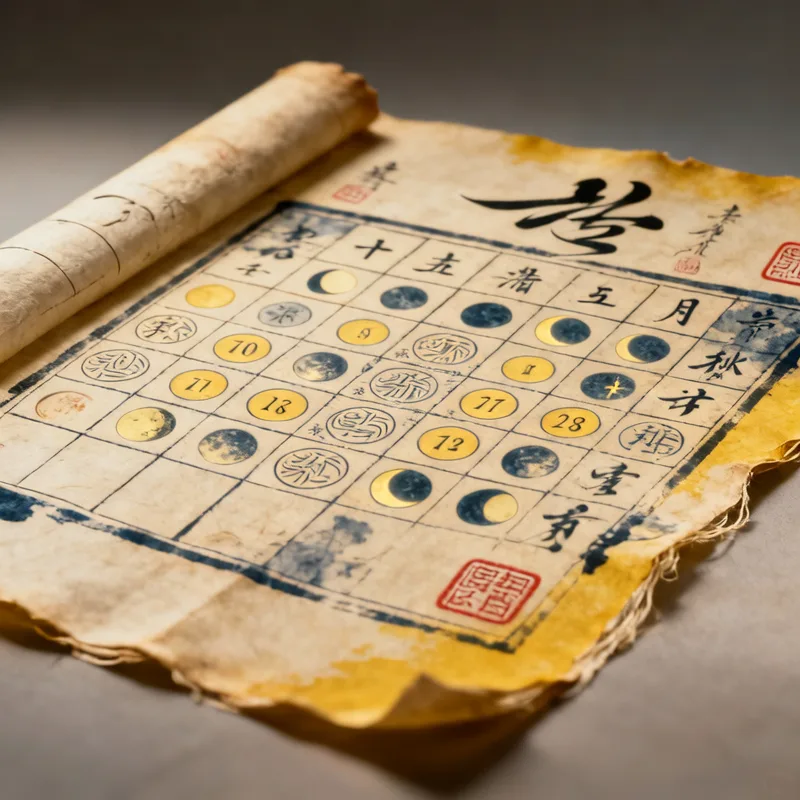
    Página de um almanaque chinês tradicional mostrando os meses lunares, os termos solares e os dias auspiciosos.
    Um mês lunar vai de uma lua nova à seguinte; um termo solar marca a posição do sol. Ilustração gerada por IA · SinoViz

    A observação se transforma em ciência.

    O sistema surgiu da observação. Inscrições em ossos oraculares da dinastia Shang (c. 1600–1046 a.C.) registram meses lunares, eclipses e meses intercalares, e os Anais da Primavera e do Outono preservam registros antigos de eclipses usados posteriormente para testar cálculos. O calendário Taichu, adotado em 104 a.C. sob o imperador Wu da dinastia Han, fixou o início do ano no primeiro mês lunar e estabeleceu a regra de intercalação de dezenove anos. Reformas posteriores o refinaram: o calendário Shoushi de Guo Shoujing, de 1281, criado para a capital Yuan em Dadu (Pequim), utilizava um ano tropical de 365,2425 dias — a mesma duração posteriormente adotada pela reforma gregoriana.

    A habilidade calendárica era política. Um governante que conseguia prever eclipses e anunciar a lua nova reivindicava o mandato do céu; emitir o almanaque para os estados subordinados era um ato de autoridade. O Observatório Antigo de Pequim, construído em 1442, ainda conserva esferas armilares Ming e um gnômon usado para esse fim. Os astrônomos ali trabalharam ao lado de missionários jesuítas no século XVII, quando a corte Qing adotou métodos europeus para prever eclipses, mantendo a estrutura do mês lunar. O calendário era, portanto, um ponto de encontro entre a arte de governar, a matemática e a observação.

    Os Vinte e Quatro Termos Solares

    Paralelamente aos meses lunares, existe um calendário solar de vinte e quatro termos, cada um espaçado quinze graus ao longo da trajetória anual do sol. A sequência começa com Lichun, o Início da Primavera, por volta de 4 de fevereiro, e inclui Qingming (Pura Luz) no início de abril, Xiazhi (Solstício de Verão), Bailu (Orvalho Branco) e Dongzhi (Solstício de Inverno). Desenvolvido na região do Rio Amarelo e aplicado em todo o país, os termos indicam aos agricultores quando esperar geadas ou chuvas; provérbios ainda os associam à semeadura e à colheita. A UNESCO inscreveu esse conhecimento e prática em sua Lista Representativa em 2016.
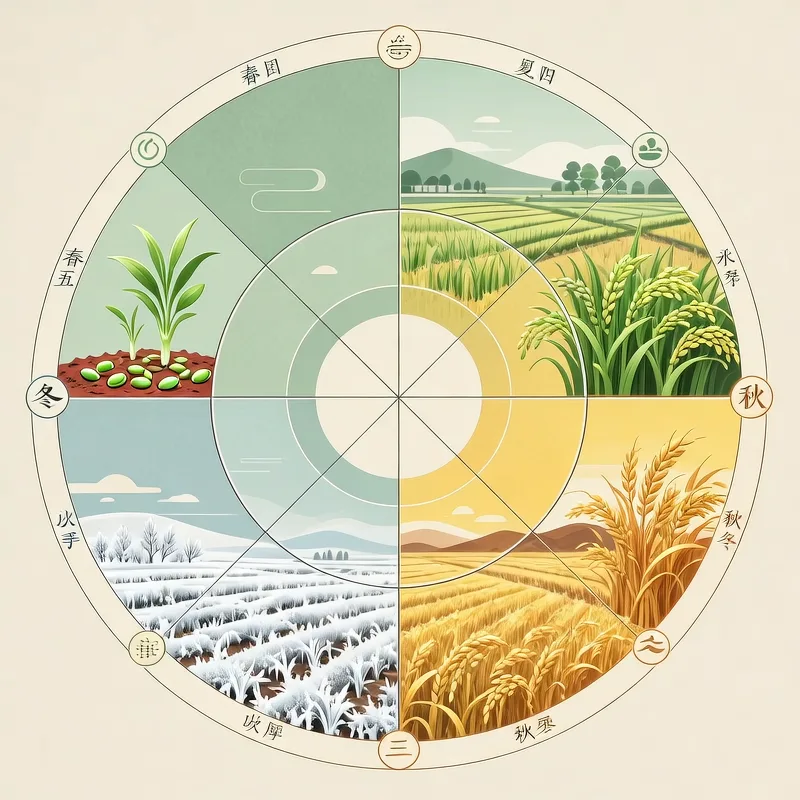
    Diagrama da trajetória anual do sol dividida em vinte e quatro segmentos com rótulos agrícolas.
    Cada termo solar abrange quinze graus da trajetória do sol, com intervalos de aproximadamente quinze dias. Ilustração gerada por IA · SinoViz

    Um calendário de festivais

    Como as datas são contadas a partir dos meses lunares, os festivais não seguem o calendário gregoriano. O Festival da Primavera começa no primeiro dia do primeiro mês lunar e termina com o Festival das Lanternas no décimo quinto dia, quando as ruas se enchem de lanternas. O Festival do Barco-Dragão ocorre no quinto dia do quinto mês, o Festival dos Fantasmas no décimo quinto dia do sétimo mês e o Festival do Meio Outono no décimo quinto dia do oitavo mês, quando as famílias se reúnem sob a lua cheia.

    • Festival da Primavera — primeiro dia do primeiro mês lunar
    • Festival das Lanternas — décimo quinto dia do primeiro mês
    • Festival do Barco Dragão — quinto dia do quinto mês
    • Festival do Meio do Outono — décimo quinto dia do oitavo mês
    • Qingming — um termo solar que ocorre entre 4 e 6 de abril

    Por que isso ainda importa

    O calendário lunar sobrevive porque abrange tanto o tempo social quanto o astronômico. Os ancestrais são homenageados no Qingming e no aniversário de falecimento, contado em datas lunares; casamentos e funerais são frequentemente agendados com base em almanaques. O animal do zodíaco do ano, os oito caracteres do nascimento e os dias auspiciosos para mudança de casa dependem da mesma estrutura de tronco e galho. Em Pequim, as feiras dos templos e as exibições de lanternas ainda seguem o primeiro mês lunar, enquanto as comunidades rurais consultam os termos solares para o trabalho no campo. Dois sistemas, um calendário.
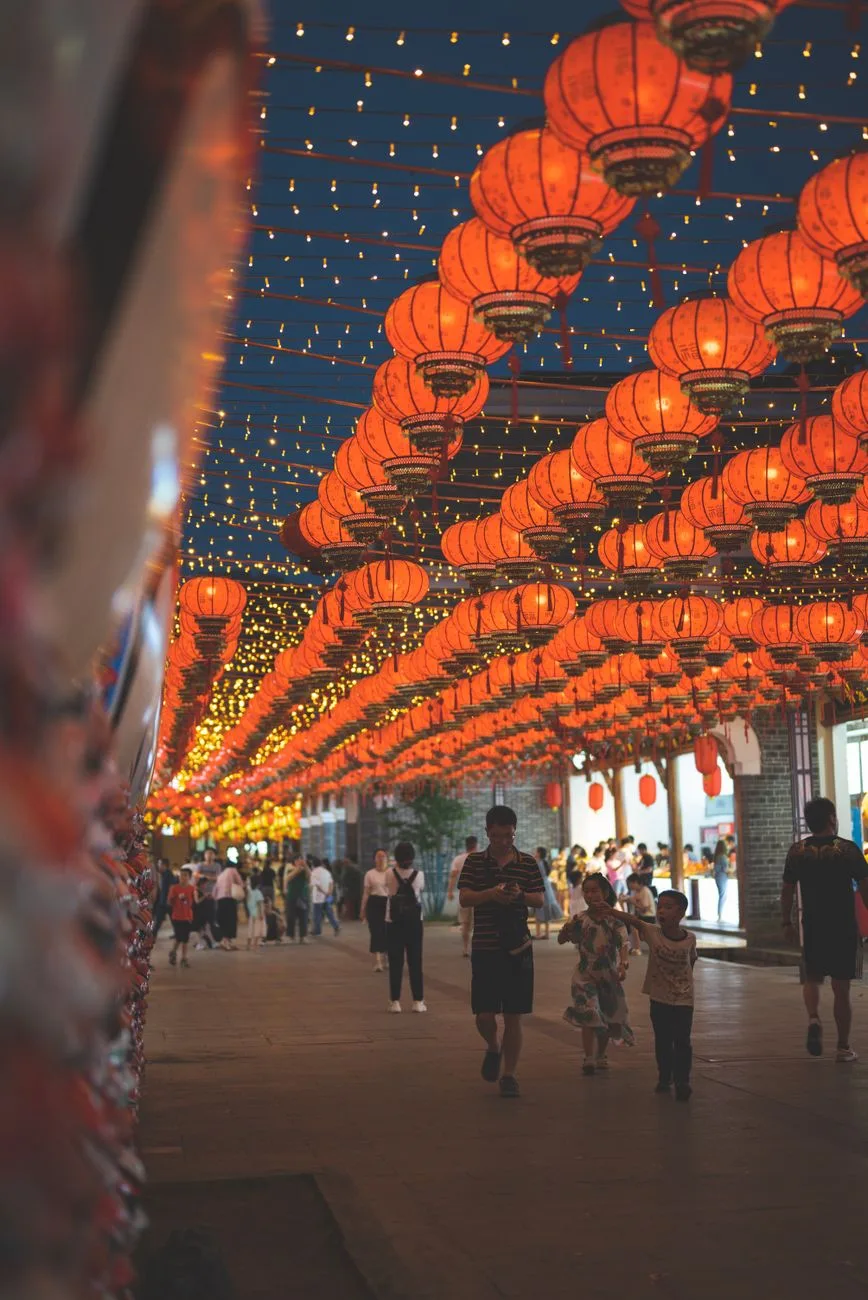
    Lanternas penduradas em uma rua de Pequim durante o primeiro mês lunar.
    Feiras em templos e exibições de lanternas ainda marcam as primeiras semanas do ano lunar. Cz Jen | Licença Pexels (https://www.pexels.com/license/)
    Os meses seguem a lua, mas o ano deve obedecer ao sol.

    Fontes e leituras adicionais

    1. Os Vinte e Quatro Termos Solares, conhecimento sobre o tempo e práticas na China, desenvolvidos através da observação do movimento anual do sol. — Patrimônio Cultural Imaterial da UNESCO.
    2. calendário chinês — Enciclopédia Britânica.
    3. Ano Novo Chinês — Enciclopédia Britânica.
    Veja no local.

    Siga esta entrada até a região a que ela pertence.

    Explorar pelo mapa

    Siga o fio

    Veja outras entradas que compartilham as mesmas tags.

    Navegue pela etiqueta
  • O Zodíaco Chinês

    Vida e Folclore

    O Zodíaco Chinês

    Doze animais, ciclo de sessenta anos

    Os doze animais representam anos, horas e personalidade em um ciclo repetitivo.

    Seção
    Vida e Folclore
    Região
    Pequim
    Era
    Ao longo das eras
    Etiquetas
    Alfândega

    O zodíaco chinês atribui um animal a cada ano em um ciclo de doze anos. Não se trata de um horóscopo independente, mas sim de uma camada do calendário lunissolar, onde doze ramos terrestres se combinam com dez troncos celestes para formar um ciclo completo de sessenta anos.

    Os Doze Animais

    A sequência é rato, boi, tigre, coelho, dragão, serpente, cavalo, cabra, macaco, galo, cão e porco, cada um emparelhado com um dos doze ramos terrestres: zi, chou, yin, mao, chen, si, wu, wei, shen, you, xu e hai. A cabra também é traduzida como ovelha ou carneiro. Um conto popular conhecido explica a ordem como resultado de uma corrida através de um rio: o rato monta no boi e salta à frente na margem, enquanto o gato, em algumas versões, perde a travessia completamente. A história é posterior ao sistema que explica.

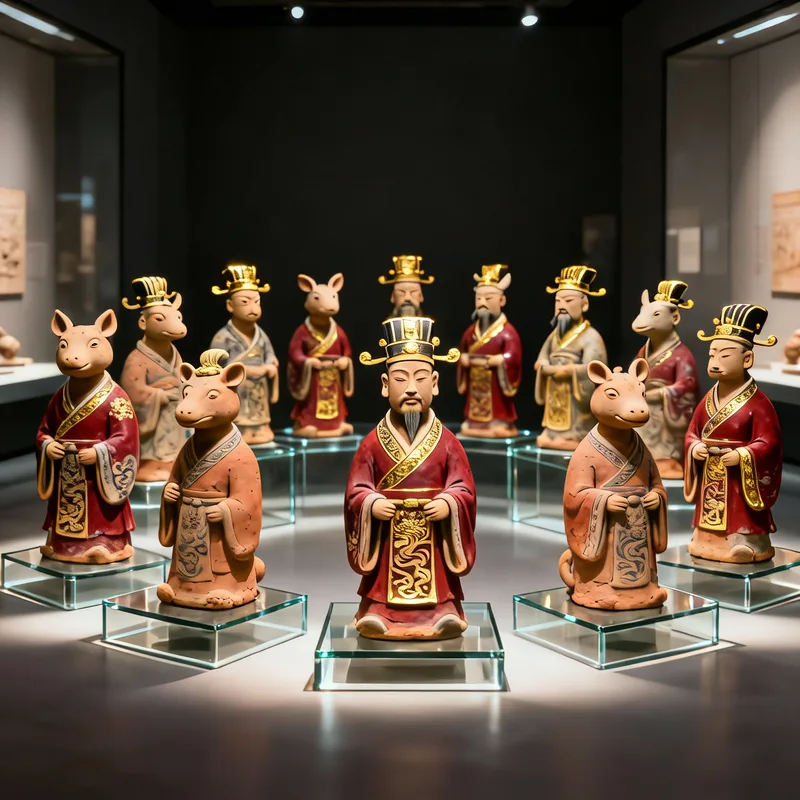
    Conjunto de doze figuras do zodíaco em barro da dinastia Tang, vestidas como oficiais.
    A ordem dos animais foi estabelecida pela dinastia Han Oriental e aparece em cerâmica tumular da dinastia Tang. Ilustração gerada por IA · SinoViz

    Dos galhos aos signos dos animais

    Os próprios ramos são antigos; os animais a eles ligados aparecem mais gradualmente. O Museu Metropolitano de Arte observa que os doze foram associados pela primeira vez ao calendário lunar na China por volta do século III a.C. e foram firmemente estabelecidos no século I d.C. Durante a dinastia Han Oriental (25–220 d.C.), a ordem convencional foi fixada, e textos como o Lunheng de Wang Chong listam os mesmos animais usados atualmente. O emparelhamento se espalhou pelo Leste e Sudeste Asiático, onde as tradições locais alteraram a composição.

    A arte tumular confirma a datação. Os túmulos da dinastia Tang (618–907) contêm conjuntos de doze animais de barro em trajes oficiais, colocados como oferendas para renovação e proteção. Os exemplos da dinastia Song são figuras menores de grés vidrado, representando funcionários civis ou praticantes taoístas, com o animal identificador segurado na mão ou usado no chapéu. O zodíaco nunca foi apenas uma novidade do Ano Novo; ele estruturava o tempo no túmulo, assim como entre os vivos.

    Troncos, Ramos e Destino

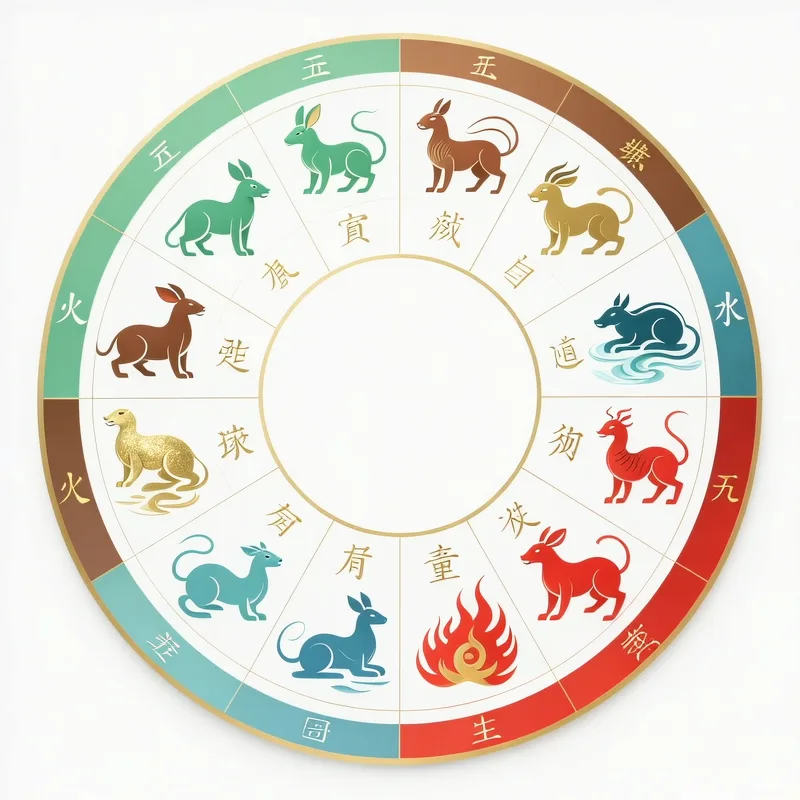
    Como os dez troncos e doze ramos avançam juntos, um ano é descrito por um par, como bingwu, o Cavalo de Fogo de 2026; o mesmo par reaparece apenas após sessenta anos. Os ramos também dividem o dia em doze turnos de duas horas, sendo a hora zi o período entre onze da noite e uma da manhã. Os quatro pilares do destino — ano, mês, dia e hora — são construídos a partir de quatro desses pares. Os praticantes de bazi os interpretavam para determinar o temperamento e a sorte, e as famílias antigamente os consultavam ao combinar casamentos.

    Diagrama circular dos doze animais do zodíaco chinês e dos cinco elementos.
    Combinação de animal e elemento: 2026 é bingwu, o Cavalo de Fogo. Ilustração gerada por IA · SinoViz

    Na vida diária

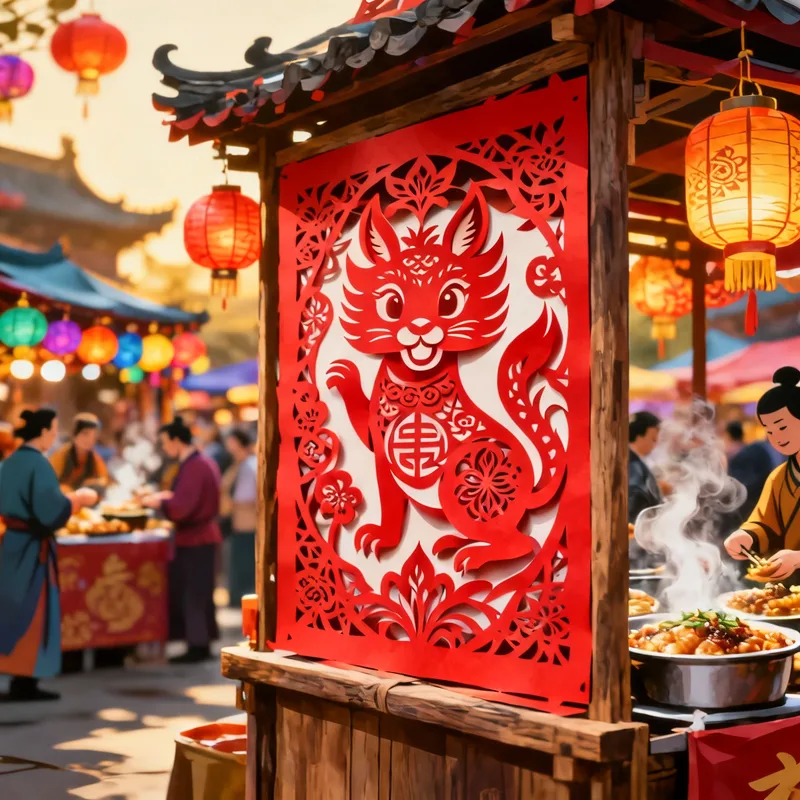
    Os signos do zodíaco funcionam mais como uma espécie de código compartilhado do que como uma crença rígida. O benming nian de uma pessoa, o ano em que seu animal retorna, é tratado com cautela; roupas e cordões vermelhos são precauções comuns, especialmente para crianças e idosos. Gravuras, recortes de papel e feiras de templos do Ano Novo exibem o animal do ano, e as saudações geralmente o mencionam. Afirmações sobre compatibilidade se baseiam no ciclo dos signos, com signos separados por seis casas sendo considerados incompatíveis.

    • 2026 é Bingwu, o Ano do Cavalo de Fogo.
    • Cada ramo regulamenta um período de duas horas; zi abrange o período das 23h às 1h.
    • Os quatro pilares do destino combinam ano, mês, dia e hora.
    • No Vietnã, o coelho é substituído por um gato.

    Variações regionais

    O ciclo acompanhou o assentamento e o comércio chineses. No Vietnã, o coelho se torna um gato e o boi, um búfalo; a cabra pode ser chamada de ovelha em outros lugares. Os animais do zodíaco aparecem em moedas, espelhos, lacas e cerâmicas por toda a região, e os calendários coreano e japonês adotaram os mesmos ramos com suas próprias listas de animais. Essas variações são importantes: elas mostram um sistema de calendário sendo traduzido, e não simplesmente copiado. A sequência chinesa permanece como ponto de referência para o Ano Novo Lunar celebrado em Pequim e nas comunidades da diáspora em todo o mundo.

    Recorte de papel vermelho representando o animal do zodíaco do ano em uma barraca de feira de templo.
    Cada Ano Novo lunar traz um novo animal para estampas, recortes de papel e cartões de felicitações. Ilustração gerada por IA · SinoViz
    O rato vence a corrida porque sabe a hora certa de pular — uma história inventada muito tempo depois de o ciclo já estar em uso.

    Fontes e leituras adicionais

    1. horóscopo chinês — Enciclopédia Britânica.
    2. Conjunto dos doze animais do zodíaco, dinastia Tang — O Museu Metropolitano de Arte.
    3. Comemorando o Ano do Cão — O Museu Metropolitano de Arte.

    Veja no local.

    Siga esta entrada até a região a que ela pertence.

    Explorar pelo mapa

    Siga o fio

    Veja outras entradas que compartilham as mesmas tags.

    Navegue pela etiqueta
  • Veneração aos Ancestrais

    Vida e Folclore

    Veneração aos Ancestrais

    Linhagem, Ritual e Memória

    Os ritos ancestrais ligam a família, o salão da linhagem e o cemitério da aldeia.

    Seção
    Vida e Folclore
    Região
    Fujian
    Era
    Ao longo das eras
    Etiquetas
    Alfândega

    A veneração aos ancestrais é a prática de honrar os parentes falecidos com oferendas, incenso e ritos prescritos. Em Fujian, tornou-se uma estrutura para a organização da linhagem, a propriedade de terras e a migração, ligando as aldeias aos ancestrais que muitas vezes viveram séculos antes.

    Um Dever para com os Mortos

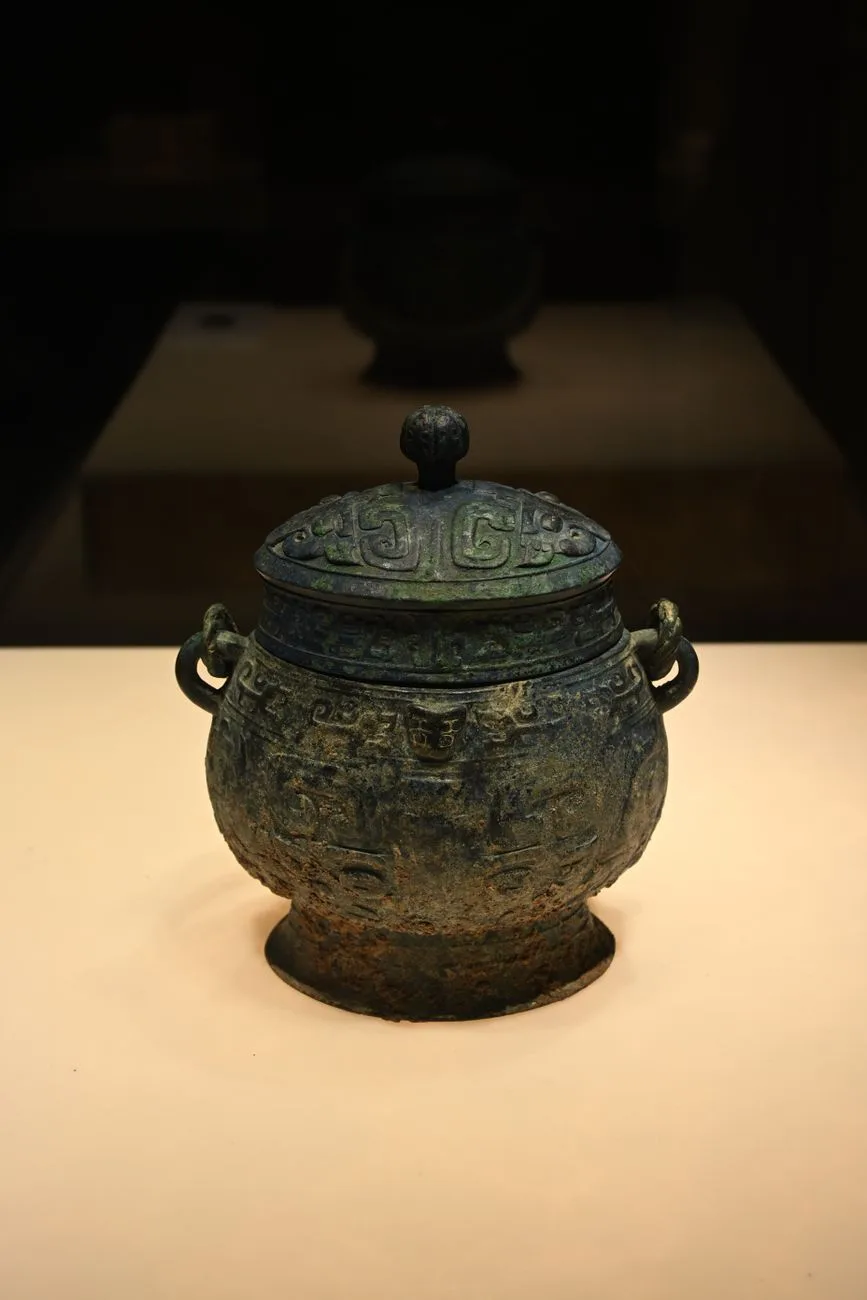
    Os ensinamentos confucionistas conferiram à prática sua linguagem moral. Os Analectos exortam os vivos a cuidarem com esmero dos ritos funerários e a seguirem os ancestrais distantes, descrevendo o sacrifício como se os espíritos estivessem presentes. O Livro dos Ritos e textos rituais relacionados estabelecem os graus de luto, as oferendas e a ordem correta dos mortos. Arqueólogos rastreiam cultos ancestrais até o Neolítico Final, e vasos de bronze da dinastia Shang foram fundidos com inscrições que nomeavam o ancestral para quem vinho ou grãos eram oferecidos. A veneração era tanto uma obrigação quanto uma demonstração de afeto.

    Vaso ritual de bronze da dinastia Shang com inscrição dedicando-o a um ancestral.
    Vasos de bronze identificavam o destinatário das oferendas, formalizando a relação por escrito. K ZHAO | Licença Pexels (https://www.pexels.com/license/)

    O altar doméstico

    Numa casa tradicional, um pequeno altar abriga placas ancestrais — placas de madeira com nomes e títulos inscritos — dispostas por geração. O incenso é aceso no primeiro e no décimo quinto dia do mês lunar e no aniversário de falecimento. As oferendas podem incluir chá, vinho, frutas, arroz e três tipos de carne, dispostos em ordem; os membros da família curvam-se ou fazem uma reverência em ordem de idade. A placa não é uma imagem da pessoa, mas um lugar onde o parentesco pode ser mencionado.

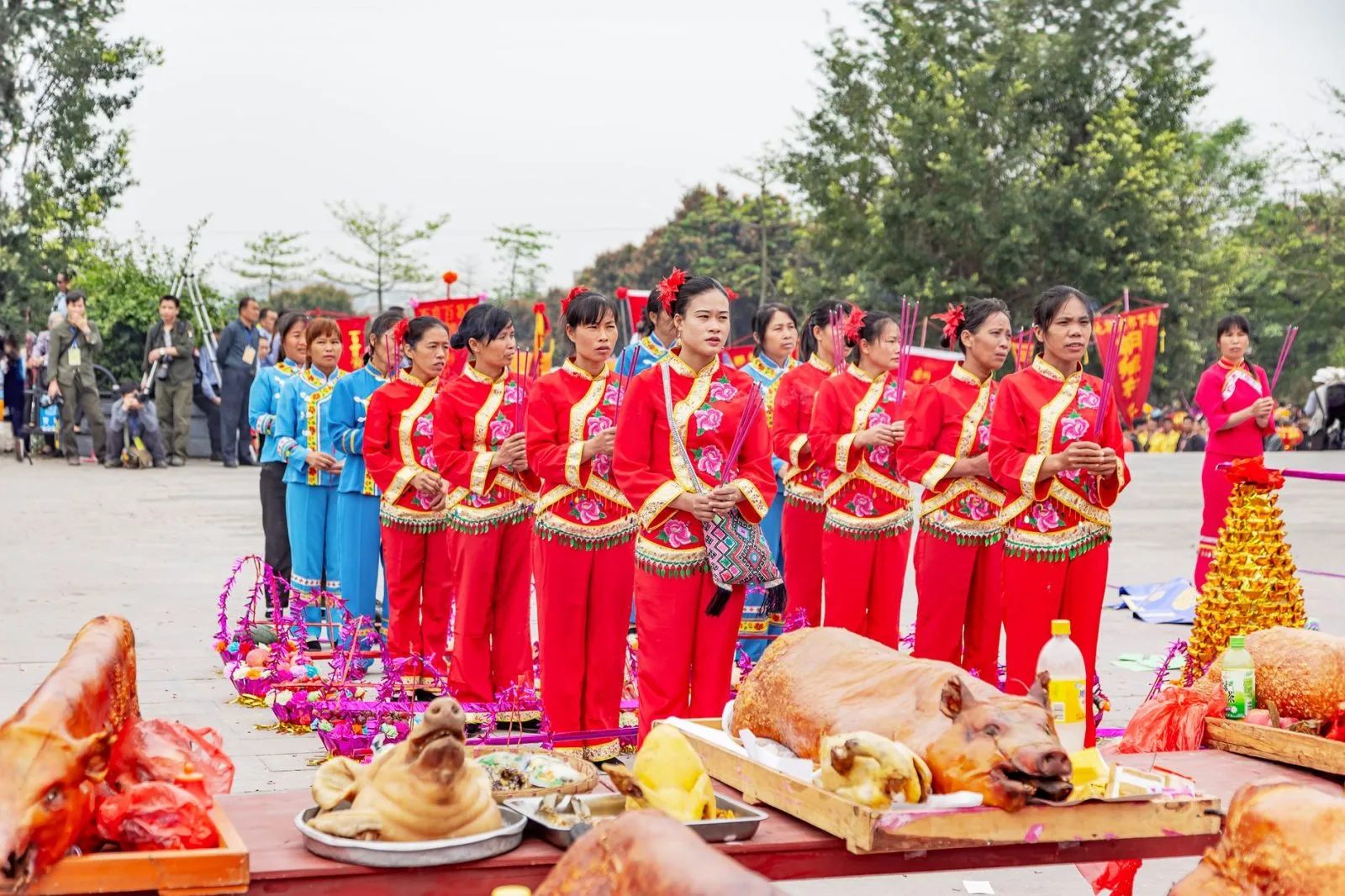
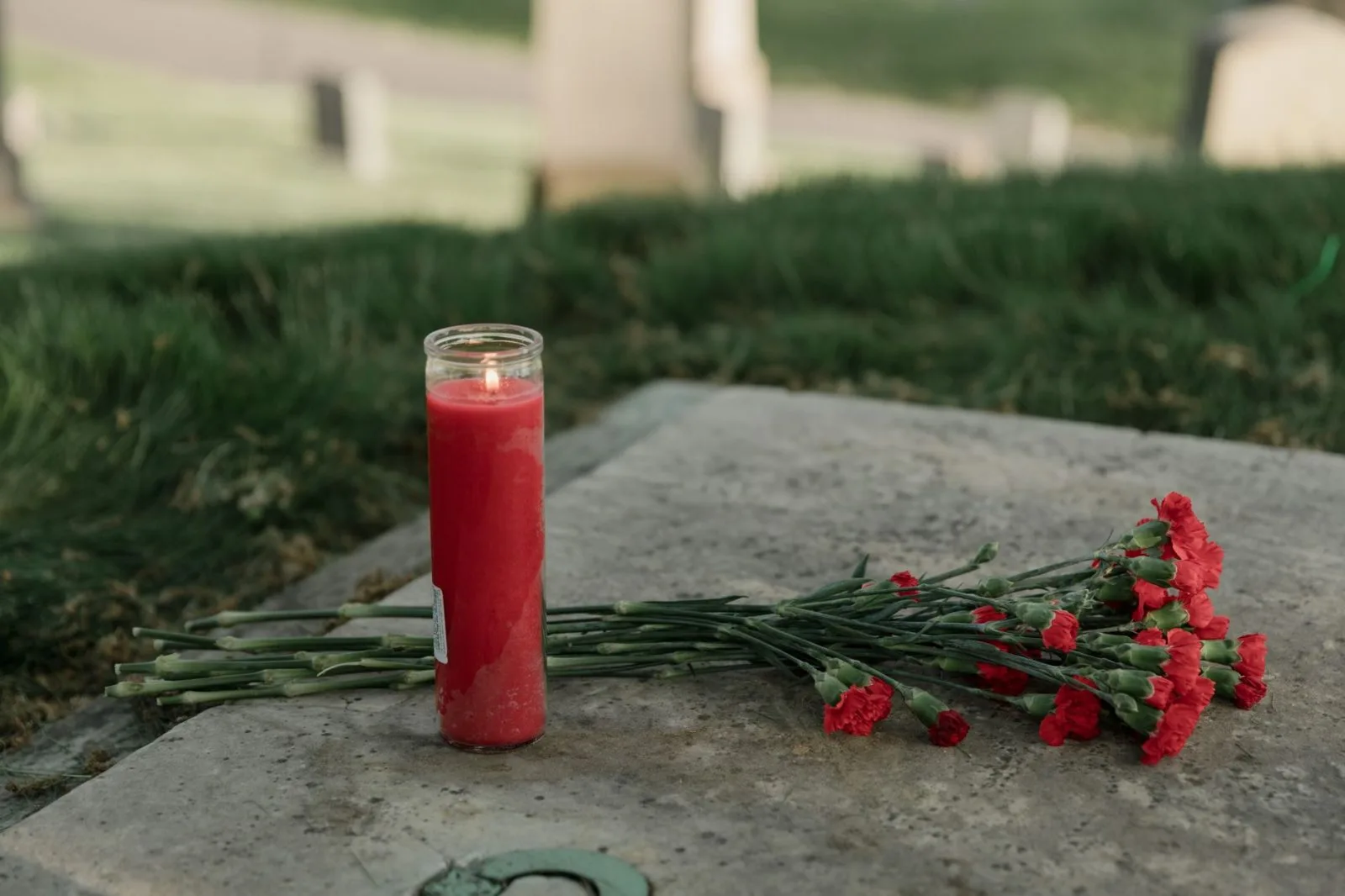
    O tempo ritual segue o calendário. Qingming, o termo solar da Pureza e Brilho no início de abril, é o grande dia da limpeza dos túmulos: as sepulturas são limpas de ervas daninhas, oferendas são deixadas e dinheiro de papel é queimado. O solstício de inverno traz outra rodada de oferendas em muitas casas de Fujian, frequentemente com tangyuan, bolinhos de arroz doce. Durante o sétimo mês lunar, o Festival dos Fantasmas estende a atenção além dos próprios parentes para os espíritos errantes, com banquetes comunitários e efígies de papel.

    Salões da Linhagem de Fujian

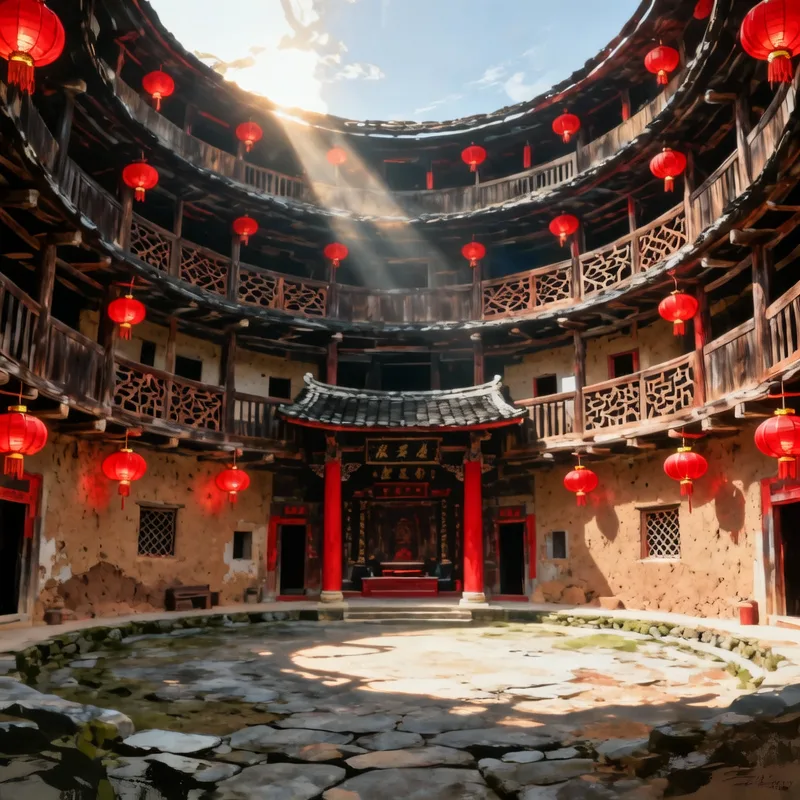
    Em nenhum lugar a escala social é mais clara do que em Fujian. A partir do século XVI, os salões genealógicos — citang — se espalharam para além da elite, chegando às aldeias do sudeste da China, e nas regiões de origem dos emigrantes passaram a dominar a paisagem construída. Um salão abriga as placas coletivas de um grupo de sobrenomes, preserva a genealogia e administra terras corporativas cuja renda financia reparos, sacrifícios e escolas. Dentro de alguns tulou Hakka, as grandes casas comunais de terra do sudoeste de Fujian, um salão ancestral ocupa um lugar dentro do anel defensivo.

    Pátio interno e salão ancestral de uma casa comunal tulou de barro de Fujian.
    Um salão de linhagem dentro de um tulou servia a todo um clã, não a uma única família. Ilustração gerada por IA · SinoViz

    Migração e Retorno

    A costa de Fujian enviou migrantes para o Sudeste Asiático a partir do final do período Qing, e os ritos ancestrais viajaram com eles. Os emigrantes juntaram-se a associações de sobrenomes e construíram salões em Singapura, Malásia e Indonésia; as remessas financiaram novos salões e restauraram túmulos em suas terras natais. Os estudiosos descrevem essas ligações como redes transnacionais de linhagem: o mesmo vocabulário ritual conectava o altar da aldeia, a associação de clã no exterior e o cemitério. Após a década de 1980, muitos descendentes retornaram para reconstruir os salões, transformando a genealogia em uma ponte entre gerações e fronteiras.

    • Qingming: limpeza de túmulos e oferendas depositadas no início de abril.
    • Sétimo mês lunar: Ritos do Festival dos Fantasmas para espíritos sem nome.
    • Citang: um salão genealógico que abriga placas, registros genealógicos e corporativos.
    • Fujian Tulou: Patrimônio Mundial da UNESCO desde 2008

    Mudanças e Continuidades

    O século XX perturbou o lado institucional. A reforma agrária e a coletivização despojaram as propriedades familiares de sua renda, e durante a Revolução Cultural muitos salões foram fechados ou danificados. Desde a década de 1980, iniciativas locais restauraram edifícios e reviveram ritos, às vezes como turismo patrimonial e às vezes como dever familiar. A prática persiste de forma adaptada: incenso em uma prateleira doméstica, um túmulo limpo antes do Qingming, um nome registrado em uma genealogia reconstruída. O que sobrevive é a convicção de que os mortos continuam fazendo parte da ordem social.

    Membros da família queimando oferendas de papel em um túmulo durante o Qingming, no sul da China.
    A limpeza dos túmulos e as oferendas continuam sendo a parte mais visível dos ritos de Qingming. Man Fong Wong | Licença Pexels (https://www.pexels.com/license/)
    Uma lápide não é um retrato dos mortos. É um endereço através do qual os vivos ainda podem falar com eles.

    Fontes e leituras adicionais

    1. China: Crenças religiosas e organização social — Enciclopédia Britânica.
    2. Tulou de Fujian — Centro do Patrimônio Mundial da UNESCO.
    3. Diásporas Chinesas: Padrões do Início da Era Moderna, 1500–1740 — Cambridge University Press.

    Veja no local.

    Siga esta entrada até a região a que ela pertence.

    Explorar pelo mapa

    Siga o fio

    Veja outras entradas que compartilham as mesmas tags.

    Navegue pela etiqueta
  • Porcelana

    Vida e Folclore

    Porcelana

    Clay, fire, and the white of Dehua

    Fujian’s kilns turned local clay into porcelain that travelled across the sea and changed how the world pictured China.

    Seção
    Vida e Folclore
    Região
    Fujian
    Era
    Ao longo das eras
    Etiquetas
    Customs, History, Scenic Sites

    Porcelain is defined by its body and its firing: a pale, fine clay heated to temperatures that vitrify the material and make it ring when struck. Fujian’s Dehua kilns made a version so white it seemed translucent, known in Europe as blanc de Chine.

    What Makes Porcelain

    Porcelain differs from ordinary pottery in both material and firing. Potters use kaolin, a white clay, mixed with feldspar and quartz, then fire the shaped vessel at roughly 1,200 to 1,400 degrees Celsius. At that temperature the body vitrifies: it becomes dense, non-porous, and slightly translucent at the edges. A glassy glaze is usually applied before firing, bonding to the body rather than sitting on it as a separate layer. Chinese potters had reached this threshold by the Tang and Song periods, and Jingdezhen in Jiangxi became the great production centre. The English word china stuck to the ware because the country was the source of the finest examples. A light tap on a good cup gives a clear ring, a quick test that still works in a shop.

    A porcelain bowl with a pale glaze photographed against light
    True porcelain is fired hot enough to vitrify the body, giving it a hard, resonant wall. lee c | Pexels License (https://www.pexels.com/license/)

    Dehua White

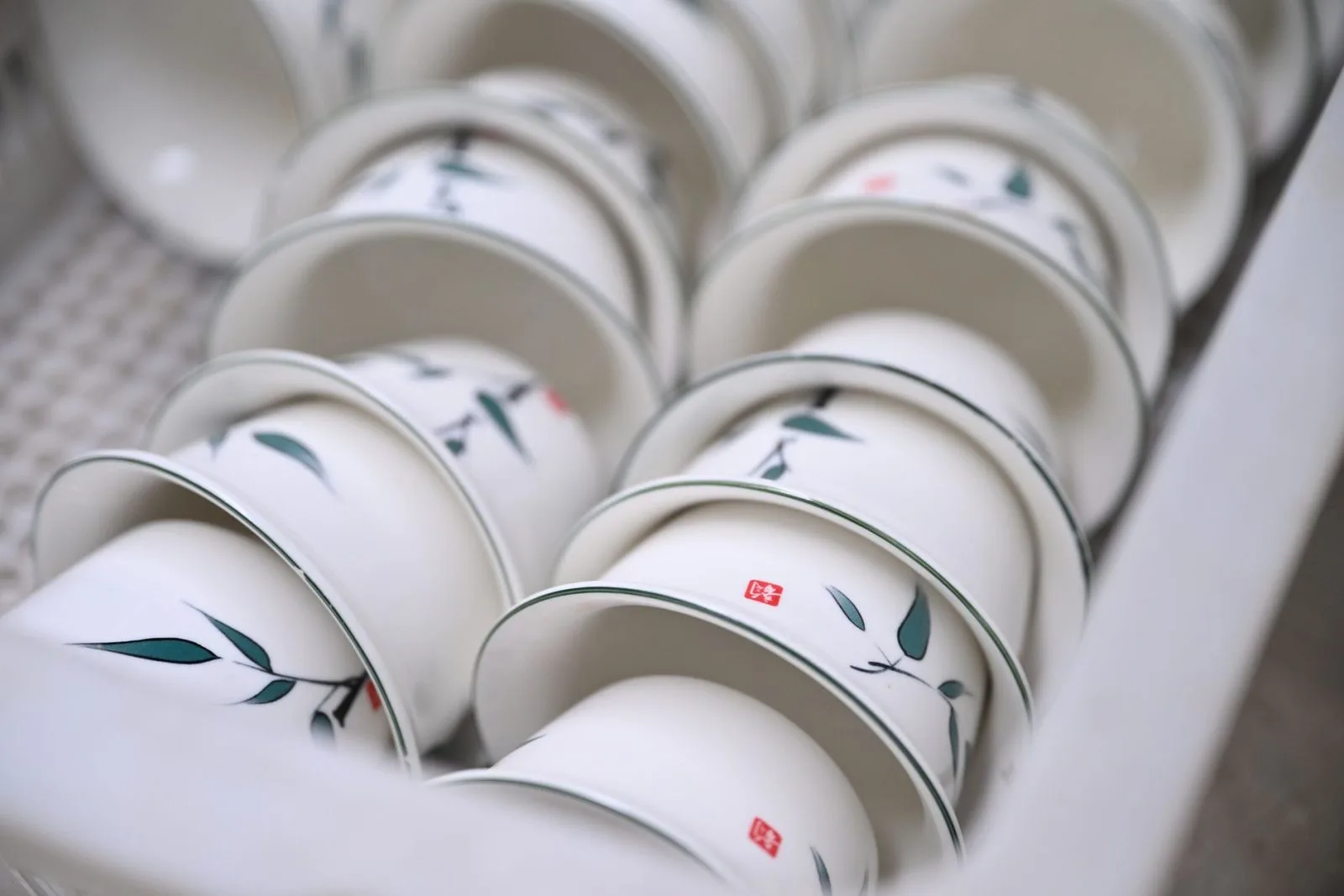
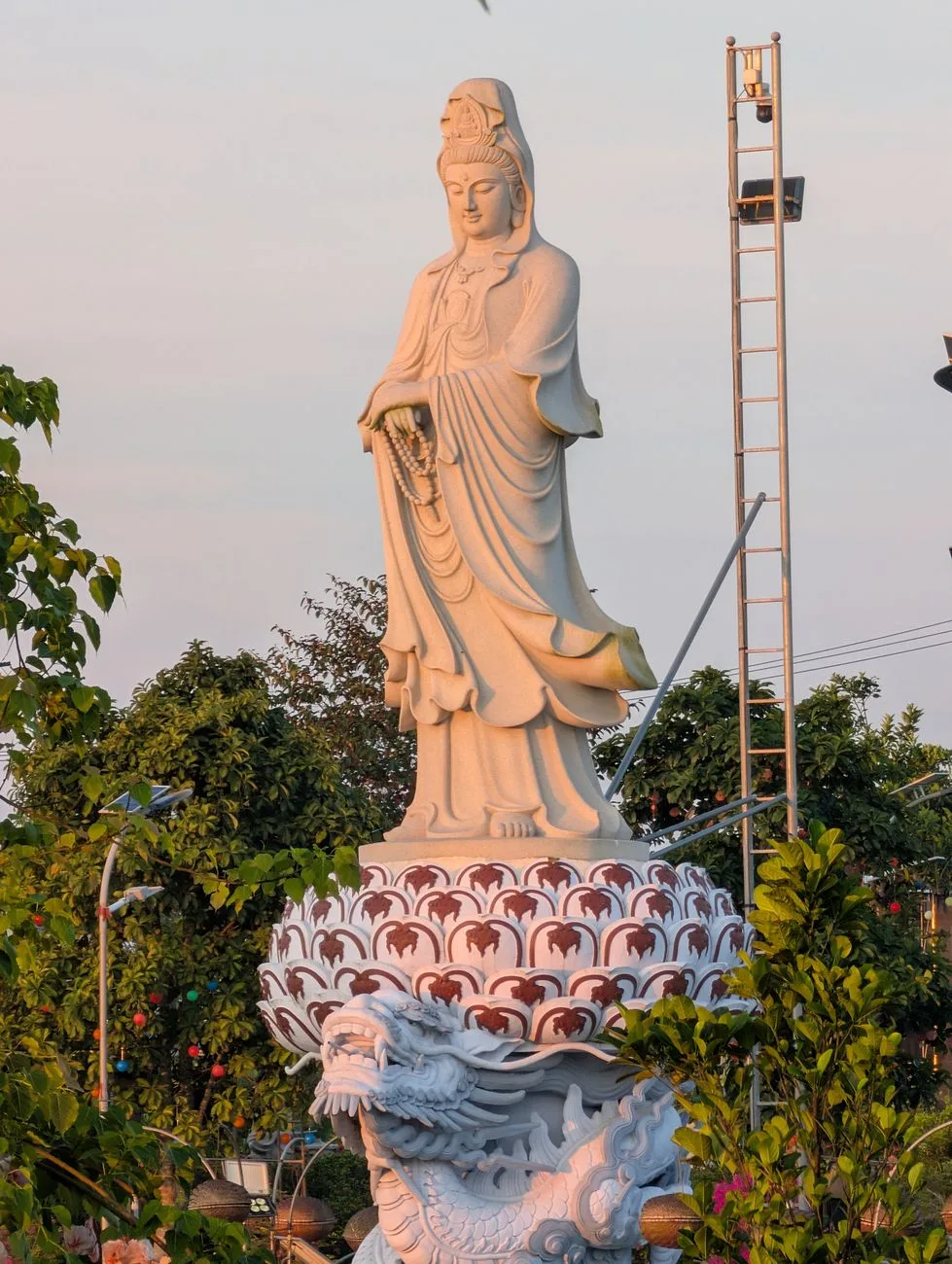
    Dehua, a county in Fujian’s Quanzhou prefecture, developed a white porcelain with a warm, creamy tone. Its clay is low in iron, which lets the glaze fire almost colourless, and its potters mastered figures as well as vessels. From the Ming dynasty onward, Dehua workshops produced small statues of Guanyin, the bodhisattva of compassion, with soft modelling and a smooth, almost waxy surface. European traders called the ware blanc de Chine, and by the seventeenth century it was collected in royal cabinets and copied by potters in Meissen and elsewhere. Tea wares also left the kilns: small cups, gaiwan lids and bowls, and white vessels that showed the colour of tea clearly. Local museums trace the kiln sequence from Song-period celadons through the white wares that made Dehua famous.

    A milky white porcelain figurine of Guanyin from Dehua
    Dehua’s porcelain figures of Guanyin became known in Europe as blanc de Chine. Quý Hoàng | Pexels License (https://www.pexels.com/license/)

    A Port for Porcelain

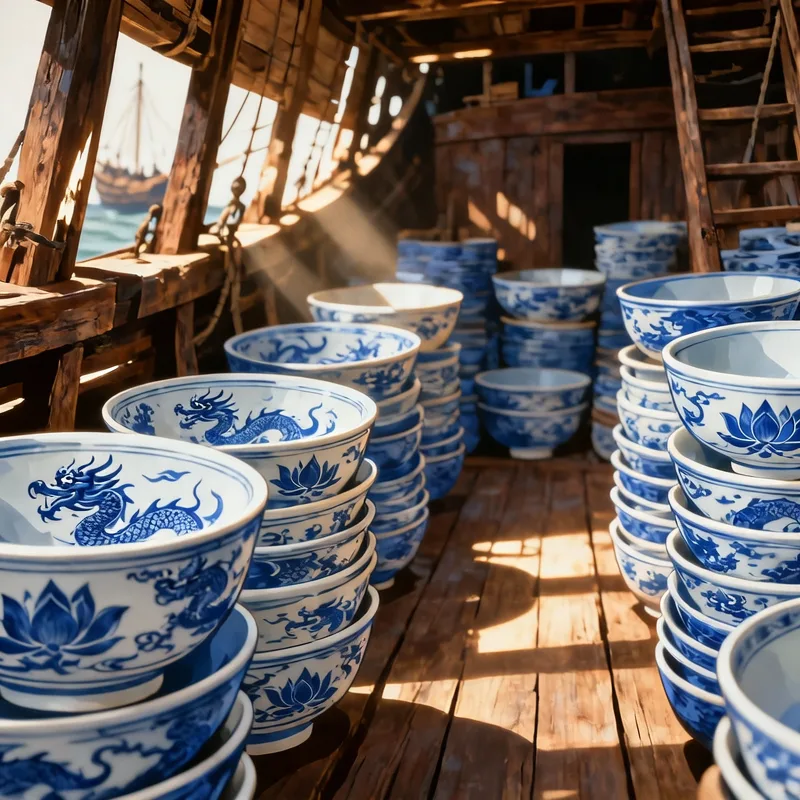
    Porcelain shaped trade as much as taste. Fujian’s coast faced the South China Sea, and Quanzhou became one of the busiest ports of the Song and Yuan dynasties, a place where merchants, monks, and ship crews exchanged goods and techniques. Archaeologists have recovered Chinese ceramics from ports and shipwrecks across Southeast Asia, the Indian Ocean, and East Africa; the fragments are dated by glaze and shape, making them a record of demand as well as production. UNESCO listed Quanzhou in 2021 as an emporium of the world in Song-Yuan China, with surviving mosques and temples. The export ware was not always the finest court piece. Sturdy bowls and jars packed in straw travelled in bulk, reaching households that never saw the kiln but knew the clay by its colour.

    Blue-and-white porcelain packed as cargo in a ship’s hold
    Quanzhou was a major Song and Yuan port from which Fujian ceramics were shipped abroad. Ilustração gerada por IA · SinoViz

    Using and Collecting

    Porcelain entered daily ritual as well as trade. A gaiwan, a bowl with a lid and saucer, is used for brewing tea in northern China; the lid controls the leaves and the saucer protects the fingers. White Dehua cups make the colour of a tea liquor easy to judge. Collectors look for a clean foot ring, an even glaze, and a mark painted on the base, though many imitations copy famous reign marks. Visit a kiln museum in Dehua or a ceramic gallery in Quanzhou to see the sequence from raw clay to finished piece. Handling a cup with a saucer and a steady hand is still the simplest way to understand why this material travelled so far.

    A clear ring and a translucent edge tell you what the fire has done.

    Fontes e leituras adicionais

    1. Chinese Porcelain — O Museu Metropolitano de Arte.
    2. Quanzhou: Emporium of the World in Song-Yuan China — Centro do Patrimônio Mundial da UNESCO.
    3. Blanc de Chine — Enciclopédia Britânica.
    Veja no local.

    Siga esta entrada até a região a que ela pertence.

    Explorar pelo mapa

    Siga o fio

    Veja outras entradas que compartilham as mesmas tags.

    Navegue pela etiqueta
  • Calligraphy

    Vida e Folclore

    Calligraphy

    The brush as a record of the hand

    Chinese calligraphy turns writing into an art of pressure, rhythm, and restraint.

    Seção
    Vida e Folclore
    Região
    Shaanxi
    Era
    Ao longo das eras
    Etiquetas
    Customs, History

    A line of Chinese calligraphy is made once: the brush touches paper, and the mark cannot be corrected. That irreversibility is part of its appeal. In Xi’an, the city’s stone steles preserve the work of centuries of calligraphers in a form anyone can still read.

    The Four Treasures

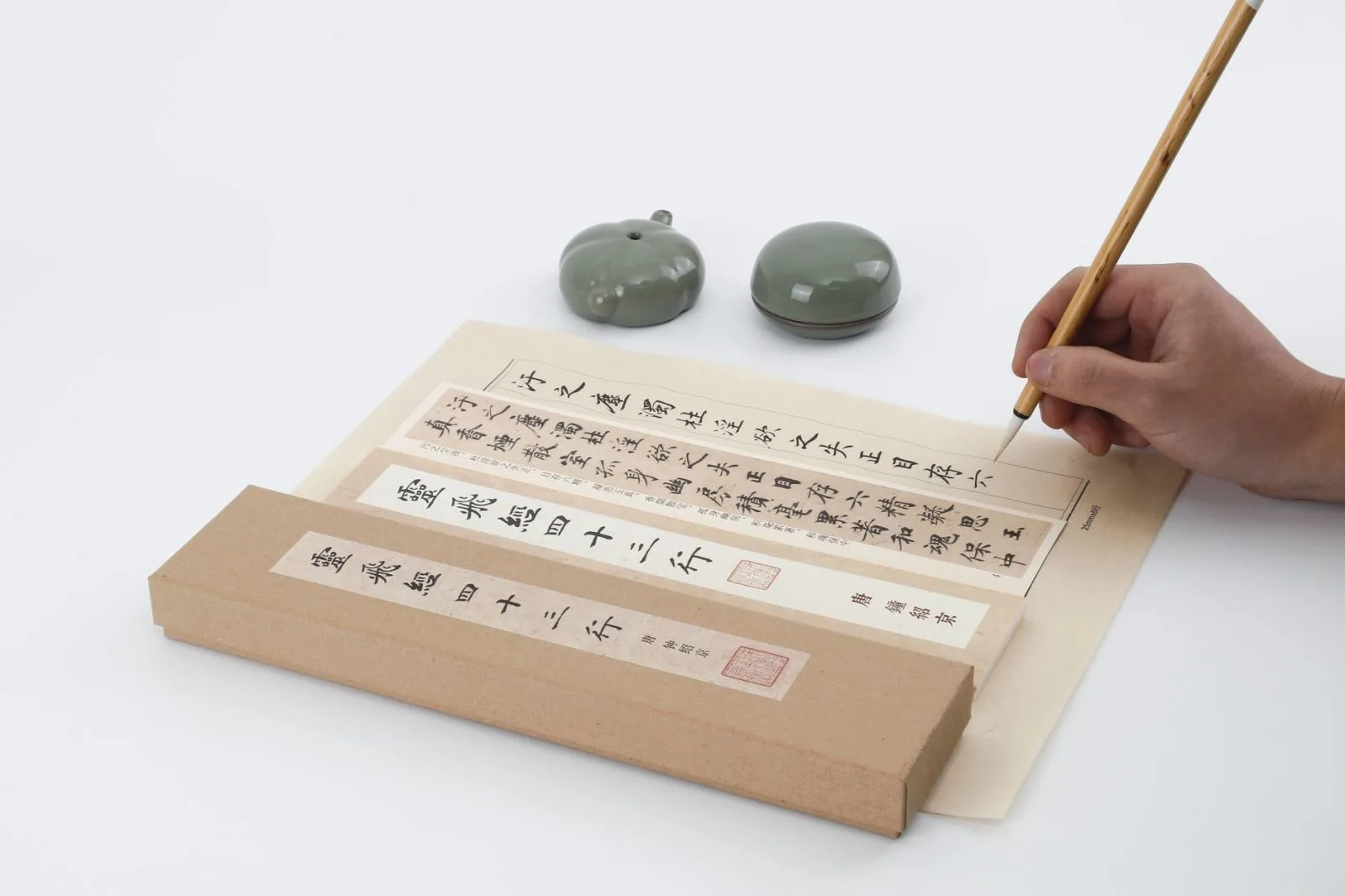
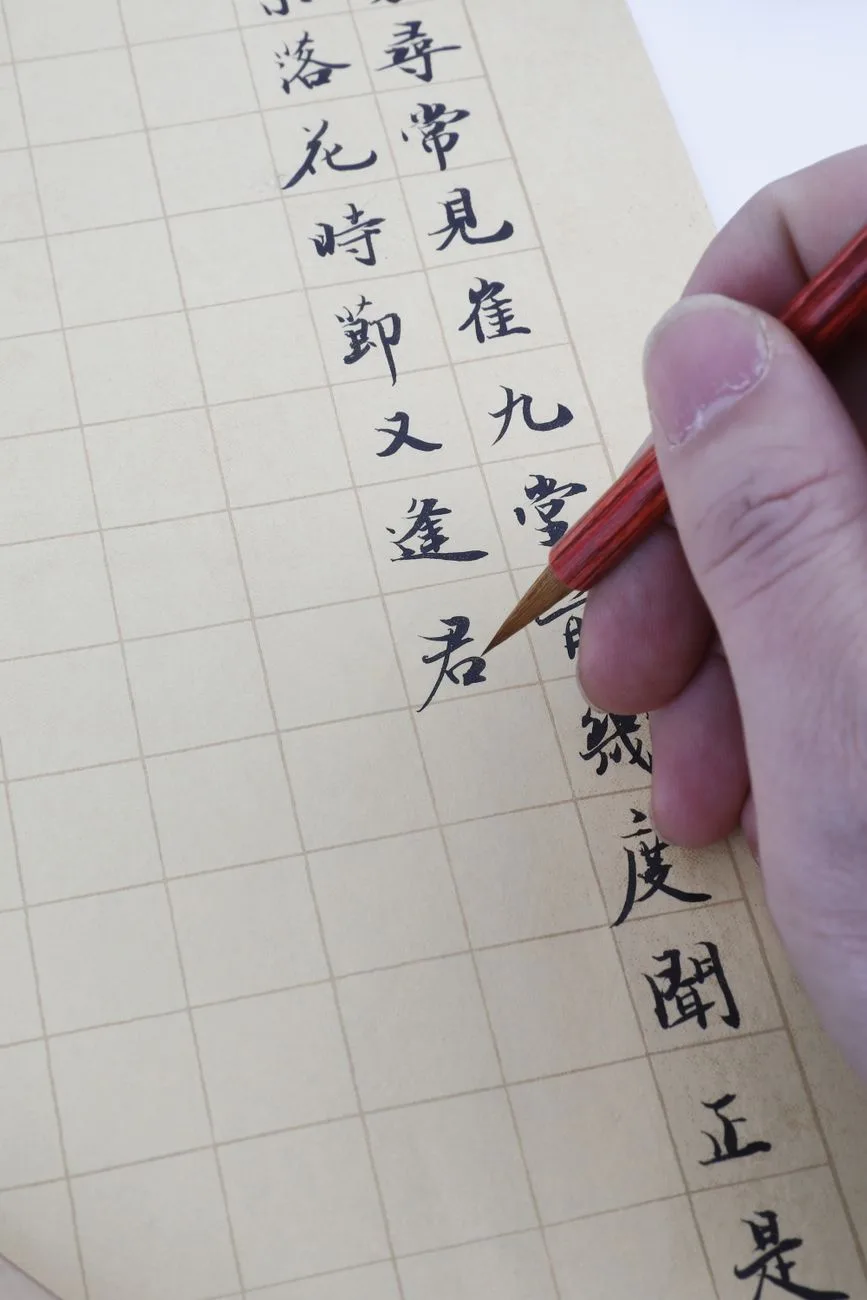
    The tools are known as the Four Treasures of the Study: brush, ink, paper, and inkstone. A brush of animal hair is held upright between thumb and fingers, and pressure makes the stroke swell and thin. Ink comes as a solid stick ground with water on a stone; the density of the mixture changes the character of the line. Paper is absorbent, so hesitation shows as a blot. Practice begins with the basic strokes, then with copying a model character hundreds of times until the hand remembers its proportions. Students still learn by tracing the regular script of Tang dynasty masters such as Yan Zhenqing and Ouyang Xun. The aim is not decorative flourish but control: a steady wrist, an even rhythm, and a line that holds its centre.

    Calligrapher’s brush, ink stick, paper, and inkstone laid on a desk
    Brush, ink, paper, and inkstone are the traditional Four Treasures of the Study. Feng Zou | Pexels License (https://www.pexels.com/license/)

    Scripts and Masters

    Chinese writing moved through several scripts, and calligraphers kept them all alive as styles. Seal script, with even, rounded lines, comes from the inscriptions on bronze and stone of the Zhou and Qin periods. Clerical script, formalised in the Han dynasty, flattened characters with a distinctive flared stroke. Regular script, settled by the Tang, is the model still taught in schools; each part of a character sits in a clear frame. Running script links strokes without losing legibility, while cursive script reduces them to rapid, connected gestures. Wang Xizhi’s Lantingji Xu, written in 353, is the famous example of running script; the original is lost, but copies carry its reputation. Later Song and Yuan artists, including Su Shi and Zhao Mengfu, made personal expression as important as correct form.

    Close view of flowing cursive calligraphy on a hanging scroll
    Cursive script compresses characters into gestures that reward slow reading. Feng Zou | Pexels License (https://www.pexels.com/license/)

    Stone Records in Xi’an

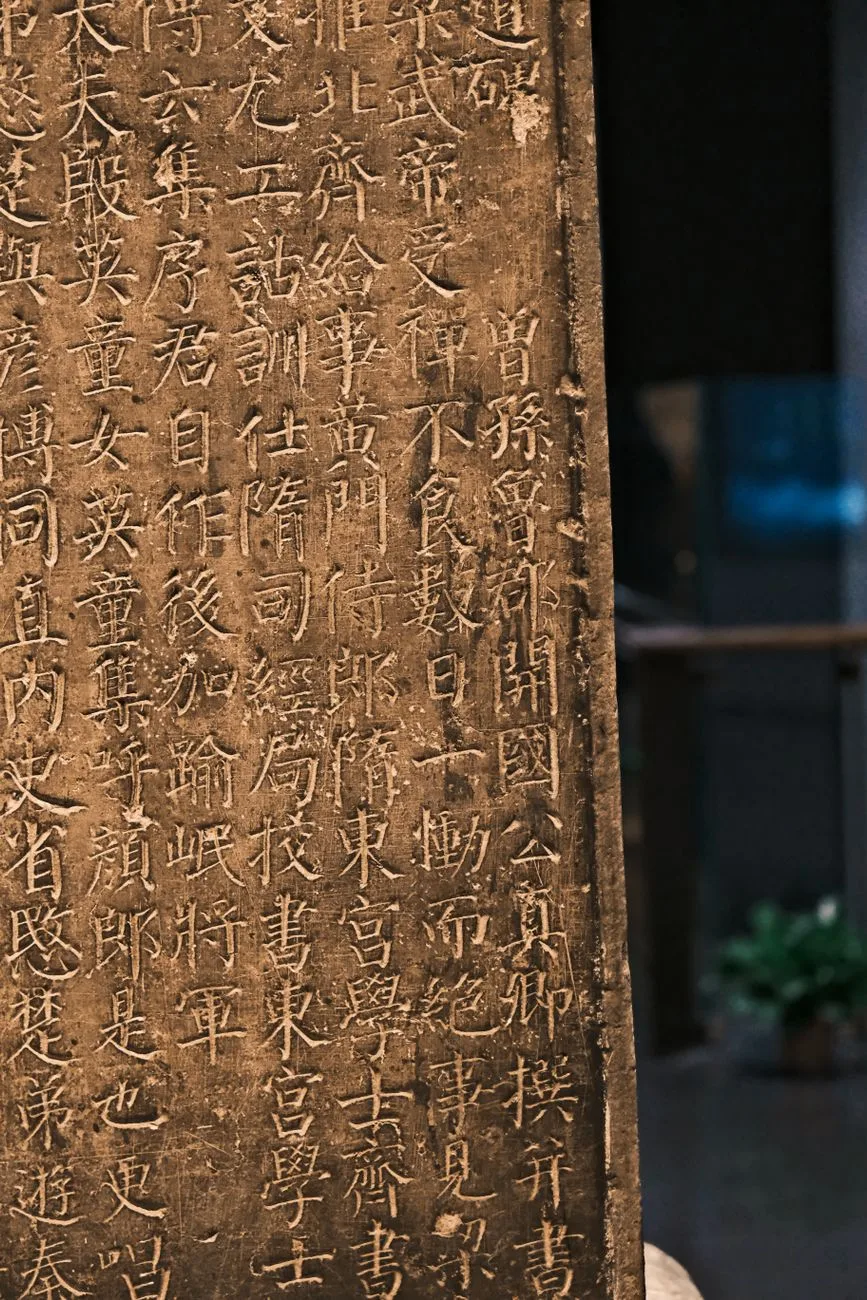
    Xi’an, the former Chang’an, preserves calligraphy on stone at the Beilin Museum, the Forest of Stone Steles. The collection began in 1087, when the Confucian classics were carved onto more than a hundred steles and installed beside the city’s Confucius Temple. Centuries of additions followed: tombstones, imperial edicts, Buddhist texts, and poems cut in several scripts. Rubbing a stele with damp paper and ink was the traditional way to study and circulate a model, and museums still demonstrate the technique. One slab records a Tang emperor’s visit to a Nestorian Christian church; another carries a Song dynasty city diagram. Walking the covered galleries, you can compare the same character written in seal, clerical, and regular forms across a thousand years.

    Rows of carved stone steles at the Beilin Museum in Xi’an
    The Beilin Museum holds thousands of steles, including Confucian classics cut into stone. Lily Lili | Pexels License (https://www.pexels.com/license/)

    Living Practice

    Calligraphy remains a daily practice rather than a museum relic. Around Spring Festival, shops sell red paper couplets, and a single character for good fortune is pasted on doors, sometimes upside down to suggest that fortune has arrived. Temple names, shop signs, and station plaques are often lettered by accomplished hands. Schoolchildren practise copying characters in grid books, and older residents gather in parks to write with large water brushes on the pavement, where the characters dry in minutes. Workshops in Xi’an let visitors try a brush and learn how a stroke begins with a pause and ends with a lift. You need not read every character to see the differences: one script sits square and calm, the next leans and races.

    A stroke begins with a pause and ends with a lift; the paper keeps the record.

    Fontes e leituras adicionais

    1. Chinese calligraphy — Enciclopédia Britânica.
    2. Chinese Calligraphy — O Museu Metropolitano de Arte.
    3. Beilin Museum, Xi’an — China Highlights.

    Veja no local.

    Siga esta entrada até a região a que ela pertence.

    Explorar pelo mapa

    Siga o fio

    Veja outras entradas que compartilham as mesmas tags.

    Navegue pela etiqueta
  • Qingming

    Vida e Folclore

    Qingming

    Sweeping tombs, welcoming spring

    Qingming pairs the remembrance of ancestors with the first serious outings of spring.

    Seção
    Vida e Folclore
    Região
    Zhejiang
    Era
    Ao longo das eras
    Etiquetas
    Customs, Geography

    Qingming arrives around 4 or 5 April, when the sun reaches fifteen degrees of the spring equinox on the traditional solar-term calendar. Its two halves belong together: cleaning a family grave, then walking out into the greening countryside.

    A Solar Term and a Day of Remembrance

    Qingming means clear and bright, a name drawn from the twenty-four solar terms, the calendar that divides the year by the sun’s position. The term falls around 4 or 5 April, when temperatures rise and rain becomes frequent in the lower Yangtze. Families visit ancestral graves to sweep away leaves and weeds, repaint inscriptions, and lay out food, tea, and paper money. Offerings are followed by bows or a few words addressed to the dead. Paper money may be burned in a designated container, depending on local rules. The act is not a celebration of death but a maintenance of family continuity: the dead remain part of the household’s obligations. In Zhejiang, hillside graves make the visit a walk as much as a ritual.

    A family tending a grave with flowers on a hillside in spring
    Tomb sweeping means cleaning the grave, making offerings, and bowing before ancestors. RDNE Stock project | Pexels License (https://www.pexels.com/license/)

    The Cold Food Connection

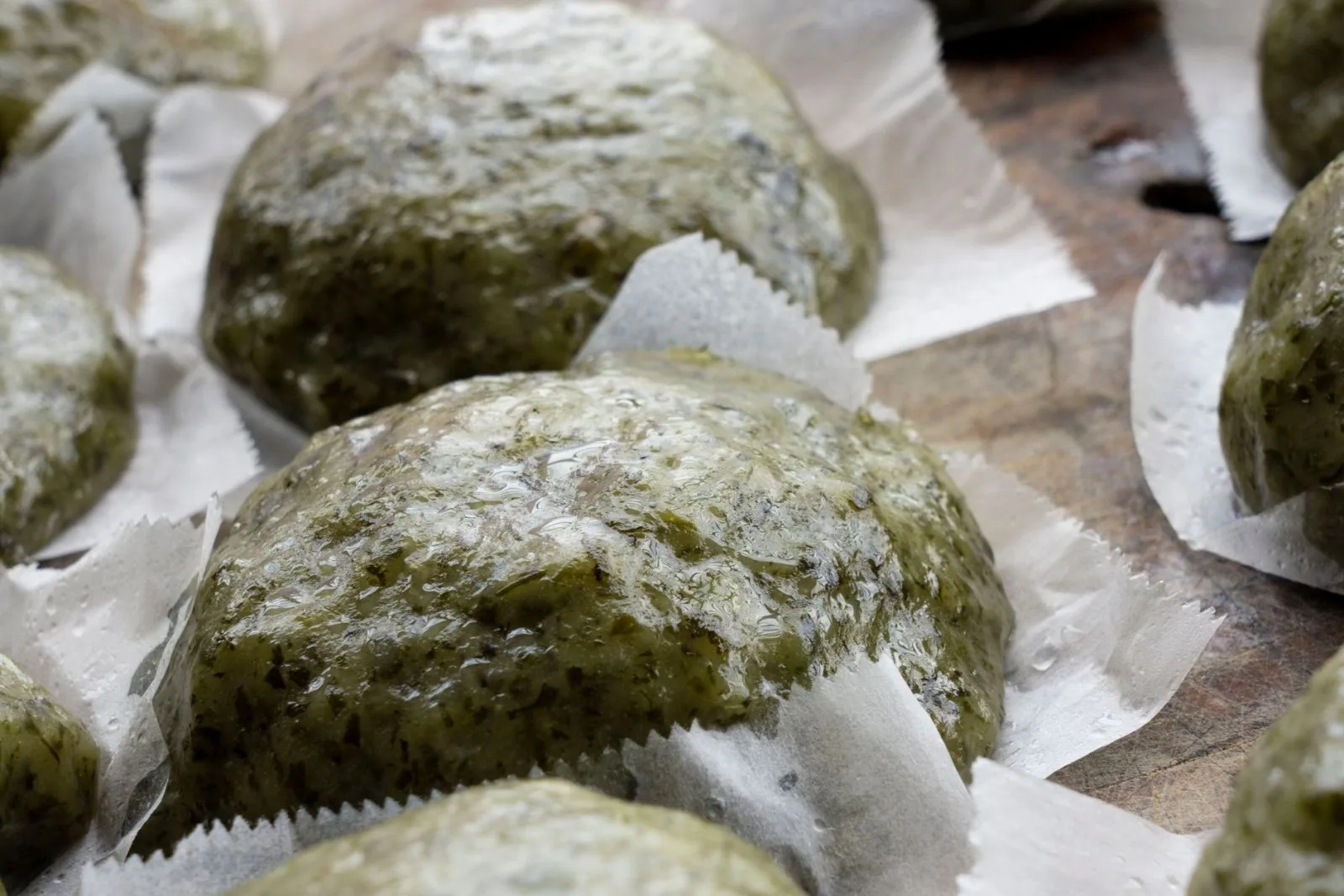
    Earlier custom linked this season with the Cold Food Festival, when fires were forbidden and families ate food prepared in advance. One traditional explanation connects the practice to Jie Zitui, a loyal follower of a Spring and Autumn duke who died in a forest fire; later historians treat the story as one among several local traditions rather than a single origin. In practice, the cold-food element has faded, but special foods remain. In Zhejiang and neighbouring Jiangnan, people eat qingtuan, soft green dumplings made with glutinous rice and mugwort juice, often filled with sweet red bean paste. Their colour comes from the first spring growth, and they are sold in markets for only a short season. Eating one links the memory of the dead to the first green.

    Qingming dumplings and cold food arranged on a table
    Qingming foods in Zhejiang include qingtuan, green rice cakes flavoured with mugwort. Jimmy Liao | Pexels License (https://www.pexels.com/license/)

    Spring Outings in Zhejiang

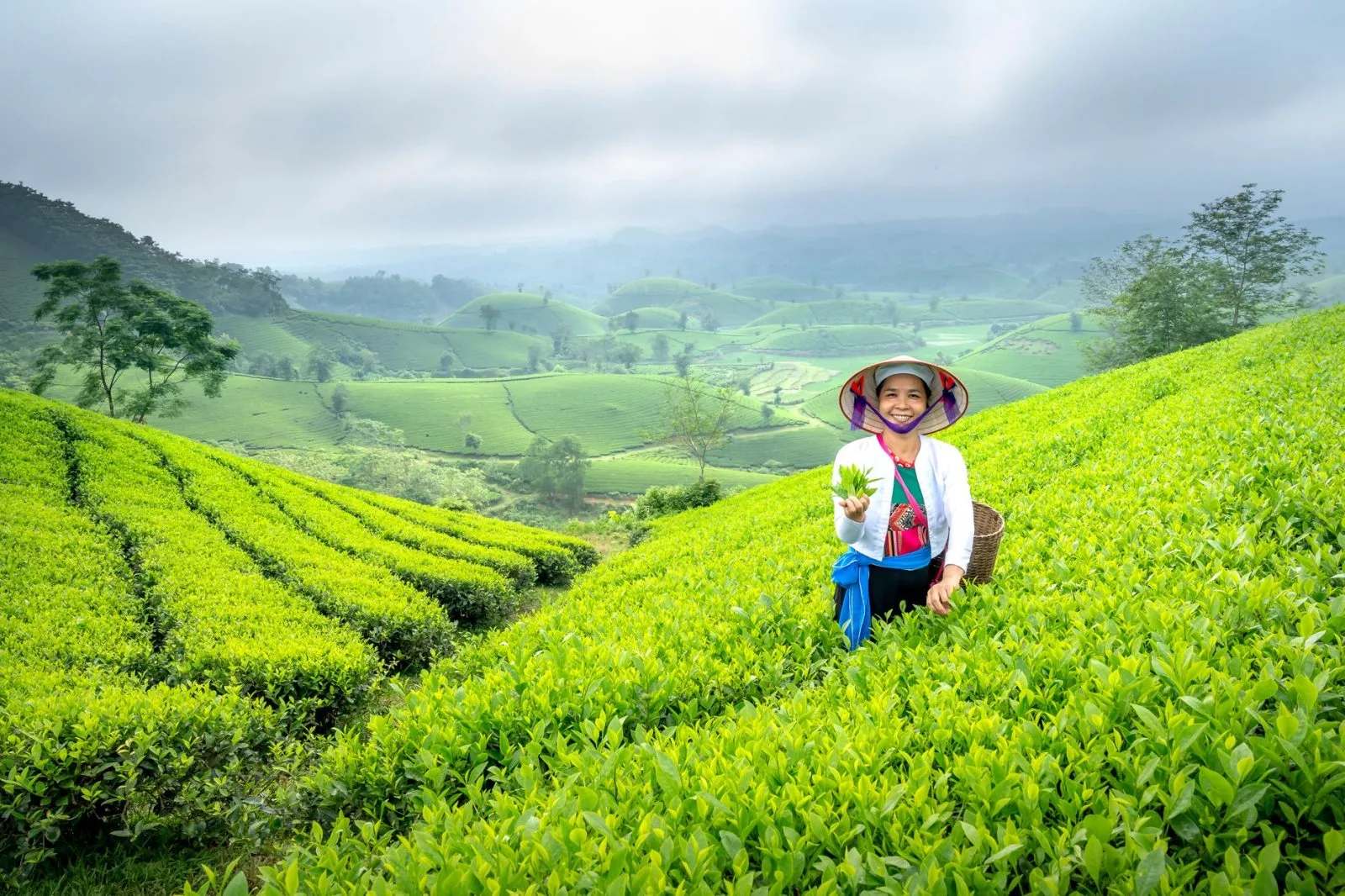
    The second half of Qingming is an outing, known as taqing, when families walk in parks, visit temples, or climb hills. Willow branches were once tucked into hair or hung at doors. In Zhejiang, the festival coincides with the first tea harvest around Hangzhou. Longjing, the tea from the hills near West Lake, is at its most valued when picked before Qingming; the tender buds of pre-Qingming pickings command higher prices. Visitors can see pickers between rows, and lakeside tea houses serve the new leaves. Qingming became a public holiday in 2008, giving the outing a practical boost. Combined with tomb sweeping, the day makes an unusual pair: a visit to the ancestors in the morning, a walk among new leaves in the afternoon.

    Tea pickers gathering early spring leaves in Zhejiang hills
    Pre-Qingming tea from Zhejiang’s hills is prized for its tender leaves. Quang Nguyen Vinh | Pexels License (https://www.pexels.com/license/)

    Poetry and Practice Today

    Qingming has a fixed place in Chinese literature. The Tang poet Du Mu wrote of drizzling rain on the Mourning Day and a traveller asking where wine could be bought, a poem that schoolchildren still memorise. The lines capture the day’s two moods: rain and sorrow, and the impulse to go out despite them. For a visitor, the details matter. Cemeteries can be crowded, so go early and keep to marked paths. Bring water and wear shoes suitable for muddy slopes. In Hangzhou, traffic around West Lake builds by mid-morning, and the metro is simpler than a taxi. Tea villages welcome visitors, but a field is a working crop, not a garden; wait for an invitation before touching the leaves. Respect anyone burning offerings, and never photograph a grave close-up.

    In the morning the family tends the grave; in the afternoon it walks among new leaves.

    Fontes e leituras adicionais

    1. Os Vinte e Quatro Termos Solares — Patrimônio Cultural Imaterial da UNESCO.
    2. West Lake Cultural Landscape of Hangzhou — Centro do Patrimônio Mundial da UNESCO.
    3. Qingming Festival — China Highlights.

    Veja no local.

    Siga esta entrada até a região a que ela pertence.

    Explorar pelo mapa

    Siga o fio

    Veja outras entradas que compartilham as mesmas tags.

    Navegue pela etiqueta
  • Dragon Boat Festival

    Vida e Folclore

    Dragon Boat Festival

    Racing, rice dumplings, and the fifth moon

    The Dragon Boat Festival joins boat races, sticky rice parcels, and a story of loyalty to a poet.

    Seção
    Vida e Folclore
    Região
    Guangdong
    Era
    Ao longo das eras
    Etiquetas
    Costumes, Comida

    Duanwu falls on the fifth day of the fifth lunar month, when the heat of early summer arrives in Guangdong. The holiday is best known for dragon boat racing and zongzi, but its smaller customs reveal as much about how the day is understood.

    Qu Yuan and the River

    The festival is commonly linked to Qu Yuan, a poet and minister of the state of Chu who died in 278 BCE after his advice was rejected and his state fell. Legend says that fishermen raced out in boats to find his body and threw bundles of rice into the river to keep fish from eating it. Historians note that the custom of racing boats and the fifth-month observance existed before this story attached to it; the legend explains a practice rather than creating it. Either way, the pairing of boat and rice dumpling gives the holiday its two enduring symbols. In school lessons and public ceremonies, Qu Yuan is presented as a figure of loyalty and moral independence, a poet whose writing still reads as political dissent.

    A dragon boat with a carved head and paddlers in formation
    Dragon boats are painted and carved; crews race to the beat of a drum. Kamus Cheung | Pexels License (https://www.pexels.com/license/)

    Zongzi and Household Charms

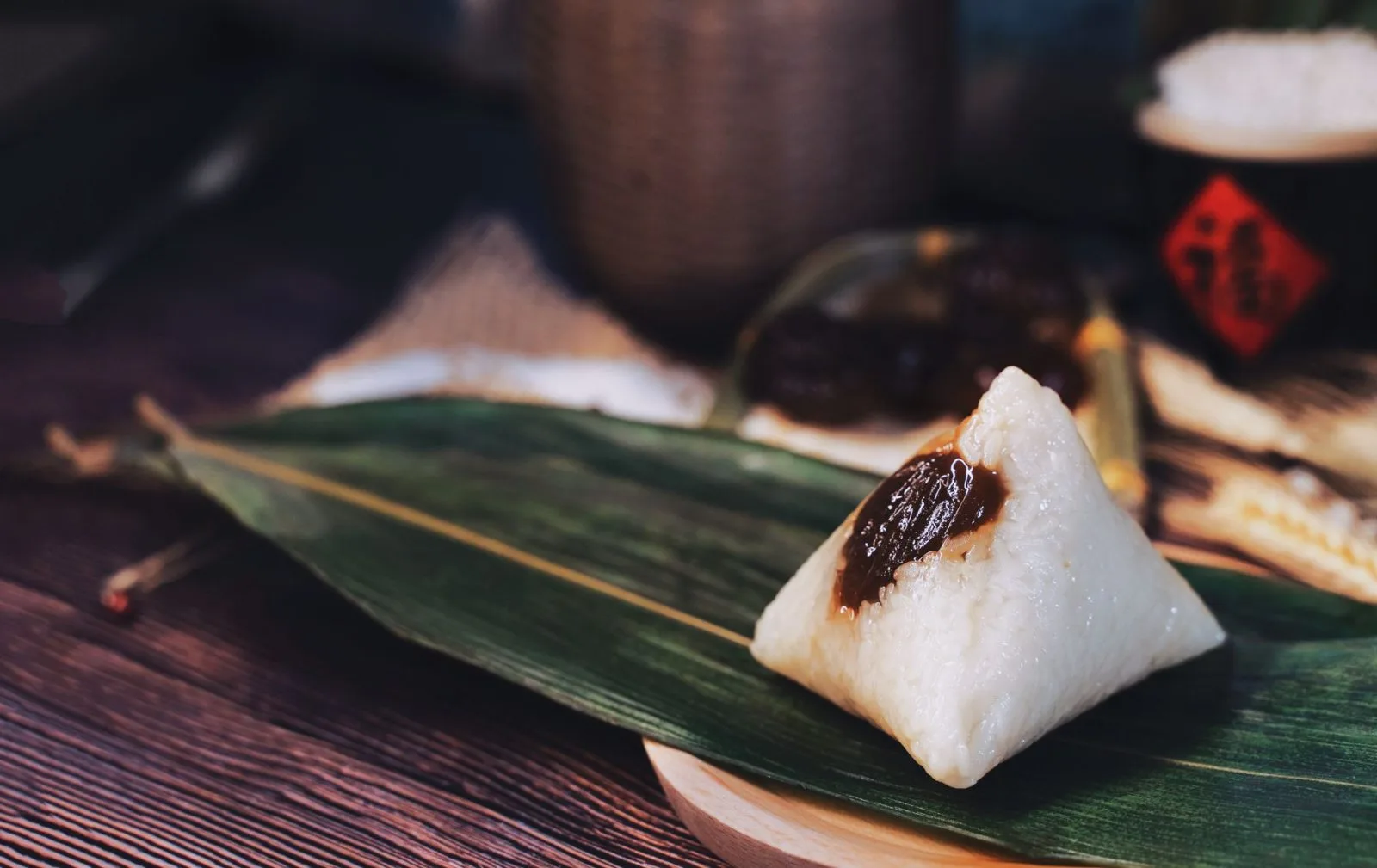
    Zongzi are parcels of glutinous rice wrapped in bamboo or reed leaves and tied with string, then boiled for hours. Fillings vary by region: Guangdong versions may include pork, salted egg, and mushrooms, while northern ones are often sweet with dates or red bean. Families make them in batches and give them to neighbours. The festival also has a protective side. In older practice, people hung mugwort and calamus at doorways to keep away illness and insects and tied five-coloured silk around children’s wrists. Realgar wine, a yellow mixture with a strong smell, was sprinkled around the house or dabbed on a child’s forehead, though modern safety advice discourages drinking it. These acts belong to a time when the fifth moon was thought to carry dampness, snakes, and fever.

    Pyramidal zongzi wrapped in bamboo leaves and tied with string
    Zongzi are filled with sticky rice and tied with string before boiling. zhen tang | Pexels License (https://www.pexels.com/license/)

    Guangdong on the Water

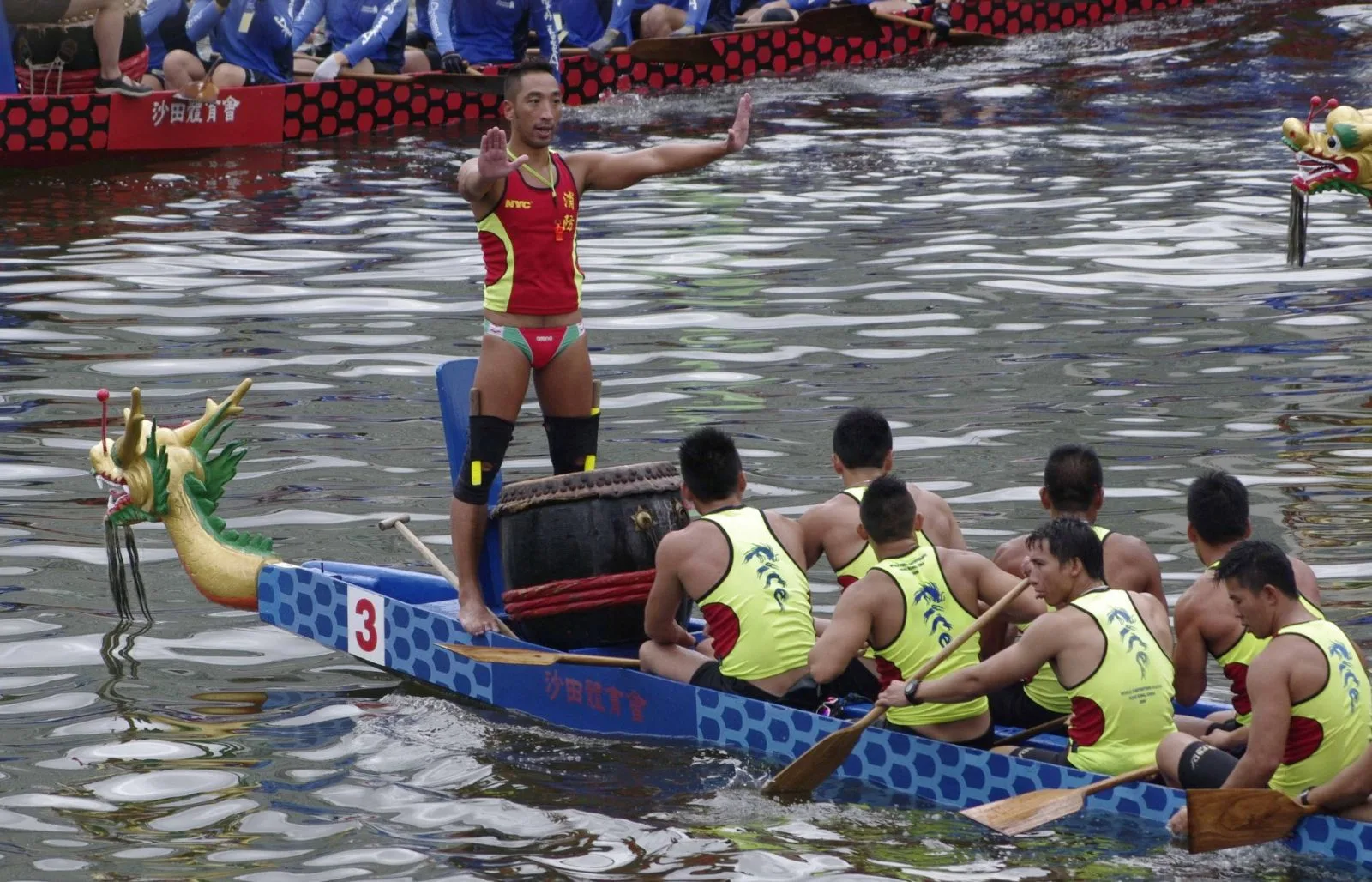
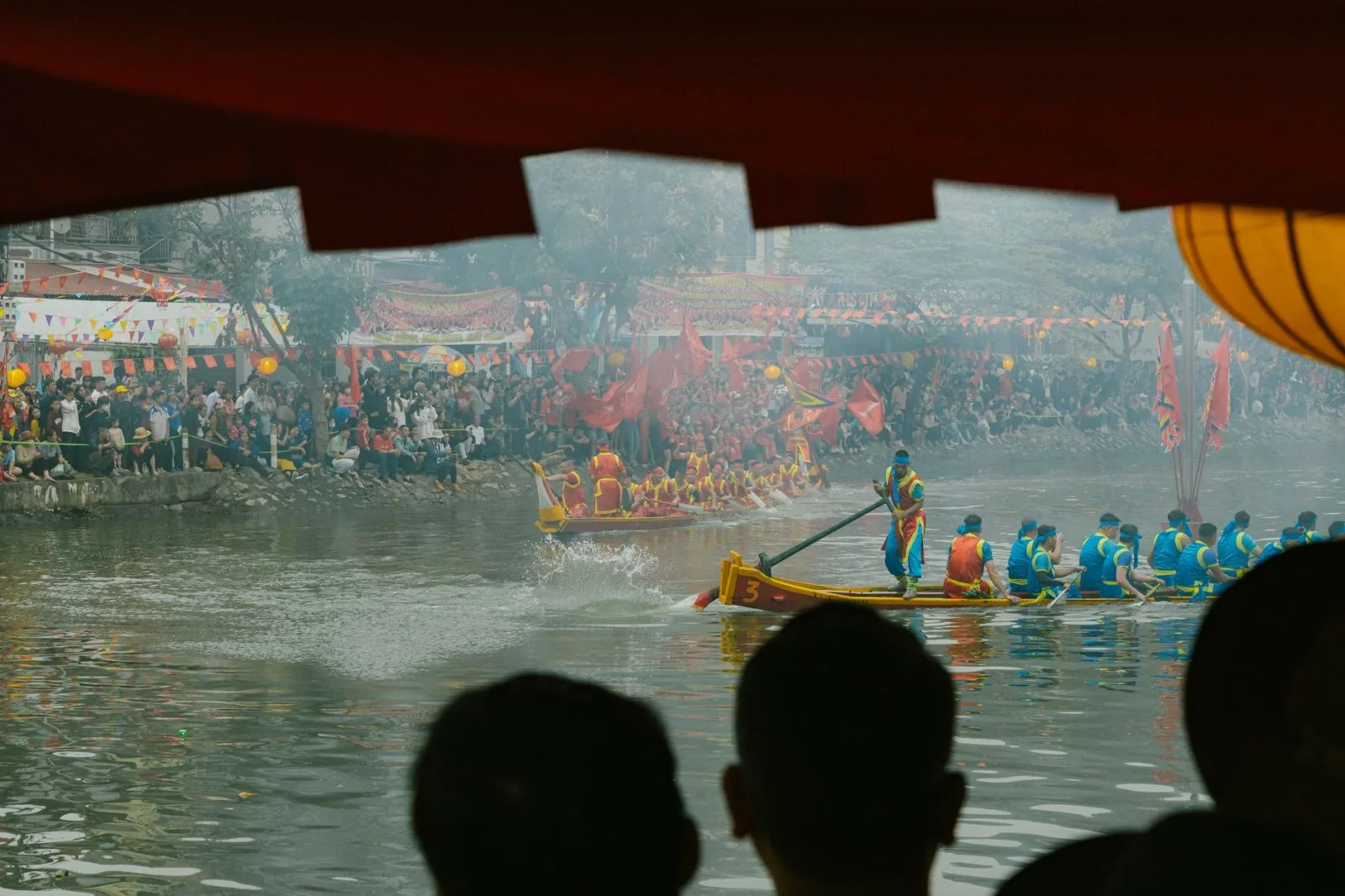
    In Guangdong, dragon boat racing is not a single event but a season. Villages and districts along the Pearl River Delta prepare boats through the spring, then race on rivers and creeks in the weeks around Duanwu. A long narrow boat carries a crew of paddlers, a drummer who sets the stroke, and a helmsman; the painted head and tail give the craft its name. Races are loud, crowded, and local, with teams known by village or temple affiliation. Spectators line bridges and banks, and the best vantage points fill early. The custom was inscribed on UNESCO’s intangible cultural heritage list in 2009. For a visitor, check local listings rather than assuming one central race: events are spread across Guangzhou and Foshan, and dates shift with the lunar calendar.

    Dragon boat crews racing on a Guangdong river before a crowd
    Pearl River Delta races draw village crews and large crowds in the weeks around Duanwu. HONG SON | Pexels License (https://www.pexels.com/license/)

    Observing the Day Today

    Duanwu is an official public holiday, so transport and tourist sites are busy. In Guangdong, the weather is hot and wet by May or June; bring water, a hat, and insect repellent if you plan to watch a race from an open bank. Respect the crews’ space at the water’s edge and do not step onto a boat or touch a drum without being invited. Many families still put mugwort at the door, and zongzi are easy to buy from markets in the days before the holiday. The festival is also an occasion for calling on relatives, though on a smaller scale. For travellers, the pleasure lies in the combination: a public spectacle on the river and a quiet, food-filled custom at home, both tied to the same lunar date.

    The drum sets the stroke, and the village supplies the crew.

    Fontes e leituras adicionais

    1. Dragon boat festival — Patrimônio Cultural Imaterial da UNESCO.
    2. Dragon Boat Festival — Enciclopédia Britânica.
    3. Qu Yuan — Enciclopédia Britânica.
    Veja no local.

    Siga esta entrada até a região a que ela pertence.

    Explorar pelo mapa

    Siga o fio

    Veja outras entradas que compartilham as mesmas tags.

    Navegue pela etiqueta
  • Mid-Autumn Festival

    Vida e Folclore

    Mid-Autumn Festival

    Mooncakes under a full moon

    The Mid-Autumn Festival gathers families around the full moon, mooncakes, and a long tradition of watching the night sky.

    Seção
    Vida e Folclore
    Região
    Pequim
    Era
    Ao longo das eras
    Etiquetas
    Costumes, Comida

    Falling on the fifteenth day of the eighth lunar month, the Mid-Autumn Festival is a harvest celebration and a family reunion. In Beijing, the holiday is marked in courtyards, parks, and moon-viewing spots that fill after sunset.

    The Date and the Moon

    The festival follows the lunar calendar, so its date moves between early September and early October. The fifteenth day of the eighth month is chosen because the moon should be full, and roundness stands for completeness and family unity. Chinese tradition reads the moon’s surface as the figure of Chang’e, a woman who, in one version of the myth, drank an elixir and rose to live there with a rabbit that pounds medicine. Another story tells of Wu Gang cutting a tree that regrows each time. These tales are not scripture; they are the stories families retell while looking up. Around the festival, parks stay open late and lakes reflect the moon, giving city dwellers a quiet reason to be outdoors after dinner.

    A full moon rising over a Beijing park lake
    The festival falls on the full moon of the eighth lunar month, usually in September or October. marnock | Pexels License (https://www.pexels.com/license/)

    Mooncakes and Their Fillings

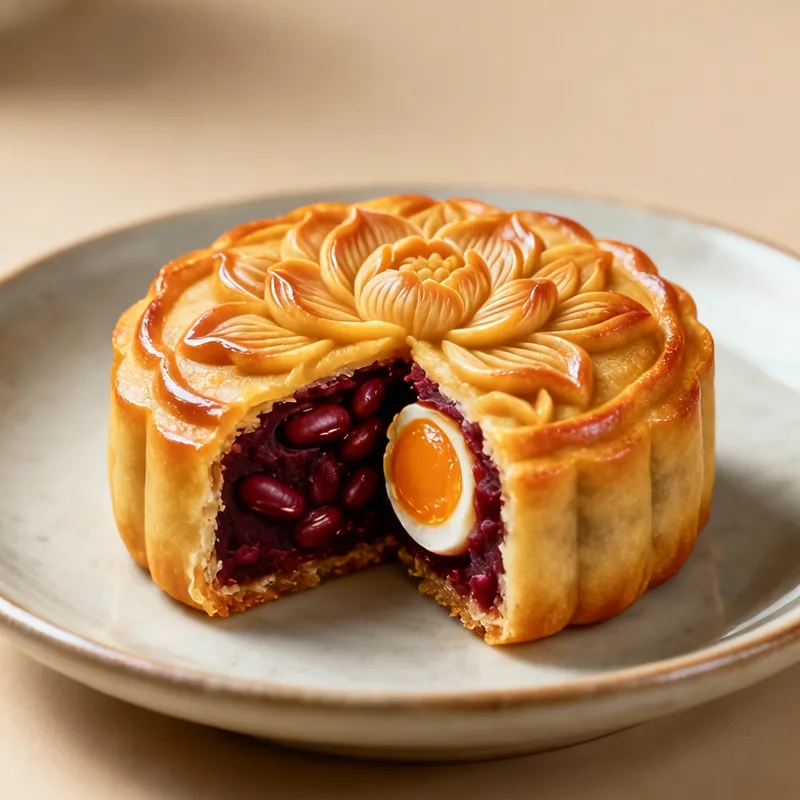
    Mooncakes are small, dense pastries with a thin crust and a heavy filling, traditionally cut into wedges and shared. The round shape echoes the moon, and the top is stamped with a pattern or characters such as longevity or harmony. Cantonese-style cakes often hold lotus seed paste and a salted duck egg yolk, whose yellow centre stands for the moon; other fillings include red bean, five nuts, and preserved fruit. Suzhou-style pastries use flaky layers, while snow-skin mooncakes are chilled and made with a glutinous rice wrapper. Because the cakes are rich, a sliver is usually enough, and tea helps. Prices rise in the weeks before the holiday, and elaborate boxes are made for gifting rather than eating. In Beijing, bakeries sell both traditional versions and small cakes.

    A round mooncake with a stamped pattern cut open to show the filling
    Mooncakes are dense pastries stamped with characters for longevity or harmony. Ilustração gerada por IA · SinoViz

    Beijing After Dark

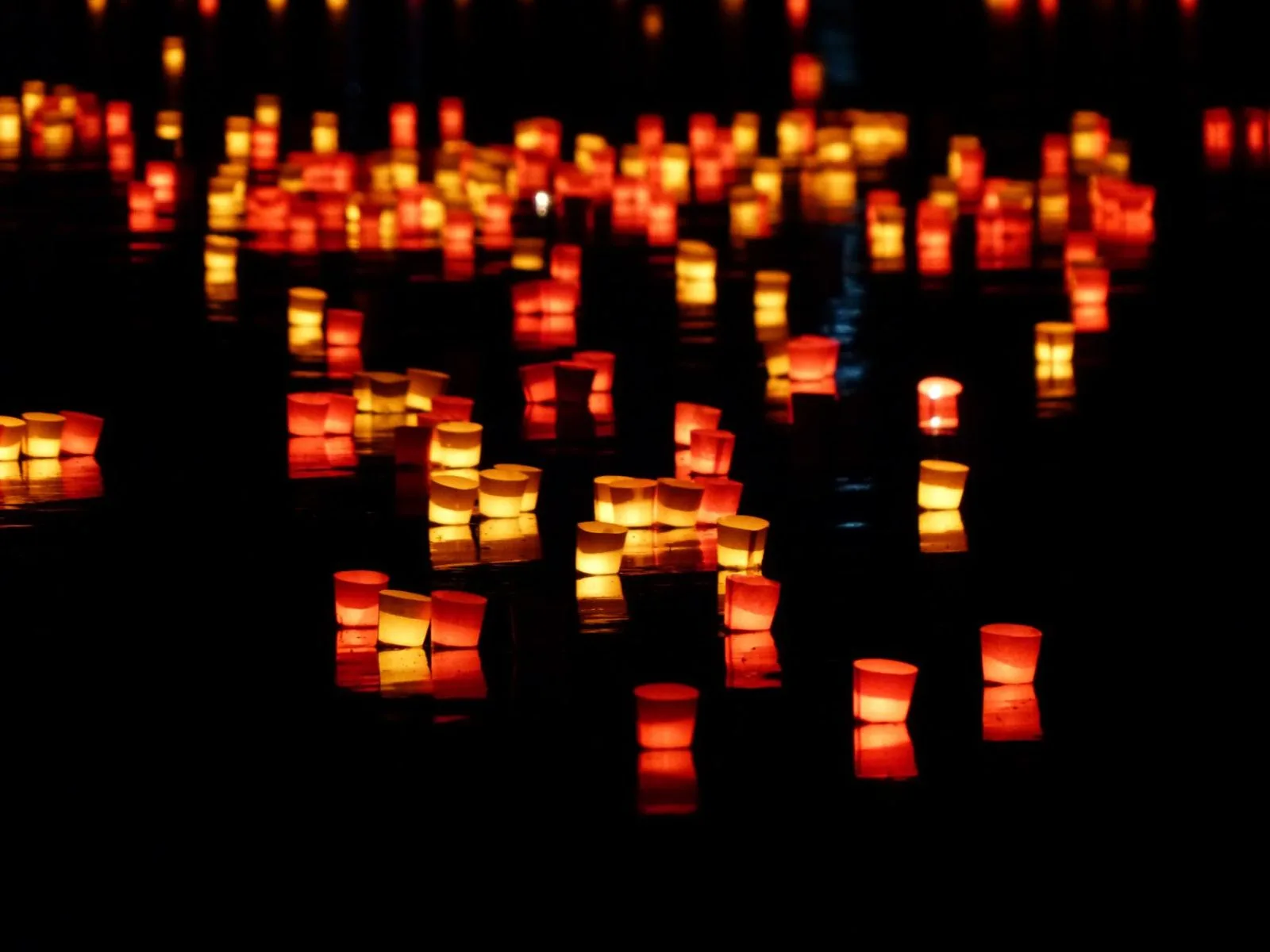
    Beijing’s moon-viewing spots fill quickly after dark. Beihai Park, with its lake and white stupa, and the Summer Palace, with Kunming Lake and the Long Corridor, are classic places to walk and watch the reflection. The Temple of Heaven also draws visitors. Families may light paper lanterns, and children carry them through the lanes; in some neighbourhoods, lantern riddles are posted for anyone who wants to try. Public holiday crowds mean metro stations near the parks stay busy late, so allow time to get back. Camping or bringing a barbecue is not appropriate in these historic grounds. A practical plan is to visit in the late afternoon, walk as the light fades, and take a seat by the water before the moon clears the rooftops.

    Lanterns reflected in a lake at a Beijing park during the Mid-Autumn Festival
    Parks such as Beihai and the Summer Palace draw moon-viewing crowds after sunset. Pixabay | Pexels License (https://www.pexels.com/license/)

    Gifts, Holiday, and Meaning

    Mooncakes are exchanged as gifts, often in boxes of four or six, and carrying a box to a family dinner is normal. The act matters more than the price; a modest cake from a favourite bakery can be more welcome than a lavish tin. Since 2008, the festival has been an official public holiday, reinforcing its role as a reunion, with millions travelling to see relatives. The deeper theme is tuanyuan, reunion, expressed by the circle of the cake and the full moon. Not everyone can be at the table, and the holiday acknowledges that absence as much as presence. If you are invited to a Beijing home, bring the cakes, arrive on time, and expect the evening to centre on a long meal rather than on speeches.

    Roundness carries the argument: a full moon, a round cake, a family gathered in one room.

    Fontes e leituras adicionais

    1. Mid-Autumn Festival — Enciclopédia Britânica.

    2. Mid-Autumn Festival — China Highlights.

    Veja no local.

    Siga esta entrada até a região a que ela pertence.

    Explorar pelo mapa

    Siga o fio

    Veja outras entradas que compartilham as mesmas tags.

    Navegue pela etiqueta
  • Chinese Paper Cutting

    Vida e Folclore

    Chinese Paper Cutting

    Red paper, folded and cut

    A pair of scissors and a sheet of red paper can carry a whole vocabulary of wishes.

    Seção
    Vida e Folclore
    Região
    Shaanxi
    Era
    Ao longo das eras
    Etiquetas
    Customs, Ethnic

    Chinese paper cutting, or jianzhi, turns a flat sheet into a pattern of figures, flowers, and characters. Practised for centuries in rural households, it still marks weddings and New Year, and Shaanxi’s bold window designs are among its most recognisable regional forms.

    Origins and Technique

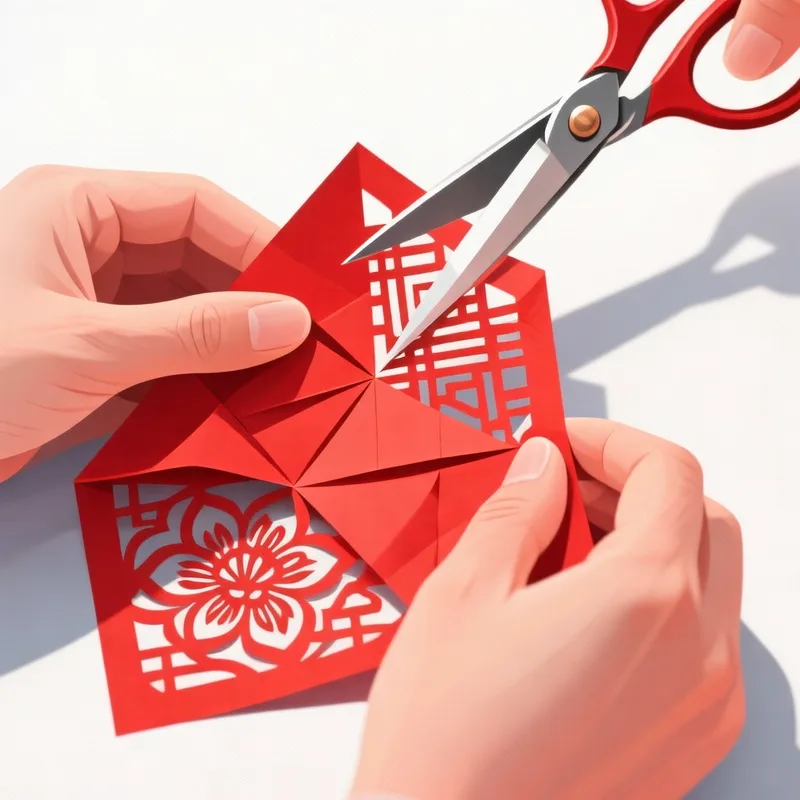
    Paper reached China in the Eastern Han period, and the first cuts followed once the material was cheap enough to experiment with. Early examples were used as offerings and as templates for embroidery; a surviving cut-paper find from the sixth century shows that the technique was established by then. Two methods developed. Scissors cut a folded sheet, creating a mirror-symmetric design with a single sequence of snips. A knife held upright cuts a stack of paper against a wax board, a method suited to finer lines and repeated motifs. Artists draw no outline for many traditional patterns; they cut directly, keeping the connecting threads that stop the design falling apart. The finished piece is light, cheap, and easy to paste on a window or door.

    Hands cutting a red paper design with small scissors
    Folding the paper before cutting produces the symmetrical patterns typical of window decorations. Ilustração gerada por IA · SinoViz

    A Language of Motifs

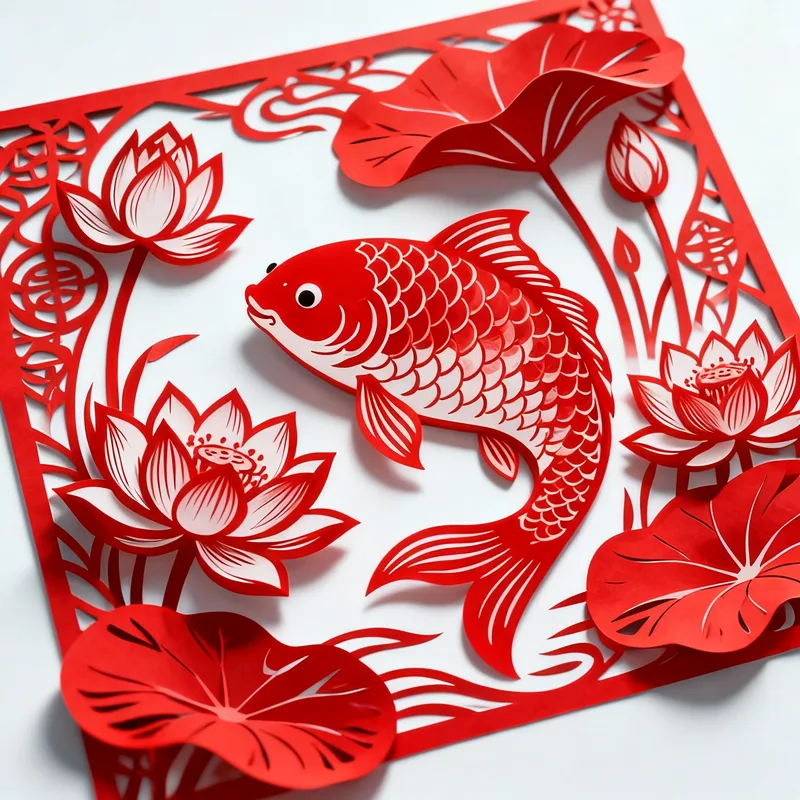
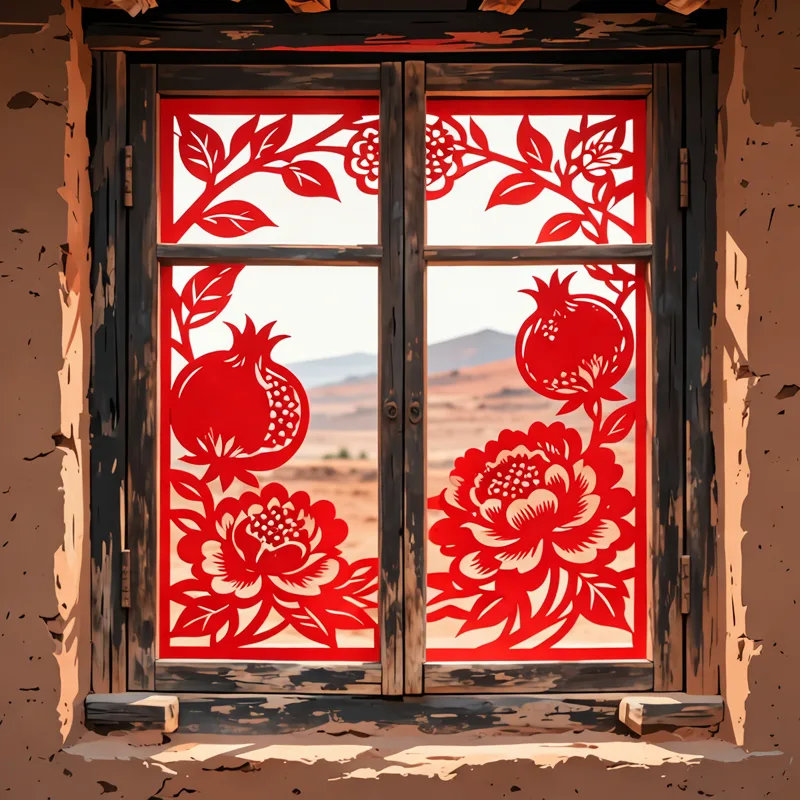
    The images are a system of visual puns. A fish means surplus, because the word for fish sounds like the word for abundance; lotus suggests purity. A pomegranate stands for many children, a bat for good fortune, and a peach for long life. The character fu, meaning good fortune, appears alone or inside a circular design, while shuangxi, double happiness, belongs to weddings. Zodiac animals, opera figures, and scenes of children at play all circulate as patterns. Colour matters as much as shape: red is the default for celebration, while white paper cuts are rarer and tied to older ritual uses. In a Shaanxi village window, the arrangement of these motifs tells a visitor what the household is hoping for in the coming year.

    Red paper-cut window decoration showing a fish and lotus flowers
    Fish and lotus form a rebus for abundance; motifs are chosen for the wish they carry. Ilustração gerada por IA · SinoViz

    Shaanxi Windows

    Paper cutting in Shaanxi is associated with rural life on the Loess Plateau, especially around Yan’an. Windows there were once small and deeply set, so designs favoured bold silhouettes and broad, connected shapes that could be read from across a room. Local artists talk of cutting with the heart rather than measuring with a ruler, and compositions often show figures, animals, and plants together in a single dense frame. Window grilles, or chuanghua, are pasted at New Year and replaced when they fade. Wedding cuts carry double happiness characters and images of fertility; birthday cuts use peaches and cranes. Women were the main practitioners in many villages, passing patterns from mother to daughter, and village fairs still sell sheets cut in the old local style.

    A Shaanxi farmhouse window with bold red paper cutouts
    Shaanxi cuts favour strong silhouettes and broad shapes, designed to read from a distance. Ilustração gerada por IA · SinoViz

    Recognition and Travel

    Chinese paper-cut was inscribed on UNESCO’s Representative List of the Intangible Cultural Heritage of Humanity in 2009, a recognition that named both the craft and the communities that sustain it. The listing does not freeze the art. Contemporary artists cut portraits, cityscapes, and political images with the same tools, and paper cuts appear in graphic design and animation. For a visitor, the appeal is that the work is easy to find and easy to try. Museum shops sell small sheets, market stalls sell single motifs, and workshops in Xi’an and rural Shaanxi teach the basic fold-and-cut method in an hour. Bring a sharp pair of scissors and practice on cheap red paper before attempting a detailed pattern. A finished cut pasted on glass changes with the light.

    The pattern holds together because the cutter leaves just enough paper between the lines.

    Fontes e leituras adicionais

    1. Chinese paper-cut — Patrimônio Cultural Imaterial da UNESCO.
    2. Chinese Paper Cutting — China Highlights.
    3. Paper cutting — Enciclopédia Britânica.
    Veja no local.

    Siga esta entrada até a região a que ela pertence.

    Explorar pelo mapa

    Siga o fio

    Veja outras entradas que compartilham as mesmas tags.

    Navegue pela etiqueta
  • Cantonese Cuisine

    Vida e Folclore

    Cantonese Cuisine

    Steam, Wok Heat, and Coastal Markets

    Guangdong cooking turns local seafood and temple fair foods into a refined restaurant tradition.

    Seção
    Vida e Folclore
    Região
    Guangdong
    Era
    Ao longo das eras
    Etiquetas
    Food, Geography

    Cantonese cuisine is the cooking of Guangdong and its diaspora, built on river deltas, coastal markets, and the heat of the wok. Its best-known dishes—roast goose, dim sum, and steamed fish—sit beside home-style soups and street snacks.

    The Pearl River Pantry

    The Pearl River Delta gave Cantonese cooking an unusually broad pantry. Rice grows in the lowlands, fish and shellfish come from the estuary, and hills behind Guangzhou supply vegetables, pork, and poultry. Guangzhou was a major port under the Tang and again after European traders arrived in the seventeenth and eighteenth centuries. Merchants, officials, and temple fairs supported restaurants that could pay for skilled chefs. By the Qing period, Guangzhou’s tea houses served small plates known as dim sum through the morning and midday. Emigrants from Guangdong later carried these dishes to Southeast Asia, North America, and Europe, adapting them to local supplies.

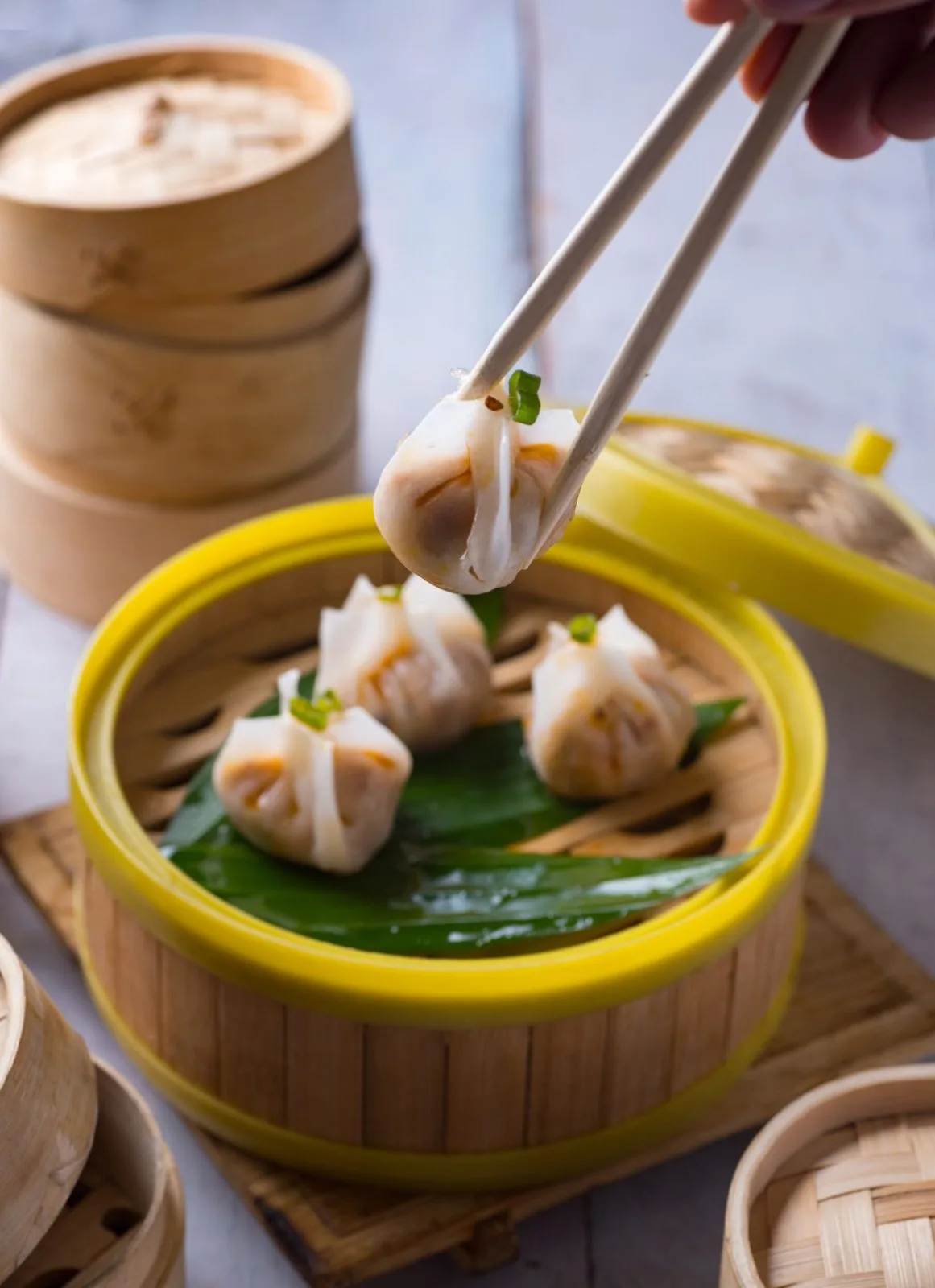
    Bamboo steamers filled with dim sum
    Dim sum developed in the teahouses of Guangzhou and spread with Cantonese migration. parveen tasud | Pexels License (https://www.pexels.com/license/)

    Wok Hei and the Roast House

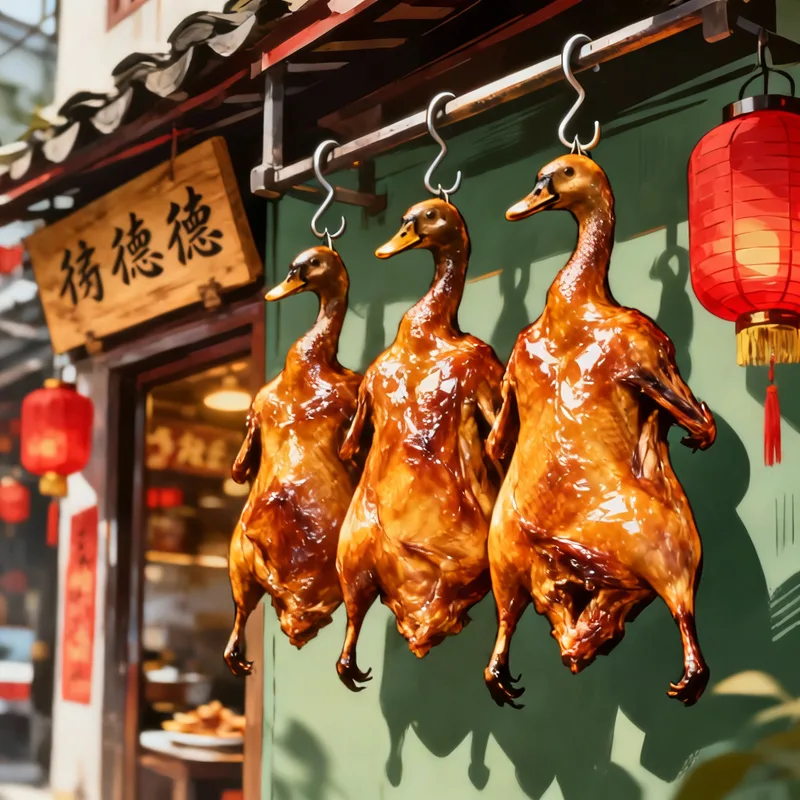
    Cantonese stir-frying depends on wok hei, the barely definable aroma produced when hot oil, vapours, and food meet a very hot wok. Chefs toss ingredients to keep them moving and prevent scorching; sauces are added late, often with cornstarch to give a light coating. Roasting is another speciality. Guangzhou-style white-cut chicken is poached and served with ginger and spring onion, while roast goose from Shunde is glazed, air-dried, and hung in a brick oven until the skin blisters. Char siu pork is marinated with honey and red fermented bean curd, then roasted with sugar caramelising at the edges.

    Roast geese hung to dry before roasting outside a Shunde restaurant
    Air-drying the skin is a key step in Shunde’s roast goose. Ilustração gerada por IA · SinoViz

    Dim Sum and Morning Ritual

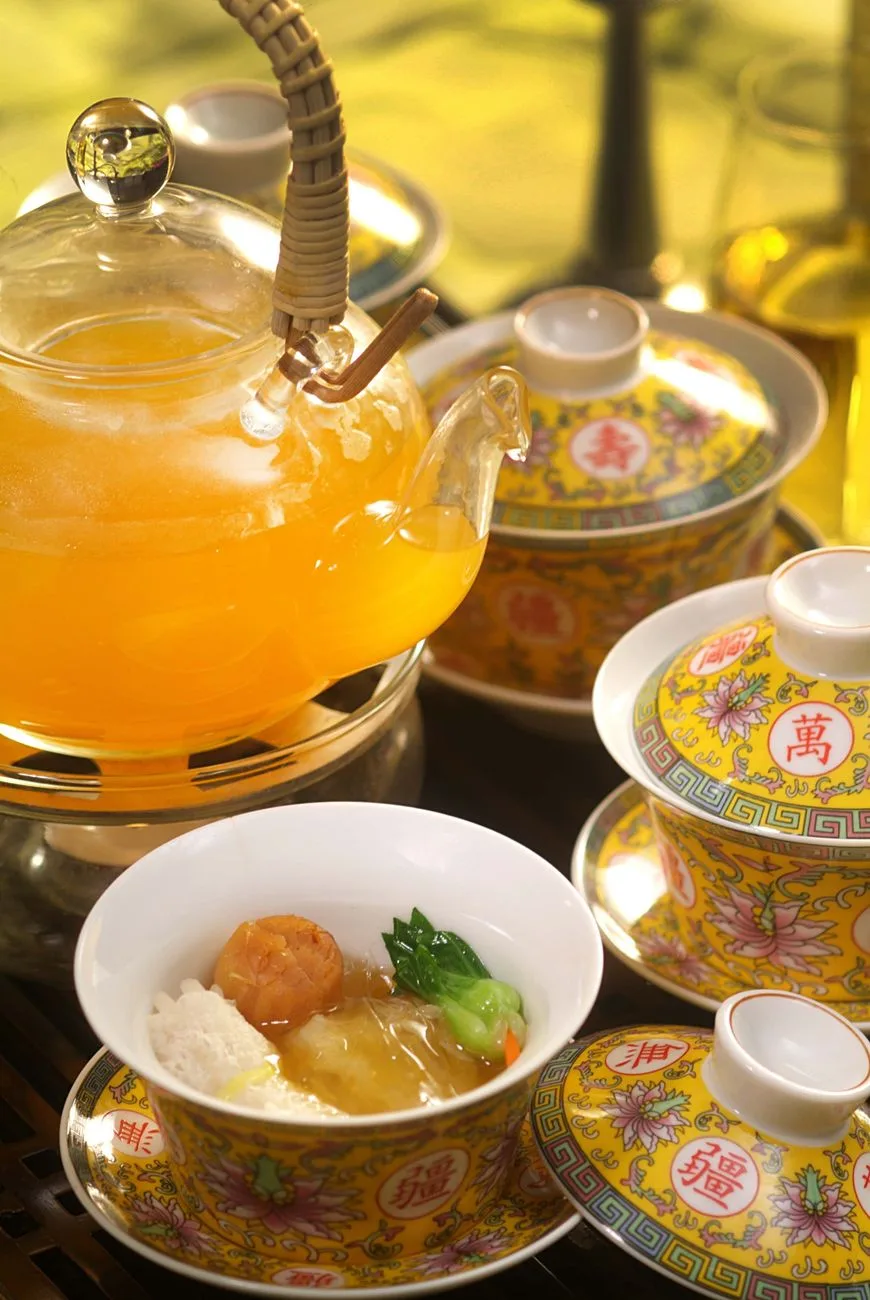
    Dim sum means a light snack, but in Cantonese practice it describes a meal of small portions ordered from trolleys or a paper card. Har gow wrap shrimp in a translucent wheat-starch skin; siu mai open-topped dumplings hold pork and shrimp; char siu bao are soft steamed buns with sweet roast-pork filling. Cheung fun are broad rice-noodle sheets rolled around shrimp, pork, or beef and dressed in soy sauce. Tea accompanies the meal, and the old custom of tapping a pot’s lid to signal for a refill is still performed, though younger diners may simply ask. The ritual is social as much as culinary, filling teahouses from early morning.

    • Har gow with translucent shrimp filling
    • Siu mai topped with a single shrimp
    • Cheung fun rice rolls with soy dressing
    • Egg tarts adapted from British custard pastry
    A trolley of bamboo steamers and tea pots beside a crowded Guangzhou dining room
    A dim sum meal is ordered in small dishes and shared across the table. minchephoto photography | Pexels License (https://www.pexels.com/license/)

    Regional Range and Diaspora

    Cantonese food is not one style. Shunde is known for delicate dairy desserts and fish dishes, Chaozhou nearby has a separate tradition of braised goose, seafood, and strong oolong tea, and Hakka communities in the hills favour preserved vegetables and stuffed tofu. Teochew and Hainanese migrants carried their own versions abroad. In Chinatowns from San Francisco to Singapore, Cantonese restaurants adapted to local tastes while keeping techniques such as steaming, roasting, and long simmered double-boiled soups. The resulting cuisines are mixed, but they preserve a central idea: fresh ingredients, precise heat, and a sauce that supports rather than hides them.

    Cantonese cooking asks a wok to do in seconds what other traditions give hours of stewing.

    Fontes e leituras adicionais

    1. Chinese Cuisine — Enciclopédia Britânica.
    2. Cantonese cuisine — Enciclopédia Britânica.
    3. Guangzhou — Centro do Patrimônio Mundial da UNESCO.

    Veja no local.

    Siga esta entrada até a região a que ela pertence.

    Explorar pelo mapa

    Siga o fio

    Veja outras entradas que compartilham as mesmas tags.

    Navegue pela etiqueta