แท็ก: Food

  • The Lantern Festival

    ชีวิตและนิทานพื้นบ้าน

    The Lantern Festival

    Lights on the Fifteenth Night

    The fifteenth night of the first lunar month closes the New Year with lanterns and sweet rice balls.

    ส่วน
    ชีวิตและนิทานพื้นบ้าน
    ภูมิภาค
    ปักกิ่ง
    ยุค
    ข้ามยุคสมัย
    แท็ก
    ศุลกากร อาหาร

    The Lantern Festival falls on the fifteenth day of the first lunar month, the first full moon of the year. Lanterns, night markets, riddles, and tangyuan rice balls mark the end of the New Year period.

    Origins in Calendar and Court

    The festival’s date follows the lunar calendar, so its Gregorian date changes each year. Several origins are cited. Emperor Wen of Han is said to have declared a public holiday around 180 BCE after defeating the Lü clan, while the Eastern Han emperor Ming promoted lantern displays in the first century CE as Buddhism spread. Daoist tradition associated the day with the heavenly official who grants blessings. By the Tang dynasty, the festival had become a major urban occasion: court records describe vast lantern displays in Chang’an and Luoyang, and the poet Su Weidao wrote of night markets bright as day. The Tang court relaxed curfew so people could view the lights.
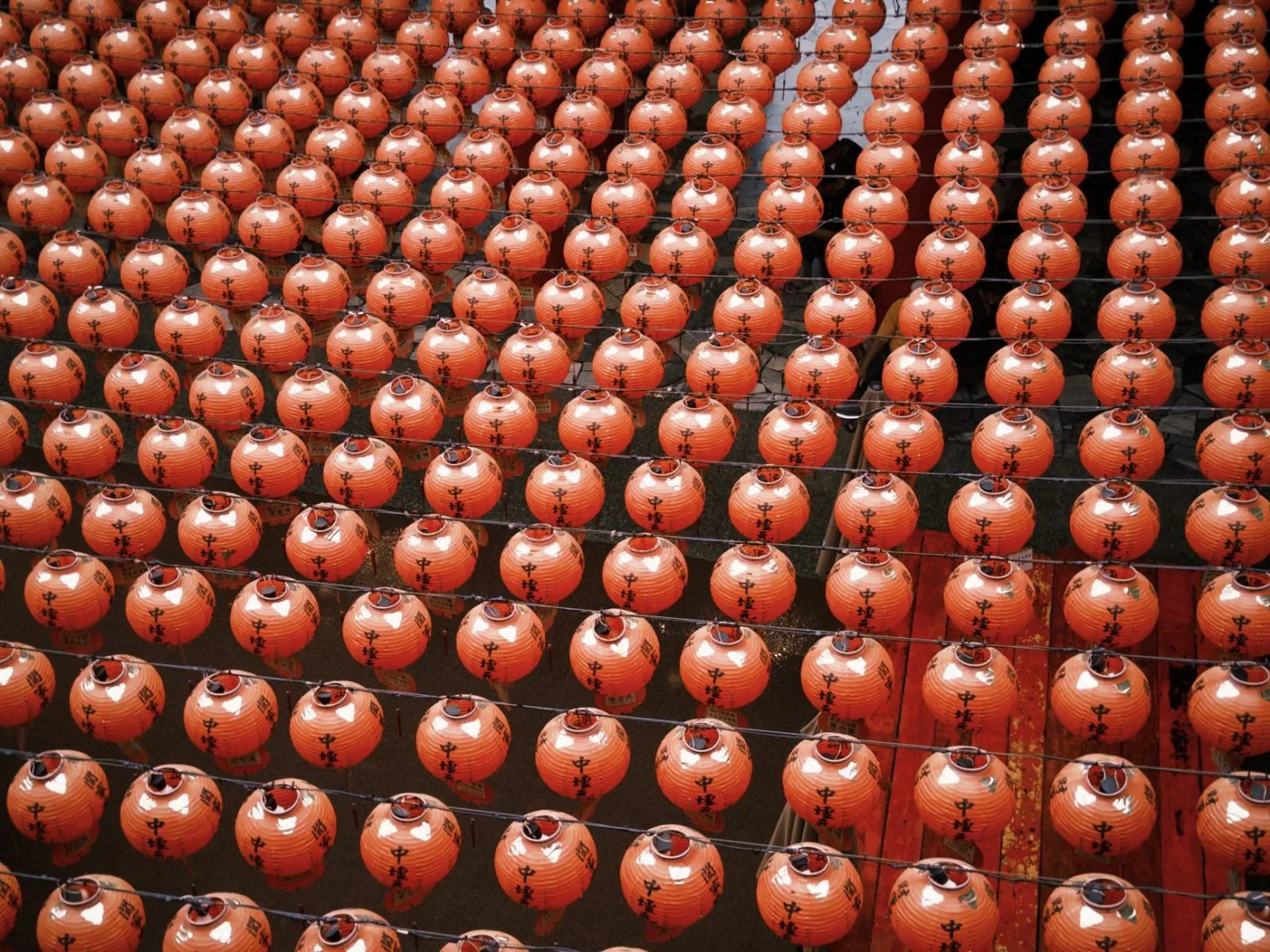
    Rows of illuminated red lanterns hanging along a street during a night festival
    Tang cities relaxed curfew so residents could walk among the lanterns at night. zack ZHUO | Pexels License (https://www.pexels.com/license/)

    Riddles, Lions, and Processions

    Lantern riddles are written on slips attached to the lamps; solving one is a small test of wordplay and classical learning. Lion dances, dragon dances, and walking-on-stilts performances draw crowds in the streets, with local troupes competing for space and applause. In some places, people carry lanterns representing animals or characters, and children pull small lanterns on sticks. Beijing’s temple fairs once gathered vendors, performers, and visitors around temple courtyards; today the festival is also marked in parks and commercial districts. Taiwan is known for large lantern festivals and elaborate installations, while Nanjing has long been associated with elaborate lantern craft along the Qinhuai River.
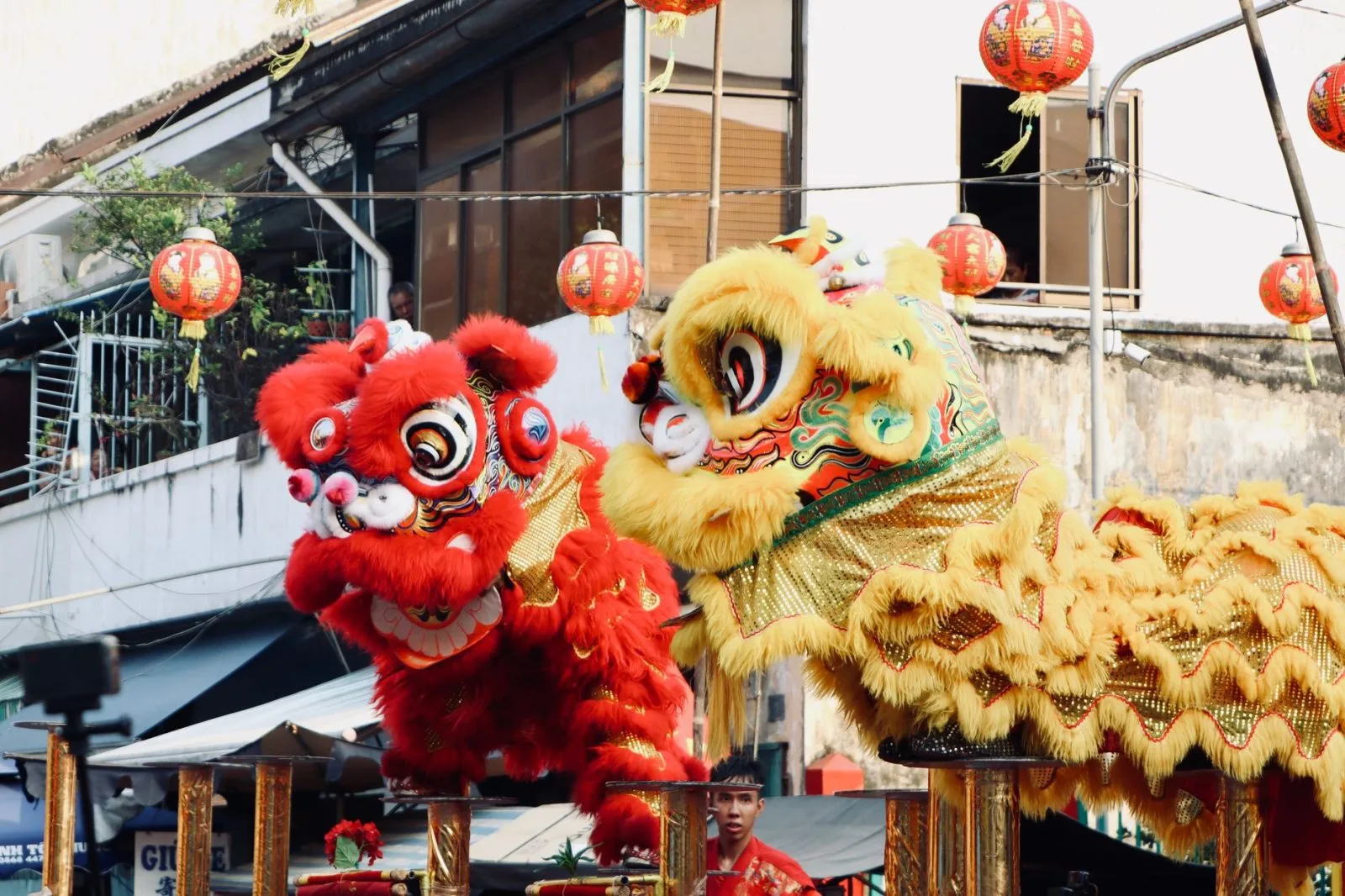
    A lion dance troupe leaping beneath hanging lanterns during a street celebration
    Processions and lion dances turn the festival into a public performance. Pham Huynh Tuan Vy | Pexels License (https://www.pexels.com/license/)

    Tangyuan and the Taste of Reunion

    The festival food is tangyuan in southern China and often yuanxiao in the north, both made from glutinous rice flour around a sweet filling. The names and methods differ: southern cooks wrap a soft dough around filling, while northern cooks may roll moistened filling in dry rice flour in repeated layers. Fillings include black sesame paste, red bean, peanut, and osmanthus sugar. The round shape suggests family unity, and the bowls are shared after the evening’s walk. In Ningbo, black-sesame tangyuan are a local speciality; in Shanghai and Suzhou they are sold from neighbourhood shops. Sweet rice wine and small glutinous balls are also served in some regions.

    • Black sesame, red bean, and peanut fillings
    • Southern wrapped tangyuan and northern rolled yuanxiao
    • Lantern riddles attached to public displays
    • Dragon and lion processions after dark
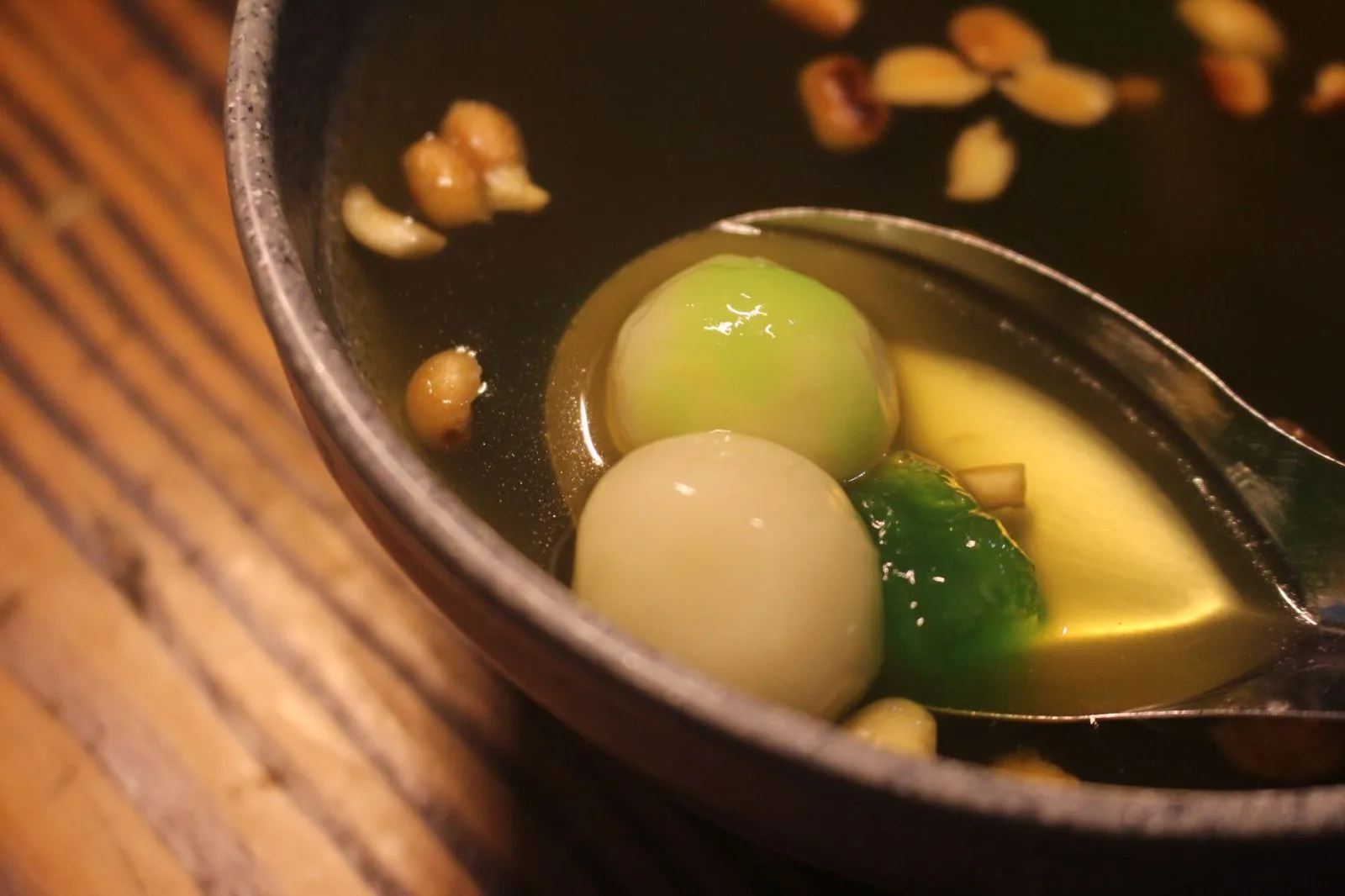
    A bowl of small white glutinous rice balls in clear sweet soup
    Round rice balls symbolise reunion at the first full moon. Jauhar Musthofal Qulub | Pexels License (https://www.pexels.com/license/)

    The Festival in Modern Cities

    The festival remains a public holiday in mainland China, though the number of days off and the school calendar vary. Major cities install temporary lighting, close some streets to traffic, and run lantern displays in parks and along rivers. Viewing a lantern show often means walking slowly in crowds; in Beijing, the temperature can still be below freezing, so warm layers matter. Photographers should check local rules on tripods and drones. Shopping districts extend the season commercially, but temple fairs and neighbourhood associations keep older practices alive. The date’s movement also means the festival may fall during term time or a working week, changing how families gather.

    The first full moon turns a winter street into a temporary gallery of paper, silk, and light.

    แหล่งข้อมูลและเอกสารอ่านเพิ่มเติม

    1. เทศกาลโคมไฟ — สารานุกรมบริแทนนิกา
    2. Chinese Lantern Festival — China Highlights.
    3. Yuanxiao Festival — World History Encyclopedia.
    ดูตำแหน่งที่ติดตั้ง

    โปรดติดตามข้อมูลนี้ไปยังภูมิภาคที่เกี่ยวข้อง

    สำรวจโดยใช้แผนที่

    ติดตามกระทู้นี้

    ดูรายการอื่นๆ ที่มีแท็กเดียวกัน

    เรียกดูแท็ก
  • เกี๊ยว

    ชีวิตและนิทานพื้นบ้าน

    เกี๊ยว

    ลังข้าวสาลีที่บรรจุเต็มและพิธีกรรมฤดูหนาว

    เกี๊ยวทางตอนเหนือของจีนทำจากแป้งสาลีและไส้ตามฤดูกาล กลายเป็นอาหารที่นิยมรับประทานร่วมกันในชุมชน

    ส่วน
    ชีวิตและนิทานพื้นบ้าน
    ภูมิภาค
    ปักกิ่ง
    ยุค
    ข้ามยุคสมัย
    แท็ก
    ศุลกากร อาหาร

    เกี๊ยวเป็นแป้งสาลีห่อไส้ที่นำไปต้ม นึ่ง หรือทอด ในภาคเหนือของจีน เกี๊ยวเป็นอาหารที่นิยมรับประทานในวันเหมายันและเทศกาลตรุษจีน โดยครอบครัวจะนำเกี๊ยวมาวางรอบโต๊ะและพับห่อด้วยมือทีละชิ้น

    ข้าวสาลีในอาหารทางภาคเหนือ

    เกี๊ยวเป็นอาหารพื้นเมืองของภาคเหนือของจีน ซึ่งแป้งสาลีกลายเป็นอาหารหลักในสมัยราชวงศ์ฮั่นและราชวงศ์ต่อมา รูปทรงของเกี๊ยวถูกเปรียบเทียบกับเงินจีนโบราณ ซึ่งทำให้เกี๊ยวมีบทบาทในภาษาปีใหม่ โดยคำว่า "เกี๊ยว" (jiaozi) ออกเสียงคล้ายกับคำที่ใช้แลกเปลี่ยนสมบัติ มีตำนานเล่าขานกันว่าเกี๊ยวมีความเกี่ยวข้องกับแพทย์ชื่อจางจงจิง ซึ่งกล่าวกันว่าท่านทำเกี๊ยวไส้ต่างๆ เพื่อรักษาหูที่ถูกน้ำแข็งกัดในสมัยราชวงศ์ฮั่น เรื่องนี้ตรวจสอบได้ยาก แต่ก็อธิบายถึงธรรมเนียมการกินเกี๊ยวในสภาพอากาศหนาวเย็นได้ หลักฐานทางโบราณคดีเกี่ยวกับอาหารที่ทำจากแป้งสาลีไส้ต่างๆ นั้นชัดเจนกว่าหลักฐานที่บ่งชี้ถึงผู้คิดค้นเพียงคนเดียว

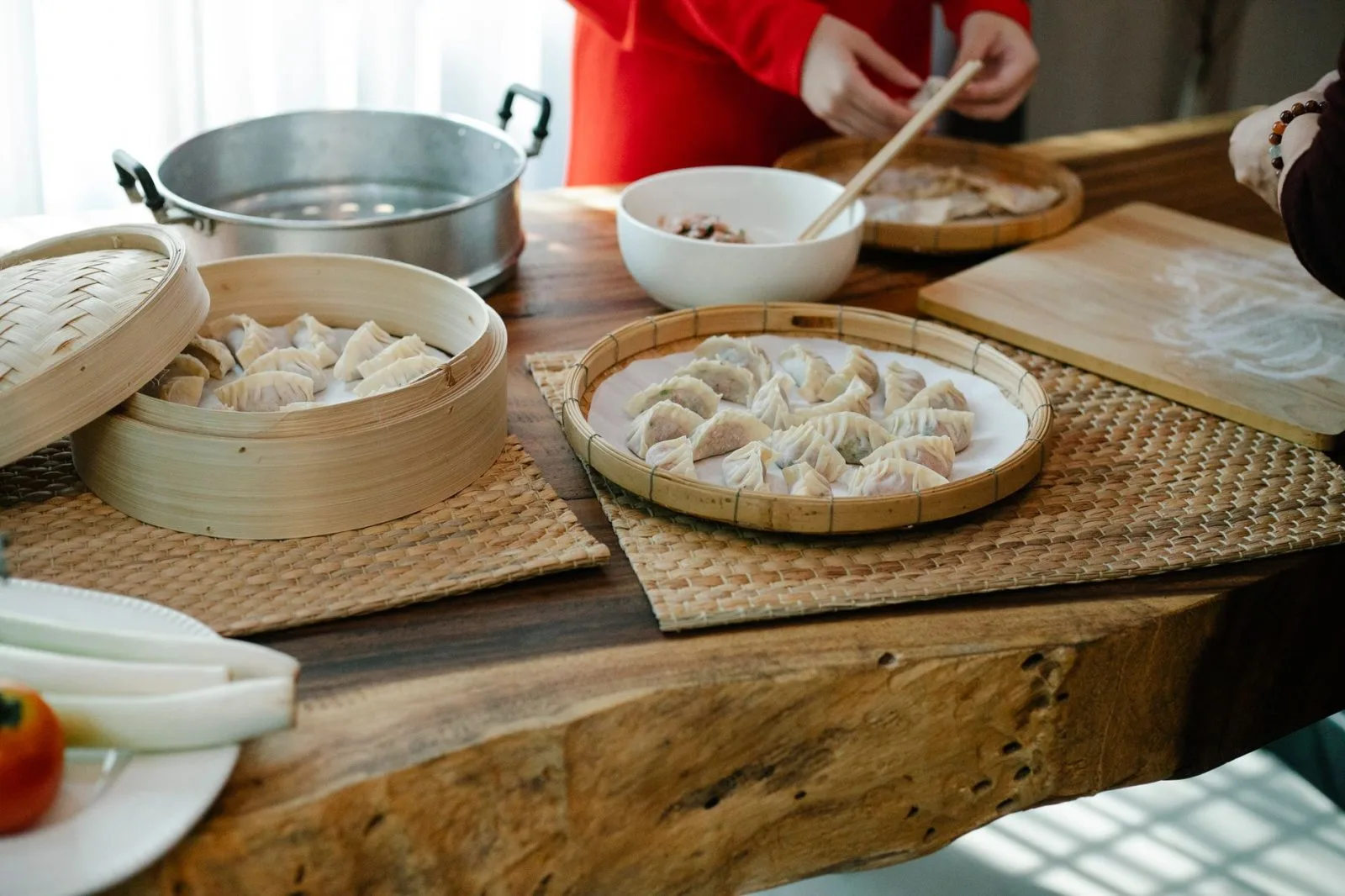
    เกี๊ยวซ่าจีบเรียงเป็นแถววางอยู่บนเขียงไม้ที่โรยด้วยแป้ง
    ขอบที่พับเป็นจีบช่วยปิดผนึกไส้และทำให้เกี๊ยวแต่ละชิ้นมีรูปทรงที่คุ้นเคย แองเจลา โรมา | ใบอนุญาต Pexels (https://www.pexels.com/license/)

    แป้ง ไส้ และการพับ

    แป้งเกี๊ยวซ่าพื้นฐานใช้แป้งสาลีและน้ำ พักไว้เพื่อให้กลูเตนคลายตัวและสามารถรีดแผ่นแป้งให้บางได้โดยไม่ฉีกขาด บางคนอาจใส่ไข่หรือใช้น้ำร้อนแทนแป้งบางส่วนเพื่อให้เนื้อสัมผัสนุ่มขึ้น ไส้จะสับละเอียดเพื่อให้สุกทั่วถึง เช่น ไส้หมูใส่กะหล่ำปลี ต้นหอม หรือกระเทียมต้น ไส้แกะใส่หัวหอมในภาคตะวันตกเฉียงเหนือ และไส้กุ้งและไข่ในแถบชายฝั่ง คนทำเกี๊ยวซ่าจะวางไส้ไว้ตรงกลาง พับแผ่นแป้ง และกดจีบตามรอยต่อ การปิดผนึกให้แน่นเป็นสิ่งสำคัญ เพราะหากมีอากาศอยู่ข้างใน การต้มจะทำให้แป้งเปิดออก ไส้มังสวิรัติ เช่น เต้าหู้ เห็ด หรือไข่ เป็นที่นิยม โดยเฉพาะอย่างยิ่งในช่วงไปวัดและช่วงถือศีล

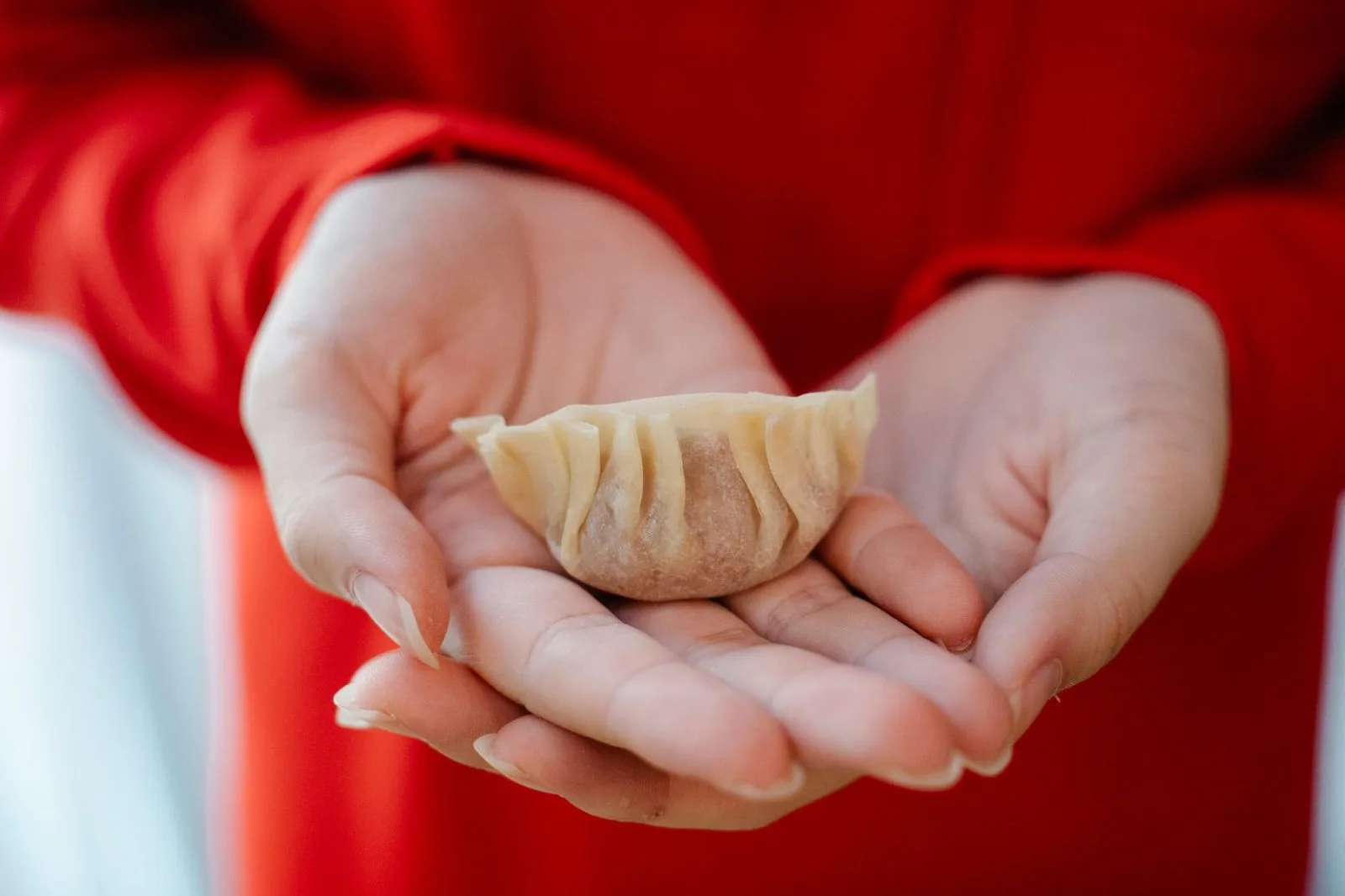
    มือค่อยๆ บีบจีบตามขอบของเกี๊ยวดิบ
    การพับจีบเป็นการปิดผนึกพัสดุ แต่ละครอบครัวอาจชอบการพับแบบต่างๆ กัน แองเจลา โรมา | ใบอนุญาต Pexels (https://www.pexels.com/license/)

    ต้ม นึ่ง และทอด

    วิธีที่พบมากที่สุดคือการต้ม: ใส่เกี๊ยวลงในหม้อขนาดใหญ่ คนจากด้านล่าง และต้มจนกว่าเกี๊ยวจะลอยขึ้นและพองตัว พ่อครัวทางภาคเหนือมักจะเติมน้ำเย็นเล็กน้อยเมื่อน้ำเดือดอีกครั้ง ทำซ้ำกระบวนการนี้สามครั้งเพื่อให้แป้งเกี๊ยวกรอบ เกี๊ยวทอดหรือกัวเทียนั้น จะทอดด้านหนึ่งแล้วนำไปนึ่งโดยปิดฝาและใส่น้ำเล็กน้อย ทำให้ด้านล่างกรอบ ส่วนเกี๊ยวแบบภาคใต้และแบบที่ชาวเม็กซิกันอพยพไปอยู่ต่างแดนนั้น มีทั้งแบบนึ่งไส้กุ้งและแบบที่ใช้แป้งสาลีบางๆ น้ำจิ้มมีหลากหลาย ตั้งแต่น้ำส้มสายชูดำและขิง ไปจนถึงซีอิ๊วผสมน้ำมันพริกหรือกระเทียม ไส้ก็แตกต่างกันไปเช่นกัน: ไส้หมูและต้นหอมเป็นที่นิยมในปักกิ่ง ไส้เนื้อวัวและเนื้อแกะจะพบได้ในชุมชนชาวมุสลิม และไส้กะหล่ำปลีหรือเห็ดเหมาะกับเมืองที่อากาศหนาวเย็นในแผ่นดิน

    • ขนมเกี๊ยวน้ำสำหรับปีใหม่และวันเหมายัน
    • กัวเทียที่มีฐานทอดกรอบ
    • น้ำส้มสายชูดำและขิง เป็นน้ำจิ้มสุดคลาสสิก
    • ไส้ตามภูมิภาค ได้แก่ เนื้อหมู เนื้อแกะ กุ้ง หรือผัก
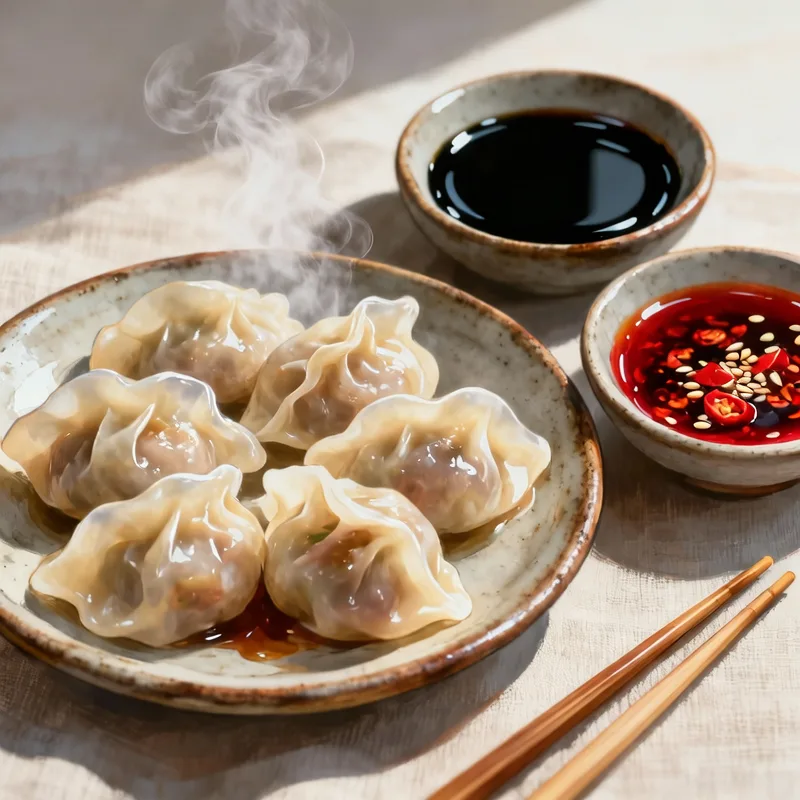
    เกี๊ยวน้ำต้มเสิร์ฟพร้อมน้ำส้มสายชูและน้ำมันพริกในถ้วยเล็กๆ
    น้ำจิ้มรสเปรี้ยวจากน้ำส้มสายชูและขิงช่วยตัดรสชาติเข้มข้นของไส้หมูได้เป็นอย่างดี ภาพประกอบที่สร้างโดย AI · SinoViz

    นำมาประกอบกัน

    เกี๊ยวเป็นอาหารที่ต้องรับประทานร่วมกันเป็นกลุ่ม เพราะการประกอบนั้นใช้เวลานาน ในคืนก่อนวันตรุษจีน หลายรุ่นอายุอาจช่วยกันรีดแป้ง หั่นไส้ และพับเกี๊ยวหลายสิบหรือหลายร้อยชิ้นพร้อมกัน เกี๊ยวบางชนิดอาจมีรูปร่างเหมือนเหรียญ หรือซ่อนเหรียญที่ทำความสะอาดแล้วไว้ข้างในเพื่อเป็นสัญลักษณ์แห่งโชคลาภ การรับประทานอาหารมักจัดขึ้นโดยให้สมาชิกที่อาวุโสที่สุดในครอบครัวเป็นผู้ดูแล เกี๊ยวที่เหลือจะนำไปทอดในวันรุ่งขึ้น และปัจจุบันมีเกี๊ยวแช่แข็งจำหน่ายในซูเปอร์มาร์เก็ตทั่วประเทศจีนและต่างประเทศ เกี๊ยวในร้านอาหารมีหลากหลายรูปแบบ ตั้งแต่ร้านในปักกิ่งที่เสิร์ฟเกี๊ยวเนื้อแกะ ไปจนถึงเกี๊ยวซ่าเซี่ยงไฮ้และเกี๊ยวซ่าไส้น้ำซุป ซึ่งอยู่ในตระกูลเดียวกับซาลาเปาแต่ก็มีความแตกต่างกัน

    เกี๊ยวเป็นเสมือนส่วนเล็กๆ ของการจัดการในครัวเรือน: แป้ง ไส้ มือ และเหตุผลที่ทำให้ทุกคนมารวมตัวกัน

    แหล่งข้อมูลและเอกสารอ่านเพิ่มเติม

    1. เกี๊ยว — สารานุกรมบริแทนนิกา
    2. เจียวซี — สารานุกรมบริแทนนิกา
    3. ตรุษจีน — สารานุกรมบริแทนนิกา

    ดูตำแหน่งที่ติดตั้ง

    โปรดติดตามข้อมูลนี้ไปยังภูมิภาคที่เกี่ยวข้อง

    สำรวจโดยใช้แผนที่

    ติดตามกระทู้นี้

    ดูรายการอื่นๆ ที่มีแท็กเดียวกัน

    เรียกดูแท็ก
  • อาหารเสฉวน

    ชีวิตและนิทานพื้นบ้าน

    อาหารเสฉวน

    Chilli Oil, Ferment, and the Numbing Pepper

    Sichuan cooking balances chilli heat, Sichuan pepper numbness, fermented bean paste, and rich broth.

    ส่วน
    ชีวิตและนิทานพื้นบ้าน
    ภูมิภาค
    เสฉวน
    ยุค
    ข้ามยุคสมัย
    แท็ก
    Customs, Food, Geography

    Sichuan cuisine is known for bold seasoning, but its classic dishes are built on contrast: chilli with Sichuan pepper, hot oil with cool cucumber, or a clear broth beside a fiery one.

    A Basin Pantry and Early Flavours

    The Sichuan Basin has fertile fields, rivers, and a humid climate, but its early elite cooking was not defined by chilli. Chilli peppers reached China from the Americas in the sixteenth century and became a Sichuan staple later, especially among ordinary households. Before that, cooks used ginger, garlic, mustard, vinegar, and the distinctive Sichuan pepper, Zanthoxylum simulans, whose husks cause a tingling sensation rather than heat.Fermented bean pastes from the basin towns added depth. Pixian doubanjiang, a broad-bean and chilli paste fermented in Pixian near Chengdu, became a foundation of many red-braised and stir-fried dishes. The province’s food therefore combines older preservation methods with ingredients that arrived through global trade.

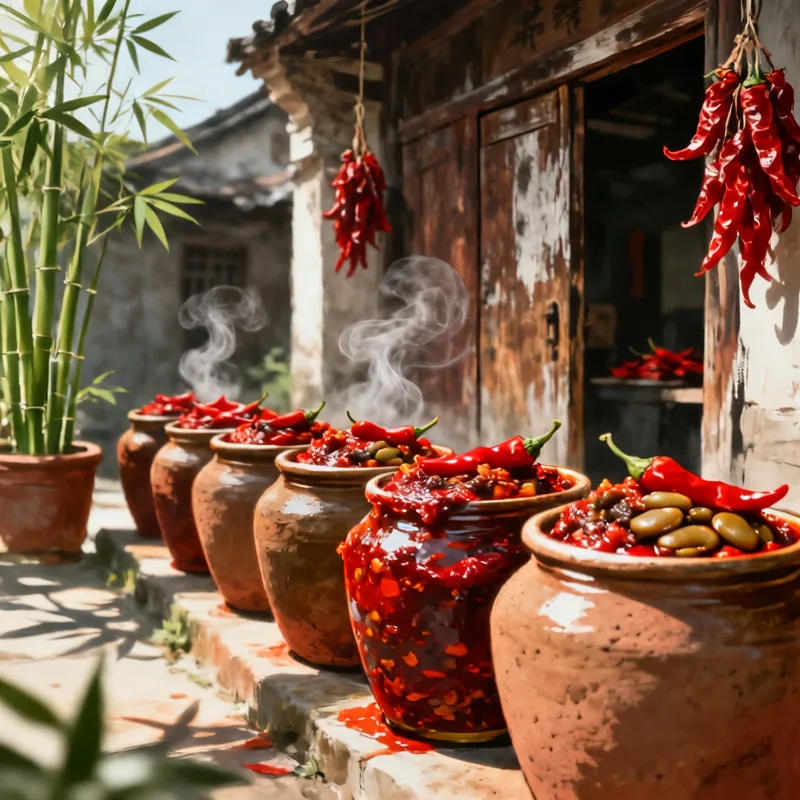
    Jars of red chilli and broad-bean paste fermenting outside a Sichuan workshop
    Fermented doubanjiang gives many Sichuan dishes their deep red base. ภาพประกอบที่สร้างโดย AI · SinoViz

    The Grammar of Heat

    Sichuan cooks distinguish several kinds of chilli heat. Dried chillies are fried in oil until fragrant but not blackened; chilli oil is steeped and aged; chilli bean paste supplies fermented heat; and fresh peppers give a brighter bite. Sichuan peppercorns, often toasted and ground, produce the málà combination of numbness and spice. Official Sichuan cookbooks describe more than twenty recognised flavour profiles, from guaiwei, strange or complex, to yuxiang, fish-fragrant, which uses no fish. Mapo tofu, associated with Chengdu in the nineteenth century, combines soft tofu, minced meat, doubanjiang, chilli oil, and Sichuan pepper. Kung Pao chicken uses dried chillies, peanuts, and a sweet-sour soy sauce.

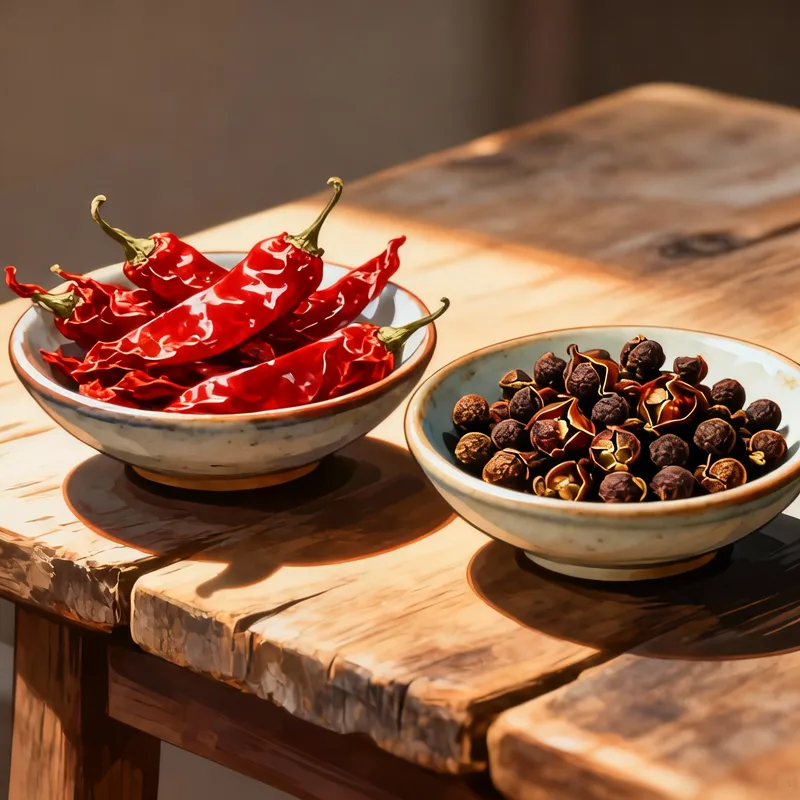
    Dried red chillies and Sichuan peppercorns in separate shallow bowls
    Chilli heat and peppercorn numbness are distinct, and cooks balance them separately. ภาพประกอบที่สร้างโดย AI · SinoViz

    Hotpot and the Two-Flame Bowl

    Chengdu hotpot is a social meal built around a divided pot. One side may hold a red broth of chilli oil, doubanjiang, beef fat, and spices; the other a clear chicken or mushroom stock. Diners cook thinly sliced beef, tripe, duck blood, fish balls, vegetables, and mushrooms, then dip them in sesame oil, garlic, and chopped herbs. The sesame dip cools the palate and coats the mouth against spice. Chongqing hotpot is often heavier and more direct, traditionally using beef tallow; Chengdu versions are commonly more aromatic and varied. Yibin and other southern cities add their own chilli blends. Restaurants label spice levels, but heat can still be adjusted only by asking.

    • Pixian doubanjiang as a fermented chilli-bean base
    • Málà: chilli heat plus peppercorn numbness
    • Two-flavour hotpot with red and clear broth
    • Sesame oil dip to moderate the heat
    A divided hotpot with red chilli broth and clear broth surrounded by ingredient plates
    A two-flavour pot lets a table divide heat from clarity. ภาพประกอบที่สร้างโดย AI · SinoViz

    Beyond the Fiery Stereotype

    Not every Sichuan dish is hot. Sichuan’s most ceremonial dish, Gongbao chicken and the banquet classic ‘sweet and sour’ aside, the cuisine includes clear broths, steamed dishes, and delicate pastry. Zhangcha duck is smoked with tea leaves and camphor before steaming, while boiled pork slices are served in a clear broth with mustard greens. Chengdu’s teahouses and dish shops serve small noodles, sweet-water noodles, and dumplings. The province also includes Tibetan and Yi food traditions in its western highlands, where barley, yak products, and different seasonings dominate. Reading Sichuan cuisine only as heat misses its central achievement: layering aromas, textures, and ferments so that strong flavours remain controlled.

    Sichuan cooking is not simply hot; it is a carefully graded argument between chilli, pepper, oil, and ferment.

    แหล่งข้อมูลและเอกสารอ่านเพิ่มเติม

    1. Sichuan cuisine — สารานุกรมบริแทนนิกา
    2. Chinese Cuisine — สารานุกรมบริแทนนิกา
    3. Sichuan Food — China Highlights.

    ดูตำแหน่งที่ติดตั้ง

    โปรดติดตามข้อมูลนี้ไปยังภูมิภาคที่เกี่ยวข้อง

    สำรวจโดยใช้แผนที่

    ติดตามกระทู้นี้

    ดูรายการอื่นๆ ที่มีแท็กเดียวกัน

    เรียกดูแท็ก
  • ฝูเจี้ยน

    ภูมิภาค · ชายฝั่ง ถู่โหลว และชา

    ฝูเจี้ยน

    มณฑลฝูเจี้ยนตั้งอยู่ตรงข้ามกับไต้หวันข้ามช่องแคบ และหันหน้าออกสู่ทะเล ภูเขาของมณฑลเป็นที่พักพิงของชุมชนบ้านตุลโหลของชาวฮักกา ขณะที่ท่าเรือต่างๆ เป็นเส้นทางขนส่งพ่อค้า ผู้อพยพ และชาข้ามทะเล

    ภูมิภาค
    ฝูเจี้ยน
    พิกัด
    26.07°เหนือ, 119.30°ตะวันออก
    เป็นที่รู้จักในด้าน
    ชายฝั่ง บ้านทรงตุลู และชา

    ภูมิประเทศ

    เนินเขาสูงชันบรรจบกับแนวชายฝั่งที่ขรุขระ แม่น้ำกัดเซาะหุบเขาสั้นๆ จนไหลลงสู่ทะเล ก่อให้เกิดท่าเรือธรรมชาติและแยกชุมชนที่อยู่ภายในแผ่นดิน ทำให้เกิดสถาปัตยกรรมและภาษาถิ่นที่เป็นเอกลักษณ์เฉพาะตัว

    มรดกและสถานที่

    • ฝูเจี้ยน ถู่โหลว
    • กู่หลางยวี่
    • เทือกเขาหวู่หยี
    • แหล่งท่าน้ำเมืองฉวนโจว

    วัฒนธรรมและชีวิตประจำวัน

    มณฑลฝูเจี้ยนมีชื่อเสียงด้านชาอู่หลง อาหารทะเล ประเพณีหมิ่นหนานและฮักกา และเครือข่ายวัดวาอารามที่เชื่อมโยงกับการเดินเรือ ประวัติศาสตร์ของมณฑลนี้มีทั้งส่วนที่เกี่ยวข้องกับภูเขาและมหาสมุทร

    จากภูมิภาคนี้

    เรื่องราวที่น่าอ่านต่อไป

    ข้อมูลที่เกี่ยวข้องกับสถานที่แห่งนี้ ครอบคลุมทั้งแผนที่ บันทึกเหตุการณ์ และชีวิตประจำวัน

    เดินทางต่อไป

    จับคู่ภูมิภาคนี้กับคู่มือท่องเที่ยว หรือติดตามเรื่องราวต่างๆ ของภูมิภาคนี้ผ่านกาลเวลา

    สำรวจจุดหมายปลายทาง โอเพ่นโครนิเคิล
  • กวางซี

    Region · Karst and the Li River

    กวางซี

    Guangxi is a landscape of limestone peaks, rivers and terraced hills. Its karst scenery is famous, but the province is equally defined by Zhuang, Dong and Miao communities and their festivals.

    ภูมิภาค
    กวางซี
    พิกัด
    22.82°N, 108.32°E
    เป็นที่รู้จักในด้าน
    Karst and the Li River

    ภูมิประเทศ

    Karst towers rise above the Li River and surrounding plains. Caves, sinkholes and underground rivers shape both the scenery and the agricultural life of the region.

    มรดกและสถานที่

    • Li River
    • Longji rice terraces
    • Detian Waterfall
    • Lingqu Canal

    วัฒนธรรมและชีวิตประจำวัน

    Guangxi food is sour, fragrant and often river-based. Zhuang song festivals, Dong drum towers and Miao silverwork connect the province’s scenic image to living local traditions.

    จากภูมิภาคนี้

    เรื่องราวที่น่าอ่านต่อไป

    ข้อมูลที่เกี่ยวข้องกับสถานที่แห่งนี้ ครอบคลุมทั้งแผนที่ บันทึกเหตุการณ์ และชีวิตประจำวัน

    เดินทางต่อไป

    จับคู่ภูมิภาคนี้กับคู่มือท่องเที่ยว หรือติดตามเรื่องราวต่างๆ ของภูมิภาคนี้ผ่านกาลเวลา

    สำรวจจุดหมายปลายทาง โอเพ่นโครนิเคิล
  • กวางตุ้ง

    Region · The Pearl River and the sea

    กวางตุ้ง

    Guangdong faces the South China Sea and the Pearl River Delta. Its ports, dialects and Cantonese food culture have long connected China to maritime trade and overseas communities.

    ภูมิภาค
    กวางตุ้ง
    พิกัด
    23.13°N, 113.26°E
    เป็นที่รู้จักในด้าน
    The Pearl River and the sea

    ภูมิประเทศ

    A subtropical coast gives way to river plains and northern hills. The delta’s waterways supported agriculture, trade and the dense urban networks that define the region today.

    มรดกและสถานที่

    • Kaiping diaolou
    • Danxia landforms
    • Guangzhou old quarters
    • Foshan ancestral halls

    วัฒนธรรมและชีวิตประจำวัน

    Cantonese cuisine prizes freshness, seafood and dim sum. Lingnan architecture, opera and clan halls reflect a culture shaped by commerce, migration and humid coastal life.

    จากภูมิภาคนี้

    เรื่องราวที่น่าอ่านต่อไป

    ข้อมูลที่เกี่ยวข้องกับสถานที่แห่งนี้ ครอบคลุมทั้งแผนที่ บันทึกเหตุการณ์ และชีวิตประจำวัน

    เดินทางต่อไป

    จับคู่ภูมิภาคนี้กับคู่มือท่องเที่ยว หรือติดตามเรื่องราวต่างๆ ของภูมิภาคนี้ผ่านกาลเวลา

    สำรวจจุดหมายปลายทาง โอเพ่นโครนิเคิล
  • ซินเจียง

    ภูมิภาค · ทะเลทราย โอเอซิส และเส้นทางสายไหม

    ซินเจียง

    ซินเจียงครอบคลุมพื้นที่ทะเลทราย ทุ่งหญ้า และภูเขาสูงทางตะวันตกเฉียงเหนือของจีน เมืองโอเอซิสตามเส้นทางสายไหมทำให้ที่นี่เป็นจุดนัดพบสำหรับการค้าขาย ความเชื่อ และภาษาต่างๆ

    ภูมิภาค
    ซินเจียง
    พิกัด
    43.83°เหนือ, 87.62°ตะวันออก
    เป็นที่รู้จักในด้าน
    ทะเลทราย โอเอซิส และเส้นทางสายไหม

    ภูมิประเทศ

    ทะเลทรายทาคลามากันตั้งอยู่ระหว่างเทือกเขาเทียนซานและเทือกเขาคุนหลุน น้ำที่ละลายจากธารน้ำแข็งก่อให้เกิดแม่น้ำในโอเอซิส ขณะที่คลองโบราณที่เรียกว่าคาเรซนำน้ำใต้ดินมาสู่ฟาร์มและเมืองต่างๆ

    มรดกและสถานที่

    • เมืองเก่าคัชการ์
    • ซากปรักหักพังเจียวเหอ
    • ระบบชลประทานคาเรซ
    • เทียนซาน เทียนฉี

    วัฒนธรรมและชีวิตประจำวัน

    ดนตรีอุยกูร์ นาน เนื้อแกะเสียบไม้ และตลาดต่างๆ ทำให้ซินเจียงมีวัฒนธรรมแบบโอเอซิสที่โดดเด่น ประวัติศาสตร์ของภูมิภาคนี้ปรากฏให้เห็นได้ในถ้ำพุทธศาสนา สถาปัตยกรรมอิสลาม และเส้นทางคาราวาน

    จากภูมิภาคนี้

    เรื่องราวที่น่าอ่านต่อไป

    ข้อมูลที่เกี่ยวข้องกับสถานที่แห่งนี้ ครอบคลุมทั้งแผนที่ บันทึกเหตุการณ์ และชีวิตประจำวัน

    เดินทางต่อไป

    จับคู่ภูมิภาคนี้กับคู่มือท่องเที่ยว หรือติดตามเรื่องราวต่างๆ ของภูมิภาคนี้ผ่านกาลเวลา

    สำรวจจุดหมายปลายทาง โอเพ่นโครนิเคิล
  • Tibet (Xizang)

    ภูมิภาค · ที่ราบสูง

    ซีซัง

    ทิเบตตั้งอยู่บนที่ราบสูงอันกว้างใหญ่ เต็มไปด้วยวัดวาอาราม ช่องเขา และทะเลสาบศักดิ์สิทธิ์ ภูมิประเทศและวิถีชีวิตทางศาสนาได้หล่อหลอมวัฒนธรรมที่ปรับตัวให้เข้ากับระดับความสูง แสง และระยะทาง

    ภูมิภาค
    ซีซัง
    พิกัด
    29.65°เหนือ, 91.12°ตะวันออก
    เป็นที่รู้จักในด้าน
    ที่ราบสูง

    ภูมิประเทศ

    ที่ราบสูงทิเบตมีความสูงเฉลี่ยกว่า 4,000 เมตร ธารน้ำแข็งเป็นแหล่งกำเนิดของแม่น้ำสายสำคัญในเอเชีย ขณะที่หุบเขากว้างและช่องเขาที่สูงชันเป็นเส้นทางสัญจรหลักระหว่างเมืองและวัดวาอารามต่างๆ

    มรดกและสถานที่

    • พระราชวังโปตาลา
    • วัดโจคัง
    • บริเวณฐานเขาเอเวอเรสต์
    • ทะเลสาบน้ำโซ

    วัฒนธรรมและชีวิตประจำวัน

    พุทธศาสนาทิเบต ชาเนย ซัมปา และธงภาวนา ล้วนเป็นส่วนหนึ่งของชีวิตประจำวัน เทศกาลทางศาสนา ภาพวาดทังกา และสถาปัตยกรรมหิน ล้วนถ่ายทอดความหมายทางศาสนาลงสู่พื้นที่สาธารณะ

    จากภูมิภาคนี้

    เรื่องราวที่น่าอ่านต่อไป

    ข้อมูลที่เกี่ยวข้องกับสถานที่แห่งนี้ ครอบคลุมทั้งแผนที่ บันทึกเหตุการณ์ และชีวิตประจำวัน

    เดินทางต่อไป

    จับคู่ภูมิภาคนี้กับคู่มือท่องเที่ยว หรือติดตามเรื่องราวต่างๆ ของภูมิภาคนี้ผ่านกาลเวลา

    สำรวจจุดหมายปลายทาง โอเพ่นโครนิเคิล
  • ยูนนาน

    Region · Mountains, tea and many peoples

    ยูนนาน

    Yunnan sits where the Tibetan plateau drops toward Southeast Asia. Its deep valleys, tea mountains and old towns hold an unusually wide range of languages, foods and festivals.

    ภูมิภาค
    ยูนนาน
    พิกัด
    25.04°N, 102.71°E
    เป็นที่รู้จักในด้าน
    Mountains, tea and many peoples

    ภูมิประเทศ

    The province is a mosaic of high mountains, river gorges and subtropical valleys. The Three Parallel Rivers area carries the Yangtze, Mekong and Salween through dramatic terrain.

    มรดกและสถานที่

    • Old Town of Lijiang
    • Stone Forest
    • Three Parallel Rivers
    • Yuanyang rice terraces

    วัฒนธรรมและชีวิตประจำวัน

    Yunnan food is sour, spicy, herbal and intensely local: crossing-the-bridge noodles, mushrooms, cured ham and Pu’er tea. Dai, Bai, Yi, Naxi and many other communities shape the province’s festivals and crafts.

    จากภูมิภาคนี้

    เรื่องราวที่น่าอ่านต่อไป

    ข้อมูลที่เกี่ยวข้องกับสถานที่แห่งนี้ ครอบคลุมทั้งแผนที่ บันทึกเหตุการณ์ และชีวิตประจำวัน

    เดินทางต่อไป

    จับคู่ภูมิภาคนี้กับคู่มือท่องเที่ยว หรือติดตามเรื่องราวต่างๆ ของภูมิภาคนี้ผ่านกาลเวลา

    สำรวจจุดหมายปลายทาง โอเพ่นโครนิเคิล
  • เสฉวน

    Region · A basin of pepper and pandas

    เสฉวน

    Sichuan is defined by its fertile basin, mountain borders and a cuisine that turned chilli and Sichuan pepper into a regional language. Its history runs from ancient Shu kingdoms to modern high-speed corridors.

    ภูมิภาค
    เสฉวน
    พิกัด
    30.57°N, 104.07°E
    เป็นที่รู้จักในด้าน
    A basin of pepper and pandas

    ภูมิประเทศ

    Ringed by mountains, the Sichuan Basin holds rivers, farmland and dense cities. To the west, the plateau rises sharply toward Tibet; to the east, gorges cut toward the Yangtze.

    มรดกและสถานที่

    • Leshan Giant Buddha
    • Dujiangyan irrigation system
    • Jiuzhaigou
    • Mount Emei

    วัฒนธรรมและชีวิตประจำวัน

    Sichuan cooking balances málà heat, fragrance and texture. Teahouses, opera, bamboo craft and panda conservation give the province a cultural life that is both local and widely recognised.

    จากภูมิภาคนี้

    เรื่องราวที่น่าอ่านต่อไป

    ข้อมูลที่เกี่ยวข้องกับสถานที่แห่งนี้ ครอบคลุมทั้งแผนที่ บันทึกเหตุการณ์ และชีวิตประจำวัน

    เดินทางต่อไป

    จับคู่ภูมิภาคนี้กับคู่มือท่องเที่ยว หรือติดตามเรื่องราวต่างๆ ของภูมิภาคนี้ผ่านกาลเวลา

    สำรวจจุดหมายปลายทาง โอเพ่นโครนิเคิล