Tag: Food

  • The Lantern Festival

    Life & Folklore

    The Lantern Festival

    Lights on the Fifteenth Night

    The fifteenth night of the first lunar month closes the New Year with lanterns and sweet rice balls.

    Section
    Life & Folklore
    Region
    Beijing
    Era
    Across eras
    Tags
    Customs, Food

    The Lantern Festival falls on the fifteenth day of the first lunar month, the first full moon of the year. Lanterns, night markets, riddles, and tangyuan rice balls mark the end of the New Year period.

    Origins in Calendar and Court

    The festival’s date follows the lunar calendar, so its Gregorian date changes each year. Several origins are cited. Emperor Wen of Han is said to have declared a public holiday around 180 BCE after defeating the Lü clan, while the Eastern Han emperor Ming promoted lantern displays in the first century CE as Buddhism spread. Daoist tradition associated the day with the heavenly official who grants blessings. By the Tang dynasty, the festival had become a major urban occasion: court records describe vast lantern displays in Chang’an and Luoyang, and the poet Su Weidao wrote of night markets bright as day. The Tang court relaxed curfew so people could view the lights.
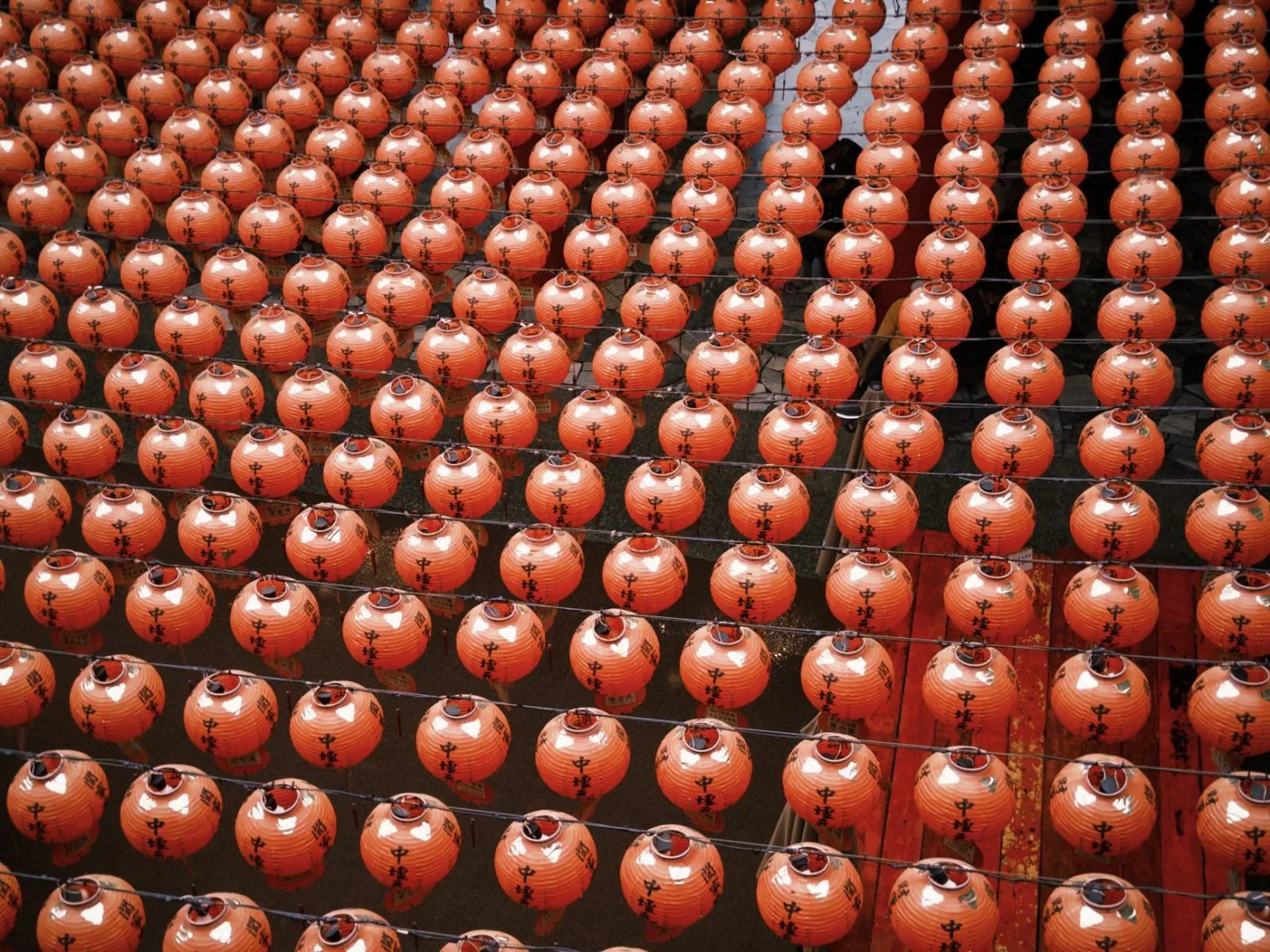
    Rows of illuminated red lanterns hanging along a street during a night festival
    Tang cities relaxed curfew so residents could walk among the lanterns at night. zack ZHUO | Pexels License (https://www.pexels.com/license/)

    Riddles, Lions, and Processions

    Lantern riddles are written on slips attached to the lamps; solving one is a small test of wordplay and classical learning. Lion dances, dragon dances, and walking-on-stilts performances draw crowds in the streets, with local troupes competing for space and applause. In some places, people carry lanterns representing animals or characters, and children pull small lanterns on sticks. Beijing’s temple fairs once gathered vendors, performers, and visitors around temple courtyards; today the festival is also marked in parks and commercial districts. Taiwan is known for large lantern festivals and elaborate installations, while Nanjing has long been associated with elaborate lantern craft along the Qinhuai River.
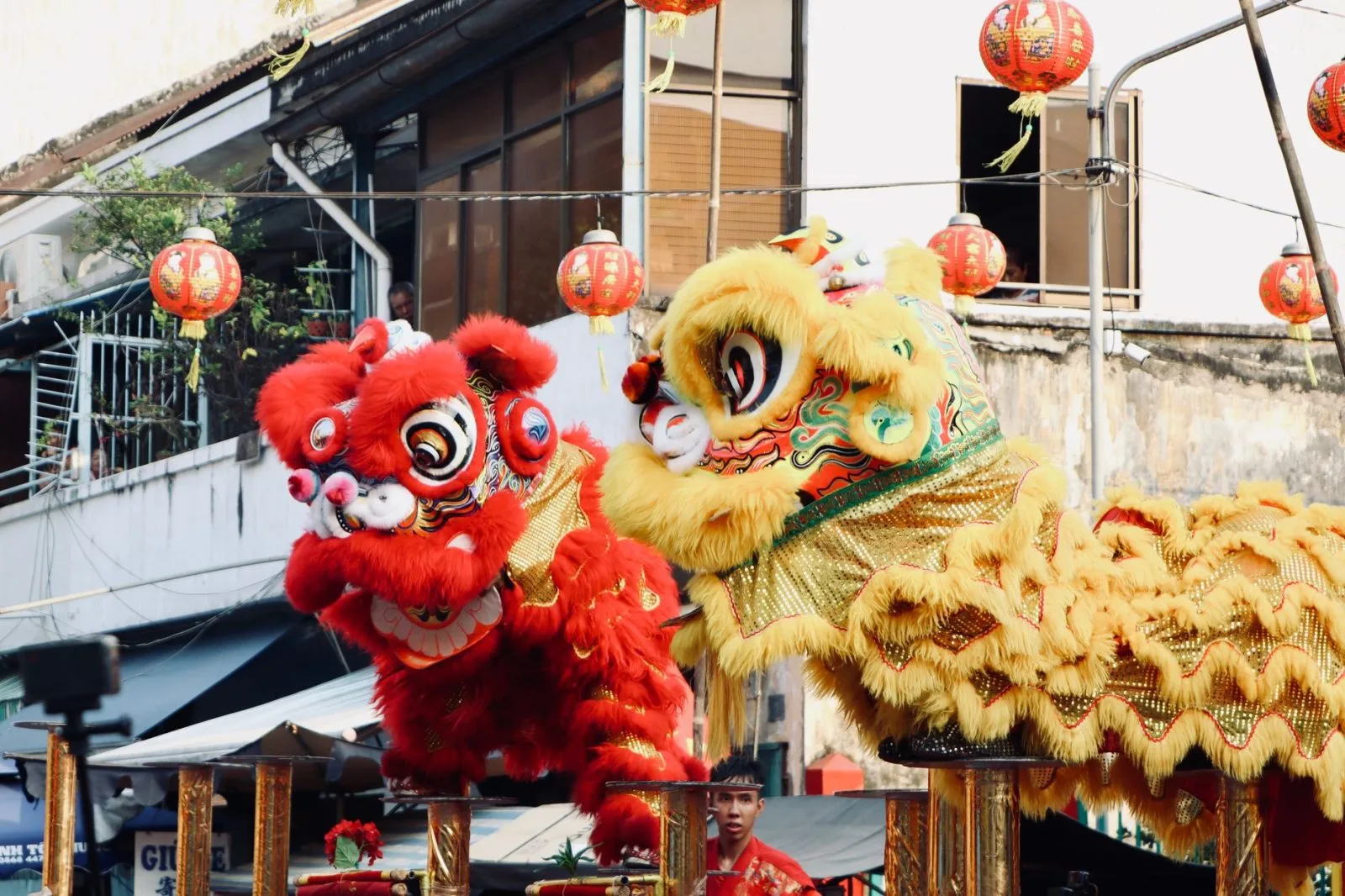
    A lion dance troupe leaping beneath hanging lanterns during a street celebration
    Processions and lion dances turn the festival into a public performance. Pham Huynh Tuan Vy | Pexels License (https://www.pexels.com/license/)

    Tangyuan and the Taste of Reunion

    The festival food is tangyuan in southern China and often yuanxiao in the north, both made from glutinous rice flour around a sweet filling. The names and methods differ: southern cooks wrap a soft dough around filling, while northern cooks may roll moistened filling in dry rice flour in repeated layers. Fillings include black sesame paste, red bean, peanut, and osmanthus sugar. The round shape suggests family unity, and the bowls are shared after the evening’s walk. In Ningbo, black-sesame tangyuan are a local speciality; in Shanghai and Suzhou they are sold from neighbourhood shops. Sweet rice wine and small glutinous balls are also served in some regions.

    • Black sesame, red bean, and peanut fillings
    • Southern wrapped tangyuan and northern rolled yuanxiao
    • Lantern riddles attached to public displays
    • Dragon and lion processions after dark
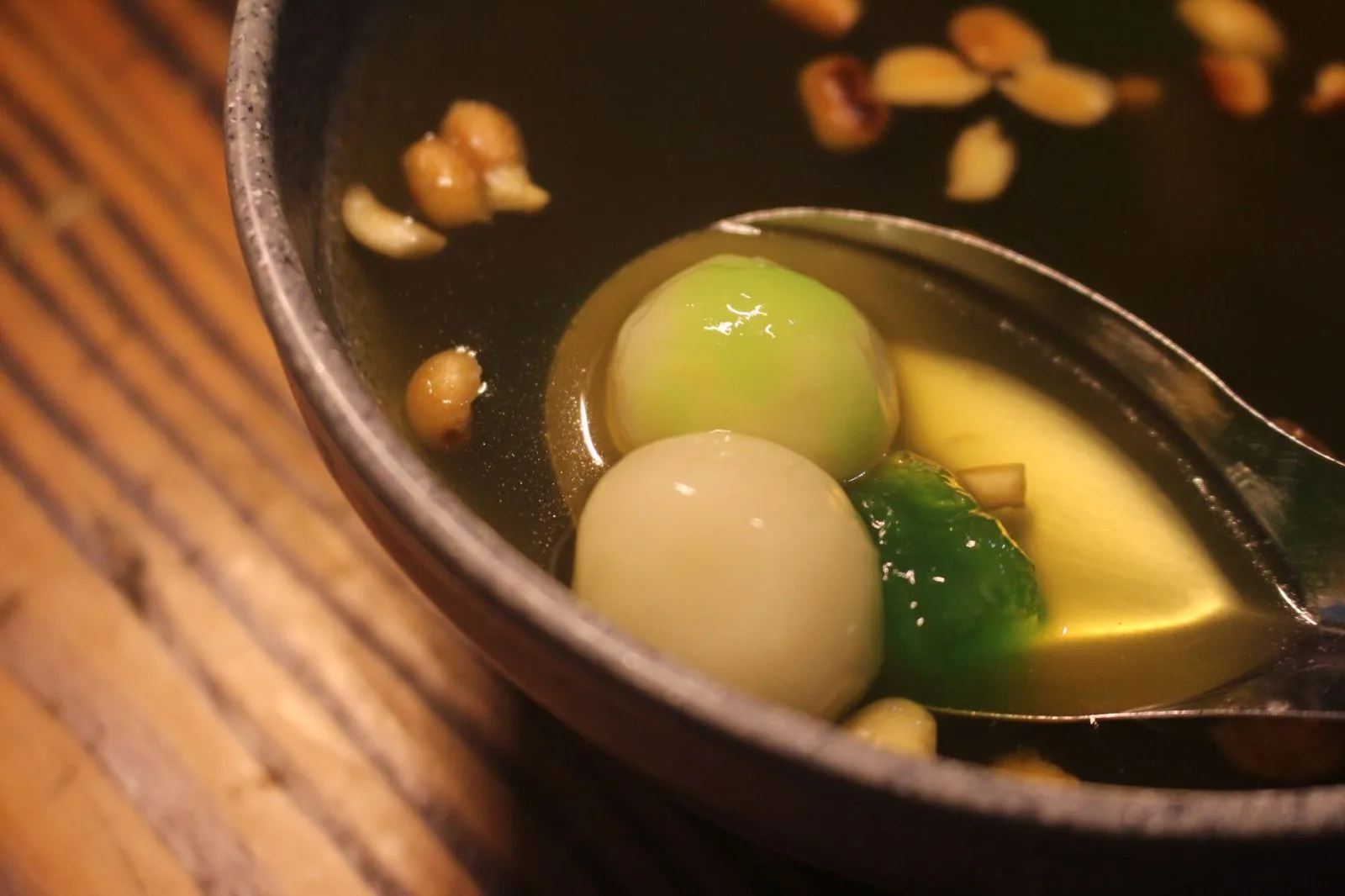
    A bowl of small white glutinous rice balls in clear sweet soup
    Round rice balls symbolise reunion at the first full moon. Jauhar Musthofal Qulub | Pexels License (https://www.pexels.com/license/)

    The Festival in Modern Cities

    The festival remains a public holiday in mainland China, though the number of days off and the school calendar vary. Major cities install temporary lighting, close some streets to traffic, and run lantern displays in parks and along rivers. Viewing a lantern show often means walking slowly in crowds; in Beijing, the temperature can still be below freezing, so warm layers matter. Photographers should check local rules on tripods and drones. Shopping districts extend the season commercially, but temple fairs and neighbourhood associations keep older practices alive. The date’s movement also means the festival may fall during term time or a working week, changing how families gather.

    The first full moon turns a winter street into a temporary gallery of paper, silk, and light.

    Sources & further reading

    1. Lantern Festival — Encyclopaedia Britannica.
    2. Chinese Lantern Festival — China Highlights.
    3. Yuanxiao Festival — World History Encyclopedia.
    See it in place

    Follow this entry to the region where it belongs.

    Explore by Map

    Follow the thread

    Browse other entries that share its tags.

    Browse the tag
  • Dumplings

    Life & Folklore

    Dumplings

    Filled Wheat Cases and Winter Ritual

    Northern Chinese dumplings turn wheat dough and seasonal fillings into a communal meal.

    Section
    Life & Folklore
    Region
    Beijing
    Era
    Across eras
    Tags
    Customs, Food

    Dumplings are filled wheat parcels cooked by boiling, steaming, or frying. In northern China they mark winter solstice and the Lunar New Year, when families assemble jiaozi around a table and fold each parcel by hand.

    Wheat in the Northern Diet

    Dumplings belong to northern China’s wheat-and-millet zone, where wheat flour became a staple in the Han and later dynasties. Their shape has been compared to ancient Chinese money, which gave the dish a place in New Year language: jiaozi sounds related to a phrase for exchanging treasure. A well-known tradition links dumplings to the physician Zhang Zhongjing, who is said to have made filled dough parcels to treat frostbitten ears during the Han period. The story is difficult to verify, but it explains the custom of eating them in cold weather. Archaeological evidence for filled wheat foods is clearer than for any single inventor.

    A row of pleated jiaozi dumplings resting on a floured wooden board
    The pleated edge seals the filling and gives each dumpling its familiar shape. Angela Roma | Pexels License (https://www.pexels.com/license/)

    Dough, Filling, and Fold

    Basic jiaozi dough uses wheat flour and water, rested so gluten relaxes and the wrapper can be rolled thin without tearing. Some cooks add an egg or use hot water for part of the flour to make a softer texture. Fillings are chopped fine so they cook through: pork with cabbage, chives, or leeks; lamb with onion in the northwest; shrimp and egg in coastal areas. The cook places filling in the centre, folds the wrapper, and presses pleats along the seam. A tight seal matters because boiling opens the dough if air remains inside. Vegetarian fillings with tofu, mushrooms, or egg are common, especially for temple visits and fasting periods.

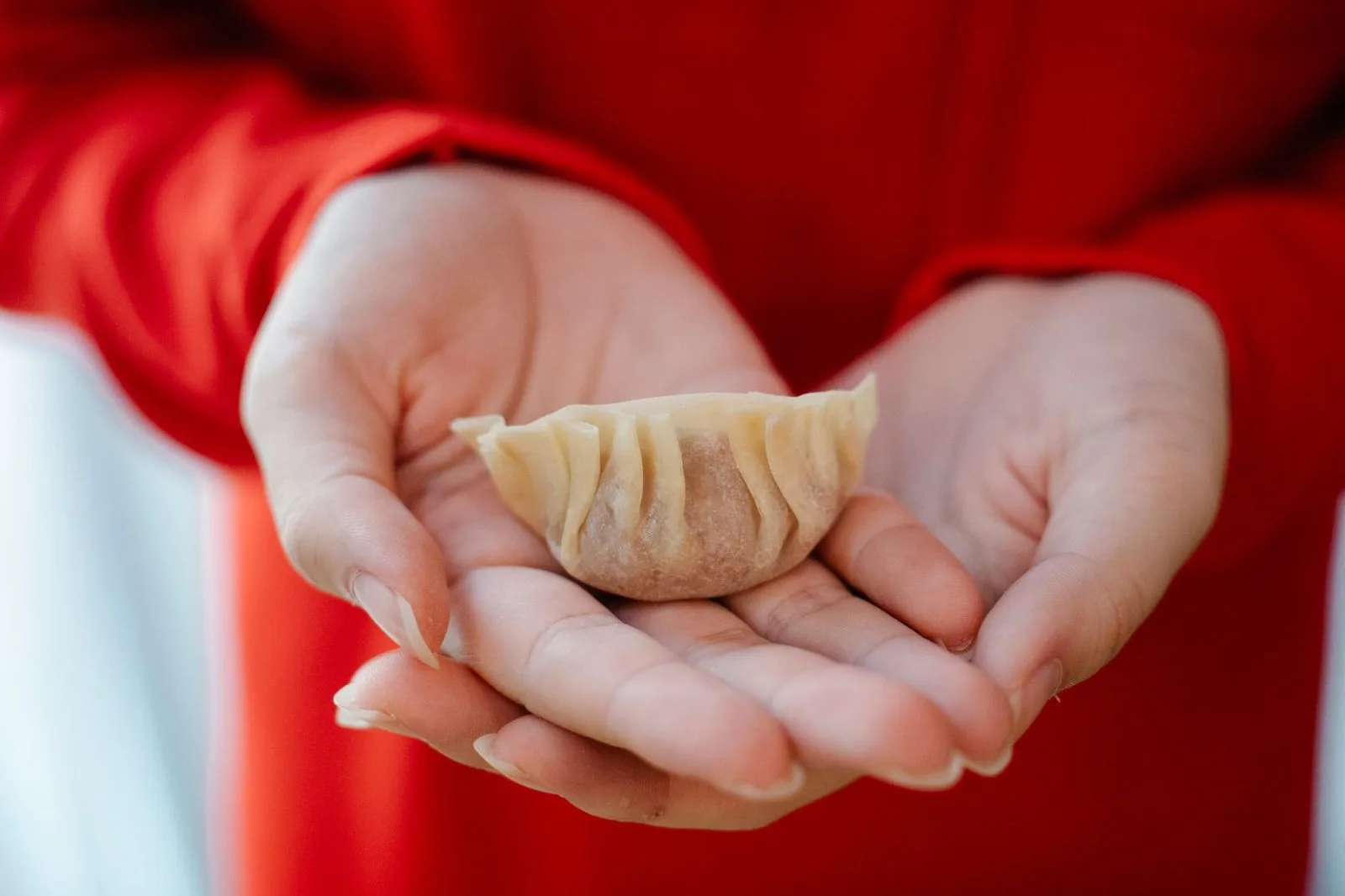
    Hands pinching pleats along the edge of an uncooked dumpling
    Pleating seals the parcel; each family may favour a different fold. Angela Roma | Pexels License (https://www.pexels.com/license/)

    Boiled, Steamed, and Fried

    The most common method is boiling: dumplings are added to a large pot, nudged from the bottom, and cooked until they float and swell. Northern cooks often add a little cold water when the pot boils again, repeating the process three times for a firm skin. The potsticker, or guotie, is fried on one side, then steamed under a lid with a little water, leaving a crisp base. Southern and diaspora versions include steamed har gow with shrimp and translucent wheat-starch wrappers. Dipping sauces vary from black vinegar and ginger to soy sauce with chilli oil or garlic. The fillings also shift: pork and chives dominate in Beijing, beef and lamb appear in Muslim communities, and cabbage or mushroom suits colder inland cities.

    • Boiled jiaozi for New Year and winter solstice
    • Guotie with a crisp fried base
    • Black vinegar and ginger as a classic dip
    • Regional fillings of pork, lamb, shrimp, or vegetables
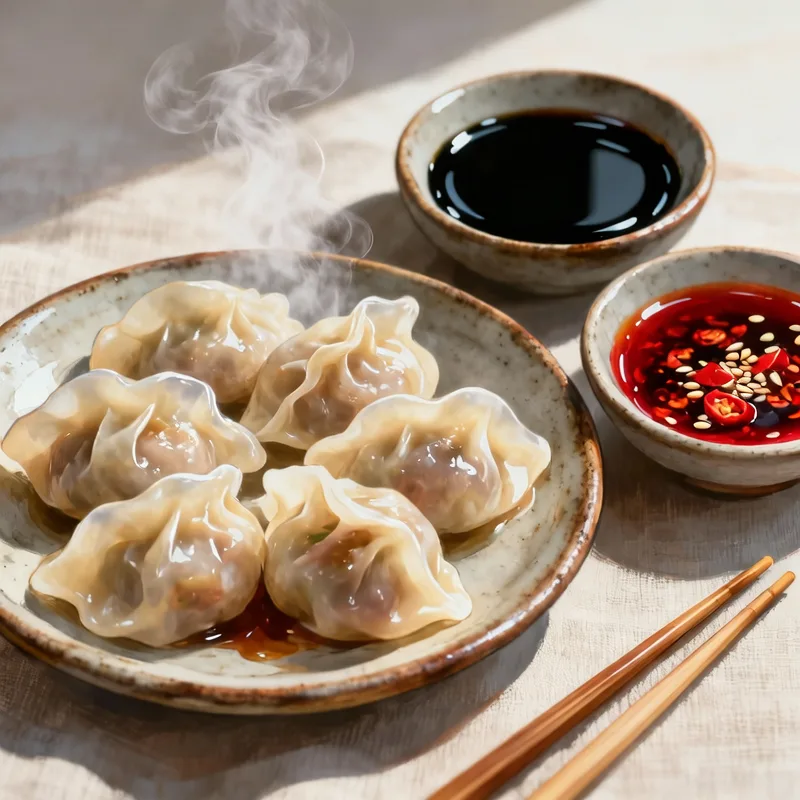
    Boiled dumplings served with small dishes of vinegar and chilli oil
    A vinegar-and-ginger dip cuts through rich pork fillings. AI-generated illustration · SinoViz

    Making Them Together

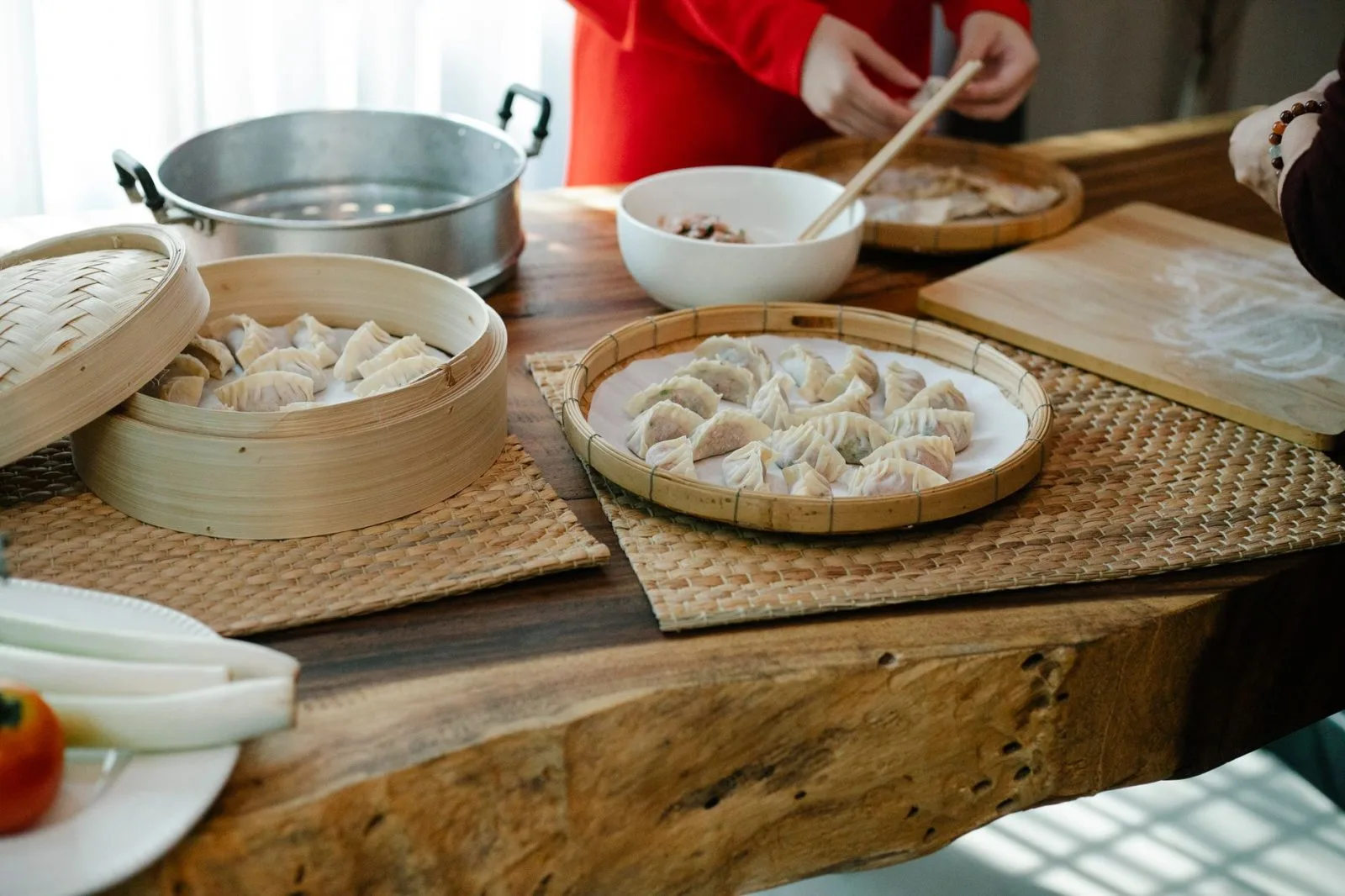
    Dumplings are a social food because assembly takes time. On Lunar New Year’s Eve, several generations may roll wrappers, chop filling, and fold dozens or hundreds together; some dumplings are shaped like coins or hidden with a cleaned coin as a token of luck. Eating is often arranged around the family’s oldest members. Leftovers are fried the next day, and frozen dumplings are now sold in supermarkets across China and abroad. Restaurant versions range from Beijing houses serving lamb dumplings to Shanghai guotie and soup-filled xiaolongbao, which belong to a related but distinct family of steamed buns.

    A dumpling is a small piece of household organisation: dough, filling, hands, and a reason to gather.

    Sources & further reading

    1. Dumpling — Encyclopaedia Britannica.
    2. Jiaozi — Encyclopaedia Britannica.
    3. Chinese New Year — Encyclopaedia Britannica.

    See it in place

    Follow this entry to the region where it belongs.

    Explore by Map

    Follow the thread

    Browse other entries that share its tags.

    Browse the tag
  • Sichuan Cuisine

    Life & Folklore

    Sichuan Cuisine

    Chilli Oil, Ferment, and the Numbing Pepper

    Sichuan cooking balances chilli heat, Sichuan pepper numbness, fermented bean paste, and rich broth.

    Section
    Life & Folklore
    Region
    Sichuan
    Era
    Across eras
    Tags
    Customs, Food, Geography

    Sichuan cuisine is known for bold seasoning, but its classic dishes are built on contrast: chilli with Sichuan pepper, hot oil with cool cucumber, or a clear broth beside a fiery one.

    A Basin Pantry and Early Flavours

    The Sichuan Basin has fertile fields, rivers, and a humid climate, but its early elite cooking was not defined by chilli. Chilli peppers reached China from the Americas in the sixteenth century and became a Sichuan staple later, especially among ordinary households. Before that, cooks used ginger, garlic, mustard, vinegar, and the distinctive Sichuan pepper, Zanthoxylum simulans, whose husks cause a tingling sensation rather than heat.Fermented bean pastes from the basin towns added depth. Pixian doubanjiang, a broad-bean and chilli paste fermented in Pixian near Chengdu, became a foundation of many red-braised and stir-fried dishes. The province’s food therefore combines older preservation methods with ingredients that arrived through global trade.

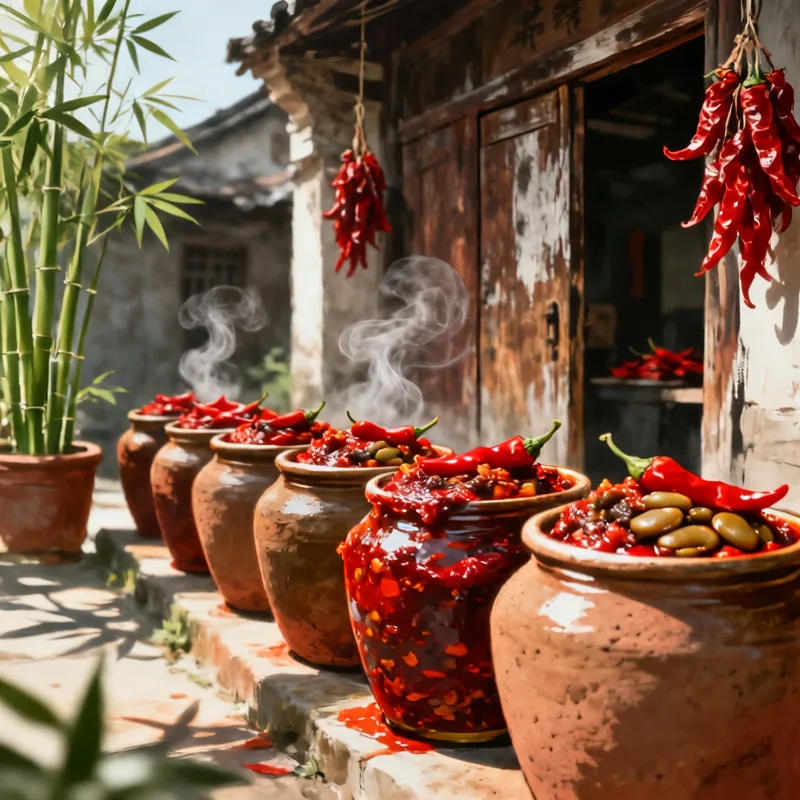
    Jars of red chilli and broad-bean paste fermenting outside a Sichuan workshop
    Fermented doubanjiang gives many Sichuan dishes their deep red base. AI-generated illustration · SinoViz

    The Grammar of Heat

    Sichuan cooks distinguish several kinds of chilli heat. Dried chillies are fried in oil until fragrant but not blackened; chilli oil is steeped and aged; chilli bean paste supplies fermented heat; and fresh peppers give a brighter bite. Sichuan peppercorns, often toasted and ground, produce the málà combination of numbness and spice. Official Sichuan cookbooks describe more than twenty recognised flavour profiles, from guaiwei, strange or complex, to yuxiang, fish-fragrant, which uses no fish. Mapo tofu, associated with Chengdu in the nineteenth century, combines soft tofu, minced meat, doubanjiang, chilli oil, and Sichuan pepper. Kung Pao chicken uses dried chillies, peanuts, and a sweet-sour soy sauce.

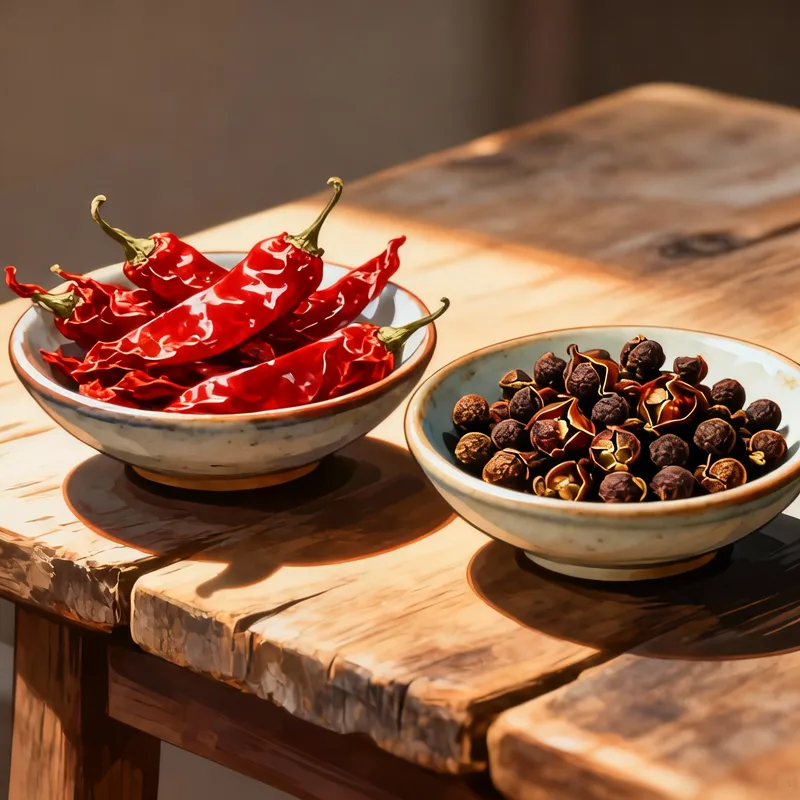
    Dried red chillies and Sichuan peppercorns in separate shallow bowls
    Chilli heat and peppercorn numbness are distinct, and cooks balance them separately. AI-generated illustration · SinoViz

    Hotpot and the Two-Flame Bowl

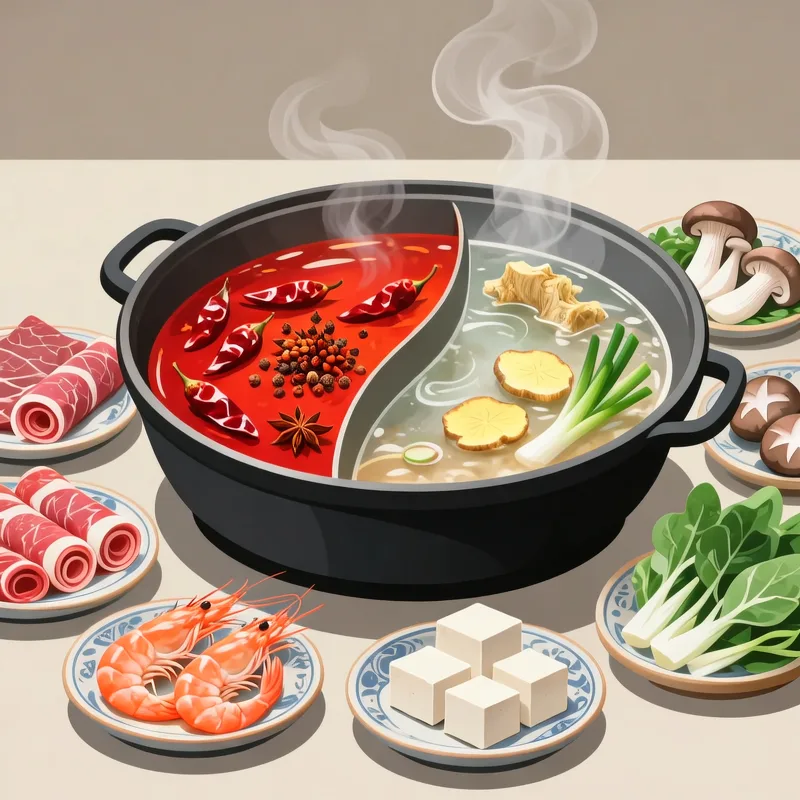
    Chengdu hotpot is a social meal built around a divided pot. One side may hold a red broth of chilli oil, doubanjiang, beef fat, and spices; the other a clear chicken or mushroom stock. Diners cook thinly sliced beef, tripe, duck blood, fish balls, vegetables, and mushrooms, then dip them in sesame oil, garlic, and chopped herbs. The sesame dip cools the palate and coats the mouth against spice. Chongqing hotpot is often heavier and more direct, traditionally using beef tallow; Chengdu versions are commonly more aromatic and varied. Yibin and other southern cities add their own chilli blends. Restaurants label spice levels, but heat can still be adjusted only by asking.

    • Pixian doubanjiang as a fermented chilli-bean base
    • Málà: chilli heat plus peppercorn numbness
    • Two-flavour hotpot with red and clear broth
    • Sesame oil dip to moderate the heat
    A divided hotpot with red chilli broth and clear broth surrounded by ingredient plates
    A two-flavour pot lets a table divide heat from clarity. AI-generated illustration · SinoViz

    Beyond the Fiery Stereotype

    Not every Sichuan dish is hot. Sichuan’s most ceremonial dish, Gongbao chicken and the banquet classic ‘sweet and sour’ aside, the cuisine includes clear broths, steamed dishes, and delicate pastry. Zhangcha duck is smoked with tea leaves and camphor before steaming, while boiled pork slices are served in a clear broth with mustard greens. Chengdu’s teahouses and dish shops serve small noodles, sweet-water noodles, and dumplings. The province also includes Tibetan and Yi food traditions in its western highlands, where barley, yak products, and different seasonings dominate. Reading Sichuan cuisine only as heat misses its central achievement: layering aromas, textures, and ferments so that strong flavours remain controlled.

    Sichuan cooking is not simply hot; it is a carefully graded argument between chilli, pepper, oil, and ferment.

    Sources & further reading

    1. Sichuan cuisine — Encyclopaedia Britannica.
    2. Chinese Cuisine — Encyclopaedia Britannica.
    3. Sichuan Food — China Highlights.

    See it in place

    Follow this entry to the region where it belongs.

    Explore by Map

    Follow the thread

    Browse other entries that share its tags.

    Browse the tag
  • Fujian

    Region · Coast, tulou and tea

    Fujian

    Fujian faces Taiwan across the strait and looks outward to the sea. Its mountains sheltered Hakka tulou communities, while its ports sent traders, migrants and tea across maritime routes.

    Region
    Fujian
    Coordinates
    26.07°N, 119.30°E
    Known for
    Coast, tulou and tea

    Landscape

    Steep hills meet a jagged coastline. Rivers cut short valleys to the sea, creating natural harbours and isolating inland communities that developed distinctive architecture and dialects.

    Heritage & places

    • Fujian tulou
    • Gulangyu
    • Wuyi Mountains
    • Quanzhou maritime sites

    Culture & daily life

    Fujian is known for oolong tea, seafood, Minnan and Hakka traditions, and temple networks tied to seafaring. The province’s history is both mountain-bound and ocean-facing.

    From this region

    Stories to read next

    Entries connected to this place across the map, chronicle and daily life.

    Continue the journey

    Pair this region with a destination guide or follow its stories through time.

    Explore destinations Open Chronicle
  • Guangxi

    Region · Karst and the Li River

    Guangxi

    Guangxi is a landscape of limestone peaks, rivers and terraced hills. Its karst scenery is famous, but the province is equally defined by Zhuang, Dong and Miao communities and their festivals.

    Region
    Guangxi
    Coordinates
    22.82°N, 108.32°E
    Known for
    Karst and the Li River

    Landscape

    Karst towers rise above the Li River and surrounding plains. Caves, sinkholes and underground rivers shape both the scenery and the agricultural life of the region.

    Heritage & places

    • Li River
    • Longji rice terraces
    • Detian Waterfall
    • Lingqu Canal

    Culture & daily life

    Guangxi food is sour, fragrant and often river-based. Zhuang song festivals, Dong drum towers and Miao silverwork connect the province’s scenic image to living local traditions.

    From this region

    Stories to read next

    Entries connected to this place across the map, chronicle and daily life.

    Continue the journey

    Pair this region with a destination guide or follow its stories through time.

    Explore destinations Open Chronicle
  • Guangdong

    Region · The Pearl River and the sea

    Guangdong

    Guangdong faces the South China Sea and the Pearl River Delta. Its ports, dialects and Cantonese food culture have long connected China to maritime trade and overseas communities.

    Region
    Guangdong
    Coordinates
    23.13°N, 113.26°E
    Known for
    The Pearl River and the sea

    Landscape

    A subtropical coast gives way to river plains and northern hills. The delta’s waterways supported agriculture, trade and the dense urban networks that define the region today.

    Heritage & places

    • Kaiping diaolou
    • Danxia landforms
    • Guangzhou old quarters
    • Foshan ancestral halls

    Culture & daily life

    Cantonese cuisine prizes freshness, seafood and dim sum. Lingnan architecture, opera and clan halls reflect a culture shaped by commerce, migration and humid coastal life.

    Continue the journey

    Pair this region with a destination guide or follow its stories through time.

    Explore destinations Open Chronicle
  • Xinjiang

    Region · Desert, oasis and Silk Road

    Xinjiang

    Xinjiang stretches across deserts, grasslands and high mountains at China’s northwest edge. Oasis towns along the Silk Road made it a meeting place for goods, faiths and languages.

    Region
    Xinjiang
    Coordinates
    43.83°N, 87.62°E
    Known for
    Desert, oasis and Silk Road

    Landscape

    The Taklamakan Desert sits between the Tian Shan and Kunlun ranges. Glacial melt feeds oasis rivers, while ancient karez channels brought water underground to farms and towns.

    Heritage & places

    • Kashgar old city
    • Jiaohe ruins
    • Karez irrigation system
    • Tianshan Tianchi

    Culture & daily life

    Uyghur music, naan, lamb kebabs and bazaars give Xinjiang a distinct oasis culture. The region’s history is visible in Buddhist caves, Islamic architecture and caravan routes.

    From this region

    Stories to read next

    Entries connected to this place across the map, chronicle and daily life.

    Continue the journey

    Pair this region with a destination guide or follow its stories through time.

    Explore destinations Open Chronicle
  • Tibet (Xizang)

    Region · The high plateau

    Xizang

    Tibet rises as a high plateau of monasteries, mountain passes and sacred lakes. Its landscape and religious life have shaped a culture adapted to altitude, light and distance.

    Region
    Xizang
    Coordinates
    29.65°N, 91.12°E
    Known for
    The high plateau

    Landscape

    The Tibetan Plateau averages over 4,000 metres. Glaciers feed major Asian rivers, while wide valleys and high passes structure movement between towns and monasteries.

    Heritage & places

    • Potala Palace
    • Jokhang Temple
    • Mount Everest base area
    • Namtso Lake

    Culture & daily life

    Tibetan Buddhism, butter tea, tsampa and prayer flags are part of daily life. Monastic festivals, thangka painting and stone architecture carry religious meaning into public space.

    From this region

    Stories to read next

    Entries connected to this place across the map, chronicle and daily life.

    Continue the journey

    Pair this region with a destination guide or follow its stories through time.

    Explore destinations Open Chronicle
  • Yunnan

    Region · Mountains, tea and many peoples

    Yunnan

    Yunnan sits where the Tibetan plateau drops toward Southeast Asia. Its deep valleys, tea mountains and old towns hold an unusually wide range of languages, foods and festivals.

    Region
    Yunnan
    Coordinates
    25.04°N, 102.71°E
    Known for
    Mountains, tea and many peoples

    Landscape

    The province is a mosaic of high mountains, river gorges and subtropical valleys. The Three Parallel Rivers area carries the Yangtze, Mekong and Salween through dramatic terrain.

    Heritage & places

    • Old Town of Lijiang
    • Stone Forest
    • Three Parallel Rivers
    • Yuanyang rice terraces

    Culture & daily life

    Yunnan food is sour, spicy, herbal and intensely local: crossing-the-bridge noodles, mushrooms, cured ham and Pu’er tea. Dai, Bai, Yi, Naxi and many other communities shape the province’s festivals and crafts.

    From this region

    Stories to read next

    Entries connected to this place across the map, chronicle and daily life.

    Continue the journey

    Pair this region with a destination guide or follow its stories through time.

    Explore destinations Open Chronicle
  • Sichuan

    Region · A basin of pepper and pandas

    Sichuan

    Sichuan is defined by its fertile basin, mountain borders and a cuisine that turned chilli and Sichuan pepper into a regional language. Its history runs from ancient Shu kingdoms to modern high-speed corridors.

    Region
    Sichuan
    Coordinates
    30.57°N, 104.07°E
    Known for
    A basin of pepper and pandas

    Landscape

    Ringed by mountains, the Sichuan Basin holds rivers, farmland and dense cities. To the west, the plateau rises sharply toward Tibet; to the east, gorges cut toward the Yangtze.

    Heritage & places

    • Leshan Giant Buddha
    • Dujiangyan irrigation system
    • Jiuzhaigou
    • Mount Emei

    Culture & daily life

    Sichuan cooking balances málà heat, fragrance and texture. Teahouses, opera, bamboo craft and panda conservation give the province a cultural life that is both local and widely recognised.

    From this region

    Stories to read next

    Entries connected to this place across the map, chronicle and daily life.

    Continue the journey

    Pair this region with a destination guide or follow its stories through time.

    Explore destinations Open Chronicle