Etichetta: Cibo

  • La festa delle lanterne

    Vita e folklore

    La festa delle lanterne

    Lights on the Fifteenth Night

    The fifteenth night of the first lunar month closes the New Year with lanterns and sweet rice balls.

    Sezione
    Vita e folklore
    Regione
    Pechino
    Era
    Attraverso le epoche
    Etichette
    Usanze, Cibo

    The Lantern Festival falls on the fifteenth day of the first lunar month, the first full moon of the year. Lanterns, night markets, riddles, and tangyuan rice balls mark the end of the New Year period.

    Origins in Calendar and Court

    The festival’s date follows the lunar calendar, so its Gregorian date changes each year. Several origins are cited. Emperor Wen of Han is said to have declared a public holiday around 180 BCE after defeating the Lü clan, while the Eastern Han emperor Ming promoted lantern displays in the first century CE as Buddhism spread. Daoist tradition associated the day with the heavenly official who grants blessings. By the Tang dynasty, the festival had become a major urban occasion: court records describe vast lantern displays in Chang’an and Luoyang, and the poet Su Weidao wrote of night markets bright as day. The Tang court relaxed curfew so people could view the lights.
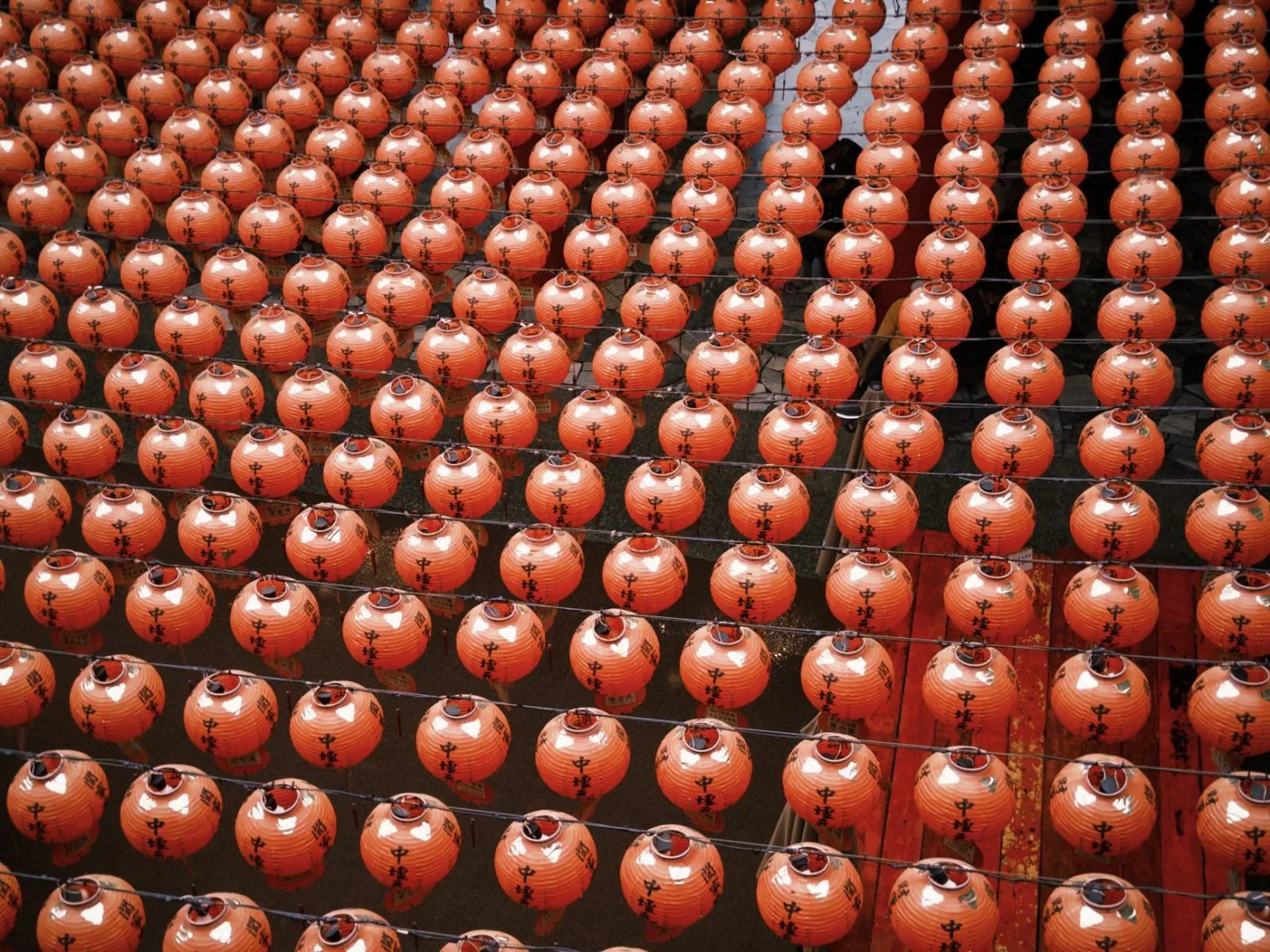
    Rows of illuminated red lanterns hanging along a street during a night festival
    Tang cities relaxed curfew so residents could walk among the lanterns at night. zack ZHUO | Pexels License (https://www.pexels.com/license/)

    Riddles, Lions, and Processions

    Lantern riddles are written on slips attached to the lamps; solving one is a small test of wordplay and classical learning. Lion dances, dragon dances, and walking-on-stilts performances draw crowds in the streets, with local troupes competing for space and applause. In some places, people carry lanterns representing animals or characters, and children pull small lanterns on sticks. Beijing’s temple fairs once gathered vendors, performers, and visitors around temple courtyards; today the festival is also marked in parks and commercial districts. Taiwan is known for large lantern festivals and elaborate installations, while Nanjing has long been associated with elaborate lantern craft along the Qinhuai River.
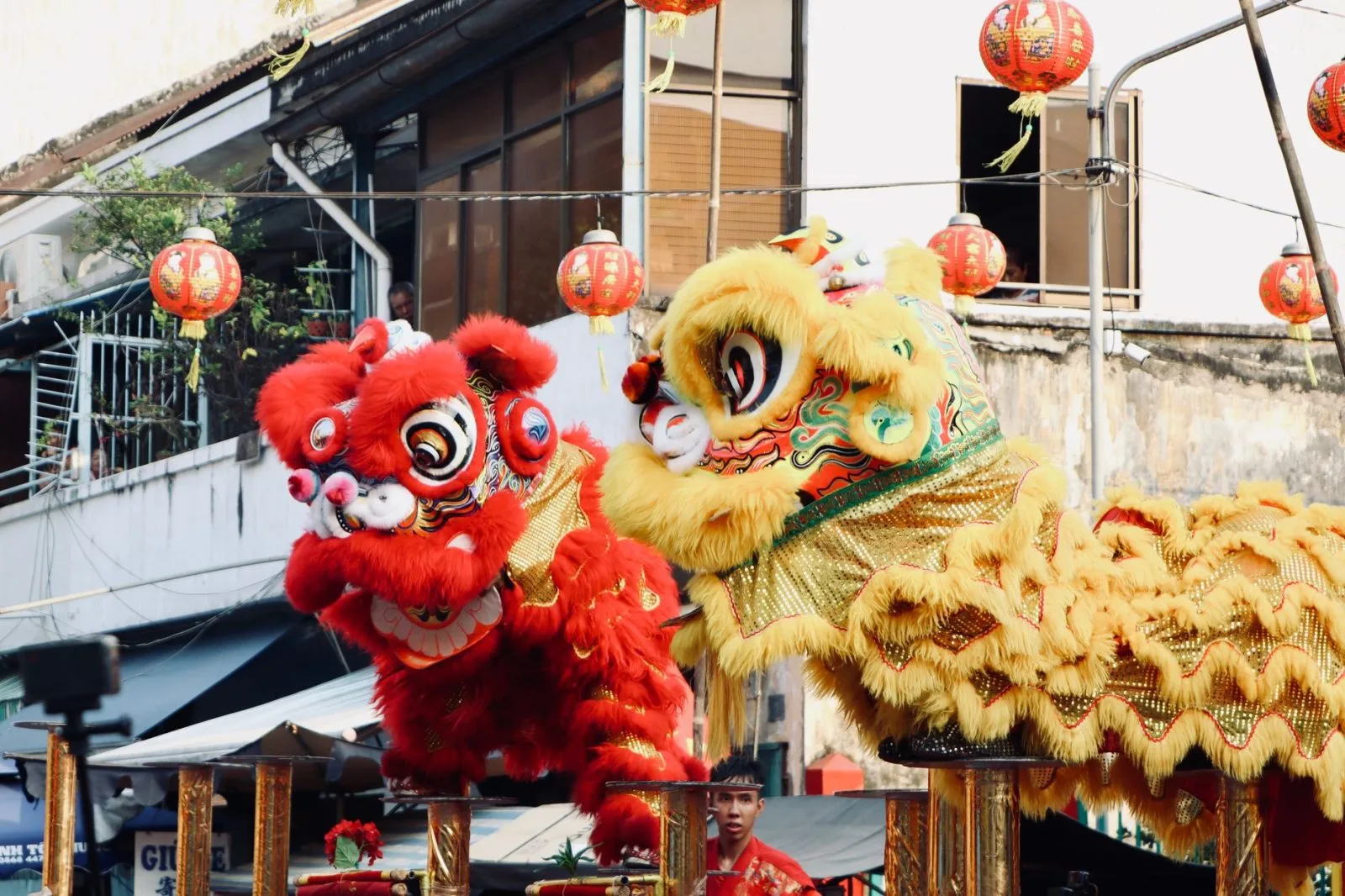
    A lion dance troupe leaping beneath hanging lanterns during a street celebration
    Processions and lion dances turn the festival into a public performance. Pham Huynh Tuan Vy | Pexels License (https://www.pexels.com/license/)

    Tangyuan and the Taste of Reunion

    The festival food is tangyuan in southern China and often yuanxiao in the north, both made from glutinous rice flour around a sweet filling. The names and methods differ: southern cooks wrap a soft dough around filling, while northern cooks may roll moistened filling in dry rice flour in repeated layers. Fillings include black sesame paste, red bean, peanut, and osmanthus sugar. The round shape suggests family unity, and the bowls are shared after the evening’s walk. In Ningbo, black-sesame tangyuan are a local speciality; in Shanghai and Suzhou they are sold from neighbourhood shops. Sweet rice wine and small glutinous balls are also served in some regions.

    • Black sesame, red bean, and peanut fillings
    • Southern wrapped tangyuan and northern rolled yuanxiao
    • Lantern riddles attached to public displays
    • Dragon and lion processions after dark
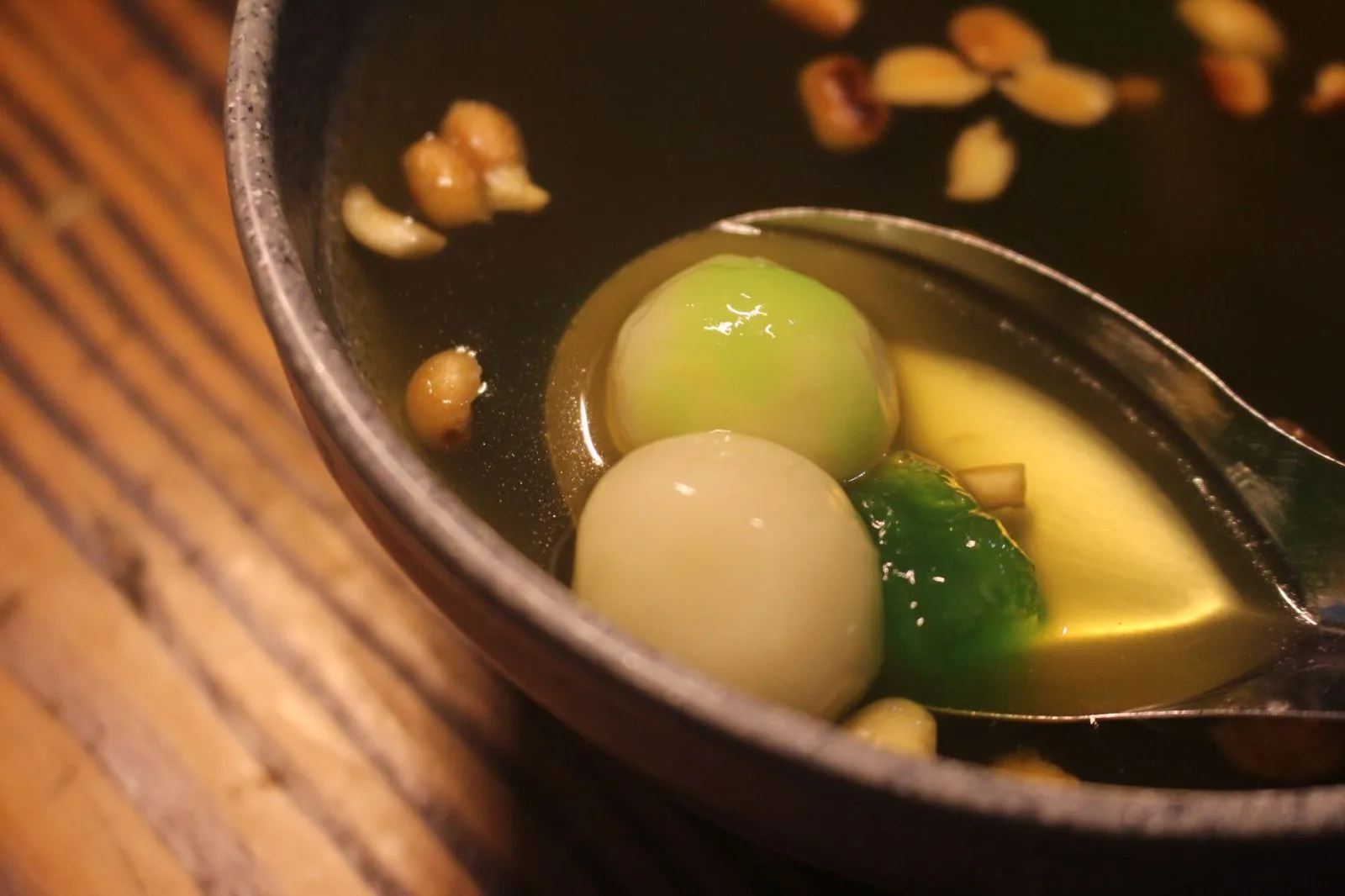
    A bowl of small white glutinous rice balls in clear sweet soup
    Round rice balls symbolise reunion at the first full moon. Jauhar Musthofal Qulub | Pexels License (https://www.pexels.com/license/)

    The Festival in Modern Cities

    The festival remains a public holiday in mainland China, though the number of days off and the school calendar vary. Major cities install temporary lighting, close some streets to traffic, and run lantern displays in parks and along rivers. Viewing a lantern show often means walking slowly in crowds; in Beijing, the temperature can still be below freezing, so warm layers matter. Photographers should check local rules on tripods and drones. Shopping districts extend the season commercially, but temple fairs and neighbourhood associations keep older practices alive. The date’s movement also means the festival may fall during term time or a working week, changing how families gather.

    The first full moon turns a winter street into a temporary gallery of paper, silk, and light.

    Fonti e ulteriori letture

    1. Festival delle lanterne — Enciclopedia Britannica.
    2. Chinese Lantern Festival — I punti salienti della Cina.
    3. Yuanxiao Festival — World History Encyclopedia.

    Guardalo al suo posto

    Segui questa voce per raggiungere la regione di appartenenza.

    Esplora tramite mappa
    Segui il filo

    Esplora altre voci che condividono i suoi tag.

    Esplora il tag
  • Gnocchi

    Vita e folklore

    Gnocchi

    Casse di grano riempite e rituale invernale

    I ravioli della Cina settentrionale trasformano l'impasto di grano e i ripieni di stagione in un pasto da condividere.

    Sezione
    Vita e folklore
    Regione
    Pechino
    Era
    Attraverso le epoche
    Etichette
    Usanze, Cibo

    I jiaozi sono ravioli ripieni di pasta di grano, cotti tramite bollitura, cottura a vapore o frittura. Nella Cina settentrionale, vengono consumati in occasione del solstizio d'inverno e del Capodanno lunare, quando le famiglie si riuniscono attorno a un tavolo per preparare i jiaozi, piegando ogni raviolo a mano.

    Il grano nella dieta del Nord

    I ravioli sono originari della zona di coltivazione del grano e del miglio della Cina settentrionale, dove la farina di grano divenne un alimento base durante la dinastia Han e le successive. La loro forma è stata paragonata alle antiche monete cinesi, il che ha conferito a questo piatto un posto nel linguaggio del Capodanno cinese: il termine "jiaozi" ha un suono simile a un'espressione che indica lo scambio di tesori. Una tradizione ben nota collega i ravioli al medico Zhang Zhongjing, che si dice preparasse dei fagottini di pasta ripieni per curare le orecchie congelate durante il periodo Han. La storia è difficile da verificare, ma spiega l'usanza di consumarli durante la stagione fredda. Le prove archeologiche relative a cibi di grano ripieni sono più chiare di quelle che attribuiscono a un singolo inventore.

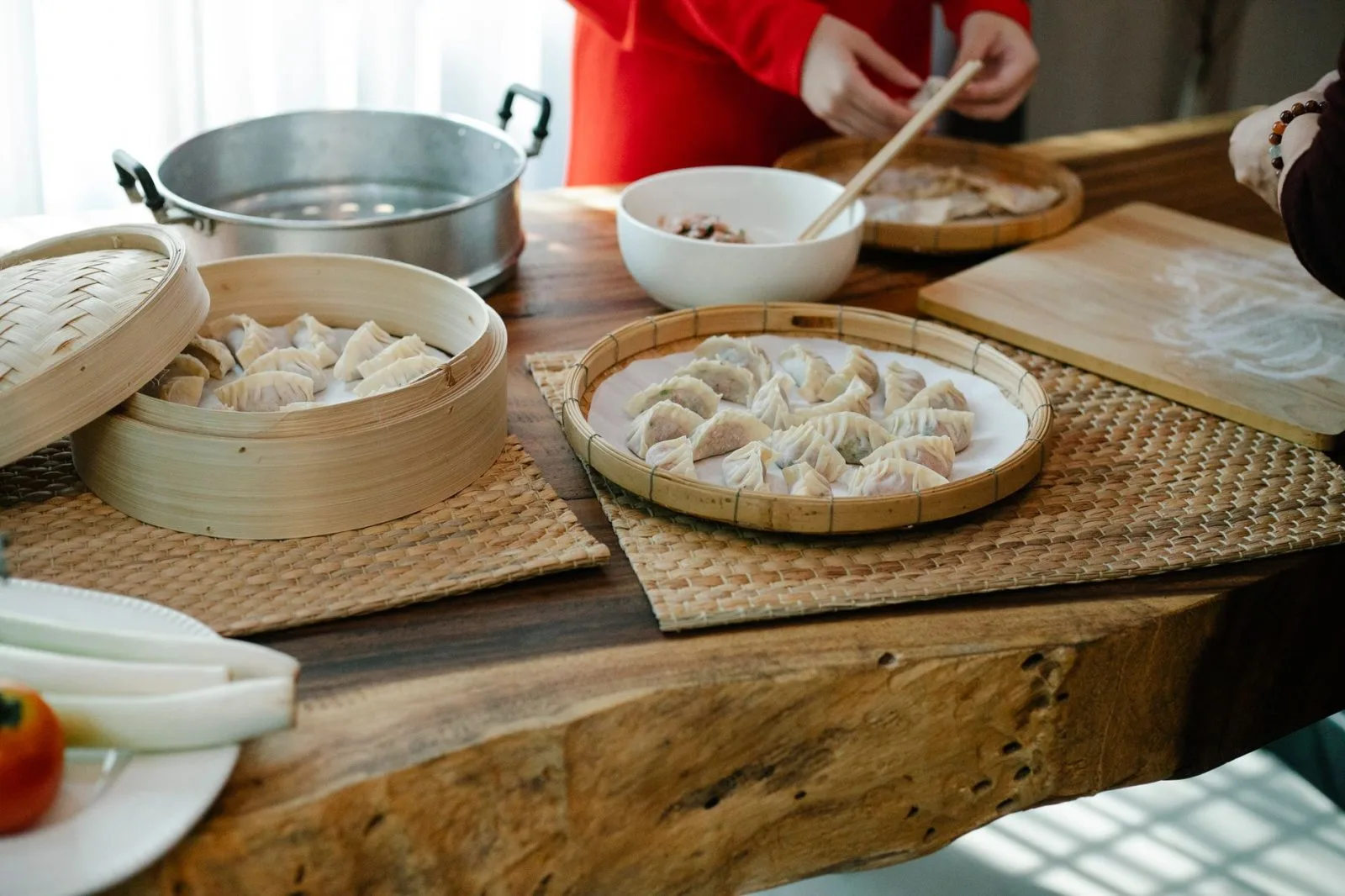
    Una fila di ravioli jiaozi piegati adagiati su un tagliere di legno infarinato.
    Il bordo plissettato sigilla il ripieno e conferisce a ogni raviolo la sua forma caratteristica. Angela Roma | Licenza Pexels (https://www.pexels.com/license/)

    Impasto, ripieno e piega

    L'impasto base dei jiaozi si prepara con farina di grano e acqua, lasciate riposare in modo che il glutine si rilassi e la sfoglia possa essere stesa sottilmente senza rompersi. Alcuni cuochi aggiungono un uovo o sostituiscono parte della farina con acqua calda per ottenere un impasto più morbido. Il ripieno viene tritato finemente in modo che cuocia uniformemente: maiale con cavolo, erba cipollina o porri; agnello con cipolla nel nord-ovest; gamberi e uova nelle zone costiere. Il cuoco posiziona il ripieno al centro, piega la sfoglia e preme le pieghe lungo la chiusura. Una chiusura ermetica è fondamentale perché la bollitura fa aprire l'impasto se rimane aria all'interno. Sono comuni i ripieni vegetariani con tofu, funghi o uova, soprattutto in occasione di visite ai templi e periodi di digiuno.

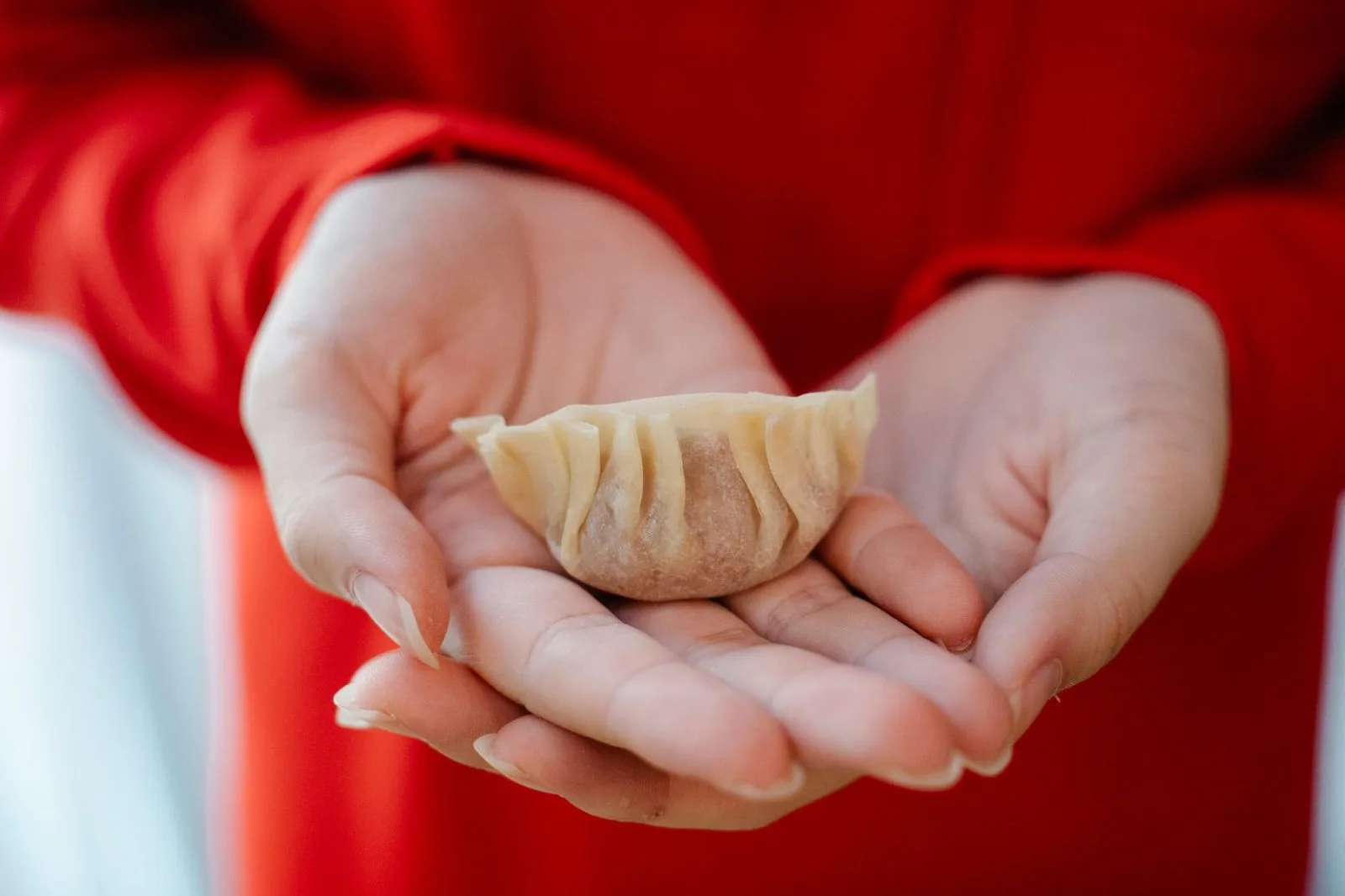
    Mani che pizzicano le pieghe lungo il bordo di un raviolo crudo
    La piegatura sigilla il pacchetto; ogni famiglia può preferire una piega diversa. Angela Roma | Licenza Pexels (https://www.pexels.com/license/)

    Bollito, al vapore e fritto

    Il metodo più comune è la bollitura: i ravioli vengono aggiunti a una pentola capiente, spinti dal fondo e cotti finché non vengono a galla e si gonfiano. I cuochi del nord spesso aggiungono un po' di acqua fredda quando l'acqua riprende a bollire, ripetendo il processo tre volte per ottenere una sfoglia croccante. Il raviole, o guotie, viene fritto da un lato, poi cotto al vapore con un coperchio e poca acqua, ottenendo una base croccante. Le versioni del sud e della diaspora includono har gow al vapore con gamberi e sfoglie trasparenti di amido di grano. Le salse di accompagnamento variano dall'aceto nero e zenzero alla salsa di soia con olio al peperoncino o aglio. Anche i ripieni cambiano: maiale ed erba cipollina sono predominanti a Pechino, manzo e agnello compaiono nelle comunità musulmane, mentre cavolo o funghi sono più adatti alle città interne più fredde.

    • Jiaozi bolliti per Capodanno e solstizio d'inverno
    • Guotie con una base fritta croccante
    • Aceto nero e zenzero come salsa classica
    • Ripieni regionali a base di maiale, agnello, gamberetti o verdure.
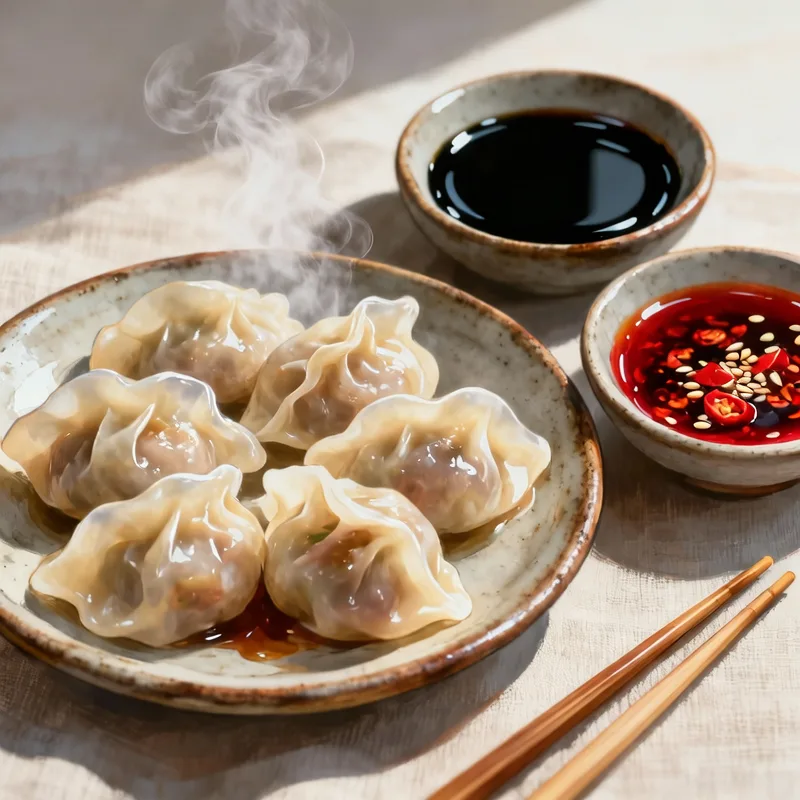
    Ravioli bolliti serviti con ciotoline di aceto e olio al peperoncino.
    Una salsa a base di aceto e zenzero si sposa perfettamente con i ricchi ripieni di maiale. Illustrazione generata dall'intelligenza artificiale · SinoViz

    Realizzarli insieme

    I ravioli sono un cibo conviviale perché la loro preparazione richiede tempo. Alla vigilia del Capodanno lunare, diverse generazioni possono stendere la pasta, tritare il ripieno e piegare insieme dozzine o centinaia di ravioli; alcuni ravioli hanno la forma di monete o nascondono una moneta pulita come portafortuna. Il pasto viene spesso consumato in presenza dei membri più anziani della famiglia. Gli avanzi vengono fritti il giorno successivo e i ravioli surgelati sono ormai venduti nei supermercati in tutta la Cina e all'estero. Le versioni nei ristoranti spaziano dai locali di Pechino che servono ravioli di agnello ai guotie di Shanghai e agli xiaolongbao ripieni di brodo, che appartengono a una famiglia distinta ma imparentata di panini al vapore.

    Un raviolo è un piccolo esempio di organizzazione domestica: pasta, ripieno, mani e un motivo per riunirsi.

    Fonti e ulteriori letture

    1. Gnocco — Enciclopedia Britannica.
    2. Jiaozi — Enciclopedia Britannica.
    3. Capodanno cinese — Enciclopedia Britannica.

    Guardalo al suo posto

    Segui questa voce per raggiungere la regione di appartenenza.

    Esplora tramite mappa
    Segui il filo

    Esplora altre voci che condividono i suoi tag.

    Esplora il tag
  • Cucina del Sichuan

    Vita e folklore

    Cucina del Sichuan

    Chilli Oil, Ferment, and the Numbing Pepper

    Sichuan cooking balances chilli heat, Sichuan pepper numbness, fermented bean paste, and rich broth.

    Sezione
    Vita e folklore
    Regione
    Sichuan
    Era
    Attraverso le epoche
    Etichette
    Customs, Food, Geography

    Sichuan cuisine is known for bold seasoning, but its classic dishes are built on contrast: chilli with Sichuan pepper, hot oil with cool cucumber, or a clear broth beside a fiery one.

    A Basin Pantry and Early Flavours

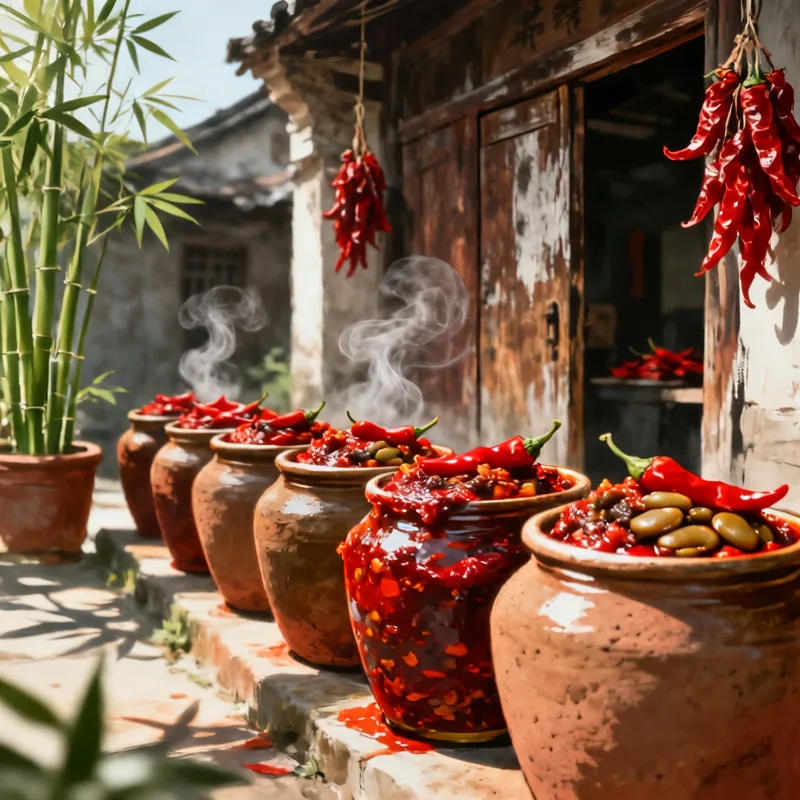
    The Sichuan Basin has fertile fields, rivers, and a humid climate, but its early elite cooking was not defined by chilli. Chilli peppers reached China from the Americas in the sixteenth century and became a Sichuan staple later, especially among ordinary households. Before that, cooks used ginger, garlic, mustard, vinegar, and the distinctive Sichuan pepper, Zanthoxylum simulans, whose husks cause a tingling sensation rather than heat.Fermented bean pastes from the basin towns added depth. Pixian doubanjiang, a broad-bean and chilli paste fermented in Pixian near Chengdu, became a foundation of many red-braised and stir-fried dishes. The province’s food therefore combines older preservation methods with ingredients that arrived through global trade.

    Jars of red chilli and broad-bean paste fermenting outside a Sichuan workshop
    Fermented doubanjiang gives many Sichuan dishes their deep red base. Illustrazione generata dall'intelligenza artificiale · SinoViz

    The Grammar of Heat

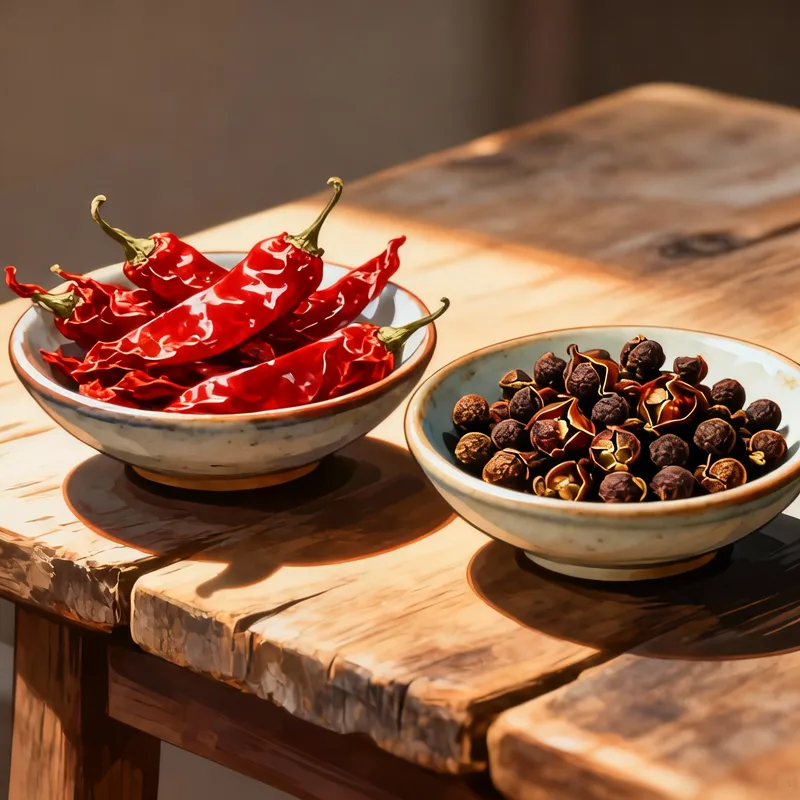
    Sichuan cooks distinguish several kinds of chilli heat. Dried chillies are fried in oil until fragrant but not blackened; chilli oil is steeped and aged; chilli bean paste supplies fermented heat; and fresh peppers give a brighter bite. Sichuan peppercorns, often toasted and ground, produce the málà combination of numbness and spice. Official Sichuan cookbooks describe more than twenty recognised flavour profiles, from guaiwei, strange or complex, to yuxiang, fish-fragrant, which uses no fish. Mapo tofu, associated with Chengdu in the nineteenth century, combines soft tofu, minced meat, doubanjiang, chilli oil, and Sichuan pepper. Kung Pao chicken uses dried chillies, peanuts, and a sweet-sour soy sauce.

    Dried red chillies and Sichuan peppercorns in separate shallow bowls
    Chilli heat and peppercorn numbness are distinct, and cooks balance them separately. Illustrazione generata dall'intelligenza artificiale · SinoViz

    Hotpot and the Two-Flame Bowl

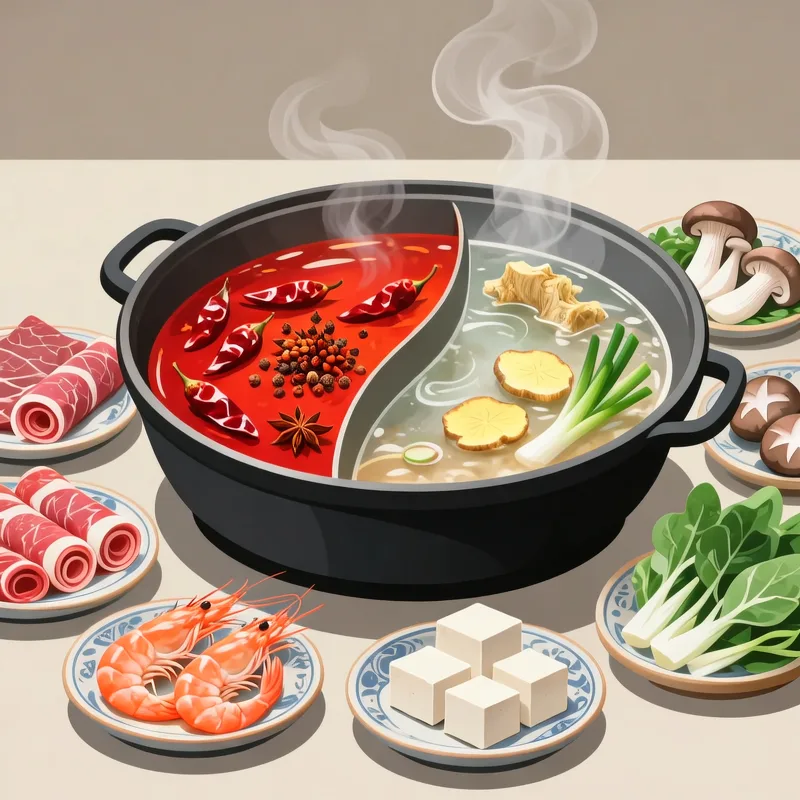
    Chengdu hotpot is a social meal built around a divided pot. One side may hold a red broth of chilli oil, doubanjiang, beef fat, and spices; the other a clear chicken or mushroom stock. Diners cook thinly sliced beef, tripe, duck blood, fish balls, vegetables, and mushrooms, then dip them in sesame oil, garlic, and chopped herbs. The sesame dip cools the palate and coats the mouth against spice. Chongqing hotpot is often heavier and more direct, traditionally using beef tallow; Chengdu versions are commonly more aromatic and varied. Yibin and other southern cities add their own chilli blends. Restaurants label spice levels, but heat can still be adjusted only by asking.

    • Pixian doubanjiang as a fermented chilli-bean base
    • Málà: chilli heat plus peppercorn numbness
    • Two-flavour hotpot with red and clear broth
    • Sesame oil dip to moderate the heat
    A divided hotpot with red chilli broth and clear broth surrounded by ingredient plates
    A two-flavour pot lets a table divide heat from clarity. Illustrazione generata dall'intelligenza artificiale · SinoViz

    Beyond the Fiery Stereotype

    Not every Sichuan dish is hot. Sichuan’s most ceremonial dish, Gongbao chicken and the banquet classic ‘sweet and sour’ aside, the cuisine includes clear broths, steamed dishes, and delicate pastry. Zhangcha duck is smoked with tea leaves and camphor before steaming, while boiled pork slices are served in a clear broth with mustard greens. Chengdu’s teahouses and dish shops serve small noodles, sweet-water noodles, and dumplings. The province also includes Tibetan and Yi food traditions in its western highlands, where barley, yak products, and different seasonings dominate. Reading Sichuan cuisine only as heat misses its central achievement: layering aromas, textures, and ferments so that strong flavours remain controlled.

    Sichuan cooking is not simply hot; it is a carefully graded argument between chilli, pepper, oil, and ferment.

    Fonti e ulteriori letture

    1. Sichuan cuisine — Enciclopedia Britannica.
    2. Chinese Cuisine — Enciclopedia Britannica.
    3. Sichuan Food — I punti salienti della Cina.

    Guardalo al suo posto

    Segui questa voce per raggiungere la regione di appartenenza.

    Esplora tramite mappa
    Segui il filo

    Esplora altre voci che condividono i suoi tag.

    Esplora il tag
  • Fujian

    Regione · Costa, tulou e tè

    Fujian

    Il Fujian si affaccia su Taiwan attraverso lo stretto e guarda verso il mare. Le sue montagne hanno offerto riparo alle comunità Hakka dei tulou, mentre i suoi porti erano il punto di partenza per commercianti, migranti e tè lungo le rotte marittime.

    Regione
    Fujian
    Coordinate
    26,07°N, 119,30°E
    Noto per
    Costa, tulou e tè

    Paesaggio

    Colline scoscese incontrano una costa frastagliata. I fiumi scavano brevi valli verso il mare, creando porti naturali e isolando comunità interne che hanno sviluppato architetture e dialetti caratteristici.

    Patrimonio e luoghi

    • Tulou del Fujian
    • Gulangyu
    • Monti Wuyi
    • siti marittimi di Quanzhou

    Cultura e vita quotidiana

    Il Fujian è noto per il tè oolong, i frutti di mare, le tradizioni Minnan e Hakka e le reti di templi legate alla navigazione. La storia della provincia è intrisa di montagne e di un profondo legame con l'oceano.

    Continua il viaggio

    Abbinate questa regione a una guida turistica o seguite le sue storie attraverso il tempo.

    Esplora le destinazioni Cronaca aperta
  • Guangxi

    Region · Karst and the Li River

    Guangxi

    Guangxi is a landscape of limestone peaks, rivers and terraced hills. Its karst scenery is famous, but the province is equally defined by Zhuang, Dong and Miao communities and their festivals.

    Regione
    Guangxi
    Coordinate
    22.82°N, 108.32°E
    Noto per
    Karst and the Li River

    Paesaggio

    Karst towers rise above the Li River and surrounding plains. Caves, sinkholes and underground rivers shape both the scenery and the agricultural life of the region.

    Patrimonio e luoghi

    • Li River
    • Longji rice terraces
    • Detian Waterfall
    • Lingqu Canal

    Cultura e vita quotidiana

    Guangxi food is sour, fragrant and often river-based. Zhuang song festivals, Dong drum towers and Miao silverwork connect the province’s scenic image to living local traditions.

    Continua il viaggio

    Abbinate questa regione a una guida turistica o seguite le sue storie attraverso il tempo.

    Esplora le destinazioni Cronaca aperta
  • Guangdong

    Region · The Pearl River and the sea

    Guangdong

    Guangdong faces the South China Sea and the Pearl River Delta. Its ports, dialects and Cantonese food culture have long connected China to maritime trade and overseas communities.

    Regione
    Guangdong
    Coordinate
    23.13°N, 113.26°E
    Noto per
    The Pearl River and the sea

    Paesaggio

    A subtropical coast gives way to river plains and northern hills. The delta’s waterways supported agriculture, trade and the dense urban networks that define the region today.

    Patrimonio e luoghi

    • Kaiping diaolou
    • Danxia landforms
    • Guangzhou old quarters
    • Foshan ancestral halls

    Cultura e vita quotidiana

    Cantonese cuisine prizes freshness, seafood and dim sum. Lingnan architecture, opera and clan halls reflect a culture shaped by commerce, migration and humid coastal life.

    Continua il viaggio

    Abbinate questa regione a una guida turistica o seguite le sue storie attraverso il tempo.

    Esplora le destinazioni Cronaca aperta
  • Xinjiang

    Regione · Deserto, oasi e Via della Seta

    Xinjiang

    Lo Xinjiang si estende tra deserti, praterie e alte montagne all'estremità nord-occidentale della Cina. Le città-oasi lungo la Via della Seta ne fecero un punto d'incontro per merci, religioni e lingue.

    Regione
    Xinjiang
    Coordinate
    43,83°N, 87,62°E
    Noto per
    Deserto, oasi e Via della Seta

    Paesaggio

    Il deserto del Taklamakan si estende tra le catene montuose del Tian Shan e del Kunlun. Lo scioglimento dei ghiacciai alimenta i fiumi delle oasi, mentre antichi canali karez portavano l'acqua sotterranea a coltivazioni e città.

    Patrimonio e luoghi

    • città vecchia di Kashgar
    • Rovine di Jiaohe
    • Sistema di irrigazione Karez
    • Tianshan Tianchi

    Cultura e vita quotidiana

    La musica uigura, il naan, i kebab di agnello e i bazar conferiscono allo Xinjiang una cultura da oasi unica. La storia della regione è visibile nelle grotte buddiste, nell'architettura islamica e nelle antiche vie carovaniere.

    Da questa regione

    Storie da leggere dopo

    Voci collegate a questo luogo attraverso mappe, cronache e vita quotidiana.

    Continua il viaggio

    Abbinate questa regione a una guida turistica o seguite le sue storie attraverso il tempo.

    Esplora le destinazioni Cronaca aperta
  • Tibet (Xizang)

    Regione · L'altopiano

    Xizang

    Il Tibet si erge come un altopiano ricco di monasteri, passi montani e laghi sacri. Il suo paesaggio e la sua vita religiosa hanno plasmato una cultura adattata all'altitudine, alla luce e alle distanze.

    Regione
    Xizang
    Coordinate
    29,65°N, 91,12°E
    Noto per
    L'altopiano elevato

    Paesaggio

    L'altopiano tibetano ha un'altitudine media di oltre 4.000 metri. I ghiacciai alimentano i principali fiumi asiatici, mentre ampie vallate e passi di alta montagna regolano gli spostamenti tra città e monasteri.

    Patrimonio e luoghi

    • Palazzo Potala
    • Tempio Jokhang
    • zona di base del Monte Everest
    • Lago Namtso

    Cultura e vita quotidiana

    Il buddismo tibetano, il tè al burro, la tsampa e le bandiere di preghiera fanno parte della vita quotidiana. Le feste monastiche, la pittura thangka e l'architettura in pietra conferiscono significato religioso allo spazio pubblico.

    Da questa regione

    Storie da leggere dopo

    Voci collegate a questo luogo attraverso mappe, cronache e vita quotidiana.

    Continua il viaggio

    Abbinate questa regione a una guida turistica o seguite le sue storie attraverso il tempo.

    Esplora le destinazioni Cronaca aperta
  • Yunnan

    Region · Mountains, tea and many peoples

    Yunnan

    Yunnan sits where the Tibetan plateau drops toward Southeast Asia. Its deep valleys, tea mountains and old towns hold an unusually wide range of languages, foods and festivals.

    Regione
    Yunnan
    Coordinate
    25.04°N, 102.71°E
    Noto per
    Mountains, tea and many peoples

    Paesaggio

    The province is a mosaic of high mountains, river gorges and subtropical valleys. The Three Parallel Rivers area carries the Yangtze, Mekong and Salween through dramatic terrain.

    Patrimonio e luoghi

    • Old Town of Lijiang
    • Stone Forest
    • Three Parallel Rivers
    • Yuanyang rice terraces

    Cultura e vita quotidiana

    Yunnan food is sour, spicy, herbal and intensely local: crossing-the-bridge noodles, mushrooms, cured ham and Pu’er tea. Dai, Bai, Yi, Naxi and many other communities shape the province’s festivals and crafts.

    Continua il viaggio

    Abbinate questa regione a una guida turistica o seguite le sue storie attraverso il tempo.

    Esplora le destinazioni Cronaca aperta
  • Sichuan

    Region · A basin of pepper and pandas

    Sichuan

    Sichuan is defined by its fertile basin, mountain borders and a cuisine that turned chilli and Sichuan pepper into a regional language. Its history runs from ancient Shu kingdoms to modern high-speed corridors.

    Regione
    Sichuan
    Coordinate
    30.57°N, 104.07°E
    Noto per
    A basin of pepper and pandas

    Paesaggio

    Ringed by mountains, the Sichuan Basin holds rivers, farmland and dense cities. To the west, the plateau rises sharply toward Tibet; to the east, gorges cut toward the Yangtze.

    Patrimonio e luoghi

    • Leshan Giant Buddha
    • Dujiangyan irrigation system
    • Jiuzhaigou
    • Mount Emei

    Cultura e vita quotidiana

    Sichuan cooking balances málà heat, fragrance and texture. Teahouses, opera, bamboo craft and panda conservation give the province a cultural life that is both local and widely recognised.

    Continua il viaggio

    Abbinate questa regione a una guida turistica o seguite le sue storie attraverso il tempo.

    Esplora le destinazioni Cronaca aperta