タグ: 食べ物

  • ランタンフェスティバル

    生活と民話

    ランタンフェスティバル

    Lights on the Fifteenth Night

    The fifteenth night of the first lunar month closes the New Year with lanterns and sweet rice balls.

    セクション
    生活と民話
    地域
    北京
    時代
    時代を超えて
    タグ
    習慣、食べ物

    The Lantern Festival falls on the fifteenth day of the first lunar month, the first full moon of the year. Lanterns, night markets, riddles, and tangyuan rice balls mark the end of the New Year period.

    Origins in Calendar and Court

    The festival’s date follows the lunar calendar, so its Gregorian date changes each year. Several origins are cited. Emperor Wen of Han is said to have declared a public holiday around 180 BCE after defeating the Lü clan, while the Eastern Han emperor Ming promoted lantern displays in the first century CE as Buddhism spread. Daoist tradition associated the day with the heavenly official who grants blessings. By the Tang dynasty, the festival had become a major urban occasion: court records describe vast lantern displays in Chang’an and Luoyang, and the poet Su Weidao wrote of night markets bright as day. The Tang court relaxed curfew so people could view the lights.
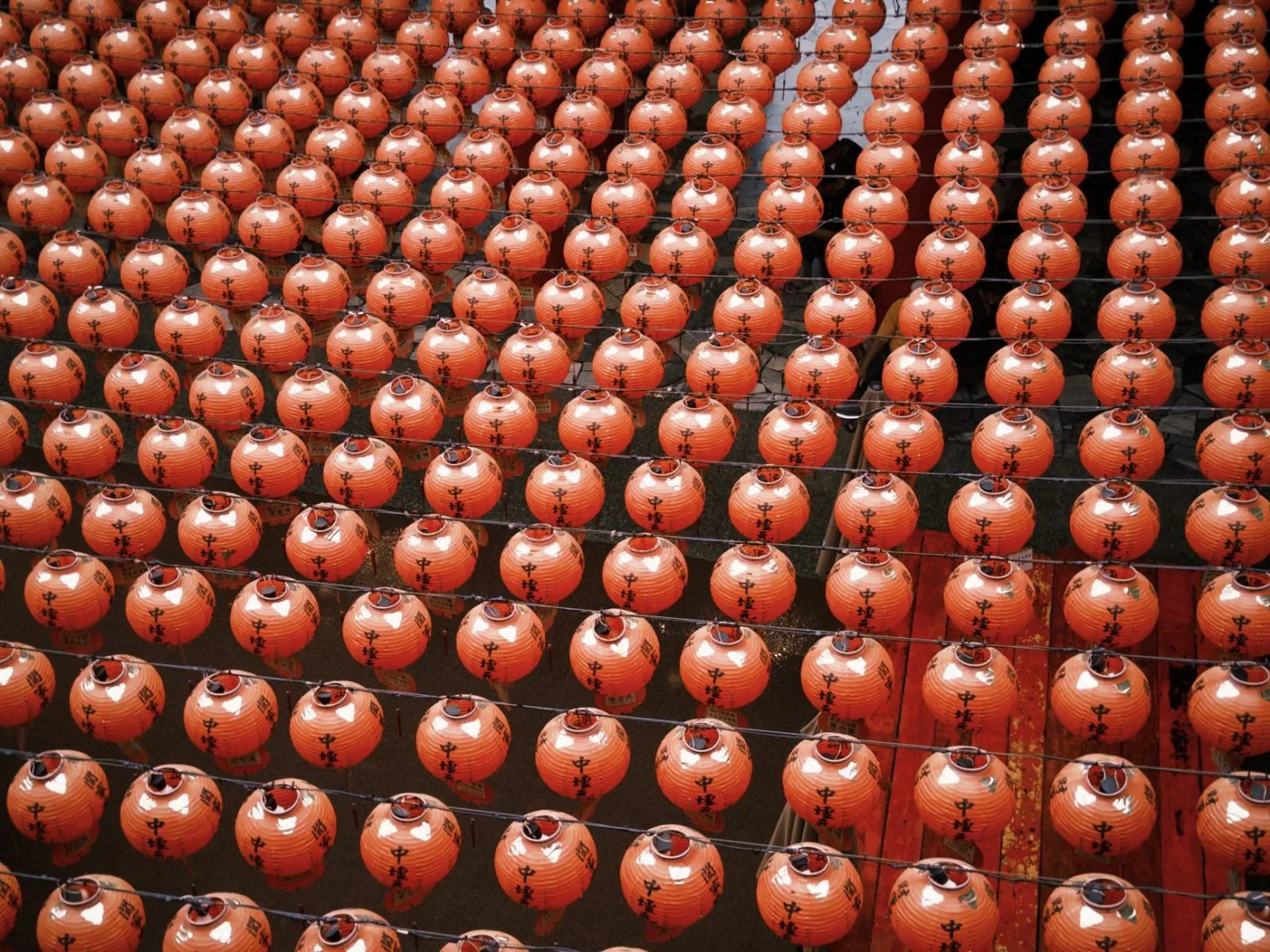
    Rows of illuminated red lanterns hanging along a street during a night festival
    Tang cities relaxed curfew so residents could walk among the lanterns at night. zack ZHUO | Pexels License (https://www.pexels.com/license/)

    Riddles, Lions, and Processions

    Lantern riddles are written on slips attached to the lamps; solving one is a small test of wordplay and classical learning. Lion dances, dragon dances, and walking-on-stilts performances draw crowds in the streets, with local troupes competing for space and applause. In some places, people carry lanterns representing animals or characters, and children pull small lanterns on sticks. Beijing’s temple fairs once gathered vendors, performers, and visitors around temple courtyards; today the festival is also marked in parks and commercial districts. Taiwan is known for large lantern festivals and elaborate installations, while Nanjing has long been associated with elaborate lantern craft along the Qinhuai River.
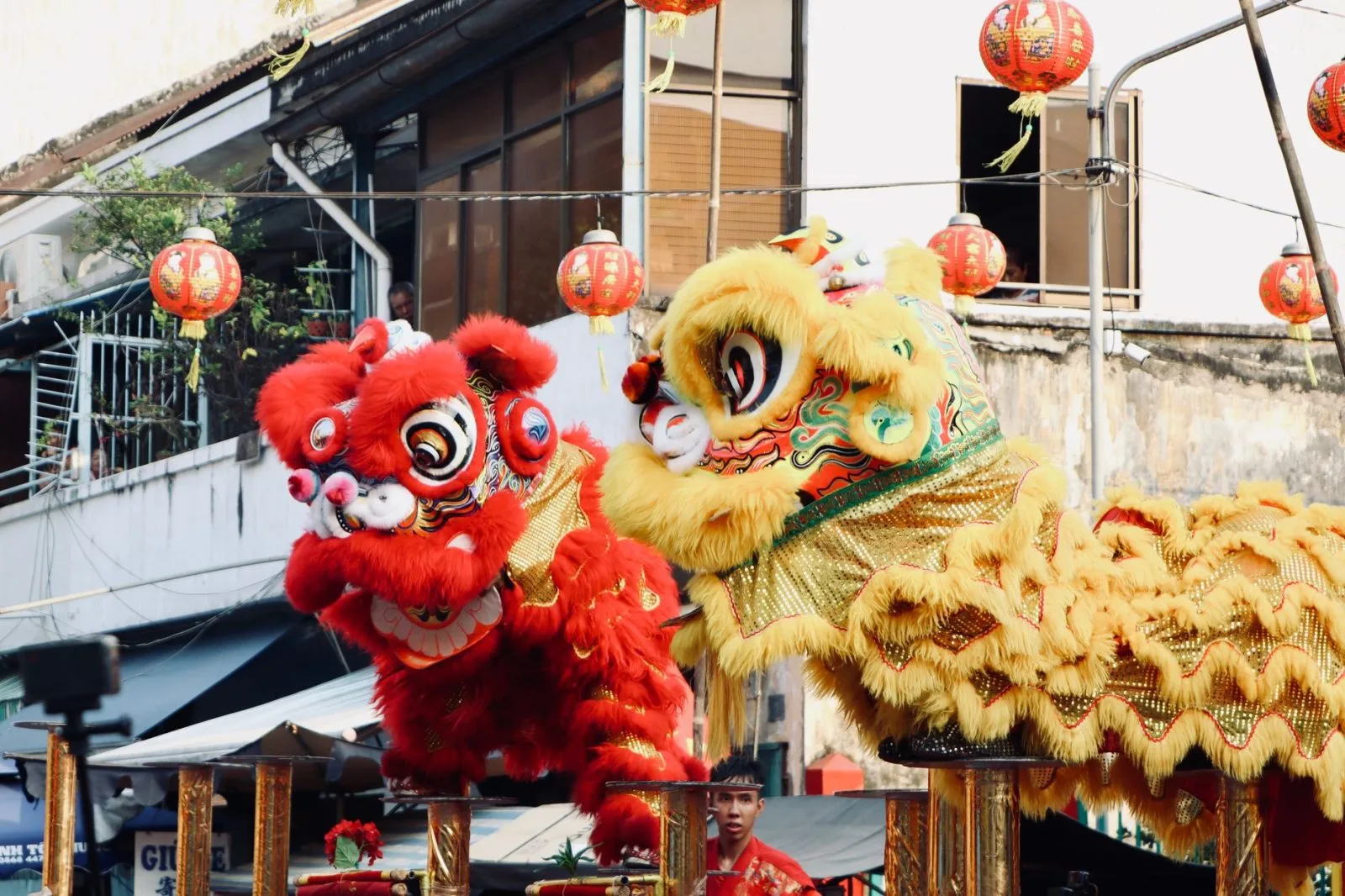
    A lion dance troupe leaping beneath hanging lanterns during a street celebration
    Processions and lion dances turn the festival into a public performance. Pham Huynh Tuan Vy | Pexels License (https://www.pexels.com/license/)

    Tangyuan and the Taste of Reunion

    The festival food is tangyuan in southern China and often yuanxiao in the north, both made from glutinous rice flour around a sweet filling. The names and methods differ: southern cooks wrap a soft dough around filling, while northern cooks may roll moistened filling in dry rice flour in repeated layers. Fillings include black sesame paste, red bean, peanut, and osmanthus sugar. The round shape suggests family unity, and the bowls are shared after the evening’s walk. In Ningbo, black-sesame tangyuan are a local speciality; in Shanghai and Suzhou they are sold from neighbourhood shops. Sweet rice wine and small glutinous balls are also served in some regions.

    • Black sesame, red bean, and peanut fillings
    • Southern wrapped tangyuan and northern rolled yuanxiao
    • Lantern riddles attached to public displays
    • Dragon and lion processions after dark
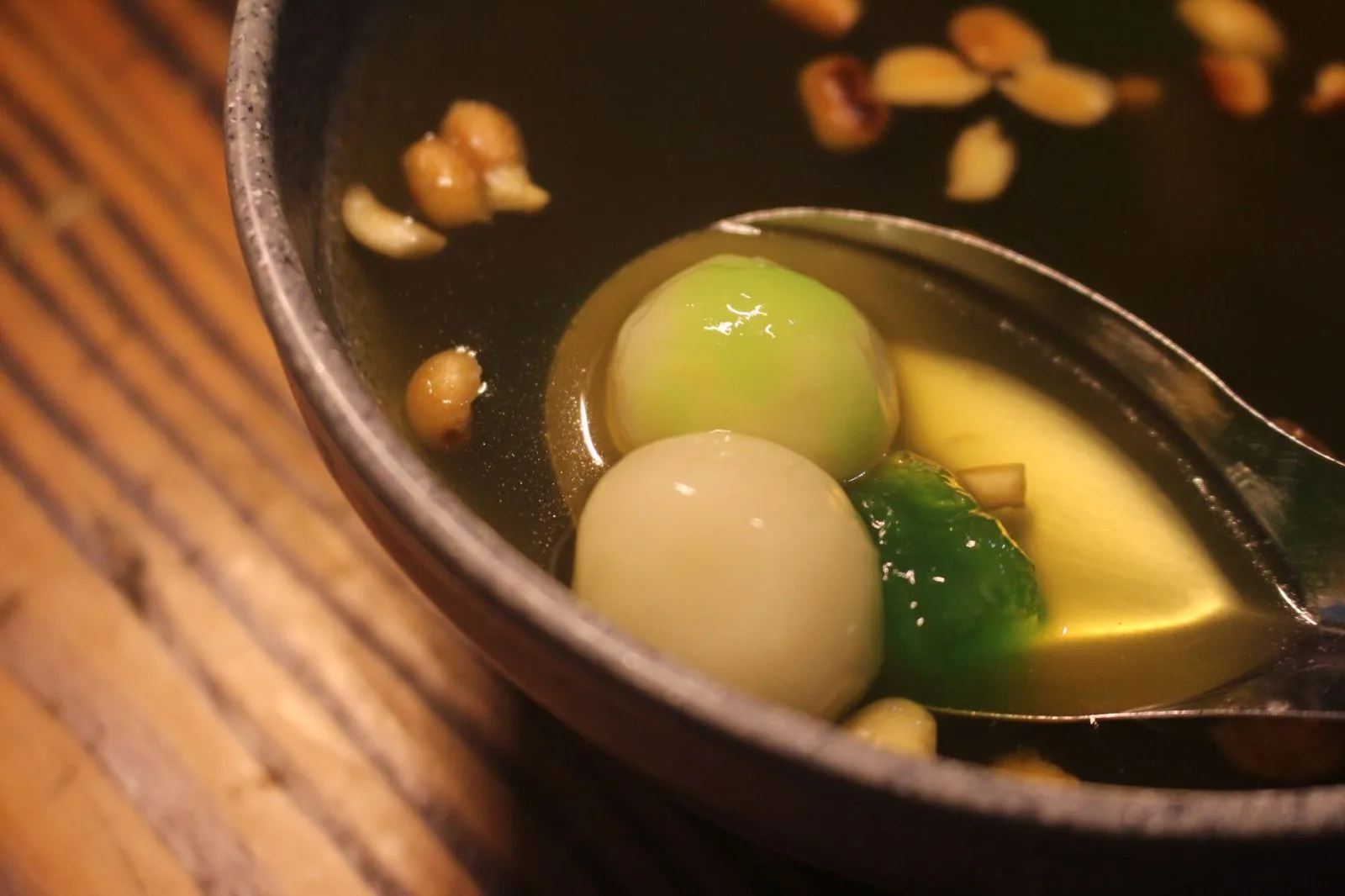
    A bowl of small white glutinous rice balls in clear sweet soup
    Round rice balls symbolise reunion at the first full moon. Jauhar Musthofal Qulub | Pexels License (https://www.pexels.com/license/)

    The Festival in Modern Cities

    The festival remains a public holiday in mainland China, though the number of days off and the school calendar vary. Major cities install temporary lighting, close some streets to traffic, and run lantern displays in parks and along rivers. Viewing a lantern show often means walking slowly in crowds; in Beijing, the temperature can still be below freezing, so warm layers matter. Photographers should check local rules on tripods and drones. Shopping districts extend the season commercially, but temple fairs and neighbourhood associations keep older practices alive. The date’s movement also means the festival may fall during term time or a working week, changing how families gather.

    The first full moon turns a winter street into a temporary gallery of paper, silk, and light.

    出典と参考文献

    1. ランタンフェスティバル —ブリタニカ百科事典。
    2. Chinese Lantern Festival — China Highlights.
    3. Yuanxiao Festival — World History Encyclopedia.
    設置場所を見てください

    この項目をたどって、該当する地域へ移動してください。

    地図で探索する

    スレッドをたどってください

    同じタグを持つ他のエントリーを閲覧する。

    タグを閲覧する
  • 餃子

    生活と民話

    餃子

    小麦の詰め物入りケースと冬の儀式

    中国北部の餃子は、小麦粉の生地と季節の具材を組み合わせ、皆で囲む食事となる。

    セクション
    生活と民話
    地域
    北京
    時代
    時代を超えて
    タグ
    習慣、食べ物

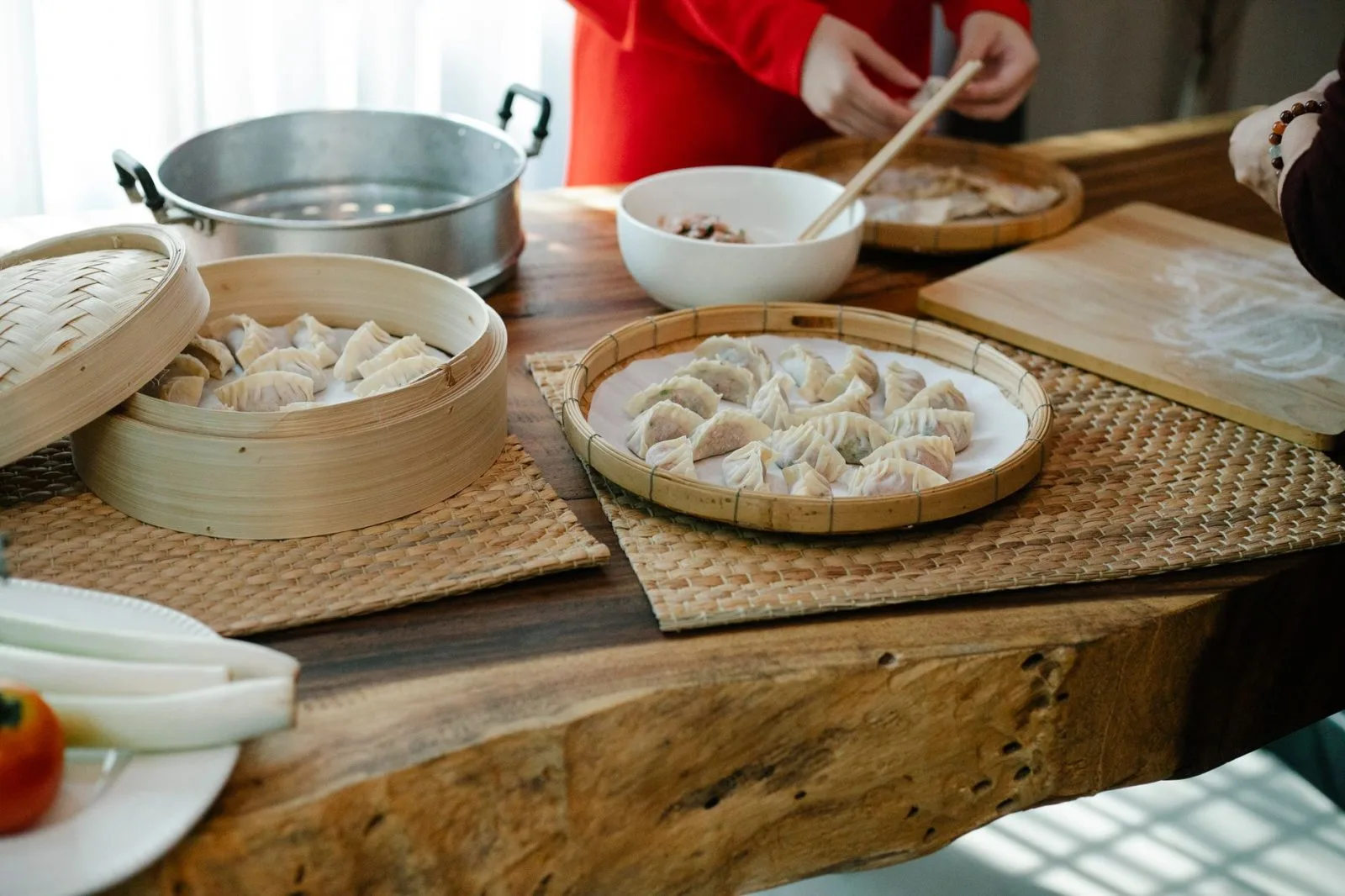
    餃子は、小麦粉で包んだ具材を、茹でたり、蒸したり、揚げたりして調理するものです。中国北部では、冬至や旧正月を祝う行事として、家族が食卓を囲み、一つ一つ手で餃子を包みます。

    北部の食生活における小麦

    餃子は中国北部の小麦と粟の産地に属し、そこでは小麦粉が漢代以降の王朝で主食となった。その形は古代中国の貨幣に似ていることから、餃子は新年の言葉にも登場するようになった。餃子の「餃子」という音は、宝を交換するというフレーズと関連している。有名な言い伝えでは、餃子は漢代の医師、張仲景に由来するとされている。張仲景は凍傷になった耳を治療するために、餡を詰めた生地の包みを作ったと言われている。この話の真偽は定かではないが、寒い時期に餃子を食べる習慣を説明するものである。餡を詰めた小麦料理に関する考古学的証拠は、特定の発明者よりも明確である。

    小麦粉をまぶした木製の板の上に並べられた、ひだ状の餃子。
    ひだ状の縁が具材を閉じ込め、餃子特有の形を作り出します。 アンジェラ・ローマ | Pexelsライセンス(https://www.pexels.com/license/)

    生地、具材、折りたたみ

    餃子の基本的な生地は小麦粉と水で、グルテンが柔らかくなり、皮が破れずに薄く伸ばせるように休ませます。より柔らかい食感にするために、卵を加えたり、小麦粉の一部を熱湯に置き換えたりする料理人もいます。具材は火が通るように細かく刻みます。豚肉とキャベツ、ニラ、またはネギ。西北地方では羊肉と玉ねぎ。沿岸地方ではエビと卵。料理人は具材を中央に置き、皮を折りたたみ、縫い目に沿ってひだをしっかりと押さえます。空気が残っていると茹でたときに生地が開いてしまうため、しっかりと閉じることが重要です。豆腐、きのこ、卵などのベジタリアン具材も一般的で、特に寺院参拝や断食期間中によく食べられます。

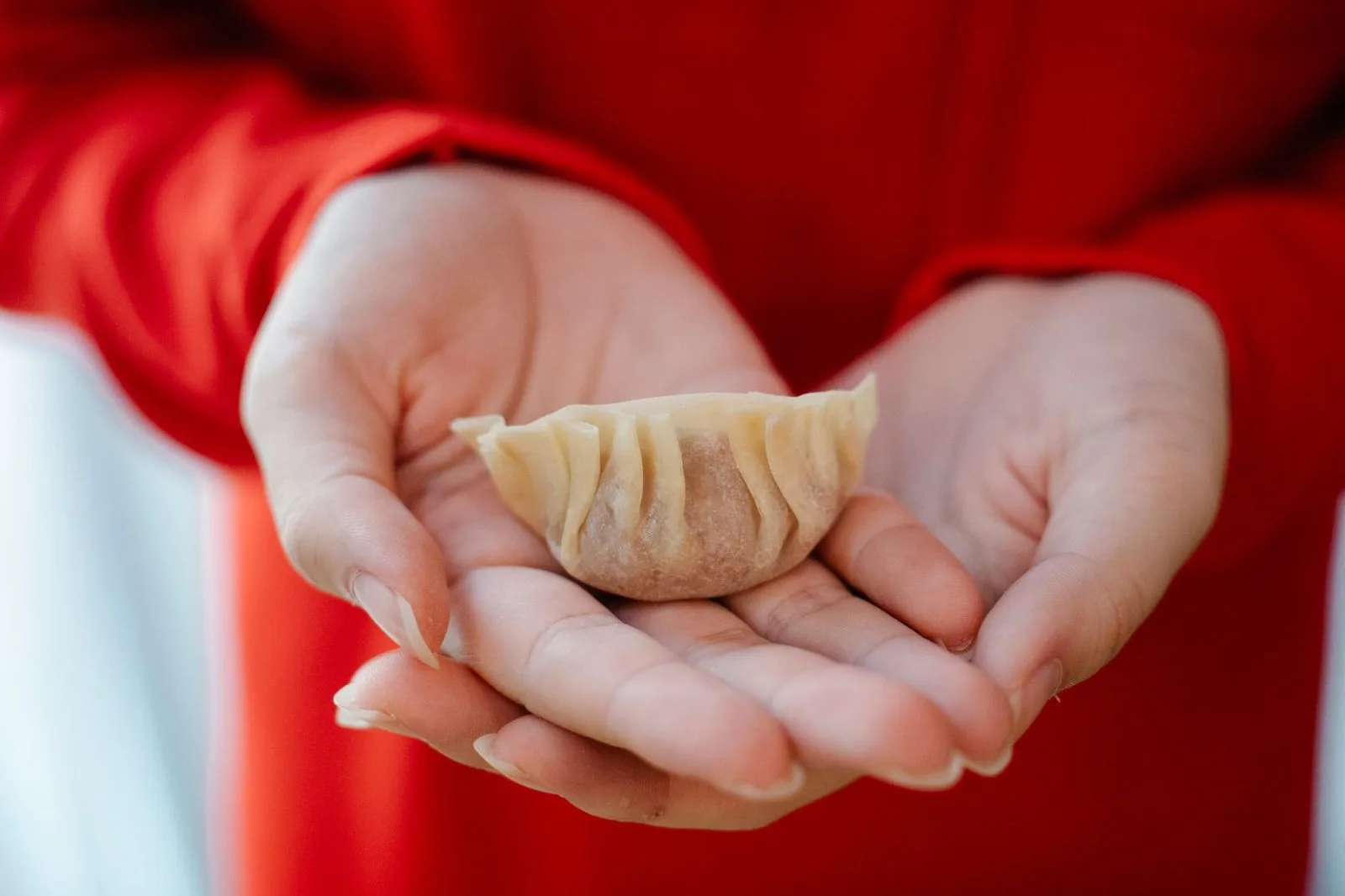
    生餃子の縁に沿ってひだをつまむ手
    プリーツで包みを密封する。折り方は家庭によって好みが異なる場合がある。 アンジェラ・ローマ | Pexelsライセンス(https://www.pexels.com/license/)

    茹でる、蒸す、揚げる

    最も一般的な調理法は茹でる方法です。餃子を大きな鍋に入れ、底から軽く押して、浮き上がって膨らむまで茹でます。北部の料理人は、鍋が再び沸騰したときに少量の冷水を加え、皮をしっかりさせるためにこの工程を3回繰り返すことがよくあります。焼き餃子、またはグオティエは、片面を揚げてから、少量の水を入れた蓋で蒸し、底をパリッとさせます。南部や海外のバリエーションには、エビと半透明の小麦粉の皮を使った蒸しハーガオがあります。つけダレは、黒酢と生姜から、ラー油やニンニクを加えた醤油まで様々です。具材も地域によって異なり、北京では豚肉とニラが主流で、イスラム教徒のコミュニティでは牛肉と羊肉が見られ、内陸部の寒い都市ではキャベツやキノコが好まれます。

    • 新年と冬至に食べる茹で餃子
    • サクサクに揚げた生地のグオティエ
    • 黒酢と生姜は定番のディップソース
    • 豚肉、ラム肉、エビ、または野菜を使った地域ごとの具材
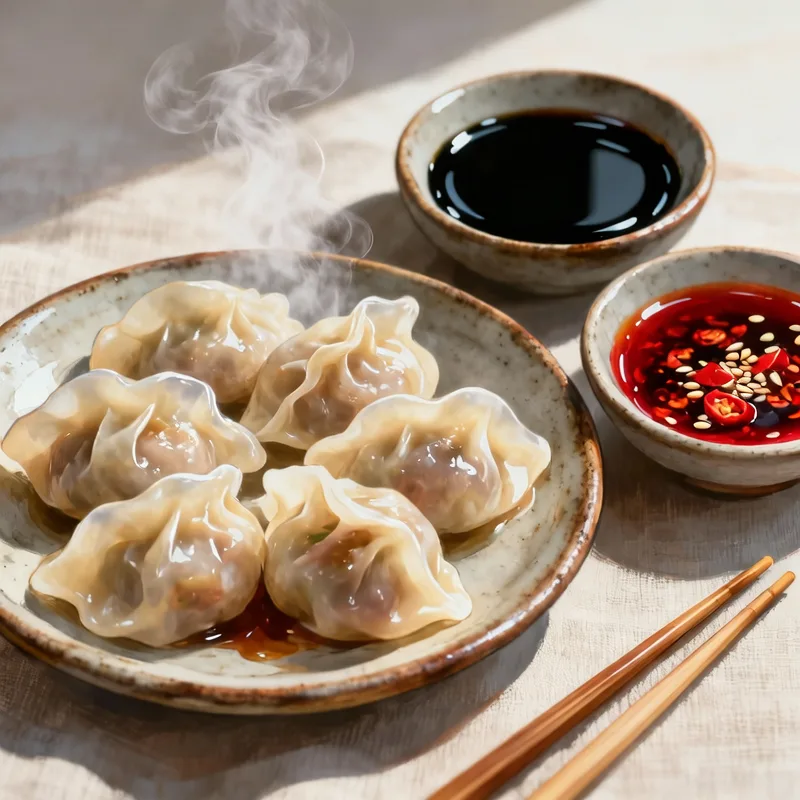
    茹で餃子に酢とラー油を添えて
    酢と生姜のディップソースが、濃厚な豚肉の具材の味を引き立てる。 AI生成イラスト · SinoViz

    一緒に作る

    餃子は、作るのにかかる時間があるため、社交的な食べ物です。旧正月の前夜には、何世代にもわたって皮を巻き、具を刻み、何十個、何百個もの餃子を一緒に包みます。中にはコインの形をした餃子や、幸運のお守りとして洗ったコインを隠した餃子もあります。食事は、家族の中で最も年長の人を中心に行われることが多いです。残った餃子は翌日揚げて食べ、冷凍餃子は中国国内外のスーパーマーケットで販売されています。レストランでは、北京のラム肉餃子から上海の鍋餃子やスープ入りの小籠包まで、様々な種類があります。小籠包は、関連性はあるものの、異なる種類の蒸しパンです。

    餃子作りは、家庭におけるちょっとした工夫の結晶だ。生地、具材、手、そして家族が集まる理由。

    出典と参考文献

    1. 団子 —ブリタニカ百科事典。
    2. 礁子 —ブリタニカ百科事典。
    3. 中国の旧正月 —ブリタニカ百科事典。

    設置場所を見てください

    この項目をたどって、該当する地域へ移動してください。

    地図で探索する

    スレッドをたどってください

    同じタグを持つ他のエントリーを閲覧する。

    タグを閲覧する
  • 四川料理

    生活と民話

    四川料理

    Chilli Oil, Ferment, and the Numbing Pepper

    Sichuan cooking balances chilli heat, Sichuan pepper numbness, fermented bean paste, and rich broth.

    セクション
    生活と民話
    地域
    四川省
    時代
    時代を超えて
    タグ
    Customs, Food, Geography

    Sichuan cuisine is known for bold seasoning, but its classic dishes are built on contrast: chilli with Sichuan pepper, hot oil with cool cucumber, or a clear broth beside a fiery one.

    A Basin Pantry and Early Flavours

    The Sichuan Basin has fertile fields, rivers, and a humid climate, but its early elite cooking was not defined by chilli. Chilli peppers reached China from the Americas in the sixteenth century and became a Sichuan staple later, especially among ordinary households. Before that, cooks used ginger, garlic, mustard, vinegar, and the distinctive Sichuan pepper, Zanthoxylum simulans, whose husks cause a tingling sensation rather than heat.Fermented bean pastes from the basin towns added depth. Pixian doubanjiang, a broad-bean and chilli paste fermented in Pixian near Chengdu, became a foundation of many red-braised and stir-fried dishes. The province’s food therefore combines older preservation methods with ingredients that arrived through global trade.

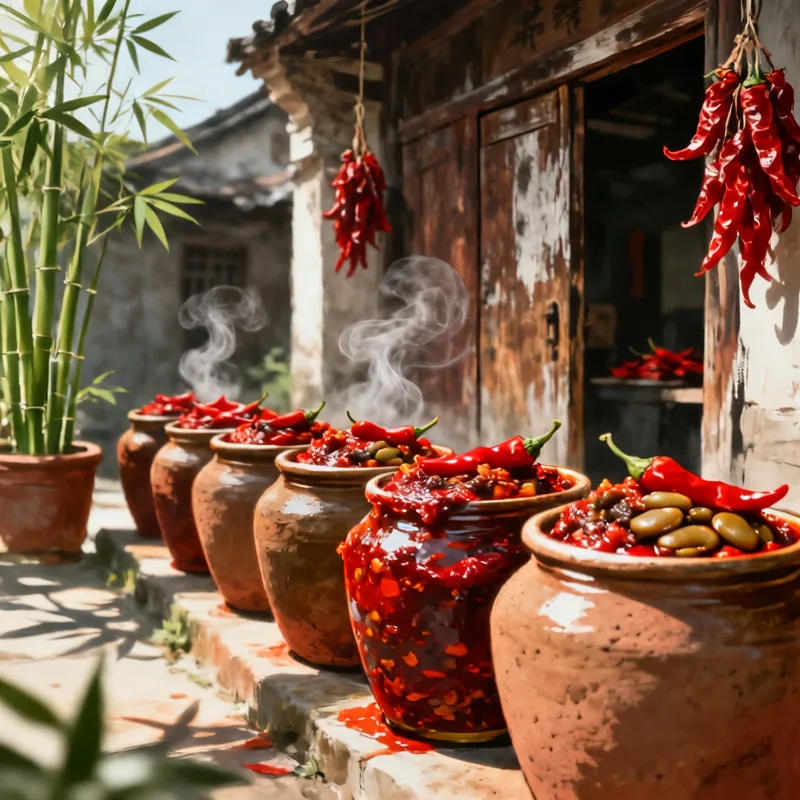
    Jars of red chilli and broad-bean paste fermenting outside a Sichuan workshop
    Fermented doubanjiang gives many Sichuan dishes their deep red base. AI生成イラスト · SinoViz

    The Grammar of Heat

    Sichuan cooks distinguish several kinds of chilli heat. Dried chillies are fried in oil until fragrant but not blackened; chilli oil is steeped and aged; chilli bean paste supplies fermented heat; and fresh peppers give a brighter bite. Sichuan peppercorns, often toasted and ground, produce the málà combination of numbness and spice. Official Sichuan cookbooks describe more than twenty recognised flavour profiles, from guaiwei, strange or complex, to yuxiang, fish-fragrant, which uses no fish. Mapo tofu, associated with Chengdu in the nineteenth century, combines soft tofu, minced meat, doubanjiang, chilli oil, and Sichuan pepper. Kung Pao chicken uses dried chillies, peanuts, and a sweet-sour soy sauce.

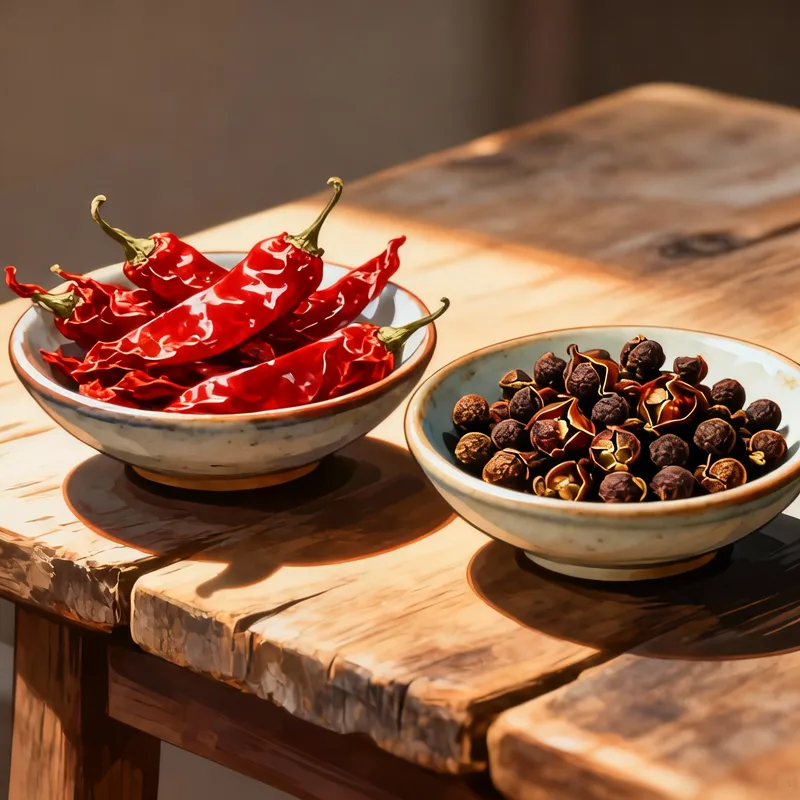
    Dried red chillies and Sichuan peppercorns in separate shallow bowls
    Chilli heat and peppercorn numbness are distinct, and cooks balance them separately. AI生成イラスト · SinoViz

    Hotpot and the Two-Flame Bowl

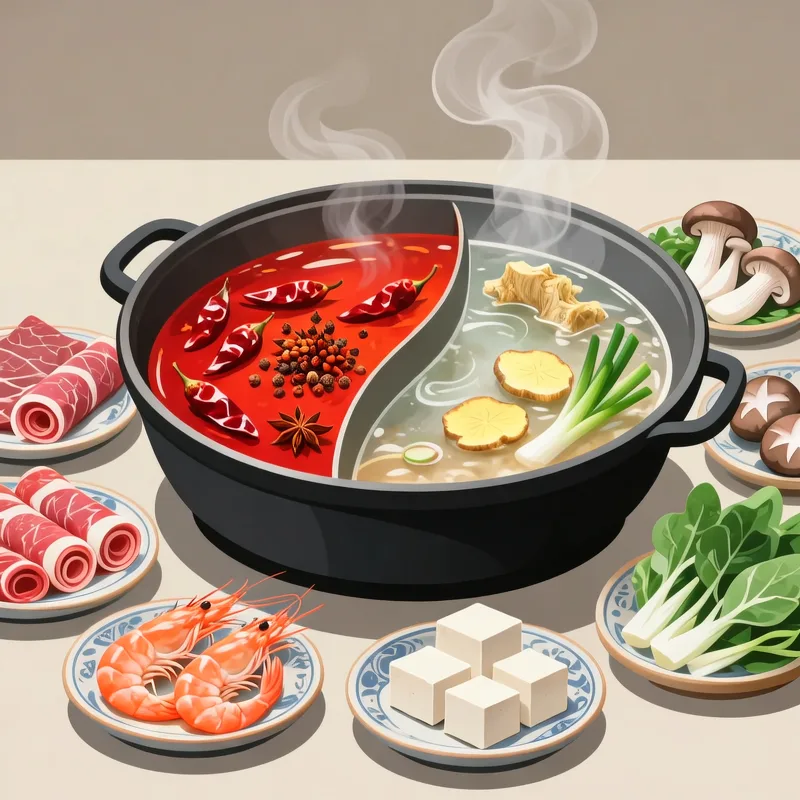
    Chengdu hotpot is a social meal built around a divided pot. One side may hold a red broth of chilli oil, doubanjiang, beef fat, and spices; the other a clear chicken or mushroom stock. Diners cook thinly sliced beef, tripe, duck blood, fish balls, vegetables, and mushrooms, then dip them in sesame oil, garlic, and chopped herbs. The sesame dip cools the palate and coats the mouth against spice. Chongqing hotpot is often heavier and more direct, traditionally using beef tallow; Chengdu versions are commonly more aromatic and varied. Yibin and other southern cities add their own chilli blends. Restaurants label spice levels, but heat can still be adjusted only by asking.

    • Pixian doubanjiang as a fermented chilli-bean base
    • Málà: chilli heat plus peppercorn numbness
    • Two-flavour hotpot with red and clear broth
    • Sesame oil dip to moderate the heat
    A divided hotpot with red chilli broth and clear broth surrounded by ingredient plates
    A two-flavour pot lets a table divide heat from clarity. AI生成イラスト · SinoViz

    Beyond the Fiery Stereotype

    Not every Sichuan dish is hot. Sichuan’s most ceremonial dish, Gongbao chicken and the banquet classic ‘sweet and sour’ aside, the cuisine includes clear broths, steamed dishes, and delicate pastry. Zhangcha duck is smoked with tea leaves and camphor before steaming, while boiled pork slices are served in a clear broth with mustard greens. Chengdu’s teahouses and dish shops serve small noodles, sweet-water noodles, and dumplings. The province also includes Tibetan and Yi food traditions in its western highlands, where barley, yak products, and different seasonings dominate. Reading Sichuan cuisine only as heat misses its central achievement: layering aromas, textures, and ferments so that strong flavours remain controlled.

    Sichuan cooking is not simply hot; it is a carefully graded argument between chilli, pepper, oil, and ferment.

    出典と参考文献

    1. Sichuan cuisine —ブリタニカ百科事典。
    2. Chinese Cuisine —ブリタニカ百科事典。
    3. Sichuan Food — China Highlights.

    設置場所を見てください

    この項目をたどって、該当する地域へ移動してください。

    地図で探索する

    スレッドをたどってください

    同じタグを持つ他のエントリーを閲覧する。

    タグを閲覧する
  • 福建省

    地域・海岸、土楼とお茶

    福建省

    福建省は海峡を挟んで台湾と向かい合い、外洋に面している。山々は客家土楼の集落を守り、港は商人、移民、そして茶葉を海上ルートへと送り出した。

    地域
    福建省
    座標
    北緯26.07度、東経119.30度
    で知られているのは
    海岸、土楼、そしてお茶

    風景

    険しい丘陵地帯が、ギザギザとした海岸線と接している。川は短い谷を刻み、海へと流れ込み、天然の良港を形成するとともに、内陸部の集落を孤立させ、そこで独自の建築様式や方言が発展した。

    遺産と場所

    • 福建土楼
    • 鼓浪嶼
    • 武夷山
    • 泉州の海事遺跡

    文化と日常生活

    福建省は、烏龍茶、海産物、閩南文化と客家文化、そして航海にまつわる寺院群で知られています。この省の歴史は、山々に囲まれた地域と海に面した地域の両方に深く根ざしています。

    この地域から

    次に読むべき物語

    地図、年代記、そして日常生活など、この場所に関連するあらゆる記録。

    旅を続けよう

    この地域を訪れる際は、旅行ガイドブックを併用したり、時代を超えて語り継がれてきた歴史を辿ってみるのも良いでしょう。

    目的地を探索する オープン・クロニクル
  • 広西

    地域・カルスト地形と漓江

    広西

    Guangxi is a landscape of limestone peaks, rivers and terraced hills. Its karst scenery is famous, but the province is equally defined by Zhuang, Dong and Miao communities and their festivals.

    地域
    広西
    座標
    22.82°N, 108.32°E
    で知られているのは
    カルスト地形と漓江

    風景

    Karst towers rise above the Li River and surrounding plains. Caves, sinkholes and underground rivers shape both the scenery and the agricultural life of the region.

    遺産と場所

    • Li River
    • Longji rice terraces
    • Detian Waterfall
    • Lingqu Canal

    文化と日常生活

    Guangxi food is sour, fragrant and often river-based. Zhuang song festivals, Dong drum towers and Miao silverwork connect the province’s scenic image to living local traditions.

    この地域から

    次に読むべき物語

    地図、年代記、そして日常生活など、この場所に関連するあらゆる記録。

    旅を続けよう

    この地域を訪れる際は、旅行ガイドブックを併用したり、時代を超えて語り継がれてきた歴史を辿ってみるのも良いでしょう。

    目的地を探索する オープン・クロニクル
  • 広東省

    地域:珠江と海

    広東省

    Guangdong faces the South China Sea and the Pearl River Delta. Its ports, dialects and Cantonese food culture have long connected China to maritime trade and overseas communities.

    地域
    広東省
    座標
    23.13°N, 113.26°E
    で知られているのは
    珠江と海

    風景

    A subtropical coast gives way to river plains and northern hills. The delta’s waterways supported agriculture, trade and the dense urban networks that define the region today.

    遺産と場所

    • Kaiping diaolou
    • Danxia landforms
    • Guangzhou old quarters
    • Foshan ancestral halls

    文化と日常生活

    Cantonese cuisine prizes freshness, seafood and dim sum. Lingnan architecture, opera and clan halls reflect a culture shaped by commerce, migration and humid coastal life.

    この地域から

    次に読むべき物語

    地図、年代記、そして日常生活など、この場所に関連するあらゆる記録。

    旅を続けよう

    この地域を訪れる際は、旅行ガイドブックを併用したり、時代を超えて語り継がれてきた歴史を辿ってみるのも良いでしょう。

    目的地を探索する オープン・クロニクル
  • 新疆

    地域:砂漠、オアシス、シルクロード

    新疆

    新疆ウイグル自治区は、中国北西部の端に位置し、砂漠、草原、高山地帯に広がっている。シルクロード沿いのオアシス都市群は、物資、信仰、言語が交錯する場所として栄えた。

    地域
    新疆
    座標
    北緯43.83度、東経87.62度
    で知られているのは
    砂漠、オアシス、そしてシルクロード

    風景

    タクラマカン砂漠は天山山脈と崑崙山脈の間に位置する。氷河の融水はオアシスの川に流れ込み、古代のカレーズと呼ばれる地下水路は農地や町に水を供給していた。

    遺産と場所

    • カシュガル旧市街
    • 交河遺跡
    • カレズ灌漑システム
    • 天山天池

    文化と日常生活

    ウイグル音楽、ナン、ラムケバブ、バザールなどが、新疆に独特のオアシス文化を醸し出している。この地域の歴史は、仏教の洞窟、イスラム建築、キャラバンルートなどに見て取れる。

    この地域から

    次に読むべき物語

    地図、年代記、そして日常生活など、この場所に関連するあらゆる記録。

    旅を続けよう

    この地域を訪れる際は、旅行ガイドブックを併用したり、時代を超えて語り継がれてきた歴史を辿ってみるのも良いでしょう。

    目的地を探索する オープン・クロニクル
  • チベット(西蔵)

    地域・高地

    西蔵

    チベットは、僧院、峠、聖なる湖が点在する高地高原として広がっている。その景観と宗教生活は、標高、光、そして距離に適応した文化を形作ってきた。

    地域
    西蔵
    座標
    北緯29.65度、東経91.12度
    で知られているのは
    高地

    風景

    チベット高原の平均標高は4,000メートルを超える。氷河はアジアの主要河川の水源となり、広大な谷と高い峠が町と僧院間の交通を支えている。

    遺産と場所

    • ポタラ宮殿
    • ジョカン寺
    • エベレスト山ベースエリア
    • ナムツォ湖

    文化と日常生活

    チベット仏教、バター茶、ツァンパ、祈祷旗は日常生活の一部である。僧院の祭礼、タンカ絵画、石造建築は、公共空間に宗教的な意味合いをもたらしている。

    この地域から

    次に読むべき物語

    地図、年代記、そして日常生活など、この場所に関連するあらゆる記録。

    旅を続けよう

    この地域を訪れる際は、旅行ガイドブックを併用したり、時代を超えて語り継がれてきた歴史を辿ってみるのも良いでしょう。

    目的地を探索する オープン・クロニクル
  • 雲南省

    地域:山々、茶、そして多様な民族

    雲南省

    Yunnan sits where the Tibetan plateau drops toward Southeast Asia. Its deep valleys, tea mountains and old towns hold an unusually wide range of languages, foods and festivals.

    地域
    雲南省
    座標
    25.04°N, 102.71°E
    で知られているのは
    山々、お茶、そして多くの民族

    風景

    The province is a mosaic of high mountains, river gorges and subtropical valleys. The Three Parallel Rivers area carries the Yangtze, Mekong and Salween through dramatic terrain.

    遺産と場所

    • Old Town of Lijiang
    • Stone Forest
    • Three Parallel Rivers
    • Yuanyang rice terraces

    文化と日常生活

    Yunnan food is sour, spicy, herbal and intensely local: crossing-the-bridge noodles, mushrooms, cured ham and Pu’er tea. Dai, Bai, Yi, Naxi and many other communities shape the province’s festivals and crafts.

    この地域から

    次に読むべき物語

    地図、年代記、そして日常生活など、この場所に関連するあらゆる記録。

    旅を続けよう

    この地域を訪れる際は、旅行ガイドブックを併用したり、時代を超えて語り継がれてきた歴史を辿ってみるのも良いでしょう。

    目的地を探索する オープン・クロニクル
  • 四川省

    地域 · 胡椒とパンダの楽園

    四川省

    Sichuan is defined by its fertile basin, mountain borders and a cuisine that turned chilli and Sichuan pepper into a regional language. Its history runs from ancient Shu kingdoms to modern high-speed corridors.

    地域
    四川省
    座標
    30.57°N, 104.07°E
    で知られているのは
    胡椒とパンダの入ったボウル

    風景

    Ringed by mountains, the Sichuan Basin holds rivers, farmland and dense cities. To the west, the plateau rises sharply toward Tibet; to the east, gorges cut toward the Yangtze.

    遺産と場所

    • Leshan Giant Buddha
    • Dujiangyan irrigation system
    • Jiuzhaigou
    • Mount Emei

    文化と日常生活

    Sichuan cooking balances málà heat, fragrance and texture. Teahouses, opera, bamboo craft and panda conservation give the province a cultural life that is both local and widely recognised.

    この地域から

    次に読むべき物語

    地図、年代記、そして日常生活など、この場所に関連するあらゆる記録。

    旅を続けよう

    この地域を訪れる際は、旅行ガイドブックを併用したり、時代を超えて語り継がれてきた歴史を辿ってみるのも良いでしょう。

    目的地を探索する オープン・クロニクル