Etiqueta: Food

  • El Festival de los Faroles

    Vida y folclore

    El Festival de los Faroles

    Lights on the Fifteenth Night

    The fifteenth night of the first lunar month closes the New Year with lanterns and sweet rice balls.

    Sección
    Vida y folclore
    Región
    Pekín
    Era
    A través de las épocas
    Etiquetas
    Costumbres, Alimentos

    The Lantern Festival falls on the fifteenth day of the first lunar month, the first full moon of the year. Lanterns, night markets, riddles, and tangyuan rice balls mark the end of the New Year period.

    Origins in Calendar and Court

    The festival’s date follows the lunar calendar, so its Gregorian date changes each year. Several origins are cited. Emperor Wen of Han is said to have declared a public holiday around 180 BCE after defeating the Lü clan, while the Eastern Han emperor Ming promoted lantern displays in the first century CE as Buddhism spread. Daoist tradition associated the day with the heavenly official who grants blessings. By the Tang dynasty, the festival had become a major urban occasion: court records describe vast lantern displays in Chang’an and Luoyang, and the poet Su Weidao wrote of night markets bright as day. The Tang court relaxed curfew so people could view the lights.
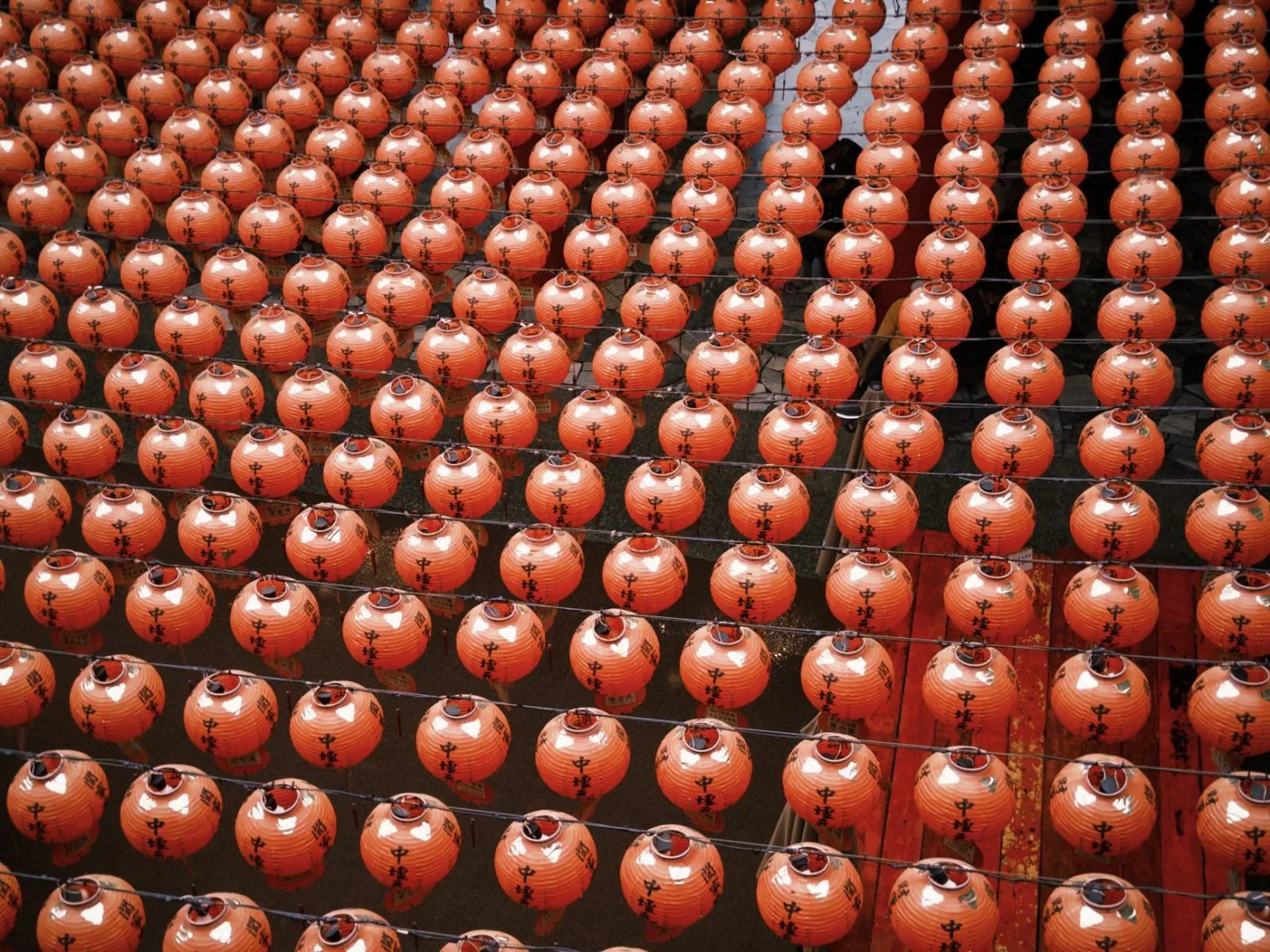
    Rows of illuminated red lanterns hanging along a street during a night festival
    Tang cities relaxed curfew so residents could walk among the lanterns at night. zack ZHUO | Pexels License (https://www.pexels.com/license/)

    Riddles, Lions, and Processions

    Lantern riddles are written on slips attached to the lamps; solving one is a small test of wordplay and classical learning. Lion dances, dragon dances, and walking-on-stilts performances draw crowds in the streets, with local troupes competing for space and applause. In some places, people carry lanterns representing animals or characters, and children pull small lanterns on sticks. Beijing’s temple fairs once gathered vendors, performers, and visitors around temple courtyards; today the festival is also marked in parks and commercial districts. Taiwan is known for large lantern festivals and elaborate installations, while Nanjing has long been associated with elaborate lantern craft along the Qinhuai River.
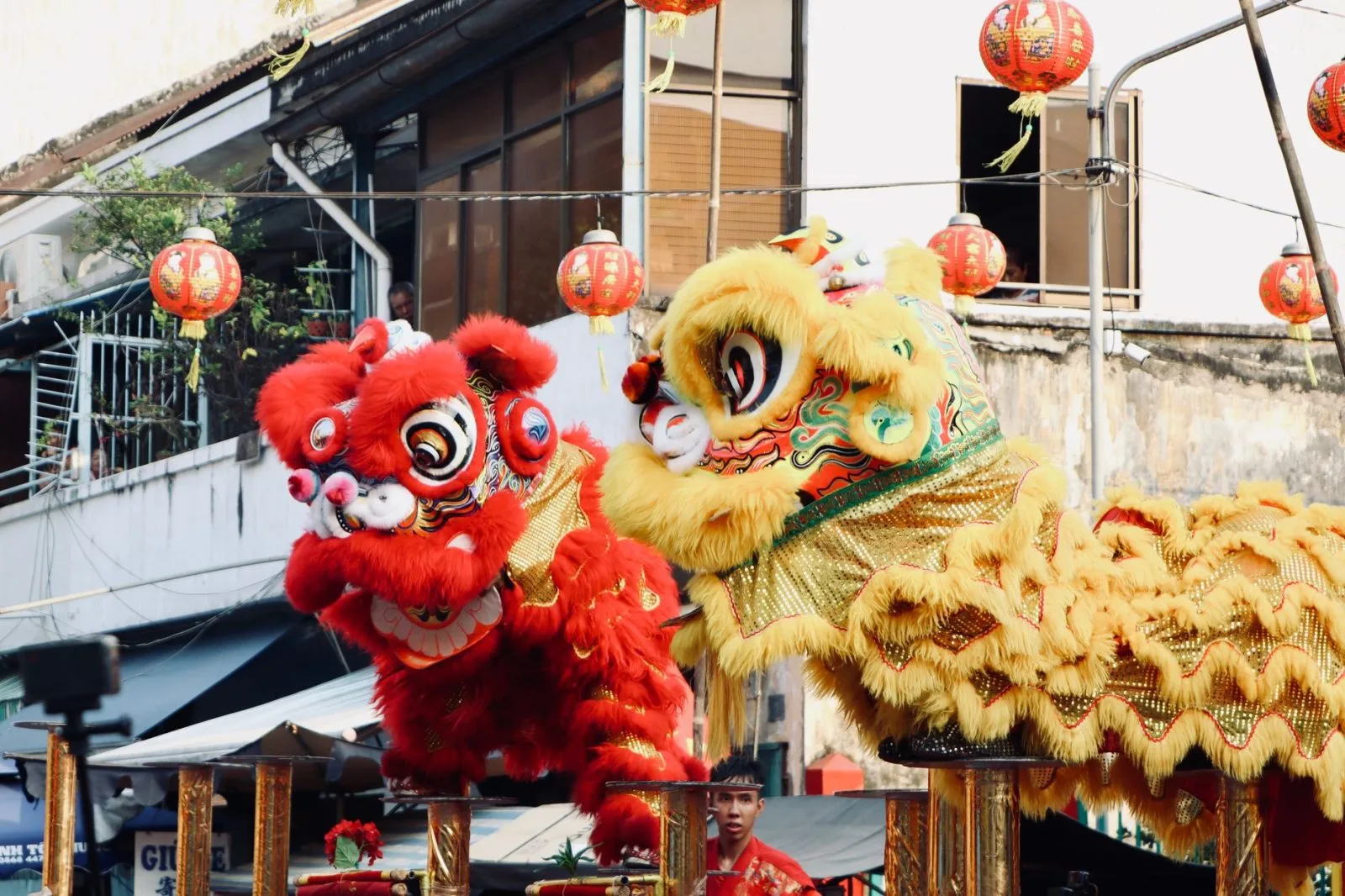
    A lion dance troupe leaping beneath hanging lanterns during a street celebration
    Processions and lion dances turn the festival into a public performance. Pham Huynh Tuan Vy | Pexels License (https://www.pexels.com/license/)

    Tangyuan and the Taste of Reunion

    The festival food is tangyuan in southern China and often yuanxiao in the north, both made from glutinous rice flour around a sweet filling. The names and methods differ: southern cooks wrap a soft dough around filling, while northern cooks may roll moistened filling in dry rice flour in repeated layers. Fillings include black sesame paste, red bean, peanut, and osmanthus sugar. The round shape suggests family unity, and the bowls are shared after the evening’s walk. In Ningbo, black-sesame tangyuan are a local speciality; in Shanghai and Suzhou they are sold from neighbourhood shops. Sweet rice wine and small glutinous balls are also served in some regions.

    • Black sesame, red bean, and peanut fillings
    • Southern wrapped tangyuan and northern rolled yuanxiao
    • Lantern riddles attached to public displays
    • Dragon and lion processions after dark
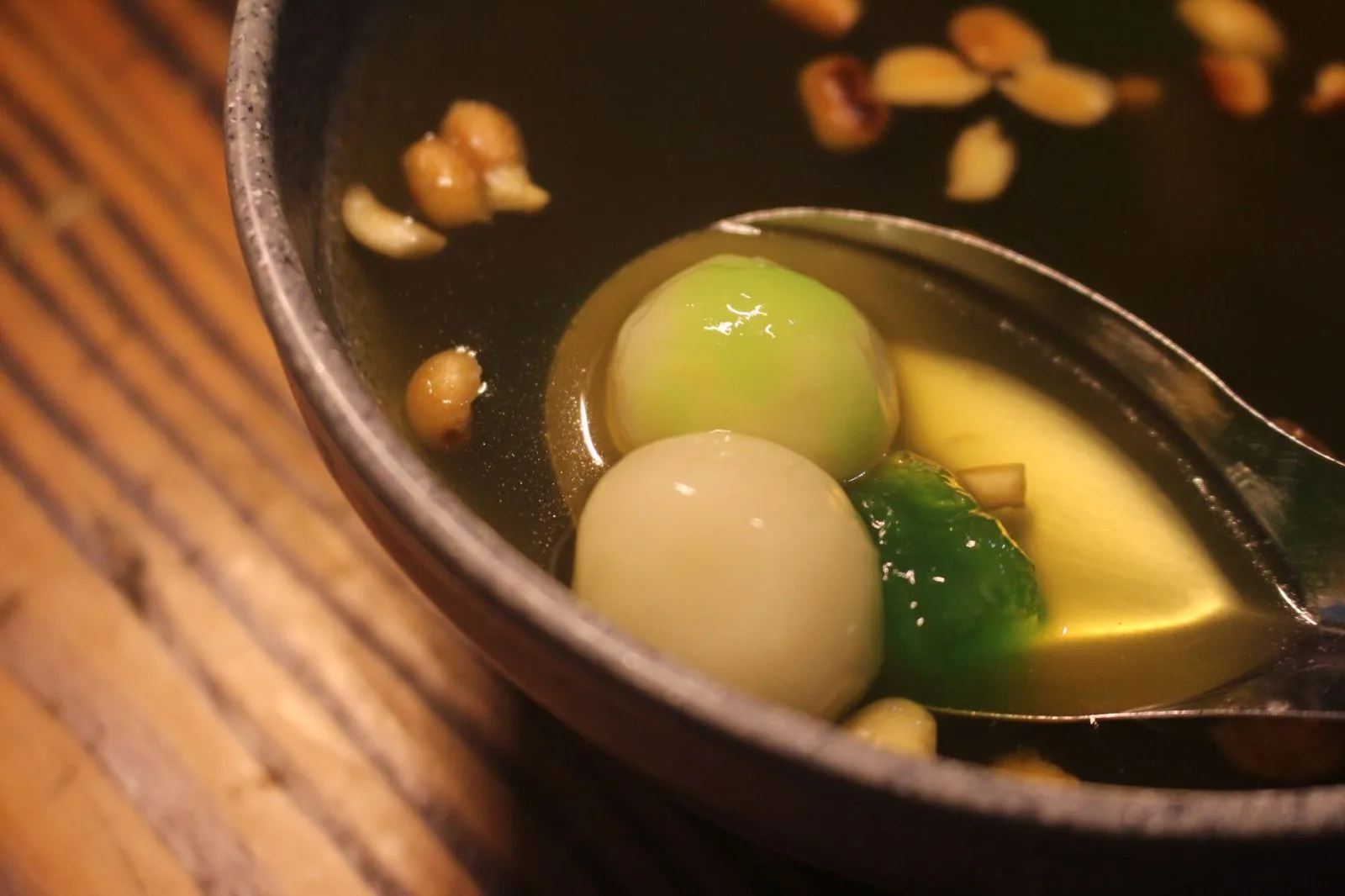
    A bowl of small white glutinous rice balls in clear sweet soup
    Round rice balls symbolise reunion at the first full moon. Jauhar Musthofal Qulub | Pexels License (https://www.pexels.com/license/)

    The Festival in Modern Cities

    The festival remains a public holiday in mainland China, though the number of days off and the school calendar vary. Major cities install temporary lighting, close some streets to traffic, and run lantern displays in parks and along rivers. Viewing a lantern show often means walking slowly in crowds; in Beijing, the temperature can still be below freezing, so warm layers matter. Photographers should check local rules on tripods and drones. Shopping districts extend the season commercially, but temple fairs and neighbourhood associations keep older practices alive. The date’s movement also means the festival may fall during term time or a working week, changing how families gather.

    The first full moon turns a winter street into a temporary gallery of paper, silk, and light.

    Fuentes y lecturas adicionales

    1. Festival de los Faroles — Enciclopedia Británica.
    2. Chinese Lantern Festival — China Highlights.
    3. Yuanxiao Festival — World History Encyclopedia.
    Véalo en su lugar

    Siga esta entrada a la región a la que pertenece.

    Explorar por mapa

    Sigue el hilo

    Explora otras entradas que compartan sus etiquetas.

    Explorar la etiqueta
  • Albóndigas

    Vida y folclore

    Albóndigas

    Cajas de trigo llenas y rituales de invierno

    Las empanadillas del norte de China transforman la masa de trigo y los rellenos de temporada en una comida para compartir.

    Sección
    Vida y folclore
    Región
    Pekín
    Era
    A través de las épocas
    Etiquetas
    Costumbres, Alimentos

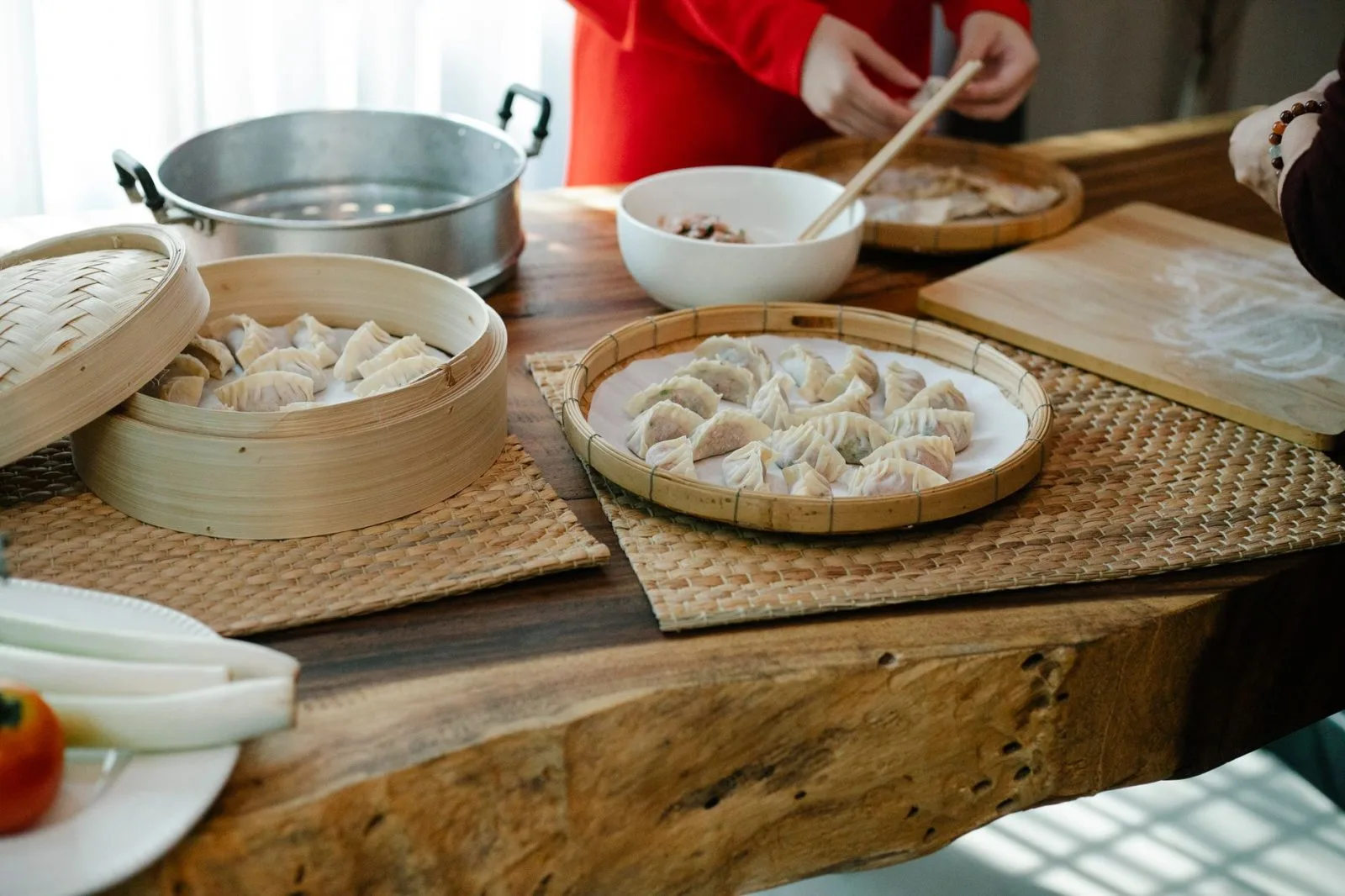
    Los dumplings son empanadillas rellenas de trigo que se cocinan hirviéndolas, al vapor o friéndolas. En el norte de China, se consumen para celebrar el solsticio de invierno y el Año Nuevo Lunar, cuando las familias reúnen a los jiaozi alrededor de una mesa y doblan cada empanadilla a mano.

    El trigo en la dieta del norte

    Los dumplings pertenecen a la zona de trigo y mijo del norte de China, donde la harina de trigo se convirtió en un alimento básico durante la dinastía Han y posteriores. Su forma se ha comparado con el dinero chino antiguo, lo que les dio un lugar en el lenguaje del Año Nuevo: jiaozi suena relacionado con una frase para intercambiar tesoros. Una conocida tradición vincula los dumplings con el médico Zhang Zhongjing, quien supuestamente preparaba empanadillas rellenas para tratar las orejas congeladas durante el período Han. La historia es difícil de verificar, pero explica la costumbre de comerlos en clima frío. La evidencia arqueológica de los alimentos de trigo rellenos es más clara que la de cualquier inventor individual.

    Una hilera de empanadillas jiaozi plisadas sobre una tabla de madera enharinada.
    El borde plisado sella el relleno y le da a cada empanadilla su forma característica. Angela Roma | Licencia Pexels (https://www.pexels.com/license/)

    Masa, relleno y doblado

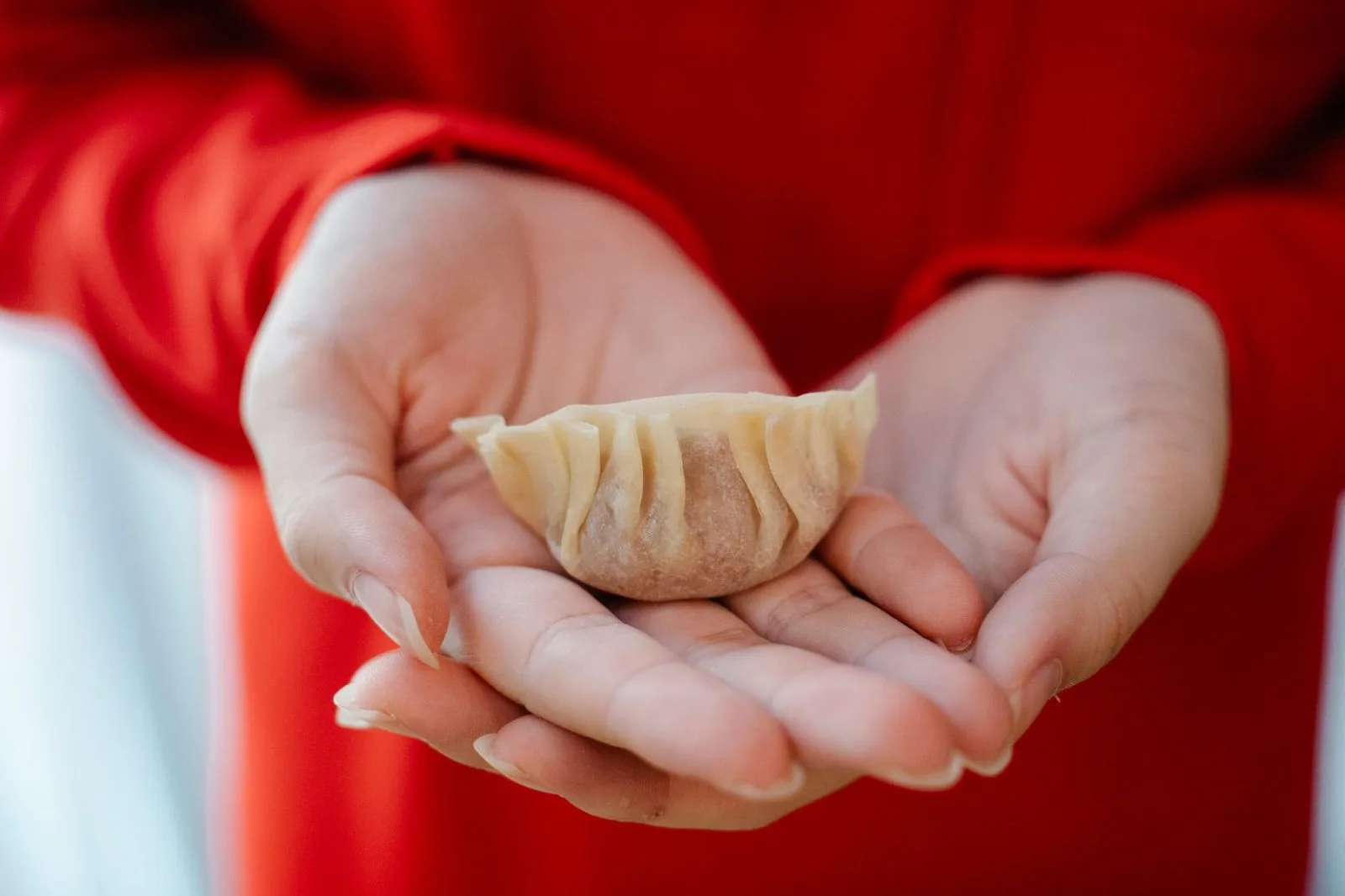
    La masa básica de jiaozi se prepara con harina de trigo y agua, dejándola reposar para que el gluten se relaje y la envoltura se pueda estirar finamente sin que se rompa. Algunos cocineros añaden un huevo o usan agua caliente en lugar de parte de la harina para obtener una textura más suave. Los rellenos se pican finamente para que se cocinen bien: cerdo con repollo, cebollino o puerros; cordero con cebolla en el noroeste; camarones y huevo en las zonas costeras. El cocinero coloca el relleno en el centro, dobla la envoltura y presiona los pliegues a lo largo de la costura. Un sellado hermético es importante porque la cocción abre la masa si queda aire dentro. Los rellenos vegetarianos con tofu, champiñones o huevo son comunes, especialmente para las visitas a templos y los períodos de ayuno.

    Manos pellizcando los pliegues a lo largo del borde de una empanadilla cruda.
    El plisado sella el paquete; cada familia puede preferir un pliegue diferente. Angela Roma | Licencia Pexels (https://www.pexels.com/license/)

    Hervido, al vapor y frito

    El método más común es la ebullición: las empanadillas se añaden a una olla grande, se empujan desde el fondo y se cocinan hasta que flotan y se hinchan. Los cocineros del norte suelen añadir un poco de agua fría cuando la olla vuelve a hervir, repitiendo el proceso tres veces para conseguir una masa firme. La empanadilla, o guotie, se fríe por un lado y luego se cuece al vapor tapada con un poco de agua, dejando una base crujiente. Las versiones del sur y de la diáspora incluyen el har gow al vapor con gambas y envolturas translúcidas de almidón de trigo. Las salsas para mojar varían desde vinagre negro y jengibre hasta salsa de soja con aceite de chile o ajo. Los rellenos también varían: en Pekín predominan el cerdo y el cebollino, en las comunidades musulmanas aparecen la ternera y el cordero, y en las ciudades del interior, más frías, se suele optar por la col o las setas.

    • Jiaozi hervidos para Año Nuevo y solsticio de invierno
    • Guotie con una base crujiente frita
    • Vinagre negro y jengibre como salsa clásica
    • Rellenos regionales de cerdo, cordero, camarones o verduras.
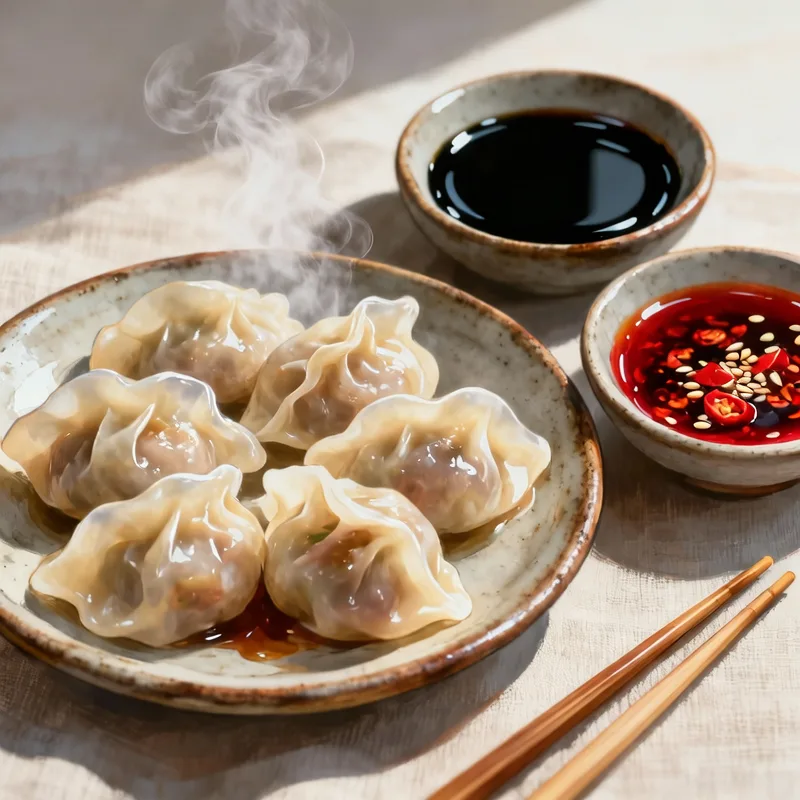
    Albóndigas hervidas servidas con pequeños recipientes de vinagre y aceite de chile.
    Una salsa de vinagre y jengibre contrarresta el sabor intenso de los rellenos de cerdo. Ilustración generada por IA · SinoViz

    Haciéndolos juntos

    Las empanadillas son un plato social porque su preparación lleva tiempo. En la víspera del Año Nuevo Lunar, varias generaciones pueden enrollar las masas, picar el relleno y doblar docenas o cientos juntas; algunas empanadillas tienen forma de moneda o esconden una moneda limpia como amuleto de buena suerte. La comida suele organizarse en torno a los miembros más ancianos de la familia. Las sobras se fríen al día siguiente, y ahora se venden empanadillas congeladas en supermercados de toda China y del extranjero. Las versiones de los restaurantes varían desde las casas de Pekín que sirven empanadillas de cordero hasta los guotie de Shanghái y los xiaolongbao rellenos de sopa, que pertenecen a una familia de bollos al vapor relacionada pero distinta.

    Una empanadilla es una pequeña muestra de la organización doméstica: masa, relleno, manos y un motivo para reunirse.

    Fuentes y lecturas adicionales

    1. Bola de masa hervida — Enciclopedia Británica.
    2. Jiaozi — Enciclopedia Británica.
    3. Año Nuevo Chino — Enciclopedia Británica.

    Véalo en su lugar

    Siga esta entrada a la región a la que pertenece.

    Explorar por mapa

    Sigue el hilo

    Explora otras entradas que compartan sus etiquetas.

    Explorar la etiqueta
  • Cocina de Sichuan

    Vida y folclore

    Cocina de Sichuan

    Chilli Oil, Ferment, and the Numbing Pepper

    Sichuan cooking balances chilli heat, Sichuan pepper numbness, fermented bean paste, and rich broth.

    Sección
    Vida y folclore
    Región
    Sichuan
    Era
    A través de las épocas
    Etiquetas
    Customs, Food, Geography

    Sichuan cuisine is known for bold seasoning, but its classic dishes are built on contrast: chilli with Sichuan pepper, hot oil with cool cucumber, or a clear broth beside a fiery one.

    A Basin Pantry and Early Flavours

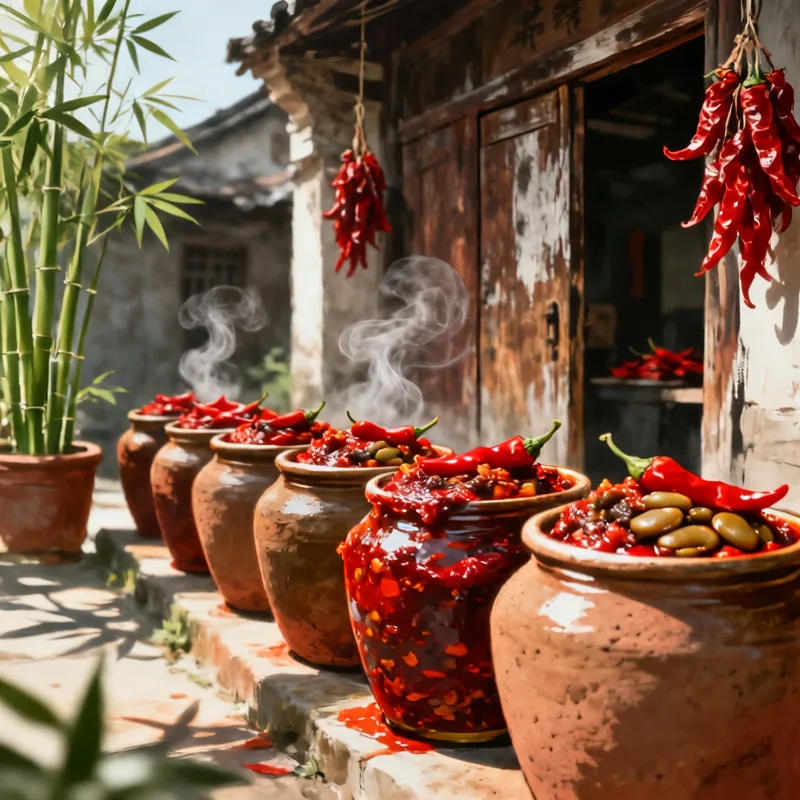
    The Sichuan Basin has fertile fields, rivers, and a humid climate, but its early elite cooking was not defined by chilli. Chilli peppers reached China from the Americas in the sixteenth century and became a Sichuan staple later, especially among ordinary households. Before that, cooks used ginger, garlic, mustard, vinegar, and the distinctive Sichuan pepper, Zanthoxylum simulans, whose husks cause a tingling sensation rather than heat.Fermented bean pastes from the basin towns added depth. Pixian doubanjiang, a broad-bean and chilli paste fermented in Pixian near Chengdu, became a foundation of many red-braised and stir-fried dishes. The province’s food therefore combines older preservation methods with ingredients that arrived through global trade.

    Jars of red chilli and broad-bean paste fermenting outside a Sichuan workshop
    Fermented doubanjiang gives many Sichuan dishes their deep red base. Ilustración generada por IA · SinoViz

    The Grammar of Heat

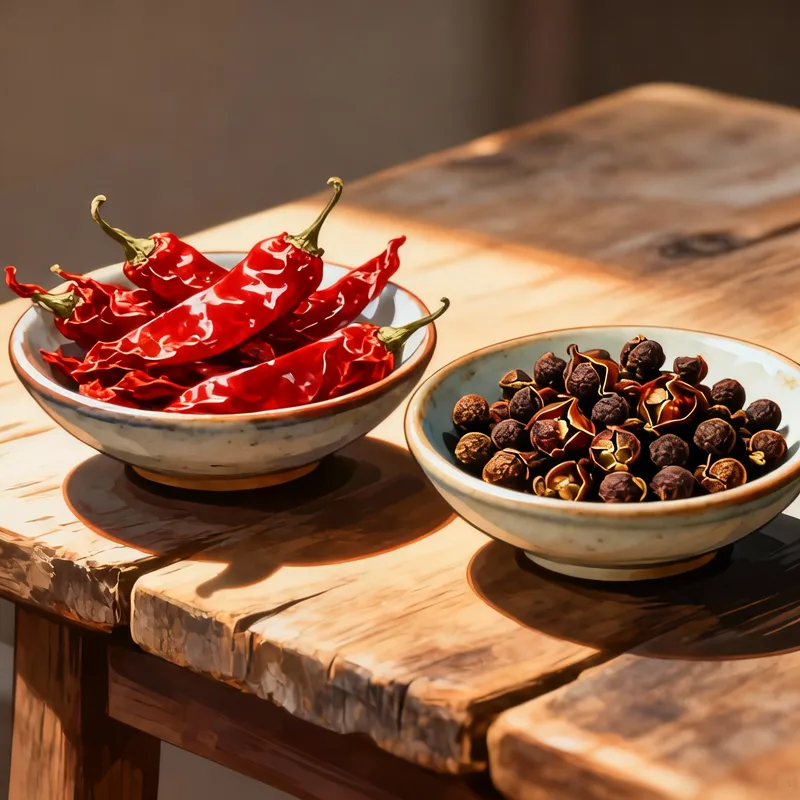
    Sichuan cooks distinguish several kinds of chilli heat. Dried chillies are fried in oil until fragrant but not blackened; chilli oil is steeped and aged; chilli bean paste supplies fermented heat; and fresh peppers give a brighter bite. Sichuan peppercorns, often toasted and ground, produce the málà combination of numbness and spice. Official Sichuan cookbooks describe more than twenty recognised flavour profiles, from guaiwei, strange or complex, to yuxiang, fish-fragrant, which uses no fish. Mapo tofu, associated with Chengdu in the nineteenth century, combines soft tofu, minced meat, doubanjiang, chilli oil, and Sichuan pepper. Kung Pao chicken uses dried chillies, peanuts, and a sweet-sour soy sauce.

    Dried red chillies and Sichuan peppercorns in separate shallow bowls
    Chilli heat and peppercorn numbness are distinct, and cooks balance them separately. Ilustración generada por IA · SinoViz

    Hotpot and the Two-Flame Bowl

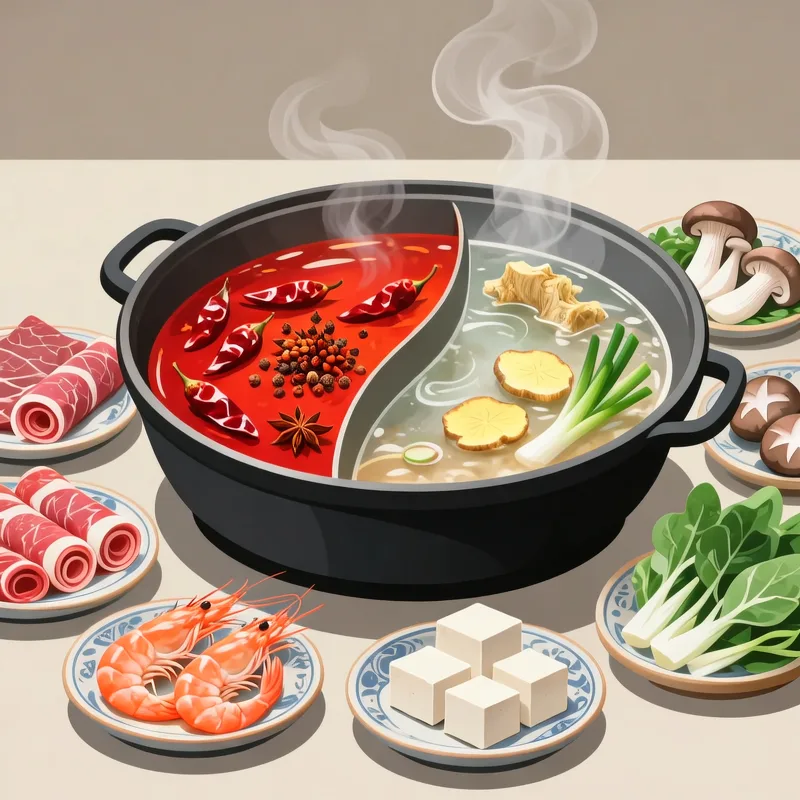
    Chengdu hotpot is a social meal built around a divided pot. One side may hold a red broth of chilli oil, doubanjiang, beef fat, and spices; the other a clear chicken or mushroom stock. Diners cook thinly sliced beef, tripe, duck blood, fish balls, vegetables, and mushrooms, then dip them in sesame oil, garlic, and chopped herbs. The sesame dip cools the palate and coats the mouth against spice. Chongqing hotpot is often heavier and more direct, traditionally using beef tallow; Chengdu versions are commonly more aromatic and varied. Yibin and other southern cities add their own chilli blends. Restaurants label spice levels, but heat can still be adjusted only by asking.

    • Pixian doubanjiang as a fermented chilli-bean base
    • Málà: chilli heat plus peppercorn numbness
    • Two-flavour hotpot with red and clear broth
    • Sesame oil dip to moderate the heat
    A divided hotpot with red chilli broth and clear broth surrounded by ingredient plates
    A two-flavour pot lets a table divide heat from clarity. Ilustración generada por IA · SinoViz

    Beyond the Fiery Stereotype

    Not every Sichuan dish is hot. Sichuan’s most ceremonial dish, Gongbao chicken and the banquet classic ‘sweet and sour’ aside, the cuisine includes clear broths, steamed dishes, and delicate pastry. Zhangcha duck is smoked with tea leaves and camphor before steaming, while boiled pork slices are served in a clear broth with mustard greens. Chengdu’s teahouses and dish shops serve small noodles, sweet-water noodles, and dumplings. The province also includes Tibetan and Yi food traditions in its western highlands, where barley, yak products, and different seasonings dominate. Reading Sichuan cuisine only as heat misses its central achievement: layering aromas, textures, and ferments so that strong flavours remain controlled.

    Sichuan cooking is not simply hot; it is a carefully graded argument between chilli, pepper, oil, and ferment.

    Fuentes y lecturas adicionales

    1. Sichuan cuisine — Enciclopedia Británica.
    2. Chinese Cuisine — Enciclopedia Británica.
    3. Sichuan Food — China Highlights.

    Véalo en su lugar

    Siga esta entrada a la región a la que pertenece.

    Explorar por mapa

    Sigue el hilo

    Explora otras entradas que compartan sus etiquetas.

    Explorar la etiqueta
  • Fujian

    Región · Costa, tulou y té

    Fujian

    Fujian limita con Taiwán al otro lado del estrecho y mira hacia el mar. Sus montañas albergaban comunidades Hakka de casas tradicionales (tulou), mientras que sus puertos enviaban comerciantes, migrantes y té a través de rutas marítimas.

    Región
    Fujian
    Coordenadas
    26,07°N, 119,30°E
    Conocido por
    Costa, tulou y té

    Paisaje

    Escarpadas colinas se encuentran con una costa irregular. Los ríos excavan pequeños valles que desembocan en el mar, creando puertos naturales y aislando a las comunidades del interior, que desarrollaron una arquitectura y dialectos propios.

    Patrimonio y lugares

    • fujian tulou
    • Gulangyu
    • Montañas Wuyi
    • emplazamientos marítimos de Quanzhou

    Cultura y vida cotidiana

    Fujian es conocida por su té oolong, sus mariscos, las tradiciones minnan y hakka, y su red de templos vinculados a la navegación. La historia de la provincia está marcada tanto por las montañas como por el océano.

    De esta región

    Historias para leer a continuación

    Entradas relacionadas con este lugar a través del mapa, la crónica y la vida cotidiana.

    Continúa el viaje

    Combina esta región con una guía de destinos o sigue sus historias a través del tiempo.

    Explora destinos Crónica abierta
  • Guangxi

    Region · Karst and the Li River

    Guangxi

    Guangxi is a landscape of limestone peaks, rivers and terraced hills. Its karst scenery is famous, but the province is equally defined by Zhuang, Dong and Miao communities and their festivals.

    Región
    Guangxi
    Coordenadas
    22.82°N, 108.32°E
    Conocido por
    Karst and the Li River

    Paisaje

    Karst towers rise above the Li River and surrounding plains. Caves, sinkholes and underground rivers shape both the scenery and the agricultural life of the region.

    Patrimonio y lugares

    • Li River
    • Longji rice terraces
    • Detian Waterfall
    • Lingqu Canal

    Cultura y vida cotidiana

    Guangxi food is sour, fragrant and often river-based. Zhuang song festivals, Dong drum towers and Miao silverwork connect the province’s scenic image to living local traditions.

    De esta región

    Historias para leer a continuación

    Entradas relacionadas con este lugar a través del mapa, la crónica y la vida cotidiana.

    Continúa el viaje

    Combina esta región con una guía de destinos o sigue sus historias a través del tiempo.

    Explora destinos Crónica abierta
  • Guangdong

    Region · The Pearl River and the sea

    Guangdong

    Guangdong faces the South China Sea and the Pearl River Delta. Its ports, dialects and Cantonese food culture have long connected China to maritime trade and overseas communities.

    Región
    Guangdong
    Coordenadas
    23.13°N, 113.26°E
    Conocido por
    The Pearl River and the sea

    Paisaje

    A subtropical coast gives way to river plains and northern hills. The delta’s waterways supported agriculture, trade and the dense urban networks that define the region today.

    Patrimonio y lugares

    • Kaiping diaolou
    • Danxia landforms
    • Guangzhou old quarters
    • Foshan ancestral halls

    Cultura y vida cotidiana

    Cantonese cuisine prizes freshness, seafood and dim sum. Lingnan architecture, opera and clan halls reflect a culture shaped by commerce, migration and humid coastal life.

    De esta región

    Historias para leer a continuación

    Entradas relacionadas con este lugar a través del mapa, la crónica y la vida cotidiana.

    Continúa el viaje

    Combina esta región con una guía de destinos o sigue sus historias a través del tiempo.

    Explora destinos Crónica abierta
  • Xinjiang

    Región · Desierto, oasis y Ruta de la Seda

    Xinjiang

    Xinjiang se extiende a través de desiertos, praderas y altas montañas en el extremo noroeste de China. Los oasis situados a lo largo de la Ruta de la Seda la convirtieron en un punto de encuentro para mercancías, religiones e idiomas.

    Región
    Xinjiang
    Coordenadas
    43,83°N, 87,62°E
    Conocido por
    Desierto, oasis y la Ruta de la Seda

    Paisaje

    El desierto de Taklamakan se ubica entre las cordilleras de Tian Shan y Kunlun. El deshielo de los glaciares alimenta los ríos de los oasis, mientras que los antiguos canales karez llevaban agua subterránea a las granjas y los pueblos.

    Patrimonio y lugares

    • Ciudad vieja de Kashgar
    • Ruinas de Jiaohe
    • Sistema de riego Karez
    • Tianshan Tianchi

    Cultura y vida cotidiana

    La música uigur, el naan, los kebabs de cordero y los bazares dotan a Xinjiang de una singular cultura de oasis. La historia de la región se refleja en las cuevas budistas, la arquitectura islámica y las rutas de caravanas.

    De esta región

    Historias para leer a continuación

    Entradas relacionadas con este lugar a través del mapa, la crónica y la vida cotidiana.

    Continúa el viaje

    Combina esta región con una guía de destinos o sigue sus historias a través del tiempo.

    Explora destinos Crónica abierta
  • Tibet (Xizang)

    Región · La meseta alta

    Xizang

    El Tíbet se alza como una alta meseta salpicada de monasterios, pasos de montaña y lagos sagrados. Su paisaje y su vida religiosa han forjado una cultura adaptada a la altitud, la luz y la distancia.

    Región
    Xizang
    Coordenadas
    29,65°N, 91,12°E
    Conocido por
    La meseta alta

    Paisaje

    La meseta tibetana tiene una altitud media superior a los 4.000 metros. Los glaciares alimentan los principales ríos asiáticos, mientras que los amplios valles y los altos pasos de montaña organizan el movimiento entre pueblos y monasterios.

    Patrimonio y lugares

    • Palacio de Potala
    • Templo Jokhang
    • Área base del Monte Everest
    • Lago Namtso

    Cultura y vida cotidiana

    El budismo tibetano, el té con mantequilla, el tsampa y las banderas de oración forman parte de la vida cotidiana. Las fiestas monásticas, la pintura thangka y la arquitectura de piedra trasladan el significado religioso al espacio público.

    De esta región

    Historias para leer a continuación

    Entradas relacionadas con este lugar a través del mapa, la crónica y la vida cotidiana.

    Continúa el viaje

    Combina esta región con una guía de destinos o sigue sus historias a través del tiempo.

    Explora destinos Crónica abierta
  • Yunnan

    Region · Mountains, tea and many peoples

    Yunnan

    Yunnan sits where the Tibetan plateau drops toward Southeast Asia. Its deep valleys, tea mountains and old towns hold an unusually wide range of languages, foods and festivals.

    Región
    Yunnan
    Coordenadas
    25.04°N, 102.71°E
    Conocido por
    Mountains, tea and many peoples

    Paisaje

    The province is a mosaic of high mountains, river gorges and subtropical valleys. The Three Parallel Rivers area carries the Yangtze, Mekong and Salween through dramatic terrain.

    Patrimonio y lugares

    • Old Town of Lijiang
    • Stone Forest
    • Three Parallel Rivers
    • Yuanyang rice terraces

    Cultura y vida cotidiana

    Yunnan food is sour, spicy, herbal and intensely local: crossing-the-bridge noodles, mushrooms, cured ham and Pu’er tea. Dai, Bai, Yi, Naxi and many other communities shape the province’s festivals and crafts.

    De esta región

    Historias para leer a continuación

    Entradas relacionadas con este lugar a través del mapa, la crónica y la vida cotidiana.

    Continúa el viaje

    Combina esta región con una guía de destinos o sigue sus historias a través del tiempo.

    Explora destinos Crónica abierta
  • Sichuan

    Region · A basin of pepper and pandas

    Sichuan

    Sichuan is defined by its fertile basin, mountain borders and a cuisine that turned chilli and Sichuan pepper into a regional language. Its history runs from ancient Shu kingdoms to modern high-speed corridors.

    Región
    Sichuan
    Coordenadas
    30.57°N, 104.07°E
    Conocido por
    A basin of pepper and pandas

    Paisaje

    Ringed by mountains, the Sichuan Basin holds rivers, farmland and dense cities. To the west, the plateau rises sharply toward Tibet; to the east, gorges cut toward the Yangtze.

    Patrimonio y lugares

    • Leshan Giant Buddha
    • Dujiangyan irrigation system
    • Jiuzhaigou
    • Mount Emei

    Cultura y vida cotidiana

    Sichuan cooking balances málà heat, fragrance and texture. Teahouses, opera, bamboo craft and panda conservation give the province a cultural life that is both local and widely recognised.

    De esta región

    Historias para leer a continuación

    Entradas relacionadas con este lugar a través del mapa, la crónica y la vida cotidiana.

    Continúa el viaje

    Combina esta región con una guía de destinos o sigue sus historias a través del tiempo.

    Explora destinos Crónica abierta