The Manchu are a Tungusic-speaking people whose Qing dynasty left a deep imprint on Beijing’s buildings and court culture.
部分
生活与民俗
地区
北京
时代
元明清
标签
Ethnic, History
Manchu identity took shape in the early seventeenth century among Jurchen groups of northeastern China. The Qing dynasty they founded ruled from Beijing between 1644 and 1912, and its material traces remain in the city’s palaces and archives.
From Jurchen to Qing
The Manchu descend from Jurchen communities of the northeast, who earlier founded the Jin dynasty of 1115 to 1234. In 1635 the ruler Hong Taiji adopted the name Manchu for his people, and in 1636 he renamed the state Qing. The dynasty took Beijing in 1644 and ruled China until 1912. Today roughly 10.4 million people identify as Manchu according to the 2010 census, making them one of the largest ethnic minorities. Most live in Liaoning, Hebei, Jilin and Heilongjiang, with substantial populations in Beijing and Tianjin. Migration into the capital after 1644 created banner neighbourhoods whose street names and food shops still register the Qing presence.
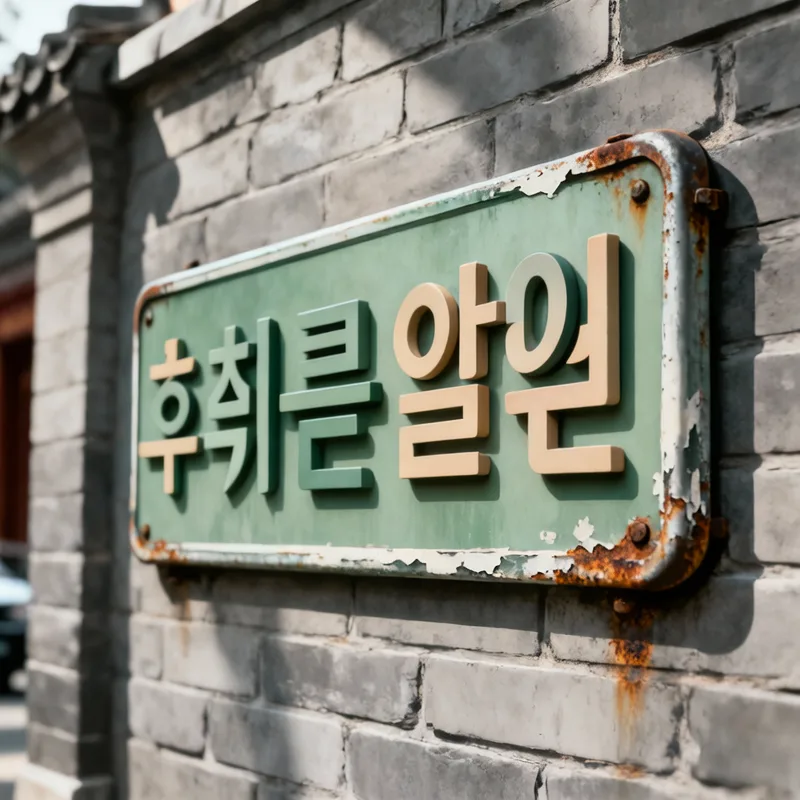
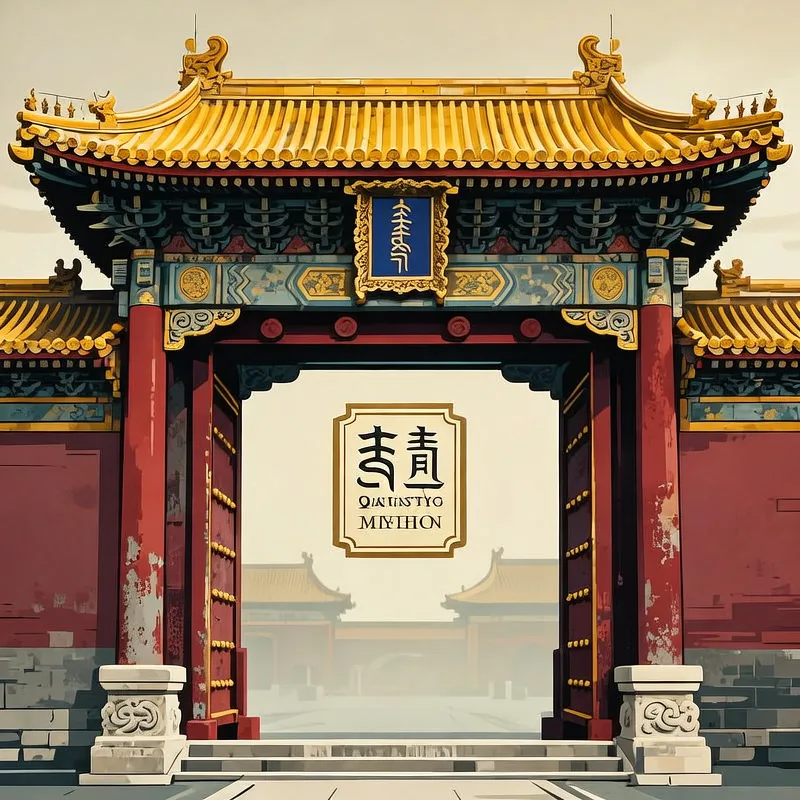
Palace gates in Beijing carry inscriptions in both Manchu and Chinese. AI生成的插图 · SinoViz
A written language of archives
Manchu is a Tungusic language, related to Xibe and more distantly to Evenki. Its written form was devised in the late sixteenth century by adapting the Mongolian script, and it became the language of Qing military records, imperial edicts and family archives. Thousands of these documents survive in Chinese and foreign collections, and they are consulted for the history of the dynasty and its frontier administration. Few people speak Manchu fluently today, mostly in a handful of northeastern villages, and Mandarin is the normal language of daily life. Even so, Manchu words survive in place names, court titles and the vocabulary of Qing institutions.
Dress, house and food
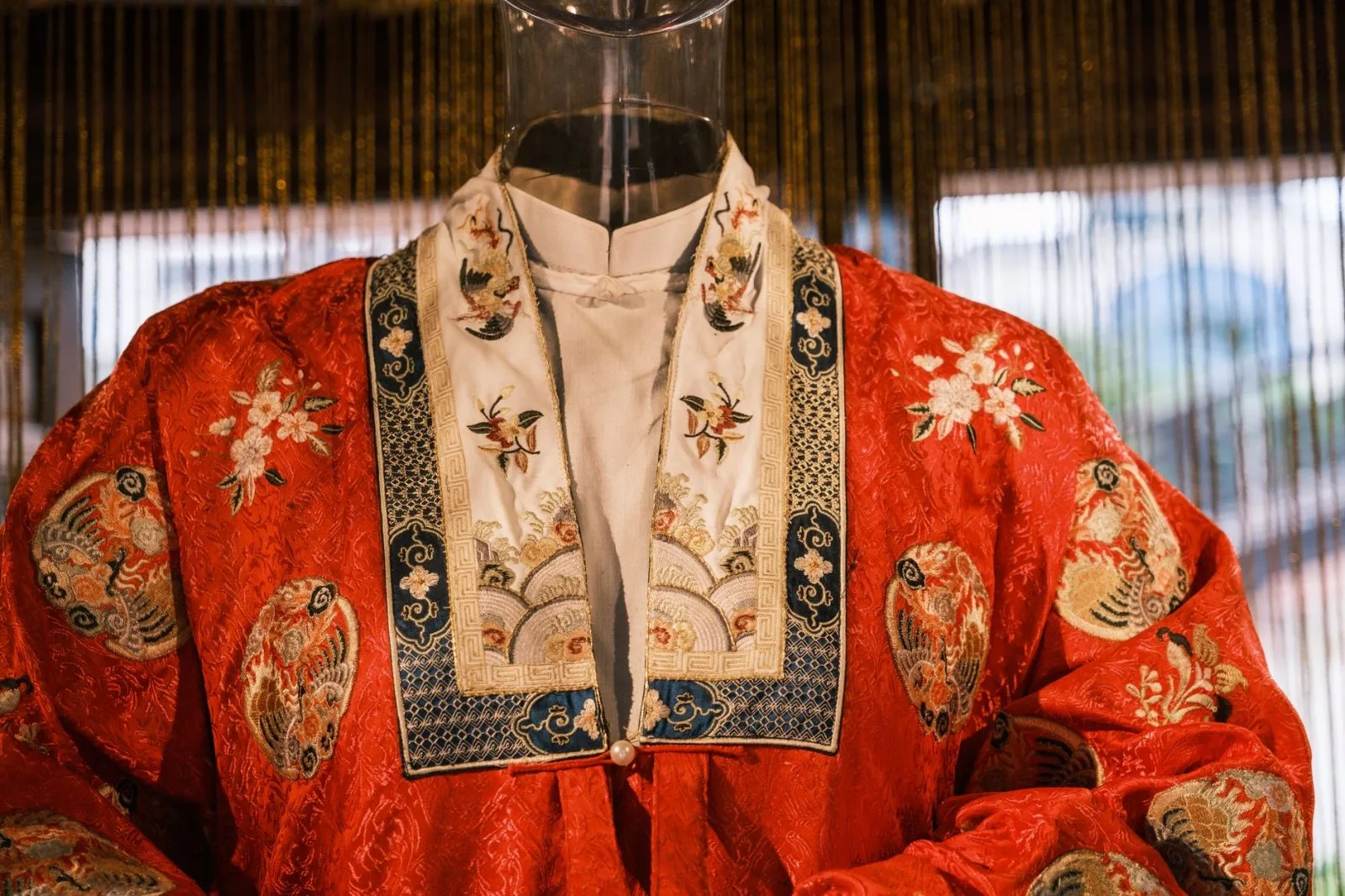
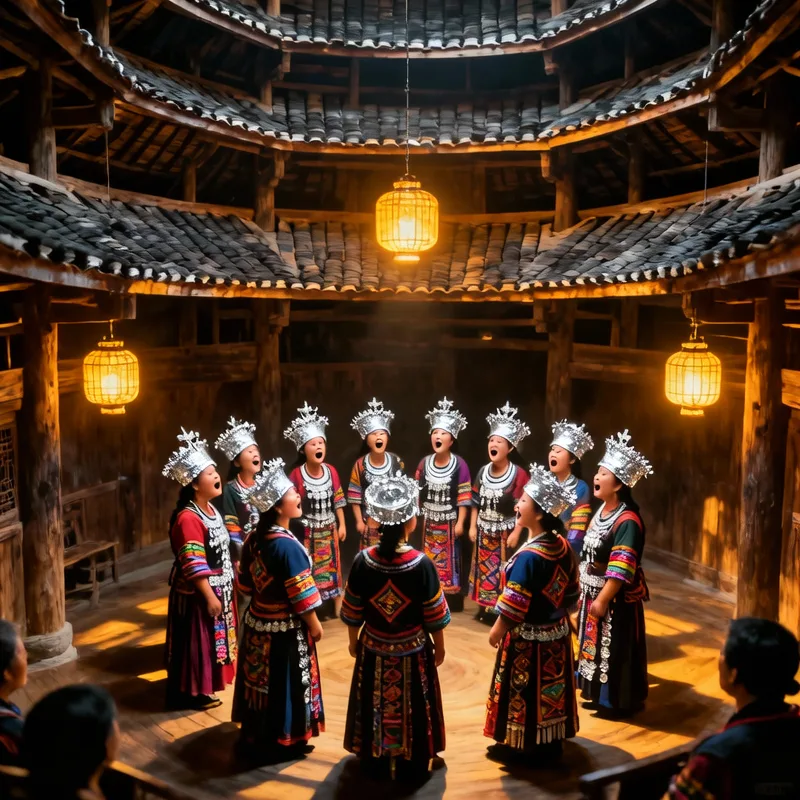
Manchu dress shaped the qipao, the close-fitting robe later worn widely by Han Chinese women and known abroad as the cheongsam. Older garments had horse-hoof cuffs that could be folded back over the hands, and women’s formal dress included a tall flag headdress and shoes with a raised flowerpot sole. Under the Qing, men wore a shaved forehead and a braided queue, a rule enforced until the dynasty’s end. A traditional house was arranged as a pocket room with a heated kang platform along the west wall, where honored guests slept and ancestral tablets were kept. A pole in the courtyard was used in offerings that fed crows, an animal associated with founding legends.
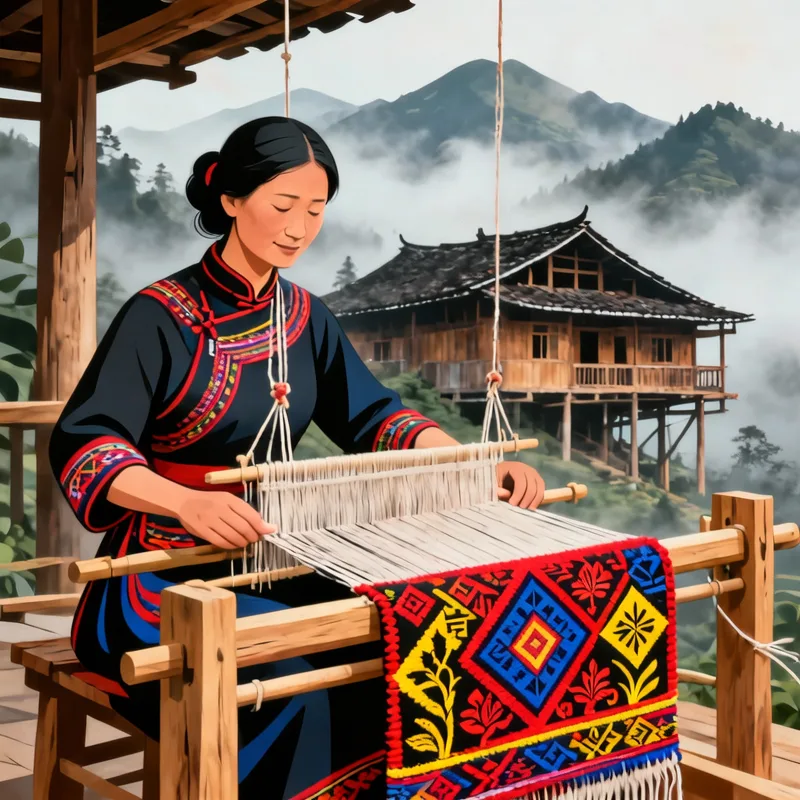
Manchu court dress influenced the qipao and the formal clothing of the Qing elite. TBD Tuyên | Pexels License (https://www.pexels.com/license/)
What remains in Beijing
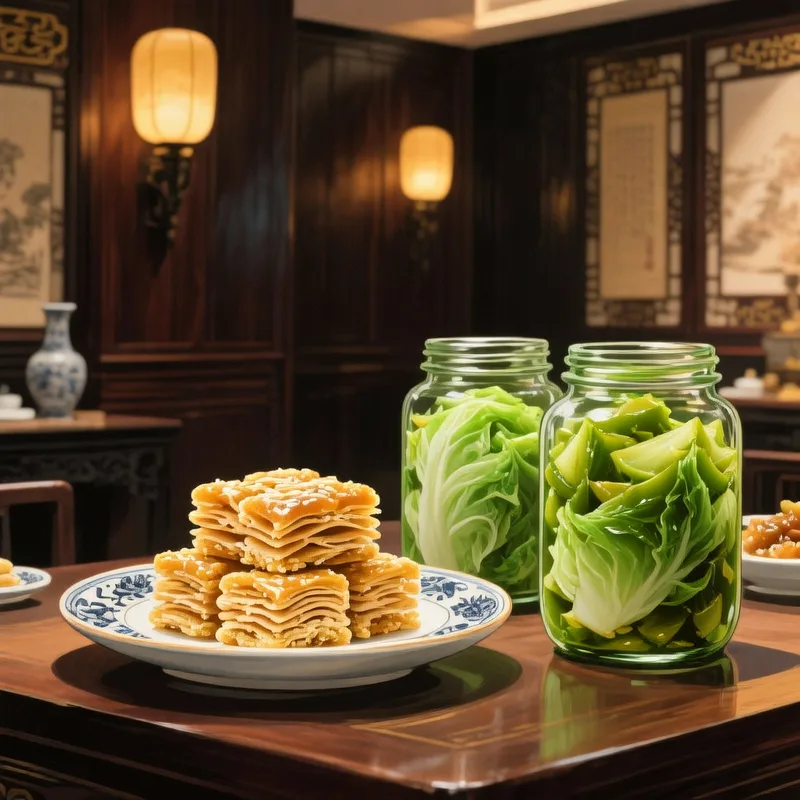
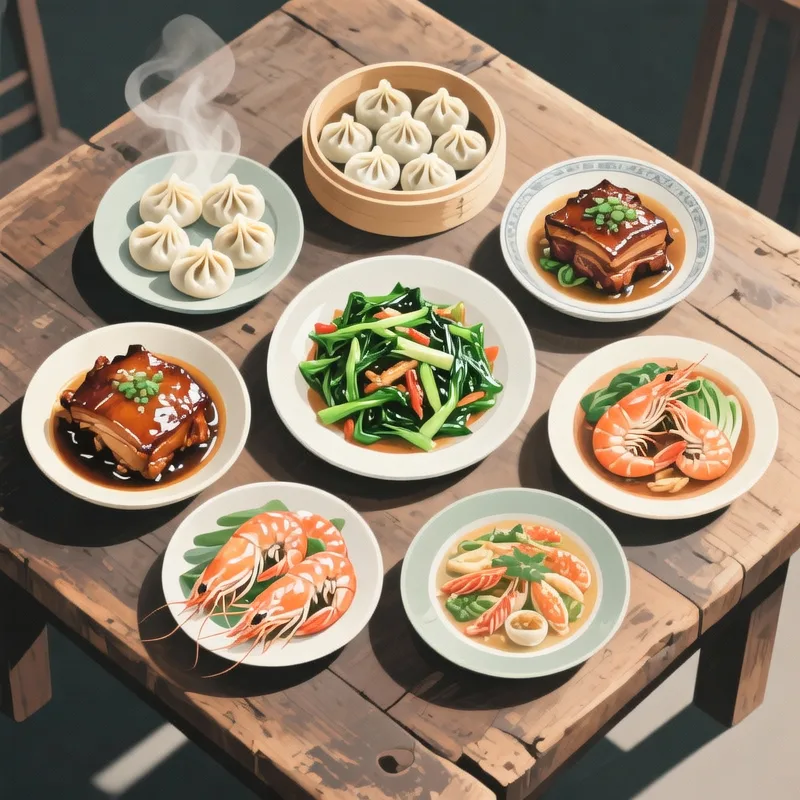
Manchu cuisine survives in Beijing and the northeast through sachima, a sweet pastry made of fried dough and syrup, and through hot pots of pickled cabbage, pork and blood sausage. The elaborate Manchu-Han banquet is a later dining form assembled from court and regional dishes rather than a single unbroken tradition. Paper-cutting, embroidery and painted snuff bottles are among the crafts associated with Manchu households. In Beijing, the most public inheritance is architectural: the Forbidden City’s bilingual plaques, the layout of former banner quarters, and restaurants and museums that explain Qing court life. These traces make the dynasty legible on an ordinary walk through the old city.
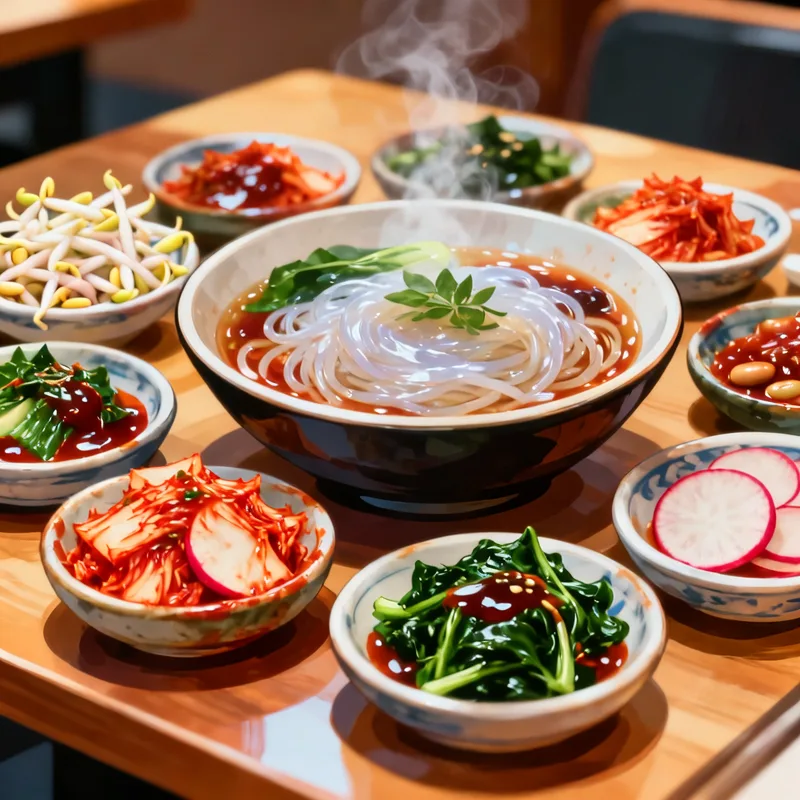
Manchu food traditions remain visible in Beijing and northeastern China. AI生成的插图 · SinoViz
On Beijing’s palace gates, Manchu and Chinese script still share the same lintel.
The eight great cuisines classify Chinese cooking by region, climate and technique.
部分
生活与民俗
地区
北京
时代
跨越时代
标签
食物
Ask a Chinese cook to name the country’s great cuisines and you will hear a list of eight. The scheme is a modern way of sorting older regional traditions, each shaped by climate, staple crops, waterways and trade.
How the List Was Made
An older division recognised four great traditions: Lu in the north, Yue in the south, Chuan in the west and Huaiyang in the east. The more detailed eight-cuisine scheme emerged in the 1980s and is often credited to Wang Shaoquan, a journalist at the People’s Daily. It added Zhe, Min, Xiang and Hui to the original four, giving provinces a more precise place on the culinary map. The categories are conventions, not laws; cooks in Chengdu and Guangzhou have always borrowed from neighbours.
The eight-cuisine scheme groups regional cooking styles by province and climate. AI生成的插图 · SinoViz
North and East
Lu, or Shandong cuisine, is the classic northern style. Coastal branches favour prawns, scallops and abalone, often quickly stir-fried, while inland cooks around Jinan excel at soups and long braises. Scallions and salt are characteristic seasonings, and steamed bread often replaces rice. Lu cooking shaped the food of the imperial court and of Beijing, where Shandong chefs dominated many restaurants; the capital’s Peking duck belongs to this northern lineage.
Su, or Jiangsu cuisine, covers the Yangtze delta and Huaiyang region. It favours mild, slightly sweet flavours, careful knife work and serious soups; lotus root, bamboo shoots and water chestnut are common, and xiao long bao soup dumplings are its best-known export. Zhe cuisine, from Zhejiang, is lighter still: Dongpo pork is braised slowly with wine and soy, while West Lake vinegar fish and Longjing shrimp keep the taste of the water and the tea leaves.
South and West
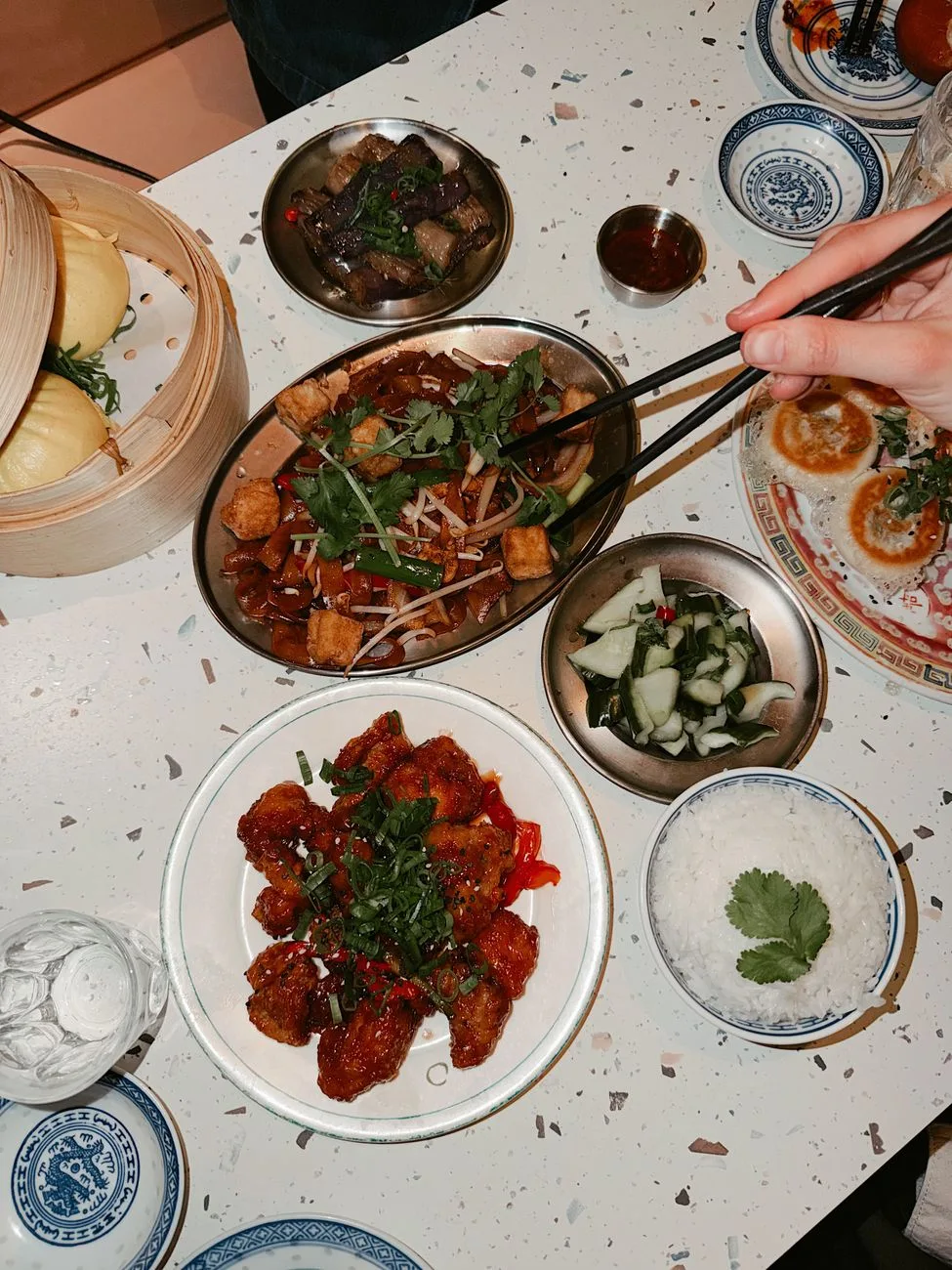
Yue, or Cantonese cuisine, draws on the Pearl River delta and the South China Sea. Freshness governs the kitchen: fish and shellfish are steamed, roast meats are hung in the window, and dim sum is served with tea in a yum cha session. Chuan, or Sichuan cuisine, is defined by ma la, the numbing-spicy pairing of chilli and Sichuan pepper; pixian broad-bean paste gives many dishes their fermented depth. Xiang cooking from Hunan uses chilli without the numbing note, often smoked or pickled, while Hui cuisine from Anhui makes much of mountain ingredients such as bamboo shoots and preserved mandarin fish.
Steam and freshness in the south; chilli and fermentation in the west. Vincent Rivaud | Pexels License (https://www.pexels.com/license/)
Min and the Sea
Min, or Fujian cuisine, is easy to overlook and hard to mistake. Fuzhou cooks are masters of soup and of hongzao, fermented red rice lees that colour and flavour pork, fish and river eels. Buddha jumps over the wall is a layered broth of shark fin, abalone, scallop, mushrooms and ham, named for a monk said to have leapt the wall for a taste. Coastal Fujian adds fish balls, oyster omelets and popiah-style crepes, reflecting a province oriented toward the sea and toward migration.
Lu — Shandong: scallions, seafood, slow soups
Chuan — Sichuan: ma la, chilli oil, broad-bean paste
Yue — Guangdong: dim sum, steaming, roast meats
Min — Fujian: red rice lees and layered soups
Beijing as a Crossroads
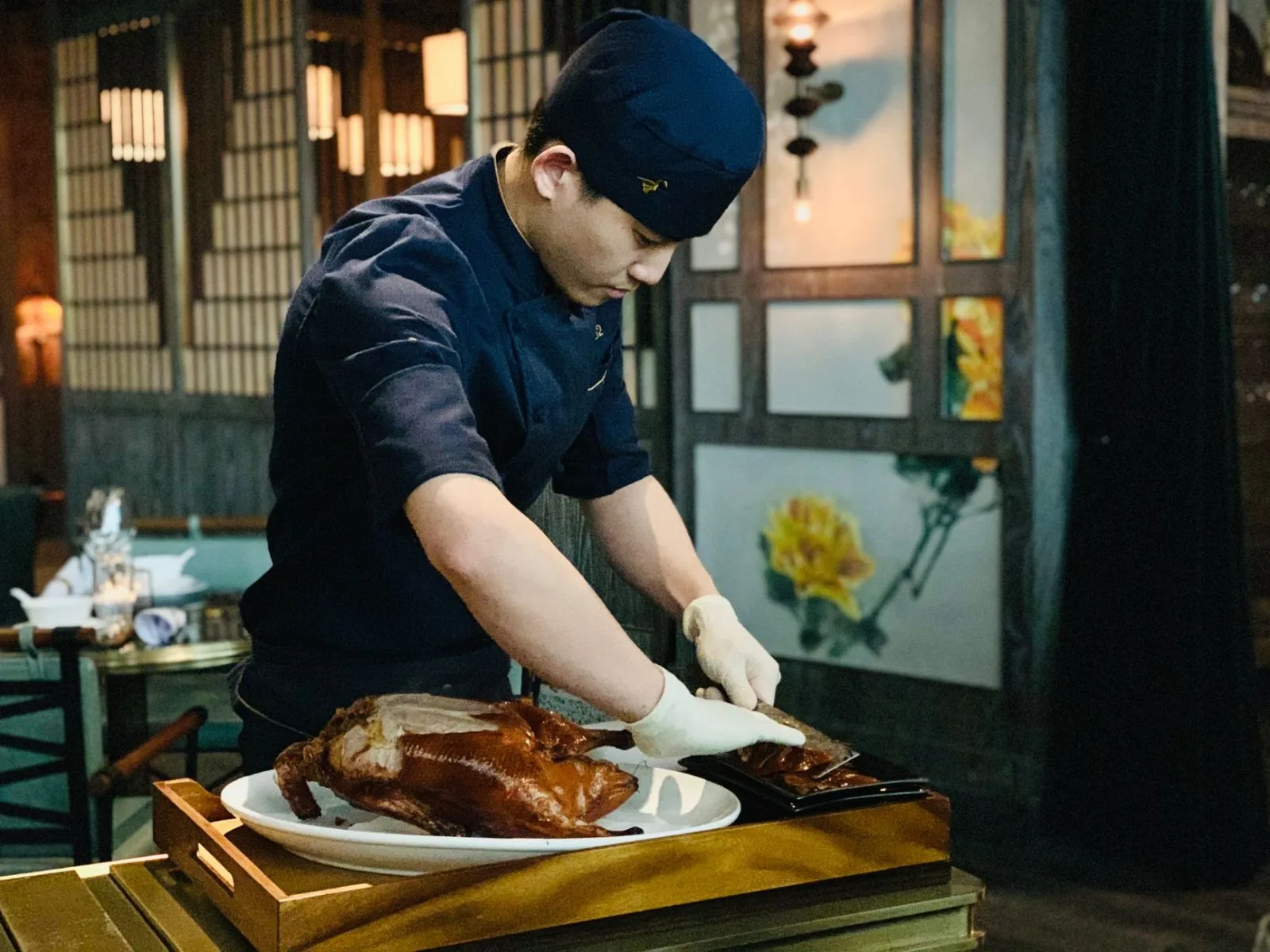
The eight-cuisine map describes provinces, but Beijing has always eaten beyond its own borders. Shandong technique supplied the basis of restaurant cooking, Mongol and Manchu tastes left their mark in mutton dishes and hotpot, and the Qing court staged the elaborate Manchu-Han feast. Bianyifang, founded in 1416, roasted ducks in a closed oven; Quanjude, opened in 1864 by Yang Quanren, popularised the hanging oven and the crisp skin served with pancakes, scallions and sweet bean sauce. A capital city turns regional styles into a shared vocabulary.
Beijing’s roast duck emerged from northern techniques and capital city exchange. MorNa Tang | Pexels License (https://www.pexels.com/license/)
Eight cuisines are a map of climate and trade, written in oil, vinegar and fermented bean paste.
Hotpot turns dinner into a shared act of cooking at the table.
部分
生活与民俗
地区
四川
时代
跨越时代
标签
食物
Hotpot is a meal built around a vessel of simmering broth. Diners lower thin slices of meat, vegetables and offal into the liquid, cook them to the texture they want and dip them in sauce before eating.
One Pot, Many Names
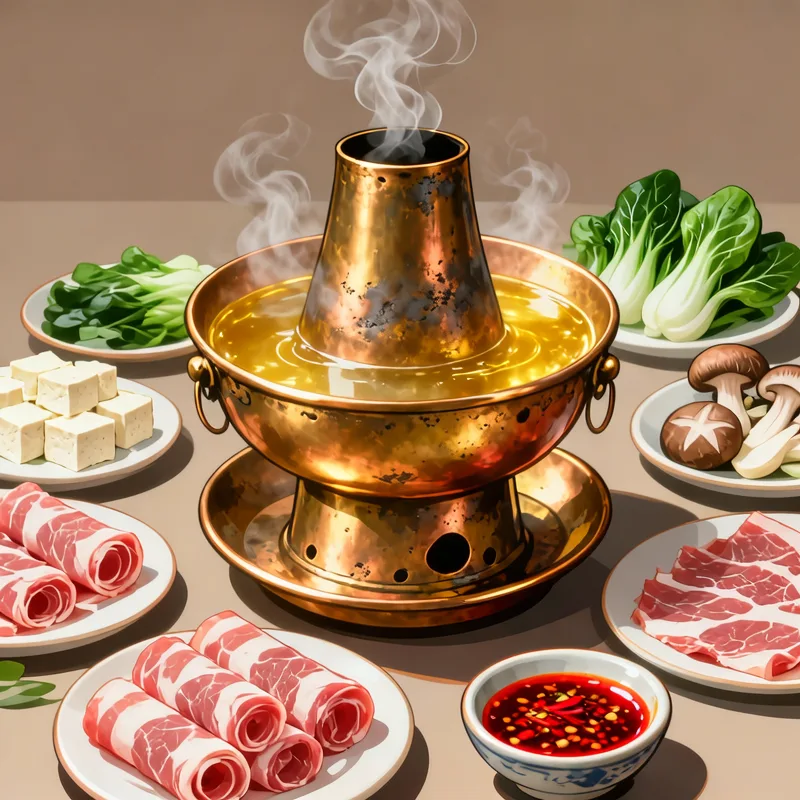
The Chinese term huoguo literally means fire pot. In northern China the classic form is the copper pot with a central chimney, heated by charcoal, in which paper-thin slices of mutton are swished briefly in a clear broth. Beijing’s Donglaishun, founded in 1903, made the mutton dip famous, served with sesame sauce, fermented tofu and chive flower sauce. In Sichuan and Chongqing the pot is filled with a red, oil-floated broth instead. The table method is the same; the flavourings mark the region.
The northern copper pot uses a clear broth; Sichuan versions favour red oil. AI生成的插图 · SinoViz
The Sichuan Broth
Two sensations define the Sichuan version. Chilli brings capsaicin heat; Sichuan pepper, the husk of a prickly ash, supplies hydroxy-alpha sanshool, which makes the tongue tingle and vibrate. Together they create ma la, numbing spicy. Chilli reached China only after the sixteenth century, arriving from the Americas through maritime trade, so the modern red broth is comparatively recent. Earlier seasonings relied on Sichuan pepper, ginger, fermented beans and the broad-bean chilli paste of Pixian.
A Chongqing lao huoguo, or old hotpot, traditionally starts with beef tallow, dried chillies and paste, browned until the oil turns red. The nine-grid pot divides the surface: the centre boils hardest, the corners simmer gently, and each diner keeps track of their own food. Offal — tripe, duck blood, intestine — was the original cheap fare of dockworkers and boatmen at Chaotianmen. Tripe is cooked by the rule of seven up, eight down, dipped and lifted repeatedly for a few seconds.
Chengdu and the Split Pot
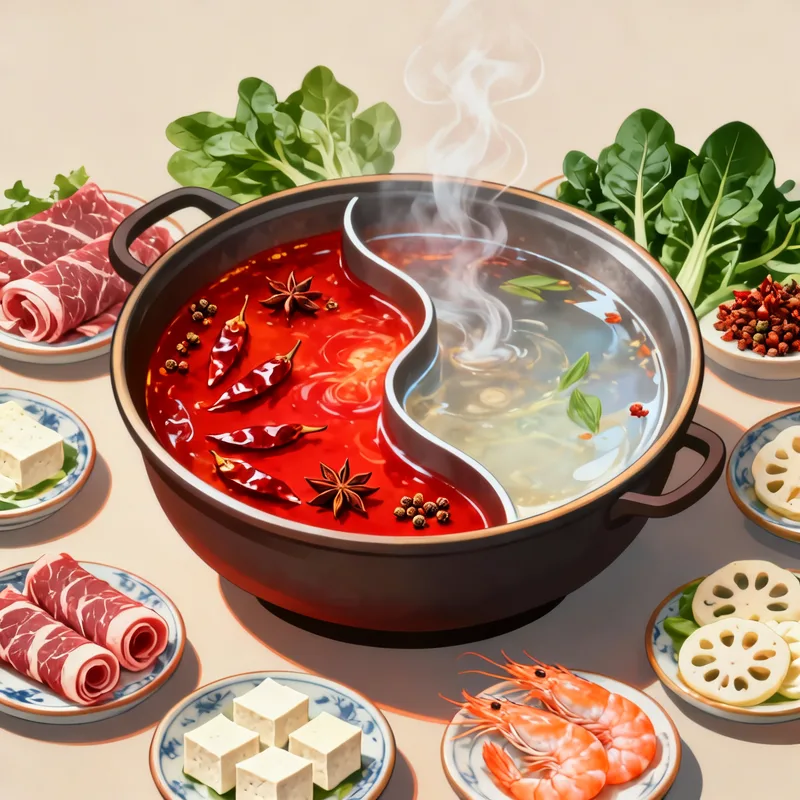
Chengdu style is usually gentler than its Chongqing cousin. Cooks often use vegetable oil rather than beef tallow, add more aromatics and offer a yuanyang pot, a divided vessel with red broth on one side and a clear, mild stock on the other. Diners gather around it in stages: tough items go in first, greens and sliced fish last. Sesame oil mixed with garlic, coriander and scallions cools each bite before it reaches the mouth. The divided pot is a useful invention for a table with mixed tolerances.
The yuanyang pot lets a table share one meal at two heat levels. AI生成的插图 · SinoViz
How to Eat It
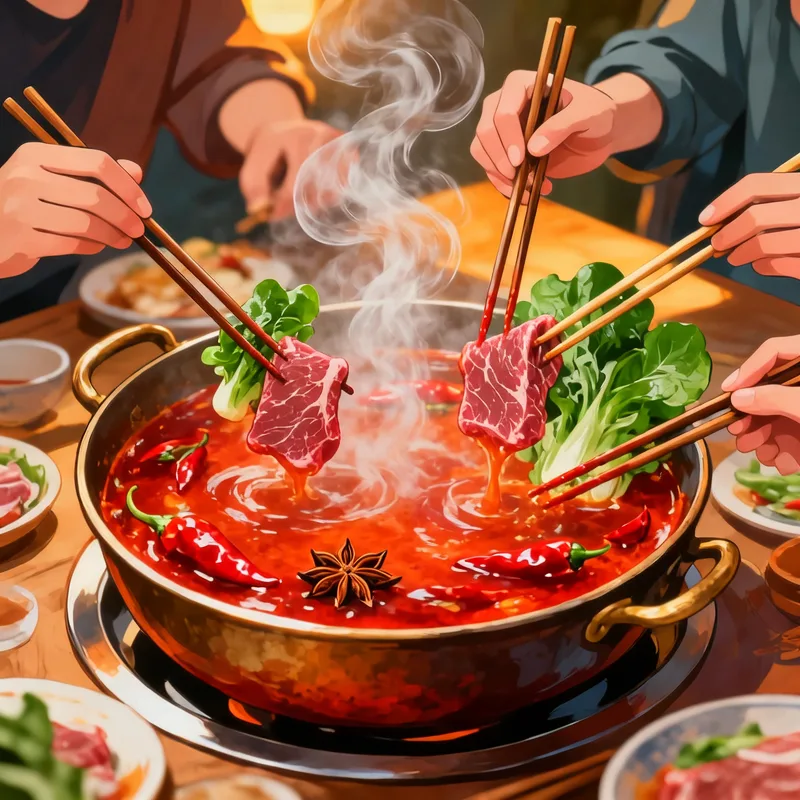
Hotpot has a practical etiquette. Raw and cooked foods need separate chopsticks or serving utensils, and a shared pot requires patience with other diners’ timing. A few rules are widely repeated: do not stir the whole broth, do not fish with your own chopsticks, and let the boil return after adding cold ingredients. The meal is slow by design. As the pot reduces, the broth grows stronger, and the last handful of noodles absorbs everything that has gone before.
The modern restaurant trade carried hotpot far beyond Sichuan. Haidilao, founded in Jiangyou in 1994, turned the meal into a service spectacle with waiting-area snacks and attentive staff; its branches now appear in many countries. Other chains adapted the format to clear broths and individual pots. Yet the social logic has not changed. A pot keeps everyone at the table for an hour, cooking in stages and talking between courses, which is why hotpot spreads easily wherever Chinese communities gather.
The shared pot keeps the meal slow and conversational. AI生成的插图 · SinoViz
In a hotpot restaurant the meal is not served; it happens, slowly, in the middle of the table.
Wheat, water and hand technique make noodles a staple of the northern table.
部分
生活与民俗
地区
陕西
时代
跨越时代
标签
Food, Geography
North of the Qinling–Huaihe line, wheat and millet rather than rice shaped the daily meal. Noodles — mian when made from wheat, fen when made from other starches — became the most visible expression of that divide.
An Archaeological Bowl
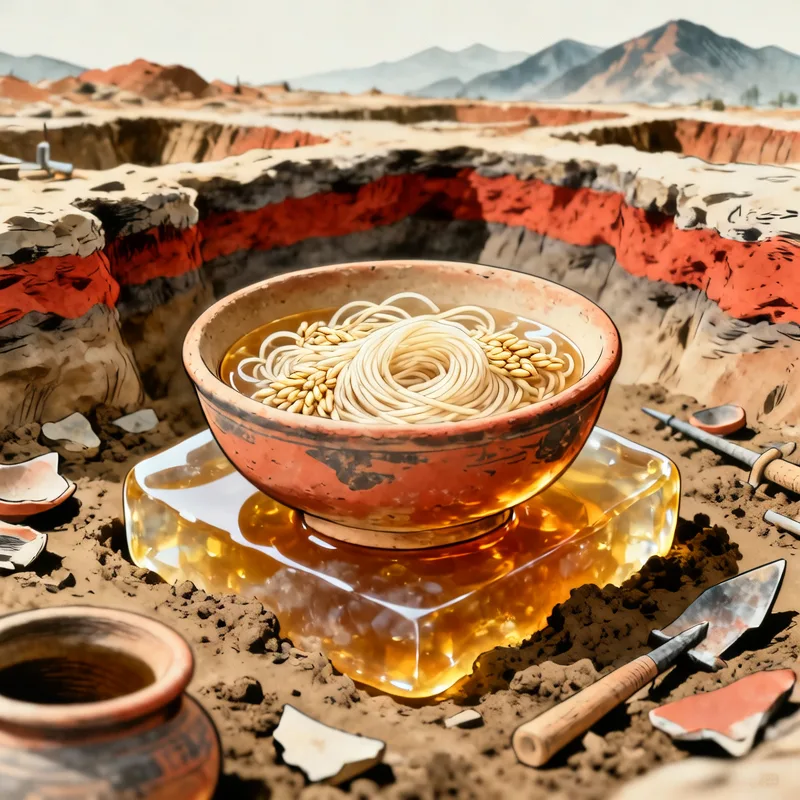
Noodles are older than the wheat noodle. In 2005 researchers reported a bundle of thin yellow strands from a sealed earthenware bowl at Lajia, a Late Neolithic site in Qinghai on the Yellow River, dating to about 4,000 years ago. Starch grains and husk phytoliths identified foxtail and broomcorn millet, not wheat. A 2014 study used traditional extruding tools to reproduce similar strands from millet flour. The find does not settle every argument about noodle origins, but it gives the craft a solid archaeological date.
A sealed bowl at Lajia preserved millet noodles dating to about 4,000 years ago. AI生成的插图 · SinoViz
Wheat Moves North
Wheat was domesticated in the Fertile Crescent and reached northern China several millennia before the Han dynasty. Its gluten made dough elastic enough to be stretched, rolled and boiled without breaking, which millet alone could not do. By the Tang and Song periods, mills, wheat fields and noodle shops were part of urban life in the north, and written recipes describe dried noodles kept for later use. The split with the rice-growing south hardened around this staple.
Shaanxi sits at the centre of that wheat world. The Guanzhong plain is enclosed by the Qinling mountains to the south and the Loess Plateau to the north, with the Wei River running through it. Chang’an, the Tang capital at modern Xi’an, stood at the eastern end of the Silk Road; merchants, soldiers and Muslim communities all left marks on local food. Geography here is not background scenery — it determines the grain in the bowl.
The Shaanxi Repertoire
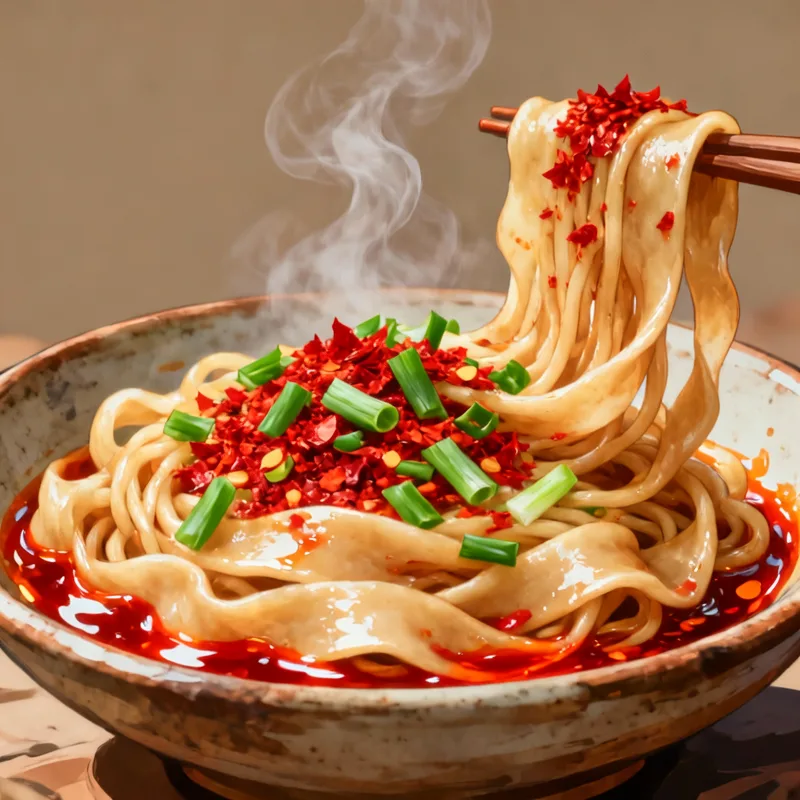
The province’s noodles are made rather than merely cooked. Biangbiang mian are broad, hand-slapped ribbons, named for the sound of dough hitting the counter; the dialect character for biang has more than fifty strokes. Youpo mian are topped with chilli flakes, garlic and scallions, then splashed with hot oil until they hiss. Qishan saozi mian arrive in broth with diced pork, egg, tofu, wood ear and daylily, and the first bowl is traditionally set aside as an offering to ancestors before the family eats.
Biangbiang mian take their name from the sound of dough striking the board. AI生成的插图 · SinoViz
Soups, Bread and Cold Noodles
Not all northern noodles are wheat strands. Yang rou paomo, a Xi’an speciality associated with the city’s Hui community, begins with a flatbread that the diner tears into small pieces before a rich mutton broth is poured over it. Liangpi are cold sheets or strips made from wheat or mung bean starch, dressed with vinegar, garlic and chilli oil. Shanxi, the neighbouring province, is known for knife-shaved dao xiao mian and for aged vinegar; Henan favours wide hand-pulled hui mian in lamb soup.
Qishan saozi mian — noodles with minced meat and vegetables
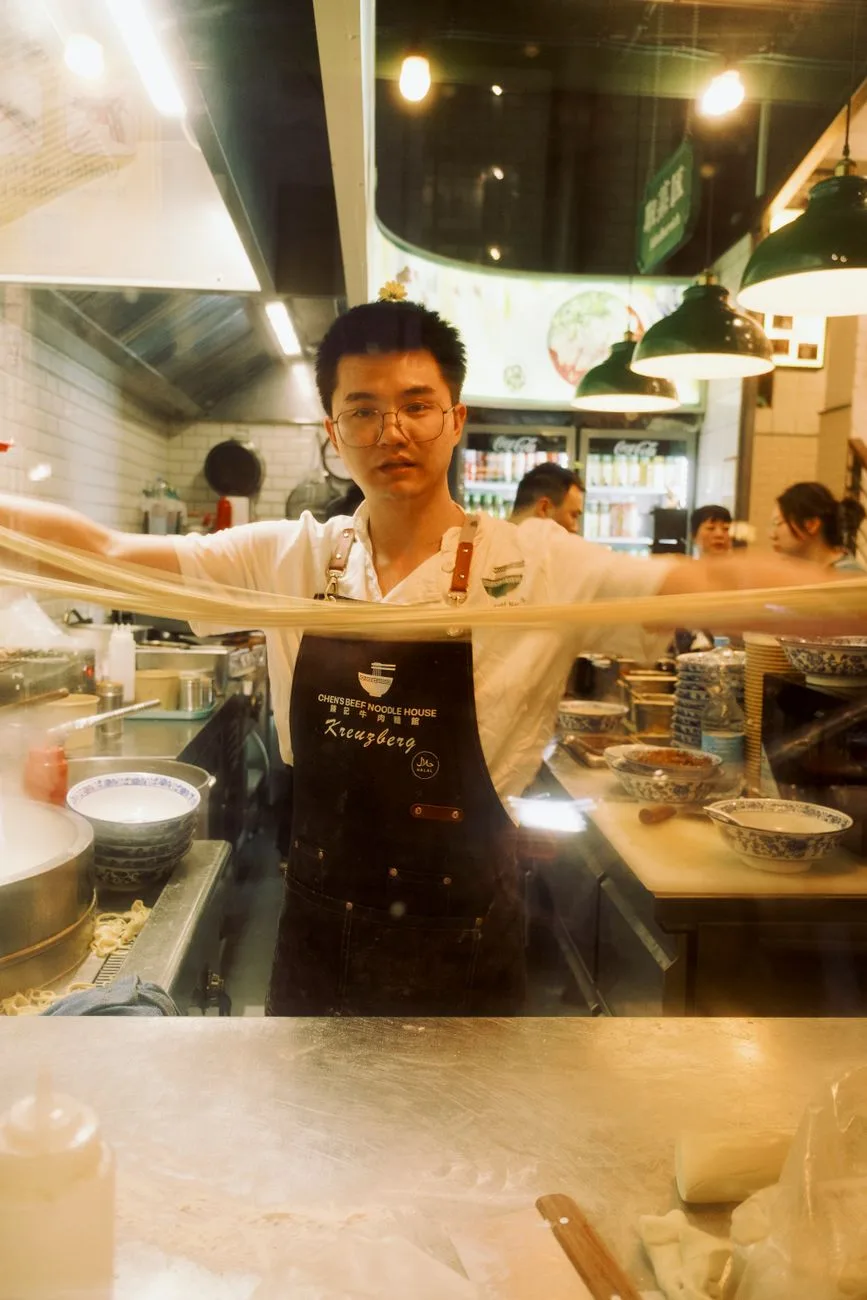
The same techniques travel well. Lanzhou beef noodle soup, sold by Hui traders across China, pairs hand-pulled strands with a clear broth, sliced beef, radish and coriander. Beijing’s zhajiangmian uses wheat noodles under a thick fried soybean paste, surrounded by cucumber and bean sprouts. What unites these dishes is not a single sauce but a method: flour worked by hand into strands, boiled and served in a broth or with a paste. Northern noodle shops remain places where that work is visible.
Hand-pulling turns flour and water into strands in minutes. Felipe Souza Melo | Pexels License (https://www.pexels.com/license/)
The sound of dough slapped on a board is part of the recipe: biangbiang is a verb before it is a name.
A Chinese wedding was historically less a single ceremony than a negotiated sequence between households. The classical six rites set out steps from proposal to the fetching of the bride; local practice in Zhejiang added its own music, boats and wines.
The Six Rites
The classical sequence, codified in ritual texts of the Zhou dynasty, is known as the six rites. A go-between first presented a proposal (nacai), then asked the bride’s name and birth details (wenming). Divination at the ancestral altar produced a favourable answer (naji), after which the groom’s family sent betrothal gifts (nazheng), requested an auspicious date (qingqi) and finally fetched the bride (qinying). Three documents — the betrothal, gift and wedding letters — accompanied the exchange. Few families performed all six in full, but the vocabulary survived in engagements.
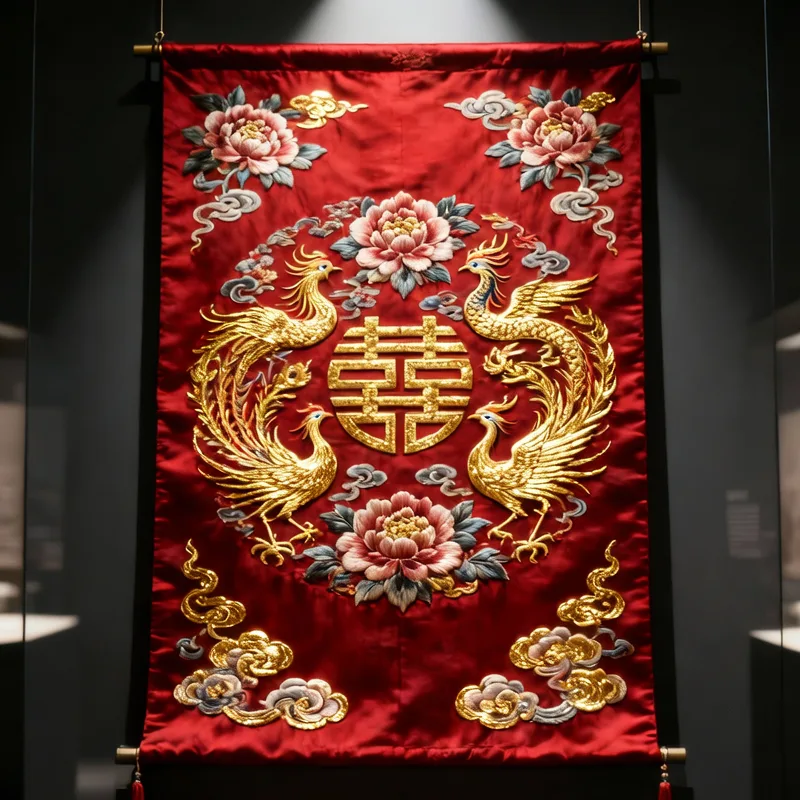
Auspicious textiles marked the threshold between two households. AI生成的插图 · SinoViz
The Day of the Procession
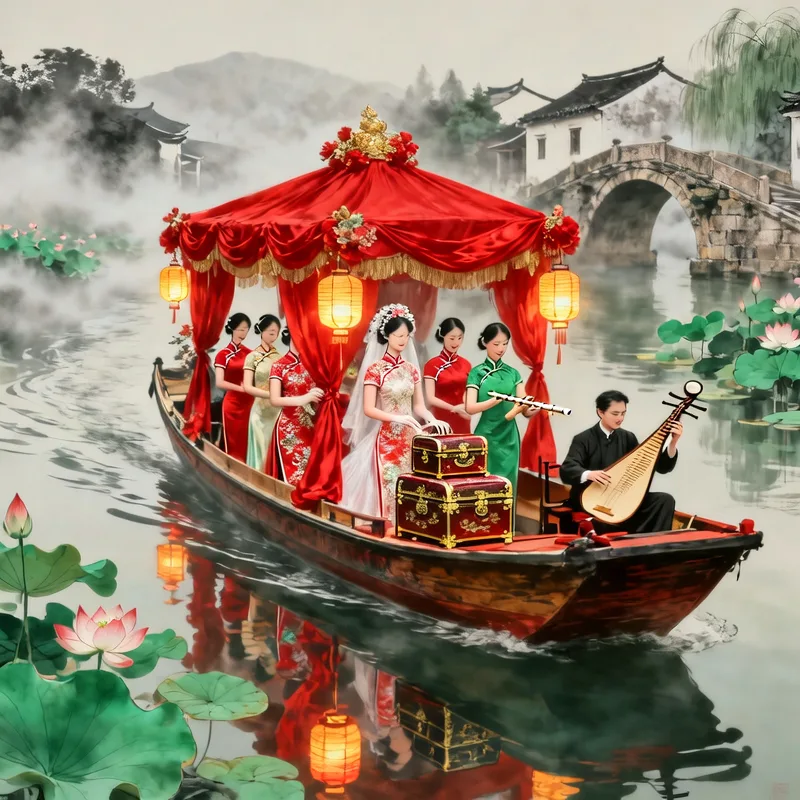
The word for marriage, hunyin, shares its first character with dusk, the traditional hour of the ceremony. Before dawn the bride, veiled in red, was carried from her natal home in a decorated sedan or, in the water towns of northern Zhejiang, aboard a boat hung with lanterns. Firecrackers and the reeds of suona horns announced the party. Crossing a saddle and a burning brazier at the groom’s gate invoked safety through puns on peace; the bride stepped over a threshold that marked a change of household.
Inside, the couple bowed to the wedding candles, to the groom’s ancestors and to the elders, then served tea to both families in order of seniority. Red envelopes of money acknowledged each bow. On the bridal bed, dates, peanuts, longans and lotus seeds were scattered for a pun on bearing a son soon. A woman of good fortune straightened the quilts and spoke auspicious words. Only after the banquet, with its toasts of ganbei, did the formal duties ease.
Zhejiang Inflections
Regional custom gave the framework local texture. In Shaoxing, a jar of yellow rice wine might be buried when a daughter was born and opened at her wedding: nuer hong, daughter’s red. The wine belonged to the bride’s family and travelled with the dowry, alongside silk quilts from Huzhou and lacquered furniture. In Wuzhen and other canal towns, the bridal procession moved by water, and Yue opera troupes were hired for the feast. Southern Zhejiang kept the custom of laments, in which the bride and her women sang farewell verses.
In canal towns the wedding procession travelled by water. AI生成的插图 · SinoViz
Gifts, Dowries and Alliances
Betrothal gifts and dowries were not mere display; they recorded the standing of two families and the terms of an alliance. The groom’s side supplied money, tea, wine, silk and livestock, while the bride brought textiles, jewellery, furniture and sometimes land or a shop. Surname exogamy was the rule: marriage within the same patrilineal clan was treated as incest. The 1950 Marriage Law recast the legal framework, establishing free choice of partner and equal property rights for spouses, but many gift customs continued.
Six rites: nacai, wenming, naji, nazheng, qingqi, qinying
Shaoxing’s nuer hong wine is opened at the daughter’s wedding.
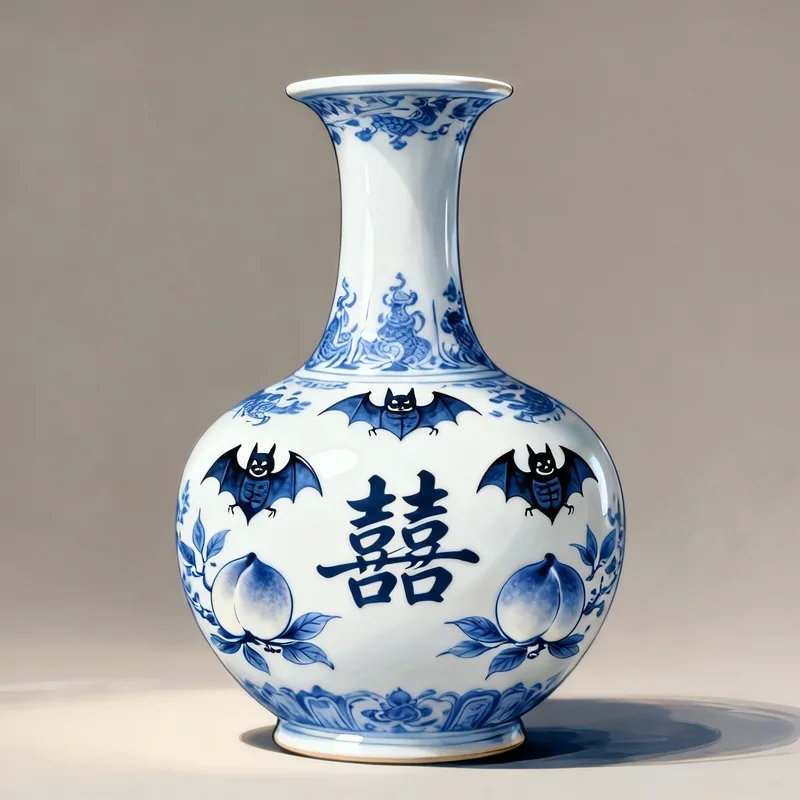
Double happiness (shuangxi) appears on linens, paper cuts and pottery.
Tea served to elders wins red envelopes in return.
Weddings Now
Today a civil registration at the local civil affairs office makes a marriage legal, and ceremonies are chosen from a menu of options. Some couples hold a restrained tea ceremony at home; others book a banquet hall, a photographer and a host who keeps the toasts moving. The red veil has given way to a white dress for many brides, often followed by a red qipao for the formal photographs. In Zhejiang’s water towns, staged wedding processions are also a tourist performance, repeating the same gestures for an audience of visitors.
Double happiness, shuangxi, is the most recognisable emblem of a wedding. AI生成的插图 · SinoViz
The bride’s tears, the groom’s brazier and the jar of wine buried at her birth all belong to one grammar of departure and arrival.