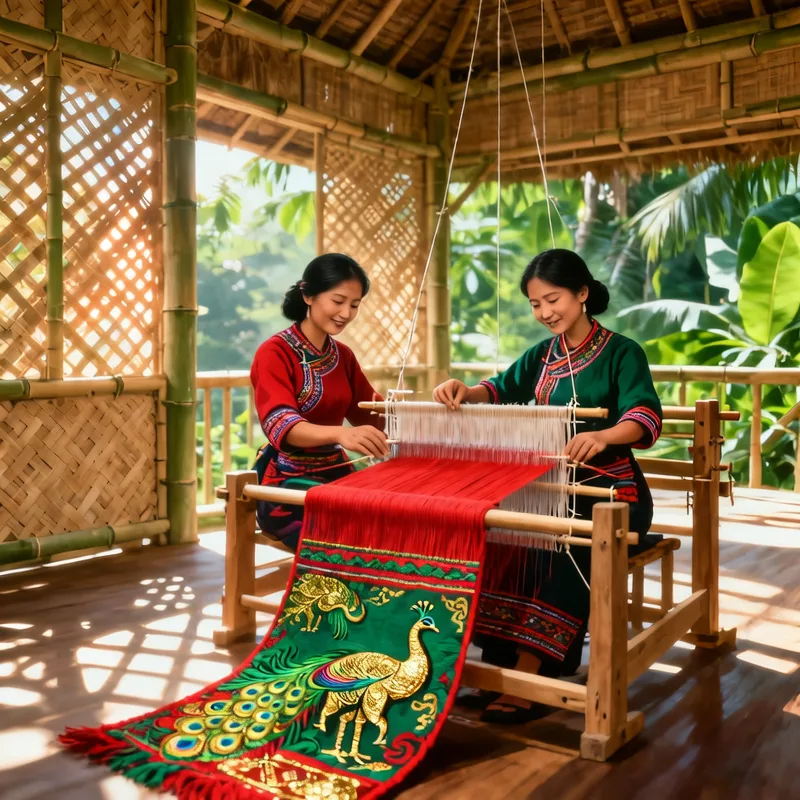
바이족은 다리 주변에 집중적으로 거주하는 중국-티베트어족 민족으로, 안뜰이 있는 가옥과 남색 염색이 이 지역의 독특한 시각적 스타일을 형성한다.
부분
삶과 민속
지역
윈난
연대
시대를 넘어서
태그
민족, 관습
바이족 마을들은 윈난성 북서부의 창산 산맥과 얼하이 호수 사이에 자리 잡고 있습니다. 그들의 언어는 중국-티베트어족에 속하며, 13세기 몽골 정복 이전에 이 지역을 지배했던 난자오 왕국과 다리 왕국의 기억을 간직하고 있습니다.
창산과 얼하이 사이
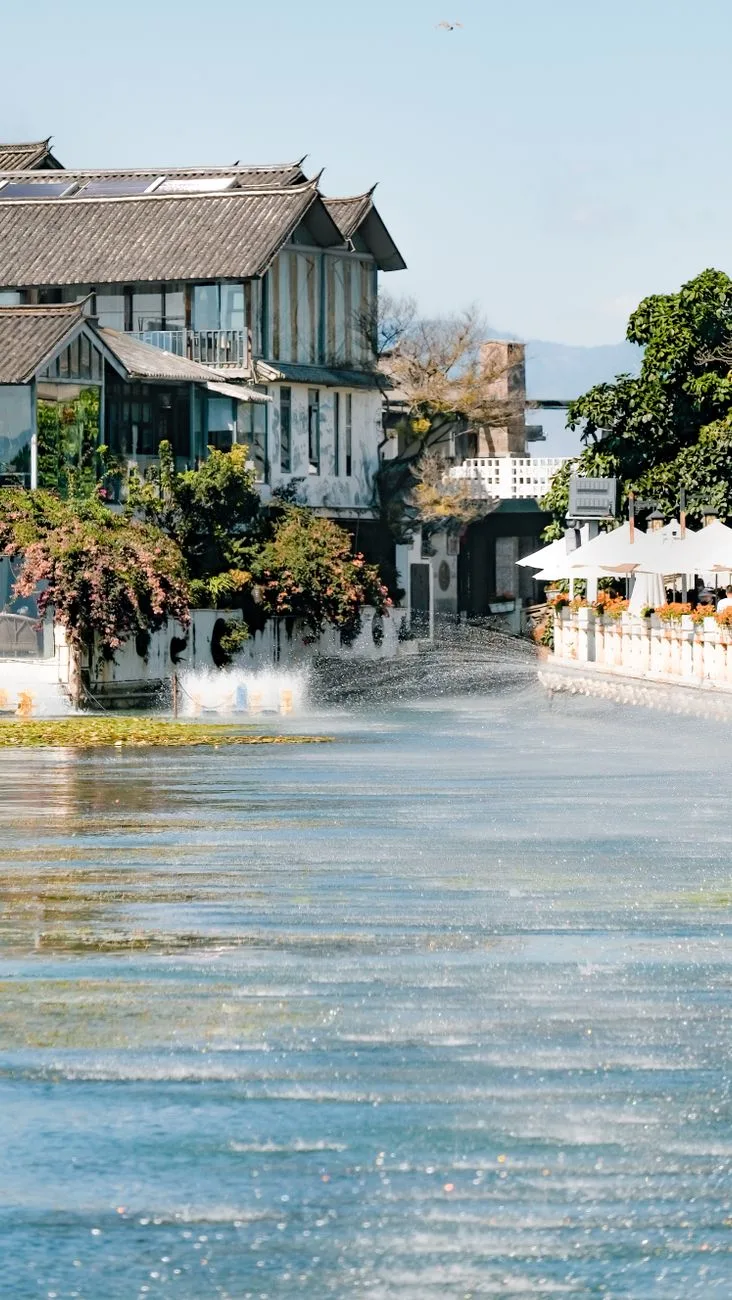
2010년 중국 인구 조사에 따르면 바이족은 약 190만 명입니다. 이들 중 약 4분의 5가 다리 바이족 자치주에 거주하며, 나머지 바이족 공동체는 쿤밍, 추슝, 리장, 바오산, 그리고 윈난성 서부 일부 지역에도 분포합니다. 마을과 촌락들은 창산의 경사면과 얼하이 호숫가 사이의 좁은 평지에 밀집되어 있으며, 관개 시설을 이용하여 벼, 콩, 낙농업이 발달해 있습니다. '바이족'이라는 이름은 '하얀색'을 의미하는데, 이는 지역 건물들을 특징짓는 옅은 색의 회반죽을 가리킵니다. 다리는 윈난성과 쓰촨성, 티베트를 연결하는 교역로에 위치해 있었기 때문에, 바이족 마을들은 여러 방향에서 상품과 기술을 흡수하면서도 고유한 건축 양식과 장식을 강하게 유지해 왔습니다.
흰색 회반죽과 어두운 색 기와는 달리 지역 마을들에 특유의 모습을 부여합니다. Doing Be | Pexels 라이선스 (https://www.pexels.com/license/)
언어와 역사적 뿌리
바이어는 중국-티베트어족에 속하며, 일반적으로 티베트-버마어족으로 분류되지만, 중국어에서 많은 단어를 차용했기 때문에 정확한 분류학적 위치에 대해서는 학자들 간에 여전히 논쟁이 있습니다. 널리 사용되는 전통 바이어 문자는 없으며, 이름, 계약서, 지역 기록 등을 작성할 때는 중국 한자를 사용했습니다. 창조 신화와 왕국 건설자에 대한 이야기 등을 포함한 바이족의 구전 전통은 말과 공연으로 전승되었습니다. 바이족의 조상은 8세기부터 9세기까지 번성했던 남조 왕국과 937년부터 1253년까지 이어진 다리 왕국과 관련이 있습니다. 두 왕국 모두 호수 주변에 석비, 불상, 요새 유적 등을 남겼습니다.
안뜰, 대리석, 염료
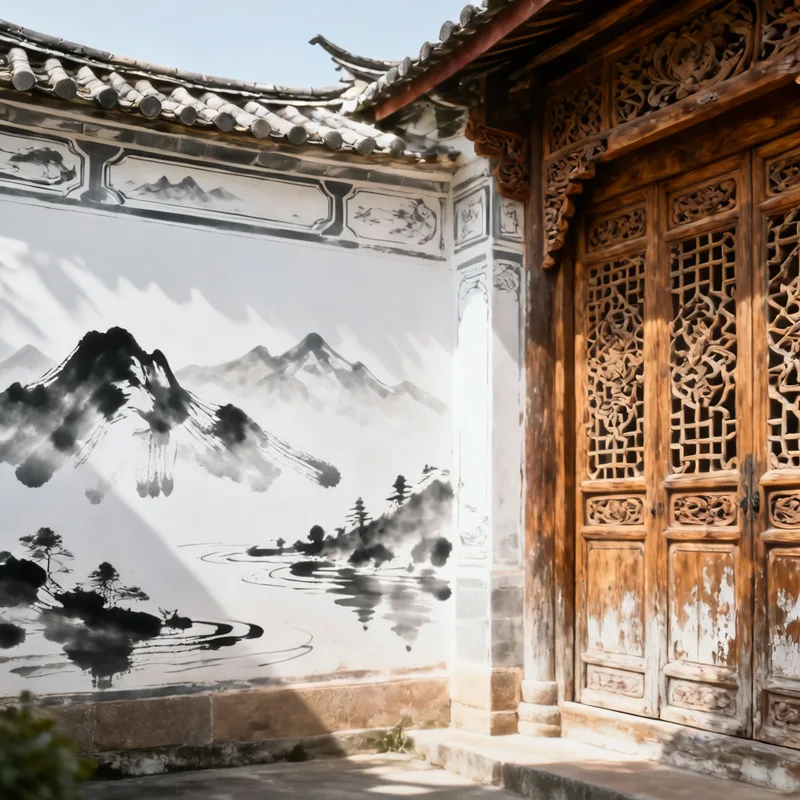
전형적인 바이족 가옥은 삼방 이자오비(三方一期宝)라는 구조를 따르는데, 이는 안뜰을 중심으로 세 개의 날개가 배치되고, 안뜰 맞은편에는 독립된 병풍벽이 있는 형태입니다. 벽은 회반죽으로 칠하고, 지붕은 회색 점토 기와로 덮으며, 출입구와 창문에는 깊게 조각된 나무 격자무늬가 있습니다. 병풍벽에는 풍경화나 서예가 그려져 있는 경우가 많고, 문설주와 탁자 상판에는 현지산 대리석이 사용됩니다. 주청(周成)과 인근 마을에서는 남색 염색 기법으로 만든 천에 염색 전에 바느질과 묶음으로 무늬를 넣어 푸른색 천을 만듭니다. 바이족 자수, 석고 조각, 석조물에는 유사한 꽃무늬와 기하학적 무늬가 사용되어 옷, 가구, 건물 외관 등에서 같은 디자인 양식이 나타납니다.
전통적인 바이족 가옥의 본채를 향해 그림이 그려진 칸막이 벽이 나 있다. AI 생성 일러스트 · 시노비즈
차, 시장, 축제
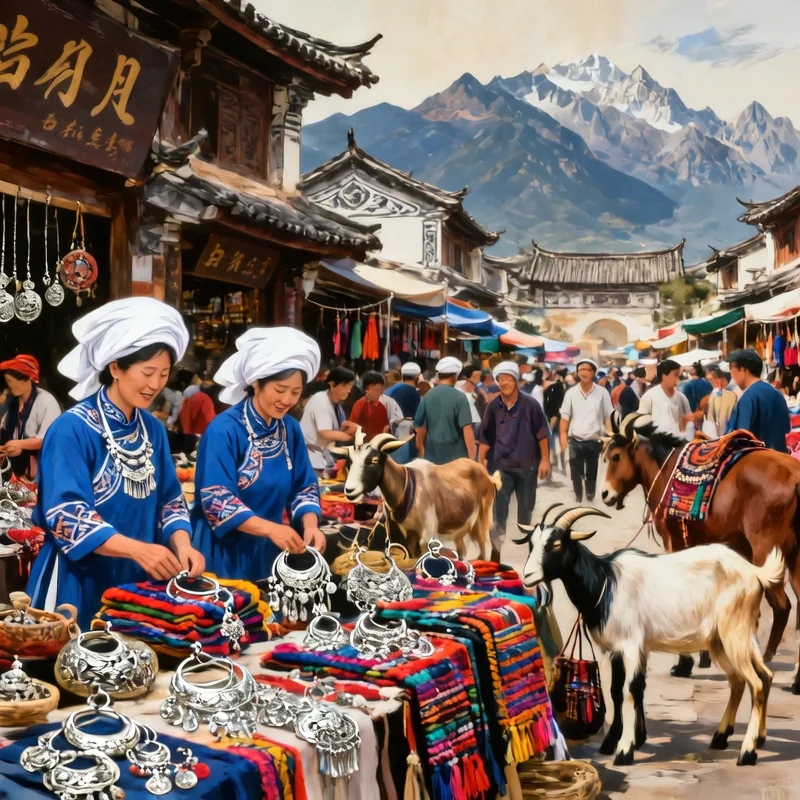
바이족의 환대 의식은 세 가지 코스로 이루어진 차입니다. 첫 번째 잔은 볶은 찻잎으로 우려낸 쓴맛이 나고, 두 번째 잔은 견과류와 꿀을 넣어 달콤하며, 마지막 잔은 두 가지를 섞어 마시는데, 그 맛이 오래도록 남는다고 합니다. 지역 음식으로는 루산(青山)이라고 불리는 말린 우유막, 생돼지껍데기 샐러드, 얼하이(洪海)산 신맛 나는 생선, 그리고 지역 약초를 넣어 조리한 두부 등이 있습니다. 다리(大陵)에서 음력 3월에 열리는 삼월 축제는 원래 가축과 상품 시장이었지만, 지금은 창산(張山) 기슭을 가득 채우는 노점, 말 거래, 공연 등으로 활기를 띱니다. 순례와 노래 축제인 라오산링(老山青)과 일부 마을의 횃불 점화 풍습은 연중 다른 날짜에 축제를 더합니다.
제3개월 박람회는 지역 시장에서 시작하여 주요 대중 행사로 성장했습니다. AI 생성 일러스트 · 시노비즈
바이족 장인들은 집의 정면, 찻잔, 염색한 천을 모두 무늬를 새길 수 있는 동일한 표면으로 여깁니다.
중국에 거주하는 한국인들은 중국 동북부 지역과 베이징과 같은 도시에서 한국어를 사용하는 문화 생활을 유지하고 있습니다.
부분
삶과 민속
지역
베이징
연대
시대를 넘어서
태그
민족, 관습
중국어로 차오셴주(洪玄祖)라고 불리는 한국계 중국인은 약 180만 명에 달합니다. 이들의 거주지는 북동부 국경 지역에 집중되어 있지만, 베이징의 왕징구와 우다오커우구는 한국어 사용자가 많은 지역으로 두드러지게 나타나고 있습니다.
이주와 지역사회
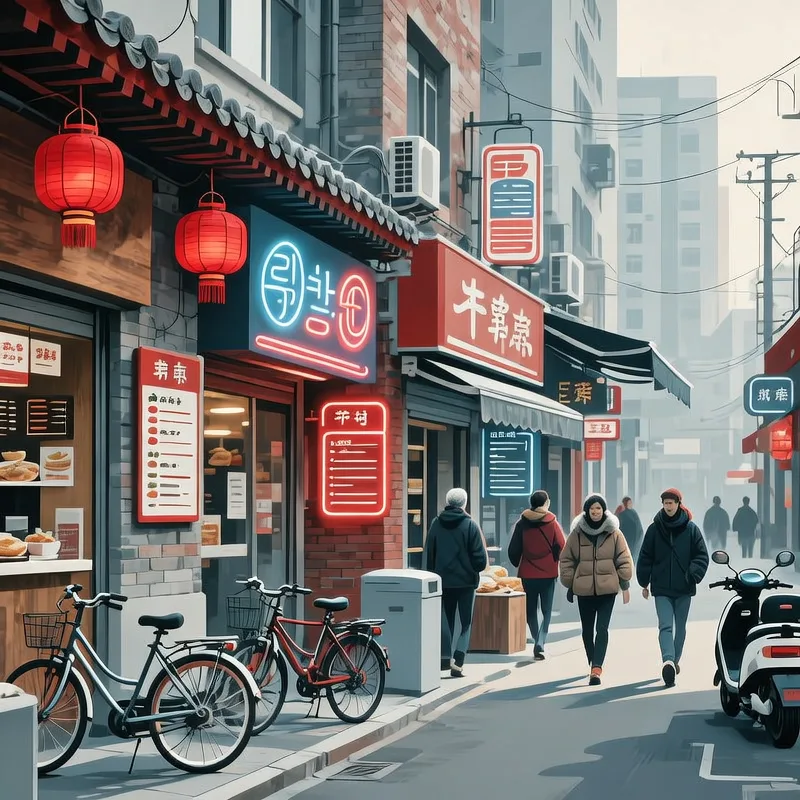
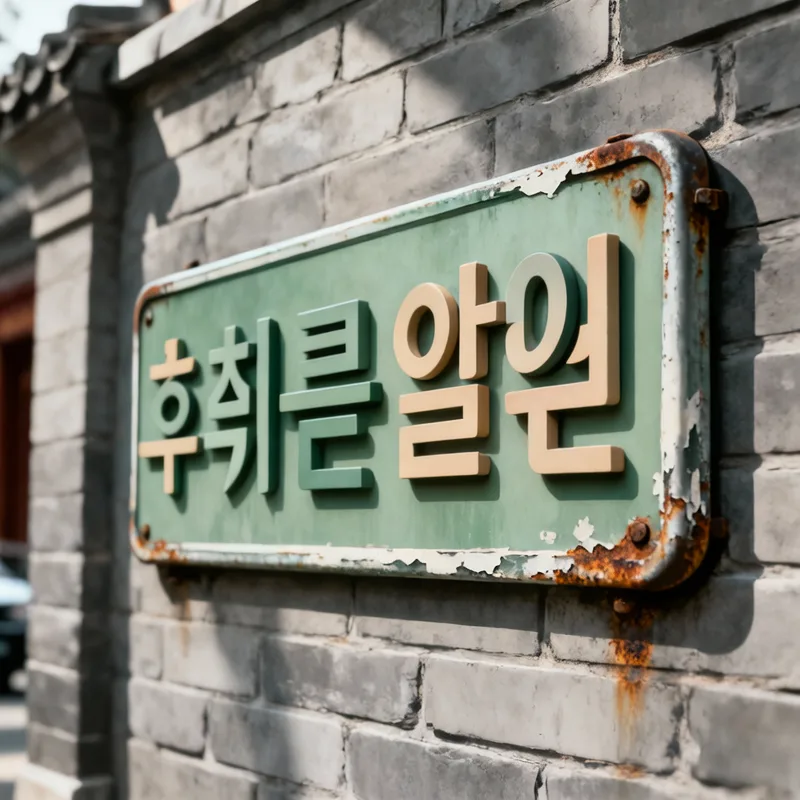
대부분의 한국계 중국인 가족들은 19세기 후반과 20세기 초, 경제적 어려움과 징병, 그리고 1910년 일본의 한국 병합으로 인해 두먼 강과 압록 강을 건너 중국으로 이주했던 시기를 기점으로 중국에 정착했습니다. 1952년 지린성에 옌볜 조선족 자치주가 설립되었고, 창바이와 훈춘은 여전히 중요한 중심지입니다. 베이징의 조선족 인구는 1992년 한국과 수교한 후 학생, 상인, 기술자들이 대거 유입되면서 빠르게 증가했습니다. 우다오커우는 어학원과 학생 기숙사로 유명해졌고, 왕징은 슈퍼마켓, 식당, 한국어 간판 등이 상업적으로 발달했습니다.
왕징에 있는 한국어 간판들은 수십 년에 걸친 학생과 사업가들의 이주를 반영합니다. AI 생성 일러스트 · 시노비즈
언어와 글쓰기
한국어는 중국어족에 속하는 언어로, 이 지역의 다른 곳에서 사용되는 중국어족 및 퉁구스어족과는 구별됩니다. 한국어 문자인 한글은 15세기에 만들어졌으며 현재 한국에서 중국어를 표기할 때 주로 사용됩니다. 한자는 역사 문헌이나 일부 이름에서 찾아볼 수 있습니다. 옌볜의 많은 노년층은 한국어와 중국어를 모두 구사하며, 도시에서 태어난 젊은 세대는 학교와 직장에서는 중국어를, 집이나 지역 언론에서는 한국어를 사용하는 경우가 많습니다. 한국어 신문, 라디오, 교회 예배는 한국어 보존에 기여하고 있으며, 일부 가정에서는 자녀를 국가 교육과정과 함께 한국어를 가르치는 학교에 보내고 있습니다.
두 가지 문자 체계는 많은 한국 화교 가정에서 일상적으로 사용되는 이중 언어를 보여줍니다. AI 생성 일러스트 · 시노비즈
음식과 가정
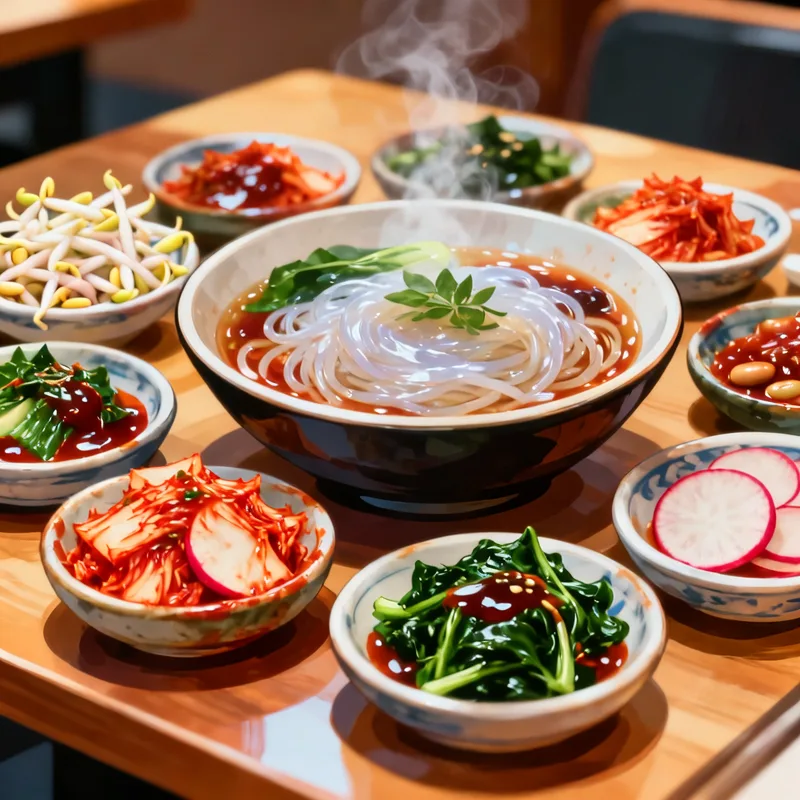
한국의 음식 문화는 공동체 생활에서 가장 눈에 띄는 부분 중 하나입니다. 소금에 절여 발효시킨 김치는 가을에 대량으로 만들어지며, 김치를 만들고 함께 나눠 먹는 문화는 유네스코 무형문화유산으로 지정되었습니다. 일상 식사에는 밥, 국, 야채와 고추장을 섞은 비빔밥, 구운 고기, 냉면 등이 포함됩니다. 전통 가옥에는 온돌이라는 바닥 난방 시스템이 있어 잠자리를 따뜻하게 데웠고, 일부 농촌 가정에서는 여전히 한옥의 낮은 탁자와 좌식 식탁을 유지하고 있습니다. 베이징에서는 아파트 생활로 인해 환경이 바뀌었지만, 음식과 함께 식탁에 둘러앉아 식사하는 문화는 여전히 남아 있습니다.
함께 나눠 먹는 반찬과 냉면은 한국식 중국 음식에서 흔히 볼 수 있는 특징입니다. AI 생성 일러스트 · 시노비즈
축제와 공동체 생활
두 가지 주요 가족 명절은 음력 설날인 설날과 추석입니다. 설날에는 떡국을 먹고, 어린 친척들은 어른들께 정중하게 절을 합니다. 추석에는 조상 묘를 참배하고 송편을 먹습니다. 송편은 콩이나 깨를 넣어 만든 작은 떡입니다. 베이징의 한국 화교 공동체는 결혼식, 동창회, 사업 모임 등에도 모이며, 이때 한국어는 여전히 신뢰와 공통의 의미를 담은 언어로 사용됩니다. 한국계 중국인들은 특정 계층에만 머무르지 않고 식당, 여행사, 상점 등을 통해 서로 교류하며, 같은 거리에서 다양한 배경을 가진 이웃들과 어울립니다.
베이징에 있는 한국 표지판은 국경이라기보다는 가정에서 흔히 볼 수 있는 생활 습관을 나타내는 것 같습니다.
투지아족은 우링산맥에 거주하는 티베트-버마어족 계열 민족으로, 수상 가옥, 직조 비단, 그리고 단체 춤으로 유명합니다.
부분
삶과 민속
지역
쓰촨
연대
시대를 넘어서
태그
민족, 관습
비록 여기에 쓰촨성 지역으로 분류되어 있지만, 투지아족 공동체의 대부분은 쓰촨 분지 동쪽의 우링산맥에 거주합니다. 고대 바(Ba) 왕국과의 역사적 연관성은 그들을 중국 남서부의 더 넓은 바슈(Bashu) 문화권과 연결시켜 줍니다.
범위 및 숫자
2010년 인구 조사에 따르면 투지아족은 약 835만 명으로 중국 최대 소수 민족 중 하나입니다. 주요 거주지는 후난, 후베이, 충칭, 구이저우가 만나는 우링산맥에 걸쳐 있으며, 후난성의 용순현과 룽산현, 충칭시의 스주현과 펑수이현, 구이저우성의 옌허현 등에 분포합니다. 마을은 계곡과 석회암 경사면에 자리 잡고 있으며, 높은 지대에는 계단식 논과 숲이 있습니다. 이 목록에서 투지아족을 쓰촨 지역에 포함시킨 것은 과거 바슈와의 연관성과 분지와 동부 산악 지대 사이의 현대적 이동을 반영한 것이며, 투지아족의 인구 밀도가 가장 높은 곳은 쓰촨성 자체가 아닙니다.
투지아족 마을들은 평평한 분지 지대보다는 계곡과 계단식 경사면을 따라 자리 잡고 있습니다. AI 생성 일러스트 · 시노비즈
언어와 정체성
투자어는 중국-티베트어족의 티베트-버마어파에 속하며, 나시어 및 기타 창어족과 가장 밀접한 관련이 있는 것으로 여겨집니다. 오늘날 투자어를 유창하게 구사하는 사람은 후난성 서부의 몇몇 마을에 거주하는 소수에 불과하며, 이 지역 대부분에서는 서남 표준어가 일상적으로 사용됩니다. 투자라는 이름은 '토착민'을 의미하며, 1950년대 공식 인정을 통해 한족, 묘족, 둥족, 서족과 오랫동안 교류해 온 공동체들을 통칭하는 이름이 되었습니다. 구전 역사에는 기원전 316년 진나라 정복 이전까지 쓰촨성 동부 지역 일부를 지배했던 고대 바(孫) 왕국의 역사가 보존되어 있습니다.
수상 가옥과 비단
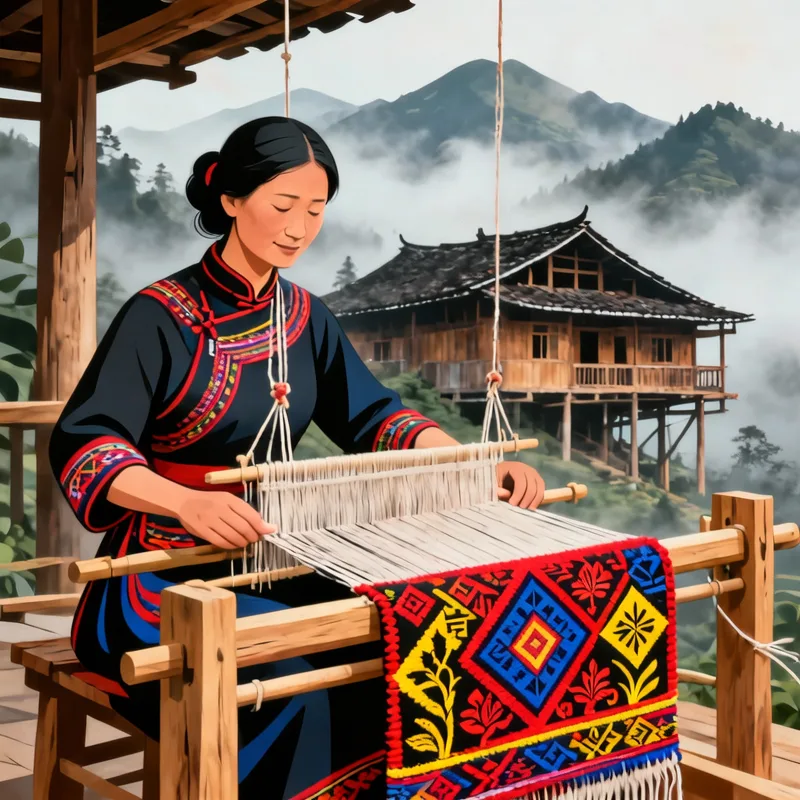
투지아족 건축가들은 가파른 땅에 나무 기둥으로 지지되는 디아오자오루(diaojiaolou)라는 집을 짓습니다. 이 집은 위층 생활 공간이 아래층보다 돌출되어 있습니다. 앞쪽에는 지붕이 있는 베란다가 있고, 지붕은 폭우가 잘 흘러내리도록 경사지게 지어졌습니다. 내부의 칸막이와 창틀에는 꽃무늬와 기하학적 무늬가 새겨져 있습니다. 가장 잘 알려진 직물은 시란카푸(xilankapu)로, 꽃, 새, 경극 등장인물, 그리고 대태화(ta tai hua) 문양을 모티브로 한 화려한 색상의 비단입니다. 허리띠 직조기로 짜는 이 비단은 옷, 가방, 벽걸이 등에 사용되며 국가 무형문화재로 보호받고 있습니다. 식사에는 흔히 염장 돼지고기, 훈제 생선, 찹쌀떡, 그리고 볶음밥과 땅콩을 넣고 휘저은 차국이 포함됩니다.
실란카푸 브로케이드는 허리띠 직기로 짜여지며 의복과 가정용 직물에 사용됩니다. AI 생성 일러스트 · 시노비즈
손 흔드는 춤과 새해
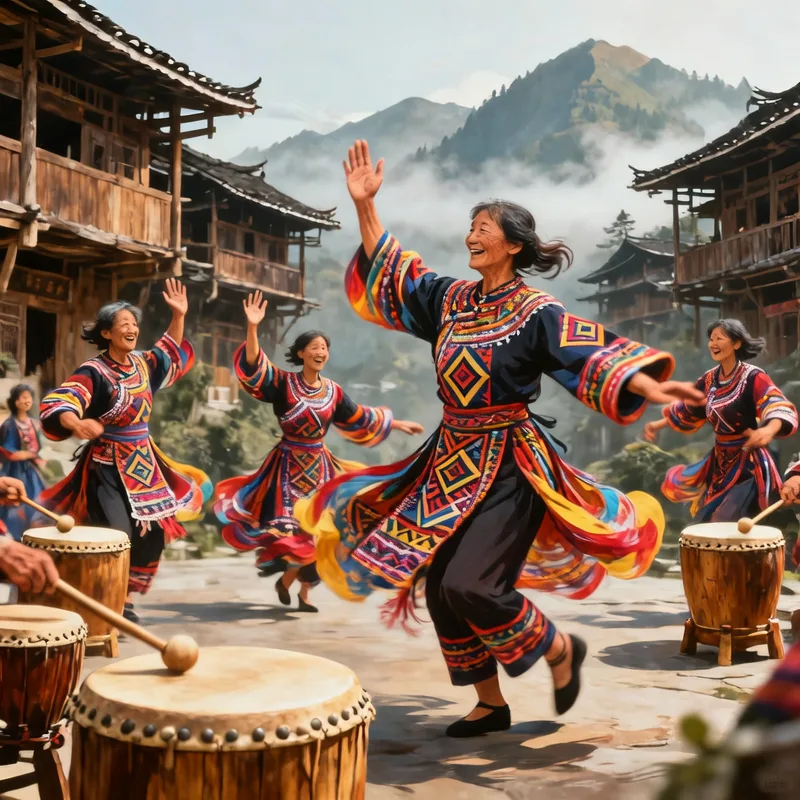
바이쇼우(白壽武)는 무용수들이 북과 징 소리에 맞춰 팔을 휘두르며 추는 춤입니다. 이 춤은 음력 설날 무렵과 조상과 마을 수호신에게 제물을 바치는 시바 축제 때, 마을 회관에서 공연됩니다. 일부 마을에서는 사냥과 농사 장면을 묘사하는 가면이나 짚으로 만든 의상을 입고 추는 마오구시(母克)라는 춤도 선보입니다. 또 다른 독특한 풍습으로는 간녠(蔡年)이 있는데, 이는 새해를 하루 일찍 축하하는 것으로, 구전 전통에 따르면 조상들이 군대 출정을 준비하는 것과 관련이 있습니다. 이러한 공연들은 이제 학교와 문화 센터에서 가르쳐지고 있어, 한때 특정 마을 회관에만 국한되었던 의식이 더 많은 사람들에게 알려지게 되었습니다.
손을 흔드는 춤은 마을 사람들을 하나로 묶어주며, 팔 동작과 북소리가 조화를 이룹니다. AI 생성 일러스트 · 시노비즈
The Manchu are a Tungusic-speaking people whose Qing dynasty left a deep imprint on Beijing’s buildings and court culture.
부분
삶과 민속
지역
베이징
연대
yuan-ming-qing
태그
Ethnic, History
Manchu identity took shape in the early seventeenth century among Jurchen groups of northeastern China. The Qing dynasty they founded ruled from Beijing between 1644 and 1912, and its material traces remain in the city’s palaces and archives.
From Jurchen to Qing
The Manchu descend from Jurchen communities of the northeast, who earlier founded the Jin dynasty of 1115 to 1234. In 1635 the ruler Hong Taiji adopted the name Manchu for his people, and in 1636 he renamed the state Qing. The dynasty took Beijing in 1644 and ruled China until 1912. Today roughly 10.4 million people identify as Manchu according to the 2010 census, making them one of the largest ethnic minorities. Most live in Liaoning, Hebei, Jilin and Heilongjiang, with substantial populations in Beijing and Tianjin. Migration into the capital after 1644 created banner neighbourhoods whose street names and food shops still register the Qing presence.
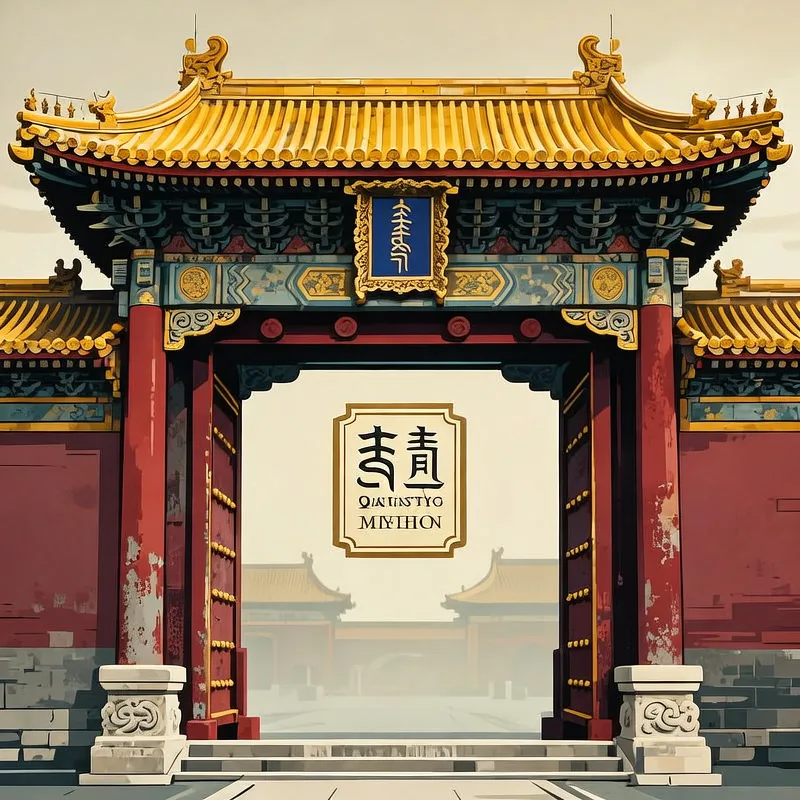
Palace gates in Beijing carry inscriptions in both Manchu and Chinese. AI 생성 일러스트 · 시노비즈
A written language of archives
Manchu is a Tungusic language, related to Xibe and more distantly to Evenki. Its written form was devised in the late sixteenth century by adapting the Mongolian script, and it became the language of Qing military records, imperial edicts and family archives. Thousands of these documents survive in Chinese and foreign collections, and they are consulted for the history of the dynasty and its frontier administration. Few people speak Manchu fluently today, mostly in a handful of northeastern villages, and Mandarin is the normal language of daily life. Even so, Manchu words survive in place names, court titles and the vocabulary of Qing institutions.
Dress, house and food
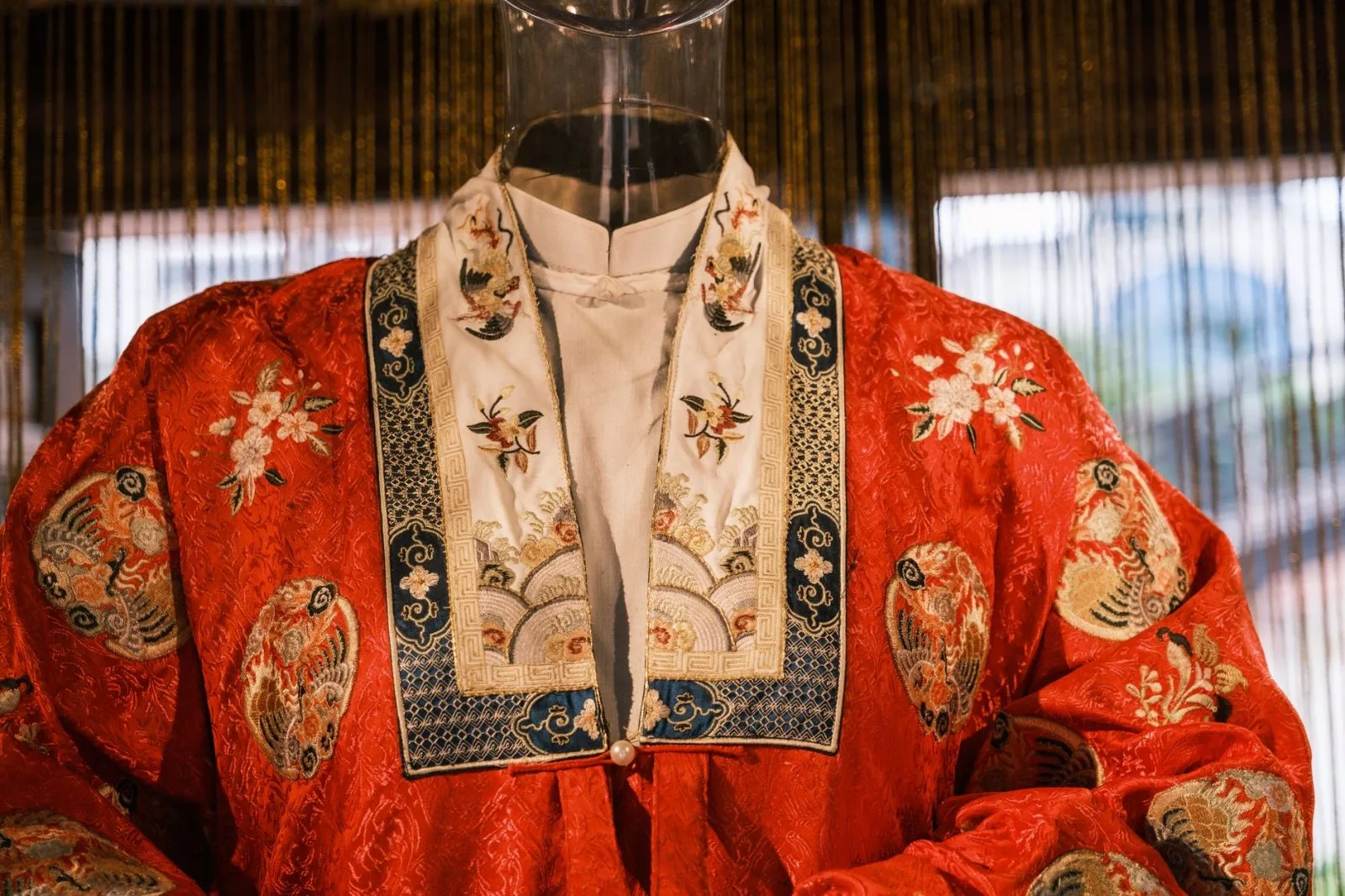
Manchu dress shaped the qipao, the close-fitting robe later worn widely by Han Chinese women and known abroad as the cheongsam. Older garments had horse-hoof cuffs that could be folded back over the hands, and women’s formal dress included a tall flag headdress and shoes with a raised flowerpot sole. Under the Qing, men wore a shaved forehead and a braided queue, a rule enforced until the dynasty’s end. A traditional house was arranged as a pocket room with a heated kang platform along the west wall, where honored guests slept and ancestral tablets were kept. A pole in the courtyard was used in offerings that fed crows, an animal associated with founding legends.
Manchu court dress influenced the qipao and the formal clothing of the Qing elite. TBD Tuyên | Pexels License (https://www.pexels.com/license/)
What remains in Beijing
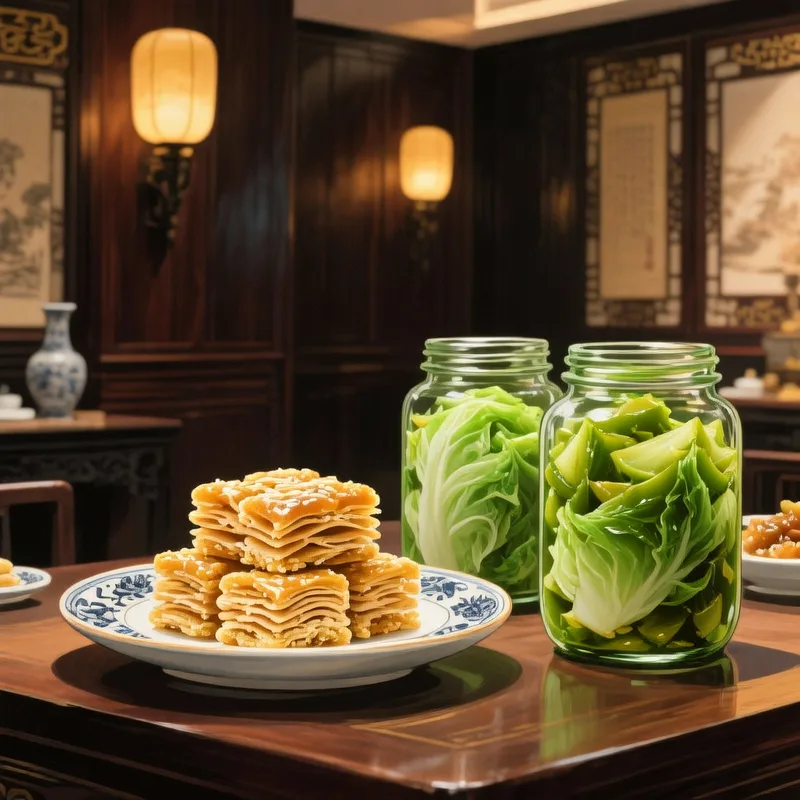
Manchu cuisine survives in Beijing and the northeast through sachima, a sweet pastry made of fried dough and syrup, and through hot pots of pickled cabbage, pork and blood sausage. The elaborate Manchu-Han banquet is a later dining form assembled from court and regional dishes rather than a single unbroken tradition. Paper-cutting, embroidery and painted snuff bottles are among the crafts associated with Manchu households. In Beijing, the most public inheritance is architectural: the Forbidden City’s bilingual plaques, the layout of former banner quarters, and restaurants and museums that explain Qing court life. These traces make the dynasty legible on an ordinary walk through the old city.
Manchu food traditions remain visible in Beijing and northeastern China. AI 생성 일러스트 · 시노비즈
On Beijing’s palace gates, Manchu and Chinese script still share the same lintel.
둥족 또는 캄족은 크라다이어를 사용하는 중국 남서부 마을 사람들로, 목조 탑, 지붕이 있는 다리, 그리고 파트별 노래로 유명합니다.
부분
삶과 민속
지역
광시
연대
시대를 넘어서
태그
민족, 관습
둥족 마을 사람들은 북루와 노래방 주변에 모여 앉아 귀로 음악을 배웁니다. 악기 없이 여러 파트로 부르는 그들의 웅장한 노래는 2009년 유네스코 무형문화유산 대표 목록에 등재되었습니다.
세 개 주에 걸쳐 있는 마을들
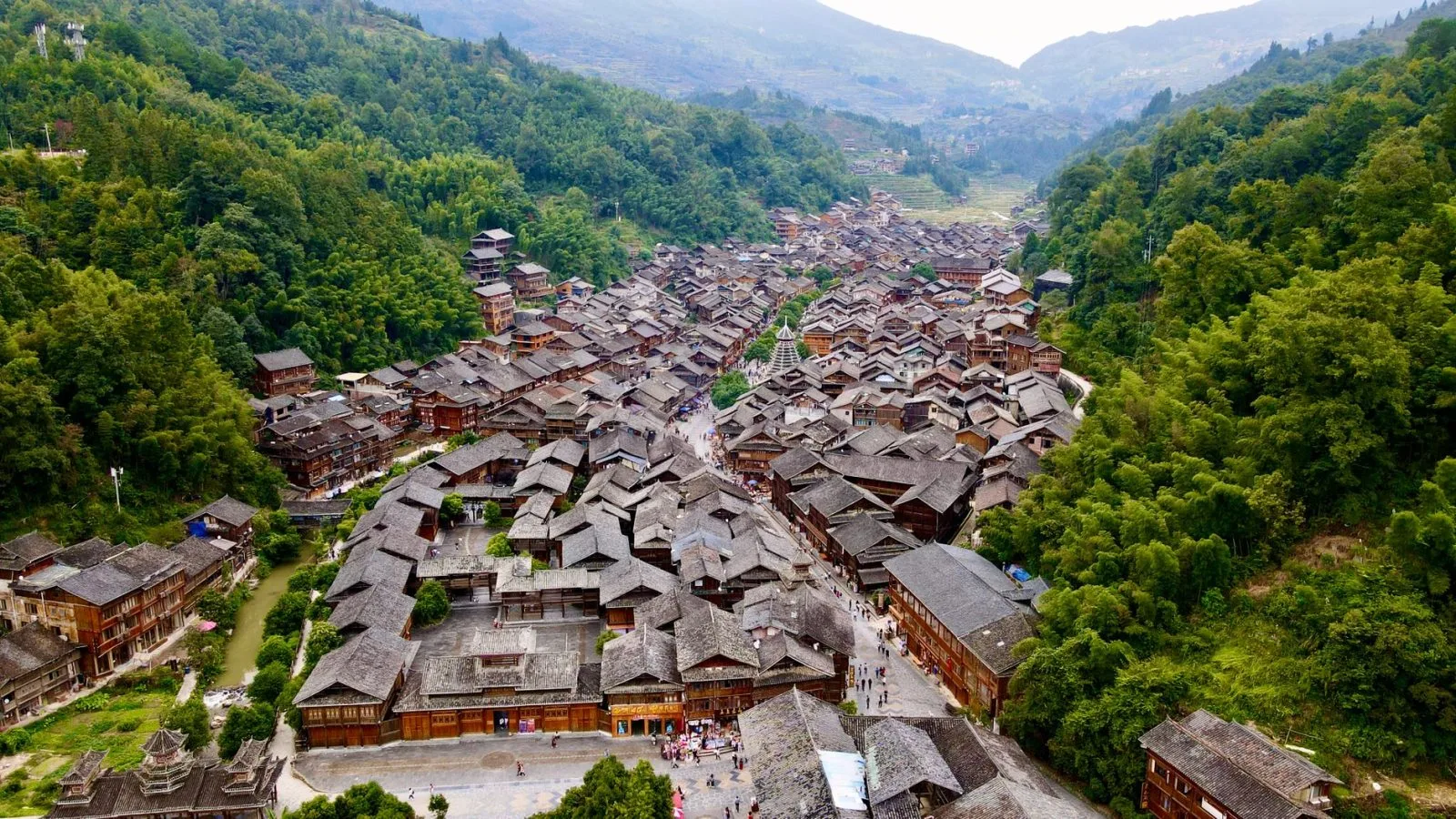
2010년 인구 조사에 따르면 둥족(캄족이라고도 함)은 약 296만 명으로 추산됩니다. 대부분은 구이저우성 동부의 첸둥난 먀오족·둥족 자치주에 거주하며, 일부는 후난성 서부의 신황현과 광시성 북부의 싼장현에 살고 있는데, 이 항목에서는 이 지역을 다룹니다. 마을은 구릉 지대의 개울가를 따라 밀집되어 있으며, 집들은 나무 기둥 위에 빽빽하게 지어지고 1층은 가축을 기르거나 물건을 저장하는 데 사용됩니다. 마을은 대개 씨족이나 친척 가족들을 중심으로 형성되며, 공동으로 사용하는 북루가 마을의 중심을 이룹니다. 인접한 먀오족, 야오족, 한족 공동체는 이 지역의 시장과 혼인 관계에 영향을 미칩니다.
둥족 마을들은 서로 가까이 붙어 있으며, 중앙에는 북루가 있습니다. 콜린스 자오 | 펙셀 라이선스 (https://www.pexels.com/license/)
언어와 마을 규칙
둥어는 캄어라고도 불리며, 다이어와 타이어를 포함하는 크라다이어족의 캄수이어파에 속합니다. 둥어는 성조를 가지고 있으며, 벼농사, 산림 작업, 마을 의례와 관련된 풍부한 어휘를 보유하고 있습니다. 널리 통용되는 고대 둥어 문자는 없으며, 공식 기록에는 한자가 사용되었고, 현재는 로마자 표기를 통해 사전과 노래 가사를 출판하고 있습니다. 마을 생활은 오랫동안 관(kuan)이라고 불리는 협약에 의해 규율되어 왔는데, 이 협약은 토지 이용, 결혼, 분쟁 해결 등에 관한 것으로 마을 회의에서 낭독됩니다. 마을의 장로와 선출된 지도자가 마을을 대표하며, 노래방과 북루는 젊은이들이 노래와 마을 규칙을 배우는 장소 역할을 합니다.
탑과 지붕이 있는 다리
둥(東) 목조 건축물은 두 가지 구조물로 유명합니다. 하나는 지붕 위로 솟아오른 겹겹이 쌓은 탑 모양의 북루로, 처마가 돌출되어 있으며 여러 개의 목재를 이어 붙여 지었고 회의, 신호 전달, 축제 모임 등에 사용되었습니다. 다른 하나는 풍우교로, 기와지붕과 다리 길이를 따라 놓인 벤치, 그리고 하나 이상의 정자가 있는 다리입니다. 20세기 초에 건설된 산장(三江)의 청양용지교(成陽氏派派)가 이 풍우교의 대표적인 예입니다. 두 구조물 모두 금속 못 대신 장부 이음 방식을 사용하여 지역 목수들이 직접 조립하며, 마을 전체가 노동력과 목재를 제공하여 다리를 건설하거나 보수합니다.
지붕이 있는 다리는 하나의 구조물로 비바람을 막아주고, 앉을 자리를 제공하며, 마을의 랜드마크가 되기도 합니다. AI 생성 일러스트 · 시노비즈
웅장한 노래와 일상 음식
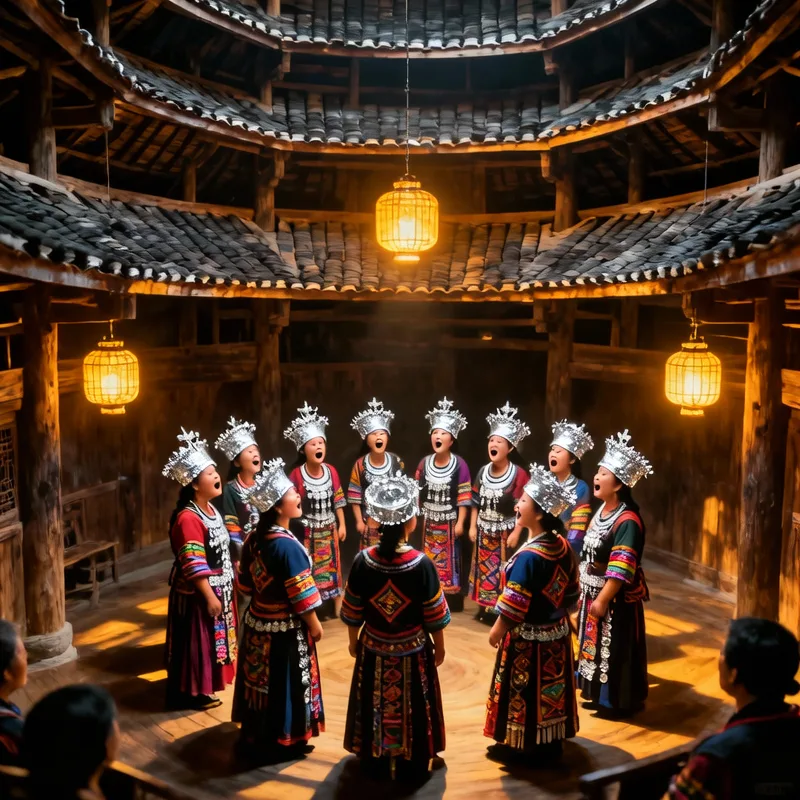
캄족의 대규모 노래인 동게(dongge)는 고음 파트가 주도하고 저음 파트가 화답하는 무반주 다성 음악입니다. 젊은이들이 겨울 내내 모닥불 주위에 둘러앉아 연습하는 노래방에서 배우며, 결혼식, 축제, 마을 간 방문 시에 불립니다. 동족의 새해는 많은 지역에서 음력 11월에 있으며, 북루 모임이 있고 일부 지역에서는 투우를 하기도 합니다. 새해 음식으로는 쌀과 함께 싸서 발효시킨 신맛 나는 생선, 신맛 나는 국, 찹쌀밥, 그리고 볶음밥, 땅콩, 허브를 넣고 휘저어 만든 유차(you cha) 등이 있습니다. 이러한 음식들은 보존과 공동 난방이 중요한 습한 고산 기후에 적합합니다.
웅장한 노래는 노래방에서 배우고 공동체 모임에서 불립니다. AI 생성 일러스트 · 시노비즈
The eight great cuisines classify Chinese cooking by region, climate and technique.
부분
삶과 민속
지역
베이징
연대
시대를 넘어서
태그
음식
Ask a Chinese cook to name the country’s great cuisines and you will hear a list of eight. The scheme is a modern way of sorting older regional traditions, each shaped by climate, staple crops, waterways and trade.
How the List Was Made
An older division recognised four great traditions: Lu in the north, Yue in the south, Chuan in the west and Huaiyang in the east. The more detailed eight-cuisine scheme emerged in the 1980s and is often credited to Wang Shaoquan, a journalist at the People’s Daily. It added Zhe, Min, Xiang and Hui to the original four, giving provinces a more precise place on the culinary map. The categories are conventions, not laws; cooks in Chengdu and Guangzhou have always borrowed from neighbours.
The eight-cuisine scheme groups regional cooking styles by province and climate. AI 생성 일러스트 · 시노비즈
North and East
Lu, or Shandong cuisine, is the classic northern style. Coastal branches favour prawns, scallops and abalone, often quickly stir-fried, while inland cooks around Jinan excel at soups and long braises. Scallions and salt are characteristic seasonings, and steamed bread often replaces rice. Lu cooking shaped the food of the imperial court and of Beijing, where Shandong chefs dominated many restaurants; the capital’s Peking duck belongs to this northern lineage.
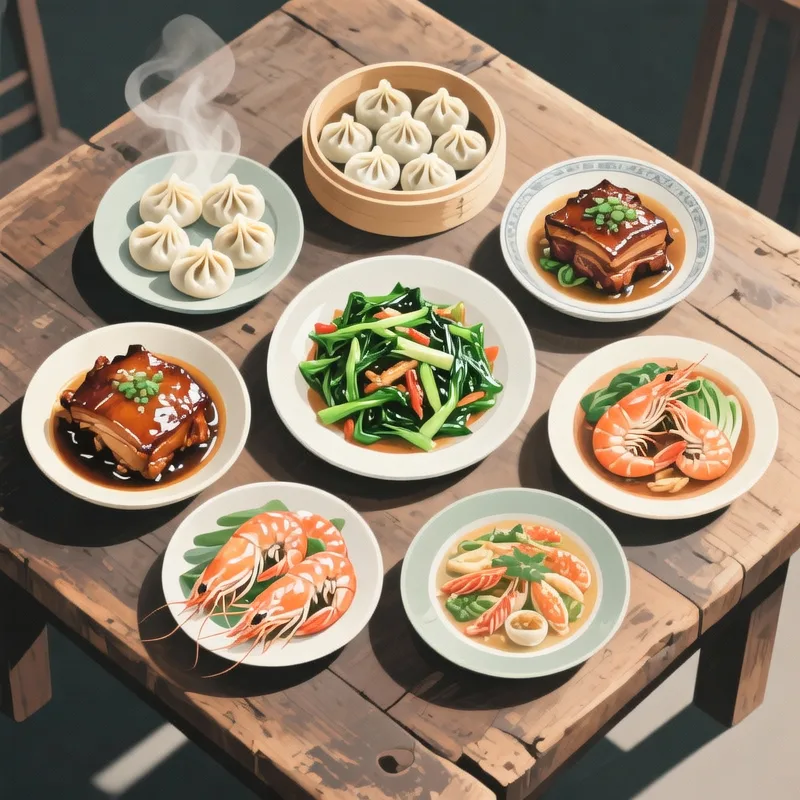
Su, or Jiangsu cuisine, covers the Yangtze delta and Huaiyang region. It favours mild, slightly sweet flavours, careful knife work and serious soups; lotus root, bamboo shoots and water chestnut are common, and xiao long bao soup dumplings are its best-known export. Zhe cuisine, from Zhejiang, is lighter still: Dongpo pork is braised slowly with wine and soy, while West Lake vinegar fish and Longjing shrimp keep the taste of the water and the tea leaves.
South and West
Yue, or Cantonese cuisine, draws on the Pearl River delta and the South China Sea. Freshness governs the kitchen: fish and shellfish are steamed, roast meats are hung in the window, and dim sum is served with tea in a yum cha session. Chuan, or Sichuan cuisine, is defined by ma la, the numbing-spicy pairing of chilli and Sichuan pepper; pixian broad-bean paste gives many dishes their fermented depth. Xiang cooking from Hunan uses chilli without the numbing note, often smoked or pickled, while Hui cuisine from Anhui makes much of mountain ingredients such as bamboo shoots and preserved mandarin fish.
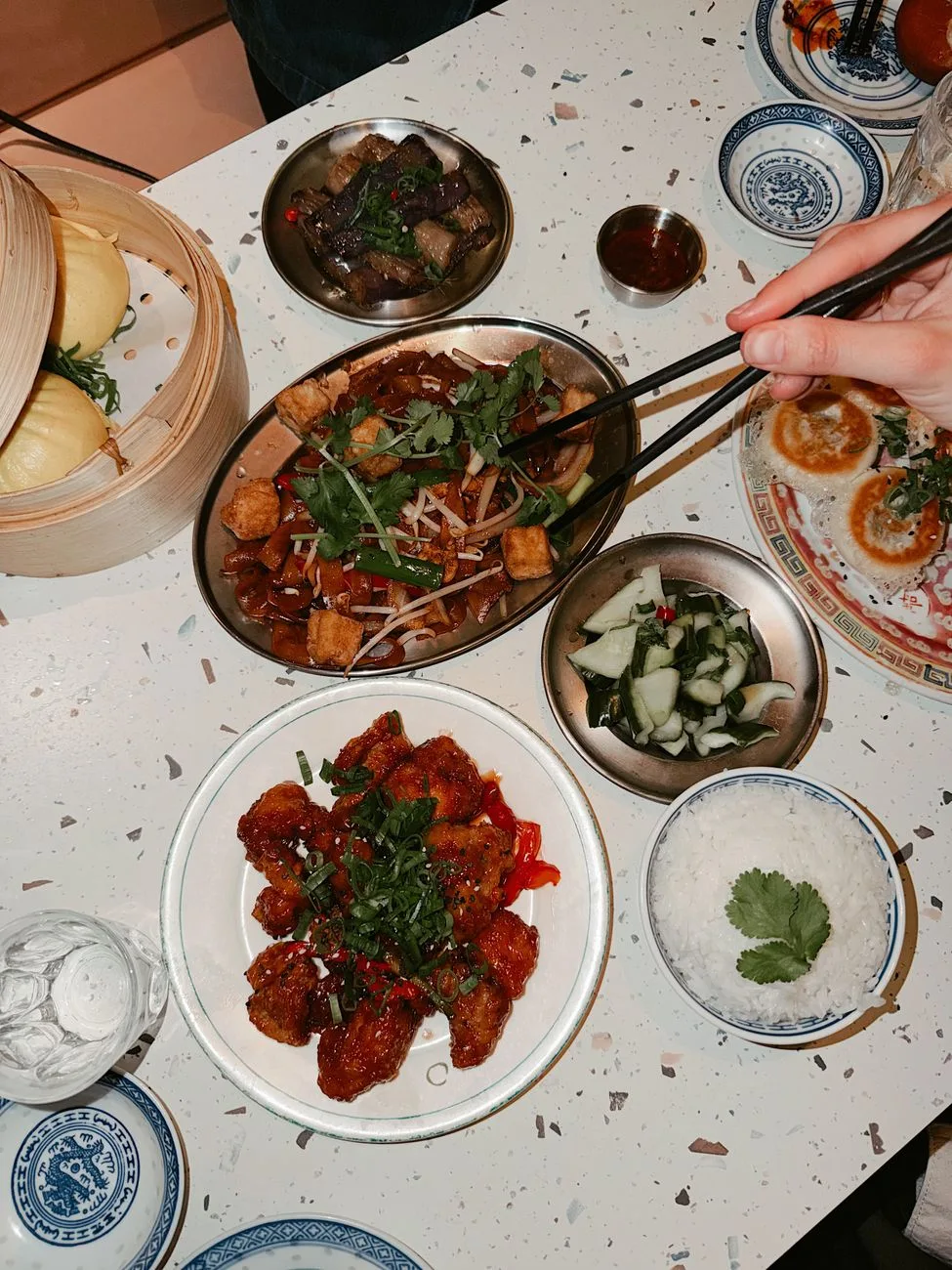
Steam and freshness in the south; chilli and fermentation in the west. Vincent Rivaud | Pexels License (https://www.pexels.com/license/)
Min and the Sea
Min, or Fujian cuisine, is easy to overlook and hard to mistake. Fuzhou cooks are masters of soup and of hongzao, fermented red rice lees that colour and flavour pork, fish and river eels. Buddha jumps over the wall is a layered broth of shark fin, abalone, scallop, mushrooms and ham, named for a monk said to have leapt the wall for a taste. Coastal Fujian adds fish balls, oyster omelets and popiah-style crepes, reflecting a province oriented toward the sea and toward migration.
Lu — Shandong: scallions, seafood, slow soups
Chuan — Sichuan: ma la, chilli oil, broad-bean paste
Yue — Guangdong: dim sum, steaming, roast meats
Min — Fujian: red rice lees and layered soups
Beijing as a Crossroads
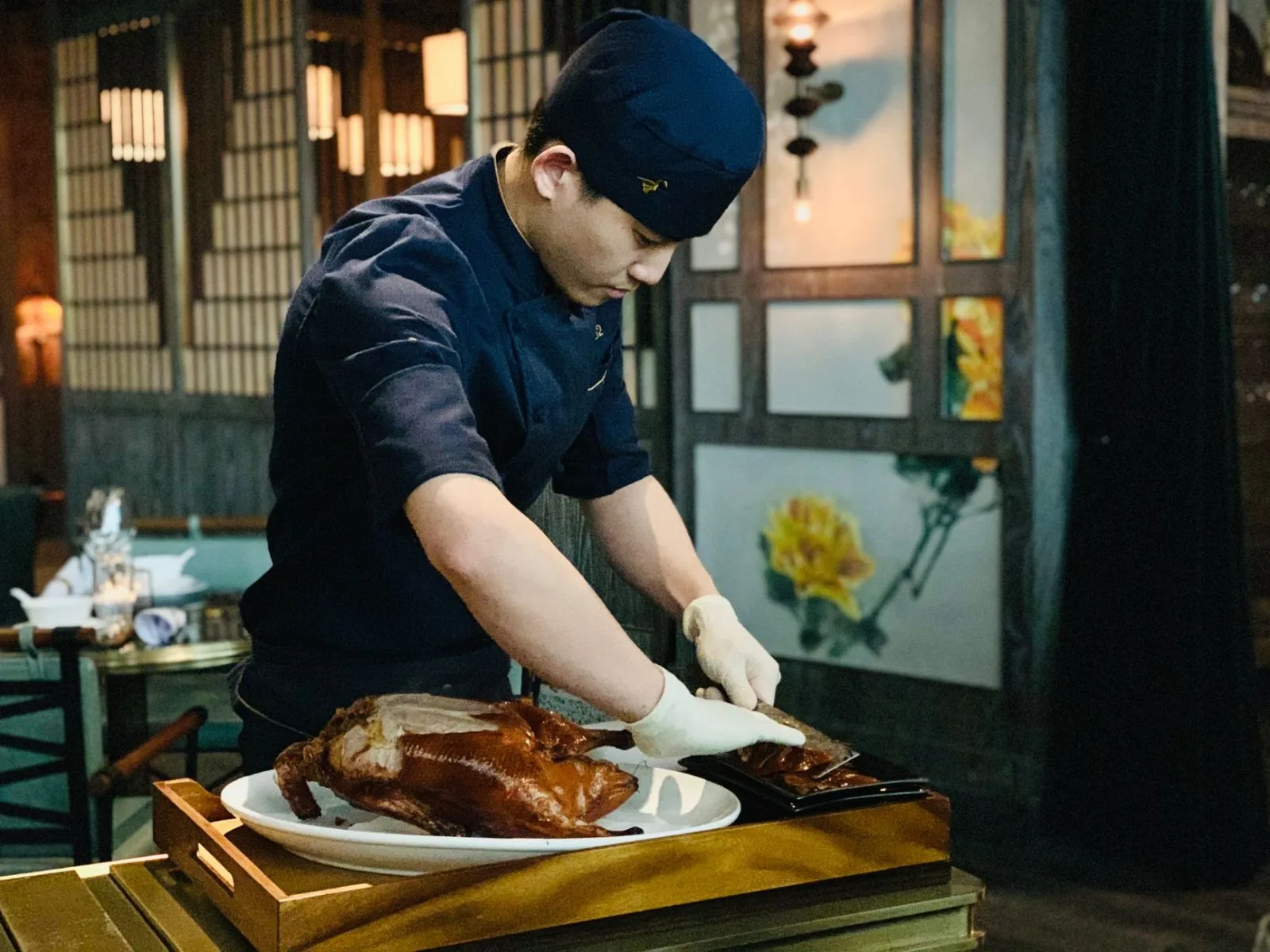
The eight-cuisine map describes provinces, but Beijing has always eaten beyond its own borders. Shandong technique supplied the basis of restaurant cooking, Mongol and Manchu tastes left their mark in mutton dishes and hotpot, and the Qing court staged the elaborate Manchu-Han feast. Bianyifang, founded in 1416, roasted ducks in a closed oven; Quanjude, opened in 1864 by Yang Quanren, popularised the hanging oven and the crisp skin served with pancakes, scallions and sweet bean sauce. A capital city turns regional styles into a shared vocabulary.
Beijing’s roast duck emerged from northern techniques and capital city exchange. MorNa Tang | Pexels License (https://www.pexels.com/license/)
Eight cuisines are a map of climate and trade, written in oil, vinegar and fermented bean paste.
Hotpot turns dinner into a shared act of cooking at the table.
부분
삶과 민속
지역
쓰촨
연대
시대를 넘어서
태그
음식
Hotpot is a meal built around a vessel of simmering broth. Diners lower thin slices of meat, vegetables and offal into the liquid, cook them to the texture they want and dip them in sauce before eating.
One Pot, Many Names
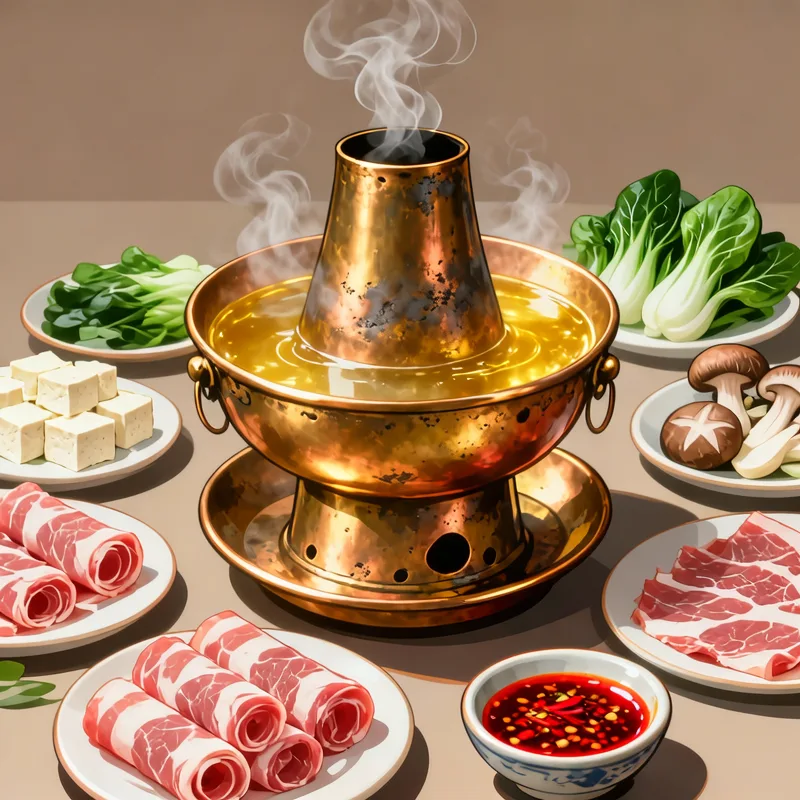
The Chinese term huoguo literally means fire pot. In northern China the classic form is the copper pot with a central chimney, heated by charcoal, in which paper-thin slices of mutton are swished briefly in a clear broth. Beijing’s Donglaishun, founded in 1903, made the mutton dip famous, served with sesame sauce, fermented tofu and chive flower sauce. In Sichuan and Chongqing the pot is filled with a red, oil-floated broth instead. The table method is the same; the flavourings mark the region.
The northern copper pot uses a clear broth; Sichuan versions favour red oil. AI 생성 일러스트 · 시노비즈
The Sichuan Broth
Two sensations define the Sichuan version. Chilli brings capsaicin heat; Sichuan pepper, the husk of a prickly ash, supplies hydroxy-alpha sanshool, which makes the tongue tingle and vibrate. Together they create ma la, numbing spicy. Chilli reached China only after the sixteenth century, arriving from the Americas through maritime trade, so the modern red broth is comparatively recent. Earlier seasonings relied on Sichuan pepper, ginger, fermented beans and the broad-bean chilli paste of Pixian.
A Chongqing lao huoguo, or old hotpot, traditionally starts with beef tallow, dried chillies and paste, browned until the oil turns red. The nine-grid pot divides the surface: the centre boils hardest, the corners simmer gently, and each diner keeps track of their own food. Offal — tripe, duck blood, intestine — was the original cheap fare of dockworkers and boatmen at Chaotianmen. Tripe is cooked by the rule of seven up, eight down, dipped and lifted repeatedly for a few seconds.
Chengdu and the Split Pot
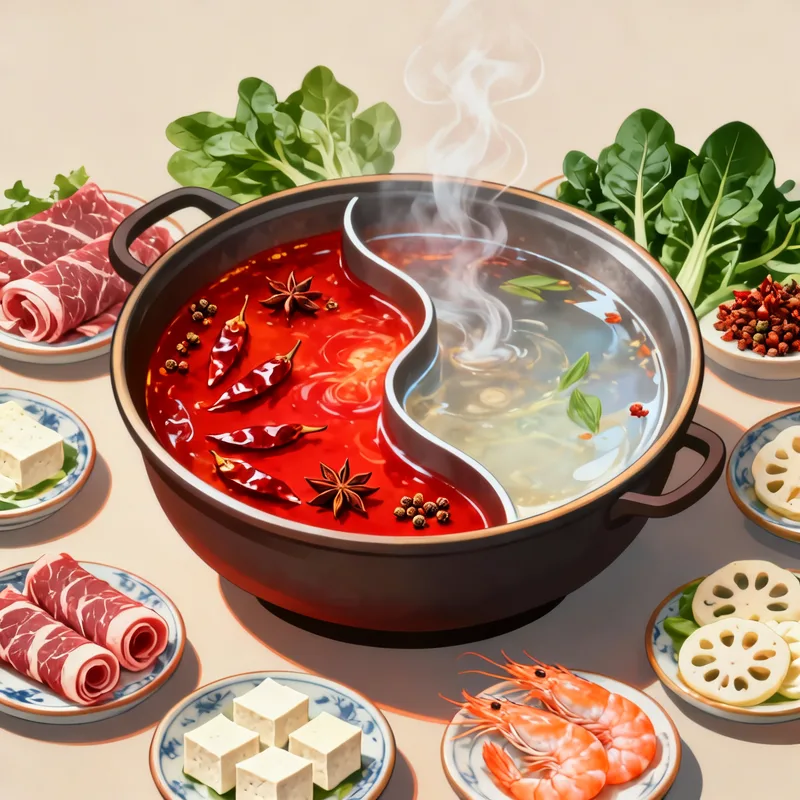
Chengdu style is usually gentler than its Chongqing cousin. Cooks often use vegetable oil rather than beef tallow, add more aromatics and offer a yuanyang pot, a divided vessel with red broth on one side and a clear, mild stock on the other. Diners gather around it in stages: tough items go in first, greens and sliced fish last. Sesame oil mixed with garlic, coriander and scallions cools each bite before it reaches the mouth. The divided pot is a useful invention for a table with mixed tolerances.
The yuanyang pot lets a table share one meal at two heat levels. AI 생성 일러스트 · 시노비즈
How to Eat It
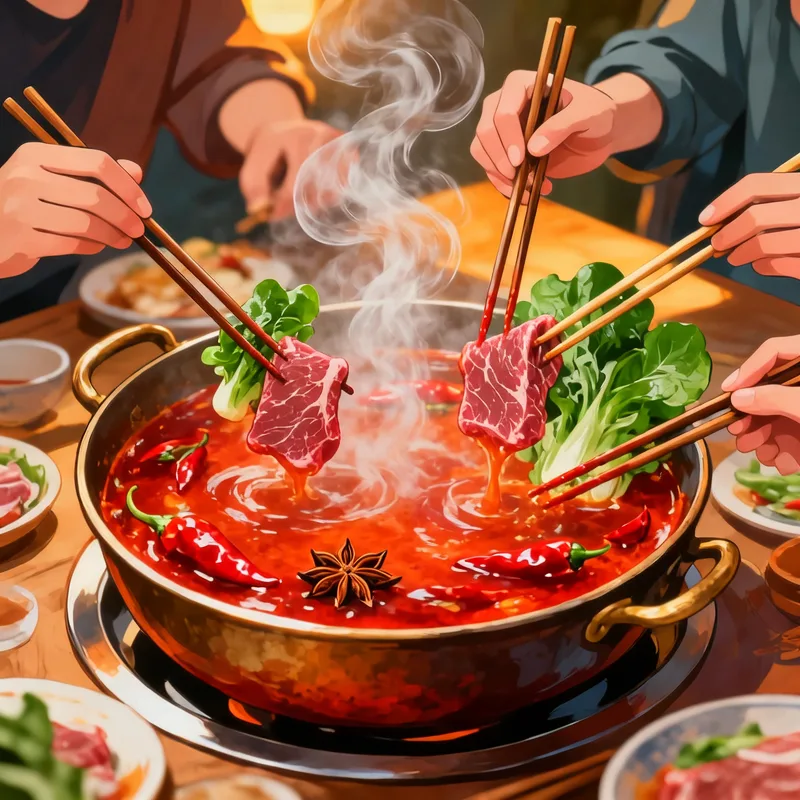
Hotpot has a practical etiquette. Raw and cooked foods need separate chopsticks or serving utensils, and a shared pot requires patience with other diners’ timing. A few rules are widely repeated: do not stir the whole broth, do not fish with your own chopsticks, and let the boil return after adding cold ingredients. The meal is slow by design. As the pot reduces, the broth grows stronger, and the last handful of noodles absorbs everything that has gone before.
The modern restaurant trade carried hotpot far beyond Sichuan. Haidilao, founded in Jiangyou in 1994, turned the meal into a service spectacle with waiting-area snacks and attentive staff; its branches now appear in many countries. Other chains adapted the format to clear broths and individual pots. Yet the social logic has not changed. A pot keeps everyone at the table for an hour, cooking in stages and talking between courses, which is why hotpot spreads easily wherever Chinese communities gather.
The shared pot keeps the meal slow and conversational. AI 생성 일러스트 · 시노비즈
In a hotpot restaurant the meal is not served; it happens, slowly, in the middle of the table.
Wheat, water and hand technique make noodles a staple of the northern table.
부분
삶과 민속
지역
산시
연대
시대를 넘어서
태그
Food, Geography
North of the Qinling–Huaihe line, wheat and millet rather than rice shaped the daily meal. Noodles — mian when made from wheat, fen when made from other starches — became the most visible expression of that divide.
An Archaeological Bowl
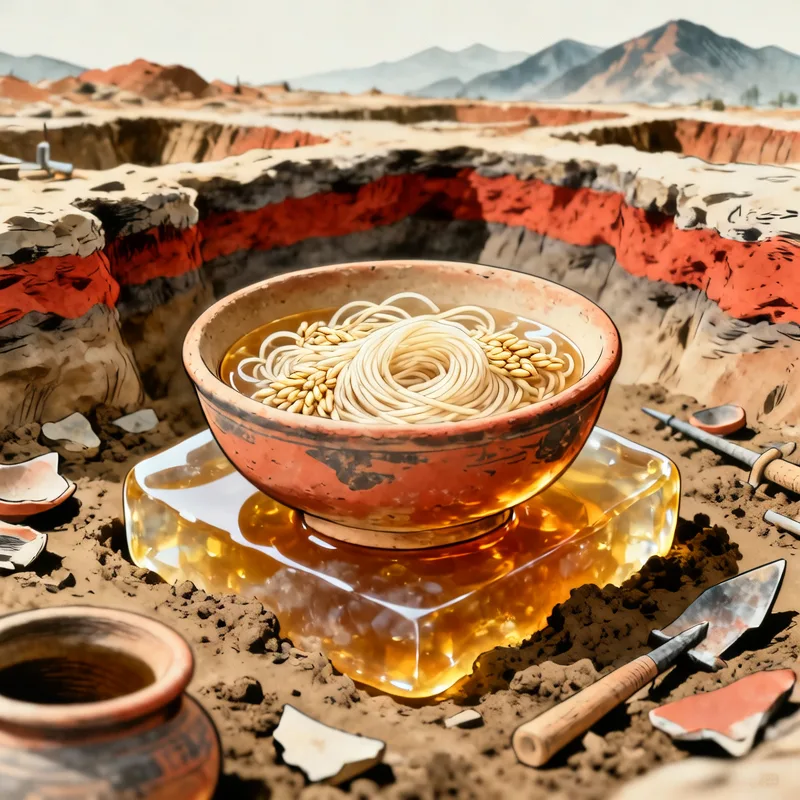
Noodles are older than the wheat noodle. In 2005 researchers reported a bundle of thin yellow strands from a sealed earthenware bowl at Lajia, a Late Neolithic site in Qinghai on the Yellow River, dating to about 4,000 years ago. Starch grains and husk phytoliths identified foxtail and broomcorn millet, not wheat. A 2014 study used traditional extruding tools to reproduce similar strands from millet flour. The find does not settle every argument about noodle origins, but it gives the craft a solid archaeological date.
A sealed bowl at Lajia preserved millet noodles dating to about 4,000 years ago. AI 생성 일러스트 · 시노비즈
Wheat Moves North
Wheat was domesticated in the Fertile Crescent and reached northern China several millennia before the Han dynasty. Its gluten made dough elastic enough to be stretched, rolled and boiled without breaking, which millet alone could not do. By the Tang and Song periods, mills, wheat fields and noodle shops were part of urban life in the north, and written recipes describe dried noodles kept for later use. The split with the rice-growing south hardened around this staple.
Shaanxi sits at the centre of that wheat world. The Guanzhong plain is enclosed by the Qinling mountains to the south and the Loess Plateau to the north, with the Wei River running through it. Chang’an, the Tang capital at modern Xi’an, stood at the eastern end of the Silk Road; merchants, soldiers and Muslim communities all left marks on local food. Geography here is not background scenery — it determines the grain in the bowl.
The Shaanxi Repertoire
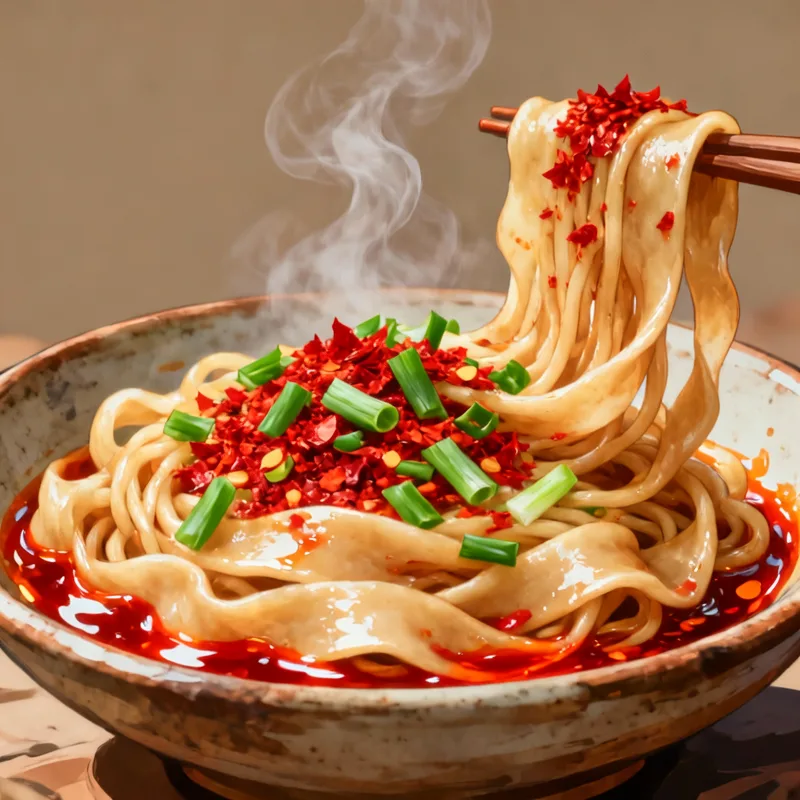
The province’s noodles are made rather than merely cooked. Biangbiang mian are broad, hand-slapped ribbons, named for the sound of dough hitting the counter; the dialect character for biang has more than fifty strokes. Youpo mian are topped with chilli flakes, garlic and scallions, then splashed with hot oil until they hiss. Qishan saozi mian arrive in broth with diced pork, egg, tofu, wood ear and daylily, and the first bowl is traditionally set aside as an offering to ancestors before the family eats.
Biangbiang mian take their name from the sound of dough striking the board. AI 생성 일러스트 · 시노비즈
Soups, Bread and Cold Noodles
Not all northern noodles are wheat strands. Yang rou paomo, a Xi’an speciality associated with the city’s Hui community, begins with a flatbread that the diner tears into small pieces before a rich mutton broth is poured over it. Liangpi are cold sheets or strips made from wheat or mung bean starch, dressed with vinegar, garlic and chilli oil. Shanxi, the neighbouring province, is known for knife-shaved dao xiao mian and for aged vinegar; Henan favours wide hand-pulled hui mian in lamb soup.
Qishan saozi mian — noodles with minced meat and vegetables
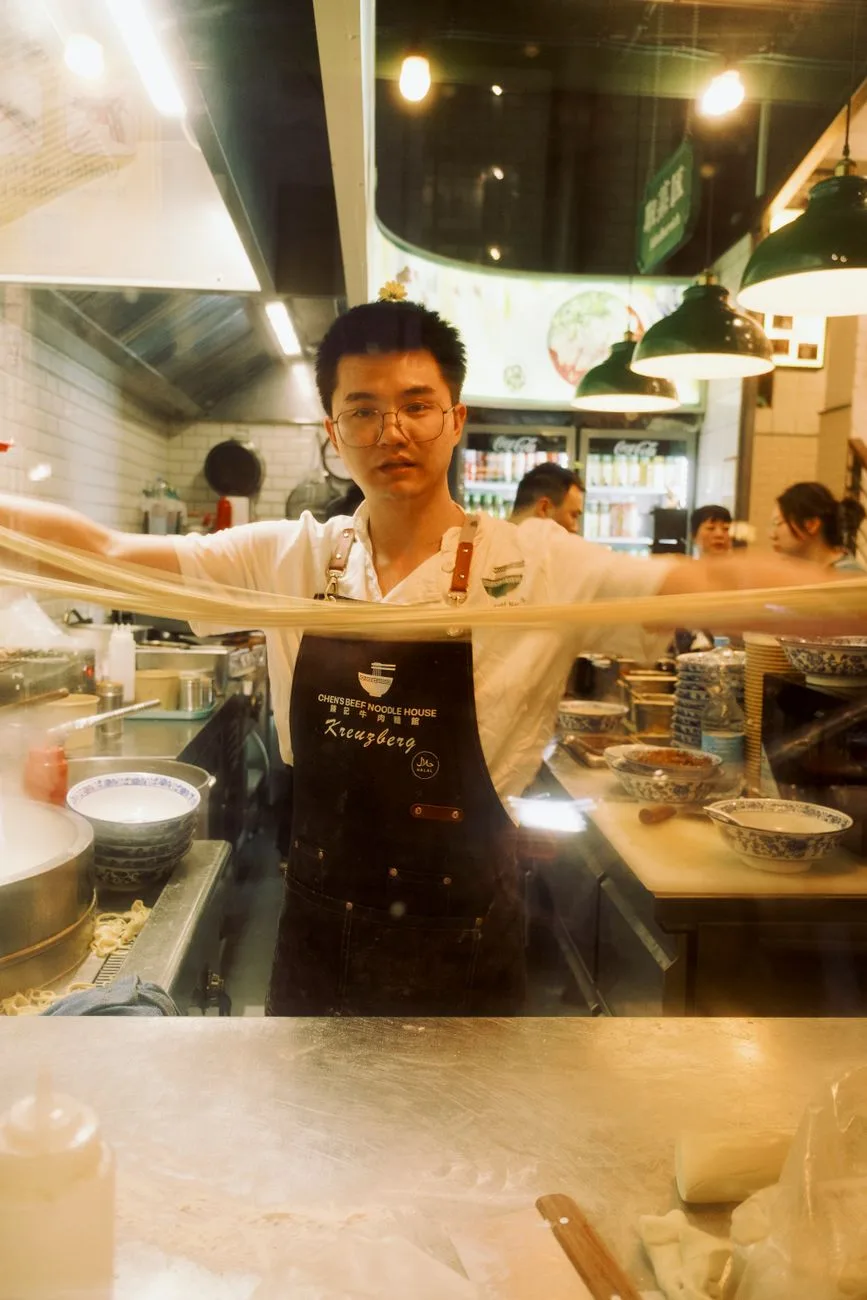
The same techniques travel well. Lanzhou beef noodle soup, sold by Hui traders across China, pairs hand-pulled strands with a clear broth, sliced beef, radish and coriander. Beijing’s zhajiangmian uses wheat noodles under a thick fried soybean paste, surrounded by cucumber and bean sprouts. What unites these dishes is not a single sauce but a method: flour worked by hand into strands, boiled and served in a broth or with a paste. Northern noodle shops remain places where that work is visible.
Hand-pulling turns flour and water into strands in minutes. Felipe Souza Melo | Pexels License (https://www.pexels.com/license/)
The sound of dough slapped on a board is part of the recipe: biangbiang is a verb before it is a name.
다이족은 타이어를 사용하는 불교 공동체로, 그들의 마을, 사원, 그리고 물 축제는 윈난성 남부의 강 계곡을 아름답게 장식하고 있습니다.
부분
삶과 민속
지역
윈난
연대
시대를 넘어서
태그
민족, 관습
시솽반나와 더훙의 저지대에는 다이족 마을들이 논밭과 불교 사원 옆에 자리 잡고 있습니다. 그들의 언어는 크라-다이어족의 타이어 분파에 속하며, 그들의 축제는 동남아시아 본토의 여러 공동체와 공유하는 달력을 따릅니다.
계곡이 있는 곳
2010년 중국 인구 조사에 따르면 다이족은 약 116만 명입니다. 대부분은 윈난성 남부와 서부의 저지대, 특히 란창(메콩) 강을 따라 위치한 시솽반나 다이족 자치주와 미얀마 국경 근처의 더훙 다이족 및 징포 다이족 자치주에 거주합니다. 소규모 공동체는 린창, 푸얼, 홍허 지역에도 분포되어 있습니다. 다이족은 서늘한 주변 구릉지대보다는 연중 관개 벼농사가 가능한 따뜻한 강 계곡을 따라 정착합니다. 이러한 저지대 생활 덕분에 다이족 마을은 국경을 넘어 샨족, 태국인, 라오스인 공동체와 긴밀한 관계를 유지해 왔으며, 이는 다이족의 건축 양식, 음식, 축제 등이 동남아시아 본토와 많은 공통점을 가지는 이유를 설명해 줍니다.
마을들은 연중 벼농사를 지을 수 있는 따뜻한 강 계곡을 따라 자리 잡고 있습니다. 레이첼 클레어 | 펙셀 라이선스 (https://www.pexels.com/license/)
언어, 문자 그리고 물
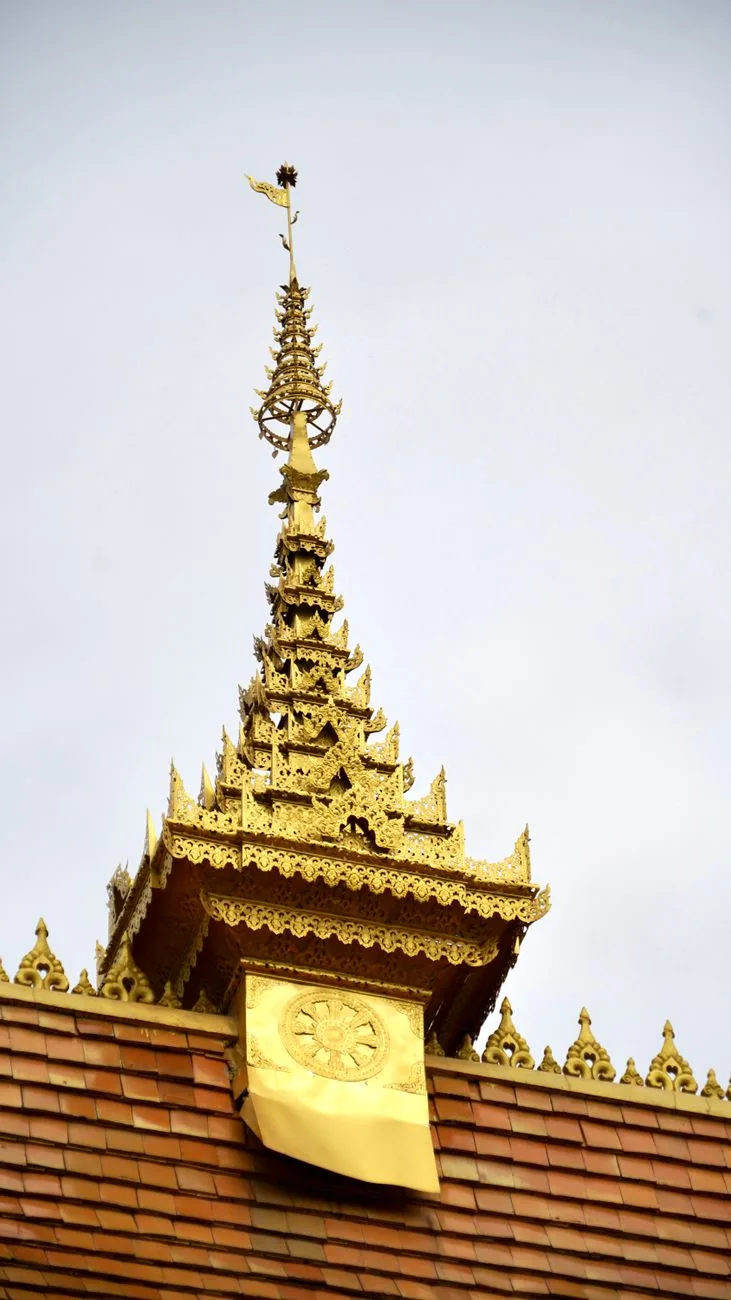
다이어는 태국어와 라오어를 포함하는 크라다이어족의 타이어파에 속합니다. 윈난성에서는 시솽반나 문자, 더훙 문자, 그리고 진핑 주변에서 사용되는 변형 문자 등 세 가지 문자 전통이 사용됩니다. 이 문자들은 모두 고대 타이 문자 체계에서 유래했으며, 과거에는 주로 사찰 교육을 통해 계승되었습니다. 수세기에 걸쳐 교역과 순례길을 통해 테라바다 불교가 다이족 공동체에 전파되었고, 지역 사찰은 마을의 문해 교육과 의례의 중심지가 되었습니다. 소년들은 전통적으로 어린 시절의 일부를 사미승으로 보내며 경전을 읽고 염불을 외우는 법을 배웠습니다. 금박을 입힌 탑과 경사진 지붕을 가진 목조 사찰은 이 지역의 가장 눈에 띄는 랜드마크로 남아 있습니다.
이 지역의 사원은 오랫동안 독서, 서품식, 마을 행사 등의 중심지 역할을 해왔습니다. 에릭 펑 | 펙셀 라이선스 (https://www.pexels.com/license/)
집, 옷, 그리고 매일 먹을 음식
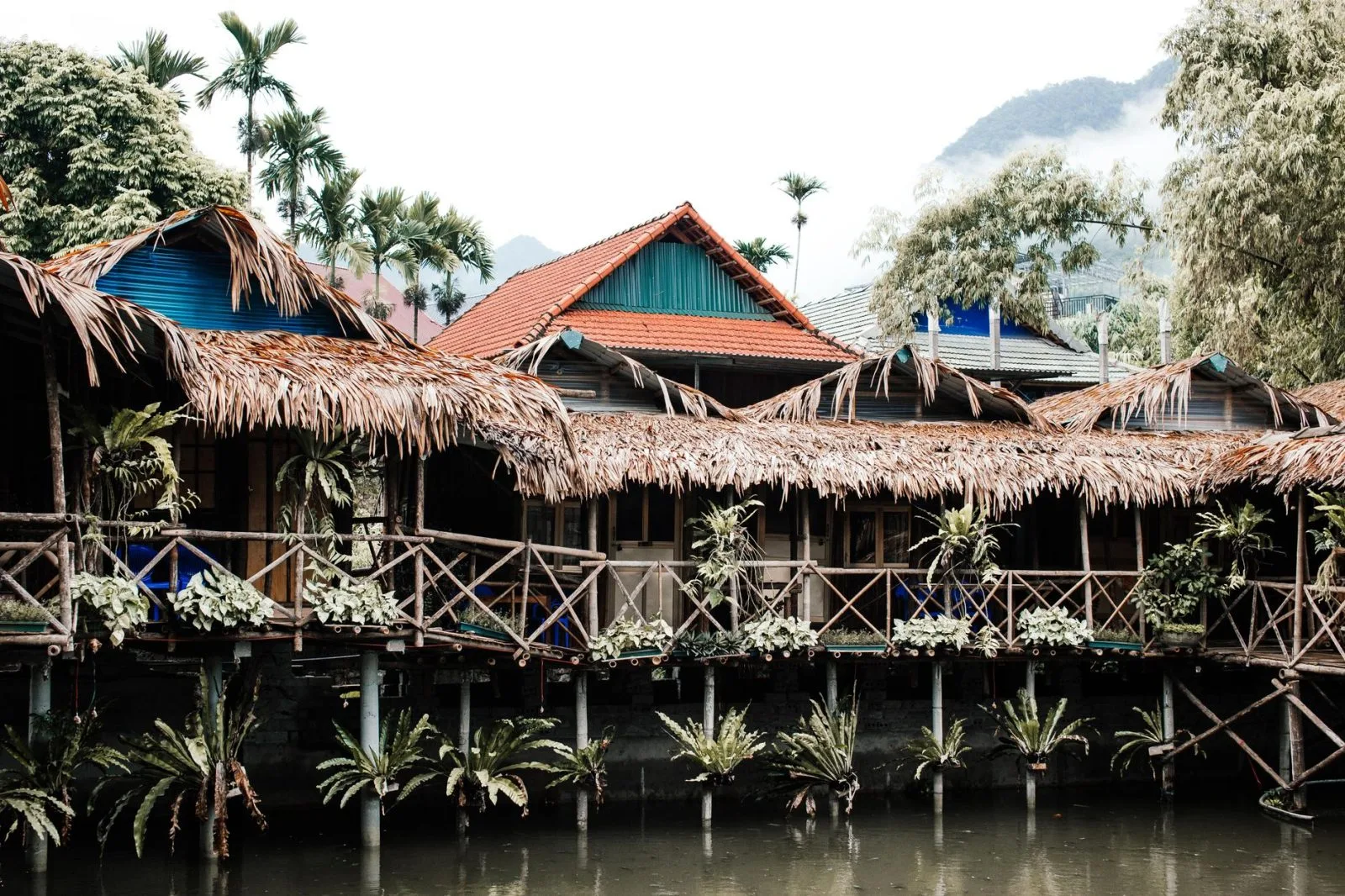
전통적인 다이족 가옥은 나무나 대나무 기둥 위에 세워져 있으며, 거실 바닥은 지면에서 약간 떨어져 있고, 가파른 지붕은 장마철 폭우를 막아줍니다. 개방형 베란다는 작업 공간이자 휴식 공간으로 사용되며, 집 아래 공간은 창고와 가축을 위한 공간으로 쓰입니다. 가정에서는 면직물과 비단을 짜는데, 다이족 비단은 공작, 코끼리, 기하학적 무늬가 밝은 색 실로 수놓아진 것이 특징입니다. 은 장신구, 빈랑 열매, 칠기 쟁반은 일상생활과 의례에서 주고받는 물건입니다. 식사는 찹쌀, 민물고기, 신맛 나는 죽순, 고추장 등을 중심으로 하며, 바나나 잎에 싸서 먹는 경우가 많습니다. 시솽반나와 푸얼 주변의 차밭은 오랜 지역 역사를 가진 또 다른 작물입니다.
비단, 은세공품, 그리고 빈랑 열매는 일상생활의 일부입니다. AI 생성 일러스트 · 시노비즈
물 축제
다이족의 새해는 4월 중순이며, 송크란이라고도 불리는 물 축제로 기념됩니다. 가족, 이웃, 방문객들에게 물을 뿌리거나 부어주며 깨끗하고 풍요로운 한 해를 기원하고, 사원을 방문하고, 작은 모래탑을 쌓고, 강에서 배 경주를 하는 등 다양한 행사가 펼쳐집니다. 저녁에는 화려한 의상과 느리고 절제된 손동작이 돋보이는 공작춤과 코끼리춤 공연이 펼쳐집니다. 이러한 춤은 다이족 오페라와 민속 이야기와 함께 문화 공연단과 학교에서 가르쳐지고 있습니다. 오늘날 이 축제는 중국 다른 지역에서도 방문객을 끌어들이고 있으며, 사원과 마을 공예가들은 축제의 언어와 기법을 계속해서 보존하고 있습니다.
Traditional Chinese weddings join two families through a sequence of gifts, processions and vows.
부분
삶과 민속
지역
저장성
연대
시대를 넘어서
태그
세관
A Chinese wedding was historically less a single ceremony than a negotiated sequence between households. The classical six rites set out steps from proposal to the fetching of the bride; local practice in Zhejiang added its own music, boats and wines.
The Six Rites
The classical sequence, codified in ritual texts of the Zhou dynasty, is known as the six rites. A go-between first presented a proposal (nacai), then asked the bride’s name and birth details (wenming). Divination at the ancestral altar produced a favourable answer (naji), after which the groom’s family sent betrothal gifts (nazheng), requested an auspicious date (qingqi) and finally fetched the bride (qinying). Three documents — the betrothal, gift and wedding letters — accompanied the exchange. Few families performed all six in full, but the vocabulary survived in engagements.
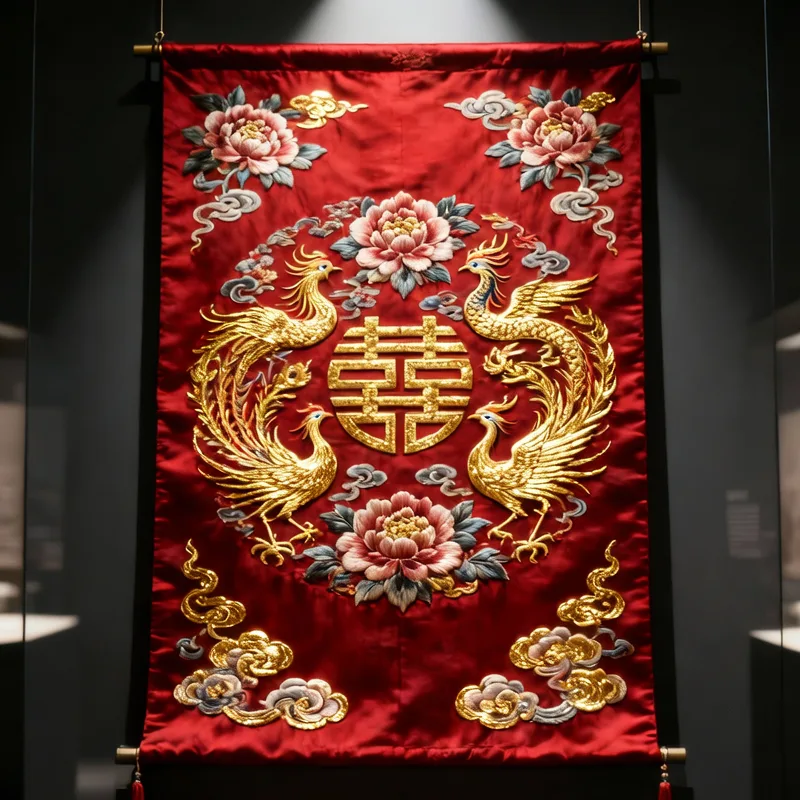
Auspicious textiles marked the threshold between two households. AI 생성 일러스트 · 시노비즈
The Day of the Procession
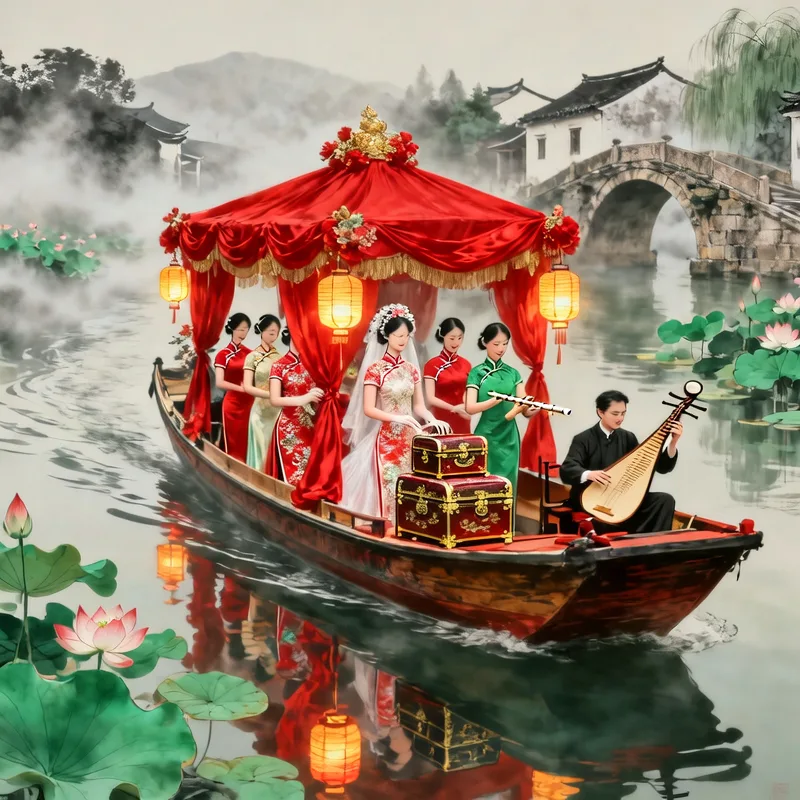
The word for marriage, hunyin, shares its first character with dusk, the traditional hour of the ceremony. Before dawn the bride, veiled in red, was carried from her natal home in a decorated sedan or, in the water towns of northern Zhejiang, aboard a boat hung with lanterns. Firecrackers and the reeds of suona horns announced the party. Crossing a saddle and a burning brazier at the groom’s gate invoked safety through puns on peace; the bride stepped over a threshold that marked a change of household.
Inside, the couple bowed to the wedding candles, to the groom’s ancestors and to the elders, then served tea to both families in order of seniority. Red envelopes of money acknowledged each bow. On the bridal bed, dates, peanuts, longans and lotus seeds were scattered for a pun on bearing a son soon. A woman of good fortune straightened the quilts and spoke auspicious words. Only after the banquet, with its toasts of ganbei, did the formal duties ease.
Zhejiang Inflections
Regional custom gave the framework local texture. In Shaoxing, a jar of yellow rice wine might be buried when a daughter was born and opened at her wedding: nuer hong, daughter’s red. The wine belonged to the bride’s family and travelled with the dowry, alongside silk quilts from Huzhou and lacquered furniture. In Wuzhen and other canal towns, the bridal procession moved by water, and Yue opera troupes were hired for the feast. Southern Zhejiang kept the custom of laments, in which the bride and her women sang farewell verses.
In canal towns the wedding procession travelled by water. AI 생성 일러스트 · 시노비즈
Gifts, Dowries and Alliances
Betrothal gifts and dowries were not mere display; they recorded the standing of two families and the terms of an alliance. The groom’s side supplied money, tea, wine, silk and livestock, while the bride brought textiles, jewellery, furniture and sometimes land or a shop. Surname exogamy was the rule: marriage within the same patrilineal clan was treated as incest. The 1950 Marriage Law recast the legal framework, establishing free choice of partner and equal property rights for spouses, but many gift customs continued.
Six rites: nacai, wenming, naji, nazheng, qingqi, qinying
Shaoxing’s nuer hong wine is opened at the daughter’s wedding.
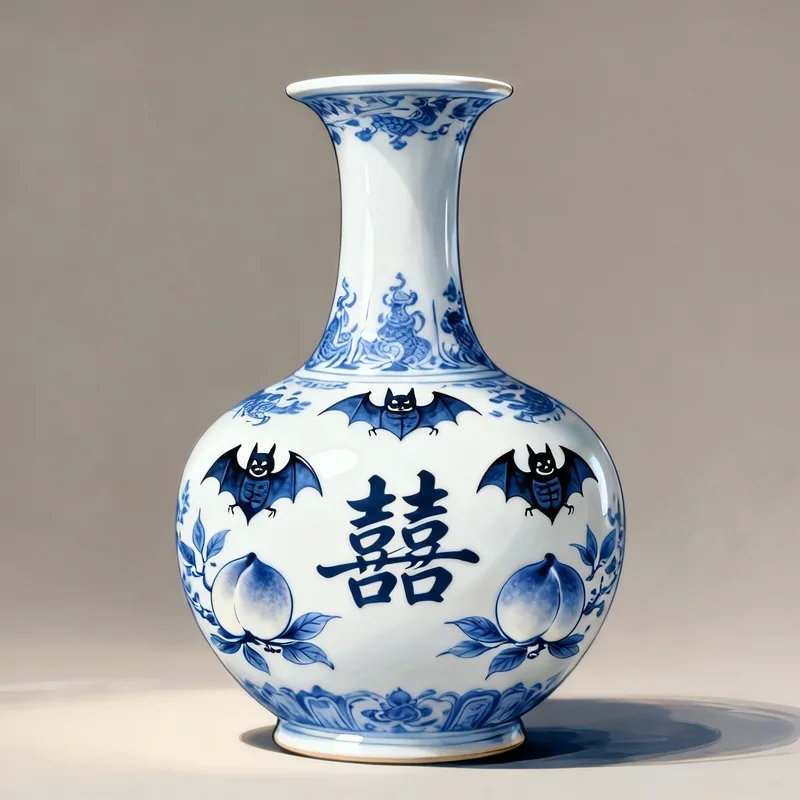
Double happiness (shuangxi) appears on linens, paper cuts and pottery.
Tea served to elders wins red envelopes in return.
Weddings Now
Today a civil registration at the local civil affairs office makes a marriage legal, and ceremonies are chosen from a menu of options. Some couples hold a restrained tea ceremony at home; others book a banquet hall, a photographer and a host who keeps the toasts moving. The red veil has given way to a white dress for many brides, often followed by a red qipao for the formal photographs. In Zhejiang’s water towns, staged wedding processions are also a tourist performance, repeating the same gestures for an audience of visitors.
Double happiness, shuangxi, is the most recognisable emblem of a wedding. AI 생성 일러스트 · 시노비즈
The bride’s tears, the groom’s brazier and the jar of wine buried at her birth all belong to one grammar of departure and arrival.