标签: 种族的

  • The Bai People

    生活与民俗

    The Bai People

    White walls and craft around Dali

    The Bai are a Sino-Tibetan-speaking people concentrated around Dali, whose courtyard houses and indigo tie-dye define a local visual style.

    部分
    生活与民俗
    地区
    云南
    时代
    跨越时代
    标签
    民族、习俗

    Bai towns sit between the Cangshan mountains and Lake Erhai in northwestern Yunnan. Their language is Sino-Tibetan, and their communities carry memories of the Nanzhao and Dali kingdoms that ruled the region before the Mongol conquest of the thirteenth century.

    Between Cangshan and Erhai

    About 1.9 million Bai people were recorded in China’s 2010 census. Roughly four fifths live in Dali Bai Autonomous Prefecture, with other communities in Kunming, Chuxiong, Lijiang, Baoshan and parts of western Yunnan. Towns and villages cluster on the narrow strip of flat land between Cangshan’s slopes and the shore of Erhai, where irrigation supports rice, beans and dairy farming. The name Bai means white, a reference to the pale plaster that distinguishes local buildings. Because Dali stood on trade routes linking Yunnan with Sichuan and Tibet, Bai towns absorbed goods and techniques from several directions while keeping a strong local vocabulary of form and decoration.
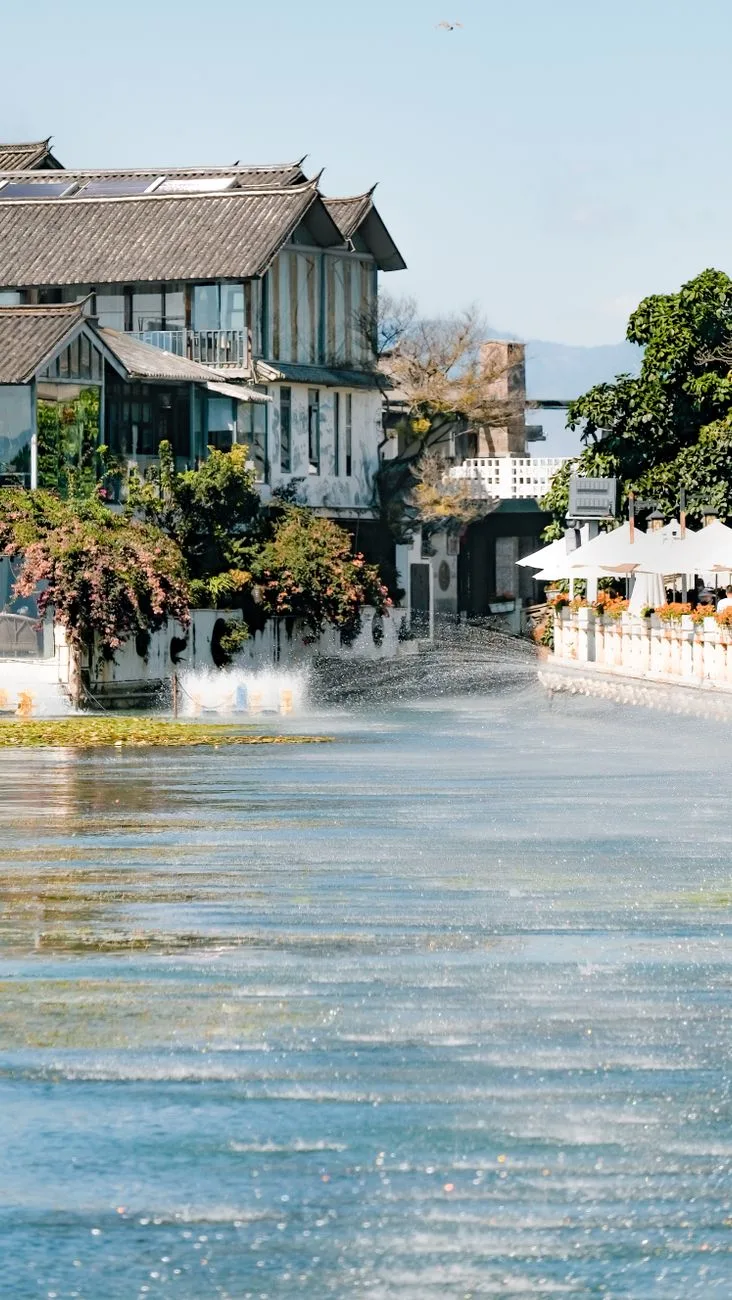
    Whitewashed Bai houses with grey tiled roofs below the Cangshan range near Dali
    White plaster and dark tile give Dali-area villages their characteristic appearance. Doing Be | Pexels License (https://www.pexels.com/license/)

    Language and historical roots

    The Bai language belongs to the Sino-Tibetan family, usually placed within Tibeto-Burman, though scholars still debate its exact position because of heavy borrowing from Chinese. There is no widely used traditional Bai script, and Chinese characters have served for writing names, contracts and local records. Bai oral tradition, including creation stories and accounts of kingdom builders, is transmitted in speech and performance. Ancestors of the Bai are associated with the Nanzhao kingdom, which flourished from the eighth to the ninth century, and the Dali kingdom that followed between 937 and 1253. Both left stone inscriptions, Buddhist carvings and fortified sites around the lake.

    Courtyards, marble and dye

    The standard Bai house follows a layout known as sanfang yizhaobi, three wings arranged around a courtyard facing a freestanding screen wall. Walls are whitewashed, roofs are covered in grey clay tiles, and doorways and windows carry deep carved wooden fretwork. The screen wall is often painted with landscapes or calligraphy, and panels of local marble are set into lintels and table tops. In Zhoucheng and nearby villages, indigo tie-dye produces blue cloth patterned by stitching and binding before dyeing. Bai embroidery, plaster carving and stonework use similar floral and geometric motifs, so the same design vocabulary appears on clothing, furniture and building facades.
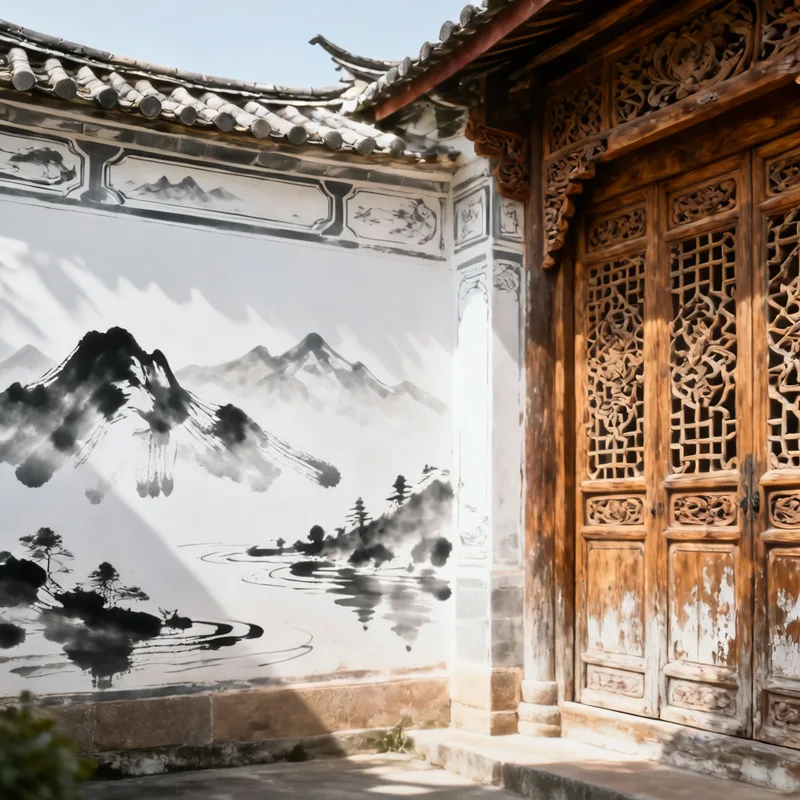
    A Bai courtyard screen wall with ink painting and a carved wooden doorway in Dali
    A painted screen wall faces the main wing of a traditional Bai courtyard house. AI生成的插图 · SinoViz

    Tea, markets and festivals

    Three-course tea is a Bai hospitality ritual: a bitter first cup brewed from roasted leaves, a sweet second cup with nuts and honey, and a final cup that mixes the two and is said to leave a lasting aftertaste. Local dishes include air-dried milk sheets called rushan, raw pork skin salad, sour fish from Erhai and bean curd cooked with local herbs. The Third Month Fair, held in the lunar third month at Dali, began as a livestock and goods market and now fills the foothills of Cangshan with stalls, horse trading and performances. Raosanling, a pilgrimage and singing gathering, and torch-lighting customs in some villages add other dates to the year.
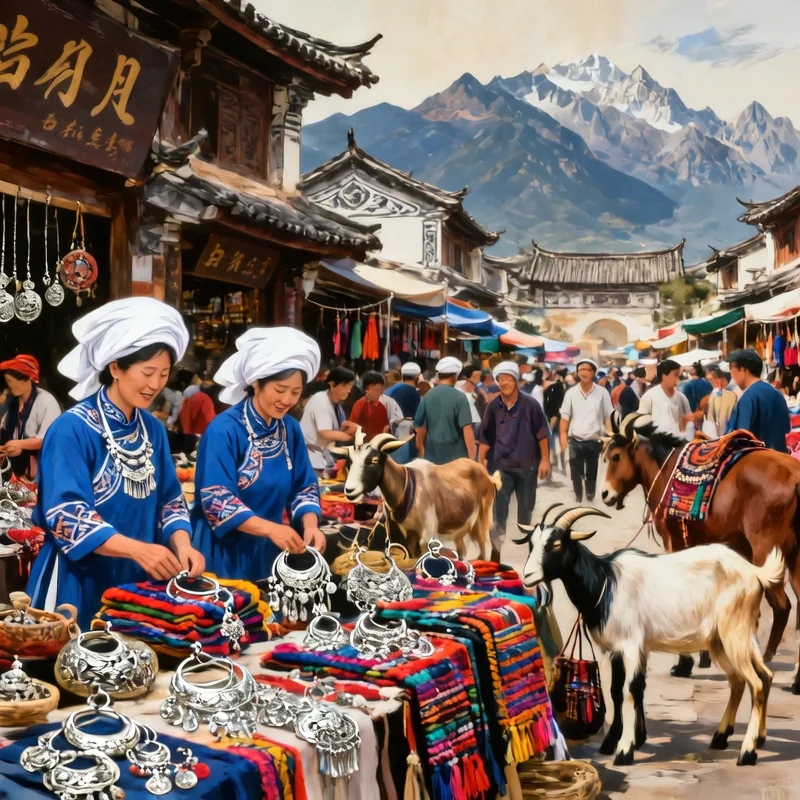
    Bai vendors and livestock at the Third Month Fair near Dali, Yunnan
    The Third Month Fair grew from a regional market into a major public gathering. AI生成的插图 · SinoViz
    Bai craftsmen treat a house front, a tea cup and a dyed cloth as the same surface for pattern.

    资料来源及延伸阅读

    1. Bai ——《不列颠百科全书》。
    2. Bai Ethnic Group — China.org.cn。
    看看它就位

    请跟随此条目前往其所属区域。

    通过地图探索

    请关注此帖

    浏览其他与此标签相同的条目。

    浏览标签
  • 韩国华人社区

    生活与民俗

    韩国华人社区

    北京的韩国语言和习俗

    在中国东北地区以及北京等城市,朝鲜族人仍然保持着以韩语为主要语言的文化生活。

    部分
    生活与民俗
    地区
    北京
    时代
    跨越时代
    标签
    民族、习俗

    朝鲜族中国人,中文称朝仙族,人口约180万。他们的聚居中心位于东北边境沿线,但北京的望京区和五道口区已成为非常显眼的韩语社区。

    移民与社区

    大多数朝鲜族家庭的定居历史可以追溯到十九世纪末二十世纪初。当时,生活困苦、征兵以及1910年日本吞并朝鲜半岛,迫使朝鲜人跨越图们江和鸭绿江迁徙至此。1952年,延边朝鲜族自治州在吉林省成立,长白和珲春至今仍是重要的中心城市。1992年中韩建交后,北京的朝鲜族人口迅速增长,大量学生、商人和工程师涌入北京。五道口地区因语言学校和学生公寓而闻名,而望京地区则发展出了规模化的超市、餐馆和韩语标识。

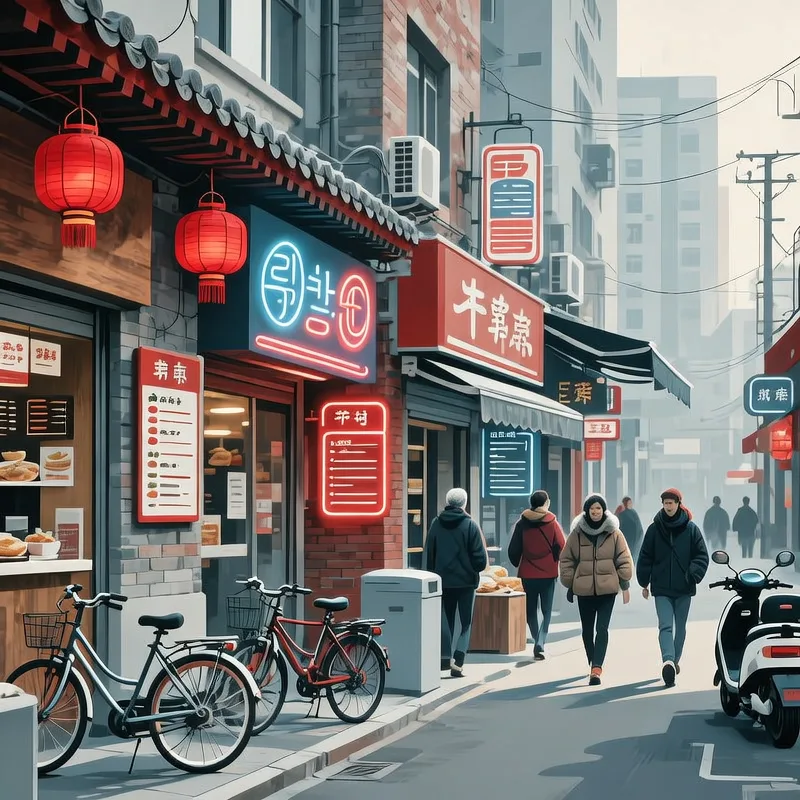
    北京望京区街道两旁的韩语商店招牌
    王京的韩文招牌反映了数十年来学生和商人的迁徙。 AI生成的插图 · SinoViz

    语言和写作

    韩语属于朝鲜语族,与该地区其他地区使用的汉语和通古斯语族语言截然不同。韩语字母韩文(Hangul)创制于十五世纪,如今已成为朝鲜语书写汉语的通用文字;汉字(Hanja)则出现在历史文献和一些人名中。延边许多老年居民精通韩语和汉语,而城市出生的年轻人通常在学校和工作场所使用汉语,在家中或社区媒体中使用韩语。韩语报纸、广播和教堂礼拜等活动有助于韩语的传承和发展,一些家庭还会将孩子送到开设韩语课程的学校,这些课程与国家课程并行。

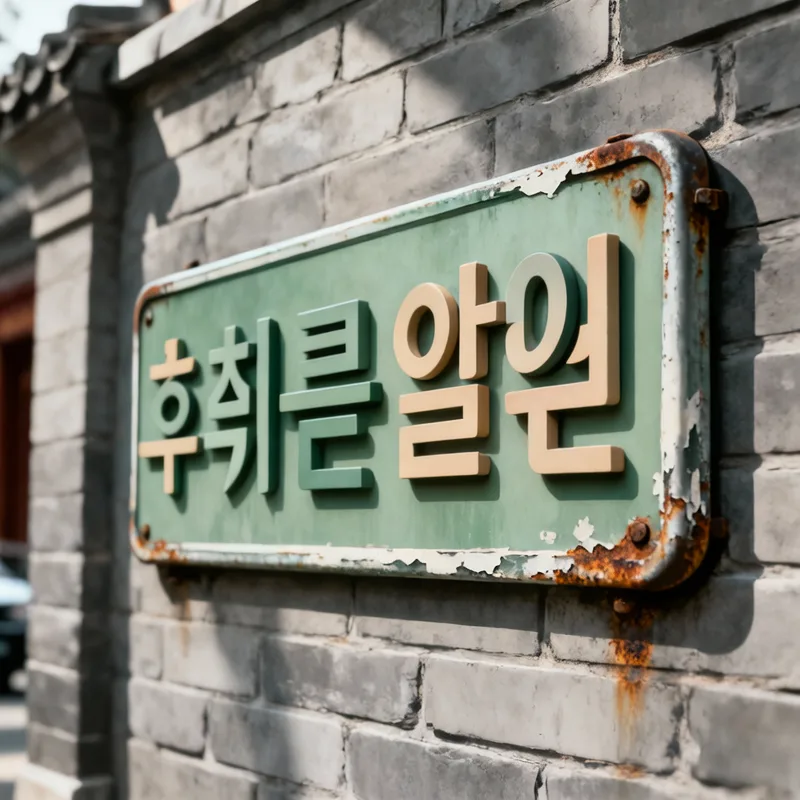
    北京某街区的韩文和中文双语路牌
    两种书写系统标志着许多韩裔华人家庭的日常双语使用。 AI生成的插图 · SinoViz

    食物和家庭

    韩国饮食文化是韩国社区生活中最显而易见的组成部分之一。泡菜是用腌制发酵的蔬菜制成的,秋季大量制作,制作和分享泡菜的习俗已被联合国教科文组织列为韩国非物质文化遗产。日常餐食包括米饭、汤、拌饭(拌有蔬菜和辣椒酱)、烤肉和冷面(荞麦冷面)。传统房屋使用地暖(ondol),这是一种通过地暖加热睡垫的系统,一些乡村房屋至今仍保留着韩屋的矮桌和席地而坐的布局。在北京,公寓式住宅改变了人们的居住环境,但饮食文化和围坐一桌的习惯依然保留了下来。

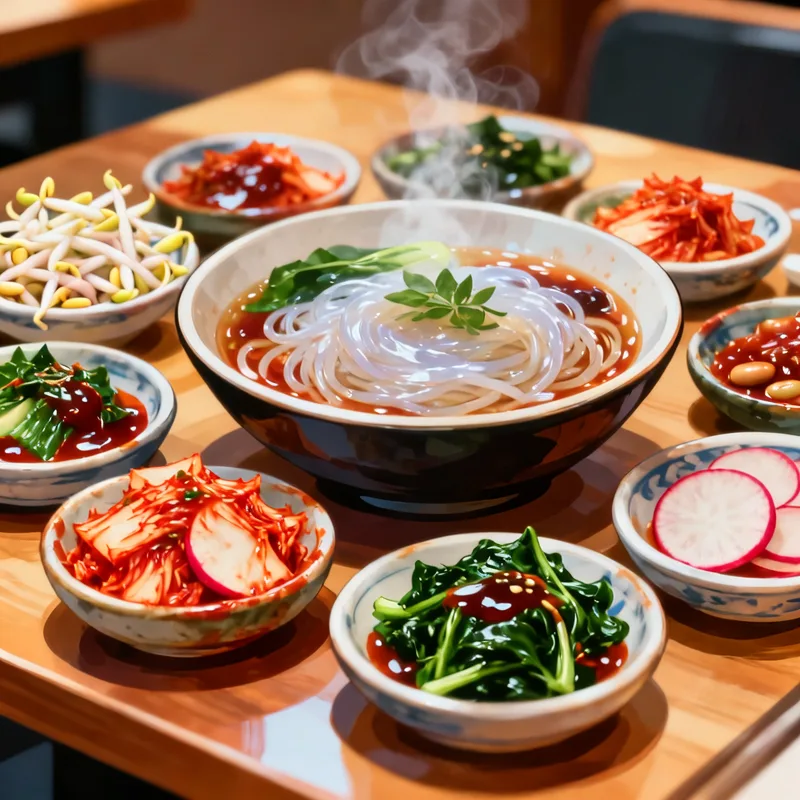
    餐厅餐桌上摆放着各式各样的韩式小菜和冷面。
    韩式中餐中常见的特色菜包括共享小菜和凉面。 AI生成的插图 · SinoViz

    节日和社区生活

    两大主要家庭节日分别是春节(农历新年)和中秋节(秋收节)。春节期间,家人们会吃年糕汤(tteokguk),晚辈们会向长辈行正式的鞠躬礼。中秋节则以祭扫祖先坟墓和吃松饼(songpyeon)为标志,松饼是一种包着豆子或芝麻的小年糕。在北京,韩裔华人社区也会聚集在一起举行婚礼、同学聚会和商业活动,韩语仍然是彼此信任和共同交流的语言。他们的社交活动更多地体现在餐馆、旅行社和商店等场所,而非封闭的社区;同一条街道服务着来自不同背景的邻居。

    北京的一个韩国标志牌,与其说是标志着国界,不如说是标志着一种流传下来的家庭习惯。

    资料来源及延伸阅读

    1. 朝鲜语 ——《不列颠百科全书》。
    2. 朝鲜族 — China.org.cn。
    3. 泡菜,制作和分享泡菜 — 联合国教科文组织非物质文化遗产。

    看看它就位

    请跟随此条目前往其所属区域。

    通过地图探索

    请关注此帖

    浏览其他与此标签相同的条目。

    浏览标签
  • 土家族

    生活与民俗

    土家族

    四川东部的山地织工

    土家族是居住在武陵山区的藏缅语系民族,以吊脚楼、织锦和集体舞蹈而闻名。

    部分
    生活与民俗
    地区
    四川
    时代
    跨越时代
    标签
    民族、习俗

    虽然这里将其归入四川地区,但土家族的大部分聚居地位于四川盆地以东的武陵山脉。他们与古代巴国的历史渊源使他们与更广阔的中国西南巴蜀文化世界紧密相连。

    范围和数量

    2010年的人口普查显示,土家族人口约有835万,是中国最大的少数民族之一。他们的主要聚居地分布在湖南、湖北、重庆和贵州交界的武陵山脉,包括湖南的永顺县和龙山县,重庆的石竹县和蓬水县,以及贵州的延河县等地。村落依溪谷和石灰岩山坡而建,地势较高处则分布着梯田和森林。土家族在此被划入四川地区,反映了巴蜀地区与四川盆地及其东部山区之间由来已久的联系,以及近代以来土家族人口的流动;土家族人口最密集的地区并非四川省。

    武陵山林木茂盛的山坡上的吊脚楼
    土家族村落沿溪谷和梯田山坡而建,而非位于平坦的盆地。 AI生成的插图 · SinoViz

    语言与身份

    土家族属于汉藏语系藏缅语族,其亲缘关系通常与纳西语和其他羌语系语言联系在一起。如今,只有少数人,主要集中在湖南西部的一些村庄,能流利地说土家族语;西南官话是该地区大部分地区的日常用语。土家族意为“本地居民”,20世纪50年代的官方认可,为长期与汉族、苗族、侗族等邻近民族交往的土家族群体赋予了一个共同的名称。口述历史保存了古代巴国的记忆,巴国曾统治四川东部部分地区,直至公元前316年秦国征服该地区。

    高脚屋和锦缎

    在陡峭的地形上,土家族建造者会搭建吊脚楼,这种房屋的上层起居空间由木柱支撑,悬挑于下层之上。房屋正面设有带顶的走廊,屋顶倾斜以便于排泄暴雨。室内屏风和窗框上雕刻着花卉和几何图案。土家族最著名的纺织品是西兰卡普,这是一种用腰织机织成的色彩艳丽的锦缎,图案包括花鸟、戏曲人物以及大太画纹样。西兰卡普常用于制作服装、包袋和挂毯,已被列为国家级非物质文化遗产。土家族的饮食中常包括腌肉、熏鱼、糯米糕以及用炒饭和花生拌成的茶汤。

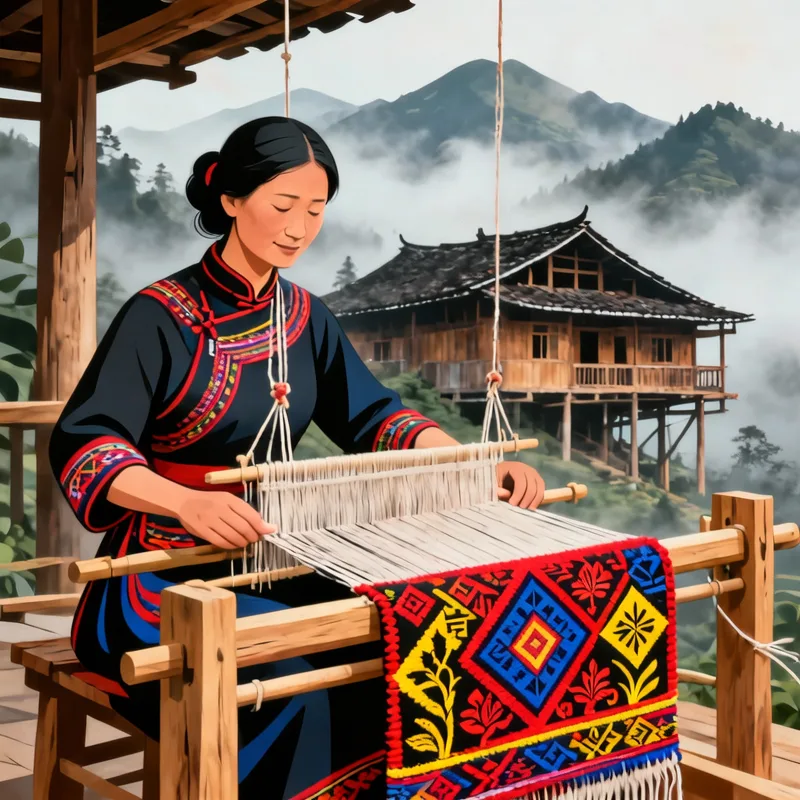
    土家族织锦,以红黑丝线织成几何和花卉图案。
    希兰卡普锦缎是用腰织机织造的,用于服装和家用纺织品。 AI生成的插图 · SinoViz

    挥手致意和新年

    白手舞是由一群舞者伴着鼓锣的节奏挥舞手臂表演的。它在农历新年和示巴节期间于挥手厅举行,人们会在示巴节祭祀祖先和村庄守护神。一些村庄还会表演毛古斯,这是一种戴面具或身着草服的舞蹈,表演内容包括狩猎和耕作场景。另一个独特的习俗是干年,即提前一天庆祝新年,口述传统认为这与祖先准备出征有关。如今,这些表演已在学校和文化中心教授,因此,曾经仅限于村落的仪式如今已被更多人所欣赏。

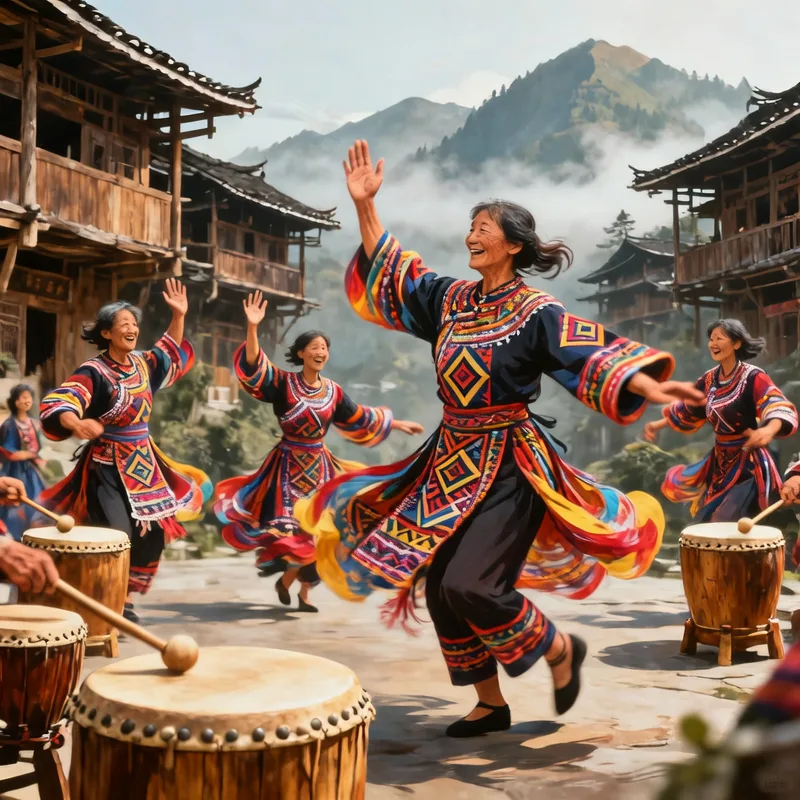
    土家族舞者身着绣花服饰,伴着鼓声表演挥手舞
    挥手舞将村民们聚集在一起,伴随着协调的手臂动作和鼓点节奏。 AI生成的插图 · SinoViz
    在土家族村落里,编织图案和舞蹈动作都承载着家族记忆。

    资料来源及延伸阅读

    1. 土家族 ——《不列颠百科全书》。
    2. 土家族 — China.org.cn。
    3. 中国非物质文化遗产 — 中国ICH网。

    看看它就位

    请跟随此条目前往其所属区域。

    通过地图探索

    请关注此帖

    浏览其他与此标签相同的条目。

    浏览标签
  • The Manchu People

    生活与民俗

    The Manchu People

    Jurchen roots, Qing legacy in Beijing

    The Manchu are a Tungusic-speaking people whose Qing dynasty left a deep imprint on Beijing’s buildings and court culture.

    部分
    生活与民俗
    地区
    北京
    时代
    元明清
    标签
    Ethnic, History

    Manchu identity took shape in the early seventeenth century among Jurchen groups of northeastern China. The Qing dynasty they founded ruled from Beijing between 1644 and 1912, and its material traces remain in the city’s palaces and archives.

    From Jurchen to Qing

    The Manchu descend from Jurchen communities of the northeast, who earlier founded the Jin dynasty of 1115 to 1234. In 1635 the ruler Hong Taiji adopted the name Manchu for his people, and in 1636 he renamed the state Qing. The dynasty took Beijing in 1644 and ruled China until 1912. Today roughly 10.4 million people identify as Manchu according to the 2010 census, making them one of the largest ethnic minorities. Most live in Liaoning, Hebei, Jilin and Heilongjiang, with substantial populations in Beijing and Tianjin. Migration into the capital after 1644 created banner neighbourhoods whose street names and food shops still register the Qing presence.

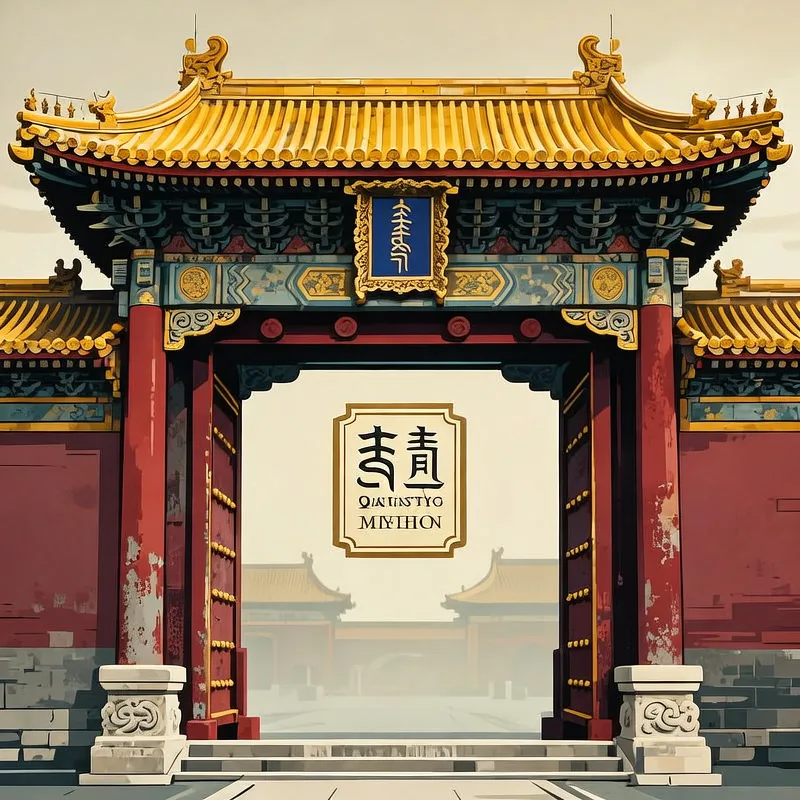
    A bilingual Manchu and Chinese plaque above a gate in Beijing’s Forbidden City
    Palace gates in Beijing carry inscriptions in both Manchu and Chinese. AI生成的插图 · SinoViz

    A written language of archives

    Manchu is a Tungusic language, related to Xibe and more distantly to Evenki. Its written form was devised in the late sixteenth century by adapting the Mongolian script, and it became the language of Qing military records, imperial edicts and family archives. Thousands of these documents survive in Chinese and foreign collections, and they are consulted for the history of the dynasty and its frontier administration. Few people speak Manchu fluently today, mostly in a handful of northeastern villages, and Mandarin is the normal language of daily life. Even so, Manchu words survive in place names, court titles and the vocabulary of Qing institutions.

    Dress, house and food

    Manchu dress shaped the qipao, the close-fitting robe later worn widely by Han Chinese women and known abroad as the cheongsam. Older garments had horse-hoof cuffs that could be folded back over the hands, and women’s formal dress included a tall flag headdress and shoes with a raised flowerpot sole. Under the Qing, men wore a shaved forehead and a braided queue, a rule enforced until the dynasty’s end. A traditional house was arranged as a pocket room with a heated kang platform along the west wall, where honored guests slept and ancestral tablets were kept. A pole in the courtyard was used in offerings that fed crows, an animal associated with founding legends.

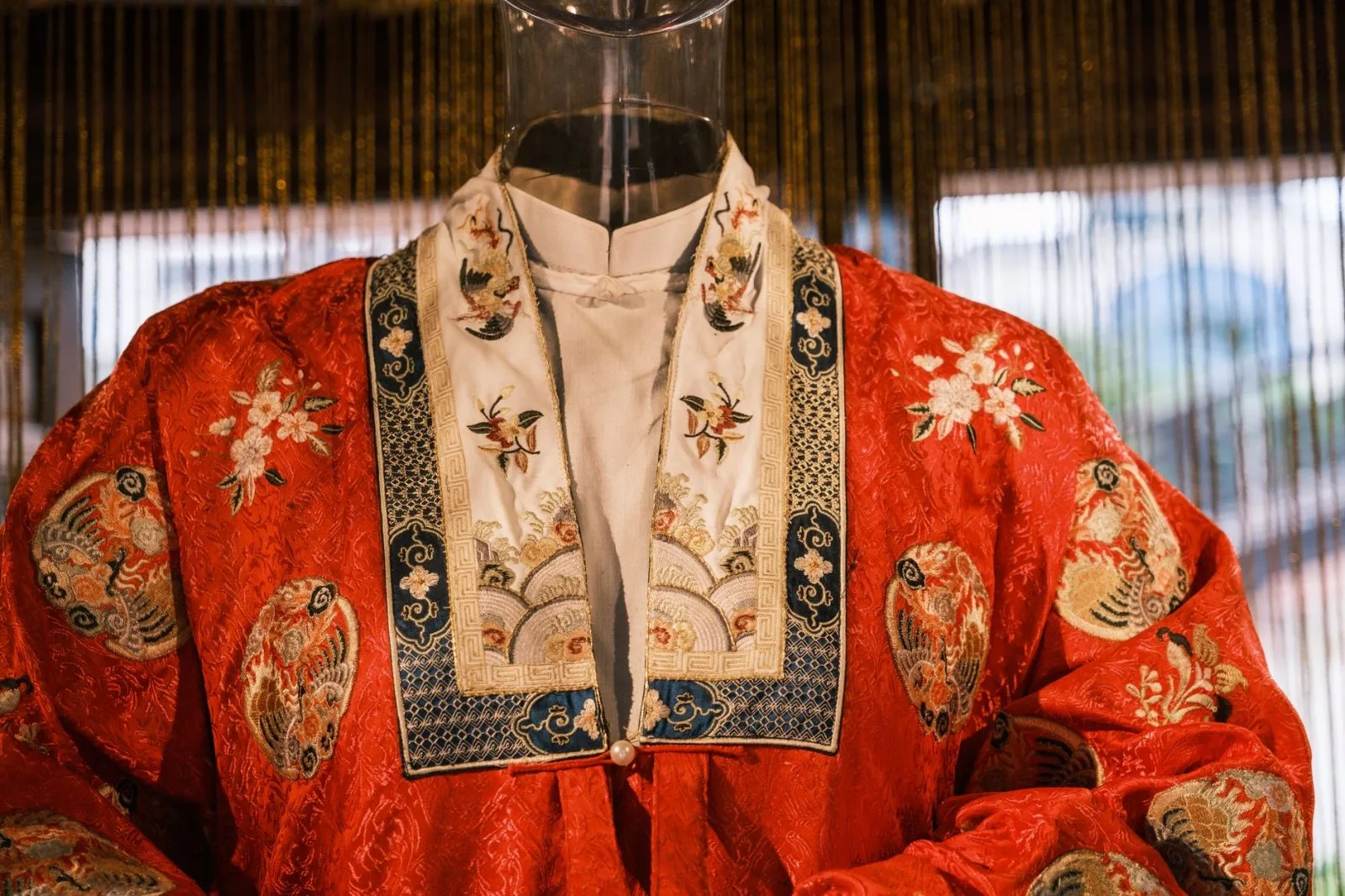
    A Qing dynasty Manchu robe with horse-hoof cuffs and embroidered panels
    Manchu court dress influenced the qipao and the formal clothing of the Qing elite. TBD Tuyên | Pexels License (https://www.pexels.com/license/)

    What remains in Beijing

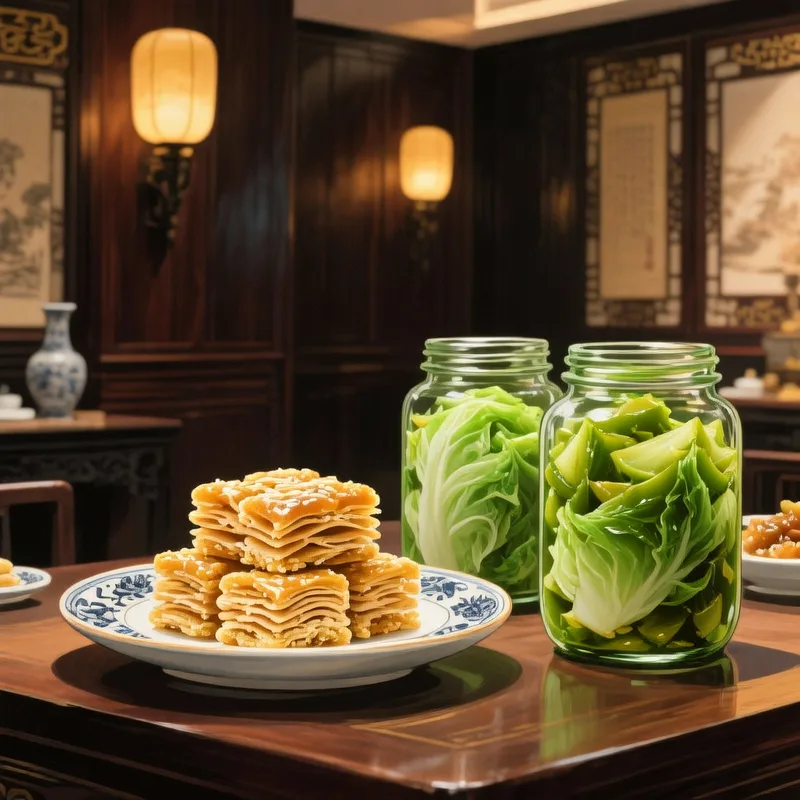
    Manchu cuisine survives in Beijing and the northeast through sachima, a sweet pastry made of fried dough and syrup, and through hot pots of pickled cabbage, pork and blood sausage. The elaborate Manchu-Han banquet is a later dining form assembled from court and regional dishes rather than a single unbroken tradition. Paper-cutting, embroidery and painted snuff bottles are among the crafts associated with Manchu households. In Beijing, the most public inheritance is architectural: the Forbidden City’s bilingual plaques, the layout of former banner quarters, and restaurants and museums that explain Qing court life. These traces make the dynasty legible on an ordinary walk through the old city.

    A Beijing restaurant display of Manchu sachima pastry and pickled cabbage hot pot
    Manchu food traditions remain visible in Beijing and northeastern China. AI生成的插图 · SinoViz
    On Beijing’s palace gates, Manchu and Chinese script still share the same lintel.

    资料来源及延伸阅读

    1. Manchu ——《不列颠百科全书》。
    2. Qing dynasty ——《不列颠百科全书》。
    3. Manchu Ethnic Group — China.org.cn。

    看看它就位

    请跟随此条目前往其所属区域。

    通过地图探索

    请关注此帖

    浏览其他与此标签相同的条目。

    浏览标签
  • 董族

    生活与民俗

    董族

    鼓楼和无伴奏歌曲

    侗族(或称甘族)是中国西南地区讲克拉傣语的村民,以木塔、廊桥和合唱而闻名。

    部分
    生活与民俗
    地区
    广西
    时代
    跨越时代
    标签
    民族、习俗

    侗族村落的居民聚集在鼓楼和歌堂周围,通过耳听学习音乐。他们宏大的歌谣,以无乐器伴奏的方式分声部演唱,于2009年被列入联合国教科文组织非物质文化遗产代表作名录。

    横跨三个省份的村庄

    2010年人口普查记录显示,侗族人口约296万,又称卡姆族。他们大多居住在贵州省东部的乾东南苗侗族自治州,也有部分分布在湖南省西部的辛皇县和广西省北部的三江县(本文所指区域)。侗族聚居在丘陵地带的溪流沿岸,房屋紧密地建在木桩上,底层用于饲养牲畜和储藏物品。村落通常以宗族或几个亲属家庭为中心,村落中心通常建有一座共享的鼓楼。邻近的苗族、瑶族和汉族社群共同影响着该地区的市场和通婚模式。

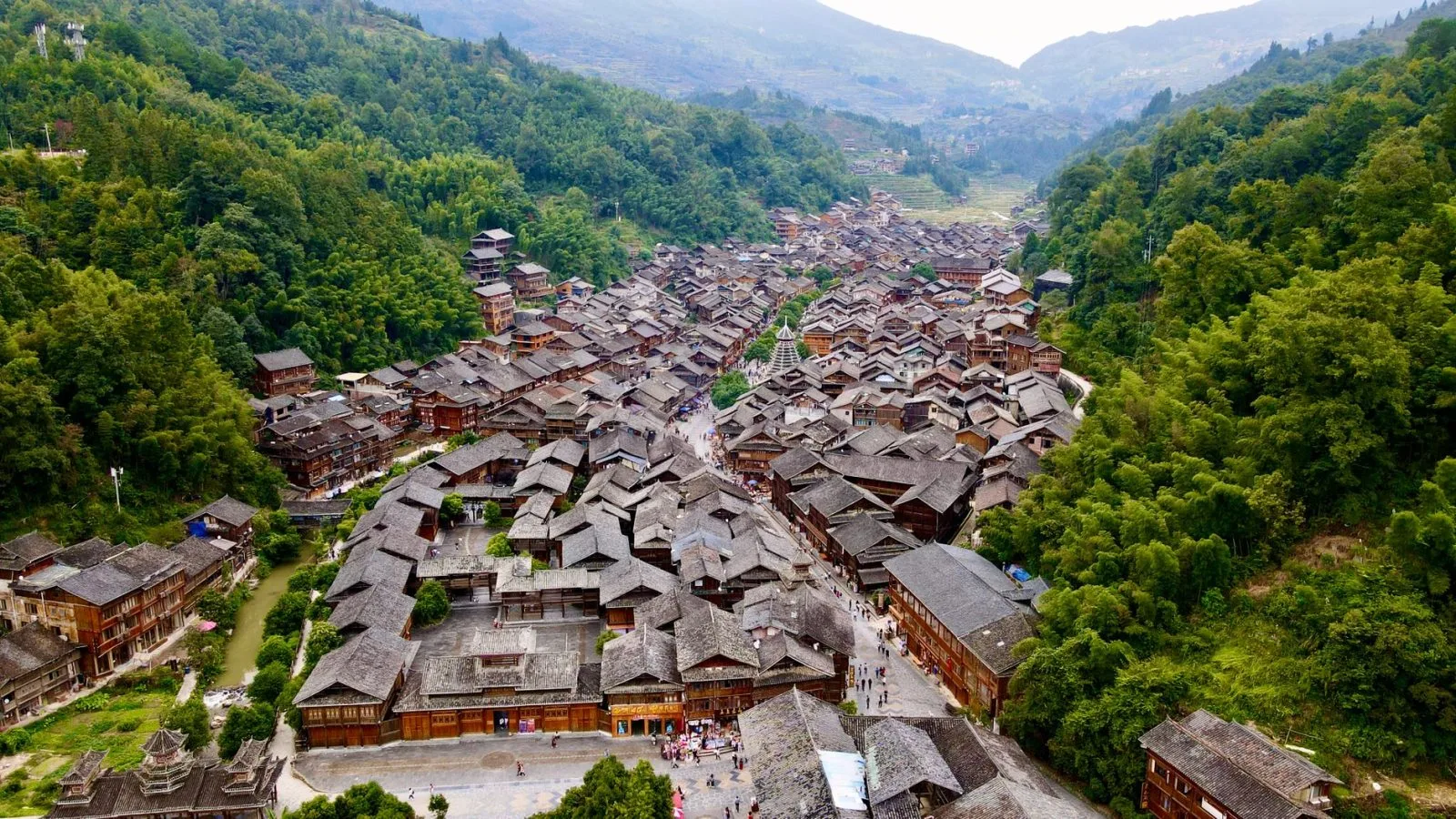
    广西三江,侗族吊脚楼围绕着一座鼓楼而建
    侗族村落建造得非常密集,中心位置建有一座鼓楼。 Collins Zhao | Pexels 许可 (https://www.pexels.com/license/)

    语言和村庄规则

    侗语又称含语,属于侗语族含水语支,侗语族还包括傣语和泰语。侗语有声调,词汇量丰富,用于水稻种植、林业作业和村落仪式。侗语没有古老且广泛使用的文字;官方记录使用汉字,如今罗马拼音也用于出版词典和歌谣。村落生活长期以来由被称为“傣”的契约规范,这些契约涉及土地使用、婚姻和纠纷解决等事宜,并在集会上宣读。长者和民选首领代表村落发言,而歌堂和鼓楼则是年轻人学习曲目和规章制度的场所。

    塔楼和廊桥

    Dong timber building is famous for two structures. The drum tower rises above the rooftops as a layered pagoda with projecting eaves, built from joined timbers and used for meetings, signals and festival gatherings. The wind and rain bridge is a covered crossing with a tiled roof, benches along its length and one or more pavilion towers. The Chengyang Yongji Bridge in Sanjiang, built in the early twentieth century, is a well-known example of this bridge type. Both structures are assembled by local carpenters using mortise and tenon joints rather than metal fasteners, and whole villages contribute labour and timber when one is raised or repaired.

    A covered Dong wind and rain bridge with pagoda towers spanning a stream in Guangxi
    Covered bridges provide shelter, seating and a village landmark in one structure. AI生成的插图 · SinoViz

    Grand song and daily food

    The Kam grand song, or dongge, is unaccompanied polyphonic singing led by high voices and answered by a lower drone from the group. It is learned in song halls, where young people sit around a fireplace and rehearse through the winter, and it is performed at weddings, festivals and visits between villages. Dong New Year falls in the eleventh lunar month in many places, with drum tower gatherings and, in some areas, bullfighting. Daily food includes fermented sour fish packed with rice, sour soup, glutinous rice and you cha, a tea whisked with fried rice, peanuts and herbs. These dishes suit a wet upland climate where preservation and shared heating matter.

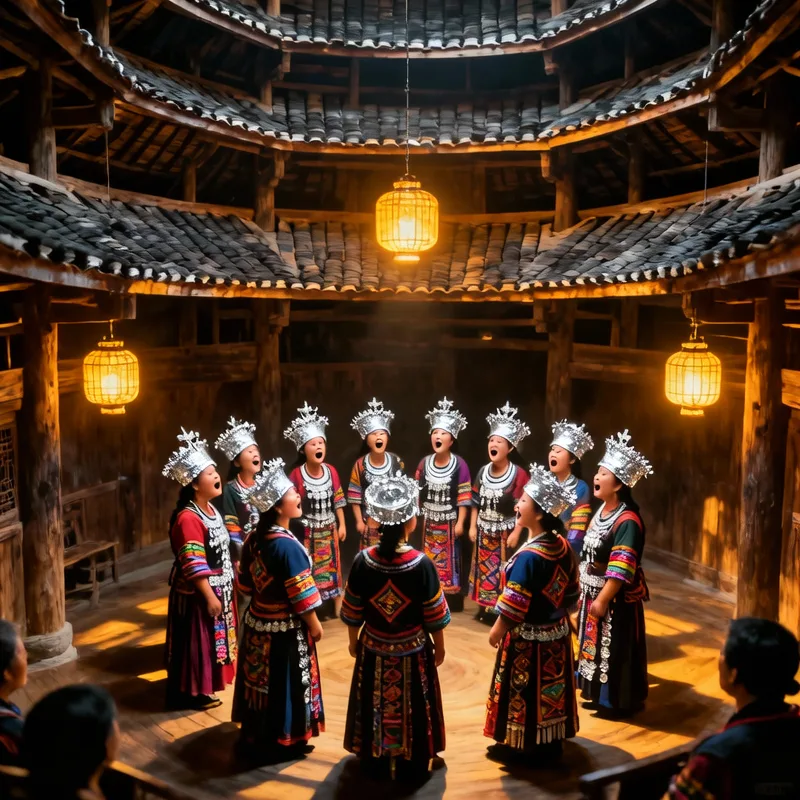
    Dong singers in a village song hall performing unaccompanied part-singing
    The grand song is learned in song halls and performed at communal gatherings. AI生成的插图 · SinoViz
    In a Dong village, the drum tower is both a landmark and an invitation to gather.

    资料来源及延伸阅读

    1. Kam grand song of the Dong ethnic group — 联合国教科文组织非物质文化遗产。
    2. Dong ——《不列颠百科全书》。
    3. Dong Ethnic Group — China.org.cn。

    看看它就位

    请跟随此条目前往其所属区域。

    通过地图探索

    请关注此帖

    浏览其他与此标签相同的条目。

    浏览标签
  • The Dai People

    生活与民俗

    The Dai People

    Tai-speaking communities of southern Yunnan

    The Dai are Tai-speaking Buddhist communities whose villages, temples and water festivals shape the river valleys of southern Yunnan.

    部分
    生活与民俗
    地区
    云南
    时代
    跨越时代
    标签
    民族、习俗

    In the lowlands of Xishuangbanna and Dehong, Dai villages sit beside rice fields and Buddhist monasteries. Their language belongs to the Tai branch of the Kra-Dai family, and their festivals follow a calendar shared with communities across mainland Southeast Asia.

    Where the valleys are

    About 1.16 million Dai people were counted in China’s 2010 census. Most live in the lowlands of southern and western Yunnan, especially the Xishuangbanna Dai Autonomous Prefecture along the Lancang (Mekong) River and the Dehong Dai and Jingpo Autonomous Prefecture near the Myanmar border. Smaller communities extend through Lincang, Pu’er and Honghe. Settlement follows warm river valleys where irrigated rice can be grown year-round, rather than the cooler surrounding hills. This lowland orientation has kept Dai villages in close contact with Shan, Thai and Lao communities across the borders, and it explains why local architecture, food and festival calendars have much in common with mainland Southeast Asia.

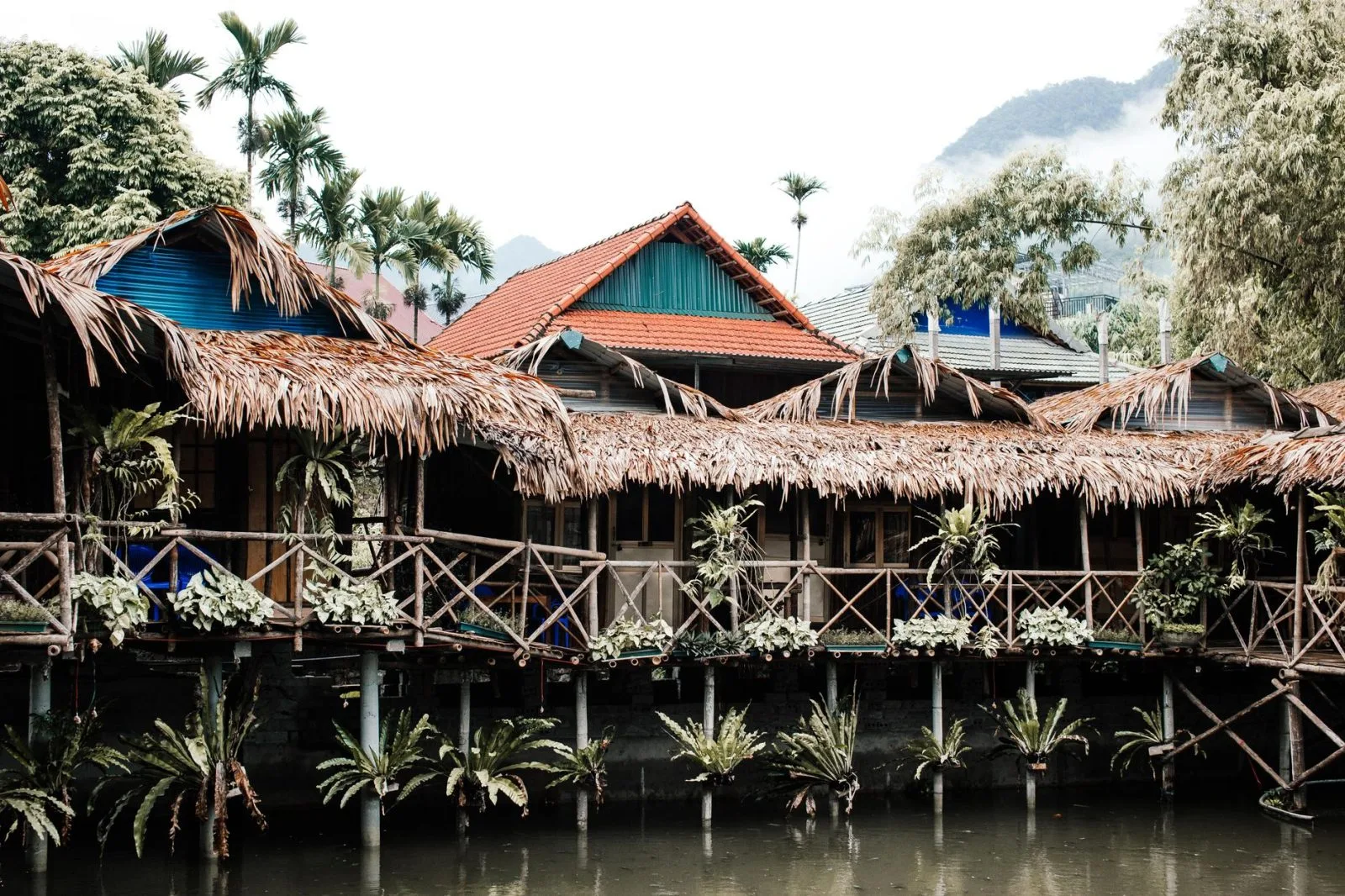
    Dai village houses with steep roofs beside irrigated rice fields in Xishuangbanna, Yunnan
    Villages follow the warm river valleys where rice can be grown through the year. Rachel Claire | Pexels License (https://www.pexels.com/license/)

    Language, script and the wat

    Dai belongs to the Tai branch of the Kra-Dai language family, the same broad family that includes Thai and Lao. Three writing traditions are used in Yunnan: the Xishuangbanna script, the Dehong script and a variant used around Jinping. All derive from older Tai writing systems and were once maintained mainly through monastery education. Theravada Buddhism reached Dai communities through trade and pilgrimage routes over several centuries, and a local wat, or monastery, became the centre of village literacy and ceremony. Boys traditionally spent part of their youth as novices, learning to read scripture and recite chants. Gilded stupas and timber temples with sloping roofs remain the most visible landmarks in the landscape.

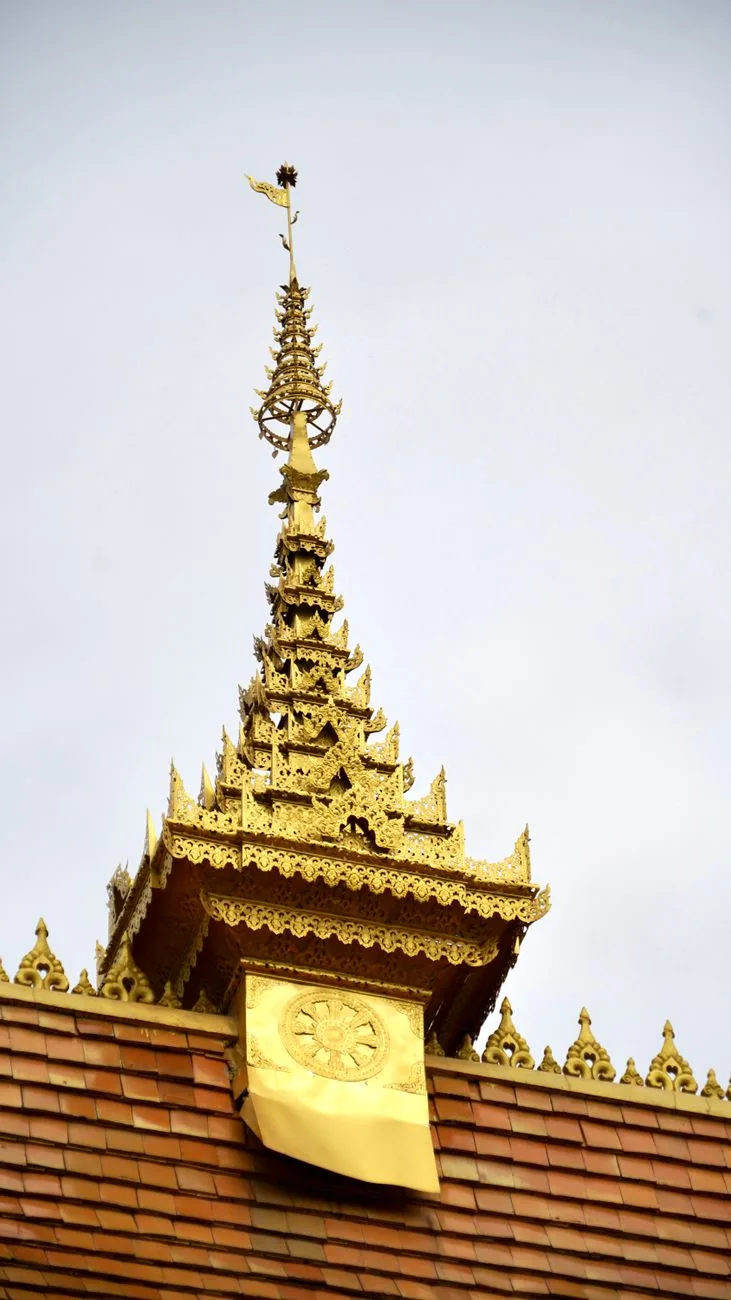
    A Dai Buddhist temple with a gilded spire and carved timber eaves in Xishuangbanna
    The local wat has long been a centre of reading, ordination and village ceremony. Eric Feng | Pexels License (https://www.pexels.com/license/)

    House, cloth and daily food

    A traditional Dai house stands on timber or bamboo posts, with the living floor lifted above the ground and a steep roof that sheds heavy monsoon rain. An open veranda serves as a work and sitting space, while the area beneath the house is used for storage and livestock. Household weaving produces cotton and silk cloth, and Dai brocade is known for peacock, elephant and geometric motifs worked in bright threads. Silver ornaments, betel nut and lacquered trays appear in daily and ceremonial exchange. Meals centre on glutinous rice, freshwater fish, sour bamboo shoots and chilli dips, often wrapped in banana leaves. Tea gardens around Xishuangbanna and Pu’er add another crop with a long regional history.

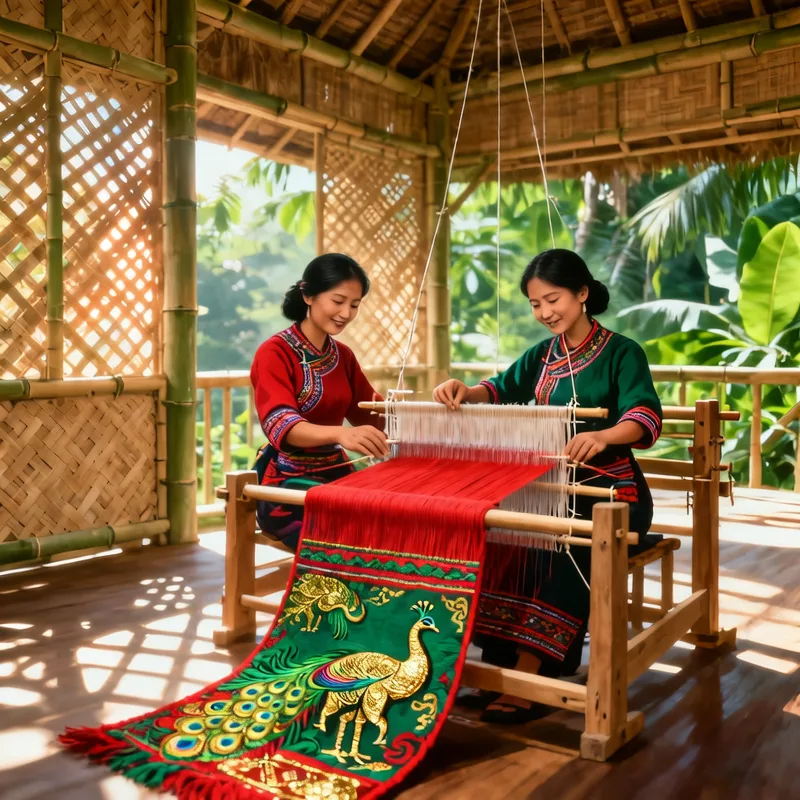
    A Dai weaver working on a backstrap loom beside a stilted wooden house
    Brocade, silverwork and betel nut are part of everyday household life. AI生成的插图 · SinoViz

    The Water Festival

    The Dai new year falls in mid-April and is celebrated as the Water Festival, known locally as Songkran. Water is poured or sprinkled over family, neighbours and visitors as a wish for a clean and abundant year, and the day also includes visits to the monastery, the building of small sand pagodas and boat races on the rivers. In the evenings, peacock and elephant dances are performed with slow, controlled hand movements and bright costumes. These dances are also taught in cultural troupes and schools, alongside Dai opera and folk storytelling. Today the festival draws visitors from other parts of China, while monasteries and village craft workers continue to maintain the language and techniques behind it.

    In the Dai lowlands, a monastery, a rice field and a loom keep the same calendar.

    资料来源及延伸阅读

    1. Dai ——《不列颠百科全书》。
    2. Dai Ethnic Group — China.org.cn。
    看看它就位

    请跟随此条目前往其所属区域。

    通过地图探索

    请关注此帖

    浏览其他与此标签相同的条目。

    浏览标签
  • 中国剪纸

    生活与民俗

    中国剪纸

    Red paper, folded and cut

    A pair of scissors and a sheet of red paper can carry a whole vocabulary of wishes.

    部分
    生活与民俗
    地区
    陕西
    时代
    跨越时代
    标签
    Customs, Ethnic

    Chinese paper cutting, or jianzhi, turns a flat sheet into a pattern of figures, flowers, and characters. Practised for centuries in rural households, it still marks weddings and New Year, and Shaanxi’s bold window designs are among its most recognisable regional forms.

    Origins and Technique

    Paper reached China in the Eastern Han period, and the first cuts followed once the material was cheap enough to experiment with. Early examples were used as offerings and as templates for embroidery; a surviving cut-paper find from the sixth century shows that the technique was established by then. Two methods developed. Scissors cut a folded sheet, creating a mirror-symmetric design with a single sequence of snips. A knife held upright cuts a stack of paper against a wax board, a method suited to finer lines and repeated motifs. Artists draw no outline for many traditional patterns; they cut directly, keeping the connecting threads that stop the design falling apart. The finished piece is light, cheap, and easy to paste on a window or door.

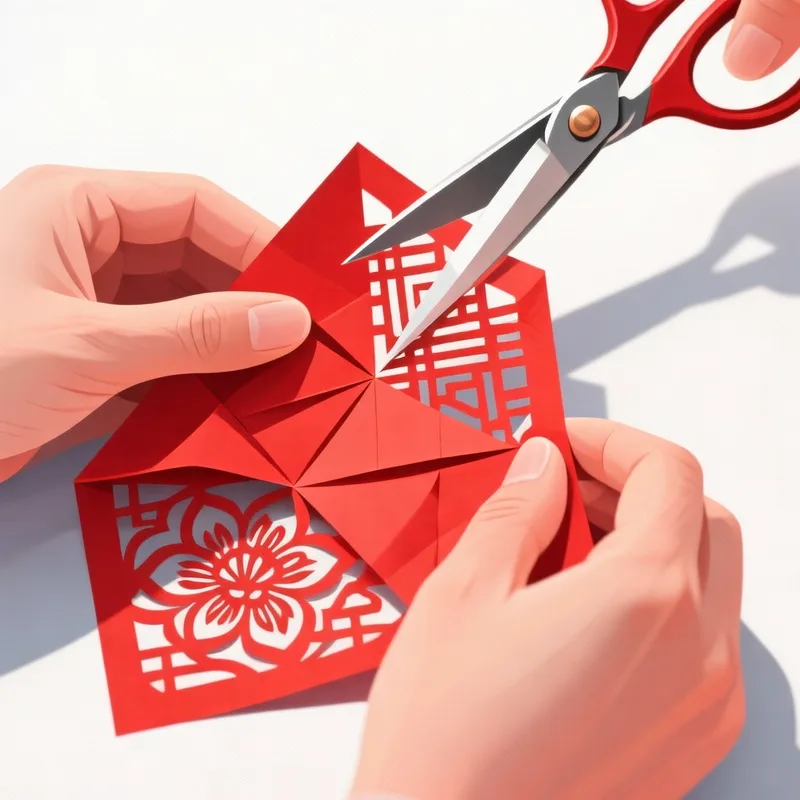
    Hands cutting a red paper design with small scissors
    Folding the paper before cutting produces the symmetrical patterns typical of window decorations. AI生成的插图 · SinoViz

    A Language of Motifs

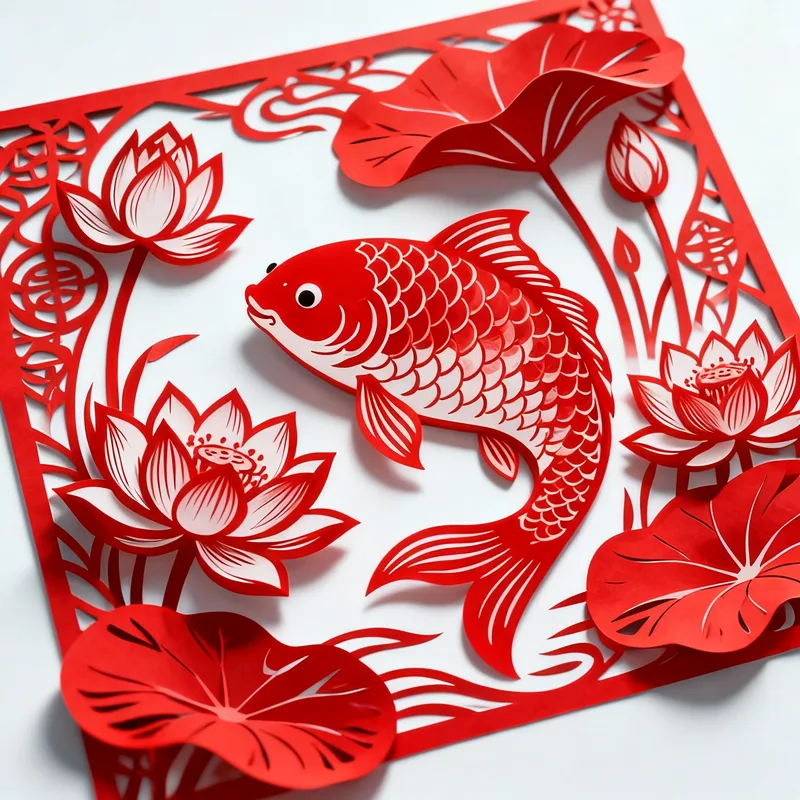
    The images are a system of visual puns. A fish means surplus, because the word for fish sounds like the word for abundance; lotus suggests purity. A pomegranate stands for many children, a bat for good fortune, and a peach for long life. The character fu, meaning good fortune, appears alone or inside a circular design, while shuangxi, double happiness, belongs to weddings. Zodiac animals, opera figures, and scenes of children at play all circulate as patterns. Colour matters as much as shape: red is the default for celebration, while white paper cuts are rarer and tied to older ritual uses. In a Shaanxi village window, the arrangement of these motifs tells a visitor what the household is hoping for in the coming year.

    Red paper-cut window decoration showing a fish and lotus flowers
    Fish and lotus form a rebus for abundance; motifs are chosen for the wish they carry. AI生成的插图 · SinoViz

    Shaanxi Windows

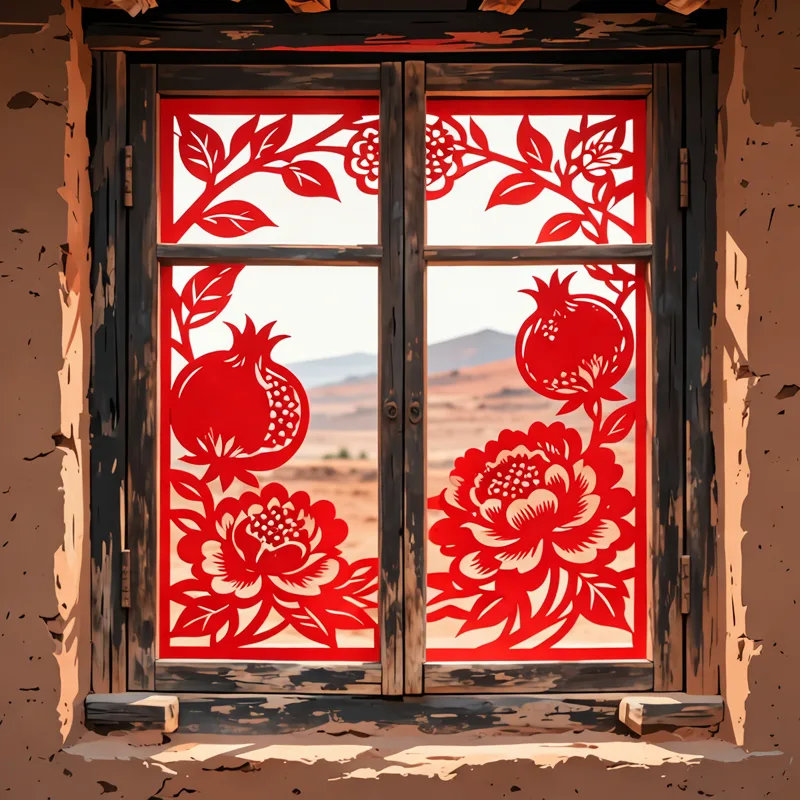
    Paper cutting in Shaanxi is associated with rural life on the Loess Plateau, especially around Yan’an. Windows there were once small and deeply set, so designs favoured bold silhouettes and broad, connected shapes that could be read from across a room. Local artists talk of cutting with the heart rather than measuring with a ruler, and compositions often show figures, animals, and plants together in a single dense frame. Window grilles, or chuanghua, are pasted at New Year and replaced when they fade. Wedding cuts carry double happiness characters and images of fertility; birthday cuts use peaches and cranes. Women were the main practitioners in many villages, passing patterns from mother to daughter, and village fairs still sell sheets cut in the old local style.

    A Shaanxi farmhouse window with bold red paper cutouts
    Shaanxi cuts favour strong silhouettes and broad shapes, designed to read from a distance. AI生成的插图 · SinoViz

    Recognition and Travel

    Chinese paper-cut was inscribed on UNESCO’s Representative List of the Intangible Cultural Heritage of Humanity in 2009, a recognition that named both the craft and the communities that sustain it. The listing does not freeze the art. Contemporary artists cut portraits, cityscapes, and political images with the same tools, and paper cuts appear in graphic design and animation. For a visitor, the appeal is that the work is easy to find and easy to try. Museum shops sell small sheets, market stalls sell single motifs, and workshops in Xi’an and rural Shaanxi teach the basic fold-and-cut method in an hour. Bring a sharp pair of scissors and practice on cheap red paper before attempting a detailed pattern. A finished cut pasted on glass changes with the light.

    The pattern holds together because the cutter leaves just enough paper between the lines.

    资料来源及延伸阅读

    1. Chinese paper-cut — 联合国教科文组织非物质文化遗产。
    2. 中国剪纸 — China Highlights.
    3. Paper cutting ——《不列颠百科全书》。

    看看它就位

    请跟随此条目前往其所属区域。

    通过地图探索

    请关注此帖

    浏览其他与此标签相同的条目。

    浏览标签
  • 苗银器

    生活与民俗

    苗银器

    Ornament, Memory, and Festival Dress

    Miao silver ornaments carry family history and local identity in festival dress across southwest China.

    部分
    生活与民俗
    地区
    云南
    时代
    跨越时代
    标签
    Customs, Ethnic, Scenic Sites

    Miao silverwork is a family of adornments—headdresses, collars, earrings, and bracelets—made by Miao communities in Guizhou, Yunnan, and neighbouring regions. The pieces are worn most visibly at festivals and weddings.

    A Distributed Craft Tradition

    Miao communities live across Guizhou, Yunnan, Guangxi, Sichuan, and Southeast Asia, and silverwork varies by locality. In Yunnan, Miao villages around Wenshan and Honghe maintain styles that differ from the better-known Guizhou counties of Xijiang and Kaili. Ornaments are made by specialised silversmiths who work in small workshops, often serving several villages. Designs are learned through apprenticeship rather than written patterns: a young smith repeats forms copied from older pieces and festival dress. Motifs may draw on local birds, flowers, insects, and coins, though their meanings are not fixed. Families accumulate ornaments over generations, and a daughter’s festival headdress may represent years of saving.

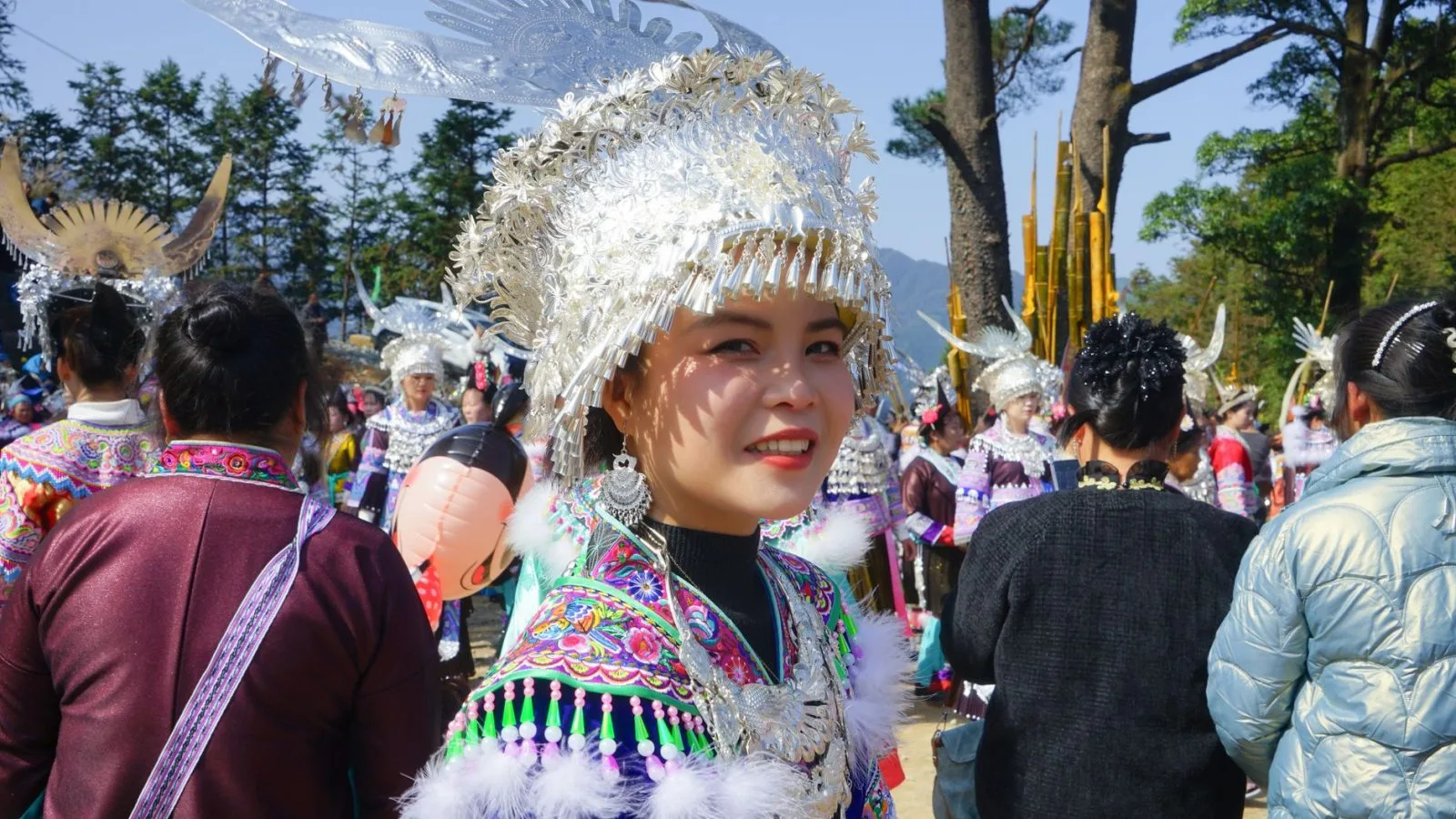
    A Miao headdress with silver horns, plaques, and hanging ornaments at a festival
    Headdresses combine family heirlooms with pieces made for a specific occasion. Jaqor Q.I. | Pexels License (https://www.pexels.com/license/)

    Sheet, Wire, and Repoussé

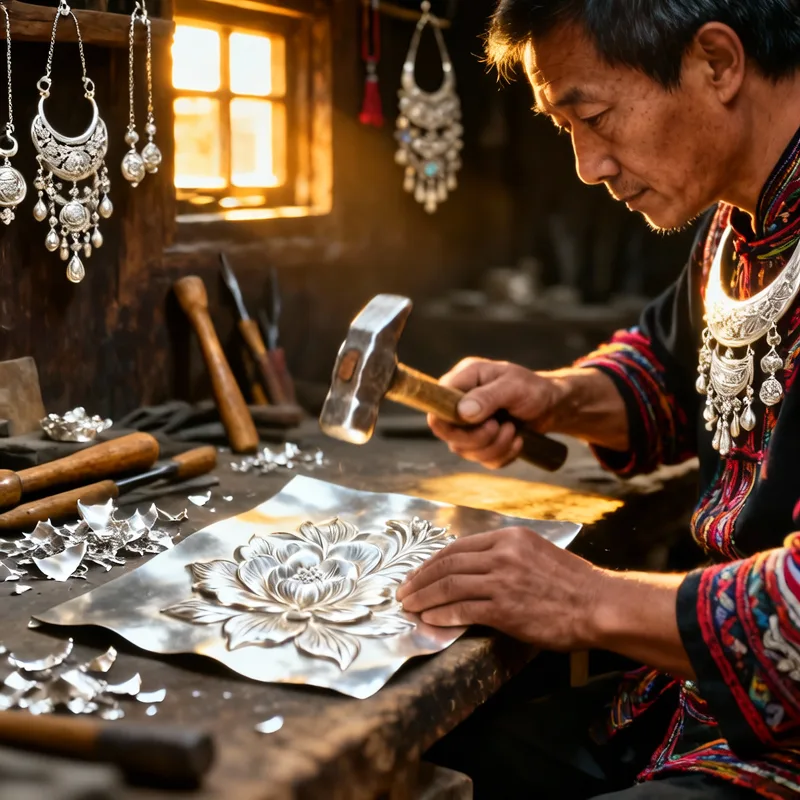
    Much Miao silverwork begins with sheet silver and wire. The smith hammers ingots into thin sheets, cuts strips, and raises patterns from the reverse with repoussé, a technique of punching and chasing to form relief. Horsehair-thin wires are twisted and soldered into filigree, then built into openwork wings, horns, and floral sprays. A large headdress may combine a hammered band, dangling chains, repoussé plaques, and rows of tiny bells that move when the wearer turns. Silver is valued for its colour, workability, and traditional association with protection and prosperity. Many ornaments are hollow to reduce weight, since a full ceremonial headdress can be heavy enough to limit long wear.

    A Miao silversmith hammering a thin silver sheet into a raised floral plaque
    Repoussé raises the design from the back of a thin silver sheet. AI生成的插图 · SinoViz

    Festival Wear and Social Meaning

    Silver ornaments are read as part of an entire costume, not as isolated jewellery. A Miao woman’s festival dress may include a pleated skirt, embroidered jacket, woven belt, and a silver collar shaped like a crescent or a pair of wings. In some communities, the number and form of earrings or neck rings indicate village affiliation or marital status. During the Lunar New Year, harvest celebrations, and the Miao New Year in some areas, women and girls wear family sets while groups sing, dance, and process between villages. The ornaments catch light during movement, making dress a visual part of the performance. Men may wear silver buttons, chains, or small pendants with less ceremonial weight.

    • Repoussé plaques raised from thin silver sheet
    • Twisted wire and openwork filigree
    • Headdresses with horns, chains, and bells
    • Costumes worn for New Year and wedding rituals
    Women in embroidered Miao festival dress wearing heavy silver collars and earrings
    Ornaments are worn with embroidery and weaving as one costume system. Jaqor Q.I. | Pexels License (https://www.pexels.com/license/)

    Markets, Tourism, and Continuity

    Silverwork circulates through village workshops, regional markets, and tourism. Visitors to Miao villages in Yunnan and Guizhou can watch smiths shaping small pieces, though the most important heirlooms are usually not for sale. Reproductions sold as souvenirs range from careful miniatures to inexpensive plated metal, so asking whether a piece is solid silver matters. Museums and cultural centres document older headdresses and collars, but the living context remains local dress. Some communities have revived festival costumes and taught silversmithing to younger people, while migration and wage work change who has time to make and wear them. The craft’s future depends less on novelty than on continued occasions to use it.

    A Miao headdress is worn jewellery and a portable archive of family work at the same time.

    资料来源及延伸阅读

    1. Miao people ——《不列颠百科全书》。
    2. Chinese silver jewellery — Victoria and Albert Museum.
    3. Miao ethnic culture — China Highlights.

    看看它就位

    请跟随此条目前往其所属区域。

    通过地图探索

    请关注此帖

    浏览其他与此标签相同的条目。

    浏览标签
  • 易

    族裔社区

    易

    Fire, mountains and an ancient script

    Yi communities live across the mountains of southwest China. The Nuosu branch preserves a distinctive script and ritual tradition, while Torch Festival has become a widely recognised Yi celebration.

    社区
    易
    Population
    Around 9 million; Sichuan, Yunnan, Guizhou, Guangxi
    语言
    Yi languages; Nuosu script
    01

    Where the community lives

    Yi people live mainly in Sichuan, Yunnan and Guizhou, often in mountainous areas. Liangshan in Sichuan is a major centre of Nuosu culture.
    02

    Language and belief

    Yi languages belong to the Tibeto-Burman family. The Nuosu syllabic script is a rare living indigenous writing system in China.
    03

    Festivals and daily life

    Torch Festival features bonfires, dancing and gatherings. Buckwheat, potatoes, cured meat and hearty mountain food reflect local agriculture.
    04

    Crafts and heritage

    Embroidery, lacquerware, silver ornaments and ritual texts preserve Yi aesthetic traditions. Epic storytelling and ritual specialists carry historical memory.

    参见该地区

    Open the map to read the land connected to this community.

    通过地图探索
  • 庄

    族裔社区

    庄

    梯田和歌谣节

    The Zhuang are China’s largest minority ethnic group. Their culture is closely tied to Guangxi’s karst hills, rice farming, song festivals and distinctive bronze drum traditions.

    社区
    庄
    Population
    Around 19 million, mostly in Guangxi
    语言
    Zhuang (Tai-Kadai)
    01

    Where the community lives

    Most Zhuang people live in Guangxi, with communities also in Yunnan, Guangdong and Guizhou. Karst valleys and river plains shape settlement and agriculture.
    02

    Language and tradition

    Zhuang belongs to the Tai-Kadai family. Folk songs, especially antiphonal singing, are central to social life and courtship.
    03

    Festivals and daily life

    The Sanyuesan festival features singing, coloured eggs and gatherings. Rice, river fish and sour flavours appear in local food traditions.
    04

    Crafts and heritage

    Bronze drums, embroidered balls and indigo-dyed textiles are important cultural symbols. Dong and Zhuang communities also share drum tower and bridge-building traditions in some areas.

    参见该地区

    Open the map to read the land connected to this community.

    通过地图探索