Topic: Tea Horse Road

  • Văn hóa trà

    Cuộc sống & Văn hóa dân gian

    Văn hóa trà

    Leaf, Water, and the Tea Horse Road

    Tea moved from medicinal leaf to daily drink, carrying Fujian methods toward Tibet and the sea.

    Phần
    Cuộc sống & Văn hóa dân gian
    Vùng đất
    Phúc Kiến
    Kỷ nguyên
    Xuyên suốt các thời đại
    Thẻ
    Customs, Food, Geography

    Tea culture is a history of distilled technique: when to pick, how to wither, how to roll, and how to heat a leaf so that it keeps its character. Fujian became a laboratory for these methods, sending compressed cakes west toward Tibet and scented leaves out through coastal ports.

    From Medicine to Daily Drink

    Tea entered Chinese writing as a medicinal and ritual plant long before it became a household drink. Traditions credit the mythical emperor Shen Nong with discovering it, but the earliest firm evidence comes from Han-period tombs, where archaeologists have identified tea leaves among grave goods. By the third century CE, writers described boiling leaves with ginger and onions; the Tang dynasty (618–907) made tea a scholarly and monastic beverage. Lu Yu’s Cha Jing, written around 760–780, codified growing, picking, roasting, and brewing. Tea cakes were toasted, ground to powder, and whisked with hot water, a preparation later carried to Japan by Buddhist monks.
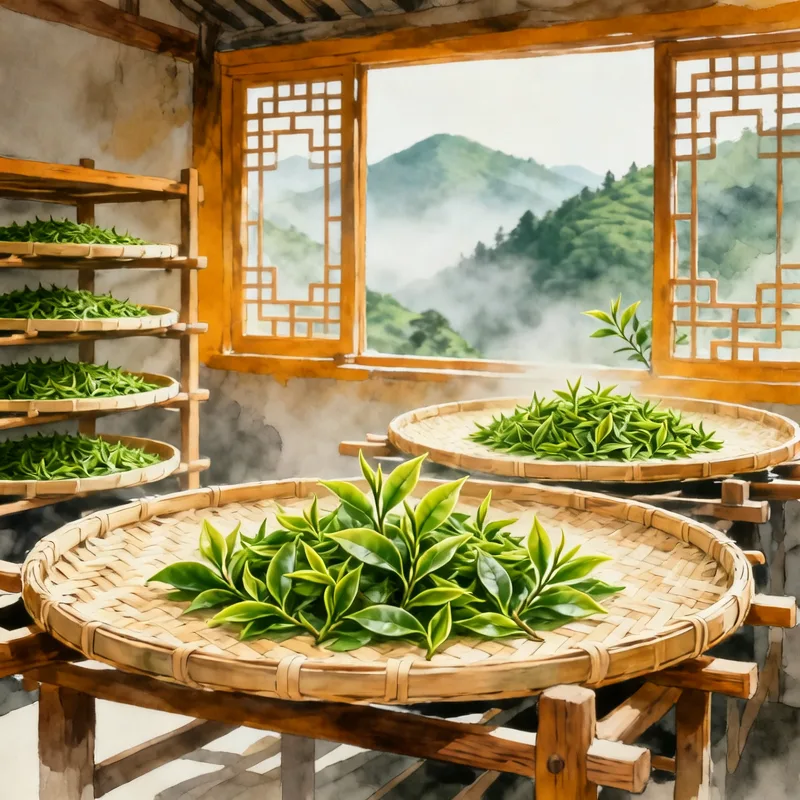
    Fresh tea leaves spread on bamboo trays in a Fujian hillside processing room
    Picking season sets the quality of the leaf before any processing begins. Hình minh họa do AI tạo ra · SinoViz

    Fujian’s Craft of Oxidation

    Fujian’s mountainous counties developed styles that depend on controlled oxidation. Wuyi rock tea, grown in the rocky cliffs of the Wuyi range, is often pan-fired, rolled, and roasted until it develops a mineral, toasted character. Tieguanyin from Anxi is shaped into tight pellets that unfurl in the cup. Lapsang souchong from Tongmu resembles black tea in its oxidation, then dries over pine smoke. White teas such as Fuding’s silver-needle style are simply withered and dried, with little rolling or heating. These techniques are local knowledge: the same species, Camellia sinensis, changes through timing, heat, and handling.
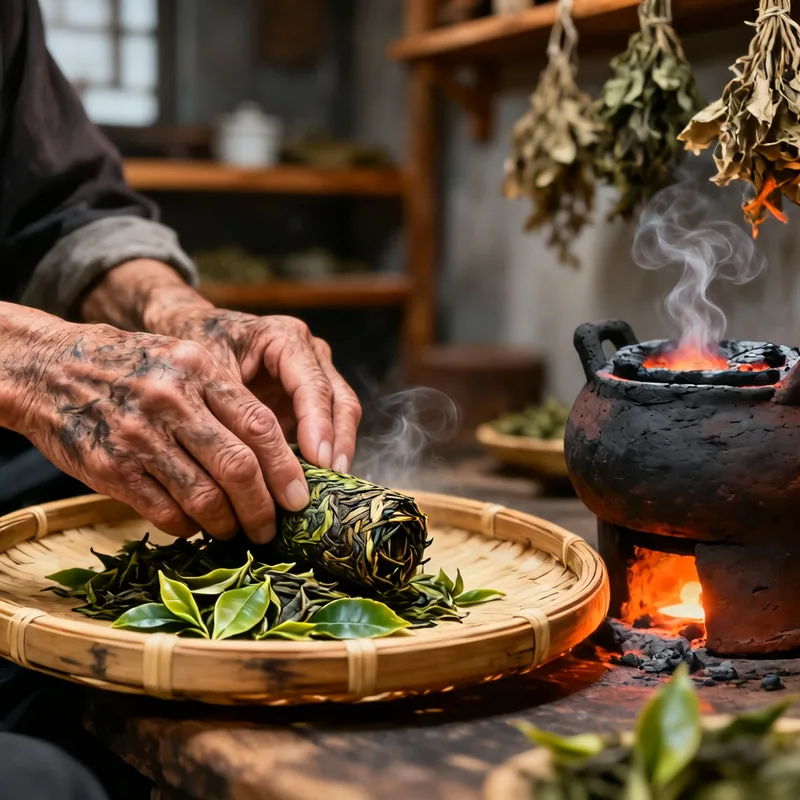
    Tea leaves being rolled by hand on a bamboo tray beside a traditional roasting stove
    Rolling breaks the leaf cells and shapes the flavours that firing will fix. Hình minh họa do AI tạo ra · SinoViz

    The Tea Horse Road West

    From at least the Tang period, compressed tea travelled west from Sichuan and Yunnan toward Tibet, where it provided vitamin-rich drink and a medium of exchange in a diet heavy on barley and meat. The Tea Horse Road was a network of footpaths through mountains, not one road: porters and mule caravans crossed passes between Dali, Lijiang, and Tibetan markets. Under the Song, states traded tea for warhorses at frontier markets. Tea bricks were strapped to pack animals, wrapped in bamboo or paper, and sometimes pressed with straw. In Tibetan households, tea was churned with butter and salt into a fuel-rich drink suited to high altitudes.

    • Green, white, oolong, and black styles defined by oxidation
    • Compressed bricks made for pack transport
    • Tea exchanged for Tibetan horses at frontier markets
    • Butter tea brewed from brick tea in highland homes
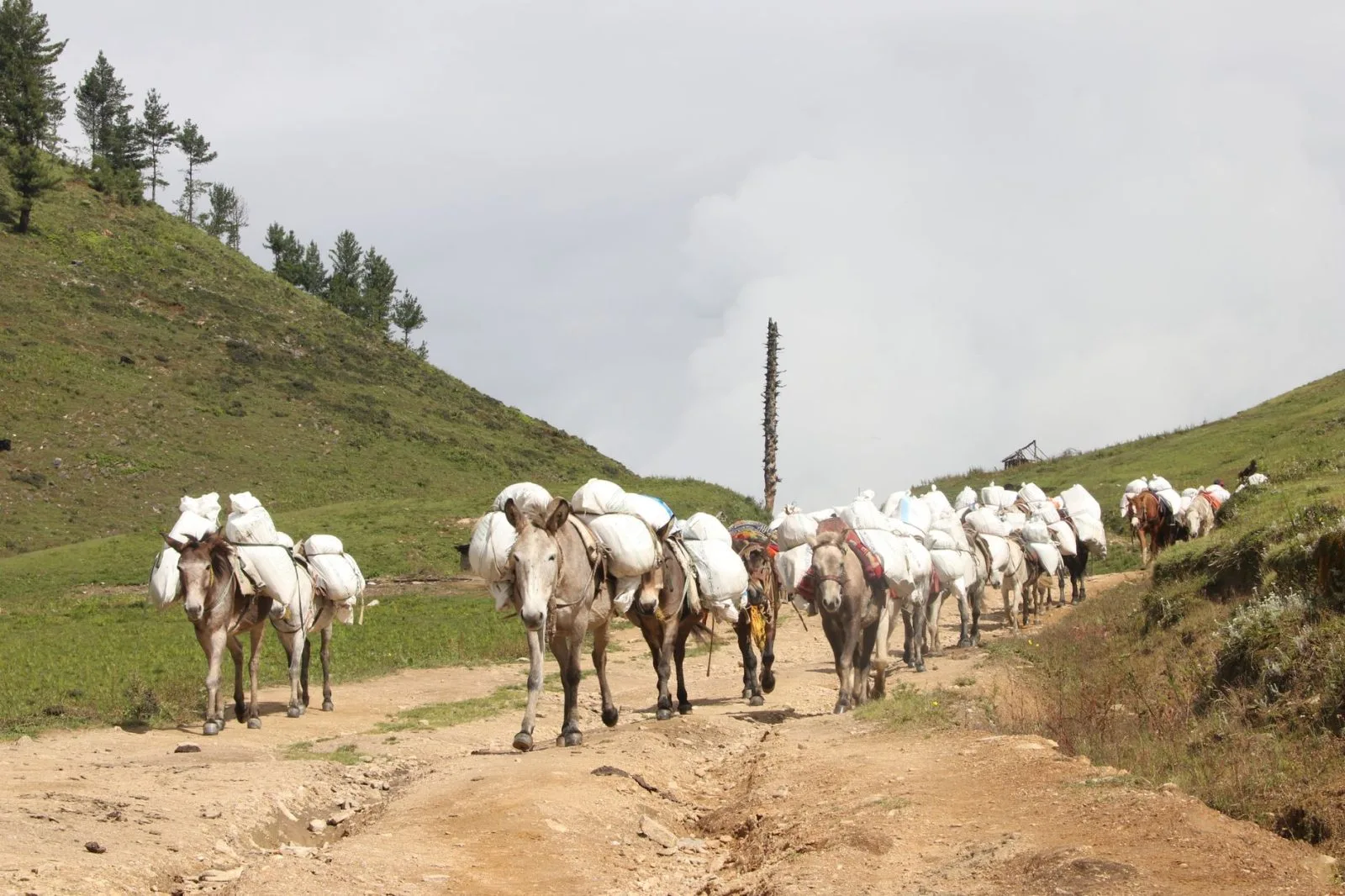
    A string of pack animals carrying bundled tea bricks along a mountain trail in southwest China
    Tea bricks travelled on foot and mule across the mountain passes toward Tibet. Jeevan Mahat | Pexels License (https://www.pexels.com/license/)

    Ports, Cups, and Living Practice

    Maritime trade carried Fujian tea to Southeast Asia and Europe. In the seventeenth century, ships leaving Xiamen and other ports carried leaf tea, porcelain cups, and teapots; by the nineteenth, British demand had made tea a global commodity. The gongfu cha style, associated with Chaozhou and Fujian, uses small vessels, repeated short infusions, and attention to water temperature. A modern tasting may name a harvest season, a mountain, and a roasting method with the precision once reserved for wine. In villages around Wuyi and Anxi, sorting, pan-firing, and roasting still depend on skilled hands, even where machines perform the early steps.

    A leaf becomes tea only when someone decides when to pick it, how long to wither it, and when to stop the heat.

    Nguồn tham khảo & tài liệu đọc thêm

    1. Tea — Bách khoa toàn thư Britannica.
    2. The Classic of Tea — World History Encyclopedia.
    3. Tea Horse Road — Bách khoa toàn thư Britannica.

    Hãy xem nó tại chỗ.

    Hãy theo dõi mục này đến khu vực mà nó thuộc về.

    Khám phá bằng bản đồ

    Hãy theo dõi chủ đề này.

    Xem các bài viết khác có cùng thẻ với bài viết này.

    Duyệt thẻ
  • Phúc Kiến

    Vùng · Bờ biển, thổ lâu và trà

    Phúc Kiến

    Phúc Kiến nằm đối diện Đài Loan qua eo biển và hướng ra biển. Những dãy núi của tỉnh này từng là nơi trú ẩn của các cộng đồng nhà sàn Hakka, trong khi các cảng biển là trung tâm giao thương, buôn bán, di cư và buôn bán trà trên các tuyến đường hàng hải.

    Vùng đất
    Phúc Kiến
    Tọa độ
    26.07°N, 119.30°E
    Nổi tiếng với
    Bờ biển, tulou và trà

    Phong cảnh

    Những ngọn đồi dốc đứng gặp đường bờ biển lởm chởm. Các con sông xẻ những thung lũng ngắn ra biển, tạo thành những bến cảng tự nhiên và cô lập các cộng đồng nội địa, nơi phát triển kiến trúc và phương ngữ đặc trưng.

    Di sản & địa điểm

    • Thổ lâu Phúc Kiến
    • Cổ Lãng Tự
    • Núi Vũ Di
    • Các địa điểm hàng hải Quanzhou

    Văn hóa và đời sống thường nhật

    Phúc Kiến nổi tiếng với trà ô long, hải sản, truyền thống dân tộc Minnan và Hakka, cùng mạng lưới chùa chiền gắn liền với nghề đi biển. Lịch sử của tỉnh này vừa gắn liền với núi non hùng vĩ, vừa hướng ra biển cả.

    Tiếp tục cuộc hành trình

    Hãy kết hợp việc tìm hiểu về vùng đất này với một cuốn cẩm nang du lịch hoặc theo dõi những câu chuyện của nó qua thời gian.

    Khám phá các điểm đến Biên niên sử mở
  • Tibet (Xizang)

    Khu vực · Cao nguyên

    Tây Tạng

    Tây Tạng là một cao nguyên rộng lớn với nhiều tu viện, đèo núi và hồ nước linh thiêng. Phong cảnh và đời sống tôn giáo nơi đây đã định hình nên một nền văn hóa thích nghi với độ cao, ánh sáng và khoảng cách.

    Vùng đất
    Tây Tạng
    Tọa độ
    29,65°N, 91,12°E
    Nổi tiếng với
    Cao nguyên

    Phong cảnh

    Cao nguyên Tây Tạng có độ cao trung bình hơn 4.000 mét. Các sông băng cung cấp nước cho các con sông lớn ở châu Á, trong khi các thung lũng rộng và các đèo cao tạo nên cấu trúc giao thông giữa các thị trấn và tu viện.

    Di sản & địa điểm

    • Cung điện Potala
    • Đền Jokhang
    • khu vực chân núi Everest
    • Hồ Namtso

    Văn hóa và đời sống thường nhật

    Phật giáo Tây Tạng, trà bơ, tsampa và cờ cầu nguyện là một phần của cuộc sống thường nhật. Các lễ hội tu viện, tranh thangka và kiến trúc đá mang ý nghĩa tôn giáo vào không gian công cộng.

    Từ vùng này

    Những câu chuyện nên đọc tiếp theo

    Các mục liên quan đến địa điểm này trên bản đồ ghi lại cuộc sống thường nhật.

    Tiếp tục cuộc hành trình

    Hãy kết hợp việc tìm hiểu về vùng đất này với một cuốn cẩm nang du lịch hoặc theo dõi những câu chuyện của nó qua thời gian.

    Khám phá các điểm đến Biên niên sử mở
  • Vân Nam

    Region · Mountains, tea and many peoples

    Vân Nam

    Yunnan sits where the Tibetan plateau drops toward Southeast Asia. Its deep valleys, tea mountains and old towns hold an unusually wide range of languages, foods and festivals.

    Vùng đất
    Vân Nam
    Tọa độ
    25.04°N, 102.71°E
    Nổi tiếng với
    Mountains, tea and many peoples

    Phong cảnh

    The province is a mosaic of high mountains, river gorges and subtropical valleys. The Three Parallel Rivers area carries the Yangtze, Mekong and Salween through dramatic terrain.

    Di sản & địa điểm

    • Old Town of Lijiang
    • Stone Forest
    • Three Parallel Rivers
    • Yuanyang rice terraces

    Văn hóa và đời sống thường nhật

    Yunnan food is sour, spicy, herbal and intensely local: crossing-the-bridge noodles, mushrooms, cured ham and Pu’er tea. Dai, Bai, Yi, Naxi and many other communities shape the province’s festivals and crafts.

    Tiếp tục cuộc hành trình

    Hãy kết hợp việc tìm hiểu về vùng đất này với một cuốn cẩm nang du lịch hoặc theo dõi những câu chuyện của nó qua thời gian.

    Khám phá các điểm đến Biên niên sử mở