Topic: Tea Horse Road

  • Cultura do Chá

    Vida e Folclore

    Cultura do Chá

    Leaf, Water, and the Tea Horse Road

    Tea moved from medicinal leaf to daily drink, carrying Fujian methods toward Tibet and the sea.

    Seção
    Vida e Folclore
    Região
    Fujian
    Era
    Ao longo das eras
    Etiquetas
    Customs, Food, Geography

    Tea culture is a history of distilled technique: when to pick, how to wither, how to roll, and how to heat a leaf so that it keeps its character. Fujian became a laboratory for these methods, sending compressed cakes west toward Tibet and scented leaves out through coastal ports.

    From Medicine to Daily Drink

    Tea entered Chinese writing as a medicinal and ritual plant long before it became a household drink. Traditions credit the mythical emperor Shen Nong with discovering it, but the earliest firm evidence comes from Han-period tombs, where archaeologists have identified tea leaves among grave goods. By the third century CE, writers described boiling leaves with ginger and onions; the Tang dynasty (618–907) made tea a scholarly and monastic beverage. Lu Yu’s Cha Jing, written around 760–780, codified growing, picking, roasting, and brewing. Tea cakes were toasted, ground to powder, and whisked with hot water, a preparation later carried to Japan by Buddhist monks.
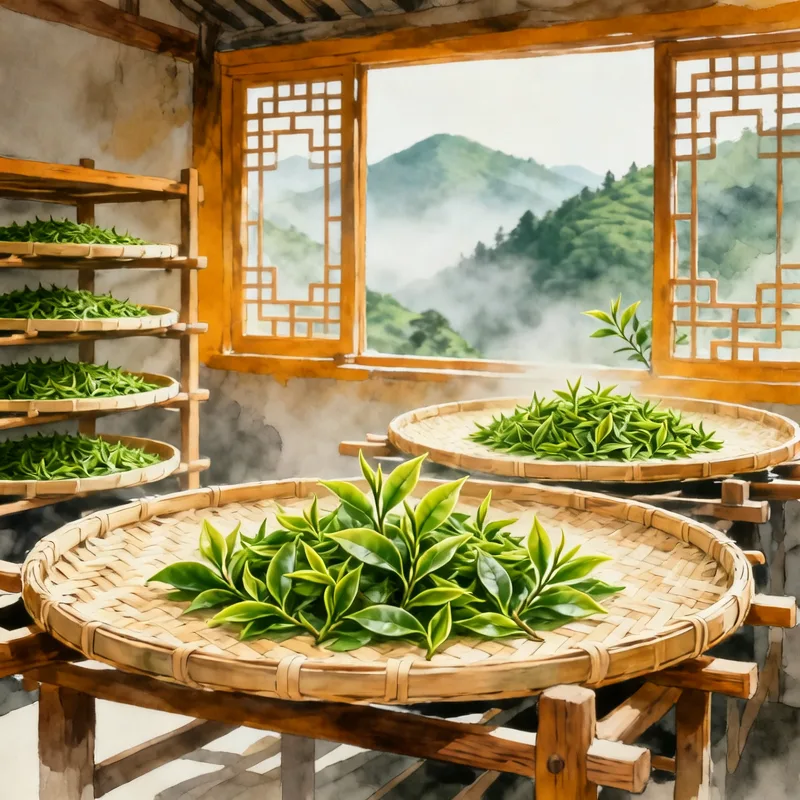
    Fresh tea leaves spread on bamboo trays in a Fujian hillside processing room
    Picking season sets the quality of the leaf before any processing begins. Ilustração gerada por IA · SinoViz

    Fujian’s Craft of Oxidation

    Fujian’s mountainous counties developed styles that depend on controlled oxidation. Wuyi rock tea, grown in the rocky cliffs of the Wuyi range, is often pan-fired, rolled, and roasted until it develops a mineral, toasted character. Tieguanyin from Anxi is shaped into tight pellets that unfurl in the cup. Lapsang souchong from Tongmu resembles black tea in its oxidation, then dries over pine smoke. White teas such as Fuding’s silver-needle style are simply withered and dried, with little rolling or heating. These techniques are local knowledge: the same species, Camellia sinensis, changes through timing, heat, and handling.
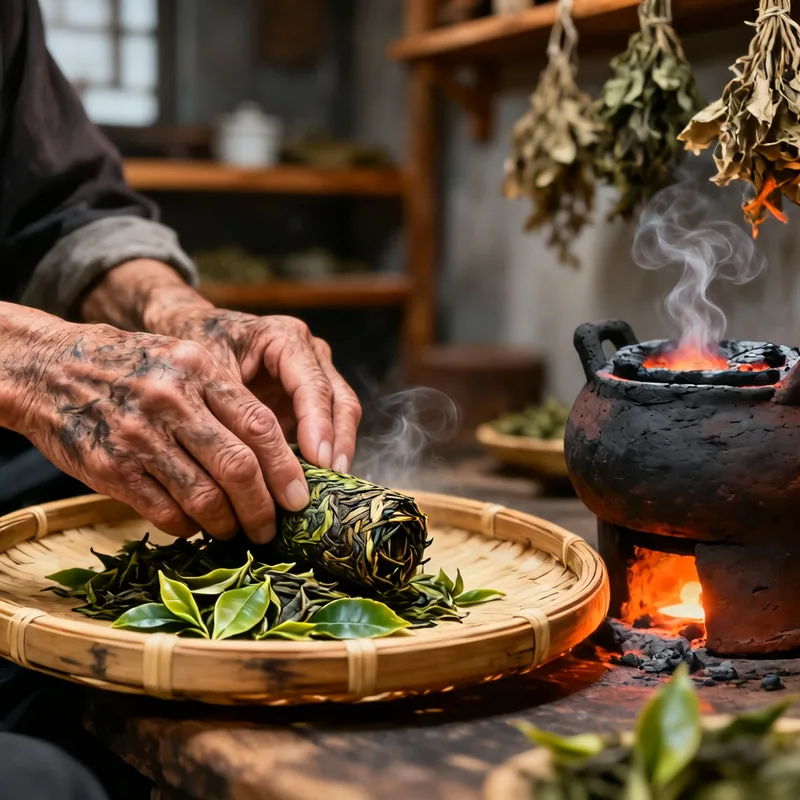
    Tea leaves being rolled by hand on a bamboo tray beside a traditional roasting stove
    Rolling breaks the leaf cells and shapes the flavours that firing will fix. Ilustração gerada por IA · SinoViz

    The Tea Horse Road West

    From at least the Tang period, compressed tea travelled west from Sichuan and Yunnan toward Tibet, where it provided vitamin-rich drink and a medium of exchange in a diet heavy on barley and meat. The Tea Horse Road was a network of footpaths through mountains, not one road: porters and mule caravans crossed passes between Dali, Lijiang, and Tibetan markets. Under the Song, states traded tea for warhorses at frontier markets. Tea bricks were strapped to pack animals, wrapped in bamboo or paper, and sometimes pressed with straw. In Tibetan households, tea was churned with butter and salt into a fuel-rich drink suited to high altitudes.

    • Green, white, oolong, and black styles defined by oxidation
    • Compressed bricks made for pack transport
    • Tea exchanged for Tibetan horses at frontier markets
    • Butter tea brewed from brick tea in highland homes
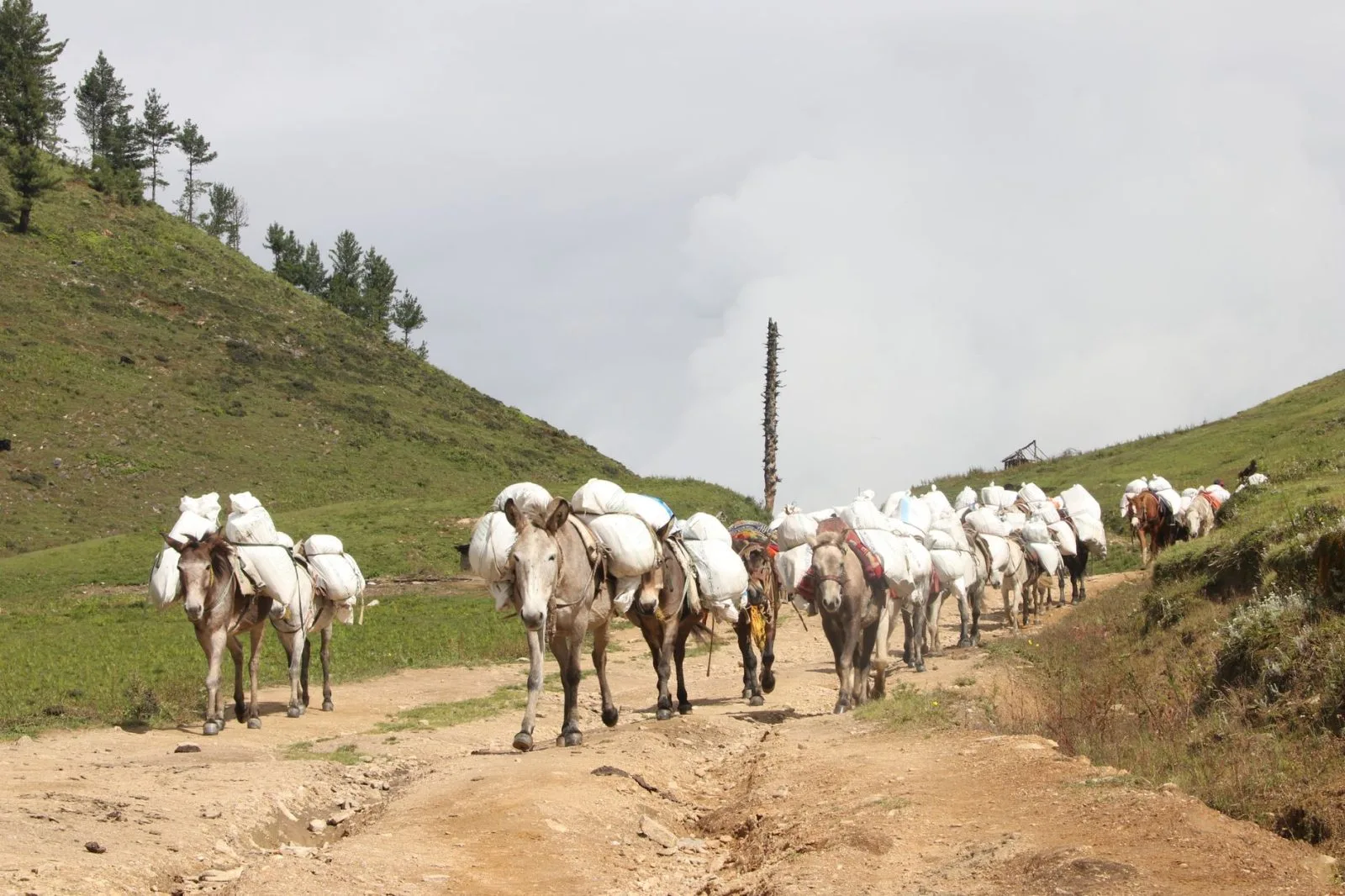
    A string of pack animals carrying bundled tea bricks along a mountain trail in southwest China
    Tea bricks travelled on foot and mule across the mountain passes toward Tibet. Jeevan Mahat | Pexels License (https://www.pexels.com/license/)

    Ports, Cups, and Living Practice

    Maritime trade carried Fujian tea to Southeast Asia and Europe. In the seventeenth century, ships leaving Xiamen and other ports carried leaf tea, porcelain cups, and teapots; by the nineteenth, British demand had made tea a global commodity. The gongfu cha style, associated with Chaozhou and Fujian, uses small vessels, repeated short infusions, and attention to water temperature. A modern tasting may name a harvest season, a mountain, and a roasting method with the precision once reserved for wine. In villages around Wuyi and Anxi, sorting, pan-firing, and roasting still depend on skilled hands, even where machines perform the early steps.

    A leaf becomes tea only when someone decides when to pick it, how long to wither it, and when to stop the heat.

    Fontes e leituras adicionais

    1. Tea — Enciclopédia Britânica.
    2. The Classic of Tea — World History Encyclopedia.
    3. Tea Horse Road — Enciclopédia Britânica.

    Veja no local.

    Siga esta entrada até a região a que ela pertence.

    Explorar pelo mapa

    Siga o fio

    Veja outras entradas que compartilham as mesmas tags.

    Navegue pela etiqueta
  • Fujian

    Região · Costa, tulou e chá

    Fujian

    Fujian fica de frente para Taiwan, do outro lado do estreito, e tem vista para o mar. Suas montanhas abrigavam comunidades Hakka tulou, enquanto seus portos enviavam comerciantes, migrantes e chá por rotas marítimas.

    Região
    Fujian
    Coordenadas
    26,07°N, 119,30°E
    Conhecido por
    Costa, tulou e chá

    Paisagem

    Colinas íngremes encontram um litoral recortado. Rios abrem vales curtos até o mar, criando portos naturais e isolando comunidades do interior que desenvolveram arquitetura e dialetos distintos.

    Patrimônio e lugares

    • Tulou de Fujian
    • Gulangyu
    • Montanhas Wuyi
    • Sítios marítimos de Quanzhou

    Cultura e vida cotidiana

    Fujian é conhecida pelo chá oolong, frutos do mar, tradições Minnan e Hakka, e redes de templos ligadas à vida marítima. A história da província está intimamente ligada às montanhas e ao oceano.

    Continue a jornada

    Combine esta região com um guia turístico ou siga suas histórias ao longo do tempo.

    Explore destinos Crônica Aberta
  • Tibet (Xizang)

    Região · O planalto elevado

    Xizang

    O Tibete se ergue como um planalto elevado, repleto de mosteiros, passos de montanha e lagos sagrados. Sua paisagem e vida religiosa moldaram uma cultura adaptada à altitude, à luz e à distância.

    Região
    Xizang
    Coordenadas
    29,65°N, 91,12°E
    Conhecido por
    O planalto elevado

    Paisagem

    O planalto tibetano tem uma altitude média superior a 4.000 metros. Geleiras alimentam os principais rios asiáticos, enquanto amplos vales e altas passagens estruturam o deslocamento entre cidades e mosteiros.

    Patrimônio e lugares

    • Palácio de Potala
    • Templo Jokhang
    • área da base do Monte Everest
    • Lago Namtso

    Cultura e vida cotidiana

    O budismo tibetano, o chá com manteiga, o tsampa e as bandeiras de oração fazem parte do cotidiano. Festivais monásticos, pinturas thangka e arquitetura em pedra levam o significado religioso para o espaço público.

    Dessa região

    Histórias para ler a seguir

    Registros relacionados a este local em mapas, crônicas e no cotidiano.

    Continue a jornada

    Combine esta região com um guia turístico ou siga suas histórias ao longo do tempo.

    Explore destinos Crônica Aberta
  • Yunnan

    Region · Mountains, tea and many peoples

    Yunnan

    Yunnan sits where the Tibetan plateau drops toward Southeast Asia. Its deep valleys, tea mountains and old towns hold an unusually wide range of languages, foods and festivals.

    Região
    Yunnan
    Coordenadas
    25.04°N, 102.71°E
    Conhecido por
    Mountains, tea and many peoples

    Paisagem

    The province is a mosaic of high mountains, river gorges and subtropical valleys. The Three Parallel Rivers area carries the Yangtze, Mekong and Salween through dramatic terrain.

    Patrimônio e lugares

    • Old Town of Lijiang
    • Stone Forest
    • Three Parallel Rivers
    • Yuanyang rice terraces

    Cultura e vida cotidiana

    Yunnan food is sour, spicy, herbal and intensely local: crossing-the-bridge noodles, mushrooms, cured ham and Pu’er tea. Dai, Bai, Yi, Naxi and many other communities shape the province’s festivals and crafts.

    Continue a jornada

    Combine esta região com um guia turístico ou siga suas histórias ao longo do tempo.

    Explore destinos Crônica Aberta