Topic: Tea Horse Road

  • Cultura del tè

    Vita e folklore

    Cultura del tè

    Leaf, Water, and the Tea Horse Road

    Tea moved from medicinal leaf to daily drink, carrying Fujian methods toward Tibet and the sea.

    Sezione
    Vita e folklore
    Regione
    Fujian
    Era
    Attraverso le epoche
    Etichette
    Customs, Food, Geography

    Tea culture is a history of distilled technique: when to pick, how to wither, how to roll, and how to heat a leaf so that it keeps its character. Fujian became a laboratory for these methods, sending compressed cakes west toward Tibet and scented leaves out through coastal ports.

    From Medicine to Daily Drink

    Tea entered Chinese writing as a medicinal and ritual plant long before it became a household drink. Traditions credit the mythical emperor Shen Nong with discovering it, but the earliest firm evidence comes from Han-period tombs, where archaeologists have identified tea leaves among grave goods. By the third century CE, writers described boiling leaves with ginger and onions; the Tang dynasty (618–907) made tea a scholarly and monastic beverage. Lu Yu’s Cha Jing, written around 760–780, codified growing, picking, roasting, and brewing. Tea cakes were toasted, ground to powder, and whisked with hot water, a preparation later carried to Japan by Buddhist monks.
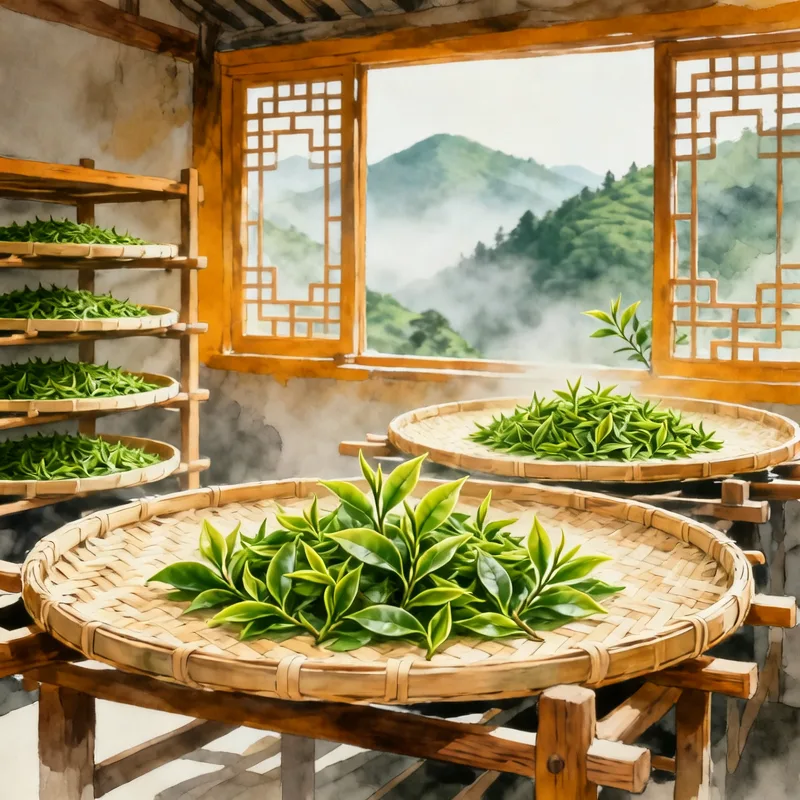
    Fresh tea leaves spread on bamboo trays in a Fujian hillside processing room
    Picking season sets the quality of the leaf before any processing begins. Illustrazione generata dall'intelligenza artificiale · SinoViz

    Fujian’s Craft of Oxidation

    Fujian’s mountainous counties developed styles that depend on controlled oxidation. Wuyi rock tea, grown in the rocky cliffs of the Wuyi range, is often pan-fired, rolled, and roasted until it develops a mineral, toasted character. Tieguanyin from Anxi is shaped into tight pellets that unfurl in the cup. Lapsang souchong from Tongmu resembles black tea in its oxidation, then dries over pine smoke. White teas such as Fuding’s silver-needle style are simply withered and dried, with little rolling or heating. These techniques are local knowledge: the same species, Camellia sinensis, changes through timing, heat, and handling.
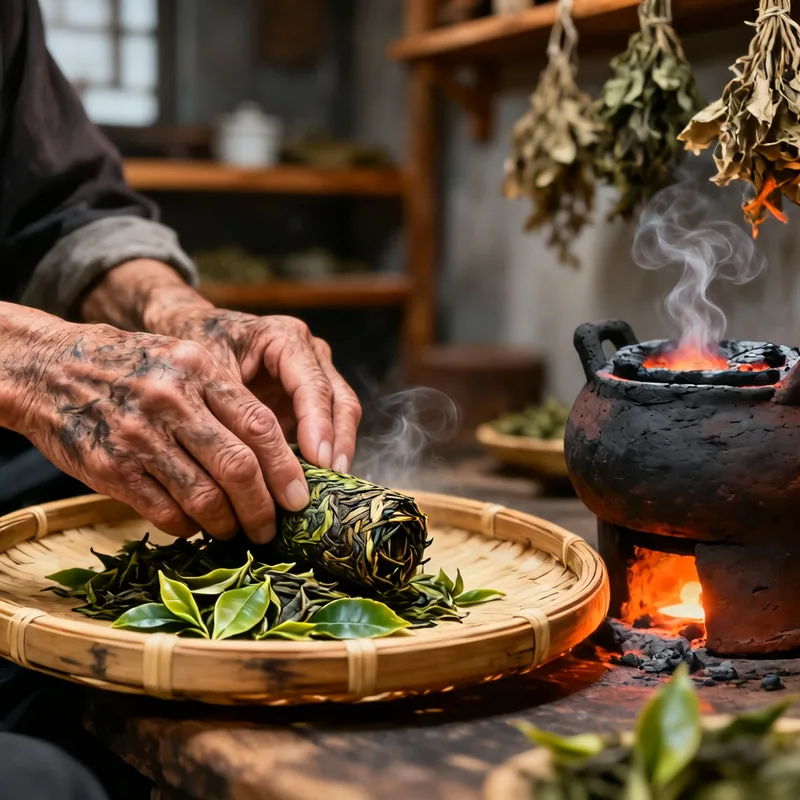
    Tea leaves being rolled by hand on a bamboo tray beside a traditional roasting stove
    Rolling breaks the leaf cells and shapes the flavours that firing will fix. Illustrazione generata dall'intelligenza artificiale · SinoViz

    The Tea Horse Road West

    From at least the Tang period, compressed tea travelled west from Sichuan and Yunnan toward Tibet, where it provided vitamin-rich drink and a medium of exchange in a diet heavy on barley and meat. The Tea Horse Road was a network of footpaths through mountains, not one road: porters and mule caravans crossed passes between Dali, Lijiang, and Tibetan markets. Under the Song, states traded tea for warhorses at frontier markets. Tea bricks were strapped to pack animals, wrapped in bamboo or paper, and sometimes pressed with straw. In Tibetan households, tea was churned with butter and salt into a fuel-rich drink suited to high altitudes.

    • Green, white, oolong, and black styles defined by oxidation
    • Compressed bricks made for pack transport
    • Tea exchanged for Tibetan horses at frontier markets
    • Butter tea brewed from brick tea in highland homes
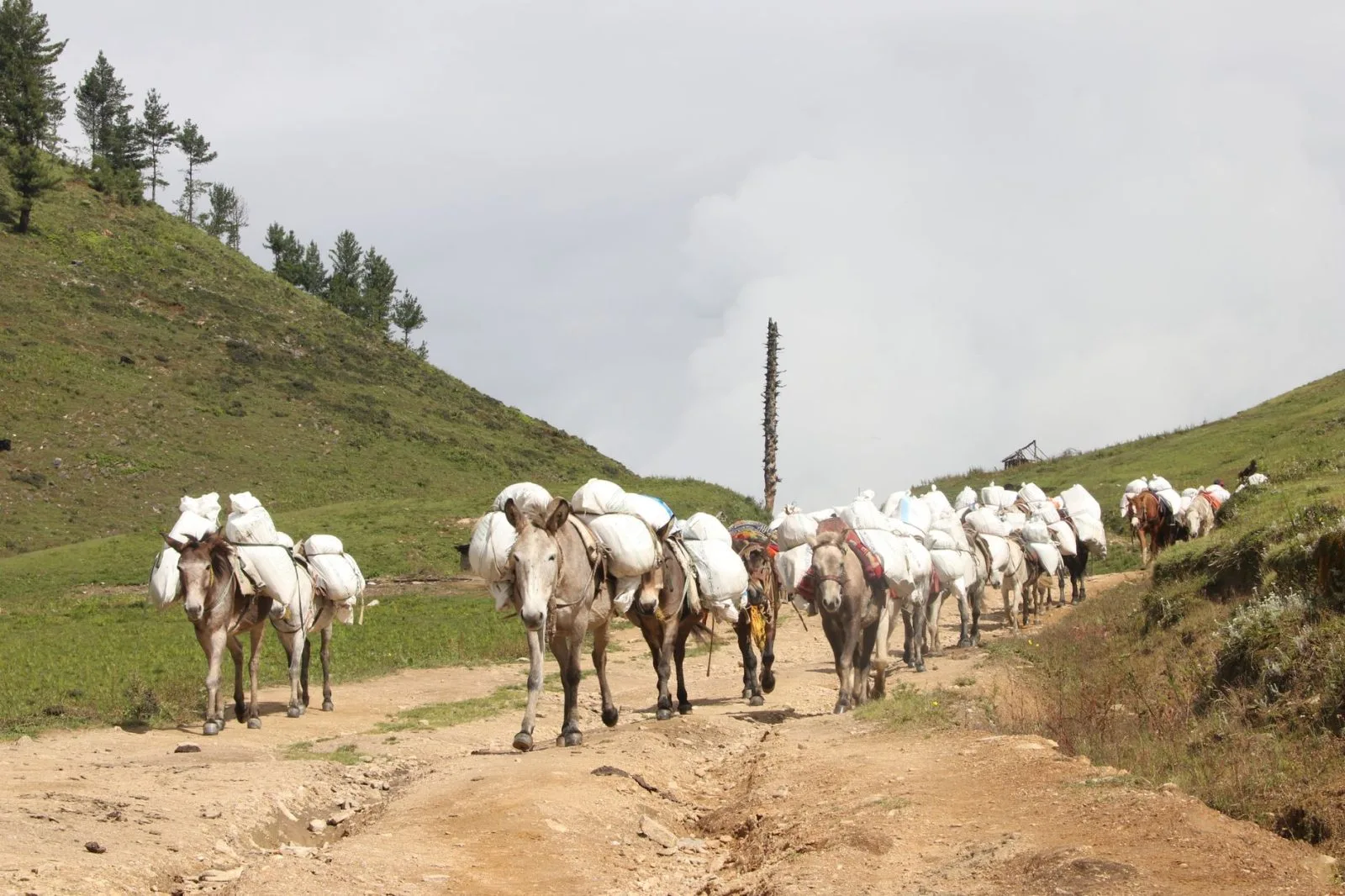
    A string of pack animals carrying bundled tea bricks along a mountain trail in southwest China
    Tea bricks travelled on foot and mule across the mountain passes toward Tibet. Jeevan Mahat | Pexels License (https://www.pexels.com/license/)

    Ports, Cups, and Living Practice

    Maritime trade carried Fujian tea to Southeast Asia and Europe. In the seventeenth century, ships leaving Xiamen and other ports carried leaf tea, porcelain cups, and teapots; by the nineteenth, British demand had made tea a global commodity. The gongfu cha style, associated with Chaozhou and Fujian, uses small vessels, repeated short infusions, and attention to water temperature. A modern tasting may name a harvest season, a mountain, and a roasting method with the precision once reserved for wine. In villages around Wuyi and Anxi, sorting, pan-firing, and roasting still depend on skilled hands, even where machines perform the early steps.

    A leaf becomes tea only when someone decides when to pick it, how long to wither it, and when to stop the heat.

    Fonti e ulteriori letture

    1. Tea — Enciclopedia Britannica.
    2. The Classic of Tea — World History Encyclopedia.
    3. Tea Horse Road — Enciclopedia Britannica.

    Guardalo al suo posto

    Segui questa voce per raggiungere la regione di appartenenza.

    Esplora tramite mappa

    Segui il filo

    Esplora altre voci che condividono i suoi tag.

    Esplora il tag
  • Fujian

    Regione · Costa, tulou e tè

    Fujian

    Il Fujian si affaccia su Taiwan attraverso lo stretto e guarda verso il mare. Le sue montagne hanno offerto riparo alle comunità Hakka dei tulou, mentre i suoi porti erano il punto di partenza per commercianti, migranti e tè lungo le rotte marittime.

    Regione
    Fujian
    Coordinate
    26,07°N, 119,30°E
    Noto per
    Costa, tulou e tè

    Paesaggio

    Colline scoscese incontrano una costa frastagliata. I fiumi scavano brevi valli verso il mare, creando porti naturali e isolando comunità interne che hanno sviluppato architetture e dialetti caratteristici.

    Patrimonio e luoghi

    • Tulou del Fujian
    • Gulangyu
    • Monti Wuyi
    • siti marittimi di Quanzhou

    Cultura e vita quotidiana

    Il Fujian è noto per il tè oolong, i frutti di mare, le tradizioni Minnan e Hakka e le reti di templi legate alla navigazione. La storia della provincia è intrisa di montagne e di un profondo legame con l'oceano.

    Continua il viaggio

    Abbinate questa regione a una guida turistica o seguite le sue storie attraverso il tempo.

    Esplora le destinazioni Cronaca aperta
  • Tibet (Xizang)

    Regione · L'altopiano

    Xizang

    Il Tibet si erge come un altopiano ricco di monasteri, passi montani e laghi sacri. Il suo paesaggio e la sua vita religiosa hanno plasmato una cultura adattata all'altitudine, alla luce e alle distanze.

    Regione
    Xizang
    Coordinate
    29,65°N, 91,12°E
    Noto per
    L'altopiano elevato

    Paesaggio

    L'altopiano tibetano ha un'altitudine media di oltre 4.000 metri. I ghiacciai alimentano i principali fiumi asiatici, mentre ampie vallate e passi di alta montagna regolano gli spostamenti tra città e monasteri.

    Patrimonio e luoghi

    • Palazzo Potala
    • Tempio Jokhang
    • zona di base del Monte Everest
    • Lago Namtso

    Cultura e vita quotidiana

    Il buddismo tibetano, il tè al burro, la tsampa e le bandiere di preghiera fanno parte della vita quotidiana. Le feste monastiche, la pittura thangka e l'architettura in pietra conferiscono significato religioso allo spazio pubblico.

    Da questa regione

    Storie da leggere dopo

    Voci collegate a questo luogo attraverso mappe, cronache e vita quotidiana.

    Continua il viaggio

    Abbinate questa regione a una guida turistica o seguite le sue storie attraverso il tempo.

    Esplora le destinazioni Cronaca aperta
  • Yunnan

    Region · Mountains, tea and many peoples

    Yunnan

    Yunnan sits where the Tibetan plateau drops toward Southeast Asia. Its deep valleys, tea mountains and old towns hold an unusually wide range of languages, foods and festivals.

    Regione
    Yunnan
    Coordinate
    25.04°N, 102.71°E
    Noto per
    Mountains, tea and many peoples

    Paesaggio

    The province is a mosaic of high mountains, river gorges and subtropical valleys. The Three Parallel Rivers area carries the Yangtze, Mekong and Salween through dramatic terrain.

    Patrimonio e luoghi

    • Old Town of Lijiang
    • Stone Forest
    • Three Parallel Rivers
    • Yuanyang rice terraces

    Cultura e vita quotidiana

    Yunnan food is sour, spicy, herbal and intensely local: crossing-the-bridge noodles, mushrooms, cured ham and Pu’er tea. Dai, Bai, Yi, Naxi and many other communities shape the province’s festivals and crafts.

    Continua il viaggio

    Abbinate questa regione a una guida turistica o seguite le sue storie attraverso il tempo.

    Esplora le destinazioni Cronaca aperta