Topic: Tea Horse Road

  • Чайная культура

    Жизнь и фольклор

    Чайная культура

    Leaf, Water, and the Tea Horse Road

    Tea moved from medicinal leaf to daily drink, carrying Fujian methods toward Tibet and the sea.

    Раздел
    Жизнь и фольклор
    Область
    Фуцзянь
    Эпоха
    На протяжении эпох
    Теги
    Customs, Food, Geography

    Tea culture is a history of distilled technique: when to pick, how to wither, how to roll, and how to heat a leaf so that it keeps its character. Fujian became a laboratory for these methods, sending compressed cakes west toward Tibet and scented leaves out through coastal ports.

    From Medicine to Daily Drink

    Tea entered Chinese writing as a medicinal and ritual plant long before it became a household drink. Traditions credit the mythical emperor Shen Nong with discovering it, but the earliest firm evidence comes from Han-period tombs, where archaeologists have identified tea leaves among grave goods. By the third century CE, writers described boiling leaves with ginger and onions; the Tang dynasty (618–907) made tea a scholarly and monastic beverage. Lu Yu’s Cha Jing, written around 760–780, codified growing, picking, roasting, and brewing. Tea cakes were toasted, ground to powder, and whisked with hot water, a preparation later carried to Japan by Buddhist monks.
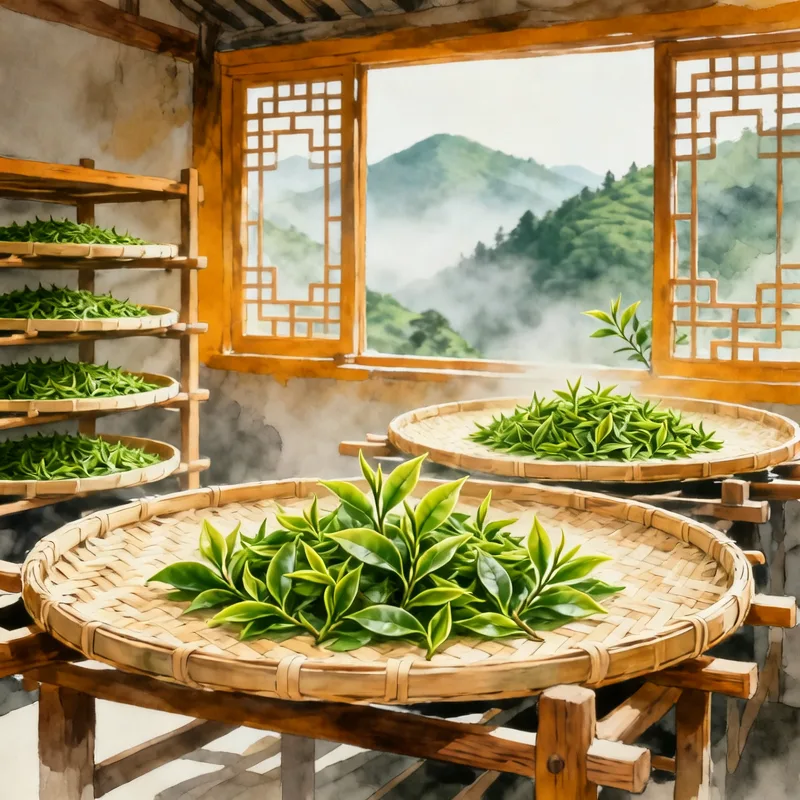
    Fresh tea leaves spread on bamboo trays in a Fujian hillside processing room
    Picking season sets the quality of the leaf before any processing begins. Иллюстрация, созданная с помощью ИИ · SinoViz

    Fujian’s Craft of Oxidation

    Fujian’s mountainous counties developed styles that depend on controlled oxidation. Wuyi rock tea, grown in the rocky cliffs of the Wuyi range, is often pan-fired, rolled, and roasted until it develops a mineral, toasted character. Tieguanyin from Anxi is shaped into tight pellets that unfurl in the cup. Lapsang souchong from Tongmu resembles black tea in its oxidation, then dries over pine smoke. White teas such as Fuding’s silver-needle style are simply withered and dried, with little rolling or heating. These techniques are local knowledge: the same species, Camellia sinensis, changes through timing, heat, and handling.
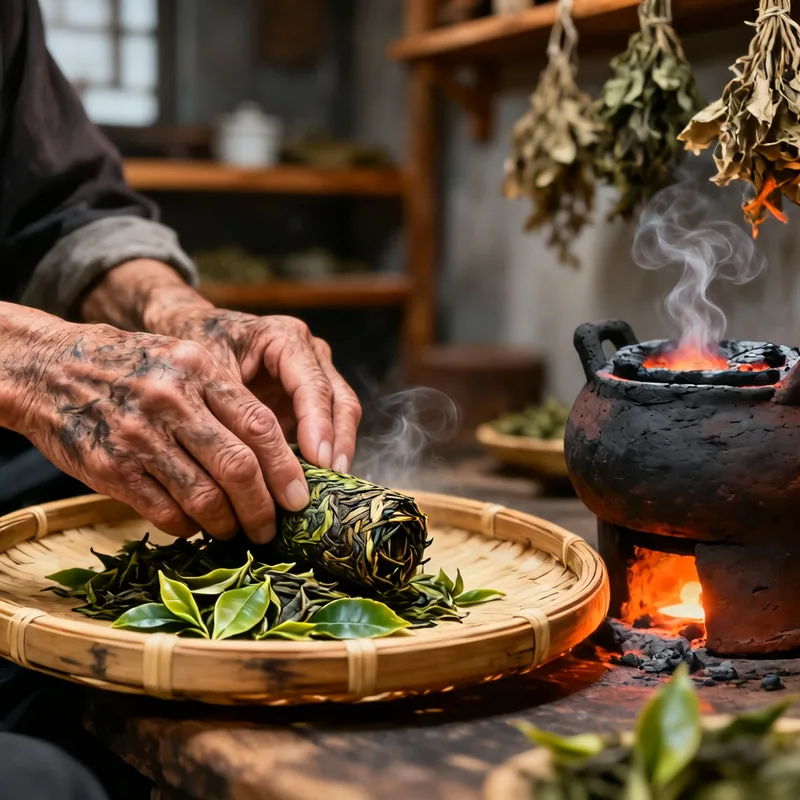
    Tea leaves being rolled by hand on a bamboo tray beside a traditional roasting stove
    Rolling breaks the leaf cells and shapes the flavours that firing will fix. Иллюстрация, созданная с помощью ИИ · SinoViz

    The Tea Horse Road West

    From at least the Tang period, compressed tea travelled west from Sichuan and Yunnan toward Tibet, where it provided vitamin-rich drink and a medium of exchange in a diet heavy on barley and meat. The Tea Horse Road was a network of footpaths through mountains, not one road: porters and mule caravans crossed passes between Dali, Lijiang, and Tibetan markets. Under the Song, states traded tea for warhorses at frontier markets. Tea bricks were strapped to pack animals, wrapped in bamboo or paper, and sometimes pressed with straw. In Tibetan households, tea was churned with butter and salt into a fuel-rich drink suited to high altitudes.

    • Green, white, oolong, and black styles defined by oxidation
    • Compressed bricks made for pack transport
    • Tea exchanged for Tibetan horses at frontier markets
    • Butter tea brewed from brick tea in highland homes
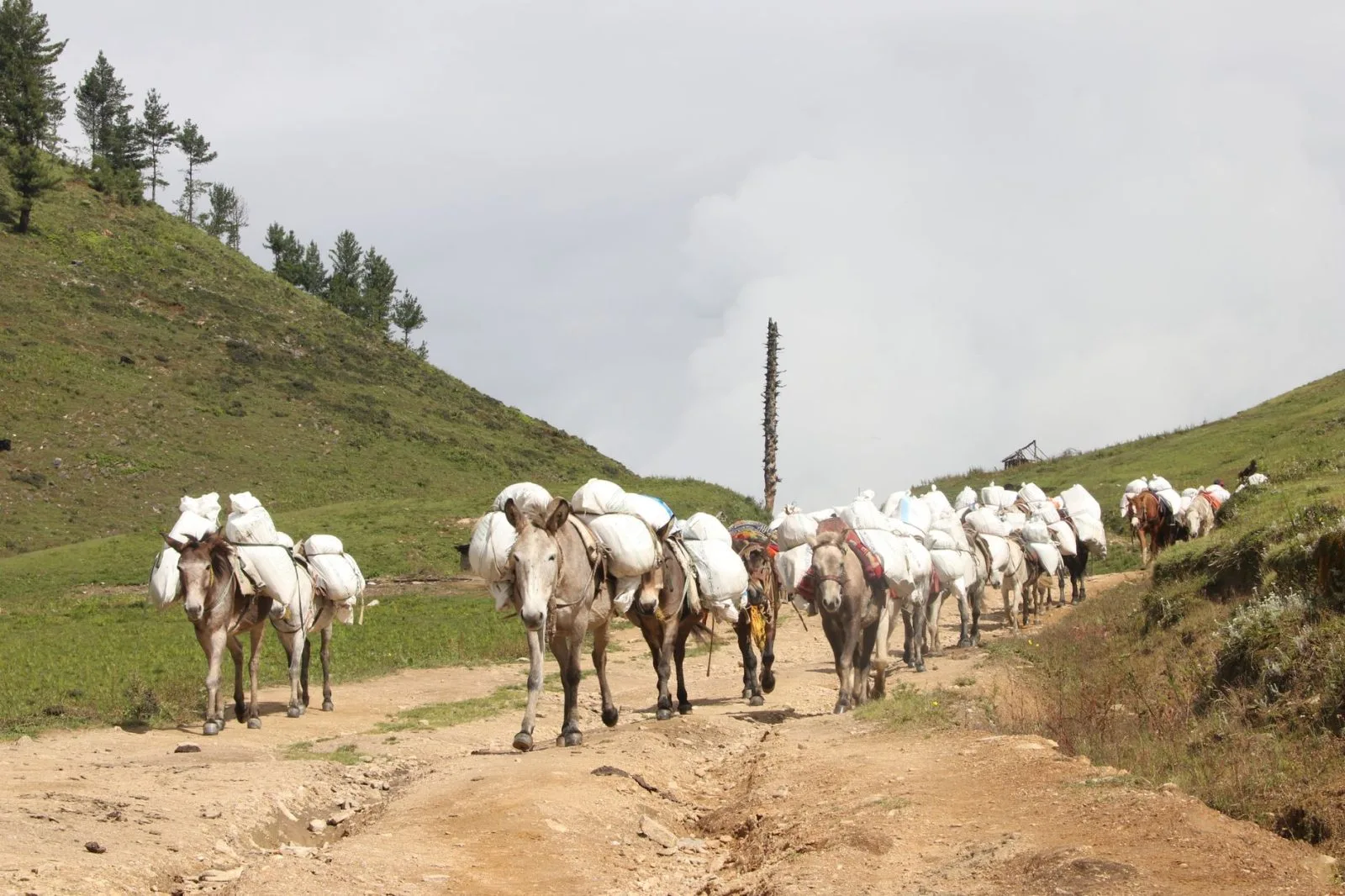
    A string of pack animals carrying bundled tea bricks along a mountain trail in southwest China
    Tea bricks travelled on foot and mule across the mountain passes toward Tibet. Jeevan Mahat | Pexels License (https://www.pexels.com/license/)

    Ports, Cups, and Living Practice

    Maritime trade carried Fujian tea to Southeast Asia and Europe. In the seventeenth century, ships leaving Xiamen and other ports carried leaf tea, porcelain cups, and teapots; by the nineteenth, British demand had made tea a global commodity. The gongfu cha style, associated with Chaozhou and Fujian, uses small vessels, repeated short infusions, and attention to water temperature. A modern tasting may name a harvest season, a mountain, and a roasting method with the precision once reserved for wine. In villages around Wuyi and Anxi, sorting, pan-firing, and roasting still depend on skilled hands, even where machines perform the early steps.

    A leaf becomes tea only when someone decides when to pick it, how long to wither it, and when to stop the heat.

    Источники и дополнительная литература

    1. Tea — Энциклопедия Британника.
    2. The Classic of Tea — World History Encyclopedia.
    3. Tea Horse Road — Энциклопедия Британника.

    Посмотрите, как это выглядит на месте.

    Перейдите по этой ссылке в регион, к которому она относится.

    Исследуйте с помощью карты

    Продолжите обсуждение

    Просмотрите другие записи, имеющие теги.

    Просмотрите тег
  • Фуцзянь

    Регион · Побережье, тулоу и чай

    Фуцзянь

    Провинция Фуцзянь расположена напротив Тайваня через пролив и обращена к морю. Ее горы служили пристанищем для общин хакка, практикующих тулоу, а порты обеспечивали морскими путями торговлю, миграцию и доставку чая.

    Область
    Фуцзянь
    Координаты
    26,07° с.ш., 119,30° в.д.
    Известен тем, что
    Побережье, тулоу и чай

    Пейзаж

    Крутые холмы примыкают к изрезанной береговой линии. Реки прорезают короткие долины, ведущие к морю, создавая естественные гавани и изолируя внутренние поселения, которые развили самобытную архитектуру и диалекты.

    Историческое наследие и места

    • Фуцзянь Тулоу
    • Гуланъюй
    • Горы Уйи
    • Морские объекты Цюаньчжоу

    Культура и повседневная жизнь

    Провинция Фуцзянь известна своим чаем улун, морепродуктами, традициями Миньнаньской и Хаккаской цивилизаций, а также храмовыми сетями, связанными с мореплаванием. История провинции тесно связана как с горами, так и с океаном.

    Продолжите путешествие

    Сочетайте знакомство с этим регионом с путеводителем или проследите его историю на протяжении веков.

    Исследуйте места назначения Открытая Хроника
  • Tibet (Xizang)

    Регион · Высокое плато

    Сизан

    Тибет представляет собой высокое плато с монастырями, горными перевалами и священными озерами. Его ландшафт и религиозная жизнь сформировали культуру, адаптированную к высоте, свету и расстоянию.

    Область
    Сизан
    Координаты
    29,65° с.ш., 91,12° в.д.
    Известен тем, что
    Высокое плато

    Пейзаж

    Средняя высота Тибетского плато составляет более 4000 метров. Ледники питают крупные азиатские реки, а широкие долины и высокие перевалы определяют движение между городами и монастырями.

    Историческое наследие и места

    • Дворец Потала
    • Храм Джокханг
    • базовый район Эвереста
    • Озеро Намцо

    Культура и повседневная жизнь

    Тибетский буддизм, чай с маслом, цампа и молитвенные флаги — часть повседневной жизни. Монастырские фестивали, живопись тханка и каменная архитектура несут религиозный смысл в общественное пространство.

    Из этого региона

    Следующие рассказы для чтения

    Записи, связанные с этим местом, на карте, в летописях и повседневной жизни.

    Продолжите путешествие

    Сочетайте знакомство с этим регионом с путеводителем или проследите его историю на протяжении веков.

    Исследуйте места назначения Открытая Хроника
  • Юньнань

    Region · Mountains, tea and many peoples

    Юньнань

    Yunnan sits where the Tibetan plateau drops toward Southeast Asia. Its deep valleys, tea mountains and old towns hold an unusually wide range of languages, foods and festivals.

    Область
    Юньнань
    Координаты
    25.04°N, 102.71°E
    Известен тем, что
    Mountains, tea and many peoples

    Пейзаж

    The province is a mosaic of high mountains, river gorges and subtropical valleys. The Three Parallel Rivers area carries the Yangtze, Mekong and Salween through dramatic terrain.

    Историческое наследие и места

    • Old Town of Lijiang
    • Stone Forest
    • Three Parallel Rivers
    • Yuanyang rice terraces

    Культура и повседневная жизнь

    Yunnan food is sour, spicy, herbal and intensely local: crossing-the-bridge noodles, mushrooms, cured ham and Pu’er tea. Dai, Bai, Yi, Naxi and many other communities shape the province’s festivals and crafts.

    Продолжите путешествие

    Сочетайте знакомство с этим регионом с путеводителем или проследите его историю на протяжении веков.

    Исследуйте места назначения Открытая Хроника