生活と民話
茶文化
Leaf, Water, and the Tea Horse Road
Tea moved from medicinal leaf to daily drink, carrying Fujian methods toward Tibet and the sea.
- セクション
- 生活と民話
- 地域
- 福建省
- 時代
- 時代を超えて
- タグ
- Customs, Food, Geography
Tea culture is a history of distilled technique: when to pick, how to wither, how to roll, and how to heat a leaf so that it keeps its character. Fujian became a laboratory for these methods, sending compressed cakes west toward Tibet and scented leaves out through coastal ports.
From Medicine to Daily Drink
Tea entered Chinese writing as a medicinal and ritual plant long before it became a household drink. Traditions credit the mythical emperor Shen Nong with discovering it, but the earliest firm evidence comes from Han-period tombs, where archaeologists have identified tea leaves among grave goods. By the third century CE, writers described boiling leaves with ginger and onions; the Tang dynasty (618–907) made tea a scholarly and monastic beverage. Lu Yu’s Cha Jing, written around 760–780, codified growing, picking, roasting, and brewing. Tea cakes were toasted, ground to powder, and whisked with hot water, a preparation later carried to Japan by Buddhist monks.
Fujian’s Craft of Oxidation
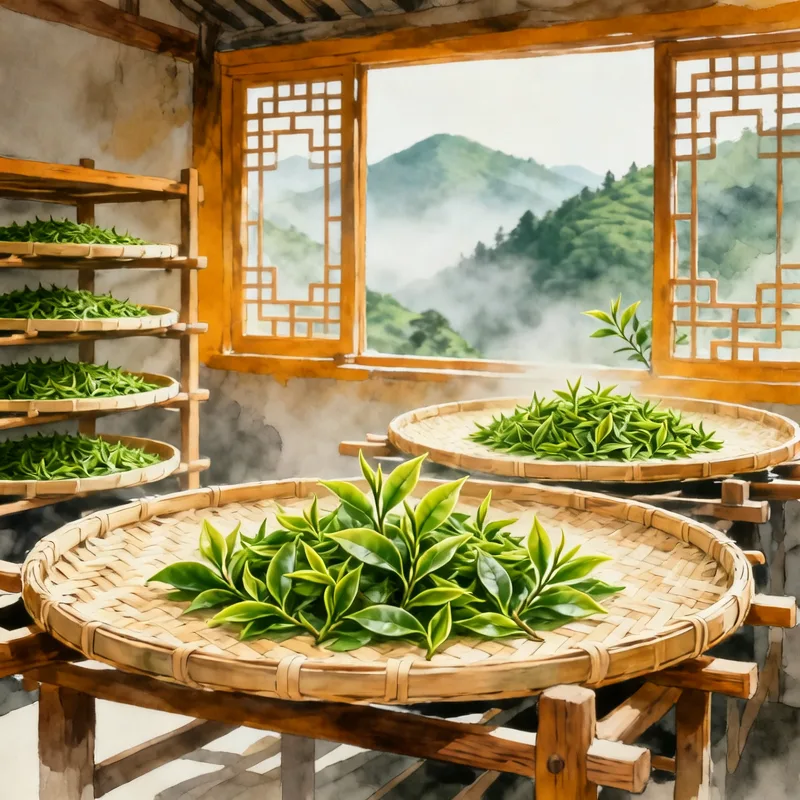
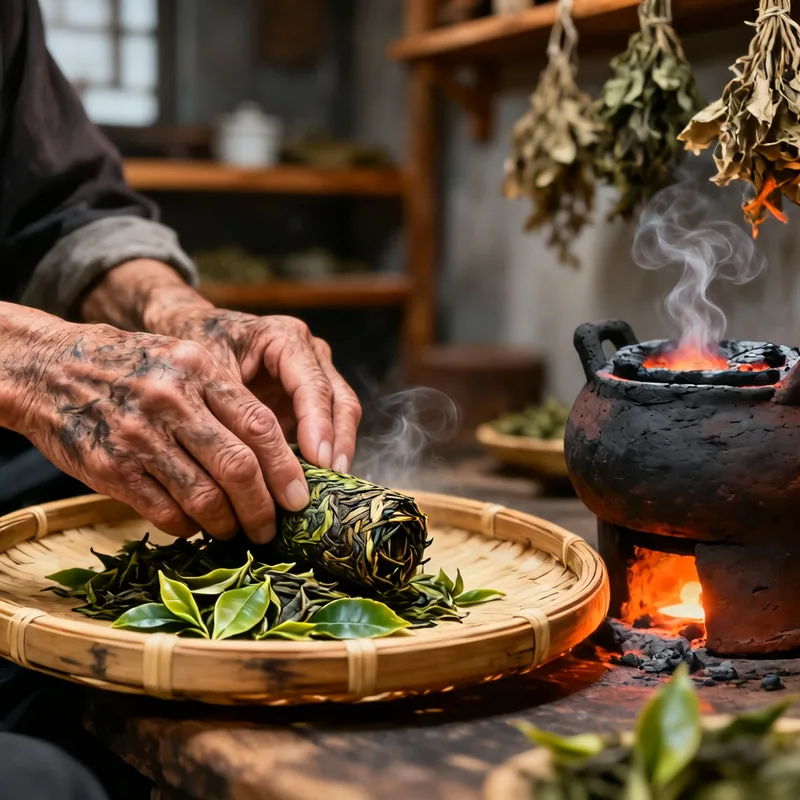
Fujian’s mountainous counties developed styles that depend on controlled oxidation. Wuyi rock tea, grown in the rocky cliffs of the Wuyi range, is often pan-fired, rolled, and roasted until it develops a mineral, toasted character. Tieguanyin from Anxi is shaped into tight pellets that unfurl in the cup. Lapsang souchong from Tongmu resembles black tea in its oxidation, then dries over pine smoke. White teas such as Fuding’s silver-needle style are simply withered and dried, with little rolling or heating. These techniques are local knowledge: the same species, Camellia sinensis, changes through timing, heat, and handling.
The Tea Horse Road West
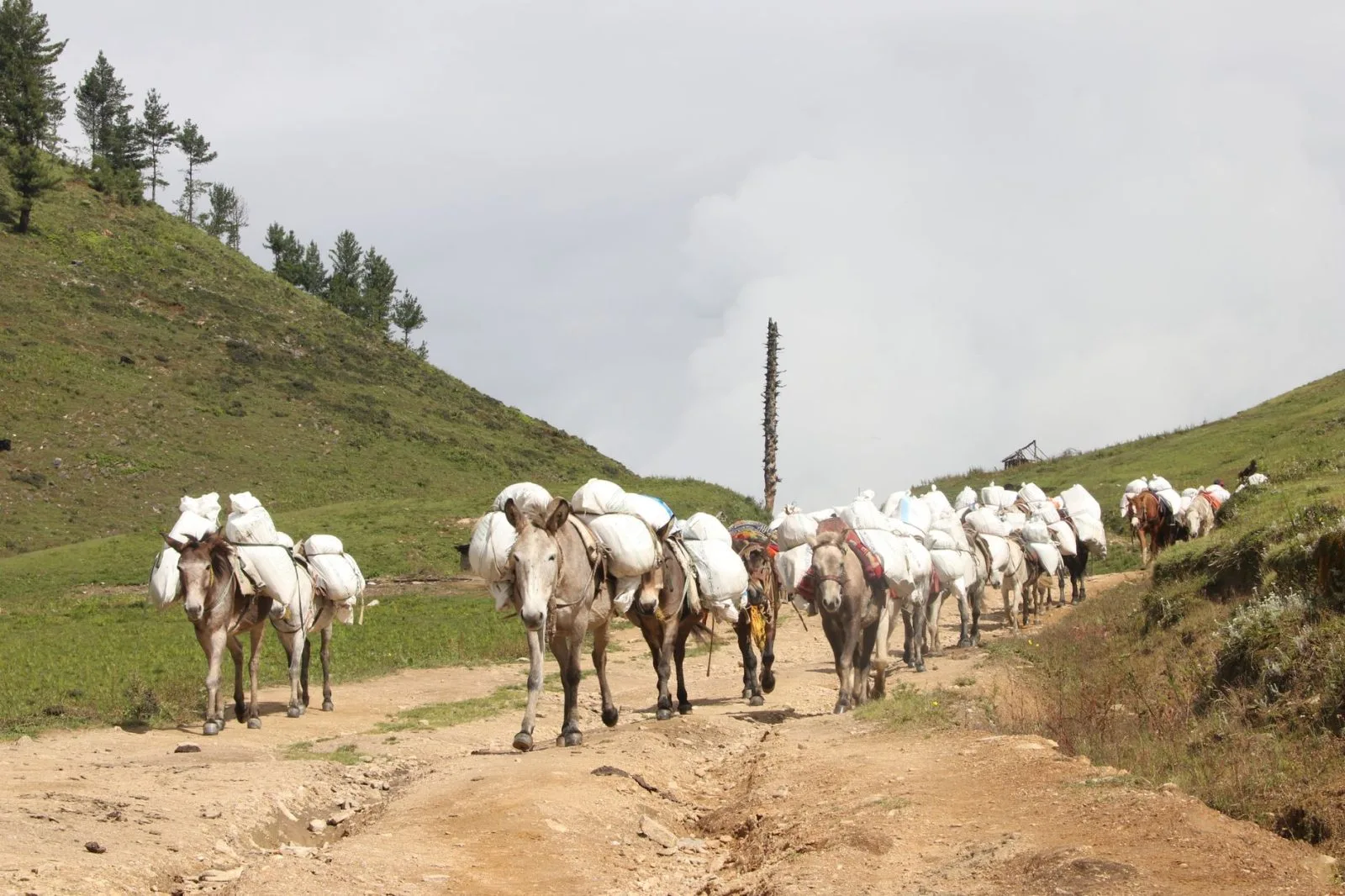
From at least the Tang period, compressed tea travelled west from Sichuan and Yunnan toward Tibet, where it provided vitamin-rich drink and a medium of exchange in a diet heavy on barley and meat. The Tea Horse Road was a network of footpaths through mountains, not one road: porters and mule caravans crossed passes between Dali, Lijiang, and Tibetan markets. Under the Song, states traded tea for warhorses at frontier markets. Tea bricks were strapped to pack animals, wrapped in bamboo or paper, and sometimes pressed with straw. In Tibetan households, tea was churned with butter and salt into a fuel-rich drink suited to high altitudes.
- Green, white, oolong, and black styles defined by oxidation
- Compressed bricks made for pack transport
- Tea exchanged for Tibetan horses at frontier markets
- Butter tea brewed from brick tea in highland homes
Ports, Cups, and Living Practice
Maritime trade carried Fujian tea to Southeast Asia and Europe. In the seventeenth century, ships leaving Xiamen and other ports carried leaf tea, porcelain cups, and teapots; by the nineteenth, British demand had made tea a global commodity. The gongfu cha style, associated with Chaozhou and Fujian, uses small vessels, repeated short infusions, and attention to water temperature. A modern tasting may name a harvest season, a mountain, and a roasting method with the precision once reserved for wine. In villages around Wuyi and Anxi, sorting, pan-firing, and roasting still depend on skilled hands, even where machines perform the early steps.
A leaf becomes tea only when someone decides when to pick it, how long to wither it, and when to stop the heat.
出典と参考文献
- Tea —ブリタニカ百科事典。
- The Classic of Tea — World History Encyclopedia.
- 茶馬道 —ブリタニカ百科事典。