Étiqueter: Douane

  • La culture du thé

    Vie et folklore

    La culture du thé

    Leaf, Water, and the Tea Horse Road

    Tea moved from medicinal leaf to daily drink, carrying Fujian methods toward Tibet and the sea.

    Section
    Vie et folklore
    Région
    Fujian
    Ère
    À travers les époques
    Étiquettes
    Customs, Food, Geography

    Tea culture is a history of distilled technique: when to pick, how to wither, how to roll, and how to heat a leaf so that it keeps its character. Fujian became a laboratory for these methods, sending compressed cakes west toward Tibet and scented leaves out through coastal ports.

    From Medicine to Daily Drink

    Tea entered Chinese writing as a medicinal and ritual plant long before it became a household drink. Traditions credit the mythical emperor Shen Nong with discovering it, but the earliest firm evidence comes from Han-period tombs, where archaeologists have identified tea leaves among grave goods. By the third century CE, writers described boiling leaves with ginger and onions; the Tang dynasty (618–907) made tea a scholarly and monastic beverage. Lu Yu’s Cha Jing, written around 760–780, codified growing, picking, roasting, and brewing. Tea cakes were toasted, ground to powder, and whisked with hot water, a preparation later carried to Japan by Buddhist monks.
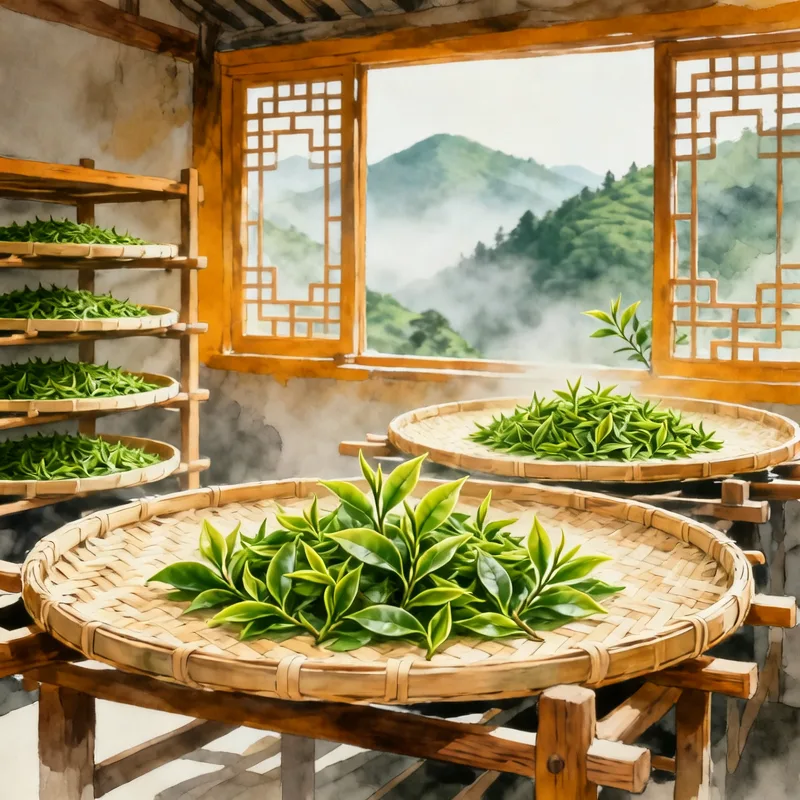
    Fresh tea leaves spread on bamboo trays in a Fujian hillside processing room
    Picking season sets the quality of the leaf before any processing begins. Illustration générée par IA · SinoViz

    Fujian’s Craft of Oxidation

    Fujian’s mountainous counties developed styles that depend on controlled oxidation. Wuyi rock tea, grown in the rocky cliffs of the Wuyi range, is often pan-fired, rolled, and roasted until it develops a mineral, toasted character. Tieguanyin from Anxi is shaped into tight pellets that unfurl in the cup. Lapsang souchong from Tongmu resembles black tea in its oxidation, then dries over pine smoke. White teas such as Fuding’s silver-needle style are simply withered and dried, with little rolling or heating. These techniques are local knowledge: the same species, Camellia sinensis, changes through timing, heat, and handling.
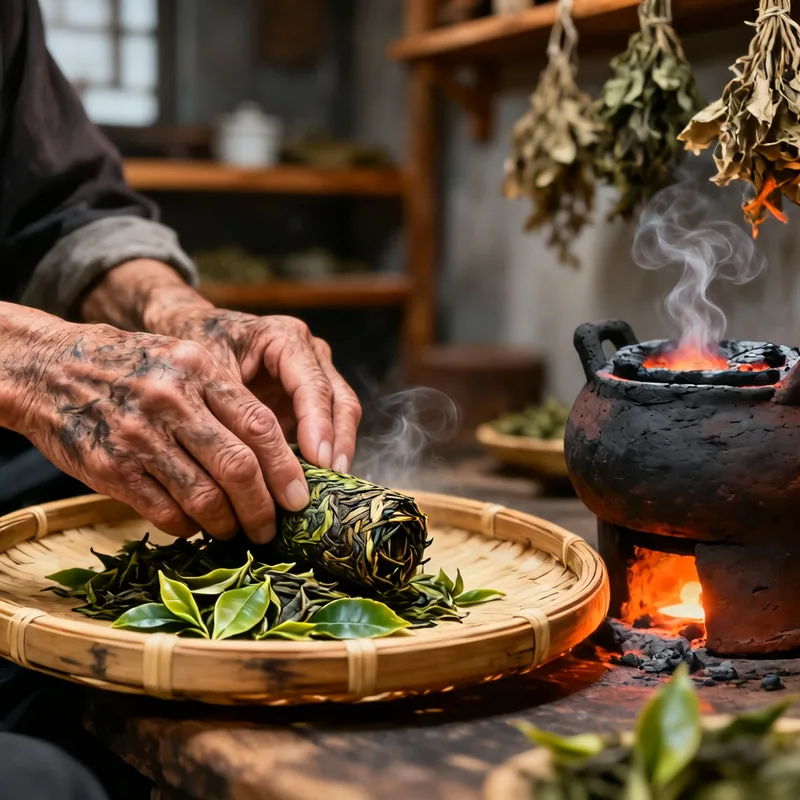
    Tea leaves being rolled by hand on a bamboo tray beside a traditional roasting stove
    Rolling breaks the leaf cells and shapes the flavours that firing will fix. Illustration générée par IA · SinoViz

    The Tea Horse Road West

    From at least the Tang period, compressed tea travelled west from Sichuan and Yunnan toward Tibet, where it provided vitamin-rich drink and a medium of exchange in a diet heavy on barley and meat. The Tea Horse Road was a network of footpaths through mountains, not one road: porters and mule caravans crossed passes between Dali, Lijiang, and Tibetan markets. Under the Song, states traded tea for warhorses at frontier markets. Tea bricks were strapped to pack animals, wrapped in bamboo or paper, and sometimes pressed with straw. In Tibetan households, tea was churned with butter and salt into a fuel-rich drink suited to high altitudes.

    • Green, white, oolong, and black styles defined by oxidation
    • Compressed bricks made for pack transport
    • Tea exchanged for Tibetan horses at frontier markets
    • Butter tea brewed from brick tea in highland homes
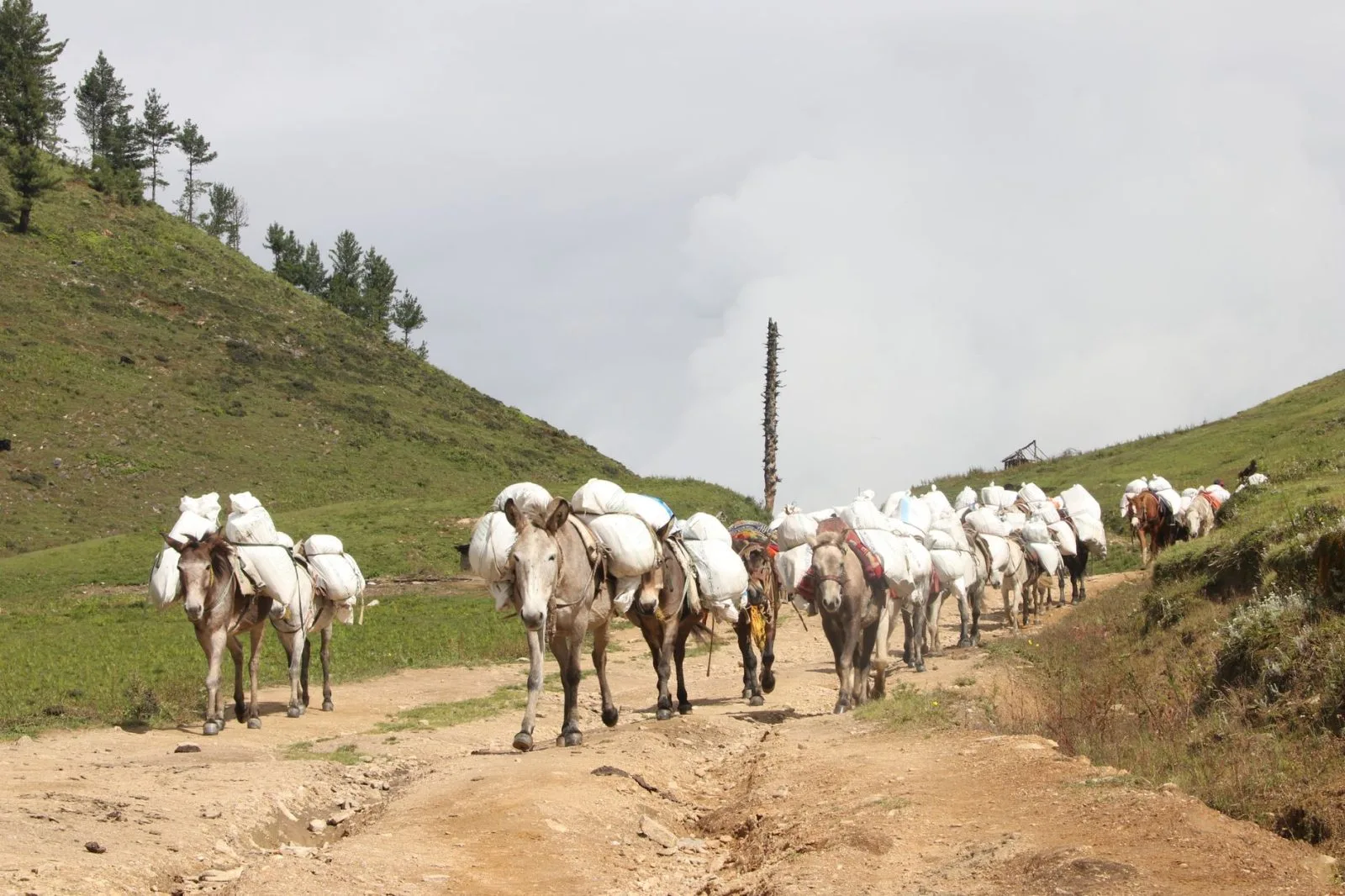
    A string of pack animals carrying bundled tea bricks along a mountain trail in southwest China
    Tea bricks travelled on foot and mule across the mountain passes toward Tibet. Jeevan Mahat | Pexels License (https://www.pexels.com/license/)

    Ports, Cups, and Living Practice

    Maritime trade carried Fujian tea to Southeast Asia and Europe. In the seventeenth century, ships leaving Xiamen and other ports carried leaf tea, porcelain cups, and teapots; by the nineteenth, British demand had made tea a global commodity. The gongfu cha style, associated with Chaozhou and Fujian, uses small vessels, repeated short infusions, and attention to water temperature. A modern tasting may name a harvest season, a mountain, and a roasting method with the precision once reserved for wine. In villages around Wuyi and Anxi, sorting, pan-firing, and roasting still depend on skilled hands, even where machines perform the early steps.

    A leaf becomes tea only when someone decides when to pick it, how long to wither it, and when to stop the heat.

    Sources et lectures complémentaires

    1. Tea — Encyclopædia Britannica.
    2. The Classic of Tea — World History Encyclopedia.
    3. Route du Cheval de Thé — Encyclopædia Britannica.

    Voyez-le sur place

    Suivez ce lien jusqu'à la région correspondante.

    Explorer par carte

    Suivez le fil de discussion

    Consultez les autres articles qui partagent les mêmes étiquettes.

    Parcourir l'étiquette
  • Festival du printemps

    Vie et folklore

    Festival du printemps

    The new year at home and on the street

    Spring Festival is the Lunar New Year, a fifteen-day season of reunions, red decorations, and public celebration.

    Section
    Vie et folklore
    Région
    Pékin
    Ère
    À travers les époques
    Étiquettes
    Douanes, alimentation

    Chun Jie, the Spring Festival, begins on the first day of the first lunar month and ends with the Lantern Festival on the fifteenth. In Beijing, the old rhythms of household ritual and temple fair sit alongside a modern holiday industry and a week-long public break.

    The Eve and the First Days

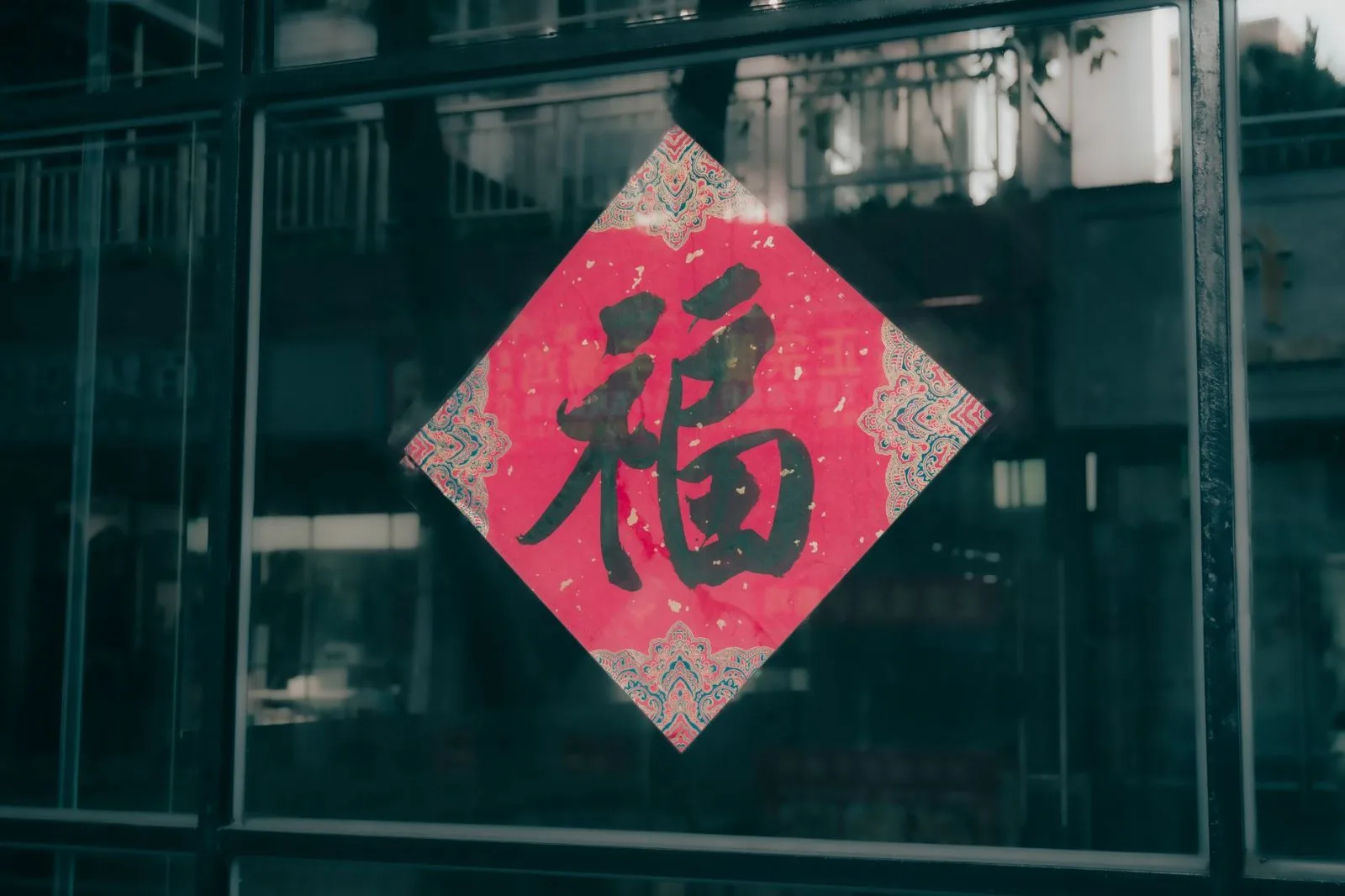
    The preparations begin weeks ahead. Homes are cleaned, debts settled, and red paper couplets pasted around the door, often with the character fu pasted upside down to suggest that good fortune has arrived. New Year’s Eve is the centre of the festival. Families travel home for a long meal that includes jiaozi, dumplings shaped like ancient coins; in northern China they are eaten at midnight. Fish is served because the word for fish sounds like surplus, and a whole fish is often left partly uneaten. Firecrackers once marked the transition, though many urban areas restrict them. After dinner, many families watch the CCTV Spring Festival Gala while red envelopes are handed to children and unmarried younger relatives.

    Red couplets and lanterns decorating a Beijing doorway for Spring Festival
    Red couplets and the character fu mark a household ready for the new year. Matthew Jesús | Pexels License (https://www.pexels.com/license/)

    Visiting and Red Envelopes

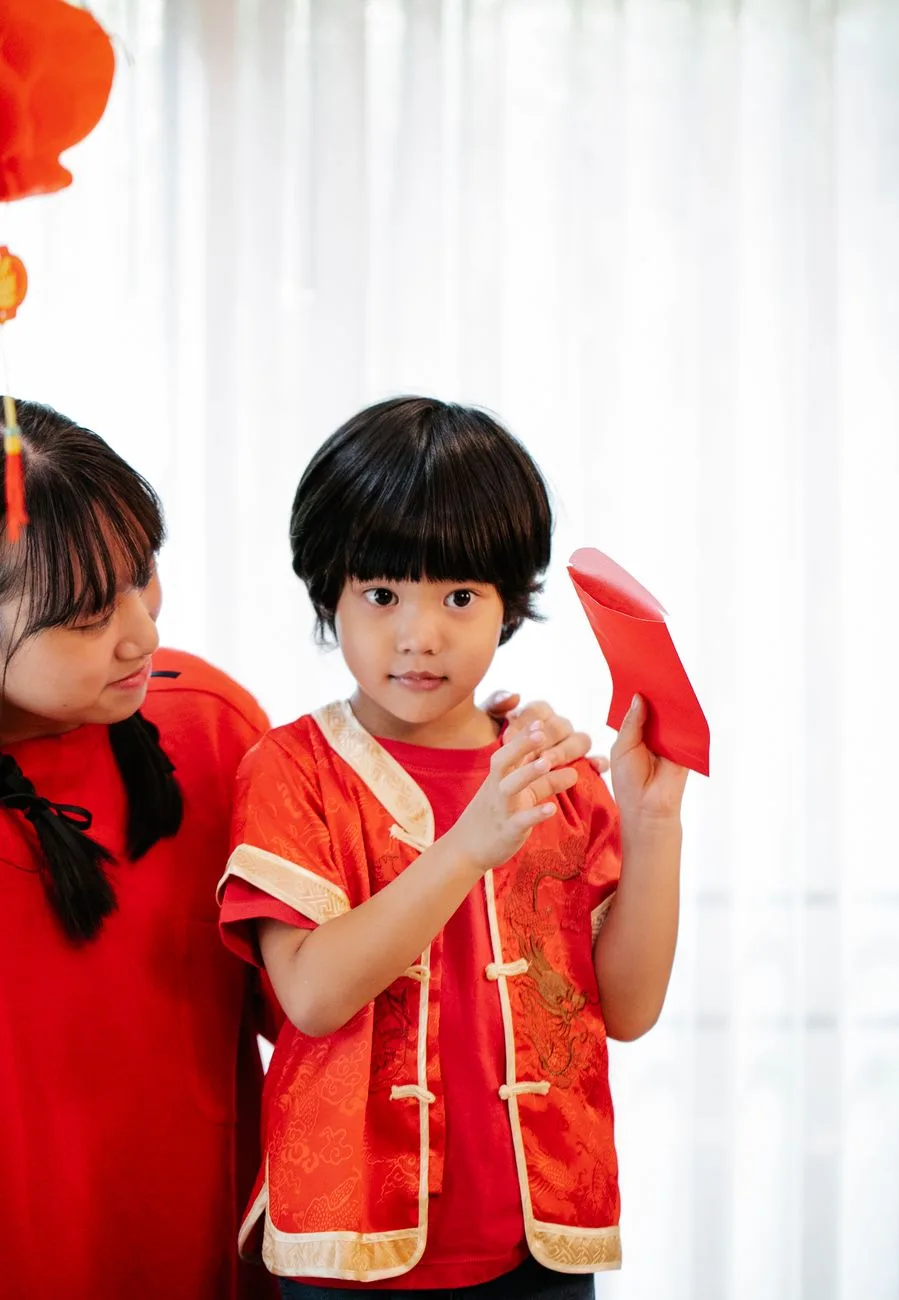
    The first days are for bainian, visits to relatives and neighbours. People call on the oldest family members first, bringing fruit, tea, or sweets, and greet one another with phrases wishing prosperity and health. Hongbao, red envelopes containing cash, pass from married adults to children and younger unmarried relatives; amounts end in even numbers and are accepted with both hands and a thank-you. Hosts offer a tray of snacks, often including candied fruits and melon seeds, before a meal. Visiting over several days is normal, and a phone message has become an accepted substitute for distant friends. Dress is neat rather than formal, and arriving empty-handed is less important than arriving at all. The point of the circuit is to renew the relationships that hold a family network together.

    Red envelopes being handed to a child during a New Year visit
    Hongbao pass from older to younger relatives during the first days of the year. Angela Roma | Licence Pexels (https://www.pexels.com/license/)

    Beijing Temple Fairs

    Beijing’s miaohui, or temple fairs, turn temple courtyards and parks into markets for the duration of the holiday. The fairs at Ditan, Taoranting, Baiyunguan, and the Summer Palace sell dolls, sugar paintings, paper cuts, and skewered snacks, with opera singers, acrobats, and lion dancers performing in the middle of the crowd. They began as religious gatherings attached to temple festivals and became popular public entertainments; today they are as much a family outing as a religious event. Admission is usually a small fee, and the busiest hours are afternoon. Metro stations near the parks are crowded, so go early and expect a queue for the best-known fairs. The atmosphere is informal: eat while you walk, watch a performance from the edge, and keep an eye on children.

    A crowded Beijing temple fair with red lanterns and market stalls
    Temple fairs bring opera, snacks, and craft stalls to parks and temple courtyards. zimochen | Pexels License (https://www.pexels.com/license/)

    The Fifteenth Day and a Global Holiday

    The festival closes with Yuanxiao, the Lantern Festival, on the fifteenth day of the first lunar month. Streets and parks hang lanterns, families eat sweet rice balls called tangyuan, and lantern riddles invite a guess before the night ends. In Beijing, some neighbourhoods still stage dragon dances and drum processions. The Spring Festival was inscribed on UNESCO’s intangible cultural heritage list in 2024, recognising practices that extend well beyond one city. For visitors, the practical notes are straightforward. The public holiday closes shops and offices for several days, transport is crowded, and prices for flights and hotels rise. Book early, carry cash in small notes for envelopes and market stalls, and accept that some days are better spent with a family invitation than with a museum itinerary.

    Red at the door, fish on the table, and an envelope in the hand mark the year’s first days.

    Sources et lectures complémentaires

    1. Spring festival, social practices of the Chinese people in celebration of traditional new year — Patrimoine culturel immatériel de l'UNESCO.
    2. Nouvel An chinois — Encyclopædia Britannica.
    3. Chinese New Year travel and festivals — China Highlights.

    Voyez-le sur place

    Suivez ce lien jusqu'à la région correspondante.

    Explorer par carte

    Suivez le fil de discussion

    Consultez les autres articles qui partagent les mêmes étiquettes.

    Parcourir l'étiquette
  • Le festival des lanternes

    Vie et folklore

    Le festival des lanternes

    Lights on the Fifteenth Night

    The fifteenth night of the first lunar month closes the New Year with lanterns and sweet rice balls.

    Section
    Vie et folklore
    Région
    Pékin
    Ère
    À travers les époques
    Étiquettes
    Douanes, alimentation

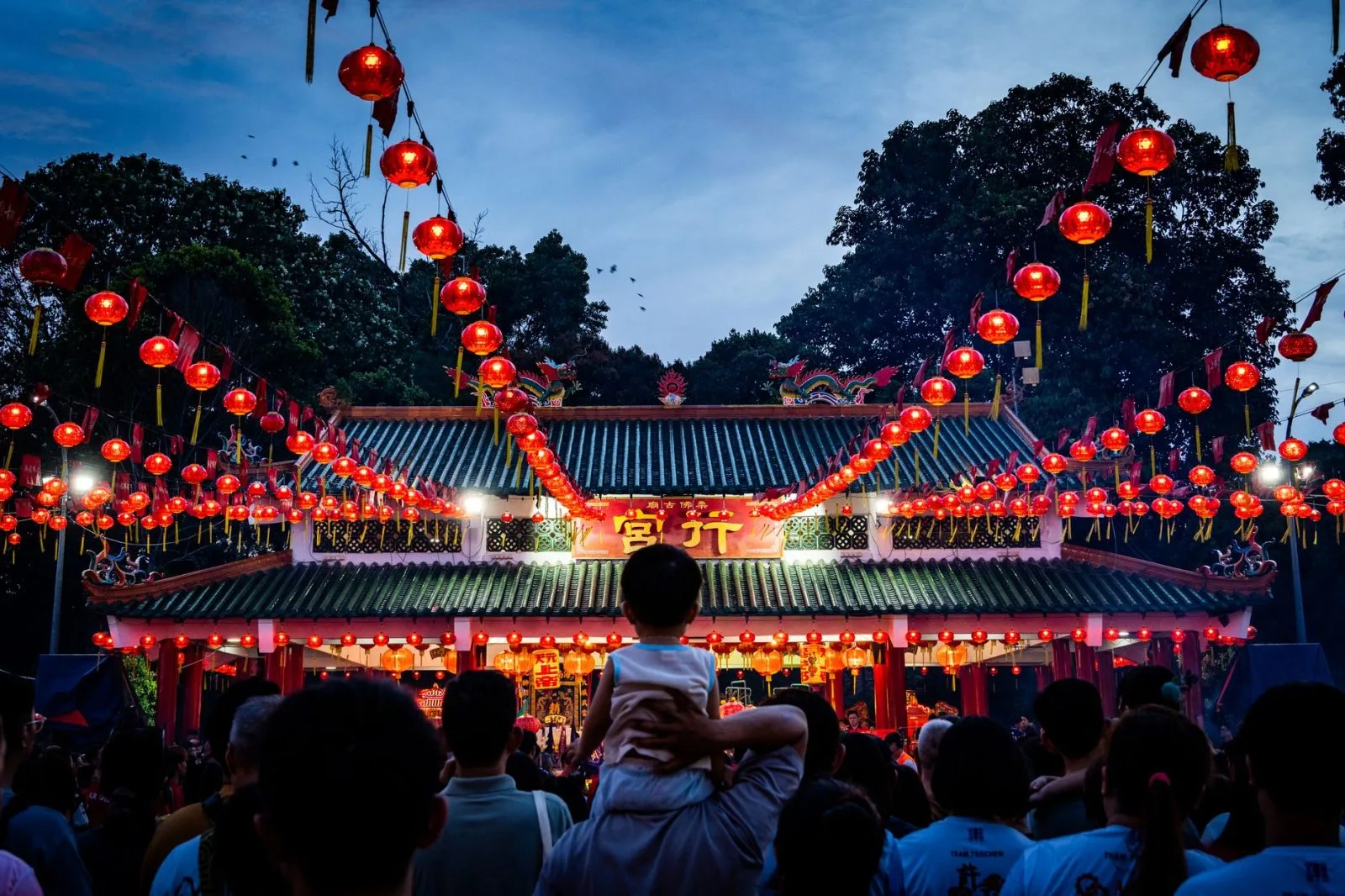
    The Lantern Festival falls on the fifteenth day of the first lunar month, the first full moon of the year. Lanterns, night markets, riddles, and tangyuan rice balls mark the end of the New Year period.

    Origins in Calendar and Court

    The festival’s date follows the lunar calendar, so its Gregorian date changes each year. Several origins are cited. Emperor Wen of Han is said to have declared a public holiday around 180 BCE after defeating the Lü clan, while the Eastern Han emperor Ming promoted lantern displays in the first century CE as Buddhism spread. Daoist tradition associated the day with the heavenly official who grants blessings. By the Tang dynasty, the festival had become a major urban occasion: court records describe vast lantern displays in Chang’an and Luoyang, and the poet Su Weidao wrote of night markets bright as day. The Tang court relaxed curfew so people could view the lights.

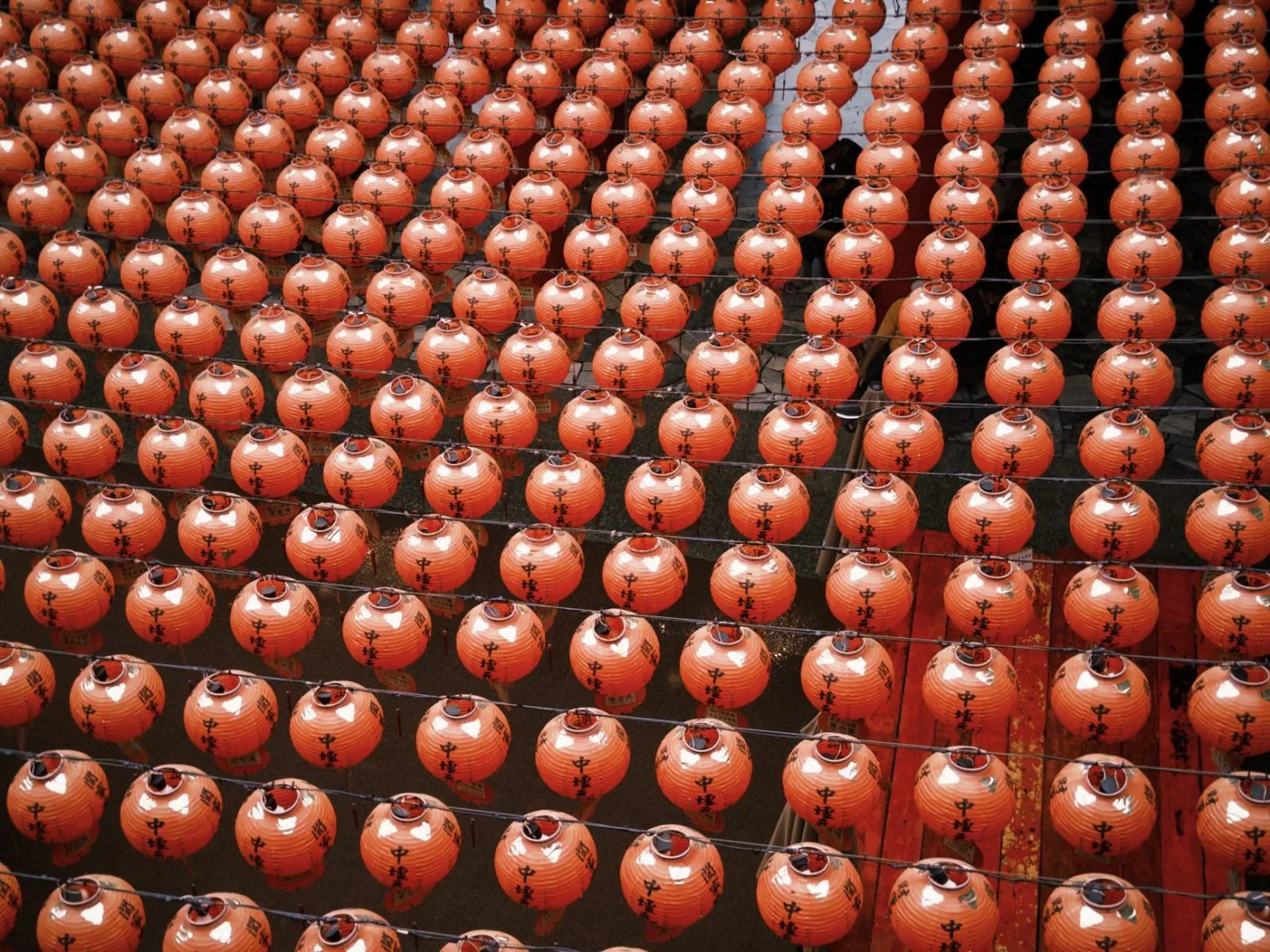
    Rows of illuminated red lanterns hanging along a street during a night festival
    Tang cities relaxed curfew so residents could walk among the lanterns at night. zack ZHUO | Pexels License (https://www.pexels.com/license/)

    Riddles, Lions, and Processions

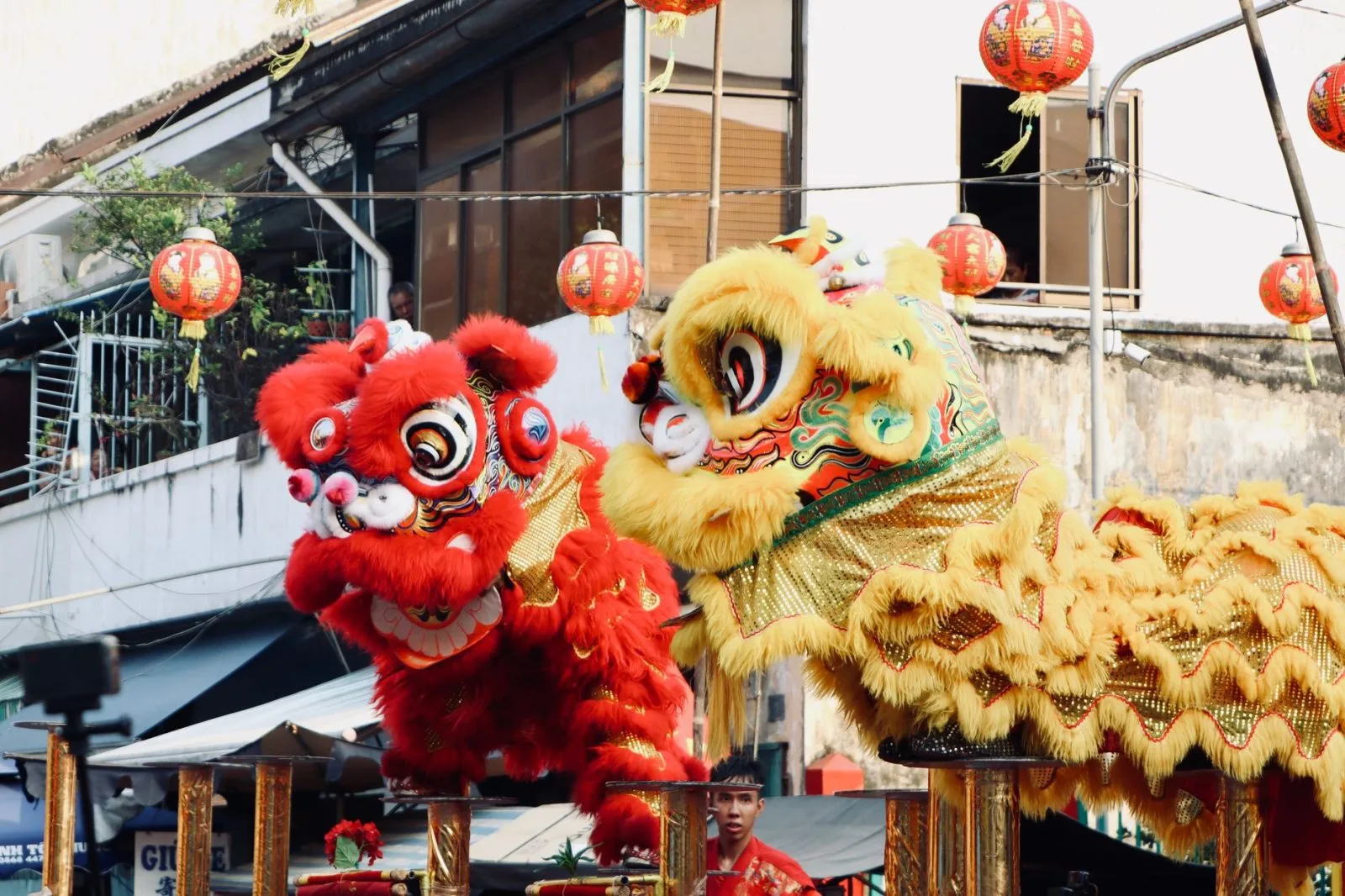
    Lantern riddles are written on slips attached to the lamps; solving one is a small test of wordplay and classical learning. Lion dances, dragon dances, and walking-on-stilts performances draw crowds in the streets, with local troupes competing for space and applause. In some places, people carry lanterns representing animals or characters, and children pull small lanterns on sticks. Beijing’s temple fairs once gathered vendors, performers, and visitors around temple courtyards; today the festival is also marked in parks and commercial districts. Taiwan is known for large lantern festivals and elaborate installations, while Nanjing has long been associated with elaborate lantern craft along the Qinhuai River.

    A lion dance troupe leaping beneath hanging lanterns during a street celebration
    Processions and lion dances turn the festival into a public performance. Pham Huynh Tuan Vy | Pexels License (https://www.pexels.com/license/)

    Tangyuan and the Taste of Reunion

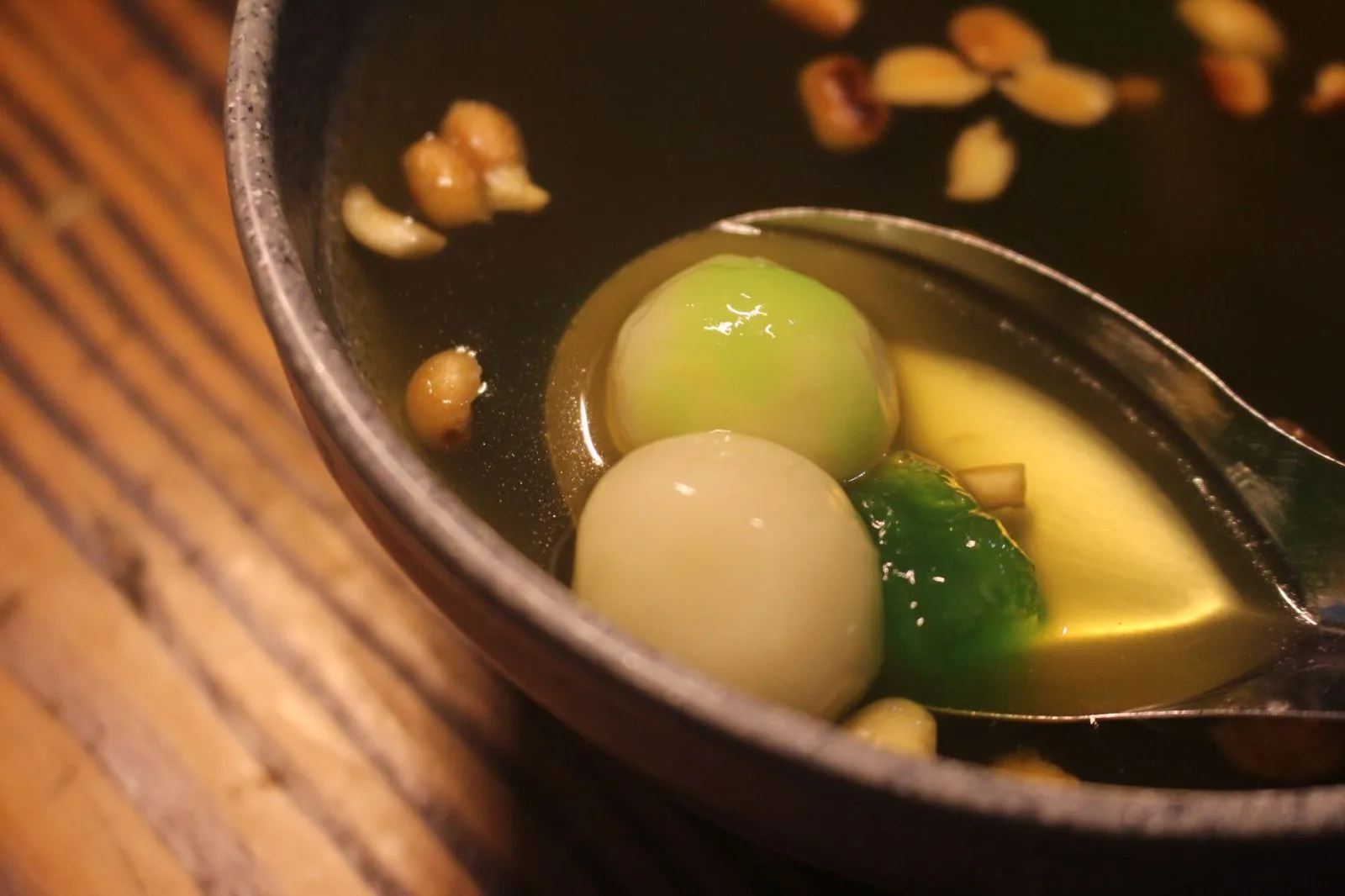
    The festival food is tangyuan in southern China and often yuanxiao in the north, both made from glutinous rice flour around a sweet filling. The names and methods differ: southern cooks wrap a soft dough around filling, while northern cooks may roll moistened filling in dry rice flour in repeated layers. Fillings include black sesame paste, red bean, peanut, and osmanthus sugar. The round shape suggests family unity, and the bowls are shared after the evening’s walk. In Ningbo, black-sesame tangyuan are a local speciality; in Shanghai and Suzhou they are sold from neighbourhood shops. Sweet rice wine and small glutinous balls are also served in some regions.

    • Black sesame, red bean, and peanut fillings
    • Southern wrapped tangyuan and northern rolled yuanxiao
    • Lantern riddles attached to public displays
    • Dragon and lion processions after dark
    A bowl of small white glutinous rice balls in clear sweet soup
    Round rice balls symbolise reunion at the first full moon. Jauhar Musthofal Qulub | Pexels License (https://www.pexels.com/license/)

    The Festival in Modern Cities

    The festival remains a public holiday in mainland China, though the number of days off and the school calendar vary. Major cities install temporary lighting, close some streets to traffic, and run lantern displays in parks and along rivers. Viewing a lantern show often means walking slowly in crowds; in Beijing, the temperature can still be below freezing, so warm layers matter. Photographers should check local rules on tripods and drones. Shopping districts extend the season commercially, but temple fairs and neighbourhood associations keep older practices alive. The date’s movement also means the festival may fall during term time or a working week, changing how families gather.

    The first full moon turns a winter street into a temporary gallery of paper, silk, and light.

    Sources et lectures complémentaires

    1. Festival des Lanternes — Encyclopædia Britannica.
    2. Chinese Lantern Festival — China Highlights.
    3. Yuanxiao Festival — World History Encyclopedia.

    Voyez-le sur place

    Suivez ce lien jusqu'à la région correspondante.

    Explorer par carte

    Suivez le fil de discussion

    Consultez les autres articles qui partagent les mêmes étiquettes.

    Parcourir l'étiquette
  • Boulettes

    Vie et folklore

    Boulettes

    Caisses de blé remplies et rituel d'hiver

    Les raviolis du nord de la Chine transforment une pâte à base de blé et des farces de saison en un repas convivial.

    Section
    Vie et folklore
    Région
    Pékin
    Ère
    À travers les époques
    Étiquettes
    Douanes, alimentation

    Les jiaozi sont des raviolis farcis à base de blé, cuits à l'eau bouillante, à la vapeur ou frits. Dans le nord de la Chine, ils sont préparés pour célébrer le solstice d'hiver et le Nouvel An lunaire : les familles se réunissent alors autour d'une table pour confectionner des jiaozi, qu'elles plient à la main.

    Le blé dans l'alimentation nordique

    Les raviolis sont originaires de la région du blé et du millet du nord de la Chine, où la farine de blé devint un aliment de base sous les Han et les dynasties suivantes. Leur forme a été comparée à l'ancienne monnaie chinoise, ce qui explique leur présence dans le vocabulaire du Nouvel An : « jiaozi » sonne comme une expression désignant l'échange de trésors. Une tradition bien connue associe les raviolis au médecin Zhang Zhongjing, qui aurait confectionné des petits paquets de pâte farcis pour soigner les engelures aux oreilles durant la dynastie Han. Cette histoire est difficile à vérifier, mais elle explique la coutume de les consommer par temps froid. Les preuves archéologiques concernant les aliments à base de blé farcis sont plus claires que celles permettant d'attribuer un inventeur unique à ce mets.

    Une rangée de raviolis jiaozi plissés posés sur une planche en bois farinée
    Le bord plissé scelle la farce et donne à chaque ravioli sa forme familière. Angela Roma | Licence Pexels (https://www.pexels.com/license/)

    Pâte, farce et pliage

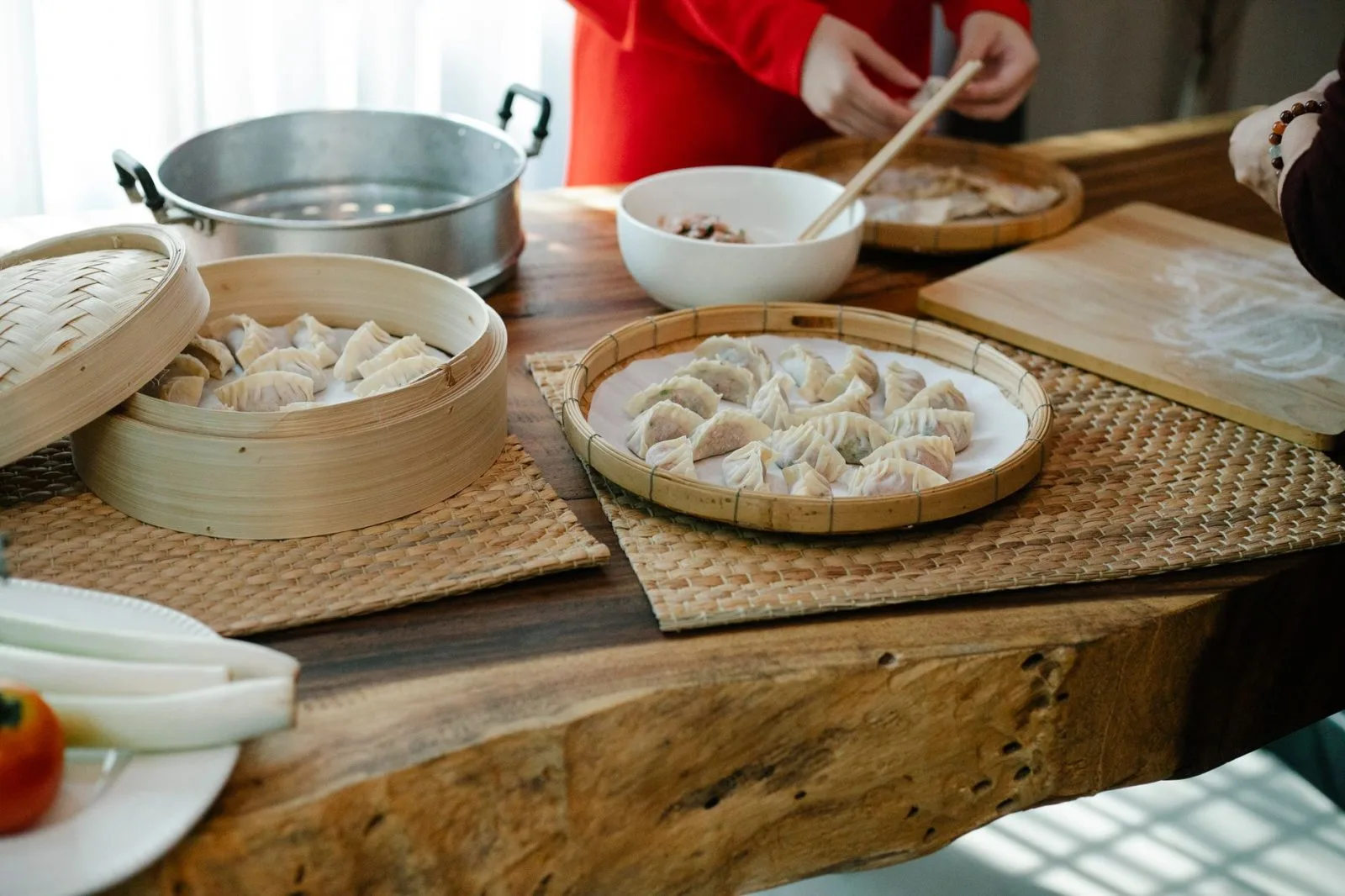
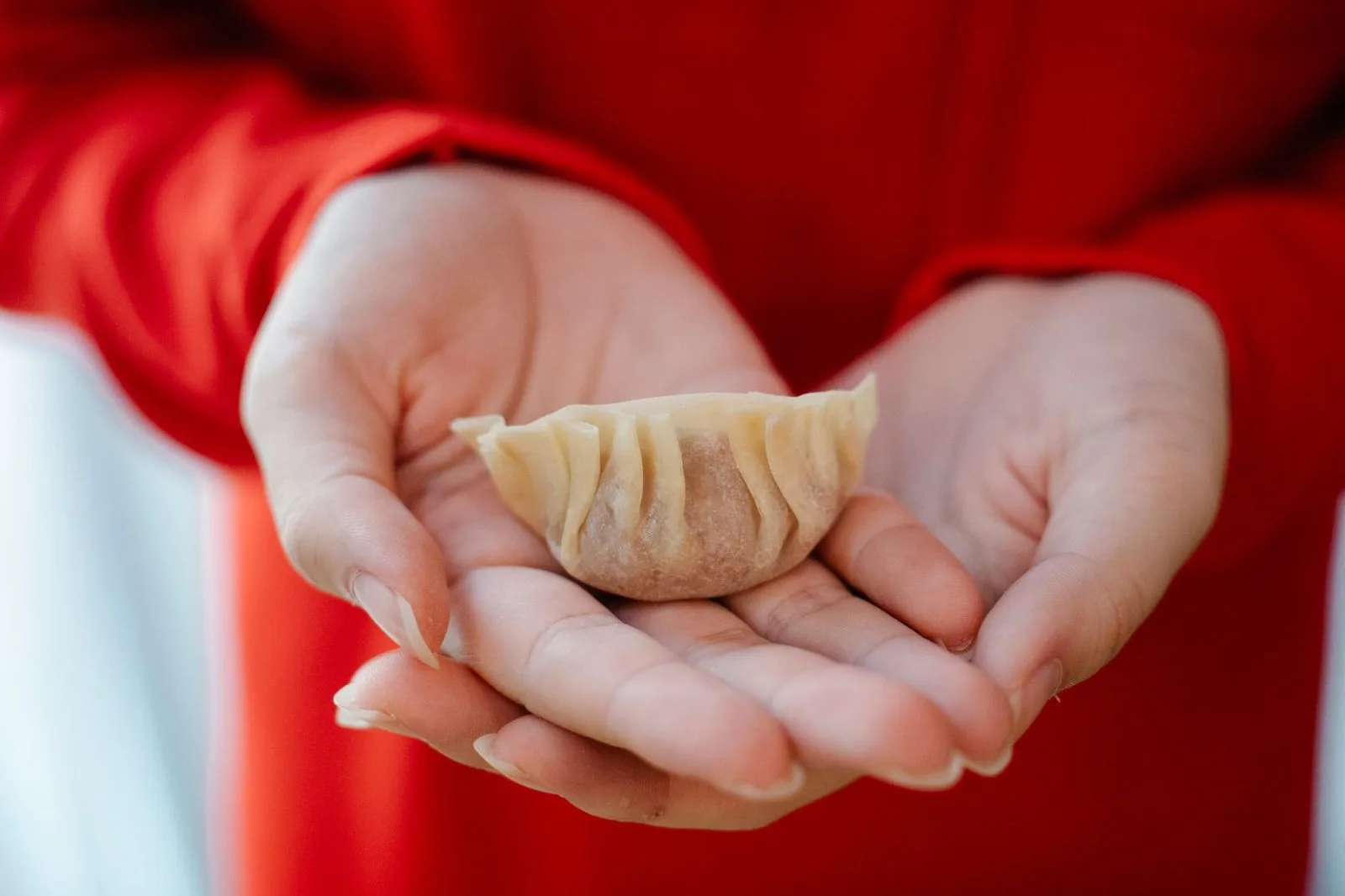
    La pâte de base des jiaozi est composée de farine de blé et d'eau. On la laisse reposer pour que le gluten se détende et que la pâte puisse être étalée finement sans se déchirer. Certains cuisiniers ajoutent un œuf ou utilisent de l'eau chaude en remplacement d'une partie de la farine pour obtenir une texture plus moelleuse. La farce est finement hachée pour bien cuire : porc avec chou, ciboulette ou poireaux ; agneau avec oignon dans le nord-ouest ; crevettes et œuf dans les régions côtières. On place la farce au centre, on replie la pâte et on presse les plis le long de la jointure. Une fermeture hermétique est essentielle, car la cuisson à l'eau risque d'ouvrir la pâte si de l'air reste emprisonné. Les farces végétariennes à base de tofu, de champignons ou d'œuf sont courantes, notamment pour les visites aux temples et les périodes de jeûne.

    Des mains pincent les plis le long du bord d'un ravioli cru
    Le pliage scelle le paquet ; chaque famille peut préférer un pliage différent. Angela Roma | Licence Pexels (https://www.pexels.com/license/)

    Bouilli, cuit à la vapeur et frit

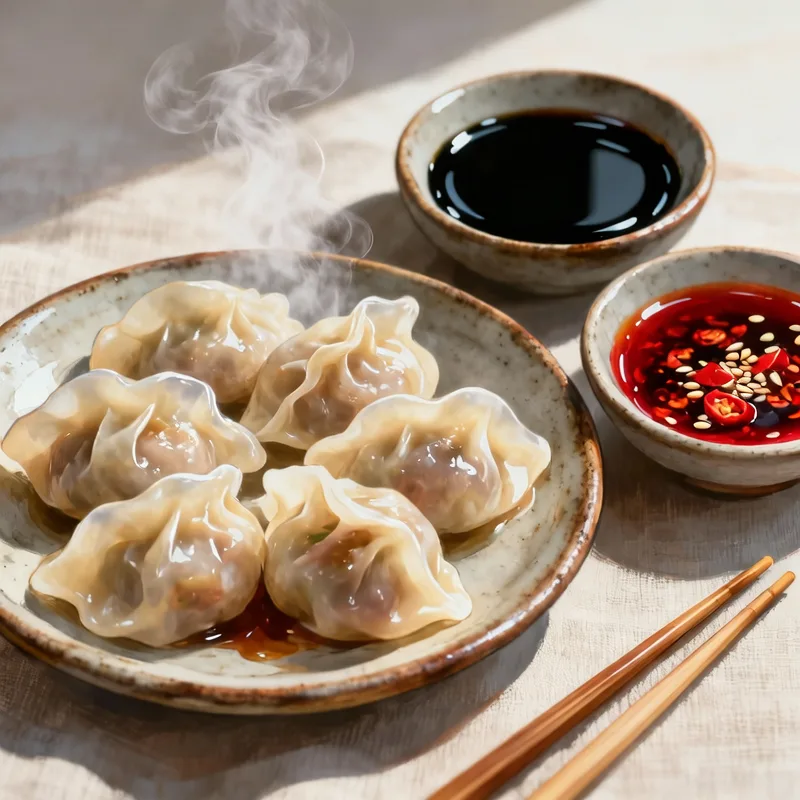
    La méthode la plus courante est la cuisson à l'eau bouillante : les raviolis sont placés dans une grande casserole, remués délicatement du fond, et cuits jusqu'à ce qu'ils remontent à la surface et gonflent. Dans le nord du pays, on ajoute souvent un peu d'eau froide lorsque l'eau bout à nouveau, et l'opération est répétée trois fois pour obtenir une pâte ferme. Le potsticker, ou guotie, est frit d'un côté, puis cuit à la vapeur à couvert avec un peu d'eau, ce qui lui confère une base croustillante. Les versions du sud et de la diaspora incluent les har gow cuits à la vapeur avec des crevettes et une pâte translucide à base d'amidon de blé. Les sauces varient, allant du vinaigre noir et du gingembre à la sauce soja avec de l'huile de piment ou de l'ail. Les farces varient également : le porc et la ciboulette dominent à Pékin, le bœuf et l'agneau apparaissent dans les communautés musulmanes, et le chou ou les champignons conviennent aux villes plus froides de l'intérieur des terres.

    • Jiaozi bouilli pour le Nouvel An et le solstice d'hiver
    • Guotie avec une base frite croustillante
    • Vinaigre noir et gingembre, une trempette classique
    • Garnitures régionales à base de porc, d'agneau, de crevettes ou de légumes
    Boulettes bouillies servies avec des petits ramequins de vinaigre et d'huile pimentée
    Une sauce au vinaigre et au gingembre permet de contrebalancer la richesse des farces au porc. Illustration générée par IA · SinoViz

    Les fabriquer ensemble

    Les raviolis sont un mets convivial car leur préparation prend du temps. La veille du Nouvel An lunaire, plusieurs générations peuvent rouler la pâte, hacher la farce et plier des dizaines, voire des centaines de raviolis ensemble ; certains ont la forme de pièces de monnaie ou contiennent une pièce propre, symbole de chance. Le repas est souvent organisé autour des membres les plus âgés de la famille. Les restes sont frits le lendemain, et on trouve désormais des raviolis surgelés dans les supermarchés en Chine et à l’étranger. Les versions proposées dans les restaurants varient, des raviolis d’agneau des maisons pékinoises aux guotie de Shanghai et aux xiaolongbao fourrés à la soupe, qui appartiennent à une famille de brioches vapeur apparentée mais distincte.

    Préparer des raviolis, c'est un petit morceau d'organisation domestique : de la pâte, de la farce, des mains et une raison de se réunir.

    Sources et lectures complémentaires

    1. Dumpling — Encyclopædia Britannica.
    2. Jiaozi — Encyclopædia Britannica.
    3. Nouvel An chinois — Encyclopædia Britannica.

    Voyez-le sur place

    Suivez ce lien jusqu'à la région correspondante.

    Explorer par carte

    Suivez le fil de discussion

    Consultez les autres articles qui partagent les mêmes étiquettes.

    Parcourir l'étiquette
  • Orfèvrerie Miao

    Vie et folklore

    Orfèvrerie Miao

    Ornament, Memory, and Festival Dress

    Miao silver ornaments carry family history and local identity in festival dress across southwest China.

    Section
    Vie et folklore
    Région
    Yunnan
    Ère
    À travers les époques
    Étiquettes
    Customs, Ethnic, Scenic Sites

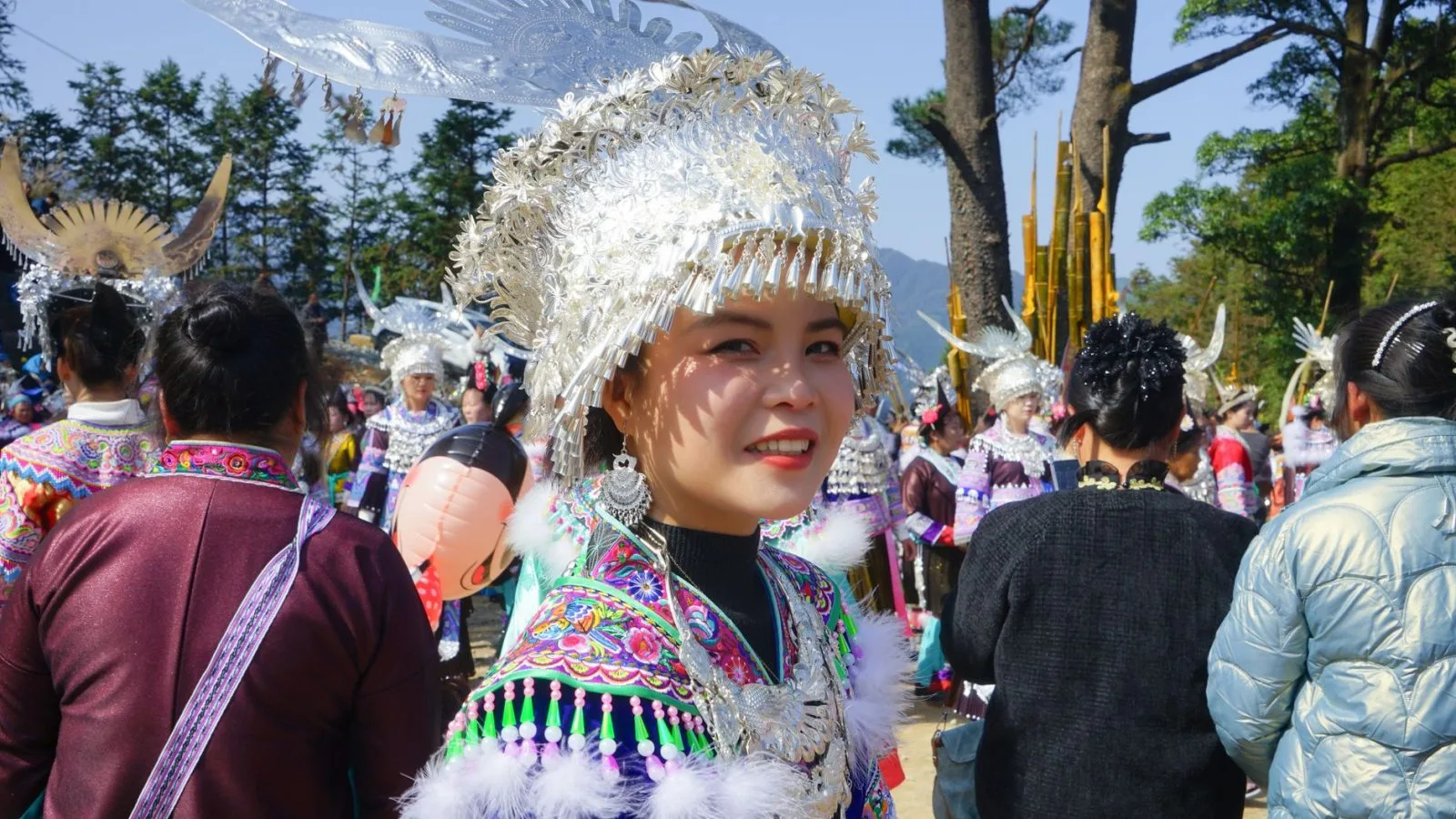
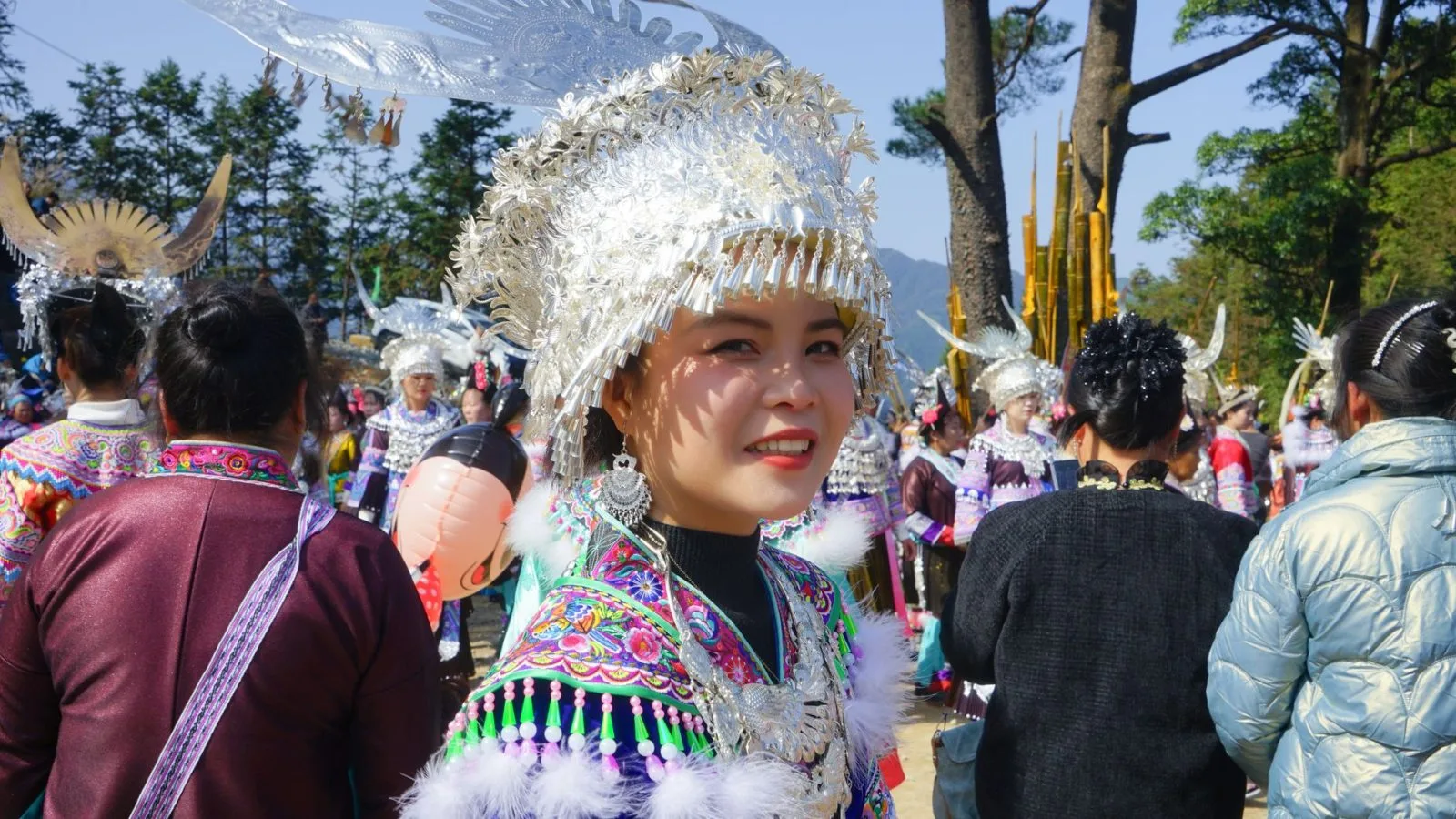
    Miao silverwork is a family of adornments—headdresses, collars, earrings, and bracelets—made by Miao communities in Guizhou, Yunnan, and neighbouring regions. The pieces are worn most visibly at festivals and weddings.

    A Distributed Craft Tradition

    Miao communities live across Guizhou, Yunnan, Guangxi, Sichuan, and Southeast Asia, and silverwork varies by locality. In Yunnan, Miao villages around Wenshan and Honghe maintain styles that differ from the better-known Guizhou counties of Xijiang and Kaili. Ornaments are made by specialised silversmiths who work in small workshops, often serving several villages. Designs are learned through apprenticeship rather than written patterns: a young smith repeats forms copied from older pieces and festival dress. Motifs may draw on local birds, flowers, insects, and coins, though their meanings are not fixed. Families accumulate ornaments over generations, and a daughter’s festival headdress may represent years of saving.

    A Miao headdress with silver horns, plaques, and hanging ornaments at a festival
    Headdresses combine family heirlooms with pieces made for a specific occasion. Jaqor Q.I. | Pexels License (https://www.pexels.com/license/)

    Sheet, Wire, and Repoussé

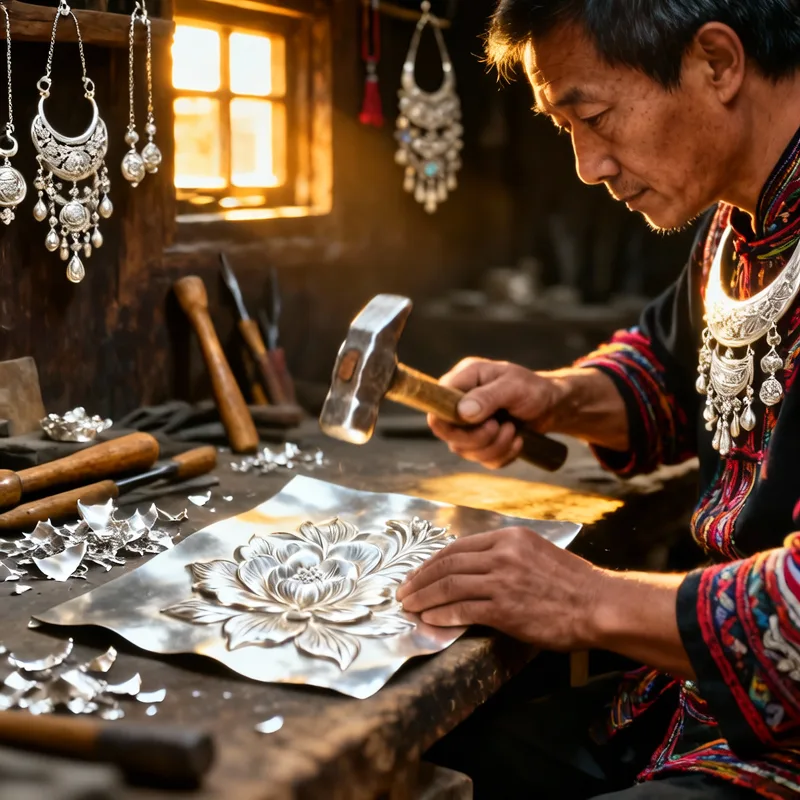
    Much Miao silverwork begins with sheet silver and wire. The smith hammers ingots into thin sheets, cuts strips, and raises patterns from the reverse with repoussé, a technique of punching and chasing to form relief. Horsehair-thin wires are twisted and soldered into filigree, then built into openwork wings, horns, and floral sprays. A large headdress may combine a hammered band, dangling chains, repoussé plaques, and rows of tiny bells that move when the wearer turns. Silver is valued for its colour, workability, and traditional association with protection and prosperity. Many ornaments are hollow to reduce weight, since a full ceremonial headdress can be heavy enough to limit long wear.

    A Miao silversmith hammering a thin silver sheet into a raised floral plaque
    Repoussé raises the design from the back of a thin silver sheet. Illustration générée par IA · SinoViz

    Festival Wear and Social Meaning

    Silver ornaments are read as part of an entire costume, not as isolated jewellery. A Miao woman’s festival dress may include a pleated skirt, embroidered jacket, woven belt, and a silver collar shaped like a crescent or a pair of wings. In some communities, the number and form of earrings or neck rings indicate village affiliation or marital status. During the Lunar New Year, harvest celebrations, and the Miao New Year in some areas, women and girls wear family sets while groups sing, dance, and process between villages. The ornaments catch light during movement, making dress a visual part of the performance. Men may wear silver buttons, chains, or small pendants with less ceremonial weight.

    • Repoussé plaques raised from thin silver sheet
    • Twisted wire and openwork filigree
    • Headdresses with horns, chains, and bells
    • Costumes worn for New Year and wedding rituals
    Women in embroidered Miao festival dress wearing heavy silver collars and earrings
    Ornaments are worn with embroidery and weaving as one costume system. Jaqor Q.I. | Pexels License (https://www.pexels.com/license/)

    Markets, Tourism, and Continuity

    Silverwork circulates through village workshops, regional markets, and tourism. Visitors to Miao villages in Yunnan and Guizhou can watch smiths shaping small pieces, though the most important heirlooms are usually not for sale. Reproductions sold as souvenirs range from careful miniatures to inexpensive plated metal, so asking whether a piece is solid silver matters. Museums and cultural centres document older headdresses and collars, but the living context remains local dress. Some communities have revived festival costumes and taught silversmithing to younger people, while migration and wage work change who has time to make and wear them. The craft’s future depends less on novelty than on continued occasions to use it.

    A Miao headdress is worn jewellery and a portable archive of family work at the same time.

    Sources et lectures complémentaires

    1. Miao people — Encyclopædia Britannica.
    2. Chinese silver jewellery — Victoria and Albert Museum.
    3. Miao ethnic culture — China Highlights.

    Voyez-le sur place

    Suivez ce lien jusqu'à la région correspondante.

    Explorer par carte

    Suivez le fil de discussion

    Consultez les autres articles qui partagent les mêmes étiquettes.

    Parcourir l'étiquette
  • Poésie Tang

    Chronique

    Poésie Tang

    L'âge d'or de la poésie chinoise

    Les poètes Tang ont transformé l'artisanat de cour, les voyages aux frontières et la pensée bouddhiste en poèmes courts et intemporels.

    Section
    Chronique
    Région
    Shaanxi
    Ère
    sui-tang
    Étiquettes
    Coutumes, Histoire

    La dynastie Tang (618-907) a produit le corpus le plus célèbre de la poésie classique chinoise. Les poèmes ont voyagé dans des manuscrits, des anthologies, des inscriptions et des représentations, reliant la capitale Chang'an aux postes frontières et aux monastères.

    Chang'an et le poète officiel

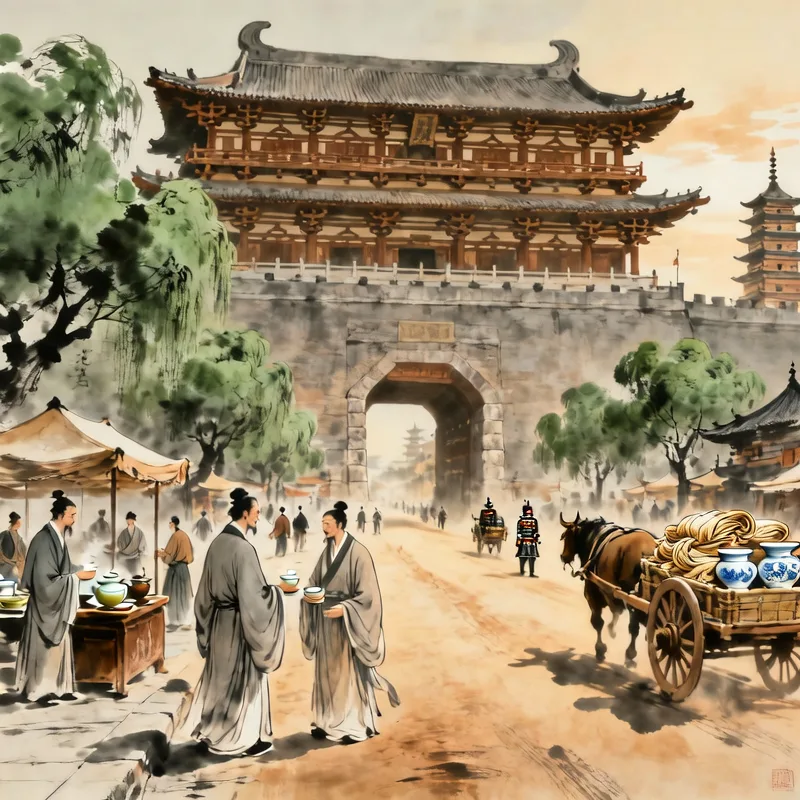
    Sous la dynastie Tang, la poésie était intimement liée au système des examens et à la vie officielle. Les candidats étaient évalués sur leur capacité à composer des vers réguliers, et leurs essais en prose étaient accompagnés de poèmes ; la réussite pouvait leur valoir des nominations et la possibilité de diffuser leurs œuvres auprès de mécènes. Chang'an, la capitale proche de l'actuelle Xi'an, comptait environ un million d'habitants à son apogée, et possédait des marchés, des temples et des communautés étrangères. Les poètes occupaient des postes éloignés, écrivaient des poèmes d'adieu et composaient pour les occasions publiques. Le Quan Tangshi, compilé au début du XVIIIe siècle sur ordre impérial, conserve plus de quarante-huit mille poèmes de plus de deux mille auteurs. Son ampleur témoigne de l'importance de la poésie dans la vie des lettrés.

    Une porte de ville et une large avenue de l'époque Tang dans l'ancienne capitale Chang'an
    Des fonctionnaires et des poètes déambulaient dans les marchés, les temples et les bureaux gouvernementaux de la capitale. Illustration générée par IA · SinoViz

    Règle et liberté dans la poésie réglementée

    Les poètes Tang exploraient plusieurs formes poétiques. Le lüshi, ou vers régulier, se compose de huit vers de cinq ou sept caractères, avec des schémas tonaux stricts et un parallélisme marqué entre les distiques centraux. Les jueju sont des poèmes de quatre vers, d'apparence familière, mais souvent construits sur une réflexion profonde. Les anciennes formes de ballades yuefu et les poèmes en prose fu restèrent en usage. Du Fu (712-770) maîtrisa le vers régulier et y intégra l'observation sociale, écrivant sur la corruption, la guerre et la famine, ainsi que sur les paysages. Li Bai (701-762) est connu pour une voix plus libre et plus ample, bien que ses meilleurs poèmes soient également d'une grande précision. Wang Wei (701-759) écrivit des poèmes paysagers concis, influencés par le bouddhisme Chan.

    Un paysage ouvert de montagnes et de brume rappelant les décors des poèmes paysagers Tang.
    La poésie paysagère utilise souvent une scène restreinte pour suggérer un état d'esprit plus vaste. Illustration générée par IA · SinoViz

    Frontière, exil et Sud

    Les décennies qui suivirent la rébellion d'An Lushan (755-763) redessinèrent le paysage poétique. Du Fu s'enfuit à travers le nord de la Chine ravagé par la guerre et s'installa plus tard à Chengdu, où ses poèmes, inspirés par les huttes de chaume, mêlent détails du quotidien et souffrance politique. Les fonctionnaires exilés vers le sud écrivirent sur les fleuves, la chaleur et les langues étrangères. La frontière inspira des poèmes sur les armées en marche, le vent du désert et la vie quotidienne d'un soldat, comme dans l'œuvre de Cen Shen et Gao Shi. Les voyages de Li Bai le menèrent du Sichuan au Yangtsé et vers le nord ; la légende de sa mort par noyade dans un fleuve du sud, bien que répandue, demeure incertaine. Ces mouvements diversifièrent les thèmes de la poésie classique et diffusèrent le style Tang dans les cercles littéraires régionaux.

    • Les vers de Du Fu sur la guerre, la pauvreté et la vie ordinaire
    • Les longs voyages et les chansons à boire de Li Bai
    • Les paysages de Wang Wei influencés par le Chan
    • Poèmes de frontière de Gao Shi et Cen Shen
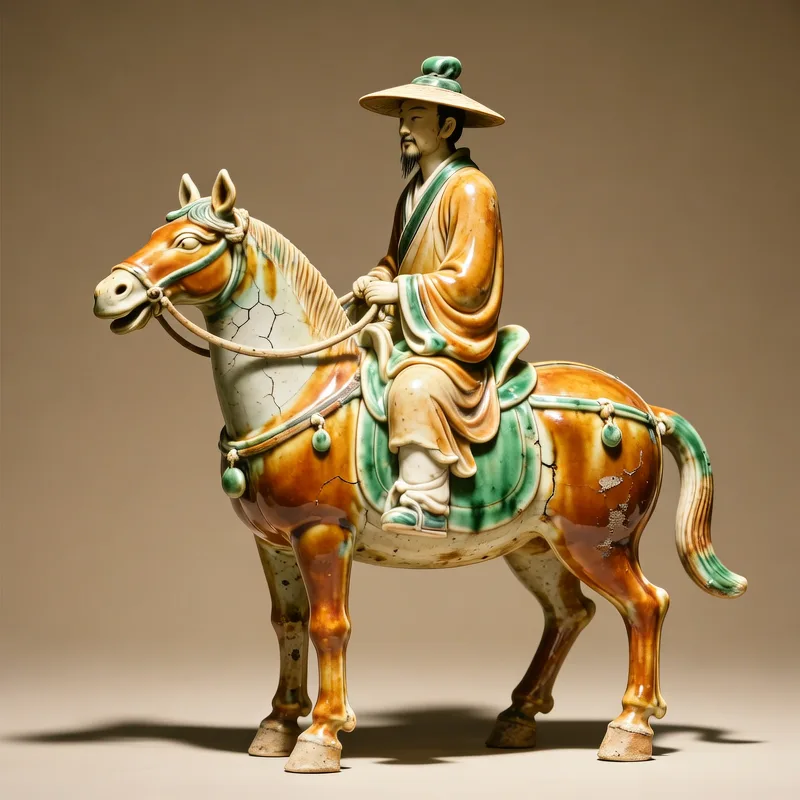
    Une figurine en céramique de la dynastie Tang représentant un voyageur à cheval lors d'un long voyage.
    Les voyages, l'exil et le service militaire ont fourni à la poésie Tang nombre de ses sujets. Illustration générée par IA · SinoViz

    Vie après la mort du poème Tang

    La poésie Tang est devenue un patrimoine culturel partagé. Les écoliers apprenaient les vers par cœur, les calligraphes recopiaient les poèmes et les auteurs Song, loin de rejeter les modèles Tang, les remettaient en question. Le canon Tang a également été façonné par les anthologies : le Tangshi Sanbaishou, compilé au XVIIIe siècle par Sun Zhu, demeure un recueil d’introduction de référence. Dans la Chine moderne, les poèmes de Li Bai et Du Fu sont récités lors d’occasions officielles et cités dans la conversation courante. Les traducteurs rendent les vers codifiés dans d’autres langues, bien que les schémas tonaux et les distiques parallèles rendent difficile une traduction littérale. Les visiteurs de Xi’an peuvent établir des liens entre ces poèmes et les musées du Shaanxi, les remparts de la ville Tang et les sites des quartiers et marchés de Chang’an.

    Un poème Tang peut contenir la politique d'un empire en huit vers, ou une montagne entière en quatre.

    Sources et lectures complémentaires

    1. dynastie Tang — Encyclopædia Britannica.
    2. littérature chinoise — Encyclopædia Britannica.
    3. Poésie Tang — Le Metropolitan Museum of Art.

    Voyez-le sur place

    Suivez ce lien jusqu'à la région correspondante.

    Explorer par carte

    Suivez le fil de discussion

    Consultez les autres articles qui partagent les mêmes étiquettes.

    Parcourir l'étiquette
  • Jardins de Suzhou

    Exploration de la carte

    Jardins de Suzhou

    Walled Landscapes of Song, Ming, and Qing

    Suzhou’s classical gardens turn rocks, water, and borrowed views into sequences of rooms.

    Section
    Exploration de la carte
    Région
    Zhejiang
    Ère
    À travers les époques
    Étiquettes
    Customs, Geography, Scenic Sites

    The classical gardens of Suzhou are private landscapes created beside houses in the lower Yangtze city. Their walls conceal carefully staged views, with pavilions, ponds, and rocks arranged for walking rather than looking from one point.

    A City of Scholar-Gardens

    Suzhou grew wealthy through silk, grain, and canal trade, and its officials and merchants built gardens behind urban houses. The tradition began early, but the surviving masterpieces are mostly Ming and Qing. The Humble Administrator’s Garden was laid out around 1509 by the official Wang Xianchen; the Lingering Garden began in the Ming and was rebuilt in the Qing; the Master of the Nets Garden was renovated in the late eighteenth century. A garden was an extension of the household, used for receiving guests, drinking tea, writing poetry, and quiet walking. Its name often carried a literary allusion or a modest self-description, a convention that invites visitors to read the landscape as text.

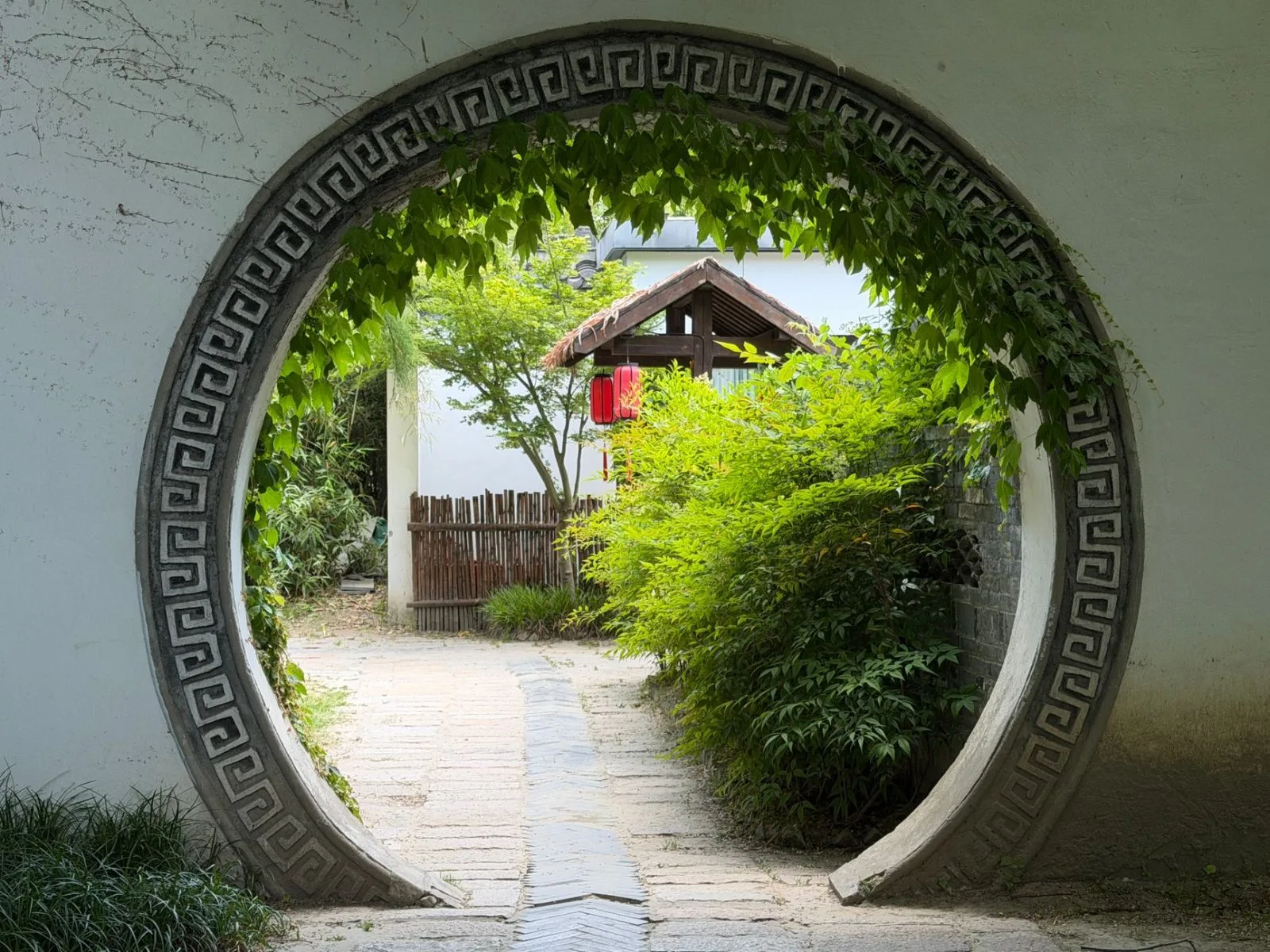
    A moon gate framing a pond, rockery, and pavilion in a Suzhou garden
    A moon gate frames one view while hiding the rest of the garden. Frank Lv | Pexels License (https://www.pexels.com/license/)

    Rocks, Water, and Borrowed Scenery

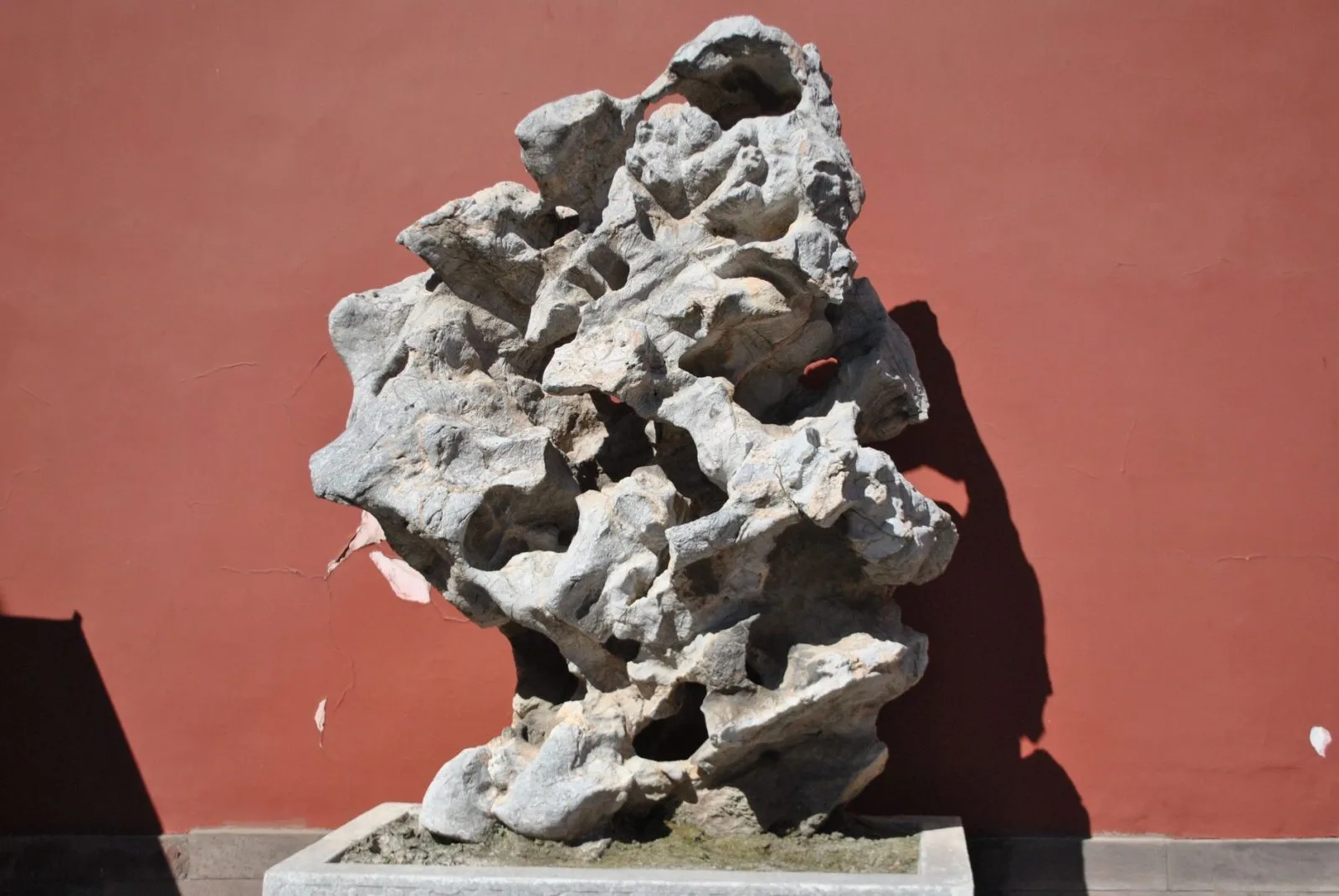
    Suzhou garden design works through layering. Taihu rocks from the lakes west of the city are prized for holes, ridges, and narrow waists; large stones are set as mountains that can be circled. Water occupies the centre of many gardens, with pavilions placed at edges or on islands so views change along a route. White walls act as paper for bamboo shadows and plant forms. The technique of ‘borrowed scenery’ frames a distant pagoda, tree, or hill beyond the garden wall, making the property feel larger. Covered corridors link halls and create repeated glimpses through lattice windows. Nothing is meant to be seen all at once: the garden unfolds as a sequence of framed moments.

    A perforated Taihu rock standing beside still water and a white garden wall
    Taihu stones were selected for openings and silhouettes that suggest mountains. Valeria Drozdova | Pexels License (https://www.pexels.com/license/)

    Four Gardens to Compare

    The Humble Administrator’s Garden is the largest of the classical group, with broad water, low islands, and the distant North Temple Pagoda borrowed into its views. The Master of the Nets Garden is compact, using changes in room size and courtyard density to surprise the visitor; its night performances are popular but timed entry is needed. The Lingering Garden is known for a sequence of entrance, rockery, and waterside halls that delays the main view. The Lion Grove Garden takes its name from rock forms said to resemble lions and invites close inspection of stone labyrinths. Together they show that a small urban plot could imitate mountains, rivers, and travel through careful design.

    • Humble Administrator’s Garden: broad water and borrowed pagoda view
    • Master of the Nets: compact rooms and staged transitions
    • Lingering Garden: rockery before the main pond
    • Lion Grove: dense Taihu stone labyrinth
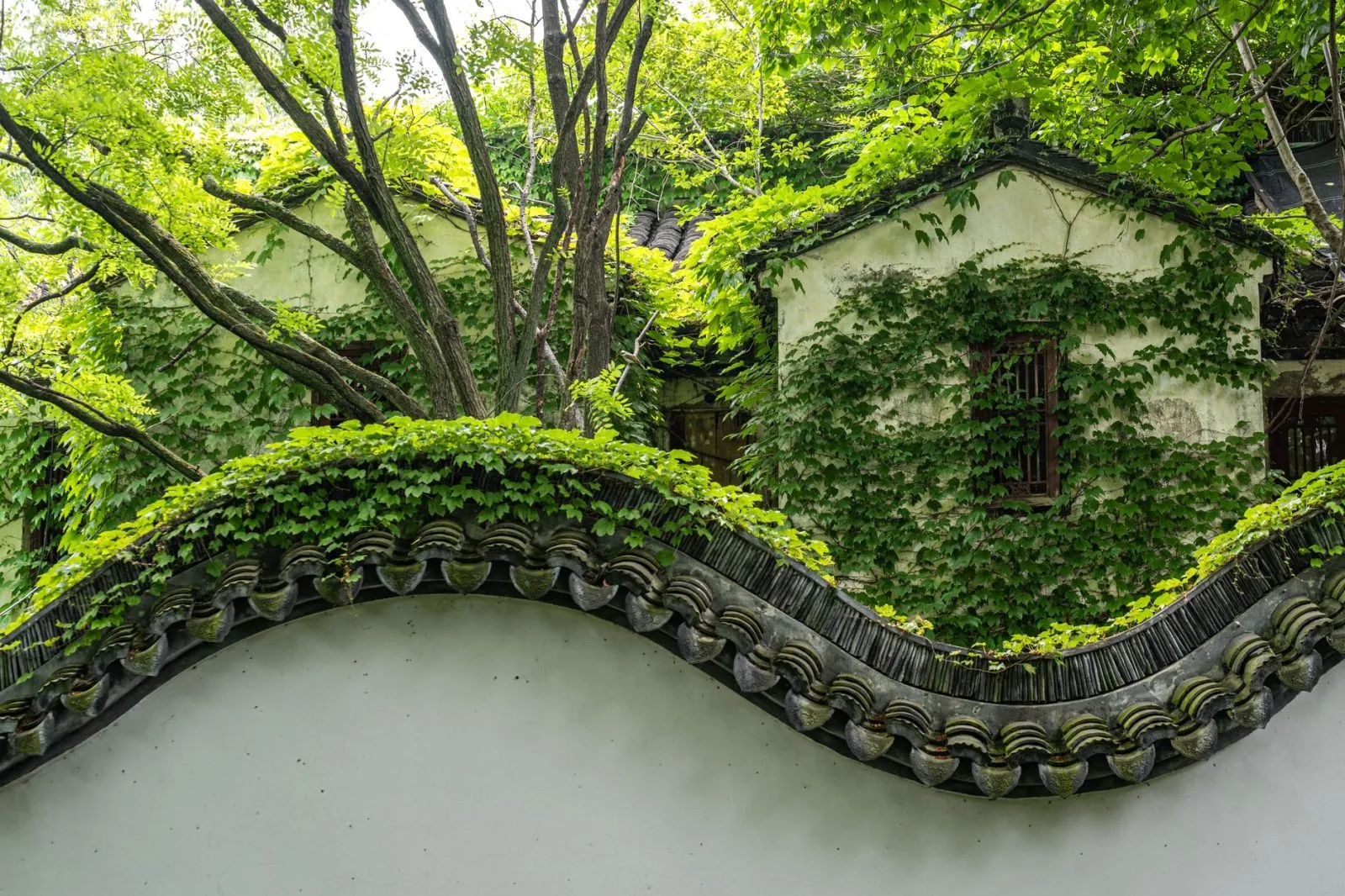
    A covered walkway with lattice windows looking onto a narrow Suzhou garden court
    Covered corridors divide the garden into changing views. Qing Luo | Pexels License (https://www.pexels.com/license/)

    Visiting and Preservation

    UNESCO inscribed the Classical Gardens of Suzhou on the World Heritage List in 1997, with additions in 2000. Several gardens are small and receive steady crowds, so early morning is usually the best time to see water and rocks without blocking views. Tickets are sold per garden and some sites cap daily numbers or use timed slots; combining two contrasting gardens in one day is more useful than rushing through four. Suzhou is reached from Shanghai by high-speed rail in roughly half an hour, and the old garden district is best explored on foot or by taxi. Preservation involves constant work on timber, plaster, drainage, and plants, since living gardens need maintenance as well as conservation.

    A Suzhou garden is designed to be walked slowly, with each gate hiding the view beyond it.

    Sources et lectures complémentaires

    1. Classical Gardens of Suzhou — UNESCO World Heritage Centre.
    2. Suzhou gardens — Encyclopædia Britannica.
    3. Chinese garden — Le Metropolitan Museum of Art.

    Voyez-le sur place

    Suivez ce lien jusqu'à la région correspondante.

    Explorer par carte

    Suivez le fil de discussion

    Consultez les autres articles qui partagent les mêmes étiquettes.

    Parcourir l'étiquette
  • Cuisine du Sichuan

    Vie et folklore

    Cuisine du Sichuan

    Chilli Oil, Ferment, and the Numbing Pepper

    Sichuan cooking balances chilli heat, Sichuan pepper numbness, fermented bean paste, and rich broth.

    Section
    Vie et folklore
    Région
    Sichuan
    Ère
    À travers les époques
    Étiquettes
    Customs, Food, Geography

    Sichuan cuisine is known for bold seasoning, but its classic dishes are built on contrast: chilli with Sichuan pepper, hot oil with cool cucumber, or a clear broth beside a fiery one.

    A Basin Pantry and Early Flavours

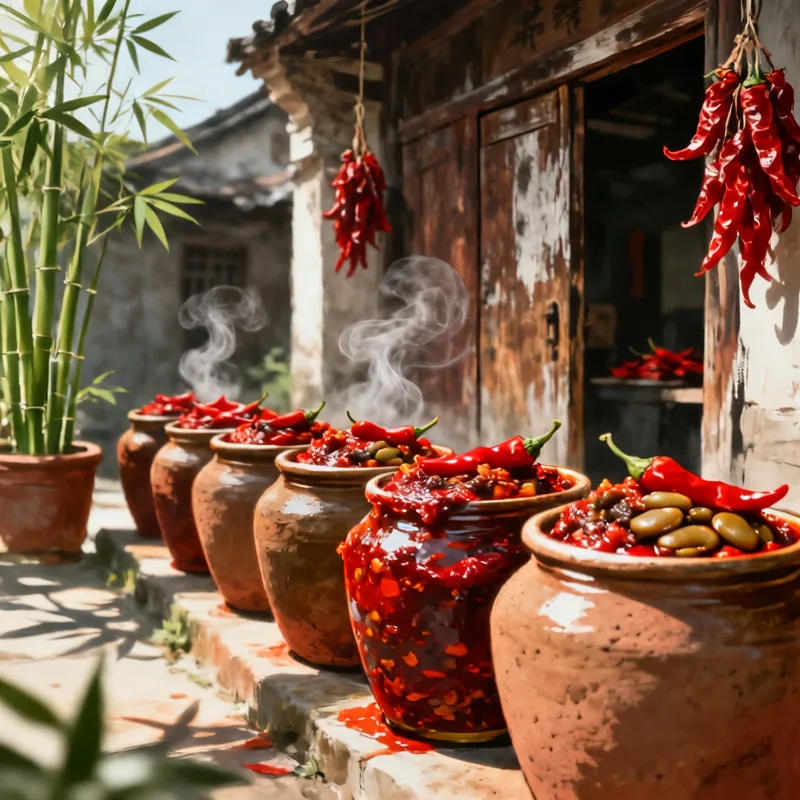
    The Sichuan Basin has fertile fields, rivers, and a humid climate, but its early elite cooking was not defined by chilli. Chilli peppers reached China from the Americas in the sixteenth century and became a Sichuan staple later, especially among ordinary households. Before that, cooks used ginger, garlic, mustard, vinegar, and the distinctive Sichuan pepper, Zanthoxylum simulans, whose husks cause a tingling sensation rather than heat.Fermented bean pastes from the basin towns added depth. Pixian doubanjiang, a broad-bean and chilli paste fermented in Pixian near Chengdu, became a foundation of many red-braised and stir-fried dishes. The province’s food therefore combines older preservation methods with ingredients that arrived through global trade.

    Jars of red chilli and broad-bean paste fermenting outside a Sichuan workshop
    Fermented doubanjiang gives many Sichuan dishes their deep red base. Illustration générée par IA · SinoViz

    The Grammar of Heat

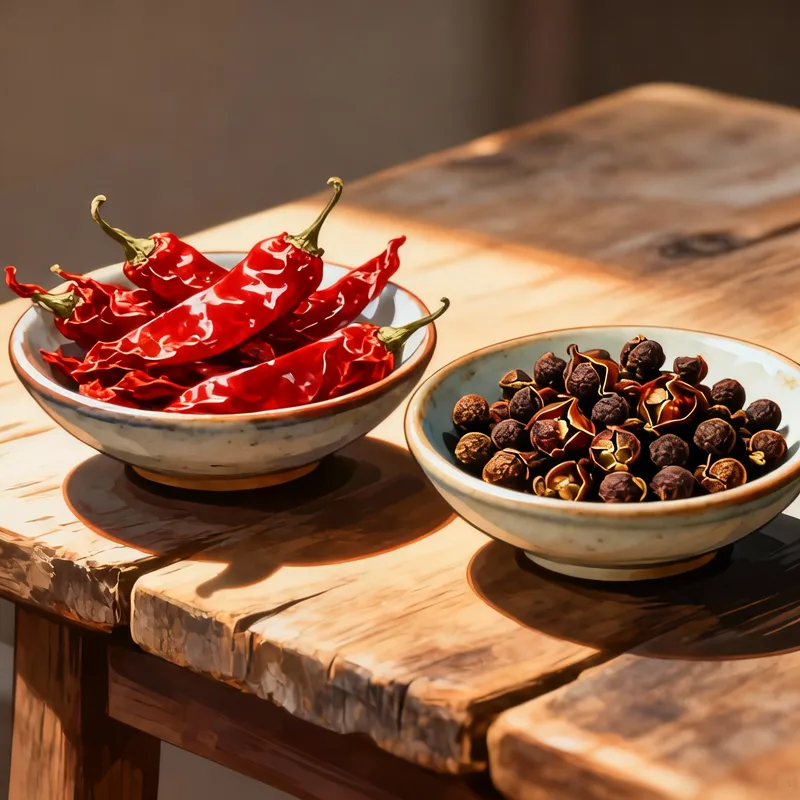
    Sichuan cooks distinguish several kinds of chilli heat. Dried chillies are fried in oil until fragrant but not blackened; chilli oil is steeped and aged; chilli bean paste supplies fermented heat; and fresh peppers give a brighter bite. Sichuan peppercorns, often toasted and ground, produce the málà combination of numbness and spice. Official Sichuan cookbooks describe more than twenty recognised flavour profiles, from guaiwei, strange or complex, to yuxiang, fish-fragrant, which uses no fish. Mapo tofu, associated with Chengdu in the nineteenth century, combines soft tofu, minced meat, doubanjiang, chilli oil, and Sichuan pepper. Kung Pao chicken uses dried chillies, peanuts, and a sweet-sour soy sauce.

    Dried red chillies and Sichuan peppercorns in separate shallow bowls
    Chilli heat and peppercorn numbness are distinct, and cooks balance them separately. Illustration générée par IA · SinoViz

    Hotpot and the Two-Flame Bowl

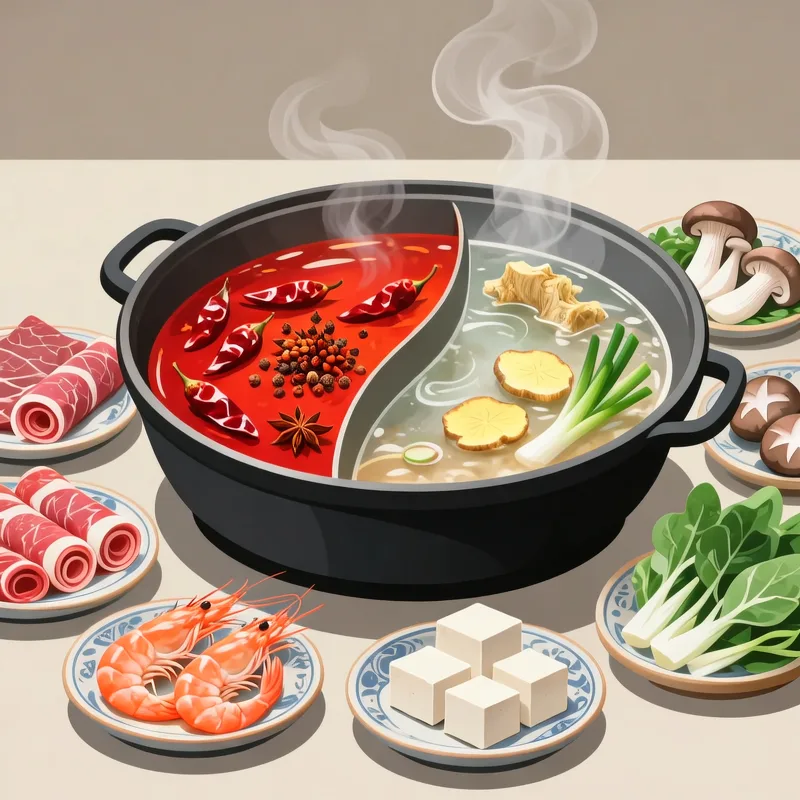
    Chengdu hotpot is a social meal built around a divided pot. One side may hold a red broth of chilli oil, doubanjiang, beef fat, and spices; the other a clear chicken or mushroom stock. Diners cook thinly sliced beef, tripe, duck blood, fish balls, vegetables, and mushrooms, then dip them in sesame oil, garlic, and chopped herbs. The sesame dip cools the palate and coats the mouth against spice. Chongqing hotpot is often heavier and more direct, traditionally using beef tallow; Chengdu versions are commonly more aromatic and varied. Yibin and other southern cities add their own chilli blends. Restaurants label spice levels, but heat can still be adjusted only by asking.

    • Pixian doubanjiang as a fermented chilli-bean base
    • Málà: chilli heat plus peppercorn numbness
    • Two-flavour hotpot with red and clear broth
    • Sesame oil dip to moderate the heat
    A divided hotpot with red chilli broth and clear broth surrounded by ingredient plates
    A two-flavour pot lets a table divide heat from clarity. Illustration générée par IA · SinoViz

    Beyond the Fiery Stereotype

    Not every Sichuan dish is hot. Sichuan’s most ceremonial dish, Gongbao chicken and the banquet classic ‘sweet and sour’ aside, the cuisine includes clear broths, steamed dishes, and delicate pastry. Zhangcha duck is smoked with tea leaves and camphor before steaming, while boiled pork slices are served in a clear broth with mustard greens. Chengdu’s teahouses and dish shops serve small noodles, sweet-water noodles, and dumplings. The province also includes Tibetan and Yi food traditions in its western highlands, where barley, yak products, and different seasonings dominate. Reading Sichuan cuisine only as heat misses its central achievement: layering aromas, textures, and ferments so that strong flavours remain controlled.

    Sichuan cooking is not simply hot; it is a carefully graded argument between chilli, pepper, oil, and ferment.

    Sources et lectures complémentaires

    1. Sichuan cuisine — Encyclopædia Britannica.
    2. Chinese Cuisine — Encyclopædia Britannica.
    3. Sichuan Food — China Highlights.

    Voyez-le sur place

    Suivez ce lien jusqu'à la région correspondante.

    Explorer par carte

    Suivez le fil de discussion

    Consultez les autres articles qui partagent les mêmes étiquettes.

    Parcourir l'étiquette
  • Yi

    Communauté ethnique

    Yi

    Fire, mountains and an ancient script

    Yi communities live across the mountains of southwest China. The Nuosu branch preserves a distinctive script and ritual tradition, while Torch Festival has become a widely recognised Yi celebration.

    Communauté
    Yi
    Population
    Around 9 million; Sichuan, Yunnan, Guizhou, Guangxi
    Langue
    Yi languages; Nuosu script
    01

    Where the community lives

    Yi people live mainly in Sichuan, Yunnan and Guizhou, often in mountainous areas. Liangshan in Sichuan is a major centre of Nuosu culture.
    02

    Language and belief

    Yi languages belong to the Tibeto-Burman family. The Nuosu syllabic script is a rare living indigenous writing system in China.
    03

    Festivals and daily life

    Torch Festival features bonfires, dancing and gatherings. Buckwheat, potatoes, cured meat and hearty mountain food reflect local agriculture.
    04

    Crafts and heritage

    Embroidery, lacquerware, silver ornaments and ritual texts preserve Yi aesthetic traditions. Epic storytelling and ritual specialists carry historical memory.

    Découvrez la région

    Open the map to read the land connected to this community.

    Explorer par carte
  • Zhuang

    Communauté ethnique

    Zhuang

    rizières en terrasses et festivals de chants

    The Zhuang are China’s largest minority ethnic group. Their culture is closely tied to Guangxi’s karst hills, rice farming, song festivals and distinctive bronze drum traditions.

    Communauté
    Zhuang
    Population
    Around 19 million, mostly in Guangxi
    Langue
    Zhuang (Tai-Kadai)
    01

    Where the community lives

    Most Zhuang people live in Guangxi, with communities also in Yunnan, Guangdong and Guizhou. Karst valleys and river plains shape settlement and agriculture.
    02

    Language and tradition

    Zhuang belongs to the Tai-Kadai family. Folk songs, especially antiphonal singing, are central to social life and courtship.
    03

    Festivals and daily life

    The Sanyuesan festival features singing, coloured eggs and gatherings. Rice, river fish and sour flavours appear in local food traditions.
    04

    Crafts and heritage

    Bronze drums, embroidered balls and indigo-dyed textiles are important cultural symbols. Dong and Zhuang communities also share drum tower and bridge-building traditions in some areas.

    Découvrez la région

    Open the map to read the land connected to this community.

    Explorer par carte