Vie et folklore
Boulettes
Filled Wheat Cases and Winter Ritual
Northern Chinese dumplings turn wheat dough and seasonal fillings into a communal meal.
- Section
- Vie et folklore
- Région
- Pékin
- Ère
- À travers les époques
- Étiquettes
- Customs, Food
Dumplings are filled wheat parcels cooked by boiling, steaming, or frying. In northern China they mark winter solstice and the Lunar New Year, when families assemble jiaozi around a table and fold each parcel by hand.
Wheat in the Northern Diet
Dumplings belong to northern China’s wheat-and-millet zone, where wheat flour became a staple in the Han and later dynasties. Their shape has been compared to ancient Chinese money, which gave the dish a place in New Year language: jiaozi sounds related to a phrase for exchanging treasure. A well-known tradition links dumplings to the physician Zhang Zhongjing, who is said to have made filled dough parcels to treat frostbitten ears during the Han period. The story is difficult to verify, but it explains the custom of eating them in cold weather. Archaeological evidence for filled wheat foods is clearer than for any single inventor.
Dough, Filling, and Fold
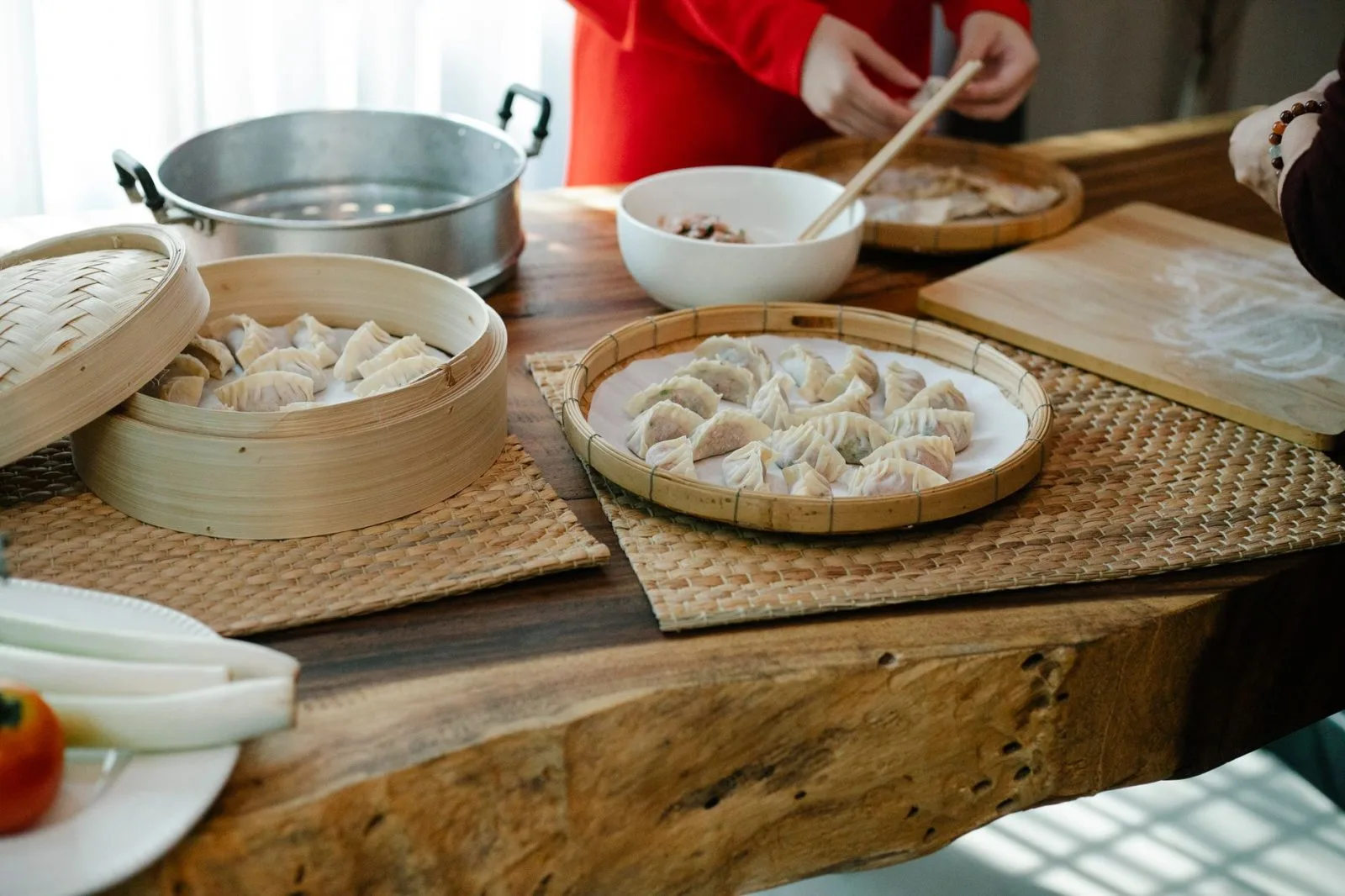
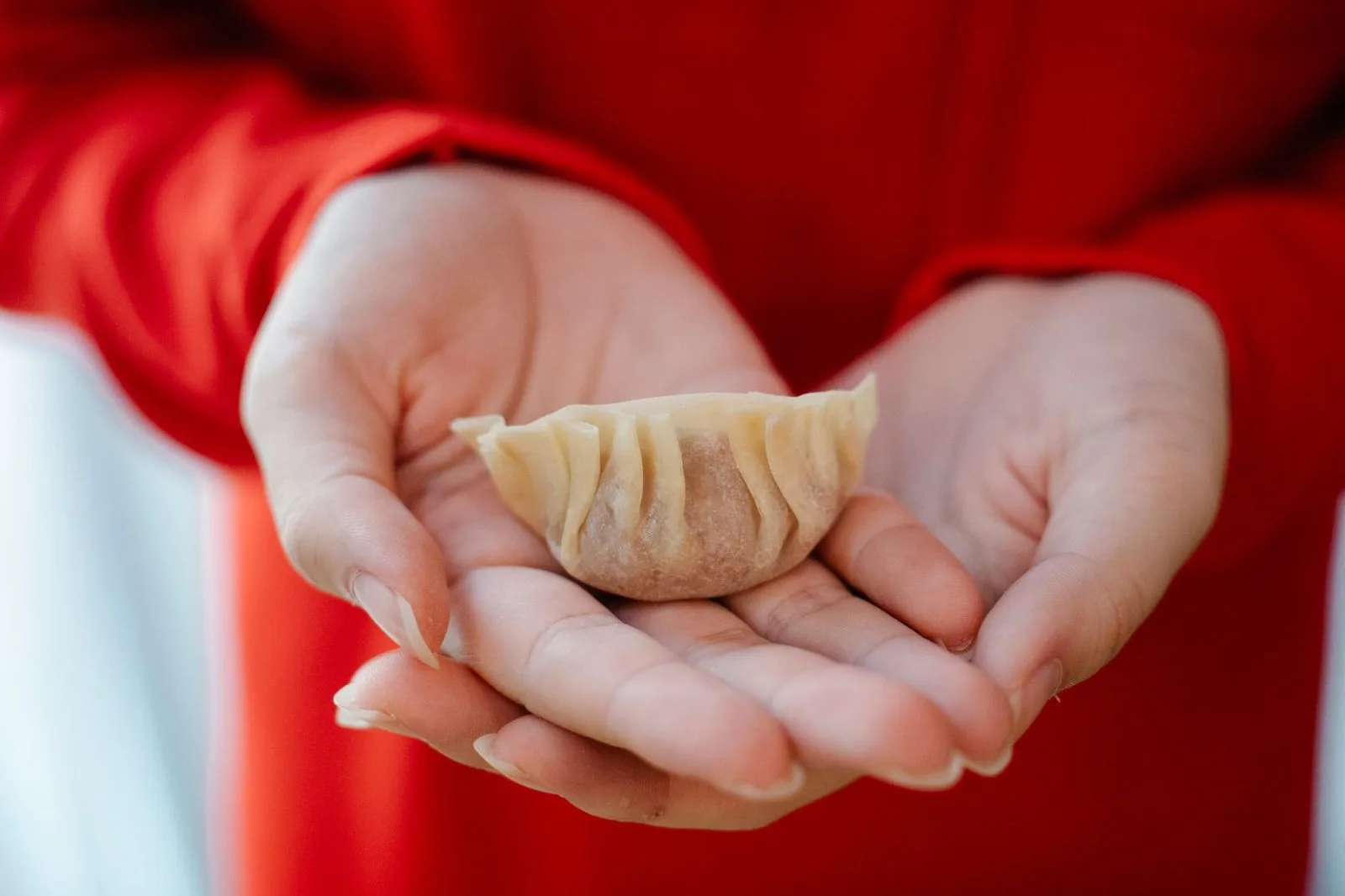
Basic jiaozi dough uses wheat flour and water, rested so gluten relaxes and the wrapper can be rolled thin without tearing. Some cooks add an egg or use hot water for part of the flour to make a softer texture. Fillings are chopped fine so they cook through: pork with cabbage, chives, or leeks; lamb with onion in the northwest; shrimp and egg in coastal areas. The cook places filling in the centre, folds the wrapper, and presses pleats along the seam. A tight seal matters because boiling opens the dough if air remains inside. Vegetarian fillings with tofu, mushrooms, or egg are common, especially for temple visits and fasting periods.
Boiled, Steamed, and Fried
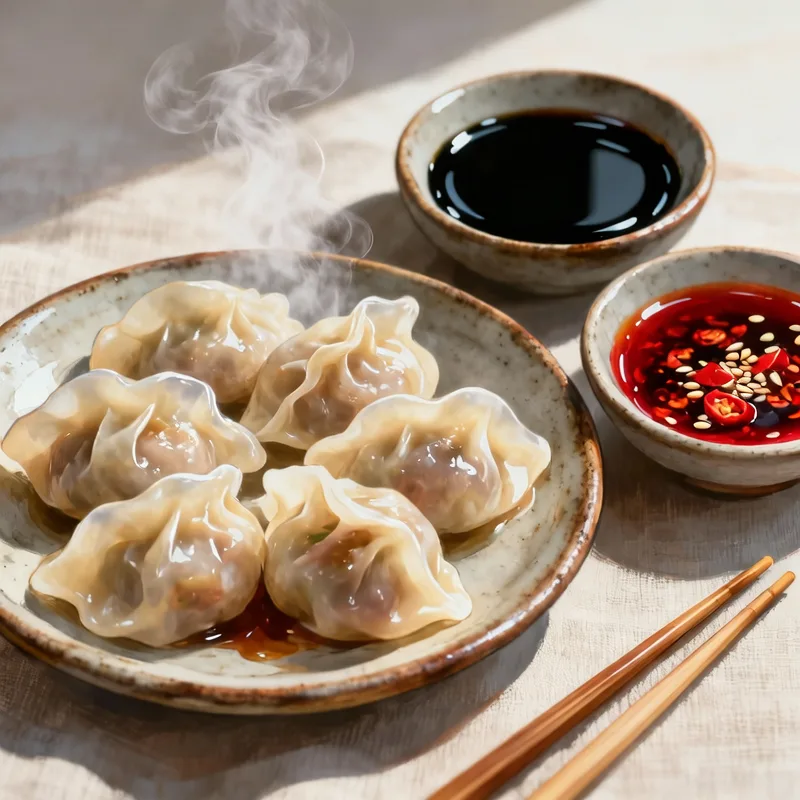
The most common method is boiling: dumplings are added to a large pot, nudged from the bottom, and cooked until they float and swell. Northern cooks often add a little cold water when the pot boils again, repeating the process three times for a firm skin. The potsticker, or guotie, is fried on one side, then steamed under a lid with a little water, leaving a crisp base. Southern and diaspora versions include steamed har gow with shrimp and translucent wheat-starch wrappers. Dipping sauces vary from black vinegar and ginger to soy sauce with chilli oil or garlic. The fillings also shift: pork and chives dominate in Beijing, beef and lamb appear in Muslim communities, and cabbage or mushroom suits colder inland cities.
- Boiled jiaozi for New Year and winter solstice
- Guotie with a crisp fried base
- Black vinegar and ginger as a classic dip
- Regional fillings of pork, lamb, shrimp, or vegetables
Making Them Together
Dumplings are a social food because assembly takes time. On Lunar New Year’s Eve, several generations may roll wrappers, chop filling, and fold dozens or hundreds together; some dumplings are shaped like coins or hidden with a cleaned coin as a token of luck. Eating is often arranged around the family’s oldest members. Leftovers are fried the next day, and frozen dumplings are now sold in supermarkets across China and abroad. Restaurant versions range from Beijing houses serving lamb dumplings to Shanghai guotie and soup-filled xiaolongbao, which belong to a related but distinct family of steamed buns.
A dumpling is a small piece of household organisation: dough, filling, hands, and a reason to gather.
Sources et lectures complémentaires
- Dumpling — Encyclopædia Britannica.
- Jiaozi — Encyclopædia Britannica.
- Chinese New Year — Encyclopædia Britannica.
Suivez le fil de discussion
Consultez les autres articles qui partagent les mêmes étiquettes.
Parcourir l'étiquette