แท็ก: ศุลกากร

  • วัฒนธรรมชา

    ชีวิตและนิทานพื้นบ้าน

    วัฒนธรรมชา

    Leaf, Water, and the Tea Horse Road

    Tea moved from medicinal leaf to daily drink, carrying Fujian methods toward Tibet and the sea.

    ส่วน
    ชีวิตและนิทานพื้นบ้าน
    ภูมิภาค
    ฝูเจี้ยน
    ยุค
    ข้ามยุคสมัย
    แท็ก
    Customs, Food, Geography

    Tea culture is a history of distilled technique: when to pick, how to wither, how to roll, and how to heat a leaf so that it keeps its character. Fujian became a laboratory for these methods, sending compressed cakes west toward Tibet and scented leaves out through coastal ports.

    From Medicine to Daily Drink

    Tea entered Chinese writing as a medicinal and ritual plant long before it became a household drink. Traditions credit the mythical emperor Shen Nong with discovering it, but the earliest firm evidence comes from Han-period tombs, where archaeologists have identified tea leaves among grave goods. By the third century CE, writers described boiling leaves with ginger and onions; the Tang dynasty (618–907) made tea a scholarly and monastic beverage. Lu Yu’s Cha Jing, written around 760–780, codified growing, picking, roasting, and brewing. Tea cakes were toasted, ground to powder, and whisked with hot water, a preparation later carried to Japan by Buddhist monks.
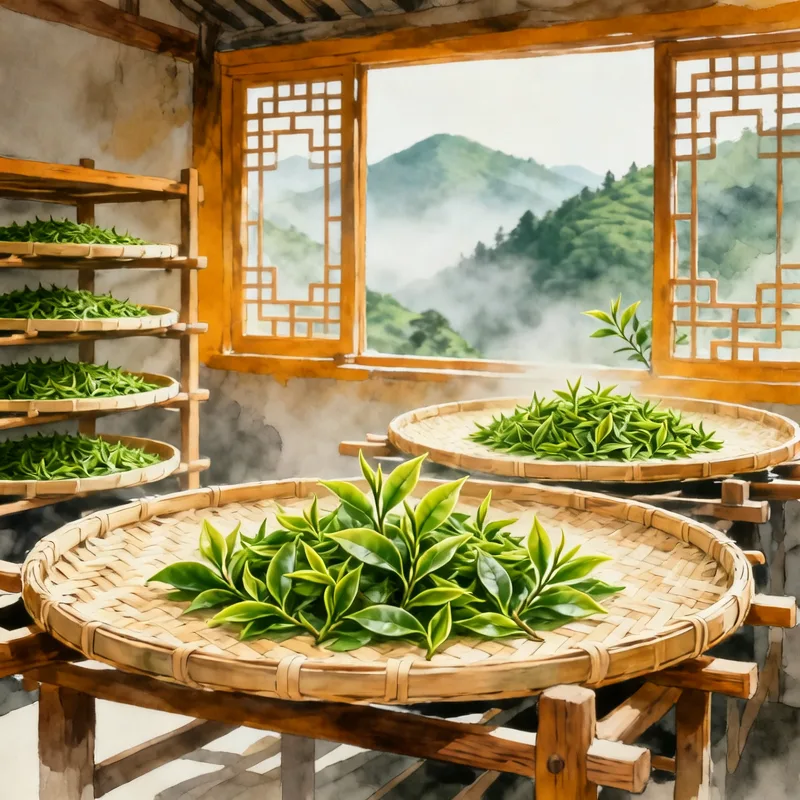
    Fresh tea leaves spread on bamboo trays in a Fujian hillside processing room
    Picking season sets the quality of the leaf before any processing begins. ภาพประกอบที่สร้างโดย AI · SinoViz

    Fujian’s Craft of Oxidation

    Fujian’s mountainous counties developed styles that depend on controlled oxidation. Wuyi rock tea, grown in the rocky cliffs of the Wuyi range, is often pan-fired, rolled, and roasted until it develops a mineral, toasted character. Tieguanyin from Anxi is shaped into tight pellets that unfurl in the cup. Lapsang souchong from Tongmu resembles black tea in its oxidation, then dries over pine smoke. White teas such as Fuding’s silver-needle style are simply withered and dried, with little rolling or heating. These techniques are local knowledge: the same species, Camellia sinensis, changes through timing, heat, and handling.
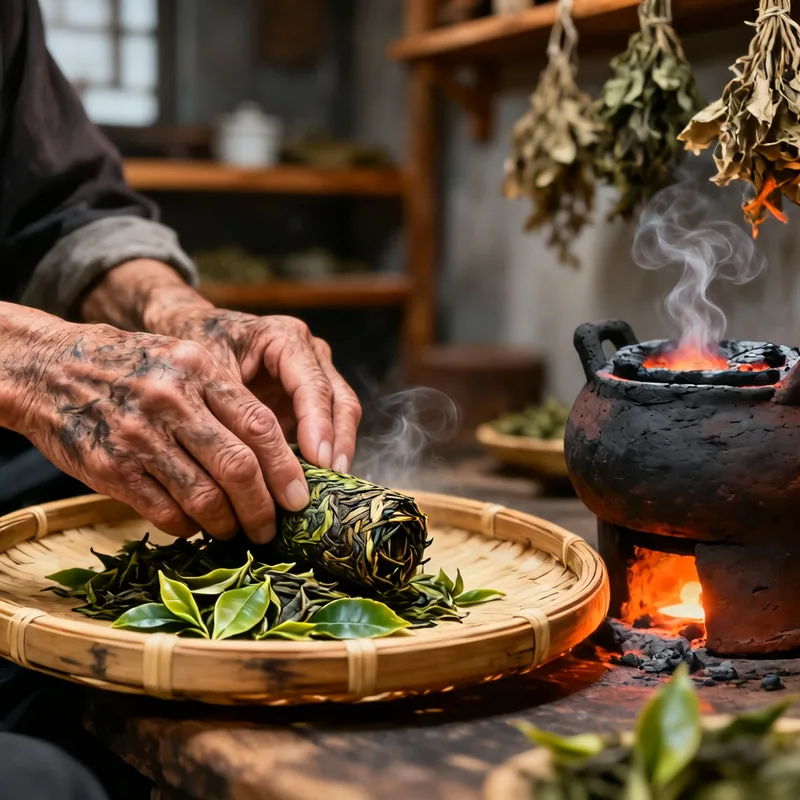
    Tea leaves being rolled by hand on a bamboo tray beside a traditional roasting stove
    Rolling breaks the leaf cells and shapes the flavours that firing will fix. ภาพประกอบที่สร้างโดย AI · SinoViz

    The Tea Horse Road West

    From at least the Tang period, compressed tea travelled west from Sichuan and Yunnan toward Tibet, where it provided vitamin-rich drink and a medium of exchange in a diet heavy on barley and meat. The Tea Horse Road was a network of footpaths through mountains, not one road: porters and mule caravans crossed passes between Dali, Lijiang, and Tibetan markets. Under the Song, states traded tea for warhorses at frontier markets. Tea bricks were strapped to pack animals, wrapped in bamboo or paper, and sometimes pressed with straw. In Tibetan households, tea was churned with butter and salt into a fuel-rich drink suited to high altitudes.

    • Green, white, oolong, and black styles defined by oxidation
    • Compressed bricks made for pack transport
    • Tea exchanged for Tibetan horses at frontier markets
    • Butter tea brewed from brick tea in highland homes
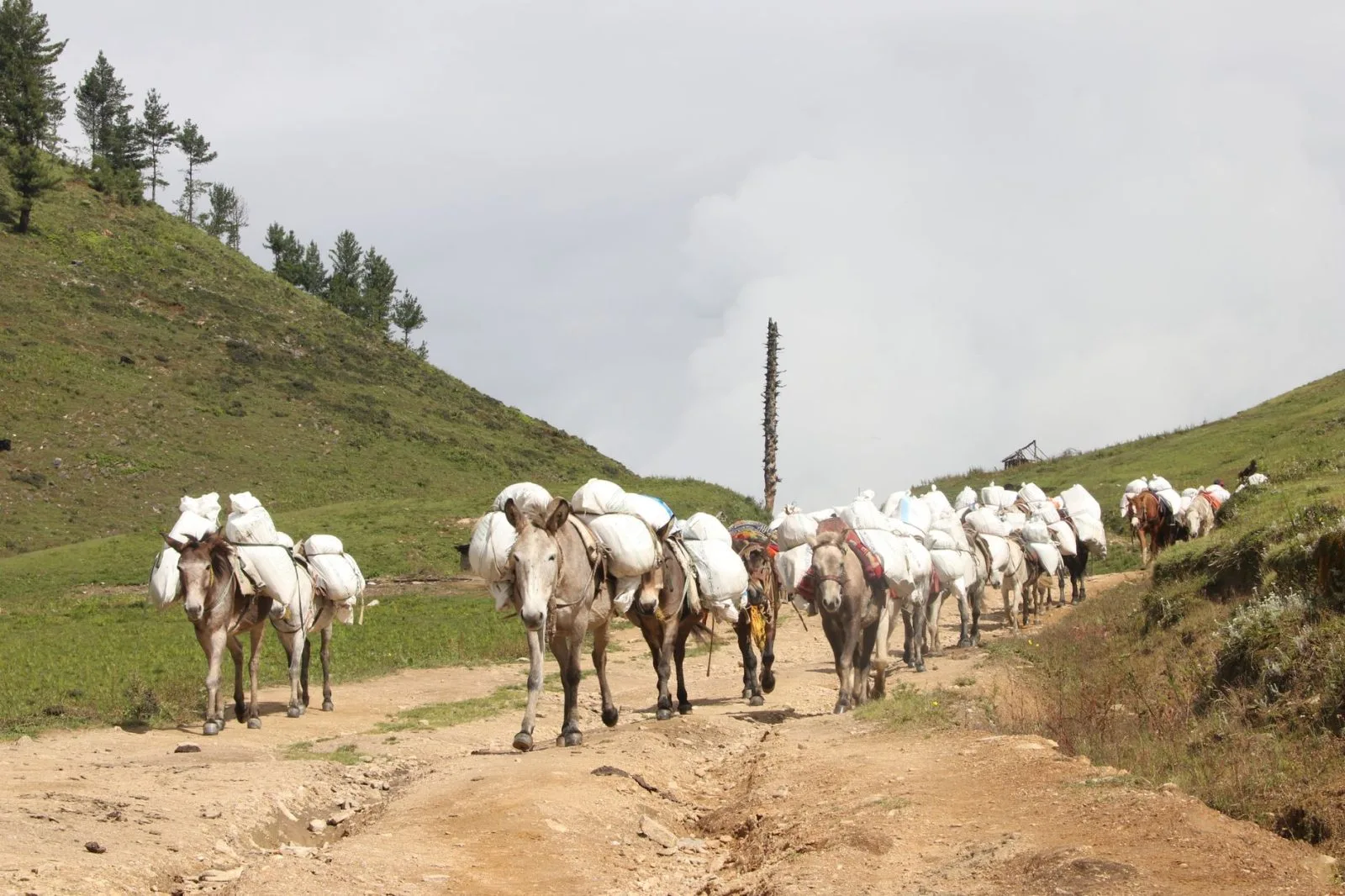
    A string of pack animals carrying bundled tea bricks along a mountain trail in southwest China
    Tea bricks travelled on foot and mule across the mountain passes toward Tibet. Jeevan Mahat | Pexels License (https://www.pexels.com/license/)

    Ports, Cups, and Living Practice

    Maritime trade carried Fujian tea to Southeast Asia and Europe. In the seventeenth century, ships leaving Xiamen and other ports carried leaf tea, porcelain cups, and teapots; by the nineteenth, British demand had made tea a global commodity. The gongfu cha style, associated with Chaozhou and Fujian, uses small vessels, repeated short infusions, and attention to water temperature. A modern tasting may name a harvest season, a mountain, and a roasting method with the precision once reserved for wine. In villages around Wuyi and Anxi, sorting, pan-firing, and roasting still depend on skilled hands, even where machines perform the early steps.

    A leaf becomes tea only when someone decides when to pick it, how long to wither it, and when to stop the heat.

    แหล่งข้อมูลและเอกสารอ่านเพิ่มเติม

    1. Tea — สารานุกรมบริแทนนิกา
    2. The Classic of Tea — World History Encyclopedia.
    3. Tea Horse Road — สารานุกรมบริแทนนิกา
    ดูตำแหน่งที่ติดตั้ง

    โปรดติดตามข้อมูลนี้ไปยังภูมิภาคที่เกี่ยวข้อง

    สำรวจโดยใช้แผนที่

    ติดตามกระทู้นี้

    ดูรายการอื่นๆ ที่มีแท็กเดียวกัน

    เรียกดูแท็ก
  • เทศกาลฤดูใบไม้ผลิ

    ชีวิตและนิทานพื้นบ้าน

    เทศกาลฤดูใบไม้ผลิ

    The new year at home and on the street

    Spring Festival is the Lunar New Year, a fifteen-day season of reunions, red decorations, and public celebration.

    ส่วน
    ชีวิตและนิทานพื้นบ้าน
    ภูมิภาค
    ปักกิ่ง
    ยุค
    ข้ามยุคสมัย
    แท็ก
    ศุลกากร อาหาร

    Chun Jie, the Spring Festival, begins on the first day of the first lunar month and ends with the Lantern Festival on the fifteenth. In Beijing, the old rhythms of household ritual and temple fair sit alongside a modern holiday industry and a week-long public break.

    The Eve and the First Days

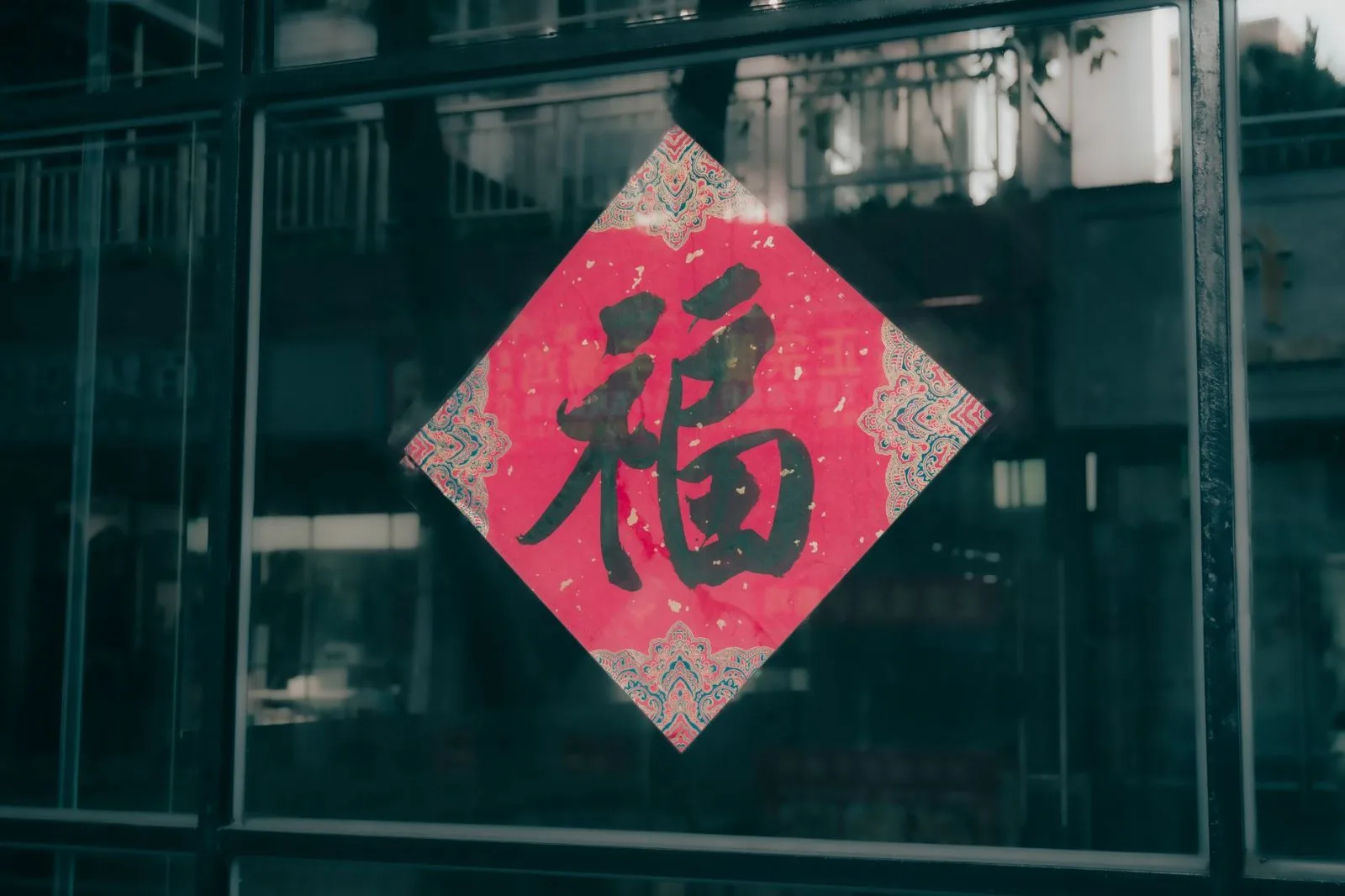
    The preparations begin weeks ahead. Homes are cleaned, debts settled, and red paper couplets pasted around the door, often with the character fu pasted upside down to suggest that good fortune has arrived. New Year’s Eve is the centre of the festival. Families travel home for a long meal that includes jiaozi, dumplings shaped like ancient coins; in northern China they are eaten at midnight. Fish is served because the word for fish sounds like surplus, and a whole fish is often left partly uneaten. Firecrackers once marked the transition, though many urban areas restrict them. After dinner, many families watch the CCTV Spring Festival Gala while red envelopes are handed to children and unmarried younger relatives.

    Red couplets and lanterns decorating a Beijing doorway for Spring Festival
    Red couplets and the character fu mark a household ready for the new year. Matthew Jesús | Pexels License (https://www.pexels.com/license/)

    Visiting and Red Envelopes

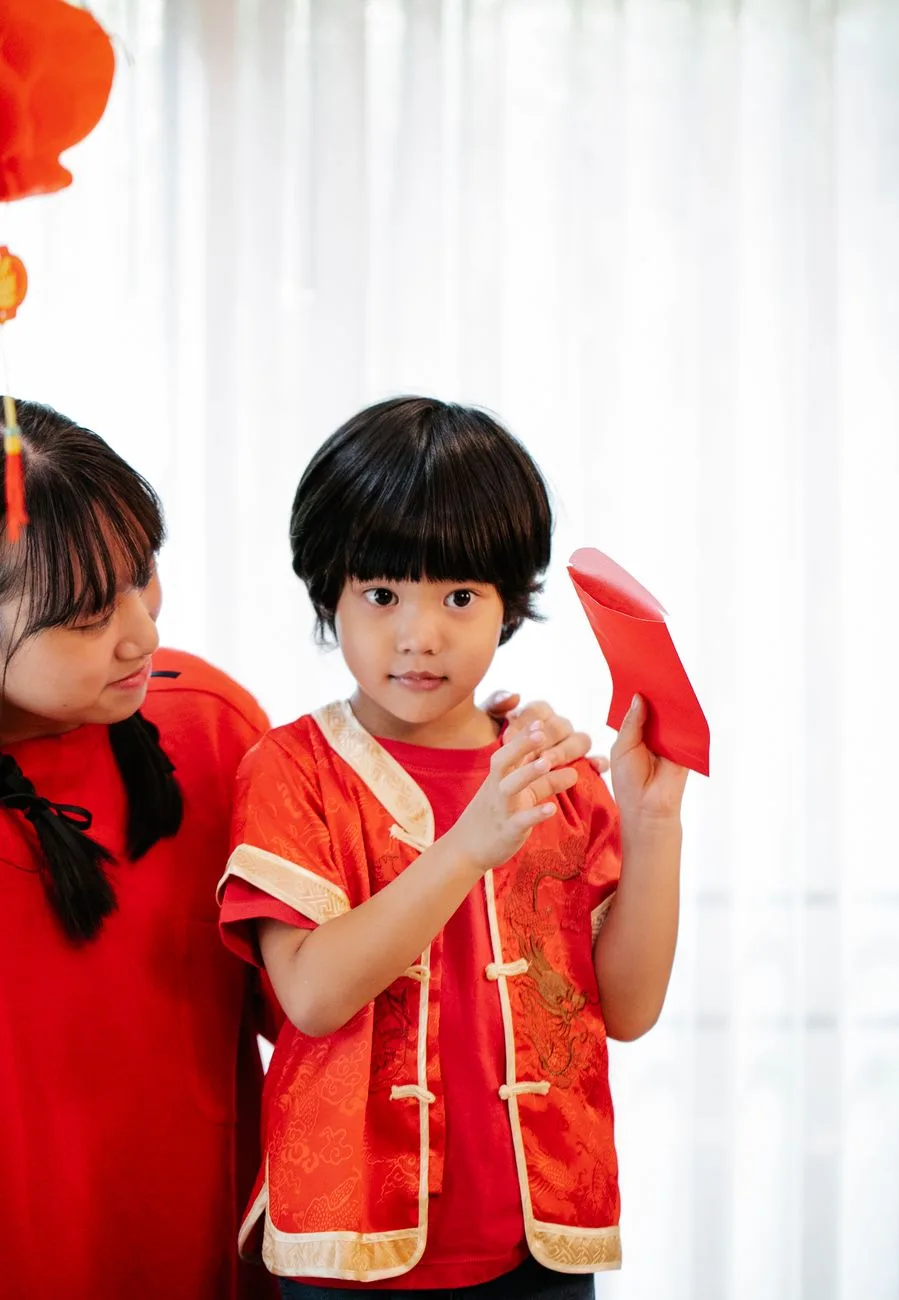
    The first days are for bainian, visits to relatives and neighbours. People call on the oldest family members first, bringing fruit, tea, or sweets, and greet one another with phrases wishing prosperity and health. Hongbao, red envelopes containing cash, pass from married adults to children and younger unmarried relatives; amounts end in even numbers and are accepted with both hands and a thank-you. Hosts offer a tray of snacks, often including candied fruits and melon seeds, before a meal. Visiting over several days is normal, and a phone message has become an accepted substitute for distant friends. Dress is neat rather than formal, and arriving empty-handed is less important than arriving at all. The point of the circuit is to renew the relationships that hold a family network together.

    Red envelopes being handed to a child during a New Year visit
    Hongbao pass from older to younger relatives during the first days of the year. แองเจลา โรมา | ใบอนุญาต Pexels (https://www.pexels.com/license/)

    Beijing Temple Fairs

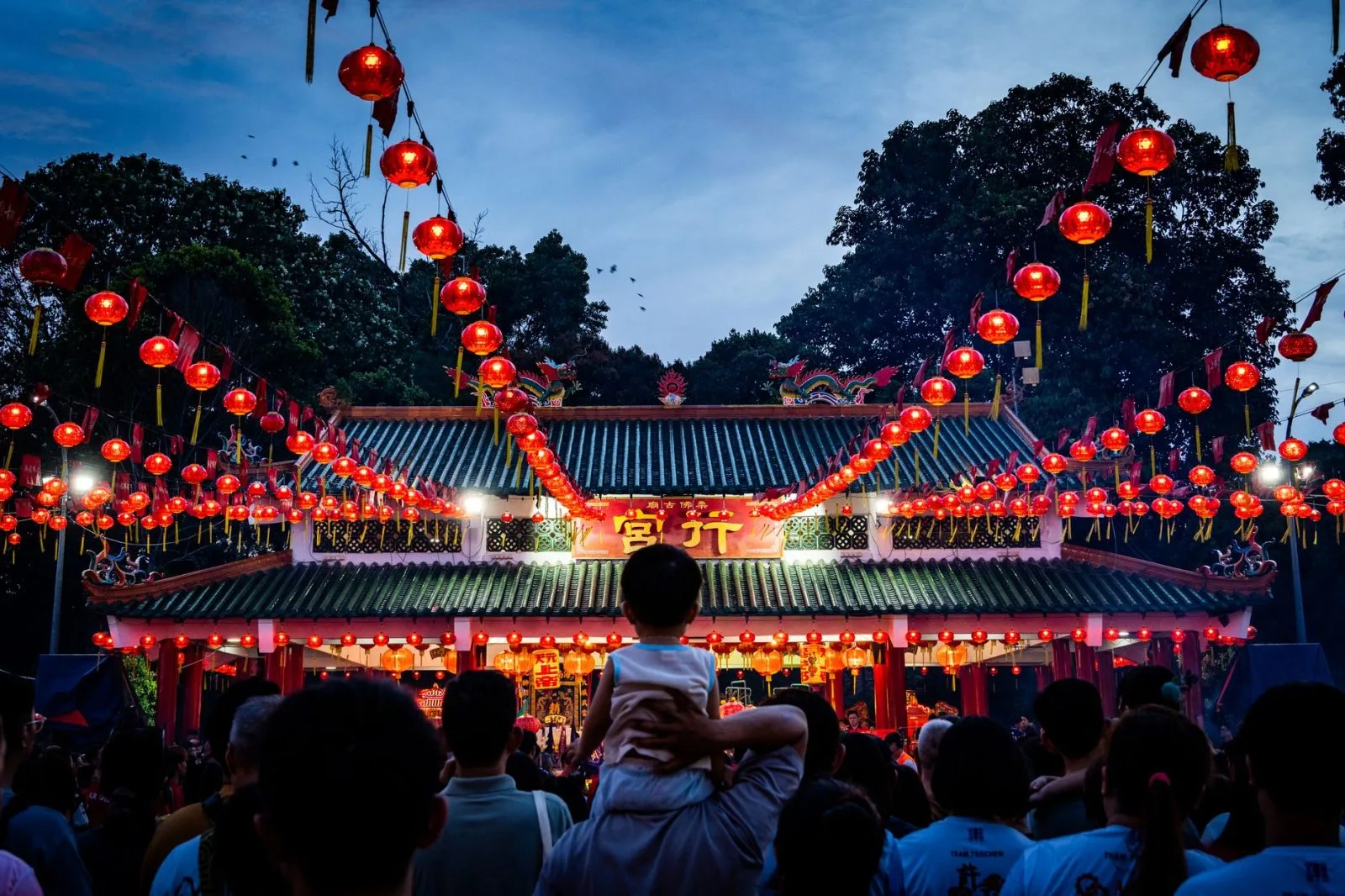
    Beijing’s miaohui, or temple fairs, turn temple courtyards and parks into markets for the duration of the holiday. The fairs at Ditan, Taoranting, Baiyunguan, and the Summer Palace sell dolls, sugar paintings, paper cuts, and skewered snacks, with opera singers, acrobats, and lion dancers performing in the middle of the crowd. They began as religious gatherings attached to temple festivals and became popular public entertainments; today they are as much a family outing as a religious event. Admission is usually a small fee, and the busiest hours are afternoon. Metro stations near the parks are crowded, so go early and expect a queue for the best-known fairs. The atmosphere is informal: eat while you walk, watch a performance from the edge, and keep an eye on children.

    A crowded Beijing temple fair with red lanterns and market stalls
    Temple fairs bring opera, snacks, and craft stalls to parks and temple courtyards. zimochen | Pexels License (https://www.pexels.com/license/)

    The Fifteenth Day and a Global Holiday

    The festival closes with Yuanxiao, the Lantern Festival, on the fifteenth day of the first lunar month. Streets and parks hang lanterns, families eat sweet rice balls called tangyuan, and lantern riddles invite a guess before the night ends. In Beijing, some neighbourhoods still stage dragon dances and drum processions. The Spring Festival was inscribed on UNESCO’s intangible cultural heritage list in 2024, recognising practices that extend well beyond one city. For visitors, the practical notes are straightforward. The public holiday closes shops and offices for several days, transport is crowded, and prices for flights and hotels rise. Book early, carry cash in small notes for envelopes and market stalls, and accept that some days are better spent with a family invitation than with a museum itinerary.

    Red at the door, fish on the table, and an envelope in the hand mark the year’s first days.

    แหล่งข้อมูลและเอกสารอ่านเพิ่มเติม

    1. Spring festival, social practices of the Chinese people in celebration of traditional new year — UNESCO Intangible Cultural Heritage.
    2. ตรุษจีน — สารานุกรมบริแทนนิกา
    3. Chinese New Year travel and festivals — China Highlights.

    ดูตำแหน่งที่ติดตั้ง

    โปรดติดตามข้อมูลนี้ไปยังภูมิภาคที่เกี่ยวข้อง

    สำรวจโดยใช้แผนที่

    ติดตามกระทู้นี้

    ดูรายการอื่นๆ ที่มีแท็กเดียวกัน

    เรียกดูแท็ก
  • The Lantern Festival

    ชีวิตและนิทานพื้นบ้าน

    The Lantern Festival

    Lights on the Fifteenth Night

    The fifteenth night of the first lunar month closes the New Year with lanterns and sweet rice balls.

    ส่วน
    ชีวิตและนิทานพื้นบ้าน
    ภูมิภาค
    ปักกิ่ง
    ยุค
    ข้ามยุคสมัย
    แท็ก
    ศุลกากร อาหาร

    The Lantern Festival falls on the fifteenth day of the first lunar month, the first full moon of the year. Lanterns, night markets, riddles, and tangyuan rice balls mark the end of the New Year period.

    Origins in Calendar and Court

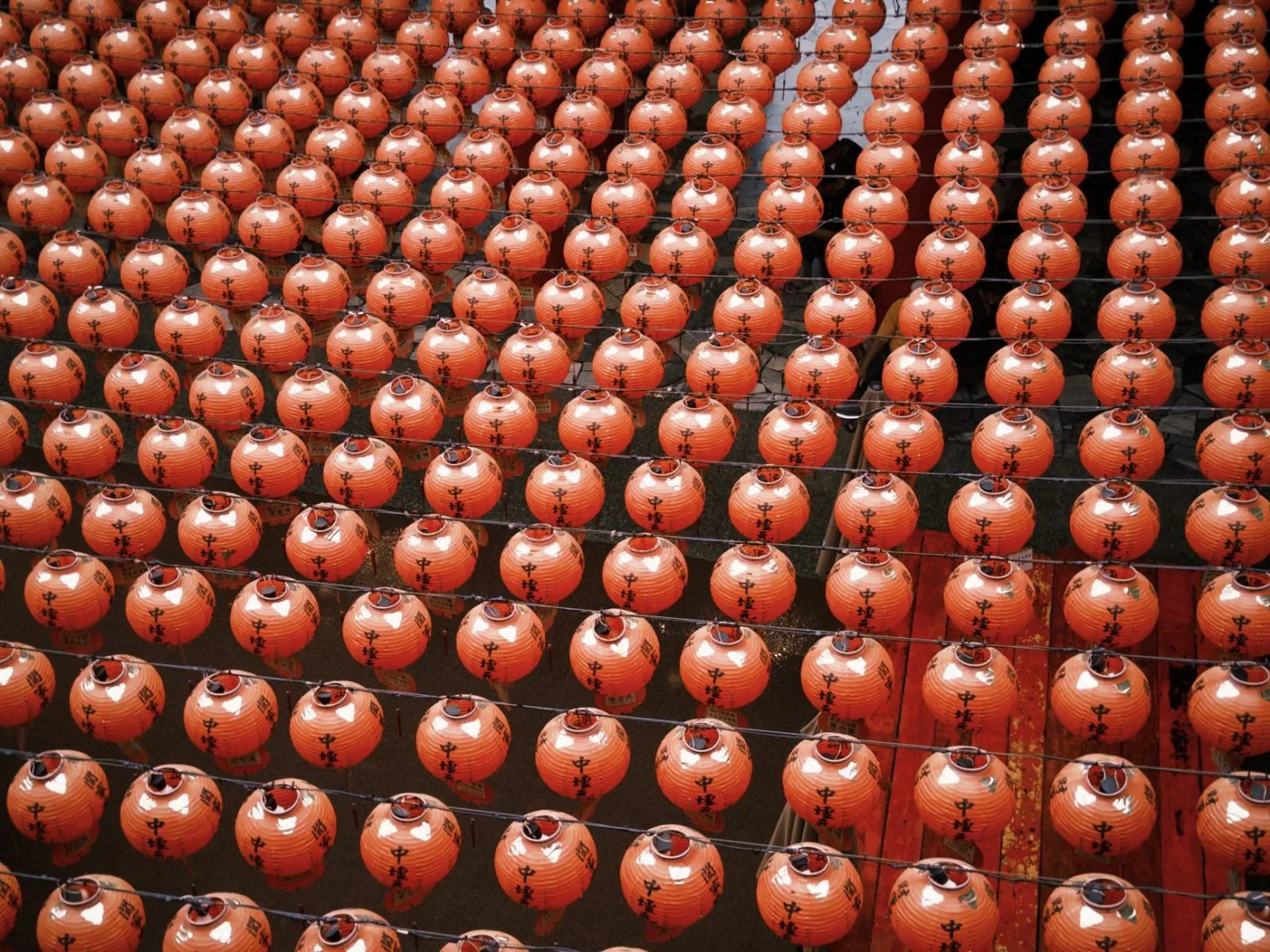
    The festival’s date follows the lunar calendar, so its Gregorian date changes each year. Several origins are cited. Emperor Wen of Han is said to have declared a public holiday around 180 BCE after defeating the Lü clan, while the Eastern Han emperor Ming promoted lantern displays in the first century CE as Buddhism spread. Daoist tradition associated the day with the heavenly official who grants blessings. By the Tang dynasty, the festival had become a major urban occasion: court records describe vast lantern displays in Chang’an and Luoyang, and the poet Su Weidao wrote of night markets bright as day. The Tang court relaxed curfew so people could view the lights.

    Rows of illuminated red lanterns hanging along a street during a night festival
    Tang cities relaxed curfew so residents could walk among the lanterns at night. zack ZHUO | Pexels License (https://www.pexels.com/license/)

    Riddles, Lions, and Processions

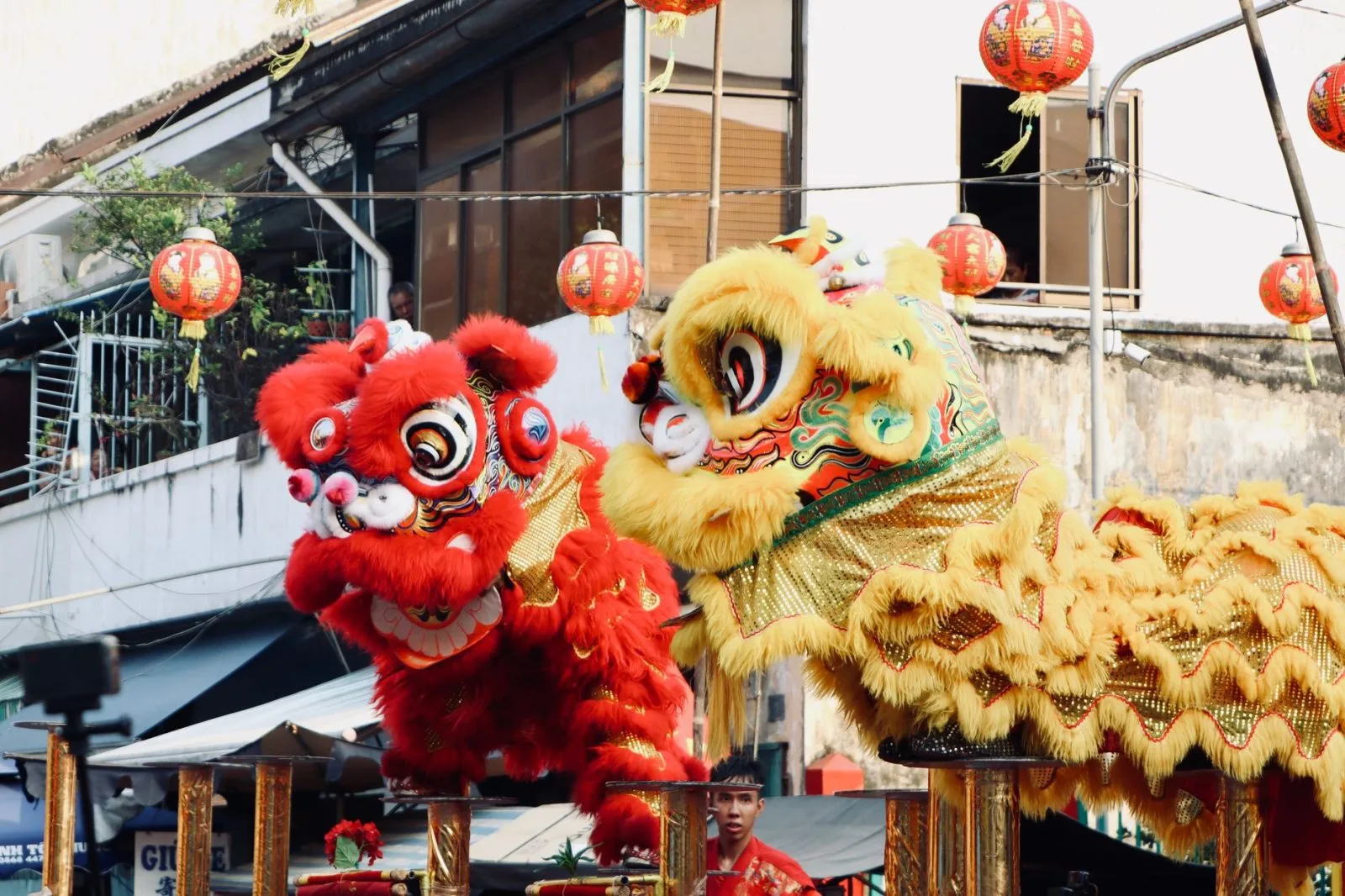
    Lantern riddles are written on slips attached to the lamps; solving one is a small test of wordplay and classical learning. Lion dances, dragon dances, and walking-on-stilts performances draw crowds in the streets, with local troupes competing for space and applause. In some places, people carry lanterns representing animals or characters, and children pull small lanterns on sticks. Beijing’s temple fairs once gathered vendors, performers, and visitors around temple courtyards; today the festival is also marked in parks and commercial districts. Taiwan is known for large lantern festivals and elaborate installations, while Nanjing has long been associated with elaborate lantern craft along the Qinhuai River.

    A lion dance troupe leaping beneath hanging lanterns during a street celebration
    Processions and lion dances turn the festival into a public performance. Pham Huynh Tuan Vy | Pexels License (https://www.pexels.com/license/)

    Tangyuan and the Taste of Reunion

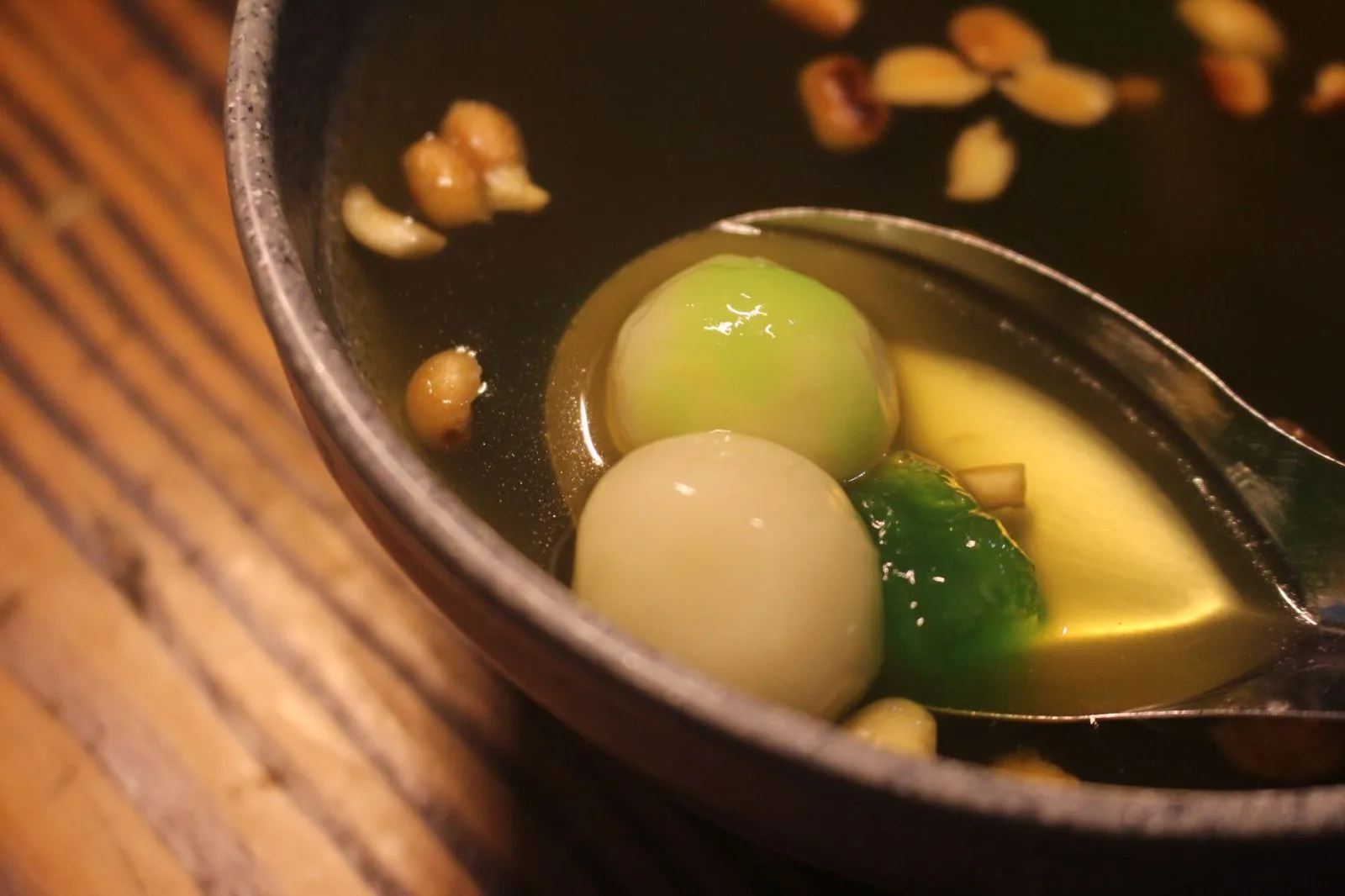
    The festival food is tangyuan in southern China and often yuanxiao in the north, both made from glutinous rice flour around a sweet filling. The names and methods differ: southern cooks wrap a soft dough around filling, while northern cooks may roll moistened filling in dry rice flour in repeated layers. Fillings include black sesame paste, red bean, peanut, and osmanthus sugar. The round shape suggests family unity, and the bowls are shared after the evening’s walk. In Ningbo, black-sesame tangyuan are a local speciality; in Shanghai and Suzhou they are sold from neighbourhood shops. Sweet rice wine and small glutinous balls are also served in some regions.

    • Black sesame, red bean, and peanut fillings
    • Southern wrapped tangyuan and northern rolled yuanxiao
    • Lantern riddles attached to public displays
    • Dragon and lion processions after dark
    A bowl of small white glutinous rice balls in clear sweet soup
    Round rice balls symbolise reunion at the first full moon. Jauhar Musthofal Qulub | Pexels License (https://www.pexels.com/license/)

    The Festival in Modern Cities

    The festival remains a public holiday in mainland China, though the number of days off and the school calendar vary. Major cities install temporary lighting, close some streets to traffic, and run lantern displays in parks and along rivers. Viewing a lantern show often means walking slowly in crowds; in Beijing, the temperature can still be below freezing, so warm layers matter. Photographers should check local rules on tripods and drones. Shopping districts extend the season commercially, but temple fairs and neighbourhood associations keep older practices alive. The date’s movement also means the festival may fall during term time or a working week, changing how families gather.

    The first full moon turns a winter street into a temporary gallery of paper, silk, and light.

    แหล่งข้อมูลและเอกสารอ่านเพิ่มเติม

    1. เทศกาลโคมไฟ — สารานุกรมบริแทนนิกา
    2. Chinese Lantern Festival — China Highlights.
    3. Yuanxiao Festival — World History Encyclopedia.

    ดูตำแหน่งที่ติดตั้ง

    โปรดติดตามข้อมูลนี้ไปยังภูมิภาคที่เกี่ยวข้อง

    สำรวจโดยใช้แผนที่

    ติดตามกระทู้นี้

    ดูรายการอื่นๆ ที่มีแท็กเดียวกัน

    เรียกดูแท็ก
  • เกี๊ยว

    ชีวิตและนิทานพื้นบ้าน

    เกี๊ยว

    ลังข้าวสาลีที่บรรจุเต็มและพิธีกรรมฤดูหนาว

    เกี๊ยวทางตอนเหนือของจีนทำจากแป้งสาลีและไส้ตามฤดูกาล กลายเป็นอาหารที่นิยมรับประทานร่วมกันในชุมชน

    ส่วน
    ชีวิตและนิทานพื้นบ้าน
    ภูมิภาค
    ปักกิ่ง
    ยุค
    ข้ามยุคสมัย
    แท็ก
    ศุลกากร อาหาร

    เกี๊ยวเป็นแป้งสาลีห่อไส้ที่นำไปต้ม นึ่ง หรือทอด ในภาคเหนือของจีน เกี๊ยวเป็นอาหารที่นิยมรับประทานในวันเหมายันและเทศกาลตรุษจีน โดยครอบครัวจะนำเกี๊ยวมาวางรอบโต๊ะและพับห่อด้วยมือทีละชิ้น

    ข้าวสาลีในอาหารทางภาคเหนือ

    เกี๊ยวเป็นอาหารพื้นเมืองของภาคเหนือของจีน ซึ่งแป้งสาลีกลายเป็นอาหารหลักในสมัยราชวงศ์ฮั่นและราชวงศ์ต่อมา รูปทรงของเกี๊ยวถูกเปรียบเทียบกับเงินจีนโบราณ ซึ่งทำให้เกี๊ยวมีบทบาทในภาษาปีใหม่ โดยคำว่า "เกี๊ยว" (jiaozi) ออกเสียงคล้ายกับคำที่ใช้แลกเปลี่ยนสมบัติ มีตำนานเล่าขานกันว่าเกี๊ยวมีความเกี่ยวข้องกับแพทย์ชื่อจางจงจิง ซึ่งกล่าวกันว่าท่านทำเกี๊ยวไส้ต่างๆ เพื่อรักษาหูที่ถูกน้ำแข็งกัดในสมัยราชวงศ์ฮั่น เรื่องนี้ตรวจสอบได้ยาก แต่ก็อธิบายถึงธรรมเนียมการกินเกี๊ยวในสภาพอากาศหนาวเย็นได้ หลักฐานทางโบราณคดีเกี่ยวกับอาหารที่ทำจากแป้งสาลีไส้ต่างๆ นั้นชัดเจนกว่าหลักฐานที่บ่งชี้ถึงผู้คิดค้นเพียงคนเดียว

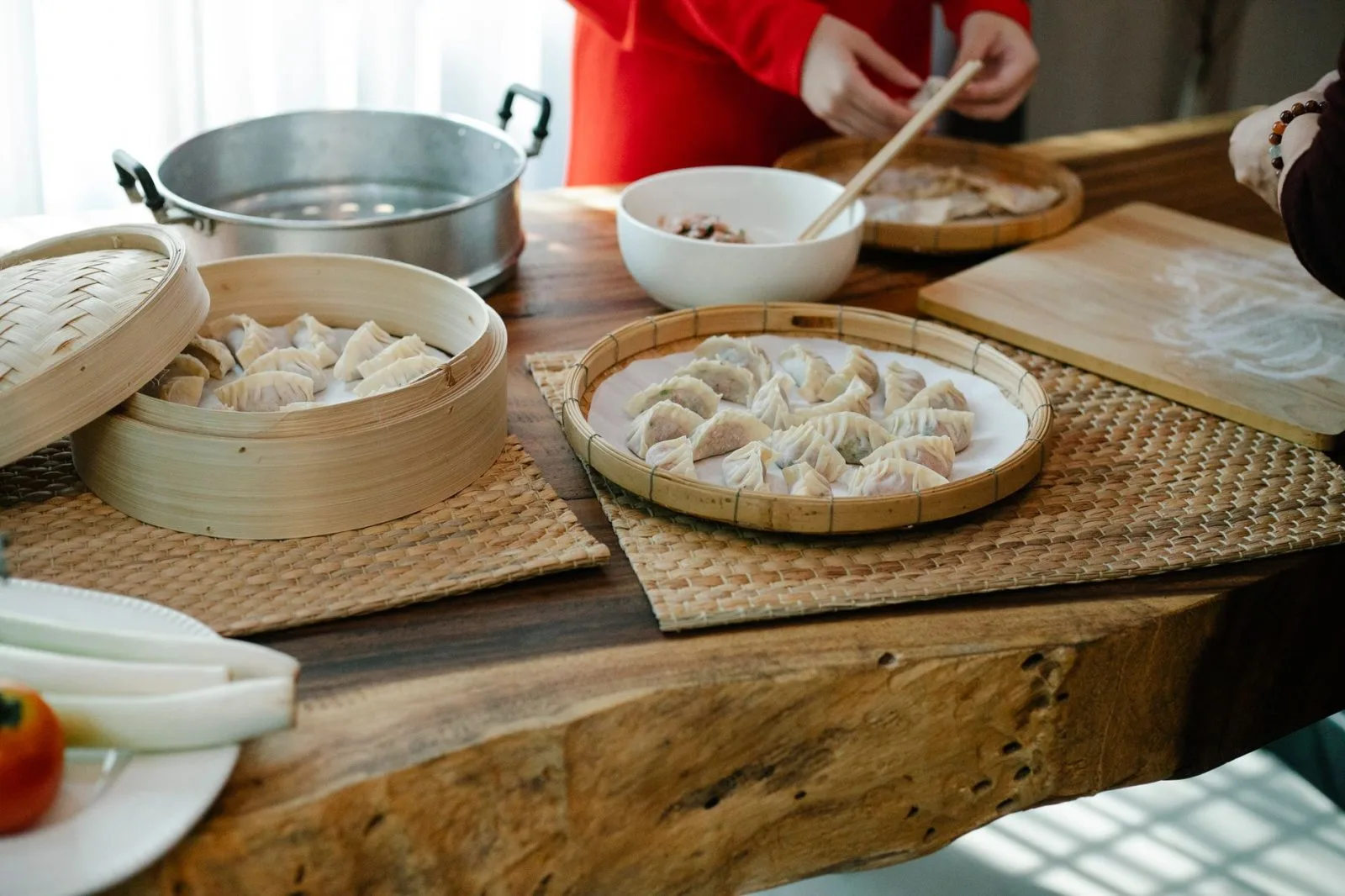
    เกี๊ยวซ่าจีบเรียงเป็นแถววางอยู่บนเขียงไม้ที่โรยด้วยแป้ง
    ขอบที่พับเป็นจีบช่วยปิดผนึกไส้และทำให้เกี๊ยวแต่ละชิ้นมีรูปทรงที่คุ้นเคย แองเจลา โรมา | ใบอนุญาต Pexels (https://www.pexels.com/license/)

    แป้ง ไส้ และการพับ

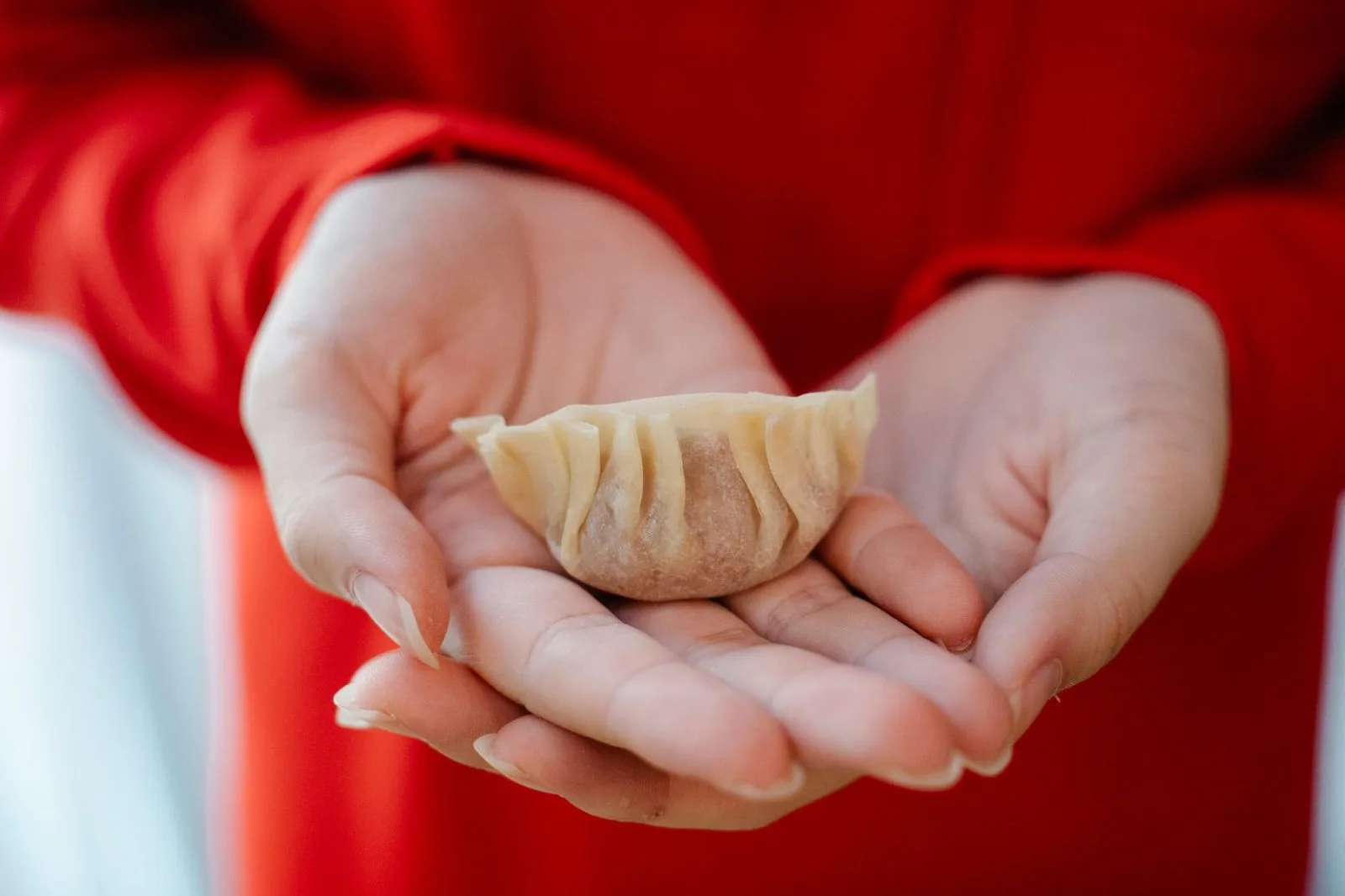
    แป้งเกี๊ยวซ่าพื้นฐานใช้แป้งสาลีและน้ำ พักไว้เพื่อให้กลูเตนคลายตัวและสามารถรีดแผ่นแป้งให้บางได้โดยไม่ฉีกขาด บางคนอาจใส่ไข่หรือใช้น้ำร้อนแทนแป้งบางส่วนเพื่อให้เนื้อสัมผัสนุ่มขึ้น ไส้จะสับละเอียดเพื่อให้สุกทั่วถึง เช่น ไส้หมูใส่กะหล่ำปลี ต้นหอม หรือกระเทียมต้น ไส้แกะใส่หัวหอมในภาคตะวันตกเฉียงเหนือ และไส้กุ้งและไข่ในแถบชายฝั่ง คนทำเกี๊ยวซ่าจะวางไส้ไว้ตรงกลาง พับแผ่นแป้ง และกดจีบตามรอยต่อ การปิดผนึกให้แน่นเป็นสิ่งสำคัญ เพราะหากมีอากาศอยู่ข้างใน การต้มจะทำให้แป้งเปิดออก ไส้มังสวิรัติ เช่น เต้าหู้ เห็ด หรือไข่ เป็นที่นิยม โดยเฉพาะอย่างยิ่งในช่วงไปวัดและช่วงถือศีล

    มือค่อยๆ บีบจีบตามขอบของเกี๊ยวดิบ
    การพับจีบเป็นการปิดผนึกพัสดุ แต่ละครอบครัวอาจชอบการพับแบบต่างๆ กัน แองเจลา โรมา | ใบอนุญาต Pexels (https://www.pexels.com/license/)

    ต้ม นึ่ง และทอด

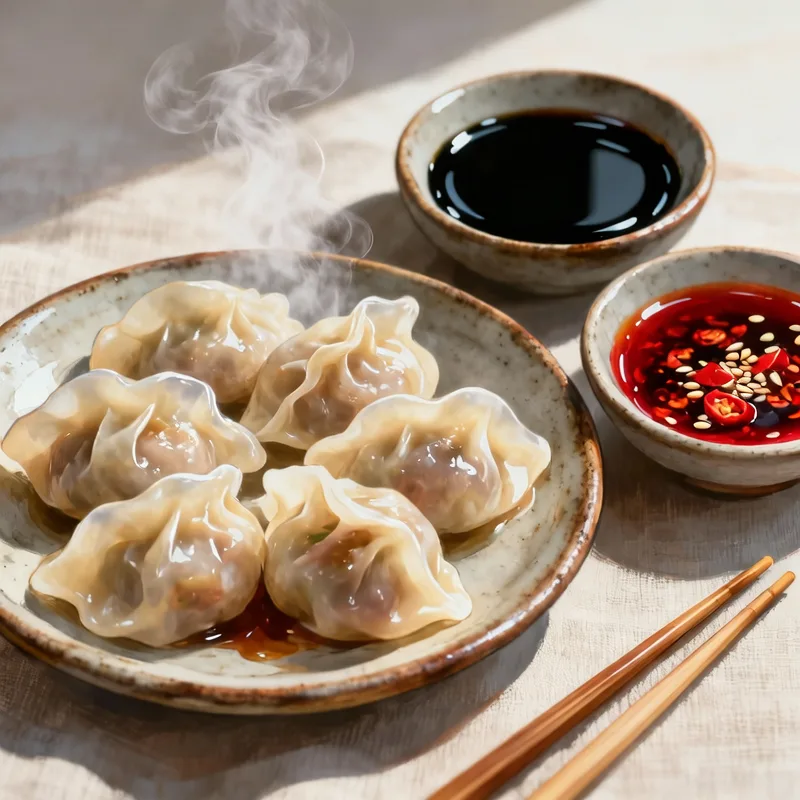
    วิธีที่พบมากที่สุดคือการต้ม: ใส่เกี๊ยวลงในหม้อขนาดใหญ่ คนจากด้านล่าง และต้มจนกว่าเกี๊ยวจะลอยขึ้นและพองตัว พ่อครัวทางภาคเหนือมักจะเติมน้ำเย็นเล็กน้อยเมื่อน้ำเดือดอีกครั้ง ทำซ้ำกระบวนการนี้สามครั้งเพื่อให้แป้งเกี๊ยวกรอบ เกี๊ยวทอดหรือกัวเทียนั้น จะทอดด้านหนึ่งแล้วนำไปนึ่งโดยปิดฝาและใส่น้ำเล็กน้อย ทำให้ด้านล่างกรอบ ส่วนเกี๊ยวแบบภาคใต้และแบบที่ชาวเม็กซิกันอพยพไปอยู่ต่างแดนนั้น มีทั้งแบบนึ่งไส้กุ้งและแบบที่ใช้แป้งสาลีบางๆ น้ำจิ้มมีหลากหลาย ตั้งแต่น้ำส้มสายชูดำและขิง ไปจนถึงซีอิ๊วผสมน้ำมันพริกหรือกระเทียม ไส้ก็แตกต่างกันไปเช่นกัน: ไส้หมูและต้นหอมเป็นที่นิยมในปักกิ่ง ไส้เนื้อวัวและเนื้อแกะจะพบได้ในชุมชนชาวมุสลิม และไส้กะหล่ำปลีหรือเห็ดเหมาะกับเมืองที่อากาศหนาวเย็นในแผ่นดิน

    • ขนมเกี๊ยวน้ำสำหรับปีใหม่และวันเหมายัน
    • กัวเทียที่มีฐานทอดกรอบ
    • น้ำส้มสายชูดำและขิง เป็นน้ำจิ้มสุดคลาสสิก
    • ไส้ตามภูมิภาค ได้แก่ เนื้อหมู เนื้อแกะ กุ้ง หรือผัก
    เกี๊ยวน้ำต้มเสิร์ฟพร้อมน้ำส้มสายชูและน้ำมันพริกในถ้วยเล็กๆ
    น้ำจิ้มรสเปรี้ยวจากน้ำส้มสายชูและขิงช่วยตัดรสชาติเข้มข้นของไส้หมูได้เป็นอย่างดี ภาพประกอบที่สร้างโดย AI · SinoViz

    นำมาประกอบกัน

    เกี๊ยวเป็นอาหารที่ต้องรับประทานร่วมกันเป็นกลุ่ม เพราะการประกอบนั้นใช้เวลานาน ในคืนก่อนวันตรุษจีน หลายรุ่นอายุอาจช่วยกันรีดแป้ง หั่นไส้ และพับเกี๊ยวหลายสิบหรือหลายร้อยชิ้นพร้อมกัน เกี๊ยวบางชนิดอาจมีรูปร่างเหมือนเหรียญ หรือซ่อนเหรียญที่ทำความสะอาดแล้วไว้ข้างในเพื่อเป็นสัญลักษณ์แห่งโชคลาภ การรับประทานอาหารมักจัดขึ้นโดยให้สมาชิกที่อาวุโสที่สุดในครอบครัวเป็นผู้ดูแล เกี๊ยวที่เหลือจะนำไปทอดในวันรุ่งขึ้น และปัจจุบันมีเกี๊ยวแช่แข็งจำหน่ายในซูเปอร์มาร์เก็ตทั่วประเทศจีนและต่างประเทศ เกี๊ยวในร้านอาหารมีหลากหลายรูปแบบ ตั้งแต่ร้านในปักกิ่งที่เสิร์ฟเกี๊ยวเนื้อแกะ ไปจนถึงเกี๊ยวซ่าเซี่ยงไฮ้และเกี๊ยวซ่าไส้น้ำซุป ซึ่งอยู่ในตระกูลเดียวกับซาลาเปาแต่ก็มีความแตกต่างกัน

    เกี๊ยวเป็นเสมือนส่วนเล็กๆ ของการจัดการในครัวเรือน: แป้ง ไส้ มือ และเหตุผลที่ทำให้ทุกคนมารวมตัวกัน

    แหล่งข้อมูลและเอกสารอ่านเพิ่มเติม

    1. เกี๊ยว — สารานุกรมบริแทนนิกา
    2. เจียวซี — สารานุกรมบริแทนนิกา
    3. ตรุษจีน — สารานุกรมบริแทนนิกา

    ดูตำแหน่งที่ติดตั้ง

    โปรดติดตามข้อมูลนี้ไปยังภูมิภาคที่เกี่ยวข้อง

    สำรวจโดยใช้แผนที่

    ติดตามกระทู้นี้

    ดูรายการอื่นๆ ที่มีแท็กเดียวกัน

    เรียกดูแท็ก
  • งานเครื่องเงินเหมียว

    ชีวิตและนิทานพื้นบ้าน

    งานเครื่องเงินเหมียว

    Ornament, Memory, and Festival Dress

    Miao silver ornaments carry family history and local identity in festival dress across southwest China.

    ส่วน
    ชีวิตและนิทานพื้นบ้าน
    ภูมิภาค
    ยูนนาน
    ยุค
    ข้ามยุคสมัย
    แท็ก
    Customs, Ethnic, Scenic Sites

    Miao silverwork is a family of adornments—headdresses, collars, earrings, and bracelets—made by Miao communities in Guizhou, Yunnan, and neighbouring regions. The pieces are worn most visibly at festivals and weddings.

    A Distributed Craft Tradition

    Miao communities live across Guizhou, Yunnan, Guangxi, Sichuan, and Southeast Asia, and silverwork varies by locality. In Yunnan, Miao villages around Wenshan and Honghe maintain styles that differ from the better-known Guizhou counties of Xijiang and Kaili. Ornaments are made by specialised silversmiths who work in small workshops, often serving several villages. Designs are learned through apprenticeship rather than written patterns: a young smith repeats forms copied from older pieces and festival dress. Motifs may draw on local birds, flowers, insects, and coins, though their meanings are not fixed. Families accumulate ornaments over generations, and a daughter’s festival headdress may represent years of saving.

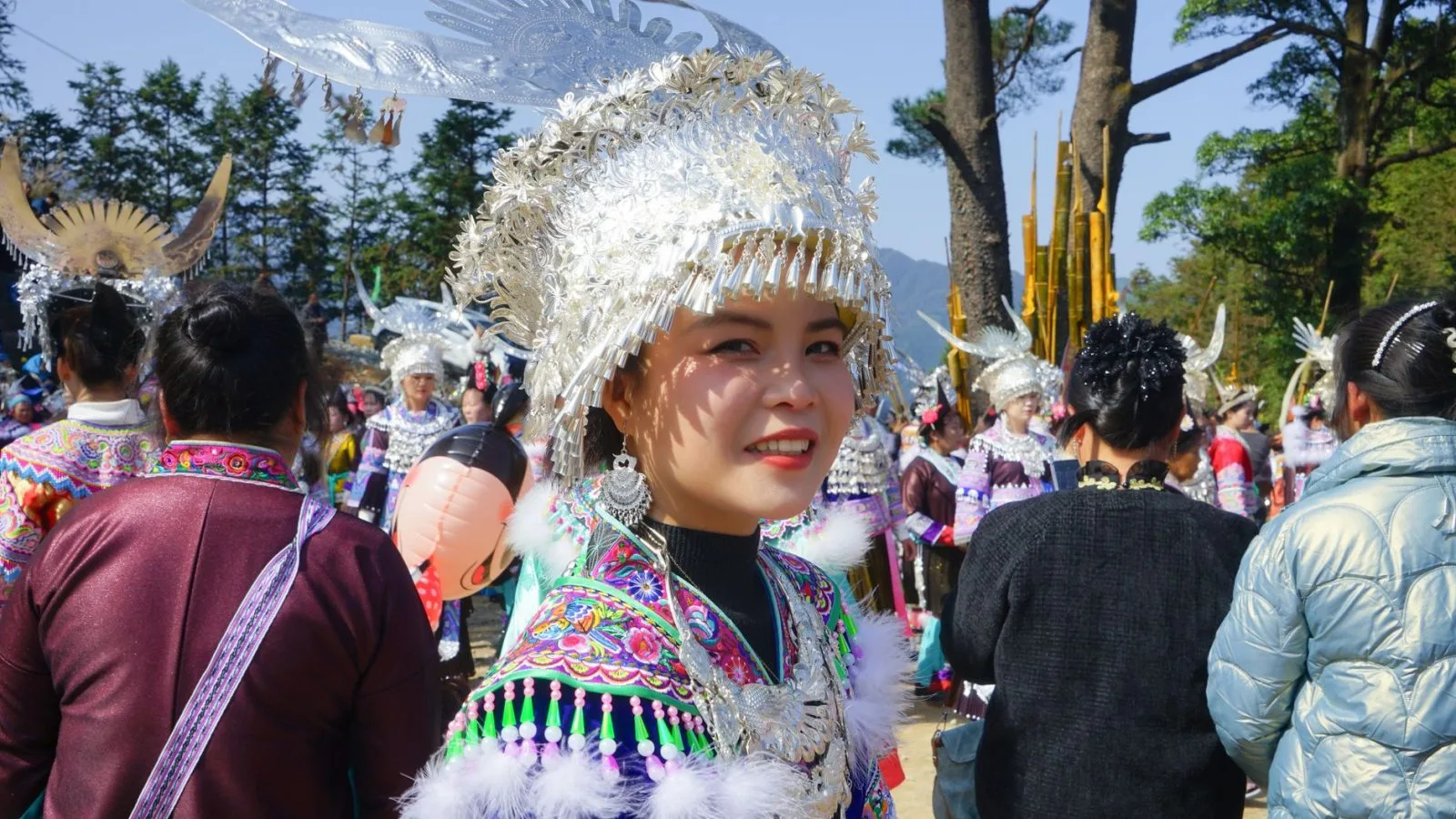
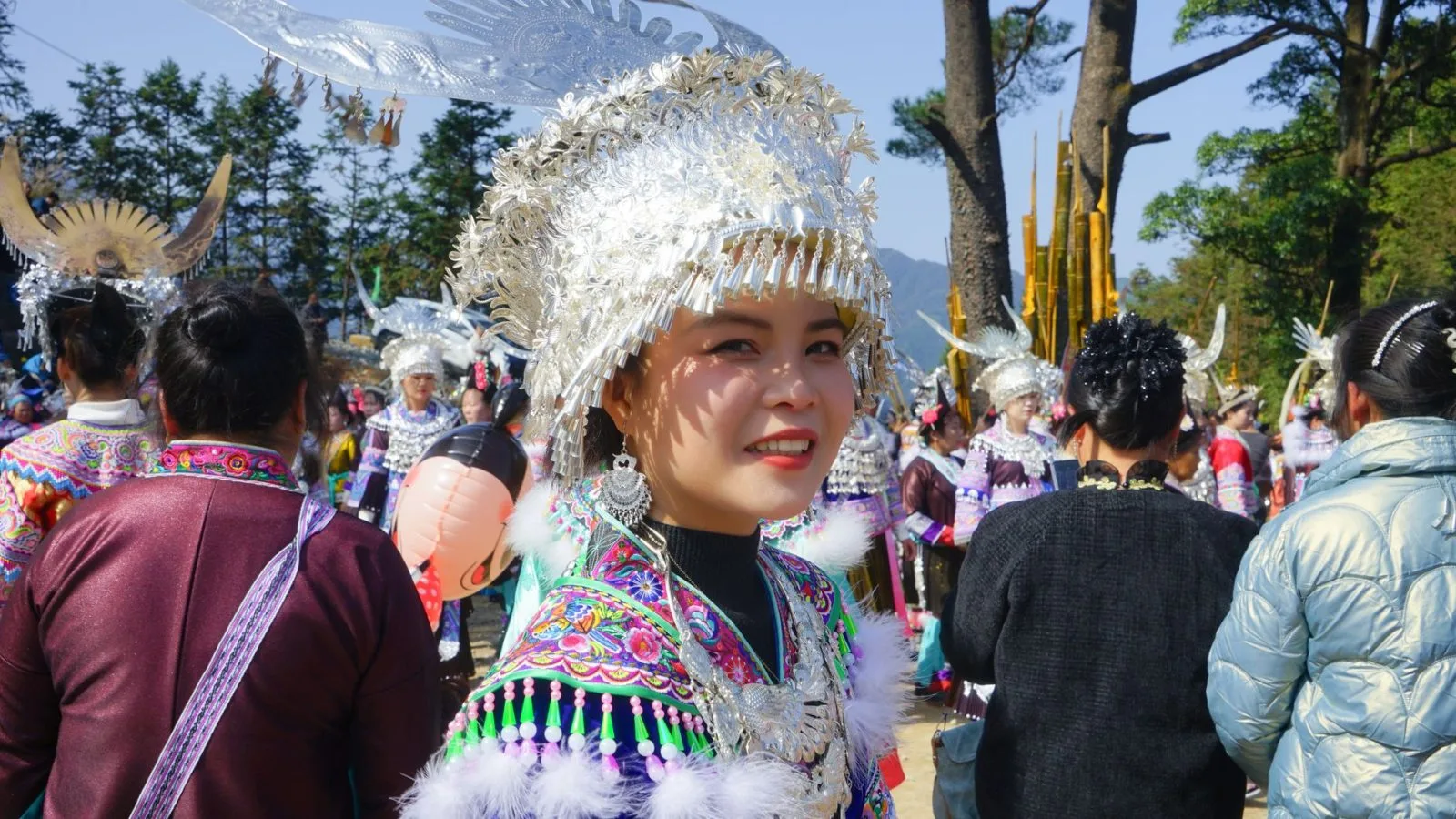
    A Miao headdress with silver horns, plaques, and hanging ornaments at a festival
    Headdresses combine family heirlooms with pieces made for a specific occasion. Jaqor Q.I. | Pexels License (https://www.pexels.com/license/)

    Sheet, Wire, and Repoussé

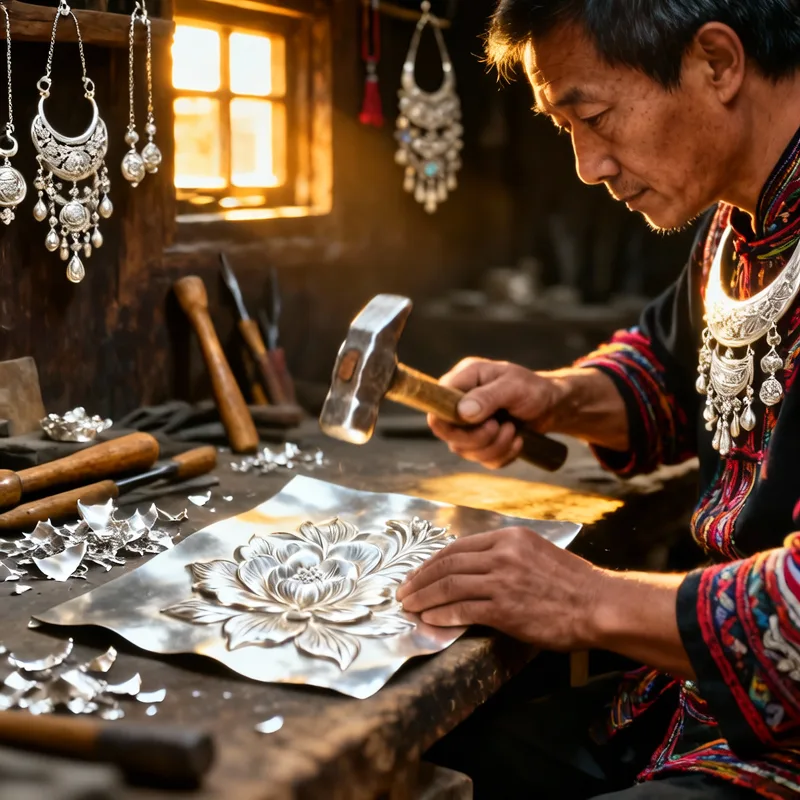
    Much Miao silverwork begins with sheet silver and wire. The smith hammers ingots into thin sheets, cuts strips, and raises patterns from the reverse with repoussé, a technique of punching and chasing to form relief. Horsehair-thin wires are twisted and soldered into filigree, then built into openwork wings, horns, and floral sprays. A large headdress may combine a hammered band, dangling chains, repoussé plaques, and rows of tiny bells that move when the wearer turns. Silver is valued for its colour, workability, and traditional association with protection and prosperity. Many ornaments are hollow to reduce weight, since a full ceremonial headdress can be heavy enough to limit long wear.

    A Miao silversmith hammering a thin silver sheet into a raised floral plaque
    Repoussé raises the design from the back of a thin silver sheet. ภาพประกอบที่สร้างโดย AI · SinoViz

    Festival Wear and Social Meaning

    Silver ornaments are read as part of an entire costume, not as isolated jewellery. A Miao woman’s festival dress may include a pleated skirt, embroidered jacket, woven belt, and a silver collar shaped like a crescent or a pair of wings. In some communities, the number and form of earrings or neck rings indicate village affiliation or marital status. During the Lunar New Year, harvest celebrations, and the Miao New Year in some areas, women and girls wear family sets while groups sing, dance, and process between villages. The ornaments catch light during movement, making dress a visual part of the performance. Men may wear silver buttons, chains, or small pendants with less ceremonial weight.

    • Repoussé plaques raised from thin silver sheet
    • Twisted wire and openwork filigree
    • Headdresses with horns, chains, and bells
    • Costumes worn for New Year and wedding rituals
    Women in embroidered Miao festival dress wearing heavy silver collars and earrings
    Ornaments are worn with embroidery and weaving as one costume system. Jaqor Q.I. | Pexels License (https://www.pexels.com/license/)

    Markets, Tourism, and Continuity

    Silverwork circulates through village workshops, regional markets, and tourism. Visitors to Miao villages in Yunnan and Guizhou can watch smiths shaping small pieces, though the most important heirlooms are usually not for sale. Reproductions sold as souvenirs range from careful miniatures to inexpensive plated metal, so asking whether a piece is solid silver matters. Museums and cultural centres document older headdresses and collars, but the living context remains local dress. Some communities have revived festival costumes and taught silversmithing to younger people, while migration and wage work change who has time to make and wear them. The craft’s future depends less on novelty than on continued occasions to use it.

    A Miao headdress is worn jewellery and a portable archive of family work at the same time.

    แหล่งข้อมูลและเอกสารอ่านเพิ่มเติม

    1. Miao people — สารานุกรมบริแทนนิกา
    2. Chinese silver jewellery — Victoria and Albert Museum.
    3. Miao ethnic culture — China Highlights.

    ดูตำแหน่งที่ติดตั้ง

    โปรดติดตามข้อมูลนี้ไปยังภูมิภาคที่เกี่ยวข้อง

    สำรวจโดยใช้แผนที่

    ติดตามกระทู้นี้

    ดูรายการอื่นๆ ที่มีแท็กเดียวกัน

    เรียกดูแท็ก
  • บทกวีถัง

    โครนิเคิล

    บทกวีถัง

    The Golden Age of Chinese Verse

    Tang poets turned courtly craft, frontier travel, and Buddhist thought into enduring short poems.

    ส่วน
    โครนิเคิล
    ภูมิภาค
    มณฑลฉานซี
    ยุค
    sui-tang
    แท็ก
    Customs, History

    The Tang dynasty (618–907) produced the most celebrated corpus of classical Chinese poetry. Poems travelled in manuscripts, anthologies, inscriptions, and performance, linking the capital Chang’an to frontier posts and monasteries.

    Chang’an and the Poet Official

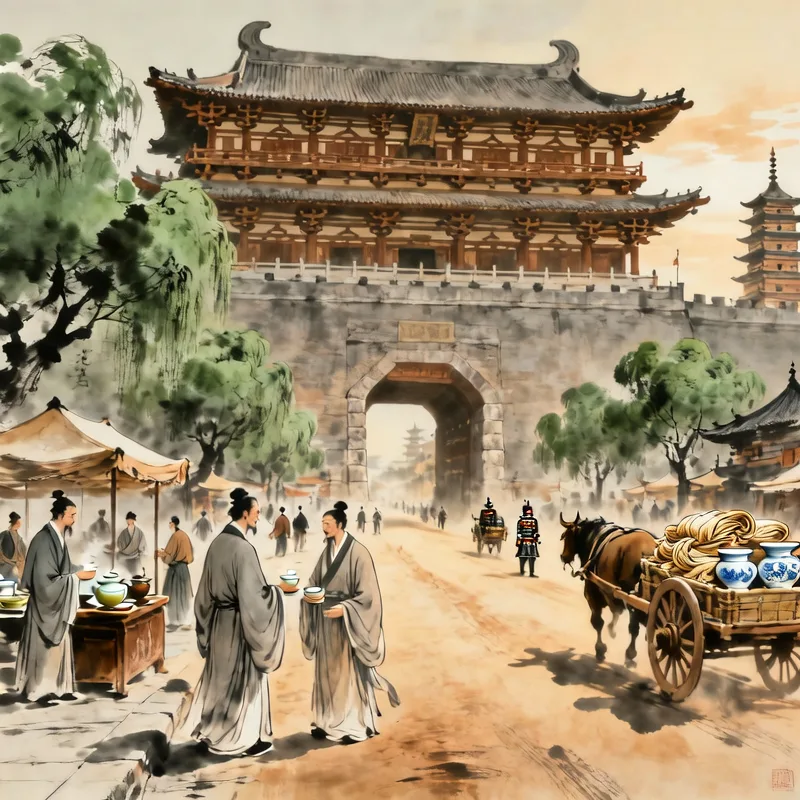
    Poetry in the Tang was tied to the examination system and official life. Candidates were tested on their ability to write regulated verse, and prose essays were accompanied by poems; success could bring appointments and the chance to circulate work among patrons. Chang’an, the capital near present-day Xi’an, held roughly a million people at its height, with markets, temples, and foreign communities. Poets served in distant posts, wrote farewell poems, and composed on public occasions. The Quan Tangshi, compiled in the early eighteenth century under imperial order, preserves more than forty-eight thousand poems by over two thousand authors. Its scale shows how thoroughly verse was woven into literati life.

    A Tang-era city gate and broad avenue in the former capital Chang’an
    Officials and poets moved through the capital’s markets, temples, and government offices. ภาพประกอบที่สร้างโดย AI · SinoViz

    Rule and Freedom in Regulated Verse

    Tang poets worked in several forms. Lüshi, or regulated verse, uses eight five- or seven-character lines, with strict tonal patterns and parallelism between the middle couplets. Jueju are four-line poems, apparently casual but often built on a sharp turn of thought. Older yuefu ballad forms and fu prose-poems remained in use. Du Fu (712–770) mastered regulated verse and brought social observation into it, writing of corruption, war, and hunger as well as landscape. Li Bai (701–762) is known for a freer, more expansive voice, though his best poems are also carefully made. Wang Wei (701–759) wrote compact landscape poems shaped by Chan Buddhism.

    An open landscape of mountains and mist resembling the settings of Tang landscape verse
    Landscape poetry often uses a small scene to suggest a larger state of mind. ภาพประกอบที่สร้างโดย AI · SinoViz

    Frontier, Exile, and the South

    The decades after the An Lushan Rebellion of 755–763 changed the poetic map. Du Fu fled through war-torn northern China and later lived in Chengdu, where thatched hut poems mix domestic detail with political grief. Officials exiled south wrote about rivers, heat, and unfamiliar languages. The frontier inspired poems about marching armies, desert wind, and a soldier’s household, as in the work of Cen Shen and Gao Shi. Li Bai’s travels took him from Sichuan to the Yangtze and north; legends of his death by drowning in a southern river are repeated but uncertain. These movements widened the subjects of classical poetry and carried Tang styles into regional literary circles.

    • Du Fu’s verse on war, poverty, and ordinary life
    • Li Bai’s expansive journeys and drinking songs
    • Wang Wei’s Chan-influenced landscapes
    • Frontier poems of Gao Shi and Cen Shen
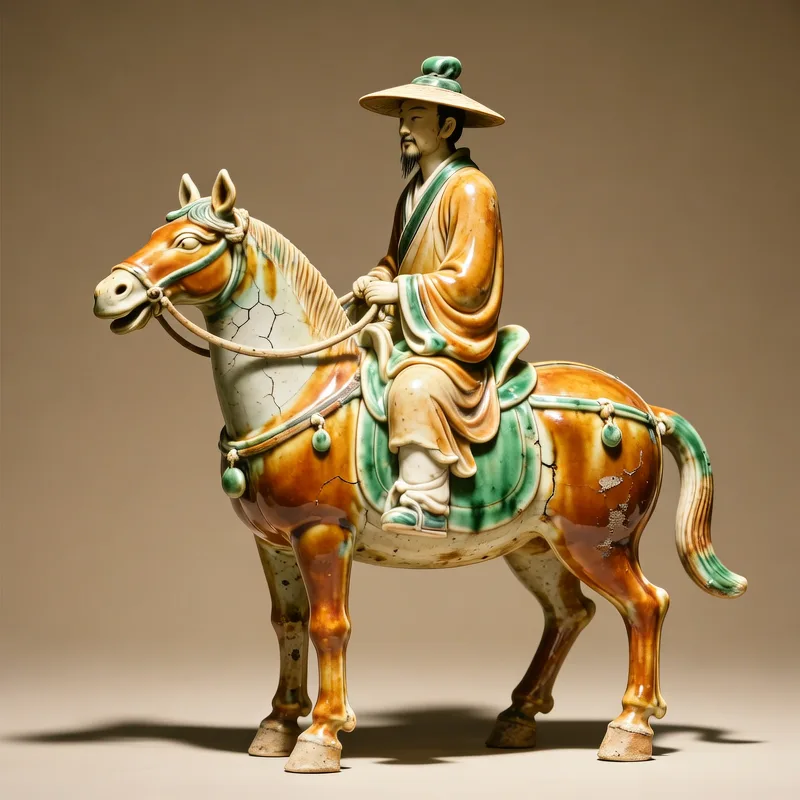
    A Tang dynasty ceramic figure of a mounted traveller on a long journey
    Travel, exile, and military service gave Tang poetry many of its subjects. ภาพประกอบที่สร้างโดย AI · SinoViz

    Afterlife of the Tang Poem

    Tang poetry became a shared cultural memory. Schoolchildren memorised lines, calligraphers copied poems, and Song writers argued with Tang models rather than abandoning them. The Tang canon was also shaped by anthologies: the Tangshi Sanbaishou, compiled in the eighteenth century by Sun Zhu, remains a standard introductory collection. In modern China, poems by Li Bai and Du Fu are recited on formal occasions and quoted in ordinary conversation. Translators render the regulated lines into other languages, though tone patterns and parallel couplets resist exact transfer. Visitors to Xi’an can connect the poems to Shaanxi’s museums, the Tang city walls, and the sites of Chang’an’s wards and markets.

    A Tang poem can hold an empire’s politics in eight lines, or a whole mountain in four.

    แหล่งข้อมูลและเอกสารอ่านเพิ่มเติม

    1. Tang dynasty — สารานุกรมบริแทนนิกา
    2. Chinese literature — สารานุกรมบริแทนนิกา
    3. บทกวีถัง — The Metropolitan Museum of Art.

    ดูตำแหน่งที่ติดตั้ง

    โปรดติดตามข้อมูลนี้ไปยังภูมิภาคที่เกี่ยวข้อง

    สำรวจโดยใช้แผนที่

    ติดตามกระทู้นี้

    ดูรายการอื่นๆ ที่มีแท็กเดียวกัน

    เรียกดูแท็ก
  • สวนซูโจว

    การสำรวจแผนที่

    สวนซูโจว

    Walled Landscapes of Song, Ming, and Qing

    Suzhou’s classical gardens turn rocks, water, and borrowed views into sequences of rooms.

    ส่วน
    การสำรวจแผนที่
    ภูมิภาค
    เจ้อเจียง
    ยุค
    ข้ามยุคสมัย
    แท็ก
    Customs, Geography, Scenic Sites

    The classical gardens of Suzhou are private landscapes created beside houses in the lower Yangtze city. Their walls conceal carefully staged views, with pavilions, ponds, and rocks arranged for walking rather than looking from one point.

    A City of Scholar-Gardens

    Suzhou grew wealthy through silk, grain, and canal trade, and its officials and merchants built gardens behind urban houses. The tradition began early, but the surviving masterpieces are mostly Ming and Qing. The Humble Administrator’s Garden was laid out around 1509 by the official Wang Xianchen; the Lingering Garden began in the Ming and was rebuilt in the Qing; the Master of the Nets Garden was renovated in the late eighteenth century. A garden was an extension of the household, used for receiving guests, drinking tea, writing poetry, and quiet walking. Its name often carried a literary allusion or a modest self-description, a convention that invites visitors to read the landscape as text.

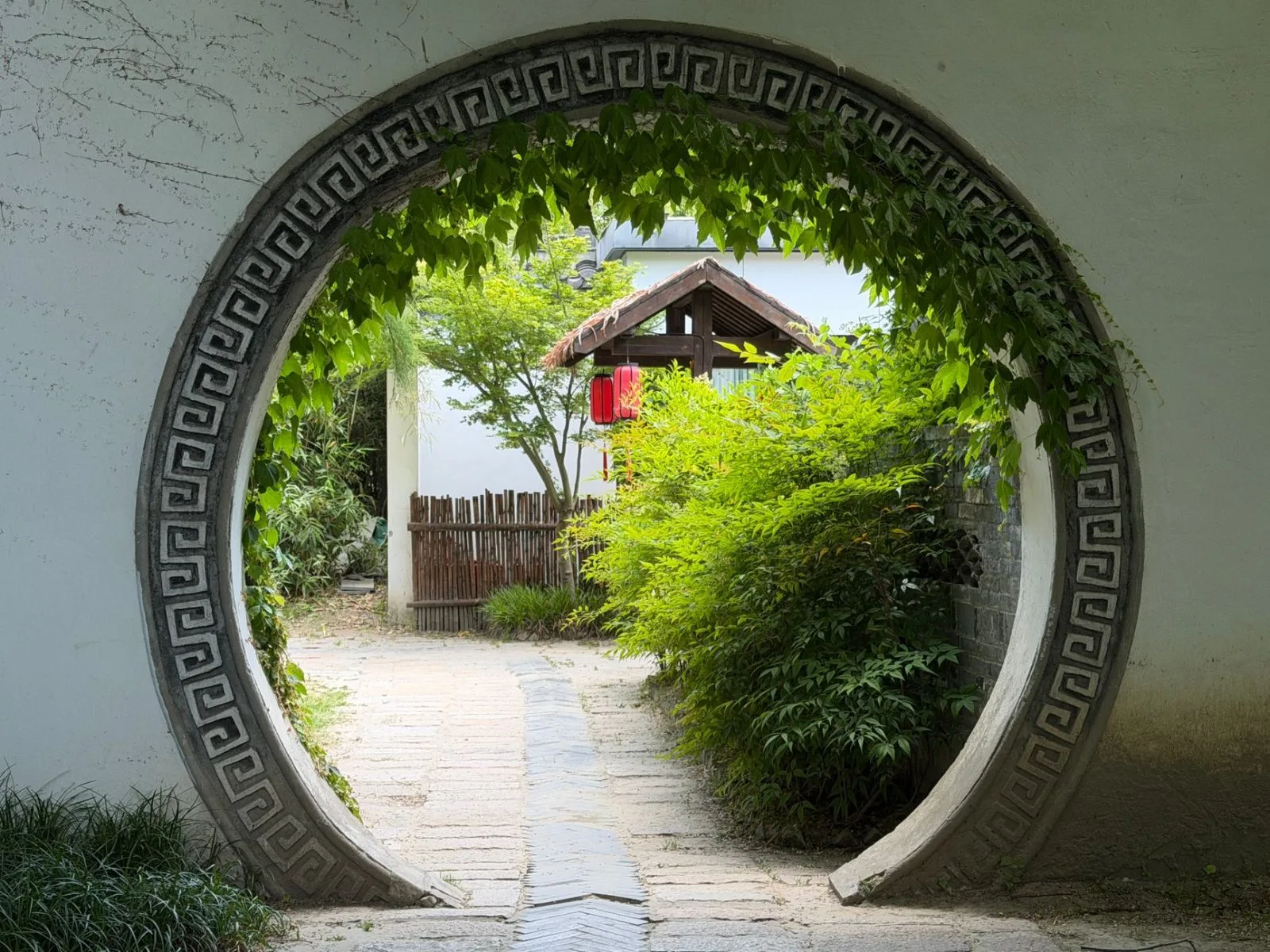
    A moon gate framing a pond, rockery, and pavilion in a Suzhou garden
    A moon gate frames one view while hiding the rest of the garden. Frank Lv | Pexels License (https://www.pexels.com/license/)

    Rocks, Water, and Borrowed Scenery

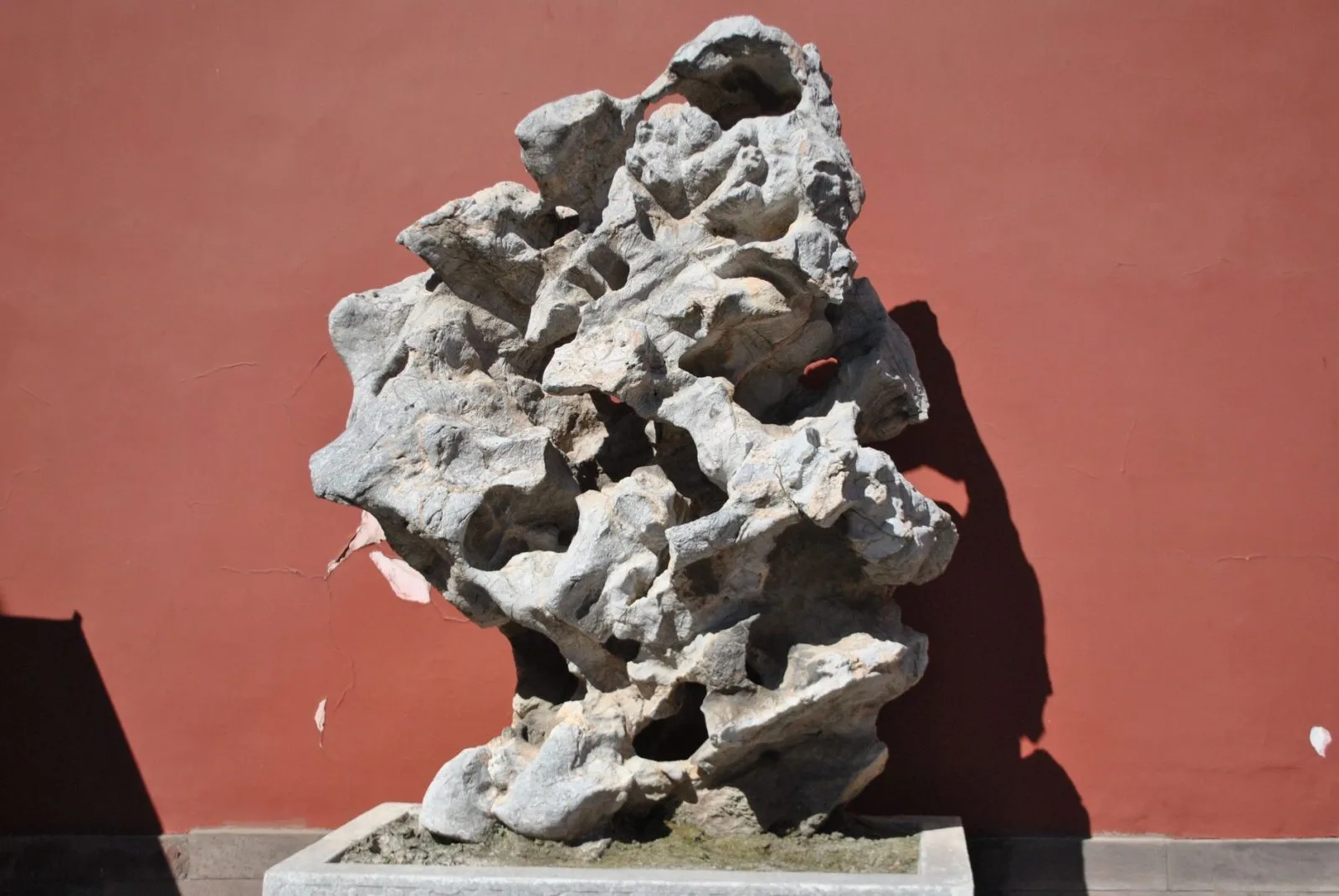
    Suzhou garden design works through layering. Taihu rocks from the lakes west of the city are prized for holes, ridges, and narrow waists; large stones are set as mountains that can be circled. Water occupies the centre of many gardens, with pavilions placed at edges or on islands so views change along a route. White walls act as paper for bamboo shadows and plant forms. The technique of ‘borrowed scenery’ frames a distant pagoda, tree, or hill beyond the garden wall, making the property feel larger. Covered corridors link halls and create repeated glimpses through lattice windows. Nothing is meant to be seen all at once: the garden unfolds as a sequence of framed moments.

    A perforated Taihu rock standing beside still water and a white garden wall
    Taihu stones were selected for openings and silhouettes that suggest mountains. Valeria Drozdova | Pexels License (https://www.pexels.com/license/)

    Four Gardens to Compare

    The Humble Administrator’s Garden is the largest of the classical group, with broad water, low islands, and the distant North Temple Pagoda borrowed into its views. The Master of the Nets Garden is compact, using changes in room size and courtyard density to surprise the visitor; its night performances are popular but timed entry is needed. The Lingering Garden is known for a sequence of entrance, rockery, and waterside halls that delays the main view. The Lion Grove Garden takes its name from rock forms said to resemble lions and invites close inspection of stone labyrinths. Together they show that a small urban plot could imitate mountains, rivers, and travel through careful design.

    • Humble Administrator’s Garden: broad water and borrowed pagoda view
    • Master of the Nets: compact rooms and staged transitions
    • Lingering Garden: rockery before the main pond
    • Lion Grove: dense Taihu stone labyrinth
    A covered walkway with lattice windows looking onto a narrow Suzhou garden court
    Covered corridors divide the garden into changing views. Qing Luo | Pexels License (https://www.pexels.com/license/)

    Visiting and Preservation

    UNESCO inscribed the Classical Gardens of Suzhou on the World Heritage List in 1997, with additions in 2000. Several gardens are small and receive steady crowds, so early morning is usually the best time to see water and rocks without blocking views. Tickets are sold per garden and some sites cap daily numbers or use timed slots; combining two contrasting gardens in one day is more useful than rushing through four. Suzhou is reached from Shanghai by high-speed rail in roughly half an hour, and the old garden district is best explored on foot or by taxi. Preservation involves constant work on timber, plaster, drainage, and plants, since living gardens need maintenance as well as conservation.

    A Suzhou garden is designed to be walked slowly, with each gate hiding the view beyond it.

    แหล่งข้อมูลและเอกสารอ่านเพิ่มเติม

    1. Classical Gardens of Suzhou — UNESCO World Heritage Centre.
    2. Suzhou gardens — สารานุกรมบริแทนนิกา
    3. Chinese garden — The Metropolitan Museum of Art.

    ดูตำแหน่งที่ติดตั้ง

    โปรดติดตามข้อมูลนี้ไปยังภูมิภาคที่เกี่ยวข้อง

    สำรวจโดยใช้แผนที่

    ติดตามกระทู้นี้

    ดูรายการอื่นๆ ที่มีแท็กเดียวกัน

    เรียกดูแท็ก
  • อาหารเสฉวน

    ชีวิตและนิทานพื้นบ้าน

    อาหารเสฉวน

    Chilli Oil, Ferment, and the Numbing Pepper

    Sichuan cooking balances chilli heat, Sichuan pepper numbness, fermented bean paste, and rich broth.

    ส่วน
    ชีวิตและนิทานพื้นบ้าน
    ภูมิภาค
    เสฉวน
    ยุค
    ข้ามยุคสมัย
    แท็ก
    Customs, Food, Geography

    Sichuan cuisine is known for bold seasoning, but its classic dishes are built on contrast: chilli with Sichuan pepper, hot oil with cool cucumber, or a clear broth beside a fiery one.

    A Basin Pantry and Early Flavours

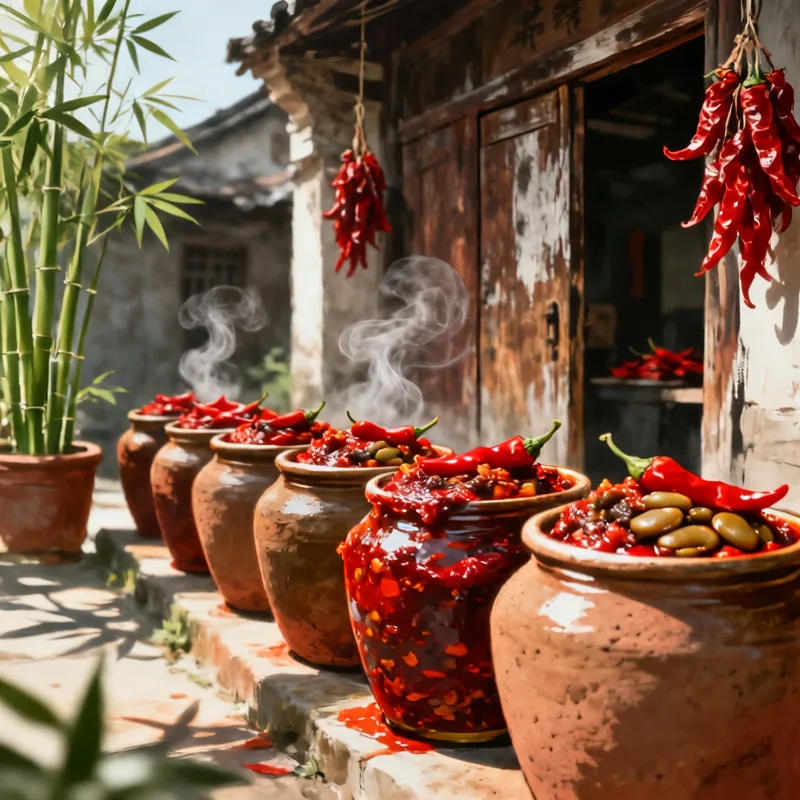
    The Sichuan Basin has fertile fields, rivers, and a humid climate, but its early elite cooking was not defined by chilli. Chilli peppers reached China from the Americas in the sixteenth century and became a Sichuan staple later, especially among ordinary households. Before that, cooks used ginger, garlic, mustard, vinegar, and the distinctive Sichuan pepper, Zanthoxylum simulans, whose husks cause a tingling sensation rather than heat.Fermented bean pastes from the basin towns added depth. Pixian doubanjiang, a broad-bean and chilli paste fermented in Pixian near Chengdu, became a foundation of many red-braised and stir-fried dishes. The province’s food therefore combines older preservation methods with ingredients that arrived through global trade.

    Jars of red chilli and broad-bean paste fermenting outside a Sichuan workshop
    Fermented doubanjiang gives many Sichuan dishes their deep red base. ภาพประกอบที่สร้างโดย AI · SinoViz

    The Grammar of Heat

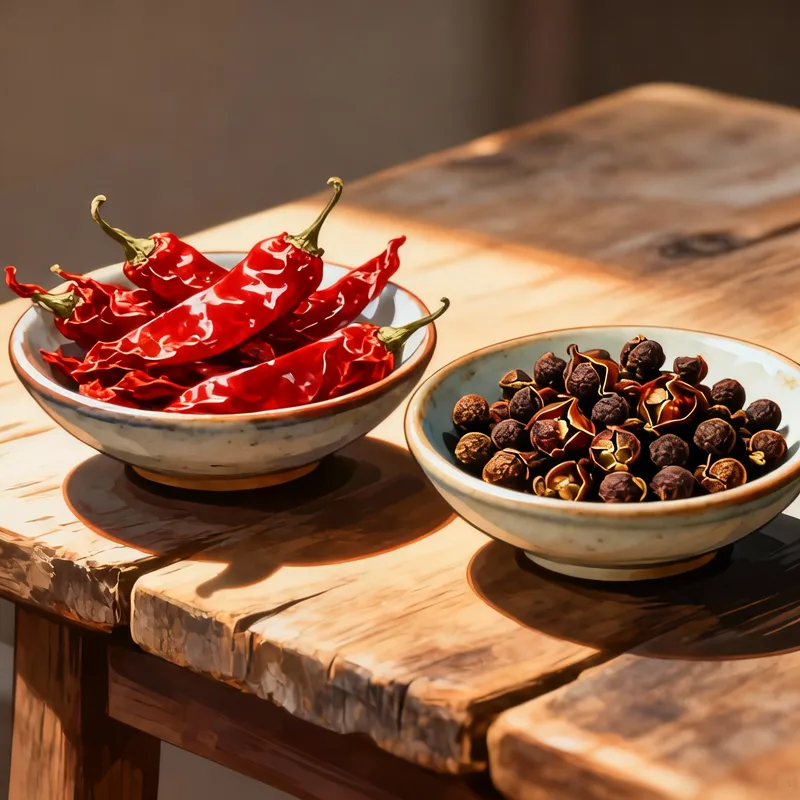
    Sichuan cooks distinguish several kinds of chilli heat. Dried chillies are fried in oil until fragrant but not blackened; chilli oil is steeped and aged; chilli bean paste supplies fermented heat; and fresh peppers give a brighter bite. Sichuan peppercorns, often toasted and ground, produce the málà combination of numbness and spice. Official Sichuan cookbooks describe more than twenty recognised flavour profiles, from guaiwei, strange or complex, to yuxiang, fish-fragrant, which uses no fish. Mapo tofu, associated with Chengdu in the nineteenth century, combines soft tofu, minced meat, doubanjiang, chilli oil, and Sichuan pepper. Kung Pao chicken uses dried chillies, peanuts, and a sweet-sour soy sauce.

    Dried red chillies and Sichuan peppercorns in separate shallow bowls
    Chilli heat and peppercorn numbness are distinct, and cooks balance them separately. ภาพประกอบที่สร้างโดย AI · SinoViz

    Hotpot and the Two-Flame Bowl

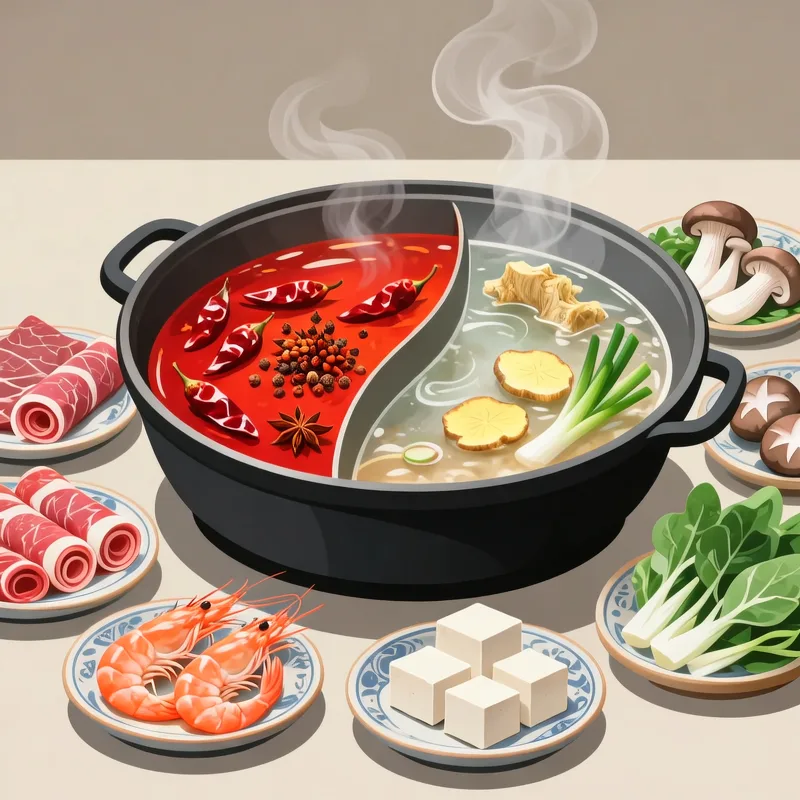
    Chengdu hotpot is a social meal built around a divided pot. One side may hold a red broth of chilli oil, doubanjiang, beef fat, and spices; the other a clear chicken or mushroom stock. Diners cook thinly sliced beef, tripe, duck blood, fish balls, vegetables, and mushrooms, then dip them in sesame oil, garlic, and chopped herbs. The sesame dip cools the palate and coats the mouth against spice. Chongqing hotpot is often heavier and more direct, traditionally using beef tallow; Chengdu versions are commonly more aromatic and varied. Yibin and other southern cities add their own chilli blends. Restaurants label spice levels, but heat can still be adjusted only by asking.

    • Pixian doubanjiang as a fermented chilli-bean base
    • Málà: chilli heat plus peppercorn numbness
    • Two-flavour hotpot with red and clear broth
    • Sesame oil dip to moderate the heat
    A divided hotpot with red chilli broth and clear broth surrounded by ingredient plates
    A two-flavour pot lets a table divide heat from clarity. ภาพประกอบที่สร้างโดย AI · SinoViz

    Beyond the Fiery Stereotype

    Not every Sichuan dish is hot. Sichuan’s most ceremonial dish, Gongbao chicken and the banquet classic ‘sweet and sour’ aside, the cuisine includes clear broths, steamed dishes, and delicate pastry. Zhangcha duck is smoked with tea leaves and camphor before steaming, while boiled pork slices are served in a clear broth with mustard greens. Chengdu’s teahouses and dish shops serve small noodles, sweet-water noodles, and dumplings. The province also includes Tibetan and Yi food traditions in its western highlands, where barley, yak products, and different seasonings dominate. Reading Sichuan cuisine only as heat misses its central achievement: layering aromas, textures, and ferments so that strong flavours remain controlled.

    Sichuan cooking is not simply hot; it is a carefully graded argument between chilli, pepper, oil, and ferment.

    แหล่งข้อมูลและเอกสารอ่านเพิ่มเติม

    1. Sichuan cuisine — สารานุกรมบริแทนนิกา
    2. Chinese Cuisine — สารานุกรมบริแทนนิกา
    3. Sichuan Food — China Highlights.

    ดูตำแหน่งที่ติดตั้ง

    โปรดติดตามข้อมูลนี้ไปยังภูมิภาคที่เกี่ยวข้อง

    สำรวจโดยใช้แผนที่

    ติดตามกระทู้นี้

    ดูรายการอื่นๆ ที่มีแท็กเดียวกัน

    เรียกดูแท็ก
  • ยี่

    Ethnic Community

    ยี่

    Fire, mountains and an ancient script

    Yi communities live across the mountains of southwest China. The Nuosu branch preserves a distinctive script and ritual tradition, while Torch Festival has become a widely recognised Yi celebration.

    Community
    ยี่
    Population
    Around 9 million; Sichuan, Yunnan, Guizhou, Guangxi
    Language
    Yi languages; Nuosu script
    01

    Where the community lives

    Yi people live mainly in Sichuan, Yunnan and Guizhou, often in mountainous areas. Liangshan in Sichuan is a major centre of Nuosu culture.
    02

    Language and belief

    Yi languages belong to the Tibeto-Burman family. The Nuosu syllabic script is a rare living indigenous writing system in China.
    03

    Festivals and daily life

    Torch Festival features bonfires, dancing and gatherings. Buckwheat, potatoes, cured meat and hearty mountain food reflect local agriculture.
    04

    Crafts and heritage

    Embroidery, lacquerware, silver ornaments and ritual texts preserve Yi aesthetic traditions. Epic storytelling and ritual specialists carry historical memory.

    See the region

    Open the map to read the land connected to this community.

    สำรวจโดยใช้แผนที่
  • จ้วง

    Ethnic Community

    จ้วง

    Rice terraces and song festivals

    The Zhuang are China’s largest minority ethnic group. Their culture is closely tied to Guangxi’s karst hills, rice farming, song festivals and distinctive bronze drum traditions.

    Community
    จ้วง
    Population
    Around 19 million, mostly in Guangxi
    Language
    Zhuang (Tai-Kadai)
    01

    Where the community lives

    Most Zhuang people live in Guangxi, with communities also in Yunnan, Guangdong and Guizhou. Karst valleys and river plains shape settlement and agriculture.
    02

    Language and tradition

    Zhuang belongs to the Tai-Kadai family. Folk songs, especially antiphonal singing, are central to social life and courtship.
    03

    Festivals and daily life

    The Sanyuesan festival features singing, coloured eggs and gatherings. Rice, river fish and sour flavours appear in local food traditions.
    04

    Crafts and heritage

    Bronze drums, embroidered balls and indigo-dyed textiles are important cultural symbols. Dong and Zhuang communities also share drum tower and bridge-building traditions in some areas.

    See the region

    Open the map to read the land connected to this community.

    สำรวจโดยใช้แผนที่