مدونة

  • مطبخ جيانغنان

    الحياة والفولكلور

    مطبخ جيانغنان

    River Fish, Rice, and Refined Broth

    The cooking of the lower Yangtze favours freshwater fish, seasonal greens, and delicate stocks.

    قسم
    الحياة والفولكلور
    منطقة
    تشجيانغ
    عصر
    عبر العصور
    الوسوم
    Food, Geography

    Jiangnan cooking grew in the wet, rice-growing country south of the Yangtze. Its reputation rests less on spice than on timing: a fish steamed just long enough, a broth cleared and simmered, or a vegetable picked before it toughens.

    A Landscape of Water and Rice

    Jiangnan means the land south of the Yangtze, a region of canals, lakes, and irrigated fields centred on Jiangsu and Zhejiang. From the Song dynasty (960–1279), the lower Yangtze became China’s densest and wealthiest farming region, supported by double-cropping rice, fish ponds, and silk production. Cities such as Hangzhou and Suzhou developed a class of officials, merchants, and literati who recorded dining in essays and cookbooks. Lin An, today’s Hangzhou, was the Southern Song capital after 1127, and its markets sold freshwater fish, crab, bamboo shoots, and lotus root. Local cooking took shape around what the water and nearby fields supplied in season.
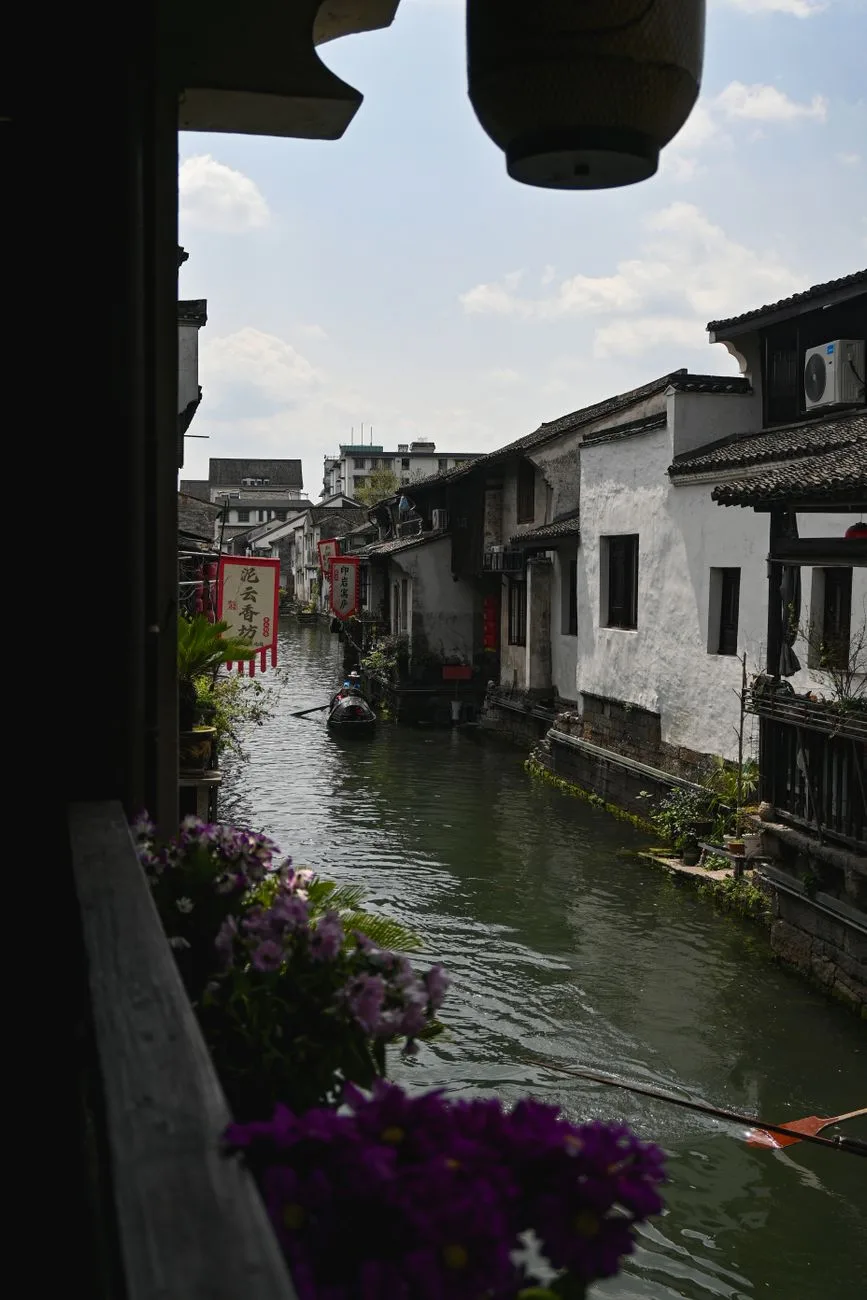
    Canals and rice fields in the Jiangnan countryside near Suzhou
    Canals, fish ponds, and irrigated fields shaped the Jiangnan pantry. 木 灬 | Pexels License (https://www.pexels.com/license/)

    Techniques of Cleanness

    Jiangnan cooks prize the natural flavour of ingredients, so technique often means restraint. Steaming preserves the texture of fish and glutinous rice; quick stir-frying keeps greens crisp; slow simmering turns pork bones and chicken into clear, aromatic broth. Shaoxing in Zhejiang is famous for yellow rice wine, used in marinades and for deglazing a hot wok. Vinegar from Zhenjiang balances sweet and sour dishes. Hangzhou’s famous West Lake vinegar fish uses a fish from the lake, scored and fried, then finished with a sweet-sour sauce. The dish is now a restaurant set piece, but it began as a local preparation of available freshwater fish.
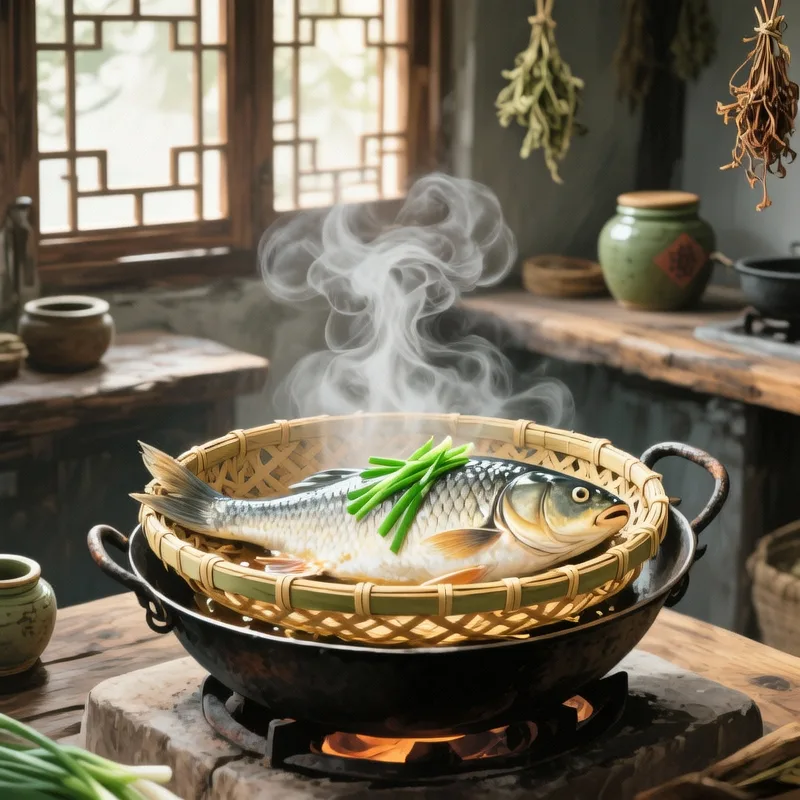
    A whole freshwater fish steaming in a bamboo basket over a wok in a Jiangnan kitchen
    Steaming is a defining Jiangnan technique because it preserves delicate texture. رسم توضيحي مُولّد بالذكاء الاصطناعي · سينوفيز

    A Calendar of Local Dishes

    Seasonality gives the cuisine its rhythm. Spring brings bamboo shoots, shepherd’s purse, and the first river shrimp; autumn brings hairy crab from lakes and the slow-growing taihu whitebait. Suzhou’s squirrel-shaped mandarin fish is butterflied, scored, fried, and glazed, while braised pork belly is cooked until fat and lean layers hold together without hardness. Ningbo, on the Zhejiang coast, adds salted and dried seafood, and its tangyuan glutinous-rice balls filled with black sesame are eaten at the Lantern Festival. Shanghai, later and more cosmopolitan, absorbed these traditions into benbang cooking, favouring soy, sugar, and seafood.

    • West Lake vinegar fish from Hangzhou
    • Squirrel-shaped mandarin fish from Suzhou
    • Hairy crab from Taihu lakes in autumn
    • Black-sesame tangyuan for the Lantern Festival
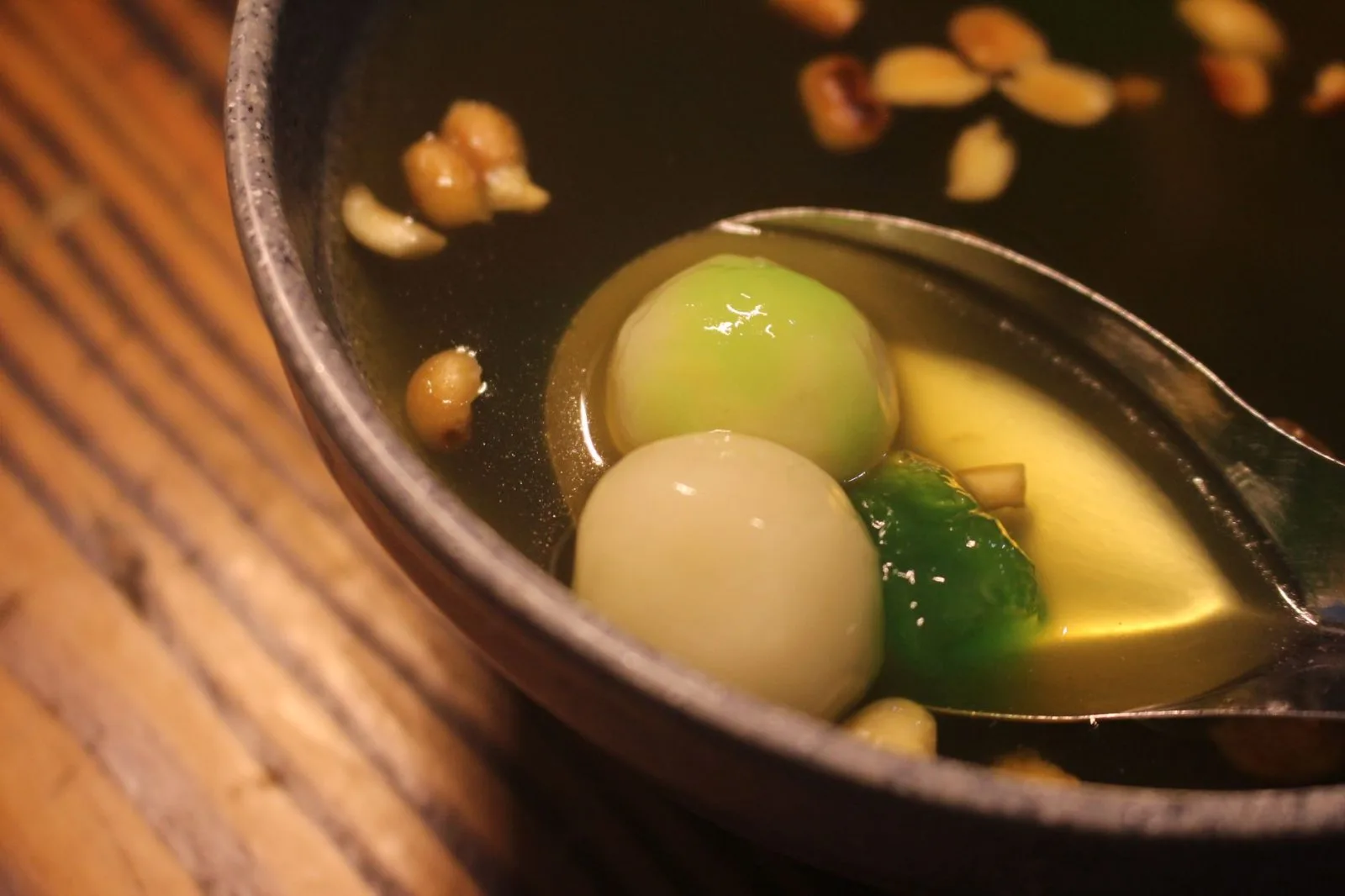
    Small glutinous rice balls with black sesame filling served in a warm bowl
    Tangyuan mark the Lantern Festival across the lower Yangtze. Jauhar Musthofal Qulub | Pexels License (https://www.pexels.com/license/)

    Gardens, Teahouses, and the Table

    Meals in Jiangnan were historically tied to gardens and teahouses, where scholars met over small dishes and wine. The region’s cookbooks, including Yuan Mei’s Suiyuan Shidan of 1792, record recipes alongside comments on market ingredients and household methods. Yuan Mei argued that a cook should understand each ingredient rather than bury it under sauce. That ideal still shapes the region’s public image, even when restaurant versions are elaborate. For a visitor, the useful lesson is to order by season and region: a lake crab in autumn, a bowl of noodles in Suzhou, or a pot of longjing tea near Hangzhou.

    In Jiangnan, the test of a dish is often how little the cook has done to spoil the ingredient.

    المصادر والمزيد من القراءة

    1. Chinese Regional Cooking — موسوعة بريتانيكا.
    2. هانغتشو — مركز التراث العالمي لليونسكو.
    3. هانغتشو — موسوعة بريتانيكا.
    شاهدها في مكانها

    اتبع هذا المدخل إلى المنطقة التي ينتمي إليها.

    استكشف عبر الخريطة

    تابع الموضوع

    تصفح الإدخالات الأخرى التي تشترك في نفس الوسوم.

    تصفح الوسم
  • المطبخ الكانتوني

    الحياة والفولكلور

    المطبخ الكانتوني

    Steam, Wok Heat, and Coastal Markets

    Guangdong cooking turns local seafood and temple fair foods into a refined restaurant tradition.

    قسم
    الحياة والفولكلور
    منطقة
    قوانغدونغ
    عصر
    عبر العصور
    الوسوم
    Food, Geography

    Cantonese cuisine is the cooking of Guangdong and its diaspora, built on river deltas, coastal markets, and the heat of the wok. Its best-known dishes—roast goose, dim sum, and steamed fish—sit beside home-style soups and street snacks.

    The Pearl River Pantry

    The Pearl River Delta gave Cantonese cooking an unusually broad pantry. Rice grows in the lowlands, fish and shellfish come from the estuary, and hills behind Guangzhou supply vegetables, pork, and poultry. Guangzhou was a major port under the Tang and again after European traders arrived in the seventeenth and eighteenth centuries. Merchants, officials, and temple fairs supported restaurants that could pay for skilled chefs. By the Qing period, Guangzhou’s tea houses served small plates known as dim sum through the morning and midday. Emigrants from Guangdong later carried these dishes to Southeast Asia, North America, and Europe, adapting them to local supplies.

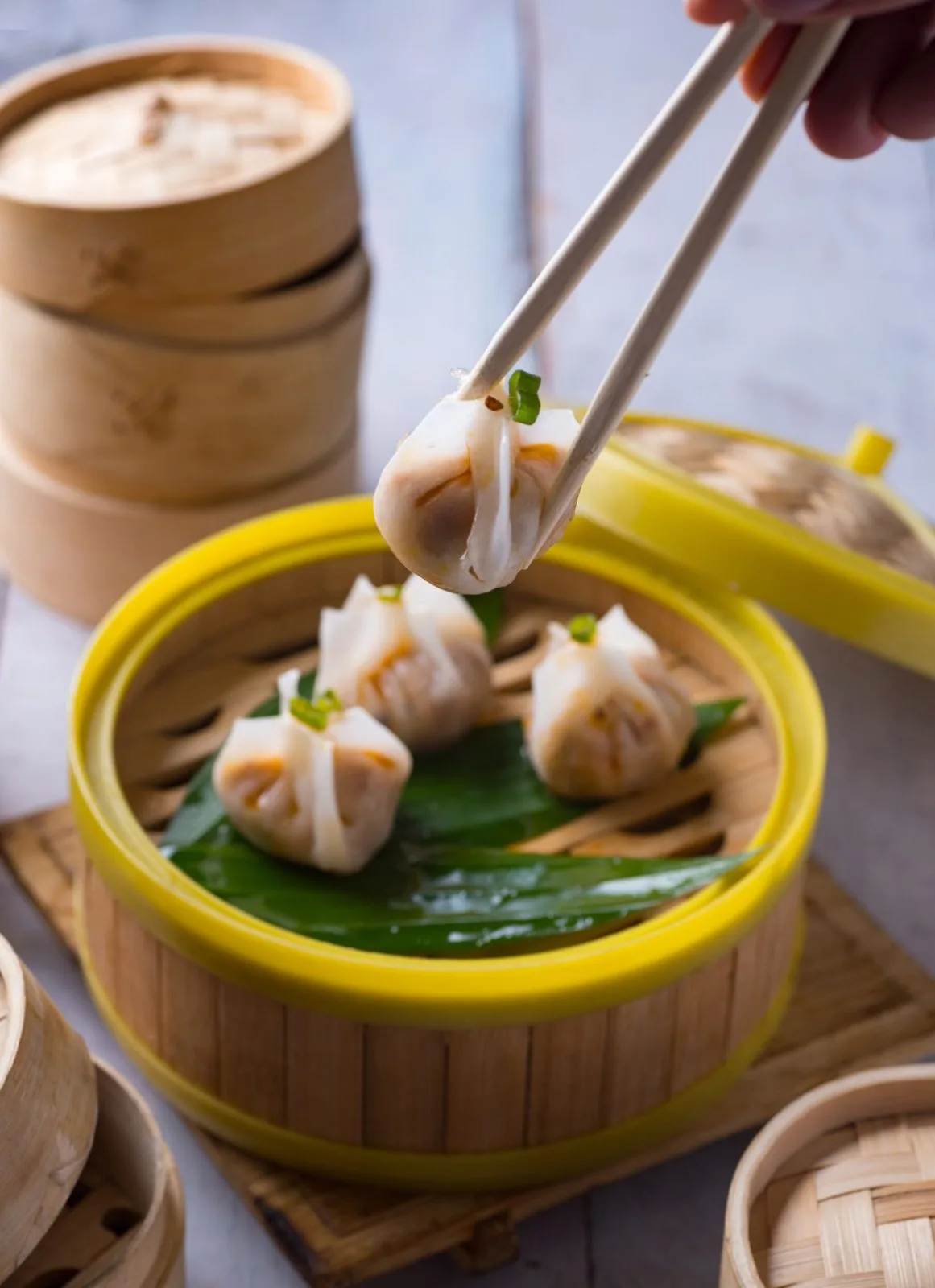
    Bamboo steamers filled with dim sum
    Dim sum developed in the teahouses of Guangzhou and spread with Cantonese migration. parveen tasud | Pexels License (https://www.pexels.com/license/)

    Wok Hei and the Roast House

    Cantonese stir-frying depends on wok hei, the barely definable aroma produced when hot oil, vapours, and food meet a very hot wok. Chefs toss ingredients to keep them moving and prevent scorching; sauces are added late, often with cornstarch to give a light coating. Roasting is another speciality. Guangzhou-style white-cut chicken is poached and served with ginger and spring onion, while roast goose from Shunde is glazed, air-dried, and hung in a brick oven until the skin blisters. Char siu pork is marinated with honey and red fermented bean curd, then roasted with sugar caramelising at the edges.

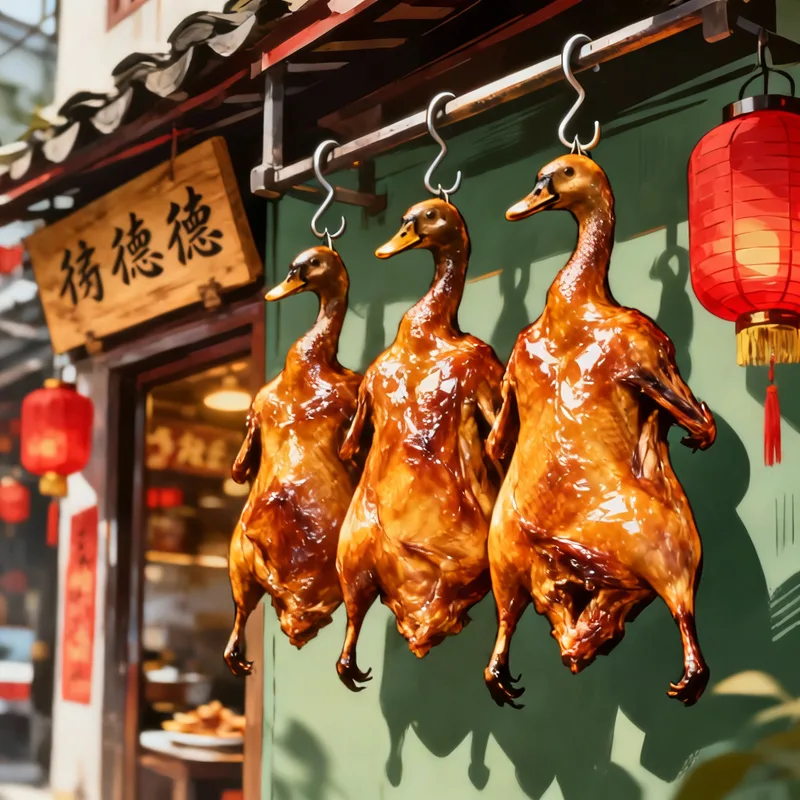
    Roast geese hung to dry before roasting outside a Shunde restaurant
    Air-drying the skin is a key step in Shunde’s roast goose. رسم توضيحي مُولّد بالذكاء الاصطناعي · سينوفيز

    Dim Sum and Morning Ritual

    Dim sum means a light snack, but in Cantonese practice it describes a meal of small portions ordered from trolleys or a paper card. Har gow wrap shrimp in a translucent wheat-starch skin; siu mai open-topped dumplings hold pork and shrimp; char siu bao are soft steamed buns with sweet roast-pork filling. Cheung fun are broad rice-noodle sheets rolled around shrimp, pork, or beef and dressed in soy sauce. Tea accompanies the meal, and the old custom of tapping a pot’s lid to signal for a refill is still performed, though younger diners may simply ask. The ritual is social as much as culinary, filling teahouses from early morning.

    • Har gow with translucent shrimp filling
    • Siu mai topped with a single shrimp
    • Cheung fun rice rolls with soy dressing
    • Egg tarts adapted from British custard pastry
    A trolley of bamboo steamers and tea pots beside a crowded Guangzhou dining room
    A dim sum meal is ordered in small dishes and shared across the table. minchephoto photography | Pexels License (https://www.pexels.com/license/)

    Regional Range and Diaspora

    Cantonese food is not one style. Shunde is known for delicate dairy desserts and fish dishes, Chaozhou nearby has a separate tradition of braised goose, seafood, and strong oolong tea, and Hakka communities in the hills favour preserved vegetables and stuffed tofu. Teochew and Hainanese migrants carried their own versions abroad. In Chinatowns from San Francisco to Singapore, Cantonese restaurants adapted to local tastes while keeping techniques such as steaming, roasting, and long simmered double-boiled soups. The resulting cuisines are mixed, but they preserve a central idea: fresh ingredients, precise heat, and a sauce that supports rather than hides them.

    Cantonese cooking asks a wok to do in seconds what other traditions give hours of stewing.

    المصادر والمزيد من القراءة

    1. Chinese Cuisine — موسوعة بريتانيكا.
    2. Cantonese cuisine — موسوعة بريتانيكا.
    3. Guangzhou — مركز التراث العالمي لليونسكو.

    شاهدها في مكانها

    اتبع هذا المدخل إلى المنطقة التي ينتمي إليها.

    استكشف عبر الخريطة

    تابع الموضوع

    تصفح الإدخالات الأخرى التي تشترك في نفس الوسوم.

    تصفح الوسم
  • مهرجان الفوانيس

    الحياة والفولكلور

    مهرجان الفوانيس

    Lights on the Fifteenth Night

    The fifteenth night of the first lunar month closes the New Year with lanterns and sweet rice balls.

    قسم
    الحياة والفولكلور
    منطقة
    بكين
    عصر
    عبر العصور
    الوسوم
    الجمارك، الغذاء

    The Lantern Festival falls on the fifteenth day of the first lunar month, the first full moon of the year. Lanterns, night markets, riddles, and tangyuan rice balls mark the end of the New Year period.

    Origins in Calendar and Court

    The festival’s date follows the lunar calendar, so its Gregorian date changes each year. Several origins are cited. Emperor Wen of Han is said to have declared a public holiday around 180 BCE after defeating the Lü clan, while the Eastern Han emperor Ming promoted lantern displays in the first century CE as Buddhism spread. Daoist tradition associated the day with the heavenly official who grants blessings. By the Tang dynasty, the festival had become a major urban occasion: court records describe vast lantern displays in Chang’an and Luoyang, and the poet Su Weidao wrote of night markets bright as day. The Tang court relaxed curfew so people could view the lights.

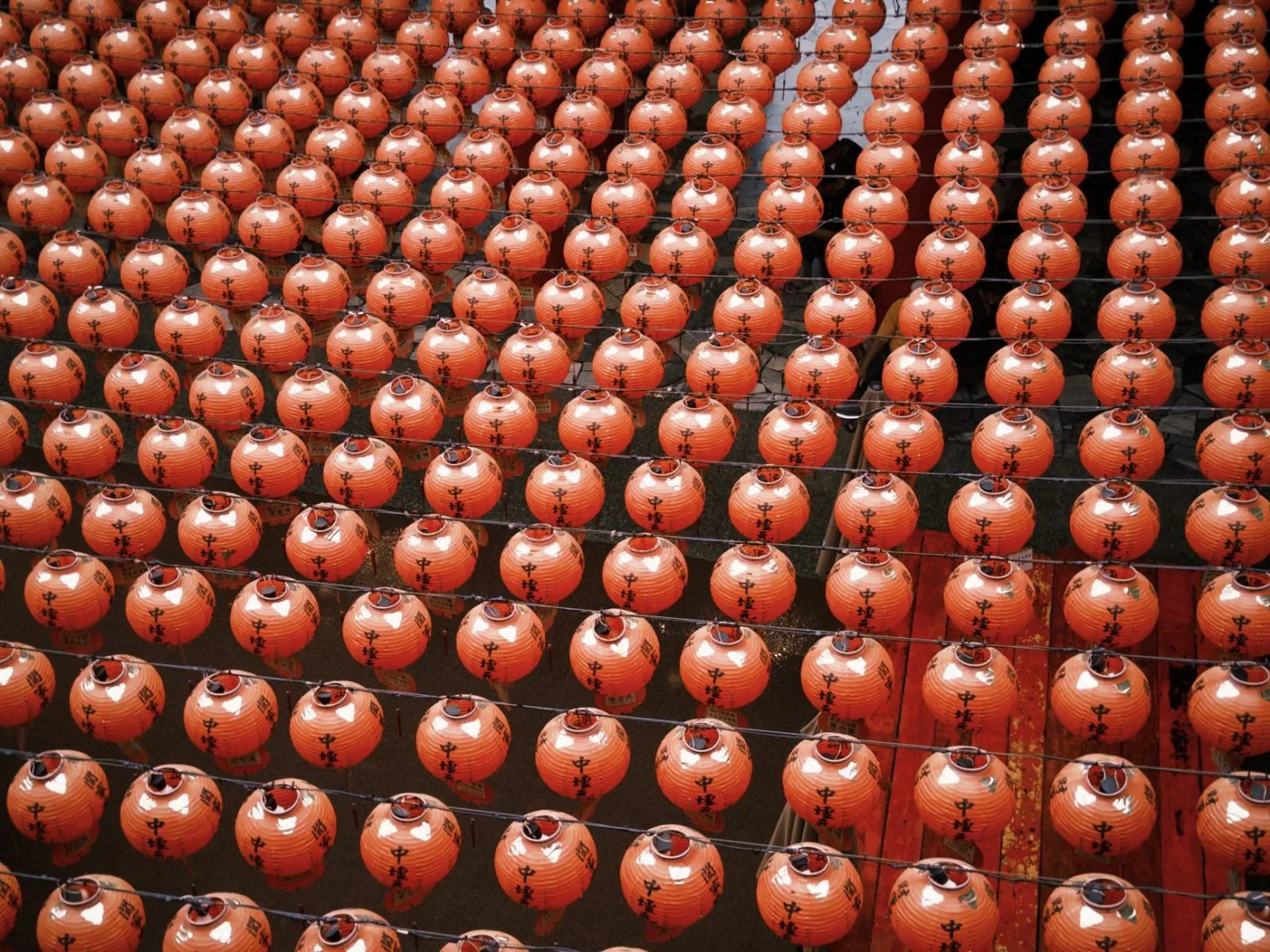
    Rows of illuminated red lanterns hanging along a street during a night festival
    Tang cities relaxed curfew so residents could walk among the lanterns at night. zack ZHUO | Pexels License (https://www.pexels.com/license/)

    Riddles, Lions, and Processions

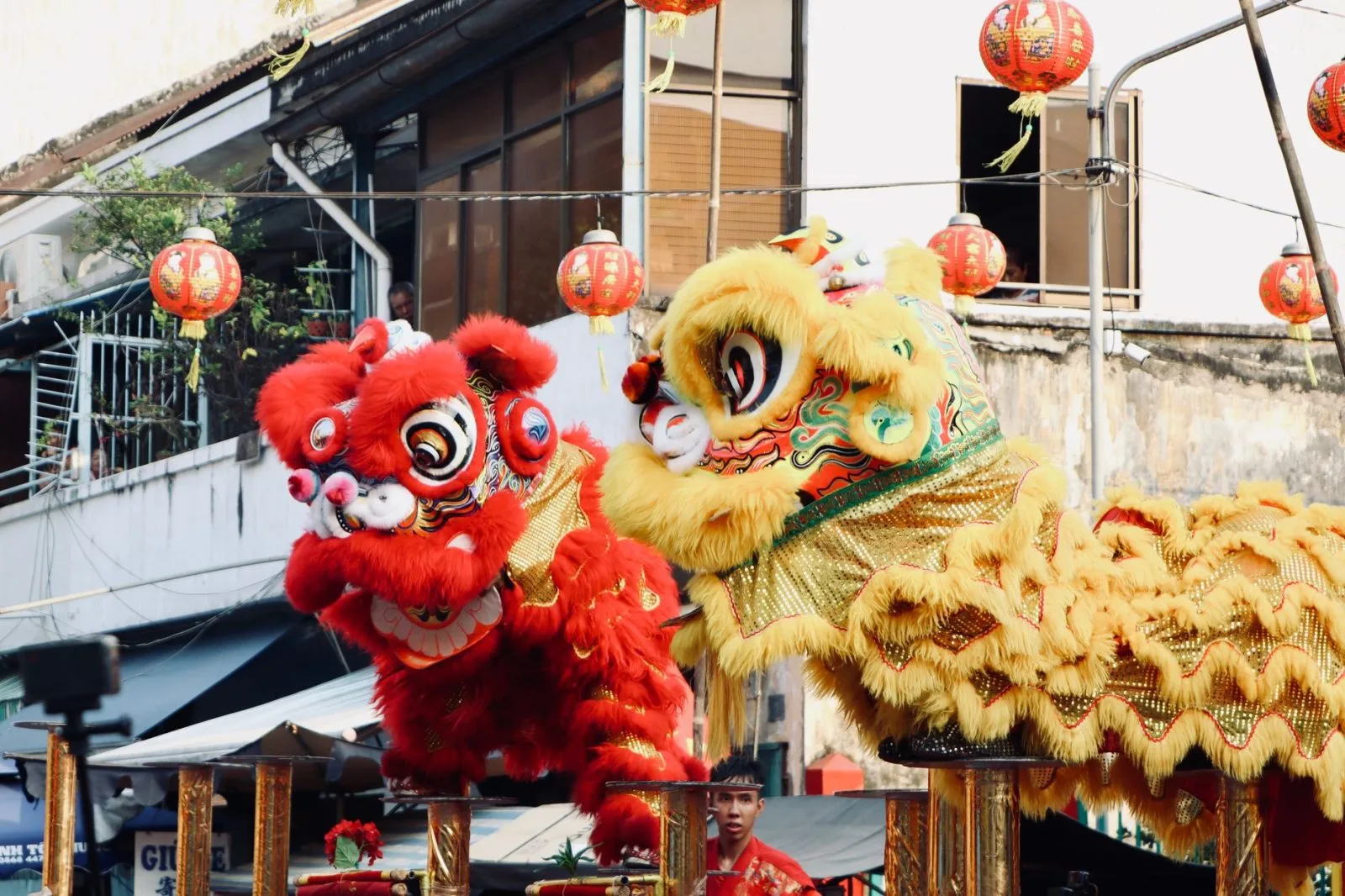
    Lantern riddles are written on slips attached to the lamps; solving one is a small test of wordplay and classical learning. Lion dances, dragon dances, and walking-on-stilts performances draw crowds in the streets, with local troupes competing for space and applause. In some places, people carry lanterns representing animals or characters, and children pull small lanterns on sticks. Beijing’s temple fairs once gathered vendors, performers, and visitors around temple courtyards; today the festival is also marked in parks and commercial districts. Taiwan is known for large lantern festivals and elaborate installations, while Nanjing has long been associated with elaborate lantern craft along the Qinhuai River.

    A lion dance troupe leaping beneath hanging lanterns during a street celebration
    Processions and lion dances turn the festival into a public performance. Pham Huynh Tuan Vy | Pexels License (https://www.pexels.com/license/)

    Tangyuan and the Taste of Reunion

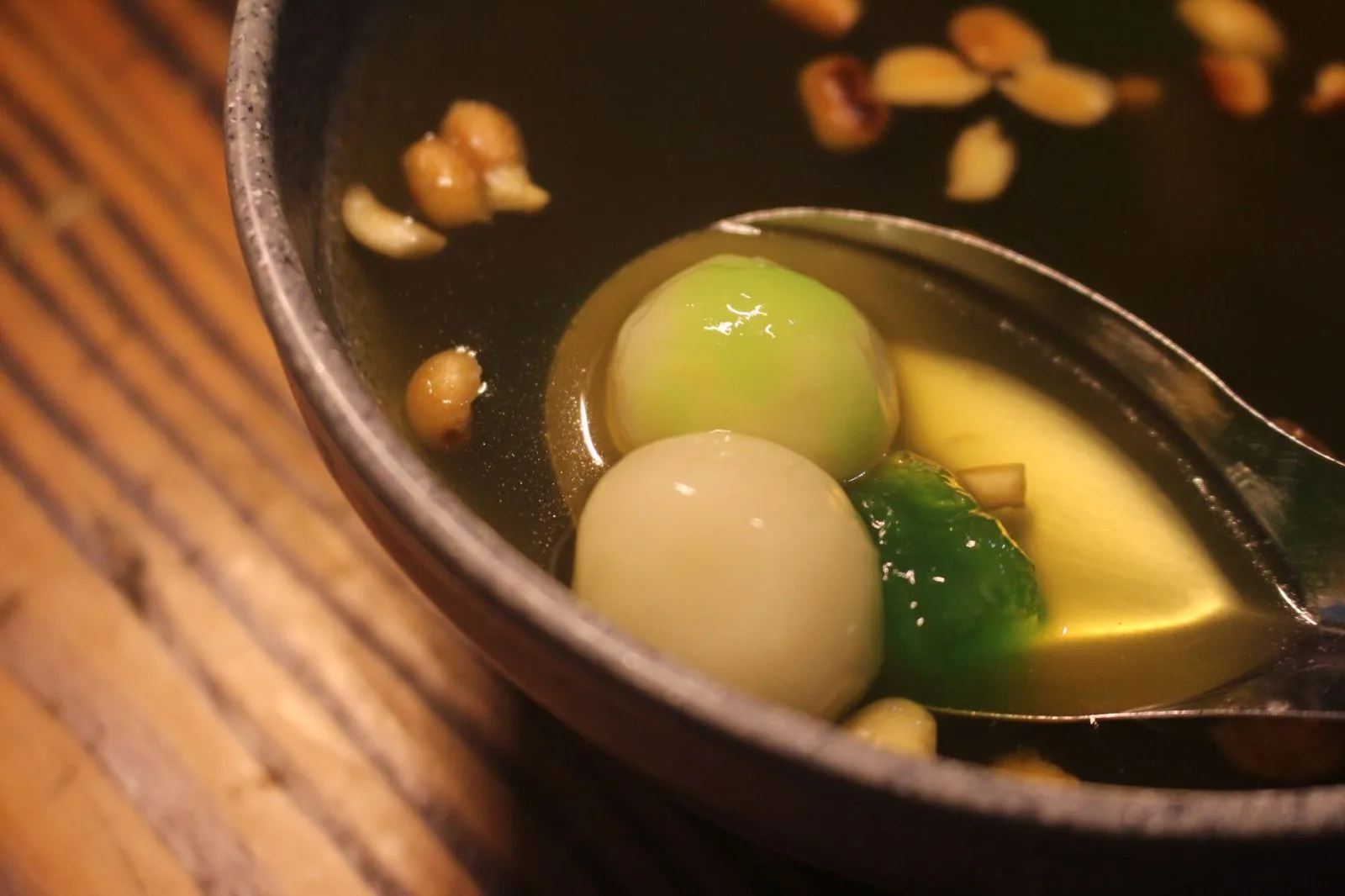
    The festival food is tangyuan in southern China and often yuanxiao in the north, both made from glutinous rice flour around a sweet filling. The names and methods differ: southern cooks wrap a soft dough around filling, while northern cooks may roll moistened filling in dry rice flour in repeated layers. Fillings include black sesame paste, red bean, peanut, and osmanthus sugar. The round shape suggests family unity, and the bowls are shared after the evening’s walk. In Ningbo, black-sesame tangyuan are a local speciality; in Shanghai and Suzhou they are sold from neighbourhood shops. Sweet rice wine and small glutinous balls are also served in some regions.

    • Black sesame, red bean, and peanut fillings
    • Southern wrapped tangyuan and northern rolled yuanxiao
    • Lantern riddles attached to public displays
    • Dragon and lion processions after dark
    A bowl of small white glutinous rice balls in clear sweet soup
    Round rice balls symbolise reunion at the first full moon. Jauhar Musthofal Qulub | Pexels License (https://www.pexels.com/license/)

    The Festival in Modern Cities

    The festival remains a public holiday in mainland China, though the number of days off and the school calendar vary. Major cities install temporary lighting, close some streets to traffic, and run lantern displays in parks and along rivers. Viewing a lantern show often means walking slowly in crowds; in Beijing, the temperature can still be below freezing, so warm layers matter. Photographers should check local rules on tripods and drones. Shopping districts extend the season commercially, but temple fairs and neighbourhood associations keep older practices alive. The date’s movement also means the festival may fall during term time or a working week, changing how families gather.

    The first full moon turns a winter street into a temporary gallery of paper, silk, and light.

    المصادر والمزيد من القراءة

    1. مهرجان الفوانيس — موسوعة بريتانيكا.
    2. Chinese Lantern Festival — China Highlights.
    3. Yuanxiao Festival — موسوعة التاريخ العالمي.

    شاهدها في مكانها

    اتبع هذا المدخل إلى المنطقة التي ينتمي إليها.

    استكشف عبر الخريطة

    تابع الموضوع

    تصفح الإدخالات الأخرى التي تشترك في نفس الوسوم.

    تصفح الوسم
  • المدينة المحرمة

    كرونيكل

    المدينة المحرمة

    The Ming and Qing Imperial Palace

    A walled palace in Beijing that served as the seat of Ming and Qing imperial government.

    قسم
    كرونيكل
    منطقة
    بكين
    عصر
    يوان مينغ تشينغ
    الوسوم
    History, Scenic Sites

    The Forbidden City was built as the ceremonial and administrative centre of the Ming and later Qing dynasties. Its courtyards and halls express rank in stone, timber, colour, and route: the emperor alone crossed the central axis to the throne hall.

    Building an Imperial Axis

    Construction began in 1406 under the Yongle Emperor, who had moved the capital from Nanjing to Beijing. The palace took roughly fourteen years to complete and opened in 1420. Its site lay south of the Yuan dynasty’s capital, Dadu, whose planner had already established a north-south axis. More than a million workers and artisans were mobilised, including convict labour and skilled craftsmen from across the empire. Timber came from southern forests, stone from quarries near Beijing, and glazed tiles from kilns in the capital’s outskirts. The name Zijin Cheng, or Purple Forbidden City, referred to the polarised Heavenly Emperor and the restrictions on entry.

    The Hall of Supreme Harmony rising above broad terraces on Beijing’s central axis
    The main throne hall stands on the palace’s central ceremonial axis. Lan Yao | Pexels License (https://www.pexels.com/license/)

    Front Court and Inner Quarters

    The palace is organised into an outer court for ceremony and an inner court for residence. The Hall of Supreme Harmony, the largest and highest hall, was used for enthronements, imperial weddings, and the winter solstice audience. Behind it stand the Hall of Central Harmony and the Hall of Preserving Harmony. The inner court includes the Palace of Heavenly Purity, the Hall of Earthly Tranquility, and the empress’s quarters. Officials approached through the Meridian Gate and crossed the Golden Water River on bridges that marked status. The design did more than impress: it separated ranks and turned movement through space into a visible grammar of power.

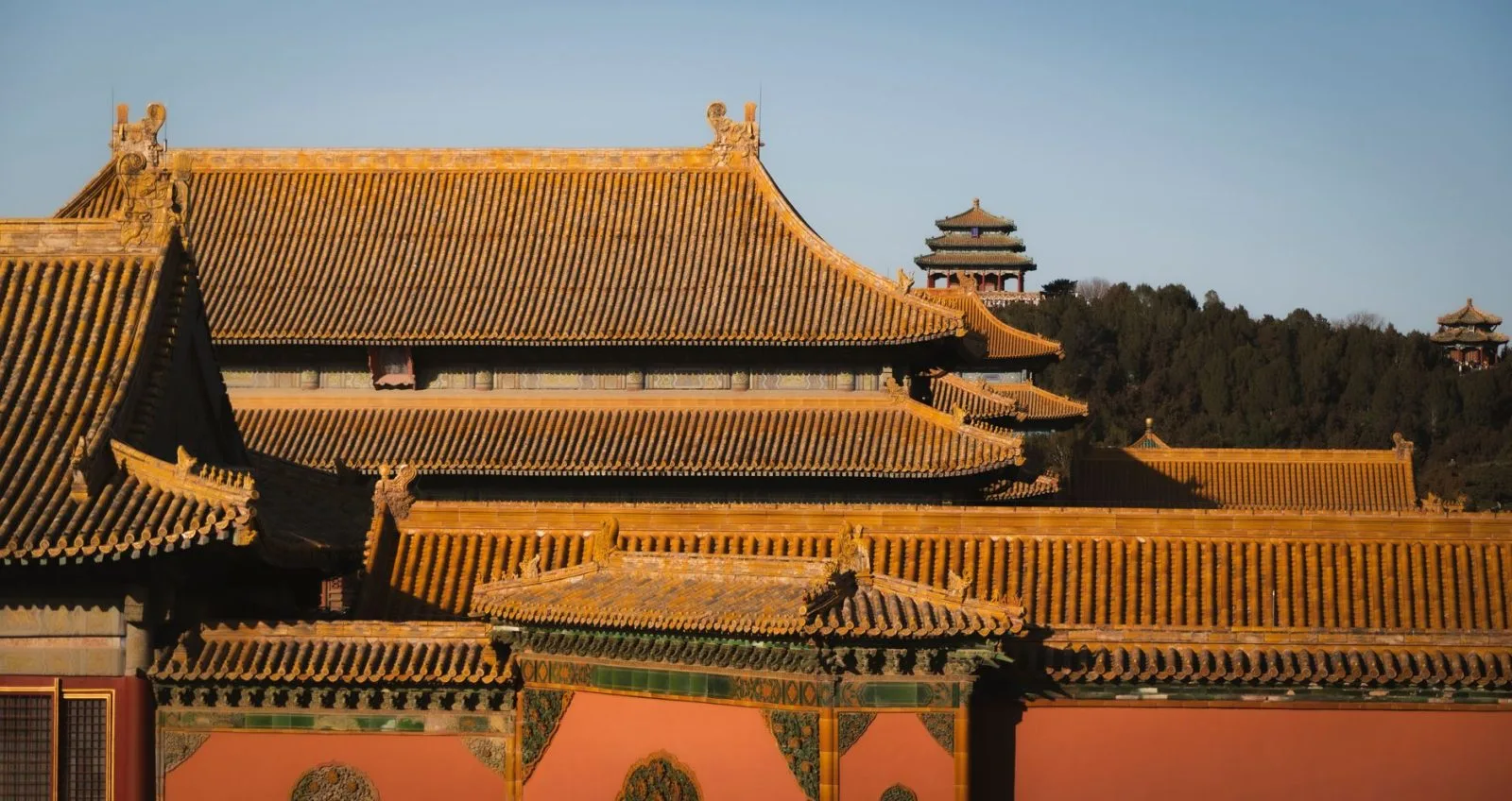
    A succession of red-walled courtyards and golden roofs viewed from a palace terrace
    Repeated courtyards made ceremonial progress part of the architecture. 虎 曼 | Pexels License (https://www.pexels.com/license/)

    Colour, Number, and Craft

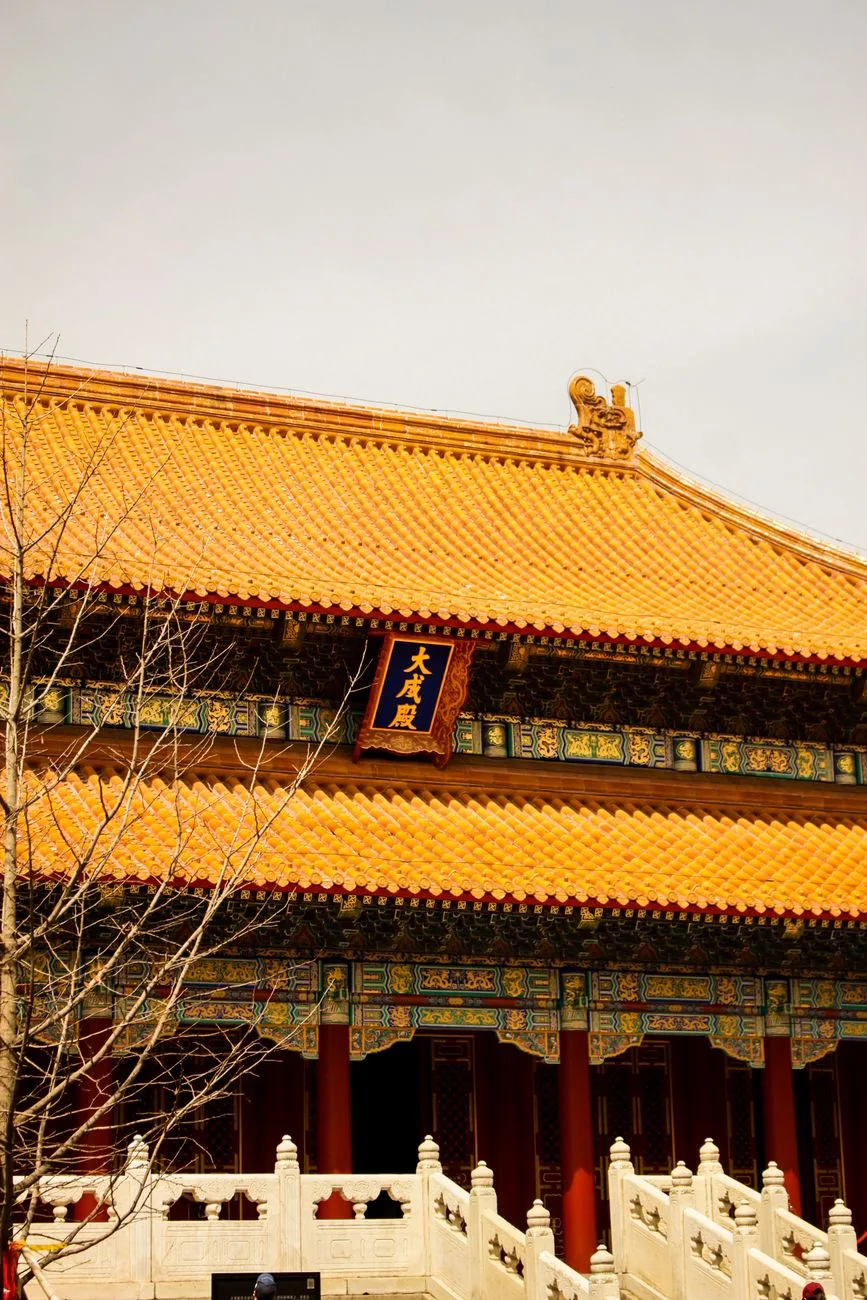
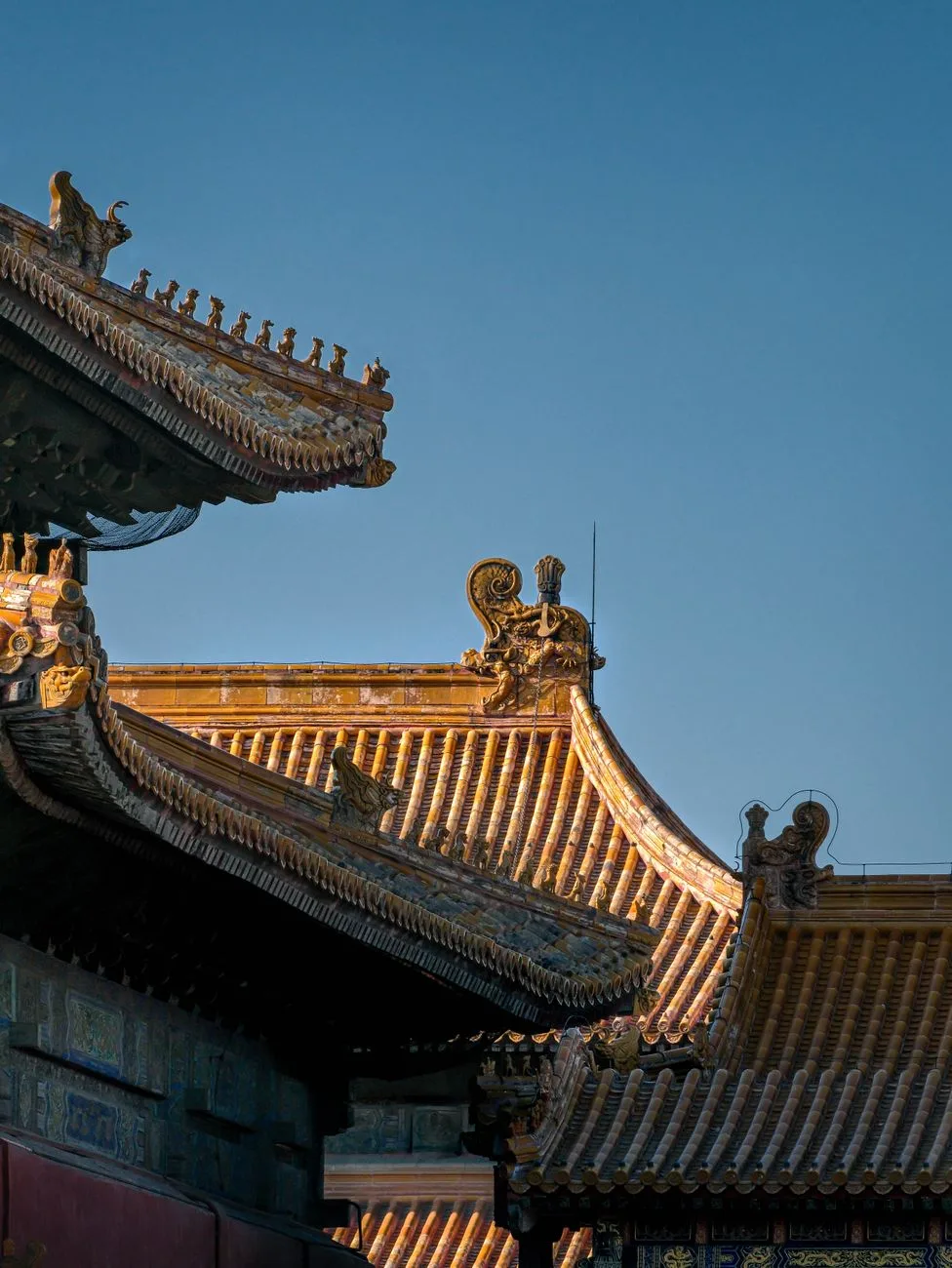
    The surviving buildings show Ming and Qing carpentry at large scale. Timber frames stand on stone plinths, with dougong bracket sets supporting deep eaves. Yellow glazed roof tiles were reserved for imperial buildings; vermilion walls, white marble terraces, and dark blue-green beams created a controlled palette. The Hall of Supreme Harmony carries ten roof figures, the highest rank, and its terrace holds bronze cranes and a tortoise. Numbers were symbolic: nine marked the emperor, and the palace is said to have 9,999 rooms, though the count depends on how spaces are defined. The Palace Museum, opened in 1925 after the last emperor left, now preserves the buildings and collections.

    • Begun in 1406 and occupied in 1420
    • Outer court for audiences, inner court for residence
    • Yellow roof tiles restricted to imperial use
    • Palace Museum opened to the public in 1925
    Golden roof tiles, bracket sets, and carved beams on a Qing palace hall
    Dougong brackets and yellow glazed tiles carried imperial rank. ravencrow BI | Pexels License (https://www.pexels.com/license/)

    Visiting the Palace Today

    The complex covers about 720,000 square metres and holds thousands of rooms, so a visit needs a route. Most visitors enter from the south at the Meridian Gate, pass the three great halls, then turn north to the inner court and the Garden of Cultivation. The Treasure Gallery and the Clock Gallery occupy separate wings and often require extra tickets. Ticket sales normally close in the afternoon and the palace is closed on Mondays except during peak holidays, so checking current rules matters. Tiananmen Square security adds time. The best views of the roofscape are from Jingshan Park to the north, which also marks the site where the Ming dynasty’s last emperor died in 1644.

    The palace made ceremony architectural: every gate, terrace, and roof colour told a visitor where power stood.

    المصادر والمزيد من القراءة

    1. المدينة المحرمة — مركز التراث العالمي لليونسكو.
    2. المدينة المحرمة — موسوعة بريتانيكا.
    3. The Palace Museum — The Palace Museum.

    شاهدها في مكانها

    اتبع هذا المدخل إلى المنطقة التي ينتمي إليها.

    استكشف عبر الخريطة

    تابع الموضوع

    تصفح الإدخالات الأخرى التي تشترك في نفس الوسوم.

    تصفح الوسم
  • السكك الحديدية فائقة السرعة

    دليل الرحلة

    السكك الحديدية فائقة السرعة

    A National Network at 300 km/h

    China’s high-speed lines connect major cities with frequent, electrified, mostly elevated track.

    قسم
    دليل الرحلة
    منطقة
    بكين
    عصر
    الصين الحديثة
    الوسوم
    Geography, Transport

    China’s high-speed rail network is the largest in the world, measured by route length. It grew from a single 2008 line between Beijing and Tianjin into a national system linking regional capitals, coastal cities, and tourist gateways.

    From the Beijing–Tianjin Line

    The Beijing–Tianjin intercity railway opened in August 2008, just before the Beijing Olympics, with trains designed for 350 kilometres per hour. It followed the Sixth Railway Speed-Up campaign, in which conventional lines were upgraded and new rolling stock imported from Siemens, Alstom, Bombardier, and Kawasaki. Technology transfer and domestic redesign produced the CRH family and later the Fuxing series. The 2011 Wenzhou accident on the Beijing–Shanghai line, caused by signalling failures during a thunderstorm, killed forty people and led to speed reductions, audits, and a slower pace of construction. The network nevertheless expanded rapidly after 2013.

    A streamlined white high-speed train standing at a modern elevated platform
    The CRH and Fuxing trains developed from imported designs and domestic redesign. travelers_tw | Pexels License (https://www.pexels.com/license/)

    How the Network Is Built

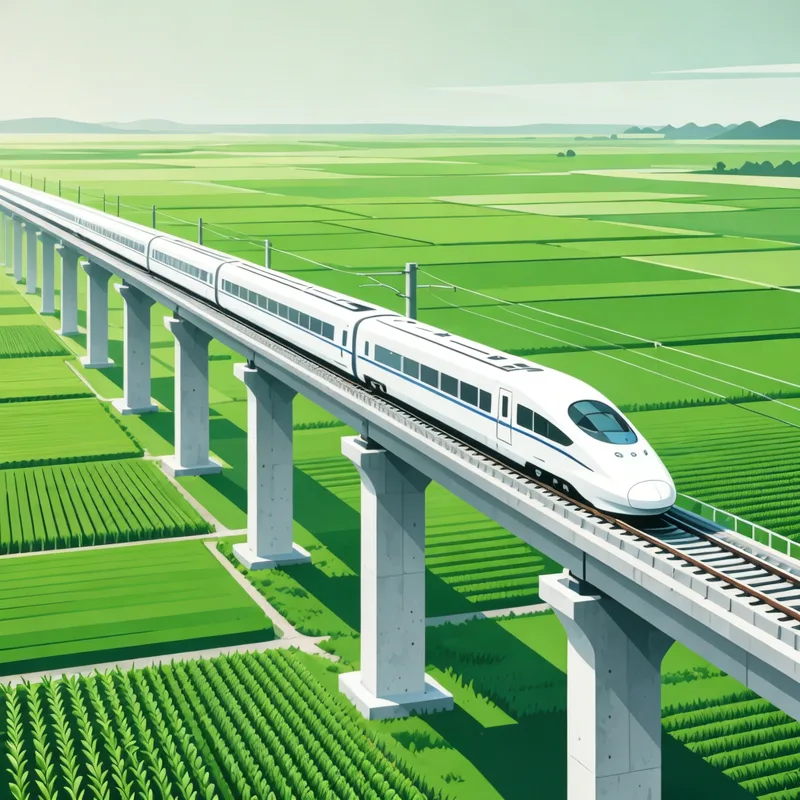
    High-speed lines require gentle curves, long tunnels, and level track, so much of the network rides on concrete viaducts. Bridges keep routes straight, reduce land take, and allow farm traffic and roads to pass underneath. Continuous welded rail, slab track, and overhead catenary carry trains at operating speeds commonly around 300–350 kilometres per hour on the fastest services. Automatic train control limits speed and spacing; drivers monitor the system rather than relying only on signals beside the track. Stations are often built outside old city cores, where land was available, so a central railway station and a high-speed station may be different places in the same city.

    Elevated high-speed railway crossing agricultural land on concrete piers
    Viaducts keep high-speed alignments straight and limit the footprint on farmland. رسم توضيحي مُولّد بالذكاء الاصطناعي · سينوفيز

    Using the System

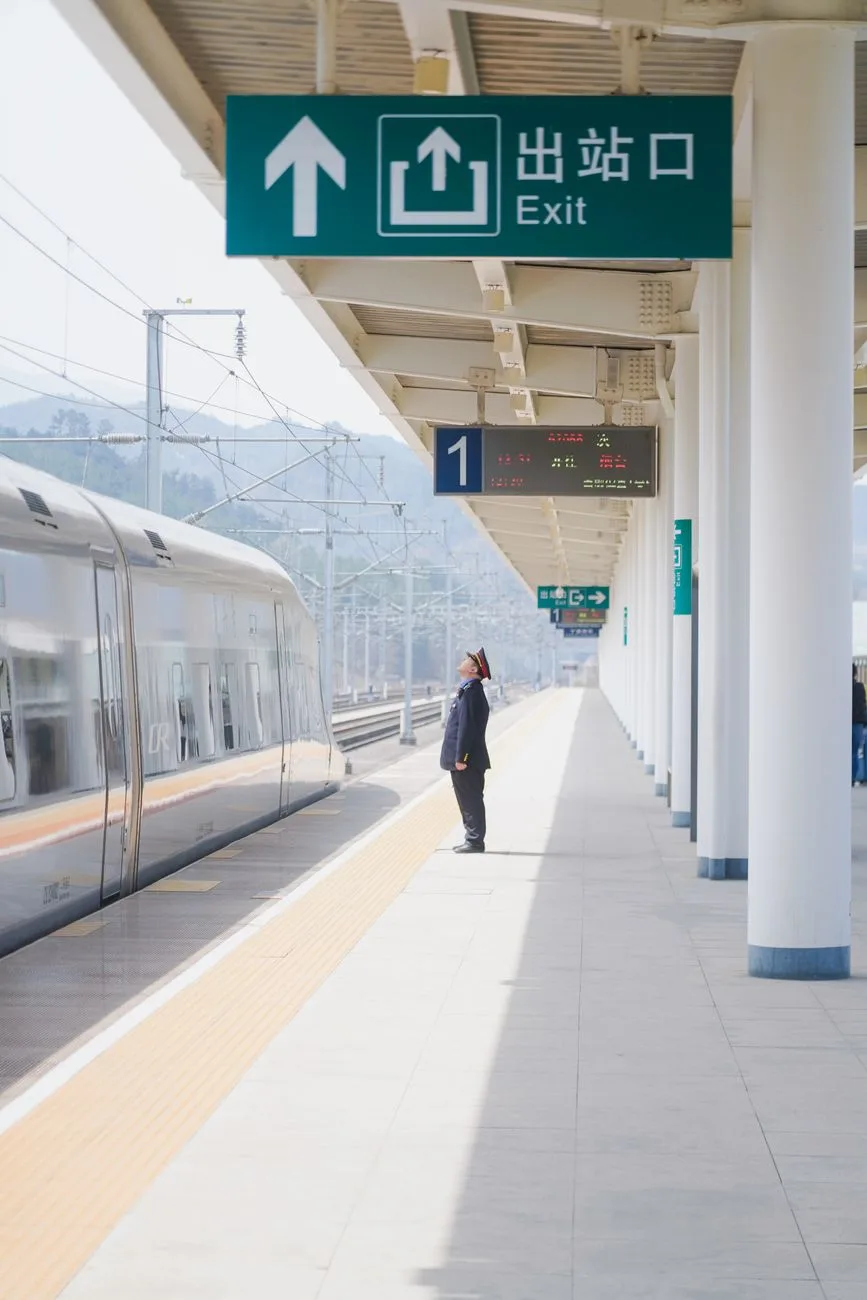
    Tickets are sold through the official Railway 12306 website and app; passports or resident identity documents are checked at entry, and names must match the booking. The G-series are the fastest passenger services, D-series generally run on upgraded or slightly slower lines, and overnight high-speed sleeper trains now cover longer routes. Larger stations use airport-style security, so arriving well before departure is wise. Seats are assigned, restaurant cars or at-seat delivery are common, and station boards use Chinese characters and Roman letters. Beijing West, Beijing South, and Beijing Chaoyang serve different lines, so the station name on the ticket matters as much as the city.

    • Book through Railway 12306 with an identity document
    • Allow time for security screening at large stations
    • Check whether the ticket says Beijing South, West, or Chaoyang
    • G trains are generally faster than D trains
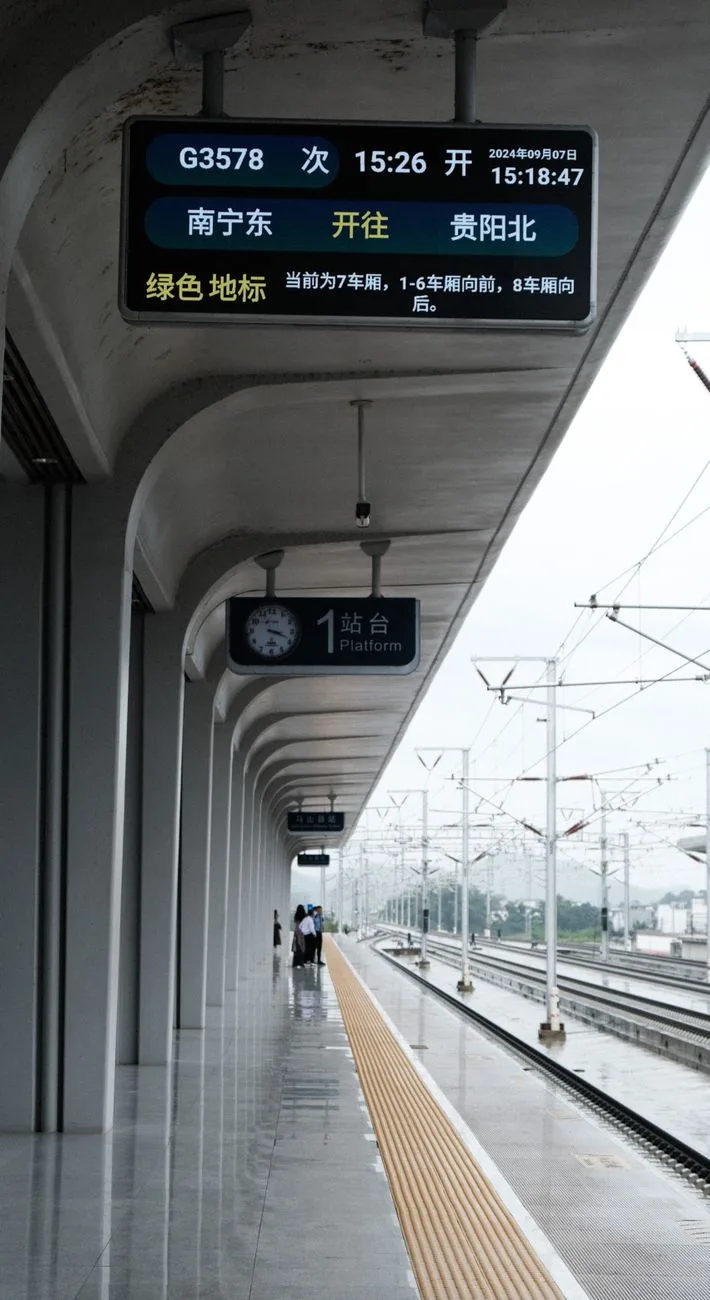
    A departure board listing high-speed train times in a large Chinese station
    Check the exact station name: major cities may have several high-speed terminals. 航皓 陈 | Pexels License (https://www.pexels.com/license/)

    What the Routes Connect

    The Beijing–Shanghai line, opened fully in 2011, links the political capital to the financial centre in about four and a half hours on the fastest trains. The Beijing–Guangzhou line, completed in 2012, runs south through Shijiazhuang, Zhengzhou, Wuhan, and Changsha. The Lanzhou–Xinjiang line reached Urumqi in 2016, extending high-speed service deep into the northwest. Coastal lines connect Tianjin, Jinan, Nanjing, Hangzhou, and Shanghai, while newer routes serve Chengdu, Chongqing, Kunming, and Xi’an. Trains are frequent on busy corridors, but distances remain continental: a traveller crossing several time-zone-widths of China should still allow a full day.

    A high-speed station may sit far from the old city centre, so the ticket’s station name is part of the journey.

    المصادر والمزيد من القراءة

    1. High-speed rail in China — موسوعة بريتانيكا.
    2. China Railway High-speed — موسوعة التاريخ العالمي.
    3. China Railway 12306 — China Railway.

    شاهدها في مكانها

    اتبع هذا المدخل إلى المنطقة التي ينتمي إليها.

    استكشف عبر الخريطة

    تابع الموضوع

    تصفح الإدخالات الأخرى التي تشترك في نفس الوسوم.

    تصفح الوسم
  • الزلابية

    الحياة والفولكلور

    الزلابية

    أكياس القمح المملوءة وطقوس الشتاء

    تُحوّل الزلابية الصينية الشمالية عجينة القمح والحشوات الموسمية إلى وجبة جماعية.

    قسم
    الحياة والفولكلور
    منطقة
    بكين
    عصر
    عبر العصور
    الوسوم
    الجمارك، الغذاء

    الزلابية عبارة عن لفائف قمح محشوة تُطهى بالسلق أو التبخير أو القلي. في شمال الصين، تُحتفل بها بمناسبة الانقلاب الشتوي ورأس السنة القمرية، حيث تقوم العائلات بتجميع الجياوزي حول طاولة وطَيّ كل لفافة يدويًا.

    القمح في النظام الغذائي الشمالي

    تنتمي الزلابية إلى منطقة القمح والدخن في شمال الصين، حيث أصبح دقيق القمح غذاءً أساسياً في عهد أسرة هان وما تلاها من أسر. وقد شُبّه شكلها بالعملات الصينية القديمة، مما أكسبها مكانةً في لغة رأس السنة الصينية: فكلمة "جياوزي" تُشير إلى عبارة تبادل الكنوز. وتربط روايةٌ معروفةٌ الزلابية بالطبيب تشانغ تشونغ جينغ، الذي يُقال إنه كان يصنع لفائف عجين محشوة لعلاج آذان المصابين بقضمة الصقيع خلال عهد أسرة هان. يصعب التحقق من هذه الرواية، لكنها تُفسر عادة تناولها في الطقس البارد. وتُعدّ الأدلة الأثرية على وجود أطعمة القمح المحشوة أوضح من أي دليل يُشير إلى مخترعٍ واحد.

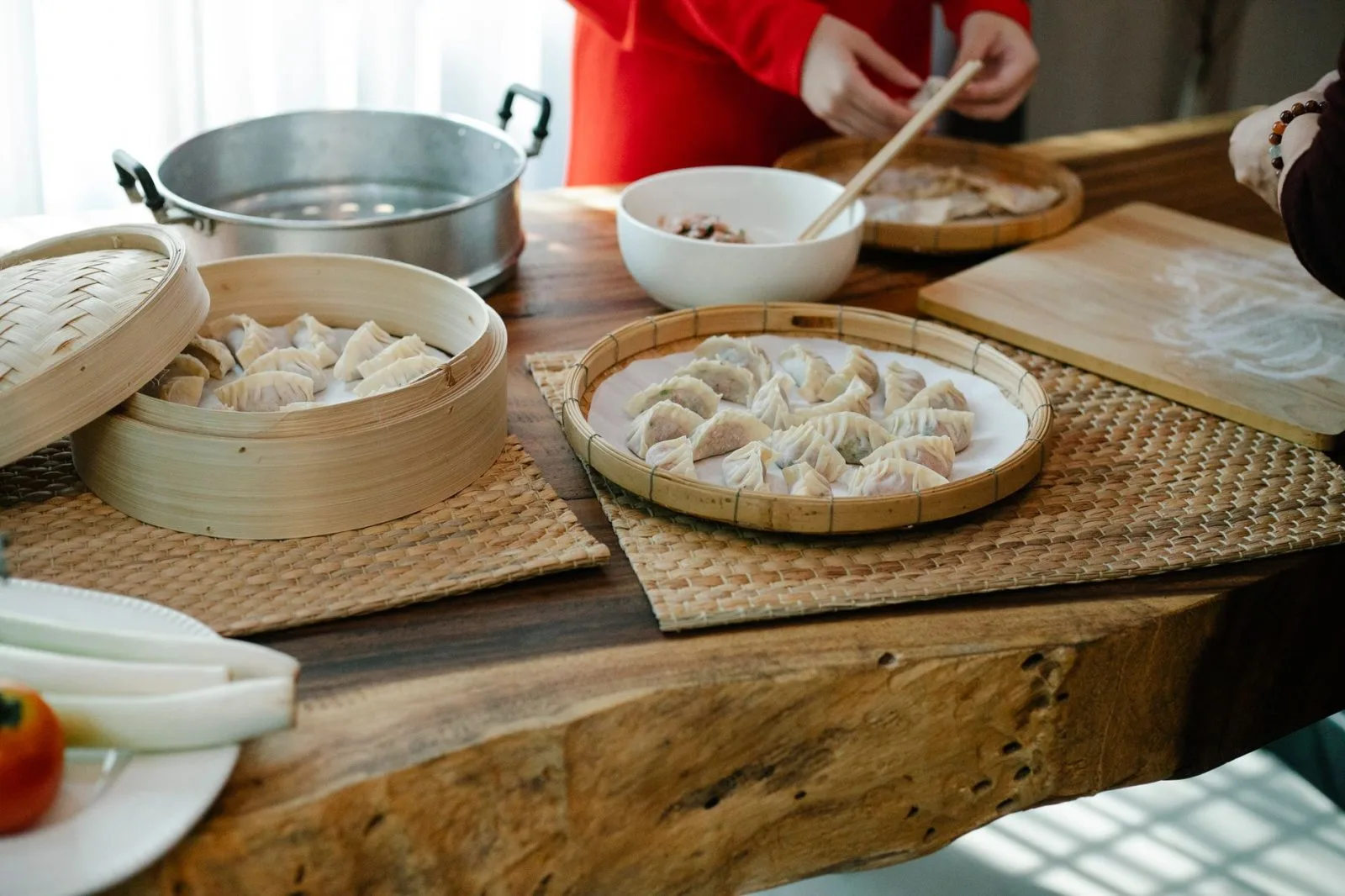
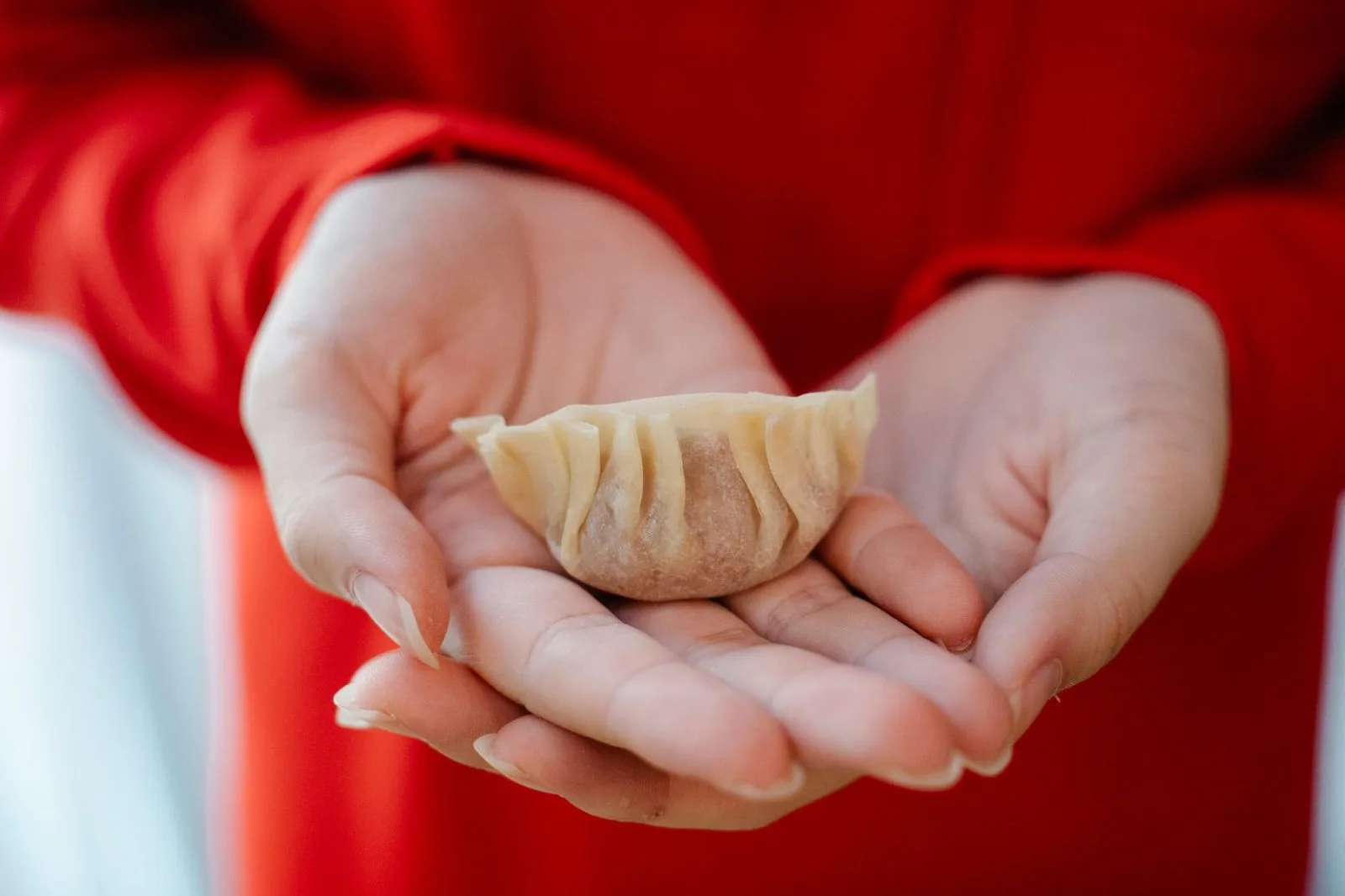
    صف من زلابية الجياوزي المطوية موضوعة على لوح خشبي مرشوش بالدقيق
    تعمل الحافة المطوية على إغلاق الحشوة وتعطي كل قطعة من الزلابية شكلها المألوف. أنجيلا روما | رخصة بيكسلز (https://www.pexels.com/license/)

    العجين، الحشوة، والطي

    تُصنع عجينة الجياوزي الأساسية من دقيق القمح والماء، وتُترك لترتاح حتى يسترخي الغلوتين ويُمكن فردها رقيقة دون أن تتمزق. يُضيف بعض الطهاة بيضة أو يستخدمون الماء الساخن بدلاً من جزء من الدقيق للحصول على قوام أكثر طراوة. تُفرم الحشوات فرماً ناعماً لتنضج تماماً: لحم الخنزير مع الملفوف أو الثوم المعمر أو الكراث؛ لحم الضأن مع البصل في الشمال الغربي؛ الروبيان والبيض في المناطق الساحلية. يضع الطاهي الحشوة في المنتصف، ثم يطوي العجينة ويضغط على الطيات على طول خط الطي. يُعد إحكام الإغلاق أمراً بالغ الأهمية لأن الغليان يُفتح العجينة إذا بقي الهواء بداخلها. تُعد الحشوات النباتية مثل التوفو أو الفطر أو البيض شائعة، خاصةً عند زيارة المعابد وفترات الصيام.

    الأيدي تضغط على ثنيات على طول حافة الزلابية غير المطبوخة
    تُحكم طيات الطي إغلاق الطرد؛ وقد تفضل كل عائلة طية مختلفة. أنجيلا روما | رخصة بيكسلز (https://www.pexels.com/license/)

    مسلوق، مطهو على البخار، ومقلي

    الطريقة الأكثر شيوعًا هي السلق: تُضاف الزلابية إلى قدر كبير، وتُدفع من الأسفل، وتُطهى حتى تطفو وتنتفخ. غالبًا ما يُضيف طهاة الشمال القليل من الماء البارد عندما يغلي القدر مرة أخرى، ويكررون العملية ثلاث مرات للحصول على قشرة متماسكة. تُقلى الزلابية الصينية، أو "غوتي"، من جانب واحد، ثم تُطهى على البخار تحت غطاء مع القليل من الماء، مما يُكسبها قاعدة مقرمشة. تشمل النسخ الجنوبية ونسخ الشتات "هار غاو" المطهوة على البخار مع الروبيان ورقائق نشا القمح الشفافة. تختلف صلصات التغميس من الخل الأسود والزنجبيل إلى صلصة الصويا مع زيت الفلفل الحار أو الثوم. كما تختلف الحشوات أيضًا: يهيمن لحم الخنزير والثوم المعمر في بكين، ويظهر لحم البقر والضأن في المجتمعات المسلمة، بينما يُناسب الملفوف أو الفطر المدن الداخلية الباردة.

    • جياوزي مسلوق للاحتفال برأس السنة الجديدة والانقلاب الشتوي
    • غوتي بقاعدة مقلية مقرمشة
    • الخل الأسود والزنجبيل كصلصة كلاسيكية
    • حشوات محلية من لحم الخنزير أو لحم الضأن أو الروبيان أو الخضار
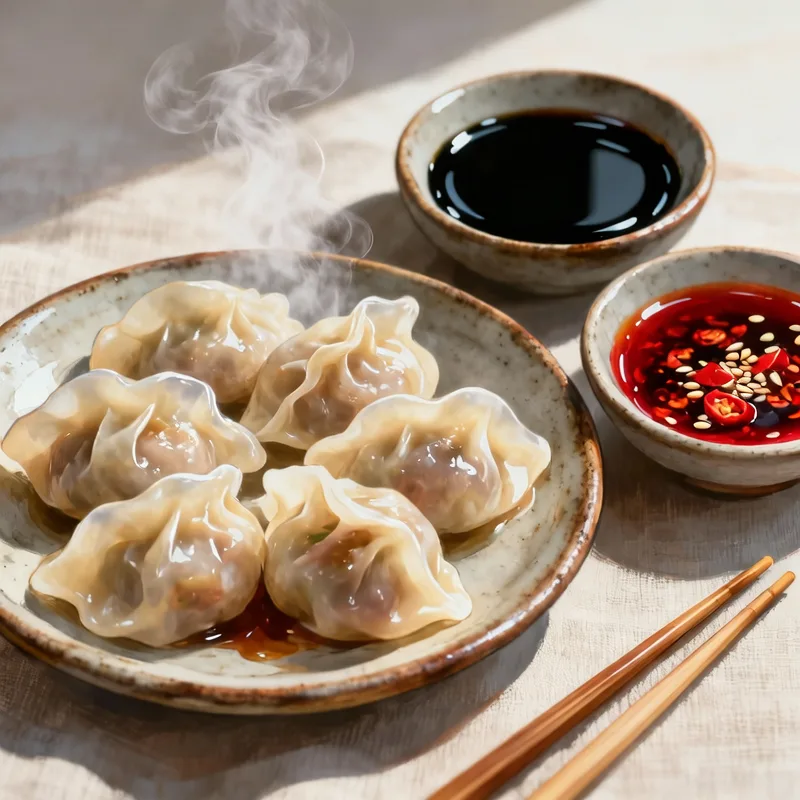
    زلابية مسلوقة تقدم مع أطباق صغيرة من الخل وزيت الفلفل الحار
    يُخفف مرق الخل والزنجبيل من دسامة حشوة لحم الخنزير. رسم توضيحي مُولّد بالذكاء الاصطناعي · سينوفيز

    صنعها معًا

    تُعتبر الزلابية طعامًا اجتماعيًا لأن تحضيرها يستغرق وقتًا. ففي ليلة رأس السنة القمرية، قد تقوم عدة أجيال بلفّ العجين، وتقطيع الحشوة، وطَيّ عشرات أو مئات من الزلابية معًا؛ بعضها يُشكّل على هيئة عملات معدنية أو يُخبأ مع عملة معدنية نظيفة كرمز للحظ السعيد. غالبًا ما يُرتّب تناول الطعام حول أكبر أفراد العائلة سنًا. تُقلى بقايا الطعام في اليوم التالي، وتُباع الزلابية المجمدة الآن في المتاجر الكبرى في جميع أنحاء الصين وخارجها. تتنوع أنواعها في المطاعم، من زلابية لحم الضأن في بكين إلى زلابية غوتيه في شنغهاي وزلابية شياو لونغ باو المحشوة بالحساء، والتي تنتمي إلى عائلة مختلفة من الفطائر المطهوة على البخار.

    الزلابية هي قطعة صغيرة من التنظيم المنزلي: العجين، والحشوة، والأيدي، وسبب للتجمع.

    المصادر والمزيد من القراءة

    1. زلابية — موسوعة بريتانيكا.
    2. جياوزي — موسوعة بريتانيكا.
    3. رأس السنة الصينية — موسوعة بريتانيكا.

    شاهدها في مكانها

    اتبع هذا المدخل إلى المنطقة التي ينتمي إليها.

    استكشف عبر الخريطة

    تابع الموضوع

    تصفح الإدخالات الأخرى التي تشترك في نفس الوسوم.

    تصفح الوسم
  • شعر تانغ

    كرونيكل

    شعر تانغ

    العصر الذهبي للشعر الصيني

    حوّل شعراء أسرة تانغ الحرف البلاطية، والسفر على الحدود، والفكر البوذي إلى قصائد قصيرة خالدة.

    قسم
    كرونيكل
    منطقة
    شانشي
    عصر
    سوي تانغ
    الوسوم
    العادات والتاريخ

    أنتجت سلالة تانغ (618-907) أشهر مجموعة من الشعر الصيني الكلاسيكي. انتشرت القصائد في المخطوطات والمختارات والنقوش والعروض، رابطةً العاصمة تشانغآن بالمراكز الحدودية والأديرة.

    تشانغ آن والشاعر الرسمي

    كان الشعر في عهد أسرة تانغ مرتبطًا بنظام الامتحانات والحياة الرسمية. كان المرشحون يُختبرون في قدرتهم على كتابة الشعر المنظم، وكانت المقالات النثرية تُرفق بالقصائد؛ وكان النجاح يُؤهلهم للحصول على وظائف وفرصة نشر أعمالهم بين الرعاة. بلغ عدد سكان تشانغآن، العاصمة القريبة من مدينة شيآن الحالية، حوالي مليون نسمة في أوج ازدهارها، وكانت تضم أسواقًا ومعابد وجاليات أجنبية. شغل الشعراء مناصب بعيدة، وكتبوا قصائد الوداع، وأبدعوا في المناسبات العامة. يحفظ كتاب "كوان تانغشي"، الذي جُمع في أوائل القرن الثامن عشر بأمر إمبراطوري، أكثر من ثمانية وأربعين ألف قصيدة لأكثر من ألفي شاعر. ويُظهر حجمه مدى اندماج الشعر في حياة الأدباء.

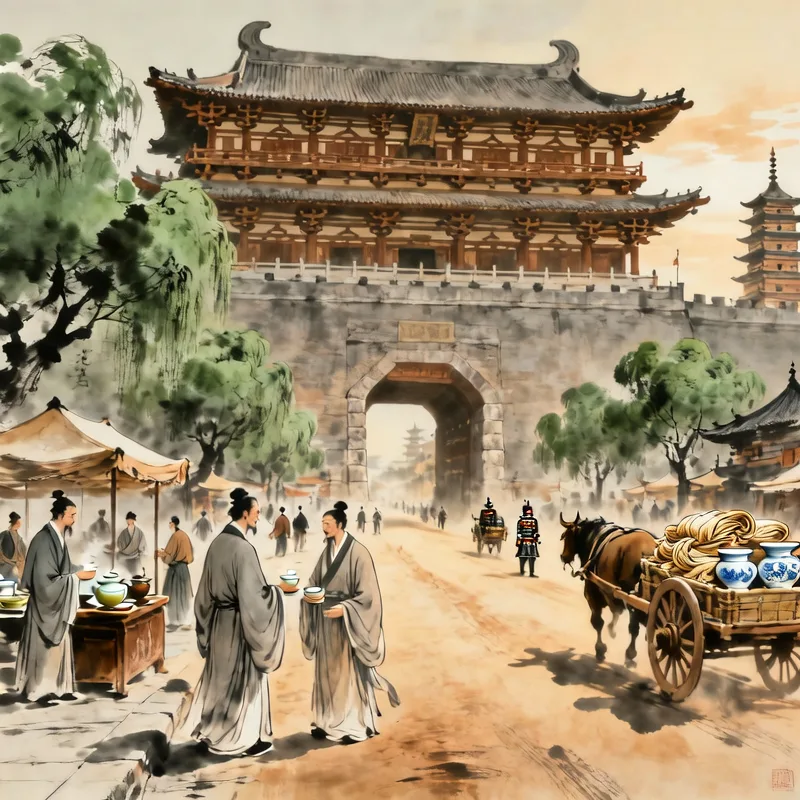
    بوابة مدينة من عهد أسرة تانغ وشارع واسع في العاصمة السابقة تشانغآن
    تجول المسؤولون والشعراء في أسواق العاصمة ومعابدها ومكاتبها الحكومية. رسم توضيحي مُولّد بالذكاء الاصطناعي · سينوفيز

    الحكم والحرية في الشعر المنظم

    أبدع شعراء أسرة تانغ في أشكال شعرية متعددة. فالشعر المنظم (لوشي) يتألف من ثمانية أبيات، كل بيت يتكون من خمسة أو سبعة أحرف، مع أنماط نغمية صارمة وتوازي بين الأبيات الوسطى. أما قصائد جويجو فهي رباعية الأبيات، تبدو عفوية ظاهريًا، لكنها غالبًا ما تُبنى على فكرة عميقة. وظلت أشكال قصائد يويفو القديمة وقصائد فو النثرية مستخدمة. أتقن دو فو (712-770) الشعر المنظم وأدخل فيه الملاحظة الاجتماعية، فكتب عن الفساد والحرب والجوع، فضلًا عن وصف المناظر الطبيعية. يُعرف لي باي (701-762) بأسلوبه الأكثر حرية واتساعًا، مع أن أفضل قصائده تتسم أيضًا بالدقة والإتقان. أما وانغ وي (701-759) فقد كتب قصائد موجزة عن المناظر الطبيعية، متأثرًا بالبوذية الزينية.

    منظر طبيعي مفتوح من الجبال والضباب يشبه مشاهد شعر المناظر الطبيعية في عهد أسرة تانغ
    غالباً ما تستخدم قصائد المناظر الطبيعية مشهداً صغيراً للإشارة إلى حالة ذهنية أوسع. رسم توضيحي مُولّد بالذكاء الاصطناعي · سينوفيز

    الحدود، المنفى، والجنوب

    غيّرت العقود التي تلت ثورة آن لوشان (755-763) المشهد الشعري. فرّ دو فو عبر شمال الصين الذي مزقته الحرب، واستقر لاحقًا في تشنغدو، حيث تمزج قصائد الأكواخ المصنوعة من القش بين تفاصيل الحياة اليومية والأحزان السياسية. وكتب المسؤولون المنفيون جنوبًا عن الأنهار والحرارة واللغات الغريبة. وألهمت الحدود قصائد عن الجيوش الزاحفة ورياح الصحراء ومنزل الجندي، كما في أعمال تشن شين وغاو شي. وقادت رحلات لي باي من سيتشوان إلى نهر اليانغتسي وشمالًا؛ وتتكرر أساطير موته غرقًا في نهر جنوبي، لكنها غير مؤكدة. وسّعت هذه التحركات نطاق مواضيع الشعر الكلاسيكي، ونقلت أساليب تانغ إلى الأوساط الأدبية الإقليمية.

    • أبيات دو فو الشعرية عن الحرب والفقر والحياة العادية
    • رحلات لي باي الواسعة وأغاني الشرب
    • مناظر طبيعية متأثرة بأسلوب تشان للفنان وانغ وي
    • قصائد الحدود لغاو شي وسين شين
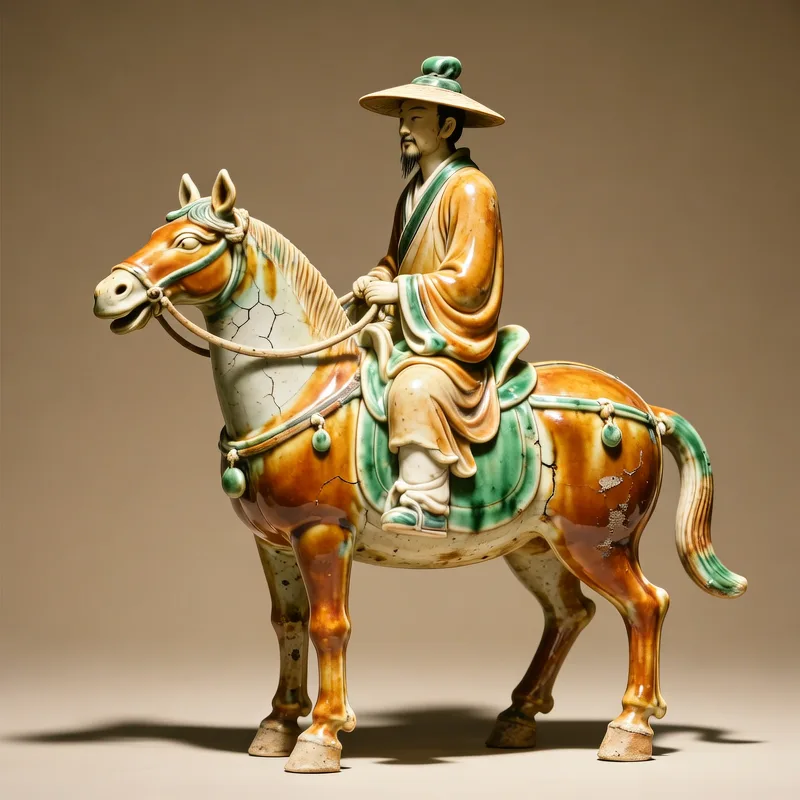
    تمثال خزفي من عهد أسرة تانغ يصور مسافراً على صهوة جواده في رحلة طويلة
    وفرت الأسفار والمنفى والخدمة العسكرية العديد من المواضيع للشعر في عهد أسرة تانغ. رسم توضيحي مُولّد بالذكاء الاصطناعي · سينوفيز

    حياة قصيدة تانغ بعد الموت

    أصبحت قصائد عهد أسرة تانغ جزءًا من الذاكرة الثقافية المشتركة. حفظ تلاميذ المدارس أبياتًا شعرية، ونسخ الخطاطون القصائد، وناقش كتّاب عهد أسرة سونغ نماذج تانغ الشعرية بدلًا من التخلي عنها. كما تأثرت مدونة تانغ الشعرية بالمختارات الأدبية: فكتاب "تانغشي سانبايشو"، الذي جمعه سون تشو في القرن الثامن عشر، لا يزال يُعتبر مرجعًا أساسيًا في هذا المجال. في الصين الحديثة، تُتلى قصائد لي باي ودو فو في المناسبات الرسمية وتُقتبس في المحادثات اليومية. يُترجم المترجمون الأبيات المنظمة إلى لغات أخرى، على الرغم من أن أنماط النبرة والتوازي في الأبيات الشعرية يصعب نقلها بدقة. يستطيع زوار شيآن ربط هذه القصائد بمتاحف شانشي، وأسوار مدينة تانغ، ومواقع أحياء وأسواق تشانغآن.

    يمكن لقصيدة من عصر أسرة تانغ أن تحوي سياسة إمبراطورية بأكملها في ثمانية أسطر، أو جبلاً كاملاً في أربعة أسطر.

    المصادر والمزيد من القراءة

    1. سلالة تانغ — موسوعة بريتانيكا.
    2. الأدب الصيني — موسوعة بريتانيكا.
    3. شعر تانغ — متحف متروبوليتان للفنون.

    شاهدها في مكانها

    اتبع هذا المدخل إلى المنطقة التي ينتمي إليها.

    استكشف عبر الخريطة

    تابع الموضوع

    تصفح الإدخالات الأخرى التي تشترك في نفس الوسوم.

    تصفح الوسم
  • القناة الكبرى

    استكشاف الخرائط

    القناة الكبرى

    An Inland Waterway Across China

    The Grand Canal links northern and southern China through rivers, locks, and warehouse towns.

    قسم
    استكشاف الخرائط
    منطقة
    تشجيانغ
    عصر
    عبر العصور
    الوسوم
    Geography, History, Transport

    The Grand Canal is a system of artificial channels and connected rivers, not one continuous trench. For centuries it moved grain, salt, silk, and imperial correspondence between the Yellow River and the Yangtze delta.

    From Warrior States to Imperial Route

    Canal building began before unification. The state of Wu dug the Han Gou channel in the fifth century BCE to move troops and grain between the Yangtze and the Huai. The Qin and Han maintained regional waterways, but the Sui dynasty (581–618) created the first broadly connected system. Emperor Yang ordered hundreds of thousands of labourers to dig the Tongji Canal, linking Luoyang toward the Yangtze, and the Yongji Canal toward the north. The cost contributed to Sui collapse, yet the route remained useful. The Yuan dynasty (1271–1368) redirected the canal around the Yellow River toward Beijing, and Ming and Qing engineers rebuilt sections with locks and stone banks.

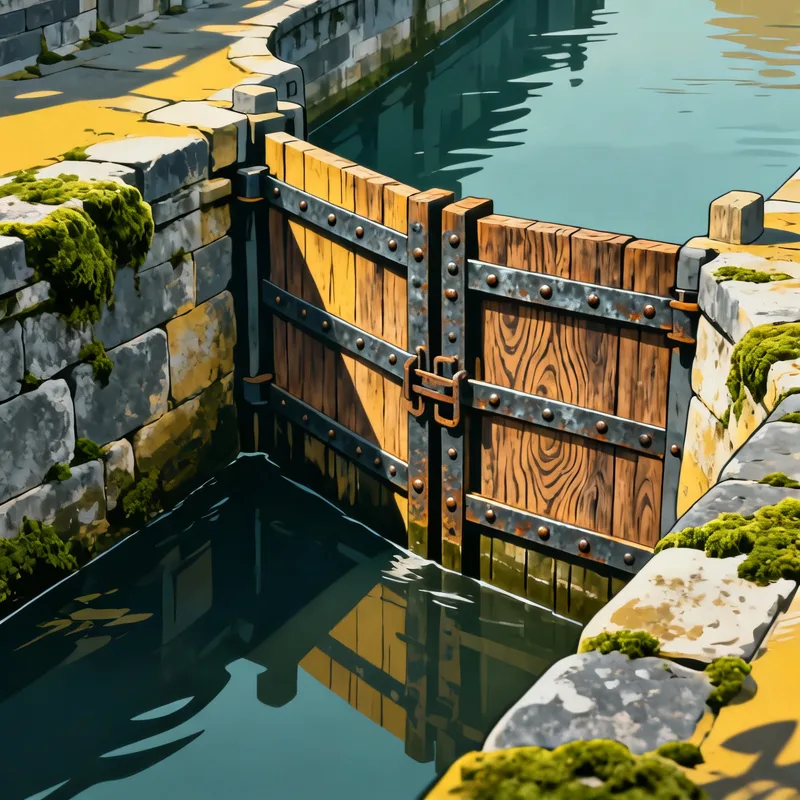
    An ancient canal lock with stone banks and a narrow timber water gate
    Locks allowed boats to cross differences in water level between river basins. رسم توضيحي مُولّد بالذكاء الاصطناعي · سينوفيز

    Grain Boats and Market Towns

    The canal’s central purpose was transport. Under the Ming and Qing, tribute grain from the lower Yangtze moved north in huge flotillas of flat-bottomed boats, with relay crews and storage depots at key cities. The annual shipment fed the capital and the northern garrisons. Canal towns grew around wharves, granaries, guild halls, and money lenders: Linqing, Jining, Huai’an, and Yangzhou became exchange points as much as transit stops. Salt from the Huai coast, silk from Suzhou and Hangzhou, porcelain from Jingdezhen, and coal from northern mines moved along the same water. A journey that took weeks by road could be made with far greater bulk by boat.

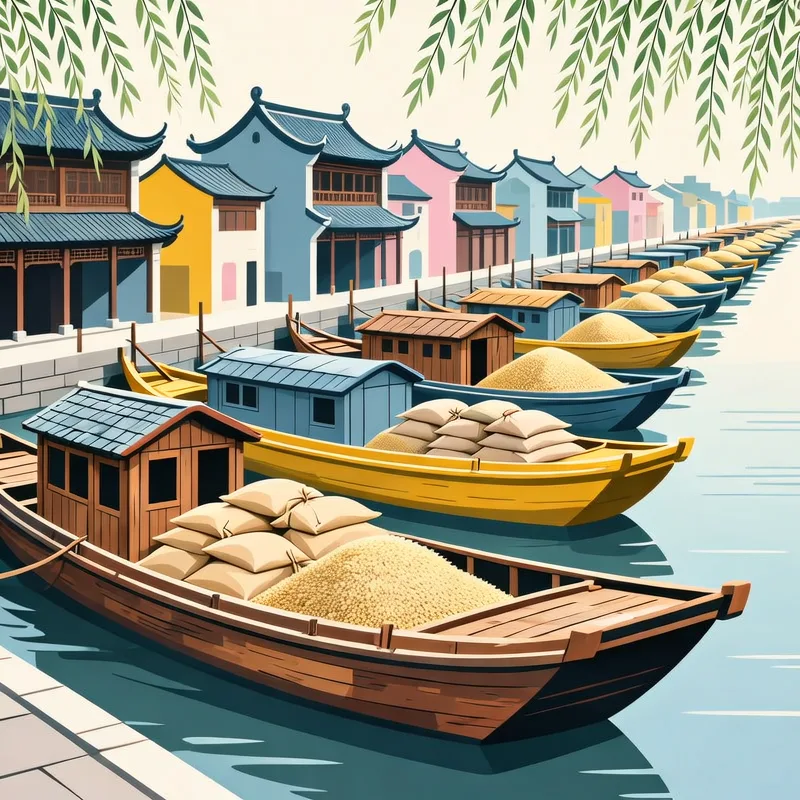
    A long line of flat-bottomed grain boats moored along a canal wharf
    Grain flotillas tied the Yangtze delta to the political capital. رسم توضيحي مُولّد بالذكاء الاصطناعي · سينوفيز

    Southern Sections and Historic Cities

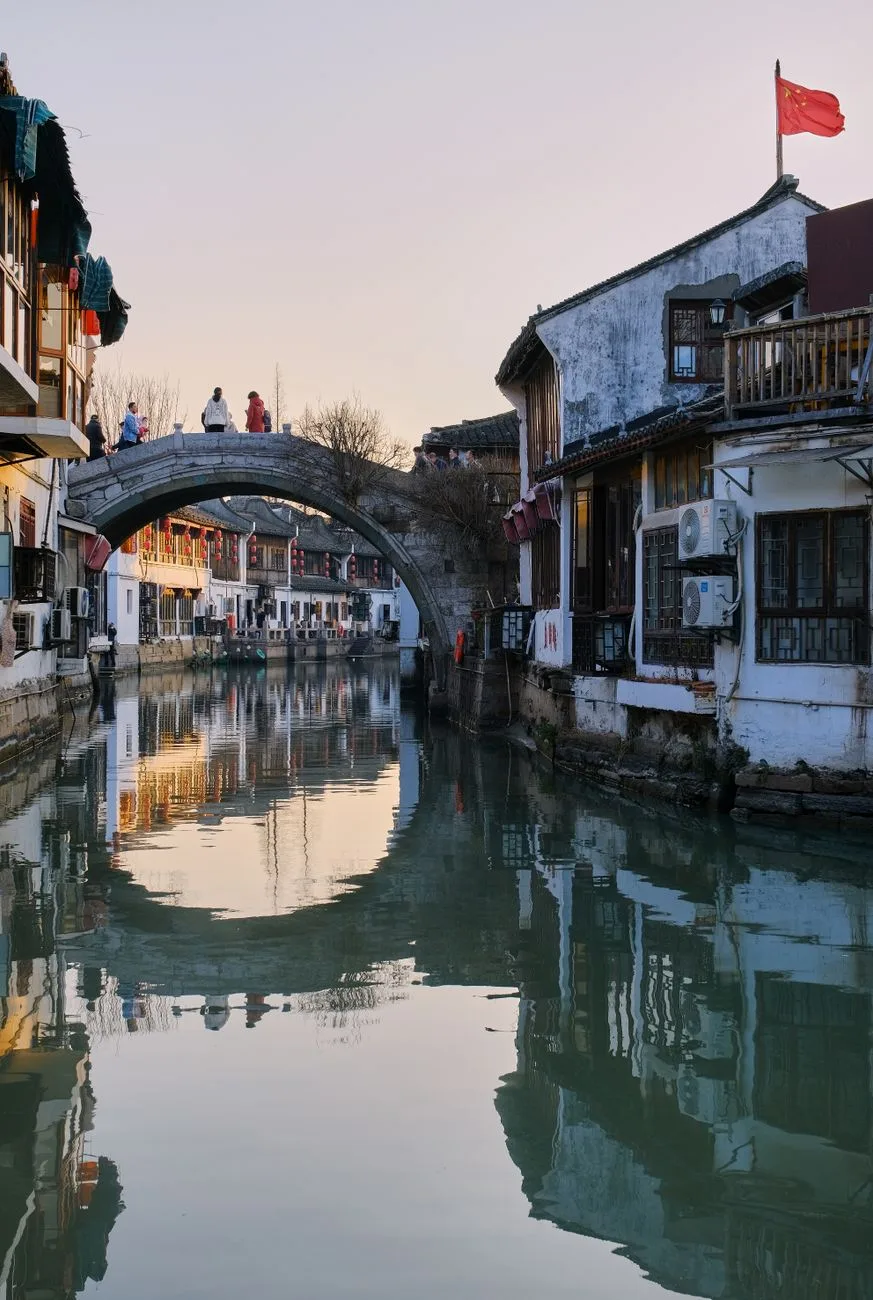
    The southern canal runs through the lowlands of Zhejiang and Jiangsu, where bridges, warehouses, and waterside houses still mark older commercial geography. Hangzhou is the southern terminus of the Sui-era system and a gateway to the Qiantang River. Suzhou’s canals were both transport routes and parts of the city’s garden landscape; its humpbacked stone bridges allowed boats to pass while pedestrians crossed. Wuxi and Zhenjiang sit at important junctions, while the Jiangnan section near the Yangtze has been widened and industrialised. UNESCO inscribed the Grand Canal on the World Heritage List in 2014, identifying thirty-one sections and twenty-seven components. The listed property includes canals, locks, bridges, and administrative sites.

    • Sui channels linked Luoyang with the Yangtze
    • Yuan engineers redirected the route toward Beijing
    • Tribute grain moved north in large boat flotillas
    • UNESCO listed thirty-one canal sections in 2014
    Stone arch bridges and old waterside houses along a canal in southern China
    In Jiangnan, canal transport and city life developed together. Vind 🌙 | Pexels License (https://www.pexels.com/license/)

    Reading the Canal Today

    Much of the northern canal is no longer navigable end to end; railways and roads took over long-distance freight, and parts were buried or rerouted during the twentieth century. Southern sections remain busy with barges, and several cities operate passenger boats for residents and visitors. A useful route for a first visit is Hangzhou or Suzhou, where canal life is visible beside gardens and markets. Water levels, engineering works, and modern flood control change the scene, so boats and landing stages may shift. The canal’s historical importance lies not in scenic continuity alone but in the way it joined climates, crops, taxes, and cities over more than a thousand years.

    The Grand Canal was less a single road of water than a machine for moving grain, tax, and news.

    المصادر والمزيد من القراءة

    1. القناة الكبرى — مركز التراث العالمي لليونسكو.
    2. القناة الكبرى — موسوعة بريتانيكا.
    3. Grand Canal of China — موسوعة التاريخ العالمي.

    شاهدها في مكانها

    اتبع هذا المدخل إلى المنطقة التي ينتمي إليها.

    استكشف عبر الخريطة

    تابع الموضوع

    تصفح الإدخالات الأخرى التي تشترك في نفس الوسوم.

    تصفح الوسم
  • أعمال الفضة من مياو

    الحياة والفولكلور

    أعمال الفضة من مياو

    الزينة والذكرى وملابس الاحتفالات

    تحمل الحلي الفضية لقبيلة مياو تاريخ العائلة والهوية المحلية في أزياء المهرجانات في جميع أنحاء جنوب غرب الصين.

    قسم
    الحياة والفولكلور
    منطقة
    يونان
    عصر
    عبر العصور
    الوسوم
    العادات والتقاليد والمواقع العرقية والمواقع ذات المناظر الخلابة

    تُعدّ المشغولات الفضية من شعب مياو مجموعة من الحلي - أغطية الرأس، والياقات، والأقراط، والأساور - التي تصنعها مجتمعات مياو في قويتشو، ويونان، والمناطق المجاورة. وتُرتدى هذه القطع بشكل بارز في المهرجانات وحفلات الزفاف.

    تقليد حرفي موزع

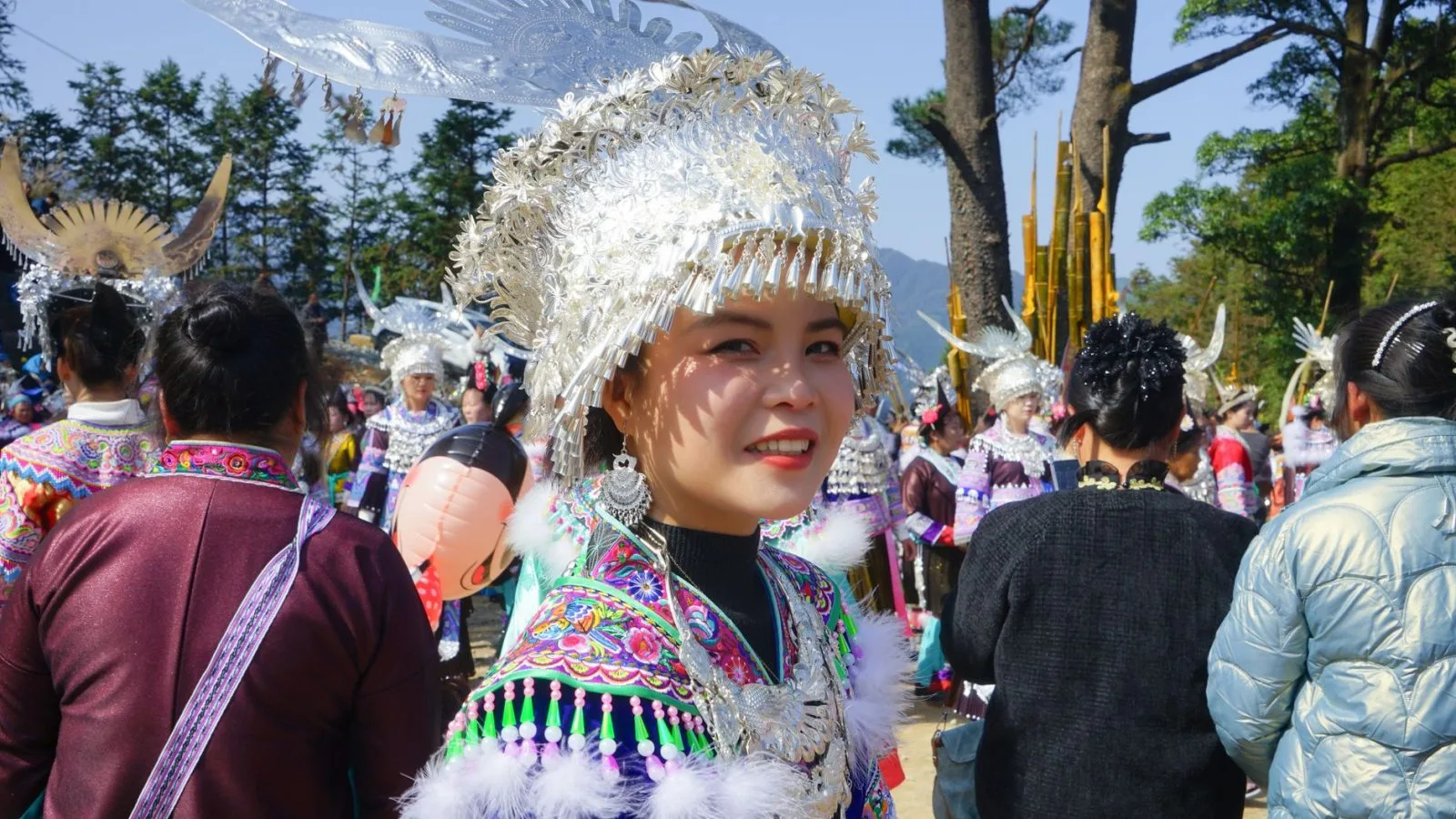
    تنتشر مجتمعات المياو في مقاطعات قويتشو ويونان وقوانغشي وسيتشوان وجنوب شرق آسيا، وتختلف صناعة الفضة باختلاف المناطق. ففي يونان، تحافظ قرى المياو المحيطة بوينشان وهونغخه على أنماط تختلف عن تلك الموجودة في مقاطعتي شيجيانغ وكايلي الأكثر شهرة في قويتشو. يصنع الحلي صائغون متخصصون يعملون في ورش صغيرة، وغالبًا ما يخدمون عدة قرى. تُكتسب التصاميم من خلال التلمذة المهنية بدلًا من النماذج المكتوبة: إذ يُكرر الصائغ الشاب أشكالًا منسوخة من قطع أقدم وملابس احتفالية. قد تستوحي الزخارف من الطيور والزهور والحشرات والعملات المعدنية المحلية، مع أن معانيها ليست ثابتة. تُراكم العائلات الحلي عبر الأجيال، وقد يُمثل غطاء رأس الابنة في الاحتفالات سنوات من الادخار.

    غطاء رأس من قبيلة مياو مزين بقرون فضية ولوحات وزخارف معلقة في أحد المهرجانات
    تجمع أغطية الرأس بين قطع أثرية عائلية وقطع مصنوعة لمناسبة معينة. جاكور كيو آي | رخصة بيكسلز (https://www.pexels.com/license/)

    الصفائح والأسلاك والنقش البارز

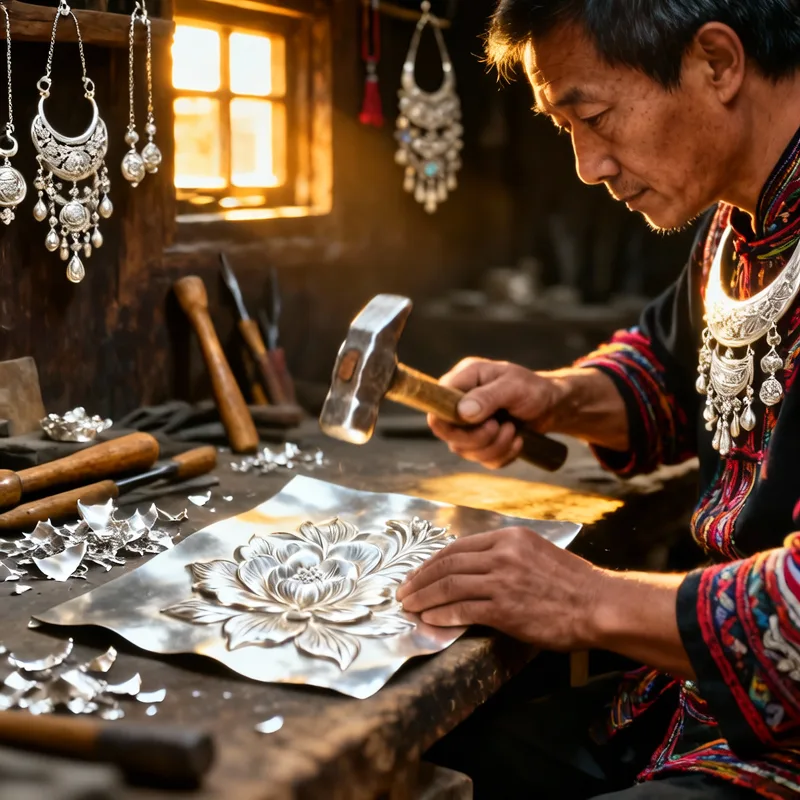
    تبدأ معظم أعمال الفضة لدى شعب مياو باستخدام صفائح وأسلاك الفضة. يقوم الصائغ بتشكيل السبائك إلى صفائح رقيقة، ثم يقطعها إلى شرائح، ويبرز عليها النقوش من الجهة الخلفية بتقنية النقش البارز، وهي تقنية تعتمد على التثقيب والتشكيل لإضفاء مظهر بارز. تُلفّ أسلاك رفيعة كشعر الخيل وتُلحم لتشكيل زخارف دقيقة، ثم تُدمج في أجنحة وقرون وأزهار مفتوحة. قد يجمع غطاء الرأس الكبير بين شريط مطروق وسلاسل متدلية ولوحات منقوشة وصفوف من الأجراس الصغيرة التي تتحرك عند دوران من يرتديه. تُقدّر الفضة للونها وسهولة تشكيلها وارتباطها التقليدي بالحماية والرخاء. العديد من الحلي مجوفة لتقليل وزنها، لأن غطاء الرأس الاحتفالي الكامل قد يكون ثقيلاً بما يكفي للحد من ارتدائه لفترات طويلة.

    صائغ فضة من شعب مياو يطرق صفيحة فضية رقيقة لتشكيل لوحة زهرية بارزة
    تقنية النقش البارز ترفع التصميم من الجهة الخلفية للوحة فضية رقيقة. رسم توضيحي مُولّد بالذكاء الاصطناعي · سينوفيز

    ملابس المهرجانات والمعنى الاجتماعي

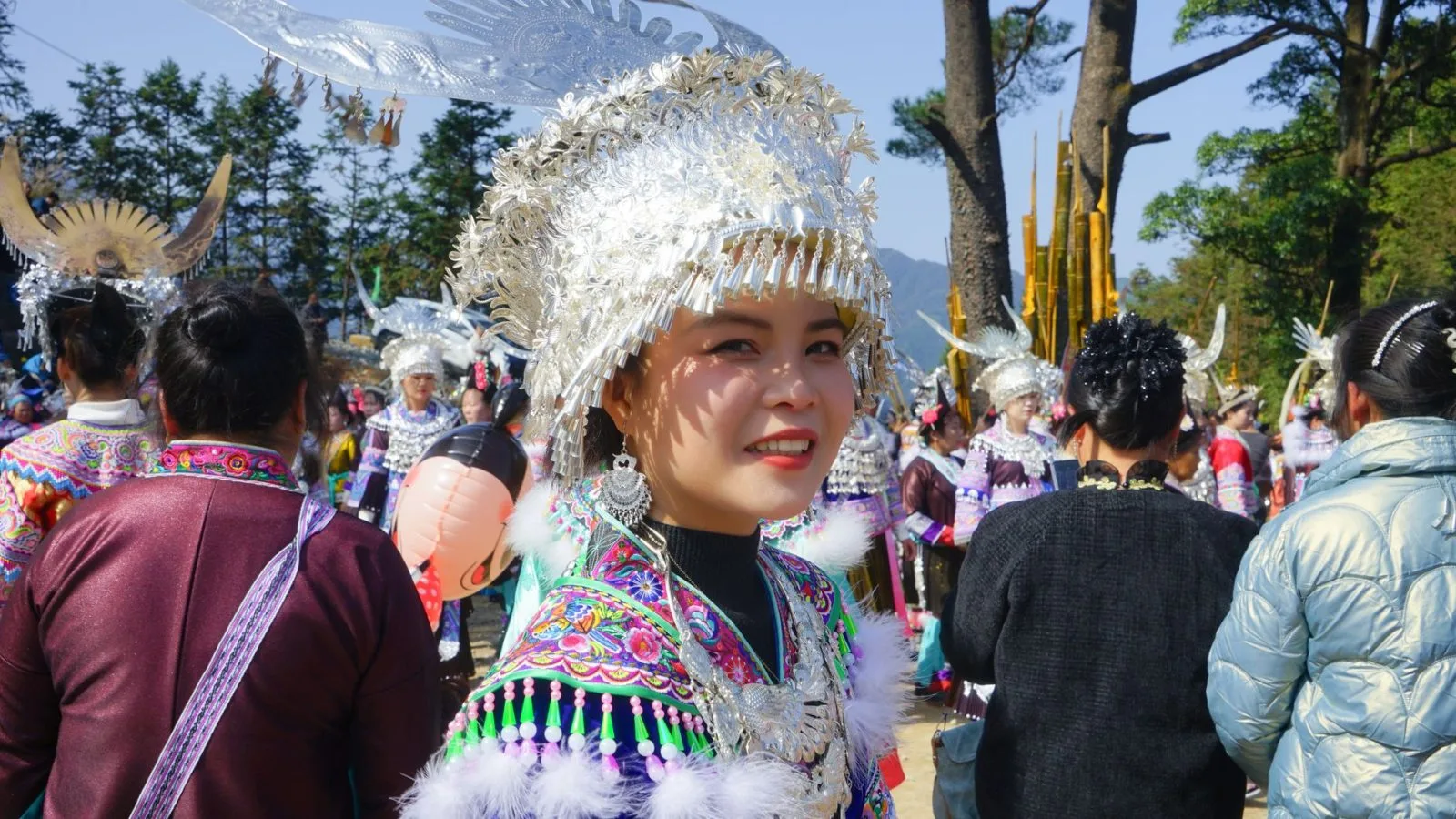
    تُقرأ الحلي الفضية كجزء من الزي الكامل، لا كحلي منفصلة. قد يتضمن زيّ المرأة المياوية في المهرجانات تنورة مطوية، وسترة مطرزة، وحزامًا منسوجًا، وطوقًا فضيًا على شكل هلال أو جناحين. في بعض المجتمعات، يشير عدد وشكل الأقراط أو الخواتم إلى الانتماء القروي أو الحالة الاجتماعية. خلال رأس السنة القمرية، واحتفالات الحصاد، ورأس السنة المياوية في بعض المناطق، ترتدي النساء والفتيات أطقمًا عائلية بينما تغني المجموعات وترقص وتتنقل بين القرى. تعكس الحلي الضوء أثناء الحركة، مما يجعل الزي جزءًا بصريًا من العرض. قد يرتدي الرجال أزرارًا فضية، أو سلاسل، أو قلادات صغيرة ذات وزن احتفالي أقل.

    • لوحات بارزة مصنوعة من صفائح فضية رقيقة
    • أسلاك ملتوية وزخارف مفتوحة
    • أغطية رأس مزينة بقرون وسلاسل وأجراس
    • الأزياء التي تُرتدى في احتفالات رأس السنة وطقوس الزفاف
    نساء يرتدين فساتين مهرجان مياو المطرزة، ويضعن أطواقًا وأقراطًا فضية ثقيلة.
    تُلبس الحلي مع التطريز والنسيج كنظام زي واحد. جاكور كيو آي | رخصة بيكسلز (https://www.pexels.com/license/)

    الأسواق والسياحة والاستمرارية

    تنتشر صناعة الفضة في ورش القرى والأسواق الإقليمية والسياحة. يمكن لزوار قرى مياو في يونان وقويتشو مشاهدة الحدادين وهم يصنعون قطعًا صغيرة، مع أن أهم القطع التراثية لا تُباع عادةً. تتراوح النسخ المُقلدة التي تُباع كتذكارات بين المنمنمات الدقيقة والمعادن المطلية الرخيصة، لذا فإن السؤال عما إذا كانت القطعة مصنوعة من الفضة الخالصة أمرٌ مهم. توثق المتاحف والمراكز الثقافية أغطية الرأس والأطواق القديمة، لكن السياق الحي يبقى هو الزي المحلي. أحيت بعض المجتمعات أزياء المهرجانات وعلمت صناعة الفضة للشباب، بينما تُغير الهجرة والعمل بأجر من يملك الوقت لصنعها وارتدائها. يعتمد مستقبل هذه الحرفة على استمرار استخدامها أكثر من اعتمادها على التجديد.

    يُعد غطاء الرأس الخاص بشعب مياو قطعة مجوهرات تُرتدى وأرشيفًا متنقلًا لأعمال العائلة في الوقت نفسه.

    المصادر والمزيد من القراءة

    1. شعب مياو — موسوعة بريتانيكا.
    2. مجوهرات فضية صينية — متحف فيكتوريا وألبرت.
    3. Miao ethnic culture — China Highlights.

    شاهدها في مكانها

    اتبع هذا المدخل إلى المنطقة التي ينتمي إليها.

    استكشف عبر الخريطة

    تابع الموضوع

    تصفح الإدخالات الأخرى التي تشترك في نفس الوسوم.

    تصفح الوسم
  • مطبخ سيتشوان

    الحياة والفولكلور

    مطبخ سيتشوان

    Chilli Oil, Ferment, and the Numbing Pepper

    Sichuan cooking balances chilli heat, Sichuan pepper numbness, fermented bean paste, and rich broth.

    قسم
    الحياة والفولكلور
    منطقة
    سيتشوان
    عصر
    عبر العصور
    الوسوم
    Customs, Food, Geography

    Sichuan cuisine is known for bold seasoning, but its classic dishes are built on contrast: chilli with Sichuan pepper, hot oil with cool cucumber, or a clear broth beside a fiery one.

    A Basin Pantry and Early Flavours

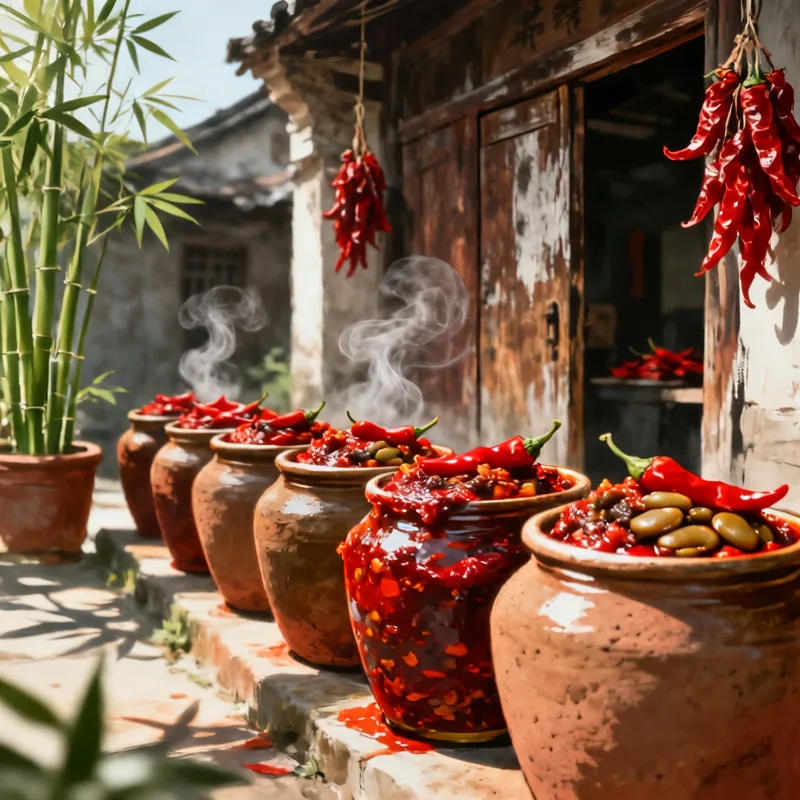
    The Sichuan Basin has fertile fields, rivers, and a humid climate, but its early elite cooking was not defined by chilli. Chilli peppers reached China from the Americas in the sixteenth century and became a Sichuan staple later, especially among ordinary households. Before that, cooks used ginger, garlic, mustard, vinegar, and the distinctive Sichuan pepper, Zanthoxylum simulans, whose husks cause a tingling sensation rather than heat.Fermented bean pastes from the basin towns added depth. Pixian doubanjiang, a broad-bean and chilli paste fermented in Pixian near Chengdu, became a foundation of many red-braised and stir-fried dishes. The province’s food therefore combines older preservation methods with ingredients that arrived through global trade.

    Jars of red chilli and broad-bean paste fermenting outside a Sichuan workshop
    Fermented doubanjiang gives many Sichuan dishes their deep red base. رسم توضيحي مُولّد بالذكاء الاصطناعي · سينوفيز

    The Grammar of Heat

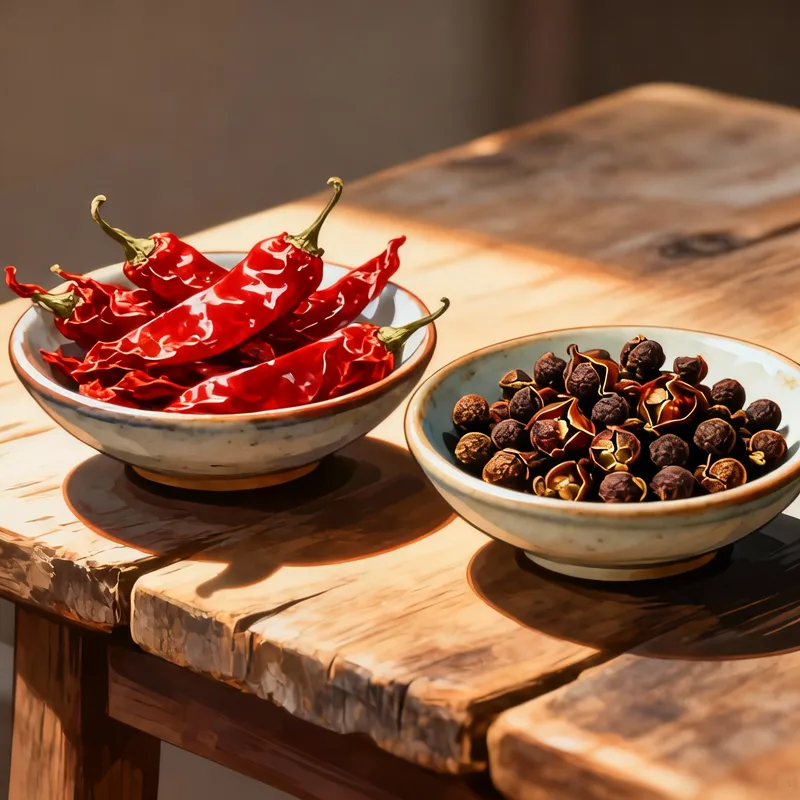
    Sichuan cooks distinguish several kinds of chilli heat. Dried chillies are fried in oil until fragrant but not blackened; chilli oil is steeped and aged; chilli bean paste supplies fermented heat; and fresh peppers give a brighter bite. Sichuan peppercorns, often toasted and ground, produce the málà combination of numbness and spice. Official Sichuan cookbooks describe more than twenty recognised flavour profiles, from guaiwei, strange or complex, to yuxiang, fish-fragrant, which uses no fish. Mapo tofu, associated with Chengdu in the nineteenth century, combines soft tofu, minced meat, doubanjiang, chilli oil, and Sichuan pepper. Kung Pao chicken uses dried chillies, peanuts, and a sweet-sour soy sauce.

    Dried red chillies and Sichuan peppercorns in separate shallow bowls
    Chilli heat and peppercorn numbness are distinct, and cooks balance them separately. رسم توضيحي مُولّد بالذكاء الاصطناعي · سينوفيز

    Hotpot and the Two-Flame Bowl

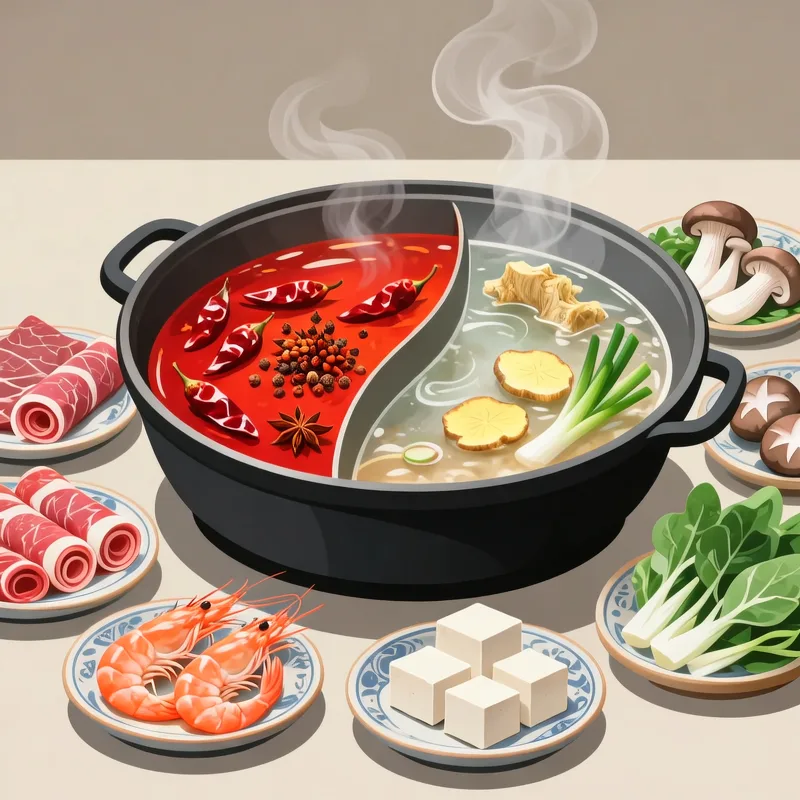
    Chengdu hotpot is a social meal built around a divided pot. One side may hold a red broth of chilli oil, doubanjiang, beef fat, and spices; the other a clear chicken or mushroom stock. Diners cook thinly sliced beef, tripe, duck blood, fish balls, vegetables, and mushrooms, then dip them in sesame oil, garlic, and chopped herbs. The sesame dip cools the palate and coats the mouth against spice. Chongqing hotpot is often heavier and more direct, traditionally using beef tallow; Chengdu versions are commonly more aromatic and varied. Yibin and other southern cities add their own chilli blends. Restaurants label spice levels, but heat can still be adjusted only by asking.

    • Pixian doubanjiang as a fermented chilli-bean base
    • Málà: chilli heat plus peppercorn numbness
    • Two-flavour hotpot with red and clear broth
    • Sesame oil dip to moderate the heat
    A divided hotpot with red chilli broth and clear broth surrounded by ingredient plates
    A two-flavour pot lets a table divide heat from clarity. رسم توضيحي مُولّد بالذكاء الاصطناعي · سينوفيز

    Beyond the Fiery Stereotype

    Not every Sichuan dish is hot. Sichuan’s most ceremonial dish, Gongbao chicken and the banquet classic ‘sweet and sour’ aside, the cuisine includes clear broths, steamed dishes, and delicate pastry. Zhangcha duck is smoked with tea leaves and camphor before steaming, while boiled pork slices are served in a clear broth with mustard greens. Chengdu’s teahouses and dish shops serve small noodles, sweet-water noodles, and dumplings. The province also includes Tibetan and Yi food traditions in its western highlands, where barley, yak products, and different seasonings dominate. Reading Sichuan cuisine only as heat misses its central achievement: layering aromas, textures, and ferments so that strong flavours remain controlled.

    Sichuan cooking is not simply hot; it is a carefully graded argument between chilli, pepper, oil, and ferment.

    المصادر والمزيد من القراءة

    1. Sichuan cuisine — موسوعة بريتانيكا.
    2. Chinese Cuisine — موسوعة بريتانيكا.
    3. Sichuan Food — China Highlights.

    شاهدها في مكانها

    اتبع هذا المدخل إلى المنطقة التي ينتمي إليها.

    استكشف عبر الخريطة

    تابع الموضوع

    تصفح الإدخالات الأخرى التي تشترك في نفس الوسوم.

    تصفح الوسم