Étiqueter: Ethnique

  • Le peuple Bai

    Vie et folklore

    Le peuple Bai

    Murs blancs et artisanat autour de Dali

    Les Bai sont un peuple sino-tibétain de langue locale, concentré autour de Dali, dont les maisons à cour et les teintures à l'indigo définissent un style visuel local.

    Section
    Vie et folklore
    Région
    Yunnan
    Ère
    À travers les époques
    Étiquettes
    Ethnique, coutumes

    Les villages Bai sont situés entre les monts Cangshan et le lac Erhai, au nord-ouest du Yunnan. On y parle une langue sino-tibétaine, et les habitants conservent le souvenir des royaumes de Nanzhao et de Dali qui régnaient sur la région avant la conquête mongole du XIIIe siècle.

    Entre Cangshan et Erhai

    Environ 1,9 million de personnes d'ethnie Bai ont été recensées en Chine en 2010. Près des quatre cinquièmes vivent dans la préfecture autonome Bai de Dali, tandis que d'autres communautés sont réparties entre Kunming, Chuxiong, Lijiang, Baoshan et certaines parties de l'ouest du Yunnan. Les villes et villages se concentrent sur l'étroite bande de terre plate entre les pentes du Cangshan et les rives de l'Erhai, où l'irrigation permet la culture du riz et des haricots, ainsi que l'élevage laitier. Le nom « Bai » signifie « blanc », en référence au plâtre clair qui caractérise les bâtiments locaux. Située sur les routes commerciales reliant le Yunnan au Sichuan et au Tibet, Dali a vu ses villes Bai intégrer des biens et des techniques provenant de diverses régions, tout en conservant un riche patrimoine architectural et décoratif.
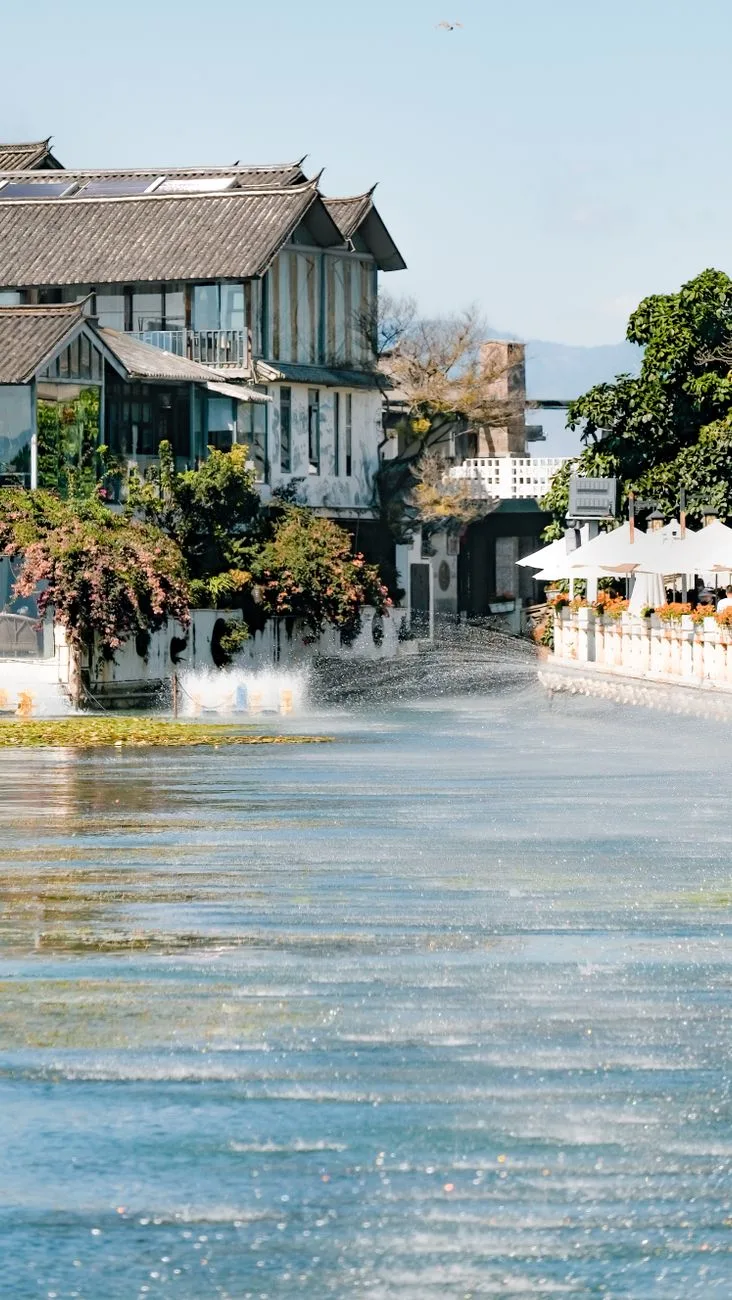
    Maisons Bai blanchies à la chaux avec des toits de tuiles grises au pied de la chaîne de Cangshan, près de Dali
    Le plâtre blanc et les tuiles sombres confèrent aux villages de la région de Dali leur aspect caractéristique. Faire Be | Licence Pexels (https://www.pexels.com/license/)

    Language and historical roots

    The Bai language belongs to the Sino-Tibetan family, usually placed within Tibeto-Burman, though scholars still debate its exact position because of heavy borrowing from Chinese. There is no widely used traditional Bai script, and Chinese characters have served for writing names, contracts and local records. Bai oral tradition, including creation stories and accounts of kingdom builders, is transmitted in speech and performance. Ancestors of the Bai are associated with the Nanzhao kingdom, which flourished from the eighth to the ninth century, and the Dali kingdom that followed between 937 and 1253. Both left stone inscriptions, Buddhist carvings and fortified sites around the lake.

    Courtyards, marble and dye

    The standard Bai house follows a layout known as sanfang yizhaobi, three wings arranged around a courtyard facing a freestanding screen wall. Walls are whitewashed, roofs are covered in grey clay tiles, and doorways and windows carry deep carved wooden fretwork. The screen wall is often painted with landscapes or calligraphy, and panels of local marble are set into lintels and table tops. In Zhoucheng and nearby villages, indigo tie-dye produces blue cloth patterned by stitching and binding before dyeing. Bai embroidery, plaster carving and stonework use similar floral and geometric motifs, so the same design vocabulary appears on clothing, furniture and building facades.
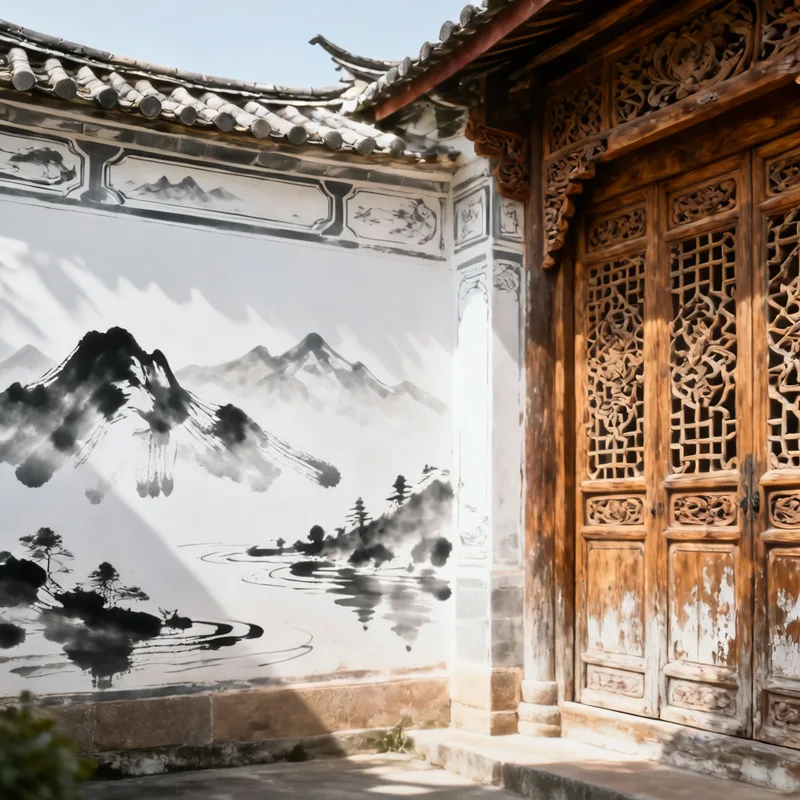
    A Bai courtyard screen wall with ink painting and a carved wooden doorway in Dali
    A painted screen wall faces the main wing of a traditional Bai courtyard house. Illustration générée par IA · SinoViz

    Tea, markets and festivals

    Three-course tea is a Bai hospitality ritual: a bitter first cup brewed from roasted leaves, a sweet second cup with nuts and honey, and a final cup that mixes the two and is said to leave a lasting aftertaste. Local dishes include air-dried milk sheets called rushan, raw pork skin salad, sour fish from Erhai and bean curd cooked with local herbs. The Third Month Fair, held in the lunar third month at Dali, began as a livestock and goods market and now fills the foothills of Cangshan with stalls, horse trading and performances. Raosanling, a pilgrimage and singing gathering, and torch-lighting customs in some villages add other dates to the year.
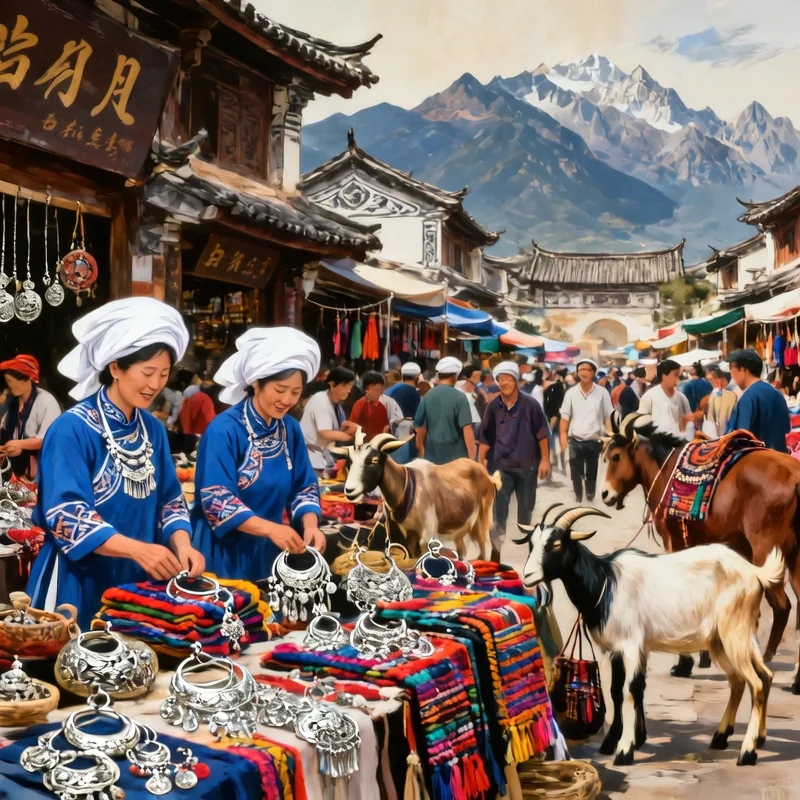
    Bai vendors and livestock at the Third Month Fair near Dali, Yunnan
    The Third Month Fair grew from a regional market into a major public gathering. Illustration générée par IA · SinoViz
    Bai craftsmen treat a house front, a tea cup and a dyed cloth as the same surface for pattern.

    Sources et lectures complémentaires

    1. Bai — Encyclopædia Britannica.
    2. Bai Ethnic Group — Chine.org.cn.

    Voyez-le sur place

    Suivez ce lien jusqu'à la région correspondante.

    Explorer par carte

    Suivez le fil de discussion

    Consultez les autres articles qui partagent les mêmes étiquettes.

    Parcourir l'étiquette
  • Communautés coréennes chinoises

    Vie et folklore

    Communautés coréennes chinoises

    Langue et coutumes coréennes à Pékin

    Les Coréens d'origine chinoise conservent une vie culturelle coréenne dans le nord-est de la Chine et dans des villes comme Pékin.

    Section
    Vie et folklore
    Région
    Pékin
    Ère
    À travers les époques
    Étiquettes
    Ethnique, coutumes

    Connus en chinois sous le nom de Chaoxianzu, les Coréens d'origine chinoise sont environ 1,8 million. Leurs principaux centres d'implantation se situent le long de la frontière nord-est, mais les districts de Wangjing et de Wudaokou à Pékin sont devenus des quartiers de langue coréenne très visibles.

    Migration et quartiers

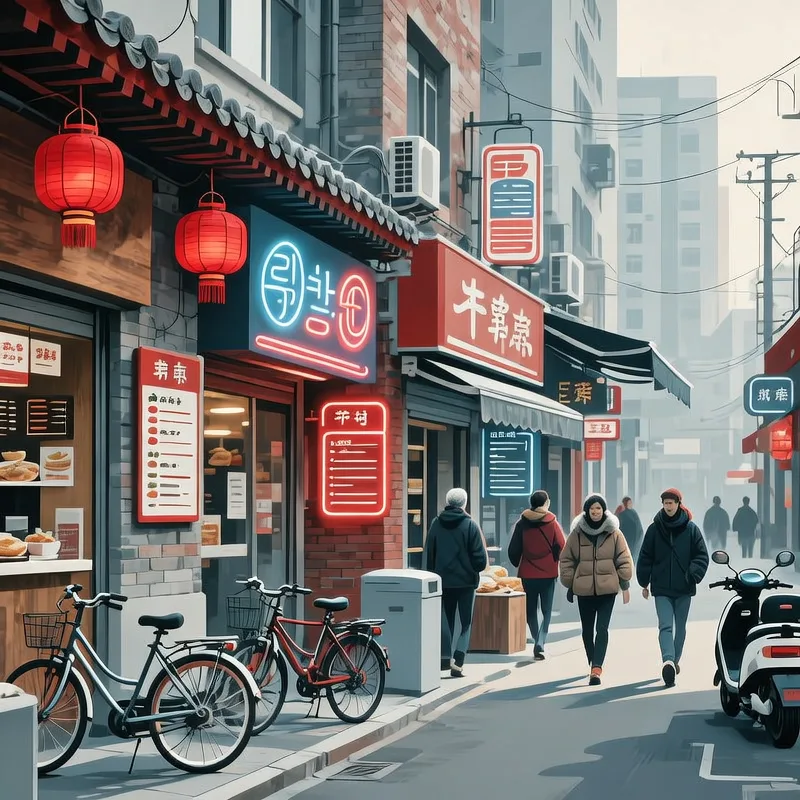
    La plupart des familles coréennes chinoises font remonter leur installation en Chine à la fin du XIXe et au début du XXe siècle, période marquée par les difficultés, la conscription et l'annexion de la Corée par le Japon en 1910, qui ont provoqué des migrations massives à travers les fleuves Tumen et Yalu. La préfecture autonome coréenne de Yanbian a été créée dans le Jilin en 1952, et Changbai et Hunchun demeurent des centres importants. La population coréenne de Pékin a connu une croissance rapide après l'établissement des relations diplomatiques entre la Chine et la Corée du Sud en 1992, avec l'arrivée massive d'étudiants, de commerçants et d'ingénieurs. Wudaokou s'est fait connaître pour ses écoles de langues et ses résidences étudiantes, tandis que Wangjing a vu se développer à grande échelle des supermarchés, des restaurants et une signalétique en langue coréenne.

    Enseignes de magasins en langue coréenne le long d'une rue du quartier de Wangjing à Pékin
    La signalétique coréenne à Wangjing témoigne de plusieurs décennies de migration étudiante et commerciale. Illustration générée par IA · SinoViz

    Langue et écriture

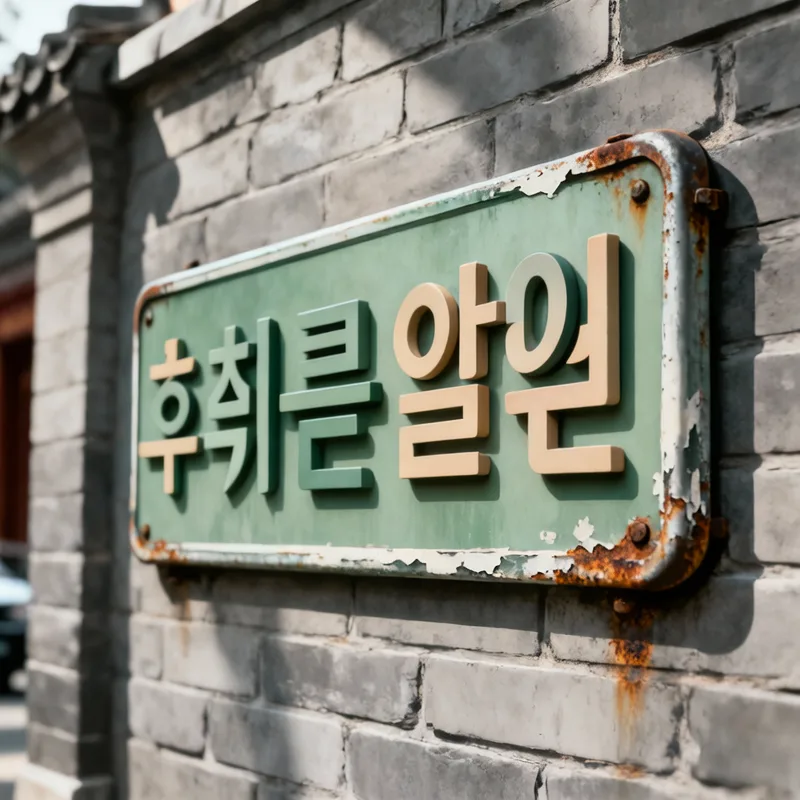
    Le coréen est une langue coréenne, distincte des langues sino-toungouses parlées ailleurs dans la région. Son alphabet, le hangeul, a été créé au XVe siècle et est aujourd'hui l'écriture courante du chinois coréen ; les caractères chinois, ou hanja, apparaissent dans les textes historiques et certains noms. De nombreux habitants âgés de Yanbian sont bilingues coréen-mandarin, tandis que les jeunes nés en ville utilisent souvent le mandarin à l'école et au travail et le coréen à la maison ou dans les médias locaux. Les journaux, la radio et les offices religieux en coréen contribuent à la pérennité de la langue, et certaines familles inscrivent leurs enfants dans des écoles où le coréen est enseigné en parallèle du programme scolaire national.

    Un panneau de rue bilingue coréen-chinois dans un quartier de Pékin
    Deux systèmes d'écriture caractérisent le bilinguisme quotidien de nombreux foyers coréens d'origine chinoise. Illustration générée par IA · SinoViz

    La nourriture et le ménage

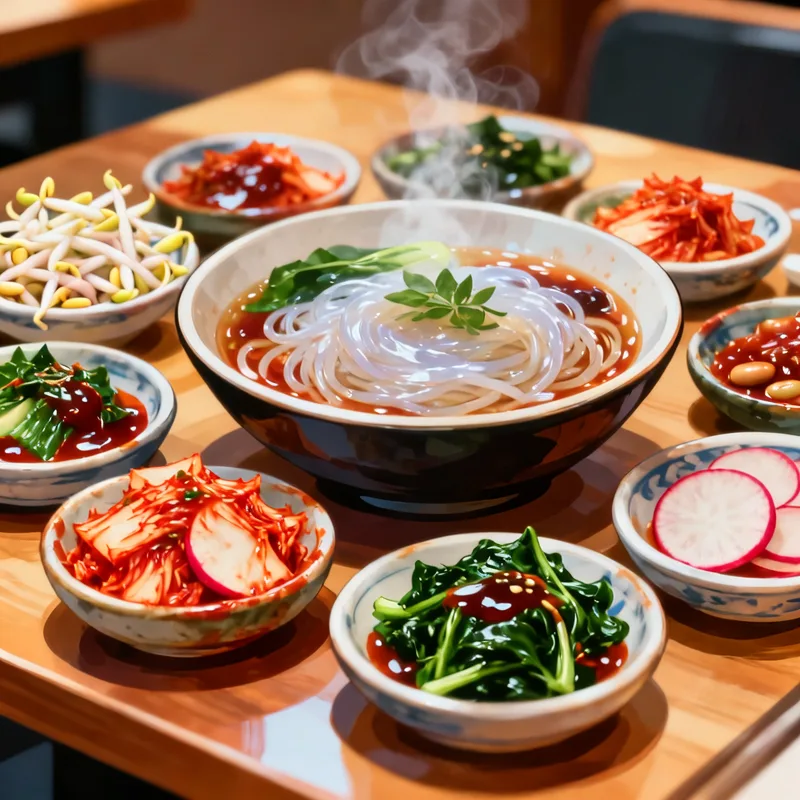
    La gastronomie coréenne est un élément incontournable de la vie communautaire. Le kimchi, à base de légumes salés et fermentés, est préparé en grande quantité en automne, et sa fabrication et son partage sont reconnus par l'UNESCO comme patrimoine culturel immatériel de la Corée. Les repas quotidiens comprennent du riz, de la soupe, du bibimbap (un mélange de légumes et de pâte de piment), de la viande grillée et du naengmyeon (des nouilles de sarrasin froides). Les maisons traditionnelles étaient équipées d'ondol, un système de chauffage par le sol qui permettait de chauffer les nattes. Certaines maisons rurales conservent encore la table basse et les sièges au sol typiques des hanoks. À Pékin, la vie en appartement a modifié le cadre de vie, mais la cuisine et l'habitude de se réunir autour d'une table commune perdurent.

    Une variété d'accompagnements coréens et de nouilles froides sur une table de restaurant
    Les accompagnements à partager et les nouilles froides sont des éléments courants des repas sino-coréens. Illustration générée par IA · SinoViz

    Festivals et vie communautaire

    Les deux principales fêtes familiales sont Seollal, le Nouvel An lunaire, et Chuseok, la fête des récoltes d'automne. À Seollal, les familles dégustent du tteokguk, une soupe de gâteaux de riz tranchés, et les plus jeunes font une révérence solennelle aux aînés. Chuseok est marqué par des visites aux tombes ancestrales et la dégustation de songpyeon, petits gâteaux de riz fourrés aux haricots ou au sésame. Les communautés coréennes chinoises de Pékin se réunissent également pour les mariages, les retrouvailles d'anciens élèves et les associations professionnelles, où le coréen demeure une langue de confiance et un outil de communication essentiel. La vie sociale s'organise autour des restaurants, des agences de voyages et des commerces, loin d'une enclave fermée ; les mêmes rues accueillent des voisins d'origines diverses.

    À Pékin, un panneau coréen signale une habitude familiale transmise de génération en génération au-delà des frontières.

    Sources et lectures complémentaires

    1. langue coréenne — Encyclopædia Britannica.
    2. Groupe ethnique coréen — Chine.org.cn.
    3. Kimjang, fabrication et partage de kimchi — Patrimoine culturel immatériel de l'UNESCO.

    Voyez-le sur place

    Suivez ce lien jusqu'à la région correspondante.

    Explorer par carte

    Suivez le fil de discussion

    Consultez les autres articles qui partagent les mêmes étiquettes.

    Parcourir l'étiquette
  • Le peuple Tujia

    Vie et folklore

    Le peuple Tujia

    Les tisserins des montagnes à l'est du Sichuan

    Les Tujia sont un peuple tibéto-birman des monts Wuling, connu pour ses maisons sur pilotis, ses brocarts tissés et ses danses collectives.

    Section
    Vie et folklore
    Région
    Sichuan
    Ère
    À travers les époques
    Étiquettes
    Ethnique, coutumes

    Bien que répertoriées ici dans la région du Sichuan, la plupart des communautés Tujia se situent à l'est du bassin du Sichuan, dans la chaîne de Wuling. Leur lien historique avec l'ancien État Ba les rattache au vaste univers culturel Bashu du sud-ouest de la Chine.

    Gamme et nombres

    Le recensement de 2010 a dénombré environ 8,35 millions de Tujia, ce qui en fait l'une des plus importantes minorités ethniques de Chine. Leurs principaux villages s'étendent à travers les monts Wuling, au confluent du Hunan, du Hubei, de Chongqing et du Guizhou, notamment dans les comtés de Yongshun et Longshan (Hunan), Shizhu et Pengshui (Chongqing) et Yanhe (Guizhou). Les villages occupent les vallées fluviales et les pentes calcaires, tandis que les hauteurs sont couvertes de rizières en terrasses et de forêts. Leur présence dans la région du Sichuan sur ce site témoigne d'anciens liens avec le Bashu et des migrations récentes entre le bassin et ses montagnes orientales ; la plus forte concentration de Tujia ne se trouve pas dans la province du Sichuan même.

    Maisons sur pilotis en bois sur un versant boisé des monts Wuling
    Les villages Tujia suivent les vallées fluviales et les pentes en terrasses plutôt que les plaines alluviales. Illustration générée par IA · SinoViz

    Langue et identité

    Le tujia appartient à la branche tibéto-birmane de la famille sino-tibétaine, et ses affinités les plus étroites sont souvent évoquées en lien avec le naxi et d'autres langues qiangiques. Aujourd'hui, seule une poignée de personnes, principalement dans quelques villages de l'ouest du Hunan, le parlent couramment ; le mandarin du Sud-Ouest est la langue véhiculaire dans la majeure partie de la région. Le nom « tujia » signifie « habitants autochtones », et la reconnaissance officielle dans les années 1950 a permis de désigner officiellement des communautés qui entretenaient depuis longtemps des relations avec leurs voisins Han, Miao, Dong et She. La tradition orale conserve le souvenir de l'ancien État Ba, qui contrôlait une partie de l'est du Sichuan jusqu'à la conquête Qin en 316 avant notre ère.

    Maisons sur pilotis et brocart

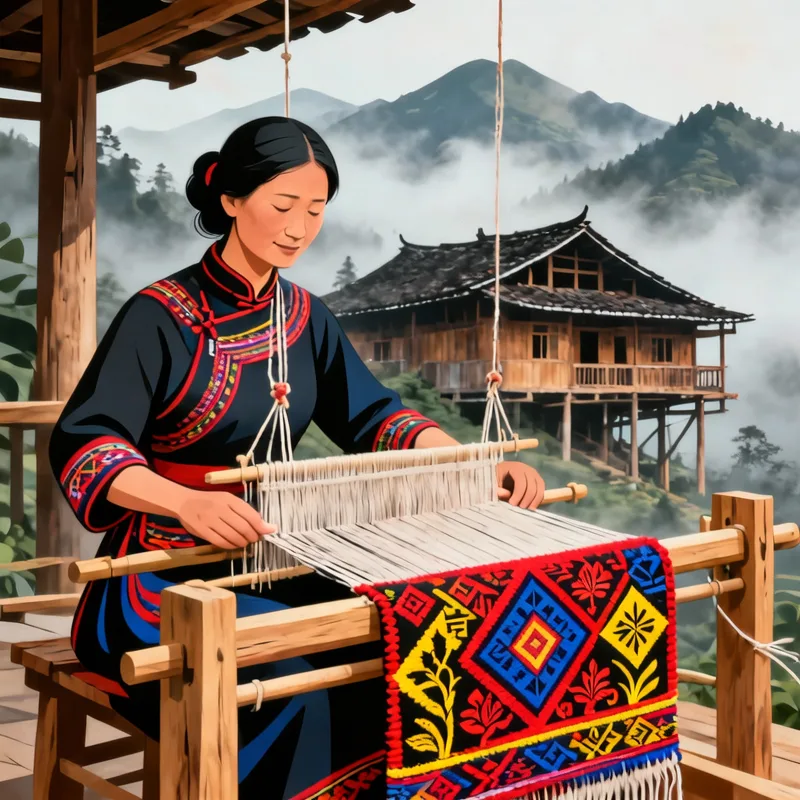
    Sur les terrains escarpés, les bâtisseurs Tujia érigent des diaojiaolou, maisons dont l'étage supérieur, construit sur pilotis, surplombe un rez-de-chaussée. Une véranda couverte longe la façade et le toit en pente permet l'évacuation des fortes pluies. Les cloisons intérieures et les encadrements de fenêtres sont ornés de motifs floraux et géométriques sculptés. Le textile le plus réputé est le xilankapu, un brocart coloré tissé sur un métier à ceinture, orné de motifs floraux, d'oiseaux, de personnages d'opéra et du motif ta tai hua. On le retrouve sur les vêtements, les sacs et les tentures murales ; il est protégé en tant que patrimoine culturel immatériel national. Les repas comprennent souvent du porc salé, du poisson fumé, des gâteaux de riz gluant et une soupe au thé agrémentée de riz frit et de cacahuètes.

    Brocart Tujia à motifs géométriques et floraux tissé en fils rouges et noirs
    Le brocart de Xilankapu est tissé sur un métier à tisser à sangle dorsale et utilisé dans la confection de vêtements et de textiles d'ameublement. Illustration générée par IA · SinoViz

    Danses et salutations pour le Nouvel An

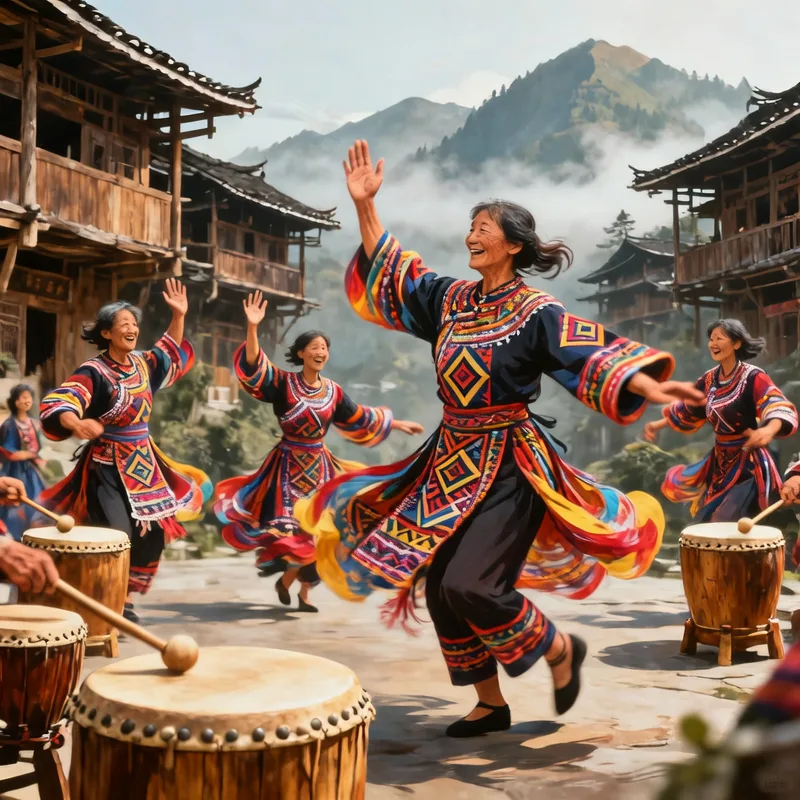
    La danse des vagues, bai shou wu, est exécutée par des rangées de danseurs qui balancent leurs bras au rythme des tambours et des gongs. Elle a lieu dans une salle dédiée aux vagues, aux alentours du Nouvel An lunaire et lors de la fête de Sheba, où des offrandes sont faites aux ancêtres et aux protecteurs du village. Certains villages pratiquent également le Maogusi, une danse masquée ou costumée de paille qui met en scène des scènes de chasse et d'agriculture. Une autre coutume distinctive est le gan nian, qui consiste à célébrer le Nouvel An un jour plus tôt, une tradition orale liée aux préparatifs des ancêtres pour un départ militaire. Ces spectacles sont désormais enseignés dans les écoles et les centres culturels, permettant ainsi à un public plus large de découvrir un rituel autrefois confiné à une seule salle villageoise.

    Des danseurs Tujia en costumes brodés exécutent une danse ondulante au son des tambours.
    La danse des vagues rassemble les villageois dans des mouvements de bras coordonnés et au rythme des tambours. Illustration générée par IA · SinoViz
    Dans les villages Tujia, un motif tissé et un pas de danse véhiculent tous deux la mémoire familiale.

    Sources et lectures complémentaires

    1. Tujia — Encyclopædia Britannica.
    2. Groupe ethnique Tujia — Chine.org.cn.
    3. Patrimoine culturel immatériel de la Chine — Réseau ICH Chine.

    Voyez-le sur place

    Suivez ce lien jusqu'à la région correspondante.

    Explorer par carte

    Suivez le fil de discussion

    Consultez les autres articles qui partagent les mêmes étiquettes.

    Parcourir l'étiquette

  • The Manchu People

    Vie et folklore

    The Manchu People

    Jurchen roots, Qing legacy in Beijing

    The Manchu are a Tungusic-speaking people whose Qing dynasty left a deep imprint on Beijing’s buildings and court culture.

    Section
    Vie et folklore
    Région
    Pékin
    Ère
    yuan-ming-qing
    Étiquettes
    Ethnic, History

    Manchu identity took shape in the early seventeenth century among Jurchen groups of northeastern China. The Qing dynasty they founded ruled from Beijing between 1644 and 1912, and its material traces remain in the city’s palaces and archives.

    From Jurchen to Qing

    The Manchu descend from Jurchen communities of the northeast, who earlier founded the Jin dynasty of 1115 to 1234. In 1635 the ruler Hong Taiji adopted the name Manchu for his people, and in 1636 he renamed the state Qing. The dynasty took Beijing in 1644 and ruled China until 1912. Today roughly 10.4 million people identify as Manchu according to the 2010 census, making them one of the largest ethnic minorities. Most live in Liaoning, Hebei, Jilin and Heilongjiang, with substantial populations in Beijing and Tianjin. Migration into the capital after 1644 created banner neighbourhoods whose street names and food shops still register the Qing presence.

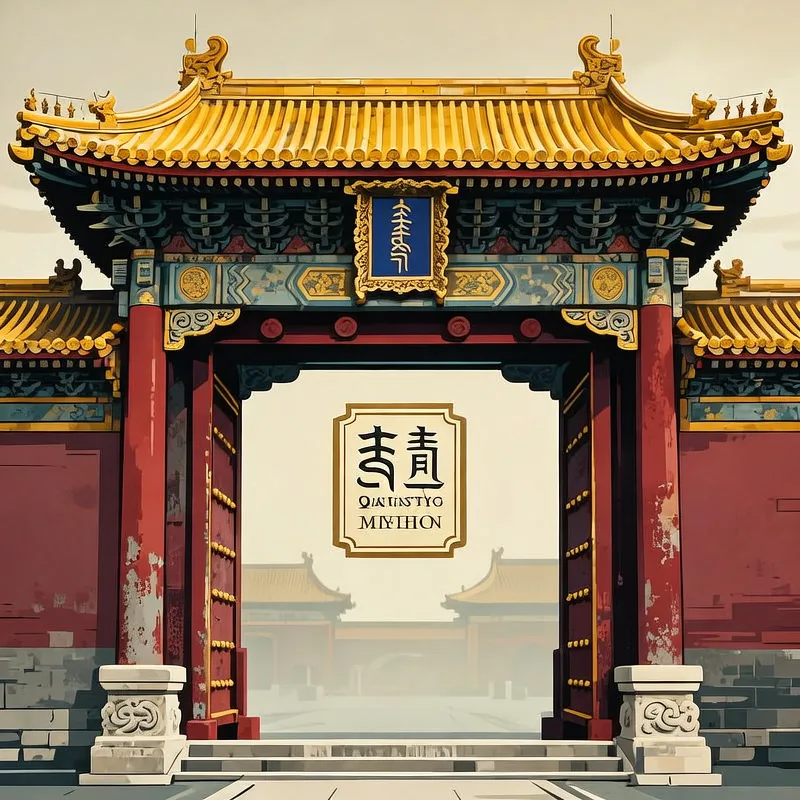
    A bilingual Manchu and Chinese plaque above a gate in Beijing’s Forbidden City
    Palace gates in Beijing carry inscriptions in both Manchu and Chinese. Illustration générée par IA · SinoViz

    A written language of archives

    Manchu is a Tungusic language, related to Xibe and more distantly to Evenki. Its written form was devised in the late sixteenth century by adapting the Mongolian script, and it became the language of Qing military records, imperial edicts and family archives. Thousands of these documents survive in Chinese and foreign collections, and they are consulted for the history of the dynasty and its frontier administration. Few people speak Manchu fluently today, mostly in a handful of northeastern villages, and Mandarin is the normal language of daily life. Even so, Manchu words survive in place names, court titles and the vocabulary of Qing institutions.

    Dress, house and food

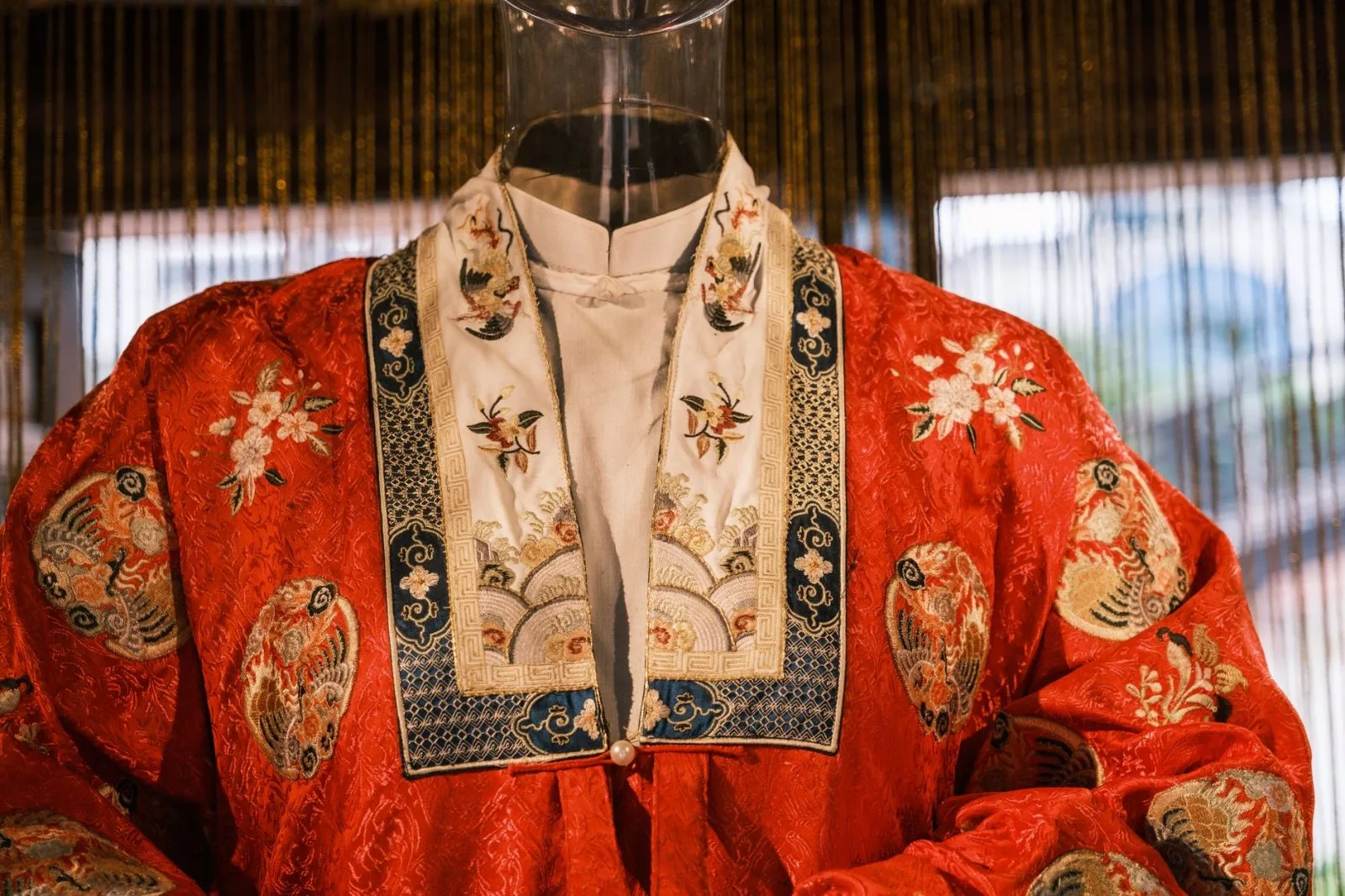
    Manchu dress shaped the qipao, the close-fitting robe later worn widely by Han Chinese women and known abroad as the cheongsam. Older garments had horse-hoof cuffs that could be folded back over the hands, and women’s formal dress included a tall flag headdress and shoes with a raised flowerpot sole. Under the Qing, men wore a shaved forehead and a braided queue, a rule enforced until the dynasty’s end. A traditional house was arranged as a pocket room with a heated kang platform along the west wall, where honored guests slept and ancestral tablets were kept. A pole in the courtyard was used in offerings that fed crows, an animal associated with founding legends.

    A Qing dynasty Manchu robe with horse-hoof cuffs and embroidered panels
    Manchu court dress influenced the qipao and the formal clothing of the Qing elite. TBD Tuyên | Pexels License (https://www.pexels.com/license/)

    What remains in Beijing

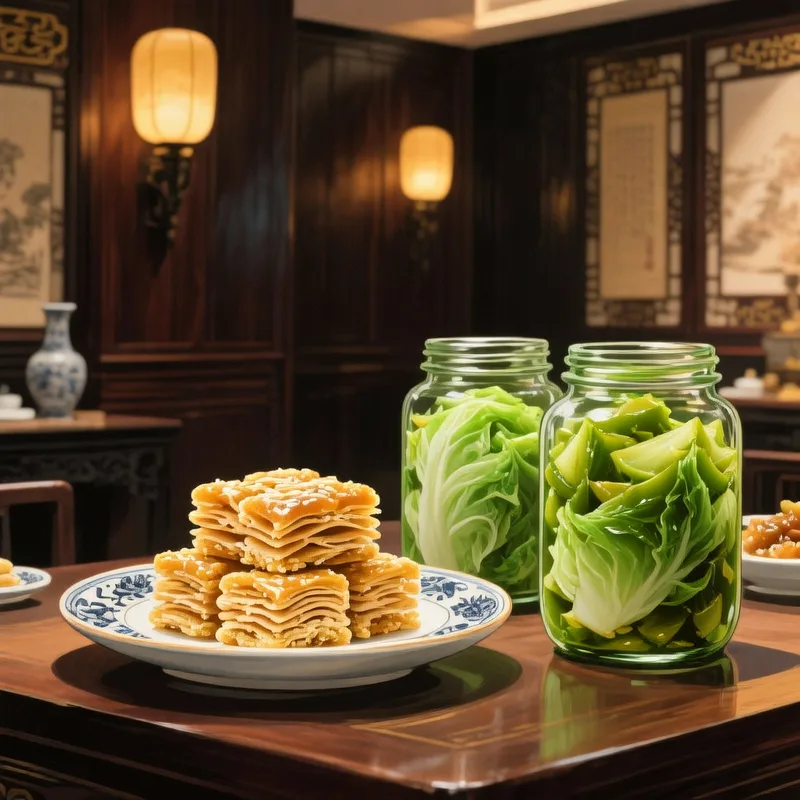
    Manchu cuisine survives in Beijing and the northeast through sachima, a sweet pastry made of fried dough and syrup, and through hot pots of pickled cabbage, pork and blood sausage. The elaborate Manchu-Han banquet is a later dining form assembled from court and regional dishes rather than a single unbroken tradition. Paper-cutting, embroidery and painted snuff bottles are among the crafts associated with Manchu households. In Beijing, the most public inheritance is architectural: the Forbidden City’s bilingual plaques, the layout of former banner quarters, and restaurants and museums that explain Qing court life. These traces make the dynasty legible on an ordinary walk through the old city.

    A Beijing restaurant display of Manchu sachima pastry and pickled cabbage hot pot
    Manchu food traditions remain visible in Beijing and northeastern China. Illustration générée par IA · SinoViz
    On Beijing’s palace gates, Manchu and Chinese script still share the same lintel.

    Sources et lectures complémentaires

    1. Manchu — Encyclopædia Britannica.
    2. Qing dynasty — Encyclopædia Britannica.
    3. Manchu Ethnic Group — Chine.org.cn.

    Voyez-le sur place

    Suivez ce lien jusqu'à la région correspondante.

    Explorer par carte

    Suivez le fil de discussion

    Consultez les autres articles qui partagent les mêmes étiquettes.

    Parcourir l'étiquette
  • Le peuple Dong

    Vie et folklore

    Le peuple Dong

    Tours de tambours et chant a cappella

    Les Dong, ou Kam, sont des villageois du sud-ouest de la Chine parlant le kra-dai, connus pour leurs tours en bois, leurs ponts couverts et leurs chants polyphoniques.

    Section
    Vie et folklore
    Région
    Guangxi
    Ère
    À travers les époques
    Étiquettes
    Ethnique, coutumes

    Les villages Dong se regroupent autour d'une tour à tambours et d'une salle de chant, où la musique s'apprend à l'oreille. Leur grand chant, interprété à plusieurs voix sans instruments, a été inscrit sur la Liste représentative du patrimoine culturel immatériel de l'UNESCO en 2009.

    Des villages répartis dans trois provinces

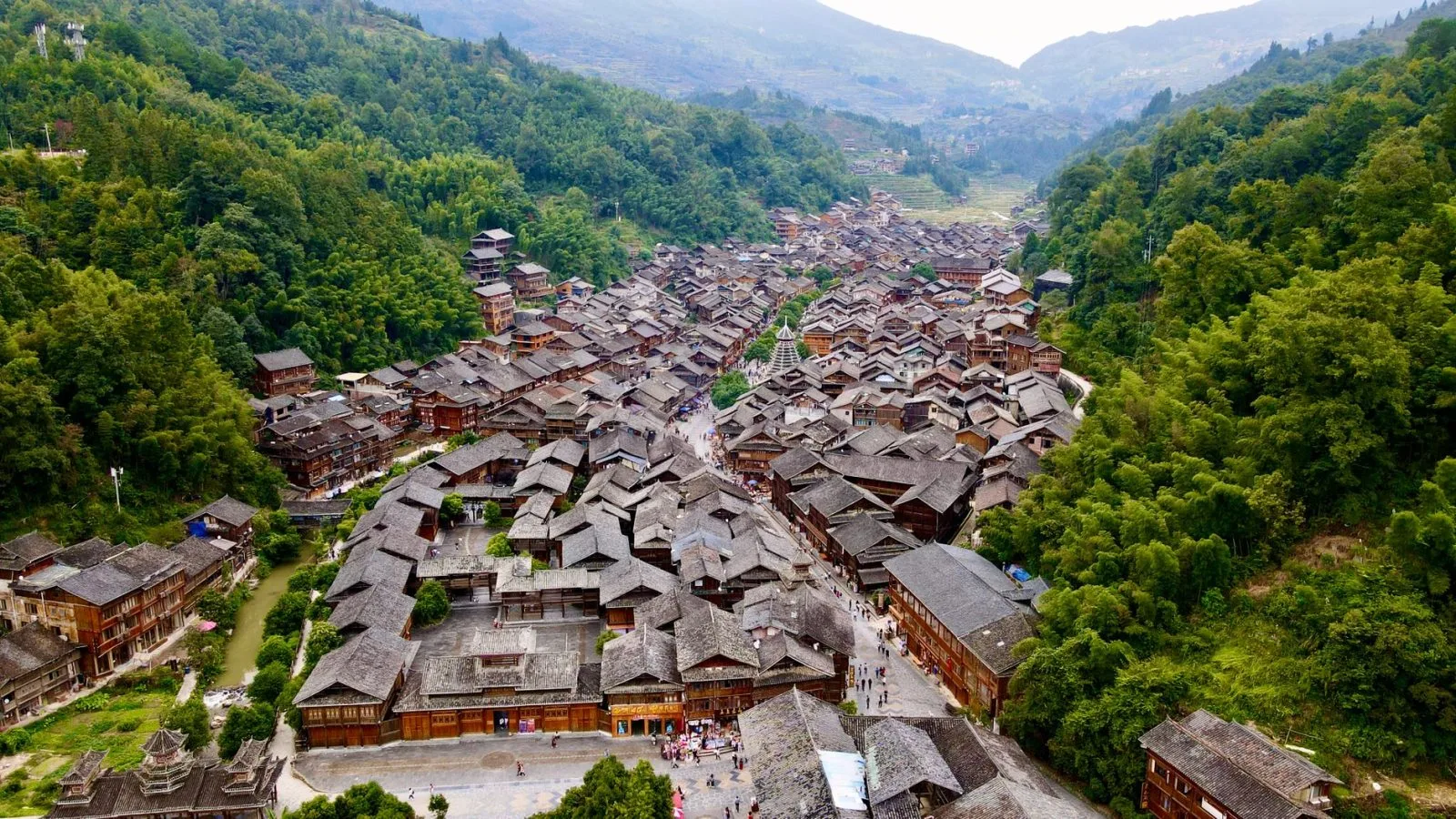
    Le recensement de 2010 a dénombré environ 2,96 millions de Dong, également appelés Kam. La plupart vivent dans la préfecture autonome Miao et Dong de Qiandongnan, dans l'est du Guizhou, tandis que d'autres résident dans le comté de Xinhuang, à l'ouest du Hunan, et dans le comté de Sanjiang, au nord du Guangxi, zone concernée par cet article. Les villages se regroupent le long des cours d'eau, dans un paysage vallonné. Les maisons, construites sur pilotis, sont très proches les unes des autres et le rez-de-chaussée sert d'abri aux animaux et d'espace de stockage. Les villages s'organisent souvent autour d'un clan ou d'un groupe de familles apparentées, et une tour à tambour commune en marque le centre. Les communautés Miao, Yao et Han voisines influencent les marchés et les mariages mixtes de la région.

    Maisons sur pilotis Dong regroupées autour d'une tour-tambour à Sanjiang, Guangxi
    Les villages Dong sont construits très près les uns des autres, avec une tour à tambour au centre. Collins Zhao | Licence Pexels (https://www.pexels.com/license/)

    Langue et règles du village

    La langue dong, également appelée kam, appartient à la branche kam-sui de la famille kra-dai, qui comprend également le dai et le thaï. Elle possède des tons et un vocabulaire riche pour la riziculture, le travail forestier et les rituels villageois. Il n'existe pas d'écriture dong ancienne et largement répandue ; les caractères chinois ont été utilisés pour les documents officiels, et la romanisation facilite aujourd'hui la publication de dictionnaires et de textes de chants. La vie villageoise a longtemps été régie par des pactes appelés kuan, accords relatifs à l'utilisation des terres, au mariage et au règlement des différends, récités lors des assemblées. Les anciens et les chefs élus s'expriment au nom du village, tandis que la salle de chant et la tour du tambour servent de lieux d'apprentissage du répertoire et des règles pour les jeunes.

    Tours et ponts couverts

    L'architecture en bois de Dong est réputée pour deux édifices. La tour du tambour, telle une pagode à plusieurs niveaux aux avant-toits saillants, s'élève au-dessus des toits. Construite en poutres assemblées, elle servait aux réunions, aux signaux et aux rassemblements festifs. Le pont couvert, doté d'un toit de tuiles, de bancs et d'une ou plusieurs tours-pavillons, est un passage protégé par le vent et la pluie. Le pont Chengyang Yongji à Sanjiang, construit au début du XXe siècle, en est un exemple emblématique. Ces deux structures sont assemblées par des charpentiers locaux à l'aide d'assemblages à tenons et mortaises, et non de fixations métalliques. Lors de leur construction ou de leur réparation, des villages entiers contribuent en main-d'œuvre et en bois.

    Un pont couvert Dong, orné de tours en forme de pagode, enjambe un cours d'eau dans le Guangxi.
    Les ponts couverts offrent à la fois un abri, des sièges et un point de repère pour le village. Illustration générée par IA · SinoViz

    Grand chant et nourriture quotidienne

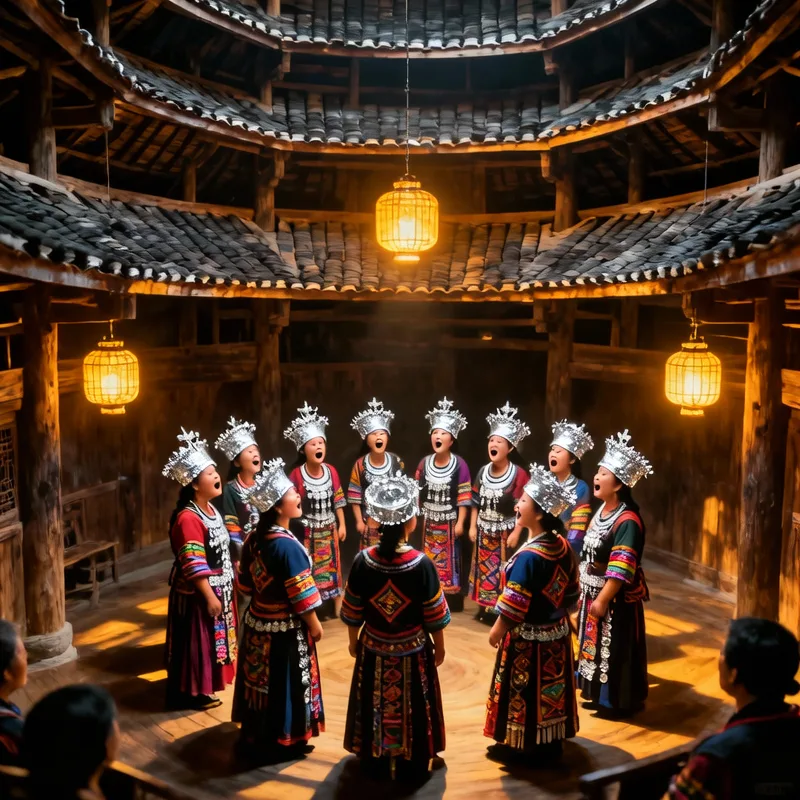
    Le grand chant Kam, ou dongge, est un chant polyphonique a cappella, mené par des voix aiguës auxquelles répond un bourdon plus grave du groupe. Il s'apprend dans les salles de chant, où les jeunes se réunissent autour d'un foyer et répètent tout l'hiver. Il est interprété lors des mariages, des fêtes et des visites entre villages. Le Nouvel An Dong a lieu au onzième mois lunaire dans de nombreux endroits, avec des rassemblements autour des tours de tambour et, dans certaines régions, des combats de taureaux. Le repas quotidien comprend du poisson fermenté aigre accompagné de riz, de la soupe aigre, du riz gluant et du you cha, un thé fouetté avec du riz frit, des cacahuètes et des herbes. Ces plats sont adaptés au climat humide des hautes terres où la conservation et le partage du chauffage sont essentiels.

    Des chanteurs Dong interprètent des chants à plusieurs voix a cappella dans une salle de chant de village.
    Le grand chant s'apprend dans les salles de chant et s'interprète lors de rassemblements communautaires. Illustration générée par IA · SinoViz
    Dans un village Dong, la tour du tambour est à la fois un point de repère et une invitation à se rassembler.

    Sources et lectures complémentaires

    1. Grand chant Kam du groupe ethnique Dong — Patrimoine culturel immatériel de l'UNESCO.
    2. Dong — Encyclopædia Britannica.
    3. Groupe ethnique Dong — Chine.org.cn.

    Voyez-le sur place

    Suivez ce lien jusqu'à la région correspondante.

    Explorer par carte

    Suivez le fil de discussion

    Consultez les autres articles qui partagent les mêmes étiquettes.

    Parcourir l'étiquette
  • The Dai People

    Vie et folklore

    The Dai People

    Tai-speaking communities of southern Yunnan

    The Dai are Tai-speaking Buddhist communities whose villages, temples and water festivals shape the river valleys of southern Yunnan.

    Section
    Vie et folklore
    Région
    Yunnan
    Ère
    À travers les époques
    Étiquettes
    Ethnique, coutumes

    In the lowlands of Xishuangbanna and Dehong, Dai villages sit beside rice fields and Buddhist monasteries. Their language belongs to the Tai branch of the Kra-Dai family, and their festivals follow a calendar shared with communities across mainland Southeast Asia.

    Where the valleys are

    About 1.16 million Dai people were counted in China’s 2010 census. Most live in the lowlands of southern and western Yunnan, especially the Xishuangbanna Dai Autonomous Prefecture along the Lancang (Mekong) River and the Dehong Dai and Jingpo Autonomous Prefecture near the Myanmar border. Smaller communities extend through Lincang, Pu’er and Honghe. Settlement follows warm river valleys where irrigated rice can be grown year-round, rather than the cooler surrounding hills. This lowland orientation has kept Dai villages in close contact with Shan, Thai and Lao communities across the borders, and it explains why local architecture, food and festival calendars have much in common with mainland Southeast Asia.

    Dai village houses with steep roofs beside irrigated rice fields in Xishuangbanna, Yunnan
    Villages follow the warm river valleys where rice can be grown through the year. Rachel Claire | Pexels License (https://www.pexels.com/license/)

    Language, script and the wat

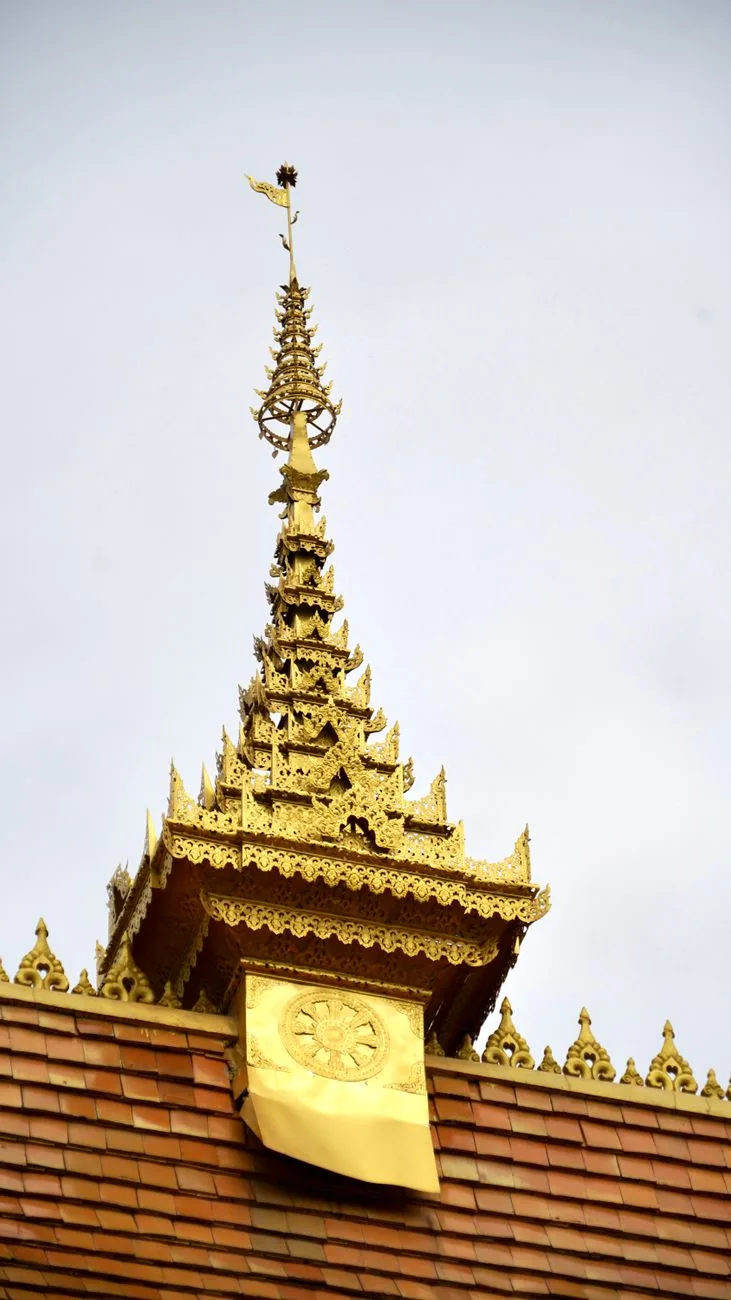
    Dai belongs to the Tai branch of the Kra-Dai language family, the same broad family that includes Thai and Lao. Three writing traditions are used in Yunnan: the Xishuangbanna script, the Dehong script and a variant used around Jinping. All derive from older Tai writing systems and were once maintained mainly through monastery education. Theravada Buddhism reached Dai communities through trade and pilgrimage routes over several centuries, and a local wat, or monastery, became the centre of village literacy and ceremony. Boys traditionally spent part of their youth as novices, learning to read scripture and recite chants. Gilded stupas and timber temples with sloping roofs remain the most visible landmarks in the landscape.

    A Dai Buddhist temple with a gilded spire and carved timber eaves in Xishuangbanna
    The local wat has long been a centre of reading, ordination and village ceremony. Eric Feng | Pexels License (https://www.pexels.com/license/)

    House, cloth and daily food

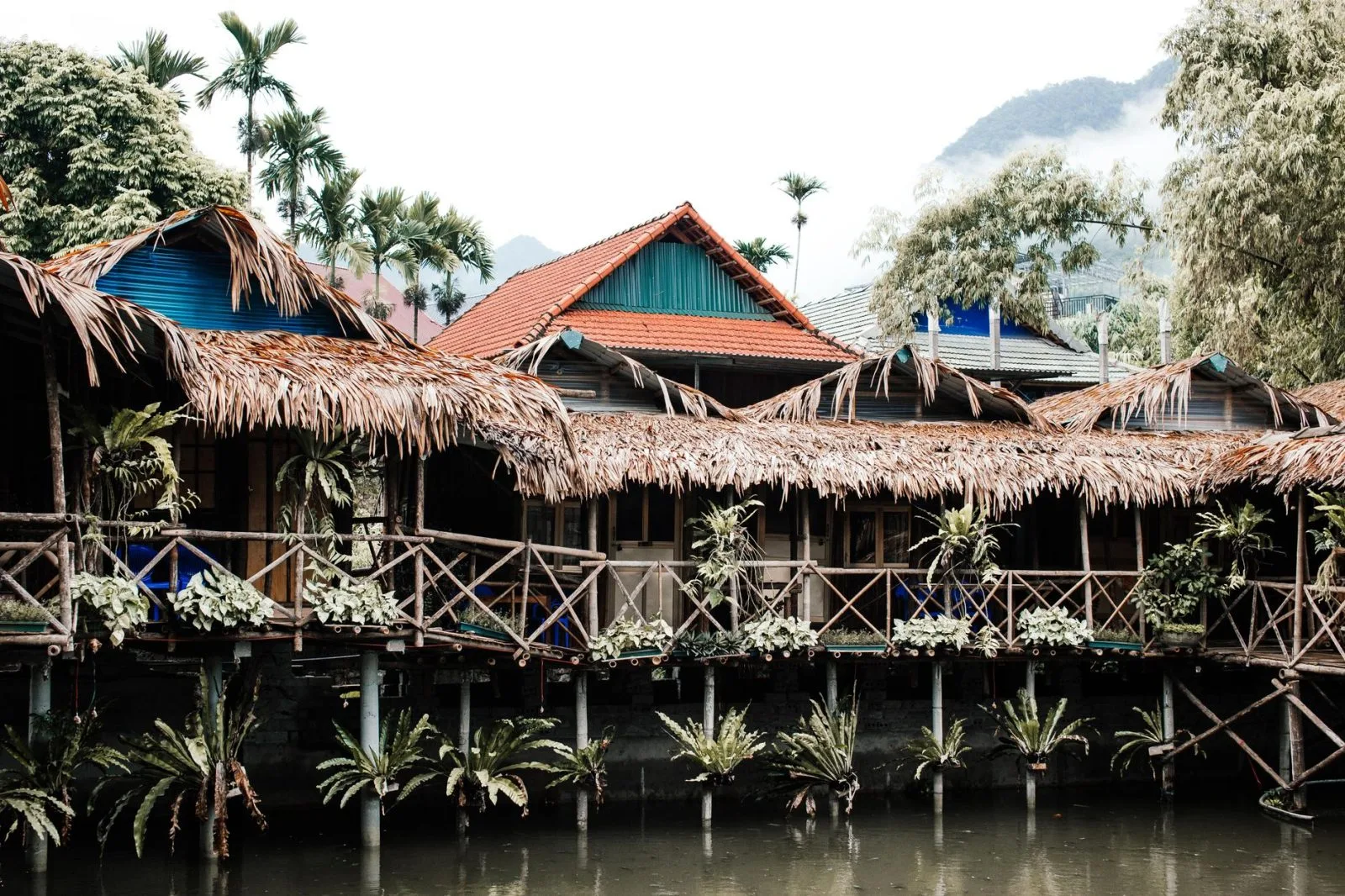
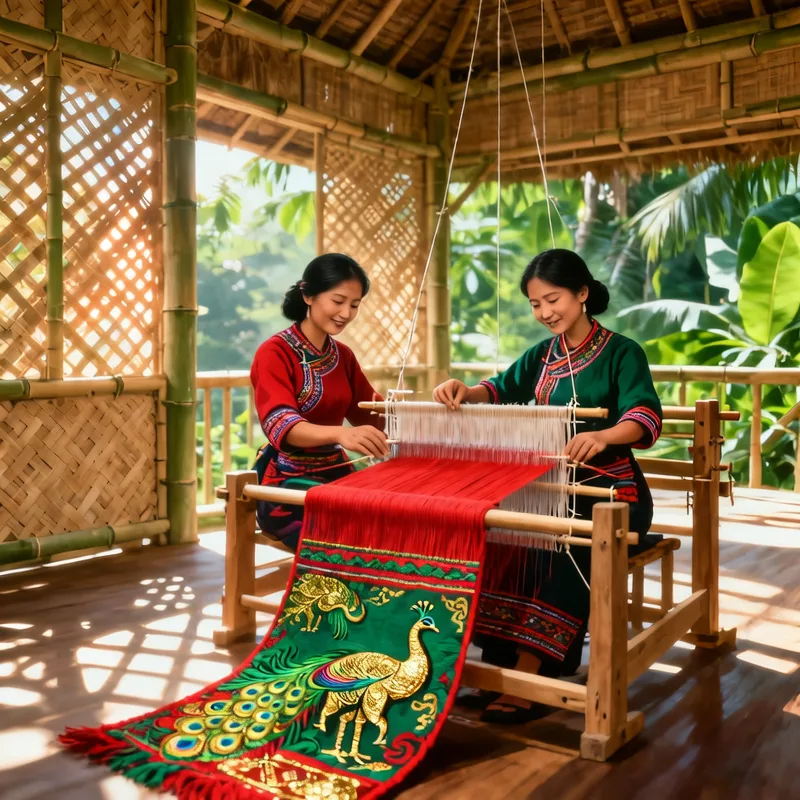
    A traditional Dai house stands on timber or bamboo posts, with the living floor lifted above the ground and a steep roof that sheds heavy monsoon rain. An open veranda serves as a work and sitting space, while the area beneath the house is used for storage and livestock. Household weaving produces cotton and silk cloth, and Dai brocade is known for peacock, elephant and geometric motifs worked in bright threads. Silver ornaments, betel nut and lacquered trays appear in daily and ceremonial exchange. Meals centre on glutinous rice, freshwater fish, sour bamboo shoots and chilli dips, often wrapped in banana leaves. Tea gardens around Xishuangbanna and Pu’er add another crop with a long regional history.

    A Dai weaver working on a backstrap loom beside a stilted wooden house
    Brocade, silverwork and betel nut are part of everyday household life. Illustration générée par IA · SinoViz

    The Water Festival

    The Dai new year falls in mid-April and is celebrated as the Water Festival, known locally as Songkran. Water is poured or sprinkled over family, neighbours and visitors as a wish for a clean and abundant year, and the day also includes visits to the monastery, the building of small sand pagodas and boat races on the rivers. In the evenings, peacock and elephant dances are performed with slow, controlled hand movements and bright costumes. These dances are also taught in cultural troupes and schools, alongside Dai opera and folk storytelling. Today the festival draws visitors from other parts of China, while monasteries and village craft workers continue to maintain the language and techniques behind it.

    In the Dai lowlands, a monastery, a rice field and a loom keep the same calendar.

    Sources et lectures complémentaires

    1. Dai — Encyclopædia Britannica.
    2. Dai Ethnic Group — Chine.org.cn.

    Voyez-le sur place

    Suivez ce lien jusqu'à la région correspondante.

    Explorer par carte

    Suivez le fil de discussion

    Consultez les autres articles qui partagent les mêmes étiquettes.

    Parcourir l'étiquette
  • Découpage de papier chinois

    Vie et folklore

    Découpage de papier chinois

    Red paper, folded and cut

    A pair of scissors and a sheet of red paper can carry a whole vocabulary of wishes.

    Section
    Vie et folklore
    Région
    Shaanxi
    Ère
    À travers les époques
    Étiquettes
    Customs, Ethnic

    Chinese paper cutting, or jianzhi, turns a flat sheet into a pattern of figures, flowers, and characters. Practised for centuries in rural households, it still marks weddings and New Year, and Shaanxi’s bold window designs are among its most recognisable regional forms.

    Origins and Technique

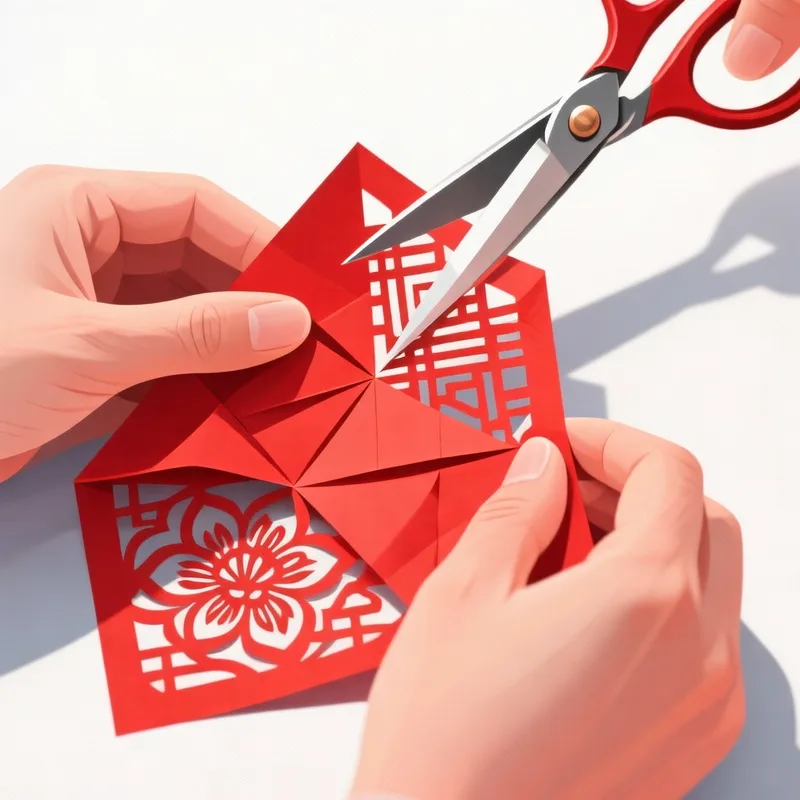
    Paper reached China in the Eastern Han period, and the first cuts followed once the material was cheap enough to experiment with. Early examples were used as offerings and as templates for embroidery; a surviving cut-paper find from the sixth century shows that the technique was established by then. Two methods developed. Scissors cut a folded sheet, creating a mirror-symmetric design with a single sequence of snips. A knife held upright cuts a stack of paper against a wax board, a method suited to finer lines and repeated motifs. Artists draw no outline for many traditional patterns; they cut directly, keeping the connecting threads that stop the design falling apart. The finished piece is light, cheap, and easy to paste on a window or door.

    Hands cutting a red paper design with small scissors
    Folding the paper before cutting produces the symmetrical patterns typical of window decorations. Illustration générée par IA · SinoViz

    A Language of Motifs

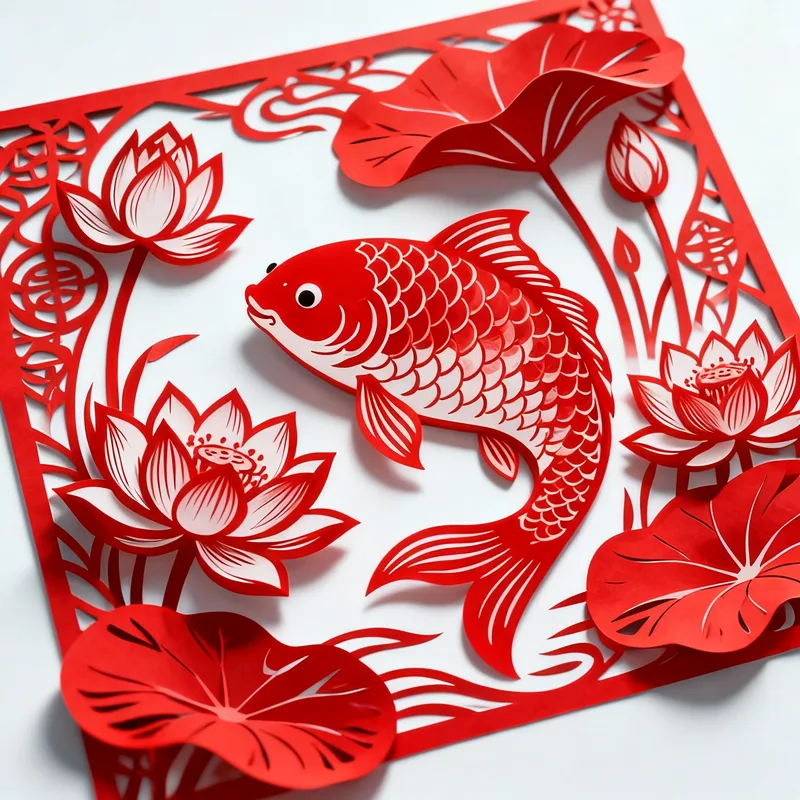
    The images are a system of visual puns. A fish means surplus, because the word for fish sounds like the word for abundance; lotus suggests purity. A pomegranate stands for many children, a bat for good fortune, and a peach for long life. The character fu, meaning good fortune, appears alone or inside a circular design, while shuangxi, double happiness, belongs to weddings. Zodiac animals, opera figures, and scenes of children at play all circulate as patterns. Colour matters as much as shape: red is the default for celebration, while white paper cuts are rarer and tied to older ritual uses. In a Shaanxi village window, the arrangement of these motifs tells a visitor what the household is hoping for in the coming year.

    Red paper-cut window decoration showing a fish and lotus flowers
    Fish and lotus form a rebus for abundance; motifs are chosen for the wish they carry. Illustration générée par IA · SinoViz

    Shaanxi Windows

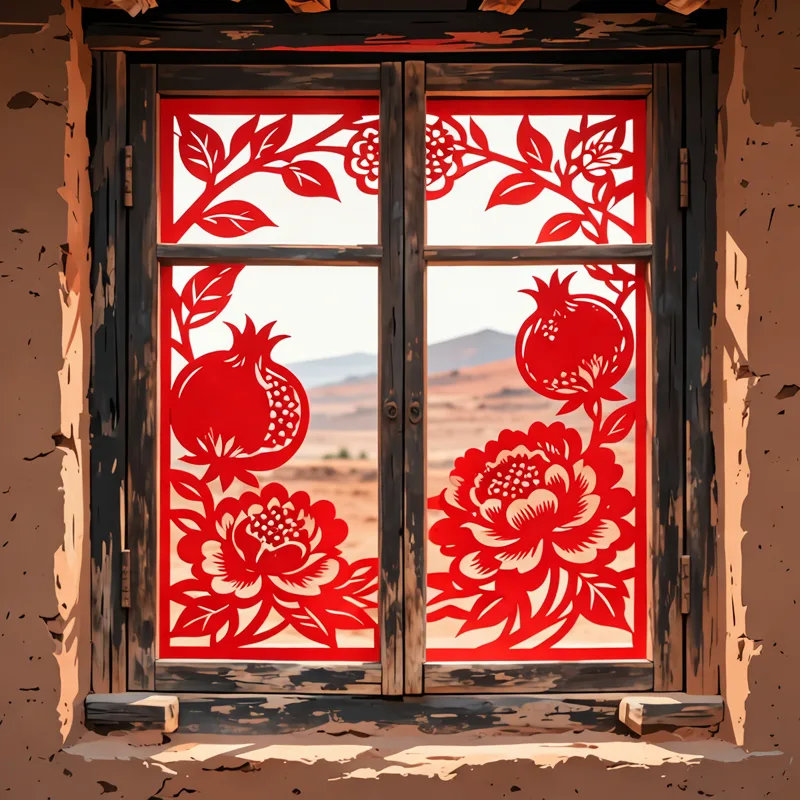
    Paper cutting in Shaanxi is associated with rural life on the Loess Plateau, especially around Yan’an. Windows there were once small and deeply set, so designs favoured bold silhouettes and broad, connected shapes that could be read from across a room. Local artists talk of cutting with the heart rather than measuring with a ruler, and compositions often show figures, animals, and plants together in a single dense frame. Window grilles, or chuanghua, are pasted at New Year and replaced when they fade. Wedding cuts carry double happiness characters and images of fertility; birthday cuts use peaches and cranes. Women were the main practitioners in many villages, passing patterns from mother to daughter, and village fairs still sell sheets cut in the old local style.

    A Shaanxi farmhouse window with bold red paper cutouts
    Shaanxi cuts favour strong silhouettes and broad shapes, designed to read from a distance. Illustration générée par IA · SinoViz

    Recognition and Travel

    Chinese paper-cut was inscribed on UNESCO’s Representative List of the Intangible Cultural Heritage of Humanity in 2009, a recognition that named both the craft and the communities that sustain it. The listing does not freeze the art. Contemporary artists cut portraits, cityscapes, and political images with the same tools, and paper cuts appear in graphic design and animation. For a visitor, the appeal is that the work is easy to find and easy to try. Museum shops sell small sheets, market stalls sell single motifs, and workshops in Xi’an and rural Shaanxi teach the basic fold-and-cut method in an hour. Bring a sharp pair of scissors and practice on cheap red paper before attempting a detailed pattern. A finished cut pasted on glass changes with the light.

    The pattern holds together because the cutter leaves just enough paper between the lines.

    Sources et lectures complémentaires

    1. Chinese paper-cut — Patrimoine culturel immatériel de l'UNESCO.
    2. Découpage de papier chinois — China Highlights.
    3. Paper cutting — Encyclopædia Britannica.

    Voyez-le sur place

    Suivez ce lien jusqu'à la région correspondante.

    Explorer par carte

    Suivez le fil de discussion

    Consultez les autres articles qui partagent les mêmes étiquettes.

    Parcourir l'étiquette
  • Orfèvrerie Miao

    Vie et folklore

    Orfèvrerie Miao

    Ornament, Memory, and Festival Dress

    Miao silver ornaments carry family history and local identity in festival dress across southwest China.

    Section
    Vie et folklore
    Région
    Yunnan
    Ère
    À travers les époques
    Étiquettes
    Customs, Ethnic, Scenic Sites

    Miao silverwork is a family of adornments—headdresses, collars, earrings, and bracelets—made by Miao communities in Guizhou, Yunnan, and neighbouring regions. The pieces are worn most visibly at festivals and weddings.

    A Distributed Craft Tradition

    Miao communities live across Guizhou, Yunnan, Guangxi, Sichuan, and Southeast Asia, and silverwork varies by locality. In Yunnan, Miao villages around Wenshan and Honghe maintain styles that differ from the better-known Guizhou counties of Xijiang and Kaili. Ornaments are made by specialised silversmiths who work in small workshops, often serving several villages. Designs are learned through apprenticeship rather than written patterns: a young smith repeats forms copied from older pieces and festival dress. Motifs may draw on local birds, flowers, insects, and coins, though their meanings are not fixed. Families accumulate ornaments over generations, and a daughter’s festival headdress may represent years of saving.

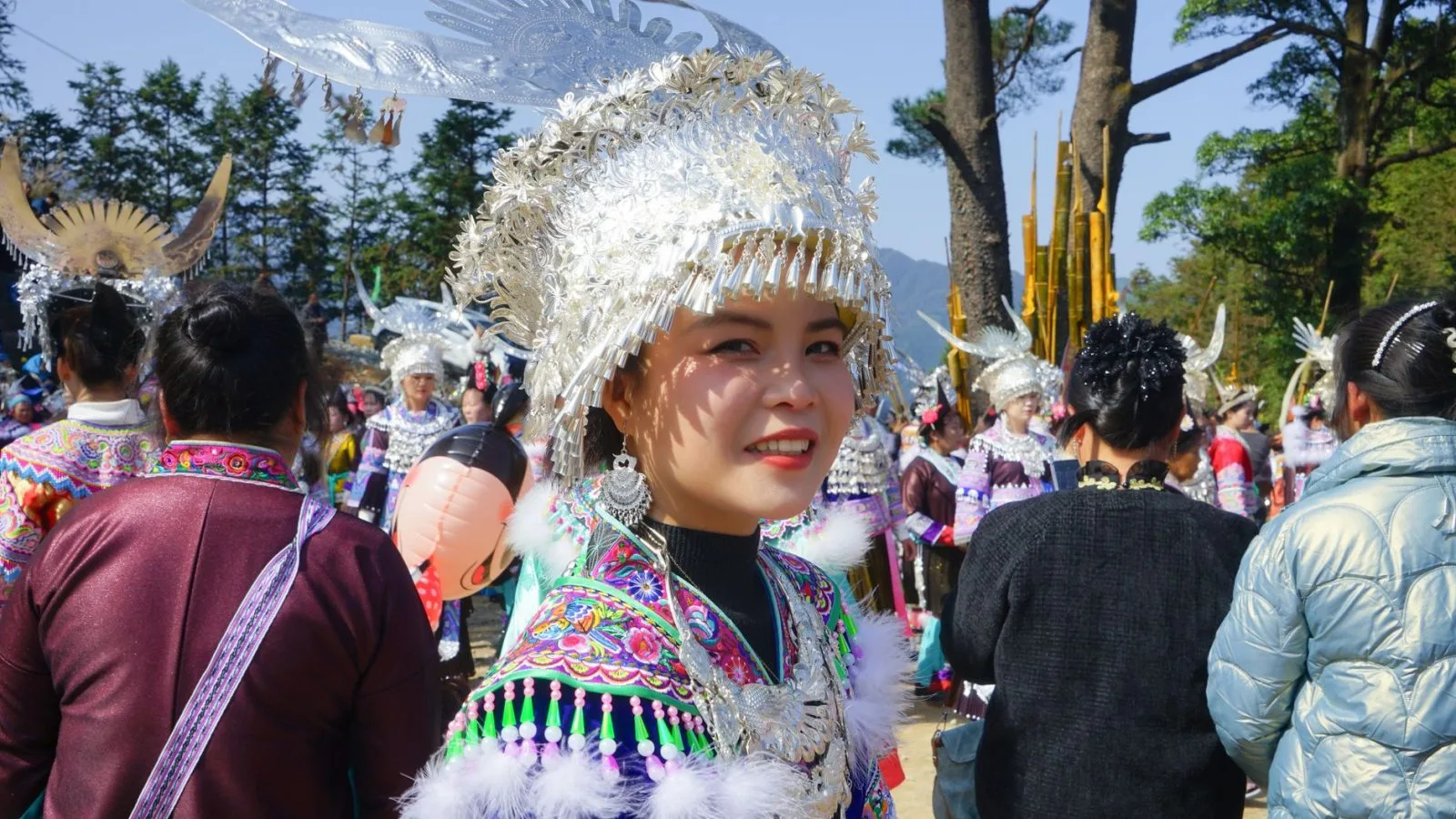
    A Miao headdress with silver horns, plaques, and hanging ornaments at a festival
    Headdresses combine family heirlooms with pieces made for a specific occasion. Jaqor Q.I. | Pexels License (https://www.pexels.com/license/)

    Sheet, Wire, and Repoussé

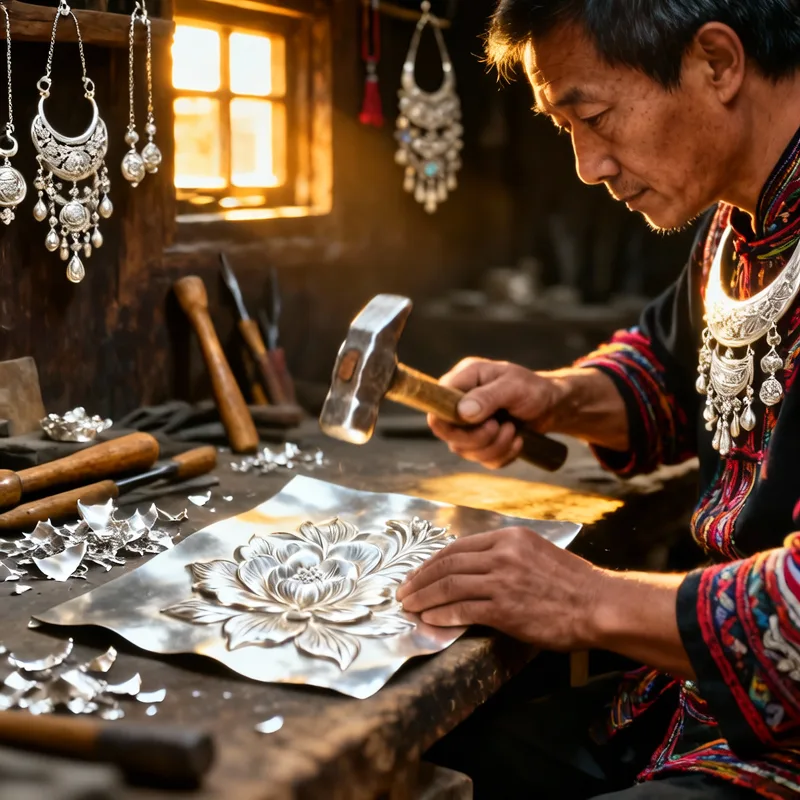
    Much Miao silverwork begins with sheet silver and wire. The smith hammers ingots into thin sheets, cuts strips, and raises patterns from the reverse with repoussé, a technique of punching and chasing to form relief. Horsehair-thin wires are twisted and soldered into filigree, then built into openwork wings, horns, and floral sprays. A large headdress may combine a hammered band, dangling chains, repoussé plaques, and rows of tiny bells that move when the wearer turns. Silver is valued for its colour, workability, and traditional association with protection and prosperity. Many ornaments are hollow to reduce weight, since a full ceremonial headdress can be heavy enough to limit long wear.

    A Miao silversmith hammering a thin silver sheet into a raised floral plaque
    Repoussé raises the design from the back of a thin silver sheet. Illustration générée par IA · SinoViz

    Festival Wear and Social Meaning

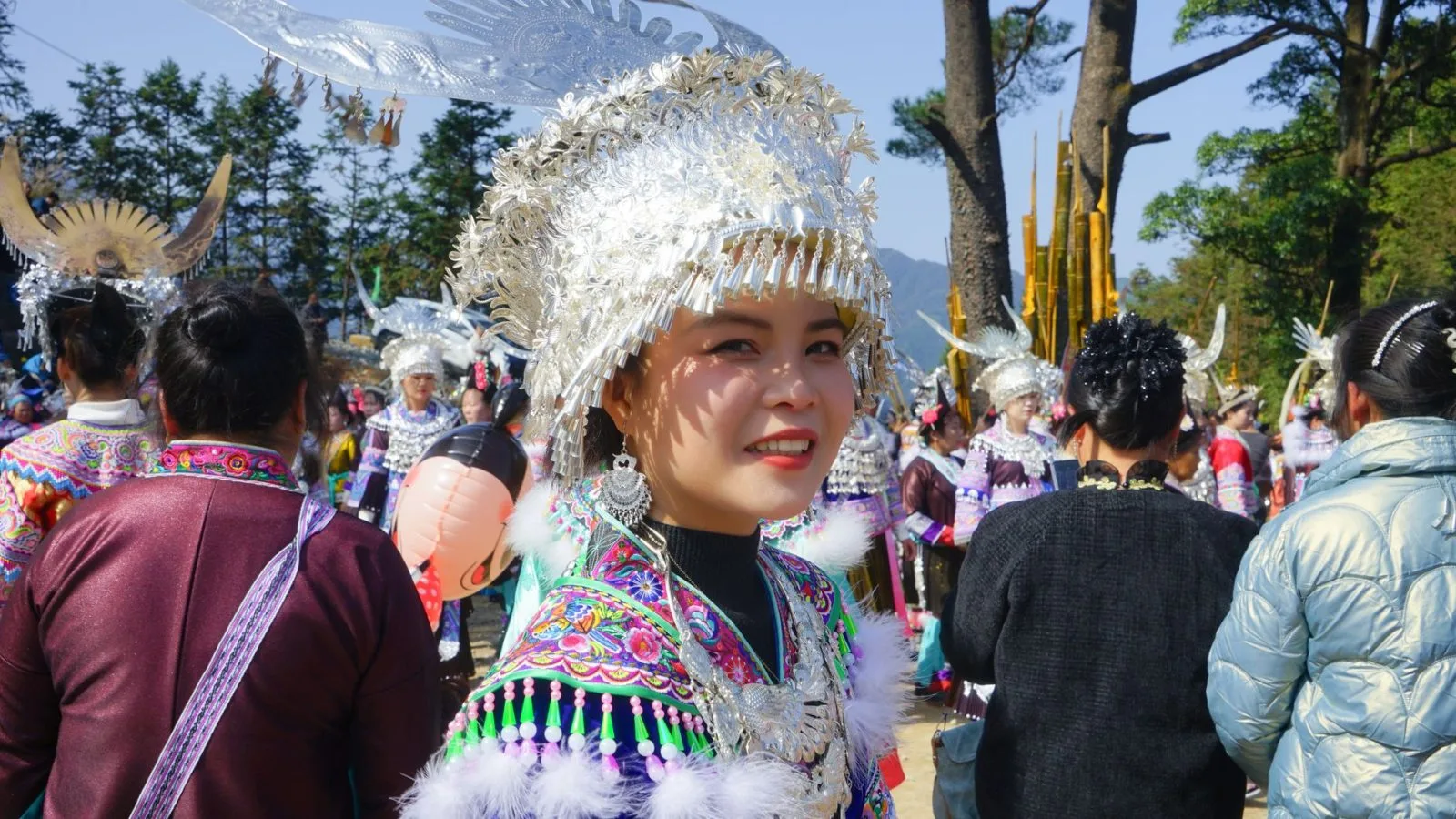
    Silver ornaments are read as part of an entire costume, not as isolated jewellery. A Miao woman’s festival dress may include a pleated skirt, embroidered jacket, woven belt, and a silver collar shaped like a crescent or a pair of wings. In some communities, the number and form of earrings or neck rings indicate village affiliation or marital status. During the Lunar New Year, harvest celebrations, and the Miao New Year in some areas, women and girls wear family sets while groups sing, dance, and process between villages. The ornaments catch light during movement, making dress a visual part of the performance. Men may wear silver buttons, chains, or small pendants with less ceremonial weight.

    • Repoussé plaques raised from thin silver sheet
    • Twisted wire and openwork filigree
    • Headdresses with horns, chains, and bells
    • Costumes worn for New Year and wedding rituals
    Women in embroidered Miao festival dress wearing heavy silver collars and earrings
    Ornaments are worn with embroidery and weaving as one costume system. Jaqor Q.I. | Pexels License (https://www.pexels.com/license/)

    Markets, Tourism, and Continuity

    Silverwork circulates through village workshops, regional markets, and tourism. Visitors to Miao villages in Yunnan and Guizhou can watch smiths shaping small pieces, though the most important heirlooms are usually not for sale. Reproductions sold as souvenirs range from careful miniatures to inexpensive plated metal, so asking whether a piece is solid silver matters. Museums and cultural centres document older headdresses and collars, but the living context remains local dress. Some communities have revived festival costumes and taught silversmithing to younger people, while migration and wage work change who has time to make and wear them. The craft’s future depends less on novelty than on continued occasions to use it.

    A Miao headdress is worn jewellery and a portable archive of family work at the same time.

    Sources et lectures complémentaires

    1. Miao people — Encyclopædia Britannica.
    2. Chinese silver jewellery — Victoria and Albert Museum.
    3. Miao ethnic culture — China Highlights.

    Voyez-le sur place

    Suivez ce lien jusqu'à la région correspondante.

    Explorer par carte

    Suivez le fil de discussion

    Consultez les autres articles qui partagent les mêmes étiquettes.

    Parcourir l'étiquette
  • Yi

    Communauté ethnique

    Yi

    Fire, mountains and an ancient script

    Yi communities live across the mountains of southwest China. The Nuosu branch preserves a distinctive script and ritual tradition, while Torch Festival has become a widely recognised Yi celebration.

    Communauté
    Yi
    Population
    Around 9 million; Sichuan, Yunnan, Guizhou, Guangxi
    Langue
    Yi languages; Nuosu script
    01

    Where the community lives

    Yi people live mainly in Sichuan, Yunnan and Guizhou, often in mountainous areas. Liangshan in Sichuan is a major centre of Nuosu culture.
    02

    Language and belief

    Yi languages belong to the Tibeto-Burman family. The Nuosu syllabic script is a rare living indigenous writing system in China.
    03

    Festivals and daily life

    Torch Festival features bonfires, dancing and gatherings. Buckwheat, potatoes, cured meat and hearty mountain food reflect local agriculture.
    04

    Crafts and heritage

    Embroidery, lacquerware, silver ornaments and ritual texts preserve Yi aesthetic traditions. Epic storytelling and ritual specialists carry historical memory.

    Découvrez la région

    Open the map to read the land connected to this community.

    Explorer par carte
  • Zhuang

    Communauté ethnique

    Zhuang

    rizières en terrasses et festivals de chants

    The Zhuang are China’s largest minority ethnic group. Their culture is closely tied to Guangxi’s karst hills, rice farming, song festivals and distinctive bronze drum traditions.

    Communauté
    Zhuang
    Population
    Around 19 million, mostly in Guangxi
    Langue
    Zhuang (Tai-Kadai)
    01

    Where the community lives

    Most Zhuang people live in Guangxi, with communities also in Yunnan, Guangdong and Guizhou. Karst valleys and river plains shape settlement and agriculture.
    02

    Language and tradition

    Zhuang belongs to the Tai-Kadai family. Folk songs, especially antiphonal singing, are central to social life and courtship.
    03

    Festivals and daily life

    The Sanyuesan festival features singing, coloured eggs and gatherings. Rice, river fish and sour flavours appear in local food traditions.
    04

    Crafts and heritage

    Bronze drums, embroidered balls and indigo-dyed textiles are important cultural symbols. Dong and Zhuang communities also share drum tower and bridge-building traditions in some areas.

    Découvrez la région

    Open the map to read the land connected to this community.

    Explorer par carte