Vie et folklore
Le peuple Bai
Murs blancs et artisanat autour de Dali
Les Bai sont un peuple sino-tibétain de langue locale, concentré autour de Dali, dont les maisons à cour et les teintures à l'indigo définissent un style visuel local.
- Section
- Vie et folklore
- Région
- Yunnan
- Ère
- À travers les époques
- Étiquettes
- Ethnique, coutumes
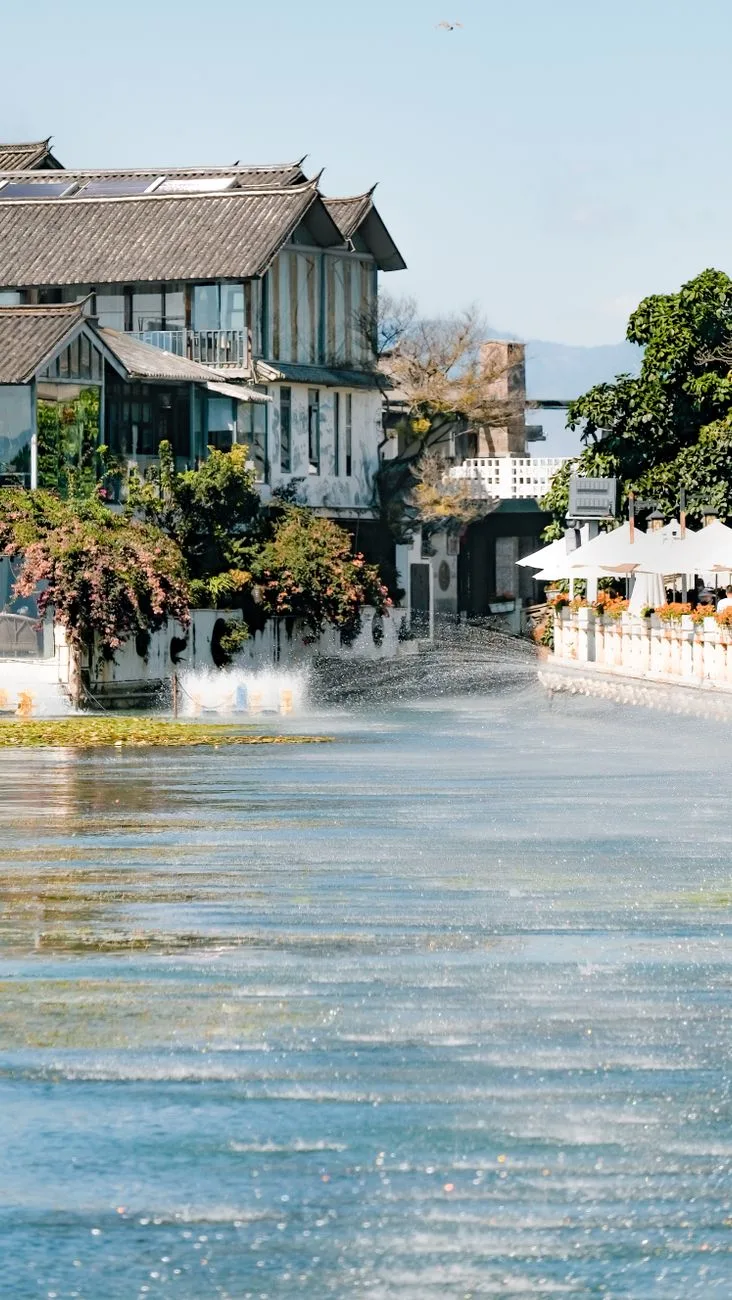
Les villages Bai sont situés entre les monts Cangshan et le lac Erhai, au nord-ouest du Yunnan. On y parle une langue sino-tibétaine, et les habitants conservent le souvenir des royaumes de Nanzhao et de Dali qui régnaient sur la région avant la conquête mongole du XIIIe siècle.
Entre Cangshan et Erhai
Environ 1,9 million de personnes d'ethnie Bai ont été recensées en Chine en 2010. Près des quatre cinquièmes vivent dans la préfecture autonome Bai de Dali, tandis que d'autres communautés sont réparties entre Kunming, Chuxiong, Lijiang, Baoshan et certaines parties de l'ouest du Yunnan. Les villes et villages se concentrent sur l'étroite bande de terre plate entre les pentes du Cangshan et les rives de l'Erhai, où l'irrigation permet la culture du riz et des haricots, ainsi que l'élevage laitier. Le nom « Bai » signifie « blanc », en référence au plâtre clair qui caractérise les bâtiments locaux. Située sur les routes commerciales reliant le Yunnan au Sichuan et au Tibet, Dali a vu ses villes Bai intégrer des biens et des techniques provenant de diverses régions, tout en conservant un riche patrimoine architectural et décoratif.
Language and historical roots
The Bai language belongs to the Sino-Tibetan family, usually placed within Tibeto-Burman, though scholars still debate its exact position because of heavy borrowing from Chinese. There is no widely used traditional Bai script, and Chinese characters have served for writing names, contracts and local records. Bai oral tradition, including creation stories and accounts of kingdom builders, is transmitted in speech and performance. Ancestors of the Bai are associated with the Nanzhao kingdom, which flourished from the eighth to the ninth century, and the Dali kingdom that followed between 937 and 1253. Both left stone inscriptions, Buddhist carvings and fortified sites around the lake.
Courtyards, marble and dye
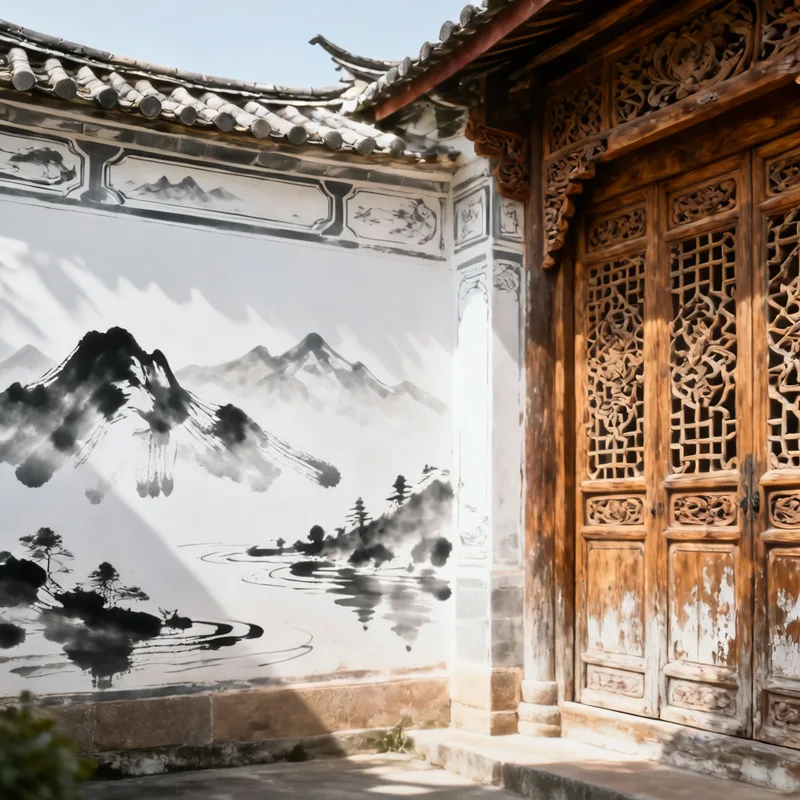
The standard Bai house follows a layout known as sanfang yizhaobi, three wings arranged around a courtyard facing a freestanding screen wall. Walls are whitewashed, roofs are covered in grey clay tiles, and doorways and windows carry deep carved wooden fretwork. The screen wall is often painted with landscapes or calligraphy, and panels of local marble are set into lintels and table tops. In Zhoucheng and nearby villages, indigo tie-dye produces blue cloth patterned by stitching and binding before dyeing. Bai embroidery, plaster carving and stonework use similar floral and geometric motifs, so the same design vocabulary appears on clothing, furniture and building facades.
Tea, markets and festivals
Three-course tea is a Bai hospitality ritual: a bitter first cup brewed from roasted leaves, a sweet second cup with nuts and honey, and a final cup that mixes the two and is said to leave a lasting aftertaste. Local dishes include air-dried milk sheets called rushan, raw pork skin salad, sour fish from Erhai and bean curd cooked with local herbs. The Third Month Fair, held in the lunar third month at Dali, began as a livestock and goods market and now fills the foothills of Cangshan with stalls, horse trading and performances. Raosanling, a pilgrimage and singing gathering, and torch-lighting customs in some villages add other dates to the year.
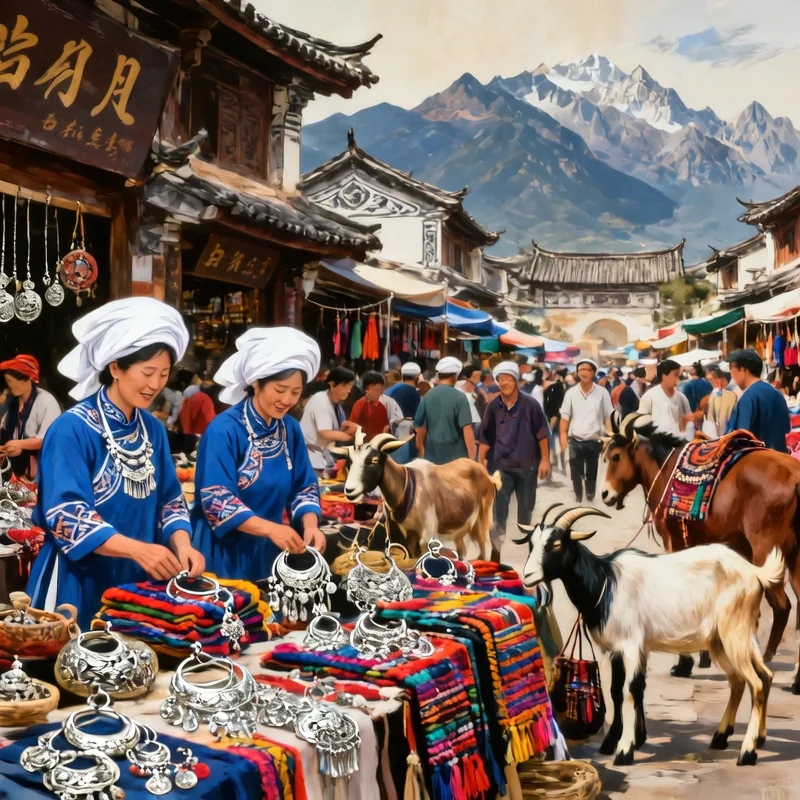
Bai craftsmen treat a house front, a tea cup and a dyed cloth as the same surface for pattern.
Sources et lectures complémentaires
- Bai — Encyclopædia Britannica.
- Bai Ethnic Group — Chine.org.cn.
Suivez le fil de discussion
Consultez les autres articles qui partagent les mêmes étiquettes.
Parcourir l'étiquette