فئة: كرونيكل

  • شعر تانغ

    كرونيكل

    شعر تانغ

    العصر الذهبي للشعر الصيني

    حوّل شعراء أسرة تانغ الحرف البلاطية، والسفر على الحدود، والفكر البوذي إلى قصائد قصيرة خالدة.

    قسم
    كرونيكل
    منطقة
    شانشي
    عصر
    سوي تانغ
    الوسوم
    العادات والتاريخ

    أنتجت سلالة تانغ (618-907) أشهر مجموعة من الشعر الصيني الكلاسيكي. انتشرت القصائد في المخطوطات والمختارات والنقوش والعروض، رابطةً العاصمة تشانغآن بالمراكز الحدودية والأديرة.

    تشانغ آن والشاعر الرسمي

    كان الشعر في عهد أسرة تانغ مرتبطًا بنظام الامتحانات والحياة الرسمية. كان المرشحون يُختبرون في قدرتهم على كتابة الشعر المنظم، وكانت المقالات النثرية تُرفق بالقصائد؛ وكان النجاح يُؤهلهم للحصول على وظائف وفرصة نشر أعمالهم بين الرعاة. بلغ عدد سكان تشانغآن، العاصمة القريبة من مدينة شيآن الحالية، حوالي مليون نسمة في أوج ازدهارها، وكانت تضم أسواقًا ومعابد وجاليات أجنبية. شغل الشعراء مناصب بعيدة، وكتبوا قصائد الوداع، وأبدعوا في المناسبات العامة. يحفظ كتاب "كوان تانغشي"، الذي جُمع في أوائل القرن الثامن عشر بأمر إمبراطوري، أكثر من ثمانية وأربعين ألف قصيدة لأكثر من ألفي شاعر. ويُظهر حجمه مدى اندماج الشعر في حياة الأدباء.
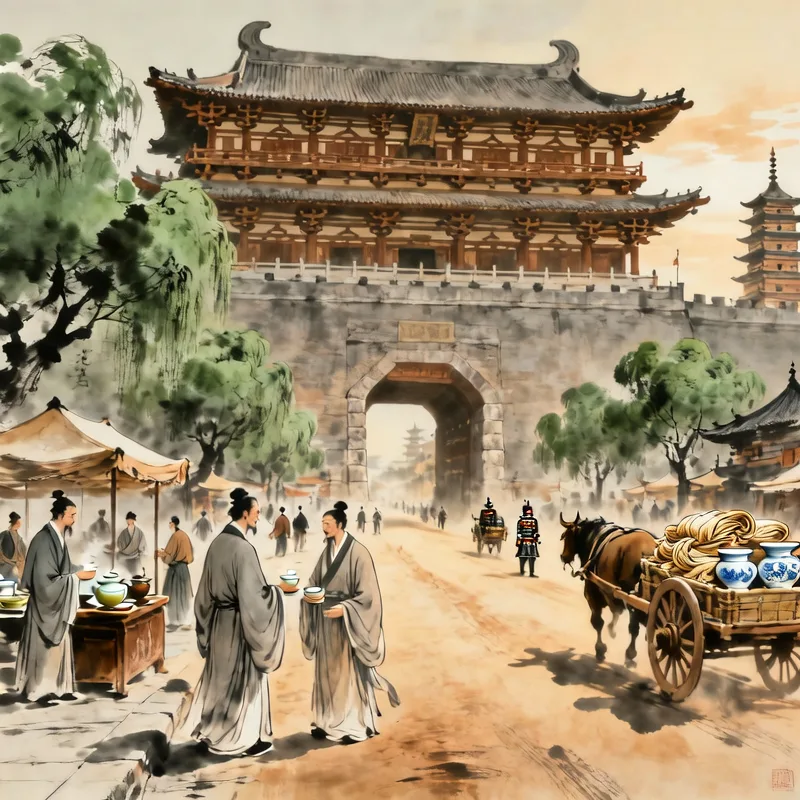
    بوابة مدينة من عهد أسرة تانغ وشارع واسع في العاصمة السابقة تشانغآن
    تجول المسؤولون والشعراء في أسواق العاصمة ومعابدها ومكاتبها الحكومية. رسم توضيحي مُولّد بالذكاء الاصطناعي · سينوفيز

    الحكم والحرية في الشعر المنظم

    أبدع شعراء أسرة تانغ في أشكال شعرية متعددة. فالشعر المنظم (لوشي) يتألف من ثمانية أبيات، كل بيت يتكون من خمسة أو سبعة أحرف، مع أنماط نغمية صارمة وتوازي بين الأبيات الوسطى. أما قصائد جويجو فهي رباعية الأبيات، تبدو عفوية ظاهريًا، لكنها غالبًا ما تُبنى على فكرة عميقة. وظلت أشكال قصائد يويفو القديمة وقصائد فو النثرية مستخدمة. أتقن دو فو (712-770) الشعر المنظم وأدخل فيه الملاحظة الاجتماعية، فكتب عن الفساد والحرب والجوع، فضلًا عن وصف المناظر الطبيعية. يُعرف لي باي (701-762) بأسلوبه الأكثر حرية واتساعًا، مع أن أفضل قصائده تتسم أيضًا بالدقة والإتقان. أما وانغ وي (701-759) فقد كتب قصائد موجزة عن المناظر الطبيعية، متأثرًا بالبوذية الزينية.
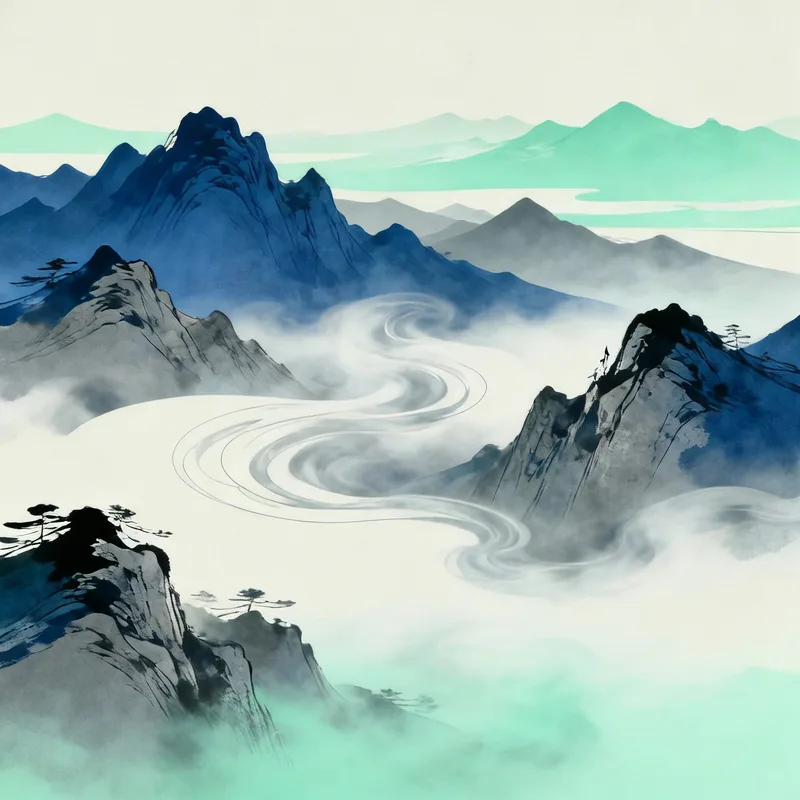
    منظر طبيعي مفتوح من الجبال والضباب يشبه مشاهد شعر المناظر الطبيعية في عهد أسرة تانغ
    غالباً ما تستخدم قصائد المناظر الطبيعية مشهداً صغيراً للإشارة إلى حالة ذهنية أوسع. رسم توضيحي مُولّد بالذكاء الاصطناعي · سينوفيز

    الحدود، المنفى، والجنوب

    غيّرت العقود التي تلت ثورة آن لوشان (755-763) المشهد الشعري. فرّ دو فو عبر شمال الصين الذي مزقته الحرب، واستقر لاحقًا في تشنغدو، حيث تمزج قصائد الأكواخ المصنوعة من القش بين تفاصيل الحياة اليومية والأحزان السياسية. وكتب المسؤولون المنفيون جنوبًا عن الأنهار والحرارة واللغات الغريبة. وألهمت الحدود قصائد عن الجيوش الزاحفة ورياح الصحراء ومنزل الجندي، كما في أعمال تشن شين وغاو شي. وقادت رحلات لي باي من سيتشوان إلى نهر اليانغتسي وشمالًا؛ وتتكرر أساطير موته غرقًا في نهر جنوبي، لكنها غير مؤكدة. وسّعت هذه التحركات نطاق مواضيع الشعر الكلاسيكي، ونقلت أساليب تانغ إلى الأوساط الأدبية الإقليمية.

    • أبيات دو فو الشعرية عن الحرب والفقر والحياة العادية
    • رحلات لي باي الواسعة وأغاني الشرب
    • مناظر طبيعية متأثرة بأسلوب تشان للفنان وانغ وي
    • قصائد الحدود لغاو شي وسين شين
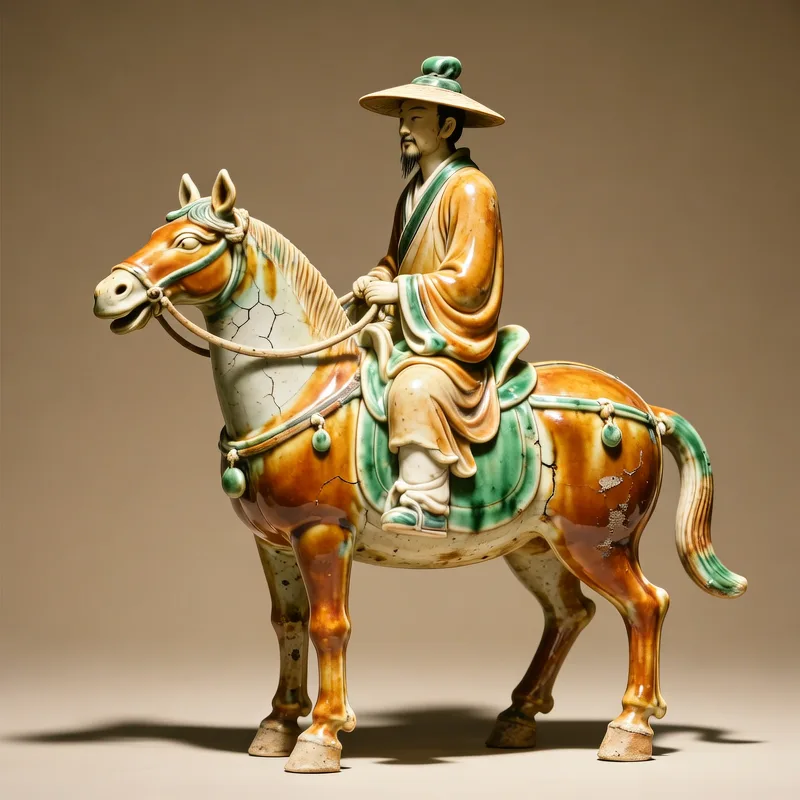
    تمثال خزفي من عهد أسرة تانغ يصور مسافراً على صهوة جواده في رحلة طويلة
    وفرت الأسفار والمنفى والخدمة العسكرية العديد من المواضيع للشعر في عهد أسرة تانغ. رسم توضيحي مُولّد بالذكاء الاصطناعي · سينوفيز

    حياة قصيدة تانغ بعد الموت

    أصبحت قصائد عهد أسرة تانغ جزءًا من الذاكرة الثقافية المشتركة. حفظ تلاميذ المدارس أبياتًا شعرية، ونسخ الخطاطون القصائد، وناقش كتّاب عهد أسرة سونغ نماذج تانغ الشعرية بدلًا من التخلي عنها. كما تأثرت مدونة تانغ الشعرية بالمختارات الأدبية: فكتاب "تانغشي سانبايشو"، الذي جمعه سون تشو في القرن الثامن عشر، لا يزال يُعتبر مرجعًا أساسيًا في هذا المجال. في الصين الحديثة، تُتلى قصائد لي باي ودو فو في المناسبات الرسمية وتُقتبس في المحادثات اليومية. يُترجم المترجمون الأبيات المنظمة إلى لغات أخرى، على الرغم من أن أنماط النبرة والتوازي في الأبيات الشعرية يصعب نقلها بدقة. يستطيع زوار شيآن ربط هذه القصائد بمتاحف شانشي، وأسوار مدينة تانغ، ومواقع أحياء وأسواق تشانغآن.

    يمكن لقصيدة من عصر أسرة تانغ أن تحوي سياسة إمبراطورية بأكملها في ثمانية أسطر، أو جبلاً كاملاً في أربعة أسطر.

    المصادر والمزيد من القراءة

    1. سلالة تانغ — موسوعة بريتانيكا.
    2. الأدب الصيني — موسوعة بريتانيكا.
    3. شعر تانغ — متحف متروبوليتان للفنون.

    شاهدها في مكانها

    اتبع هذا المدخل إلى المنطقة التي ينتمي إليها.

    استكشف عبر الخريطة

    تابع الموضوع

    تصفح الإدخالات الأخرى التي تشترك في نفس الوسوم.

    تصفح الوسم
  • جيش التيراكوتا

    كرونيكل

    جيش التيراكوتا

    An Emperor’s Buried Legions

    Thousands of clay soldiers were buried near Qin Shi Huang’s mausoleum to guard the emperor after death.

    قسم
    كرونيكل
    منطقة
    شانشي
    عصر
    تشين هان
    الوسوم
    Geography, History, Scenic Sites

    The Terracotta Army was made for the tomb of Qin Shi Huang, the first emperor of China, who died in 210 BCE. The figures were part of a larger necropolis near Xi’an, not an isolated pit of statues.

    The Tomb of the First Emperor

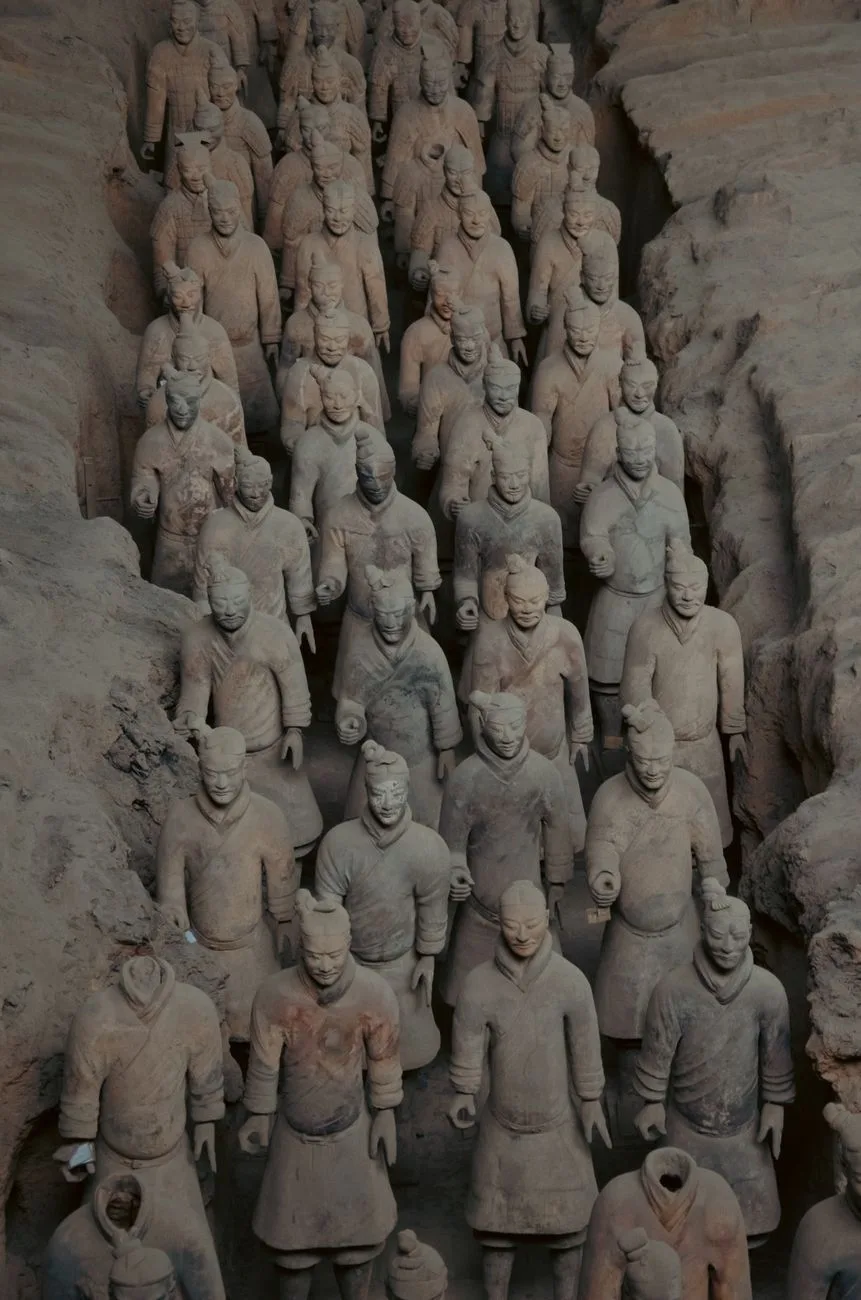
    Qin Shi Huang unified China in 221 BCE and began constructing his mausoleum near Mount Li soon after. The historian Sima Qian, writing about a century later, described a tomb filled with models of palaces, officials, and treasures, with mercury rivers and a roof painted as the heavens. Modern surveys have found a vast walled complex, a central burial mound, and more than six hundred associated pits. The main tomb chamber has not been excavated, partly because of technical and conservation concerns; readings of mercury vapour in the mound have been reported but debated. The army occupied side pits, where thousands of clay figures stood in formation to protect the emperor in the afterlife.

    A long burial pit containing rows of terracotta infantry figures in formation
    The figures stood in military formation in pits beside the imperial tomb. Jan Dvorak | Pexels License (https://www.pexels.com/license/)

    Discovery and Excavation

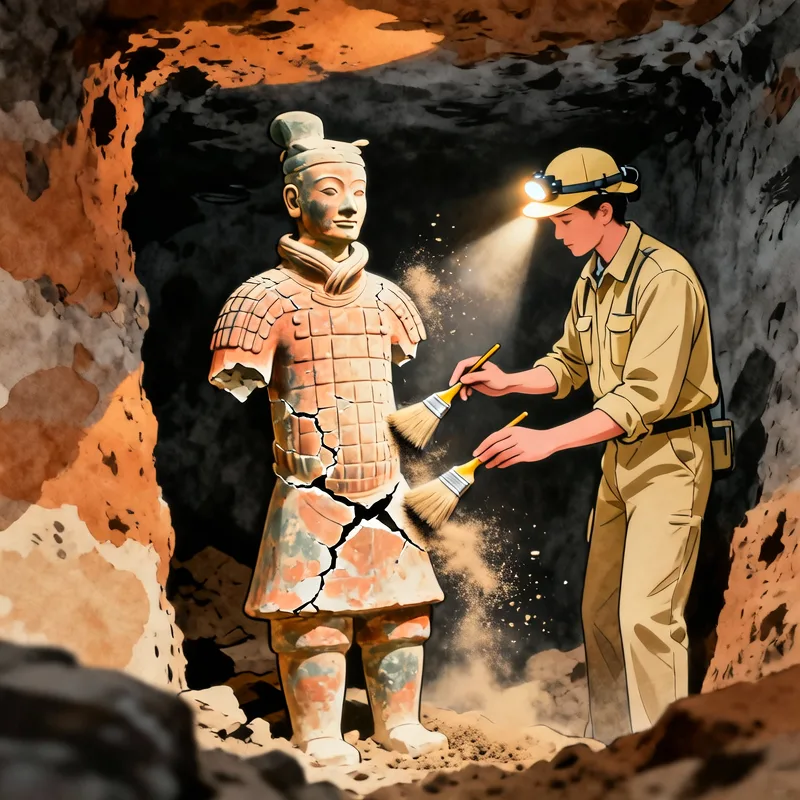
    Local farmers found fragments of clay figures in 1974 while digging a well near the village of Yangzhai. Archaeologists shortly uncovered Pit 1, a huge trench holding infantry and chariots, followed by Pits 2 and 3 with mixed troops, cavalry, and a command post. More than eight thousand figures have been counted, along with hundreds of horses and more than a hundred wooden chariots whose timber has decayed. The figures were once brightly painted with mineral pigments on a lacquer ground; exposure to air caused much of the paint to flake, and conservators now control humidity and treat surfaces quickly. Excavation continues in selected areas rather than across the entire necropolis.

    Archaeologists carefully brushing soil from a fragmented terracotta warrior in a burial pit
    Excavation is slow because paint and fragile organic material decay after exposure. رسم توضيحي مُولّد بالذكاء الاصطناعي · سينوفيز

    Mass Production and Individuality

    The warriors were made in workshops using moulded parts, coils of clay, and hand-finished details. Heads, bodies, arms, and legs were produced in a limited number of types, then assembled and altered so that faces, hair, moustaches, and armour differ. Sculptors pressed or carved expressions into the clay before firing in kilns near the site. Height varies with rank: generals are taller than ordinary infantry, and some figures bear armour while others wear lighter dress. Tools found at the site carry names, suggesting organised teams of potters and artisans under state control. The result is neither wholesale repetition nor pure portraiture, but a system that could produce scale with controlled variation.

    • Infantry, archers, cavalry, chariots, and officers
    • Moulded components finished by hand
    • Original mineral pigments on lacquer-ground paint
    • Workshop names recorded on excavated tools
    Close view of a terracotta warrior’s face, hairstyle, and layered armour
    Standard parts were individualised in faces, hair, and armour details. Ruben VP | Pexels License (https://www.pexels.com/license/)

    Visiting the Site

    The museum lies about forty kilometres east of central Xi’an near Lintong. Three main pits are open to visitors, with viewing platforms along the excavated trenches; a separate display shows bronze chariots and horses recovered near the tomb. A circuit of the pits and museum halls takes roughly two to three hours, and an official guide or audio commentary helps explain the different ranks and formations. The site is busiest in the middle of the day, so arriving early is useful. Xi’an can be reached by high-speed rail from Beijing or Shanghai, and local buses, taxis, and tours connect the city to Lintong. Photography is allowed in many areas, but flash and tripods may be restricted.

    The army was made by workshops, but its faces were finished by hands that refused exact repetition.

    المصادر والمزيد من القراءة

    1. جيش التيراكوتا — مركز التراث العالمي لليونسكو.
    2. جيش التيراكوتا — موسوعة بريتانيكا.
    3. The First Emperor’s Terracotta Army — The British Museum.

    شاهدها في مكانها

    اتبع هذا المدخل إلى المنطقة التي ينتمي إليها.

    استكشف عبر الخريطة

    تابع الموضوع

    تصفح الإدخالات الأخرى التي تشترك في نفس الوسوم.

    تصفح الوسم
  • الصين الحديثة

    Era · 1912–present

    الصين الحديثة

    Revolution, reform and the contemporary era

    Modern China moved from imperial collapse through republic, war, revolution and reform. The period remade cities, transport, education and daily life while raising new questions about heritage and identity.

    عصر
    الصين الحديثة
    سنين
    1912–حتى الآن
    طريق
    كرونيكل

    الأحداث الحاسمة

    • 1911 Revolution ends imperial rule
    • Republican era brings political change and cultural debate
    • The People’s Republic is founded in 1949
    • Reform and opening transform economy and cities after 1978
    • High-speed rail, digital life and heritage protection shape the present

    Figures & ideas

    • Sun Yat-sen — Revolutionary leader associated with the Republic
    • Lu Xun — Writer who challenged tradition and modernity
    • Contemporary engineers — Builders of rail, bridges and urban infrastructure

    اقرأ الأرض

    Open the map to see where these events left traces.

    استكشف عبر الخريطة
  • عصر الانقسام

    Era · 220–589

    Age Of Division

    Three Kingdoms, Jin and the northern dynasties

    After Han collapse, China fragmented into competing states. Despite warfare, the period saw Buddhist art flourish, poetry and calligraphy mature, and new aristocratic cultures form in north and south.

    عصر
    Age Of Division
    سنين
    220–589
    طريق
    كرونيكل

    الأحداث الحاسمة

    • Three Kingdoms rivalry becomes a lasting historical memory
    • Western Jin briefly reunifies before collapse
    • Northern and Southern dynasties develop distinct courts and cultures
    • Buddhism spreads through translation, cave temples and patronage
    • Elite families preserve learning, ritual and literary taste

    Figures & ideas

    • Cao Cao — Warlord, poet and Three Kingdoms statesman
    • Wang Xizhi — Calligrapher whose style became a standard
    • كوماراجيفا — Translator who made Buddhist texts accessible in Chinese

    اقرأ الأرض

    Open the map to see where these events left traces.

    استكشف عبر الخريطة
  • سوي #038؛ تانغ

    Era · 581–907

    Sui Tang

    Canals, cosmopolitan cities and the great poetic age

    Sui reunified China after centuries of division and built the Grand Canal. Tang turned Chang’an into a cosmopolitan capital, expanded the exam system and produced a poetry tradition still memorised today.

    عصر
    Sui Tang
    سنين
    581–907
    طريق
    كرونيكل

    الأحداث الحاسمة

    • Sui reunification and construction of the Grand Canal
    • Tang Chang’an grows into a planned international capital
    • The imperial examination system expands
    • Silk Road exchange brings goods, music and faiths
    • Poetry, painting and Buddhist art reach classical heights

    Figures & ideas

    • Li Bai — Poet of imagination, travel and wine
    • Du Fu — Poet of history, war and moral witness
    • Wu Zetian — The only woman to rule as emperor in Chinese history

    اقرأ الأرض

    Open the map to see where these events left traces.

    استكشف عبر الخريطة
  • سونغ، لياو & جين

    Era · 960–1279

    Song Liao Jin

    Commerce, printing and a contested northern frontier

    The Song era combined military pressure with extraordinary cultural and technical achievement. Printing, urban commerce, landscape painting and Neo-Confucian thought flourished alongside rival Liao and Jin states.

    عصر
    Song Liao Jin
    سنين
    960–1279
    طريق
    كرونيكل

    الأحداث الحاسمة

    • Song reunifies much of China after the Five Dynasties
    • Movable type and commercial printing expand literacy
    • Kaifeng and Hangzhou become dense urban centres
    • Neo-Confucian philosophy reshapes education and ethics
    • Maritime trade grows through southern ports

    Figures & ideas

    • Su Shi — Poet, essayist, painter and official
    • Shen Kuo — Polymath of science, engineering and observation
    • Zhu Xi — Neo-Confucian philosopher and commentator

    اقرأ الأرض

    Open the map to see where these events left traces.

    استكشف عبر الخريطة
  • يوان & مينغ #038؛ تشينغ

    Era · 1271–1912

    Yuan Ming Qing

    Steppe empire, maritime voyages and the last dynasty

    From Mongol conquest to Ming restoration and Qing expansion, this long period reshaped China’s borders, trade and population. It produced the Forbidden City, great novels, porcelain exports and the final imperial institutions.

    عصر
    Yuan Ming Qing
    سنين
    1271–1912
    طريق
    كرونيكل

    الأحداث الحاسمة

    • Yuan unifies China under Mongol rule and expands Eurasian exchange
    • Ming rebuilds the Great Wall and sends Zheng He’s fleets
    • Porcelain, tea and silk become global commodities
    • Qing expands to Xinjiang, Tibet and Mongolia
    • Late Qing faces internal revolt, foreign pressure and reform

    Figures & ideas

    • Zheng He — Admiral of Ming maritime expeditions
    • Kangxi Emperor — Long-reigning Qing ruler of consolidation and scholarship
    • Cao Xueqin — Author associated with Dream of the Red Chamber

    اقرأ الأرض

    Open the map to see where these events left traces.

    استكشف عبر الخريطة
  • Prehistory & Early Cultures

    Era · c. 8000–2100 BCE

    Prehistory

    Neolithic villages, jade and the first bronzes

    Before dynastic history, communities along the Yellow and Yangtze rivers farmed millet and rice, shaped pottery, carved jade and built walled settlements. These cultures laid the material foundations for later Chinese civilization.

    عصر
    Prehistory
    سنين
    حوالي 8000-2100 قبل الميلاد
    طريق
    كرونيكل

    الأحداث الحاسمة

    • Yangshao painted pottery and village life in the Yellow River basin
    • Hemudu and Liangzhu rice cultivation and water management in the lower Yangtze
    • Hongshan jade objects and ritual landscapes in the northeast
    • Longshan black pottery and early urban walls
    • Erlitou as a bridge between Neolithic cultures and the Bronze Age

    Figures & ideas

    • Liangzhu craftsmen — Jade cong tubes and bi discs used in ritual
    • Yangshao potters — Painted bowls and storage jars for settled life
    • Erlitou elites — Early bronze vessels and palace foundations

    اقرأ الأرض

    Open the map to see where these events left traces.

    استكشف عبر الخريطة
  • السلالات الثلاث

    Era · c. 2070–221 BCE

    Three Dynasties

    Xia, Shang and Zhou — the making of a written state

    The Xia, Shang and Zhou periods saw bronze ritual, oracle-bone writing and the political ideas that later states inherited. Kingship, ancestor rites and the Mandate of Heaven became lasting frameworks.

    عصر
    Three Dynasties
    سنين
    حوالي 2070-221 قبل الميلاد
    طريق
    كرونيكل

    الأحداث الحاسمة

    • Erlitou culture associated with the early Xia tradition
    • Shang oracle bones record divination and early Chinese writing
    • Bronze casting reaches ritual and political sophistication
    • Western Zhou enfeoffment and the Mandate of Heaven
    • Eastern Zhou thinkers respond to warfare and social change

    Figures & ideas

    • Shang diviners — Inscribed turtle shells and ox scapulae
    • Duke of Zhou — A model of virtuous regency in later tradition
    • كونفوشيوس — A late Zhou thinker who shaped later education and ethics

    اقرأ الأرض

    Open the map to see where these events left traces.

    استكشف عبر الخريطة
  • تشين #038؛ هان

    Era · 221 BCE–220 CE

    Qin Han

    Unification, the Silk Road and the first empire

    Qin unified the Warring States through law, standardisation and force. Han consolidated the empire, opened the Silk Road, established Confucian state learning and left institutions that shaped later dynasties.

    عصر
    Qin Han
    سنين
    221 قبل الميلاد - 220 ميلادي
    طريق
    كرونيكل

    الأحداث الحاسمة

    • Qin Shi Huang unifies script, measures, roads and currency
    • The Great Wall is linked from older frontier walls
    • Han expansion opens the Hexi Corridor and Silk Road routes
    • Paper, seismographs and state records advance Han knowledge
    • The fall of Han leads to division but not the loss of imperial ideals

    Figures & ideas

    • Qin Shi Huang — First emperor and unifier of the Warring States
    • Emperor Wu of Han — Expanded territory and state Confucianism
    • Sima Qian — Historian whose Records of the Grand Historian shaped historical writing

    اقرأ الأرض

    Open the map to see where these events left traces.

    استكشف عبر الخريطة