Kronik
Puisi Tang
The Golden Age of Chinese Verse
Tang poets turned courtly craft, frontier travel, and Buddhist thought into enduring short poems.
- Bagian
- Kronik
- Wilayah
- Shaanxi
- Era
- sui-tang
- Tag
- Customs, History
The Tang dynasty (618–907) produced the most celebrated corpus of classical Chinese poetry. Poems travelled in manuscripts, anthologies, inscriptions, and performance, linking the capital Chang’an to frontier posts and monasteries.
Chang’an and the Poet Official
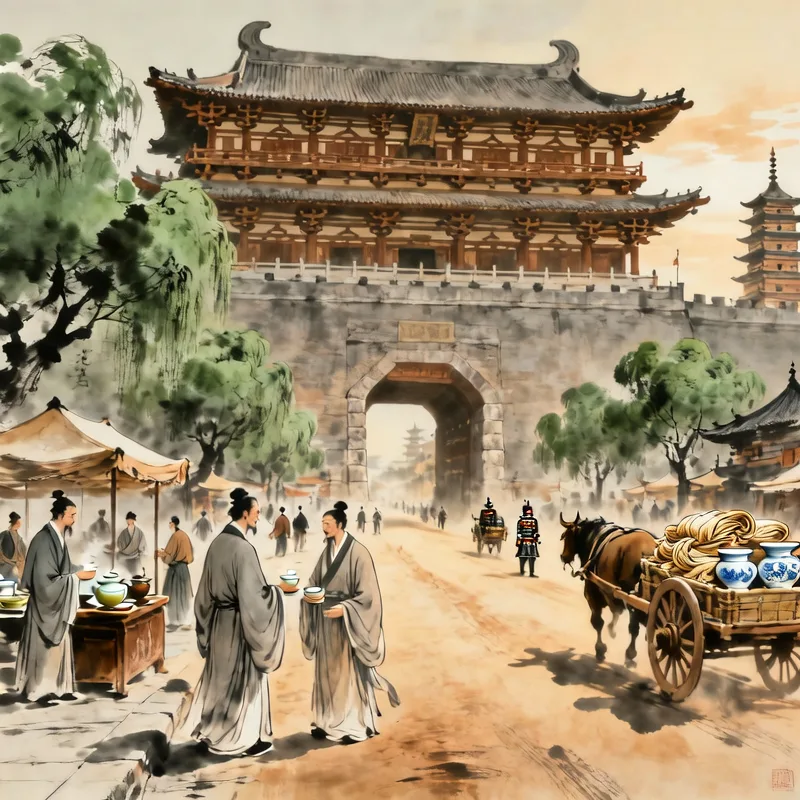
Poetry in the Tang was tied to the examination system and official life. Candidates were tested on their ability to write regulated verse, and prose essays were accompanied by poems; success could bring appointments and the chance to circulate work among patrons. Chang’an, the capital near present-day Xi’an, held roughly a million people at its height, with markets, temples, and foreign communities. Poets served in distant posts, wrote farewell poems, and composed on public occasions. The Quan Tangshi, compiled in the early eighteenth century under imperial order, preserves more than forty-eight thousand poems by over two thousand authors. Its scale shows how thoroughly verse was woven into literati life.
Rule and Freedom in Regulated Verse
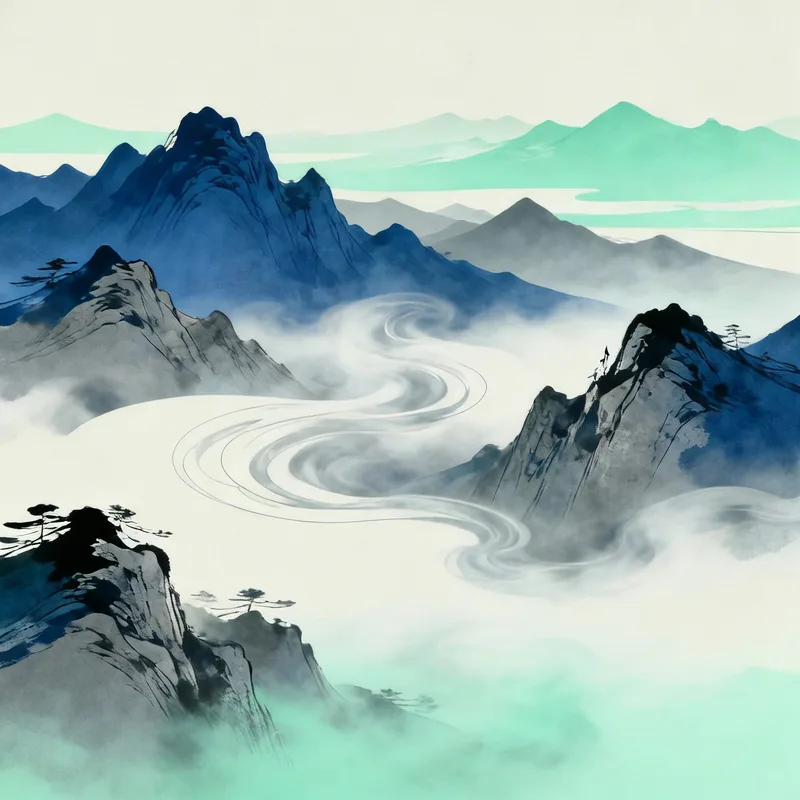
Tang poets worked in several forms. Lüshi, or regulated verse, uses eight five- or seven-character lines, with strict tonal patterns and parallelism between the middle couplets. Jueju are four-line poems, apparently casual but often built on a sharp turn of thought. Older yuefu ballad forms and fu prose-poems remained in use. Du Fu (712–770) mastered regulated verse and brought social observation into it, writing of corruption, war, and hunger as well as landscape. Li Bai (701–762) is known for a freer, more expansive voice, though his best poems are also carefully made. Wang Wei (701–759) wrote compact landscape poems shaped by Chan Buddhism.
Frontier, Exile, and the South
The decades after the An Lushan Rebellion of 755–763 changed the poetic map. Du Fu fled through war-torn northern China and later lived in Chengdu, where thatched hut poems mix domestic detail with political grief. Officials exiled south wrote about rivers, heat, and unfamiliar languages. The frontier inspired poems about marching armies, desert wind, and a soldier’s household, as in the work of Cen Shen and Gao Shi. Li Bai’s travels took him from Sichuan to the Yangtze and north; legends of his death by drowning in a southern river are repeated but uncertain. These movements widened the subjects of classical poetry and carried Tang styles into regional literary circles.
- Du Fu’s verse on war, poverty, and ordinary life
- Li Bai’s expansive journeys and drinking songs
- Wang Wei’s Chan-influenced landscapes
- Frontier poems of Gao Shi and Cen Shen
Afterlife of the Tang Poem
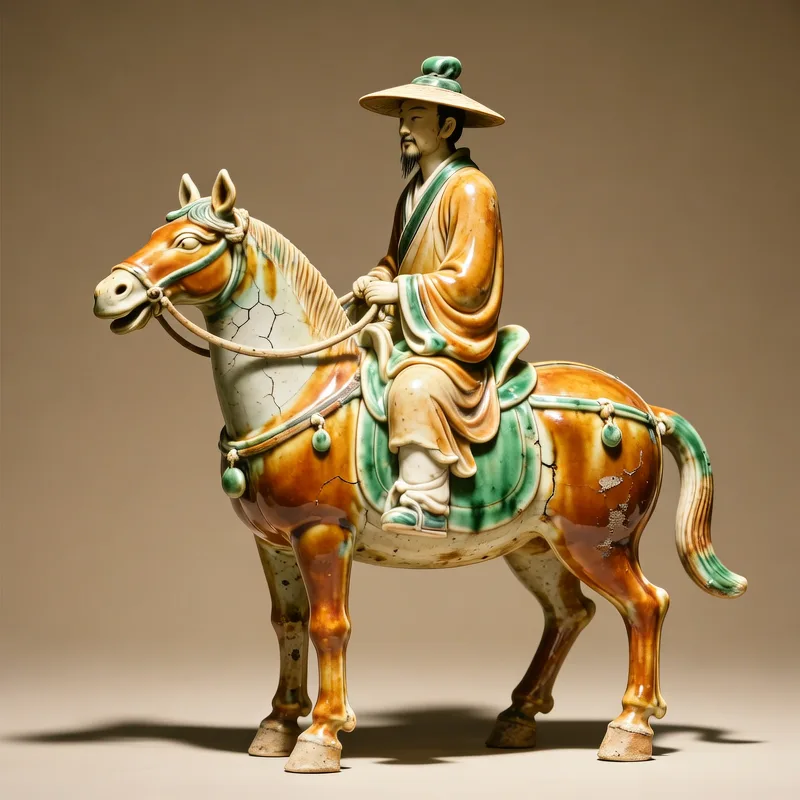
Tang poetry became a shared cultural memory. Schoolchildren memorised lines, calligraphers copied poems, and Song writers argued with Tang models rather than abandoning them. The Tang canon was also shaped by anthologies: the Tangshi Sanbaishou, compiled in the eighteenth century by Sun Zhu, remains a standard introductory collection. In modern China, poems by Li Bai and Du Fu are recited on formal occasions and quoted in ordinary conversation. Translators render the regulated lines into other languages, though tone patterns and parallel couplets resist exact transfer. Visitors to Xi’an can connect the poems to Shaanxi’s museums, the Tang city walls, and the sites of Chang’an’s wards and markets.
A Tang poem can hold an empire’s politics in eight lines, or a whole mountain in four.
Sumber & bacaan lebih lanjut
- Tang dynasty — Ensiklopedia Britannica.
- Chinese literature — Ensiklopedia Britannica.
- Puisi Tang — Museum Seni Metropolitan.