Category: Chronicle

  • Tang Poetry

    Chronicle

    Tang Poetry

    The Golden Age of Chinese Verse

    Tang poets turned courtly craft, frontier travel, and Buddhist thought into enduring short poems.

    Section
    Chronicle
    Region
    Shaanxi
    Era
    sui-tang
    Tags
    Customs, History

    The Tang dynasty (618–907) produced the most celebrated corpus of classical Chinese poetry. Poems travelled in manuscripts, anthologies, inscriptions, and performance, linking the capital Chang’an to frontier posts and monasteries.

    Chang’an and the Poet Official

    Poetry in the Tang was tied to the examination system and official life. Candidates were tested on their ability to write regulated verse, and prose essays were accompanied by poems; success could bring appointments and the chance to circulate work among patrons. Chang’an, the capital near present-day Xi’an, held roughly a million people at its height, with markets, temples, and foreign communities. Poets served in distant posts, wrote farewell poems, and composed on public occasions. The Quan Tangshi, compiled in the early eighteenth century under imperial order, preserves more than forty-eight thousand poems by over two thousand authors. Its scale shows how thoroughly verse was woven into literati life.
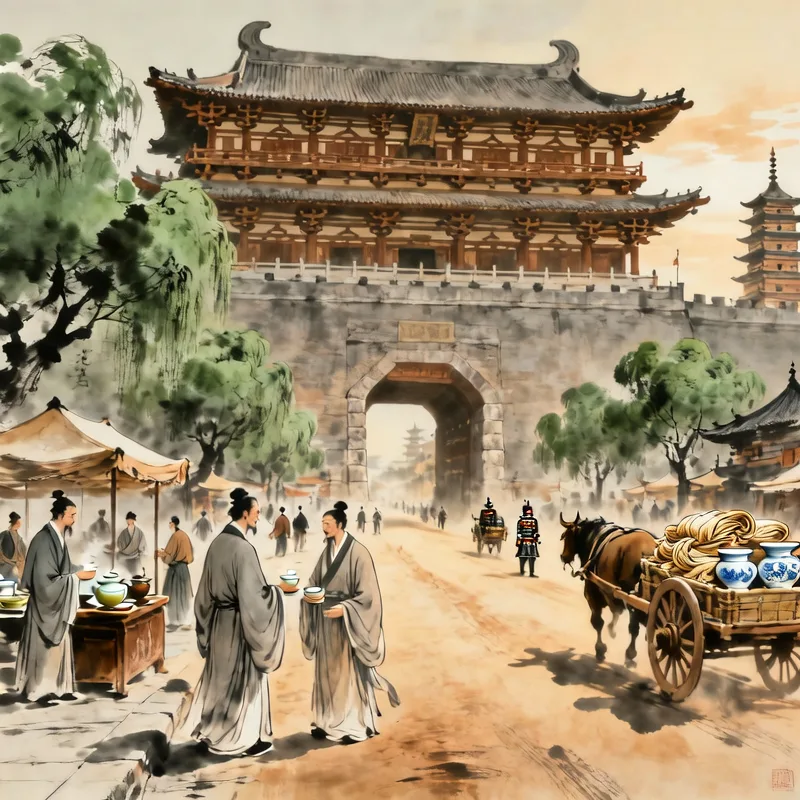
    A Tang-era city gate and broad avenue in the former capital Chang’an
    Officials and poets moved through the capital’s markets, temples, and government offices. AI-generated illustration · SinoViz

    Rule and Freedom in Regulated Verse

    Tang poets worked in several forms. Lüshi, or regulated verse, uses eight five- or seven-character lines, with strict tonal patterns and parallelism between the middle couplets. Jueju are four-line poems, apparently casual but often built on a sharp turn of thought. Older yuefu ballad forms and fu prose-poems remained in use. Du Fu (712–770) mastered regulated verse and brought social observation into it, writing of corruption, war, and hunger as well as landscape. Li Bai (701–762) is known for a freer, more expansive voice, though his best poems are also carefully made. Wang Wei (701–759) wrote compact landscape poems shaped by Chan Buddhism.
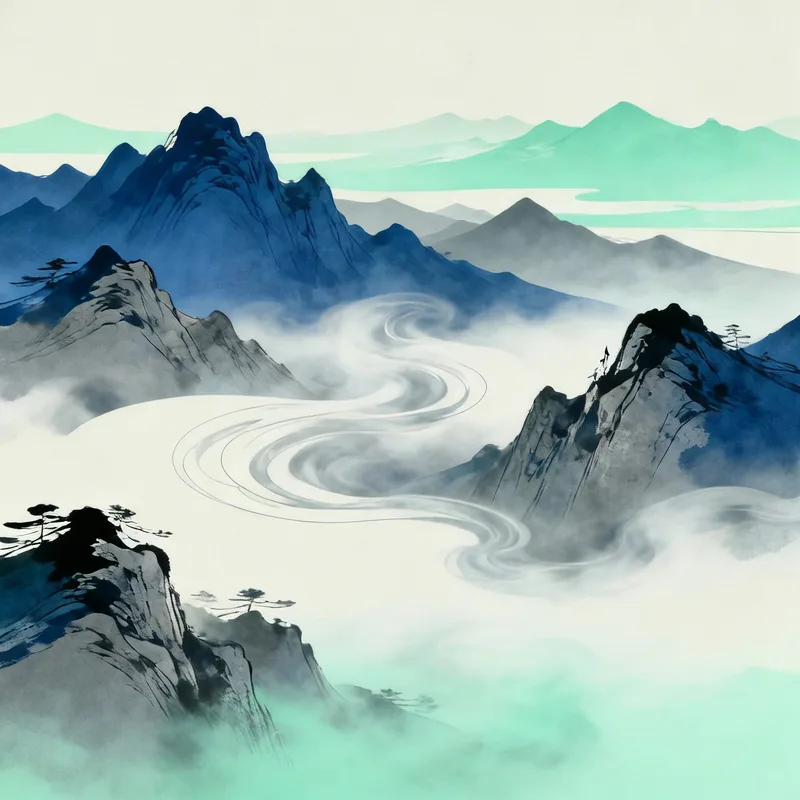
    An open landscape of mountains and mist resembling the settings of Tang landscape verse
    Landscape poetry often uses a small scene to suggest a larger state of mind. AI-generated illustration · SinoViz

    Frontier, Exile, and the South

    The decades after the An Lushan Rebellion of 755–763 changed the poetic map. Du Fu fled through war-torn northern China and later lived in Chengdu, where thatched hut poems mix domestic detail with political grief. Officials exiled south wrote about rivers, heat, and unfamiliar languages. The frontier inspired poems about marching armies, desert wind, and a soldier’s household, as in the work of Cen Shen and Gao Shi. Li Bai’s travels took him from Sichuan to the Yangtze and north; legends of his death by drowning in a southern river are repeated but uncertain. These movements widened the subjects of classical poetry and carried Tang styles into regional literary circles.

    • Du Fu’s verse on war, poverty, and ordinary life
    • Li Bai’s expansive journeys and drinking songs
    • Wang Wei’s Chan-influenced landscapes
    • Frontier poems of Gao Shi and Cen Shen
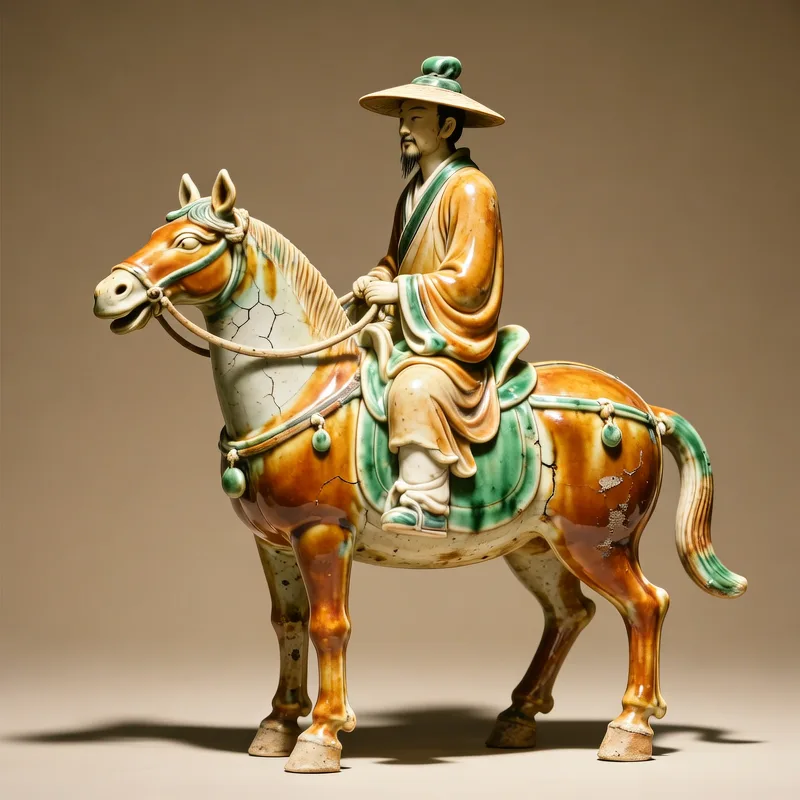
    A Tang dynasty ceramic figure of a mounted traveller on a long journey
    Travel, exile, and military service gave Tang poetry many of its subjects. AI-generated illustration · SinoViz

    Afterlife of the Tang Poem

    Tang poetry became a shared cultural memory. Schoolchildren memorised lines, calligraphers copied poems, and Song writers argued with Tang models rather than abandoning them. The Tang canon was also shaped by anthologies: the Tangshi Sanbaishou, compiled in the eighteenth century by Sun Zhu, remains a standard introductory collection. In modern China, poems by Li Bai and Du Fu are recited on formal occasions and quoted in ordinary conversation. Translators render the regulated lines into other languages, though tone patterns and parallel couplets resist exact transfer. Visitors to Xi’an can connect the poems to Shaanxi’s museums, the Tang city walls, and the sites of Chang’an’s wards and markets.

    A Tang poem can hold an empire’s politics in eight lines, or a whole mountain in four.

    Sources & further reading

    1. Tang dynasty — Encyclopaedia Britannica.
    2. Chinese literature — Encyclopaedia Britannica.
    3. Tang Poetry — The Metropolitan Museum of Art.
    See it in place

    Follow this entry to the region where it belongs.

    Explore by Map

    Follow the thread

    Browse other entries that share its tags.

    Browse the tag
  • The Terracotta Army

    Chronicle

    The Terracotta Army

    An Emperor’s Buried Legions

    Thousands of clay soldiers were buried near Qin Shi Huang’s mausoleum to guard the emperor after death.

    Section
    Chronicle
    Region
    Shaanxi
    Era
    qin-han
    Tags
    Geography, History, Scenic Sites

    The Terracotta Army was made for the tomb of Qin Shi Huang, the first emperor of China, who died in 210 BCE. The figures were part of a larger necropolis near Xi’an, not an isolated pit of statues.

    The Tomb of the First Emperor

    Qin Shi Huang unified China in 221 BCE and began constructing his mausoleum near Mount Li soon after. The historian Sima Qian, writing about a century later, described a tomb filled with models of palaces, officials, and treasures, with mercury rivers and a roof painted as the heavens. Modern surveys have found a vast walled complex, a central burial mound, and more than six hundred associated pits. The main tomb chamber has not been excavated, partly because of technical and conservation concerns; readings of mercury vapour in the mound have been reported but debated. The army occupied side pits, where thousands of clay figures stood in formation to protect the emperor in the afterlife.

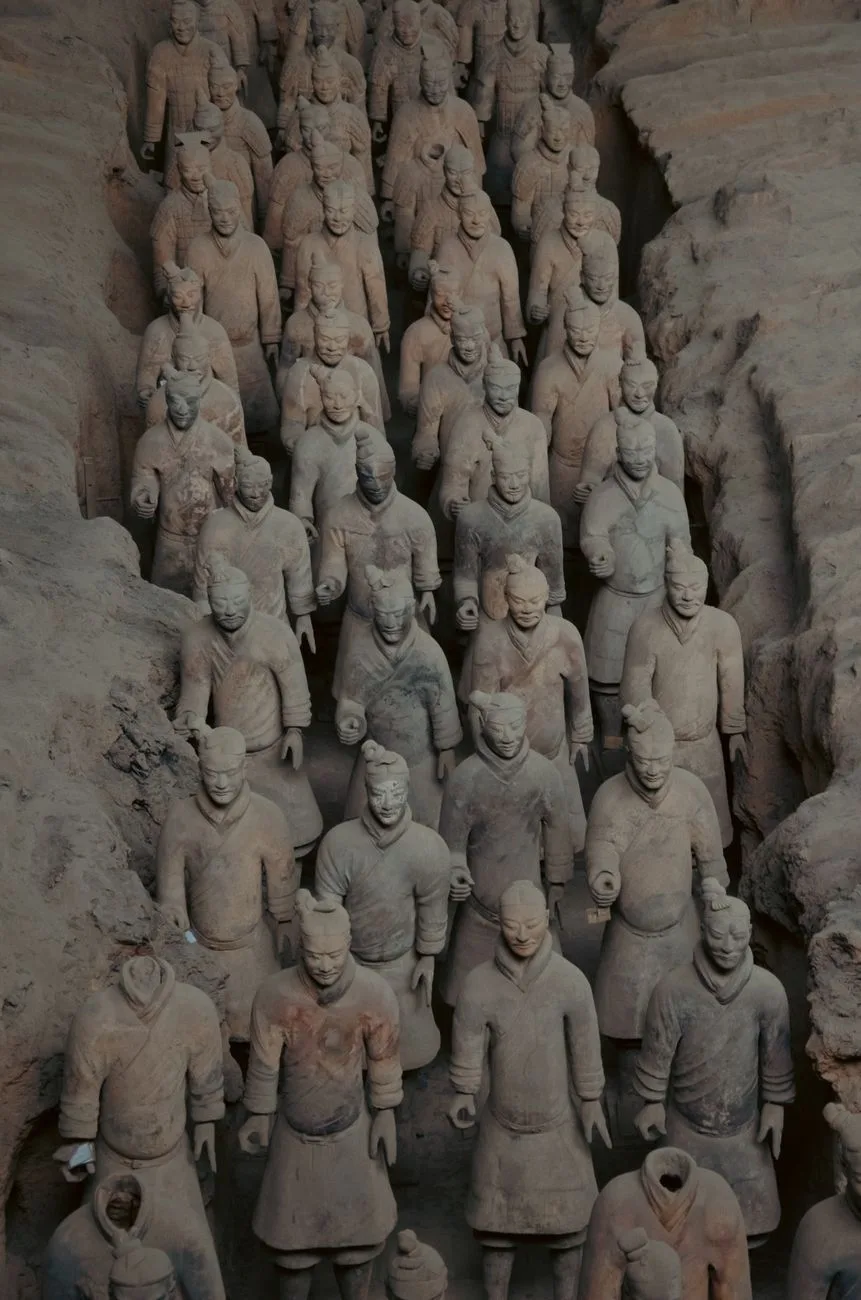
    A long burial pit containing rows of terracotta infantry figures in formation
    The figures stood in military formation in pits beside the imperial tomb. Jan Dvorak | Pexels License (https://www.pexels.com/license/)

    Discovery and Excavation

    Local farmers found fragments of clay figures in 1974 while digging a well near the village of Yangzhai. Archaeologists shortly uncovered Pit 1, a huge trench holding infantry and chariots, followed by Pits 2 and 3 with mixed troops, cavalry, and a command post. More than eight thousand figures have been counted, along with hundreds of horses and more than a hundred wooden chariots whose timber has decayed. The figures were once brightly painted with mineral pigments on a lacquer ground; exposure to air caused much of the paint to flake, and conservators now control humidity and treat surfaces quickly. Excavation continues in selected areas rather than across the entire necropolis.

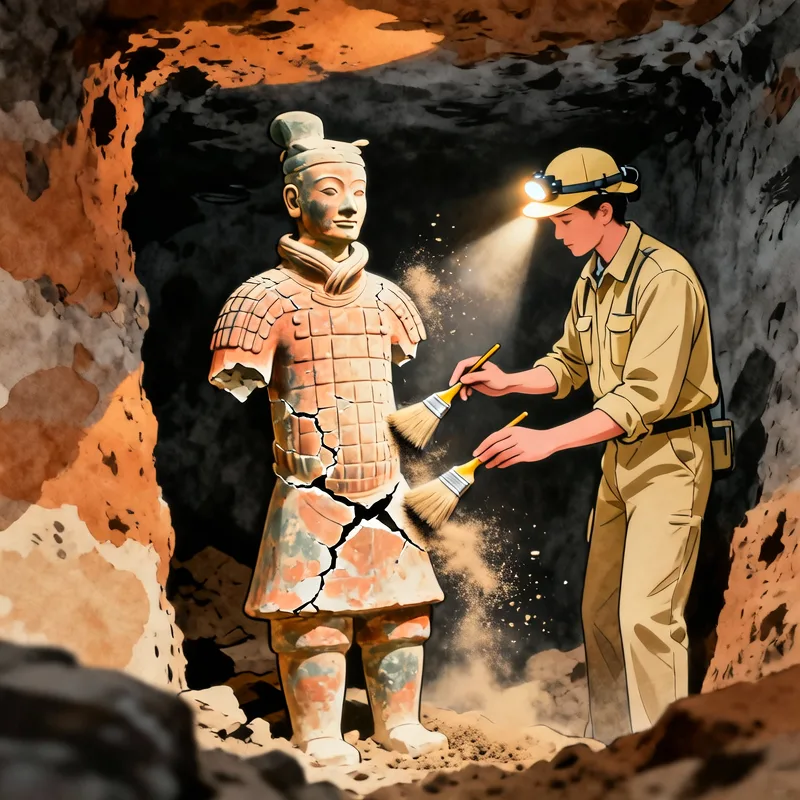
    Archaeologists carefully brushing soil from a fragmented terracotta warrior in a burial pit
    Excavation is slow because paint and fragile organic material decay after exposure. AI-generated illustration · SinoViz

    Mass Production and Individuality

    The warriors were made in workshops using moulded parts, coils of clay, and hand-finished details. Heads, bodies, arms, and legs were produced in a limited number of types, then assembled and altered so that faces, hair, moustaches, and armour differ. Sculptors pressed or carved expressions into the clay before firing in kilns near the site. Height varies with rank: generals are taller than ordinary infantry, and some figures bear armour while others wear lighter dress. Tools found at the site carry names, suggesting organised teams of potters and artisans under state control. The result is neither wholesale repetition nor pure portraiture, but a system that could produce scale with controlled variation.

    • Infantry, archers, cavalry, chariots, and officers
    • Moulded components finished by hand
    • Original mineral pigments on lacquer-ground paint
    • Workshop names recorded on excavated tools
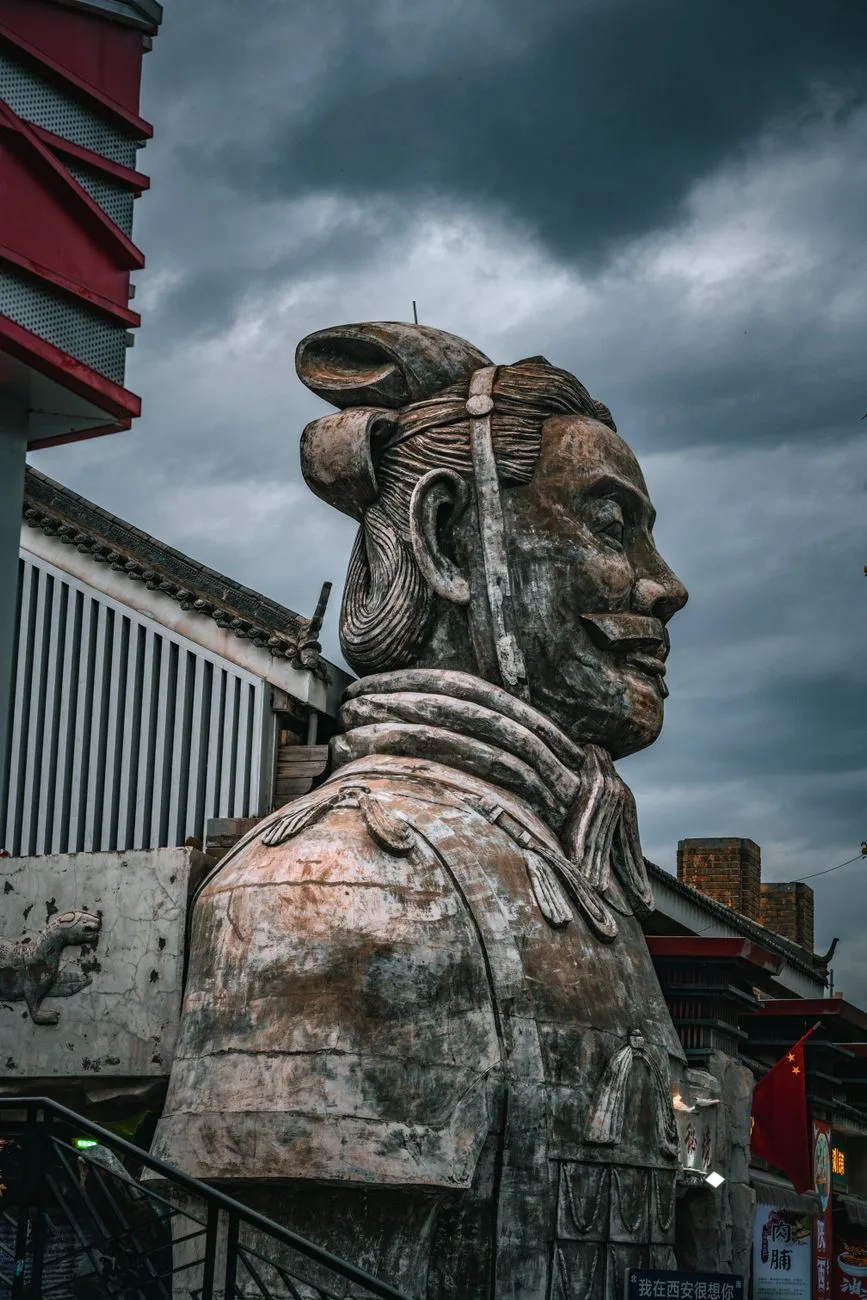
    Close view of a terracotta warrior’s face, hairstyle, and layered armour
    Standard parts were individualised in faces, hair, and armour details. Ruben VP | Pexels License (https://www.pexels.com/license/)

    Visiting the Site

    The museum lies about forty kilometres east of central Xi’an near Lintong. Three main pits are open to visitors, with viewing platforms along the excavated trenches; a separate display shows bronze chariots and horses recovered near the tomb. A circuit of the pits and museum halls takes roughly two to three hours, and an official guide or audio commentary helps explain the different ranks and formations. The site is busiest in the middle of the day, so arriving early is useful. Xi’an can be reached by high-speed rail from Beijing or Shanghai, and local buses, taxis, and tours connect the city to Lintong. Photography is allowed in many areas, but flash and tripods may be restricted.

    The army was made by workshops, but its faces were finished by hands that refused exact repetition.

    Sources & further reading

    1. Terracotta Army — UNESCO World Heritage Centre.
    2. Terracotta Army — Encyclopaedia Britannica.
    3. The First Emperor’s Terracotta Army — The British Museum.

    See it in place

    Follow this entry to the region where it belongs.

    Explore by Map

    Follow the thread

    Browse other entries that share its tags.

    Browse the tag
  • Modern China

    Era · 1912–present

    Modern China

    Revolution, reform and the contemporary era

    Modern China moved from imperial collapse through republic, war, revolution and reform. The period remade cities, transport, education and daily life while raising new questions about heritage and identity.

    Era
    Modern China
    Years
    1912–present
    Path
    Chronicle

    Defining events

    • 1911 Revolution ends imperial rule
    • Republican era brings political change and cultural debate
    • The People’s Republic is founded in 1949
    • Reform and opening transform economy and cities after 1978
    • High-speed rail, digital life and heritage protection shape the present

    Figures & ideas

    • Sun Yat-sen — Revolutionary leader associated with the Republic
    • Lu Xun — Writer who challenged tradition and modernity
    • Contemporary engineers — Builders of rail, bridges and urban infrastructure

    Read the land

    Open the map to see where these events left traces.

    Explore by Map
  • Age of Division

    Era · 220–589

    Age Of Division

    Three Kingdoms, Jin and the northern dynasties

    After Han collapse, China fragmented into competing states. Despite warfare, the period saw Buddhist art flourish, poetry and calligraphy mature, and new aristocratic cultures form in north and south.

    Era
    Age Of Division
    Years
    220–589
    Path
    Chronicle

    Defining events

    • Three Kingdoms rivalry becomes a lasting historical memory
    • Western Jin briefly reunifies before collapse
    • Northern and Southern dynasties develop distinct courts and cultures
    • Buddhism spreads through translation, cave temples and patronage
    • Elite families preserve learning, ritual and literary taste

    Figures & ideas

    • Cao Cao — Warlord, poet and Three Kingdoms statesman
    • Wang Xizhi — Calligrapher whose style became a standard
    • Kumārajīva — Translator who made Buddhist texts accessible in Chinese

    Artifacts & sites

    Follow the era outward

    Read the objects, places and ideas that still carry this period.

    Read the land

    Open the map to see where these events left traces.

    Explore by Map
  • Sui & Tang

    Era · 581–907

    Sui Tang

    Canals, cosmopolitan cities and the great poetic age

    Sui reunified China after centuries of division and built the Grand Canal. Tang turned Chang’an into a cosmopolitan capital, expanded the exam system and produced a poetry tradition still memorised today.

    Era
    Sui Tang
    Years
    581–907
    Path
    Chronicle

    Defining events

    • Sui reunification and construction of the Grand Canal
    • Tang Chang’an grows into a planned international capital
    • The imperial examination system expands
    • Silk Road exchange brings goods, music and faiths
    • Poetry, painting and Buddhist art reach classical heights

    Figures & ideas

    • Li Bai — Poet of imagination, travel and wine
    • Du Fu — Poet of history, war and moral witness
    • Wu Zetian — The only woman to rule as emperor in Chinese history

    Artifacts & sites

    Follow the era outward

    Read the objects, places and ideas that still carry this period.

    Read the land

    Open the map to see where these events left traces.

    Explore by Map
  • Song, Liao & Jin

    Era · 960–1279

    Song Liao Jin

    Commerce, printing and a contested northern frontier

    The Song era combined military pressure with extraordinary cultural and technical achievement. Printing, urban commerce, landscape painting and Neo-Confucian thought flourished alongside rival Liao and Jin states.

    Era
    Song Liao Jin
    Years
    960–1279
    Path
    Chronicle

    Defining events

    • Song reunifies much of China after the Five Dynasties
    • Movable type and commercial printing expand literacy
    • Kaifeng and Hangzhou become dense urban centres
    • Neo-Confucian philosophy reshapes education and ethics
    • Maritime trade grows through southern ports

    Figures & ideas

    • Su Shi — Poet, essayist, painter and official
    • Shen Kuo — Polymath of science, engineering and observation
    • Zhu Xi — Neo-Confucian philosopher and commentator

    Read the land

    Open the map to see where these events left traces.

    Explore by Map
  • Yuan & Ming & Qing

    Era · 1271–1912

    Yuan Ming Qing

    Steppe empire, maritime voyages and the last dynasty

    From Mongol conquest to Ming restoration and Qing expansion, this long period reshaped China’s borders, trade and population. It produced the Forbidden City, great novels, porcelain exports and the final imperial institutions.

    Era
    Yuan Ming Qing
    Years
    1271–1912
    Path
    Chronicle

    Defining events

    • Yuan unifies China under Mongol rule and expands Eurasian exchange
    • Ming rebuilds the Great Wall and sends Zheng He’s fleets
    • Porcelain, tea and silk become global commodities
    • Qing expands to Xinjiang, Tibet and Mongolia
    • Late Qing faces internal revolt, foreign pressure and reform

    Figures & ideas

    • Zheng He — Admiral of Ming maritime expeditions
    • Kangxi Emperor — Long-reigning Qing ruler of consolidation and scholarship
    • Cao Xueqin — Author associated with Dream of the Red Chamber

    Artifacts & sites

    Follow the era outward

    Read the objects, places and ideas that still carry this period.

    Read the land

    Open the map to see where these events left traces.

    Explore by Map
  • Prehistory & Early Cultures

    Era · c. 8000–2100 BCE

    Prehistory

    Neolithic villages, jade and the first bronzes

    Before dynastic history, communities along the Yellow and Yangtze rivers farmed millet and rice, shaped pottery, carved jade and built walled settlements. These cultures laid the material foundations for later Chinese civilization.

    Era
    Prehistory
    Years
    c. 8000–2100 BCE
    Path
    Chronicle

    Defining events

    • Yangshao painted pottery and village life in the Yellow River basin
    • Hemudu and Liangzhu rice cultivation and water management in the lower Yangtze
    • Hongshan jade objects and ritual landscapes in the northeast
    • Longshan black pottery and early urban walls
    • Erlitou as a bridge between Neolithic cultures and the Bronze Age

    Figures & ideas

    • Liangzhu craftsmen — Jade cong tubes and bi discs used in ritual
    • Yangshao potters — Painted bowls and storage jars for settled life
    • Erlitou elites — Early bronze vessels and palace foundations

    Read the land

    Open the map to see where these events left traces.

    Explore by Map
  • The Three Dynasties

    Era · c. 2070–221 BCE

    Three Dynasties

    Xia, Shang and Zhou — the making of a written state

    The Xia, Shang and Zhou periods saw bronze ritual, oracle-bone writing and the political ideas that later states inherited. Kingship, ancestor rites and the Mandate of Heaven became lasting frameworks.

    Era
    Three Dynasties
    Years
    c. 2070–221 BCE
    Path
    Chronicle

    Defining events

    • Erlitou culture associated with the early Xia tradition
    • Shang oracle bones record divination and early Chinese writing
    • Bronze casting reaches ritual and political sophistication
    • Western Zhou enfeoffment and the Mandate of Heaven
    • Eastern Zhou thinkers respond to warfare and social change

    Figures & ideas

    • Shang diviners — Inscribed turtle shells and ox scapulae
    • Duke of Zhou — A model of virtuous regency in later tradition
    • Confucius — A late Zhou thinker who shaped later education and ethics

    Read the land

    Open the map to see where these events left traces.

    Explore by Map
  • Qin & Han

    Era · 221 BCE–220 CE

    Qin Han

    Unification, the Silk Road and the first empire

    Qin unified the Warring States through law, standardisation and force. Han consolidated the empire, opened the Silk Road, established Confucian state learning and left institutions that shaped later dynasties.

    Era
    Qin Han
    Years
    221 BCE–220 CE
    Path
    Chronicle

    Defining events

    • Qin Shi Huang unifies script, measures, roads and currency
    • The Great Wall is linked from older frontier walls
    • Han expansion opens the Hexi Corridor and Silk Road routes
    • Paper, seismographs and state records advance Han knowledge
    • The fall of Han leads to division but not the loss of imperial ideals

    Figures & ideas

    • Qin Shi Huang — First emperor and unifier of the Warring States
    • Emperor Wu of Han — Expanded territory and state Confucianism
    • Sima Qian — Historian whose Records of the Grand Historian shaped historical writing

    Artifacts & sites

    Follow the era outward

    Read the objects, places and ideas that still carry this period.

    Read the land

    Open the map to see where these events left traces.

    Explore by Map