Kehidupan & Cerita Rakyat
Masakan Sichuan
Chilli Oil, Ferment, and the Numbing Pepper
Sichuan cooking balances chilli heat, Sichuan pepper numbness, fermented bean paste, and rich broth.
- Seksyen
- Kehidupan & Cerita Rakyat
- Wilayah
- Sichuan
- Era
- Merentasi zaman
- Tag
- Customs, Food, Geography
Sichuan cuisine is known for bold seasoning, but its classic dishes are built on contrast: chilli with Sichuan pepper, hot oil with cool cucumber, or a clear broth beside a fiery one.
A Basin Pantry and Early Flavours
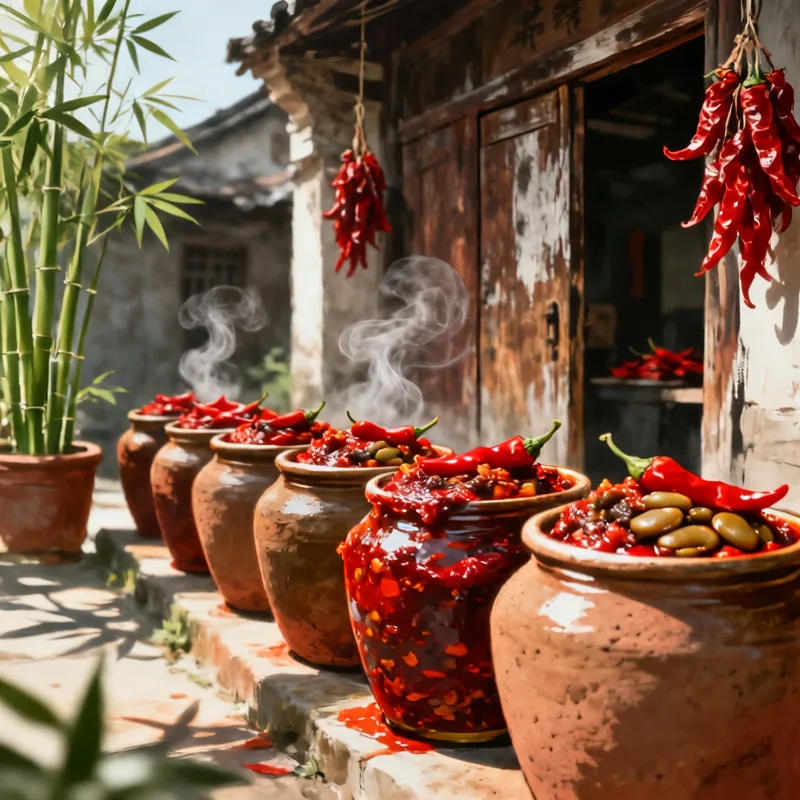
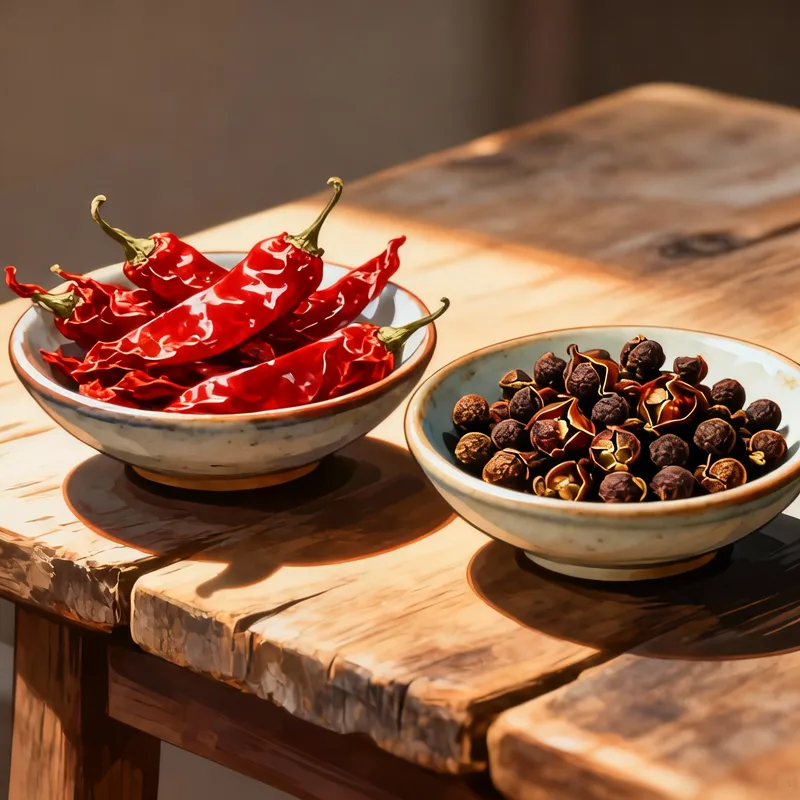
The Sichuan Basin has fertile fields, rivers, and a humid climate, but its early elite cooking was not defined by chilli. Chilli peppers reached China from the Americas in the sixteenth century and became a Sichuan staple later, especially among ordinary households. Before that, cooks used ginger, garlic, mustard, vinegar, and the distinctive Sichuan pepper, Zanthoxylum simulans, whose husks cause a tingling sensation rather than heat.Fermented bean pastes from the basin towns added depth. Pixian doubanjiang, a broad-bean and chilli paste fermented in Pixian near Chengdu, became a foundation of many red-braised and stir-fried dishes. The province’s food therefore combines older preservation methods with ingredients that arrived through global trade.
The Grammar of Heat
Sichuan cooks distinguish several kinds of chilli heat. Dried chillies are fried in oil until fragrant but not blackened; chilli oil is steeped and aged; chilli bean paste supplies fermented heat; and fresh peppers give a brighter bite. Sichuan peppercorns, often toasted and ground, produce the málà combination of numbness and spice. Official Sichuan cookbooks describe more than twenty recognised flavour profiles, from guaiwei, strange or complex, to yuxiang, fish-fragrant, which uses no fish. Mapo tofu, associated with Chengdu in the nineteenth century, combines soft tofu, minced meat, doubanjiang, chilli oil, and Sichuan pepper. Kung Pao chicken uses dried chillies, peanuts, and a sweet-sour soy sauce.
Hotpot and the Two-Flame Bowl
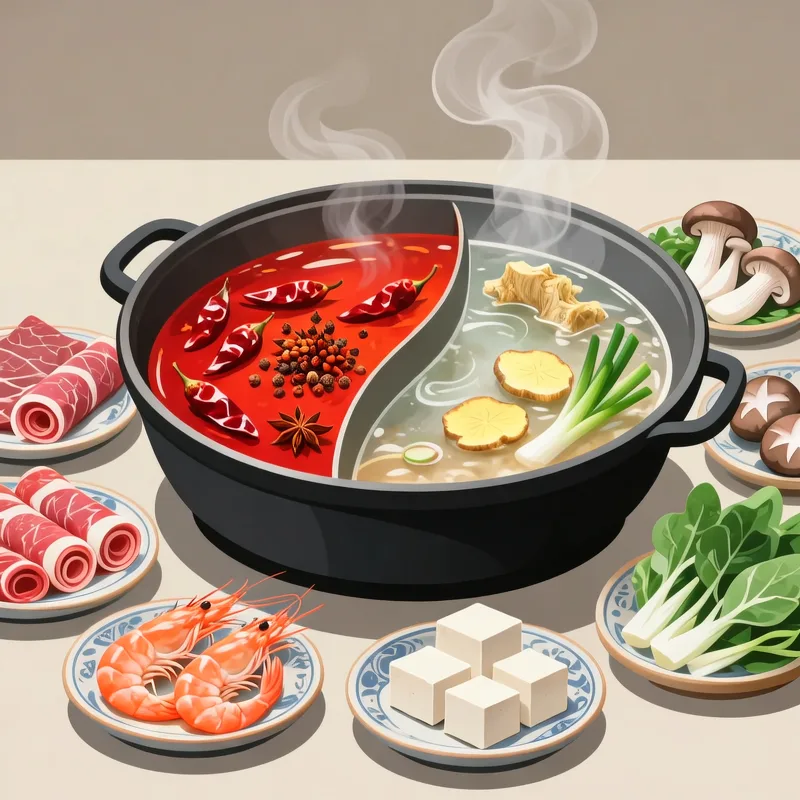
Chengdu hotpot is a social meal built around a divided pot. One side may hold a red broth of chilli oil, doubanjiang, beef fat, and spices; the other a clear chicken or mushroom stock. Diners cook thinly sliced beef, tripe, duck blood, fish balls, vegetables, and mushrooms, then dip them in sesame oil, garlic, and chopped herbs. The sesame dip cools the palate and coats the mouth against spice. Chongqing hotpot is often heavier and more direct, traditionally using beef tallow; Chengdu versions are commonly more aromatic and varied. Yibin and other southern cities add their own chilli blends. Restaurants label spice levels, but heat can still be adjusted only by asking.
- Pixian doubanjiang as a fermented chilli-bean base
- Málà: chilli heat plus peppercorn numbness
- Two-flavour hotpot with red and clear broth
- Sesame oil dip to moderate the heat
Beyond the Fiery Stereotype
Not every Sichuan dish is hot. Sichuan’s most ceremonial dish, Gongbao chicken and the banquet classic ‘sweet and sour’ aside, the cuisine includes clear broths, steamed dishes, and delicate pastry. Zhangcha duck is smoked with tea leaves and camphor before steaming, while boiled pork slices are served in a clear broth with mustard greens. Chengdu’s teahouses and dish shops serve small noodles, sweet-water noodles, and dumplings. The province also includes Tibetan and Yi food traditions in its western highlands, where barley, yak products, and different seasonings dominate. Reading Sichuan cuisine only as heat misses its central achievement: layering aromas, textures, and ferments so that strong flavours remain controlled.
Sichuan cooking is not simply hot; it is a carefully graded argument between chilli, pepper, oil, and ferment.
Sumber & bacaan lanjut
- Sichuan cuisine — Ensiklopedia Britannica.
- Chinese Cuisine — Ensiklopedia Britannica.
- Sichuan Food — China Highlights.