Blog

  • 사천 요리

    삶과 민속

    사천 요리

    Chilli Oil, Ferment, and the Numbing Pepper

    Sichuan cooking balances chilli heat, Sichuan pepper numbness, fermented bean paste, and rich broth.

    부분
    삶과 민속
    지역
    쓰촨
    연대
    시대를 넘어서
    태그
    Customs, Food, Geography

    Sichuan cuisine is known for bold seasoning, but its classic dishes are built on contrast: chilli with Sichuan pepper, hot oil with cool cucumber, or a clear broth beside a fiery one.

    A Basin Pantry and Early Flavours

    The Sichuan Basin has fertile fields, rivers, and a humid climate, but its early elite cooking was not defined by chilli. Chilli peppers reached China from the Americas in the sixteenth century and became a Sichuan staple later, especially among ordinary households. Before that, cooks used ginger, garlic, mustard, vinegar, and the distinctive Sichuan pepper, Zanthoxylum simulans, whose husks cause a tingling sensation rather than heat.Fermented bean pastes from the basin towns added depth. Pixian doubanjiang, a broad-bean and chilli paste fermented in Pixian near Chengdu, became a foundation of many red-braised and stir-fried dishes. The province’s food therefore combines older preservation methods with ingredients that arrived through global trade.
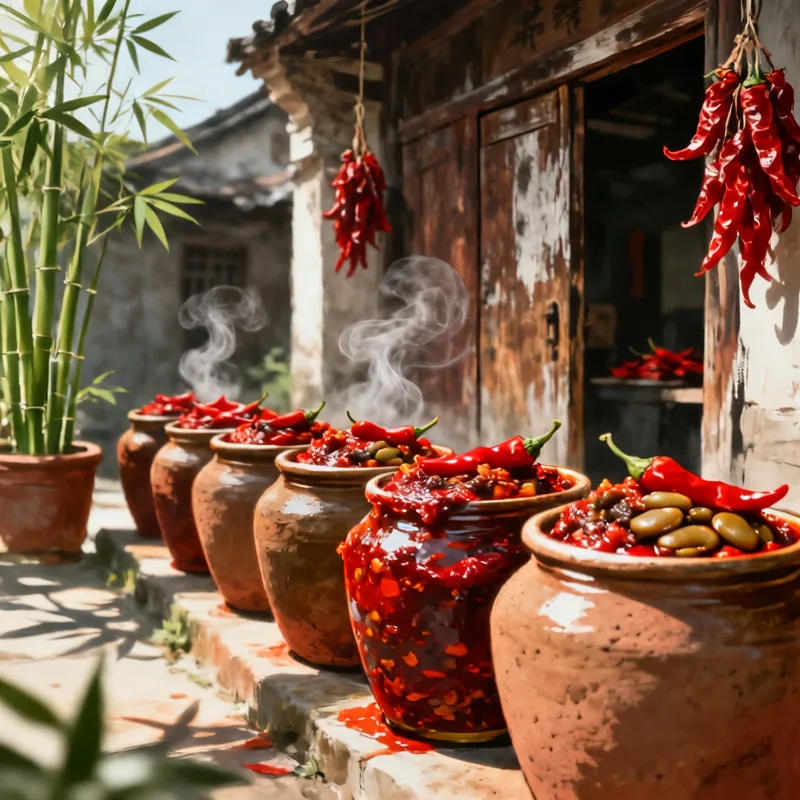
    Jars of red chilli and broad-bean paste fermenting outside a Sichuan workshop
    Fermented doubanjiang gives many Sichuan dishes their deep red base. AI 생성 일러스트 · 시노비즈

    The Grammar of Heat

    Sichuan cooks distinguish several kinds of chilli heat. Dried chillies are fried in oil until fragrant but not blackened; chilli oil is steeped and aged; chilli bean paste supplies fermented heat; and fresh peppers give a brighter bite. Sichuan peppercorns, often toasted and ground, produce the málà combination of numbness and spice. Official Sichuan cookbooks describe more than twenty recognised flavour profiles, from guaiwei, strange or complex, to yuxiang, fish-fragrant, which uses no fish. Mapo tofu, associated with Chengdu in the nineteenth century, combines soft tofu, minced meat, doubanjiang, chilli oil, and Sichuan pepper. Kung Pao chicken uses dried chillies, peanuts, and a sweet-sour soy sauce.
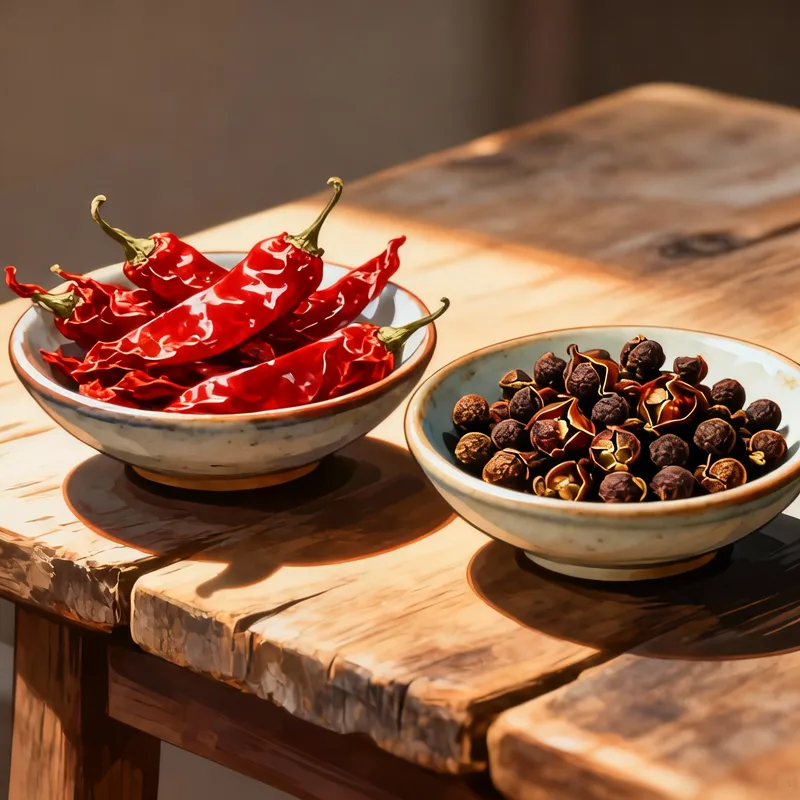
    Dried red chillies and Sichuan peppercorns in separate shallow bowls
    Chilli heat and peppercorn numbness are distinct, and cooks balance them separately. AI 생성 일러스트 · 시노비즈

    Hotpot and the Two-Flame Bowl

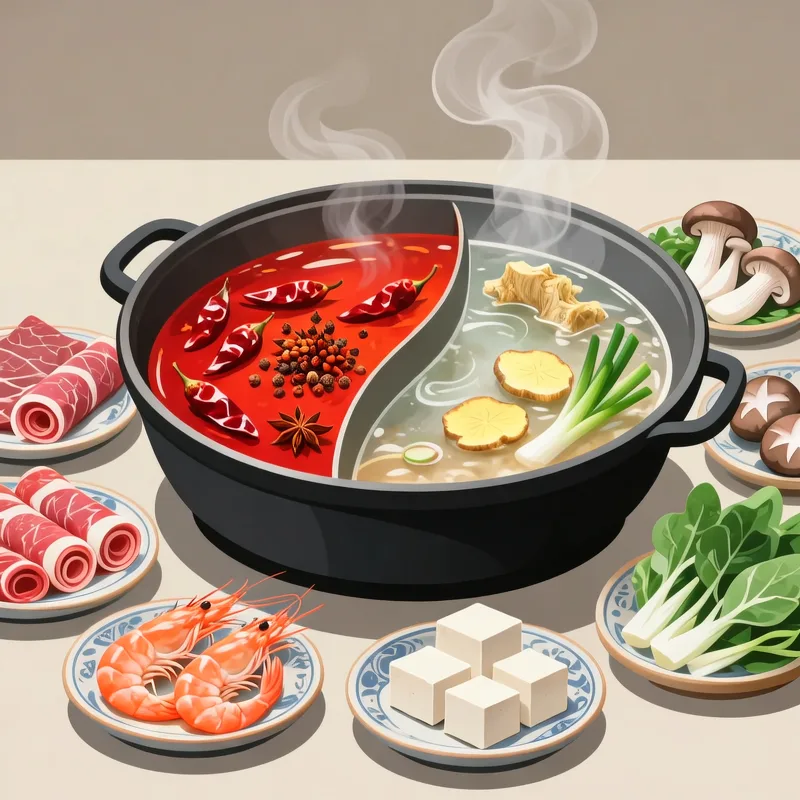
    Chengdu hotpot is a social meal built around a divided pot. One side may hold a red broth of chilli oil, doubanjiang, beef fat, and spices; the other a clear chicken or mushroom stock. Diners cook thinly sliced beef, tripe, duck blood, fish balls, vegetables, and mushrooms, then dip them in sesame oil, garlic, and chopped herbs. The sesame dip cools the palate and coats the mouth against spice. Chongqing hotpot is often heavier and more direct, traditionally using beef tallow; Chengdu versions are commonly more aromatic and varied. Yibin and other southern cities add their own chilli blends. Restaurants label spice levels, but heat can still be adjusted only by asking.

    • Pixian doubanjiang as a fermented chilli-bean base
    • Málà: chilli heat plus peppercorn numbness
    • Two-flavour hotpot with red and clear broth
    • Sesame oil dip to moderate the heat
    A divided hotpot with red chilli broth and clear broth surrounded by ingredient plates
    A two-flavour pot lets a table divide heat from clarity. AI 생성 일러스트 · 시노비즈

    Beyond the Fiery Stereotype

    Not every Sichuan dish is hot. Sichuan’s most ceremonial dish, Gongbao chicken and the banquet classic ‘sweet and sour’ aside, the cuisine includes clear broths, steamed dishes, and delicate pastry. Zhangcha duck is smoked with tea leaves and camphor before steaming, while boiled pork slices are served in a clear broth with mustard greens. Chengdu’s teahouses and dish shops serve small noodles, sweet-water noodles, and dumplings. The province also includes Tibetan and Yi food traditions in its western highlands, where barley, yak products, and different seasonings dominate. Reading Sichuan cuisine only as heat misses its central achievement: layering aromas, textures, and ferments so that strong flavours remain controlled.

    Sichuan cooking is not simply hot; it is a carefully graded argument between chilli, pepper, oil, and ferment.

    참고 자료 및 추가 정보

    1. Sichuan cuisine — 브리태니커 백과사전.
    2. Chinese Cuisine — 브리태니커 백과사전.
    3. Sichuan Food — China Highlights.

    제자리에 있는 모습을 보세요

    이 항목을 따라가면 해당 영역으로 이동할 수 있습니다.

    지도로 탐색하기

    스레드를 따라가세요

    같은 태그를 가진 다른 항목들을 찾아보세요.

    태그를 찾아보세요
  • 테라코타 병마용

    연대기

    테라코타 병마용

    An Emperor’s Buried Legions

    Thousands of clay soldiers were buried near Qin Shi Huang’s mausoleum to guard the emperor after death.

    부분
    연대기
    지역
    산시
    연대
    qin-han
    태그
    Geography, History, Scenic Sites

    The Terracotta Army was made for the tomb of Qin Shi Huang, the first emperor of China, who died in 210 BCE. The figures were part of a larger necropolis near Xi’an, not an isolated pit of statues.

    The Tomb of the First Emperor

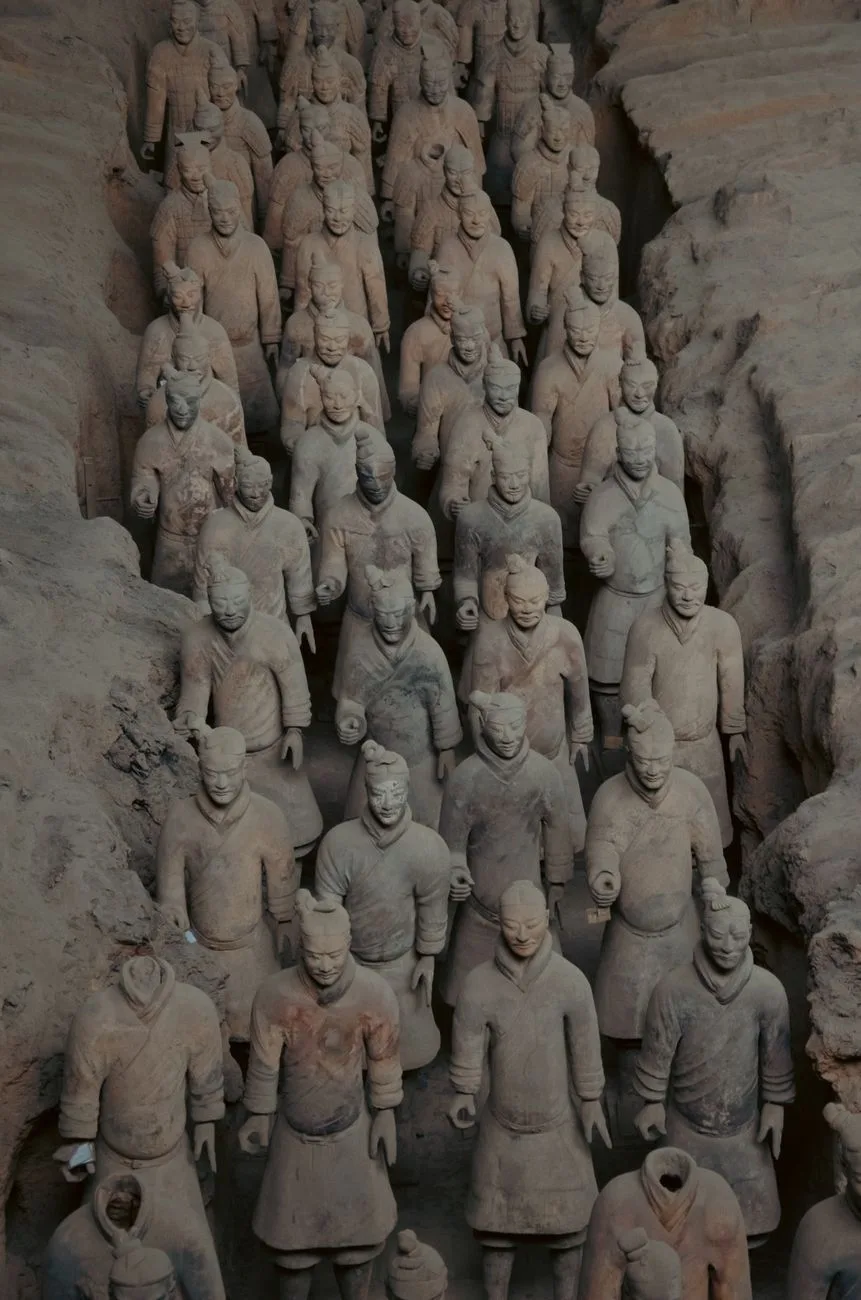
    Qin Shi Huang unified China in 221 BCE and began constructing his mausoleum near Mount Li soon after. The historian Sima Qian, writing about a century later, described a tomb filled with models of palaces, officials, and treasures, with mercury rivers and a roof painted as the heavens. Modern surveys have found a vast walled complex, a central burial mound, and more than six hundred associated pits. The main tomb chamber has not been excavated, partly because of technical and conservation concerns; readings of mercury vapour in the mound have been reported but debated. The army occupied side pits, where thousands of clay figures stood in formation to protect the emperor in the afterlife.

    A long burial pit containing rows of terracotta infantry figures in formation
    The figures stood in military formation in pits beside the imperial tomb. Jan Dvorak | Pexels License (https://www.pexels.com/license/)

    Discovery and Excavation

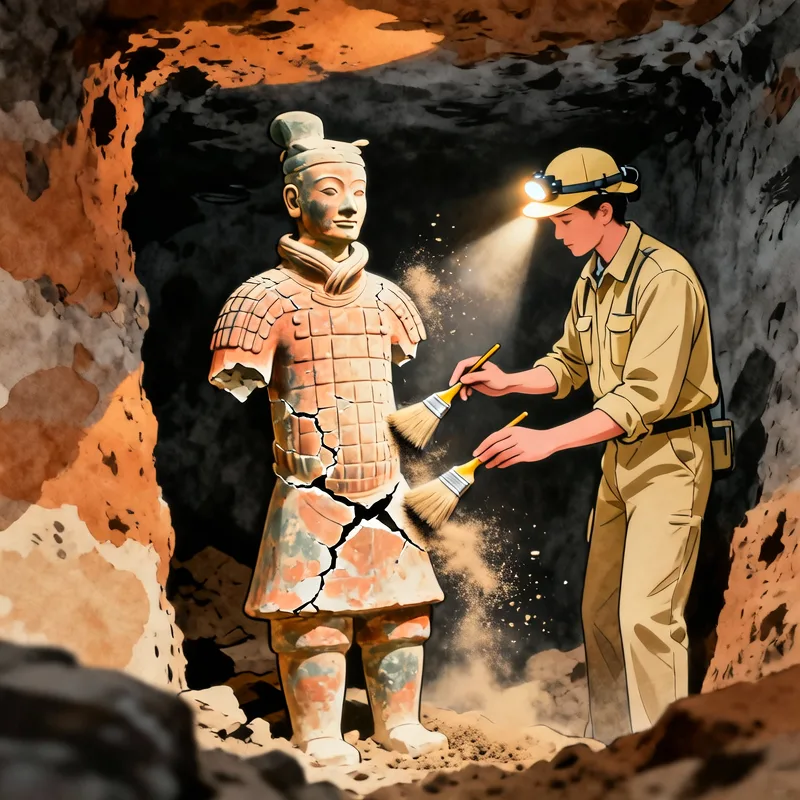
    Local farmers found fragments of clay figures in 1974 while digging a well near the village of Yangzhai. Archaeologists shortly uncovered Pit 1, a huge trench holding infantry and chariots, followed by Pits 2 and 3 with mixed troops, cavalry, and a command post. More than eight thousand figures have been counted, along with hundreds of horses and more than a hundred wooden chariots whose timber has decayed. The figures were once brightly painted with mineral pigments on a lacquer ground; exposure to air caused much of the paint to flake, and conservators now control humidity and treat surfaces quickly. Excavation continues in selected areas rather than across the entire necropolis.

    Archaeologists carefully brushing soil from a fragmented terracotta warrior in a burial pit
    Excavation is slow because paint and fragile organic material decay after exposure. AI 생성 일러스트 · 시노비즈

    Mass Production and Individuality

    The warriors were made in workshops using moulded parts, coils of clay, and hand-finished details. Heads, bodies, arms, and legs were produced in a limited number of types, then assembled and altered so that faces, hair, moustaches, and armour differ. Sculptors pressed or carved expressions into the clay before firing in kilns near the site. Height varies with rank: generals are taller than ordinary infantry, and some figures bear armour while others wear lighter dress. Tools found at the site carry names, suggesting organised teams of potters and artisans under state control. The result is neither wholesale repetition nor pure portraiture, but a system that could produce scale with controlled variation.

    • Infantry, archers, cavalry, chariots, and officers
    • Moulded components finished by hand
    • Original mineral pigments on lacquer-ground paint
    • Workshop names recorded on excavated tools
    Close view of a terracotta warrior’s face, hairstyle, and layered armour
    Standard parts were individualised in faces, hair, and armour details. Ruben VP | Pexels License (https://www.pexels.com/license/)

    Visiting the Site

    The museum lies about forty kilometres east of central Xi’an near Lintong. Three main pits are open to visitors, with viewing platforms along the excavated trenches; a separate display shows bronze chariots and horses recovered near the tomb. A circuit of the pits and museum halls takes roughly two to three hours, and an official guide or audio commentary helps explain the different ranks and formations. The site is busiest in the middle of the day, so arriving early is useful. Xi’an can be reached by high-speed rail from Beijing or Shanghai, and local buses, taxis, and tours connect the city to Lintong. Photography is allowed in many areas, but flash and tripods may be restricted.

    The army was made by workshops, but its faces were finished by hands that refused exact repetition.

    참고 자료 및 추가 정보

    1. 병마용 — 유네스코 세계문화유산센터.
    2. 병마용 — 브리태니커 백과사전.
    3. The First Emperor’s Terracotta Army — The British Museum.

    제자리에 있는 모습을 보세요

    이 항목을 따라가면 해당 영역으로 이동할 수 있습니다.

    지도로 탐색하기

    스레드를 따라가세요

    같은 태그를 가진 다른 항목들을 찾아보세요.

    태그를 찾아보세요
  • Xiamen

    Destination · Fujian

    Xiamen

    Island streets and Fujian coast

    Xiamen is a coastal city with a mild climate, colonial-era Gulangyu island and easy access to Fujian’s tulou and tea regions. It blends seaside leisure with maritime history.

    Best season
    March–May, October–December
    Suggested stay
    2–3 days
    지역
    푸젠

    What to see first

    • Gulangyu island architecture and lanes
    • Nanputuo Temple
    • Xiamen University area and coastal walk
    • Day trip to Fujian tulou

    Why it matters

    Xiamen sits within Fujian’s maritime culture, shaped by overseas trade, migration and Minnan traditions. Its coast connects local life to the wider sea routes.

    Getting there

    Xiamen has an airport, high-speed rail and ferries to Gulangyu. Book Gulangyu ferry tickets ahead on busy days.

    Good to know

    Gulangyu limits vehicles; wear comfortable shoes. Summer is hot and typhoon season can affect ferries.

    Read the region

    Understand the landscape and culture behind this destination.

    Explore Fujian
  • 라싸

    Destination · Xizang

    라싸

    The Potala and the high plateau

    Lhasa is the spiritual and historical centre of Tibet. The Potala Palace, Jokhang Temple and Barkhor circuit place religious life at the heart of the city.

    Best season
    May–September
    Suggested stay
    4–6 days
    지역
    시짱

    What to see first

    • 포탈라궁
    • Jokhang Temple and Barkhor Street
    • Sera Monastery debates
    • Drepung Monastery and nearby mountain views

    Why it matters

    Lhasa has been a centre of Tibetan Buddhism and governance for centuries. Its architecture and pilgrimage routes make belief visible in urban space.

    Getting there

    Fly or take the Qinghai-Tibet Railway to Lhasa. Allow time for altitude acclimatisation before strenuous activity.

    Good to know

    Follow temple etiquette, dress modestly, and ask before photographing people. Carry permits and ID as required.

    Read the region

    Understand the landscape and culture behind this destination.

    Explore Xizang
  • Suzhou

    Destination · Zhejiang

    Suzhou

    Gardens, canals and silk

    Suzhou is known for classical gardens, canals and silk craftsmanship. Its old city offers a quieter Jiangnan counterpoint to nearby Shanghai.

    Best season
    March–May, September–November
    Suggested stay
    2 days
    지역
    저장성

    What to see first

    • Humble Administrator’s Garden
    • Lingering Garden or Master of the Nets Garden
    • Pingjiang Road canal walk
    • Suzhou Silk Museum

    Why it matters

    Suzhou gardens translate scholarship, poetry and landscape painting into built space. They show how Jiangnan elites designed nature at an intimate scale.

    Getting there

    Suzhou is 25–30 minutes from Shanghai by high-speed rail. Metro and walking cover most old-city sights.

    Good to know

    Gardens are busiest on weekends; go early. Combine one major garden with canal walks rather than rushing through several.

    Read the region

    Understand the landscape and culture behind this destination.

    Explore Zhejiang
  • 카슈가르

    Destination · Xinjiang

    카슈가르

    Old city and the western oasis

    Kashgar sits near the western edge of the Taklamakan, where Silk Road routes converged. Its old city, bazaars and mosques reflect centuries of oasis trade and craft.

    Best season
    May–October
    Suggested stay
    2–3 days
    지역
    신장

    What to see first

    • Kashgar Old City lanes and craft workshops
    • Id Kah Mosque area
    • Sunday bazaar and livestock market areas
    • Apak Khoja Mausoleum

    Why it matters

    Kashgar was a key node on Silk Road caravans. Its architecture, food and music preserve the character of an oasis city shaped by movement and exchange.

    Getting there

    Kashgar has an airport and rail links through Xinjiang. Taxis and walking are practical in the old city.

    Good to know

    Dress respectfully near religious sites. Ask before photographing people, especially in markets and mosques.

    Read the region

    Understand the landscape and culture behind this destination.

    Explore Xinjiang
  • Chengdu

    Destination · Sichuan

    Chengdu

    Pandas, teahouses and Sichuan flavour

    Chengdu combines a relaxed teahouse culture with bold Sichuan food and nearby mountain heritage. It is a gateway to panda reserves, Buddhist sites and western Sichuan.

    Best season
    March–June, September–November
    Suggested stay
    3 days
    지역
    쓰촨

    What to see first

    • Chengdu Research Base of Giant Panda Breeding
    • People’s Park teahouses
    • Wuhou Shrine and Jinli
    • Day trip to Dujiangyan or Leshan

    Why it matters

    Chengdu has been a regional capital since ancient Shu. Its irrigation systems, temple culture and cuisine show how the Sichuan Basin sustained a distinct civilisation.

    Getting there

    Chengdu has two major airports and high-speed rail links across China. The metro reaches most city sights.

    Good to know

    Try mild dishes before diving into málà heat. Book panda base tickets early and arrive at opening time.

    Read the region

    Understand the landscape and culture behind this destination.

    Explore Sichuan
  • 둔황

    Destination · Xinjiang

    둔황

    Caves, dunes and the Silk Road

    Dunhuang was a Silk Road oasis where merchants, monks and artists met. The Mogao Caves preserve Buddhist art, while the surrounding desert gives the city its dramatic edge.

    Best season
    May–June, September–October
    Suggested stay
    2–3 days
    지역
    신장

    What to see first

    • Mogao Caves timed visit
    • Mingsha Mountain and Crescent Spring
    • Dunhuang Museum
    • Yumen Pass or Yardang geopark for longer trips

    Why it matters

    Dunhuang’s caves hold nearly a millennium of Buddhist murals and sculptures. They record artistic exchange across Central Asia, India and China.

    Getting there

    Dunhuang has an airport and rail station. Mogao Caves require advance booking and use a visitor-centre shuttle system.

    Good to know

    Desert sun is intense; bring water, hat and sun protection. Cave photography rules are strict to protect murals.

    Read the region

    Understand the landscape and culture behind this destination.

    Explore Xinjiang
  • Guilin & Yangshuo

    Destination · Guangxi

    Guilin

    Karst peaks and the Li River

    Guilin’s limestone peaks and river scenery are among China’s most recognisable landscapes. The Li River journey to Yangshuo reveals karst forms that have inspired painters for centuries.

    Best season
    April–October
    Suggested stay
    3–4 days
    지역
    광시

    What to see first

    • Li River cruise or bamboo raft sections
    • Yangshuo countryside cycling
    • Reed Flute Cave
    • Longji rice terraces as a side trip

    Why it matters

    The Guilin karst is both geological and cultural. Fishermen, cormorants, villages and river trade have lived inside a landscape often treated as pure scenery.

    Getting there

    Guilin has an airport and rail connections; Yangshuo is reached by road or river. Bikes and e-bikes are useful in the countryside.

    Good to know

    River levels and weather affect cruises. Bring rain protection in summer and avoid peak holiday boats if possible.

    Read the region

    Understand the landscape and culture behind this destination.

    Explore Guangxi
  • Hangzhou

    Destination · Zhejiang

    Hangzhou

    West Lake, tea and silk

    Hangzhou’s West Lake has shaped Chinese landscape aesthetics for centuries. Around it lie tea hills, temples, silk museums and the southern reach of the Grand Canal.

    Best season
    March–May, September–November
    Suggested stay
    2–3 days
    지역
    저장성

    What to see first

    • West Lake causeways and boat ride
    • Lingyin Temple and Feilai Feng
    • Longjing tea villages
    • China National Silk Museum and Grand Canal sites

    Why it matters

    Hangzhou was a Southern Song capital and a centre of Jiangnan culture. Its gardens, poems and paintings turned the lake into a model of designed nature.

    Getting there

    Hangzhou East Station connects by high-speed rail to Shanghai, Suzhou and Beijing. Metro and buses serve West Lake areas.

    Good to know

    Visit West Lake early morning to avoid crowds. Spring tea harvest makes Longjing villages busy but lively.

    Read the region

    Understand the landscape and culture behind this destination.

    Explore Zhejiang