Leven & Folklore
Korean Chinese Communities
Korean language and custom in Beijing
Chinese Koreans maintain a Korean-speaking cultural life in northeastern China and in cities such as Beijing.
- Sectie
- Leven & Folklore
- Regio
- Peking
- Tijdperk
- Door de eeuwen heen
- Tags
- Ethnic, Customs
Known in Chinese as Chaoxianzu, Korean Chinese number roughly 1.8 million. Their centres of settlement lie along the northeastern border, but Beijing’s Wangjing and Wudaokou districts have become highly visible Korean-language neighbourhoods.
Migration and neighbourhoods
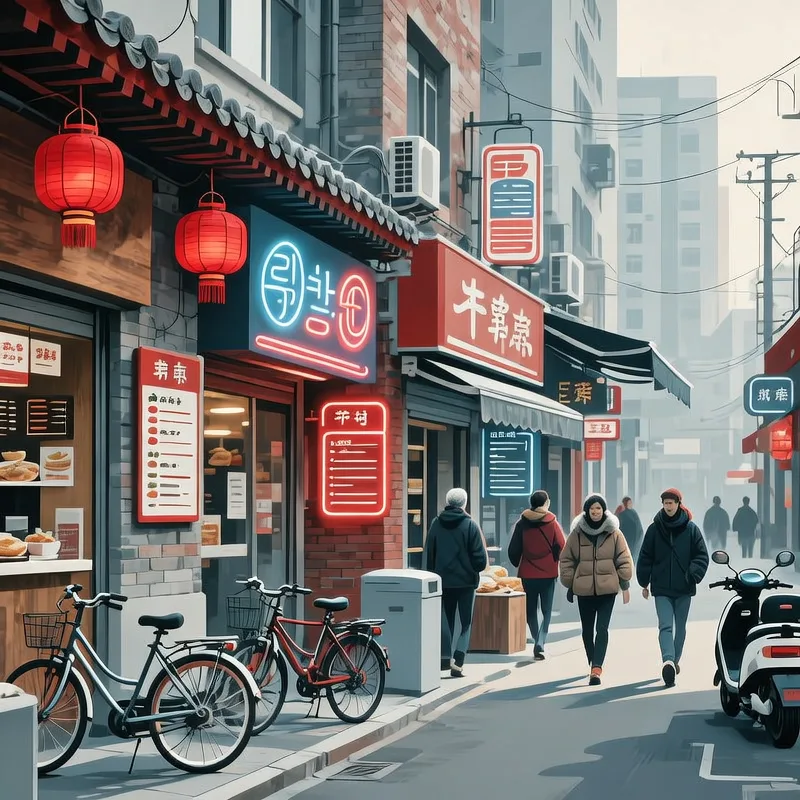
Most Korean Chinese families trace their settlement in China to the late nineteenth and early twentieth centuries, when hardship, conscription and Japan’s annexation of Korea in 1910 drove migration across the Tumen and Yalu rivers. The Yanbian Korean Autonomous Prefecture was established in Jilin in 1952, and Changbai and Hunchun remain important centres. Beijing’s Korean population grew quickly after China and South Korea established diplomatic relations in 1992, when students, traders and engineers arrived in large numbers. Wudaokou became known for language schools and student housing, while Wangjing developed supermarkets, restaurants and Korean-language signage on a commercial scale.
Language and writing
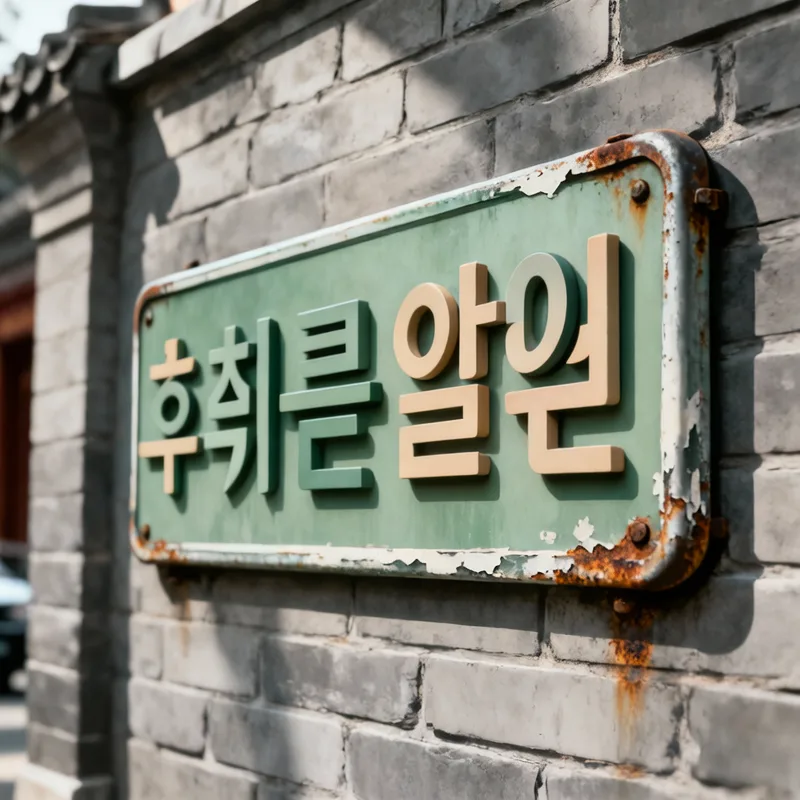
Korean is a Koreanic language, distinct from the Sinitic and Tungusic languages spoken elsewhere in the region. Its alphabet, Hangul, was created in the fifteenth century and is now the ordinary script for Korean Chinese writing; Chinese characters, or hanja, appear in historical texts and some names. Many older residents of Yanbian are bilingual in Korean and Mandarin, while city-born younger people often use Mandarin at school and work and Korean at home or in community media. Korean-language newspapers, radio and church services help sustain the language, and some families send children to schools where Korean is taught alongside the national curriculum.
Food and the household
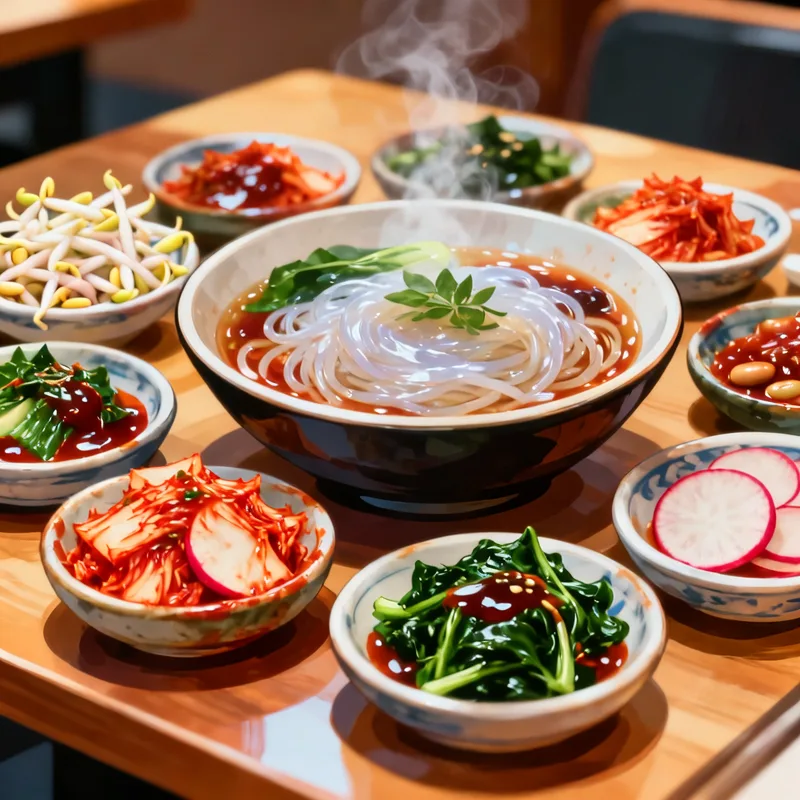
Korean foodways are among the most visible parts of community life. Kimchi, made from salted and fermented vegetables, is prepared in quantity in autumn, and the practice of making and sharing it has been recognised by UNESCO as intangible heritage in Korea. Everyday meals include rice, soup, bibimbap mixed with vegetables and chilli paste, grilled meat, and naengmyeon, or cold buckwheat noodles. Traditional houses used ondol, an underfloor flue system that heats the sleeping mat, and some rural homes still keep the low table and floor-seating arrangements of a hanok. In Beijing, apartment living has changed the setting, but the cuisine and the habit of sitting together at a shared table persist.
Festivals and community life
The two main family festivals are Seollal, the lunar new year, and Chuseok, the autumn harvest festival. At Seollal, families eat tteokguk, a soup of sliced rice cakes, and younger relatives perform a formal bow to elders. Chuseok is marked with visits to ancestral graves and songpyeon, small rice cakes filled with beans or sesame. Korean Chinese communities in Beijing also gather for weddings, school reunions and business associations, where Korean remains a language of trust and shared reference. Public visibility comes through restaurants, travel agencies and shops rather than a sealed enclave; the same streets serve neighbours of many backgrounds.
A Korean sign in Beijing marks a carried household habit more than a border.
Bronnen en verdere informatie
- Korean language — Encyclopaedia Britannica.
- Korean Ethnic Group — China.org.cn.
- Kimjang, making and sharing kimchi — UNESCO Intangible Cultural Heritage.