カテゴリ: 生活と民話

  • 江南料理

    生活と民話

    江南料理

    River Fish, Rice, and Refined Broth

    The cooking of the lower Yangtze favours freshwater fish, seasonal greens, and delicate stocks.

    セクション
    生活と民話
    地域
    浙江省
    時代
    時代を超えて
    タグ
    Food, Geography

    Jiangnan cooking grew in the wet, rice-growing country south of the Yangtze. Its reputation rests less on spice than on timing: a fish steamed just long enough, a broth cleared and simmered, or a vegetable picked before it toughens.

    A Landscape of Water and Rice

    Jiangnan means the land south of the Yangtze, a region of canals, lakes, and irrigated fields centred on Jiangsu and Zhejiang. From the Song dynasty (960–1279), the lower Yangtze became China’s densest and wealthiest farming region, supported by double-cropping rice, fish ponds, and silk production. Cities such as Hangzhou and Suzhou developed a class of officials, merchants, and literati who recorded dining in essays and cookbooks. Lin An, today’s Hangzhou, was the Southern Song capital after 1127, and its markets sold freshwater fish, crab, bamboo shoots, and lotus root. Local cooking took shape around what the water and nearby fields supplied in season.
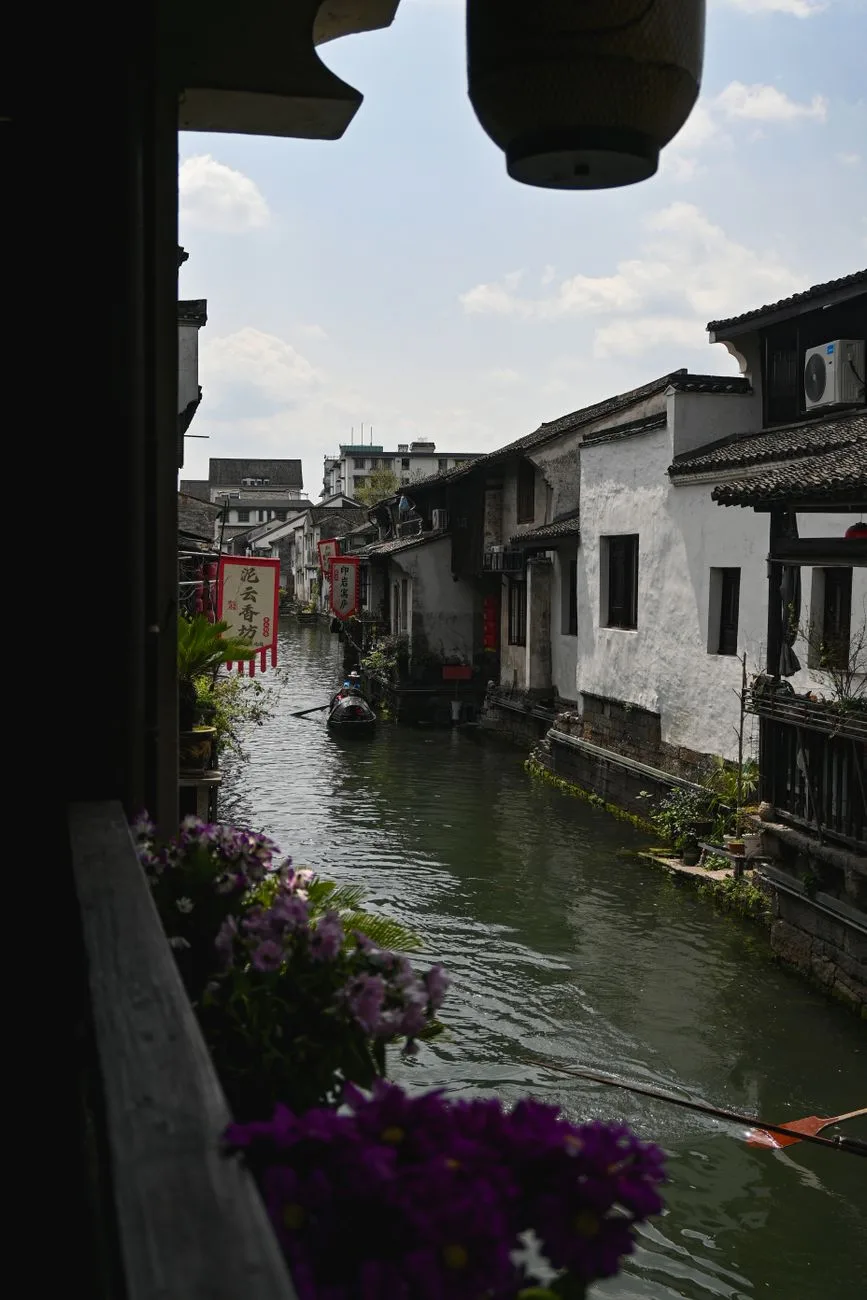
    Canals and rice fields in the Jiangnan countryside near Suzhou
    Canals, fish ponds, and irrigated fields shaped the Jiangnan pantry. 木 灬 | Pexels License (https://www.pexels.com/license/)

    Techniques of Cleanness

    Jiangnan cooks prize the natural flavour of ingredients, so technique often means restraint. Steaming preserves the texture of fish and glutinous rice; quick stir-frying keeps greens crisp; slow simmering turns pork bones and chicken into clear, aromatic broth. Shaoxing in Zhejiang is famous for yellow rice wine, used in marinades and for deglazing a hot wok. Vinegar from Zhenjiang balances sweet and sour dishes. Hangzhou’s famous West Lake vinegar fish uses a fish from the lake, scored and fried, then finished with a sweet-sour sauce. The dish is now a restaurant set piece, but it began as a local preparation of available freshwater fish.
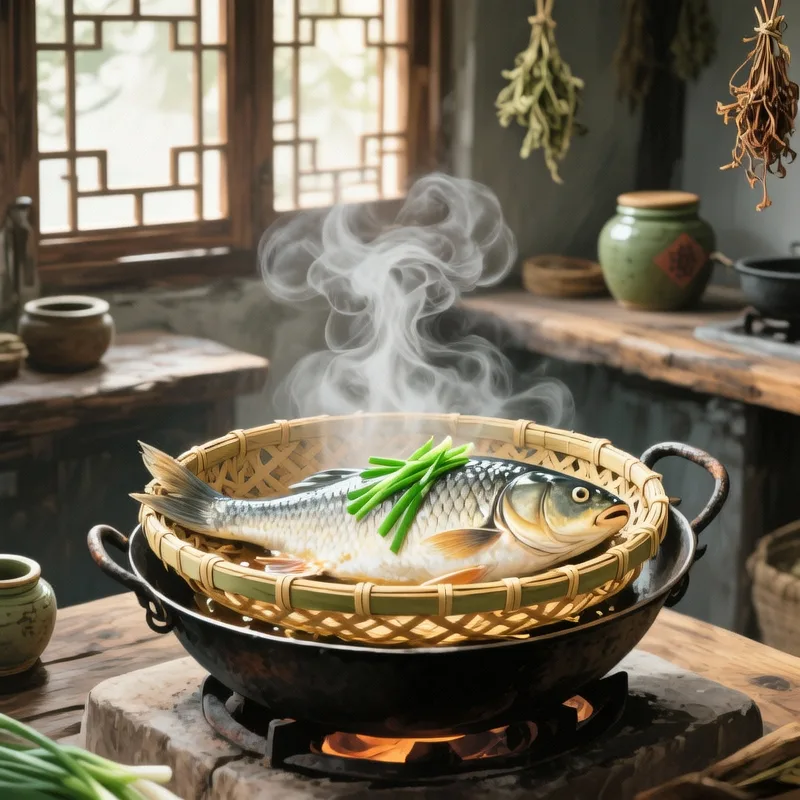
    A whole freshwater fish steaming in a bamboo basket over a wok in a Jiangnan kitchen
    Steaming is a defining Jiangnan technique because it preserves delicate texture. AI生成イラスト · SinoViz

    A Calendar of Local Dishes

    Seasonality gives the cuisine its rhythm. Spring brings bamboo shoots, shepherd’s purse, and the first river shrimp; autumn brings hairy crab from lakes and the slow-growing taihu whitebait. Suzhou’s squirrel-shaped mandarin fish is butterflied, scored, fried, and glazed, while braised pork belly is cooked until fat and lean layers hold together without hardness. Ningbo, on the Zhejiang coast, adds salted and dried seafood, and its tangyuan glutinous-rice balls filled with black sesame are eaten at the Lantern Festival. Shanghai, later and more cosmopolitan, absorbed these traditions into benbang cooking, favouring soy, sugar, and seafood.

    • West Lake vinegar fish from Hangzhou
    • Squirrel-shaped mandarin fish from Suzhou
    • Hairy crab from Taihu lakes in autumn
    • Black-sesame tangyuan for the Lantern Festival
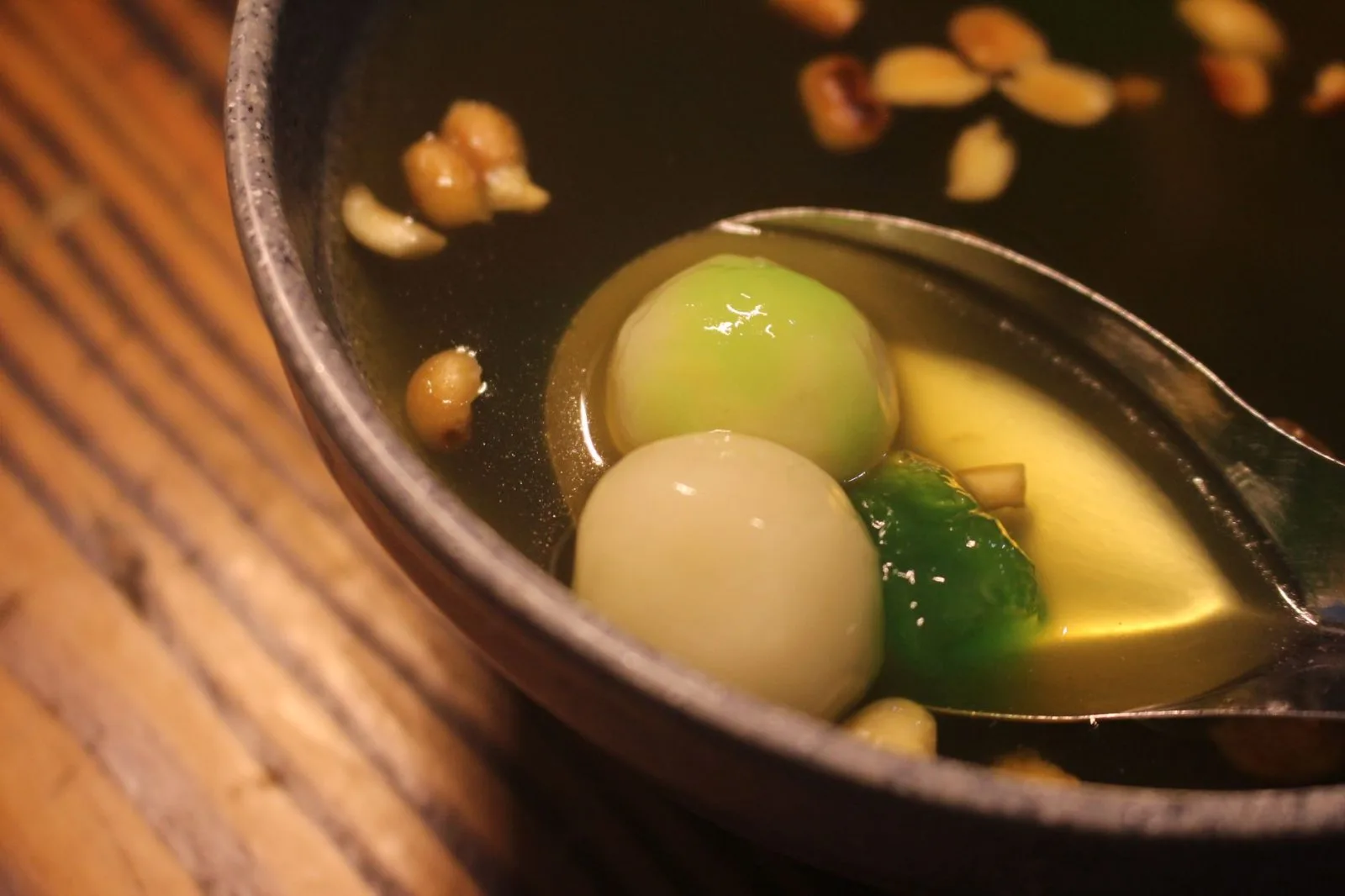
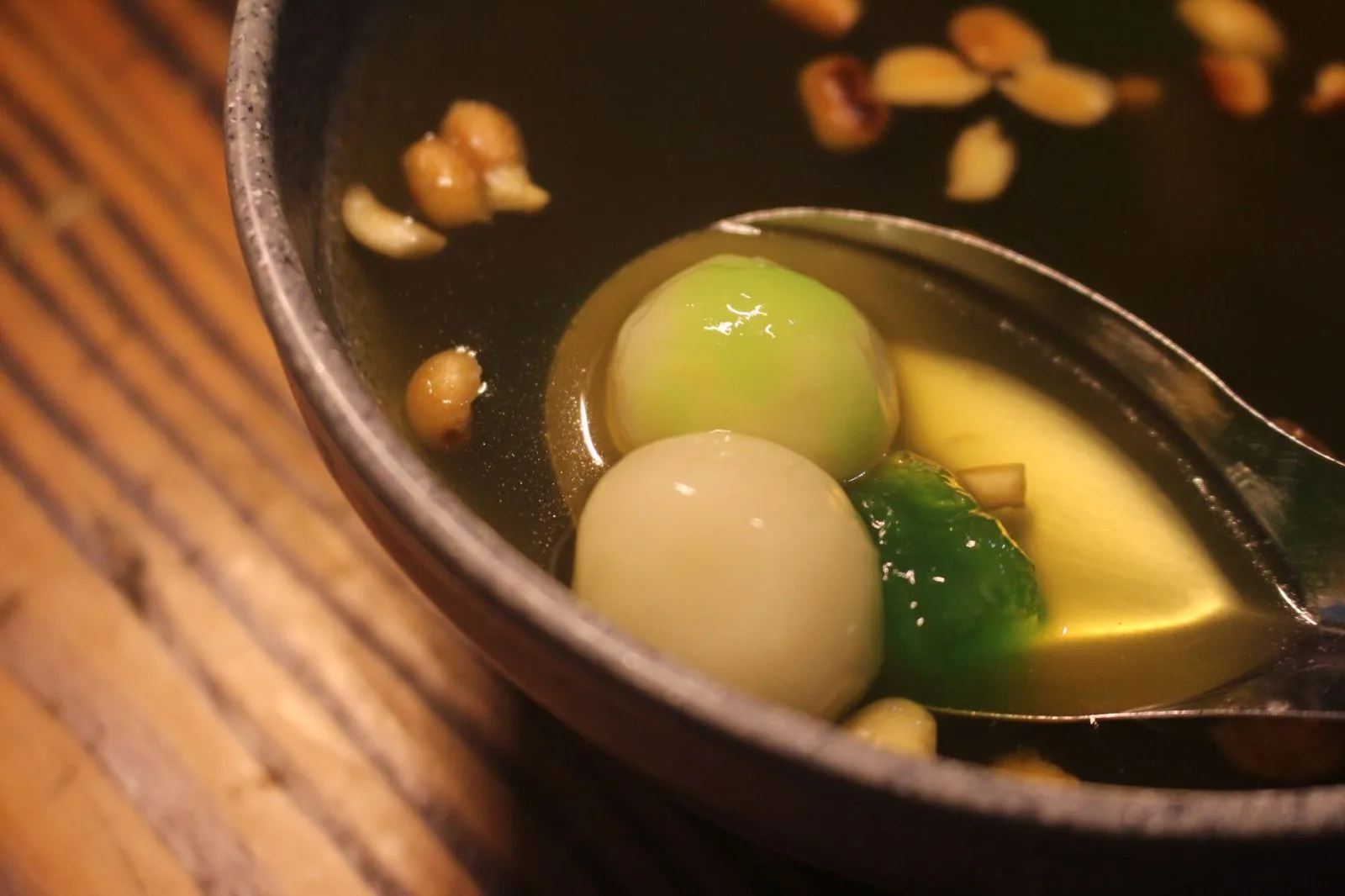
    Small glutinous rice balls with black sesame filling served in a warm bowl
    Tangyuan mark the Lantern Festival across the lower Yangtze. Jauhar Musthofal Qulub | Pexels License (https://www.pexels.com/license/)

    Gardens, Teahouses, and the Table

    Meals in Jiangnan were historically tied to gardens and teahouses, where scholars met over small dishes and wine. The region’s cookbooks, including Yuan Mei’s Suiyuan Shidan of 1792, record recipes alongside comments on market ingredients and household methods. Yuan Mei argued that a cook should understand each ingredient rather than bury it under sauce. That ideal still shapes the region’s public image, even when restaurant versions are elaborate. For a visitor, the useful lesson is to order by season and region: a lake crab in autumn, a bowl of noodles in Suzhou, or a pot of longjing tea near Hangzhou.

    In Jiangnan, the test of a dish is often how little the cook has done to spoil the ingredient.

    出典と参考文献

    1. Chinese Regional Cooking —ブリタニカ百科事典。
    2. 杭州 — ユネスコ世界遺産センター
    3. 杭州 —ブリタニカ百科事典。

    設置場所を見てください

    この項目をたどって、該当する地域へ移動してください。

    地図で探索する

    スレッドをたどってください

    同じタグを持つ他のエントリーを閲覧する。

    タグを閲覧する
  • 茶文化

    生活と民話

    茶文化

    Leaf, Water, and the Tea Horse Road

    Tea moved from medicinal leaf to daily drink, carrying Fujian methods toward Tibet and the sea.

    セクション
    生活と民話
    地域
    福建省
    時代
    時代を超えて
    タグ
    Customs, Food, Geography

    Tea culture is a history of distilled technique: when to pick, how to wither, how to roll, and how to heat a leaf so that it keeps its character. Fujian became a laboratory for these methods, sending compressed cakes west toward Tibet and scented leaves out through coastal ports.

    From Medicine to Daily Drink

    Tea entered Chinese writing as a medicinal and ritual plant long before it became a household drink. Traditions credit the mythical emperor Shen Nong with discovering it, but the earliest firm evidence comes from Han-period tombs, where archaeologists have identified tea leaves among grave goods. By the third century CE, writers described boiling leaves with ginger and onions; the Tang dynasty (618–907) made tea a scholarly and monastic beverage. Lu Yu’s Cha Jing, written around 760–780, codified growing, picking, roasting, and brewing. Tea cakes were toasted, ground to powder, and whisked with hot water, a preparation later carried to Japan by Buddhist monks.

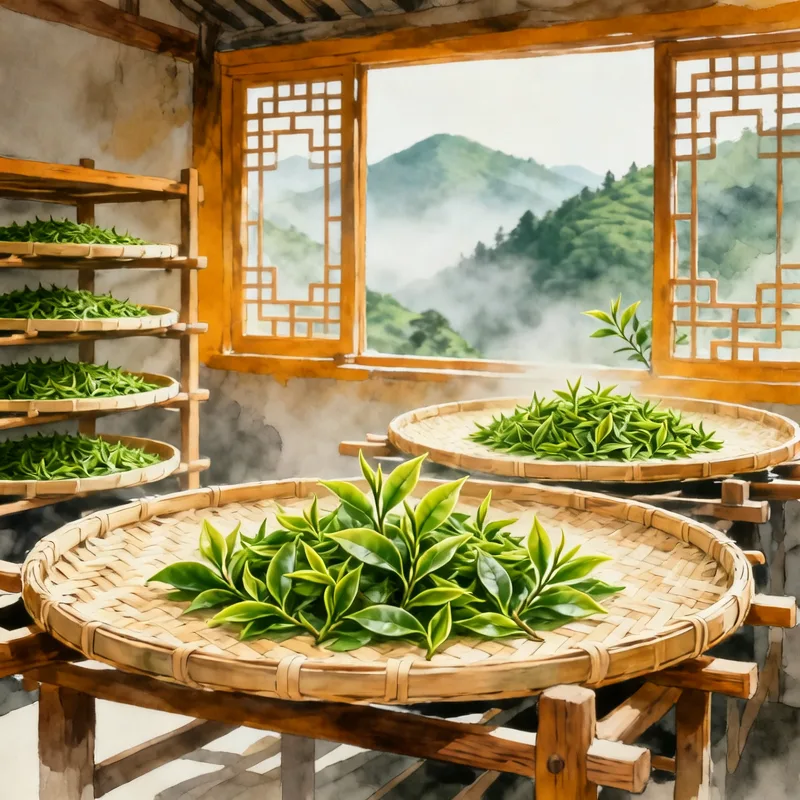
    Fresh tea leaves spread on bamboo trays in a Fujian hillside processing room
    Picking season sets the quality of the leaf before any processing begins. AI生成イラスト · SinoViz

    Fujian’s Craft of Oxidation

    Fujian’s mountainous counties developed styles that depend on controlled oxidation. Wuyi rock tea, grown in the rocky cliffs of the Wuyi range, is often pan-fired, rolled, and roasted until it develops a mineral, toasted character. Tieguanyin from Anxi is shaped into tight pellets that unfurl in the cup. Lapsang souchong from Tongmu resembles black tea in its oxidation, then dries over pine smoke. White teas such as Fuding’s silver-needle style are simply withered and dried, with little rolling or heating. These techniques are local knowledge: the same species, Camellia sinensis, changes through timing, heat, and handling.

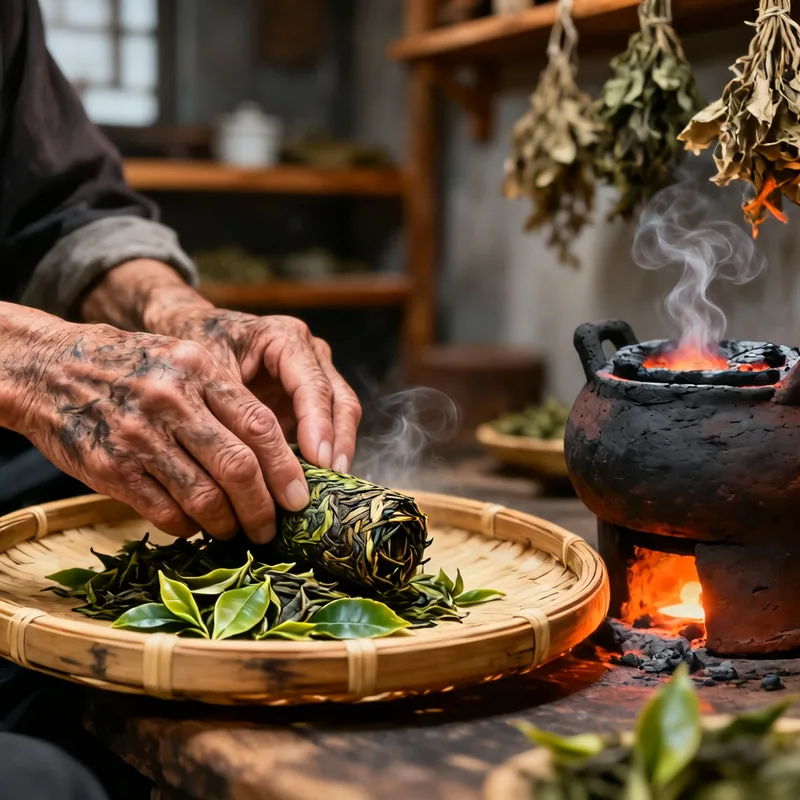
    Tea leaves being rolled by hand on a bamboo tray beside a traditional roasting stove
    Rolling breaks the leaf cells and shapes the flavours that firing will fix. AI生成イラスト · SinoViz

    The Tea Horse Road West

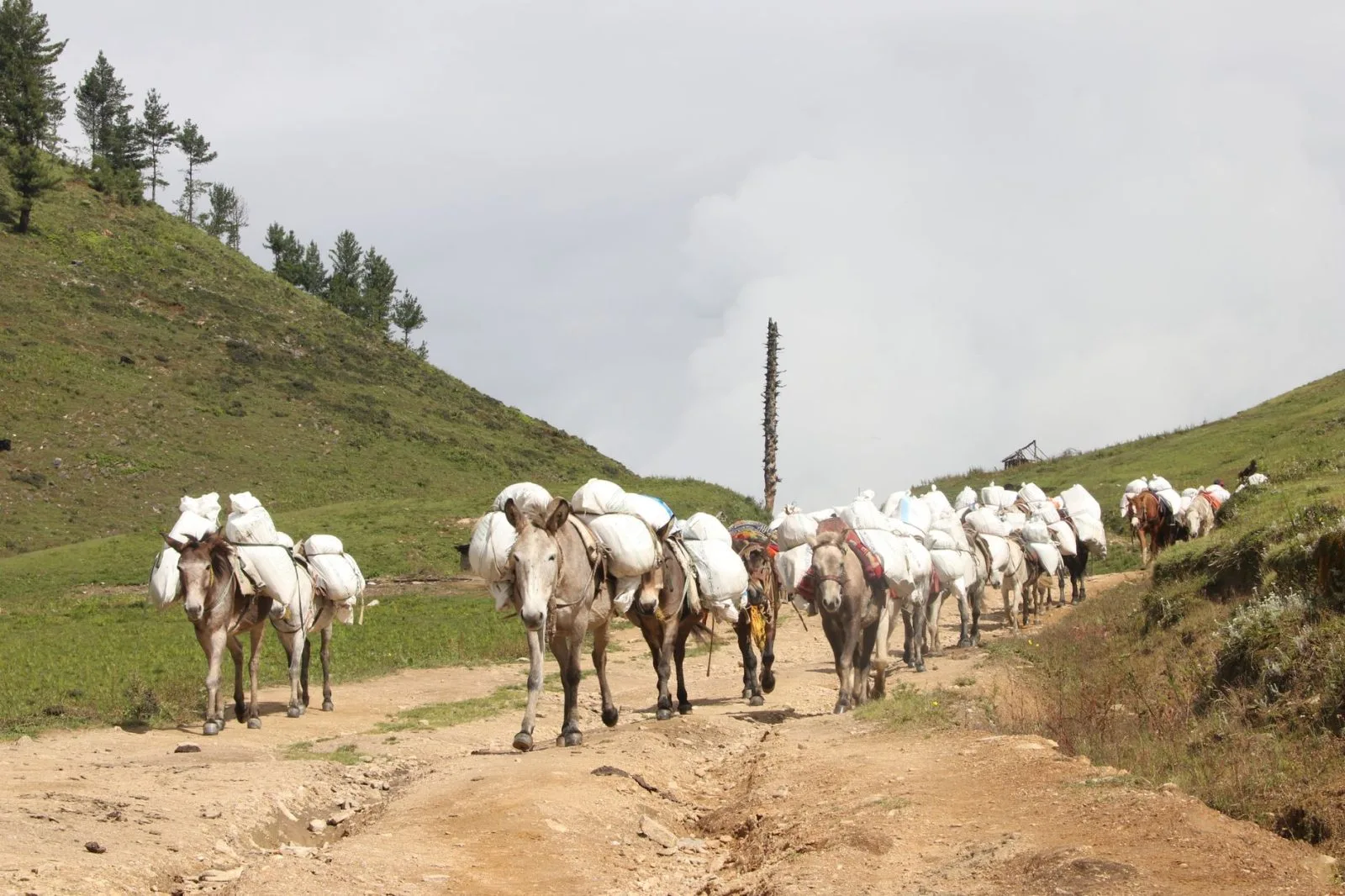
    From at least the Tang period, compressed tea travelled west from Sichuan and Yunnan toward Tibet, where it provided vitamin-rich drink and a medium of exchange in a diet heavy on barley and meat. The Tea Horse Road was a network of footpaths through mountains, not one road: porters and mule caravans crossed passes between Dali, Lijiang, and Tibetan markets. Under the Song, states traded tea for warhorses at frontier markets. Tea bricks were strapped to pack animals, wrapped in bamboo or paper, and sometimes pressed with straw. In Tibetan households, tea was churned with butter and salt into a fuel-rich drink suited to high altitudes.

    • Green, white, oolong, and black styles defined by oxidation
    • Compressed bricks made for pack transport
    • Tea exchanged for Tibetan horses at frontier markets
    • Butter tea brewed from brick tea in highland homes
    A string of pack animals carrying bundled tea bricks along a mountain trail in southwest China
    Tea bricks travelled on foot and mule across the mountain passes toward Tibet. Jeevan Mahat | Pexels License (https://www.pexels.com/license/)

    Ports, Cups, and Living Practice

    Maritime trade carried Fujian tea to Southeast Asia and Europe. In the seventeenth century, ships leaving Xiamen and other ports carried leaf tea, porcelain cups, and teapots; by the nineteenth, British demand had made tea a global commodity. The gongfu cha style, associated with Chaozhou and Fujian, uses small vessels, repeated short infusions, and attention to water temperature. A modern tasting may name a harvest season, a mountain, and a roasting method with the precision once reserved for wine. In villages around Wuyi and Anxi, sorting, pan-firing, and roasting still depend on skilled hands, even where machines perform the early steps.

    A leaf becomes tea only when someone decides when to pick it, how long to wither it, and when to stop the heat.

    出典と参考文献

    1. Tea —ブリタニカ百科事典。
    2. The Classic of Tea — 世界史百科事典
    3. 茶馬道 —ブリタニカ百科事典。

    設置場所を見てください

    この項目をたどって、該当する地域へ移動してください。

    地図で探索する

    スレッドをたどってください

    同じタグを持つ他のエントリーを閲覧する。

    タグを閲覧する
  • 春節

    生活と民話

    春節

    The new year at home and on the street

    Spring Festival is the Lunar New Year, a fifteen-day season of reunions, red decorations, and public celebration.

    セクション
    生活と民話
    地域
    北京
    時代
    時代を超えて
    タグ
    習慣、食べ物

    Chun Jie, the Spring Festival, begins on the first day of the first lunar month and ends with the Lantern Festival on the fifteenth. In Beijing, the old rhythms of household ritual and temple fair sit alongside a modern holiday industry and a week-long public break.

    The Eve and the First Days

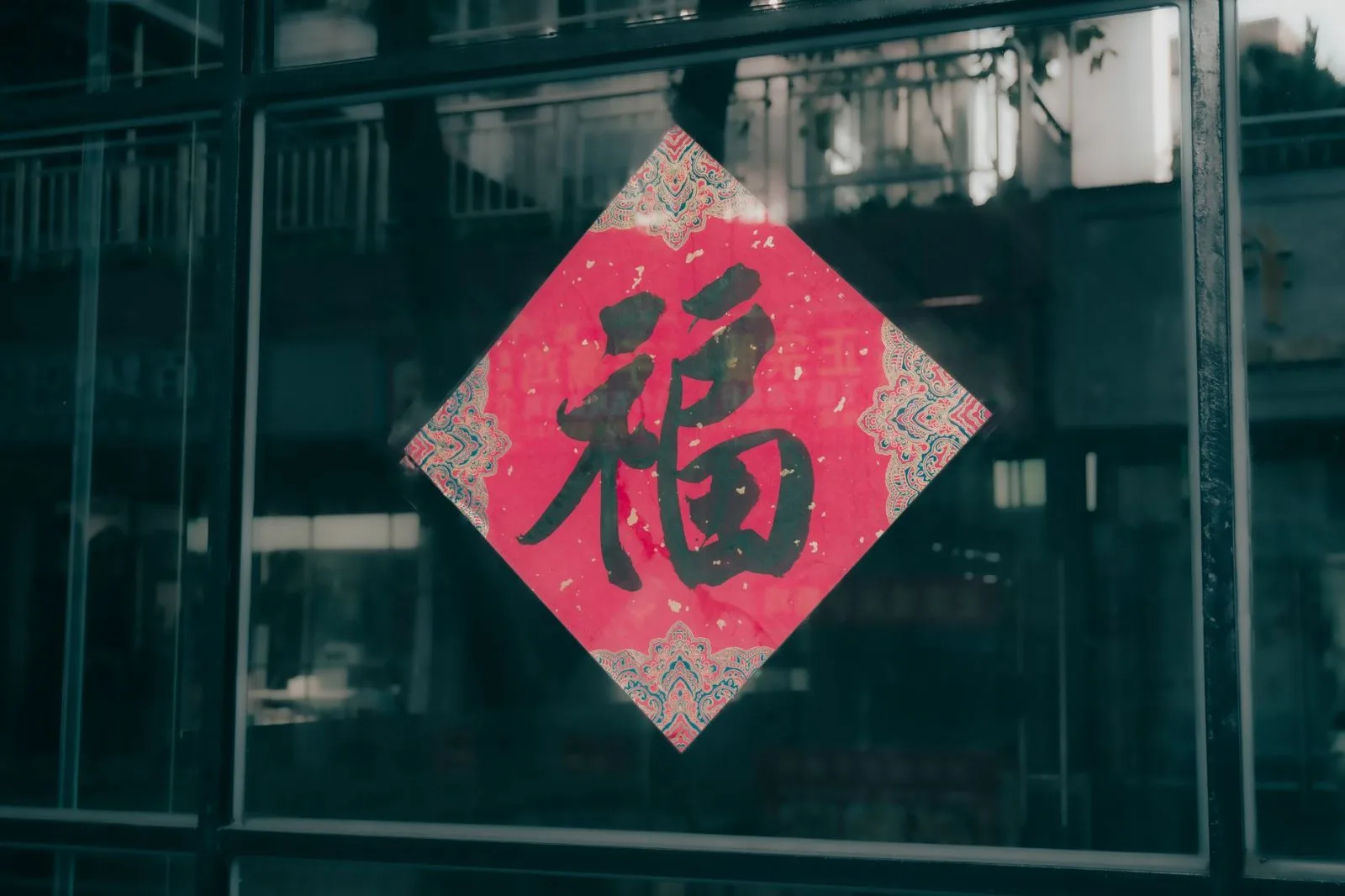
    The preparations begin weeks ahead. Homes are cleaned, debts settled, and red paper couplets pasted around the door, often with the character fu pasted upside down to suggest that good fortune has arrived. New Year’s Eve is the centre of the festival. Families travel home for a long meal that includes jiaozi, dumplings shaped like ancient coins; in northern China they are eaten at midnight. Fish is served because the word for fish sounds like surplus, and a whole fish is often left partly uneaten. Firecrackers once marked the transition, though many urban areas restrict them. After dinner, many families watch the CCTV Spring Festival Gala while red envelopes are handed to children and unmarried younger relatives.

    Red couplets and lanterns decorating a Beijing doorway for Spring Festival
    Red couplets and the character fu mark a household ready for the new year. Matthew Jesús | Pexels License (https://www.pexels.com/license/)

    Visiting and Red Envelopes

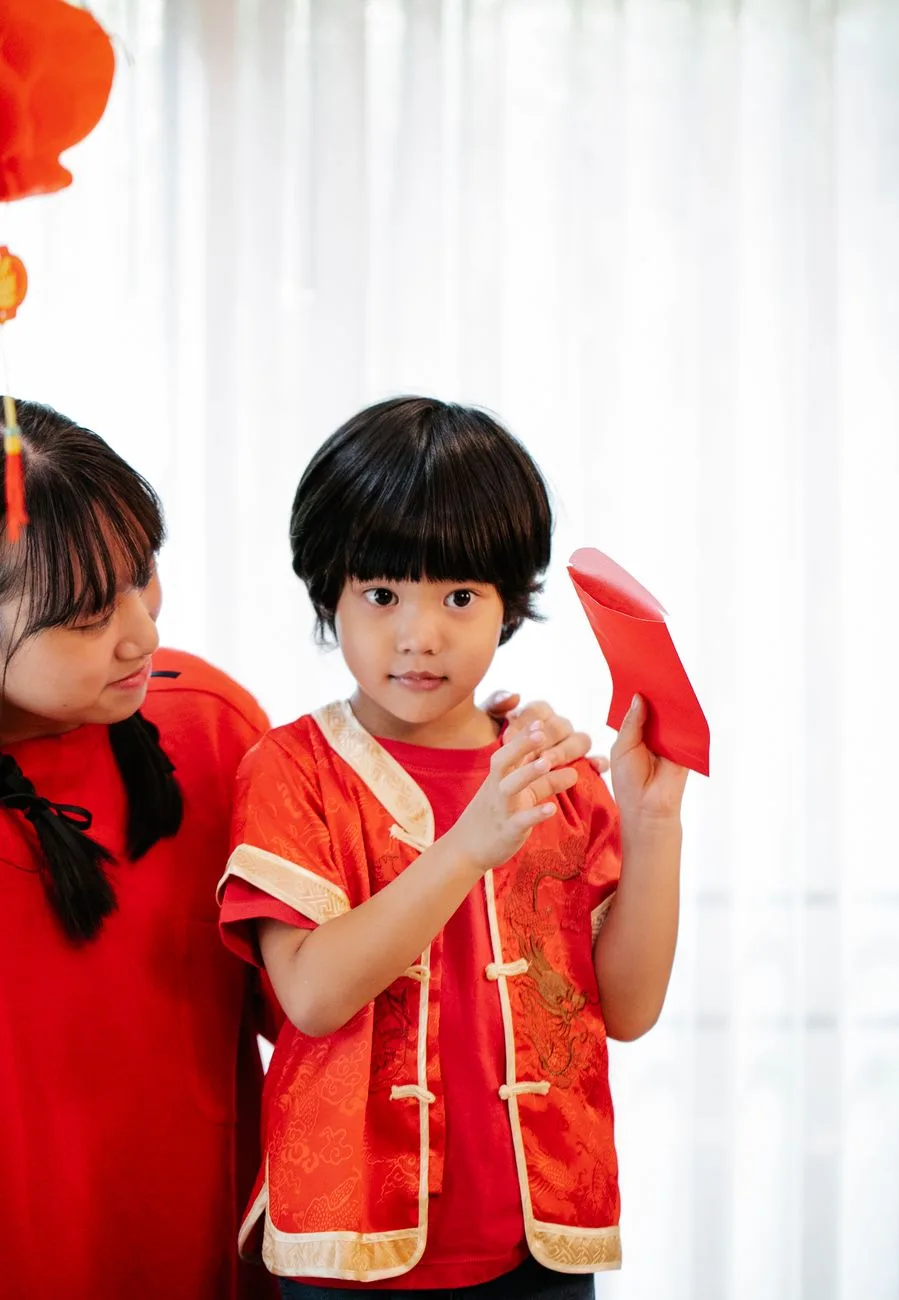
    The first days are for bainian, visits to relatives and neighbours. People call on the oldest family members first, bringing fruit, tea, or sweets, and greet one another with phrases wishing prosperity and health. Hongbao, red envelopes containing cash, pass from married adults to children and younger unmarried relatives; amounts end in even numbers and are accepted with both hands and a thank-you. Hosts offer a tray of snacks, often including candied fruits and melon seeds, before a meal. Visiting over several days is normal, and a phone message has become an accepted substitute for distant friends. Dress is neat rather than formal, and arriving empty-handed is less important than arriving at all. The point of the circuit is to renew the relationships that hold a family network together.

    Red envelopes being handed to a child during a New Year visit
    Hongbao pass from older to younger relatives during the first days of the year. アンジェラ・ローマ | Pexelsライセンス(https://www.pexels.com/license/)

    Beijing Temple Fairs

    Beijing’s miaohui, or temple fairs, turn temple courtyards and parks into markets for the duration of the holiday. The fairs at Ditan, Taoranting, Baiyunguan, and the Summer Palace sell dolls, sugar paintings, paper cuts, and skewered snacks, with opera singers, acrobats, and lion dancers performing in the middle of the crowd. They began as religious gatherings attached to temple festivals and became popular public entertainments; today they are as much a family outing as a religious event. Admission is usually a small fee, and the busiest hours are afternoon. Metro stations near the parks are crowded, so go early and expect a queue for the best-known fairs. The atmosphere is informal: eat while you walk, watch a performance from the edge, and keep an eye on children.

    A crowded Beijing temple fair with red lanterns and market stalls
    Temple fairs bring opera, snacks, and craft stalls to parks and temple courtyards. zimochen | Pexels License (https://www.pexels.com/license/)

    The Fifteenth Day and a Global Holiday

    The festival closes with Yuanxiao, the Lantern Festival, on the fifteenth day of the first lunar month. Streets and parks hang lanterns, families eat sweet rice balls called tangyuan, and lantern riddles invite a guess before the night ends. In Beijing, some neighbourhoods still stage dragon dances and drum processions. The Spring Festival was inscribed on UNESCO’s intangible cultural heritage list in 2024, recognising practices that extend well beyond one city. For visitors, the practical notes are straightforward. The public holiday closes shops and offices for several days, transport is crowded, and prices for flights and hotels rise. Book early, carry cash in small notes for envelopes and market stalls, and accept that some days are better spent with a family invitation than with a museum itinerary.

    Red at the door, fish on the table, and an envelope in the hand mark the year’s first days.

    出典と参考文献

    1. Spring festival, social practices of the Chinese people in celebration of traditional new year —ユネスコ無形文化遺産。
    2. 中国の旧正月 —ブリタニカ百科事典。
    3. Chinese New Year travel and festivals — China Highlights.

    設置場所を見てください

    この項目をたどって、該当する地域へ移動してください。

    地図で探索する

    スレッドをたどってください

    同じタグを持つ他のエントリーを閲覧する。

    タグを閲覧する
  • ランタンフェスティバル

    生活と民話

    ランタンフェスティバル

    Lights on the Fifteenth Night

    The fifteenth night of the first lunar month closes the New Year with lanterns and sweet rice balls.

    セクション
    生活と民話
    地域
    北京
    時代
    時代を超えて
    タグ
    習慣、食べ物

    The Lantern Festival falls on the fifteenth day of the first lunar month, the first full moon of the year. Lanterns, night markets, riddles, and tangyuan rice balls mark the end of the New Year period.

    Origins in Calendar and Court

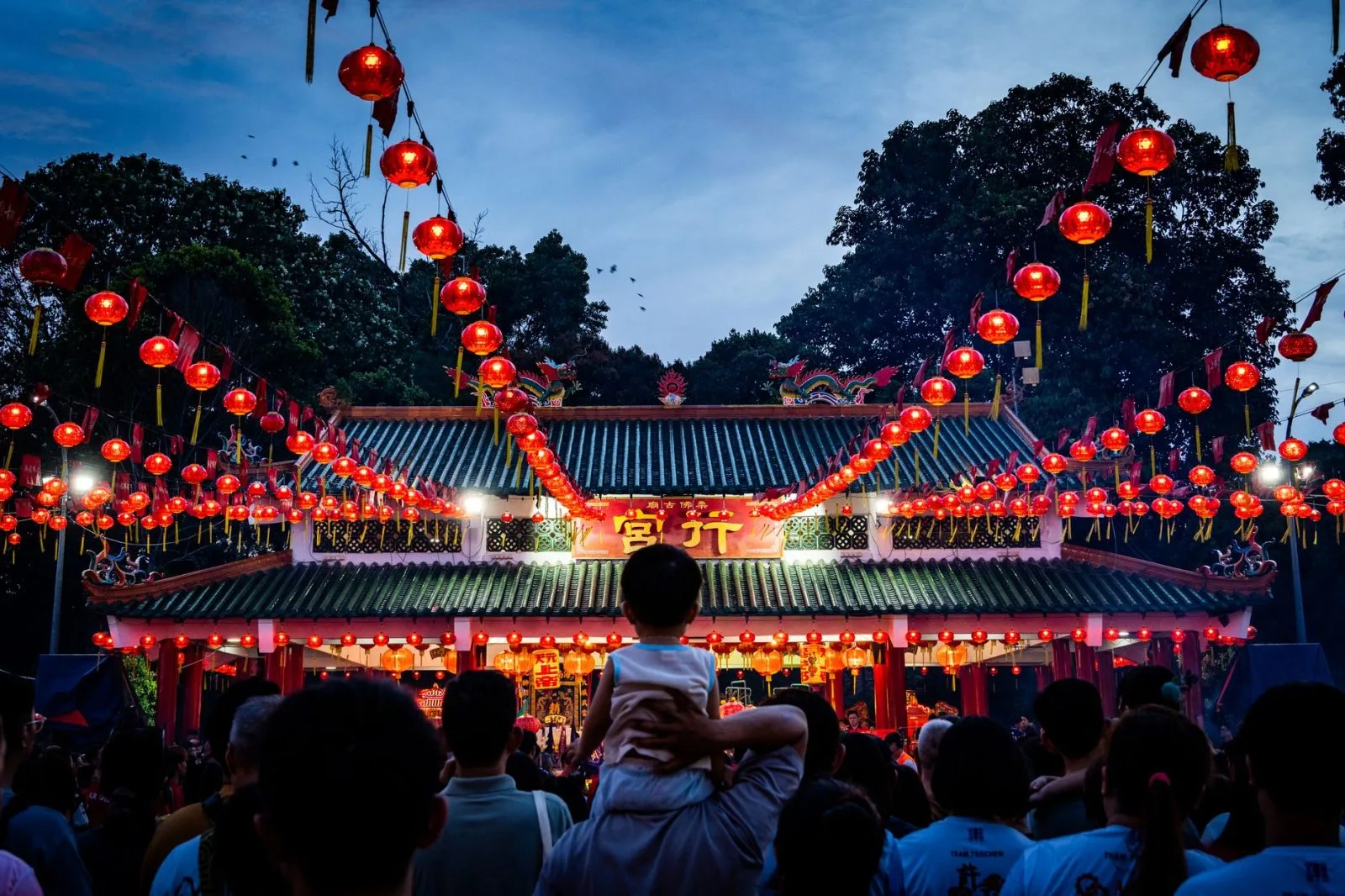
    The festival’s date follows the lunar calendar, so its Gregorian date changes each year. Several origins are cited. Emperor Wen of Han is said to have declared a public holiday around 180 BCE after defeating the Lü clan, while the Eastern Han emperor Ming promoted lantern displays in the first century CE as Buddhism spread. Daoist tradition associated the day with the heavenly official who grants blessings. By the Tang dynasty, the festival had become a major urban occasion: court records describe vast lantern displays in Chang’an and Luoyang, and the poet Su Weidao wrote of night markets bright as day. The Tang court relaxed curfew so people could view the lights.

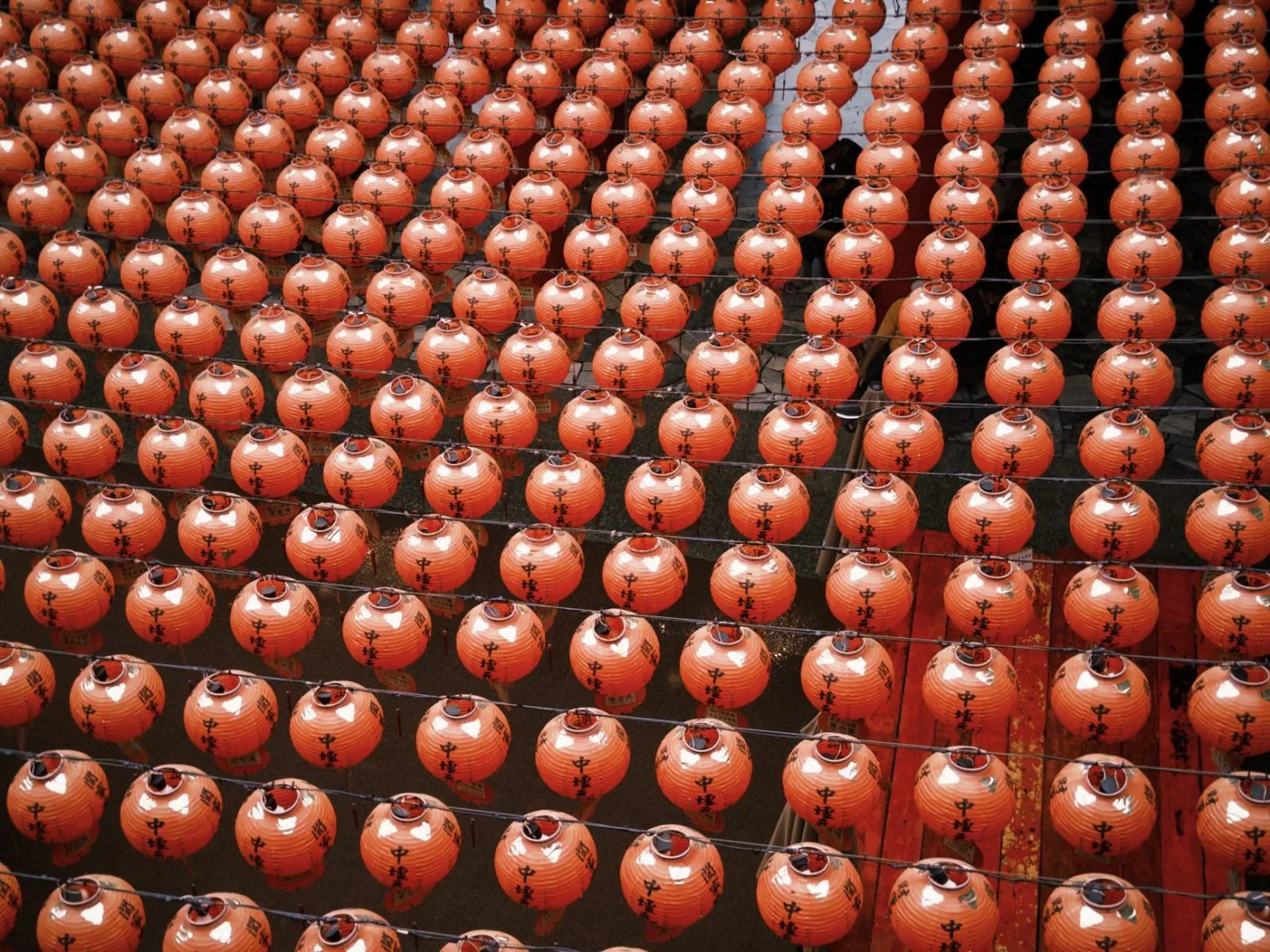
    Rows of illuminated red lanterns hanging along a street during a night festival
    Tang cities relaxed curfew so residents could walk among the lanterns at night. zack ZHUO | Pexels License (https://www.pexels.com/license/)

    Riddles, Lions, and Processions

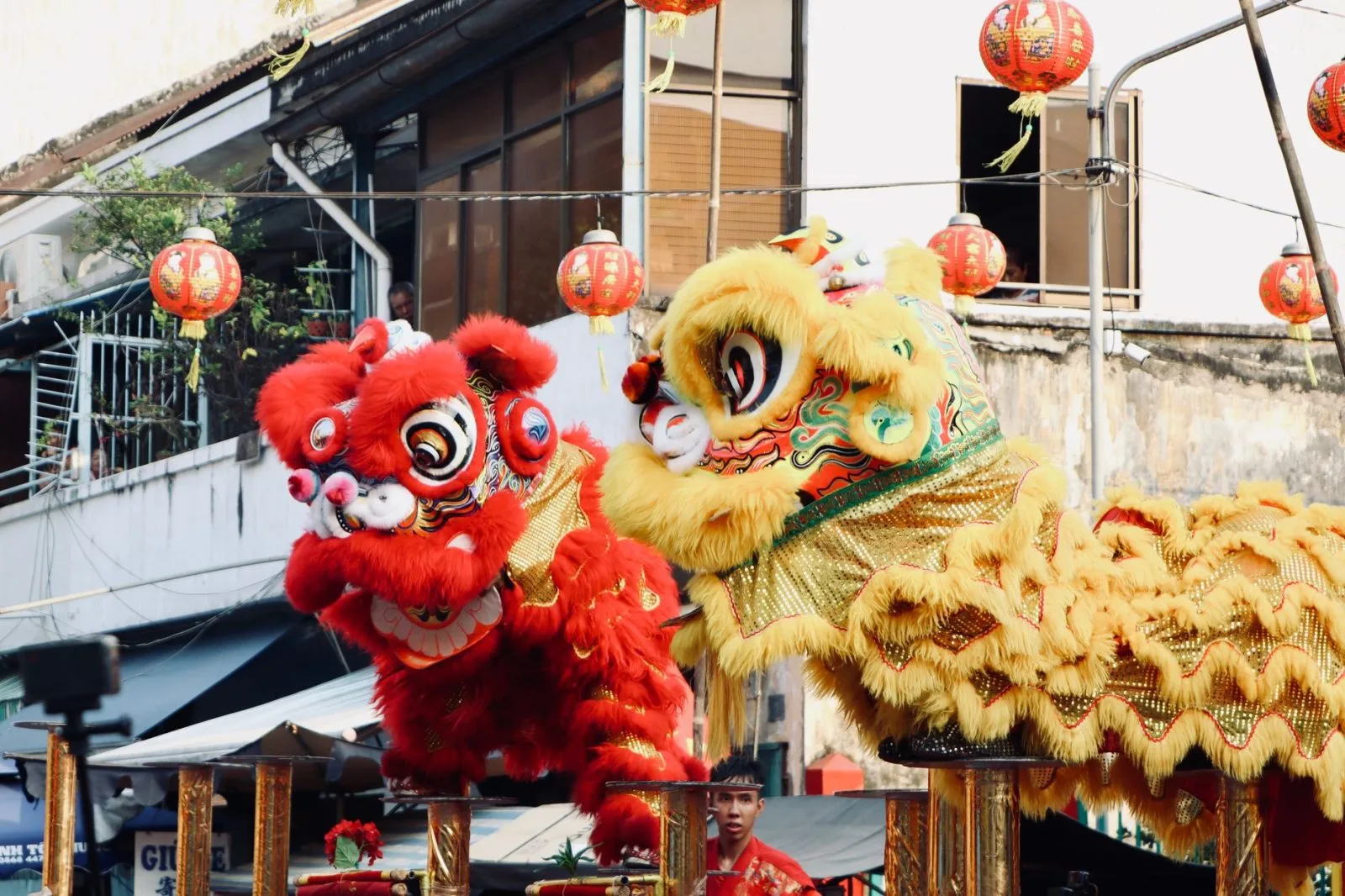
    Lantern riddles are written on slips attached to the lamps; solving one is a small test of wordplay and classical learning. Lion dances, dragon dances, and walking-on-stilts performances draw crowds in the streets, with local troupes competing for space and applause. In some places, people carry lanterns representing animals or characters, and children pull small lanterns on sticks. Beijing’s temple fairs once gathered vendors, performers, and visitors around temple courtyards; today the festival is also marked in parks and commercial districts. Taiwan is known for large lantern festivals and elaborate installations, while Nanjing has long been associated with elaborate lantern craft along the Qinhuai River.

    A lion dance troupe leaping beneath hanging lanterns during a street celebration
    Processions and lion dances turn the festival into a public performance. Pham Huynh Tuan Vy | Pexels License (https://www.pexels.com/license/)

    Tangyuan and the Taste of Reunion

    The festival food is tangyuan in southern China and often yuanxiao in the north, both made from glutinous rice flour around a sweet filling. The names and methods differ: southern cooks wrap a soft dough around filling, while northern cooks may roll moistened filling in dry rice flour in repeated layers. Fillings include black sesame paste, red bean, peanut, and osmanthus sugar. The round shape suggests family unity, and the bowls are shared after the evening’s walk. In Ningbo, black-sesame tangyuan are a local speciality; in Shanghai and Suzhou they are sold from neighbourhood shops. Sweet rice wine and small glutinous balls are also served in some regions.

    • Black sesame, red bean, and peanut fillings
    • Southern wrapped tangyuan and northern rolled yuanxiao
    • Lantern riddles attached to public displays
    • Dragon and lion processions after dark
    A bowl of small white glutinous rice balls in clear sweet soup
    Round rice balls symbolise reunion at the first full moon. Jauhar Musthofal Qulub | Pexels License (https://www.pexels.com/license/)

    The Festival in Modern Cities

    The festival remains a public holiday in mainland China, though the number of days off and the school calendar vary. Major cities install temporary lighting, close some streets to traffic, and run lantern displays in parks and along rivers. Viewing a lantern show often means walking slowly in crowds; in Beijing, the temperature can still be below freezing, so warm layers matter. Photographers should check local rules on tripods and drones. Shopping districts extend the season commercially, but temple fairs and neighbourhood associations keep older practices alive. The date’s movement also means the festival may fall during term time or a working week, changing how families gather.

    The first full moon turns a winter street into a temporary gallery of paper, silk, and light.

    出典と参考文献

    1. ランタンフェスティバル —ブリタニカ百科事典。
    2. Chinese Lantern Festival — China Highlights.
    3. Yuanxiao Festival — 世界史百科事典

    設置場所を見てください

    この項目をたどって、該当する地域へ移動してください。

    地図で探索する

    スレッドをたどってください

    同じタグを持つ他のエントリーを閲覧する。

    タグを閲覧する
  • 餃子

    生活と民話

    餃子

    小麦の詰め物入りケースと冬の儀式

    中国北部の餃子は、小麦粉の生地と季節の具材を組み合わせ、皆で囲む食事となる。

    セクション
    生活と民話
    地域
    北京
    時代
    時代を超えて
    タグ
    習慣、食べ物

    餃子は、小麦粉で包んだ具材を、茹でたり、蒸したり、揚げたりして調理するものです。中国北部では、冬至や旧正月を祝う行事として、家族が食卓を囲み、一つ一つ手で餃子を包みます。

    北部の食生活における小麦

    餃子は中国北部の小麦と粟の産地に属し、そこでは小麦粉が漢代以降の王朝で主食となった。その形は古代中国の貨幣に似ていることから、餃子は新年の言葉にも登場するようになった。餃子の「餃子」という音は、宝を交換するというフレーズと関連している。有名な言い伝えでは、餃子は漢代の医師、張仲景に由来するとされている。張仲景は凍傷になった耳を治療するために、餡を詰めた生地の包みを作ったと言われている。この話の真偽は定かではないが、寒い時期に餃子を食べる習慣を説明するものである。餡を詰めた小麦料理に関する考古学的証拠は、特定の発明者よりも明確である。

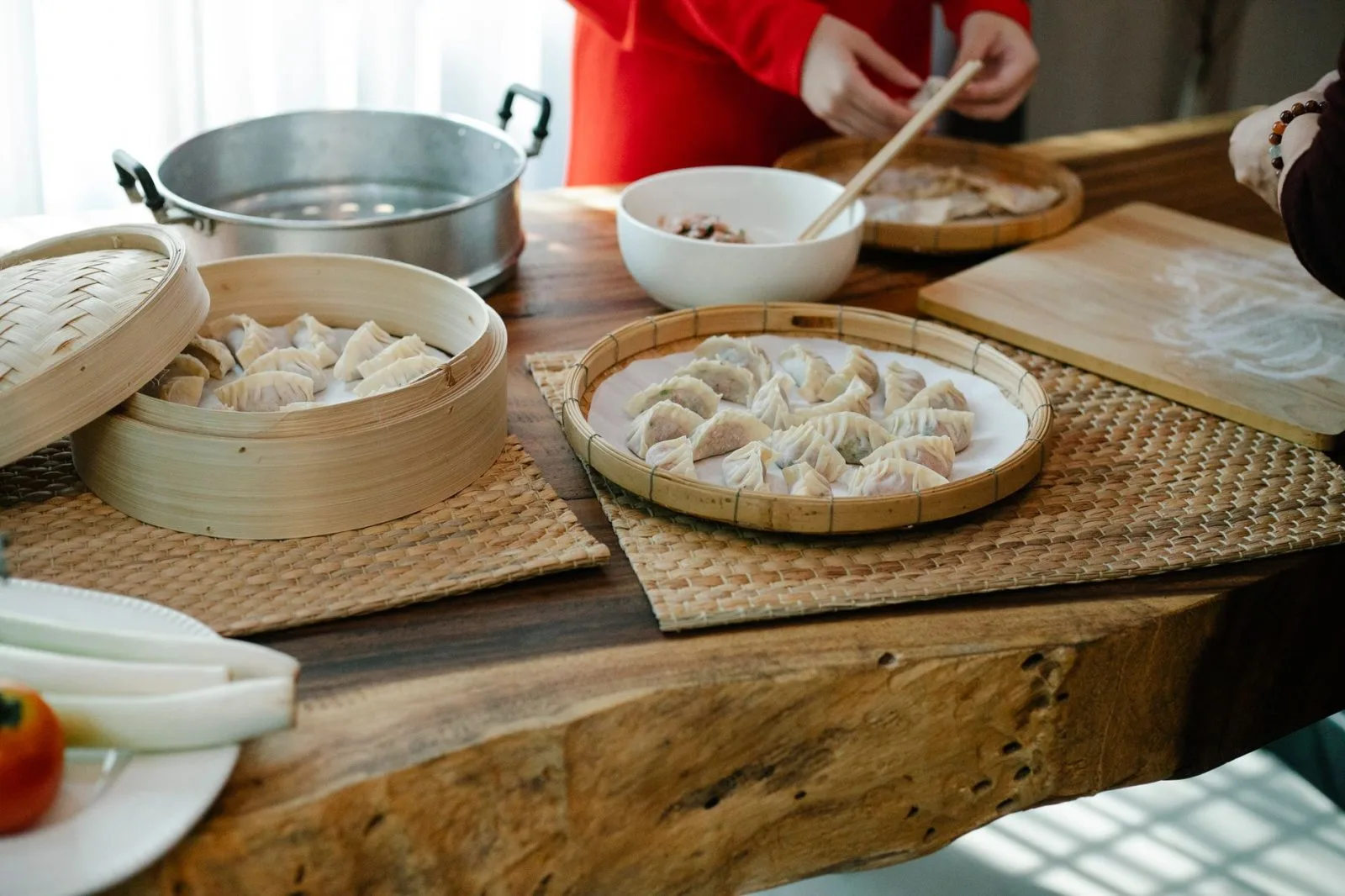
    小麦粉をまぶした木製の板の上に並べられた、ひだ状の餃子。
    ひだ状の縁が具材を閉じ込め、餃子特有の形を作り出します。 アンジェラ・ローマ | Pexelsライセンス(https://www.pexels.com/license/)

    生地、具材、折りたたみ

    餃子の基本的な生地は小麦粉と水で、グルテンが柔らかくなり、皮が破れずに薄く伸ばせるように休ませます。より柔らかい食感にするために、卵を加えたり、小麦粉の一部を熱湯に置き換えたりする料理人もいます。具材は火が通るように細かく刻みます。豚肉とキャベツ、ニラ、またはネギ。西北地方では羊肉と玉ねぎ。沿岸地方ではエビと卵。料理人は具材を中央に置き、皮を折りたたみ、縫い目に沿ってひだをしっかりと押さえます。空気が残っていると茹でたときに生地が開いてしまうため、しっかりと閉じることが重要です。豆腐、きのこ、卵などのベジタリアン具材も一般的で、特に寺院参拝や断食期間中によく食べられます。

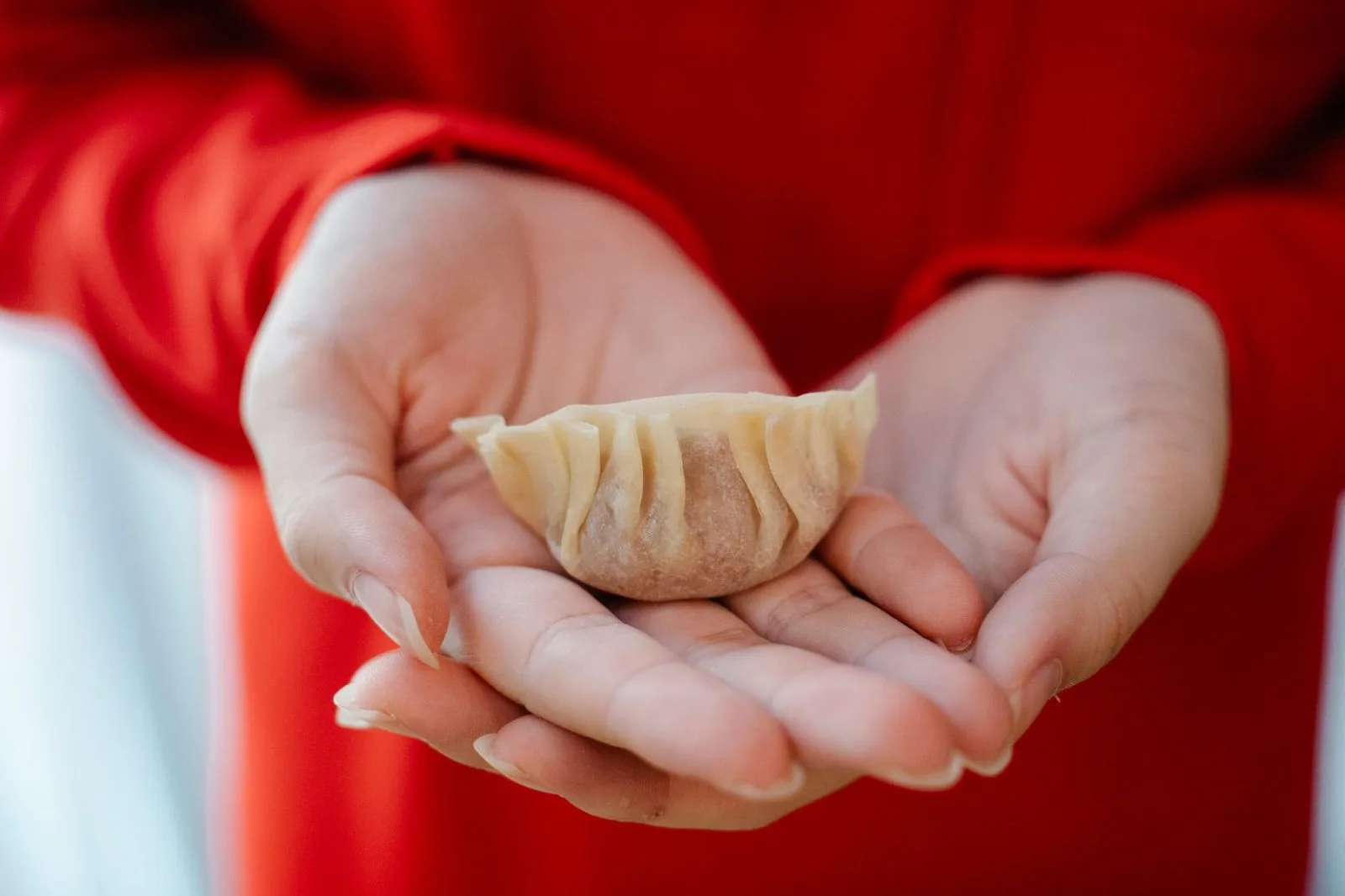
    生餃子の縁に沿ってひだをつまむ手
    プリーツで包みを密封する。折り方は家庭によって好みが異なる場合がある。 アンジェラ・ローマ | Pexelsライセンス(https://www.pexels.com/license/)

    茹でる、蒸す、揚げる

    最も一般的な調理法は茹でる方法です。餃子を大きな鍋に入れ、底から軽く押して、浮き上がって膨らむまで茹でます。北部の料理人は、鍋が再び沸騰したときに少量の冷水を加え、皮をしっかりさせるためにこの工程を3回繰り返すことがよくあります。焼き餃子、またはグオティエは、片面を揚げてから、少量の水を入れた蓋で蒸し、底をパリッとさせます。南部や海外のバリエーションには、エビと半透明の小麦粉の皮を使った蒸しハーガオがあります。つけダレは、黒酢と生姜から、ラー油やニンニクを加えた醤油まで様々です。具材も地域によって異なり、北京では豚肉とニラが主流で、イスラム教徒のコミュニティでは牛肉と羊肉が見られ、内陸部の寒い都市ではキャベツやキノコが好まれます。

    • 新年と冬至に食べる茹で餃子
    • サクサクに揚げた生地のグオティエ
    • 黒酢と生姜は定番のディップソース
    • 豚肉、ラム肉、エビ、または野菜を使った地域ごとの具材
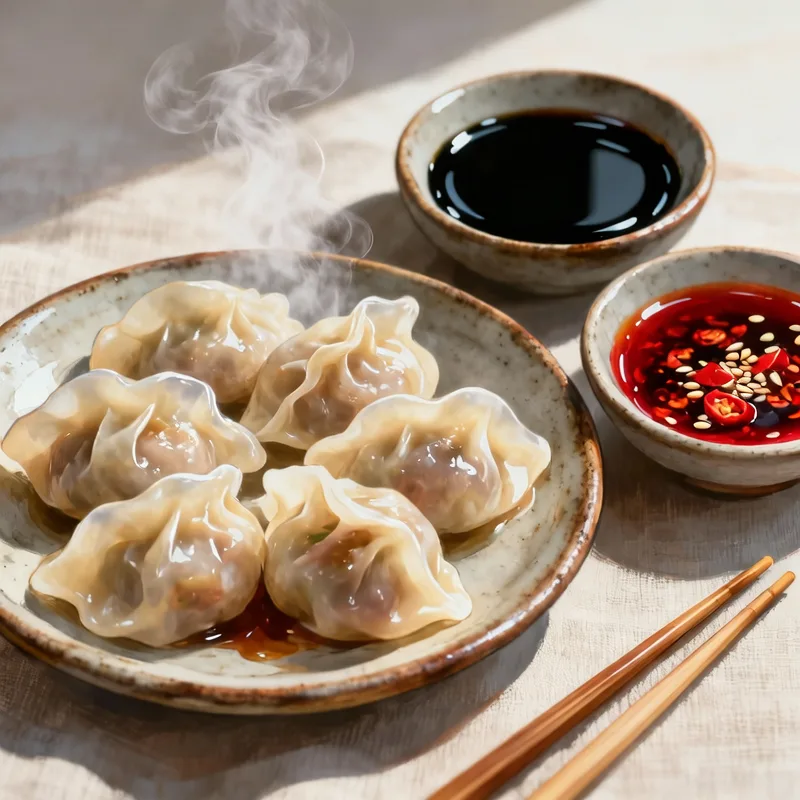
    茹で餃子に酢とラー油を添えて
    酢と生姜のディップソースが、濃厚な豚肉の具材の味を引き立てる。 AI生成イラスト · SinoViz

    一緒に作る

    餃子は、作るのにかかる時間があるため、社交的な食べ物です。旧正月の前夜には、何世代にもわたって皮を巻き、具を刻み、何十個、何百個もの餃子を一緒に包みます。中にはコインの形をした餃子や、幸運のお守りとして洗ったコインを隠した餃子もあります。食事は、家族の中で最も年長の人を中心に行われることが多いです。残った餃子は翌日揚げて食べ、冷凍餃子は中国国内外のスーパーマーケットで販売されています。レストランでは、北京のラム肉餃子から上海の鍋餃子やスープ入りの小籠包まで、様々な種類があります。小籠包は、関連性はあるものの、異なる種類の蒸しパンです。

    餃子作りは、家庭におけるちょっとした工夫の結晶だ。生地、具材、手、そして家族が集まる理由。

    出典と参考文献

    1. 団子 —ブリタニカ百科事典。
    2. 礁子 —ブリタニカ百科事典。
    3. 中国の旧正月 —ブリタニカ百科事典。

    設置場所を見てください

    この項目をたどって、該当する地域へ移動してください。

    地図で探索する

    スレッドをたどってください

    同じタグを持つ他のエントリーを閲覧する。

    タグを閲覧する
  • ミャオ族の銀細工

    生活と民話

    ミャオ族の銀細工

    装飾品、記念品、そして祭りの衣装

    中国南西部各地の祭りの衣装には、ミャオ族の銀製の装飾品が用いられ、家族の歴史や地域固有のアイデンティティを伝えている。

    セクション
    生活と民話
    地域
    雲南省
    時代
    時代を超えて
    タグ
    風習、民族文化、景勝地

    ミャオ族の銀細工は、貴州省、雲南省、および周辺地域のミャオ族コミュニティによって作られる、頭飾り、首飾り、イヤリング、ブレスレットなどの装飾品の総称です。これらの作品は、祭りや結婚式などの際に最も目立つ形で身につけられます。

    分散型工芸の伝統

    ミャオ族は貴州省、雲南省、広西チワン族自治区、四川省、そして東南アジア各地に居住しており、銀細工は地域によって様々です。雲南省では、文山県や紅河県周辺のミャオ族の村々が、より有名な貴州省の西江県や凱里県とは異なる様式を維持しています。装飾品は、小さな工房で働く専門の銀細工師によって作られ、多くの場合、複数の村にサービスを提供しています。デザインは、書かれた型紙ではなく、徒弟制度を通して習得されます。若い職人は、古い作品や祭りの衣装から型を写し取って、それを繰り返します。モチーフは、地元の鳥、花、昆虫、硬貨などから取られることがありますが、その意味は固定されていません。家族は代々装飾品を蓄積し、娘の祭りの頭飾りは、長年の貯蓄の成果を表すこともあります。

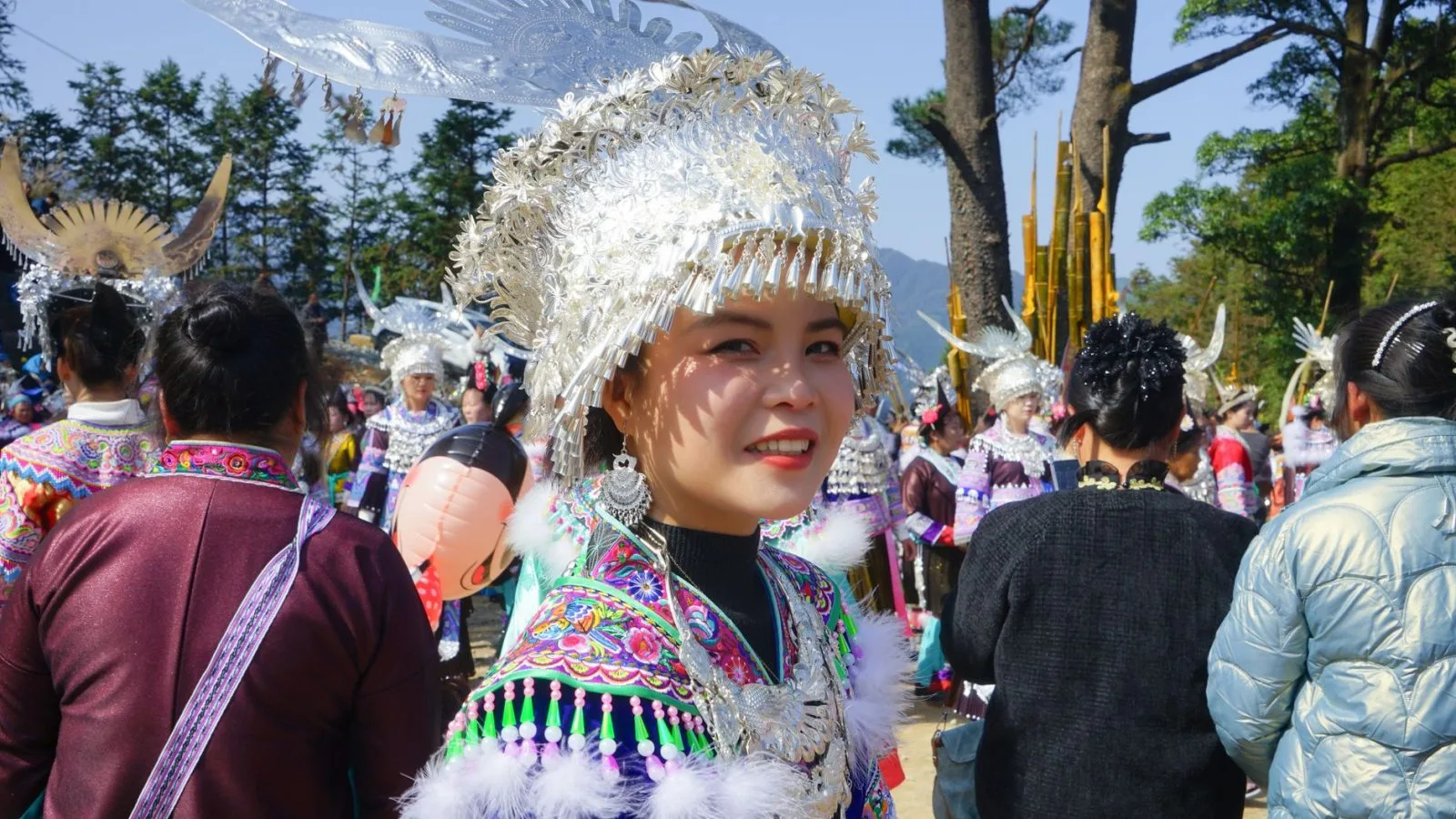
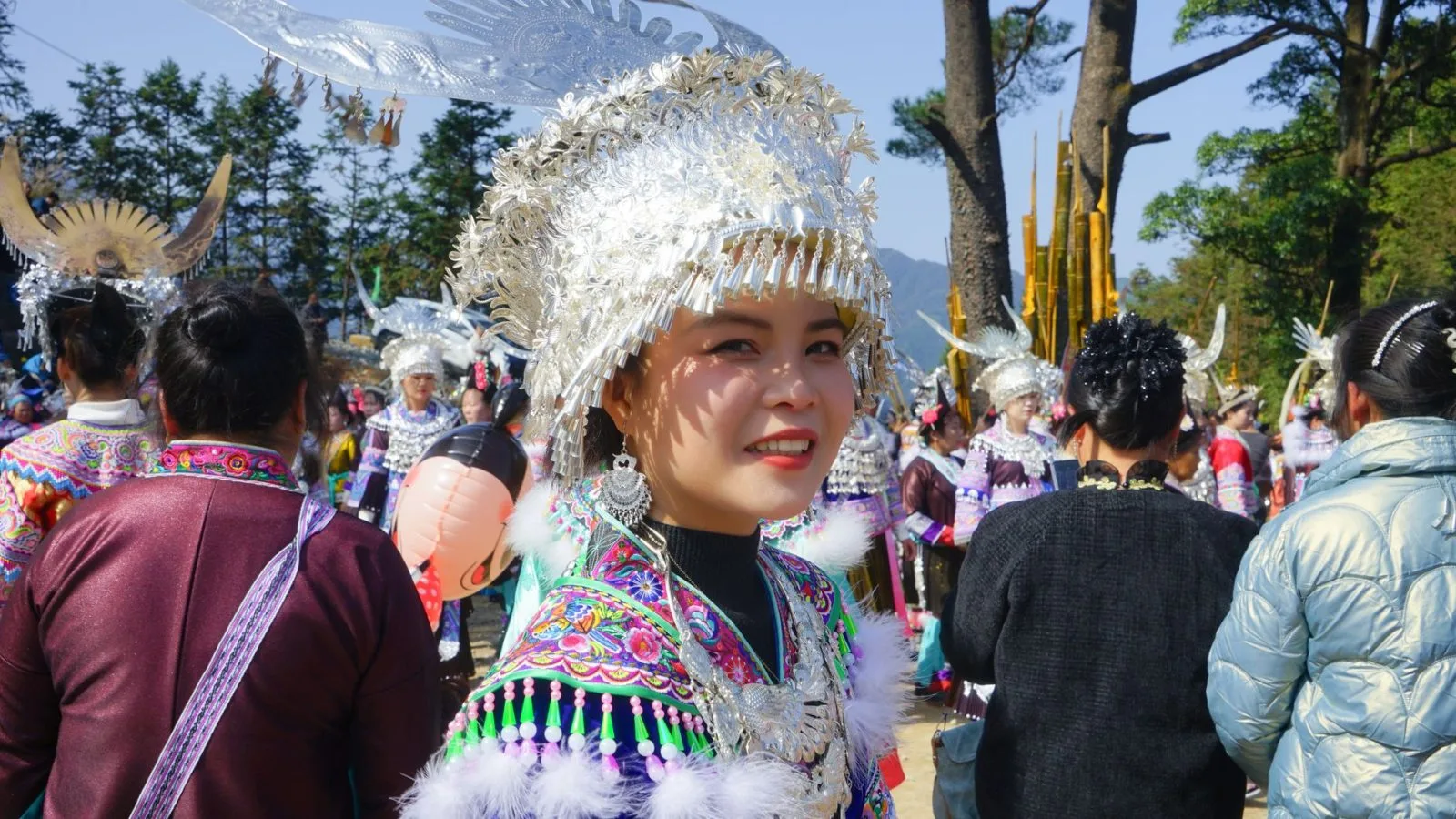
    祭りで着用された、銀の角、飾り板、吊り下げ装飾品が付いたミャオ族の頭飾り
    ヘッドドレスは、家宝と特定の機会のために作られたものを組み合わせたものである。 Jaqor Q.I. | Pexelsライセンス (https://www.pexels.com/license/)

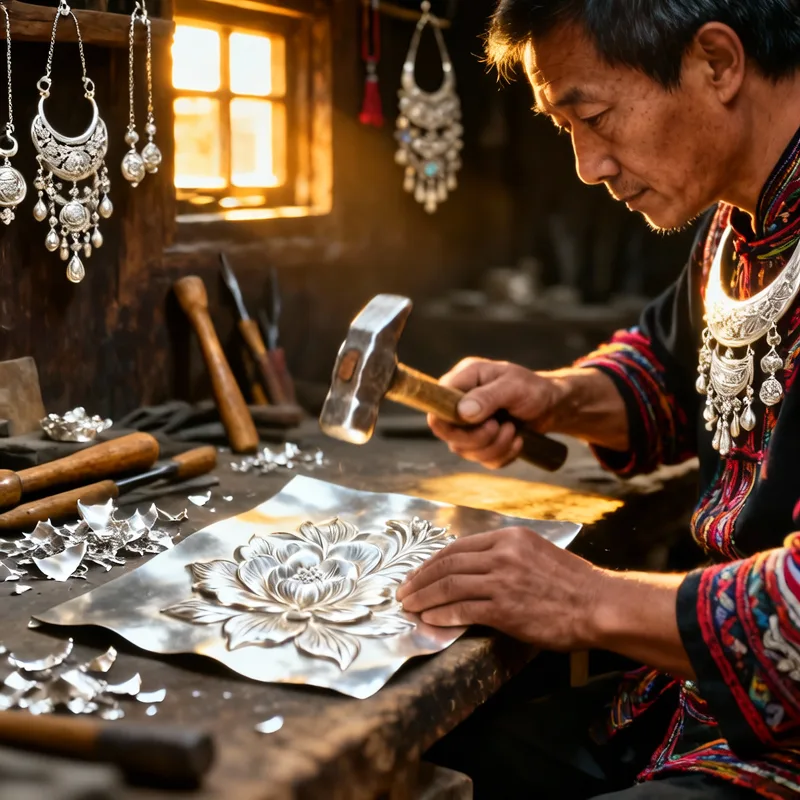
    板材、ワイヤー、打ち出し細工

    ミャオ族の銀細工の多くは、銀板と銀線から始まります。鍛冶師は銀の塊を叩いて薄い板状にし、細長い帯状に切り出し、裏側から打ち出しと彫り込みで模様を浮かび上がらせます。馬の毛ほどの細さの銀線を撚り合わせてろう付けし、透かし細工の翼、角、花飾りなどを作ります。大きな頭飾りには、打ち出し細工の帯、垂れ下がる鎖、打ち出し細工の飾り板、そして着用者が回転すると揺れる小さな鈴の列が組み合わされることもあります。銀は、その色、加工のしやすさ、そして伝統的に守護と繁栄の象徴とされてきたことから重宝されています。儀式用の頭飾りは重すぎて長時間着用できない場合があるため、多くの装飾品は重量を軽減するために中空になっています。

    ミャオ族の銀細工師が薄い銀板を叩いて、花模様の浮き彫りの飾り板を作っている。
    打ち出し技法は、薄い銀板の裏側からデザインを浮き上がらせる技法である。 AI生成イラスト · SinoViz

    フェスティバルウェアと社会的意義

    銀の装飾品は、単独の宝飾品としてではなく、衣装全体の一部として捉えられます。ミャオ族の女性の祭りの衣装には、プリーツスカート、刺繍入りのジャケット、織物のベルト、三日月形または翼の形をした銀の襟飾りなどが含まれる場合があります。一部の地域では、イヤリングや首輪の数や形が、村の所属や婚姻状況を示します。旧正月、収穫祭、そして一部の地域でのミャオ族の新年には、女性や少女は家族揃いの衣装を身に着け、グループで歌ったり踊ったり、村の間を行進したりします。装飾品は動きに合わせて光を反射し、衣装がパフォーマンスの視覚的な一部となります。男性は、儀式的な意味合いの少ない銀のボタン、鎖、または小さなペンダントを身に着けることがあります。

    • 薄い銀板から浮き彫りされたレポゼ細工の飾り板
    • ねじれたワイヤーと透かし細工
    • 角、鎖、鈴のついた頭飾り
    • 新年や結婚式の儀式で着用される衣装
    刺繍が施されたミャオ族の祭り衣装を着て、重厚な銀の襟飾りとイヤリングを身につけた女性たち
    装飾品は刺繍や織物と合わせて、一つの衣装体系として身に着けられる。 Jaqor Q.I. | Pexelsライセンス (https://www.pexels.com/license/)

    市場、観光、そして継続性

    銀細工は村の工房、地域の市場、そして観光を通じて流通している。雲南省や貴州のミャオ族の村を訪れる人は、職人が小さな作品を形作る様子を見ることができるが、最も重要な家宝は通常販売されていない。お土産として売られている複製は、精巧なミニチュアから安価なメッキ金属まで多岐にわたるため、純銀製かどうかを確認することが重要だ。博物館や文化センターには古い頭飾りや首飾りが展示されているが、生活の場としては依然として地元の衣装である。一部のコミュニティでは祭りの衣装を復活させ、若い世代に銀細工を教えているが、移住や賃金労働によって、それらを製作したり身に着けたりする時間を持つ人が変化している。この工芸の未来は、目新しさよりも、それを使用する機会が継続的にあるかどうかにかかっている。

    ミャオ族の頭飾りは、身に着ける装身具であると同時に、家族の作品を伝える持ち運び可能な記録庫でもある。

    出典と参考文献

    1. Miao people —ブリタニカ百科事典。
    2. Chinese silver jewellery — Victoria and Albert Museum.
    3. Miao ethnic culture — China Highlights.

    設置場所を見てください

    この項目をたどって、該当する地域へ移動してください。

    地図で探索する

    スレッドをたどってください

    同じタグを持つ他のエントリーを閲覧する。

    タグを閲覧する
  • 四川料理

    生活と民話

    四川料理

    Chilli Oil, Ferment, and the Numbing Pepper

    Sichuan cooking balances chilli heat, Sichuan pepper numbness, fermented bean paste, and rich broth.

    セクション
    生活と民話
    地域
    四川省
    時代
    時代を超えて
    タグ
    Customs, Food, Geography

    Sichuan cuisine is known for bold seasoning, but its classic dishes are built on contrast: chilli with Sichuan pepper, hot oil with cool cucumber, or a clear broth beside a fiery one.

    A Basin Pantry and Early Flavours

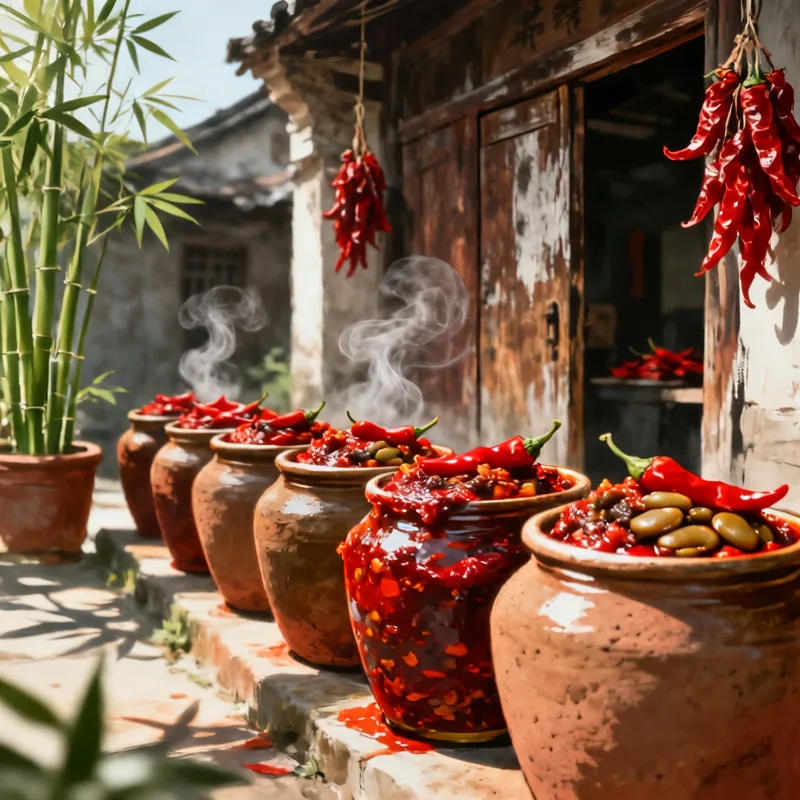
    The Sichuan Basin has fertile fields, rivers, and a humid climate, but its early elite cooking was not defined by chilli. Chilli peppers reached China from the Americas in the sixteenth century and became a Sichuan staple later, especially among ordinary households. Before that, cooks used ginger, garlic, mustard, vinegar, and the distinctive Sichuan pepper, Zanthoxylum simulans, whose husks cause a tingling sensation rather than heat.Fermented bean pastes from the basin towns added depth. Pixian doubanjiang, a broad-bean and chilli paste fermented in Pixian near Chengdu, became a foundation of many red-braised and stir-fried dishes. The province’s food therefore combines older preservation methods with ingredients that arrived through global trade.

    Jars of red chilli and broad-bean paste fermenting outside a Sichuan workshop
    Fermented doubanjiang gives many Sichuan dishes their deep red base. AI生成イラスト · SinoViz

    The Grammar of Heat

    Sichuan cooks distinguish several kinds of chilli heat. Dried chillies are fried in oil until fragrant but not blackened; chilli oil is steeped and aged; chilli bean paste supplies fermented heat; and fresh peppers give a brighter bite. Sichuan peppercorns, often toasted and ground, produce the málà combination of numbness and spice. Official Sichuan cookbooks describe more than twenty recognised flavour profiles, from guaiwei, strange or complex, to yuxiang, fish-fragrant, which uses no fish. Mapo tofu, associated with Chengdu in the nineteenth century, combines soft tofu, minced meat, doubanjiang, chilli oil, and Sichuan pepper. Kung Pao chicken uses dried chillies, peanuts, and a sweet-sour soy sauce.

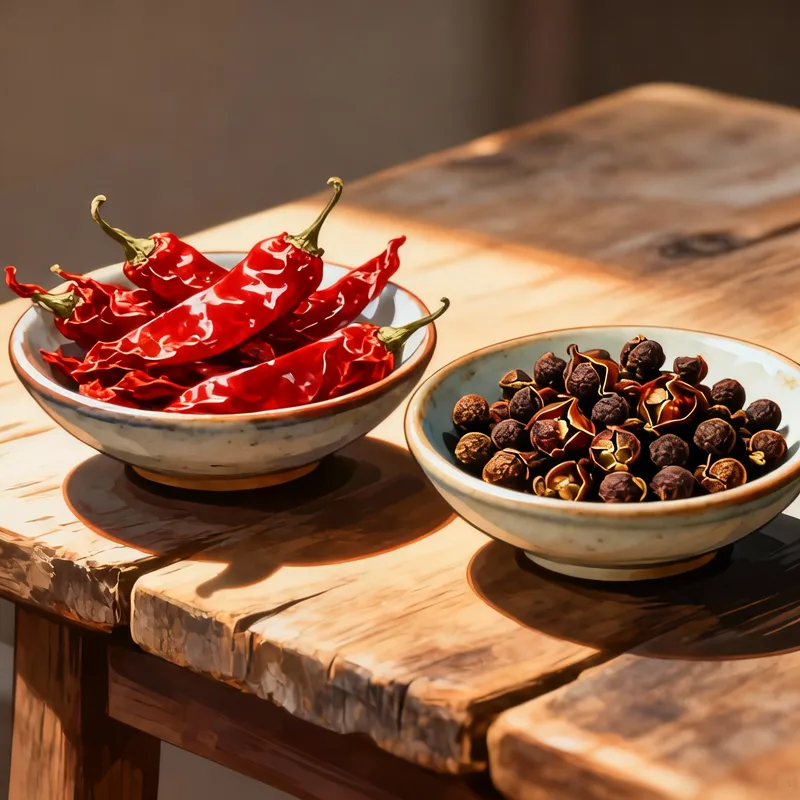
    Dried red chillies and Sichuan peppercorns in separate shallow bowls
    Chilli heat and peppercorn numbness are distinct, and cooks balance them separately. AI生成イラスト · SinoViz

    Hotpot and the Two-Flame Bowl

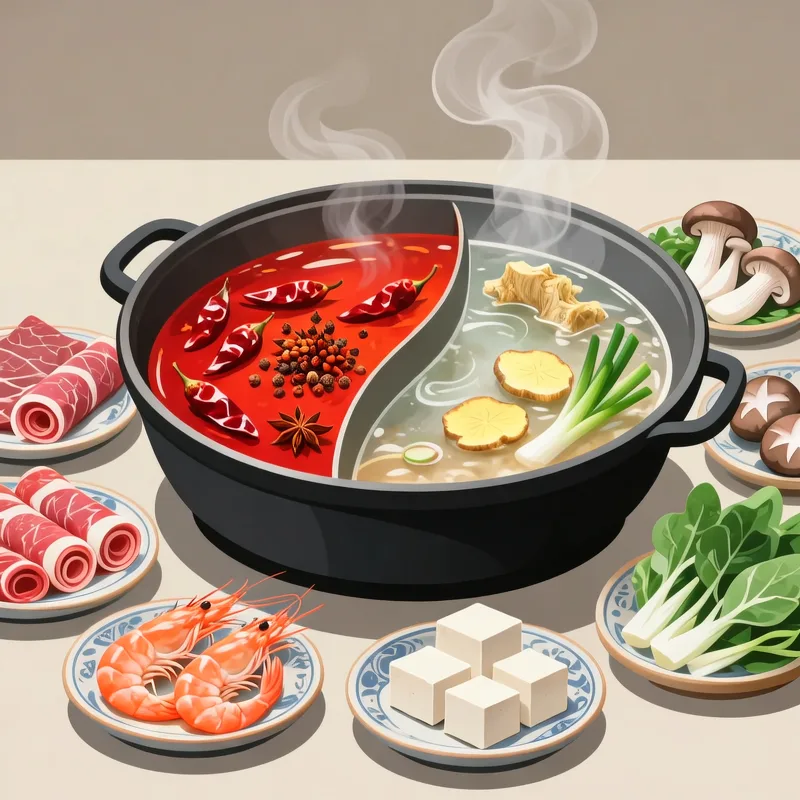
    Chengdu hotpot is a social meal built around a divided pot. One side may hold a red broth of chilli oil, doubanjiang, beef fat, and spices; the other a clear chicken or mushroom stock. Diners cook thinly sliced beef, tripe, duck blood, fish balls, vegetables, and mushrooms, then dip them in sesame oil, garlic, and chopped herbs. The sesame dip cools the palate and coats the mouth against spice. Chongqing hotpot is often heavier and more direct, traditionally using beef tallow; Chengdu versions are commonly more aromatic and varied. Yibin and other southern cities add their own chilli blends. Restaurants label spice levels, but heat can still be adjusted only by asking.

    • Pixian doubanjiang as a fermented chilli-bean base
    • Málà: chilli heat plus peppercorn numbness
    • Two-flavour hotpot with red and clear broth
    • Sesame oil dip to moderate the heat
    A divided hotpot with red chilli broth and clear broth surrounded by ingredient plates
    A two-flavour pot lets a table divide heat from clarity. AI生成イラスト · SinoViz

    Beyond the Fiery Stereotype

    Not every Sichuan dish is hot. Sichuan’s most ceremonial dish, Gongbao chicken and the banquet classic ‘sweet and sour’ aside, the cuisine includes clear broths, steamed dishes, and delicate pastry. Zhangcha duck is smoked with tea leaves and camphor before steaming, while boiled pork slices are served in a clear broth with mustard greens. Chengdu’s teahouses and dish shops serve small noodles, sweet-water noodles, and dumplings. The province also includes Tibetan and Yi food traditions in its western highlands, where barley, yak products, and different seasonings dominate. Reading Sichuan cuisine only as heat misses its central achievement: layering aromas, textures, and ferments so that strong flavours remain controlled.

    Sichuan cooking is not simply hot; it is a carefully graded argument between chilli, pepper, oil, and ferment.

    出典と参考文献

    1. Sichuan cuisine —ブリタニカ百科事典。
    2. Chinese Cuisine —ブリタニカ百科事典。
    3. Sichuan Food — China Highlights.

    設置場所を見てください

    この項目をたどって、該当する地域へ移動してください。

    地図で探索する

    スレッドをたどってください

    同じタグを持つ他のエントリーを閲覧する。

    タグを閲覧する
  • 荘

    民族コミュニティ

    荘

    棚田と歌祭り

    The Zhuang are China’s largest minority ethnic group. Their culture is closely tied to Guangxi’s karst hills, rice farming, song festivals and distinctive bronze drum traditions.

    コミュニティ
    荘
    Population
    Around 19 million, mostly in Guangxi
    言語
    Zhuang (Tai-Kadai)
    01

    Where the community lives

    Most Zhuang people live in Guangxi, with communities also in Yunnan, Guangdong and Guizhou. Karst valleys and river plains shape settlement and agriculture.
    02

    Language and tradition

    Zhuang belongs to the Tai-Kadai family. Folk songs, especially antiphonal singing, are central to social life and courtship.
    03

    Festivals and daily life

    The Sanyuesan festival features singing, coloured eggs and gatherings. Rice, river fish and sour flavours appear in local food traditions.
    04

    Crafts and heritage

    Bronze drums, embroidered balls and indigo-dyed textiles are important cultural symbols. Dong and Zhuang communities also share drum tower and bridge-building traditions in some areas.

    地域を見る

    Open the map to read the land connected to this community.

    地図で探索する
  • モンゴル

    民族コミュニティ

    モンゴル

    Steppe heritage and mobile life

    Mongol culture is rooted in the grasslands of northern China. Herding, horses, wrestling, throat singing and the yurt reflect a mobile life shaped by climate and open landscape.

    コミュニティ
    モンゴル
    Population
    About 6 million; Inner Mongolia and neighbouring provinces
    言語
    モンゴル語(モンゴル系)
    01

    Where the community lives

    Mongol communities live mainly in Inner Mongolia, with populations in Liaoning, Jilin, Hebei, Xinjiang and Qinghai. Grasslands and steppe cities create different ways of life.
    02

    Language and belief

    Mongolian is written in the traditional vertical script in Inner Mongolia. Tibetan Buddhism and shamanic traditions have both influenced Mongol practice.
    03

    Festivals and daily life

    Naadam features wrestling, horse racing and archery. Dairy products, mutton and milk tea are staples of steppe food culture.
    04

    Crafts and heritage

    Yurt construction, leatherwork, silver ornaments and horse gear show practical design and decoration. Long-song and morin khuur music carry steppe aesthetics.

    地域を見る

    Open the map to read the land connected to this community.

    地図で探索する
  • フイ

    民族コミュニティ

    フイ

    A Muslim community across China

    Hui communities are found across China, often around mosques and historic trading neighbourhoods. Their culture combines Chinese language and local customs with Islamic religious life.

    コミュニティ
    フイ
    Population
    About 11 million, in every province
    言語
    中国語(アラビア語とペルシャ語の典礼用語を含む)
    01

    Where the community lives

    Hui people live throughout China, with notable communities in Ningxia, Gansu, Qinghai, Yunnan and major cities such as Xi’an and Beijing. Mosques often anchor neighbourhood life.
    02

    Language and belief

    Most Hui speak local Chinese dialects. Islam shapes dietary practice, festivals, education and mosque architecture.
    03

    Festivals and daily life

    Eid al-Fitr and Eid al-Adha are major festivals. Halal food culture includes lamb dishes, hand-pulled noodles and local snacks shaped by region.
    04

    Crafts and heritage

    Mosque architecture blends Chinese and Islamic forms. Calligraphy in Arabic and Chinese appears in religious and decorative contexts.

    地域を見る

    Open the map to read the land connected to this community.

    地図で探索する