Etichetta: Cibo

  • The Eight Great Cuisines

    Vita e folklore

    The Eight Great Cuisines

    A Map of Eight Regional Styles

    The eight great cuisines classify Chinese cooking by region, climate and technique.

    Sezione
    Vita e folklore
    Regione
    Pechino
    Era
    Attraverso le epoche
    Etichette
    Cibo

    Ask a Chinese cook to name the country’s great cuisines and you will hear a list of eight. The scheme is a modern way of sorting older regional traditions, each shaped by climate, staple crops, waterways and trade.

    How the List Was Made

    An older division recognised four great traditions: Lu in the north, Yue in the south, Chuan in the west and Huaiyang in the east. The more detailed eight-cuisine scheme emerged in the 1980s and is often credited to Wang Shaoquan, a journalist at the People’s Daily. It added Zhe, Min, Xiang and Hui to the original four, giving provinces a more precise place on the culinary map. The categories are conventions, not laws; cooks in Chengdu and Guangzhou have always borrowed from neighbours.
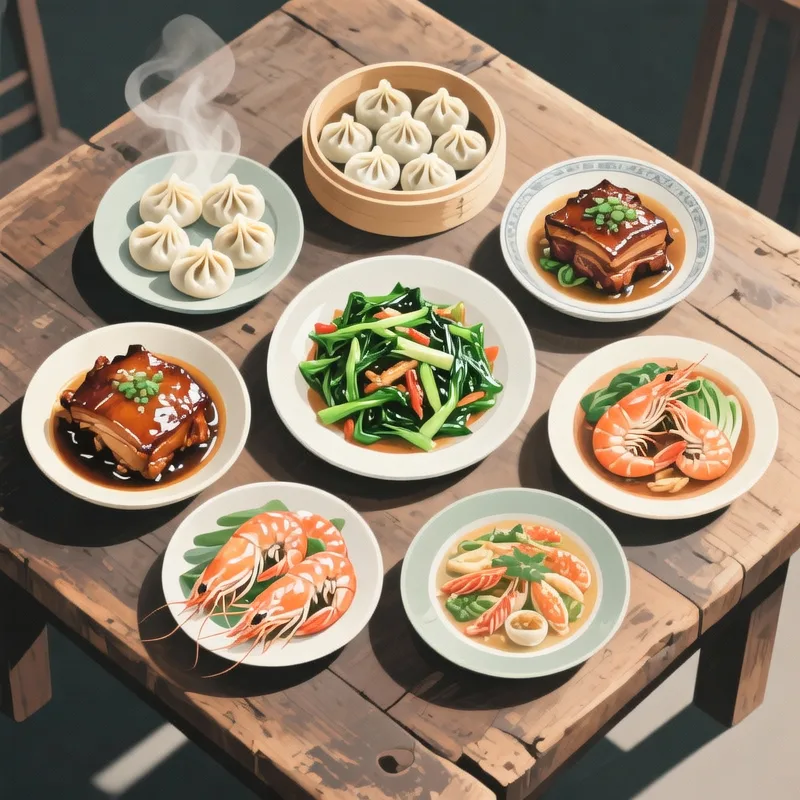
    Eight regional Chinese dishes arranged around a table
    The eight-cuisine scheme groups regional cooking styles by province and climate. Illustrazione generata dall'intelligenza artificiale · SinoViz

    North and East

    Lu, or Shandong cuisine, is the classic northern style. Coastal branches favour prawns, scallops and abalone, often quickly stir-fried, while inland cooks around Jinan excel at soups and long braises. Scallions and salt are characteristic seasonings, and steamed bread often replaces rice. Lu cooking shaped the food of the imperial court and of Beijing, where Shandong chefs dominated many restaurants; the capital’s Peking duck belongs to this northern lineage.

    Su, or Jiangsu cuisine, covers the Yangtze delta and Huaiyang region. It favours mild, slightly sweet flavours, careful knife work and serious soups; lotus root, bamboo shoots and water chestnut are common, and xiao long bao soup dumplings are its best-known export. Zhe cuisine, from Zhejiang, is lighter still: Dongpo pork is braised slowly with wine and soy, while West Lake vinegar fish and Longjing shrimp keep the taste of the water and the tea leaves.

    South and West

    Yue, or Cantonese cuisine, draws on the Pearl River delta and the South China Sea. Freshness governs the kitchen: fish and shellfish are steamed, roast meats are hung in the window, and dim sum is served with tea in a yum cha session. Chuan, or Sichuan cuisine, is defined by ma la, the numbing-spicy pairing of chilli and Sichuan pepper; pixian broad-bean paste gives many dishes their fermented depth. Xiang cooking from Hunan uses chilli without the numbing note, often smoked or pickled, while Hui cuisine from Anhui makes much of mountain ingredients such as bamboo shoots and preserved mandarin fish.
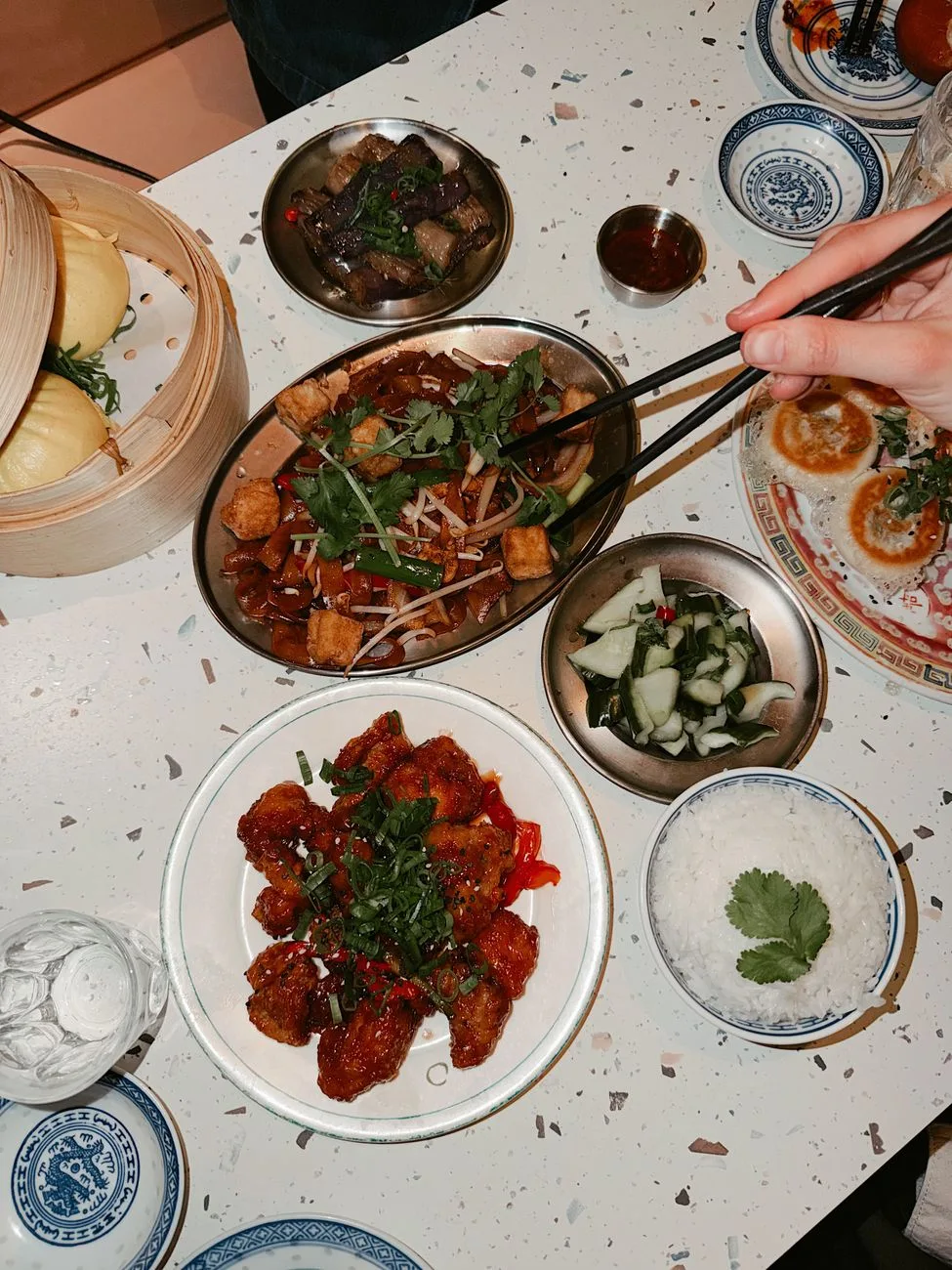
    Cantonese dim sum baskets and Sichuan dishes with chilli and Sichuan pepper
    Steam and freshness in the south; chilli and fermentation in the west. Vincent Rivaud | Pexels License (https://www.pexels.com/license/)

    Min and the Sea

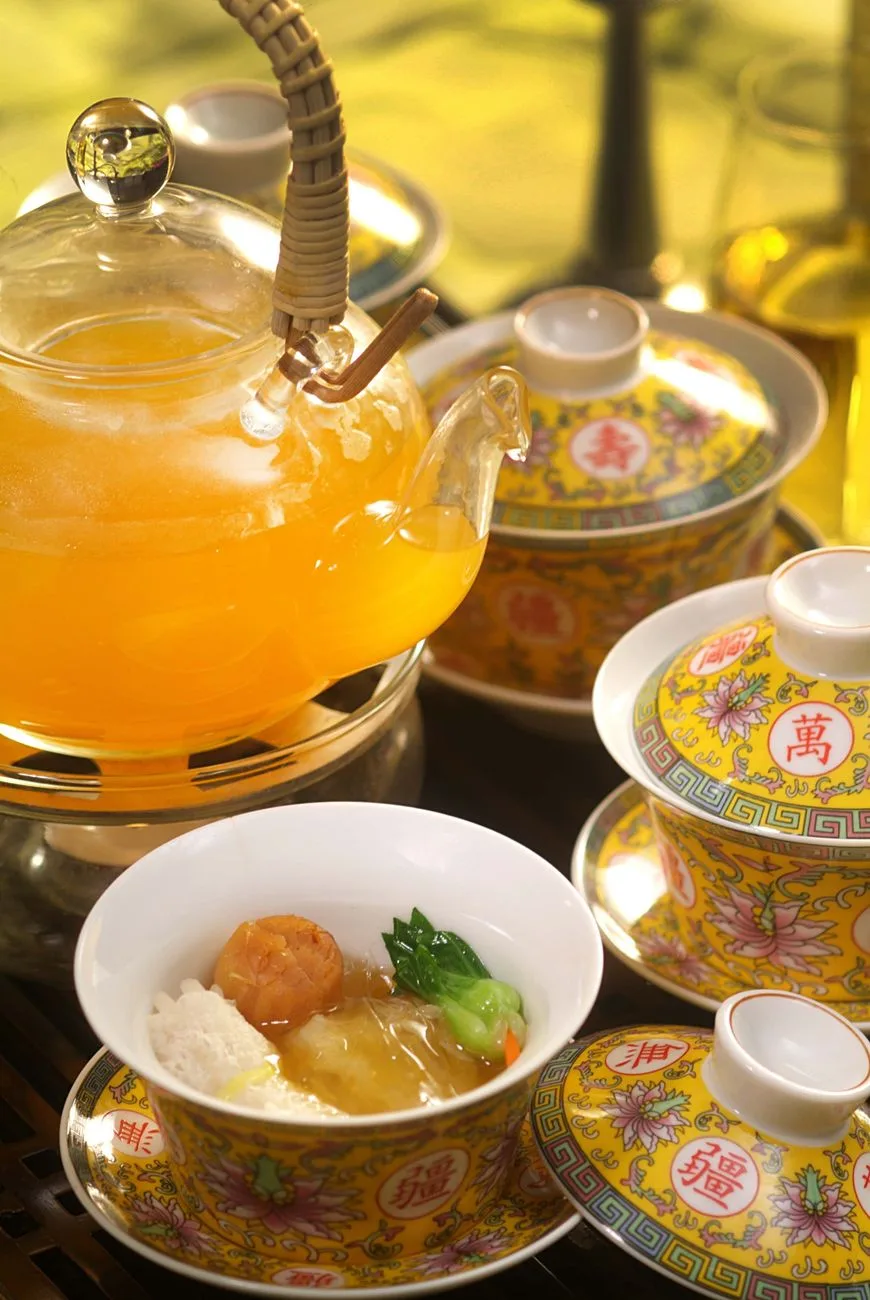
    Min, or Fujian cuisine, is easy to overlook and hard to mistake. Fuzhou cooks are masters of soup and of hongzao, fermented red rice lees that colour and flavour pork, fish and river eels. Buddha jumps over the wall is a layered broth of shark fin, abalone, scallop, mushrooms and ham, named for a monk said to have leapt the wall for a taste. Coastal Fujian adds fish balls, oyster omelets and popiah-style crepes, reflecting a province oriented toward the sea and toward migration.

    • Lu — Shandong: scallions, seafood, slow soups
    • Chuan — Sichuan: ma la, chilli oil, broad-bean paste
    • Yue — Guangdong: dim sum, steaming, roast meats
    • Min — Fujian: red rice lees and layered soups

    Beijing as a Crossroads

    The eight-cuisine map describes provinces, but Beijing has always eaten beyond its own borders. Shandong technique supplied the basis of restaurant cooking, Mongol and Manchu tastes left their mark in mutton dishes and hotpot, and the Qing court staged the elaborate Manchu-Han feast. Bianyifang, founded in 1416, roasted ducks in a closed oven; Quanjude, opened in 1864 by Yang Quanren, popularised the hanging oven and the crisp skin served with pancakes, scallions and sweet bean sauce. A capital city turns regional styles into a shared vocabulary.
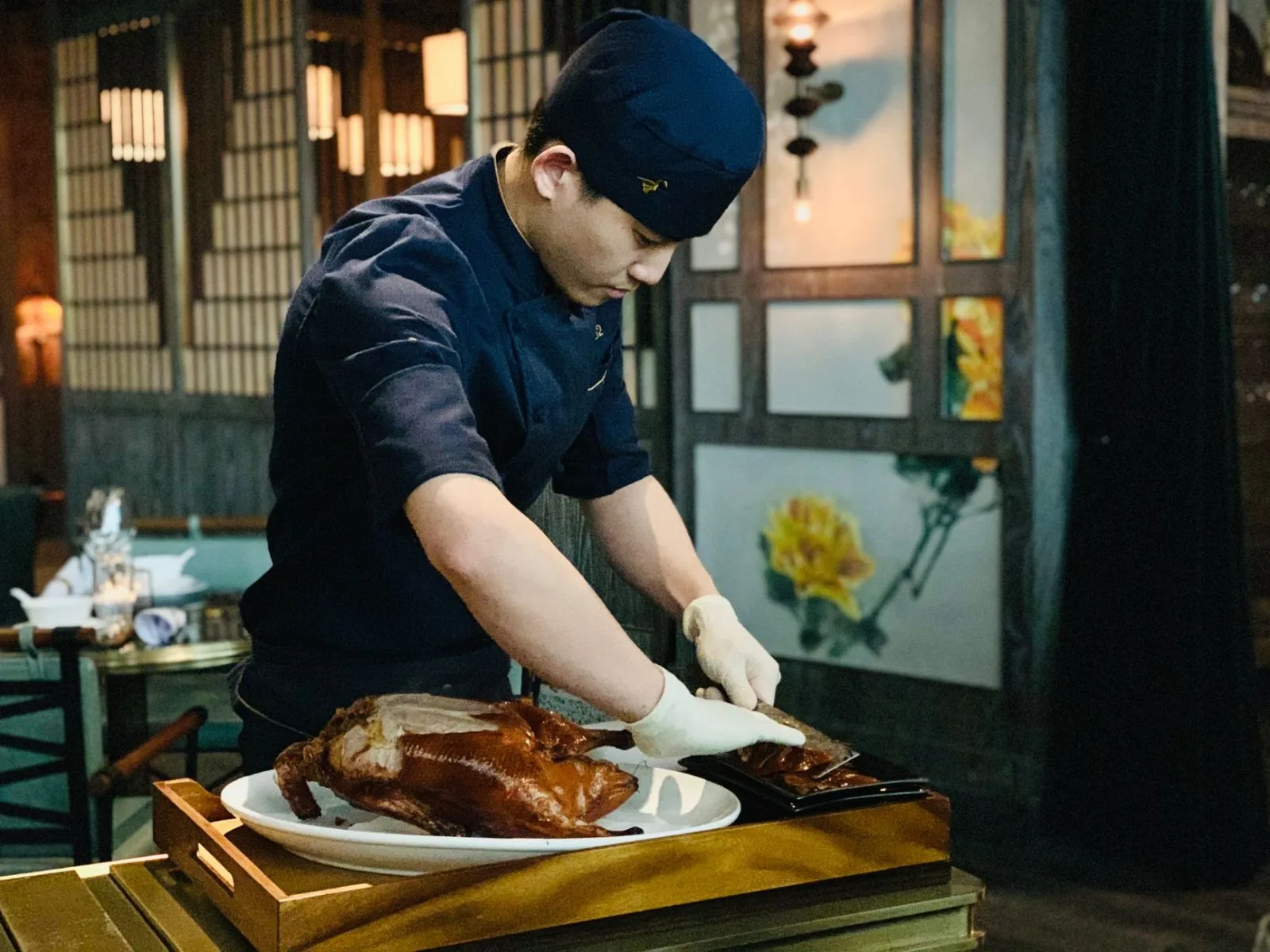
    Peking duck being carved at a Beijing restaurant with pancakes and scallions
    Beijing’s roast duck emerged from northern techniques and capital city exchange. MorNa Tang | Pexels License (https://www.pexels.com/license/)
    Eight cuisines are a map of climate and trade, written in oil, vinegar and fermented bean paste.

    Fonti e ulteriori letture

    1. Chinese cuisine — Enciclopedia Britannica.
    2. Gastronomy in China — Enciclopedia Britannica.
    3. Lu cuisine — Enciclopedia Britannica.

    Guardalo al suo posto

    Segui questa voce per raggiungere la regione di appartenenza.

    Esplora tramite mappa
    Segui il filo

    Esplora altre voci che condividono i suoi tag.

    Esplora il tag
  • Hotpot

    Vita e folklore

    Hotpot

    A Pot at the Centre of the Table

    Hotpot turns dinner into a shared act of cooking at the table.

    Sezione
    Vita e folklore
    Regione
    Sichuan
    Era
    Attraverso le epoche
    Etichette
    Cibo

    Hotpot is a meal built around a vessel of simmering broth. Diners lower thin slices of meat, vegetables and offal into the liquid, cook them to the texture they want and dip them in sauce before eating.

    One Pot, Many Names

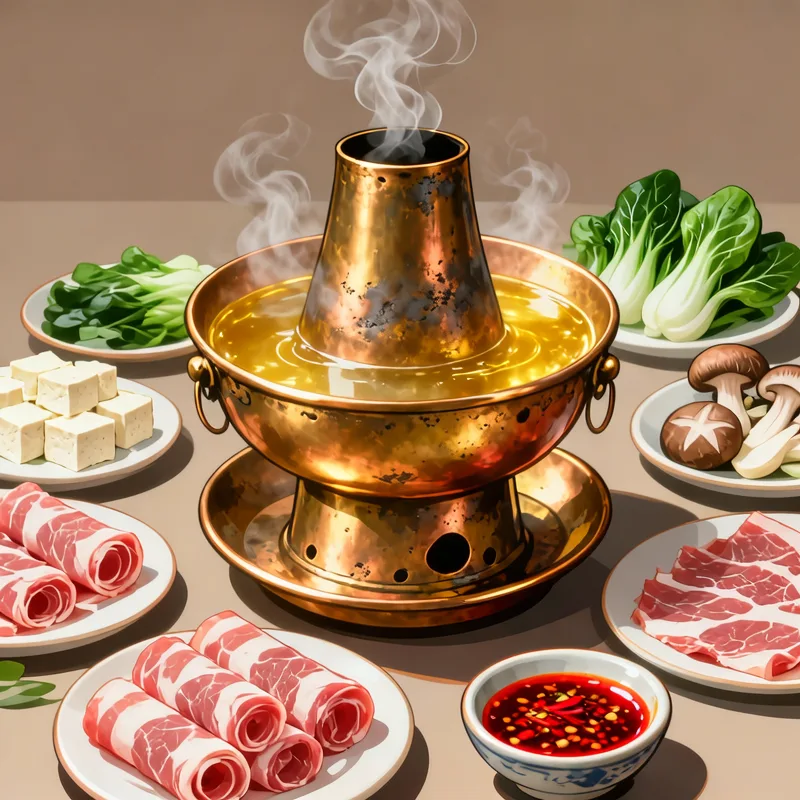
    The Chinese term huoguo literally means fire pot. In northern China the classic form is the copper pot with a central chimney, heated by charcoal, in which paper-thin slices of mutton are swished briefly in a clear broth. Beijing’s Donglaishun, founded in 1903, made the mutton dip famous, served with sesame sauce, fermented tofu and chive flower sauce. In Sichuan and Chongqing the pot is filled with a red, oil-floated broth instead. The table method is the same; the flavourings mark the region.

    Charcoal-heated copper hotpot with a central chimney set on a restaurant table
    The northern copper pot uses a clear broth; Sichuan versions favour red oil. Illustrazione generata dall'intelligenza artificiale · SinoViz

    The Sichuan Broth

    Two sensations define the Sichuan version. Chilli brings capsaicin heat; Sichuan pepper, the husk of a prickly ash, supplies hydroxy-alpha sanshool, which makes the tongue tingle and vibrate. Together they create ma la, numbing spicy. Chilli reached China only after the sixteenth century, arriving from the Americas through maritime trade, so the modern red broth is comparatively recent. Earlier seasonings relied on Sichuan pepper, ginger, fermented beans and the broad-bean chilli paste of Pixian.

    A Chongqing lao huoguo, or old hotpot, traditionally starts with beef tallow, dried chillies and paste, browned until the oil turns red. The nine-grid pot divides the surface: the centre boils hardest, the corners simmer gently, and each diner keeps track of their own food. Offal — tripe, duck blood, intestine — was the original cheap fare of dockworkers and boatmen at Chaotianmen. Tripe is cooked by the rule of seven up, eight down, dipped and lifted repeatedly for a few seconds.

    Chengdu and the Split Pot

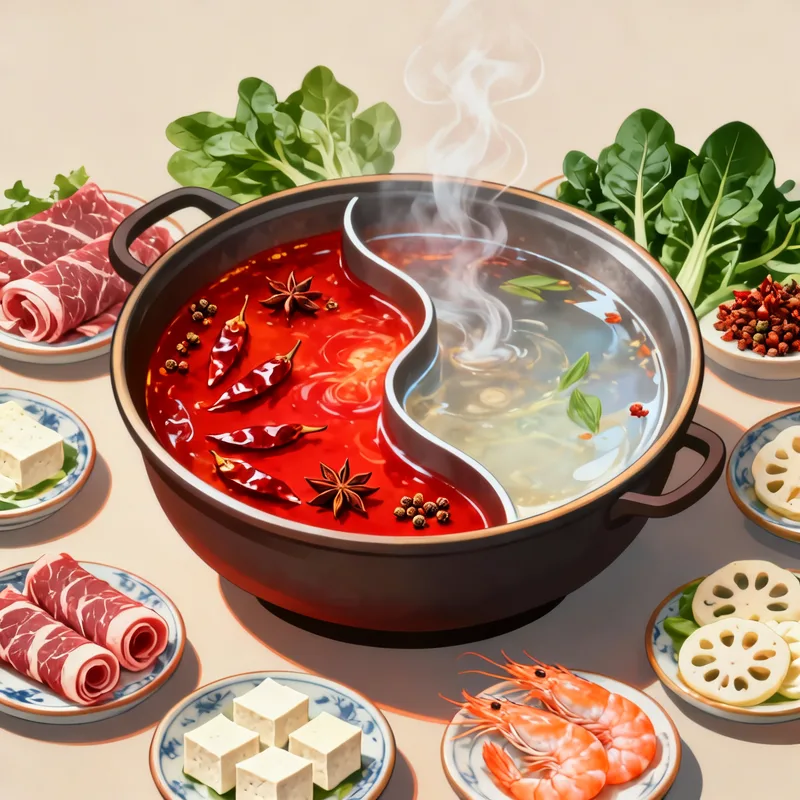
    Chengdu style is usually gentler than its Chongqing cousin. Cooks often use vegetable oil rather than beef tallow, add more aromatics and offer a yuanyang pot, a divided vessel with red broth on one side and a clear, mild stock on the other. Diners gather around it in stages: tough items go in first, greens and sliced fish last. Sesame oil mixed with garlic, coriander and scallions cools each bite before it reaches the mouth. The divided pot is a useful invention for a table with mixed tolerances.

    Divided hotpot with bubbling red chilli broth and clear broth in one vessel
    The yuanyang pot lets a table share one meal at two heat levels. Illustrazione generata dall'intelligenza artificiale · SinoViz

    How to Eat It

    Hotpot has a practical etiquette. Raw and cooked foods need separate chopsticks or serving utensils, and a shared pot requires patience with other diners’ timing. A few rules are widely repeated: do not stir the whole broth, do not fish with your own chopsticks, and let the boil return after adding cold ingredients. The meal is slow by design. As the pot reduces, the broth grows stronger, and the last handful of noodles absorbs everything that has gone before.

    • Nine-grid pot: centre boils; corners simmer
    • Mutton dip: sesame sauce, fermented tofu, chive flower sauce
    • Tripe: seven up, eight down
    • Yuanyang pot: one red side, one clear side

    From Street Stall to Global Chain

    The modern restaurant trade carried hotpot far beyond Sichuan. Haidilao, founded in Jiangyou in 1994, turned the meal into a service spectacle with waiting-area snacks and attentive staff; its branches now appear in many countries. Other chains adapted the format to clear broths and individual pots. Yet the social logic has not changed. A pot keeps everyone at the table for an hour, cooking in stages and talking between courses, which is why hotpot spreads easily wherever Chinese communities gather.

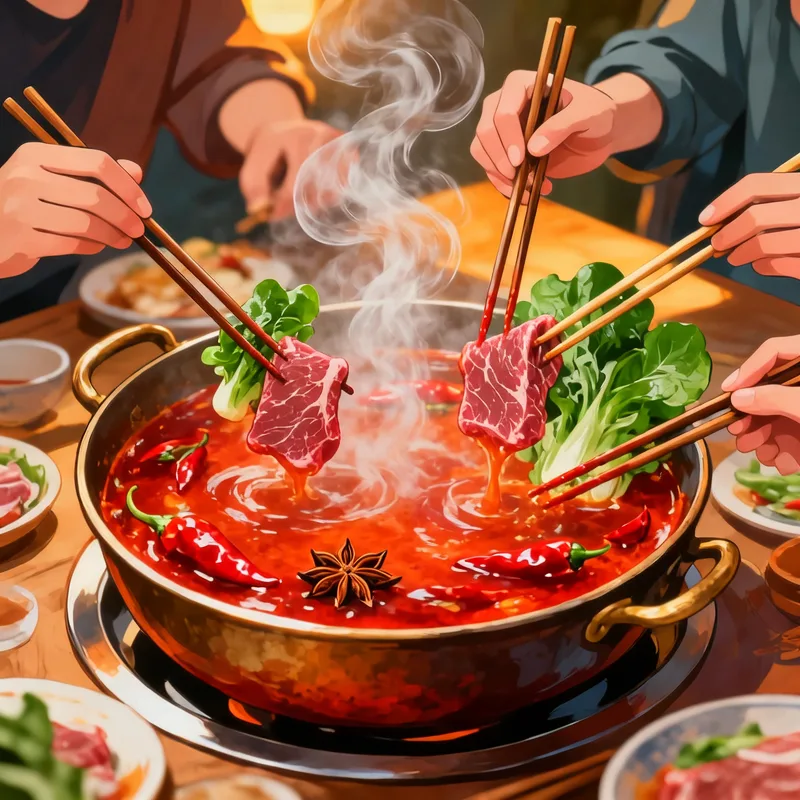
    Diners cooking sliced meat and vegetables in a bubbling red hotpot in Chongqing
    The shared pot keeps the meal slow and conversational. Illustrazione generata dall'intelligenza artificiale · SinoViz
    In a hotpot restaurant the meal is not served; it happens, slowly, in the middle of the table.

    Fonti e ulteriori letture

    1. Chongqing: Administration and society — Enciclopedia Britannica.
    2. Chinese cuisine — Enciclopedia Britannica.
    3. What flavors distinguish Sichuan cuisine from other Chinese cuisines? — Enciclopedia Britannica.

    Guardalo al suo posto

    Segui questa voce per raggiungere la regione di appartenenza.

    Esplora tramite mappa
    Segui il filo

    Esplora altre voci che condividono i suoi tag.

    Esplora il tag
  • Noodles of North China

    Vita e folklore

    Noodles of North China

    From Millet Bowls to Hand-Pulled Strands

    Wheat, water and hand technique make noodles a staple of the northern table.

    Sezione
    Vita e folklore
    Regione
    Shaanxi
    Era
    Attraverso le epoche
    Etichette
    Food, Geography

    North of the Qinling–Huaihe line, wheat and millet rather than rice shaped the daily meal. Noodles — mian when made from wheat, fen when made from other starches — became the most visible expression of that divide.

    An Archaeological Bowl

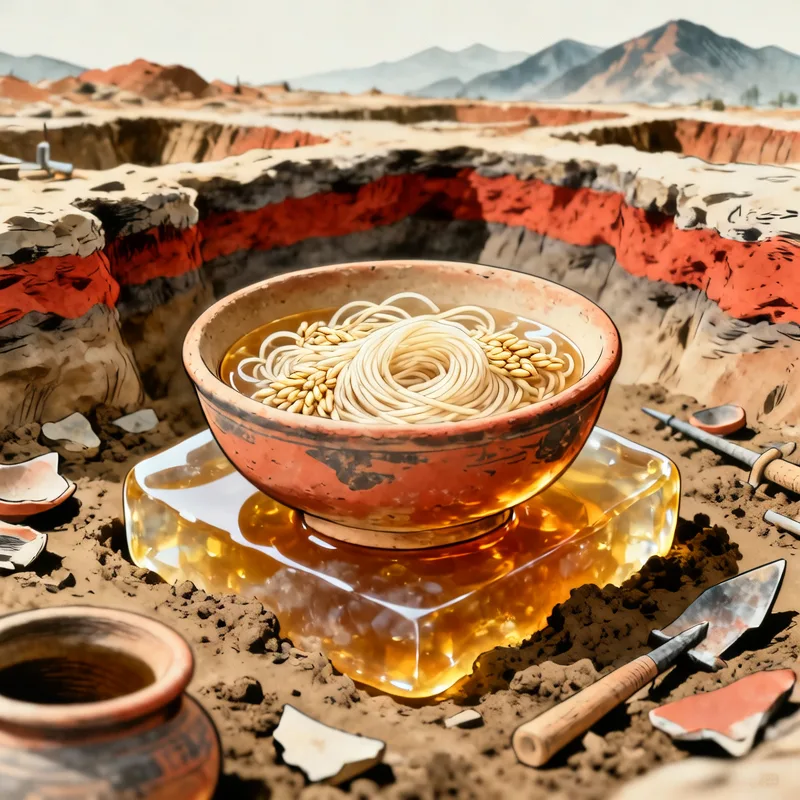
    Noodles are older than the wheat noodle. In 2005 researchers reported a bundle of thin yellow strands from a sealed earthenware bowl at Lajia, a Late Neolithic site in Qinghai on the Yellow River, dating to about 4,000 years ago. Starch grains and husk phytoliths identified foxtail and broomcorn millet, not wheat. A 2014 study used traditional extruding tools to reproduce similar strands from millet flour. The find does not settle every argument about noodle origins, but it gives the craft a solid archaeological date.

    Ancient millet noodle strands preserved in an earthenware bowl from the Lajia site
    A sealed bowl at Lajia preserved millet noodles dating to about 4,000 years ago. Illustrazione generata dall'intelligenza artificiale · SinoViz

    Wheat Moves North

    Wheat was domesticated in the Fertile Crescent and reached northern China several millennia before the Han dynasty. Its gluten made dough elastic enough to be stretched, rolled and boiled without breaking, which millet alone could not do. By the Tang and Song periods, mills, wheat fields and noodle shops were part of urban life in the north, and written recipes describe dried noodles kept for later use. The split with the rice-growing south hardened around this staple.

    Shaanxi sits at the centre of that wheat world. The Guanzhong plain is enclosed by the Qinling mountains to the south and the Loess Plateau to the north, with the Wei River running through it. Chang’an, the Tang capital at modern Xi’an, stood at the eastern end of the Silk Road; merchants, soldiers and Muslim communities all left marks on local food. Geography here is not background scenery — it determines the grain in the bowl.

    The Shaanxi Repertoire

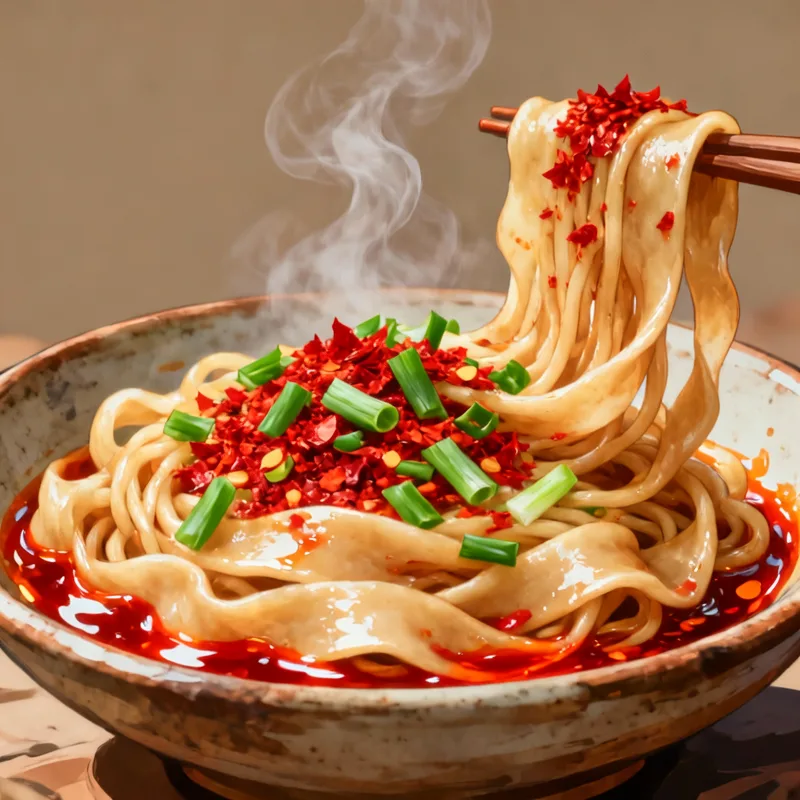
    The province’s noodles are made rather than merely cooked. Biangbiang mian are broad, hand-slapped ribbons, named for the sound of dough hitting the counter; the dialect character for biang has more than fifty strokes. Youpo mian are topped with chilli flakes, garlic and scallions, then splashed with hot oil until they hiss. Qishan saozi mian arrive in broth with diced pork, egg, tofu, wood ear and daylily, and the first bowl is traditionally set aside as an offering to ancestors before the family eats.

    Wide hand-slapped biangbiang noodles topped with chilli flakes and scallions
    Biangbiang mian take their name from the sound of dough striking the board. Illustrazione generata dall'intelligenza artificiale · SinoViz

    Soups, Bread and Cold Noodles

    Not all northern noodles are wheat strands. Yang rou paomo, a Xi’an speciality associated with the city’s Hui community, begins with a flatbread that the diner tears into small pieces before a rich mutton broth is poured over it. Liangpi are cold sheets or strips made from wheat or mung bean starch, dressed with vinegar, garlic and chilli oil. Shanxi, the neighbouring province, is known for knife-shaved dao xiao mian and for aged vinegar; Henan favours wide hand-pulled hui mian in lamb soup.

    • Qishan saozi mian — noodles with minced meat and vegetables
    • Yang rou paomo — mutton soup with torn flatbread
    • Biangbiang mian — wide, hand-slapped wheat noodles
    • Liangpi — cold starch noodles with chilli oil

    Beyond the Province

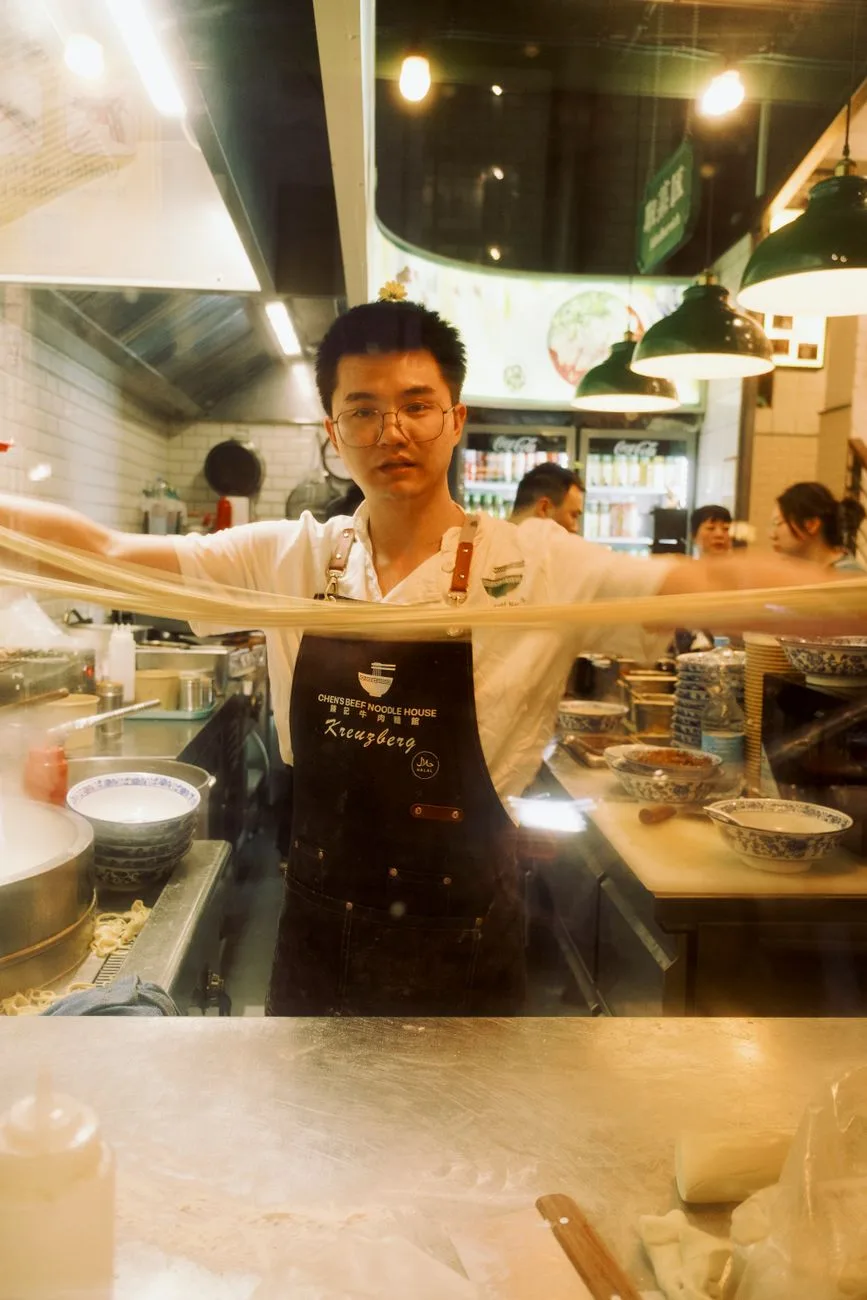
    The same techniques travel well. Lanzhou beef noodle soup, sold by Hui traders across China, pairs hand-pulled strands with a clear broth, sliced beef, radish and coriander. Beijing’s zhajiangmian uses wheat noodles under a thick fried soybean paste, surrounded by cucumber and bean sprouts. What unites these dishes is not a single sauce but a method: flour worked by hand into strands, boiled and served in a broth or with a paste. Northern noodle shops remain places where that work is visible.

    Cook pulling fresh wheat noodles by hand in a northern Chinese noodle shop
    Hand-pulling turns flour and water into strands in minutes. Felipe Souza Melo | Pexels License (https://www.pexels.com/license/)
    The sound of dough slapped on a board is part of the recipe: biangbiang is a verb before it is a name.

    Guardalo al suo posto

    Segui questa voce per raggiungere la regione di appartenenza.

    Esplora tramite mappa
    Segui il filo

    Esplora altre voci che condividono i suoi tag.

    Esplora il tag
  • Galateo a tavola

    Guida di viaggio

    Galateo a tavola

    La tavola rotonda, leggi attentamente

    Il galateo cinese a tavola trasforma un pasto condiviso in una lezione di gerarchia, generosità e moderazione.

    Sezione
    Guida di viaggio
    Regione
    Pechino
    Era
    Attraverso le epoche
    Etichette
    Usanze, Cibo

    A un banchetto cinese, il cibo arriva al centro del tavolo, e con esso arrivano anche le regole sociali. Sapere dove sedersi, quando sollevare le bacchette e come rispondere a un brindisi è molto più importante di qualsiasi dimostrazione di appetito per una cena a Pechino.

    Prendete posto

    Di solito è il padrone di casa a decidere dove far sedere tutti, quindi aspettate che vi venga indicato un posto invece di sceglierne uno. A un tavolo rotondo, il posto di fronte alla porta, o quello più lontano in alcune stanze, è il posto d'onore e viene offerto alla persona più anziana o all'ospite più importante. Gli ospiti di pari rango si alternano poi attorno al tavolo. Un vassoio girevole al centro rende ogni piatto facilmente raggiungibile; fatelo girare delicatamente invece di farlo ruotare bruscamente davanti a qualcuno che sta per prenderlo. Servire prima gli altri è un piccolo gesto di cortesia che si nota, soprattutto riempiendo il bicchiere di tè. Quando il padrone di casa alza le bacchette o dice che il pasto è iniziato, cominciate a mangiare. Iniziare troppo presto può far pensare che stavate aspettando il cibo, non la compagnia.

    Tavolo da pranzo rotondo con vassoio girevole e posate.
    A un tavolo rotondo, il posto di fronte alla porta è solitamente riservato all'ospite d'onore. Modifica C.C | Licenza Pexels (https://www.pexels.com/license/)

    Regole delle bacchette

    Le buone maniere a tavola hanno un peso maggiore rispetto alla maggior parte degli errori. Non appoggiate mai le bacchette in verticale in una ciotola di riso: l'immagine ricorda l'incenso offerto ai defunti. Non picchiettate la ciotola con le bacchette, non usatele per indicare, non infilzate il cibo e non agitatele mentre parlate. Passare il cibo dalle bacchette a qualcun altro richiama anche i riti funebri, quindi appoggiate il boccone su un piatto comune. Quando fate una pausa, appoggiate le bacchette sulla ciotola o su un supporto. È accettabile portare alla bocca una piccola ciotola di riso e sorseggiare rumorosamente i noodles non è maleducato. In caso di dubbio, osservate il padrone di casa. Un ospite che usa le bacchette con cura e prende porzioni moderate raramente offenderà, anche se le regole più raffinate del galateo a tavola sono nuove per lui.

    Un paio di bacchette di legno appoggiate su un supporto di ceramica.
    Le bacchette piantate verticalmente nel riso ricordano l'incenso bruciato per i defunti. Sylwester Ficek | Licenza Pexels (https://www.pexels.com/license/)

    Brindisi, tè e il conto

    Le bevande sono un collante sociale. Birra e baijiu, un forte distillato di cereali, sono presenti in molti banchetti insieme al tè. Quando qualcuno propone un brindisi, alzatevi, sollevate il vostro bicchiere con entrambe le mani se la persona è più anziana e toccate il bordo del bicchiere leggermente al di sotto del suo. Ganbei significa "asciugare il bicchiere", ma un piccolo sorso è accettabile se non si beve; spiegatelo in anticipo e attenetevi alla regola. Non versatevi mai il tè senza prima offrire la teiera ai vicini. I piatti si condividono, ma il padrone di casa può servire una portata pregiata a un ospite come omaggio. Lasciate un po' di cibo nel vostro piatto per segnalare che siete sazi e non raschiate gli ultimi chicchi da un piatto comune. Di solito è il padrone di casa a pagare; è sufficiente una breve offerta di dividere il conto.

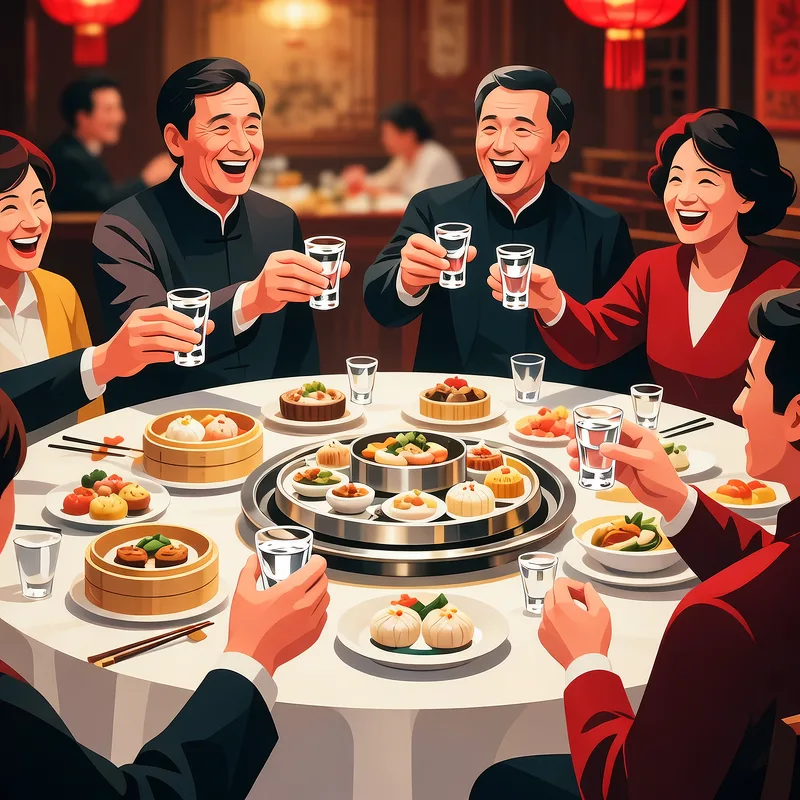
    I commensali alzano piccoli bicchieri di baijiu durante un banchetto.
    Un brindisi ganbei significa asciugare il bicchiere; sorseggiate pure se preferite, ma alzatevi con il gruppo. Illustrazione generata dall'intelligenza artificiale · SinoViz

    Mangiare fuori a Pechino

    A Pechino, le sale da pranzo spaziano dai chioschi di ravioli all'aperto alle sale per banchetti formali, e le regole si allentano man mano che l'ambiente diventa più informale. In un ristorante di quartiere, si ordina per tutto il tavolo, si condividono i piatti e ci si aspetta una teiera di metallo e una pila di ciotoline anziché portate individuali. Il pagamento avviene solitamente al bancone; per ordinare è possibile scansionare il codice QR sul tavolo oppure pagare tramite Alipay o WeChat Pay. Se necessario, chiedete una fattura in inglese. La mancia non è consuetudine, anche se arrotondare il conto al ristorante di un hotel è accettabile. I piatti piccanti sono comuni in alcune cucine regionali, ma non nella cucina classica di Pechino, dove dominano l'anatra arrosto, i noodles e i ravioli. Se un piatto arriva intero, aspettate che il cameriere lo giri o prendete la prima porzione.

    Osservate il padrone di casa, accettate il brindisi e lasciate un po' di brindisi nel piatto.

    Fonti e ulteriori letture

    1. Galateo e buone maniere a tavola in Cina — I punti salienti della Cina.
    2. Bacchette — Enciclopedia Britannica.
    3. Cultura cinese: cibo e bevande — Atlante culturale, SBS.

    Guardalo al suo posto

    Segui questa voce per raggiungere la regione di appartenenza.

    Esplora tramite mappa
    Segui il filo

    Esplora altre voci che condividono i suoi tag.

    Esplora il tag
  • Festival delle barche drago

    Vita e folklore

    Festival delle barche drago

    Racing, rice dumplings, and the fifth moon

    The Dragon Boat Festival joins boat races, sticky rice parcels, and a story of loyalty to a poet.

    Sezione
    Vita e folklore
    Regione
    Guangdong
    Era
    Attraverso le epoche
    Etichette
    Usanze, Cibo

    Duanwu falls on the fifth day of the fifth lunar month, when the heat of early summer arrives in Guangdong. The holiday is best known for dragon boat racing and zongzi, but its smaller customs reveal as much about how the day is understood.

    Qu Yuan and the River

    The festival is commonly linked to Qu Yuan, a poet and minister of the state of Chu who died in 278 BCE after his advice was rejected and his state fell. Legend says that fishermen raced out in boats to find his body and threw bundles of rice into the river to keep fish from eating it. Historians note that the custom of racing boats and the fifth-month observance existed before this story attached to it; the legend explains a practice rather than creating it. Either way, the pairing of boat and rice dumpling gives the holiday its two enduring symbols. In school lessons and public ceremonies, Qu Yuan is presented as a figure of loyalty and moral independence, a poet whose writing still reads as political dissent.

    A dragon boat with a carved head and paddlers in formation
    Dragon boats are painted and carved; crews race to the beat of a drum. Kamus Cheung | Pexels License (https://www.pexels.com/license/)

    Zongzi and Household Charms

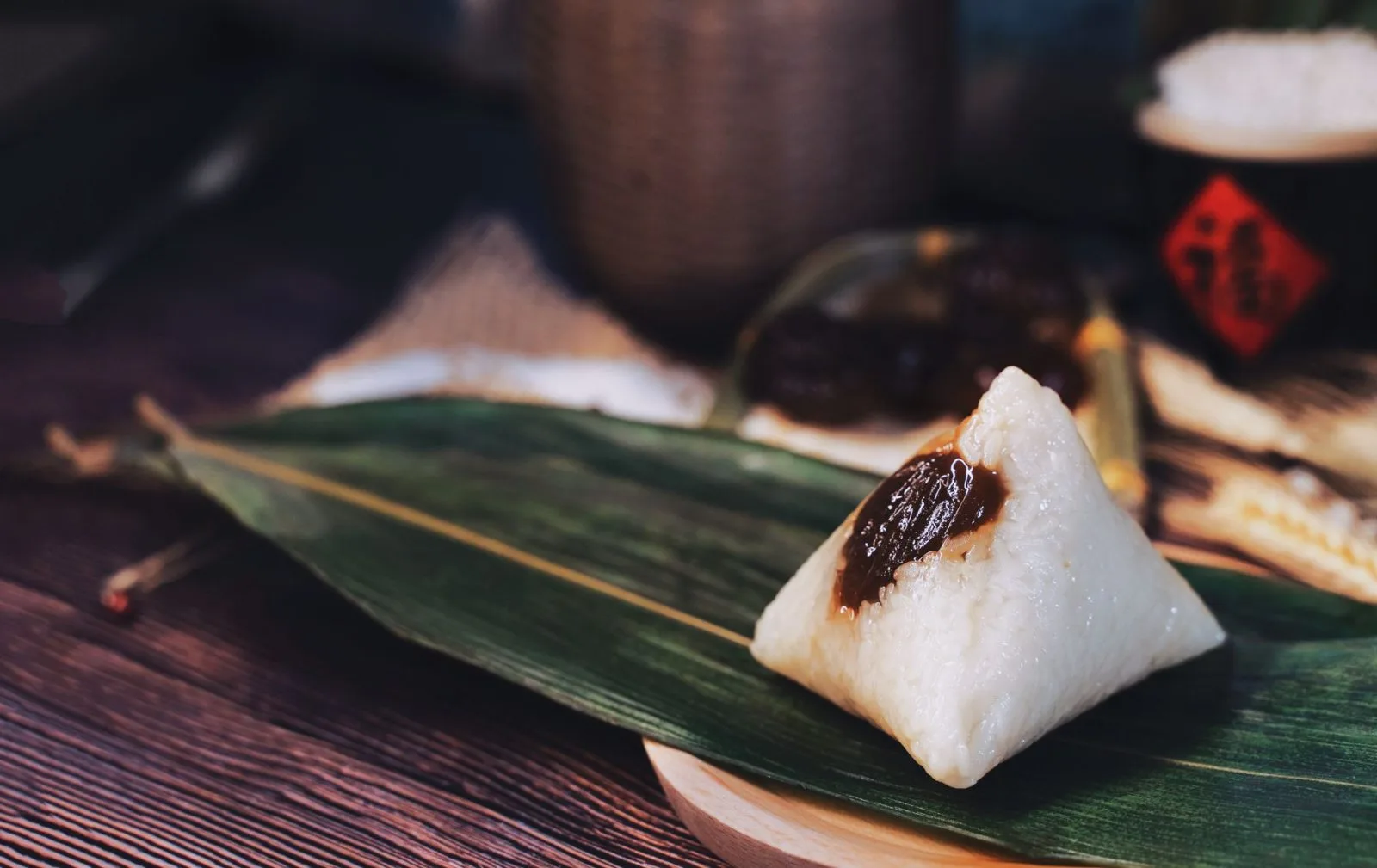
    Zongzi are parcels of glutinous rice wrapped in bamboo or reed leaves and tied with string, then boiled for hours. Fillings vary by region: Guangdong versions may include pork, salted egg, and mushrooms, while northern ones are often sweet with dates or red bean. Families make them in batches and give them to neighbours. The festival also has a protective side. In older practice, people hung mugwort and calamus at doorways to keep away illness and insects and tied five-coloured silk around children’s wrists. Realgar wine, a yellow mixture with a strong smell, was sprinkled around the house or dabbed on a child’s forehead, though modern safety advice discourages drinking it. These acts belong to a time when the fifth moon was thought to carry dampness, snakes, and fever.

    Pyramidal zongzi wrapped in bamboo leaves and tied with string
    Zongzi are filled with sticky rice and tied with string before boiling. zhen tang | Pexels License (https://www.pexels.com/license/)

    Guangdong on the Water

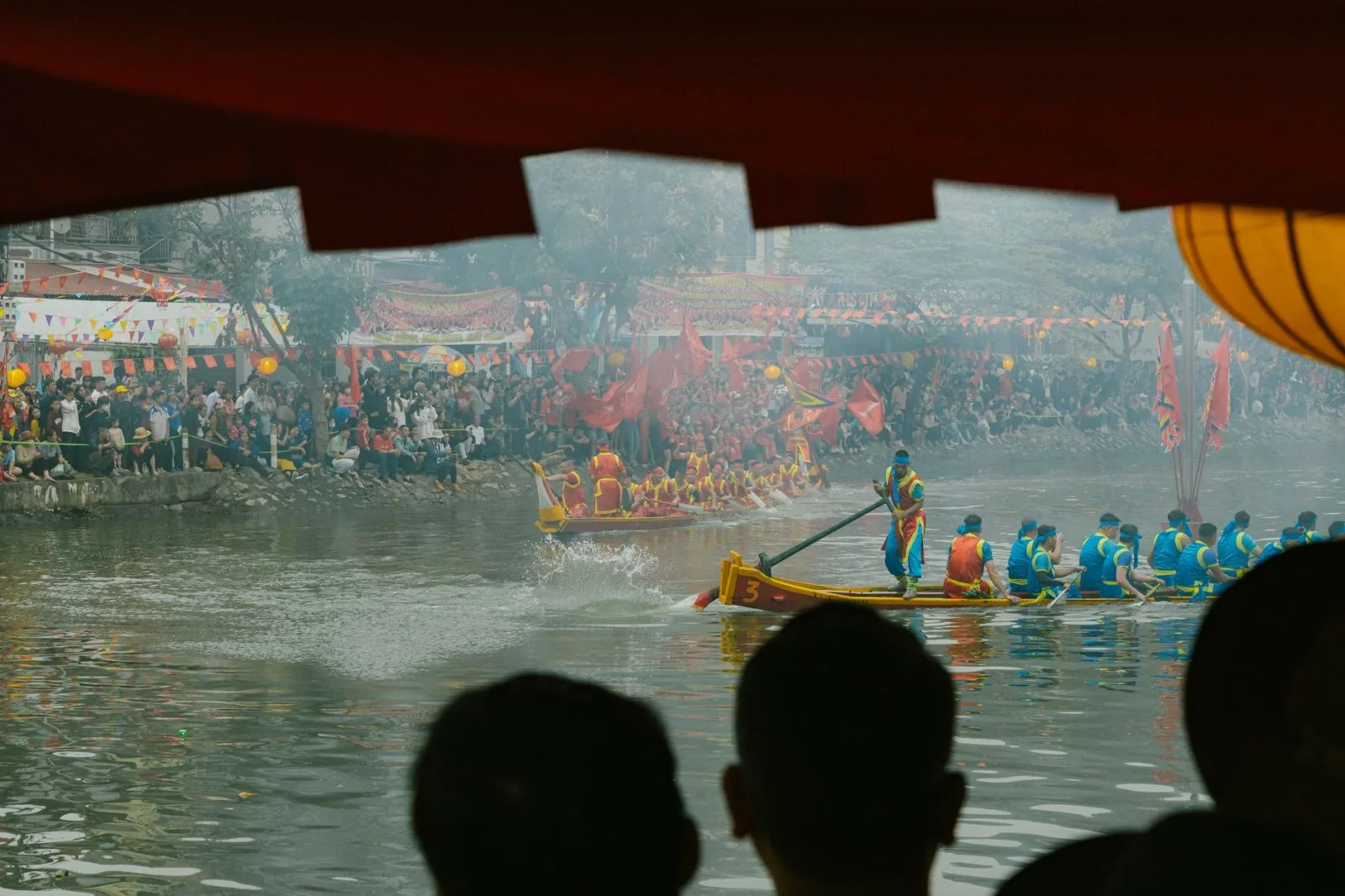
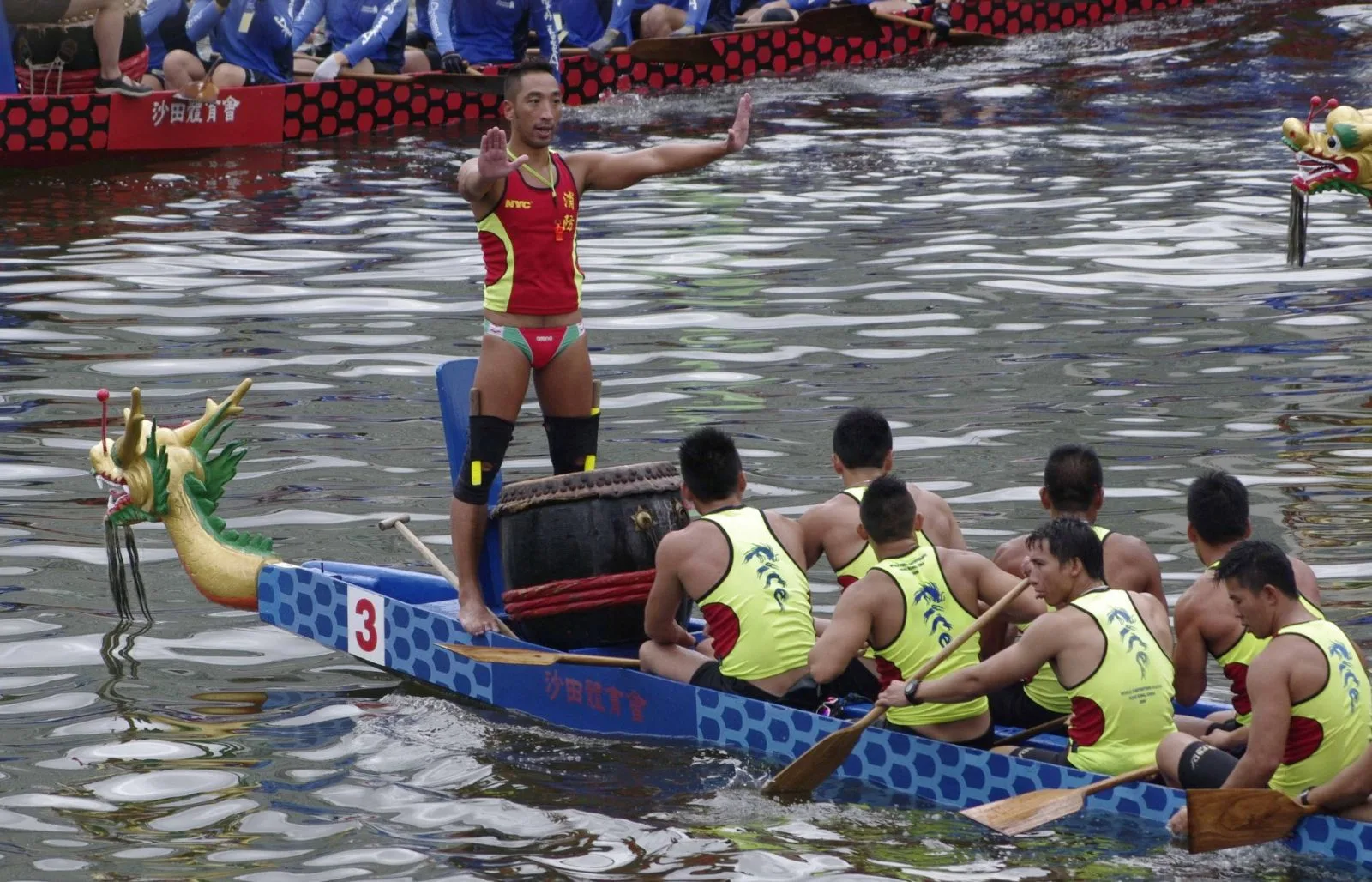
    In Guangdong, dragon boat racing is not a single event but a season. Villages and districts along the Pearl River Delta prepare boats through the spring, then race on rivers and creeks in the weeks around Duanwu. A long narrow boat carries a crew of paddlers, a drummer who sets the stroke, and a helmsman; the painted head and tail give the craft its name. Races are loud, crowded, and local, with teams known by village or temple affiliation. Spectators line bridges and banks, and the best vantage points fill early. The custom was inscribed on UNESCO’s intangible cultural heritage list in 2009. For a visitor, check local listings rather than assuming one central race: events are spread across Guangzhou and Foshan, and dates shift with the lunar calendar.

    Dragon boat crews racing on a Guangdong river before a crowd
    Pearl River Delta races draw village crews and large crowds in the weeks around Duanwu. HONG SON | Pexels License (https://www.pexels.com/license/)

    Observing the Day Today

    Duanwu is an official public holiday, so transport and tourist sites are busy. In Guangdong, the weather is hot and wet by May or June; bring water, a hat, and insect repellent if you plan to watch a race from an open bank. Respect the crews’ space at the water’s edge and do not step onto a boat or touch a drum without being invited. Many families still put mugwort at the door, and zongzi are easy to buy from markets in the days before the holiday. The festival is also an occasion for calling on relatives, though on a smaller scale. For travellers, the pleasure lies in the combination: a public spectacle on the river and a quiet, food-filled custom at home, both tied to the same lunar date.

    The drum sets the stroke, and the village supplies the crew.

    Fonti e ulteriori letture

    1. Dragon boat festival — Patrimonio culturale immateriale dell'UNESCO.
    2. Festival delle barche drago — Enciclopedia Britannica.
    3. Qu Yuan — Enciclopedia Britannica.

    Guardalo al suo posto

    Segui questa voce per raggiungere la regione di appartenenza.

    Esplora tramite mappa
    Segui il filo

    Esplora altre voci che condividono i suoi tag.

    Esplora il tag
  • Festa di metà autunno

    Vita e folklore

    Festa di metà autunno

    Mooncakes under a full moon

    The Mid-Autumn Festival gathers families around the full moon, mooncakes, and a long tradition of watching the night sky.

    Sezione
    Vita e folklore
    Regione
    Pechino
    Era
    Attraverso le epoche
    Etichette
    Usanze, Cibo

    Falling on the fifteenth day of the eighth lunar month, the Mid-Autumn Festival is a harvest celebration and a family reunion. In Beijing, the holiday is marked in courtyards, parks, and moon-viewing spots that fill after sunset.

    The Date and the Moon

    The festival follows the lunar calendar, so its date moves between early September and early October. The fifteenth day of the eighth month is chosen because the moon should be full, and roundness stands for completeness and family unity. Chinese tradition reads the moon’s surface as the figure of Chang’e, a woman who, in one version of the myth, drank an elixir and rose to live there with a rabbit that pounds medicine. Another story tells of Wu Gang cutting a tree that regrows each time. These tales are not scripture; they are the stories families retell while looking up. Around the festival, parks stay open late and lakes reflect the moon, giving city dwellers a quiet reason to be outdoors after dinner.

    A full moon rising over a Beijing park lake
    The festival falls on the full moon of the eighth lunar month, usually in September or October. marnock | Pexels License (https://www.pexels.com/license/)

    Mooncakes and Their Fillings

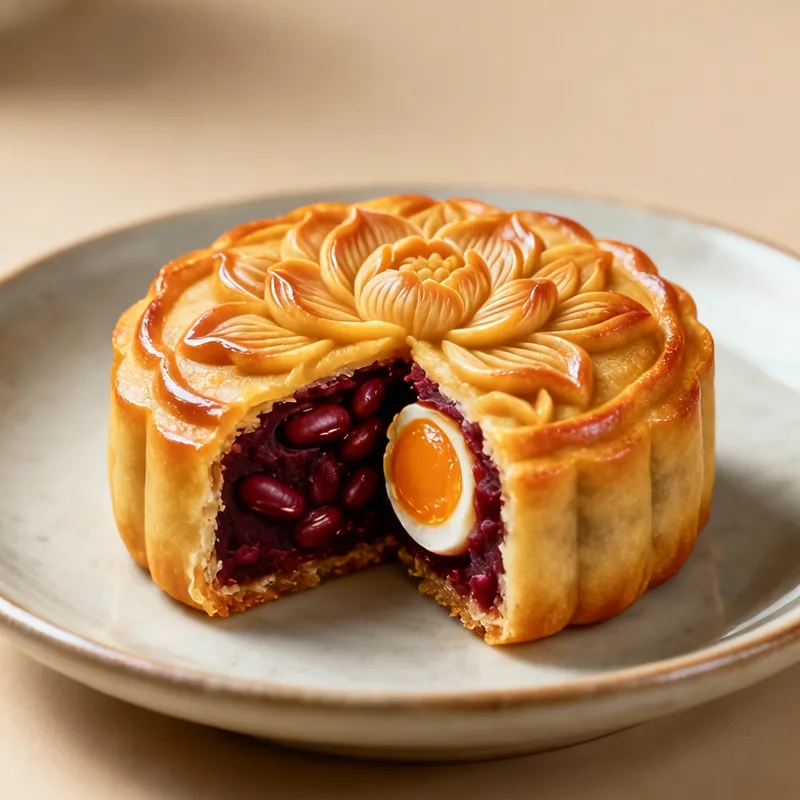
    Mooncakes are small, dense pastries with a thin crust and a heavy filling, traditionally cut into wedges and shared. The round shape echoes the moon, and the top is stamped with a pattern or characters such as longevity or harmony. Cantonese-style cakes often hold lotus seed paste and a salted duck egg yolk, whose yellow centre stands for the moon; other fillings include red bean, five nuts, and preserved fruit. Suzhou-style pastries use flaky layers, while snow-skin mooncakes are chilled and made with a glutinous rice wrapper. Because the cakes are rich, a sliver is usually enough, and tea helps. Prices rise in the weeks before the holiday, and elaborate boxes are made for gifting rather than eating. In Beijing, bakeries sell both traditional versions and small cakes.

    A round mooncake with a stamped pattern cut open to show the filling
    Mooncakes are dense pastries stamped with characters for longevity or harmony. Illustrazione generata dall'intelligenza artificiale · SinoViz

    Beijing After Dark

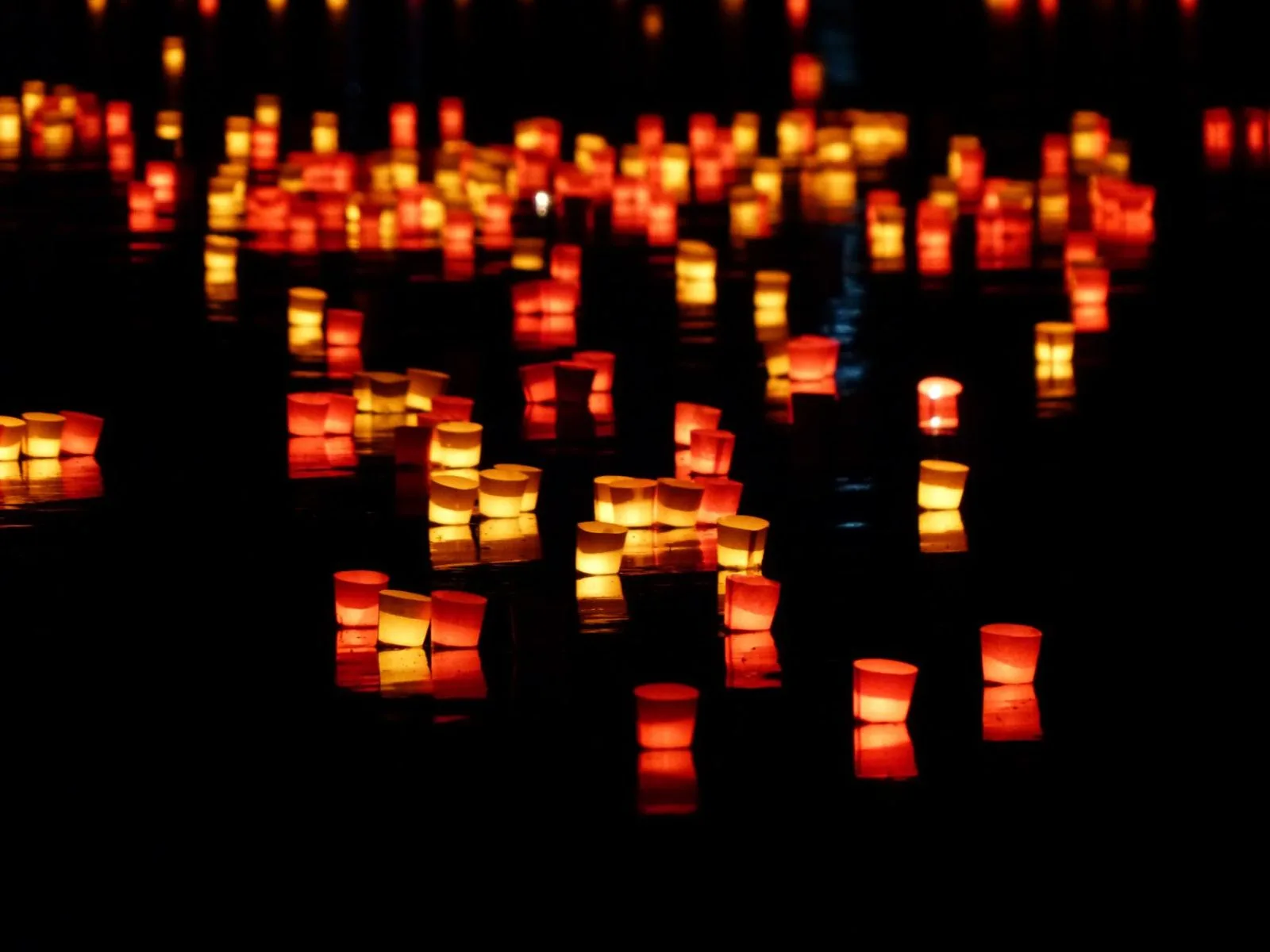
    Beijing’s moon-viewing spots fill quickly after dark. Beihai Park, with its lake and white stupa, and the Summer Palace, with Kunming Lake and the Long Corridor, are classic places to walk and watch the reflection. The Temple of Heaven also draws visitors. Families may light paper lanterns, and children carry them through the lanes; in some neighbourhoods, lantern riddles are posted for anyone who wants to try. Public holiday crowds mean metro stations near the parks stay busy late, so allow time to get back. Camping or bringing a barbecue is not appropriate in these historic grounds. A practical plan is to visit in the late afternoon, walk as the light fades, and take a seat by the water before the moon clears the rooftops.

    Lanterns reflected in a lake at a Beijing park during the Mid-Autumn Festival
    Parks such as Beihai and the Summer Palace draw moon-viewing crowds after sunset. Pixabay | Pexels License (https://www.pexels.com/license/)

    Gifts, Holiday, and Meaning

    Mooncakes are exchanged as gifts, often in boxes of four or six, and carrying a box to a family dinner is normal. The act matters more than the price; a modest cake from a favourite bakery can be more welcome than a lavish tin. Since 2008, the festival has been an official public holiday, reinforcing its role as a reunion, with millions travelling to see relatives. The deeper theme is tuanyuan, reunion, expressed by the circle of the cake and the full moon. Not everyone can be at the table, and the holiday acknowledges that absence as much as presence. If you are invited to a Beijing home, bring the cakes, arrive on time, and expect the evening to centre on a long meal rather than on speeches.

    Roundness carries the argument: a full moon, a round cake, a family gathered in one room.

    Fonti e ulteriori letture

    1. Festa di metà autunno — Enciclopedia Britannica.
    2. Festa di metà autunno — I punti salienti della Cina.

    Guardalo al suo posto

    Segui questa voce per raggiungere la regione di appartenenza.

    Esplora tramite mappa
    Segui il filo

    Esplora altre voci che condividono i suoi tag.

    Esplora il tag
  • Cucina cantonese

    Vita e folklore

    Cucina cantonese

    Steam, Wok Heat, and Coastal Markets

    Guangdong cooking turns local seafood and temple fair foods into a refined restaurant tradition.

    Sezione
    Vita e folklore
    Regione
    Guangdong
    Era
    Attraverso le epoche
    Etichette
    Food, Geography

    Cantonese cuisine is the cooking of Guangdong and its diaspora, built on river deltas, coastal markets, and the heat of the wok. Its best-known dishes—roast goose, dim sum, and steamed fish—sit beside home-style soups and street snacks.

    The Pearl River Pantry

    The Pearl River Delta gave Cantonese cooking an unusually broad pantry. Rice grows in the lowlands, fish and shellfish come from the estuary, and hills behind Guangzhou supply vegetables, pork, and poultry. Guangzhou was a major port under the Tang and again after European traders arrived in the seventeenth and eighteenth centuries. Merchants, officials, and temple fairs supported restaurants that could pay for skilled chefs. By the Qing period, Guangzhou’s tea houses served small plates known as dim sum through the morning and midday. Emigrants from Guangdong later carried these dishes to Southeast Asia, North America, and Europe, adapting them to local supplies.

    Bamboo steamers filled with dim sum
    Dim sum developed in the teahouses of Guangzhou and spread with Cantonese migration. parveen tasud | Pexels License (https://www.pexels.com/license/)

    Wok Hei and the Roast House

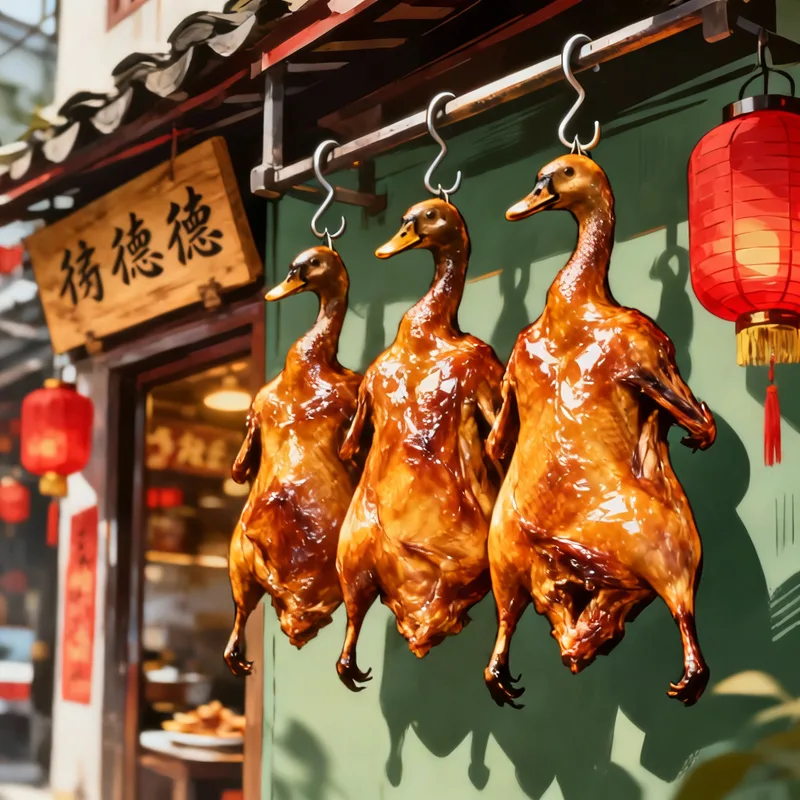
    Cantonese stir-frying depends on wok hei, the barely definable aroma produced when hot oil, vapours, and food meet a very hot wok. Chefs toss ingredients to keep them moving and prevent scorching; sauces are added late, often with cornstarch to give a light coating. Roasting is another speciality. Guangzhou-style white-cut chicken is poached and served with ginger and spring onion, while roast goose from Shunde is glazed, air-dried, and hung in a brick oven until the skin blisters. Char siu pork is marinated with honey and red fermented bean curd, then roasted with sugar caramelising at the edges.

    Roast geese hung to dry before roasting outside a Shunde restaurant
    Air-drying the skin is a key step in Shunde’s roast goose. Illustrazione generata dall'intelligenza artificiale · SinoViz

    Dim Sum and Morning Ritual

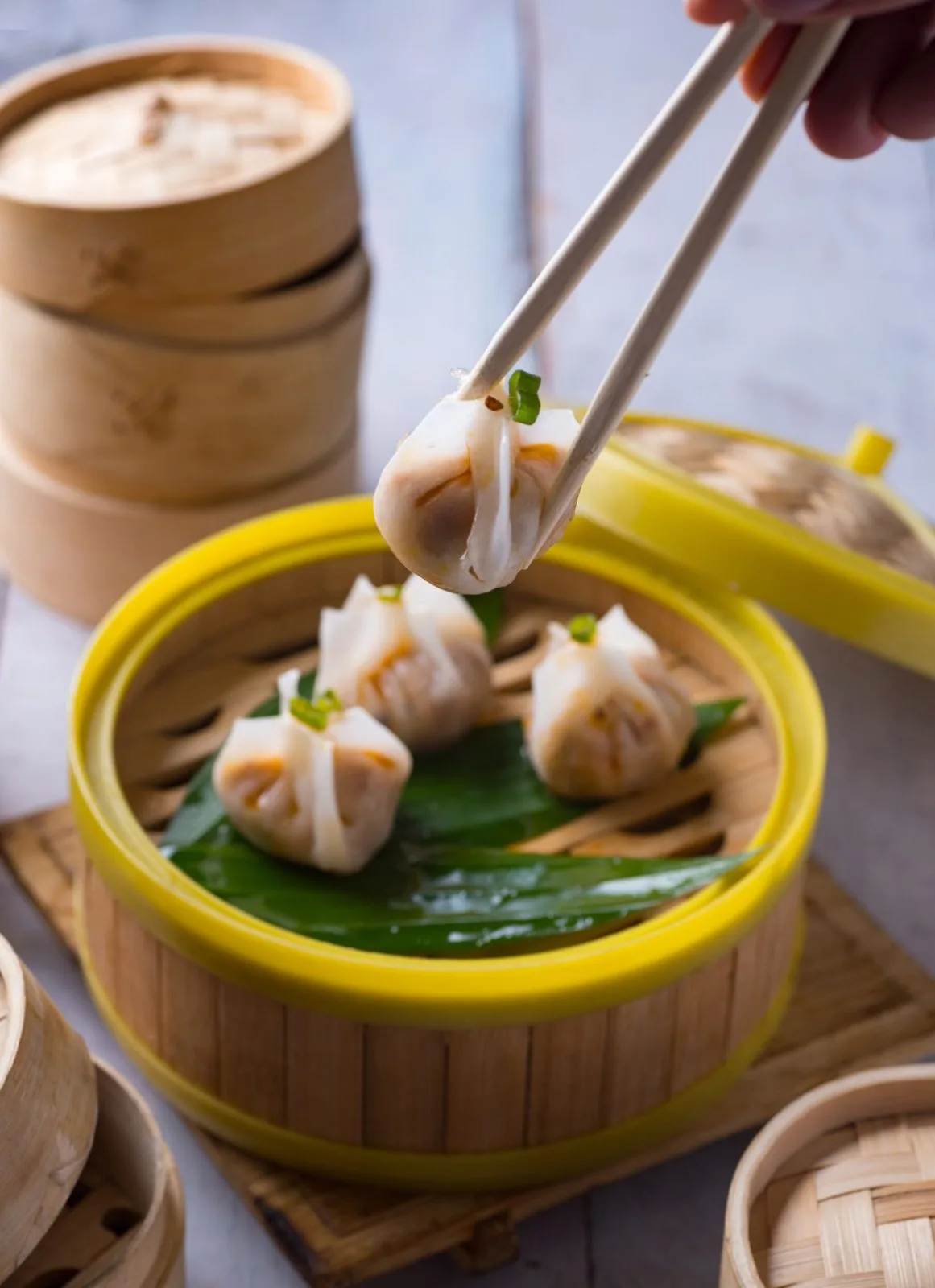
    Dim sum means a light snack, but in Cantonese practice it describes a meal of small portions ordered from trolleys or a paper card. Har gow wrap shrimp in a translucent wheat-starch skin; siu mai open-topped dumplings hold pork and shrimp; char siu bao are soft steamed buns with sweet roast-pork filling. Cheung fun are broad rice-noodle sheets rolled around shrimp, pork, or beef and dressed in soy sauce. Tea accompanies the meal, and the old custom of tapping a pot’s lid to signal for a refill is still performed, though younger diners may simply ask. The ritual is social as much as culinary, filling teahouses from early morning.

    • Har gow with translucent shrimp filling
    • Siu mai topped with a single shrimp
    • Cheung fun rice rolls with soy dressing
    • Egg tarts adapted from British custard pastry
    A trolley of bamboo steamers and tea pots beside a crowded Guangzhou dining room
    A dim sum meal is ordered in small dishes and shared across the table. minchephoto photography | Pexels License (https://www.pexels.com/license/)

    Regional Range and Diaspora

    Cantonese food is not one style. Shunde is known for delicate dairy desserts and fish dishes, Chaozhou nearby has a separate tradition of braised goose, seafood, and strong oolong tea, and Hakka communities in the hills favour preserved vegetables and stuffed tofu. Teochew and Hainanese migrants carried their own versions abroad. In Chinatowns from San Francisco to Singapore, Cantonese restaurants adapted to local tastes while keeping techniques such as steaming, roasting, and long simmered double-boiled soups. The resulting cuisines are mixed, but they preserve a central idea: fresh ingredients, precise heat, and a sauce that supports rather than hides them.

    Cantonese cooking asks a wok to do in seconds what other traditions give hours of stewing.

    Fonti e ulteriori letture

    1. Chinese Cuisine — Enciclopedia Britannica.
    2. Cantonese cuisine — Enciclopedia Britannica.
    3. Guangzhou — UNESCO World Heritage Centre.

    Guardalo al suo posto

    Segui questa voce per raggiungere la regione di appartenenza.

    Esplora tramite mappa
    Segui il filo

    Esplora altre voci che condividono i suoi tag.

    Esplora il tag
  • Cucina Jiangnan

    Vita e folklore

    Cucina Jiangnan

    River Fish, Rice, and Refined Broth

    The cooking of the lower Yangtze favours freshwater fish, seasonal greens, and delicate stocks.

    Sezione
    Vita e folklore
    Regione
    Zhejiang
    Era
    Attraverso le epoche
    Etichette
    Food, Geography

    Jiangnan cooking grew in the wet, rice-growing country south of the Yangtze. Its reputation rests less on spice than on timing: a fish steamed just long enough, a broth cleared and simmered, or a vegetable picked before it toughens.

    A Landscape of Water and Rice

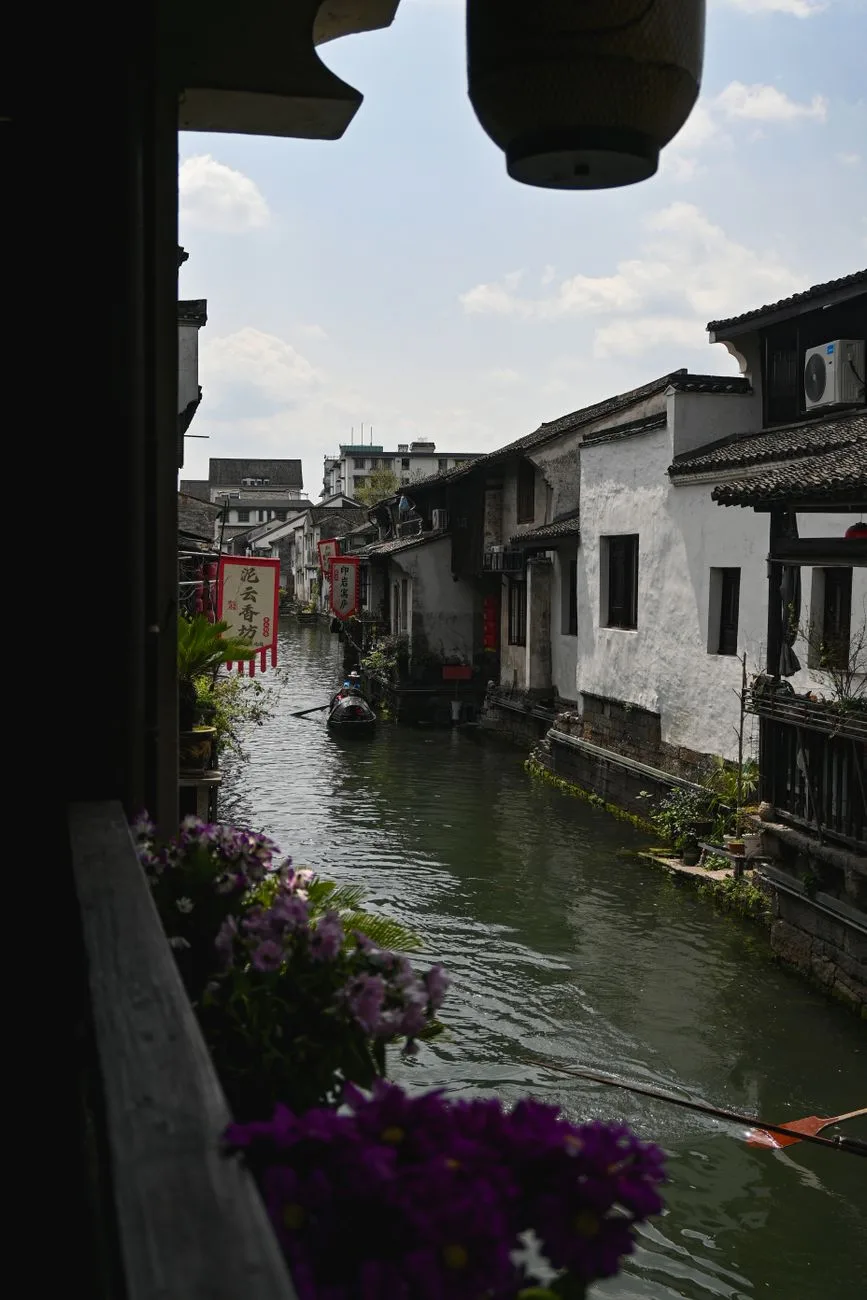
    Jiangnan means the land south of the Yangtze, a region of canals, lakes, and irrigated fields centred on Jiangsu and Zhejiang. From the Song dynasty (960–1279), the lower Yangtze became China’s densest and wealthiest farming region, supported by double-cropping rice, fish ponds, and silk production. Cities such as Hangzhou and Suzhou developed a class of officials, merchants, and literati who recorded dining in essays and cookbooks. Lin An, today’s Hangzhou, was the Southern Song capital after 1127, and its markets sold freshwater fish, crab, bamboo shoots, and lotus root. Local cooking took shape around what the water and nearby fields supplied in season.

    Canals and rice fields in the Jiangnan countryside near Suzhou
    Canals, fish ponds, and irrigated fields shaped the Jiangnan pantry. 木 灬 | Pexels License (https://www.pexels.com/license/)

    Techniques of Cleanness

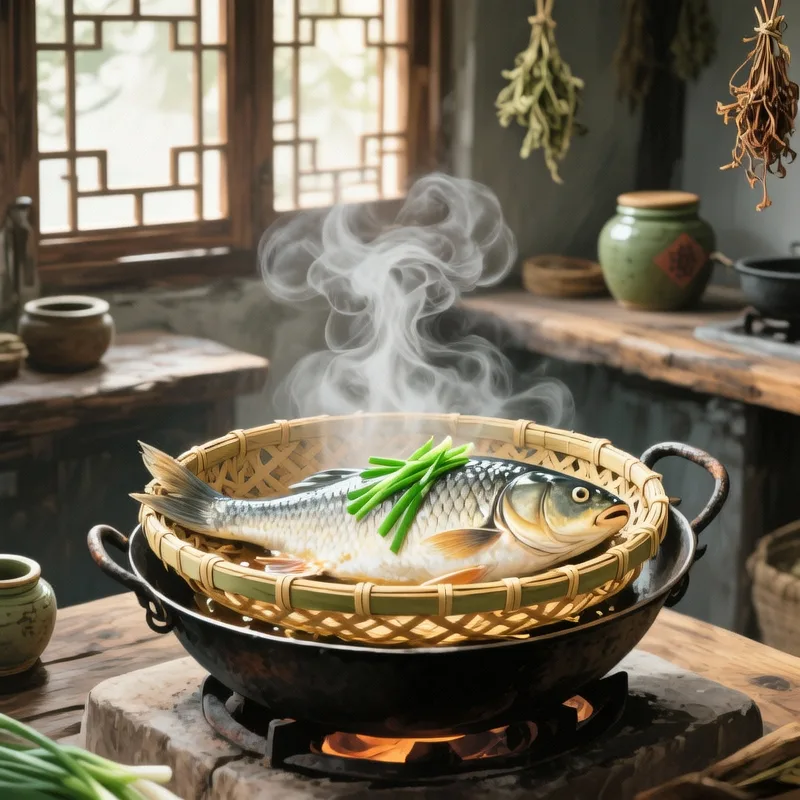
    Jiangnan cooks prize the natural flavour of ingredients, so technique often means restraint. Steaming preserves the texture of fish and glutinous rice; quick stir-frying keeps greens crisp; slow simmering turns pork bones and chicken into clear, aromatic broth. Shaoxing in Zhejiang is famous for yellow rice wine, used in marinades and for deglazing a hot wok. Vinegar from Zhenjiang balances sweet and sour dishes. Hangzhou’s famous West Lake vinegar fish uses a fish from the lake, scored and fried, then finished with a sweet-sour sauce. The dish is now a restaurant set piece, but it began as a local preparation of available freshwater fish.

    A whole freshwater fish steaming in a bamboo basket over a wok in a Jiangnan kitchen
    Steaming is a defining Jiangnan technique because it preserves delicate texture. Illustrazione generata dall'intelligenza artificiale · SinoViz

    A Calendar of Local Dishes

    Seasonality gives the cuisine its rhythm. Spring brings bamboo shoots, shepherd’s purse, and the first river shrimp; autumn brings hairy crab from lakes and the slow-growing taihu whitebait. Suzhou’s squirrel-shaped mandarin fish is butterflied, scored, fried, and glazed, while braised pork belly is cooked until fat and lean layers hold together without hardness. Ningbo, on the Zhejiang coast, adds salted and dried seafood, and its tangyuan glutinous-rice balls filled with black sesame are eaten at the Lantern Festival. Shanghai, later and more cosmopolitan, absorbed these traditions into benbang cooking, favouring soy, sugar, and seafood.

    • West Lake vinegar fish from Hangzhou
    • Squirrel-shaped mandarin fish from Suzhou
    • Hairy crab from Taihu lakes in autumn
    • Black-sesame tangyuan for the Lantern Festival
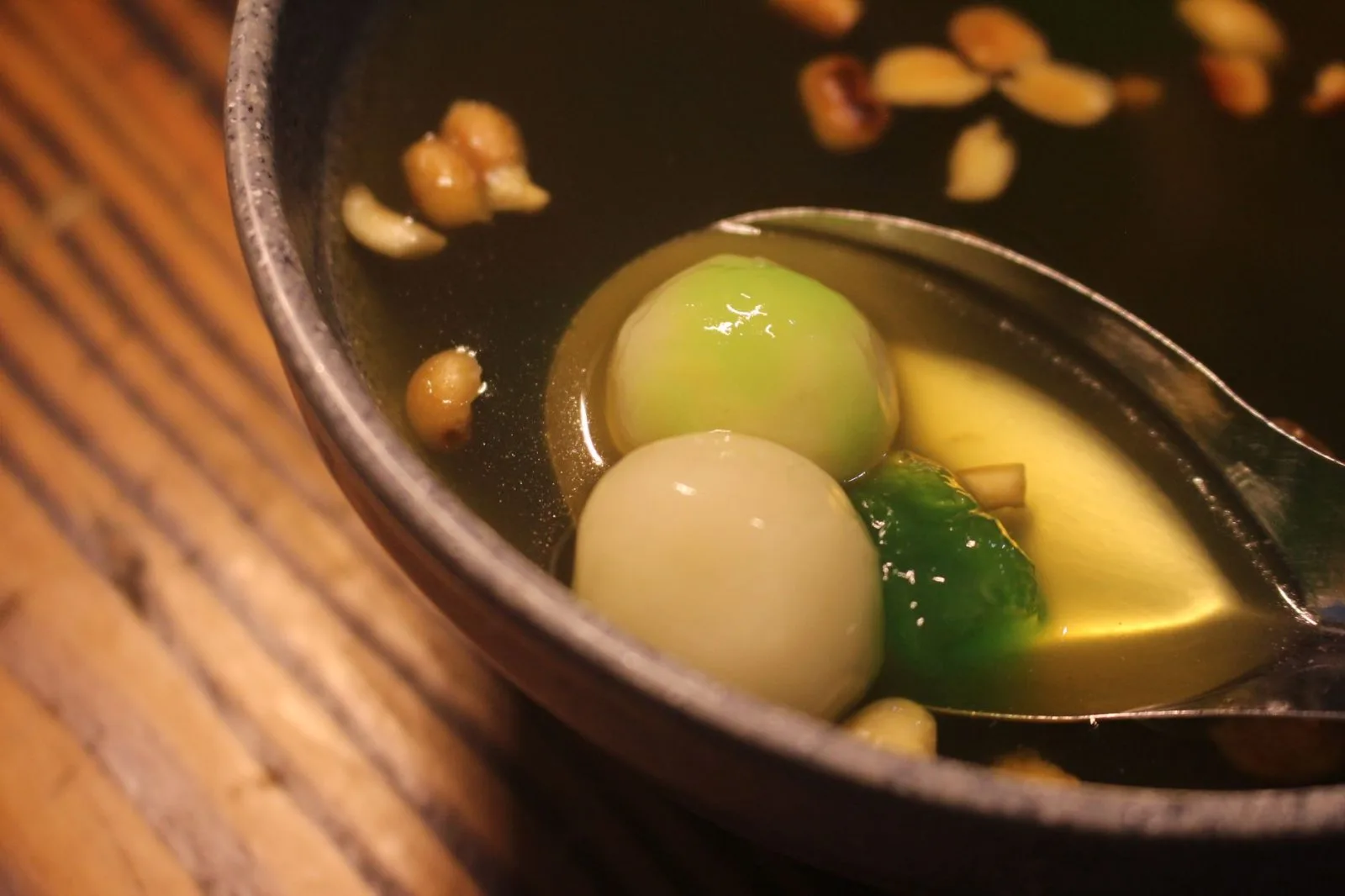
    Small glutinous rice balls with black sesame filling served in a warm bowl
    Tangyuan mark the Lantern Festival across the lower Yangtze. Jauhar Musthofal Qulub | Pexels License (https://www.pexels.com/license/)

    Gardens, Teahouses, and the Table

    Meals in Jiangnan were historically tied to gardens and teahouses, where scholars met over small dishes and wine. The region’s cookbooks, including Yuan Mei’s Suiyuan Shidan of 1792, record recipes alongside comments on market ingredients and household methods. Yuan Mei argued that a cook should understand each ingredient rather than bury it under sauce. That ideal still shapes the region’s public image, even when restaurant versions are elaborate. For a visitor, the useful lesson is to order by season and region: a lake crab in autumn, a bowl of noodles in Suzhou, or a pot of longjing tea near Hangzhou.

    In Jiangnan, the test of a dish is often how little the cook has done to spoil the ingredient.

    Fonti e ulteriori letture

    1. Chinese Regional Cooking — Enciclopedia Britannica.
    2. Hangzhou — UNESCO World Heritage Centre.
    3. Hangzhou — Enciclopedia Britannica.

    Guardalo al suo posto

    Segui questa voce per raggiungere la regione di appartenenza.

    Esplora tramite mappa
    Segui il filo

    Esplora altre voci che condividono i suoi tag.

    Esplora il tag
  • Cultura del tè

    Vita e folklore

    Cultura del tè

    Leaf, Water, and the Tea Horse Road

    Tea moved from medicinal leaf to daily drink, carrying Fujian methods toward Tibet and the sea.

    Sezione
    Vita e folklore
    Regione
    Fujian
    Era
    Attraverso le epoche
    Etichette
    Customs, Food, Geography

    Tea culture is a history of distilled technique: when to pick, how to wither, how to roll, and how to heat a leaf so that it keeps its character. Fujian became a laboratory for these methods, sending compressed cakes west toward Tibet and scented leaves out through coastal ports.

    From Medicine to Daily Drink

    Tea entered Chinese writing as a medicinal and ritual plant long before it became a household drink. Traditions credit the mythical emperor Shen Nong with discovering it, but the earliest firm evidence comes from Han-period tombs, where archaeologists have identified tea leaves among grave goods. By the third century CE, writers described boiling leaves with ginger and onions; the Tang dynasty (618–907) made tea a scholarly and monastic beverage. Lu Yu’s Cha Jing, written around 760–780, codified growing, picking, roasting, and brewing. Tea cakes were toasted, ground to powder, and whisked with hot water, a preparation later carried to Japan by Buddhist monks.

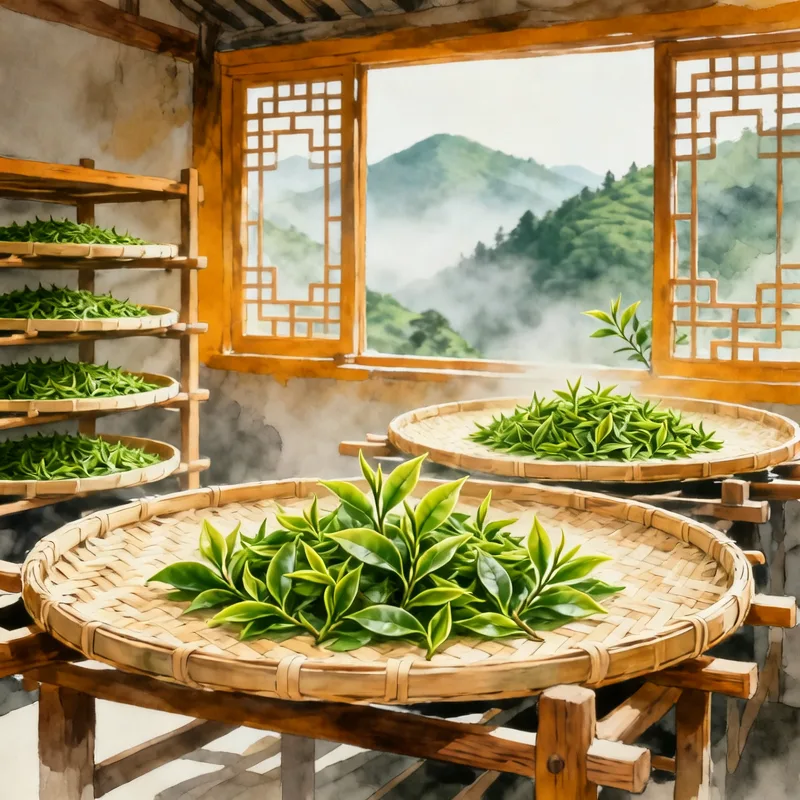
    Fresh tea leaves spread on bamboo trays in a Fujian hillside processing room
    Picking season sets the quality of the leaf before any processing begins. Illustrazione generata dall'intelligenza artificiale · SinoViz

    Fujian’s Craft of Oxidation

    Fujian’s mountainous counties developed styles that depend on controlled oxidation. Wuyi rock tea, grown in the rocky cliffs of the Wuyi range, is often pan-fired, rolled, and roasted until it develops a mineral, toasted character. Tieguanyin from Anxi is shaped into tight pellets that unfurl in the cup. Lapsang souchong from Tongmu resembles black tea in its oxidation, then dries over pine smoke. White teas such as Fuding’s silver-needle style are simply withered and dried, with little rolling or heating. These techniques are local knowledge: the same species, Camellia sinensis, changes through timing, heat, and handling.

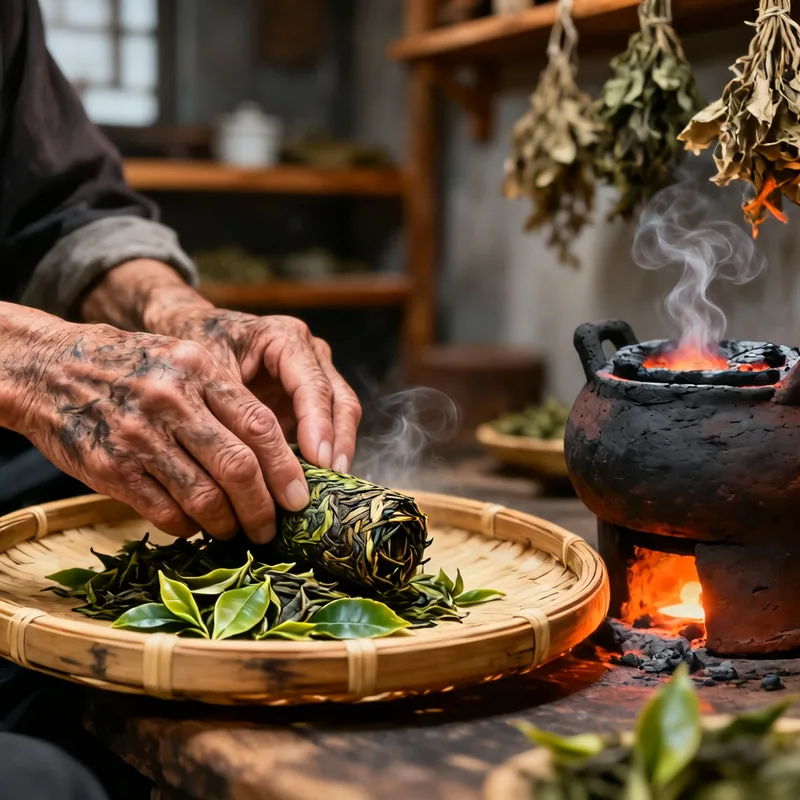
    Tea leaves being rolled by hand on a bamboo tray beside a traditional roasting stove
    Rolling breaks the leaf cells and shapes the flavours that firing will fix. Illustrazione generata dall'intelligenza artificiale · SinoViz

    The Tea Horse Road West

    From at least the Tang period, compressed tea travelled west from Sichuan and Yunnan toward Tibet, where it provided vitamin-rich drink and a medium of exchange in a diet heavy on barley and meat. The Tea Horse Road was a network of footpaths through mountains, not one road: porters and mule caravans crossed passes between Dali, Lijiang, and Tibetan markets. Under the Song, states traded tea for warhorses at frontier markets. Tea bricks were strapped to pack animals, wrapped in bamboo or paper, and sometimes pressed with straw. In Tibetan households, tea was churned with butter and salt into a fuel-rich drink suited to high altitudes.

    • Green, white, oolong, and black styles defined by oxidation
    • Compressed bricks made for pack transport
    • Tea exchanged for Tibetan horses at frontier markets
    • Butter tea brewed from brick tea in highland homes
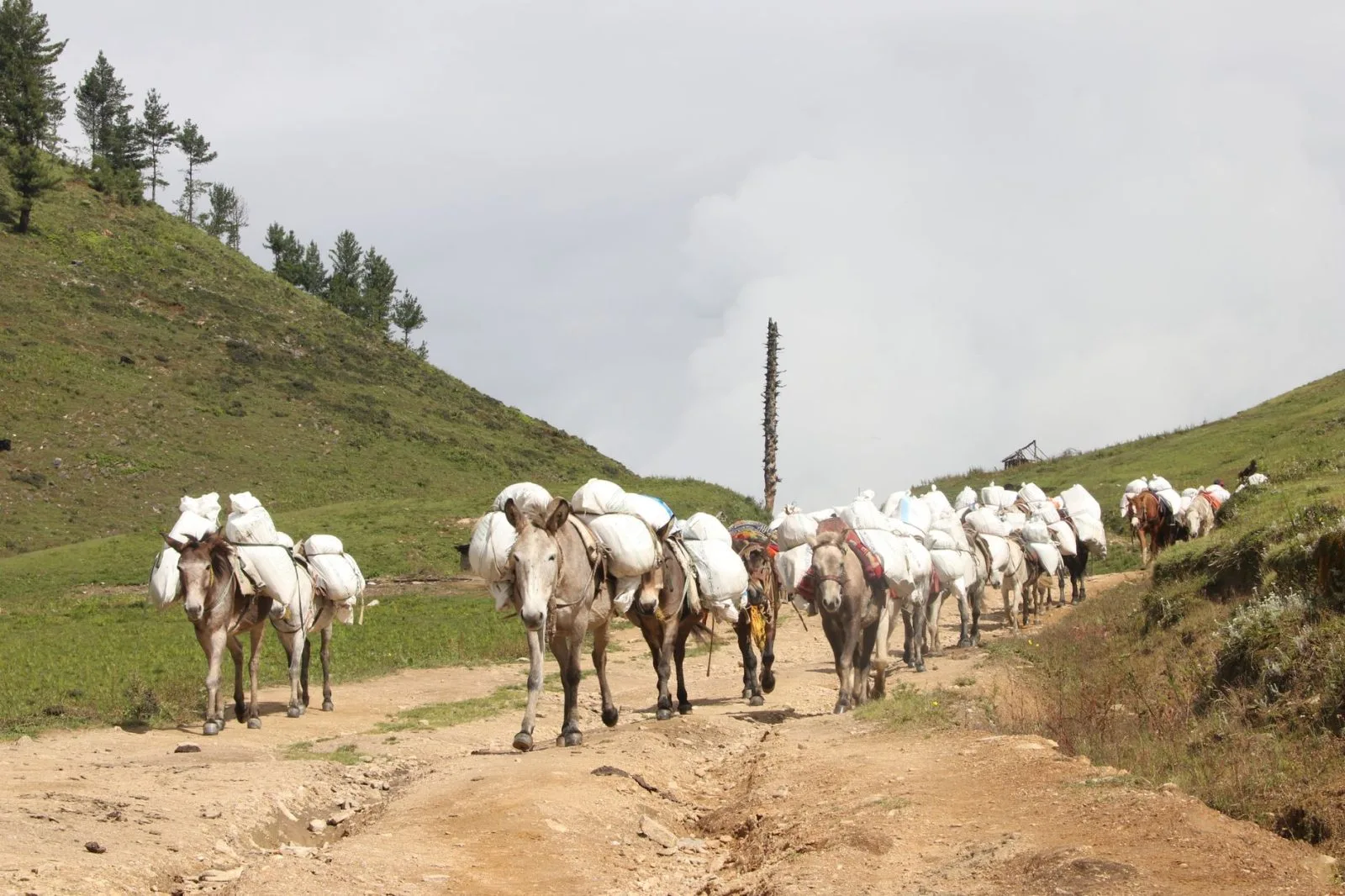
    A string of pack animals carrying bundled tea bricks along a mountain trail in southwest China
    Tea bricks travelled on foot and mule across the mountain passes toward Tibet. Jeevan Mahat | Pexels License (https://www.pexels.com/license/)

    Ports, Cups, and Living Practice

    Maritime trade carried Fujian tea to Southeast Asia and Europe. In the seventeenth century, ships leaving Xiamen and other ports carried leaf tea, porcelain cups, and teapots; by the nineteenth, British demand had made tea a global commodity. The gongfu cha style, associated with Chaozhou and Fujian, uses small vessels, repeated short infusions, and attention to water temperature. A modern tasting may name a harvest season, a mountain, and a roasting method with the precision once reserved for wine. In villages around Wuyi and Anxi, sorting, pan-firing, and roasting still depend on skilled hands, even where machines perform the early steps.

    A leaf becomes tea only when someone decides when to pick it, how long to wither it, and when to stop the heat.

    Fonti e ulteriori letture

    1. Tea — Enciclopedia Britannica.
    2. The Classic of Tea — World History Encyclopedia.
    3. Tea Horse Road — Enciclopedia Britannica.

    Guardalo al suo posto

    Segui questa voce per raggiungere la regione di appartenenza.

    Esplora tramite mappa
    Segui il filo

    Esplora altre voci che condividono i suoi tag.

    Esplora il tag
  • Festa di primavera

    Vita e folklore

    Festa di primavera

    The new year at home and on the street

    Spring Festival is the Lunar New Year, a fifteen-day season of reunions, red decorations, and public celebration.

    Sezione
    Vita e folklore
    Regione
    Pechino
    Era
    Attraverso le epoche
    Etichette
    Usanze, Cibo

    Chun Jie, the Spring Festival, begins on the first day of the first lunar month and ends with the Lantern Festival on the fifteenth. In Beijing, the old rhythms of household ritual and temple fair sit alongside a modern holiday industry and a week-long public break.

    The Eve and the First Days

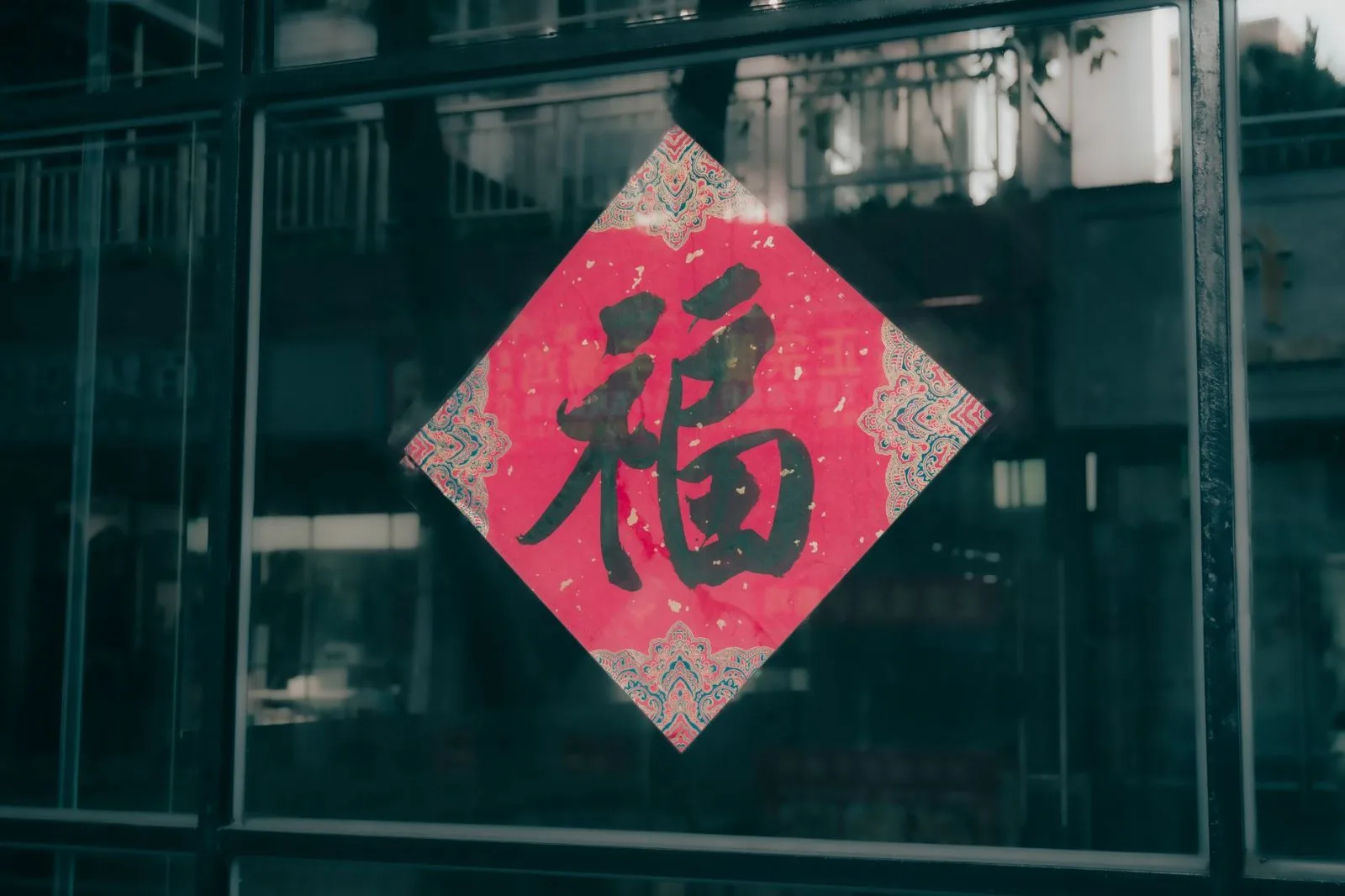
    The preparations begin weeks ahead. Homes are cleaned, debts settled, and red paper couplets pasted around the door, often with the character fu pasted upside down to suggest that good fortune has arrived. New Year’s Eve is the centre of the festival. Families travel home for a long meal that includes jiaozi, dumplings shaped like ancient coins; in northern China they are eaten at midnight. Fish is served because the word for fish sounds like surplus, and a whole fish is often left partly uneaten. Firecrackers once marked the transition, though many urban areas restrict them. After dinner, many families watch the CCTV Spring Festival Gala while red envelopes are handed to children and unmarried younger relatives.

    Red couplets and lanterns decorating a Beijing doorway for Spring Festival
    Red couplets and the character fu mark a household ready for the new year. Matthew Jesús | Pexels License (https://www.pexels.com/license/)

    Visiting and Red Envelopes

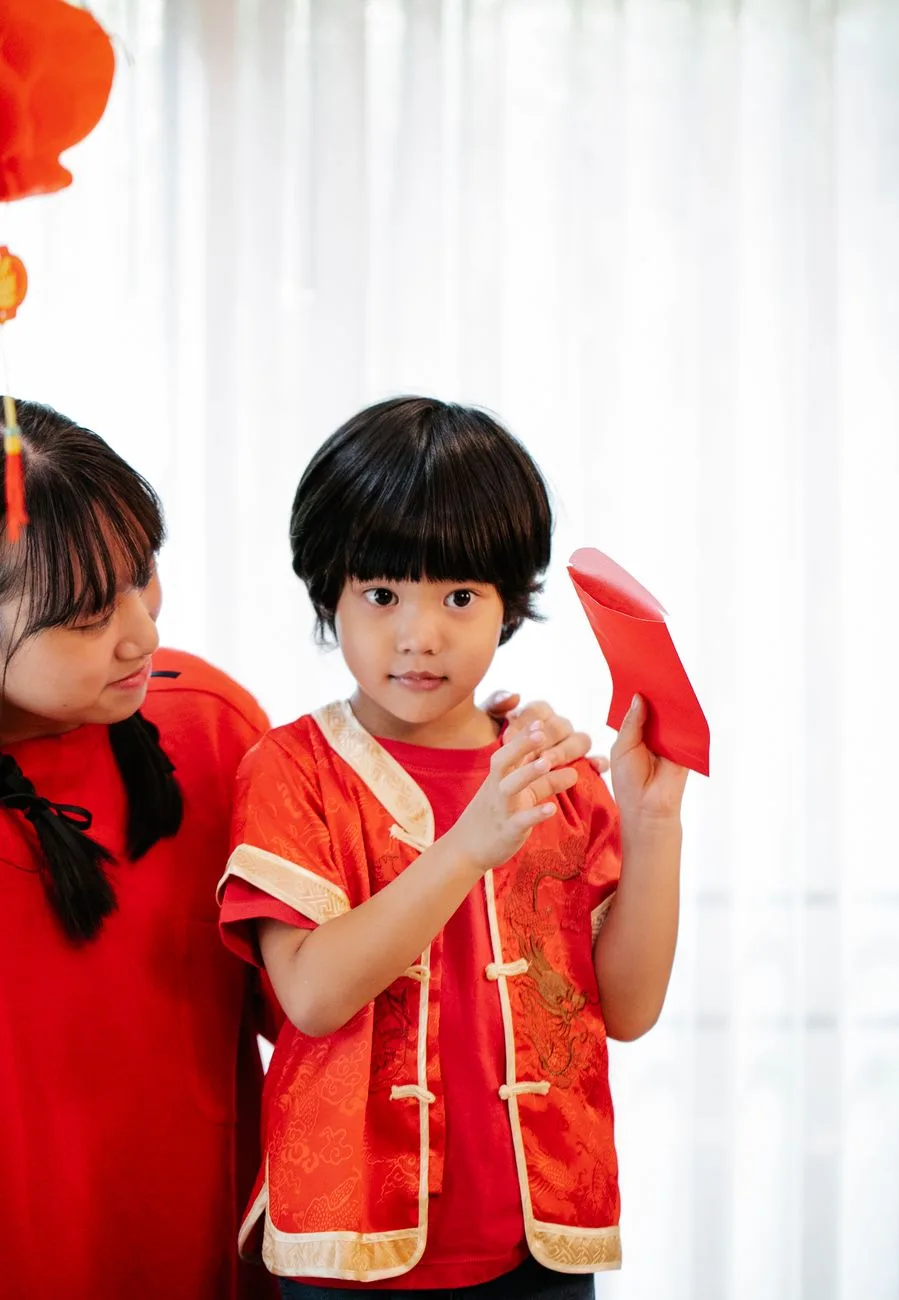
    The first days are for bainian, visits to relatives and neighbours. People call on the oldest family members first, bringing fruit, tea, or sweets, and greet one another with phrases wishing prosperity and health. Hongbao, red envelopes containing cash, pass from married adults to children and younger unmarried relatives; amounts end in even numbers and are accepted with both hands and a thank-you. Hosts offer a tray of snacks, often including candied fruits and melon seeds, before a meal. Visiting over several days is normal, and a phone message has become an accepted substitute for distant friends. Dress is neat rather than formal, and arriving empty-handed is less important than arriving at all. The point of the circuit is to renew the relationships that hold a family network together.

    Red envelopes being handed to a child during a New Year visit
    Hongbao pass from older to younger relatives during the first days of the year. Angela Roma | Licenza Pexels (https://www.pexels.com/license/)

    Beijing Temple Fairs

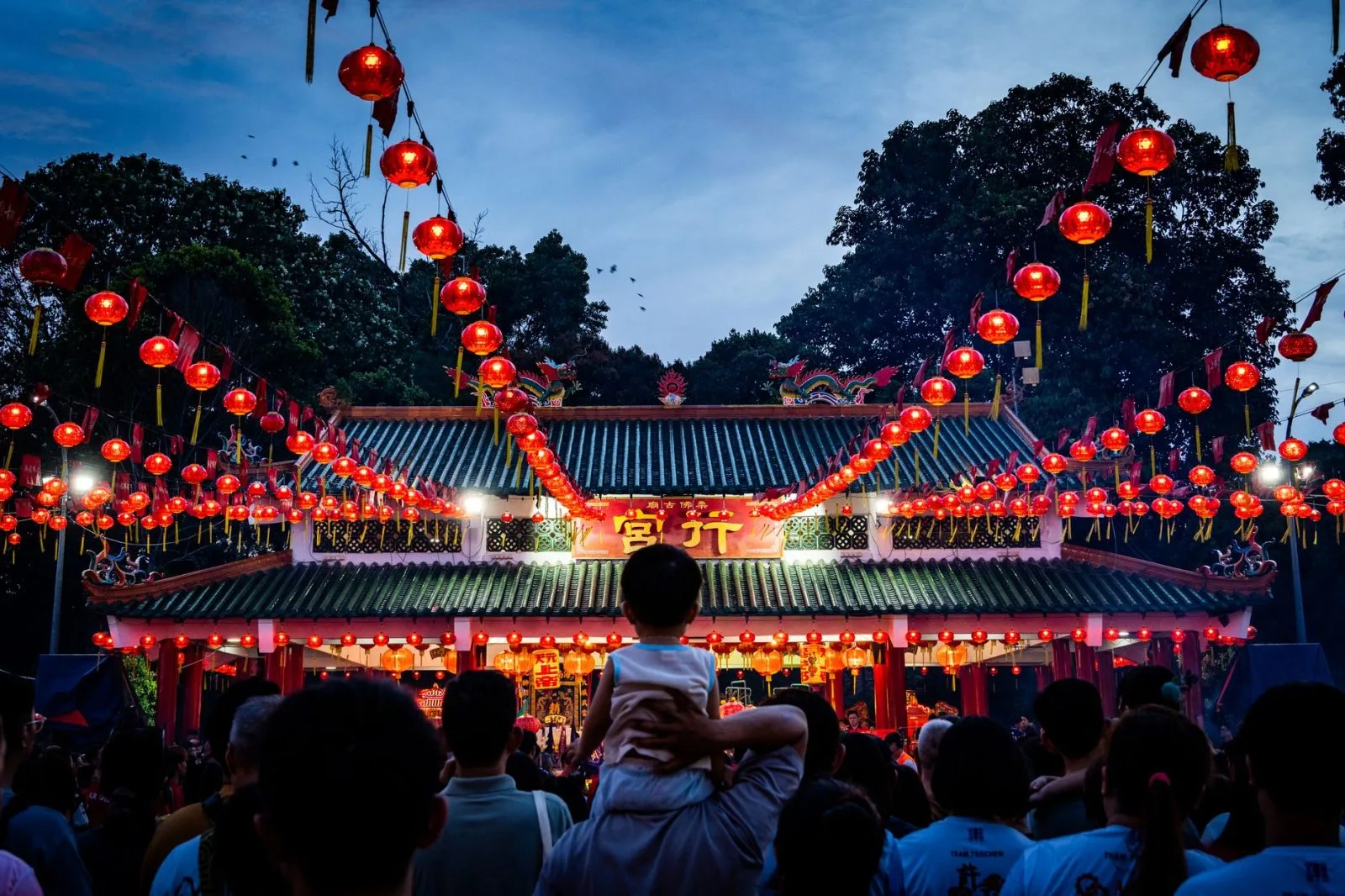
    Beijing’s miaohui, or temple fairs, turn temple courtyards and parks into markets for the duration of the holiday. The fairs at Ditan, Taoranting, Baiyunguan, and the Summer Palace sell dolls, sugar paintings, paper cuts, and skewered snacks, with opera singers, acrobats, and lion dancers performing in the middle of the crowd. They began as religious gatherings attached to temple festivals and became popular public entertainments; today they are as much a family outing as a religious event. Admission is usually a small fee, and the busiest hours are afternoon. Metro stations near the parks are crowded, so go early and expect a queue for the best-known fairs. The atmosphere is informal: eat while you walk, watch a performance from the edge, and keep an eye on children.

    A crowded Beijing temple fair with red lanterns and market stalls
    Temple fairs bring opera, snacks, and craft stalls to parks and temple courtyards. zimochen | Pexels License (https://www.pexels.com/license/)

    The Fifteenth Day and a Global Holiday

    The festival closes with Yuanxiao, the Lantern Festival, on the fifteenth day of the first lunar month. Streets and parks hang lanterns, families eat sweet rice balls called tangyuan, and lantern riddles invite a guess before the night ends. In Beijing, some neighbourhoods still stage dragon dances and drum processions. The Spring Festival was inscribed on UNESCO’s intangible cultural heritage list in 2024, recognising practices that extend well beyond one city. For visitors, the practical notes are straightforward. The public holiday closes shops and offices for several days, transport is crowded, and prices for flights and hotels rise. Book early, carry cash in small notes for envelopes and market stalls, and accept that some days are better spent with a family invitation than with a museum itinerary.

    Red at the door, fish on the table, and an envelope in the hand mark the year’s first days.

    Fonti e ulteriori letture

    1. Spring festival, social practices of the Chinese people in celebration of traditional new year — Patrimonio culturale immateriale dell'UNESCO.
    2. Capodanno cinese — Enciclopedia Britannica.
    3. Chinese New Year travel and festivals — I punti salienti della Cina.

    Guardalo al suo posto

    Segui questa voce per raggiungere la regione di appartenenza.

    Esplora tramite mappa
    Segui il filo

    Esplora altre voci che condividono i suoi tag.

    Esplora il tag