विषय: समुद्री रेशम मार्ग

  • समुद्री रेशम मार्ग

    मानचित्र अन्वेषण

    समुद्री रेशम मार्ग

    Ports, Monsoons, and Sea Trade

    The sea routes that linked Fujian’s ports to the Indian Ocean world.

    अनुभाग
    मानचित्र अन्वेषण
    क्षेत्र
    फ़ुज़ियान
    युग
    गीत-लियाओ-जिन
    टैग
    History, Geography, Transport

    The Maritime Silk Road was a seasonal network of sailing routes between Chinese ports and the Indian Ocean. Fujian’s Quanzhou rose within it during the Song and Yuan dynasties, when customs revenue and shipbuilding made the coast central to the imperial economy.

    Why Trade Moved Seaward

    Maritime links existed in the Han period, but their scale grew under the Tang and Song. Guangzhou handled Persian and Arab ships in the eighth century, and the Tang court appointed a maritime trade commissioner there in 714. The Song dynasty, founded in 960, lost access to parts of the overland routes after the Western Xia took the Hexi Corridor in the eleventh century, and the Jin conquest of northern China in 1127 forced the court south to Hangzhou. Ships could carry porcelain and grain far more cheaply than caravans. Maritime trade offices at Guangzhou, Quanzhou, and Mingzhou collected duties that became an important source of state income.
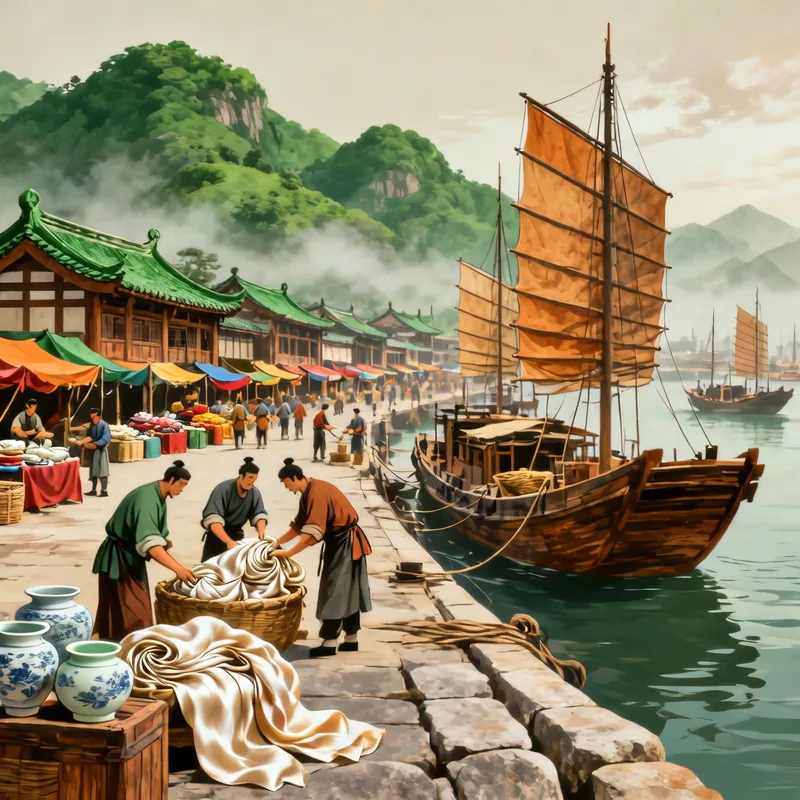
    Wooden sailing ships anchored at a crowded southern Chinese port with hills behind
    Song ports collected customs duties from a growing sea trade. कृत्रिम बुद्धिमत्ता द्वारा निर्मित चित्र · सिनोविज़

    Quanzhou and the Fujian Coast

    Quanzhou, known to foreign merchants as Zayton, became one of the busiest ports of the Song and Yuan periods. Its harbour served ships from Arabia, Persia, India, and Southeast Asia, and a Muslim community built the Qingjing Mosque, first erected in 1009 and rebuilt in 1131. Fujian supplied timber, shipwrights, and navigators trained in coastal and ocean sailing. In 1274, a merchant vessel sank near Quanzhou; its excavated hull shows watertight bulkheads, a feature that made Chinese junks unusually resistant to damage. Marco Polo, writing around 1290, called Zayton one of the world’s greatest ports. The city’s multilingual inscription stones record the range of its traders.
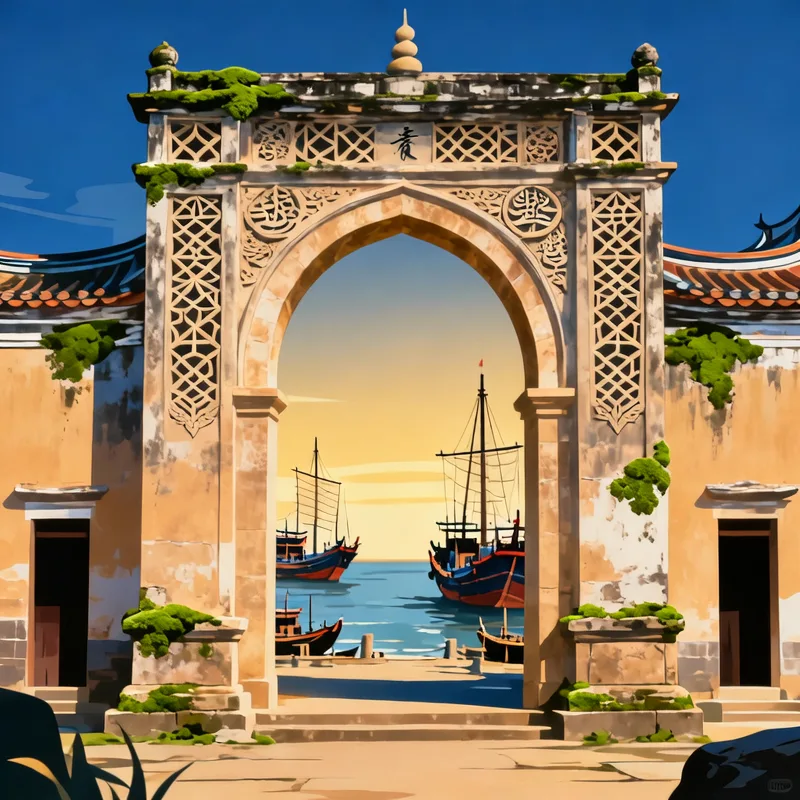
    Stone mosque with an arched gateway in a Fujian port city, a remnant of Quanzhou’s foreign merchants
    Quanzhou’s Qingjing Mosque reflects the port’s long ties with the Indian Ocean. कृत्रिम बुद्धिमत्ता द्वारा निर्मित चित्र · सिनोविज़

    Monsoons, Cargo, and Ports of Call

    Sailing followed the wind. Ships left Fujian on the northeast monsoon, usually in late autumn, and returned with the southwest monsoon in summer. Routes ran south past Champa and the Malay Peninsula, through the Strait of Malacca to Srivijaya, then toward Calicut, Hormuz, and Aden. Cargo included Longquan celadon, Jingdezhen porcelain, silk, copper coins, and later tea, exchanged for pepper, spices, ivory, and aromatic woods. Merchants stayed for months while winds changed, marrying locally and establishing trading quarters. Navigators used compass bearings and written route books, but the schedule belonged to the monsoon rather than to the calendar of any court.

    • Quanzhou and Guangzhou in China
    • Champa and Srivijaya in Southeast Asia
    • Calicut on the Malabar Coast
    • Hormuz and Aden at the western end
    Chinese junk under full sail crossing a blue sea toward a tropical harbour
    Monsoon winds set the rhythm of voyages between Fujian and the Indian Ocean. कृत्रिम बुद्धिमत्ता द्वारा निर्मित चित्र · सिनोविज़

    Mapping a Sea Network

    Sea routes were recorded as sequences of bearings, landmarks, and sailing times rather than as single drawn lines. Compass navigation was in use by the late Song, and later manuals such as Shun Feng Xiang Song, a Ming manuscript copying earlier route books, list courses by compass point and day. These rutters show how captains thought in segments: from a Fujian harbour to a known island, then to a coastal port. The Ming voyages of Zheng He in the early fifteenth century relied on the same coastal knowledge. The maritime silk road is best mapped as a web of seasonal legs, ports, and waiting places.

    The monsoon wrote the timetable, and the port collected the tax.

    स्रोत और आगे की जानकारी

    1. Quanzhou: Emporium of the World in Song-Yuan China — UNESCO World Heritage Centre.
    2. Silk Roads Programme — UNESCO.
    3. Inventing the Maritime Silk Road — Modern Asian Studies, Cambridge University Press.

    इसे यथास्थान देखें

    इस प्रविष्टि का अनुसरण करके उस क्षेत्र तक पहुँचें जहाँ यह संबंधित है।

    मानचित्र द्वारा अन्वेषण करें

    इस चर्चा का अनुसरण करें

    उन अन्य प्रविष्टियों को ब्राउज़ करें जिनमें इसके समान टैग हैं।

    टैग ब्राउज़ करें
  • Zheng He’s Voyages

    इतिवृत्त

    Zheng He’s Voyages

    Seven Voyages of the Ming Treasure Fleet

    A mid-fifteenth-century fleet that carried Ming diplomacy across the Indian Ocean.

    अनुभाग
    इतिवृत्त
    क्षेत्र
    फ़ुज़ियान
    युग
    युआन-मिंग-क्विंग
    टैग
    History, Transport

    Between 1405 and 1433, the Ming court sent seven large naval expeditions into the Indian Ocean. Commanded by the eunuch admiral Zheng He, the fleets visited ports from Southeast Asia to East Africa, exchanging gifts and asserting a maritime order.

    A Commander from Yunnan

    Zheng He was born Ma He around 1371 in Kunyang, Yunnan, into a Muslim family with connections to the Mongol administration. Captured as a boy during the Ming conquest of Yunnan, he entered the household of the prince of Yan, later the Yongle Emperor. He took the name Zheng He and rose to become a trusted eunuch official. In 1405, the Yongle Emperor ordered him to lead a fleet to the western oceans. The first voyage carried well over twenty thousand men, and the largest ships were far bigger than contemporary European vessels. Seven expeditions followed over twenty-eight years.

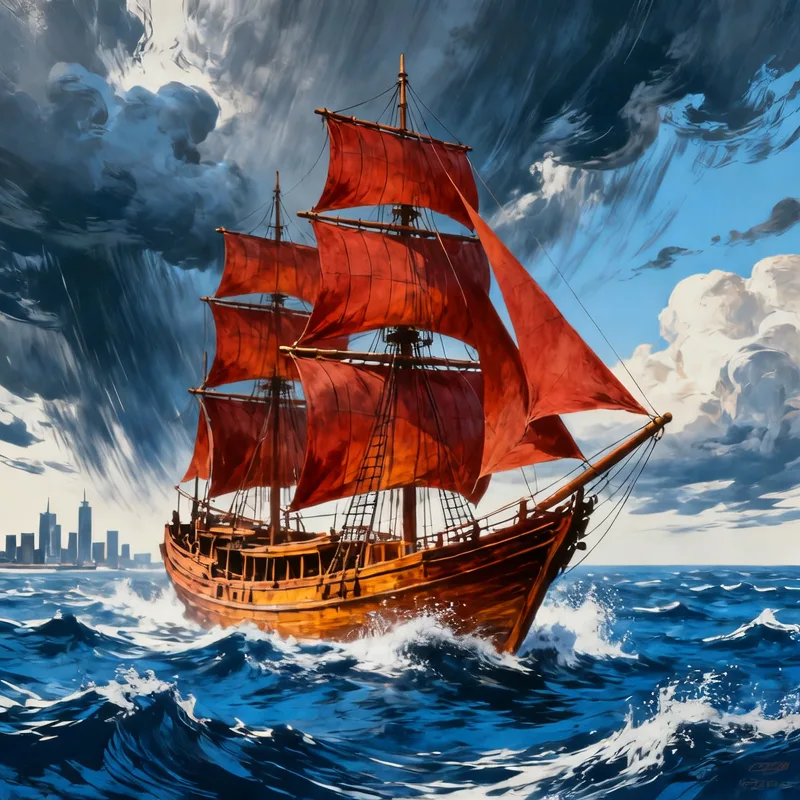
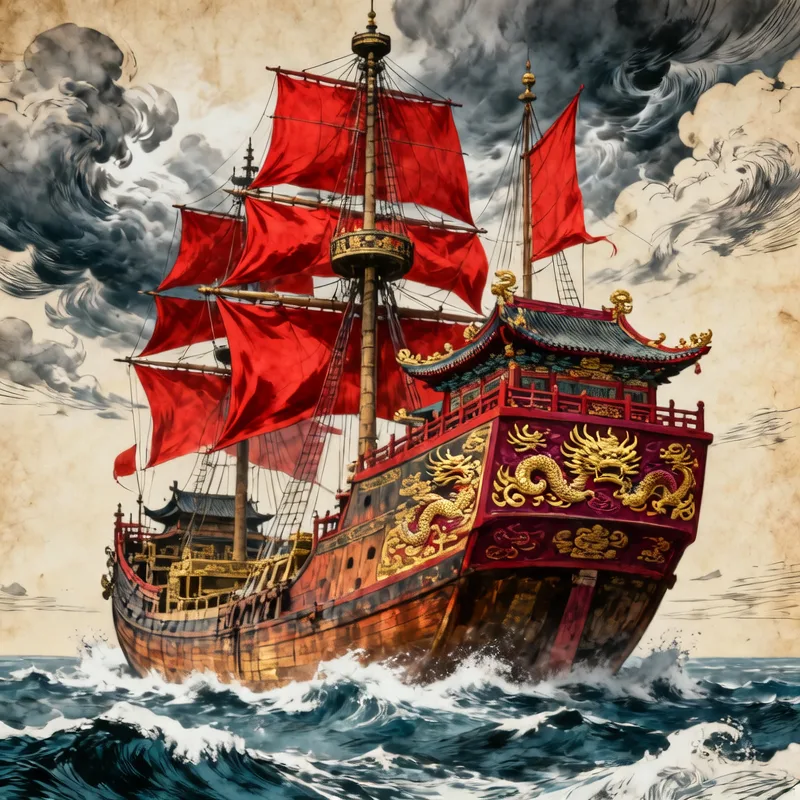
    Large wooden treasure ship with multiple masts and a high stern under sail
    Zheng He’s treasure ships symbolised the Ming court’s reach across the ocean. कृत्रिम बुद्धिमत्ता द्वारा निर्मित चित्र · सिनोविज़

    Building and Departing

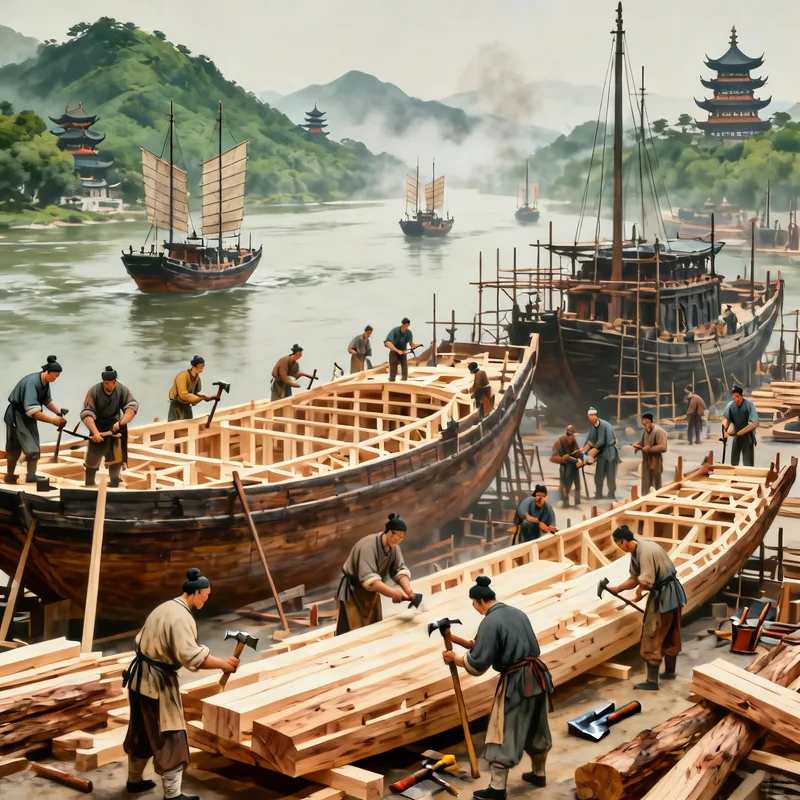
    The fleets were built and provisioned through a vast state network. Shipyards at Nanjing and in Fujian constructed hulls whose dimensions are debated by historians, while carpenters, sailmakers, and caulkers worked under imperial requisition. Fujian supplied timber, skilled shipwrights, and pilots familiar with the southern seas. Expeditions assembled at Nanjing and at Liujiagang near Suzhou, where a 1431 stone inscription records donations and the distances sailed. From Fujian they rode the northeast monsoon south toward Champa and Java. The 1405 fleet reportedly included more than sixty treasure ships and hundreds of smaller vessels carrying horses, grain, and tribute goods.

    Busy shipyard on a southeastern Chinese river with timber hulls under construction
    Nanjing and Fujian shipyards supplied the huge Ming fleets. कृत्रिम बुद्धिमत्ता द्वारा निर्मित चित्र · सिनोविज़

    Diplomacy Across the Ocean

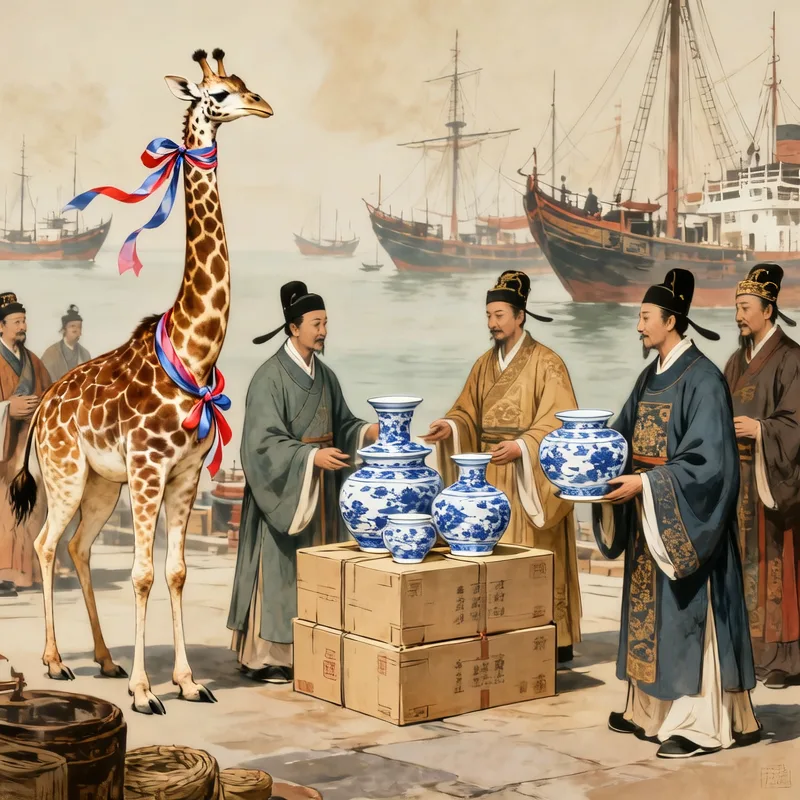
    Zheng He sailed to Calicut on India’s Malabar Coast, to Hormuz and Aden, and to ports such as Mogadishu and Malindi on the East African coast. The fleets carried silk, porcelain, and gold, and returned with pepper, ivory, incense, gems, and exotic animals, including a giraffe presented as a tribute curiosity. Zheng He also fought pirates in Southeast Asia and installed rulers friendly to Ming interests. Unlike later European voyages, these expeditions did not establish colonies or a permanent overseas empire. They projected the tribute system, under which foreign rulers acknowledged Ming supremacy in exchange for gifts, titles, and protected trade.

    • Calicut on the Malabar Coast
    • Hormuz and Aden at the western end
    • Malacca and Java in Southeast Asia
    • Mogadishu and Malindi in East Africa
    Foreign envoys presenting a giraffe and ivory at a Ming imperial court audience
    Tribute gifts such as giraffes and ivory embodied the fleet’s diplomatic mission. कृत्रिम बुद्धिमत्ता द्वारा निर्मित चित्र · सिनोविज़

    Why the Voyages Stopped

    The expeditions ended after Zheng He died, probably in 1433 during the seventh voyage. His successor, the Hongxi Emperor, had already halted new fleets in 1424, and Confucian ministers argued that the cost drained the treasury while scholar-officials resented the eunuch admiral’s influence. The court shifted resources toward the northern frontier and the Grand Canal. Maritime trade continued through private merchants and the port of Quanzhou, but the state fleet disappeared, and many records were neglected. Centuries later, Chinese historians revisited the voyages as evidence of an earlier age of ocean-going capacity.

    The treasure fleets carried an empire’s courtesy across the ocean, and then sailed no more.

    स्रोत और आगे की जानकारी

    1. Zheng He — एनसाइक्लोपीडिया ब्रिटानिका।
    2. Quanzhou: Emporium of the World in Song-Yuan China — UNESCO World Heritage Centre.
    3. The Seven Voyages of Zheng He — World History Encyclopedia.

    इसे यथास्थान देखें

    इस प्रविष्टि का अनुसरण करके उस क्षेत्र तक पहुँचें जहाँ यह संबंधित है।

    मानचित्र द्वारा अन्वेषण करें

    इस चर्चा का अनुसरण करें

    उन अन्य प्रविष्टियों को ब्राउज़ करें जिनमें इसके समान टैग हैं।

    टैग ब्राउज़ करें
  • चीनी मिटटी

    जीवन और लोककथाएँ

    चीनी मिटटी

    Clay, fire, and the white of Dehua

    Fujian’s kilns turned local clay into porcelain that travelled across the sea and changed how the world pictured China.

    अनुभाग
    जीवन और लोककथाएँ
    क्षेत्र
    फ़ुज़ियान
    युग
    युगों के पार
    टैग
    Customs, History, Scenic Sites

    Porcelain is defined by its body and its firing: a pale, fine clay heated to temperatures that vitrify the material and make it ring when struck. Fujian’s Dehua kilns made a version so white it seemed translucent, known in Europe as blanc de Chine.

    What Makes Porcelain

    Porcelain differs from ordinary pottery in both material and firing. Potters use kaolin, a white clay, mixed with feldspar and quartz, then fire the shaped vessel at roughly 1,200 to 1,400 degrees Celsius. At that temperature the body vitrifies: it becomes dense, non-porous, and slightly translucent at the edges. A glassy glaze is usually applied before firing, bonding to the body rather than sitting on it as a separate layer. Chinese potters had reached this threshold by the Tang and Song periods, and Jingdezhen in Jiangxi became the great production centre. The English word china stuck to the ware because the country was the source of the finest examples. A light tap on a good cup gives a clear ring, a quick test that still works in a shop.

    A porcelain bowl with a pale glaze photographed against light
    True porcelain is fired hot enough to vitrify the body, giving it a hard, resonant wall. lee c | Pexels License (https://www.pexels.com/license/)

    Dehua White

    Dehua, a county in Fujian’s Quanzhou prefecture, developed a white porcelain with a warm, creamy tone. Its clay is low in iron, which lets the glaze fire almost colourless, and its potters mastered figures as well as vessels. From the Ming dynasty onward, Dehua workshops produced small statues of Guanyin, the bodhisattva of compassion, with soft modelling and a smooth, almost waxy surface. European traders called the ware blanc de Chine, and by the seventeenth century it was collected in royal cabinets and copied by potters in Meissen and elsewhere. Tea wares also left the kilns: small cups, gaiwan lids and bowls, and white vessels that showed the colour of tea clearly. Local museums trace the kiln sequence from Song-period celadons through the white wares that made Dehua famous.

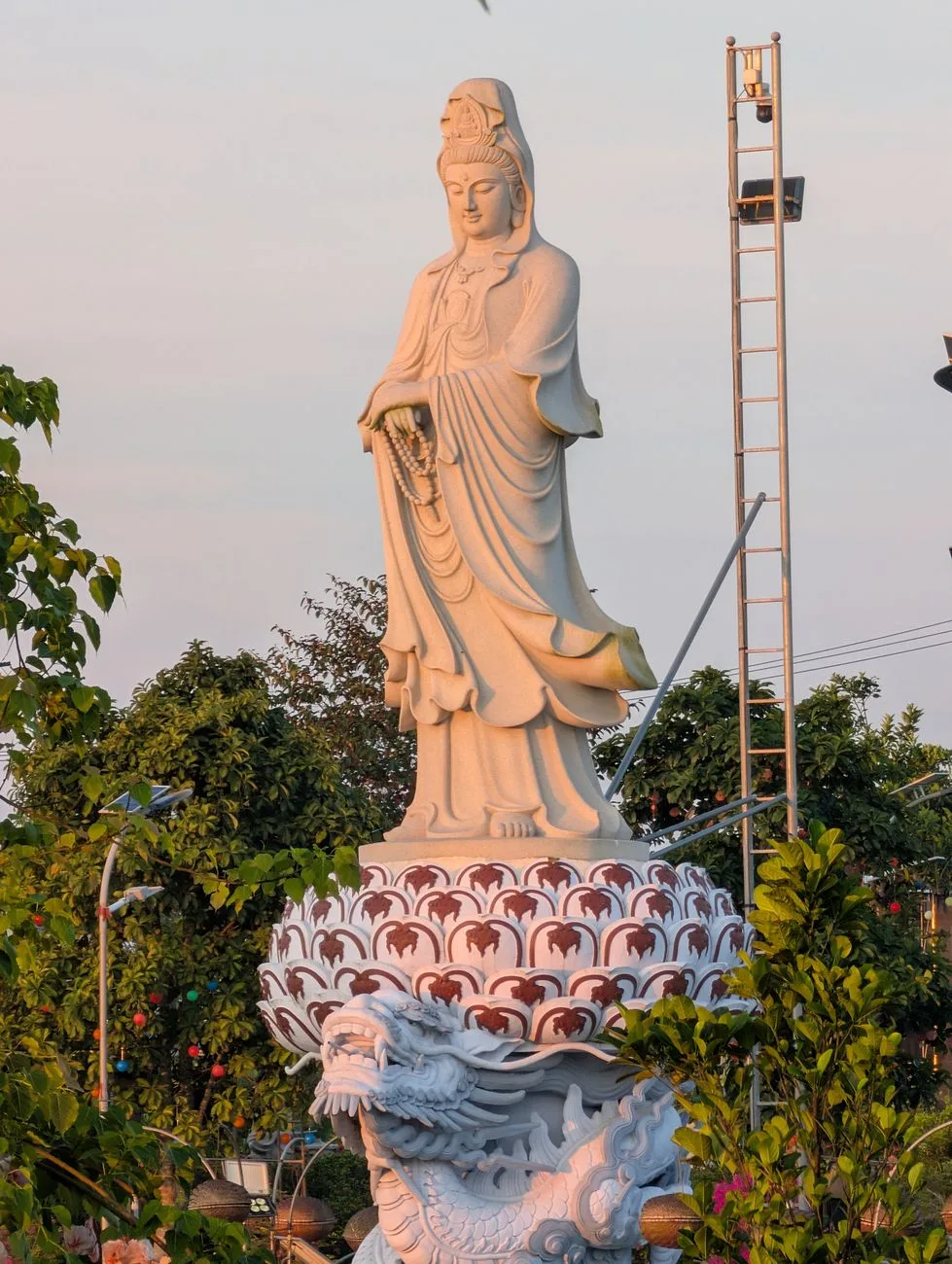
    A milky white porcelain figurine of Guanyin from Dehua
    Dehua’s porcelain figures of Guanyin became known in Europe as blanc de Chine. Quý Hoàng | Pexels License (https://www.pexels.com/license/)

    A Port for Porcelain

    Porcelain shaped trade as much as taste. Fujian’s coast faced the South China Sea, and Quanzhou became one of the busiest ports of the Song and Yuan dynasties, a place where merchants, monks, and ship crews exchanged goods and techniques. Archaeologists have recovered Chinese ceramics from ports and shipwrecks across Southeast Asia, the Indian Ocean, and East Africa; the fragments are dated by glaze and shape, making them a record of demand as well as production. UNESCO listed Quanzhou in 2021 as an emporium of the world in Song-Yuan China, with surviving mosques and temples. The export ware was not always the finest court piece. Sturdy bowls and jars packed in straw travelled in bulk, reaching households that never saw the kiln but knew the clay by its colour.

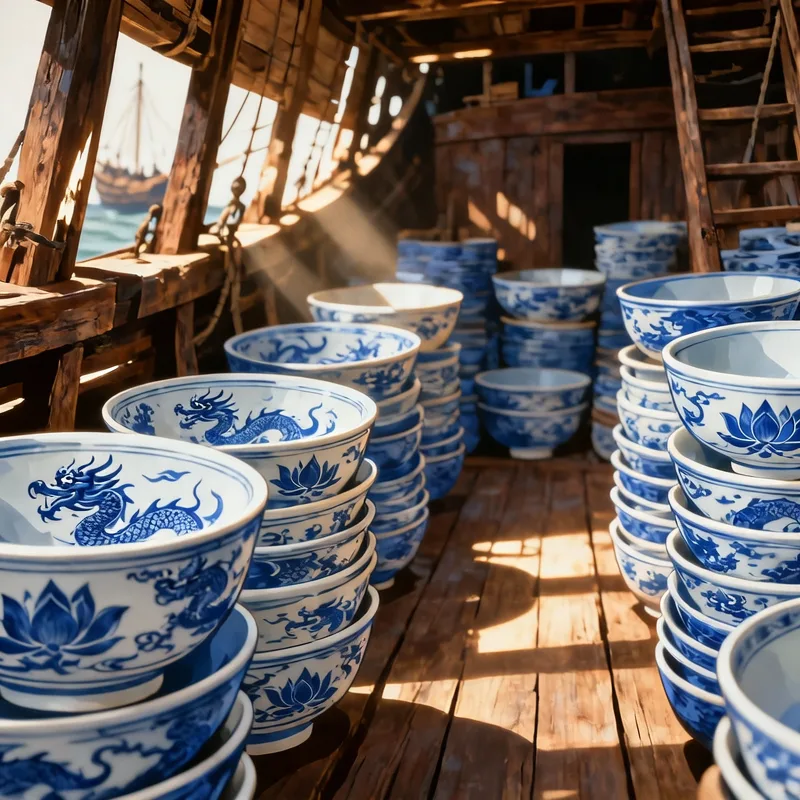
    Blue-and-white porcelain packed as cargo in a ship’s hold
    Quanzhou was a major Song and Yuan port from which Fujian ceramics were shipped abroad. कृत्रिम बुद्धिमत्ता द्वारा निर्मित चित्र · सिनोविज़

    Using and Collecting

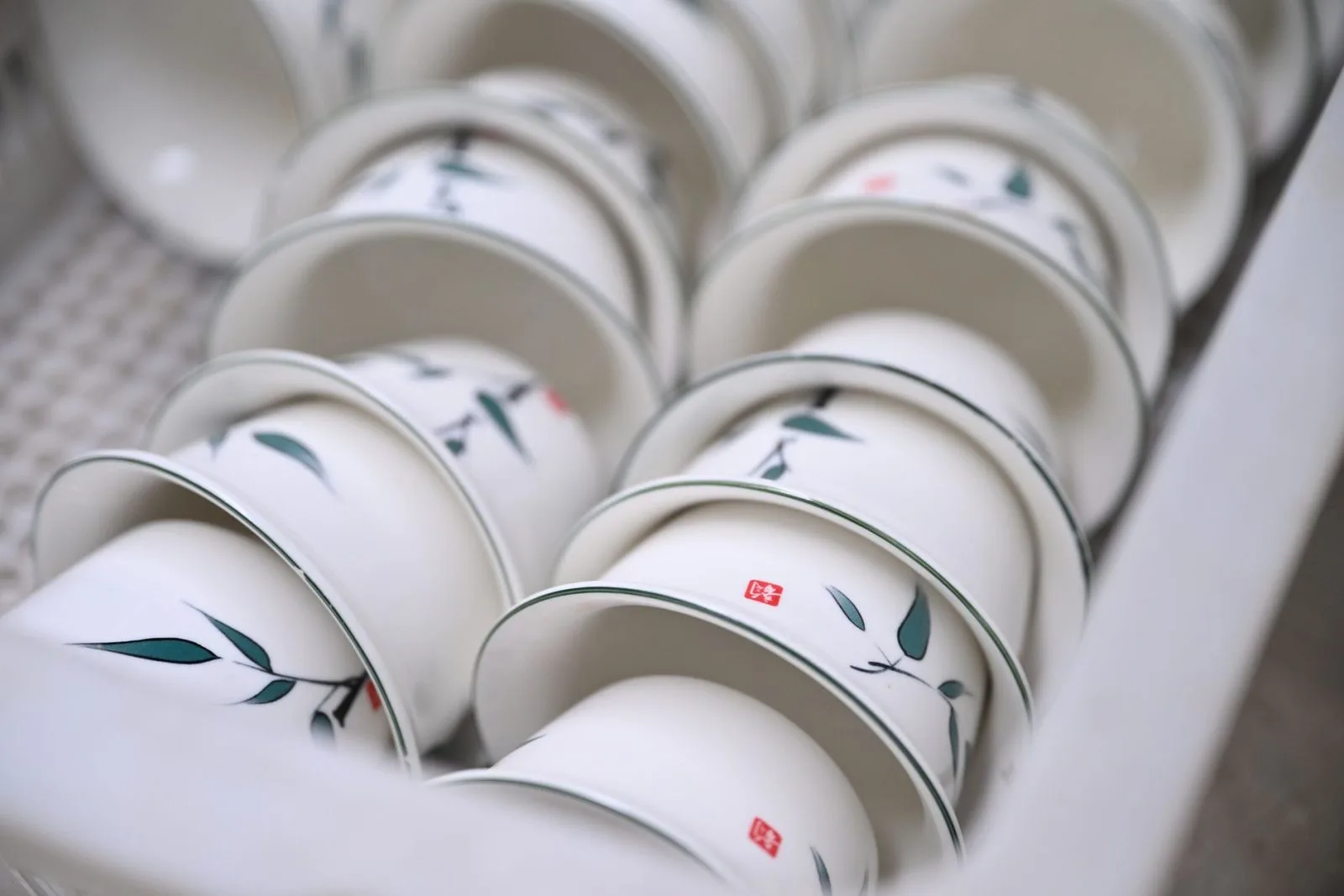
    Porcelain entered daily ritual as well as trade. A gaiwan, a bowl with a lid and saucer, is used for brewing tea in northern China; the lid controls the leaves and the saucer protects the fingers. White Dehua cups make the colour of a tea liquor easy to judge. Collectors look for a clean foot ring, an even glaze, and a mark painted on the base, though many imitations copy famous reign marks. Visit a kiln museum in Dehua or a ceramic gallery in Quanzhou to see the sequence from raw clay to finished piece. Handling a cup with a saucer and a steady hand is still the simplest way to understand why this material travelled so far.

    A clear ring and a translucent edge tell you what the fire has done.

    स्रोत और आगे की जानकारी

    1. Chinese Porcelain — The Metropolitan Museum of Art.
    2. Quanzhou: Emporium of the World in Song-Yuan China — UNESCO World Heritage Centre.
    3. Blanc de Chine — एनसाइक्लोपीडिया ब्रिटानिका।

    इसे यथास्थान देखें

    इस प्रविष्टि का अनुसरण करके उस क्षेत्र तक पहुँचें जहाँ यह संबंधित है।

    मानचित्र द्वारा अन्वेषण करें

    इस चर्चा का अनुसरण करें

    उन अन्य प्रविष्टियों को ब्राउज़ करें जिनमें इसके समान टैग हैं।

    टैग ब्राउज़ करें
  • युआन & मिंग & किंग

    Era · 1271–1912

    Yuan Ming Qing

    Steppe empire, maritime voyages and the last dynasty

    From Mongol conquest to Ming restoration and Qing expansion, this long period reshaped China’s borders, trade and population. It produced the Forbidden City, great novels, porcelain exports and the final imperial institutions.

    युग
    Yuan Ming Qing
    साल
    1271–1912
    पथ
    इतिवृत्त

    परिभाषित घटनाएँ

    • Yuan unifies China under Mongol rule and expands Eurasian exchange
    • Ming rebuilds the Great Wall and sends Zheng He’s fleets
    • Porcelain, tea and silk become global commodities
    • Qing expands to Xinjiang, Tibet and Mongolia
    • Late Qing faces internal revolt, foreign pressure and reform

    Figures & ideas

    • Zheng He — Admiral of Ming maritime expeditions
    • Kangxi Emperor — Long-reigning Qing ruler of consolidation and scholarship
    • Cao Xueqin — Author associated with Dream of the Red Chamber

    भूमि को पढ़ें

    Open the map to see where these events left traces.

    मानचित्र द्वारा अन्वेषण करें
  • फ़ुज़ियान

    क्षेत्र · तट, टुलू और चाय

    फ़ुज़ियान

    फ़ुज़ियान जलडमरूमध्य के पार ताइवान के सामने स्थित है और समुद्र की ओर देखता है। इसके पहाड़ों ने हक्का तुलू समुदायों को आश्रय दिया, जबकि इसके बंदरगाहों से समुद्री मार्गों के माध्यम से व्यापारी, प्रवासी और चाय का परिवहन होता था।

    क्षेत्र
    फ़ुज़ियान
    COORDINATES
    26.07°N, 119.30°E
    के लिए जाना जाता है
    तट, तुलू और चाय

    परिदृश्य

    खड़ी पहाड़ियाँ एक ऊबड़-खाबड़ तटरेखा से मिलती हैं। नदियाँ समुद्र तक छोटी-छोटी घाटियाँ काटती हैं, जिससे प्राकृतिक बंदरगाह बनते हैं और अंतर्देशीय समुदायों को अलग-थलग कर देते हैं, जिन्होंने विशिष्ट वास्तुकला और बोलियाँ विकसित कीं।

    विरासत और स्थान

    • फ़ुज़ियान टुलू
    • गुलांग्यु
    • वुयी पर्वत
    • क्वानझोऊ समुद्री स्थल

    संस्कृति और दैनिक जीवन

    फ़ुज़ियान प्रांत ऊलोंग चाय, समुद्री भोजन, मिननान और हक्का परंपराओं और समुद्री यात्रा से जुड़े मंदिर नेटवर्क के लिए जाना जाता है। इस प्रांत का इतिहास पर्वतीय और समुद्री दोनों पहलुओं से जुड़ा है।

    यात्रा जारी रखें

    इस क्षेत्र को किसी पर्यटन गाइड के साथ जोड़ें या समय के साथ इसकी कहानियों का अनुसरण करें।

    घूमने की जगहों का अन्वेषण करें ओपन क्रॉनिकल
  • Guangxi

    क्षेत्र · कार्स्ट और ली नदी

    Guangxi

    Guangxi is a landscape of limestone peaks, rivers and terraced hills. Its karst scenery is famous, but the province is equally defined by Zhuang, Dong and Miao communities and their festivals.

    क्षेत्र
    Guangxi
    COORDINATES
    22.82°N, 108.32°E
    के लिए जाना जाता है
    कार्स्ट और ली नदी

    परिदृश्य

    Karst towers rise above the Li River and surrounding plains. Caves, sinkholes and underground rivers shape both the scenery and the agricultural life of the region.

    विरासत और स्थान

    • Li River
    • Longji rice terraces
    • Detian Waterfall
    • Lingqu Canal

    संस्कृति और दैनिक जीवन

    Guangxi food is sour, fragrant and often river-based. Zhuang song festivals, Dong drum towers and Miao silverwork connect the province’s scenic image to living local traditions.

    इस क्षेत्र से

    आगे पढ़ने के लिए कहानियां

    मानचित्र, इतिहास और दैनिक जीवन में इस स्थान से संबंधित प्रविष्टियाँ।

    यात्रा जारी रखें

    इस क्षेत्र को किसी पर्यटन गाइड के साथ जोड़ें या समय के साथ इसकी कहानियों का अनुसरण करें।

    घूमने की जगहों का अन्वेषण करें ओपन क्रॉनिकल
  • गुआंग्डोंग

    क्षेत्र · पर्ल नदी और समुद्र

    गुआंग्डोंग

    Guangdong faces the South China Sea and the Pearl River Delta. Its ports, dialects and Cantonese food culture have long connected China to maritime trade and overseas communities.

    क्षेत्र
    गुआंग्डोंग
    COORDINATES
    23.13°N, 113.26°E
    के लिए जाना जाता है
    पर्ल नदी और समुद्र

    परिदृश्य

    A subtropical coast gives way to river plains and northern hills. The delta’s waterways supported agriculture, trade and the dense urban networks that define the region today.

    विरासत और स्थान

    • Kaiping diaolou
    • Danxia landforms
    • Guangzhou old quarters
    • Foshan ancestral halls

    संस्कृति और दैनिक जीवन

    Cantonese cuisine prizes freshness, seafood and dim sum. Lingnan architecture, opera and clan halls reflect a culture shaped by commerce, migration and humid coastal life.

    यात्रा जारी रखें

    इस क्षेत्र को किसी पर्यटन गाइड के साथ जोड़ें या समय के साथ इसकी कहानियों का अनुसरण करें।

    घूमने की जगहों का अन्वेषण करें ओपन क्रॉनिकल