Blog

  • 車站安保

    旅遊指南

    車站安保

    What happens before the platform

    A Beijing railway station is a screened environment; build extra time into every journey.

    部分
    旅遊指南
    地區
    北京
    時代
    modern-china
    標籤
    運輸

    Before you reach a platform in Beijing, your luggage, your identity, and usually your body pass through separate checks. The process is routine at a quiet hour, but queues at a major station can swallow half an hour or more. Knowing the sequence makes it far less stressful.

    At the Entrance

    Most large stations have one public entrance for security screening before the ticket hall. Place bags, laptops, and umbrellas on the X-ray belt, then walk through a metal detector or a body scanner. Liquids are generally allowed on Chinese trains, but knives, scissors with long blades, fireworks, fuel, and most aerosols are confiscated. Power banks must be carried, not checked, and capacity limits apply; a large spare battery can cause a delay. Keep loose change, keys, and your passport in a pocket so you are not unpacking at the belt. Screening staff may ask you to open a bag or sip a bottle to prove it is harmless. Cooperation is quicker than argument, and signage is usually bilingual at Beijing’s main hubs.
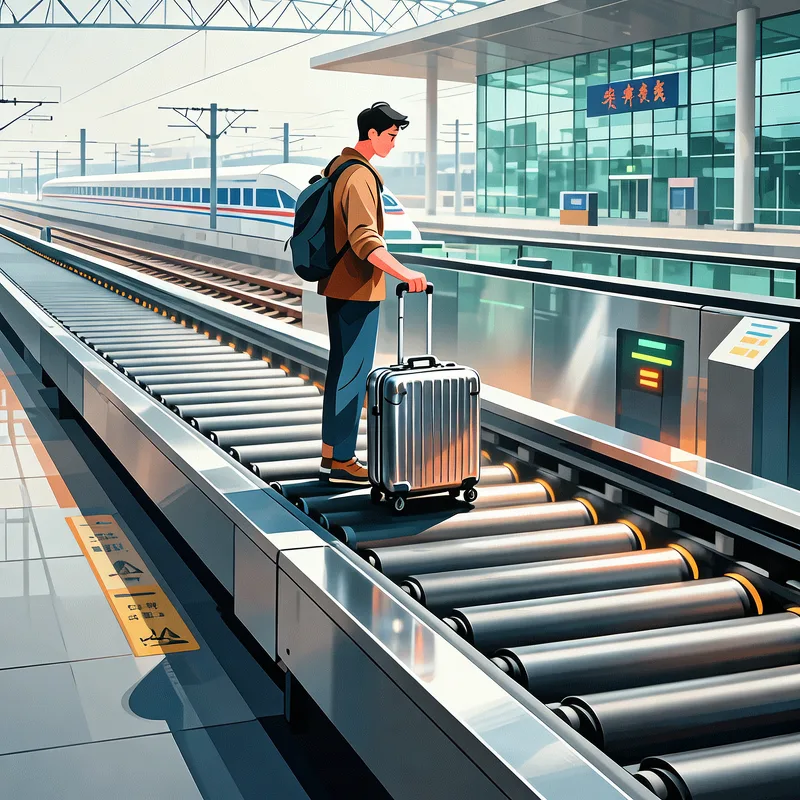
    A traveller placing luggage on an X-ray belt at a Chinese railway station
    Every bag goes through an X-ray scanner before you enter the main station concourse. AI生成的插圖 · SinoViz

    Identity and Tickets

    Chinese rail travel is tied to identity. When you book on 12306, the official railway app, the name on the ticket must match the document you carry; for foreign visitors that is normally a passport. At the gate, insert or scan the same passport at the reader and step through. A printed ticket is rarely needed. If your passport is in a suitcase, you will hold up the queue while staff search. Some stations use facial recognition at the gate, but a passport remains the fallback for foreign travellers. Keep a screenshot of the booking and the platform number, since station boards are easy to misread in a hurry. Staff in reflective jackets can point you to the right gate; show them the ticket details on your phone.
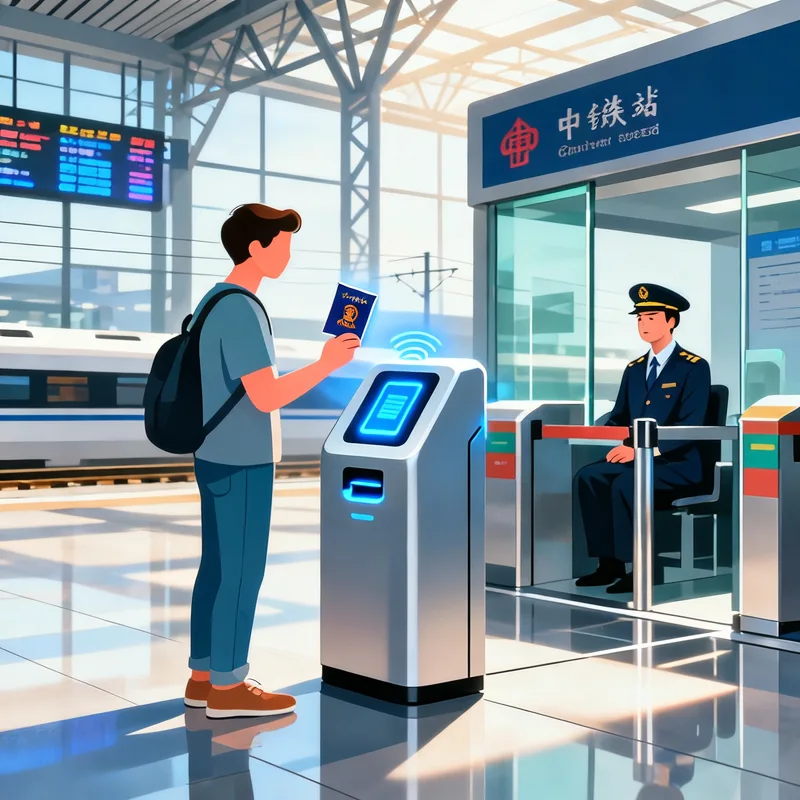
    A passport being checked at a Chinese railway ticket gate
    Foreign passengers use their passport at the gate; keep it out of your checked luggage. AI生成的插圖 · SinoViz

    Timing and Queues

    Beijing West, Beijing South, Beijing Chaoyang, and Beijing Fengtai are large buildings with long walks between screening, waiting room, and platform. During Spring Festival or the October holiday, the security line can snake through the forecourt. Allow at least an hour before departure and ninety minutes at a peak period, especially if you need to collect a paper ticket or find the correct entrance. Queues are physical rather than ticketed; follow the rope lines and watch for a second lane that opens nearby. Families and passengers needing assistance may use a priority lane. Once through, check the departure board for your train number rather than relying on memory. Boarding usually begins fifteen to twenty minutes before departure and gates close a few minutes before the train leaves.
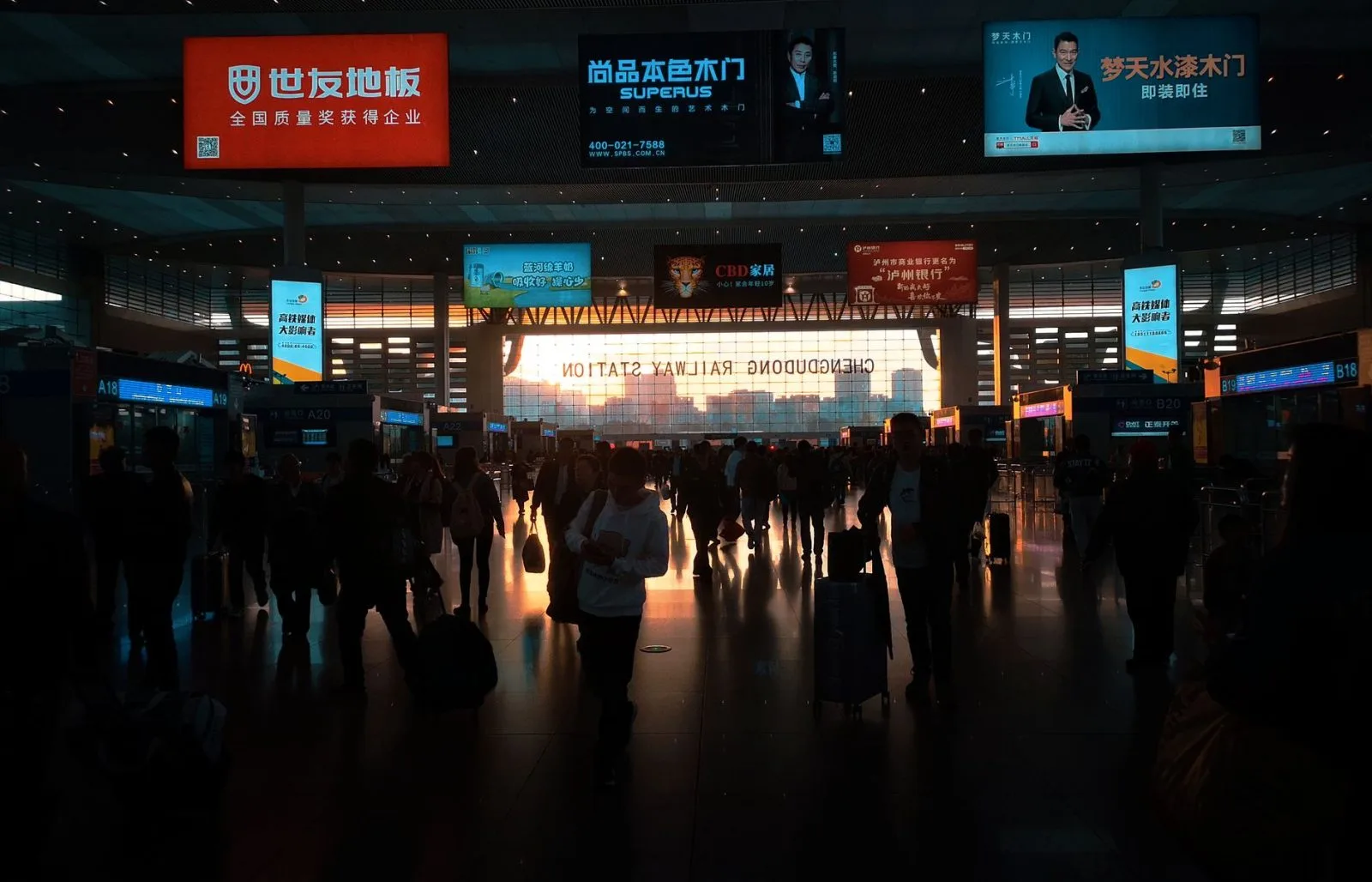
    A busy railway station concourse with travellers queuing at security
    Arrive early at Beijing West or Beijing South; the security queue can be longer than the walk to the gate. zhen tang | Pexels License (https://www.pexels.com/license/)

    On the Platform and After

    Platforms are open, often crowded, and shared by high-speed trains arriving at speed. Stand behind the safety line until the train stops, and let passengers off before you push forward. Carriage and seat numbers are painted on the platform; match them to your booking before boarding. A conductor may check your passport again on board. Luggage space is limited above the seats, so put large cases at the end of the carriage where staff indicate. Do not photograph security equipment, screening staff, or the inside of control rooms. If an item is confiscated, ask for a receipt and collect it at the designated office. At your destination, follow signs for the metro or taxi rather than accepting a ride from someone who approaches you inside the concourse.

    The queue starts at the door, not at the gate: arrive early and keep your passport in hand.

    資料來源及延伸閱讀

    1. China Railway — China Railway.
    2. 12306 railway ticketing — China Railway.
    3. Train travel in China — Travel China Guide.
    看看它就位

    請跟隨此條目前往其所屬區域。

    透過地圖探索

    請關注此帖

    瀏覽其他與此標籤相同的條目。

    瀏覽標籤
  • 北京地鐵

    旅遊指南

    北京地鐵

    Reading the network below the city

    Beijing’s metro is cheap, dense, and faster than any car at rush hour once you know the system.

    部分
    旅遊指南
    地區
    北京
    時代
    modern-china
    標籤
    Geography, Transport

    The Beijing Subway opened in 1969 and has grown into one of the world’s largest metro networks. Its lines reach the Forbidden City area, both airports, the Olympic district, and the western hills, making it the default way to move around the centre.

    Paying and Entering

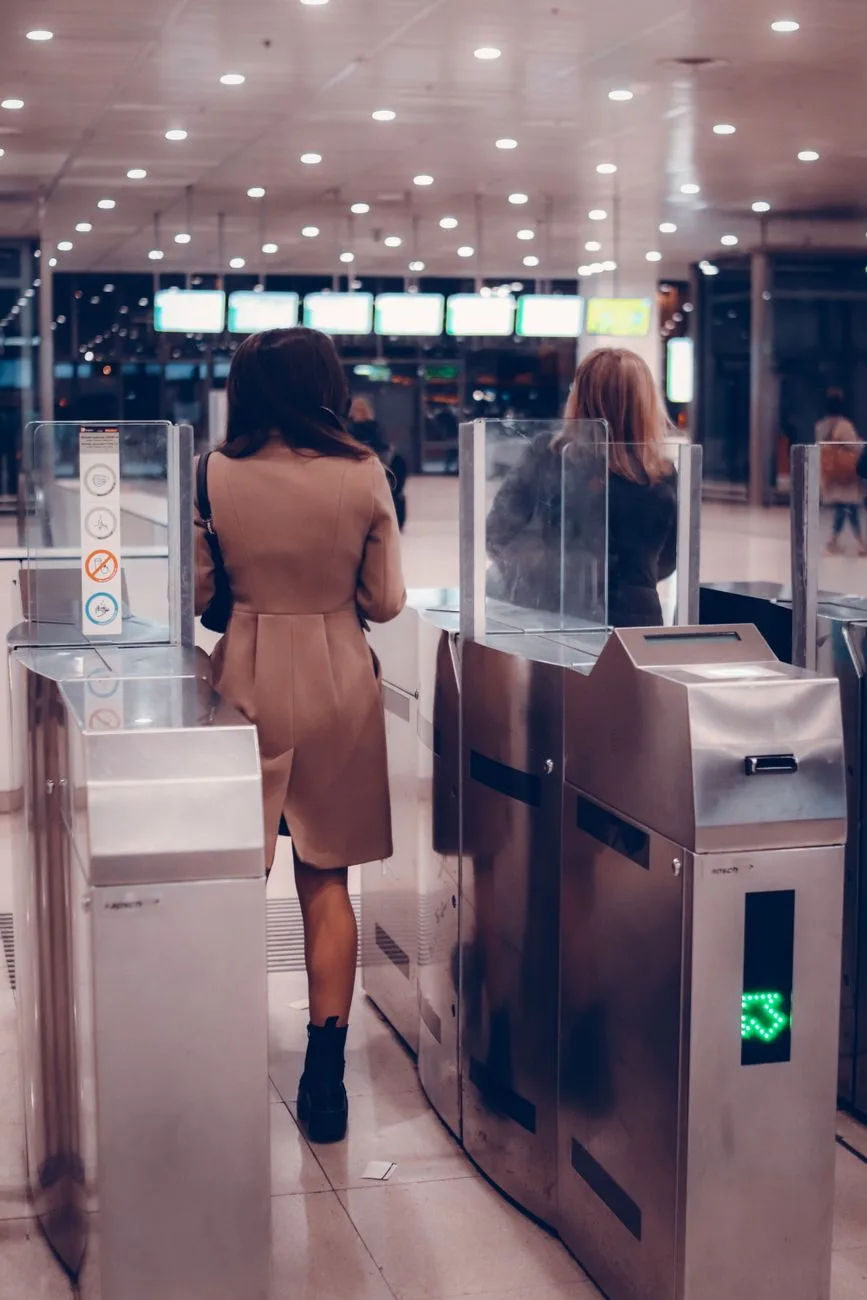
    Fares start at three yuan for short trips and rise with distance, with the longest journeys costing around ten yuan or more. The cheapest traditional option is a Yikatong stored-value card, sold at station counters; tap it on the reader at both ends. Most visitors now scan a QR code instead. Alipay can generate a Beijing Transit code through its Transport mini programme, and the Beijing Subway app also supports QR rides. Activate the code before you reach the gate and keep the phone screen bright. A single journey ticket is available at machines in major stations. Before the gates, every passenger sends bags through a small X-ray scanner and walks through a metal detector, so leave a minute for the queue.

    A Beijing metro turnstile with a contactless card reader
    Tap a transit card or scan a QR code at the gate; a bag screening comes first. El gringo photo | Pexels License (https://www.pexels.com/license/)

    Reading the Map

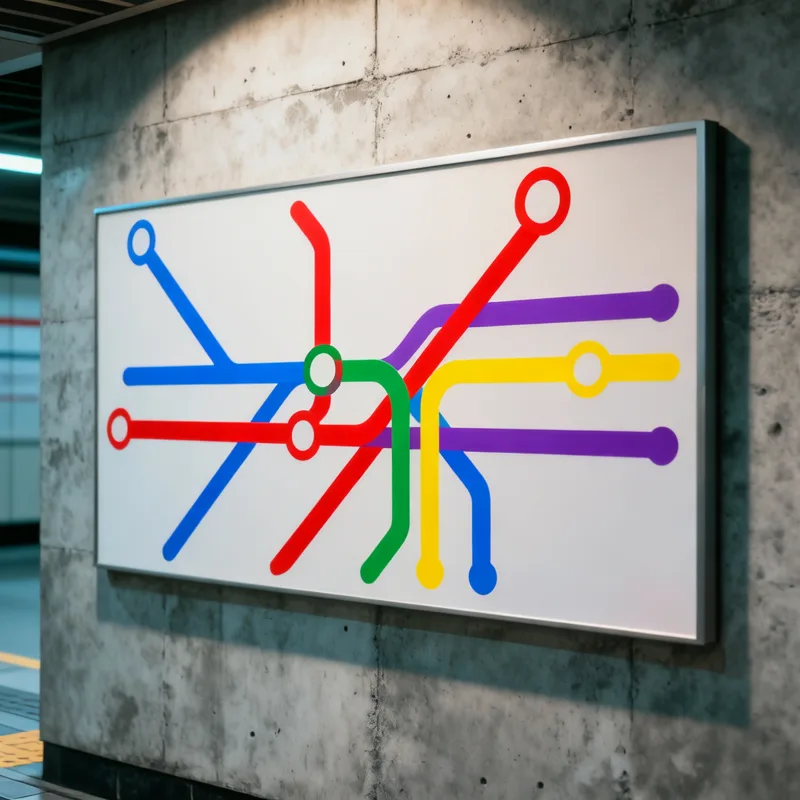
    Signs are bilingual in Chinese and English, and line diagrams are colour-coded with numbers rather than names. Transfers can be long: Line 1 to Line 2 at Fuxingmen, or the interchange at Guomao, may mean several hundred metres of corridors and escalators. Follow the coloured tiles and overhead arrows rather than guessing. Each station has numbered or lettered exits; choosing the right one matters above ground, where a wrong exit can mean a ten-minute walk back around a block. Platform signs show the direction by terminus, so know which end of the line you are heading for. Trains run roughly from 5 a.m. to just after 11 p.m., with the last train earlier on some branches. Peak crowds arrive around 7-9 a.m. and 5-7 p.m.

    A coloured Beijing metro line diagram on a station wall
    Lines are identified by number and colour; exits are lettered, so note the exit before you surface. AI生成的插圖 · SinoViz

    Airport Lines and Day Trips

    Two lines connect the city to its airports. The Capital Airport Express runs from Dongzhimen to Terminal 3 and Terminal 2; the Daxing Airport Express leaves from Caoqiao and reaches the new airport in under twenty minutes. Both require a separate fare that is higher than an ordinary metro ride, and airport stations add security checks. For the Forbidden City, use Tian’anmen East or Tian’anmen West and expect another security line at the palace entrance. The Olympic area is served by Lines 8 and 15, while Line 4 reaches the Summer Palace. For the Great Wall at Badaling, combine the metro with a suburban train or bus. Check the last-train time before an evening out; a late taxi ride back can be expensive.

    An airport express train waiting at a Beijing metro platform
    Two express lines link the metro to Capital and Daxing airports; allow extra time for the transfer. AI生成的插圖 · SinoViz

    Etiquette Below Ground

    Metro etiquette is practical rather than formal. Stand to the right on escalators so people in a hurry can pass on the left, and let passengers leave before you board. Offer a seat to an older person, someone with a child, or a passenger with a disability. Backpacks are common, but swing yours off in a crowded car. Eating is discouraged in many stations and drinking is generally tolerated; keep wrappers in a bag until you find a bin. Announcements are made in Mandarin and English, and a recorded reminder asks passengers not to block the doors. If you miss your stop, the next station is rarely far away. Keep your card or phone ready before the exit gate, and check whether your destination needs a different payment method.

    Choose the right exit before you surface; in Beijing it can save ten minutes above ground.

    資料來源及延伸閱讀

    1. 北京地鐵 — Beijing Mass Transit Railway Operation Corporation.
    2. Beijing public transport — Beijing Municipal Government.
    3. Beijing Subway guide — China Highlights.

    看看它就位

    請跟隨此條目前往其所屬區域。

    透過地圖探索

    請關注此帖

    瀏覽其他與此標籤相同的條目。

    瀏覽標籤
  • Calligraphy

    生活與民俗

    Calligraphy

    The brush as a record of the hand

    Chinese calligraphy turns writing into an art of pressure, rhythm, and restraint.

    部分
    生活與民俗
    地區
    陝西
    時代
    跨越時代
    標籤
    Customs, History

    A line of Chinese calligraphy is made once: the brush touches paper, and the mark cannot be corrected. That irreversibility is part of its appeal. In Xi’an, the city’s stone steles preserve the work of centuries of calligraphers in a form anyone can still read.

    The Four Treasures

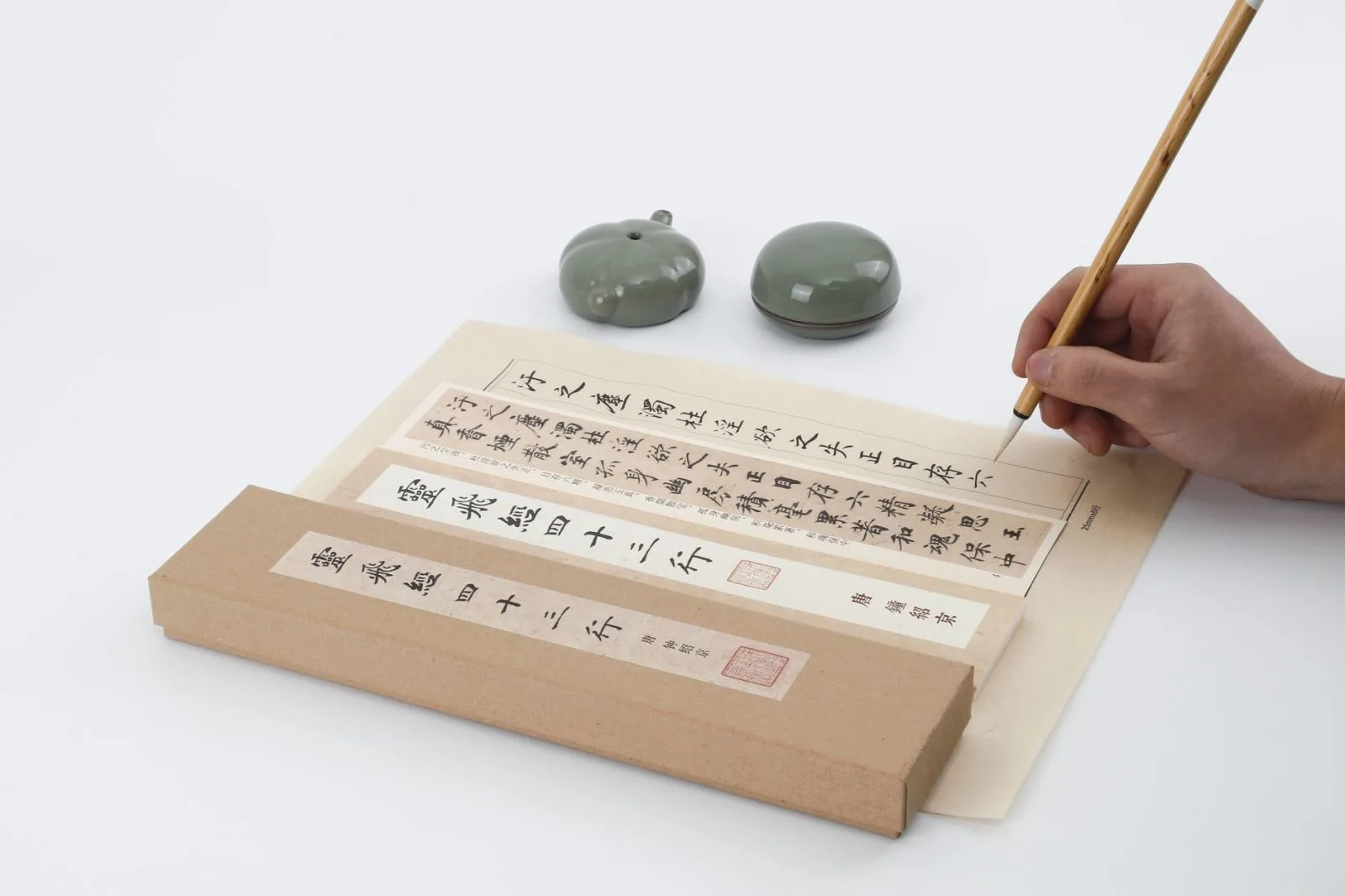
    The tools are known as the Four Treasures of the Study: brush, ink, paper, and inkstone. A brush of animal hair is held upright between thumb and fingers, and pressure makes the stroke swell and thin. Ink comes as a solid stick ground with water on a stone; the density of the mixture changes the character of the line. Paper is absorbent, so hesitation shows as a blot. Practice begins with the basic strokes, then with copying a model character hundreds of times until the hand remembers its proportions. Students still learn by tracing the regular script of Tang dynasty masters such as Yan Zhenqing and Ouyang Xun. The aim is not decorative flourish but control: a steady wrist, an even rhythm, and a line that holds its centre.

    Calligrapher’s brush, ink stick, paper, and inkstone laid on a desk
    Brush, ink, paper, and inkstone are the traditional Four Treasures of the Study. Feng Zou | Pexels License (https://www.pexels.com/license/)

    Scripts and Masters

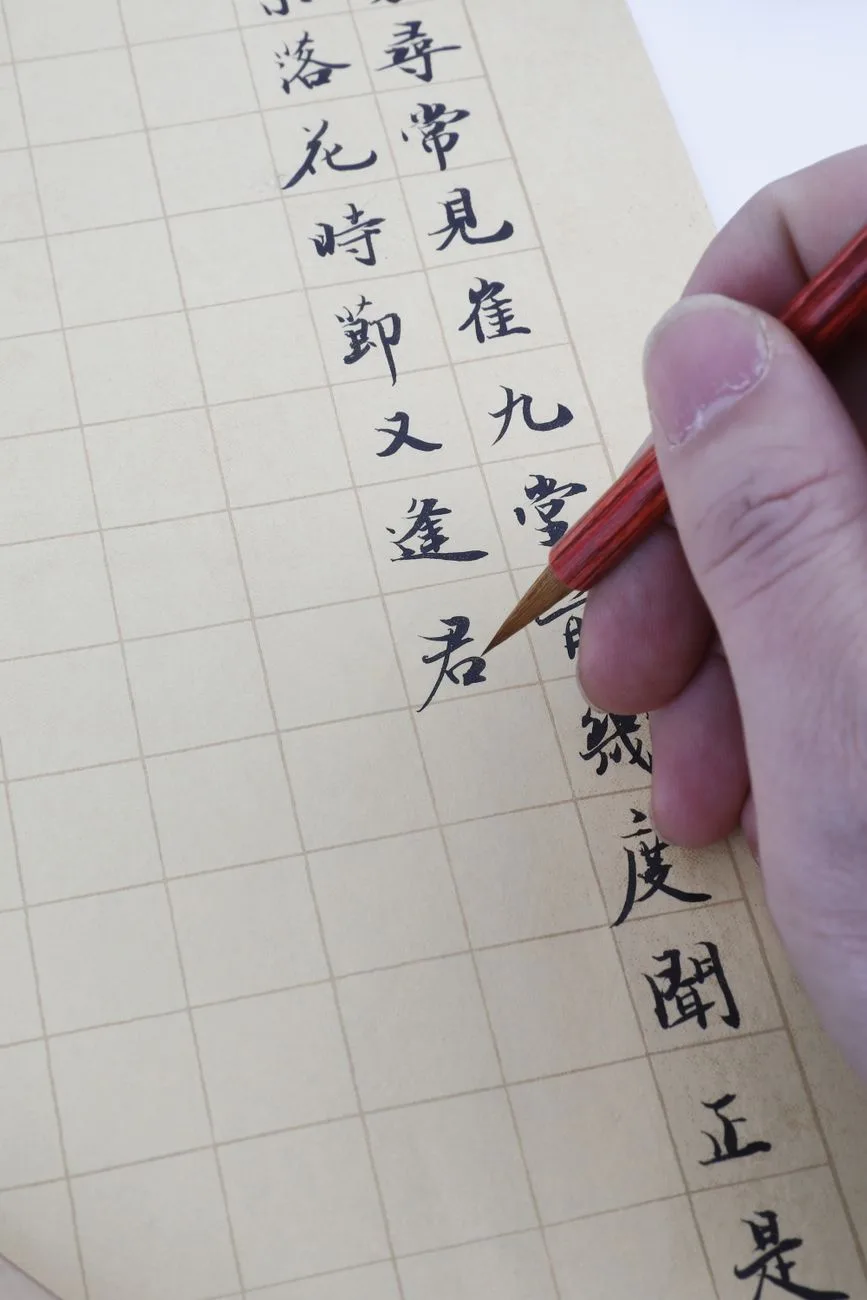
    Chinese writing moved through several scripts, and calligraphers kept them all alive as styles. Seal script, with even, rounded lines, comes from the inscriptions on bronze and stone of the Zhou and Qin periods. Clerical script, formalised in the Han dynasty, flattened characters with a distinctive flared stroke. Regular script, settled by the Tang, is the model still taught in schools; each part of a character sits in a clear frame. Running script links strokes without losing legibility, while cursive script reduces them to rapid, connected gestures. Wang Xizhi’s Lantingji Xu, written in 353, is the famous example of running script; the original is lost, but copies carry its reputation. Later Song and Yuan artists, including Su Shi and Zhao Mengfu, made personal expression as important as correct form.

    Close view of flowing cursive calligraphy on a hanging scroll
    Cursive script compresses characters into gestures that reward slow reading. Feng Zou | Pexels License (https://www.pexels.com/license/)

    Stone Records in Xi’an

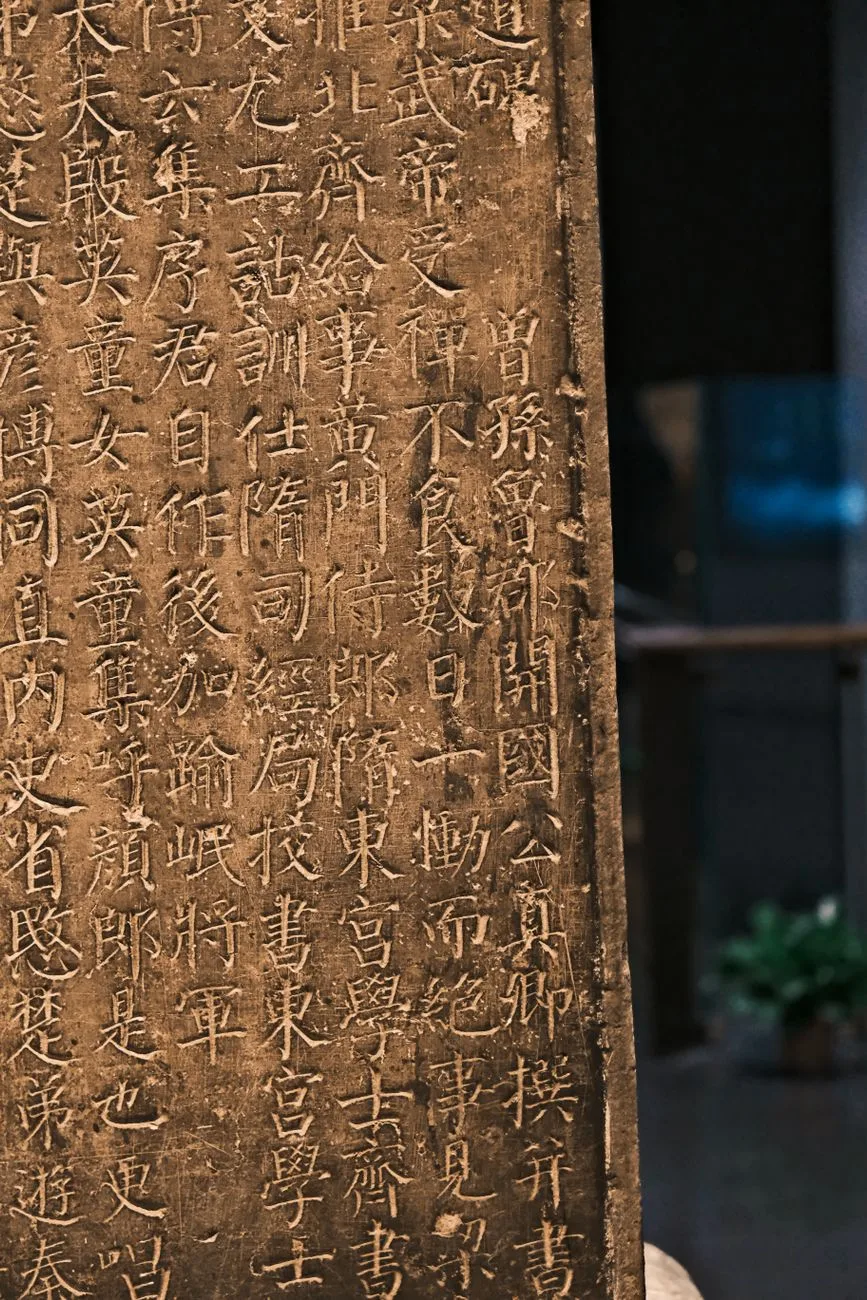
    Xi’an, the former Chang’an, preserves calligraphy on stone at the Beilin Museum, the Forest of Stone Steles. The collection began in 1087, when the Confucian classics were carved onto more than a hundred steles and installed beside the city’s Confucius Temple. Centuries of additions followed: tombstones, imperial edicts, Buddhist texts, and poems cut in several scripts. Rubbing a stele with damp paper and ink was the traditional way to study and circulate a model, and museums still demonstrate the technique. One slab records a Tang emperor’s visit to a Nestorian Christian church; another carries a Song dynasty city diagram. Walking the covered galleries, you can compare the same character written in seal, clerical, and regular forms across a thousand years.

    Rows of carved stone steles at the Beilin Museum in Xi’an
    The Beilin Museum holds thousands of steles, including Confucian classics cut into stone. Lily Lili | Pexels License (https://www.pexels.com/license/)

    Living Practice

    Calligraphy remains a daily practice rather than a museum relic. Around Spring Festival, shops sell red paper couplets, and a single character for good fortune is pasted on doors, sometimes upside down to suggest that fortune has arrived. Temple names, shop signs, and station plaques are often lettered by accomplished hands. Schoolchildren practise copying characters in grid books, and older residents gather in parks to write with large water brushes on the pavement, where the characters dry in minutes. Workshops in Xi’an let visitors try a brush and learn how a stroke begins with a pause and ends with a lift. You need not read every character to see the differences: one script sits square and calm, the next leans and races.

    A stroke begins with a pause and ends with a lift; the paper keeps the record.

    資料來源及延伸閱讀

    1. Chinese calligraphy ——《不列顛百科全書》。
    2. Chinese Calligraphy — The Metropolitan Museum of Art.
    3. Beilin Museum, Xi’an — China Highlights.

    看看它就位

    請跟隨此條目前往其所屬區域。

    透過地圖探索

    請關注此帖

    瀏覽其他與此標籤相同的條目。

    瀏覽標籤
  • 瓷

    生活與民俗

    瓷

    Clay, fire, and the white of Dehua

    Fujian’s kilns turned local clay into porcelain that travelled across the sea and changed how the world pictured China.

    部分
    生活與民俗
    地區
    福建
    時代
    跨越時代
    標籤
    Customs, History, Scenic Sites

    Porcelain is defined by its body and its firing: a pale, fine clay heated to temperatures that vitrify the material and make it ring when struck. Fujian’s Dehua kilns made a version so white it seemed translucent, known in Europe as blanc de Chine.

    What Makes Porcelain

    Porcelain differs from ordinary pottery in both material and firing. Potters use kaolin, a white clay, mixed with feldspar and quartz, then fire the shaped vessel at roughly 1,200 to 1,400 degrees Celsius. At that temperature the body vitrifies: it becomes dense, non-porous, and slightly translucent at the edges. A glassy glaze is usually applied before firing, bonding to the body rather than sitting on it as a separate layer. Chinese potters had reached this threshold by the Tang and Song periods, and Jingdezhen in Jiangxi became the great production centre. The English word china stuck to the ware because the country was the source of the finest examples. A light tap on a good cup gives a clear ring, a quick test that still works in a shop.

    A porcelain bowl with a pale glaze photographed against light
    True porcelain is fired hot enough to vitrify the body, giving it a hard, resonant wall. lee c | Pexels License (https://www.pexels.com/license/)

    Dehua White

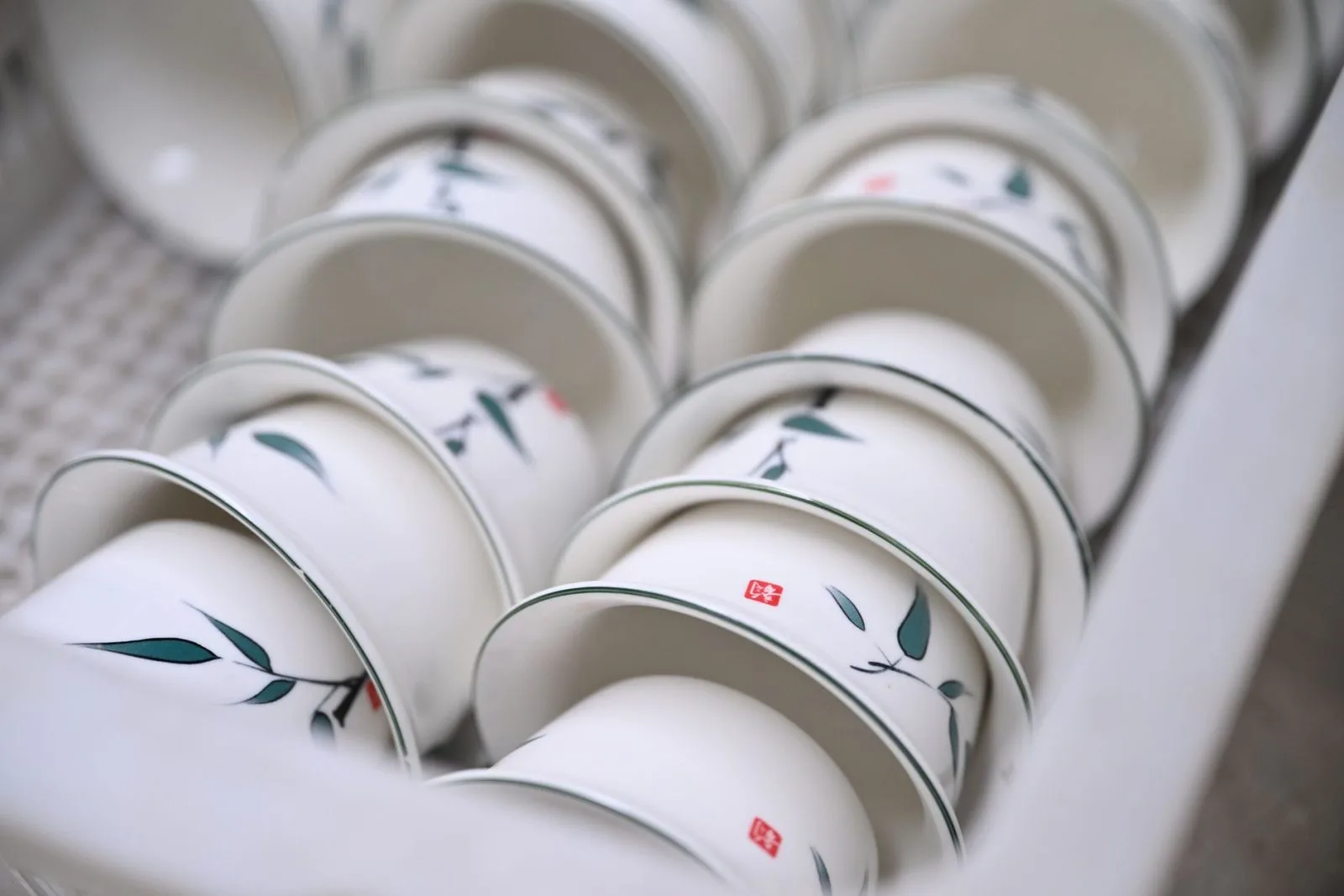
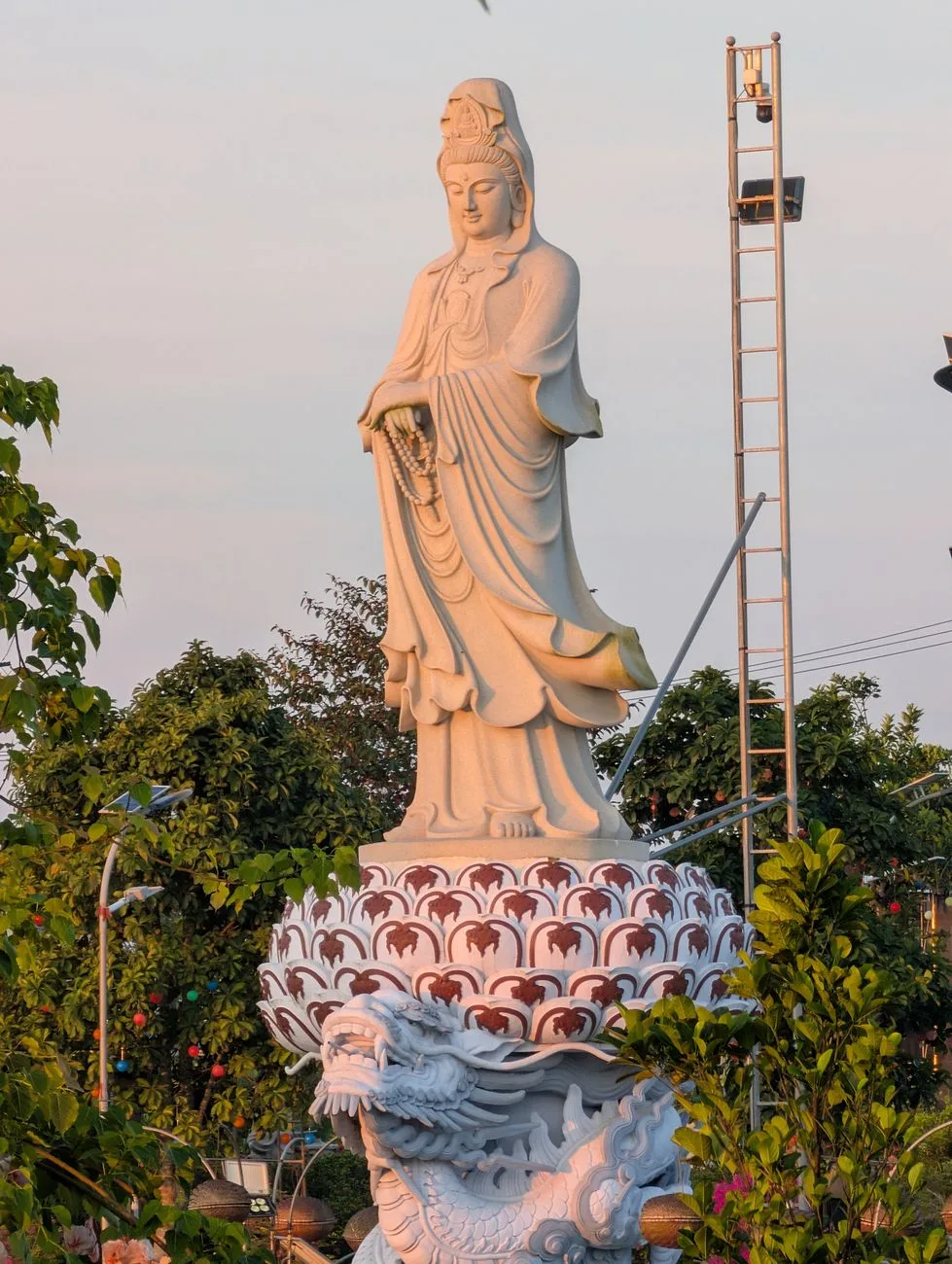
    Dehua, a county in Fujian’s Quanzhou prefecture, developed a white porcelain with a warm, creamy tone. Its clay is low in iron, which lets the glaze fire almost colourless, and its potters mastered figures as well as vessels. From the Ming dynasty onward, Dehua workshops produced small statues of Guanyin, the bodhisattva of compassion, with soft modelling and a smooth, almost waxy surface. European traders called the ware blanc de Chine, and by the seventeenth century it was collected in royal cabinets and copied by potters in Meissen and elsewhere. Tea wares also left the kilns: small cups, gaiwan lids and bowls, and white vessels that showed the colour of tea clearly. Local museums trace the kiln sequence from Song-period celadons through the white wares that made Dehua famous.

    A milky white porcelain figurine of Guanyin from Dehua
    Dehua’s porcelain figures of Guanyin became known in Europe as blanc de Chine. Quý Hoàng | Pexels License (https://www.pexels.com/license/)

    A Port for Porcelain

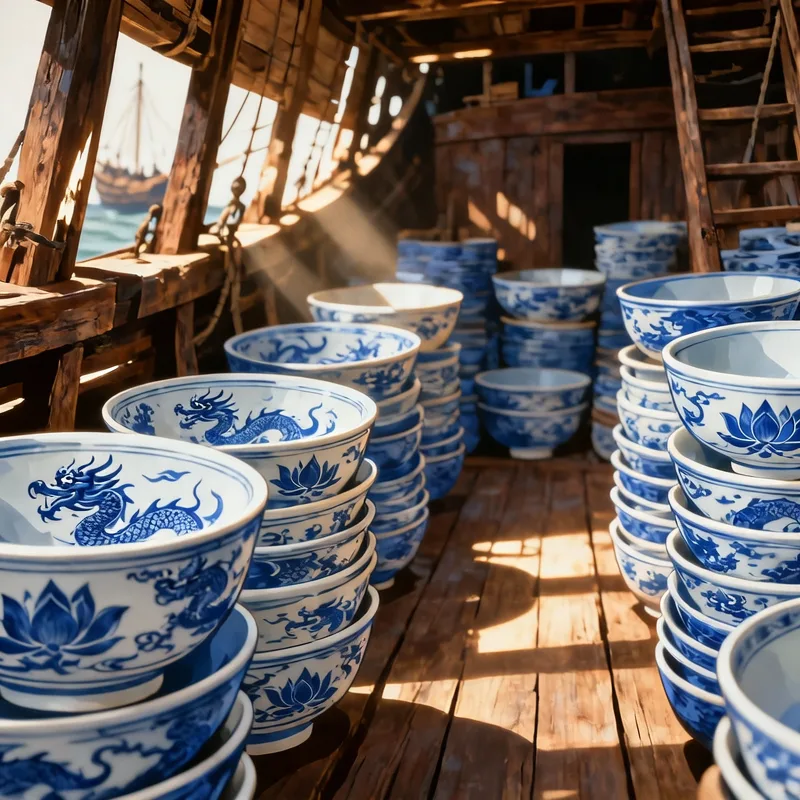
    Porcelain shaped trade as much as taste. Fujian’s coast faced the South China Sea, and Quanzhou became one of the busiest ports of the Song and Yuan dynasties, a place where merchants, monks, and ship crews exchanged goods and techniques. Archaeologists have recovered Chinese ceramics from ports and shipwrecks across Southeast Asia, the Indian Ocean, and East Africa; the fragments are dated by glaze and shape, making them a record of demand as well as production. UNESCO listed Quanzhou in 2021 as an emporium of the world in Song-Yuan China, with surviving mosques and temples. The export ware was not always the finest court piece. Sturdy bowls and jars packed in straw travelled in bulk, reaching households that never saw the kiln but knew the clay by its colour.

    Blue-and-white porcelain packed as cargo in a ship’s hold
    Quanzhou was a major Song and Yuan port from which Fujian ceramics were shipped abroad. AI生成的插圖 · SinoViz

    Using and Collecting

    Porcelain entered daily ritual as well as trade. A gaiwan, a bowl with a lid and saucer, is used for brewing tea in northern China; the lid controls the leaves and the saucer protects the fingers. White Dehua cups make the colour of a tea liquor easy to judge. Collectors look for a clean foot ring, an even glaze, and a mark painted on the base, though many imitations copy famous reign marks. Visit a kiln museum in Dehua or a ceramic gallery in Quanzhou to see the sequence from raw clay to finished piece. Handling a cup with a saucer and a steady hand is still the simplest way to understand why this material travelled so far.

    A clear ring and a translucent edge tell you what the fire has done.

    資料來源及延伸閱讀

    1. Chinese Porcelain — The Metropolitan Museum of Art.
    2. Quanzhou: Emporium of the World in Song-Yuan China — UNESCO World Heritage Centre.
    3. Blanc de Chine ——《不列顛百科全書》。

    看看它就位

    請跟隨此條目前往其所屬區域。

    透過地圖探索

    請關注此帖

    瀏覽其他與此標籤相同的條目。

    瀏覽標籤
  • Chinese Paper Cutting

    生活與民俗

    Chinese Paper Cutting

    Red paper, folded and cut

    A pair of scissors and a sheet of red paper can carry a whole vocabulary of wishes.

    部分
    生活與民俗
    地區
    陝西
    時代
    跨越時代
    標籤
    Customs, Ethnic

    Chinese paper cutting, or jianzhi, turns a flat sheet into a pattern of figures, flowers, and characters. Practised for centuries in rural households, it still marks weddings and New Year, and Shaanxi’s bold window designs are among its most recognisable regional forms.

    Origins and Technique

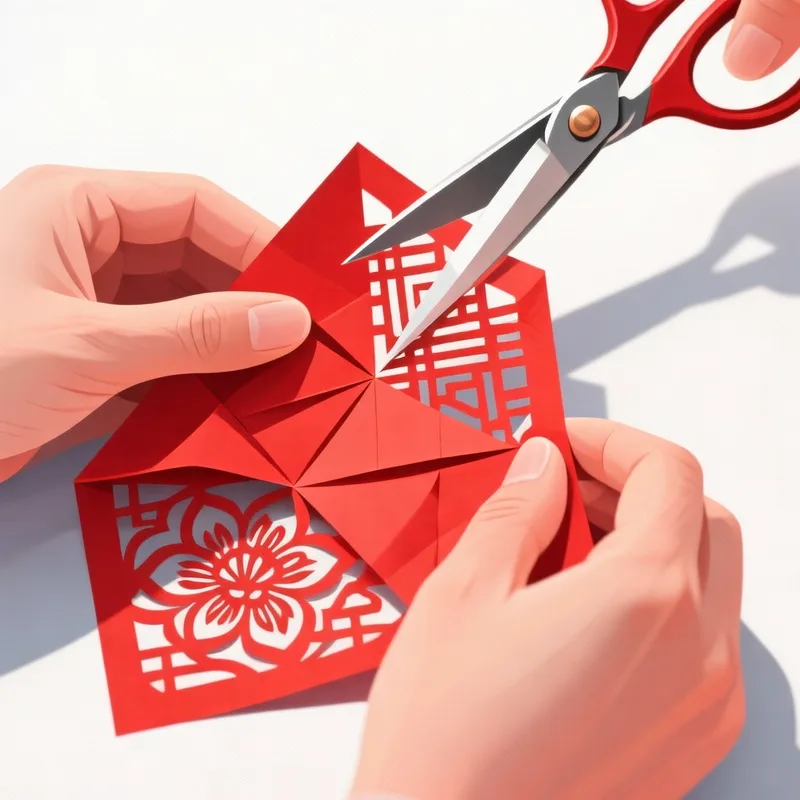
    Paper reached China in the Eastern Han period, and the first cuts followed once the material was cheap enough to experiment with. Early examples were used as offerings and as templates for embroidery; a surviving cut-paper find from the sixth century shows that the technique was established by then. Two methods developed. Scissors cut a folded sheet, creating a mirror-symmetric design with a single sequence of snips. A knife held upright cuts a stack of paper against a wax board, a method suited to finer lines and repeated motifs. Artists draw no outline for many traditional patterns; they cut directly, keeping the connecting threads that stop the design falling apart. The finished piece is light, cheap, and easy to paste on a window or door.

    Hands cutting a red paper design with small scissors
    Folding the paper before cutting produces the symmetrical patterns typical of window decorations. AI生成的插圖 · SinoViz

    A Language of Motifs

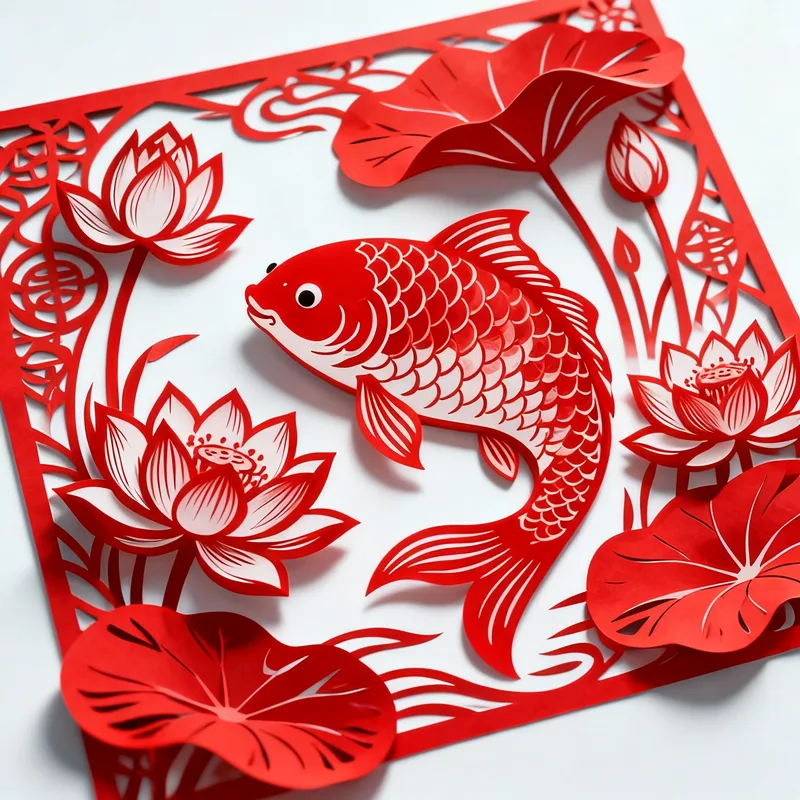
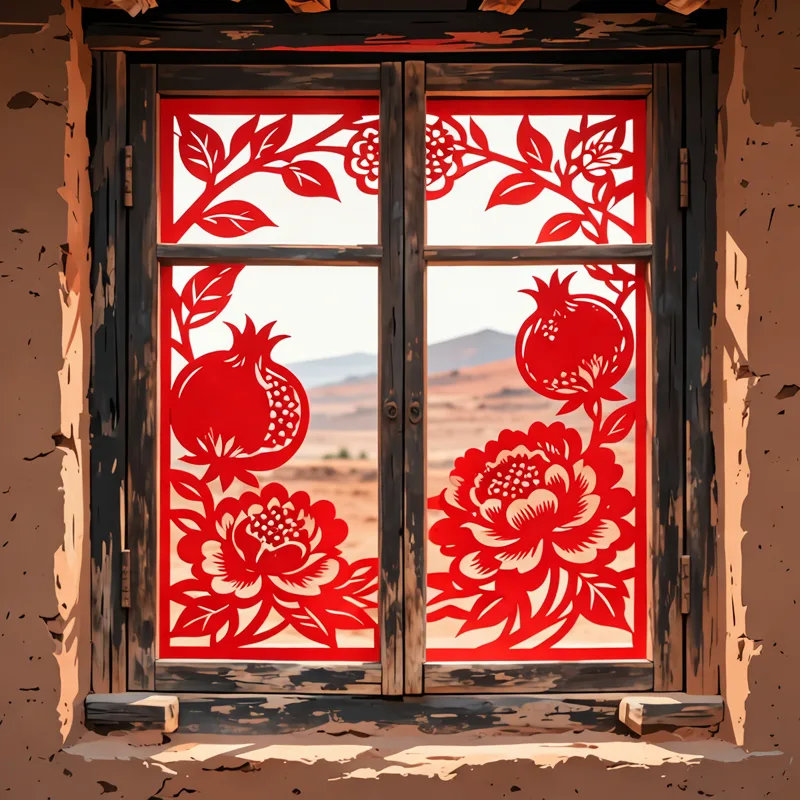
    The images are a system of visual puns. A fish means surplus, because the word for fish sounds like the word for abundance; lotus suggests purity. A pomegranate stands for many children, a bat for good fortune, and a peach for long life. The character fu, meaning good fortune, appears alone or inside a circular design, while shuangxi, double happiness, belongs to weddings. Zodiac animals, opera figures, and scenes of children at play all circulate as patterns. Colour matters as much as shape: red is the default for celebration, while white paper cuts are rarer and tied to older ritual uses. In a Shaanxi village window, the arrangement of these motifs tells a visitor what the household is hoping for in the coming year.

    Red paper-cut window decoration showing a fish and lotus flowers
    Fish and lotus form a rebus for abundance; motifs are chosen for the wish they carry. AI生成的插圖 · SinoViz

    Shaanxi Windows

    Paper cutting in Shaanxi is associated with rural life on the Loess Plateau, especially around Yan’an. Windows there were once small and deeply set, so designs favoured bold silhouettes and broad, connected shapes that could be read from across a room. Local artists talk of cutting with the heart rather than measuring with a ruler, and compositions often show figures, animals, and plants together in a single dense frame. Window grilles, or chuanghua, are pasted at New Year and replaced when they fade. Wedding cuts carry double happiness characters and images of fertility; birthday cuts use peaches and cranes. Women were the main practitioners in many villages, passing patterns from mother to daughter, and village fairs still sell sheets cut in the old local style.

    A Shaanxi farmhouse window with bold red paper cutouts
    Shaanxi cuts favour strong silhouettes and broad shapes, designed to read from a distance. AI生成的插圖 · SinoViz

    Recognition and Travel

    Chinese paper-cut was inscribed on UNESCO’s Representative List of the Intangible Cultural Heritage of Humanity in 2009, a recognition that named both the craft and the communities that sustain it. The listing does not freeze the art. Contemporary artists cut portraits, cityscapes, and political images with the same tools, and paper cuts appear in graphic design and animation. For a visitor, the appeal is that the work is easy to find and easy to try. Museum shops sell small sheets, market stalls sell single motifs, and workshops in Xi’an and rural Shaanxi teach the basic fold-and-cut method in an hour. Bring a sharp pair of scissors and practice on cheap red paper before attempting a detailed pattern. A finished cut pasted on glass changes with the light.

    The pattern holds together because the cutter leaves just enough paper between the lines.

    資料來源及延伸閱讀

    1. Chinese paper-cut — 聯合國教科文組織非物質文化遺產。
    2. Chinese Paper Cutting — China Highlights.
    3. Paper cutting ——《不列顛百科全書》。

    看看它就位

    請跟隨此條目前往其所屬區域。

    透過地圖探索

    請關注此帖

    瀏覽其他與此標籤相同的條目。

    瀏覽標籤
  • 中秋節

    生活與民俗

    中秋節

    Mooncakes under a full moon

    The Mid-Autumn Festival gathers families around the full moon, mooncakes, and a long tradition of watching the night sky.

    部分
    生活與民俗
    地區
    北京
    時代
    跨越時代
    標籤
    習俗、飲食

    Falling on the fifteenth day of the eighth lunar month, the Mid-Autumn Festival is a harvest celebration and a family reunion. In Beijing, the holiday is marked in courtyards, parks, and moon-viewing spots that fill after sunset.

    The Date and the Moon

    The festival follows the lunar calendar, so its date moves between early September and early October. The fifteenth day of the eighth month is chosen because the moon should be full, and roundness stands for completeness and family unity. Chinese tradition reads the moon’s surface as the figure of Chang’e, a woman who, in one version of the myth, drank an elixir and rose to live there with a rabbit that pounds medicine. Another story tells of Wu Gang cutting a tree that regrows each time. These tales are not scripture; they are the stories families retell while looking up. Around the festival, parks stay open late and lakes reflect the moon, giving city dwellers a quiet reason to be outdoors after dinner.

    A full moon rising over a Beijing park lake
    The festival falls on the full moon of the eighth lunar month, usually in September or October. marnock | Pexels License (https://www.pexels.com/license/)

    Mooncakes and Their Fillings

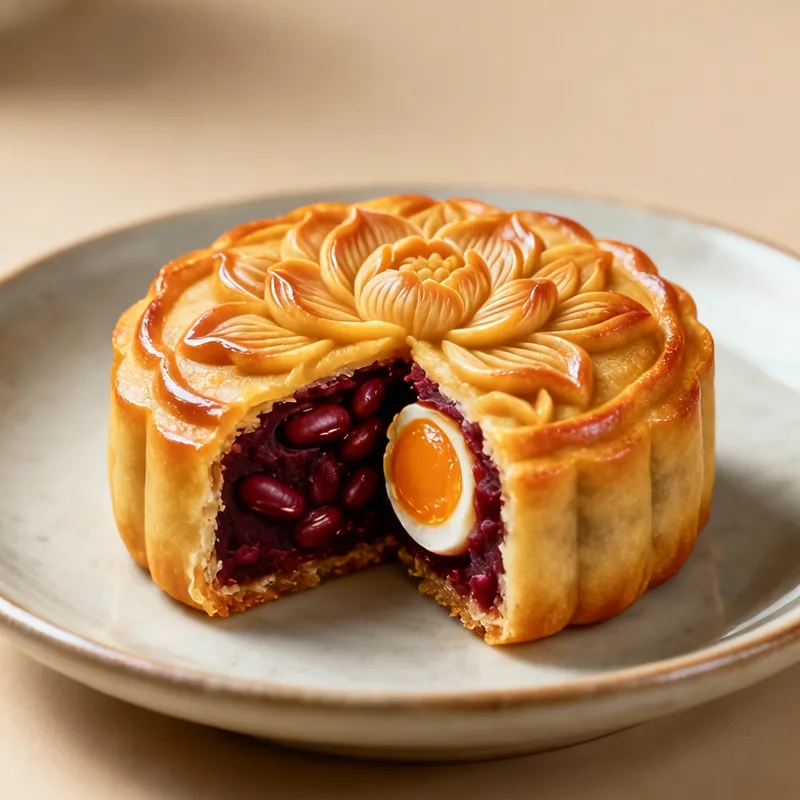
    Mooncakes are small, dense pastries with a thin crust and a heavy filling, traditionally cut into wedges and shared. The round shape echoes the moon, and the top is stamped with a pattern or characters such as longevity or harmony. Cantonese-style cakes often hold lotus seed paste and a salted duck egg yolk, whose yellow centre stands for the moon; other fillings include red bean, five nuts, and preserved fruit. Suzhou-style pastries use flaky layers, while snow-skin mooncakes are chilled and made with a glutinous rice wrapper. Because the cakes are rich, a sliver is usually enough, and tea helps. Prices rise in the weeks before the holiday, and elaborate boxes are made for gifting rather than eating. In Beijing, bakeries sell both traditional versions and small cakes.

    A round mooncake with a stamped pattern cut open to show the filling
    Mooncakes are dense pastries stamped with characters for longevity or harmony. AI生成的插圖 · SinoViz

    Beijing After Dark

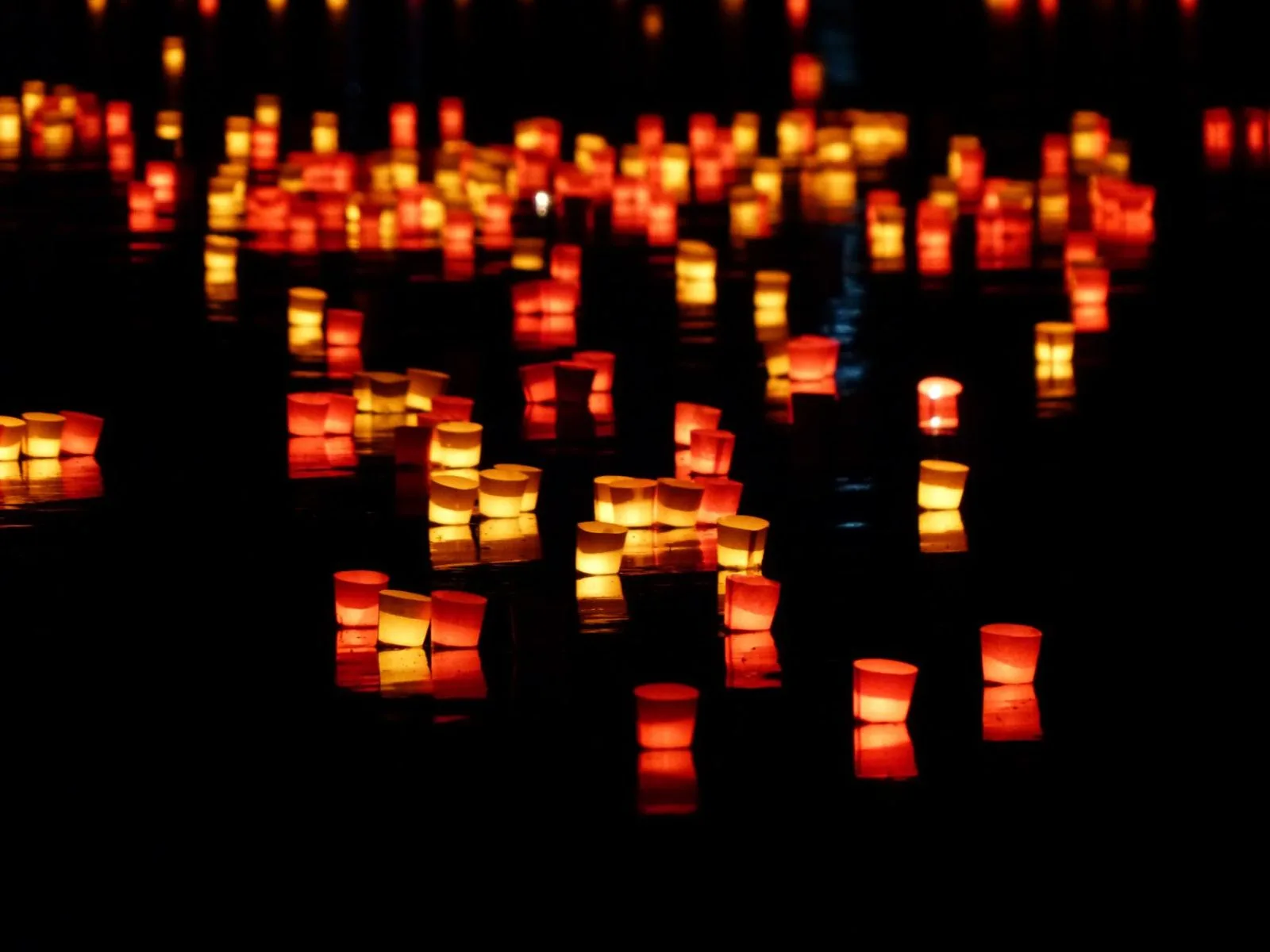
    Beijing’s moon-viewing spots fill quickly after dark. Beihai Park, with its lake and white stupa, and the Summer Palace, with Kunming Lake and the Long Corridor, are classic places to walk and watch the reflection. The Temple of Heaven also draws visitors. Families may light paper lanterns, and children carry them through the lanes; in some neighbourhoods, lantern riddles are posted for anyone who wants to try. Public holiday crowds mean metro stations near the parks stay busy late, so allow time to get back. Camping or bringing a barbecue is not appropriate in these historic grounds. A practical plan is to visit in the late afternoon, walk as the light fades, and take a seat by the water before the moon clears the rooftops.

    Lanterns reflected in a lake at a Beijing park during the Mid-Autumn Festival
    Parks such as Beihai and the Summer Palace draw moon-viewing crowds after sunset. Pixabay | Pexels License (https://www.pexels.com/license/)

    Gifts, Holiday, and Meaning

    Mooncakes are exchanged as gifts, often in boxes of four or six, and carrying a box to a family dinner is normal. The act matters more than the price; a modest cake from a favourite bakery can be more welcome than a lavish tin. Since 2008, the festival has been an official public holiday, reinforcing its role as a reunion, with millions travelling to see relatives. The deeper theme is tuanyuan, reunion, expressed by the circle of the cake and the full moon. Not everyone can be at the table, and the holiday acknowledges that absence as much as presence. If you are invited to a Beijing home, bring the cakes, arrive on time, and expect the evening to centre on a long meal rather than on speeches.

    Roundness carries the argument: a full moon, a round cake, a family gathered in one room.

    資料來源及延伸閱讀

    1. 中秋節 ——《不列顛百科全書》。
    2. 中秋節 — China Highlights.

    看看它就位

    請跟隨此條目前往其所屬區域。

    透過地圖探索

    請關注此帖

    瀏覽其他與此標籤相同的條目。

    瀏覽標籤
  • 端午節

    生活與民俗

    端午節

    Racing, rice dumplings, and the fifth moon

    The Dragon Boat Festival joins boat races, sticky rice parcels, and a story of loyalty to a poet.

    部分
    生活與民俗
    地區
    粵
    時代
    跨越時代
    標籤
    習俗、飲食

    Duanwu falls on the fifth day of the fifth lunar month, when the heat of early summer arrives in Guangdong. The holiday is best known for dragon boat racing and zongzi, but its smaller customs reveal as much about how the day is understood.

    Qu Yuan and the River

    The festival is commonly linked to Qu Yuan, a poet and minister of the state of Chu who died in 278 BCE after his advice was rejected and his state fell. Legend says that fishermen raced out in boats to find his body and threw bundles of rice into the river to keep fish from eating it. Historians note that the custom of racing boats and the fifth-month observance existed before this story attached to it; the legend explains a practice rather than creating it. Either way, the pairing of boat and rice dumpling gives the holiday its two enduring symbols. In school lessons and public ceremonies, Qu Yuan is presented as a figure of loyalty and moral independence, a poet whose writing still reads as political dissent.

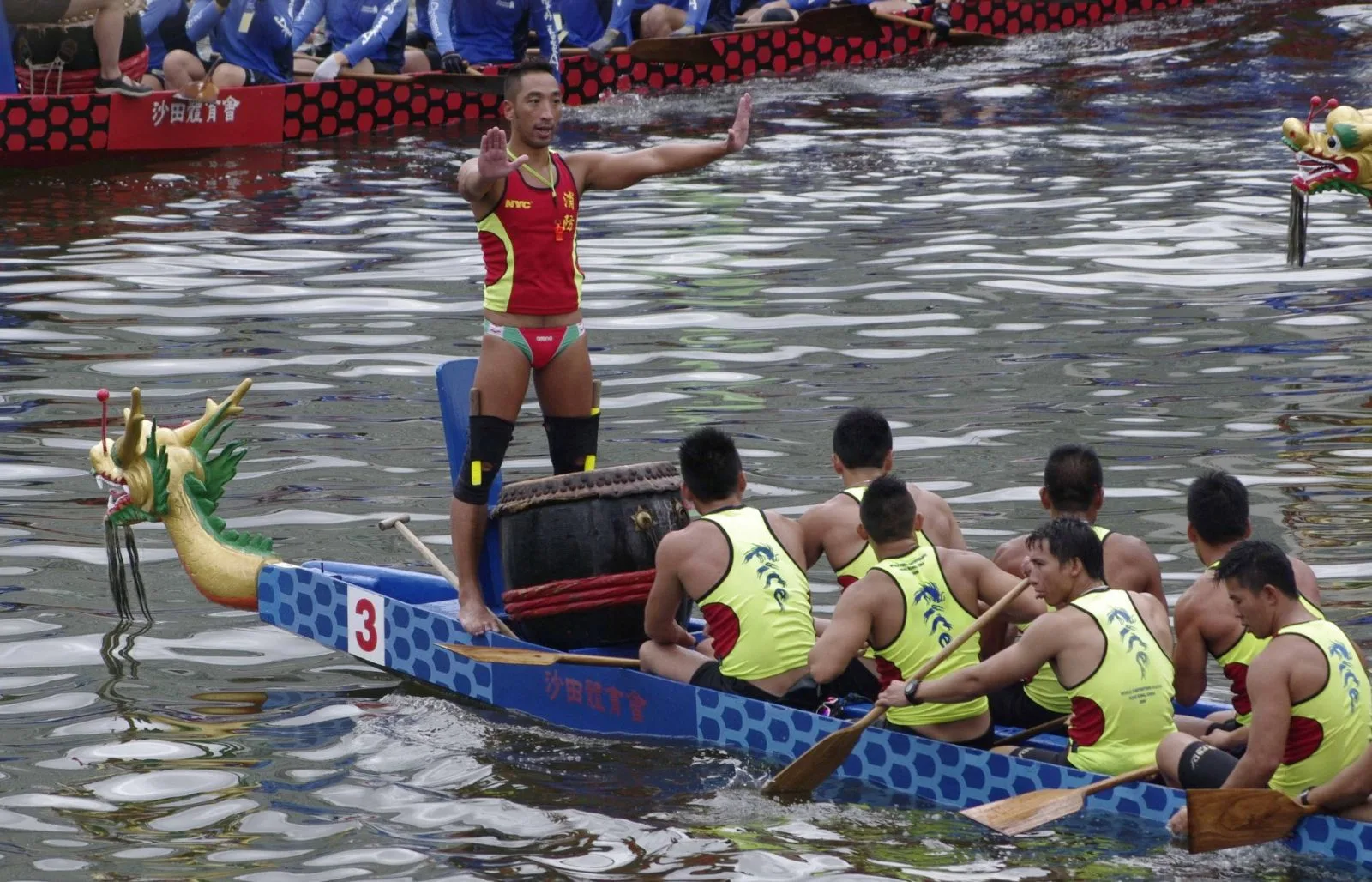
    A dragon boat with a carved head and paddlers in formation
    Dragon boats are painted and carved; crews race to the beat of a drum. Kamus Cheung | Pexels License (https://www.pexels.com/license/)

    Zongzi and Household Charms

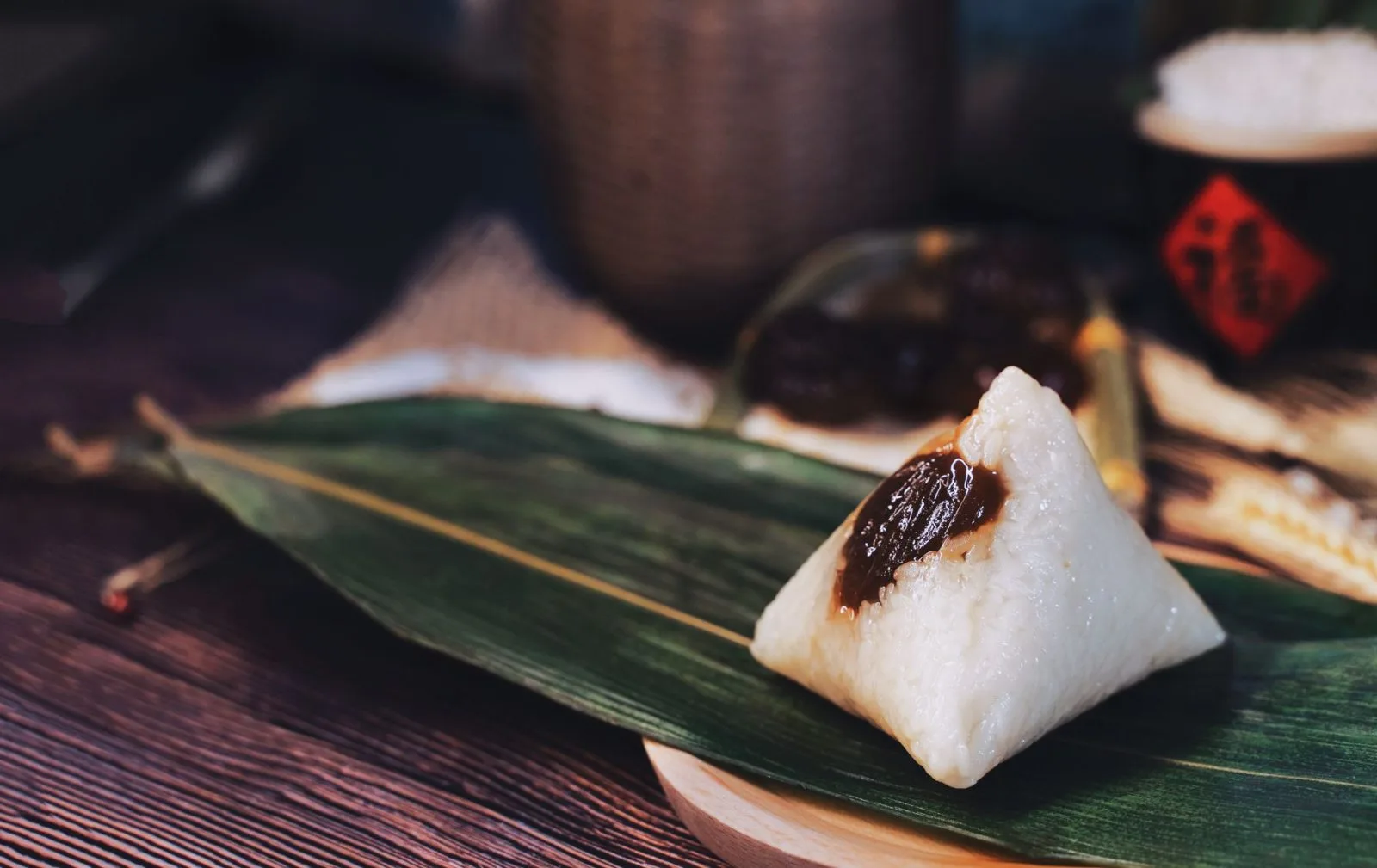
    Zongzi are parcels of glutinous rice wrapped in bamboo or reed leaves and tied with string, then boiled for hours. Fillings vary by region: Guangdong versions may include pork, salted egg, and mushrooms, while northern ones are often sweet with dates or red bean. Families make them in batches and give them to neighbours. The festival also has a protective side. In older practice, people hung mugwort and calamus at doorways to keep away illness and insects and tied five-coloured silk around children’s wrists. Realgar wine, a yellow mixture with a strong smell, was sprinkled around the house or dabbed on a child’s forehead, though modern safety advice discourages drinking it. These acts belong to a time when the fifth moon was thought to carry dampness, snakes, and fever.

    Pyramidal zongzi wrapped in bamboo leaves and tied with string
    Zongzi are filled with sticky rice and tied with string before boiling. zhen tang | Pexels License (https://www.pexels.com/license/)

    Guangdong on the Water

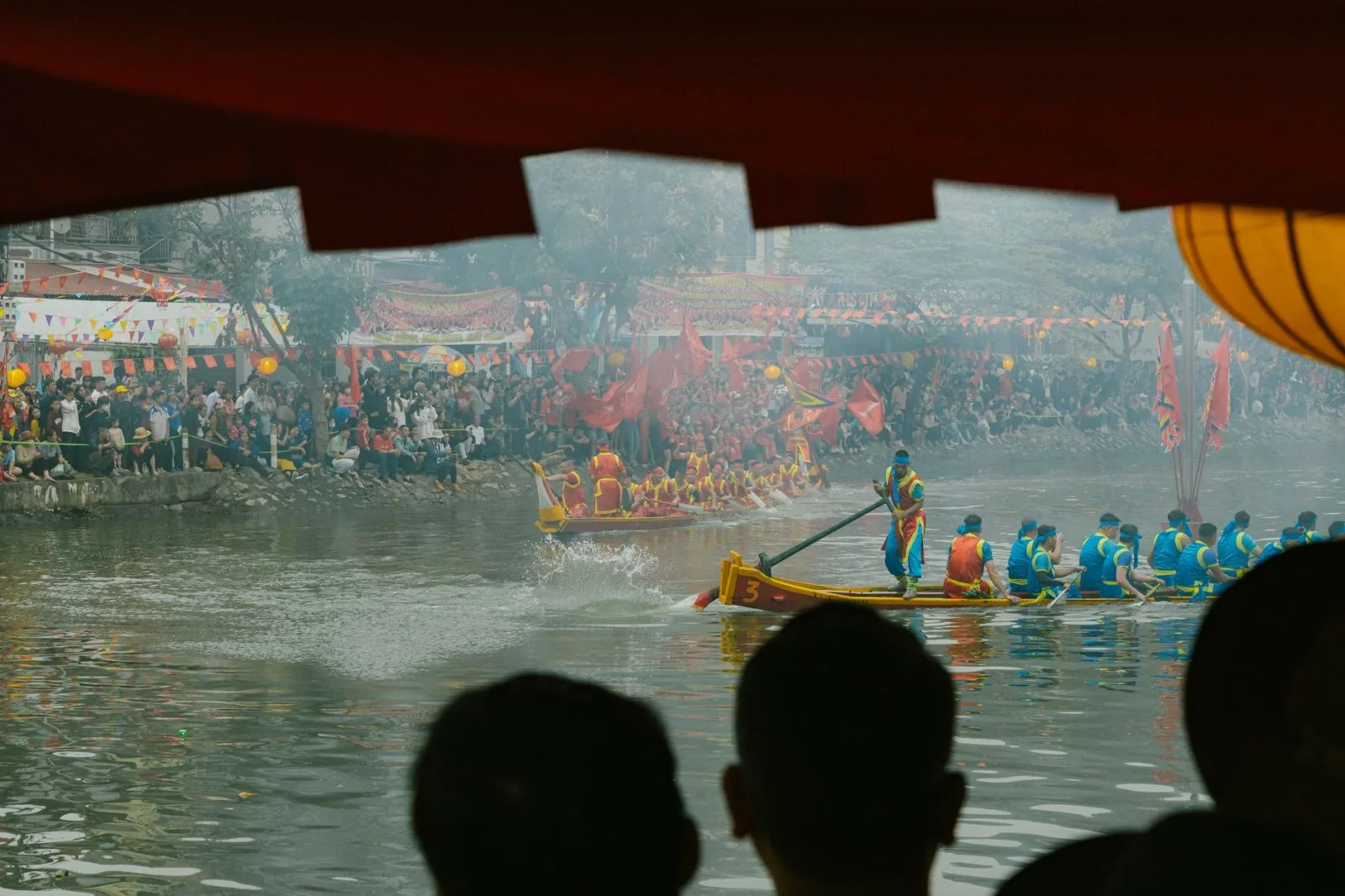
    In Guangdong, dragon boat racing is not a single event but a season. Villages and districts along the Pearl River Delta prepare boats through the spring, then race on rivers and creeks in the weeks around Duanwu. A long narrow boat carries a crew of paddlers, a drummer who sets the stroke, and a helmsman; the painted head and tail give the craft its name. Races are loud, crowded, and local, with teams known by village or temple affiliation. Spectators line bridges and banks, and the best vantage points fill early. The custom was inscribed on UNESCO’s intangible cultural heritage list in 2009. For a visitor, check local listings rather than assuming one central race: events are spread across Guangzhou and Foshan, and dates shift with the lunar calendar.

    Dragon boat crews racing on a Guangdong river before a crowd
    Pearl River Delta races draw village crews and large crowds in the weeks around Duanwu. HONG SON | Pexels License (https://www.pexels.com/license/)

    Observing the Day Today

    Duanwu is an official public holiday, so transport and tourist sites are busy. In Guangdong, the weather is hot and wet by May or June; bring water, a hat, and insect repellent if you plan to watch a race from an open bank. Respect the crews’ space at the water’s edge and do not step onto a boat or touch a drum without being invited. Many families still put mugwort at the door, and zongzi are easy to buy from markets in the days before the holiday. The festival is also an occasion for calling on relatives, though on a smaller scale. For travellers, the pleasure lies in the combination: a public spectacle on the river and a quiet, food-filled custom at home, both tied to the same lunar date.

    The drum sets the stroke, and the village supplies the crew.

    資料來源及延伸閱讀

    1. Dragon boat festival — 聯合國教科文組織非物質文化遺產。
    2. 端午節 ——《不列顛百科全書》。
    3. Qu Yuan ——《不列顛百科全書》。

    看看它就位

    請跟隨此條目前往其所屬區域。

    透過地圖探索

    請關注此帖

    瀏覽其他與此標籤相同的條目。

    瀏覽標籤
  • 清明

    生活與民俗

    清明

    Sweeping tombs, welcoming spring

    Qingming pairs the remembrance of ancestors with the first serious outings of spring.

    部分
    生活與民俗
    地區
    浙江省
    時代
    跨越時代
    標籤
    Customs, Geography

    Qingming arrives around 4 or 5 April, when the sun reaches fifteen degrees of the spring equinox on the traditional solar-term calendar. Its two halves belong together: cleaning a family grave, then walking out into the greening countryside.

    A Solar Term and a Day of Remembrance

    Qingming means clear and bright, a name drawn from the twenty-four solar terms, the calendar that divides the year by the sun’s position. The term falls around 4 or 5 April, when temperatures rise and rain becomes frequent in the lower Yangtze. Families visit ancestral graves to sweep away leaves and weeds, repaint inscriptions, and lay out food, tea, and paper money. Offerings are followed by bows or a few words addressed to the dead. Paper money may be burned in a designated container, depending on local rules. The act is not a celebration of death but a maintenance of family continuity: the dead remain part of the household’s obligations. In Zhejiang, hillside graves make the visit a walk as much as a ritual.

    A family tending a grave with flowers on a hillside in spring
    Tomb sweeping means cleaning the grave, making offerings, and bowing before ancestors. RDNE Stock project | Pexels License (https://www.pexels.com/license/)

    The Cold Food Connection

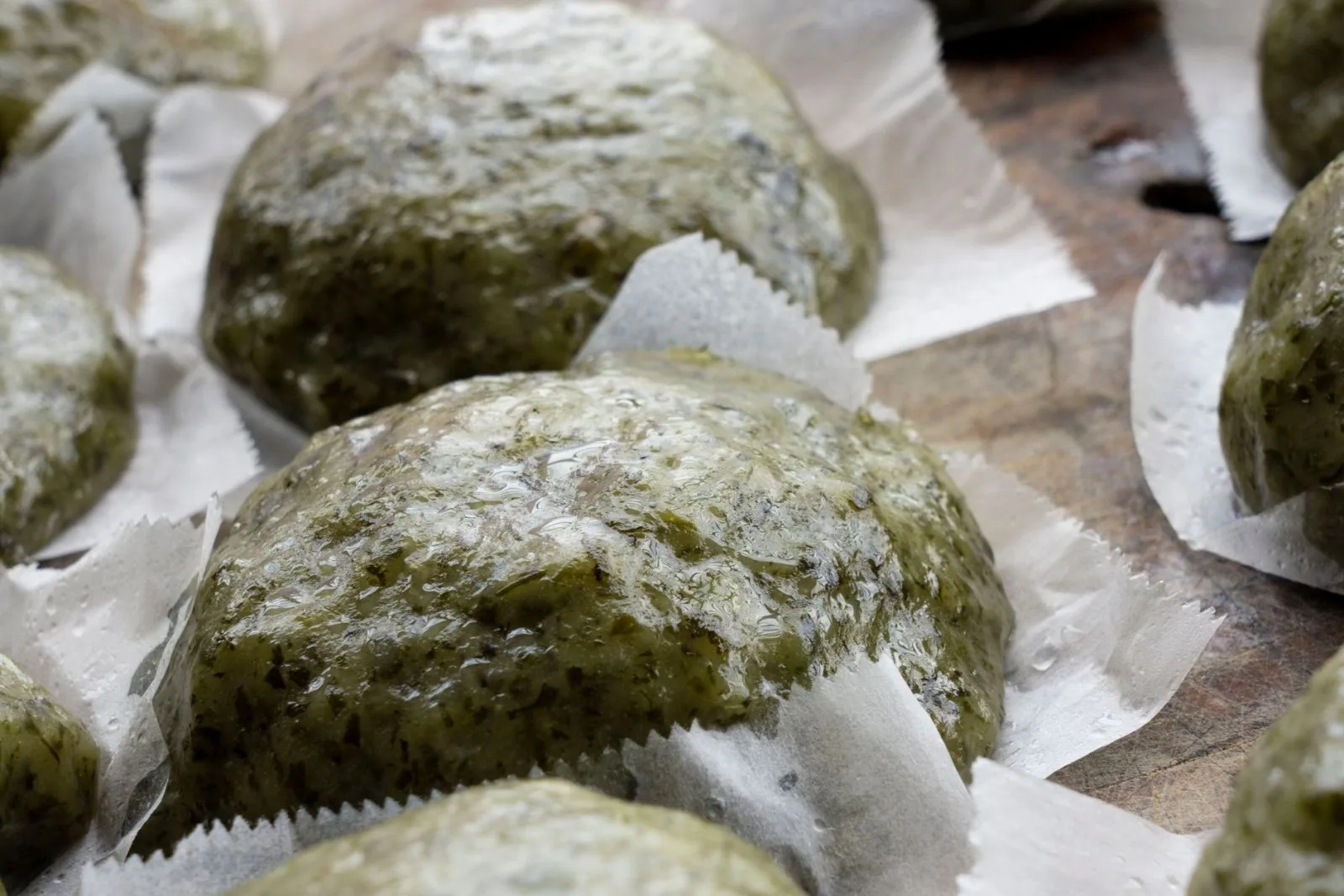
    Earlier custom linked this season with the Cold Food Festival, when fires were forbidden and families ate food prepared in advance. One traditional explanation connects the practice to Jie Zitui, a loyal follower of a Spring and Autumn duke who died in a forest fire; later historians treat the story as one among several local traditions rather than a single origin. In practice, the cold-food element has faded, but special foods remain. In Zhejiang and neighbouring Jiangnan, people eat qingtuan, soft green dumplings made with glutinous rice and mugwort juice, often filled with sweet red bean paste. Their colour comes from the first spring growth, and they are sold in markets for only a short season. Eating one links the memory of the dead to the first green.

    Qingming dumplings and cold food arranged on a table
    Qingming foods in Zhejiang include qingtuan, green rice cakes flavoured with mugwort. Jimmy Liao | Pexels License (https://www.pexels.com/license/)

    Spring Outings in Zhejiang

    The second half of Qingming is an outing, known as taqing, when families walk in parks, visit temples, or climb hills. Willow branches were once tucked into hair or hung at doors. In Zhejiang, the festival coincides with the first tea harvest around Hangzhou. Longjing, the tea from the hills near West Lake, is at its most valued when picked before Qingming; the tender buds of pre-Qingming pickings command higher prices. Visitors can see pickers between rows, and lakeside tea houses serve the new leaves. Qingming became a public holiday in 2008, giving the outing a practical boost. Combined with tomb sweeping, the day makes an unusual pair: a visit to the ancestors in the morning, a walk among new leaves in the afternoon.

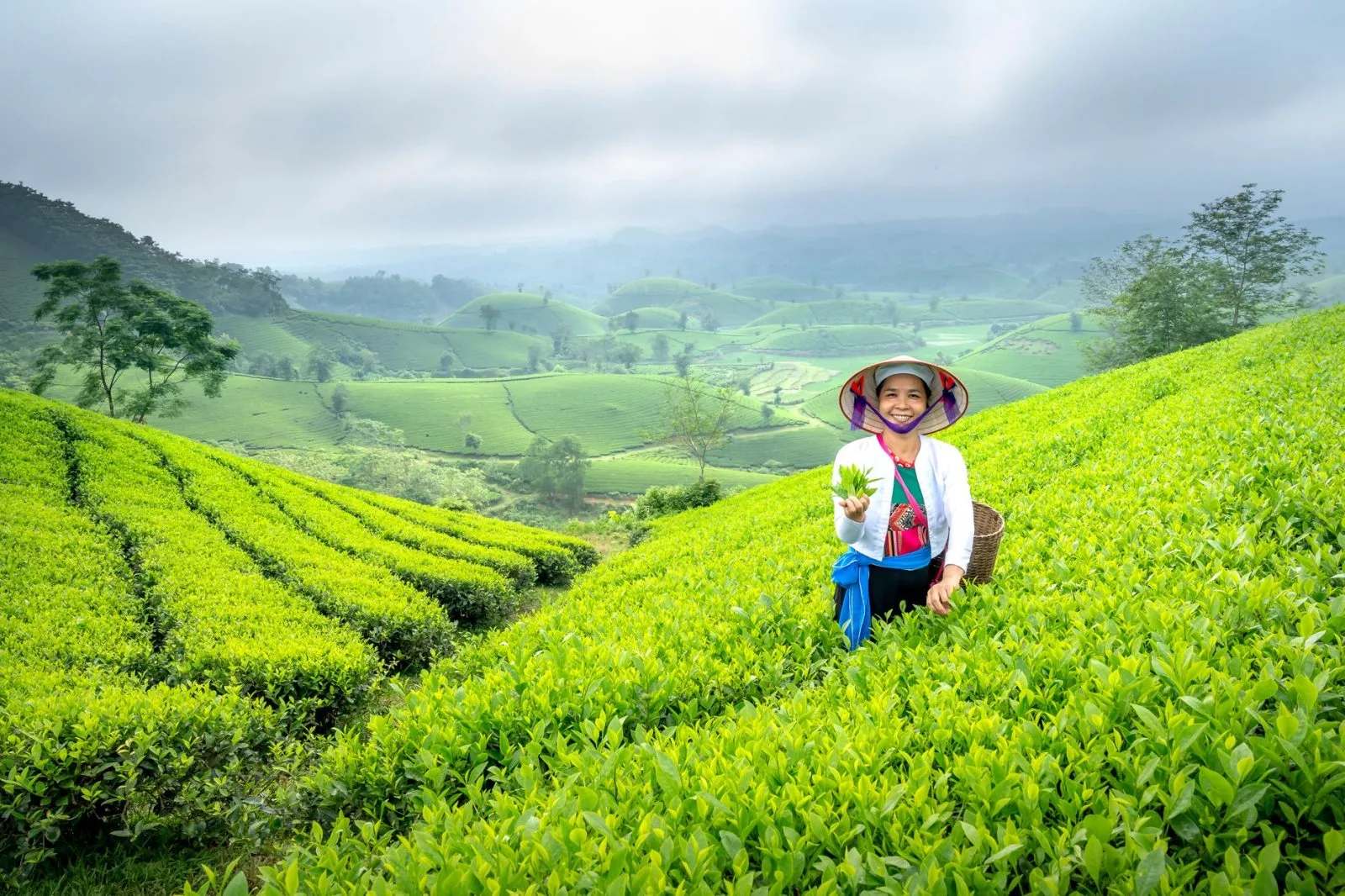
    Tea pickers gathering early spring leaves in Zhejiang hills
    Pre-Qingming tea from Zhejiang’s hills is prized for its tender leaves. Quang Nguyen Vinh | Pexels License (https://www.pexels.com/license/)

    Poetry and Practice Today

    Qingming has a fixed place in Chinese literature. The Tang poet Du Mu wrote of drizzling rain on the Mourning Day and a traveller asking where wine could be bought, a poem that schoolchildren still memorise. The lines capture the day’s two moods: rain and sorrow, and the impulse to go out despite them. For a visitor, the details matter. Cemeteries can be crowded, so go early and keep to marked paths. Bring water and wear shoes suitable for muddy slopes. In Hangzhou, traffic around West Lake builds by mid-morning, and the metro is simpler than a taxi. Tea villages welcome visitors, but a field is a working crop, not a garden; wait for an invitation before touching the leaves. Respect anyone burning offerings, and never photograph a grave close-up.

    In the morning the family tends the grave; in the afternoon it walks among new leaves.

    資料來源及延伸閱讀

    1. 二十四節氣 — 聯合國教科文組織非物質文化遺產。
    2. West Lake Cultural Landscape of Hangzhou — UNESCO World Heritage Centre.
    3. Qingming Festival — China Highlights.

    看看它就位

    請跟隨此條目前往其所屬區域。

    透過地圖探索

    請關注此帖

    瀏覽其他與此標籤相同的條目。

    瀏覽標籤
  • 茶文化

    生活與民俗

    茶文化

    Leaf, Water, and the Tea Horse Road

    Tea moved from medicinal leaf to daily drink, carrying Fujian methods toward Tibet and the sea.

    部分
    生活與民俗
    地區
    福建
    時代
    跨越時代
    標籤
    Customs, Food, Geography

    Tea culture is a history of distilled technique: when to pick, how to wither, how to roll, and how to heat a leaf so that it keeps its character. Fujian became a laboratory for these methods, sending compressed cakes west toward Tibet and scented leaves out through coastal ports.

    From Medicine to Daily Drink

    Tea entered Chinese writing as a medicinal and ritual plant long before it became a household drink. Traditions credit the mythical emperor Shen Nong with discovering it, but the earliest firm evidence comes from Han-period tombs, where archaeologists have identified tea leaves among grave goods. By the third century CE, writers described boiling leaves with ginger and onions; the Tang dynasty (618–907) made tea a scholarly and monastic beverage. Lu Yu’s Cha Jing, written around 760–780, codified growing, picking, roasting, and brewing. Tea cakes were toasted, ground to powder, and whisked with hot water, a preparation later carried to Japan by Buddhist monks.

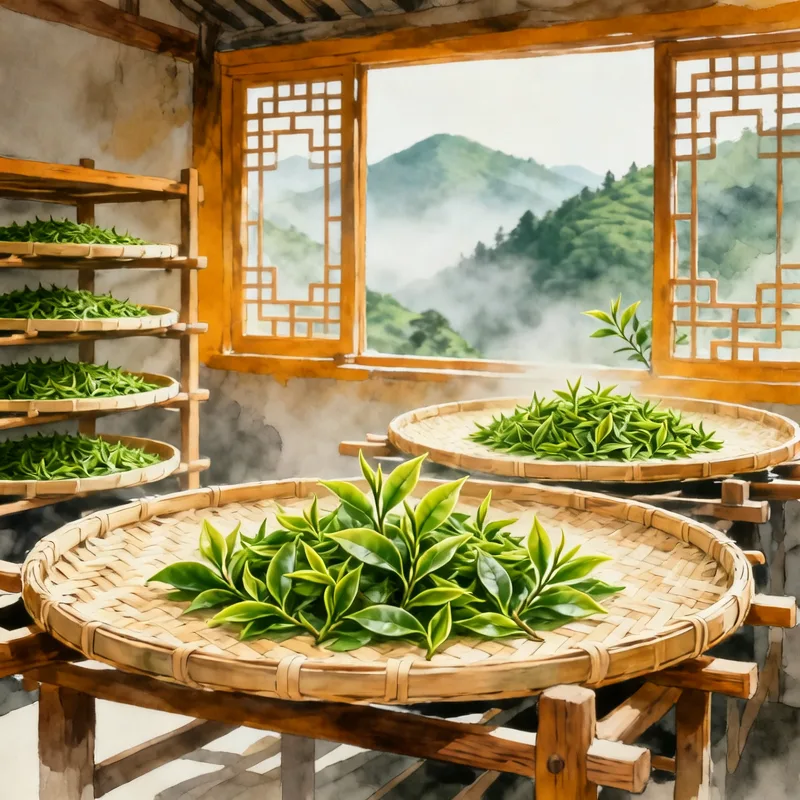
    Fresh tea leaves spread on bamboo trays in a Fujian hillside processing room
    Picking season sets the quality of the leaf before any processing begins. AI生成的插圖 · SinoViz

    Fujian’s Craft of Oxidation

    Fujian’s mountainous counties developed styles that depend on controlled oxidation. Wuyi rock tea, grown in the rocky cliffs of the Wuyi range, is often pan-fired, rolled, and roasted until it develops a mineral, toasted character. Tieguanyin from Anxi is shaped into tight pellets that unfurl in the cup. Lapsang souchong from Tongmu resembles black tea in its oxidation, then dries over pine smoke. White teas such as Fuding’s silver-needle style are simply withered and dried, with little rolling or heating. These techniques are local knowledge: the same species, Camellia sinensis, changes through timing, heat, and handling.

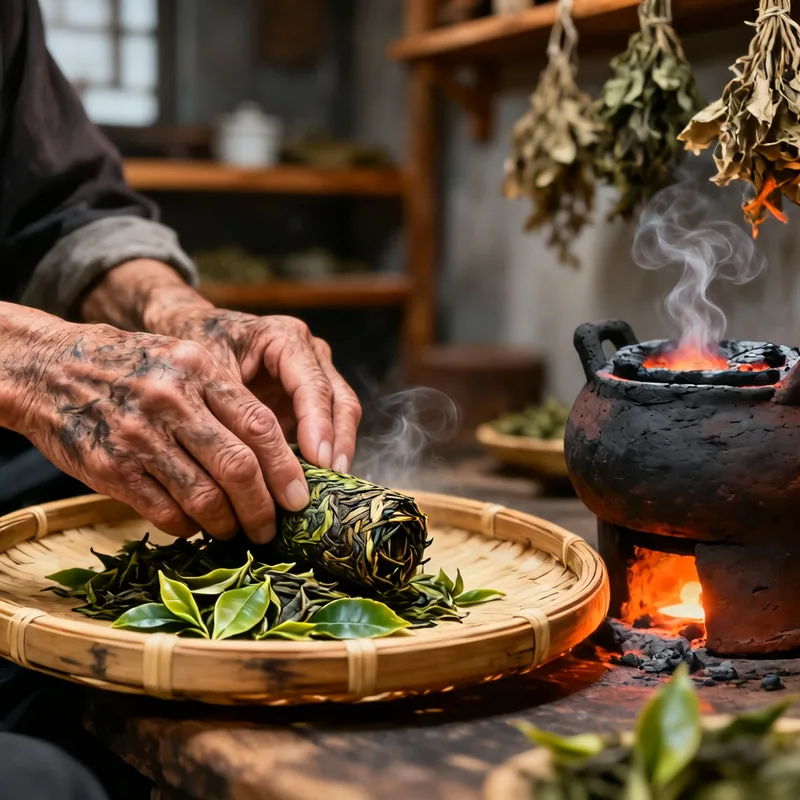
    Tea leaves being rolled by hand on a bamboo tray beside a traditional roasting stove
    Rolling breaks the leaf cells and shapes the flavours that firing will fix. AI生成的插圖 · SinoViz

    The Tea Horse Road West

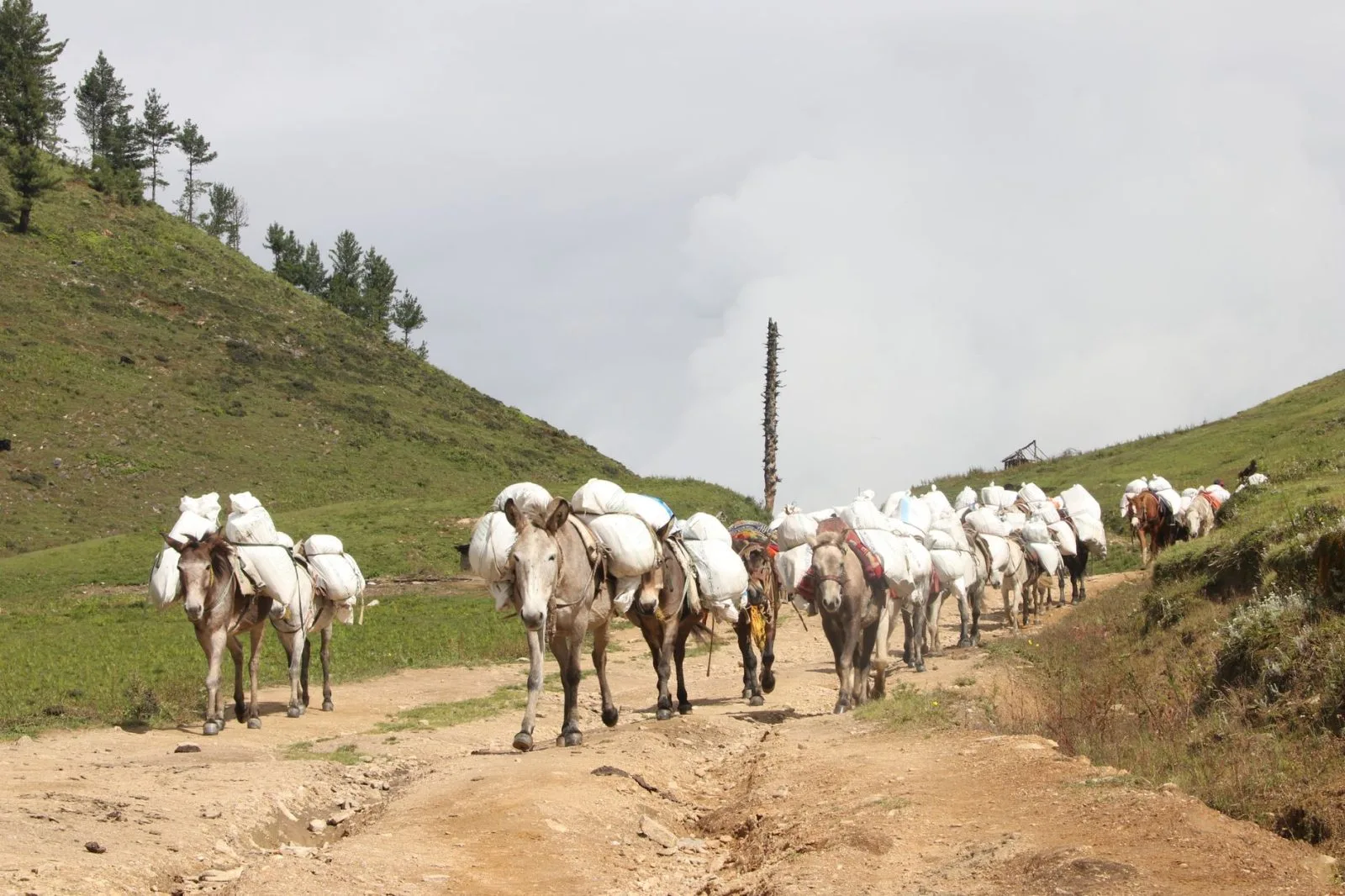
    From at least the Tang period, compressed tea travelled west from Sichuan and Yunnan toward Tibet, where it provided vitamin-rich drink and a medium of exchange in a diet heavy on barley and meat. The Tea Horse Road was a network of footpaths through mountains, not one road: porters and mule caravans crossed passes between Dali, Lijiang, and Tibetan markets. Under the Song, states traded tea for warhorses at frontier markets. Tea bricks were strapped to pack animals, wrapped in bamboo or paper, and sometimes pressed with straw. In Tibetan households, tea was churned with butter and salt into a fuel-rich drink suited to high altitudes.

    • Green, white, oolong, and black styles defined by oxidation
    • Compressed bricks made for pack transport
    • Tea exchanged for Tibetan horses at frontier markets
    • Butter tea brewed from brick tea in highland homes
    A string of pack animals carrying bundled tea bricks along a mountain trail in southwest China
    Tea bricks travelled on foot and mule across the mountain passes toward Tibet. Jeevan Mahat | Pexels License (https://www.pexels.com/license/)

    Ports, Cups, and Living Practice

    Maritime trade carried Fujian tea to Southeast Asia and Europe. In the seventeenth century, ships leaving Xiamen and other ports carried leaf tea, porcelain cups, and teapots; by the nineteenth, British demand had made tea a global commodity. The gongfu cha style, associated with Chaozhou and Fujian, uses small vessels, repeated short infusions, and attention to water temperature. A modern tasting may name a harvest season, a mountain, and a roasting method with the precision once reserved for wine. In villages around Wuyi and Anxi, sorting, pan-firing, and roasting still depend on skilled hands, even where machines perform the early steps.

    A leaf becomes tea only when someone decides when to pick it, how long to wither it, and when to stop the heat.

    資料來源及延伸閱讀

    1. Tea ——《不列顛百科全書》。
    2. The Classic of Tea — World History Encyclopedia.
    3. Tea Horse Road ——《不列顛百科全書》。

    看看它就位

    請跟隨此條目前往其所屬區域。

    透過地圖探索

    請關注此帖

    瀏覽其他與此標籤相同的條目。

    瀏覽標籤
  • Jiangnan Cuisine

    生活與民俗

    Jiangnan Cuisine

    River Fish, Rice, and Refined Broth

    The cooking of the lower Yangtze favours freshwater fish, seasonal greens, and delicate stocks.

    部分
    生活與民俗
    地區
    浙江省
    時代
    跨越時代
    標籤
    Food, Geography

    Jiangnan cooking grew in the wet, rice-growing country south of the Yangtze. Its reputation rests less on spice than on timing: a fish steamed just long enough, a broth cleared and simmered, or a vegetable picked before it toughens.

    A Landscape of Water and Rice

    Jiangnan means the land south of the Yangtze, a region of canals, lakes, and irrigated fields centred on Jiangsu and Zhejiang. From the Song dynasty (960–1279), the lower Yangtze became China’s densest and wealthiest farming region, supported by double-cropping rice, fish ponds, and silk production. Cities such as Hangzhou and Suzhou developed a class of officials, merchants, and literati who recorded dining in essays and cookbooks. Lin An, today’s Hangzhou, was the Southern Song capital after 1127, and its markets sold freshwater fish, crab, bamboo shoots, and lotus root. Local cooking took shape around what the water and nearby fields supplied in season.

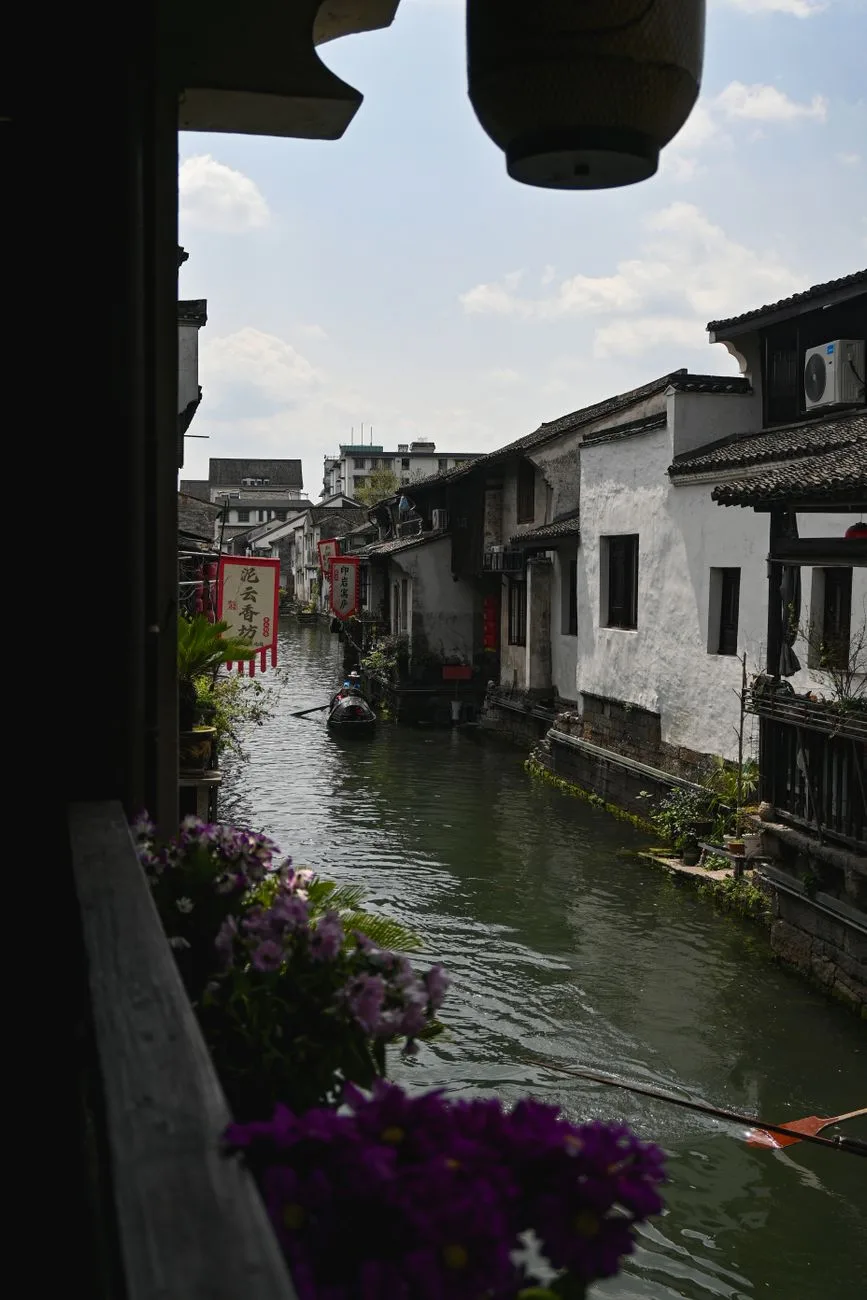
    Canals and rice fields in the Jiangnan countryside near Suzhou
    Canals, fish ponds, and irrigated fields shaped the Jiangnan pantry. 木 灬 | Pexels License (https://www.pexels.com/license/)

    Techniques of Cleanness

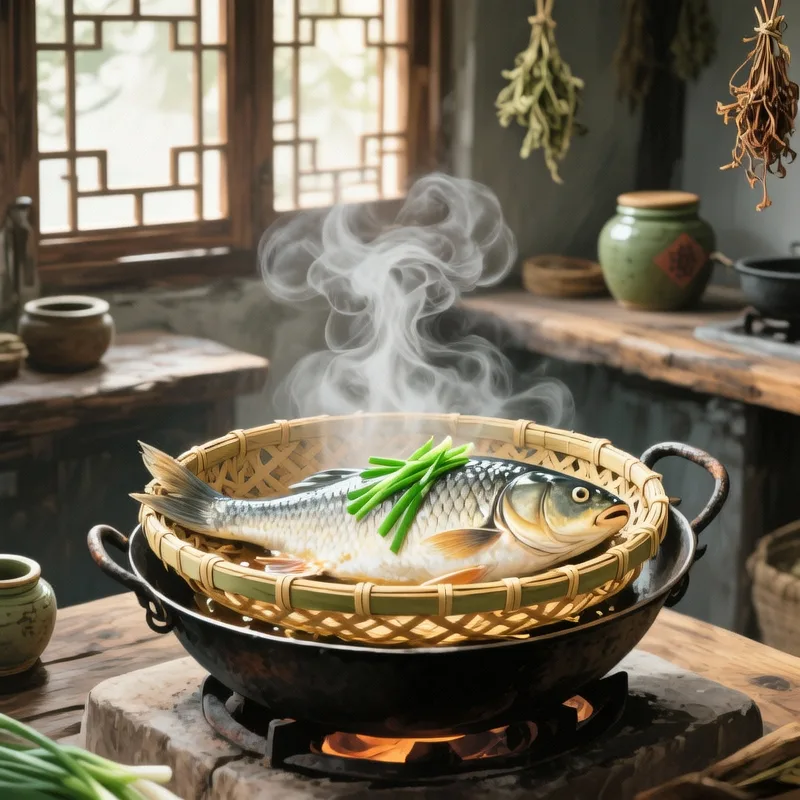
    Jiangnan cooks prize the natural flavour of ingredients, so technique often means restraint. Steaming preserves the texture of fish and glutinous rice; quick stir-frying keeps greens crisp; slow simmering turns pork bones and chicken into clear, aromatic broth. Shaoxing in Zhejiang is famous for yellow rice wine, used in marinades and for deglazing a hot wok. Vinegar from Zhenjiang balances sweet and sour dishes. Hangzhou’s famous West Lake vinegar fish uses a fish from the lake, scored and fried, then finished with a sweet-sour sauce. The dish is now a restaurant set piece, but it began as a local preparation of available freshwater fish.

    A whole freshwater fish steaming in a bamboo basket over a wok in a Jiangnan kitchen
    Steaming is a defining Jiangnan technique because it preserves delicate texture. AI生成的插圖 · SinoViz

    A Calendar of Local Dishes

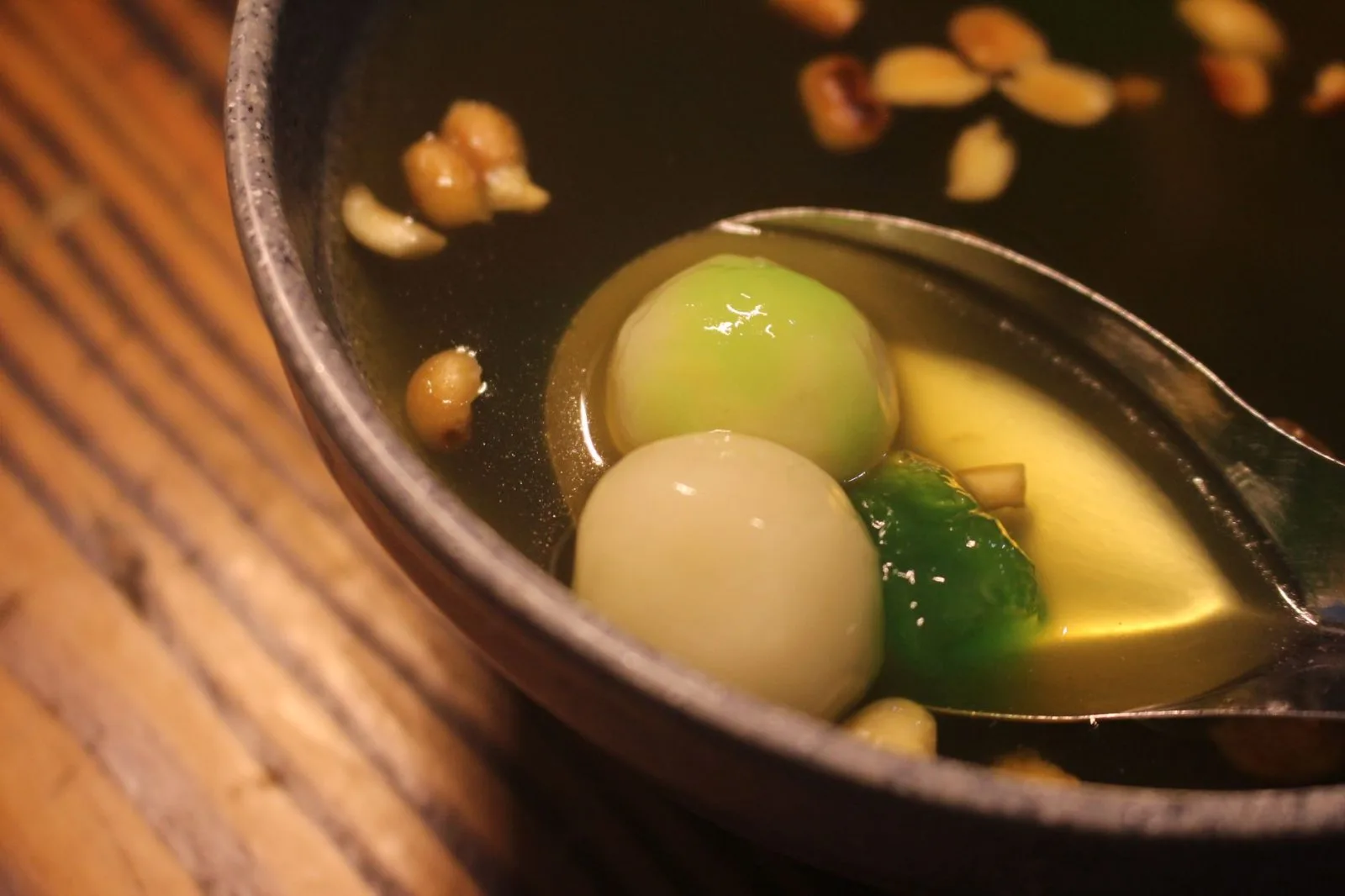
    Seasonality gives the cuisine its rhythm. Spring brings bamboo shoots, shepherd’s purse, and the first river shrimp; autumn brings hairy crab from lakes and the slow-growing taihu whitebait. Suzhou’s squirrel-shaped mandarin fish is butterflied, scored, fried, and glazed, while braised pork belly is cooked until fat and lean layers hold together without hardness. Ningbo, on the Zhejiang coast, adds salted and dried seafood, and its tangyuan glutinous-rice balls filled with black sesame are eaten at the Lantern Festival. Shanghai, later and more cosmopolitan, absorbed these traditions into benbang cooking, favouring soy, sugar, and seafood.

    • West Lake vinegar fish from Hangzhou
    • Squirrel-shaped mandarin fish from Suzhou
    • Hairy crab from Taihu lakes in autumn
    • Black-sesame tangyuan for the Lantern Festival
    Small glutinous rice balls with black sesame filling served in a warm bowl
    Tangyuan mark the Lantern Festival across the lower Yangtze. Jauhar Musthofal Qulub | Pexels License (https://www.pexels.com/license/)

    Gardens, Teahouses, and the Table

    Meals in Jiangnan were historically tied to gardens and teahouses, where scholars met over small dishes and wine. The region’s cookbooks, including Yuan Mei’s Suiyuan Shidan of 1792, record recipes alongside comments on market ingredients and household methods. Yuan Mei argued that a cook should understand each ingredient rather than bury it under sauce. That ideal still shapes the region’s public image, even when restaurant versions are elaborate. For a visitor, the useful lesson is to order by season and region: a lake crab in autumn, a bowl of noodles in Suzhou, or a pot of longjing tea near Hangzhou.

    In Jiangnan, the test of a dish is often how little the cook has done to spoil the ingredient.

    資料來源及延伸閱讀

    1. Chinese Regional Cooking ——《不列顛百科全書》。
    2. Hangzhou — UNESCO World Heritage Centre.
    3. Hangzhou ——《不列顛百科全書》。

    看看它就位

    請跟隨此條目前往其所屬區域。

    透過地圖探索

    請關注此帖

    瀏覽其他與此標籤相同的條目。

    瀏覽標籤