編年史
Confucius and the Analects
A Teacher’s Words in Twenty Books
The sayings of Confucius and the ritual tradition that grew around them.
- 部分
- 編年史
- 地區
- 北京
- 時代
- three-dynasties
- 標籤
- History, Customs
Confucius lived in a fractured Zhou world and taught that good government began with personal conduct. His conversations, collected in the Analects, became one of the most widely read texts in East Asia and eventually a foundation of state ritual and examination culture.
Life in the State of Lu
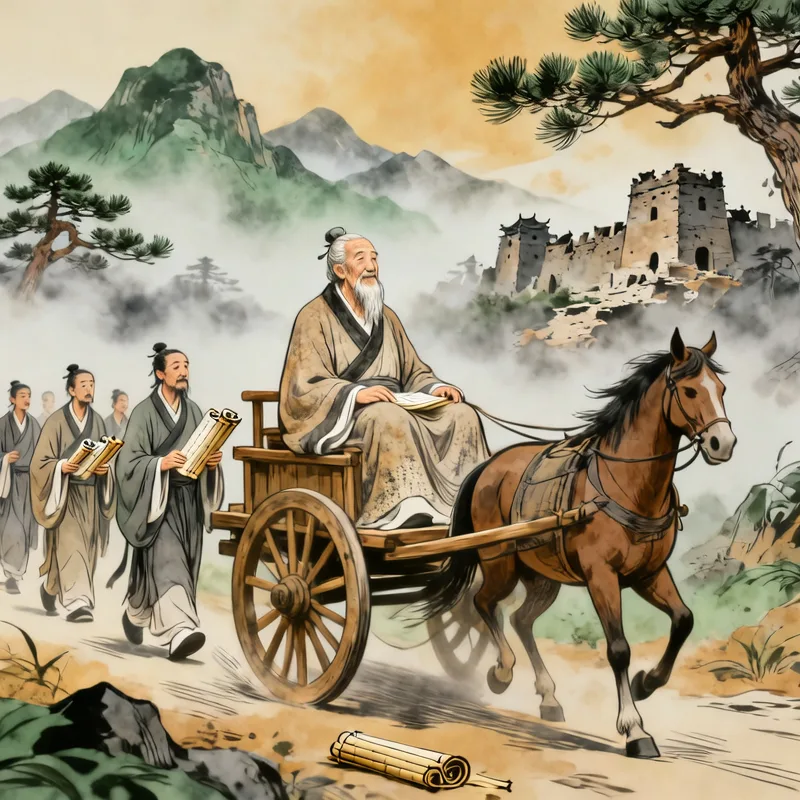
Confucius, whose family name was Kong and personal name Qiu, was born in 551 BCE at Qufu in the state of Lu, in present-day Shandong. His father died when he was young, and he later worked as a keeper of granaries and herds before becoming known as a teacher. Around 497 BCE he left Lu after a political dispute and spent roughly fourteen years travelling through neighbouring states, advising rulers and gathering disciples. He returned to Lu around 484 BCE and died in 479 BCE. The Spring and Autumn era in which he lived saw the Zhou king’s authority eroded by powerful regional lords.
How the Analects Took Shape
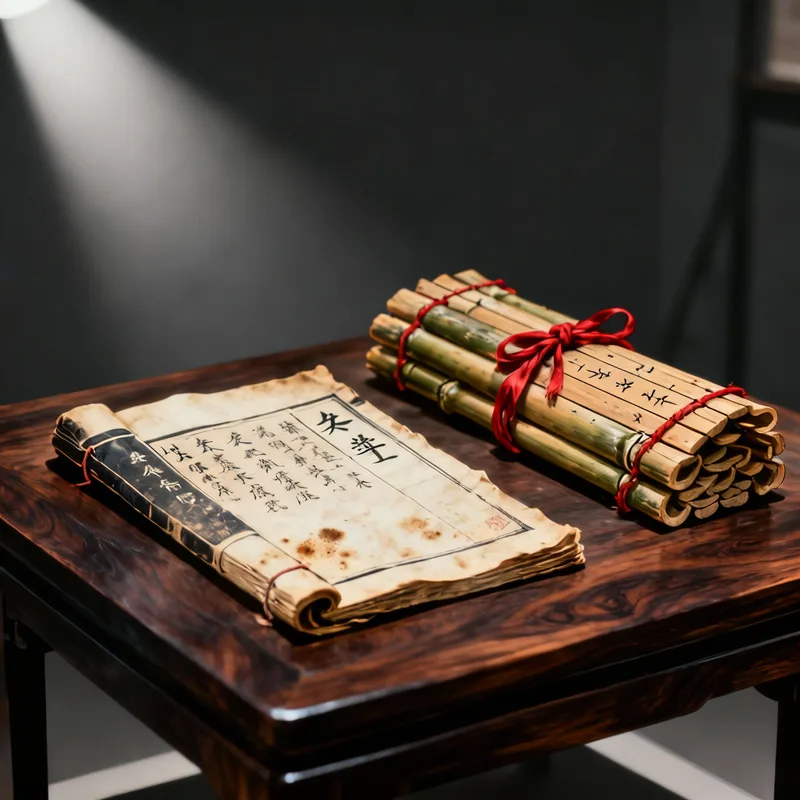
The Analects, or Lunyu, is not a book written by Confucius himself. It is a compilation of sayings, questions, and short scenes, traditionally arranged in twenty chapters. Disciples and later followers transmitted the material orally before it reached its received form, probably during the fourth and third centuries BCE. Passages typically begin with "The Master said," followed by terse maxims on learning, ritual, and government. The Latin title Analects means "selected sayings." Because the text layers different generations of memory, it presents a teacher in conversation rather than a single systematic doctrine, which is part of its enduring appeal.
From Qufu to Beijing
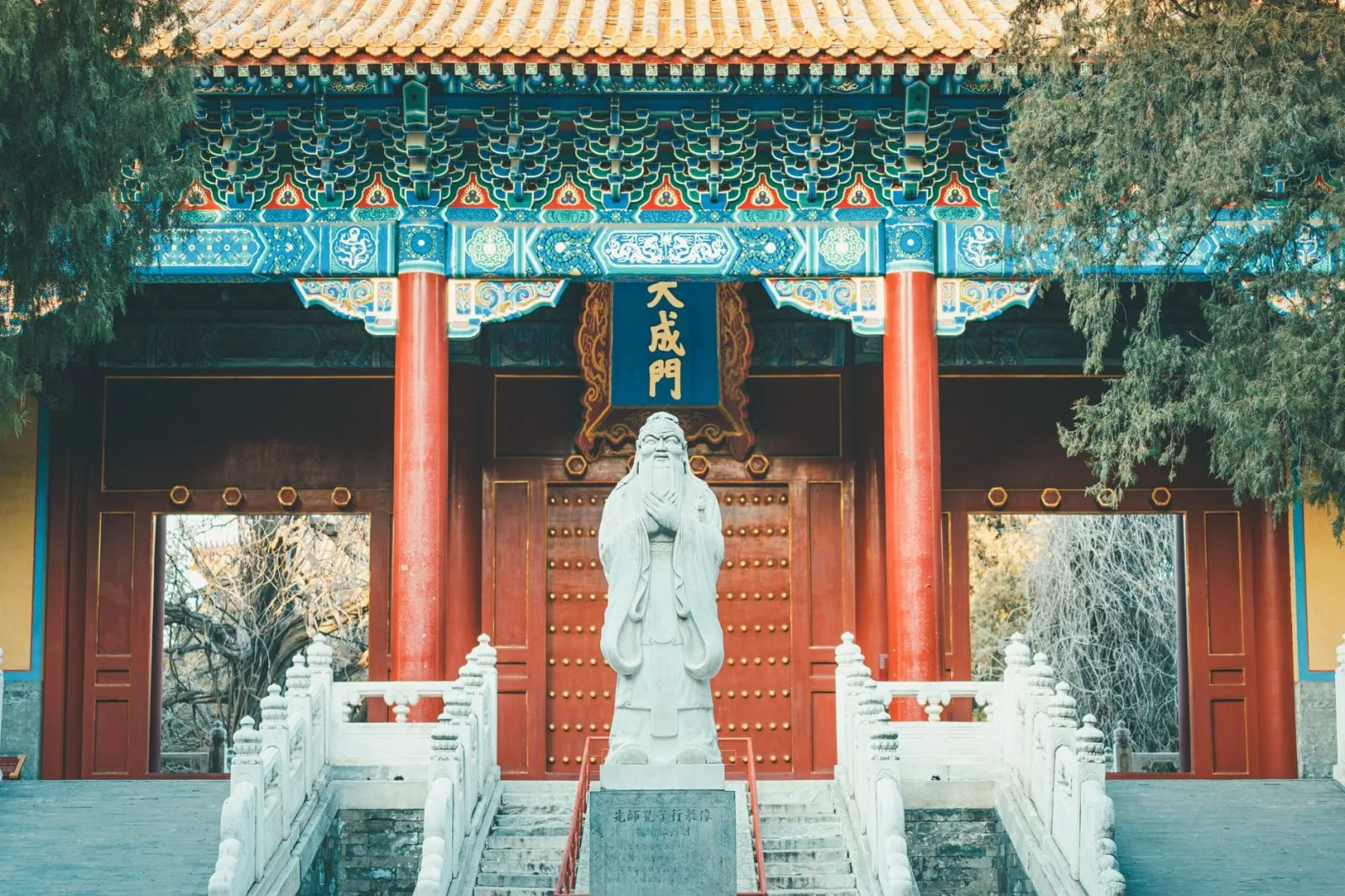
Confucius was honoured regionally in his lifetime and officially after his death. In 134 BCE, Emperor Wu of Han adopted the recommendation of Dong Zhongshu to elevate Confucian learning at court, and the imperial academy was founded in 124 BCE. The state cult spread: a temple at Qufu grew around the Kong family mansion and cemetery, and rulers performed sacrifices to the sage. In Beijing, a Temple of Confucius was built in 1302 under the Yuan dynasty and rebuilt under the Ming and Qing. It stood beside the Imperial College, linking the veneration of the teacher to the training of officials.
The Teaching in Practice
The central terms are ren, often translated as humaneness, and li, ritual propriety. Confucius treated them as habits formed through practice: respect for elders, careful speech, and attention to the duties of one’s position. The famous negative formulation of reciprocity, "What you do not want done to yourself, do not do to others," appears in the Analects. The text also insists that rulers set the moral tone, comparing their virtue to wind that bends the grass. Later readers in Korea, Japan, and Vietnam adapted the same vocabulary, while Neo-Confucian thinkers of the Song dynasty built a more systematic philosophy from it.
What you do not want done to yourself, do not do to others. — Confucius, Analects 15.24
資料來源及延伸閱讀
- Confucius ——《不列顛百科全書》。
- Confucius — Stanford Encyclopedia of Philosophy.
- Temple and Cemetery of Confucius and the Kong Family Mansion in Qufu — UNESCO World Heritage Centre.