ชีวิตและนิทานพื้นบ้าน
The Bai People
White walls and craft around Dali
The Bai are a Sino-Tibetan-speaking people concentrated around Dali, whose courtyard houses and indigo tie-dye define a local visual style.
- ส่วน
- ชีวิตและนิทานพื้นบ้าน
- ภูมิภาค
- ยูนนาน
- ยุค
- ข้ามยุคสมัย
- แท็ก
- ชาติพันธุ์ ประเพณี
Bai towns sit between the Cangshan mountains and Lake Erhai in northwestern Yunnan. Their language is Sino-Tibetan, and their communities carry memories of the Nanzhao and Dali kingdoms that ruled the region before the Mongol conquest of the thirteenth century.
Between Cangshan and Erhai
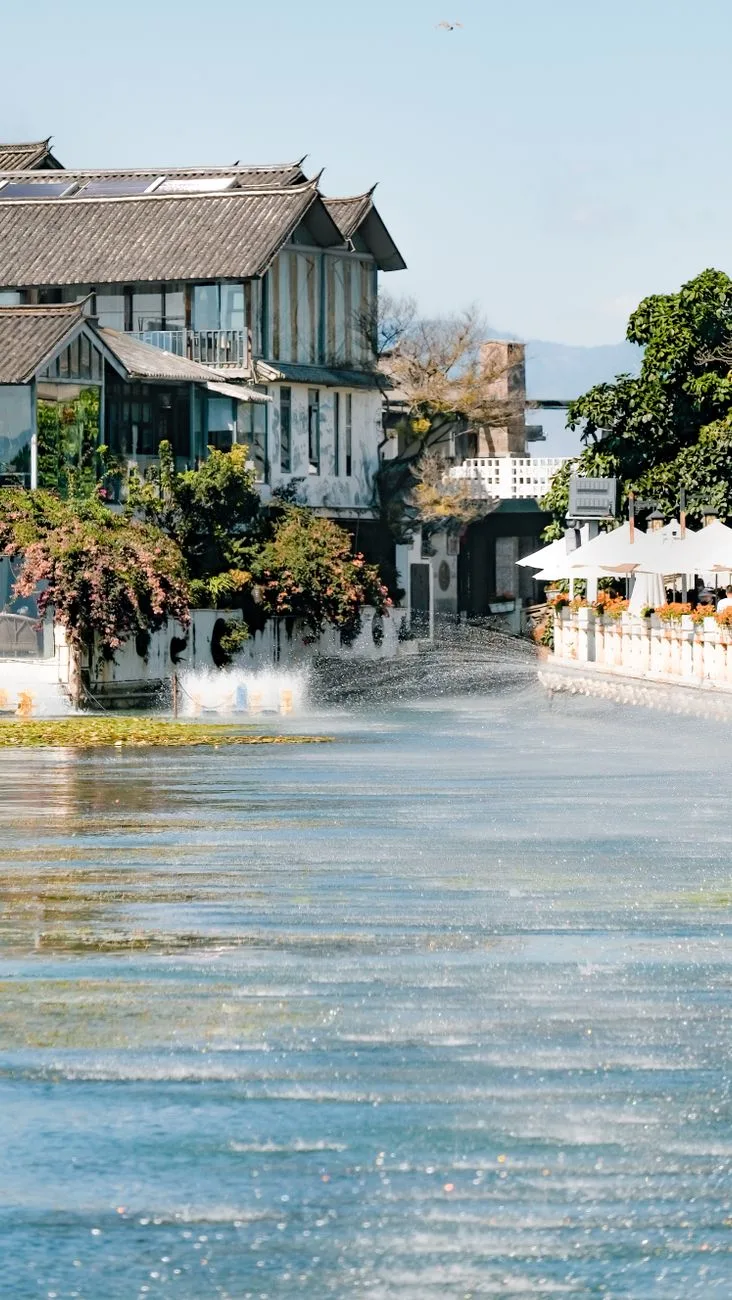
About 1.9 million Bai people were recorded in China’s 2010 census. Roughly four fifths live in Dali Bai Autonomous Prefecture, with other communities in Kunming, Chuxiong, Lijiang, Baoshan and parts of western Yunnan. Towns and villages cluster on the narrow strip of flat land between Cangshan’s slopes and the shore of Erhai, where irrigation supports rice, beans and dairy farming. The name Bai means white, a reference to the pale plaster that distinguishes local buildings. Because Dali stood on trade routes linking Yunnan with Sichuan and Tibet, Bai towns absorbed goods and techniques from several directions while keeping a strong local vocabulary of form and decoration.
Language and historical roots
The Bai language belongs to the Sino-Tibetan family, usually placed within Tibeto-Burman, though scholars still debate its exact position because of heavy borrowing from Chinese. There is no widely used traditional Bai script, and Chinese characters have served for writing names, contracts and local records. Bai oral tradition, including creation stories and accounts of kingdom builders, is transmitted in speech and performance. Ancestors of the Bai are associated with the Nanzhao kingdom, which flourished from the eighth to the ninth century, and the Dali kingdom that followed between 937 and 1253. Both left stone inscriptions, Buddhist carvings and fortified sites around the lake.
Courtyards, marble and dye
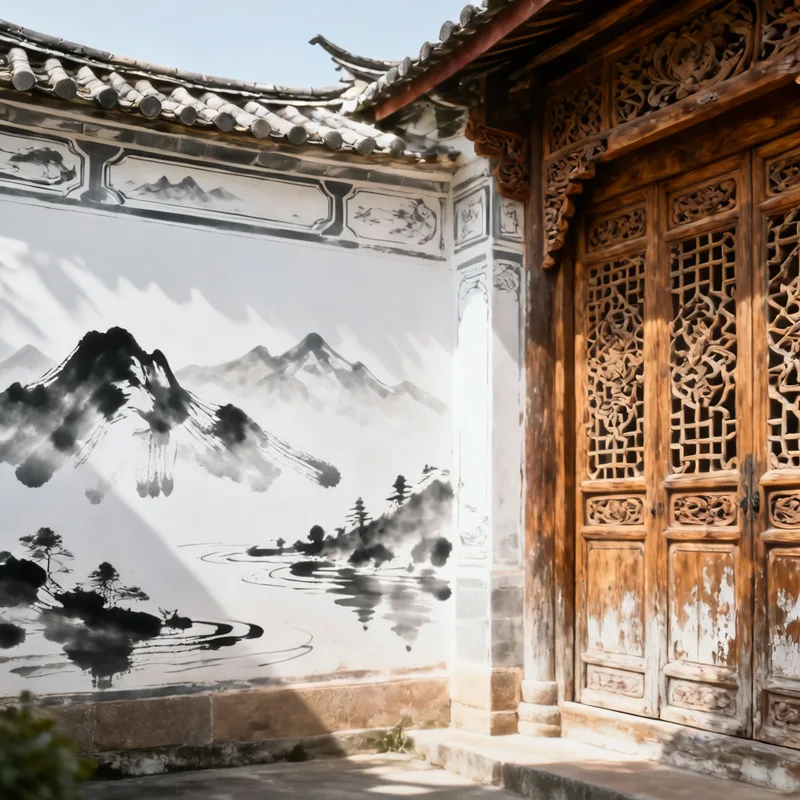
The standard Bai house follows a layout known as sanfang yizhaobi, three wings arranged around a courtyard facing a freestanding screen wall. Walls are whitewashed, roofs are covered in grey clay tiles, and doorways and windows carry deep carved wooden fretwork. The screen wall is often painted with landscapes or calligraphy, and panels of local marble are set into lintels and table tops. In Zhoucheng and nearby villages, indigo tie-dye produces blue cloth patterned by stitching and binding before dyeing. Bai embroidery, plaster carving and stonework use similar floral and geometric motifs, so the same design vocabulary appears on clothing, furniture and building facades.
Tea, markets and festivals
Three-course tea is a Bai hospitality ritual: a bitter first cup brewed from roasted leaves, a sweet second cup with nuts and honey, and a final cup that mixes the two and is said to leave a lasting aftertaste. Local dishes include air-dried milk sheets called rushan, raw pork skin salad, sour fish from Erhai and bean curd cooked with local herbs. The Third Month Fair, held in the lunar third month at Dali, began as a livestock and goods market and now fills the foothills of Cangshan with stalls, horse trading and performances. Raosanling, a pilgrimage and singing gathering, and torch-lighting customs in some villages add other dates to the year.
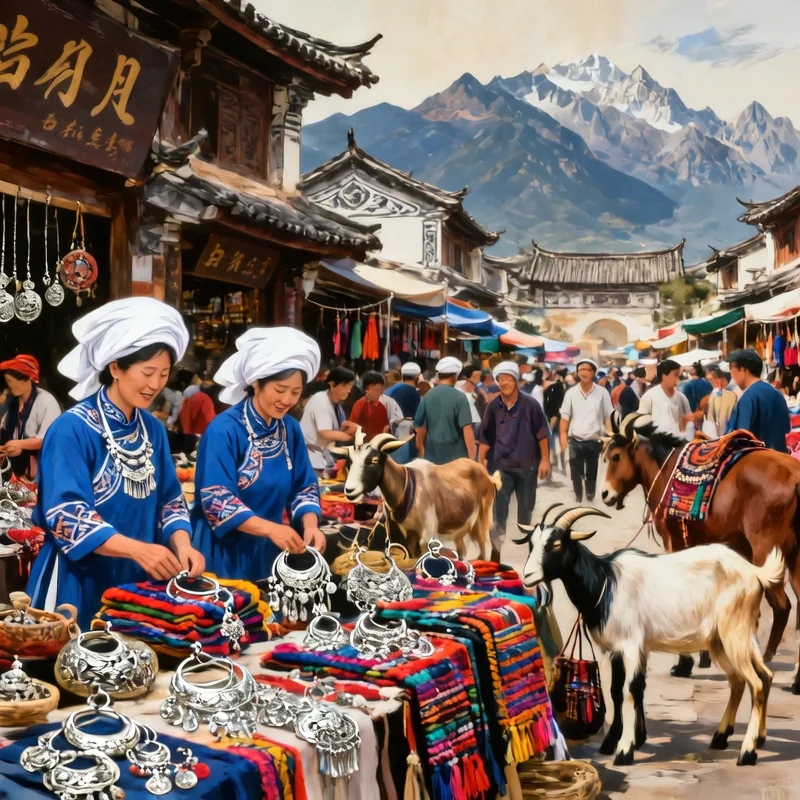
Bai craftsmen treat a house front, a tea cup and a dyed cloth as the same surface for pattern.
แหล่งข้อมูลและเอกสารอ่านเพิ่มเติม
- Bai — สารานุกรมบริแทนนิกา
- Bai Ethnic Group — China.org.cn