Tag: Geography

  • The Grand Canal

    Map Exploration

    The Grand Canal

    An Inland Waterway Across China

    The Grand Canal links northern and southern China through rivers, locks, and warehouse towns.

    Section
    Map Exploration
    Region
    Zhejiang
    Era
    Across eras
    Tags
    Geography, History, Transport

    The Grand Canal is a system of artificial channels and connected rivers, not one continuous trench. For centuries it moved grain, salt, silk, and imperial correspondence between the Yellow River and the Yangtze delta.

    From Warrior States to Imperial Route

    Canal building began before unification. The state of Wu dug the Han Gou channel in the fifth century BCE to move troops and grain between the Yangtze and the Huai. The Qin and Han maintained regional waterways, but the Sui dynasty (581–618) created the first broadly connected system. Emperor Yang ordered hundreds of thousands of labourers to dig the Tongji Canal, linking Luoyang toward the Yangtze, and the Yongji Canal toward the north. The cost contributed to Sui collapse, yet the route remained useful. The Yuan dynasty (1271–1368) redirected the canal around the Yellow River toward Beijing, and Ming and Qing engineers rebuilt sections with locks and stone banks.
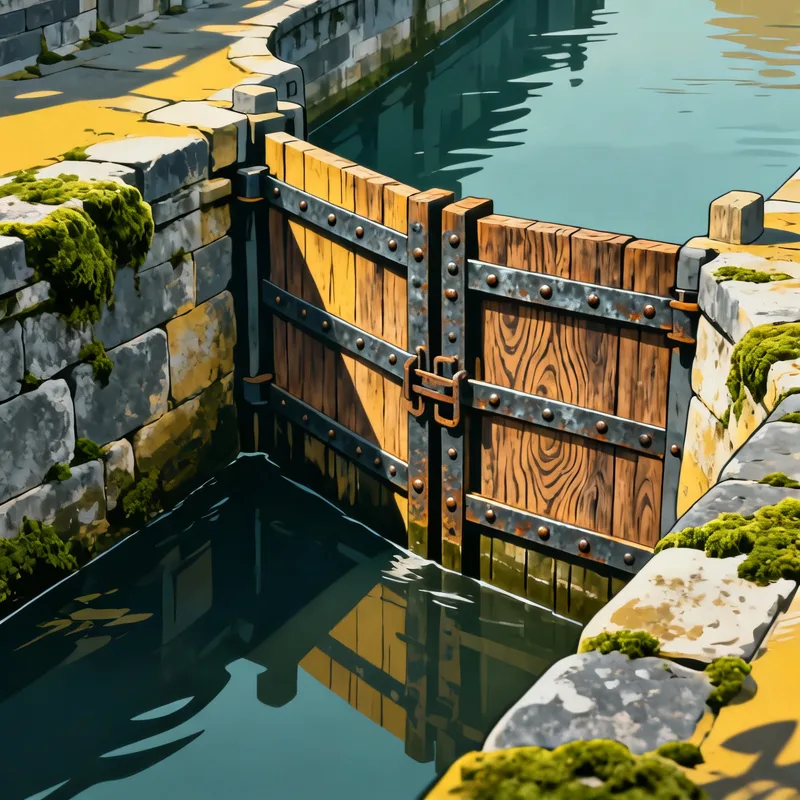
    An ancient canal lock with stone banks and a narrow timber water gate
    Locks allowed boats to cross differences in water level between river basins. AI-generated illustration · SinoViz

    Grain Boats and Market Towns

    The canal’s central purpose was transport. Under the Ming and Qing, tribute grain from the lower Yangtze moved north in huge flotillas of flat-bottomed boats, with relay crews and storage depots at key cities. The annual shipment fed the capital and the northern garrisons. Canal towns grew around wharves, granaries, guild halls, and money lenders: Linqing, Jining, Huai’an, and Yangzhou became exchange points as much as transit stops. Salt from the Huai coast, silk from Suzhou and Hangzhou, porcelain from Jingdezhen, and coal from northern mines moved along the same water. A journey that took weeks by road could be made with far greater bulk by boat.
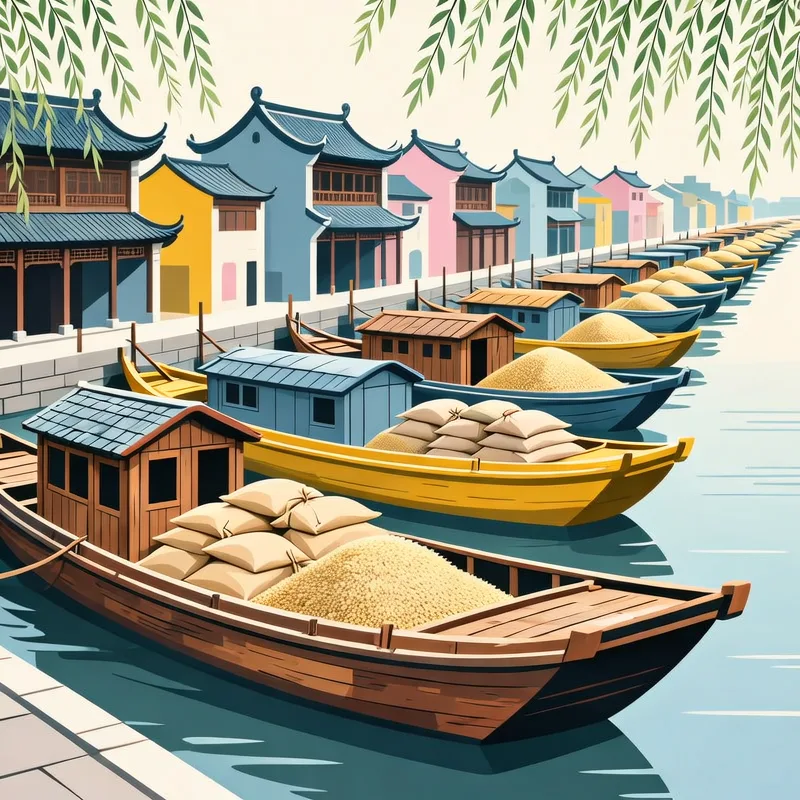
    A long line of flat-bottomed grain boats moored along a canal wharf
    Grain flotillas tied the Yangtze delta to the political capital. AI-generated illustration · SinoViz

    Southern Sections and Historic Cities

    The southern canal runs through the lowlands of Zhejiang and Jiangsu, where bridges, warehouses, and waterside houses still mark older commercial geography. Hangzhou is the southern terminus of the Sui-era system and a gateway to the Qiantang River. Suzhou’s canals were both transport routes and parts of the city’s garden landscape; its humpbacked stone bridges allowed boats to pass while pedestrians crossed. Wuxi and Zhenjiang sit at important junctions, while the Jiangnan section near the Yangtze has been widened and industrialised. UNESCO inscribed the Grand Canal on the World Heritage List in 2014, identifying thirty-one sections and twenty-seven components. The listed property includes canals, locks, bridges, and administrative sites.

    • Sui channels linked Luoyang with the Yangtze
    • Yuan engineers redirected the route toward Beijing
    • Tribute grain moved north in large boat flotillas
    • UNESCO listed thirty-one canal sections in 2014
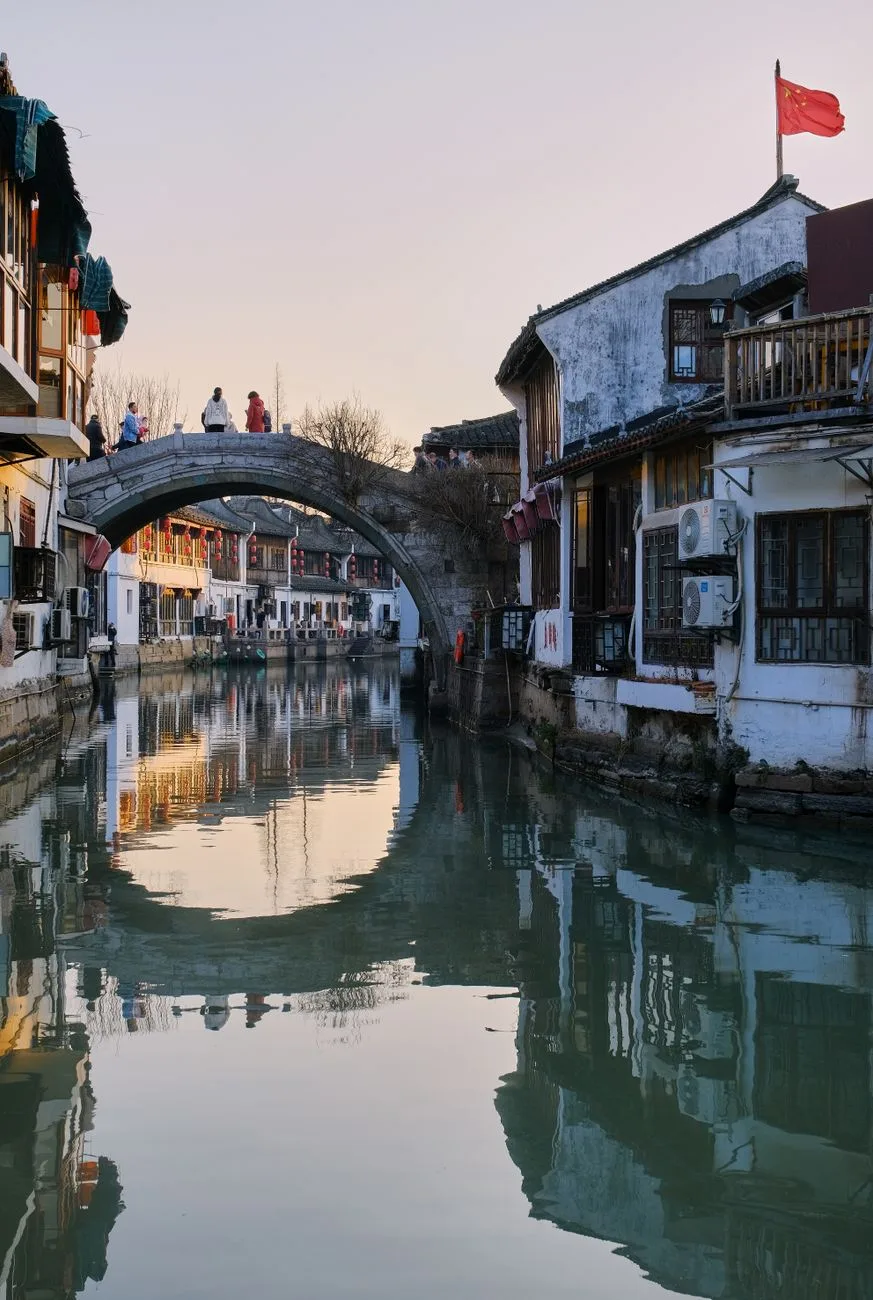
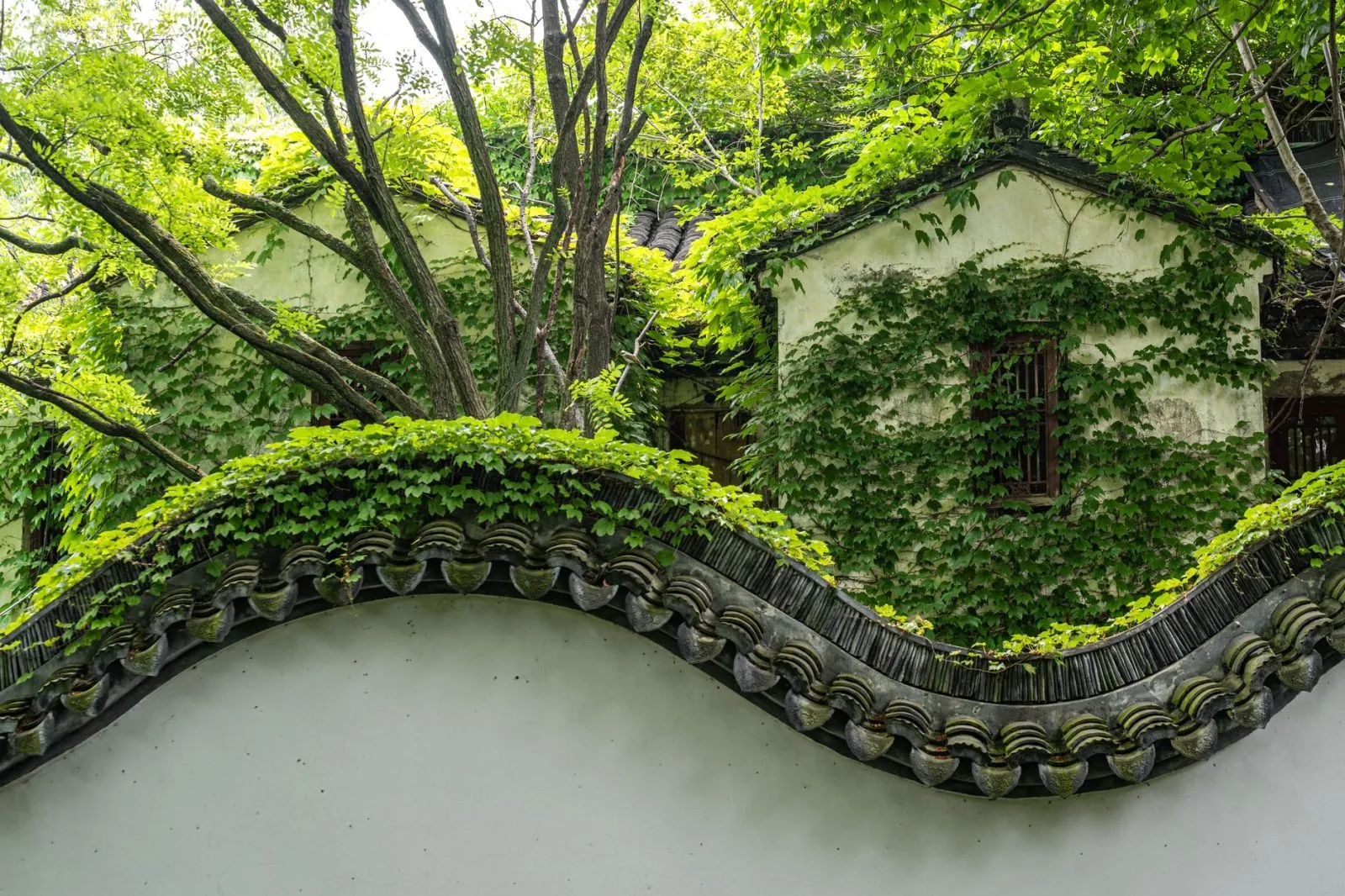
    Stone arch bridges and old waterside houses along a canal in southern China
    In Jiangnan, canal transport and city life developed together. Vind 🌙 | Pexels License (https://www.pexels.com/license/)

    Reading the Canal Today

    Much of the northern canal is no longer navigable end to end; railways and roads took over long-distance freight, and parts were buried or rerouted during the twentieth century. Southern sections remain busy with barges, and several cities operate passenger boats for residents and visitors. A useful route for a first visit is Hangzhou or Suzhou, where canal life is visible beside gardens and markets. Water levels, engineering works, and modern flood control change the scene, so boats and landing stages may shift. The canal’s historical importance lies not in scenic continuity alone but in the way it joined climates, crops, taxes, and cities over more than a thousand years.

    The Grand Canal was less a single road of water than a machine for moving grain, tax, and news.

    Sources & further reading

    1. The Grand Canal — UNESCO World Heritage Centre.
    2. Grand Canal — Encyclopaedia Britannica.
    3. Grand Canal of China — World History Encyclopedia.
    See it in place

    Follow this entry to the region where it belongs.

    Explore by Map

    Follow the thread

    Browse other entries that share its tags.

    Browse the tag
  • The Terracotta Army

    Chronicle

    The Terracotta Army

    An Emperor’s Buried Legions

    Thousands of clay soldiers were buried near Qin Shi Huang’s mausoleum to guard the emperor after death.

    Section
    Chronicle
    Region
    Shaanxi
    Era
    qin-han
    Tags
    Geography, History, Scenic Sites

    The Terracotta Army was made for the tomb of Qin Shi Huang, the first emperor of China, who died in 210 BCE. The figures were part of a larger necropolis near Xi’an, not an isolated pit of statues.

    The Tomb of the First Emperor

    Qin Shi Huang unified China in 221 BCE and began constructing his mausoleum near Mount Li soon after. The historian Sima Qian, writing about a century later, described a tomb filled with models of palaces, officials, and treasures, with mercury rivers and a roof painted as the heavens. Modern surveys have found a vast walled complex, a central burial mound, and more than six hundred associated pits. The main tomb chamber has not been excavated, partly because of technical and conservation concerns; readings of mercury vapour in the mound have been reported but debated. The army occupied side pits, where thousands of clay figures stood in formation to protect the emperor in the afterlife.

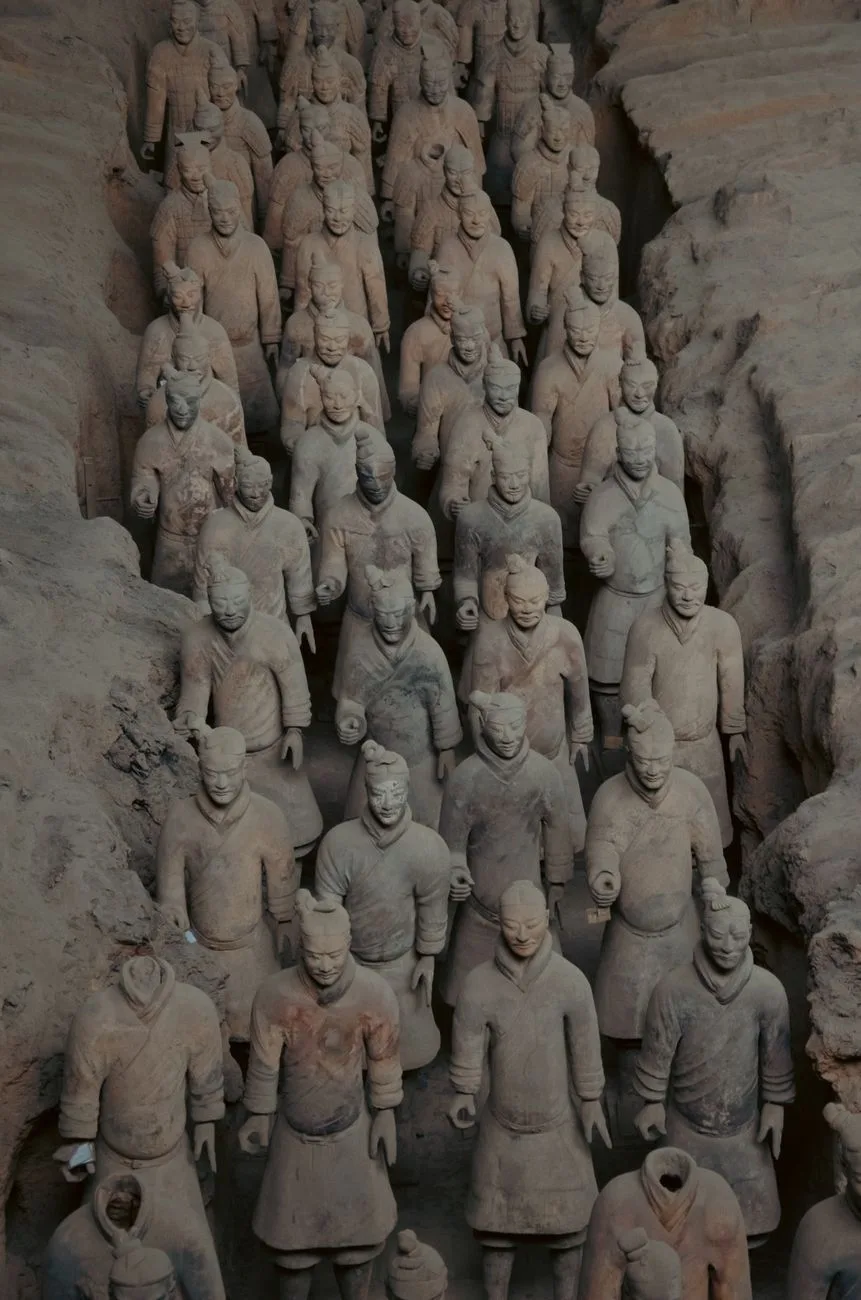
    A long burial pit containing rows of terracotta infantry figures in formation
    The figures stood in military formation in pits beside the imperial tomb. Jan Dvorak | Pexels License (https://www.pexels.com/license/)

    Discovery and Excavation

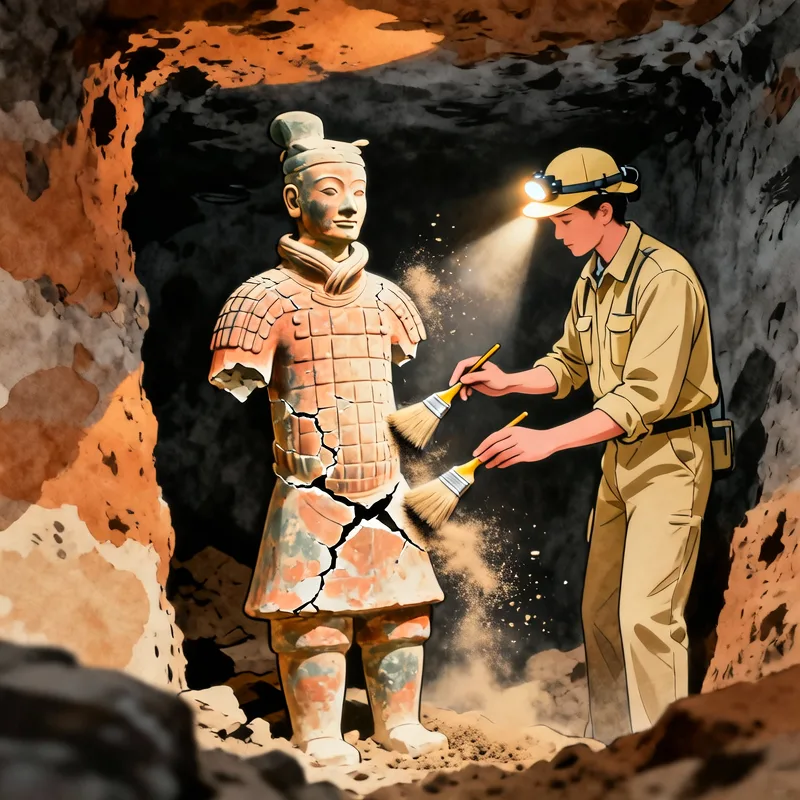
    Local farmers found fragments of clay figures in 1974 while digging a well near the village of Yangzhai. Archaeologists shortly uncovered Pit 1, a huge trench holding infantry and chariots, followed by Pits 2 and 3 with mixed troops, cavalry, and a command post. More than eight thousand figures have been counted, along with hundreds of horses and more than a hundred wooden chariots whose timber has decayed. The figures were once brightly painted with mineral pigments on a lacquer ground; exposure to air caused much of the paint to flake, and conservators now control humidity and treat surfaces quickly. Excavation continues in selected areas rather than across the entire necropolis.

    Archaeologists carefully brushing soil from a fragmented terracotta warrior in a burial pit
    Excavation is slow because paint and fragile organic material decay after exposure. AI-generated illustration · SinoViz

    Mass Production and Individuality

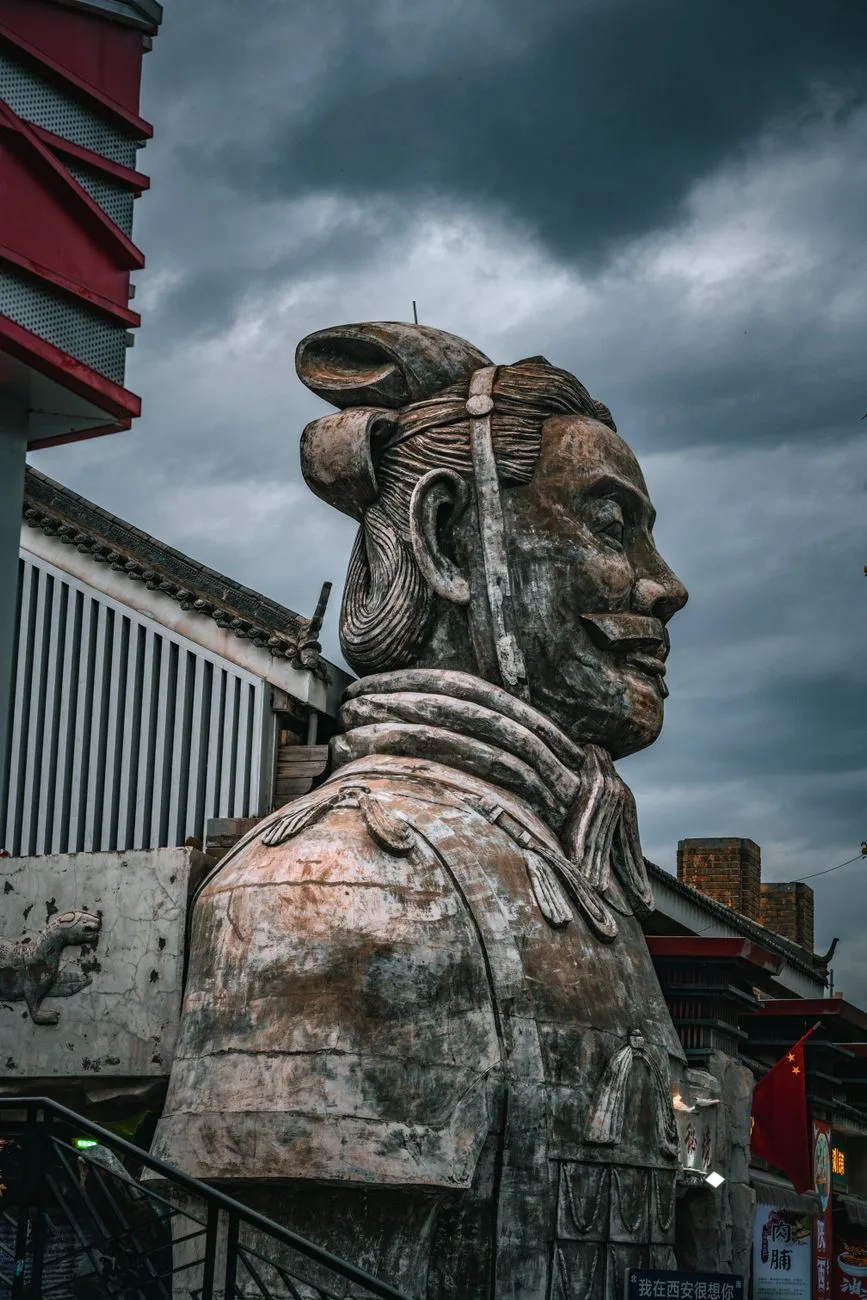
    The warriors were made in workshops using moulded parts, coils of clay, and hand-finished details. Heads, bodies, arms, and legs were produced in a limited number of types, then assembled and altered so that faces, hair, moustaches, and armour differ. Sculptors pressed or carved expressions into the clay before firing in kilns near the site. Height varies with rank: generals are taller than ordinary infantry, and some figures bear armour while others wear lighter dress. Tools found at the site carry names, suggesting organised teams of potters and artisans under state control. The result is neither wholesale repetition nor pure portraiture, but a system that could produce scale with controlled variation.

    • Infantry, archers, cavalry, chariots, and officers
    • Moulded components finished by hand
    • Original mineral pigments on lacquer-ground paint
    • Workshop names recorded on excavated tools
    Close view of a terracotta warrior’s face, hairstyle, and layered armour
    Standard parts were individualised in faces, hair, and armour details. Ruben VP | Pexels License (https://www.pexels.com/license/)

    Visiting the Site

    The museum lies about forty kilometres east of central Xi’an near Lintong. Three main pits are open to visitors, with viewing platforms along the excavated trenches; a separate display shows bronze chariots and horses recovered near the tomb. A circuit of the pits and museum halls takes roughly two to three hours, and an official guide or audio commentary helps explain the different ranks and formations. The site is busiest in the middle of the day, so arriving early is useful. Xi’an can be reached by high-speed rail from Beijing or Shanghai, and local buses, taxis, and tours connect the city to Lintong. Photography is allowed in many areas, but flash and tripods may be restricted.

    The army was made by workshops, but its faces were finished by hands that refused exact repetition.

    Sources & further reading

    1. Terracotta Army — UNESCO World Heritage Centre.
    2. Terracotta Army — Encyclopaedia Britannica.
    3. The First Emperor’s Terracotta Army — The British Museum.

    See it in place

    Follow this entry to the region where it belongs.

    Explore by Map

    Follow the thread

    Browse other entries that share its tags.

    Browse the tag
  • Suzhou Gardens

    Map Exploration

    Suzhou Gardens

    Walled Landscapes of Song, Ming, and Qing

    Suzhou’s classical gardens turn rocks, water, and borrowed views into sequences of rooms.

    Section
    Map Exploration
    Region
    Zhejiang
    Era
    Across eras
    Tags
    Customs, Geography, Scenic Sites

    The classical gardens of Suzhou are private landscapes created beside houses in the lower Yangtze city. Their walls conceal carefully staged views, with pavilions, ponds, and rocks arranged for walking rather than looking from one point.

    A City of Scholar-Gardens

    Suzhou grew wealthy through silk, grain, and canal trade, and its officials and merchants built gardens behind urban houses. The tradition began early, but the surviving masterpieces are mostly Ming and Qing. The Humble Administrator’s Garden was laid out around 1509 by the official Wang Xianchen; the Lingering Garden began in the Ming and was rebuilt in the Qing; the Master of the Nets Garden was renovated in the late eighteenth century. A garden was an extension of the household, used for receiving guests, drinking tea, writing poetry, and quiet walking. Its name often carried a literary allusion or a modest self-description, a convention that invites visitors to read the landscape as text.

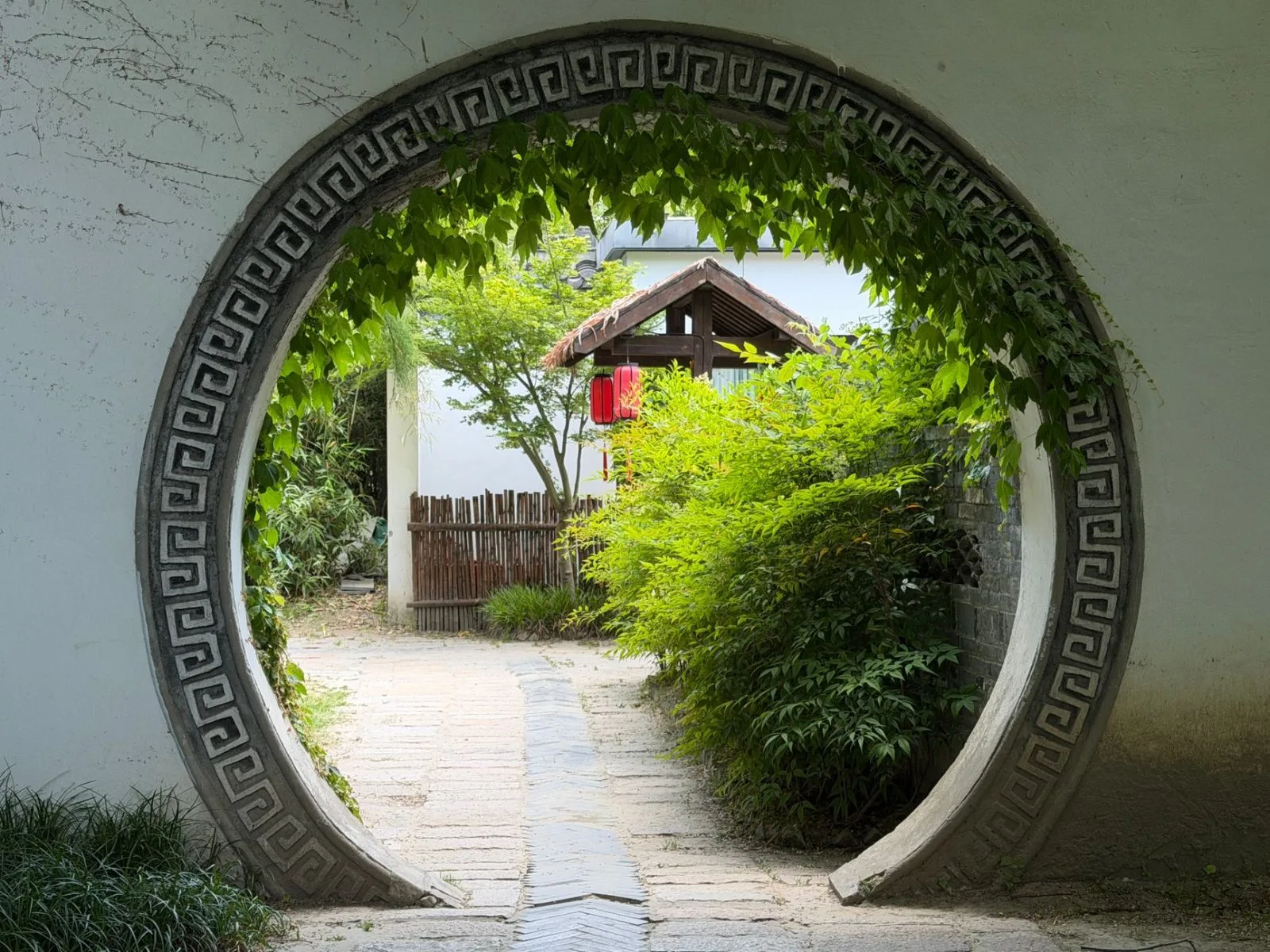
    A moon gate framing a pond, rockery, and pavilion in a Suzhou garden
    A moon gate frames one view while hiding the rest of the garden. Frank Lv | Pexels License (https://www.pexels.com/license/)

    Rocks, Water, and Borrowed Scenery

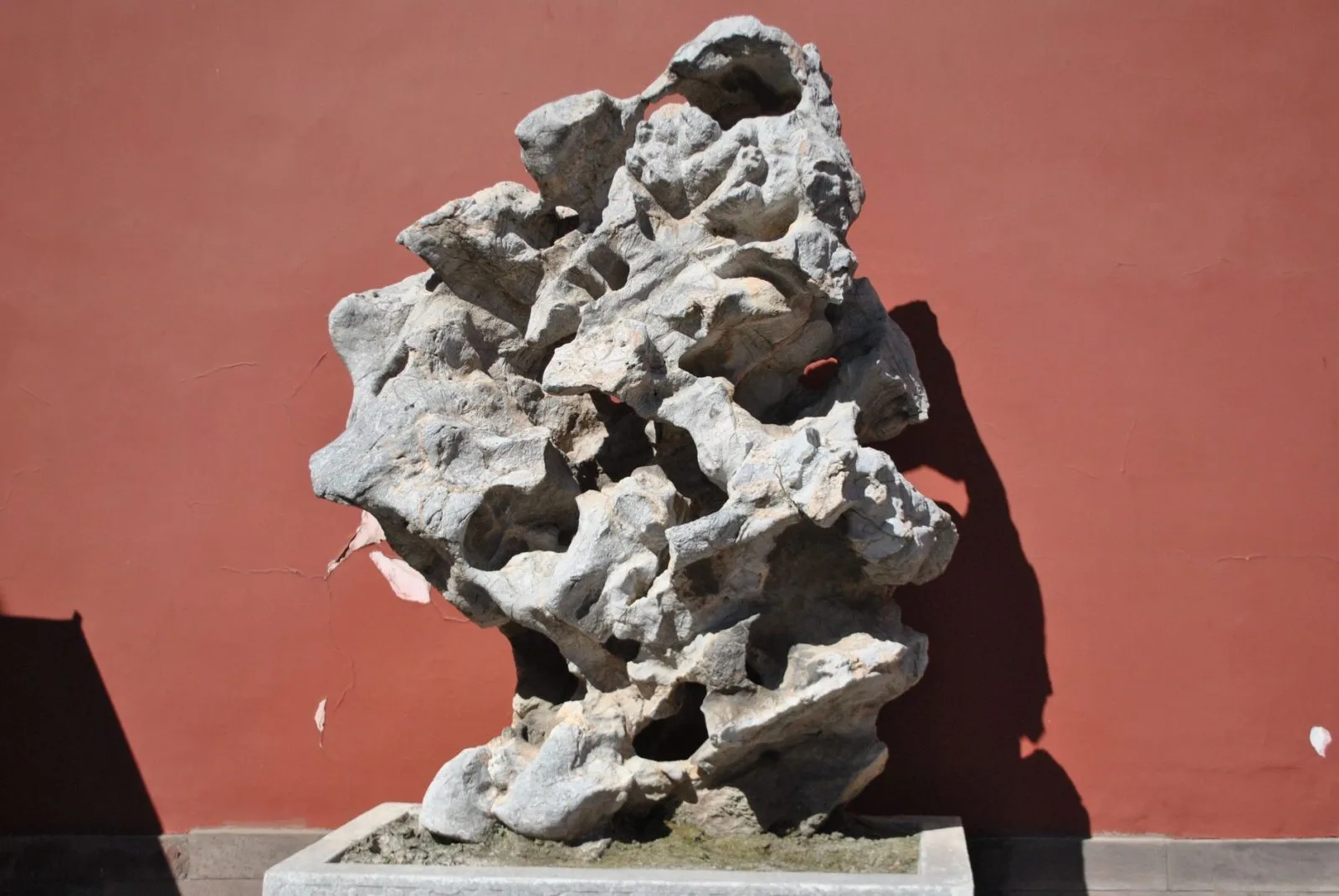
    Suzhou garden design works through layering. Taihu rocks from the lakes west of the city are prized for holes, ridges, and narrow waists; large stones are set as mountains that can be circled. Water occupies the centre of many gardens, with pavilions placed at edges or on islands so views change along a route. White walls act as paper for bamboo shadows and plant forms. The technique of ‘borrowed scenery’ frames a distant pagoda, tree, or hill beyond the garden wall, making the property feel larger. Covered corridors link halls and create repeated glimpses through lattice windows. Nothing is meant to be seen all at once: the garden unfolds as a sequence of framed moments.

    A perforated Taihu rock standing beside still water and a white garden wall
    Taihu stones were selected for openings and silhouettes that suggest mountains. Valeria Drozdova | Pexels License (https://www.pexels.com/license/)

    Four Gardens to Compare

    The Humble Administrator’s Garden is the largest of the classical group, with broad water, low islands, and the distant North Temple Pagoda borrowed into its views. The Master of the Nets Garden is compact, using changes in room size and courtyard density to surprise the visitor; its night performances are popular but timed entry is needed. The Lingering Garden is known for a sequence of entrance, rockery, and waterside halls that delays the main view. The Lion Grove Garden takes its name from rock forms said to resemble lions and invites close inspection of stone labyrinths. Together they show that a small urban plot could imitate mountains, rivers, and travel through careful design.

    • Humble Administrator’s Garden: broad water and borrowed pagoda view
    • Master of the Nets: compact rooms and staged transitions
    • Lingering Garden: rockery before the main pond
    • Lion Grove: dense Taihu stone labyrinth
    A covered walkway with lattice windows looking onto a narrow Suzhou garden court
    Covered corridors divide the garden into changing views. Qing Luo | Pexels License (https://www.pexels.com/license/)

    Visiting and Preservation

    UNESCO inscribed the Classical Gardens of Suzhou on the World Heritage List in 1997, with additions in 2000. Several gardens are small and receive steady crowds, so early morning is usually the best time to see water and rocks without blocking views. Tickets are sold per garden and some sites cap daily numbers or use timed slots; combining two contrasting gardens in one day is more useful than rushing through four. Suzhou is reached from Shanghai by high-speed rail in roughly half an hour, and the old garden district is best explored on foot or by taxi. Preservation involves constant work on timber, plaster, drainage, and plants, since living gardens need maintenance as well as conservation.

    A Suzhou garden is designed to be walked slowly, with each gate hiding the view beyond it.

    Sources & further reading

    1. Classical Gardens of Suzhou — UNESCO World Heritage Centre.
    2. Suzhou gardens — Encyclopaedia Britannica.
    3. Chinese garden — The Metropolitan Museum of Art.

    See it in place

    Follow this entry to the region where it belongs.

    Explore by Map

    Follow the thread

    Browse other entries that share its tags.

    Browse the tag
  • Sichuan Cuisine

    Life & Folklore

    Sichuan Cuisine

    Chilli Oil, Ferment, and the Numbing Pepper

    Sichuan cooking balances chilli heat, Sichuan pepper numbness, fermented bean paste, and rich broth.

    Section
    Life & Folklore
    Region
    Sichuan
    Era
    Across eras
    Tags
    Customs, Food, Geography

    Sichuan cuisine is known for bold seasoning, but its classic dishes are built on contrast: chilli with Sichuan pepper, hot oil with cool cucumber, or a clear broth beside a fiery one.

    A Basin Pantry and Early Flavours

    The Sichuan Basin has fertile fields, rivers, and a humid climate, but its early elite cooking was not defined by chilli. Chilli peppers reached China from the Americas in the sixteenth century and became a Sichuan staple later, especially among ordinary households. Before that, cooks used ginger, garlic, mustard, vinegar, and the distinctive Sichuan pepper, Zanthoxylum simulans, whose husks cause a tingling sensation rather than heat.Fermented bean pastes from the basin towns added depth. Pixian doubanjiang, a broad-bean and chilli paste fermented in Pixian near Chengdu, became a foundation of many red-braised and stir-fried dishes. The province’s food therefore combines older preservation methods with ingredients that arrived through global trade.

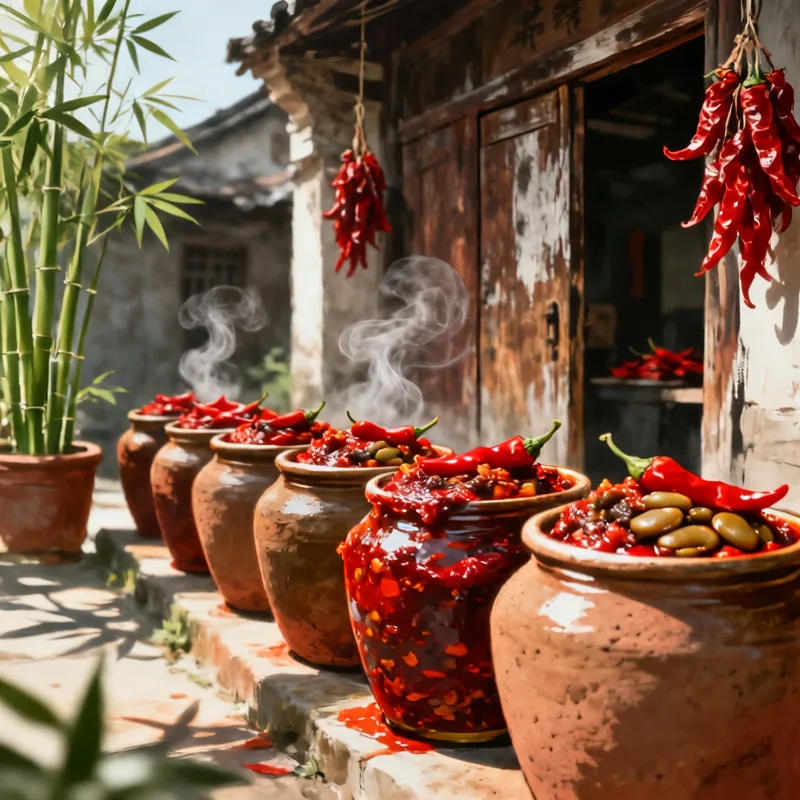
    Jars of red chilli and broad-bean paste fermenting outside a Sichuan workshop
    Fermented doubanjiang gives many Sichuan dishes their deep red base. AI-generated illustration · SinoViz

    The Grammar of Heat

    Sichuan cooks distinguish several kinds of chilli heat. Dried chillies are fried in oil until fragrant but not blackened; chilli oil is steeped and aged; chilli bean paste supplies fermented heat; and fresh peppers give a brighter bite. Sichuan peppercorns, often toasted and ground, produce the málà combination of numbness and spice. Official Sichuan cookbooks describe more than twenty recognised flavour profiles, from guaiwei, strange or complex, to yuxiang, fish-fragrant, which uses no fish. Mapo tofu, associated with Chengdu in the nineteenth century, combines soft tofu, minced meat, doubanjiang, chilli oil, and Sichuan pepper. Kung Pao chicken uses dried chillies, peanuts, and a sweet-sour soy sauce.

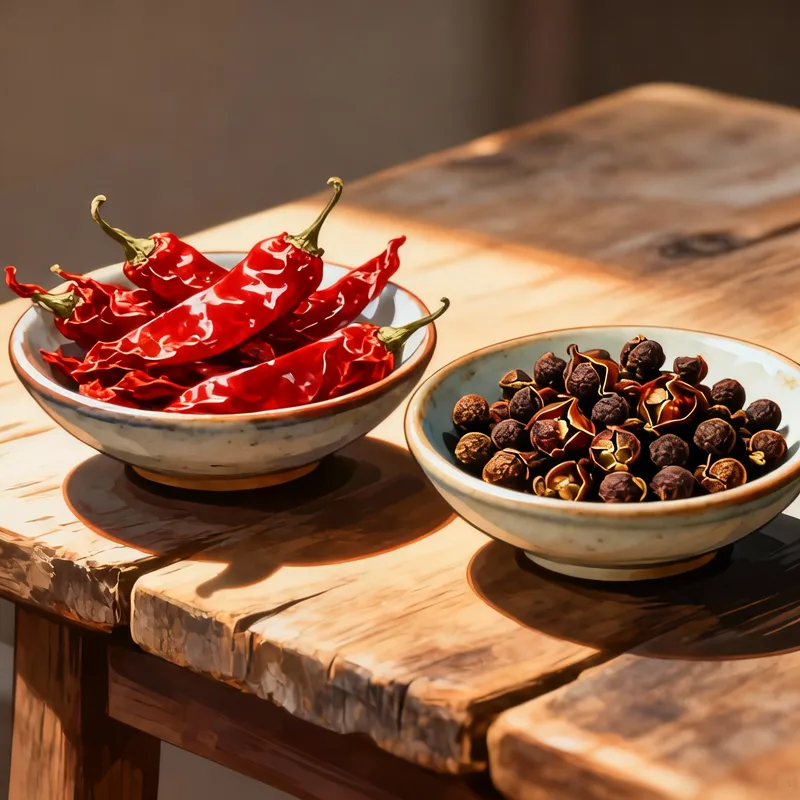
    Dried red chillies and Sichuan peppercorns in separate shallow bowls
    Chilli heat and peppercorn numbness are distinct, and cooks balance them separately. AI-generated illustration · SinoViz

    Hotpot and the Two-Flame Bowl

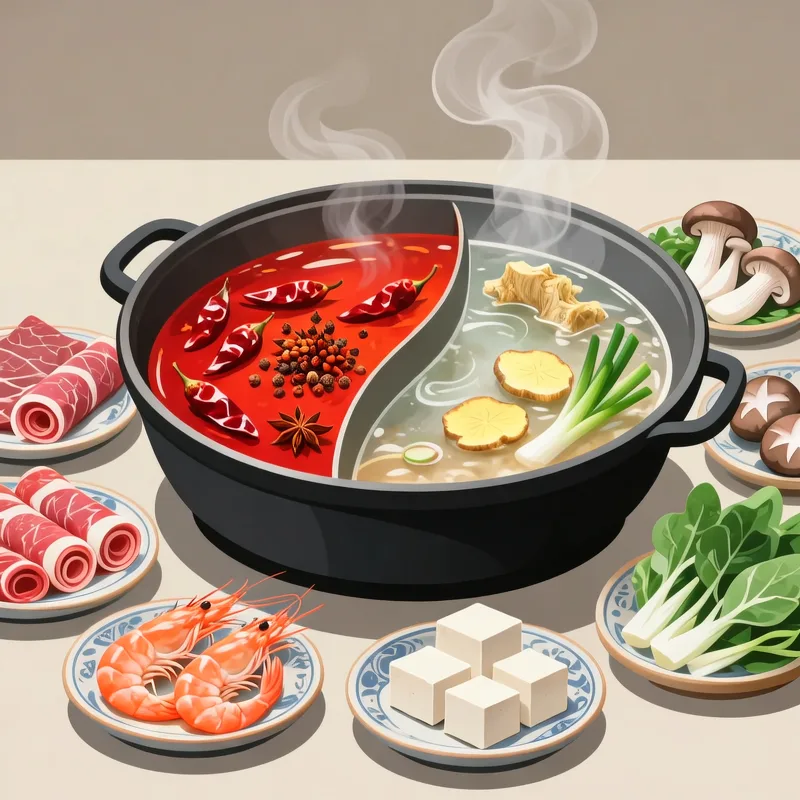
    Chengdu hotpot is a social meal built around a divided pot. One side may hold a red broth of chilli oil, doubanjiang, beef fat, and spices; the other a clear chicken or mushroom stock. Diners cook thinly sliced beef, tripe, duck blood, fish balls, vegetables, and mushrooms, then dip them in sesame oil, garlic, and chopped herbs. The sesame dip cools the palate and coats the mouth against spice. Chongqing hotpot is often heavier and more direct, traditionally using beef tallow; Chengdu versions are commonly more aromatic and varied. Yibin and other southern cities add their own chilli blends. Restaurants label spice levels, but heat can still be adjusted only by asking.

    • Pixian doubanjiang as a fermented chilli-bean base
    • Málà: chilli heat plus peppercorn numbness
    • Two-flavour hotpot with red and clear broth
    • Sesame oil dip to moderate the heat
    A divided hotpot with red chilli broth and clear broth surrounded by ingredient plates
    A two-flavour pot lets a table divide heat from clarity. AI-generated illustration · SinoViz

    Beyond the Fiery Stereotype

    Not every Sichuan dish is hot. Sichuan’s most ceremonial dish, Gongbao chicken and the banquet classic ‘sweet and sour’ aside, the cuisine includes clear broths, steamed dishes, and delicate pastry. Zhangcha duck is smoked with tea leaves and camphor before steaming, while boiled pork slices are served in a clear broth with mustard greens. Chengdu’s teahouses and dish shops serve small noodles, sweet-water noodles, and dumplings. The province also includes Tibetan and Yi food traditions in its western highlands, where barley, yak products, and different seasonings dominate. Reading Sichuan cuisine only as heat misses its central achievement: layering aromas, textures, and ferments so that strong flavours remain controlled.

    Sichuan cooking is not simply hot; it is a carefully graded argument between chilli, pepper, oil, and ferment.

    Sources & further reading

    1. Sichuan cuisine — Encyclopaedia Britannica.
    2. Chinese Cuisine — Encyclopaedia Britannica.
    3. Sichuan Food — China Highlights.

    See it in place

    Follow this entry to the region where it belongs.

    Explore by Map

    Follow the thread

    Browse other entries that share its tags.

    Browse the tag
  • Xiamen

    Destination · Fujian

    Xiamen

    Island streets and Fujian coast

    Xiamen is a coastal city with a mild climate, colonial-era Gulangyu island and easy access to Fujian’s tulou and tea regions. It blends seaside leisure with maritime history.

    Best season
    March–May, October–December
    Suggested stay
    2–3 days
    Region
    Fujian

    What to see first

    • Gulangyu island architecture and lanes
    • Nanputuo Temple
    • Xiamen University area and coastal walk
    • Day trip to Fujian tulou

    Why it matters

    Xiamen sits within Fujian’s maritime culture, shaped by overseas trade, migration and Minnan traditions. Its coast connects local life to the wider sea routes.

    Getting there

    Xiamen has an airport, high-speed rail and ferries to Gulangyu. Book Gulangyu ferry tickets ahead on busy days.

    Good to know

    Gulangyu limits vehicles; wear comfortable shoes. Summer is hot and typhoon season can affect ferries.

    Read the region

    Understand the landscape and culture behind this destination.

    Explore Fujian
  • Lhasa

    Destination · Xizang

    Lhasa

    The Potala and the high plateau

    Lhasa is the spiritual and historical centre of Tibet. The Potala Palace, Jokhang Temple and Barkhor circuit place religious life at the heart of the city.

    Best season
    May–September
    Suggested stay
    4–6 days
    Region
    Xizang

    What to see first

    • Potala Palace
    • Jokhang Temple and Barkhor Street
    • Sera Monastery debates
    • Drepung Monastery and nearby mountain views

    Why it matters

    Lhasa has been a centre of Tibetan Buddhism and governance for centuries. Its architecture and pilgrimage routes make belief visible in urban space.

    Getting there

    Fly or take the Qinghai-Tibet Railway to Lhasa. Allow time for altitude acclimatisation before strenuous activity.

    Good to know

    Follow temple etiquette, dress modestly, and ask before photographing people. Carry permits and ID as required.

    Read the region

    Understand the landscape and culture behind this destination.

    Explore Xizang
  • Kashgar

    Destination · Xinjiang

    Kashgar

    Old city and the western oasis

    Kashgar sits near the western edge of the Taklamakan, where Silk Road routes converged. Its old city, bazaars and mosques reflect centuries of oasis trade and craft.

    Best season
    May–October
    Suggested stay
    2–3 days
    Region
    Xinjiang

    What to see first

    • Kashgar Old City lanes and craft workshops
    • Id Kah Mosque area
    • Sunday bazaar and livestock market areas
    • Apak Khoja Mausoleum

    Why it matters

    Kashgar was a key node on Silk Road caravans. Its architecture, food and music preserve the character of an oasis city shaped by movement and exchange.

    Getting there

    Kashgar has an airport and rail links through Xinjiang. Taxis and walking are practical in the old city.

    Good to know

    Dress respectfully near religious sites. Ask before photographing people, especially in markets and mosques.

    Read the region

    Understand the landscape and culture behind this destination.

    Explore Xinjiang
  • Suzhou

    Destination · Zhejiang

    Suzhou

    Gardens, canals and silk

    Suzhou is known for classical gardens, canals and silk craftsmanship. Its old city offers a quieter Jiangnan counterpoint to nearby Shanghai.

    Best season
    March–May, September–November
    Suggested stay
    2 days
    Region
    Zhejiang

    What to see first

    • Humble Administrator’s Garden
    • Lingering Garden or Master of the Nets Garden
    • Pingjiang Road canal walk
    • Suzhou Silk Museum

    Why it matters

    Suzhou gardens translate scholarship, poetry and landscape painting into built space. They show how Jiangnan elites designed nature at an intimate scale.

    Getting there

    Suzhou is 25–30 minutes from Shanghai by high-speed rail. Metro and walking cover most old-city sights.

    Good to know

    Gardens are busiest on weekends; go early. Combine one major garden with canal walks rather than rushing through several.

    Read the region

    Understand the landscape and culture behind this destination.

    Explore Zhejiang
  • Chengdu

    Destination · Sichuan

    Chengdu

    Pandas, teahouses and Sichuan flavour

    Chengdu combines a relaxed teahouse culture with bold Sichuan food and nearby mountain heritage. It is a gateway to panda reserves, Buddhist sites and western Sichuan.

    Best season
    March–June, September–November
    Suggested stay
    3 days
    Region
    Sichuan

    What to see first

    • Chengdu Research Base of Giant Panda Breeding
    • People’s Park teahouses
    • Wuhou Shrine and Jinli
    • Day trip to Dujiangyan or Leshan

    Why it matters

    Chengdu has been a regional capital since ancient Shu. Its irrigation systems, temple culture and cuisine show how the Sichuan Basin sustained a distinct civilisation.

    Getting there

    Chengdu has two major airports and high-speed rail links across China. The metro reaches most city sights.

    Good to know

    Try mild dishes before diving into málà heat. Book panda base tickets early and arrive at opening time.

    Read the region

    Understand the landscape and culture behind this destination.

    Explore Sichuan
  • Guilin & Yangshuo

    Destination · Guangxi

    Guilin

    Karst peaks and the Li River

    Guilin’s limestone peaks and river scenery are among China’s most recognisable landscapes. The Li River journey to Yangshuo reveals karst forms that have inspired painters for centuries.

    Best season
    April–October
    Suggested stay
    3–4 days
    Region
    Guangxi

    What to see first

    • Li River cruise or bamboo raft sections
    • Yangshuo countryside cycling
    • Reed Flute Cave
    • Longji rice terraces as a side trip

    Why it matters

    The Guilin karst is both geological and cultural. Fishermen, cormorants, villages and river trade have lived inside a landscape often treated as pure scenery.

    Getting there

    Guilin has an airport and rail connections; Yangshuo is reached by road or river. Bikes and e-bikes are useful in the countryside.

    Good to know

    River levels and weather affect cruises. Bring rain protection in summer and avoid peak holiday boats if possible.

    Read the region

    Understand the landscape and culture behind this destination.

    Explore Guangxi