Жизнь и фольклор
Изделия из серебра Мяо
Ornament, Memory, and Festival Dress
Miao silver ornaments carry family history and local identity in festival dress across southwest China.
- Раздел
- Жизнь и фольклор
- Область
- Юньнань
- Эпоха
- На протяжении эпох
- Теги
- Customs, Ethnic, Scenic Sites
Miao silverwork is a family of adornments—headdresses, collars, earrings, and bracelets—made by Miao communities in Guizhou, Yunnan, and neighbouring regions. The pieces are worn most visibly at festivals and weddings.
A Distributed Craft Tradition
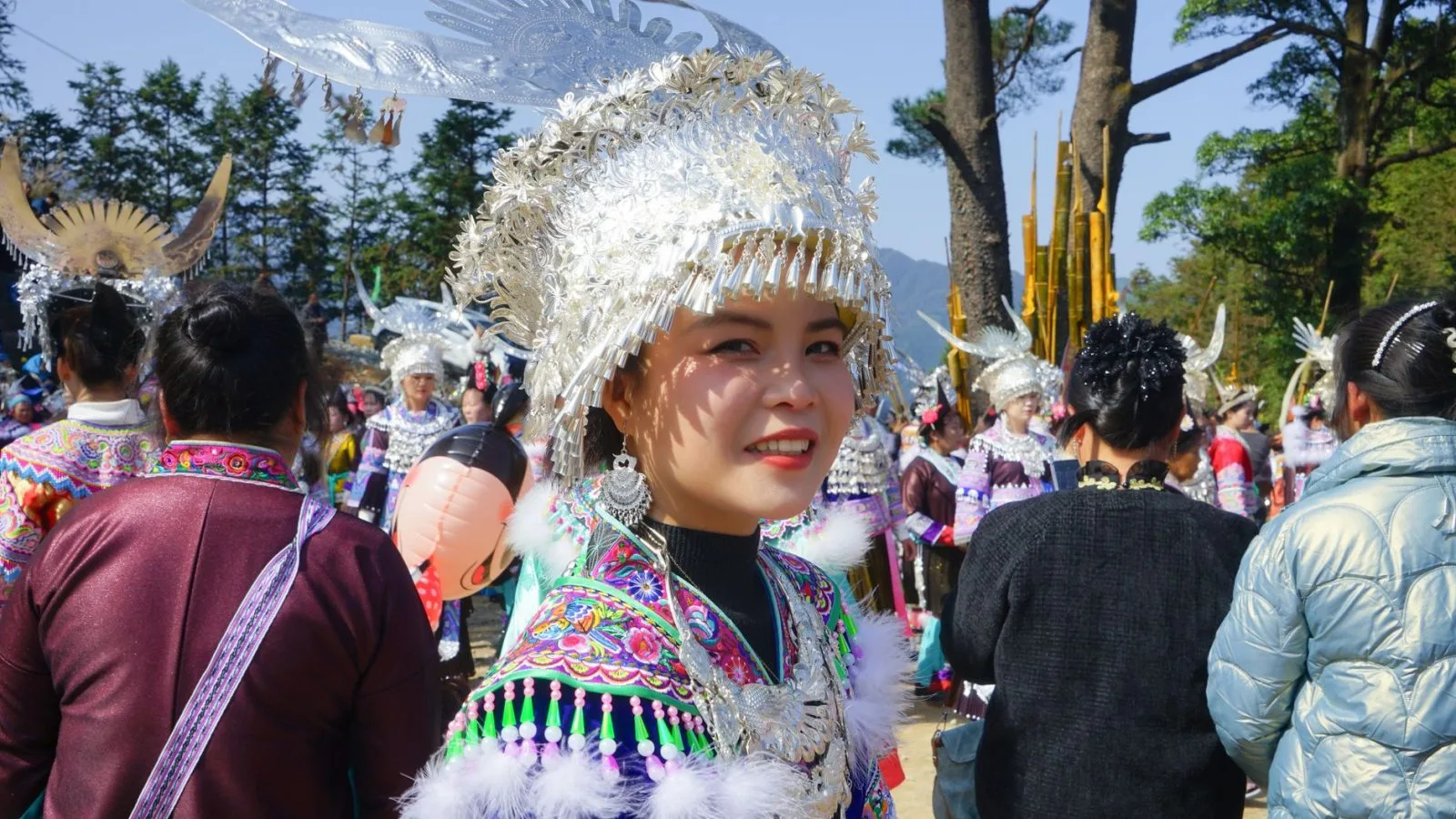
Miao communities live across Guizhou, Yunnan, Guangxi, Sichuan, and Southeast Asia, and silverwork varies by locality. In Yunnan, Miao villages around Wenshan and Honghe maintain styles that differ from the better-known Guizhou counties of Xijiang and Kaili. Ornaments are made by specialised silversmiths who work in small workshops, often serving several villages. Designs are learned through apprenticeship rather than written patterns: a young smith repeats forms copied from older pieces and festival dress. Motifs may draw on local birds, flowers, insects, and coins, though their meanings are not fixed. Families accumulate ornaments over generations, and a daughter’s festival headdress may represent years of saving.
Sheet, Wire, and Repoussé
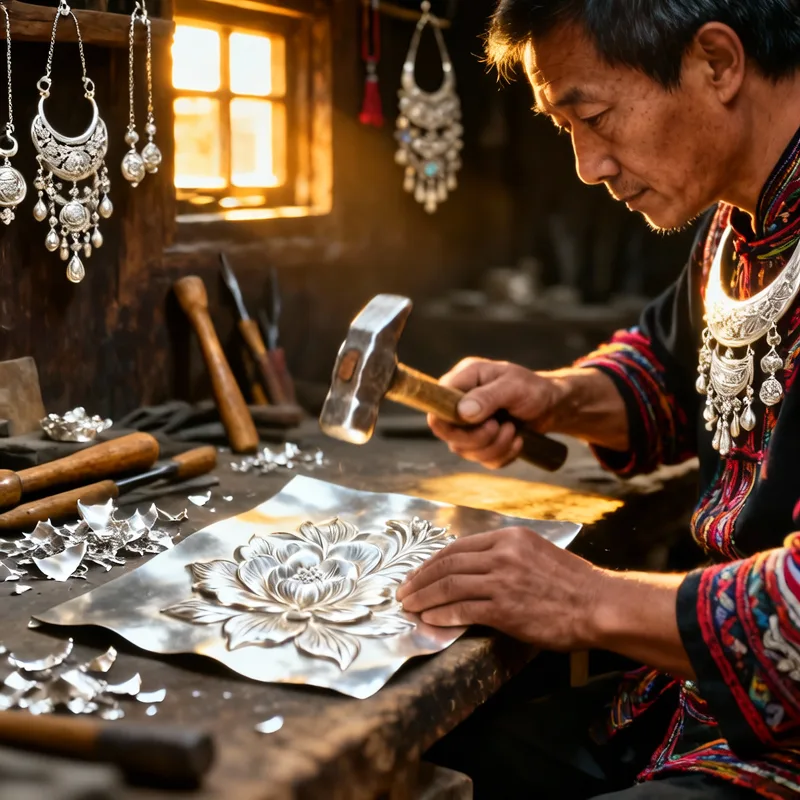
Much Miao silverwork begins with sheet silver and wire. The smith hammers ingots into thin sheets, cuts strips, and raises patterns from the reverse with repoussé, a technique of punching and chasing to form relief. Horsehair-thin wires are twisted and soldered into filigree, then built into openwork wings, horns, and floral sprays. A large headdress may combine a hammered band, dangling chains, repoussé plaques, and rows of tiny bells that move when the wearer turns. Silver is valued for its colour, workability, and traditional association with protection and prosperity. Many ornaments are hollow to reduce weight, since a full ceremonial headdress can be heavy enough to limit long wear.
Festival Wear and Social Meaning
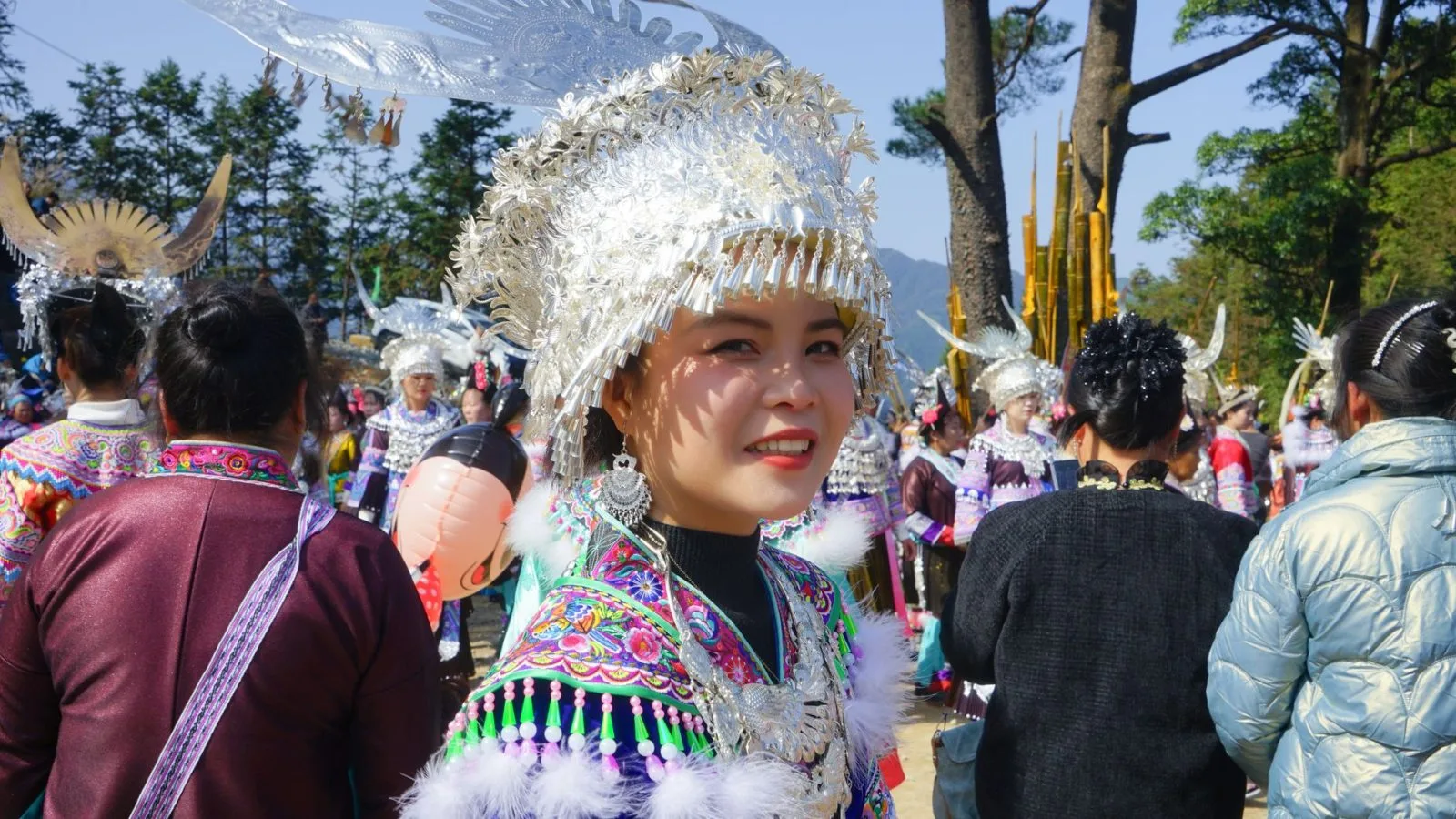
Silver ornaments are read as part of an entire costume, not as isolated jewellery. A Miao woman’s festival dress may include a pleated skirt, embroidered jacket, woven belt, and a silver collar shaped like a crescent or a pair of wings. In some communities, the number and form of earrings or neck rings indicate village affiliation or marital status. During the Lunar New Year, harvest celebrations, and the Miao New Year in some areas, women and girls wear family sets while groups sing, dance, and process between villages. The ornaments catch light during movement, making dress a visual part of the performance. Men may wear silver buttons, chains, or small pendants with less ceremonial weight.
- Repoussé plaques raised from thin silver sheet
- Twisted wire and openwork filigree
- Headdresses with horns, chains, and bells
- Costumes worn for New Year and wedding rituals
Markets, Tourism, and Continuity
Silverwork circulates through village workshops, regional markets, and tourism. Visitors to Miao villages in Yunnan and Guizhou can watch smiths shaping small pieces, though the most important heirlooms are usually not for sale. Reproductions sold as souvenirs range from careful miniatures to inexpensive plated metal, so asking whether a piece is solid silver matters. Museums and cultural centres document older headdresses and collars, but the living context remains local dress. Some communities have revived festival costumes and taught silversmithing to younger people, while migration and wage work change who has time to make and wear them. The craft’s future depends less on novelty than on continued occasions to use it.
A Miao headdress is worn jewellery and a portable archive of family work at the same time.
Источники и дополнительная литература
- Miao people — Энциклопедия Британника.
- Chinese silver jewellery — Victoria and Albert Museum.
- Miao ethnic culture — China Highlights.
Посмотрите, как это выглядит на месте.
Перейдите по этой ссылке в регион, к которому она относится.
Исследуйте с помощью карты