Leven & Folklore
Chinese Paper Cutting
Red paper, folded and cut
A pair of scissors and a sheet of red paper can carry a whole vocabulary of wishes.
- Sectie
- Leven & Folklore
- Regio
- Shaanxi
- Tijdperk
- Door de eeuwen heen
- Tags
- Customs, Ethnic
Chinese paper cutting, or jianzhi, turns a flat sheet into a pattern of figures, flowers, and characters. Practised for centuries in rural households, it still marks weddings and New Year, and Shaanxi’s bold window designs are among its most recognisable regional forms.
Origins and Technique
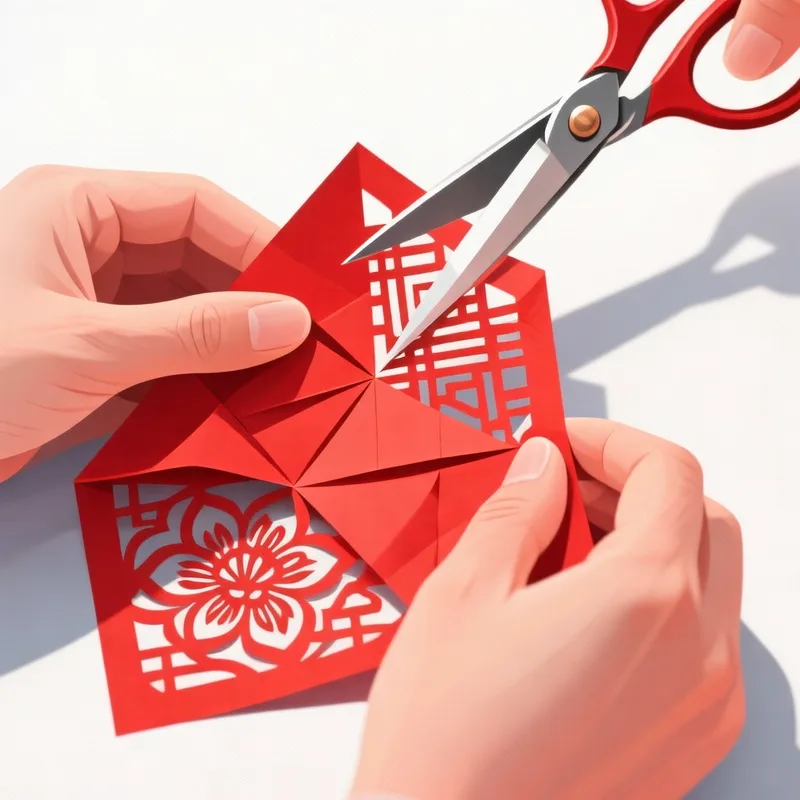
Paper reached China in the Eastern Han period, and the first cuts followed once the material was cheap enough to experiment with. Early examples were used as offerings and as templates for embroidery; a surviving cut-paper find from the sixth century shows that the technique was established by then. Two methods developed. Scissors cut a folded sheet, creating a mirror-symmetric design with a single sequence of snips. A knife held upright cuts a stack of paper against a wax board, a method suited to finer lines and repeated motifs. Artists draw no outline for many traditional patterns; they cut directly, keeping the connecting threads that stop the design falling apart. The finished piece is light, cheap, and easy to paste on a window or door.
A Language of Motifs
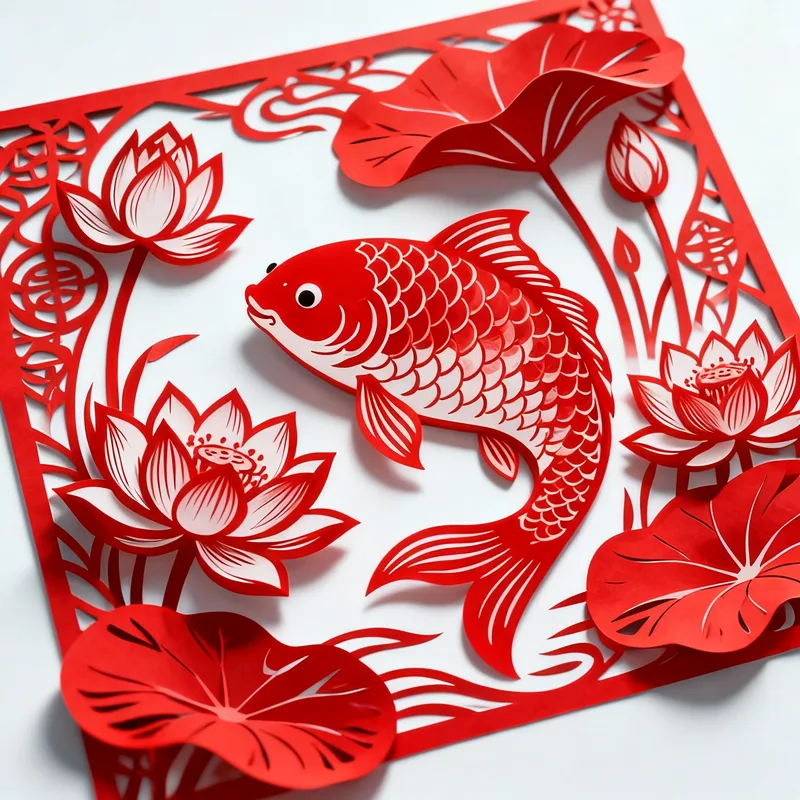
The images are a system of visual puns. A fish means surplus, because the word for fish sounds like the word for abundance; lotus suggests purity. A pomegranate stands for many children, a bat for good fortune, and a peach for long life. The character fu, meaning good fortune, appears alone or inside a circular design, while shuangxi, double happiness, belongs to weddings. Zodiac animals, opera figures, and scenes of children at play all circulate as patterns. Colour matters as much as shape: red is the default for celebration, while white paper cuts are rarer and tied to older ritual uses. In a Shaanxi village window, the arrangement of these motifs tells a visitor what the household is hoping for in the coming year.
Shaanxi Windows
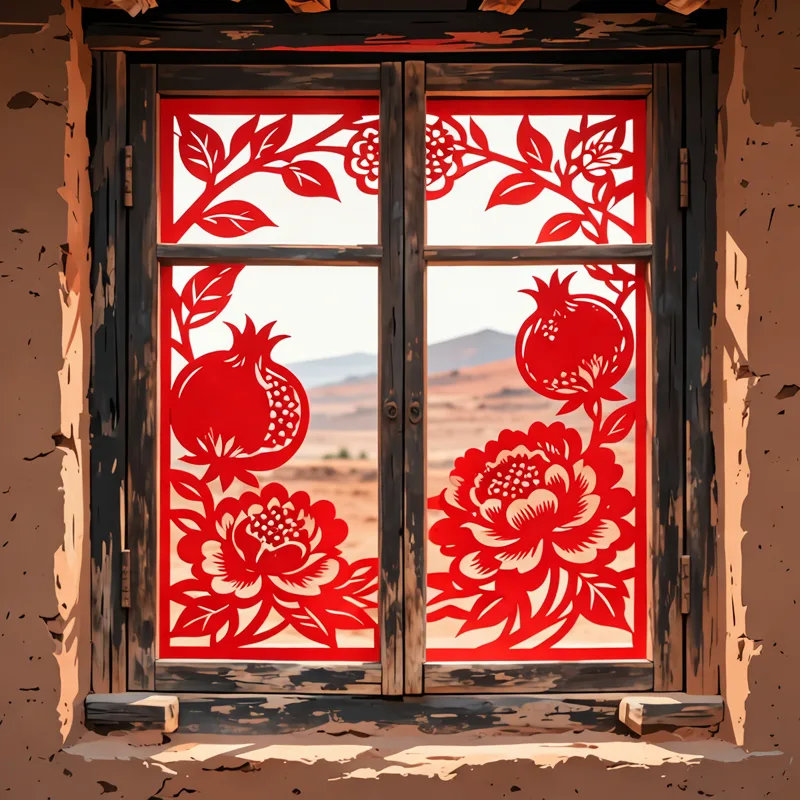
Paper cutting in Shaanxi is associated with rural life on the Loess Plateau, especially around Yan’an. Windows there were once small and deeply set, so designs favoured bold silhouettes and broad, connected shapes that could be read from across a room. Local artists talk of cutting with the heart rather than measuring with a ruler, and compositions often show figures, animals, and plants together in a single dense frame. Window grilles, or chuanghua, are pasted at New Year and replaced when they fade. Wedding cuts carry double happiness characters and images of fertility; birthday cuts use peaches and cranes. Women were the main practitioners in many villages, passing patterns from mother to daughter, and village fairs still sell sheets cut in the old local style.
Recognition and Travel
Chinese paper-cut was inscribed on UNESCO’s Representative List of the Intangible Cultural Heritage of Humanity in 2009, a recognition that named both the craft and the communities that sustain it. The listing does not freeze the art. Contemporary artists cut portraits, cityscapes, and political images with the same tools, and paper cuts appear in graphic design and animation. For a visitor, the appeal is that the work is easy to find and easy to try. Museum shops sell small sheets, market stalls sell single motifs, and workshops in Xi’an and rural Shaanxi teach the basic fold-and-cut method in an hour. Bring a sharp pair of scissors and practice on cheap red paper before attempting a detailed pattern. A finished cut pasted on glass changes with the light.
The pattern holds together because the cutter leaves just enough paper between the lines.
Sources & further reading
- Chinese paper-cut — UNESCO Intangible Cultural Heritage.
- Chinese Paper Cutting — China Highlights.
- Paper cutting — Encyclopaedia Britannica.