Category: Guida di viaggio

  • Booking Trains with 12306

    Guida di viaggio

    Booking Trains with 12306

    China Railway’s official ticket channel

    Book a real-name rail ticket on 12306, the channel operated by China Railway.

    Sezione
    Guida di viaggio
    Regione
    Pechino
    Era
    modern-china
    Etichette
    Trasporto

    12306 is the official website and app of China Railway’s customer service system. Foreign passport holders can use its English interface, provided their identity has been verified before they travel.

    Set up your account first

    Register on 12306.cn or in the Railway 12306 app and switch the app to English if needed. Choose passport as the document type and enter the name, nationality, number and expiry date exactly as printed; small mismatches cause gate problems later. Use an email address you can access and an international mobile number, which is accepted. Identity verification may be automatic, or it may require uploading a photograph of the passport information page for manual review. Register days, not hours, before your intended purchase date, since approval can take time.
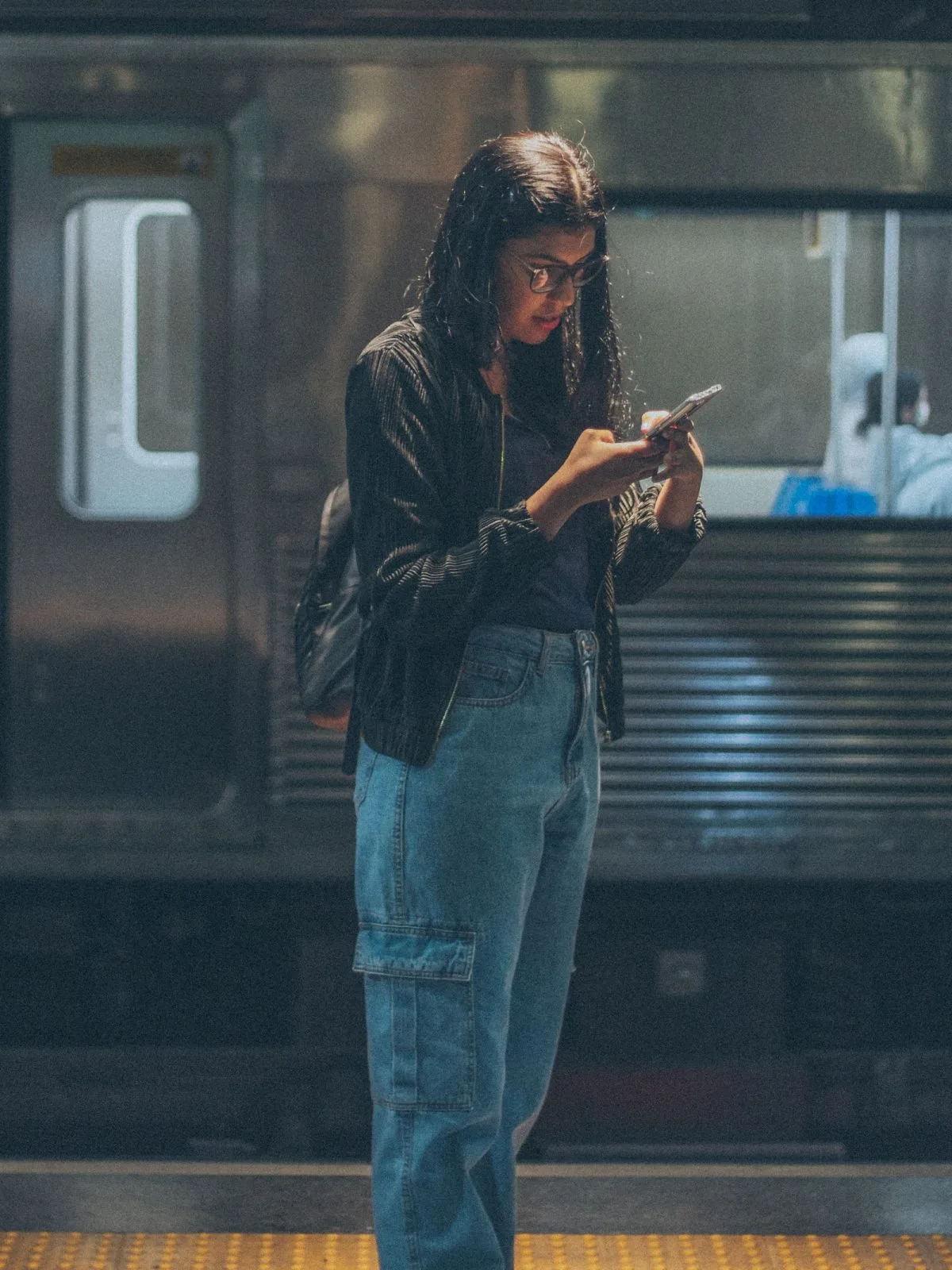
    A traveller using a smartphone at a railway station
    Set up and verify your account before the day tickets are released. Anderson Santos | Pexels License (https://www.pexels.com/license/)

    Search, seat and payment

    Ordinary tickets go on sale 15 days before departure and remain available until about 30 minutes before the train leaves. The exact release time is set by the departure station and appears in the app; peak routes such as Beijing–Shanghai sell quickly at holiday periods. Search by the precise station, since a city may have several: Beijing South, Beijing West and Beijing Chaoyang are different origins. Choose second class, first class or a sleeper where offered, then pay within the order timer using a Chinese or foreign bank card, UnionPay or a linked mobile wallet.

    At the station

    Rail travel in China uses e-tickets: there is no paper ticket to collect. Carry the same passport used at booking and scan it at the gate or show it at the staffed lane if the reader fails. Passport holders cannot use the self-service machines that read foreign permanent residence cards, so allow time for a queue at staffed counters if you need assistance. Paper reimbursement vouchers were generally discontinued for journeys after 1 October 2025. Arrive early at large terminals such as Beijing South: security screening, platform distances and crowded concourses can take more time than expected.
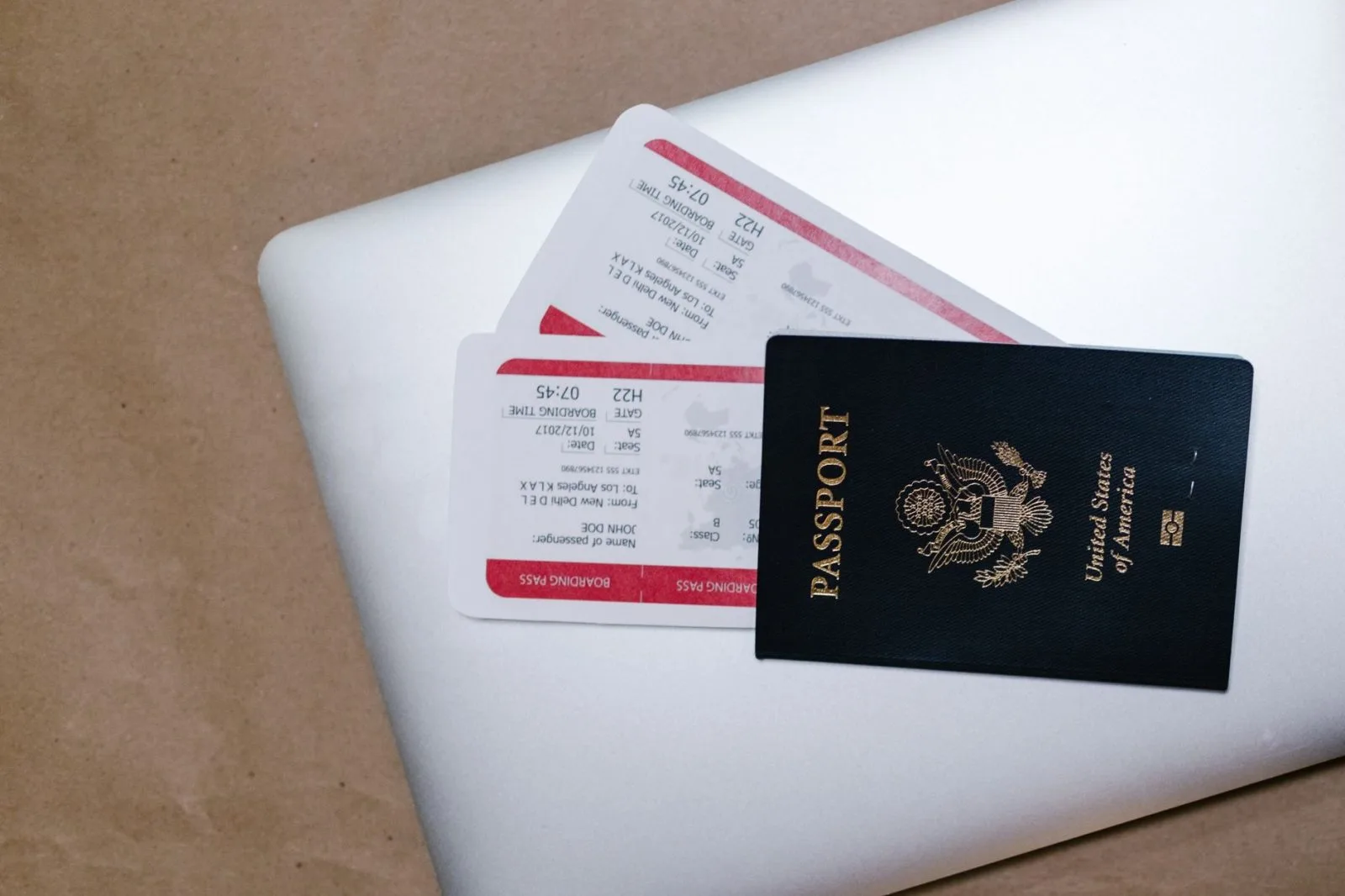
    Passengers scanning travel documents at a high-speed rail station gate
    Your passport is the ticket; use the staffed lane if the gate reader fails. RDNE Stock project | Pexels License (https://www.pexels.com/license/)

    Changes, refunds and backups

    Tickets can be changed or refunded through 12306 or at a station window, but fees depend on how close you are to departure and on the new itinerary. Sales and changes normally run from 05:00 to 01:00 Beijing time, with a shorter window on Tuesdays; refunds and timetable enquiries are available around the clock. If a foreign card is declined, an alternative is an authorised platform or a station counter, where cash in renminbi may also be accepted. Keep passport, booking confirmation and train number together, and check the platform display rather than relying only on the app.
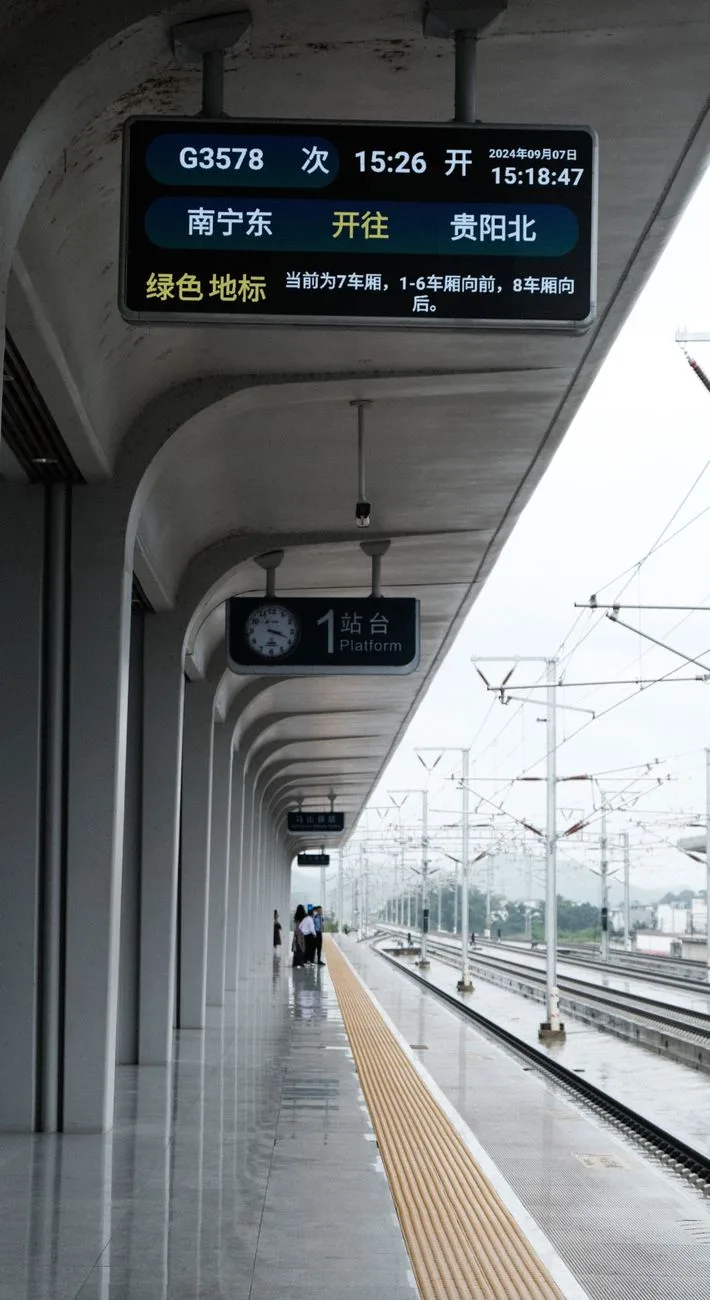
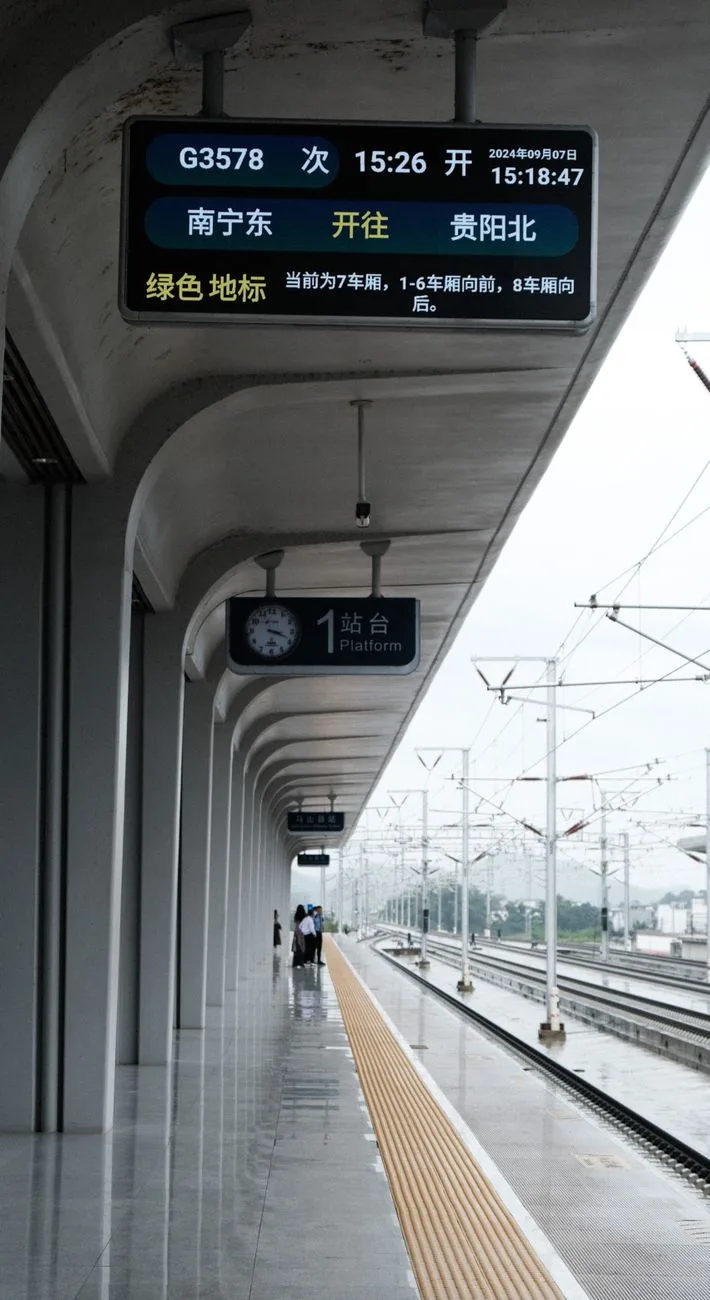
    A departure board listing high-speed trains in a Chinese railway station
    Check platform displays on the day; gate information can change close to departure. 航皓 陈 | Pexels License (https://www.pexels.com/license/)
    On Chinese rail, the passport is the ticket: book with the document you will carry.

    Fonti e ulteriori letture

    1. Purchase ticket on 12306 China Railway — MTR High Speed Rail.
    2. How to buy train tickets — Shanghai Municipal Government.
    3. Essential Tips for Buying Train Tickets in China — Beijing Municipal Government.

    Guardalo al suo posto

    Segui questa voce per raggiungere la regione di appartenenza.

    Esplora tramite mappa
    Segui il filo

    Esplora altre voci che condividono i suoi tag.

    Esplora il tag
  • Ride-Hailing

    Guida di viaggio

    Ride-Hailing

    Booking a car in Beijing

    A ride-hailing app can be the easiest way across Beijing, if you set it up before you leave the hotel.

    Sezione
    Guida di viaggio
    Regione
    Pechino
    Era
    modern-china
    Etichette
    Trasporto

    Beijing’s streets are too large for spontaneous waving on most days. Ride-hailing apps match passengers with licensed drivers in minutes, but the system assumes a Chinese phone number, a local payment method, and a tolerance for pickup points that are not always at the curb.

    Setting Up the App

    DiDi Chuxing is the dominant platform; Uber exited China in 2016 after selling its operations to DiDi. The app works in English on some account settings, though many driver-facing screens and messages remain in Chinese. Register with a phone number that can receive short messages, then add a payment method before trying to book. Foreign visitors often have better luck linking an international Visa or Mastercard than relying on a local bank card, but Alipay and WeChat Pay are the most dependable wallets. If your home app does not support Chinese numbers, install DiDi directly, allow location access, and enter your destination in Chinese characters or save the hotel address as a shortcut.

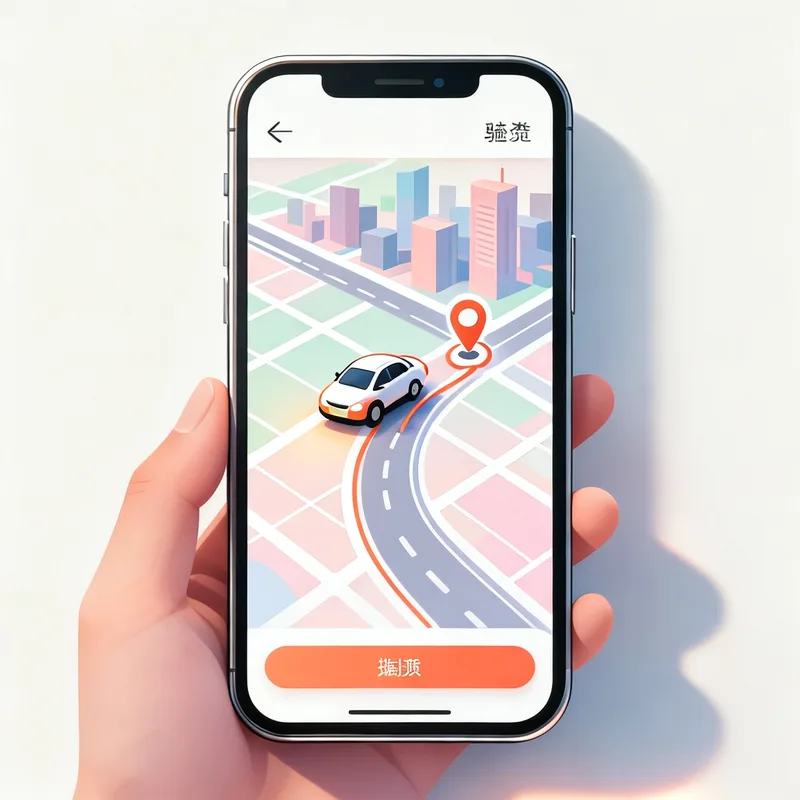
    A smartphone showing a ride-hailing map with a car approaching
    Set the language and payment method before you need a ride; street corners are usually clearer pickup points. Illustrazione generata dall'intelligenza artificiale · SinoViz

    Booking and Meeting the Driver

    Enter the destination, choose a service level such as Express or a larger car, and confirm the fare estimate before requesting. Prices rise with traffic and demand, and a short trip during a rainstorm can cost far more than the same journey at noon. Once a driver accepts, the app shows a name, photo, licence plate, and estimated arrival. Wait at the pin you set, not a block away, and match the plate and car model before opening the door. If the driver calls, a simple address or your hotel name in Chinese helps. Cancellations are common in crowded districts; wait a minute for a new match rather than accepting an unlicensed car offered at the curb. Share the trip in the app if someone at home is waiting.

    A car with a green licence plate waiting at a Beijing street corner
    Check the plate, model, and driver before getting in; new-energy cars are common in Beijing’s fleet. Cheng Shi Song | Pexels License (https://www.pexels.com/license/)

    Airports, Stations, and Pickup Rules

    Beijing Capital and Beijing Daxing airports, along with the main railway stations, have designated ride-hailing zones rather than free curbside pickup. Follow signs to the DiDi or ride-hailing area and confirm the exact gate or zone in the app before you walk outside; drivers cannot wait in traffic lanes. At a station, walking a few hundred metres to a cross street often produces a faster match than trying to leave the forecourt. Expect a short queue at the exit of a sports event or a shopping mall. The app may ask you to walk to a brighter, safer spot, which speeds up matching. Keep the trip short and the conversation simple; most drivers prefer a quiet ride, and a thank-you in Mandarin is appreciated.

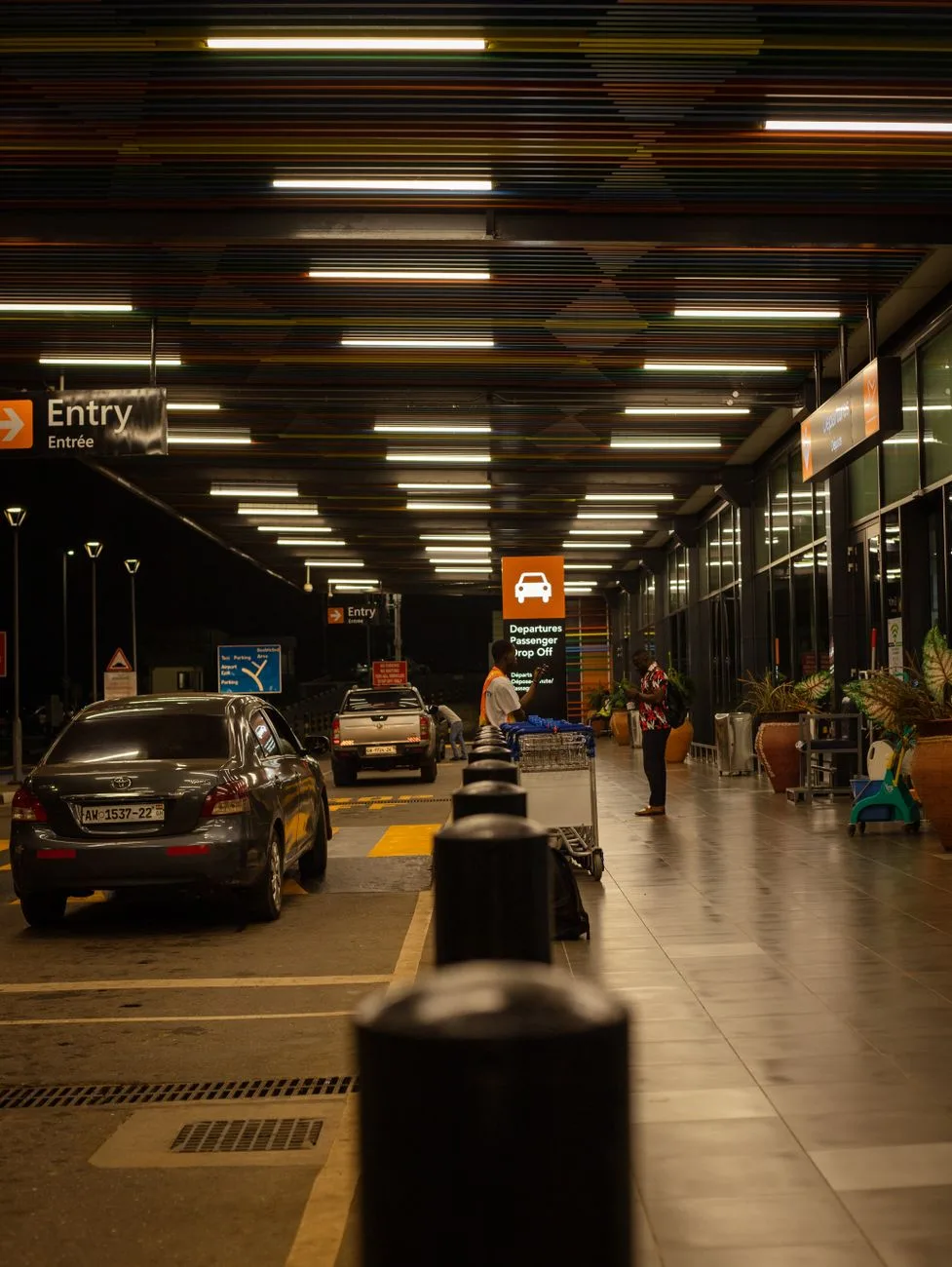
    A signed ride-hailing pickup zone outside a Beijing transport hub
    Airports and major stations direct ride-hailing cars to numbered or zoned pickup areas. Xlenz Creatives | Pexels License (https://www.pexels.com/license/)

    Payment, Safety, and Alternatives

    The fare is usually deducted automatically when the ride ends; tips are not expected and the app may not offer a tipping option. Keep the receipt in the app if you need an expense record. Check that the driver follows the route shown, and use the safety button to share your location if something feels wrong. Taxis remain a useful fallback: yellow-and-black or blue-and-white sedans can be flagged on main roads, and hotel doormen can write a destination in Chinese. Subway travel is faster across the centre at rush hour, while a bike-share works for the last kilometre. If the app will not accept your card, ask the hotel concierge to book a car or use the official taxi queue outside a major hub.

    Wait at the pin, check the plate, and keep the passport or address ready in Chinese.

    Fonti e ulteriori letture

    1. DiDi Global — DiDi.
    2. Beijing city guide — Beijing Municipal Government.
    3. Beijing taxi and transport — I punti salienti della Cina.

    Guardalo al suo posto

    Segui questa voce per raggiungere la regione di appartenenza.

    Esplora tramite mappa
    Segui il filo

    Esplora altre voci che condividono i suoi tag.

    Esplora il tag
  • Galateo a tavola

    Guida di viaggio

    Galateo a tavola

    La tavola rotonda, leggi attentamente

    Il galateo cinese a tavola trasforma un pasto condiviso in una lezione di gerarchia, generosità e moderazione.

    Sezione
    Guida di viaggio
    Regione
    Pechino
    Era
    Attraverso le epoche
    Etichette
    Usanze, Cibo

    A un banchetto cinese, il cibo arriva al centro del tavolo, e con esso arrivano anche le regole sociali. Sapere dove sedersi, quando sollevare le bacchette e come rispondere a un brindisi è molto più importante di qualsiasi dimostrazione di appetito per una cena a Pechino.

    Prendete posto

    Di solito è il padrone di casa a decidere dove far sedere tutti, quindi aspettate che vi venga indicato un posto invece di sceglierne uno. A un tavolo rotondo, il posto di fronte alla porta, o quello più lontano in alcune stanze, è il posto d'onore e viene offerto alla persona più anziana o all'ospite più importante. Gli ospiti di pari rango si alternano poi attorno al tavolo. Un vassoio girevole al centro rende ogni piatto facilmente raggiungibile; fatelo girare delicatamente invece di farlo ruotare bruscamente davanti a qualcuno che sta per prenderlo. Servire prima gli altri è un piccolo gesto di cortesia che si nota, soprattutto riempiendo il bicchiere di tè. Quando il padrone di casa alza le bacchette o dice che il pasto è iniziato, cominciate a mangiare. Iniziare troppo presto può far pensare che stavate aspettando il cibo, non la compagnia.

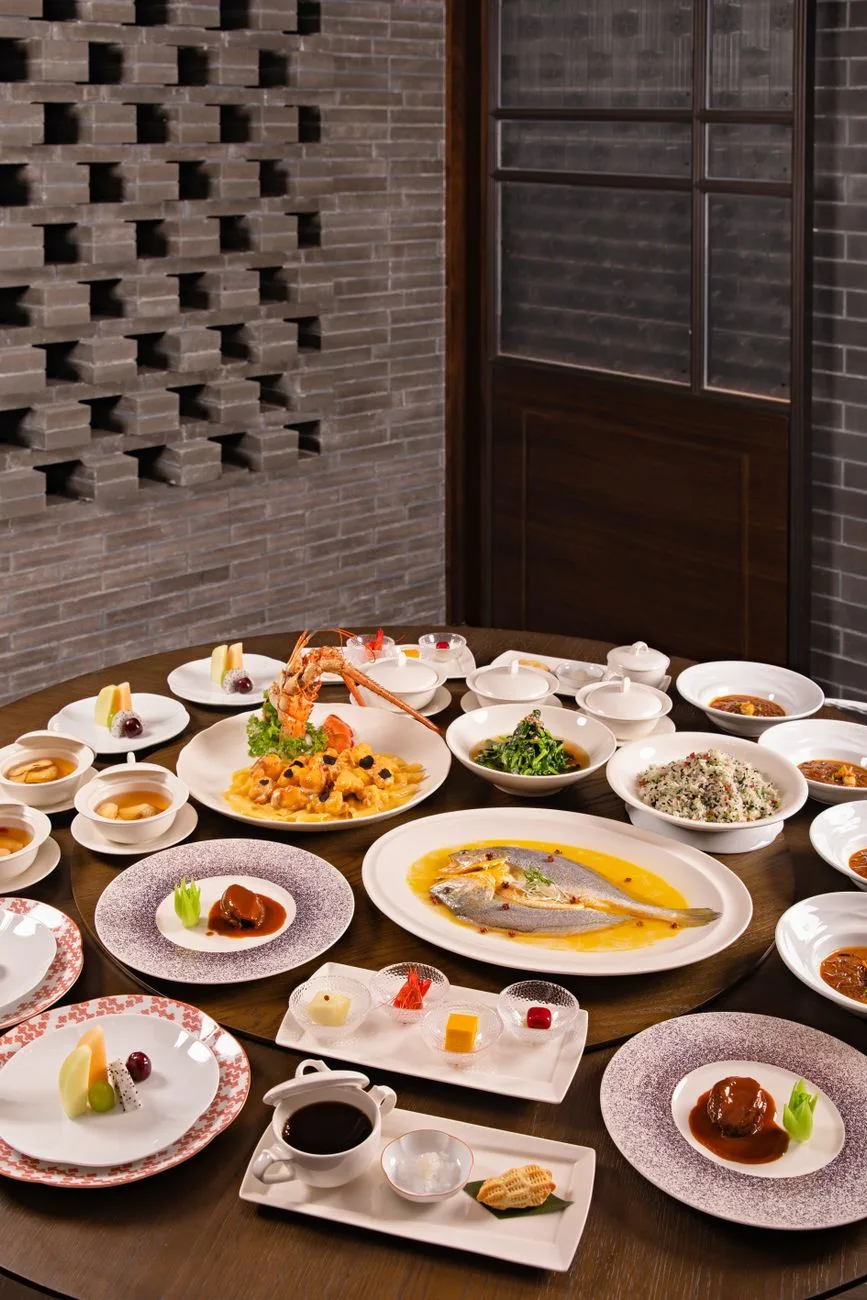
    Tavolo da pranzo rotondo con vassoio girevole e posate.
    A un tavolo rotondo, il posto di fronte alla porta è solitamente riservato all'ospite d'onore. Modifica C.C | Licenza Pexels (https://www.pexels.com/license/)

    Regole delle bacchette

    Le buone maniere a tavola hanno un peso maggiore rispetto alla maggior parte degli errori. Non appoggiate mai le bacchette in verticale in una ciotola di riso: l'immagine ricorda l'incenso offerto ai defunti. Non picchiettate la ciotola con le bacchette, non usatele per indicare, non infilzate il cibo e non agitatele mentre parlate. Passare il cibo dalle bacchette a qualcun altro richiama anche i riti funebri, quindi appoggiate il boccone su un piatto comune. Quando fate una pausa, appoggiate le bacchette sulla ciotola o su un supporto. È accettabile portare alla bocca una piccola ciotola di riso e sorseggiare rumorosamente i noodles non è maleducato. In caso di dubbio, osservate il padrone di casa. Un ospite che usa le bacchette con cura e prende porzioni moderate raramente offenderà, anche se le regole più raffinate del galateo a tavola sono nuove per lui.

    Un paio di bacchette di legno appoggiate su un supporto di ceramica.
    Le bacchette piantate verticalmente nel riso ricordano l'incenso bruciato per i defunti. Sylwester Ficek | Licenza Pexels (https://www.pexels.com/license/)

    Brindisi, tè e il conto

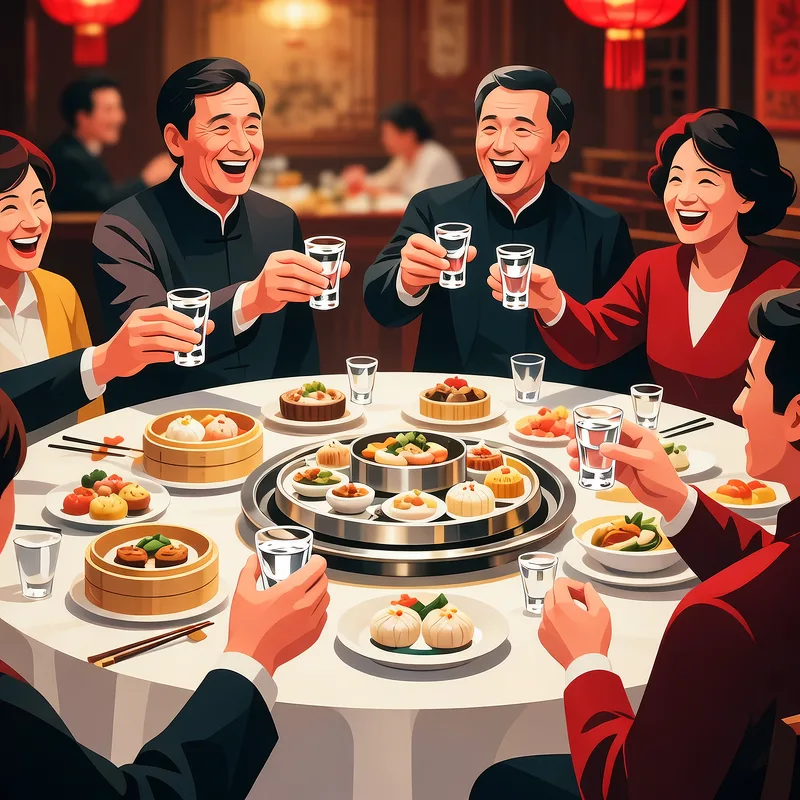
    Le bevande sono un collante sociale. Birra e baijiu, un forte distillato di cereali, sono presenti in molti banchetti insieme al tè. Quando qualcuno propone un brindisi, alzatevi, sollevate il vostro bicchiere con entrambe le mani se la persona è più anziana e toccate il bordo del bicchiere leggermente al di sotto del suo. Ganbei significa "asciugare il bicchiere", ma un piccolo sorso è accettabile se non si beve; spiegatelo in anticipo e attenetevi alla regola. Non versatevi mai il tè senza prima offrire la teiera ai vicini. I piatti si condividono, ma il padrone di casa può servire una portata pregiata a un ospite come omaggio. Lasciate un po' di cibo nel vostro piatto per segnalare che siete sazi e non raschiate gli ultimi chicchi da un piatto comune. Di solito è il padrone di casa a pagare; è sufficiente una breve offerta di dividere il conto.

    I commensali alzano piccoli bicchieri di baijiu durante un banchetto.
    Un brindisi ganbei significa asciugare il bicchiere; sorseggiate pure se preferite, ma alzatevi con il gruppo. Illustrazione generata dall'intelligenza artificiale · SinoViz

    Mangiare fuori a Pechino

    A Pechino, le sale da pranzo spaziano dai chioschi di ravioli all'aperto alle sale per banchetti formali, e le regole si allentano man mano che l'ambiente diventa più informale. In un ristorante di quartiere, si ordina per tutto il tavolo, si condividono i piatti e ci si aspetta una teiera di metallo e una pila di ciotoline anziché portate individuali. Il pagamento avviene solitamente al bancone; per ordinare è possibile scansionare il codice QR sul tavolo oppure pagare tramite Alipay o WeChat Pay. Se necessario, chiedete una fattura in inglese. La mancia non è consuetudine, anche se arrotondare il conto al ristorante di un hotel è accettabile. I piatti piccanti sono comuni in alcune cucine regionali, ma non nella cucina classica di Pechino, dove dominano l'anatra arrosto, i noodles e i ravioli. Se un piatto arriva intero, aspettate che il cameriere lo giri o prendete la prima porzione.

    Osservate il padrone di casa, accettate il brindisi e lasciate un po' di brindisi nel piatto.

    Fonti e ulteriori letture

    1. Galateo e buone maniere a tavola in Cina — I punti salienti della Cina.
    2. Bacchette — Enciclopedia Britannica.
    3. Cultura cinese: cibo e bevande — Atlante culturale, SBS.

    Guardalo al suo posto

    Segui questa voce per raggiungere la regione di appartenenza.

    Esplora tramite mappa
    Segui il filo

    Esplora altre voci che condividono i suoi tag.

    Esplora il tag
  • Etichetta del tempio

    Guida di viaggio

    Etichetta del tempio

    Entering a Tibetan Buddhist sanctuary

    In a Tibetan Buddhist temple, the way you walk, look, and photograph is part of the practice, not just good manners.

    Sezione
    Guida di viaggio
    Regione
    Xizang (Tibet)
    Era
    Attraverso le epoche
    Etichette
    Customs, Scenic Sites

    On the plateau, a monastery is a working religious community as well as a historic building. Visitors to Lhasa’s Jokhang or the great monasteries around it enter a space where centuries of worship continue each day, and courtesy means making yourself unobtrusive.

    Before the Threshold

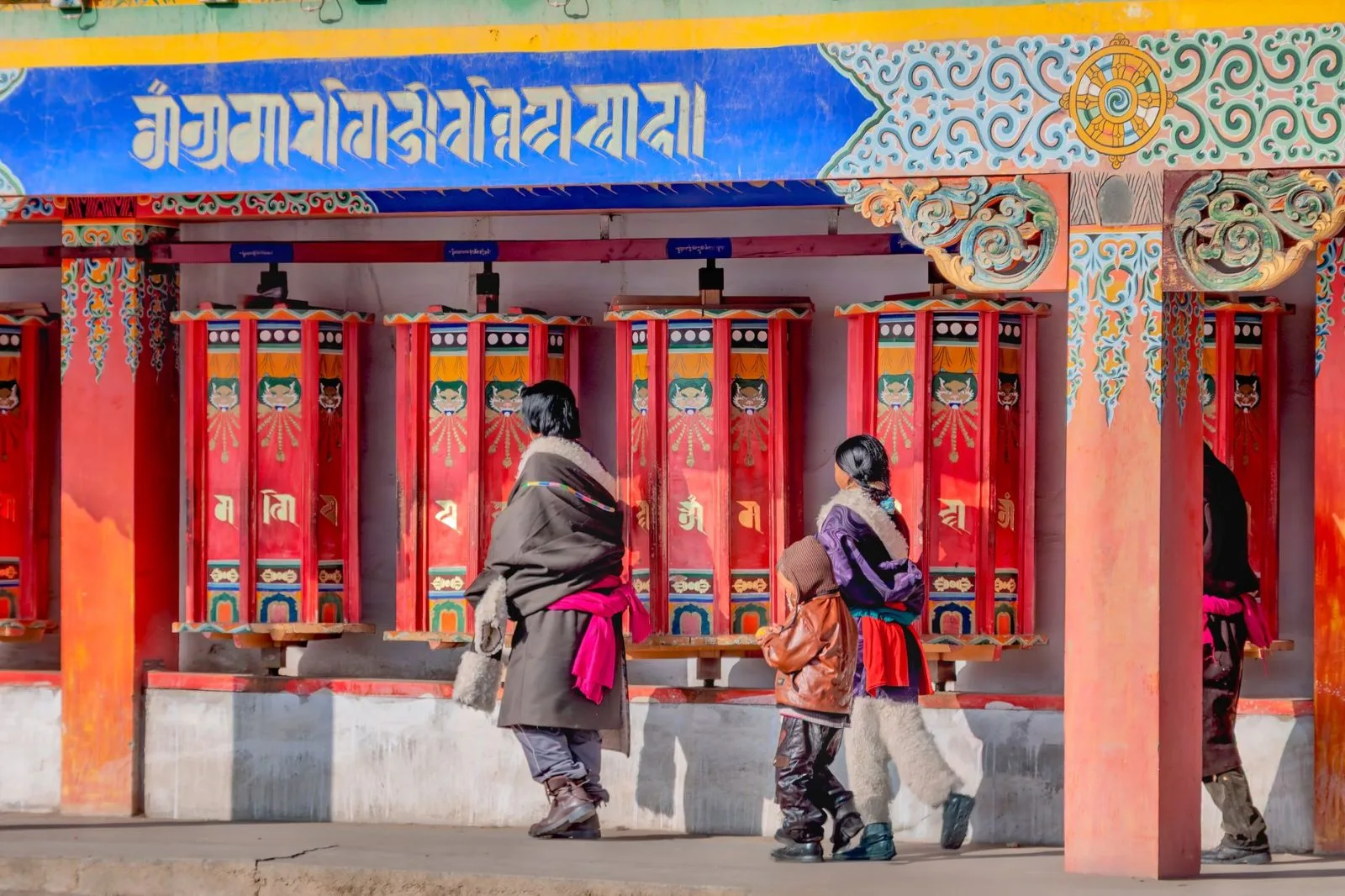
    Approach a temple calmly and dress with coverage: shoulders and knees covered, no shorts, and shoes removed before entering a prayer hall. Many monasteries ask visitors to leave hats and sunglasses outside as well. Walk clockwise around a stupa, a prayer-wheel corridor, or a temple courtyard, matching the direction of pilgrims who may be prostrating at every step. Do not step over a threshold or over a person’s outstretched hands; lift your feet and go around. Speaking softly is enough. A monk or nun may be in retreat, tea may be poured for the community, and a ceremony may be under way in a side chapel. If a door is ajar and people are chanting, wait rather than look in.

    Pilgrims walking clockwise around a temple courtyard in Tibet
    Circumambulation runs clockwise in Tibetan Buddhism; follow the crowd rather than cutting across. Man Fong Wong | Pexels License (https://www.pexels.com/license/)

    Inside the Prayer Hall

    Once inside, keep your hands to yourself. Statues, thangkas, and ritual objects are not props; touching them, pointing at them with one finger, or turning your back on an altar to pose for a photograph marks you as careless. Offerings are made with both hands: a khata scarf laid across the palms, a small amount of money, or the lighting of a butter lamp. If you do not wish to make an offering, simply stand aside and let others pass. Do not photograph inside halls unless a sign or a monk explicitly allows it; flash and camera clicks interrupt the room. When a pilgrim prostrates, give them room and never step over the mat. Photos of monks should be asked for, not assumed.

    Butter lamps glowing before a gilded statue in a Tibetan temple
    Butter lamps are offerings; keep a respectful distance from altars and statues. Sonam Phuntsok | Pexels License (https://www.pexels.com/license/)

    Festivals and Crowds

    Tibetan Buddhist festivals such as Losar, the New Year, or the Saga Dawa month bring thousands of worshippers to monasteries. Processions, masked cham dances, and the unfurling of a giant thangka at Drepung or Sera can draw crowds long before sunrise. Arrive early, carry water, and expect to stand for hours. Keep to the edges of the courtyard so that pilgrims moving toward the altar can pass. Queueing is not always formal; a loose line forms naturally at a doorway or a blessing, and pushing will be noticed. Photography restrictions usually tighten during ceremonies. A visitor who watches quietly, follows the direction of circumambulation, and accepts that part of the ritual will be unfamiliar will be welcomed more readily than one who demands explanations.

    Monks in maroon robes assembling for a temple ceremony
    During festivals, monastery courtyards fill before dawn; arrive early and keep to the edges. Karma Samten | Pexels License (https://www.pexels.com/license/)

    Practicalities on the Plateau

    Most monastery visits in the Xizang Autonomous Region begin in Lhasa, where permits and altitude shape the schedule as much as opening hours. The Jokhang, Potala Palace, and the great monasteries of Drepung and Sera sit at roughly 3,650 metres, so move slowly for the first day or two and drink water often. Many sites require advance reservation and a passport check at the gate; the Potala Palace limits daily visitors and issues timed tickets. Small notes are useful for offerings and entrance fees. Do not fly a drone near a monastery, and avoid loud phone calls on a rooftop or in a courtyard. Etiquette here is simple: move with the congregation, keep your hands off what is sacred, and let worship come first.

    Follow the direction of the pilgrims, and let the ritual come before the photograph.

    Fonti e ulteriori letture

    1. Historic Ensemble of the Potala Palace, Lhasa — UNESCO World Heritage Centre.
    2. Tibetan Buddhism — Enciclopedia Britannica.
    3. Tibet monastery etiquette — Tibet Travel.

    Guardalo al suo posto

    Segui questa voce per raggiungere la regione di appartenenza.

    Esplora tramite mappa
    Segui il filo

    Esplora altre voci che condividono i suoi tag.

    Esplora il tag
  • Fare regali

    Guida di viaggio

    Fare regali

    Tokens, taboos, and the gift of face

    Gift giving in Beijing turns a private gesture into a readable social signal, where timing, wrapping, and refusal all carry meaning.

    Sezione
    Guida di viaggio
    Regione
    Pechino
    Era
    Attraverso le epoche
    Etichette
    Dogana

    A gift in China is rarely just an object. It is a small public statement about respect, hierarchy, and the relationship you hope to build, especially in a city like Beijing where formal courtesies still shape everyday encounters.

    The Grammar of Reciprocity

    Gift giving sits inside the older idea of guanxi, the network of reciprocal obligations that turns acquaintances into reliable contacts. A present acknowledges a relationship rather than creating one from nothing, and it is usually given at a defined moment: a first visit to a home, a business meeting after terms are settled, a wedding, a birth, or a return from travel. Beijing hosts often decline a generous offer two or three times before accepting, a ritual that lets both sides display modesty without really refusing. Visitors who treat the first no as final can break the rhythm. Reciprocity matters more than price; a forgotten gift is remembered longer than a cheap one.

    Choosing What to Bring

    Practical choices travel well. A tin of good tea, a basket of fruit, a bottle of liquor, or something distinctive from your home region all read as thoughtful without embarrassing the host. Colour does the heavy lifting: red and gold suggest luck and celebration, while white and black wrapping carry associations with mourning and are best avoided. Counts matter too. Even numbers are favoured at weddings and festivals, while the number four sounds like the word for death and is quietly sidestepped. Never give a clock, since the phrase for giving a clock echoes attending a funeral; pears, umbrellas, sharp objects, and white chrysanthemums carry similar unwanted meanings. When in doubt, a neatly wrapped food item with the price tag removed is safest.

    Red-wrapped gifts and tea boxes arranged on a table
    Red and gold wrapping signals celebration; the object inside is secondary to the gesture. RDNE Stock project | Pexels License (https://www.pexels.com/license/)

    The Moment of Giving

    Hand the gift over with both hands, or with the right hand supported at the left forearm if the package is small; a one-handed toss looks careless. Present it after the greeting and a few minutes of conversation rather than at the threshold, and describe it modestly as a small token or something you happened to bring. Do not press the recipient to open it immediately. In many Chinese settings gifts are set aside and opened later, which protects everyone from visible reactions. When you receive a gift, accept with both hands, say thank you, and put it somewhere respectful rather than dropping it beside your chair. A brief note or a later message acknowledging the gesture is appreciated.

    Two hands offering a wrapped package across a table
    Offer and receive with both hands; polite refusal is part of the exchange. Antoni Shkraba | Pexels License (https://www.pexels.com/license/)

    Money, Red Envelopes, and Business

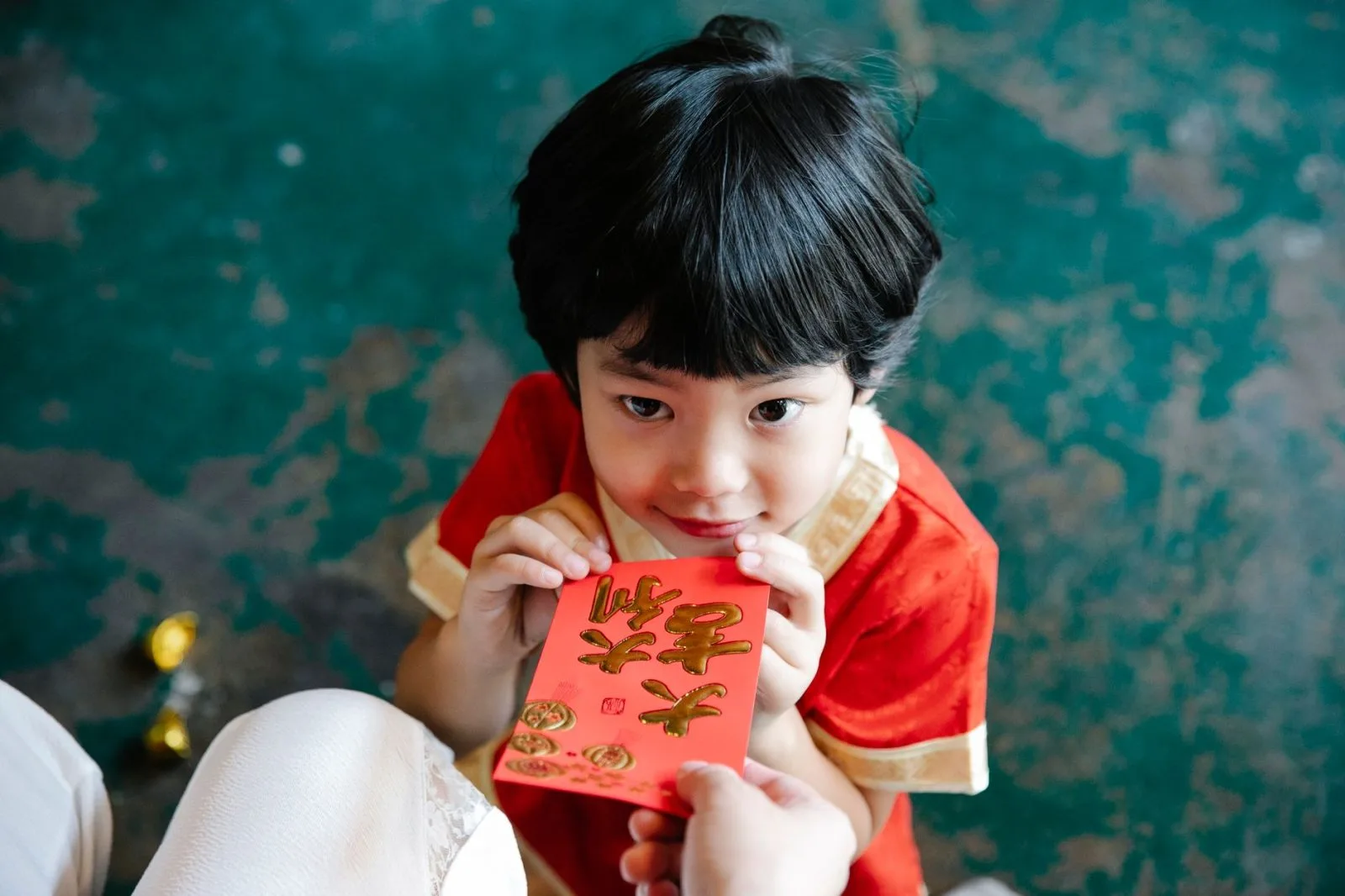
    Cash has its own rules. Hongbao, red paper envelopes with gold lettering, are given at weddings, births, and Lunar New Year; the amount should end in an even digit, and notes should be crisp. At a wedding the envelope is usually dropped in a reception basket, while at New Year it may be pressed into a child’s hand or sent through a phone app. In business settings, keep gifts modest and symbolic. Expensive items can look like an attempt to buy a decision and may be refused on principle or by rule. A company logo item, a book, or a regional speciality from your own city signals the relationship without creating a debt. Check the host organisation’s policy before offering anything of value.

    A red envelope with gold characters held between fingers
    Hongbao are given with both hands at weddings, birthdays, and New Year. Angela Roma | Licenza Pexels (https://www.pexels.com/license/)
    Give with both hands, mention modesty, and let the recipient decide when to open it.

    Fonti e ulteriori letture

    1. Chinese Culture: Customs and Etiquette — Atlante culturale, SBS.
    2. Chinese Gift Giving Etiquette — I punti salienti della Cina.
    3. China Business Customs — U.S. Department of Commerce.

    Guardalo al suo posto

    Segui questa voce per raggiungere la regione di appartenenza.

    Esplora tramite mappa
    Segui il filo

    Esplora altre voci che condividono i suoi tag.

    Esplora il tag
  • Metropolitana di Pechino

    Guida di viaggio

    Metropolitana di Pechino

    Reading the network below the city

    Beijing’s metro is cheap, dense, and faster than any car at rush hour once you know the system.

    Sezione
    Guida di viaggio
    Regione
    Pechino
    Era
    modern-china
    Etichette
    Geography, Transport

    The Beijing Subway opened in 1969 and has grown into one of the world’s largest metro networks. Its lines reach the Forbidden City area, both airports, the Olympic district, and the western hills, making it the default way to move around the centre.

    Paying and Entering

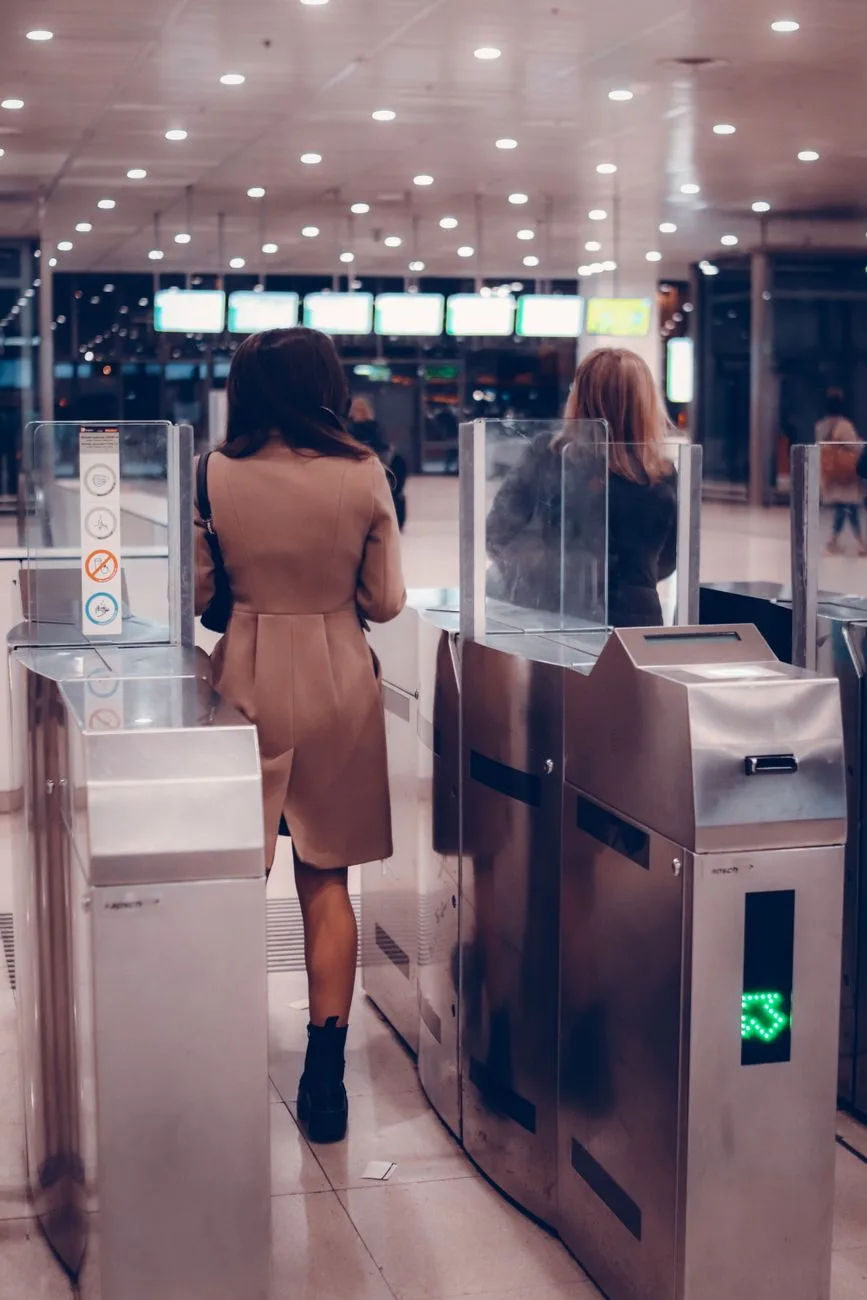
    Fares start at three yuan for short trips and rise with distance, with the longest journeys costing around ten yuan or more. The cheapest traditional option is a Yikatong stored-value card, sold at station counters; tap it on the reader at both ends. Most visitors now scan a QR code instead. Alipay can generate a Beijing Transit code through its Transport mini programme, and the Beijing Subway app also supports QR rides. Activate the code before you reach the gate and keep the phone screen bright. A single journey ticket is available at machines in major stations. Before the gates, every passenger sends bags through a small X-ray scanner and walks through a metal detector, so leave a minute for the queue.

    A Beijing metro turnstile with a contactless card reader
    Tap a transit card or scan a QR code at the gate; a bag screening comes first. El gringo photo | Pexels License (https://www.pexels.com/license/)

    Reading the Map

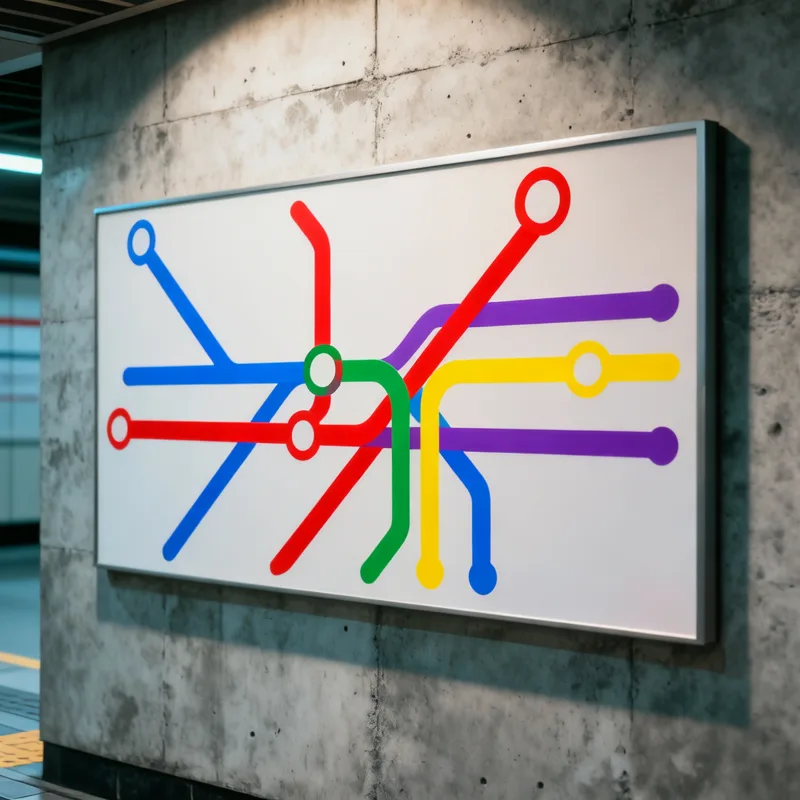
    Signs are bilingual in Chinese and English, and line diagrams are colour-coded with numbers rather than names. Transfers can be long: Line 1 to Line 2 at Fuxingmen, or the interchange at Guomao, may mean several hundred metres of corridors and escalators. Follow the coloured tiles and overhead arrows rather than guessing. Each station has numbered or lettered exits; choosing the right one matters above ground, where a wrong exit can mean a ten-minute walk back around a block. Platform signs show the direction by terminus, so know which end of the line you are heading for. Trains run roughly from 5 a.m. to just after 11 p.m., with the last train earlier on some branches. Peak crowds arrive around 7-9 a.m. and 5-7 p.m.

    A coloured Beijing metro line diagram on a station wall
    Lines are identified by number and colour; exits are lettered, so note the exit before you surface. Illustrazione generata dall'intelligenza artificiale · SinoViz

    Airport Lines and Day Trips

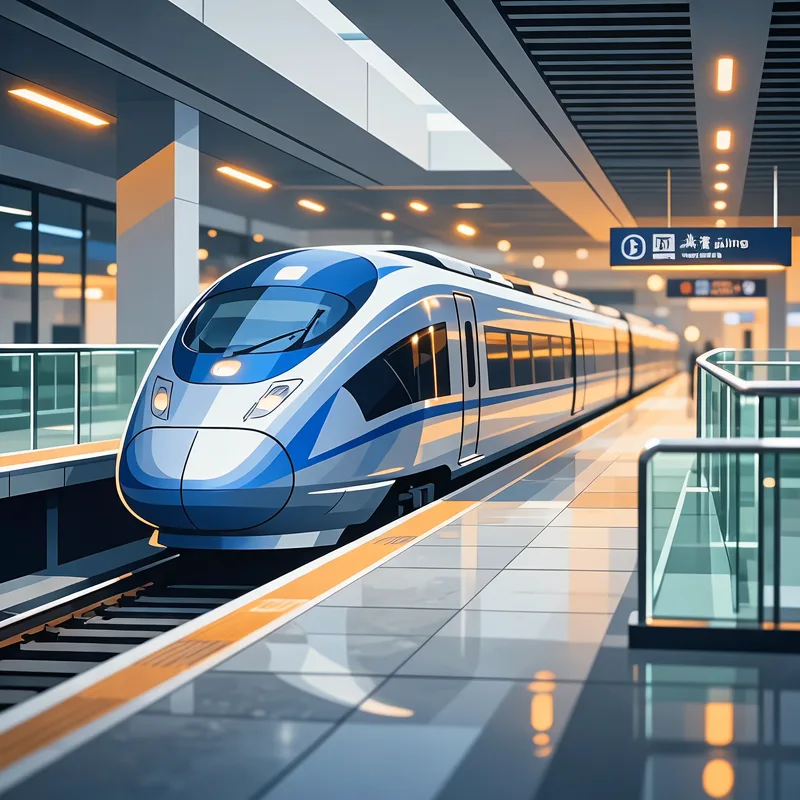
    Two lines connect the city to its airports. The Capital Airport Express runs from Dongzhimen to Terminal 3 and Terminal 2; the Daxing Airport Express leaves from Caoqiao and reaches the new airport in under twenty minutes. Both require a separate fare that is higher than an ordinary metro ride, and airport stations add security checks. For the Forbidden City, use Tian’anmen East or Tian’anmen West and expect another security line at the palace entrance. The Olympic area is served by Lines 8 and 15, while Line 4 reaches the Summer Palace. For the Great Wall at Badaling, combine the metro with a suburban train or bus. Check the last-train time before an evening out; a late taxi ride back can be expensive.

    An airport express train waiting at a Beijing metro platform
    Two express lines link the metro to Capital and Daxing airports; allow extra time for the transfer. Illustrazione generata dall'intelligenza artificiale · SinoViz

    Etiquette Below Ground

    Metro etiquette is practical rather than formal. Stand to the right on escalators so people in a hurry can pass on the left, and let passengers leave before you board. Offer a seat to an older person, someone with a child, or a passenger with a disability. Backpacks are common, but swing yours off in a crowded car. Eating is discouraged in many stations and drinking is generally tolerated; keep wrappers in a bag until you find a bin. Announcements are made in Mandarin and English, and a recorded reminder asks passengers not to block the doors. If you miss your stop, the next station is rarely far away. Keep your card or phone ready before the exit gate, and check whether your destination needs a different payment method.

    Choose the right exit before you surface; in Beijing it can save ten minutes above ground.

    Fonti e ulteriori letture

    1. Metropolitana di Pechino — Beijing Mass Transit Railway Operation Corporation.
    2. Beijing public transport — Beijing Municipal Government.
    3. Beijing Subway guide — I punti salienti della Cina.

    Guardalo al suo posto

    Segui questa voce per raggiungere la regione di appartenenza.

    Esplora tramite mappa
    Segui il filo

    Esplora altre voci che condividono i suoi tag.

    Esplora il tag
  • Station Security

    Guida di viaggio

    Station Security

    What happens before the platform

    A Beijing railway station is a screened environment; build extra time into every journey.

    Sezione
    Guida di viaggio
    Regione
    Pechino
    Era
    modern-china
    Etichette
    Trasporto

    Before you reach a platform in Beijing, your luggage, your identity, and usually your body pass through separate checks. The process is routine at a quiet hour, but queues at a major station can swallow half an hour or more. Knowing the sequence makes it far less stressful.

    At the Entrance

    Most large stations have one public entrance for security screening before the ticket hall. Place bags, laptops, and umbrellas on the X-ray belt, then walk through a metal detector or a body scanner. Liquids are generally allowed on Chinese trains, but knives, scissors with long blades, fireworks, fuel, and most aerosols are confiscated. Power banks must be carried, not checked, and capacity limits apply; a large spare battery can cause a delay. Keep loose change, keys, and your passport in a pocket so you are not unpacking at the belt. Screening staff may ask you to open a bag or sip a bottle to prove it is harmless. Cooperation is quicker than argument, and signage is usually bilingual at Beijing’s main hubs.

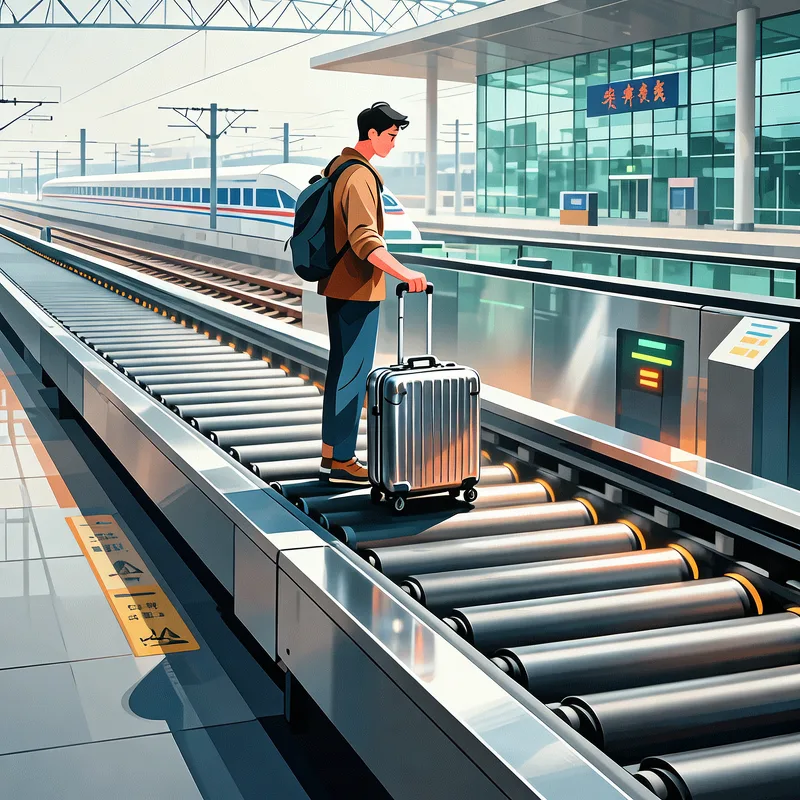
    A traveller placing luggage on an X-ray belt at a Chinese railway station
    Every bag goes through an X-ray scanner before you enter the main station concourse. Illustrazione generata dall'intelligenza artificiale · SinoViz

    Identity and Tickets

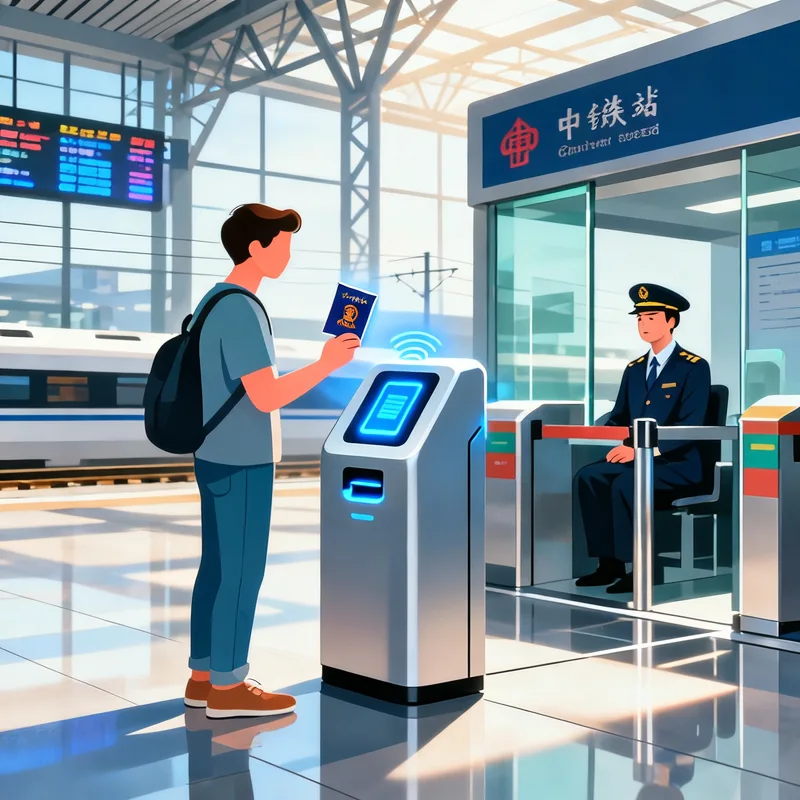
    Chinese rail travel is tied to identity. When you book on 12306, the official railway app, the name on the ticket must match the document you carry; for foreign visitors that is normally a passport. At the gate, insert or scan the same passport at the reader and step through. A printed ticket is rarely needed. If your passport is in a suitcase, you will hold up the queue while staff search. Some stations use facial recognition at the gate, but a passport remains the fallback for foreign travellers. Keep a screenshot of the booking and the platform number, since station boards are easy to misread in a hurry. Staff in reflective jackets can point you to the right gate; show them the ticket details on your phone.

    A passport being checked at a Chinese railway ticket gate
    Foreign passengers use their passport at the gate; keep it out of your checked luggage. Illustrazione generata dall'intelligenza artificiale · SinoViz

    Timing and Queues

    Beijing West, Beijing South, Beijing Chaoyang, and Beijing Fengtai are large buildings with long walks between screening, waiting room, and platform. During Spring Festival or the October holiday, the security line can snake through the forecourt. Allow at least an hour before departure and ninety minutes at a peak period, especially if you need to collect a paper ticket or find the correct entrance. Queues are physical rather than ticketed; follow the rope lines and watch for a second lane that opens nearby. Families and passengers needing assistance may use a priority lane. Once through, check the departure board for your train number rather than relying on memory. Boarding usually begins fifteen to twenty minutes before departure and gates close a few minutes before the train leaves.

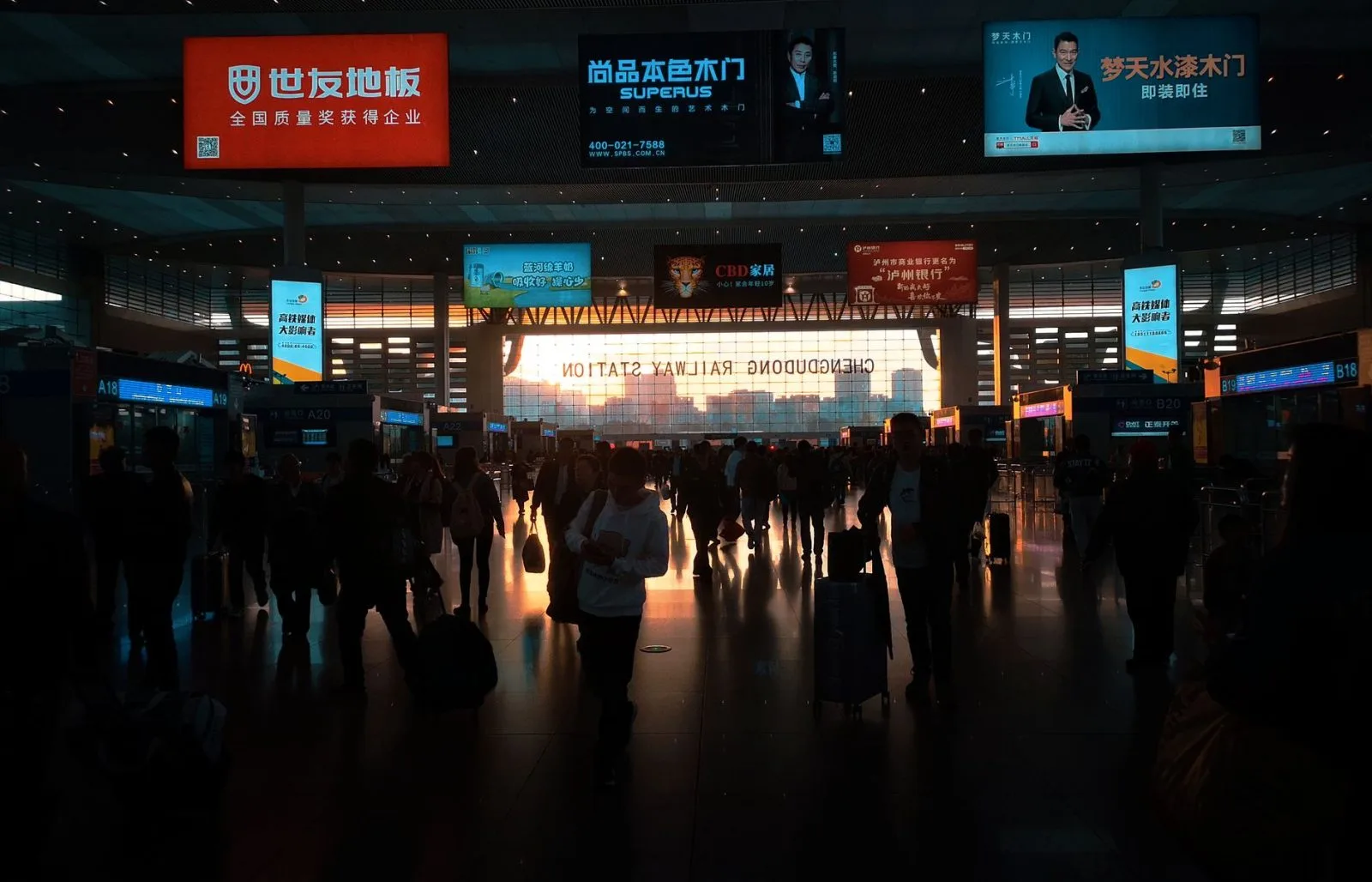
    A busy railway station concourse with travellers queuing at security
    Arrive early at Beijing West or Beijing South; the security queue can be longer than the walk to the gate. zhen tang | Pexels License (https://www.pexels.com/license/)

    On the Platform and After

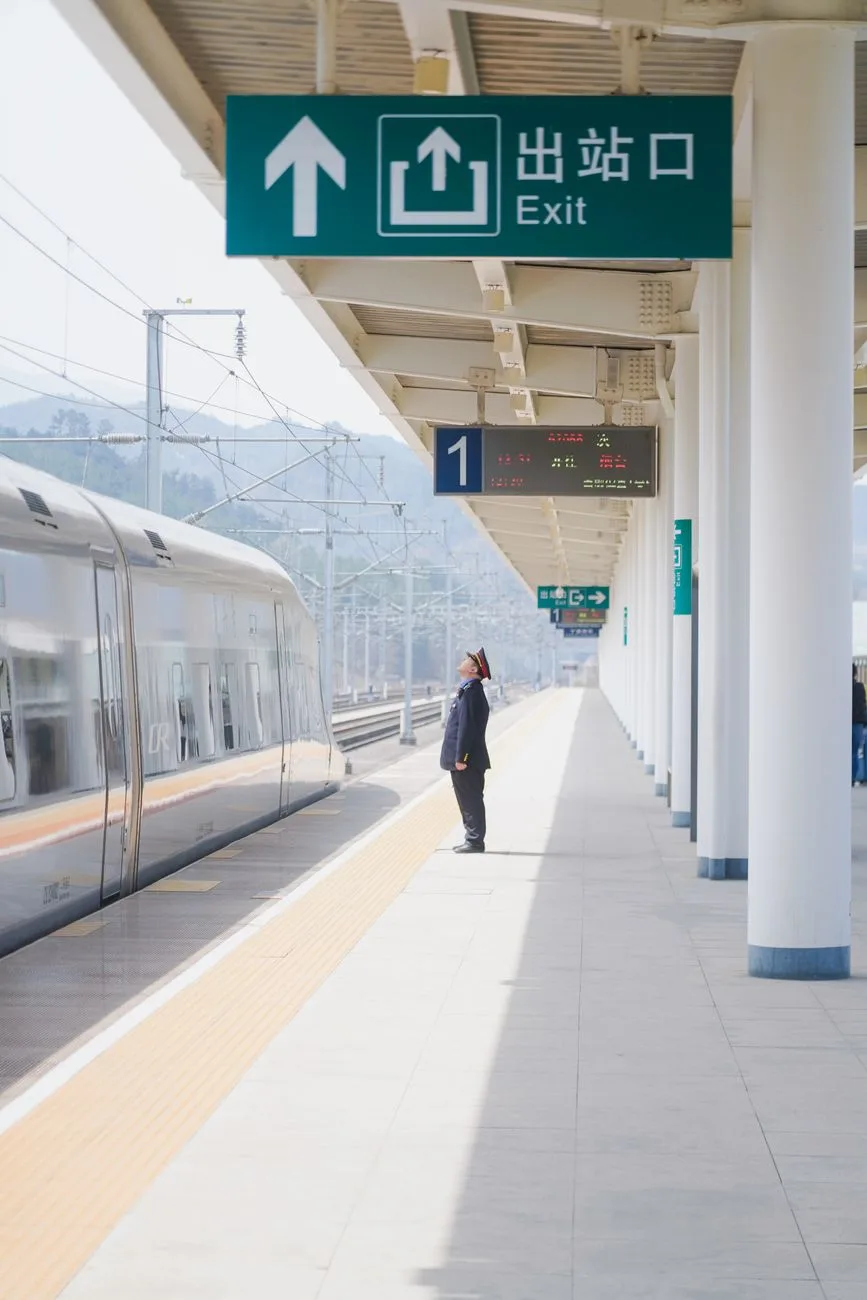
    Platforms are open, often crowded, and shared by high-speed trains arriving at speed. Stand behind the safety line until the train stops, and let passengers off before you push forward. Carriage and seat numbers are painted on the platform; match them to your booking before boarding. A conductor may check your passport again on board. Luggage space is limited above the seats, so put large cases at the end of the carriage where staff indicate. Do not photograph security equipment, screening staff, or the inside of control rooms. If an item is confiscated, ask for a receipt and collect it at the designated office. At your destination, follow signs for the metro or taxi rather than accepting a ride from someone who approaches you inside the concourse.

    The queue starts at the door, not at the gate: arrive early and keep your passport in hand.

    Fonti e ulteriori letture

    1. China Railway — China Railway.
    2. 12306 railway ticketing — China Railway.
    3. Train travel in China — Travel China Guide.

    Guardalo al suo posto

    Segui questa voce per raggiungere la regione di appartenenza.

    Esplora tramite mappa

    Segui il filo

    Esplora altre voci che condividono i suoi tag.

    Esplora il tag
  • Ferrovia ad alta velocità

    Guida di viaggio

    Ferrovia ad alta velocità

    A National Network at 300 km/h

    China’s high-speed lines connect major cities with frequent, electrified, mostly elevated track.

    Sezione
    Guida di viaggio
    Regione
    Pechino
    Era
    modern-china
    Etichette
    Geography, Transport

    China’s high-speed rail network is the largest in the world, measured by route length. It grew from a single 2008 line between Beijing and Tianjin into a national system linking regional capitals, coastal cities, and tourist gateways.

    From the Beijing–Tianjin Line

    The Beijing–Tianjin intercity railway opened in August 2008, just before the Beijing Olympics, with trains designed for 350 kilometres per hour. It followed the Sixth Railway Speed-Up campaign, in which conventional lines were upgraded and new rolling stock imported from Siemens, Alstom, Bombardier, and Kawasaki. Technology transfer and domestic redesign produced the CRH family and later the Fuxing series. The 2011 Wenzhou accident on the Beijing–Shanghai line, caused by signalling failures during a thunderstorm, killed forty people and led to speed reductions, audits, and a slower pace of construction. The network nevertheless expanded rapidly after 2013.

    A streamlined white high-speed train standing at a modern elevated platform
    The CRH and Fuxing trains developed from imported designs and domestic redesign. travelers_tw | Pexels License (https://www.pexels.com/license/)

    How the Network Is Built

    High-speed lines require gentle curves, long tunnels, and level track, so much of the network rides on concrete viaducts. Bridges keep routes straight, reduce land take, and allow farm traffic and roads to pass underneath. Continuous welded rail, slab track, and overhead catenary carry trains at operating speeds commonly around 300–350 kilometres per hour on the fastest services. Automatic train control limits speed and spacing; drivers monitor the system rather than relying only on signals beside the track. Stations are often built outside old city cores, where land was available, so a central railway station and a high-speed station may be different places in the same city.

    Elevated high-speed railway crossing agricultural land on concrete piers
    Viaducts keep high-speed alignments straight and limit the footprint on farmland. Illustrazione generata dall'intelligenza artificiale · SinoViz

    Using the System

    Tickets are sold through the official Railway 12306 website and app; passports or resident identity documents are checked at entry, and names must match the booking. The G-series are the fastest passenger services, D-series generally run on upgraded or slightly slower lines, and overnight high-speed sleeper trains now cover longer routes. Larger stations use airport-style security, so arriving well before departure is wise. Seats are assigned, restaurant cars or at-seat delivery are common, and station boards use Chinese characters and Roman letters. Beijing West, Beijing South, and Beijing Chaoyang serve different lines, so the station name on the ticket matters as much as the city.

    • Book through Railway 12306 with an identity document
    • Allow time for security screening at large stations
    • Check whether the ticket says Beijing South, West, or Chaoyang
    • G trains are generally faster than D trains
    A departure board listing high-speed train times in a large Chinese station
    Check the exact station name: major cities may have several high-speed terminals. 航皓 陈 | Pexels License (https://www.pexels.com/license/)

    What the Routes Connect

    The Beijing–Shanghai line, opened fully in 2011, links the political capital to the financial centre in about four and a half hours on the fastest trains. The Beijing–Guangzhou line, completed in 2012, runs south through Shijiazhuang, Zhengzhou, Wuhan, and Changsha. The Lanzhou–Xinjiang line reached Urumqi in 2016, extending high-speed service deep into the northwest. Coastal lines connect Tianjin, Jinan, Nanjing, Hangzhou, and Shanghai, while newer routes serve Chengdu, Chongqing, Kunming, and Xi’an. Trains are frequent on busy corridors, but distances remain continental: a traveller crossing several time-zone-widths of China should still allow a full day.

    A high-speed station may sit far from the old city centre, so the ticket’s station name is part of the journey.

    Fonti e ulteriori letture

    1. High-speed rail in China — Enciclopedia Britannica.
    2. China Railway High-speed — World History Encyclopedia.
    3. China Railway 12306 — China Railway.

    Guardalo al suo posto

    Segui questa voce per raggiungere la regione di appartenenza.

    Esplora tramite mappa

    Segui il filo

    Esplora altre voci che condividono i suoi tag.

    Esplora il tag
  • Xiamen

    Destination · Fujian

    Xiamen

    Island streets and Fujian coast

    Xiamen is a coastal city with a mild climate, colonial-era Gulangyu island and easy access to Fujian’s tulou and tea regions. It blends seaside leisure with maritime history.

    Stagione migliore
    March–May, October–December
    Soggiorno consigliato
    2-3 giorni
    Regione
    Fujian

    Cosa vedere per prima cosa

    • Gulangyu island architecture and lanes
    • Nanputuo Temple
    • Xiamen University area and coastal walk
    • Day trip to Fujian tulou

    Perché è importante

    Xiamen sits within Fujian’s maritime culture, shaped by overseas trade, migration and Minnan traditions. Its coast connects local life to the wider sea routes.

    Arrivarci

    Xiamen has an airport, high-speed rail and ferries to Gulangyu. Book Gulangyu ferry tickets ahead on busy days.

    Buono a sapersi

    Gulangyu limits vehicles; wear comfortable shoes. Summer is hot and typhoon season can affect ferries.

    Leggi la regione

    Understand the landscape and culture behind this destination.

    Explore Fujian
  • Lhasa

    Destination · Xizang

    Lhasa

    The Potala and the high plateau

    Lhasa is the spiritual and historical centre of Tibet. The Potala Palace, Jokhang Temple and Barkhor circuit place religious life at the heart of the city.

    Stagione migliore
    May–September
    Soggiorno consigliato
    4–6 days
    Regione
    Xizang

    Cosa vedere per prima cosa

    • Palazzo Potala
    • Jokhang Temple and Barkhor Street
    • Sera Monastery debates
    • Drepung Monastery and nearby mountain views

    Perché è importante

    Lhasa has been a centre of Tibetan Buddhism and governance for centuries. Its architecture and pilgrimage routes make belief visible in urban space.

    Arrivarci

    Fly or take the Qinghai-Tibet Railway to Lhasa. Allow time for altitude acclimatisation before strenuous activity.

    Buono a sapersi

    Follow temple etiquette, dress modestly, and ask before photographing people. Carry permits and ID as required.

    Leggi la regione

    Understand the landscape and culture behind this destination.

    Explore Xizang