Kehidupan & Cerita Rakyat
Suku Bai
Dinding putih dan kerajinan tangan di sekitar Dali
Suku Bai adalah kelompok masyarakat berbahasa Sino-Tibet yang terkonsentrasi di sekitar Dali, yang rumah-rumah berhalaman dan teknik ikat celup indigo mereka menjadi ciri khas gaya visual lokal.
- Bagian
- Kehidupan & Cerita Rakyat
- Wilayah
- Yunnan
- Era
- Sepanjang zaman
- Tag
- Etnis, Adat Istiadat
Kota-kota Bai terletak di antara pegunungan Cangshan dan Danau Erhai di barat laut Yunnan. Bahasa mereka adalah Sino-Tibetan, dan komunitas mereka menyimpan kenangan akan kerajaan Nanzhao dan Dali yang memerintah wilayah tersebut sebelum penaklukan Mongol pada abad ke-13.
Antara Cangshan dan Erhai
Sekitar 1,9 juta orang Bai tercatat dalam sensus Tiongkok tahun 2010. Kira-kira empat perlima tinggal di Prefektur Otonomi Bai Dali, dengan komunitas lain di Kunming, Chuxiong, Lijiang, Baoshan, dan sebagian Yunnan barat. Kota dan desa berkumpul di jalur tanah datar yang sempit antara lereng Cangshan dan pantai Erhai, di mana irigasi mendukung pertanian padi, kacang-kacangan, dan peternakan sapi perah. Nama Bai berarti putih, merujuk pada plester pucat yang membedakan bangunan-bangunan lokal. Karena Dali terletak di jalur perdagangan yang menghubungkan Yunnan dengan Sichuan dan Tibet, kota-kota Bai menyerap barang dan teknik dari berbagai arah sambil mempertahankan kosakata bentuk dan dekorasi lokal yang kuat.
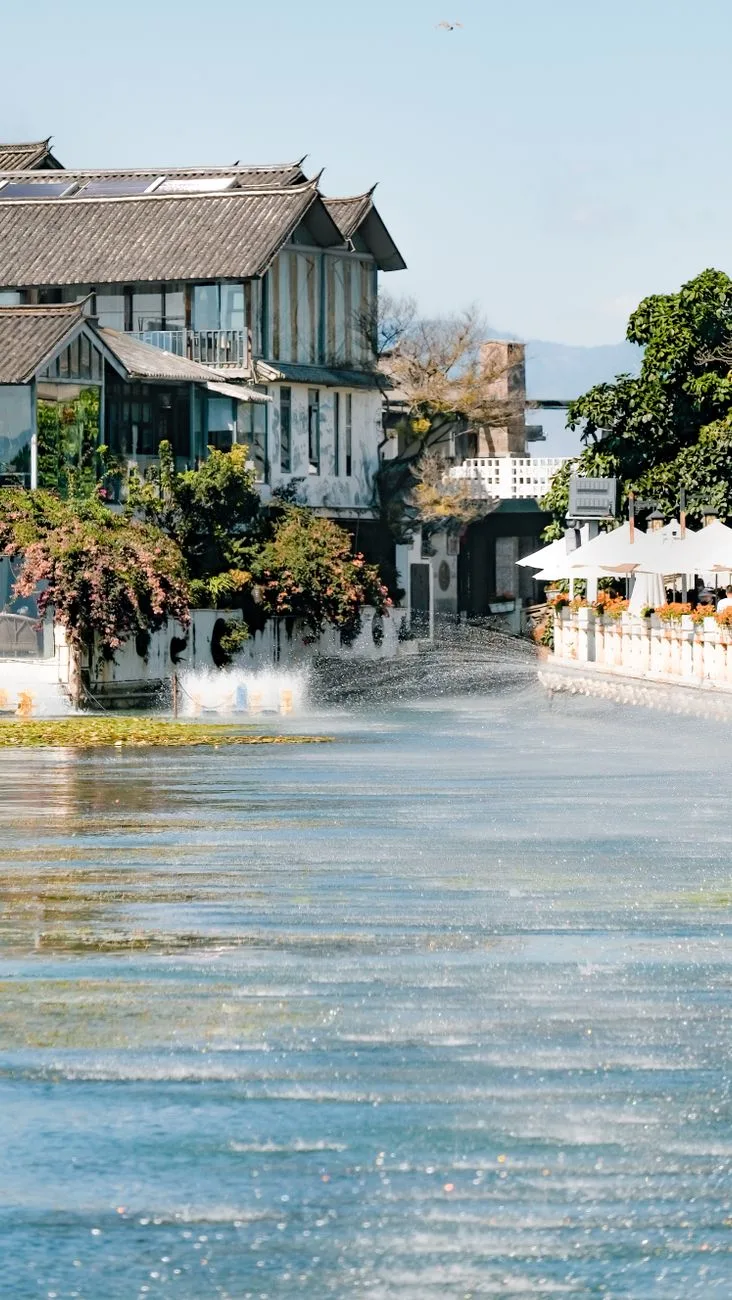
Language and historical roots
The Bai language belongs to the Sino-Tibetan family, usually placed within Tibeto-Burman, though scholars still debate its exact position because of heavy borrowing from Chinese. There is no widely used traditional Bai script, and Chinese characters have served for writing names, contracts and local records. Bai oral tradition, including creation stories and accounts of kingdom builders, is transmitted in speech and performance. Ancestors of the Bai are associated with the Nanzhao kingdom, which flourished from the eighth to the ninth century, and the Dali kingdom that followed between 937 and 1253. Both left stone inscriptions, Buddhist carvings and fortified sites around the lake.
Courtyards, marble and dye
The standard Bai house follows a layout known as sanfang yizhaobi, three wings arranged around a courtyard facing a freestanding screen wall. Walls are whitewashed, roofs are covered in grey clay tiles, and doorways and windows carry deep carved wooden fretwork. The screen wall is often painted with landscapes or calligraphy, and panels of local marble are set into lintels and table tops. In Zhoucheng and nearby villages, indigo tie-dye produces blue cloth patterned by stitching and binding before dyeing. Bai embroidery, plaster carving and stonework use similar floral and geometric motifs, so the same design vocabulary appears on clothing, furniture and building facades.
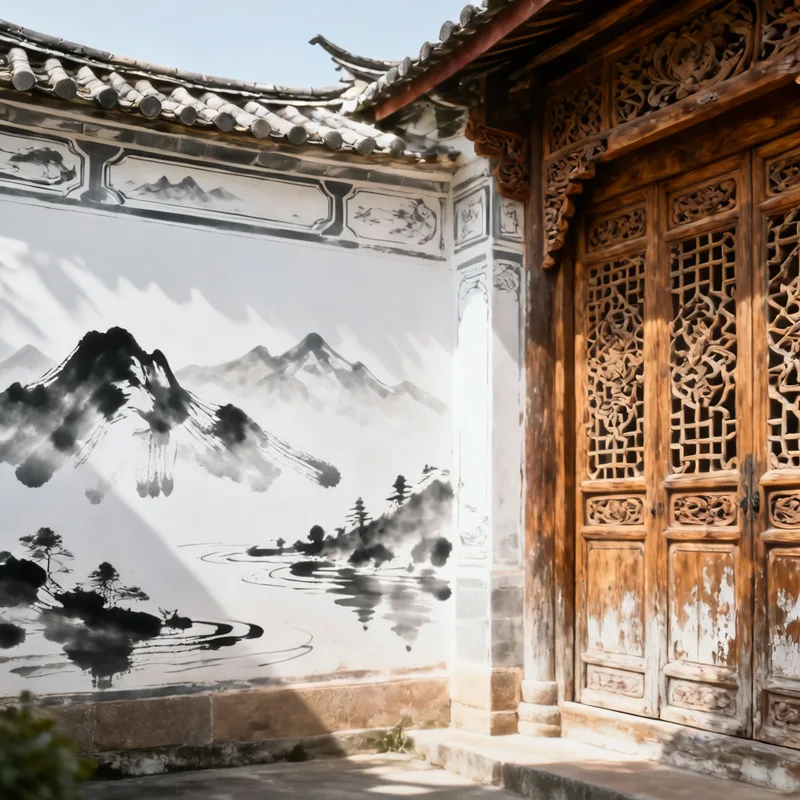
Tea, markets and festivals
Three-course tea is a Bai hospitality ritual: a bitter first cup brewed from roasted leaves, a sweet second cup with nuts and honey, and a final cup that mixes the two and is said to leave a lasting aftertaste. Local dishes include air-dried milk sheets called rushan, raw pork skin salad, sour fish from Erhai and bean curd cooked with local herbs. The Third Month Fair, held in the lunar third month at Dali, began as a livestock and goods market and now fills the foothills of Cangshan with stalls, horse trading and performances. Raosanling, a pilgrimage and singing gathering, and torch-lighting customs in some villages add other dates to the year.
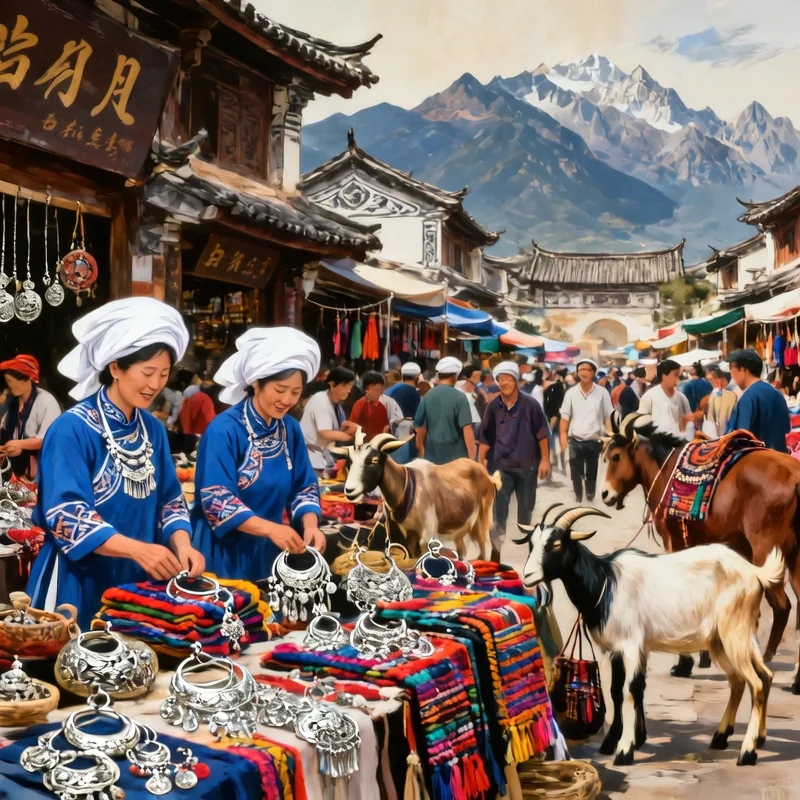
Bai craftsmen treat a house front, a tea cup and a dyed cloth as the same surface for pattern.
Sumber & bacaan lebih lanjut
- Bai — Ensiklopedia Britannica.
- Bai Ethnic Group — China.org.cn.