मानचित्र अन्वेषण
Huangshan
Granite peaks in a sea of clouds
Follow the paths between Huangshan’s granite peaks, pines and hot springs.
- अनुभाग
- मानचित्र अन्वेषण
- क्षेत्र
- ZHEJIANG
- युग
- युगों के पार
- टैग
- Scenic Sites, Geography
Huangshan rises in southern Anhui, close to the Zhejiang border. UNESCO inscribed the mountain as a mixed natural and cultural property in 1990, recognising both its scenery and its place in Chinese art.
A mountain made of granite
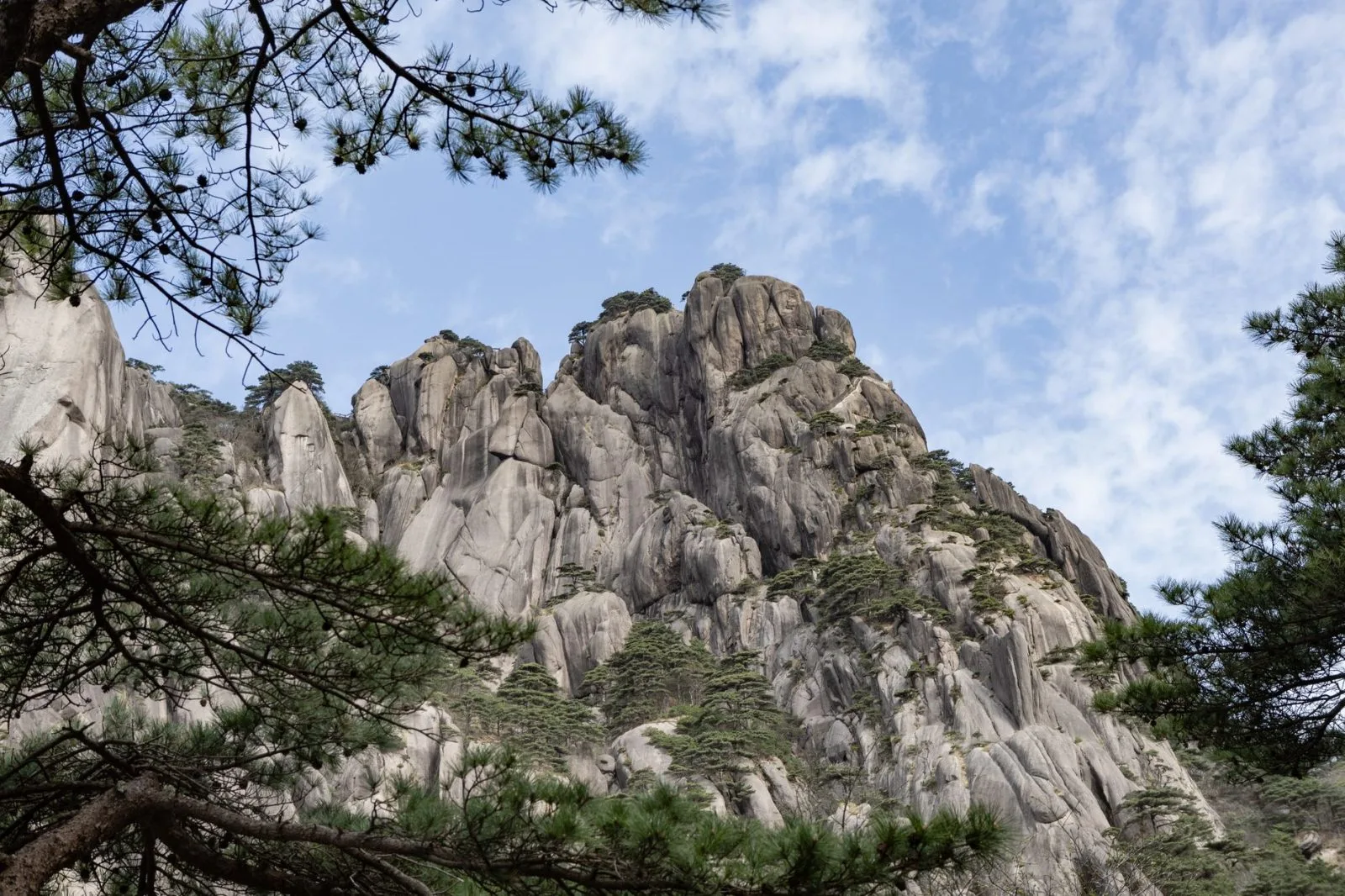
Huangshan’s landscape is built from granite that cooled beneath the surface and was exposed by uplift and erosion. More than seventy peaks exceed 1,000 metres; Lotus Peak, the highest, reaches 1,864 metres. Jointing and weathering have split the rock into pillars, blocks and sheets, while water and ice have carved cavities and valleys. Mist forms readily in the humid climate, and cloud often fills the valleys below the ridges. Hot springs emerge at the mountain’s foot, where water circulates through fractured rock. The UNESCO property covers roughly 16,000 hectares with a wider buffer zone.
Pines, paintings and poetry
Huangshan pines grow from cracks in bare rock, their flattened crowns shaped by wind, snow and thin soils. The Guest-Greeting Pine near the northern viewpoints has become an emblem, though access is now managed to protect it. The mountain was named Huangshan by imperial order in 747 and drew hermits, poets and painters over later centuries. By the Yuan dynasty, dozens of temples stood on its slopes. In the Ming period, artists of the Huangshan school made its peaks a subject of landscape painting, helping to establish the shanshui, or mountain-and-water, tradition in Chinese art.
Walking the mountain
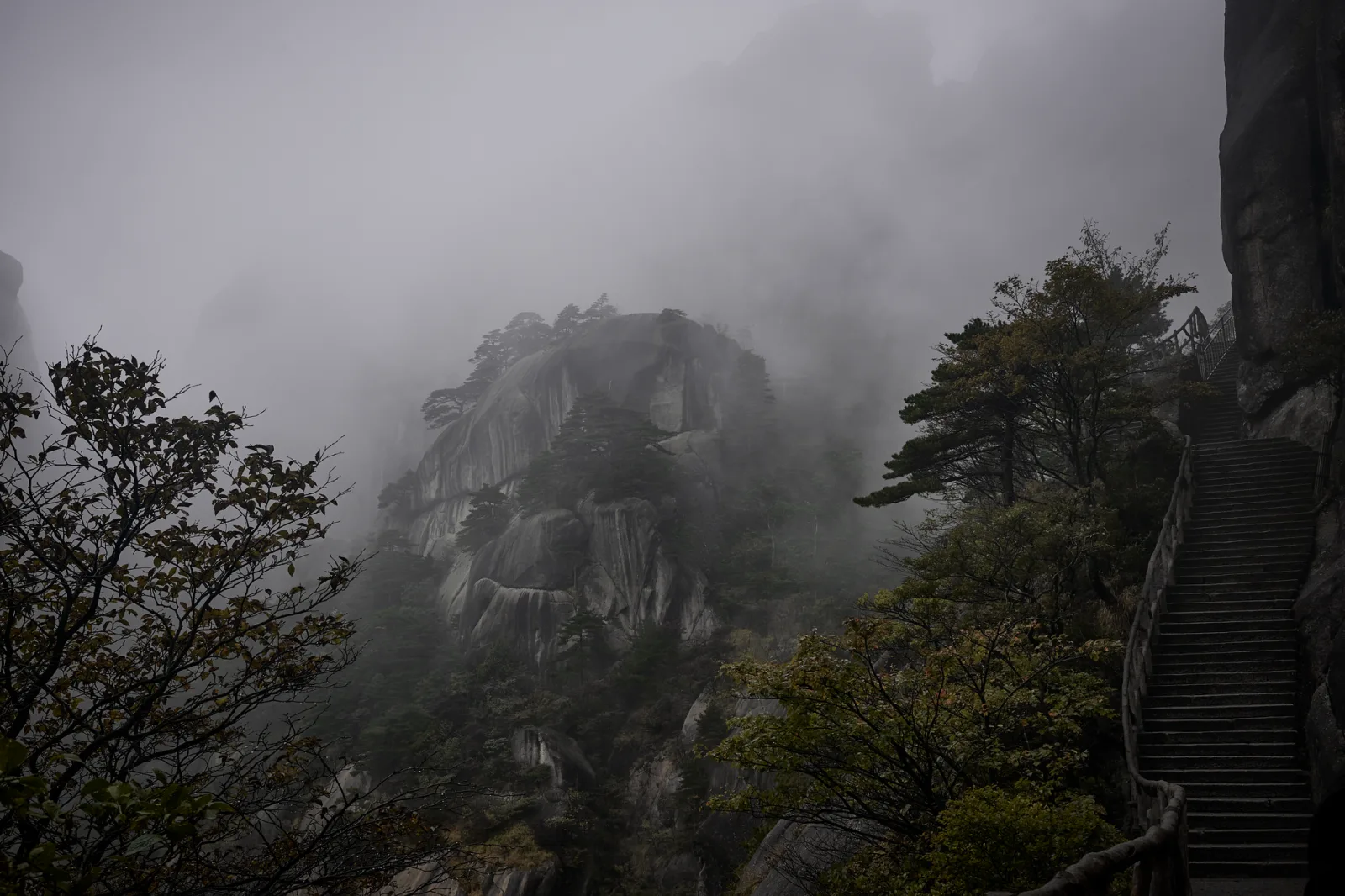
Most visitors enter from Tangkou at the foot of the mountain. Cableways from Yungu, Taiping and Yuhua shorten the approach, but the ridge walks still involve steep stone stairs and exposed sections. A common two-day route climbs to the northern or western hotel area, catches sunrise from a viewpoint such as Guangming Ding, then crosses the ridges before descending. Steps number in the tens of thousands, so sturdy shoes and a light pack matter. Weather changes quickly; cloud can erase views within minutes, and ice makes winter stairs slippery.
Seasons and nearby villages
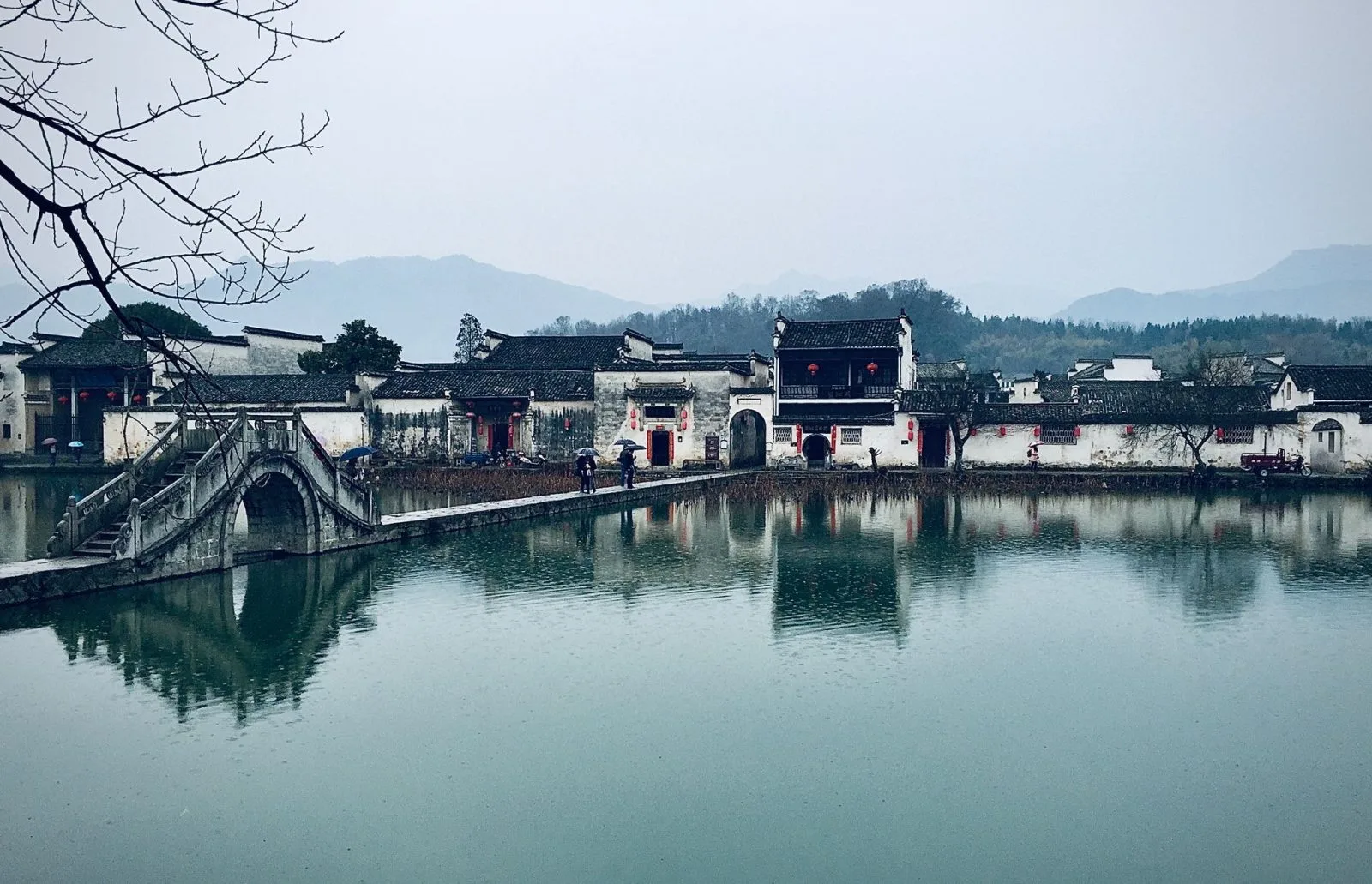
Spring brings flowering trees and frequent mist; summer is green and rainy, with cloud seas most likely after clear nights. Autumn is dry and clear, while winter snow and rime draw photographers despite cold temperatures and occasional closures. Dawn is the busiest time at the main viewpoints, and cable queues can be long during national holidays. Below the mountain, the villages of Xidi and Hongcun preserve Ming and Qing houses, lanes and water systems and were inscribed on the World Heritage List in 2000. They make a quieter complement to a night above the clouds.
Huangshan taught painters how a mountain could be both a place and an idea.
स्रोत और आगे की जानकारी
- Mount Huangshan — UNESCO World Heritage Centre.
- Ancient Villages in Southern Anhui – Xidi and Hongcun — UNESCO World Heritage Centre.
- Huangshan — एनसाइक्लोपीडिया ब्रिटानिका।
इसे यथास्थान देखें
इस प्रविष्टि का अनुसरण करके उस क्षेत्र तक पहुँचें जहाँ यह संबंधित है।
मानचित्र द्वारा अन्वेषण करेंइस चर्चा का अनुसरण करें
उन अन्य प्रविष्टियों को ब्राउज़ करें जिनमें इसके समान टैग हैं।
टैग ब्राउज़ करें