استكشاف الخرائط
West Lake
A landscape shaped by scholars
Read Hangzhou’s West Lake as a landscape built over centuries by dredging, planting and poetry.
- قسم
- استكشاف الخرائط
- منطقة
- تشجيانغ
- عصر
- عبر العصور
- الوسوم
- Scenic Sites, Geography
West Lake covers about 6.4 square kilometres beside Hangzhou in Zhejiang. UNESCO inscribed the surrounding cultural landscape in 2011, citing its causeways, islands and long tradition of literary appreciation.
Two causeways, three islands
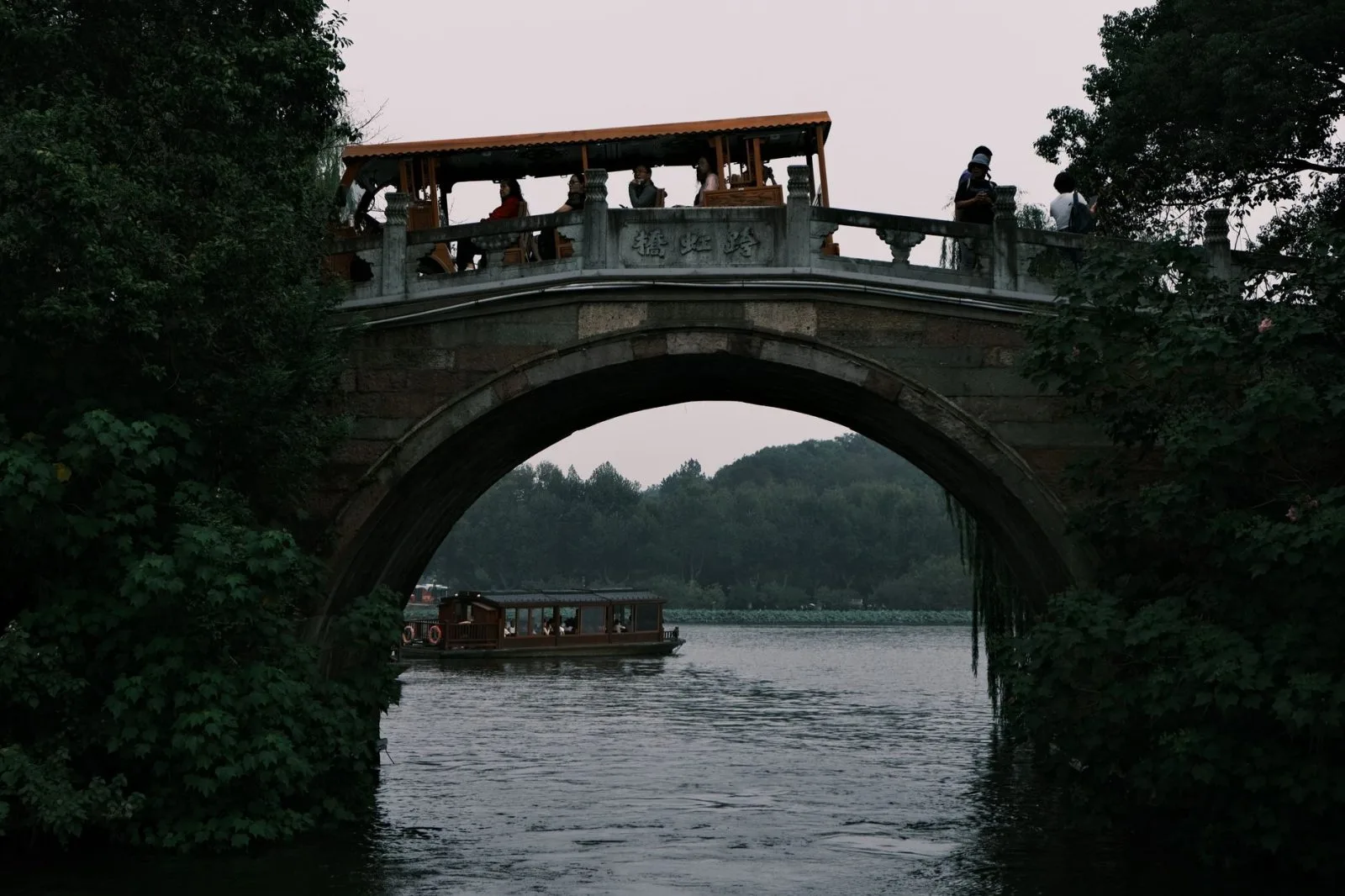
The lake began as a shallow bay linked to the Qiantang River. Alluvial deposition closed the connection, and repeated dredging from the ninth century onward created the layout seen today. Bai Causeway, about 987 metres long, runs west from the city towards Gushan Hill; Su Causeway, about 2.8 kilometres with six arched bridges, crosses the western side. Three small islands — Lesser Yingzhou, Mid-lake Pavilion and Ruangongdun — divide the water into five named sections. The whole property covers 3,323 hectares, of which about 559 is water.
Poets and public works
Bai Juyi, a Tang governor, directed dredging in the early ninth century; the causeway bearing his name commemorates that work. Su Shi, poet and governor of Hangzhou, oversaw a major dredging campaign in 1089 and used the silt to build the causeway that carries his name. He also marked the Three Pools area with stone pagodas to discourage planting that would accelerate silting. By the Southern Song period, writers had named ten scenic places around the lake, from Spring Dawn at Su Causeway to Evening Bell at Nanping Hill. The act of naming helped turn a working reservoir into a cultural landscape.
Gardens that travelled
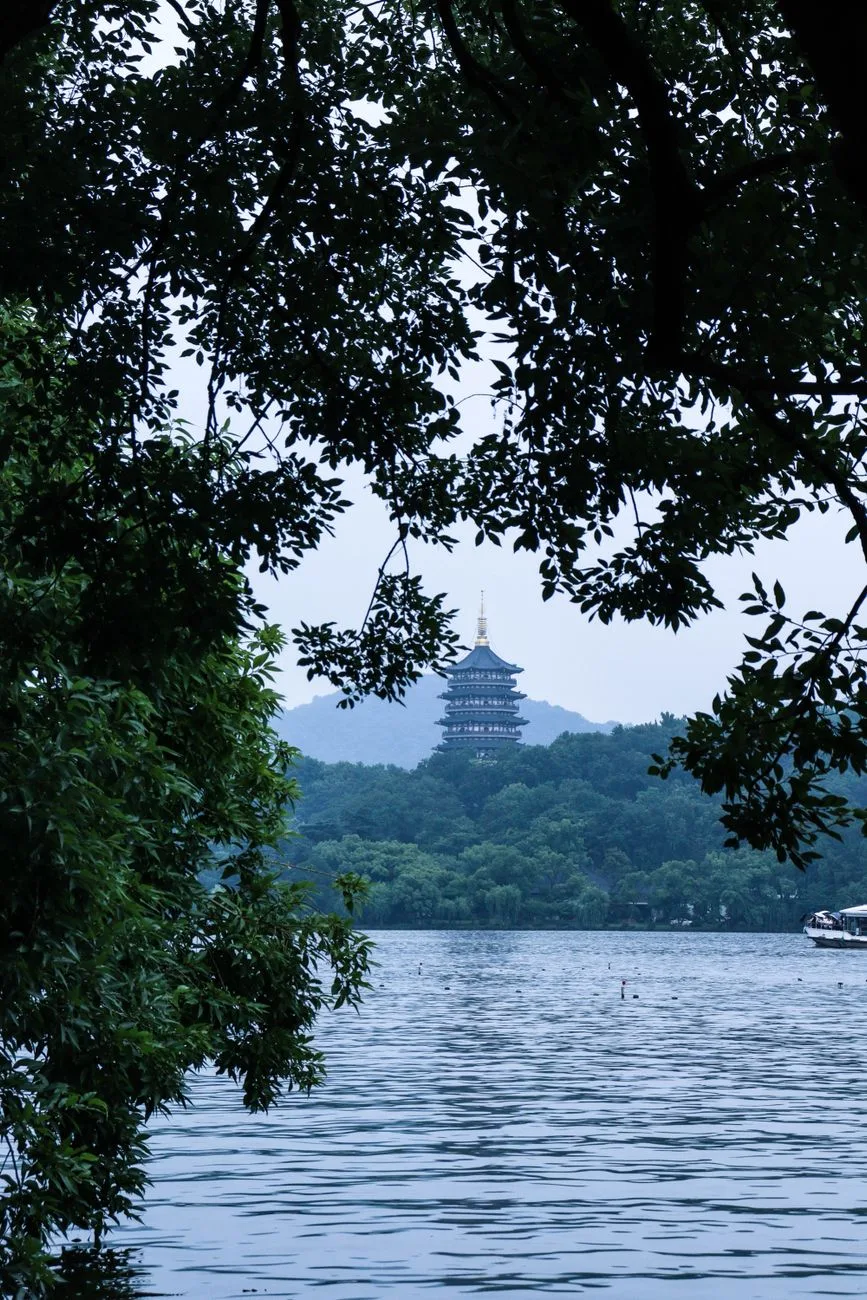
West Lake’s combination of open water, wooded hills, pagodas, pavilions and planted banks became a model for garden design well beyond Hangzhou. UNESCO notes its influence in China, Japan and Korea, where lakes and causeways were used to compose views that joined human construction to natural forms. The surrounding hills hold temples and monuments, including Lingyin Temple and the remains of Leifeng Pagoda, which collapsed in 1924 and was rebuilt in 2002. Tea plantations on the western hills produce Longjing, or Dragon Well, tea; the planted landscape was part of the heritage nomination.
Seeing the lake
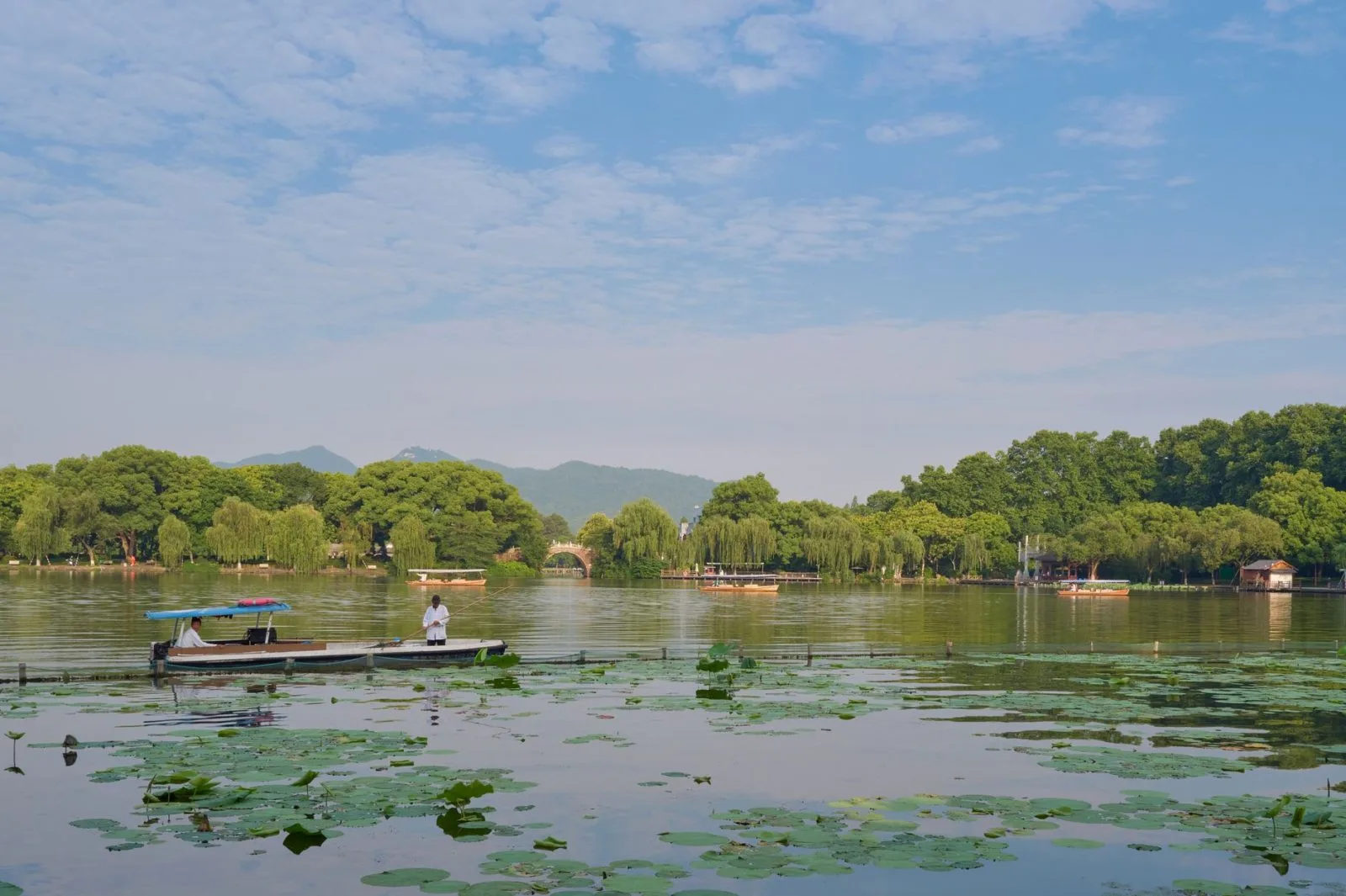
The lake’s shore path runs for roughly 15 kilometres, and boats cross to the islands for views of the pagodas and arched bridges. Spring is the classic season, when willows leaf out and peach trees flower along the causeways; early summer brings lotus blooms and heavier heat. Autumn is dry and clear, and a rare snowfall can empty the streets as residents head for the Broken Bridge. Hangzhou is about an hour from Shanghai by high-speed rail, so a day visit is feasible, though the light is better early or late. Weekend crowds concentrate near the busiest causeways.
West Lake is a piece of water that generations of writers taught China how to see.
المصادر والمزيد من القراءة
- West Lake Cultural Landscape of Hangzhou — UNESCO World Heritage Centre.
- West Lake visitor information — Hangzhou Municipal Government.
- West Lake — موسوعة بريتانيكا.