Cuộc sống & Văn hóa dân gian
Noodles of North China
From Millet Bowls to Hand-Pulled Strands
Wheat, water and hand technique make noodles a staple of the northern table.
- Phần
- Cuộc sống & Văn hóa dân gian
- Vùng đất
- Thiểm Tây
- Kỷ nguyên
- Xuyên suốt các thời đại
- Thẻ
- Food, Geography
North of the Qinling–Huaihe line, wheat and millet rather than rice shaped the daily meal. Noodles — mian when made from wheat, fen when made from other starches — became the most visible expression of that divide.
An Archaeological Bowl
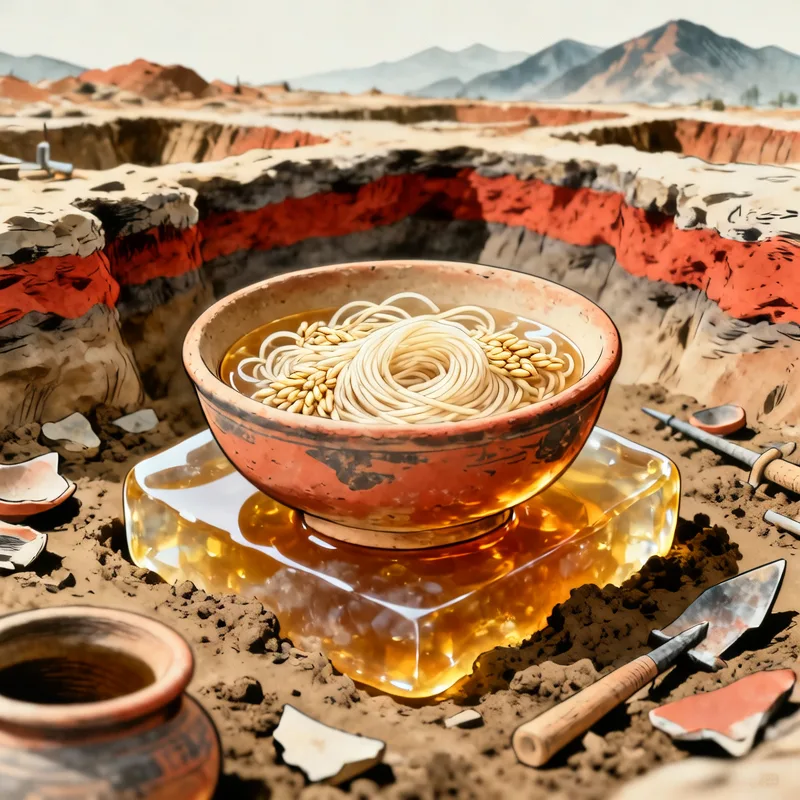
Noodles are older than the wheat noodle. In 2005 researchers reported a bundle of thin yellow strands from a sealed earthenware bowl at Lajia, a Late Neolithic site in Qinghai on the Yellow River, dating to about 4,000 years ago. Starch grains and husk phytoliths identified foxtail and broomcorn millet, not wheat. A 2014 study used traditional extruding tools to reproduce similar strands from millet flour. The find does not settle every argument about noodle origins, but it gives the craft a solid archaeological date.
Wheat Moves North
Wheat was domesticated in the Fertile Crescent and reached northern China several millennia before the Han dynasty. Its gluten made dough elastic enough to be stretched, rolled and boiled without breaking, which millet alone could not do. By the Tang and Song periods, mills, wheat fields and noodle shops were part of urban life in the north, and written recipes describe dried noodles kept for later use. The split with the rice-growing south hardened around this staple.
Shaanxi sits at the centre of that wheat world. The Guanzhong plain is enclosed by the Qinling mountains to the south and the Loess Plateau to the north, with the Wei River running through it. Chang’an, the Tang capital at modern Xi’an, stood at the eastern end of the Silk Road; merchants, soldiers and Muslim communities all left marks on local food. Geography here is not background scenery — it determines the grain in the bowl.
The Shaanxi Repertoire
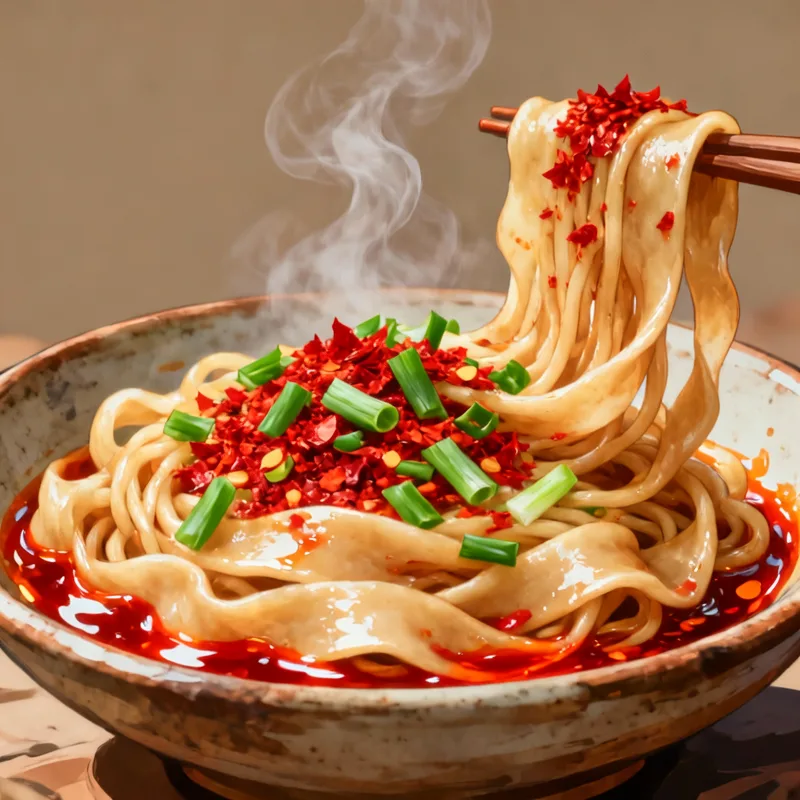
The province’s noodles are made rather than merely cooked. Biangbiang mian are broad, hand-slapped ribbons, named for the sound of dough hitting the counter; the dialect character for biang has more than fifty strokes. Youpo mian are topped with chilli flakes, garlic and scallions, then splashed with hot oil until they hiss. Qishan saozi mian arrive in broth with diced pork, egg, tofu, wood ear and daylily, and the first bowl is traditionally set aside as an offering to ancestors before the family eats.
Soups, Bread and Cold Noodles
Not all northern noodles are wheat strands. Yang rou paomo, a Xi’an speciality associated with the city’s Hui community, begins with a flatbread that the diner tears into small pieces before a rich mutton broth is poured over it. Liangpi are cold sheets or strips made from wheat or mung bean starch, dressed with vinegar, garlic and chilli oil. Shanxi, the neighbouring province, is known for knife-shaved dao xiao mian and for aged vinegar; Henan favours wide hand-pulled hui mian in lamb soup.
- Qishan saozi mian — noodles with minced meat and vegetables
- Yang rou paomo — mutton soup with torn flatbread
- Biangbiang mian — wide, hand-slapped wheat noodles
- Liangpi — cold starch noodles with chilli oil
Beyond the Province
The same techniques travel well. Lanzhou beef noodle soup, sold by Hui traders across China, pairs hand-pulled strands with a clear broth, sliced beef, radish and coriander. Beijing’s zhajiangmian uses wheat noodles under a thick fried soybean paste, surrounded by cucumber and bean sprouts. What unites these dishes is not a single sauce but a method: flour worked by hand into strands, boiled and served in a broth or with a paste. Northern noodle shops remain places where that work is visible.
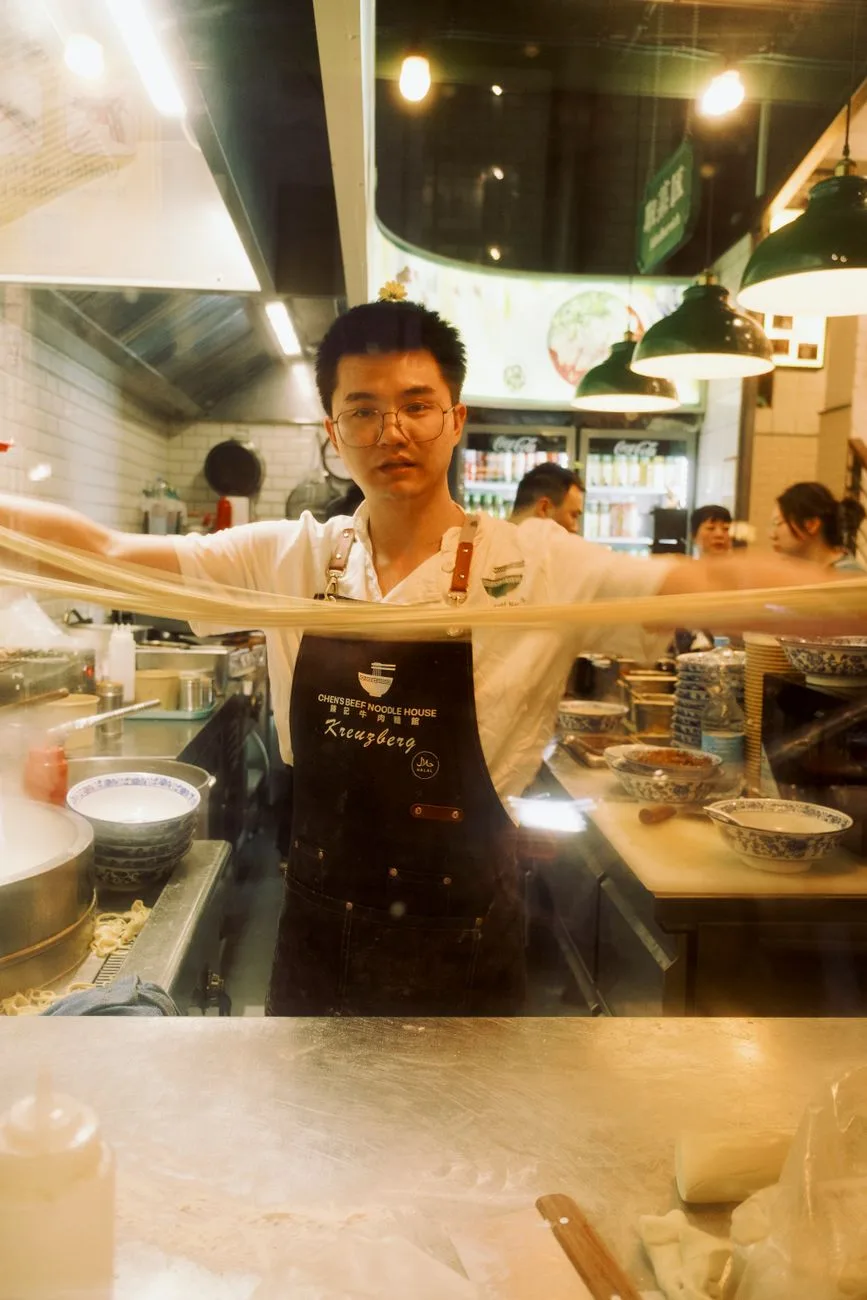
The sound of dough slapped on a board is part of the recipe: biangbiang is a verb before it is a name.
Nguồn tham khảo & tài liệu đọc thêm
- Millet noodles in Late Neolithic China — Nature.
- Chinese cuisine — Bách khoa toàn thư Britannica.
- Component and simulation of the 4,000-year-old noodles excavated from the archaeological site of Lajia in Qinghai, China — Chinese Science Bulletin.