Cuộc sống & Văn hóa dân gian
The Dong People
Drum towers and unaccompanied song
The Dong, or Kam, are Kra-Dai-speaking villagers of southwest China known for timber towers, covered bridges and part-singing.
- Phần
- Cuộc sống & Văn hóa dân gian
- Vùng đất
- Quảng Tây
- Kỷ nguyên
- Xuyên suốt các thời đại
- Thẻ
- Ethnic, Customs
Dong villages gather around a drum tower and a song hall, where music is learned by ear. Their grand song, sung in parts without instruments, was inscribed on UNESCO’s Representative List of Intangible Cultural Heritage in 2009.
Villages across three provinces
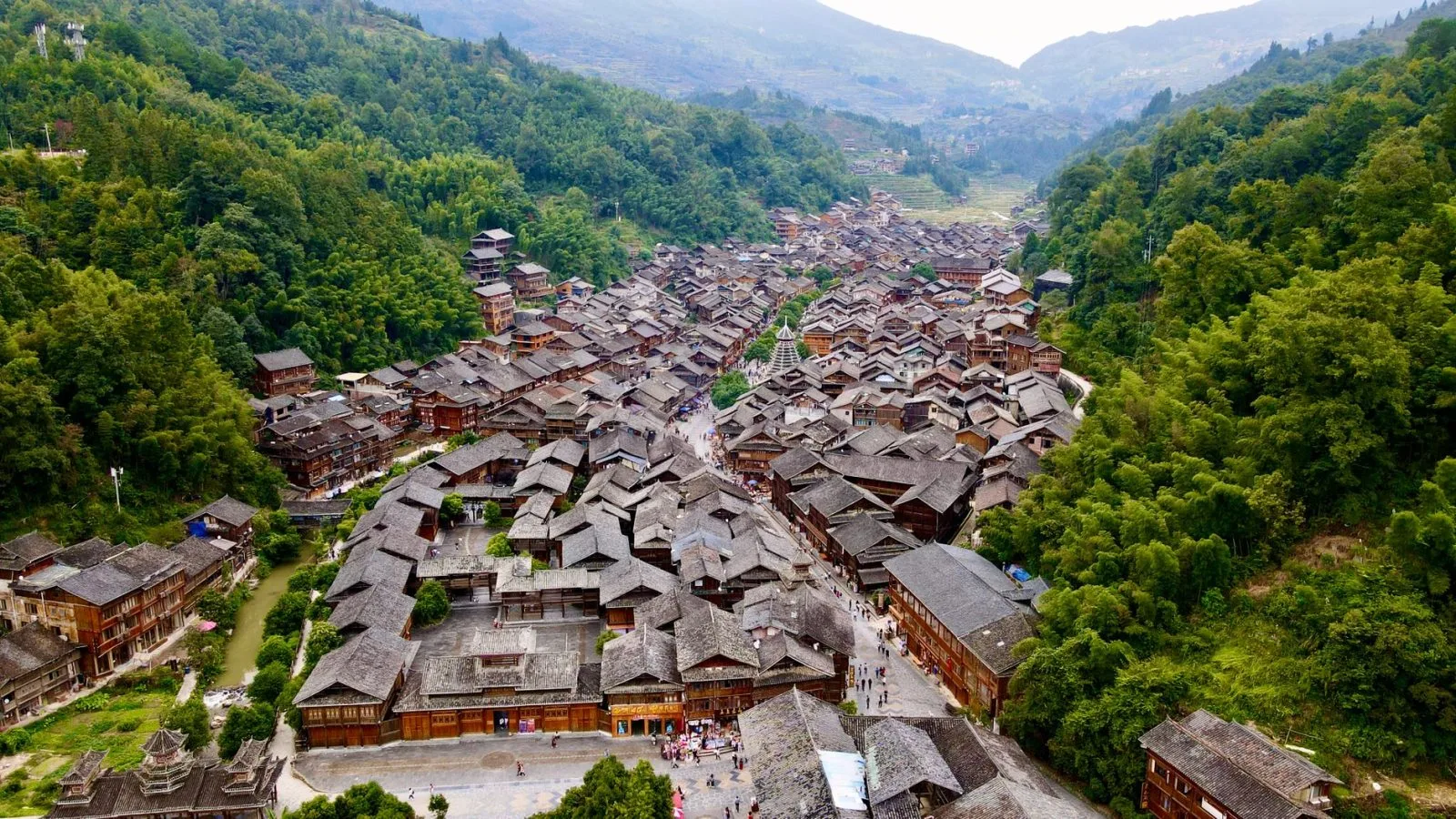
The 2010 census recorded about 2.96 million Dong people, also known as Kam. Most live in the Qiandongnan Miao and Dong Autonomous Prefecture of eastern Guizhou, with others in Xinhuang County in western Hunan and Sanjiang County in northern Guangxi, the area tagged for this entry. Settlements cluster along streams in hilly country, where houses are built close together on timber posts and the ground floor is kept for animals and storage. Villages often form around a clan or a group of related families, and a shared drum tower marks the centre. Neighbouring Miao, Yao and Han communities shape the markets and intermarriage patterns of the region.
Language and village rule
The Dong language is also called Kam and belongs to the Kam-Sui branch of the Kra-Dai family, the wider family that includes Dai and Thai. It has tones and a large vocabulary for rice farming, forest work and village ritual. There is no old, widely shared Dong script; Chinese characters have been used for official records, and romanised spelling now helps publish dictionaries and song texts. Village life has long been regulated by compacts known as kuan, agreements on land use, marriage and dispute settlement that are recited at assemblies. Elders and elected heads speak for the village, while the song hall and the drum tower serve as places where young people learn the repertoire and the rules.
Towers and covered bridges
Dong timber building is famous for two structures. The drum tower rises above the rooftops as a layered pagoda with projecting eaves, built from joined timbers and used for meetings, signals and festival gatherings. The wind and rain bridge is a covered crossing with a tiled roof, benches along its length and one or more pavilion towers. The Chengyang Yongji Bridge in Sanjiang, built in the early twentieth century, is a well-known example of this bridge type. Both structures are assembled by local carpenters using mortise and tenon joints rather than metal fasteners, and whole villages contribute labour and timber when one is raised or repaired.

Grand song and daily food
The Kam grand song, or dongge, is unaccompanied polyphonic singing led by high voices and answered by a lower drone from the group. It is learned in song halls, where young people sit around a fireplace and rehearse through the winter, and it is performed at weddings, festivals and visits between villages. Dong New Year falls in the eleventh lunar month in many places, with drum tower gatherings and, in some areas, bullfighting. Daily food includes fermented sour fish packed with rice, sour soup, glutinous rice and you cha, a tea whisked with fried rice, peanuts and herbs. These dishes suit a wet upland climate where preservation and shared heating matter.
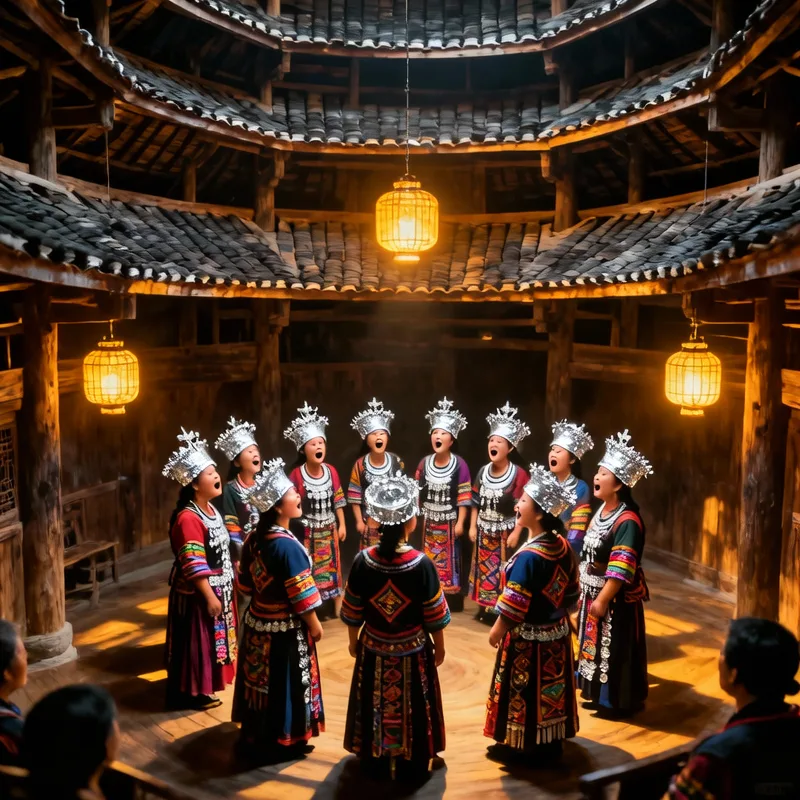
In a Dong village, the drum tower is both a landmark and an invitation to gather.
Nguồn tham khảo & tài liệu đọc thêm
- Kam grand song of the Dong ethnic group — UNESCO Intangible Cultural Heritage.
- Dong — Bách khoa toàn thư Britannica.
- Dong Ethnic Group — China.org.cn.