Yaşam ve Folklor
Dong Halkı
Davul kuleleri ve eşliksiz şarkı
Çin'in güneybatısında yaşayan Dong veya Kam halkı, Kra-Dai dilini konuşan, ahşap kuleleri, kapalı köprüleri ve çok sesli şarkılarıyla tanınan köylülerdir.
- Bölüm
- Yaşam ve Folklor
- Bölge
- Guangxi
- Dönem
- Çağlar boyunca
- Etiketler
- Etnik, Gelenekler
Dong köyleri, müziğin kulaktan öğrenildiği bir davul kulesi ve şarkı salonunun etrafında toplanır. Enstrüman kullanılmadan, çok sesli olarak söylenen görkemli şarkıları, 2009 yılında UNESCO'nun Somut Olmayan Kültürel Miras Temsili Listesi'ne dahil edilmiştir.
Üç ildeki köyler
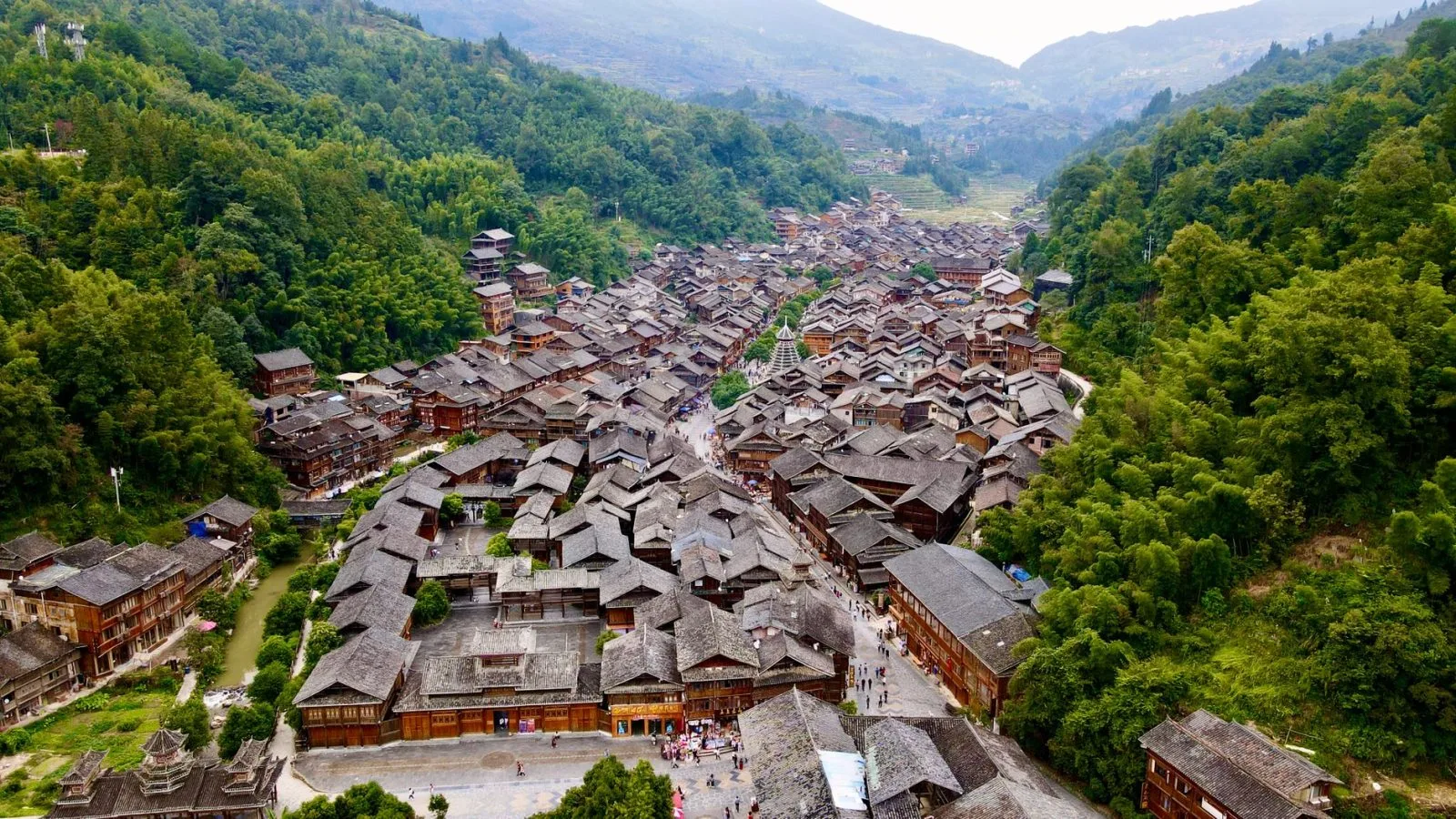
2010 nüfus sayımına göre, yaklaşık 2,96 milyon Dong (Kam olarak da bilinir) insanı kaydedilmiştir. Çoğu, Guizhou'nun doğusundaki Qiandongnan Miao ve Dong Özerk Bölgesi'nde yaşarken, diğerleri Hunan'ın batısındaki Xinhuang İlçesi ve bu giriş için işaretlenen Guangxi'nin kuzeyindeki Sanjiang İlçesi'nde yaşamaktadır. Yerleşimler, tepelik arazideki akarsular boyunca kümelenir; evler ahşap direkler üzerine birbirine yakın inşa edilir ve zemin kat hayvanlar ve depolama için kullanılır. Köyler genellikle bir klan veya akraba ailelerden oluşan bir grup etrafında kurulur ve ortak bir kule merkezi işaretler. Komşu Miao, Yao ve Han toplulukları, bölgenin pazarlarını ve evlilik düzenlerini şekillendirir.
Language and village rule
The Dong language is also called Kam and belongs to the Kam-Sui branch of the Kra-Dai family, the wider family that includes Dai and Thai. It has tones and a large vocabulary for rice farming, forest work and village ritual. There is no old, widely shared Dong script; Chinese characters have been used for official records, and romanised spelling now helps publish dictionaries and song texts. Village life has long been regulated by compacts known as kuan, agreements on land use, marriage and dispute settlement that are recited at assemblies. Elders and elected heads speak for the village, while the song hall and the drum tower serve as places where young people learn the repertoire and the rules.
Towers and covered bridges
Dong timber building is famous for two structures. The drum tower rises above the rooftops as a layered pagoda with projecting eaves, built from joined timbers and used for meetings, signals and festival gatherings. The wind and rain bridge is a covered crossing with a tiled roof, benches along its length and one or more pavilion towers. The Chengyang Yongji Bridge in Sanjiang, built in the early twentieth century, is a well-known example of this bridge type. Both structures are assembled by local carpenters using mortise and tenon joints rather than metal fasteners, and whole villages contribute labour and timber when one is raised or repaired.

Grand song and daily food
The Kam grand song, or dongge, is unaccompanied polyphonic singing led by high voices and answered by a lower drone from the group. It is learned in song halls, where young people sit around a fireplace and rehearse through the winter, and it is performed at weddings, festivals and visits between villages. Dong New Year falls in the eleventh lunar month in many places, with drum tower gatherings and, in some areas, bullfighting. Daily food includes fermented sour fish packed with rice, sour soup, glutinous rice and you cha, a tea whisked with fried rice, peanuts and herbs. These dishes suit a wet upland climate where preservation and shared heating matter.
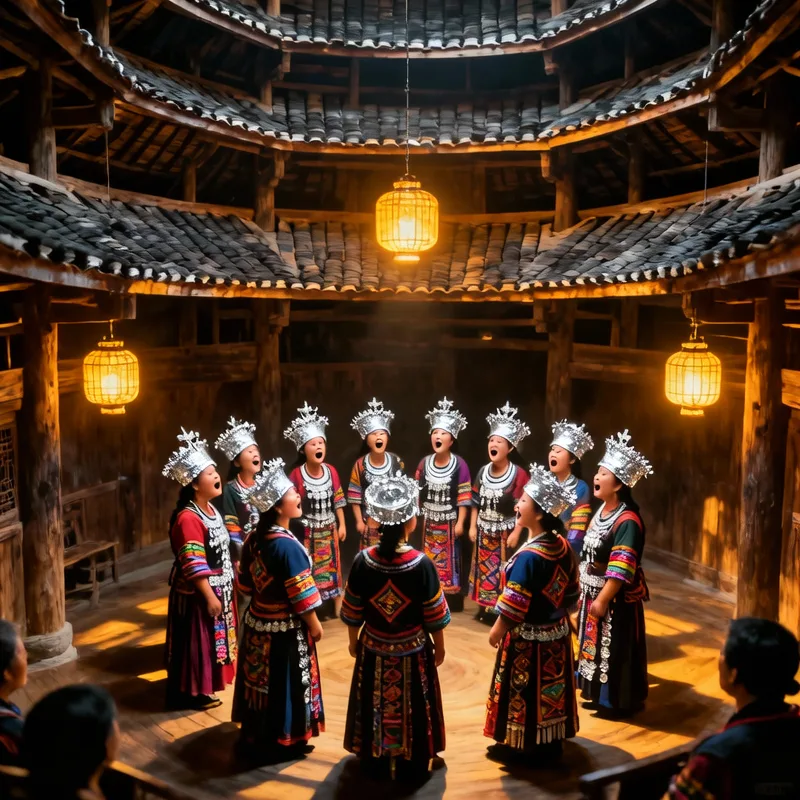
In a Dong village, the drum tower is both a landmark and an invitation to gather.
Kaynaklar ve daha fazla okuma
- Kam grand song of the Dong ethnic group — UNESCO Somut Olmayan Kültürel Miras.
- Dong — Britannica Ansiklopedisi.
- Dong Ethnic Group — China.org.cn.