ชีวิตและนิทานพื้นบ้าน
The Eight Great Cuisines
A Map of Eight Regional Styles
The eight great cuisines classify Chinese cooking by region, climate and technique.
- ส่วน
- ชีวิตและนิทานพื้นบ้าน
- ภูมิภาค
- ปักกิ่ง
- ยุค
- ข้ามยุคสมัย
- แท็ก
- Food
Ask a Chinese cook to name the country’s great cuisines and you will hear a list of eight. The scheme is a modern way of sorting older regional traditions, each shaped by climate, staple crops, waterways and trade.
How the List Was Made
An older division recognised four great traditions: Lu in the north, Yue in the south, Chuan in the west and Huaiyang in the east. The more detailed eight-cuisine scheme emerged in the 1980s and is often credited to Wang Shaoquan, a journalist at the People’s Daily. It added Zhe, Min, Xiang and Hui to the original four, giving provinces a more precise place on the culinary map. The categories are conventions, not laws; cooks in Chengdu and Guangzhou have always borrowed from neighbours.
North and East
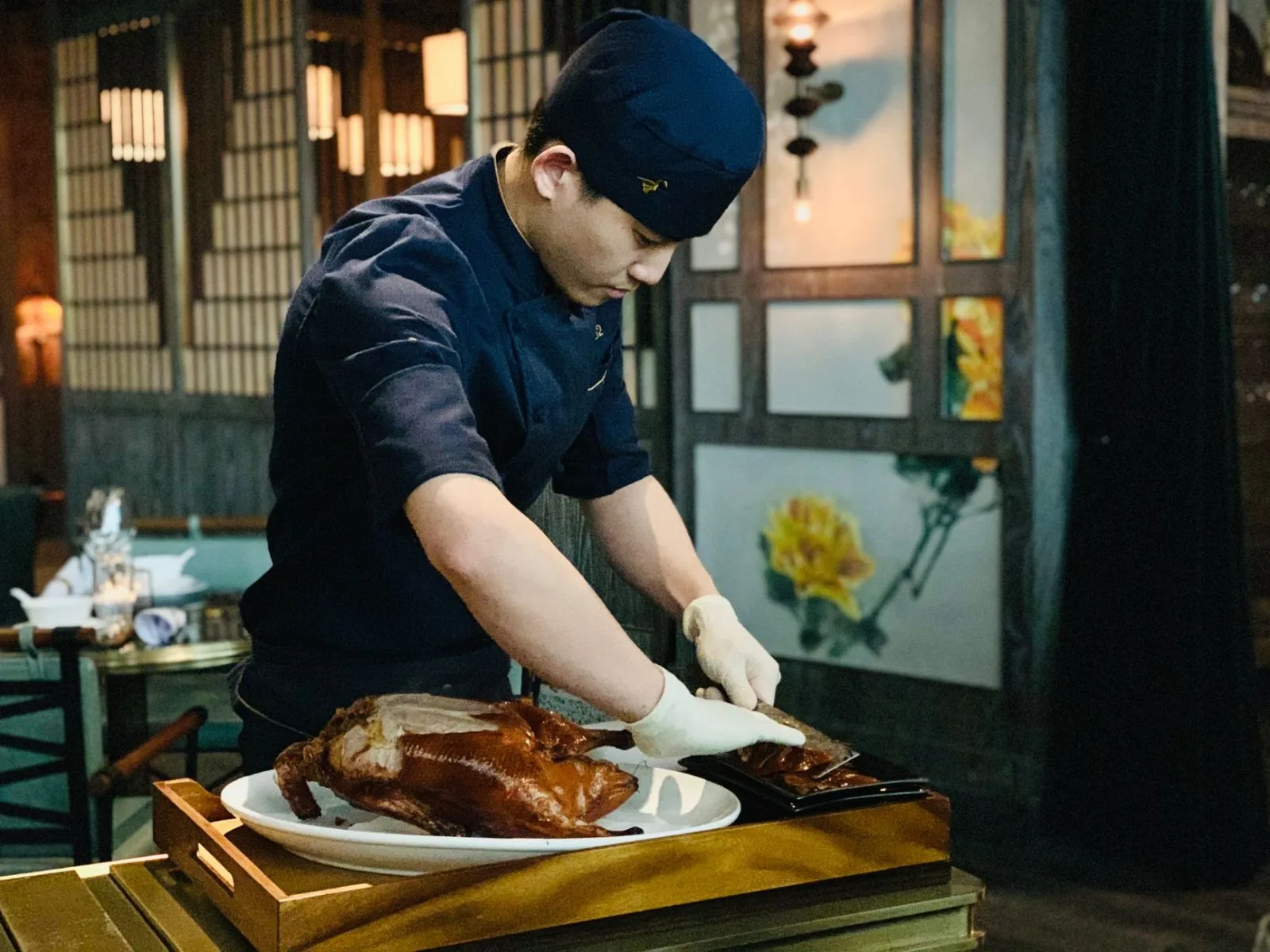
Lu, or Shandong cuisine, is the classic northern style. Coastal branches favour prawns, scallops and abalone, often quickly stir-fried, while inland cooks around Jinan excel at soups and long braises. Scallions and salt are characteristic seasonings, and steamed bread often replaces rice. Lu cooking shaped the food of the imperial court and of Beijing, where Shandong chefs dominated many restaurants; the capital’s Peking duck belongs to this northern lineage.
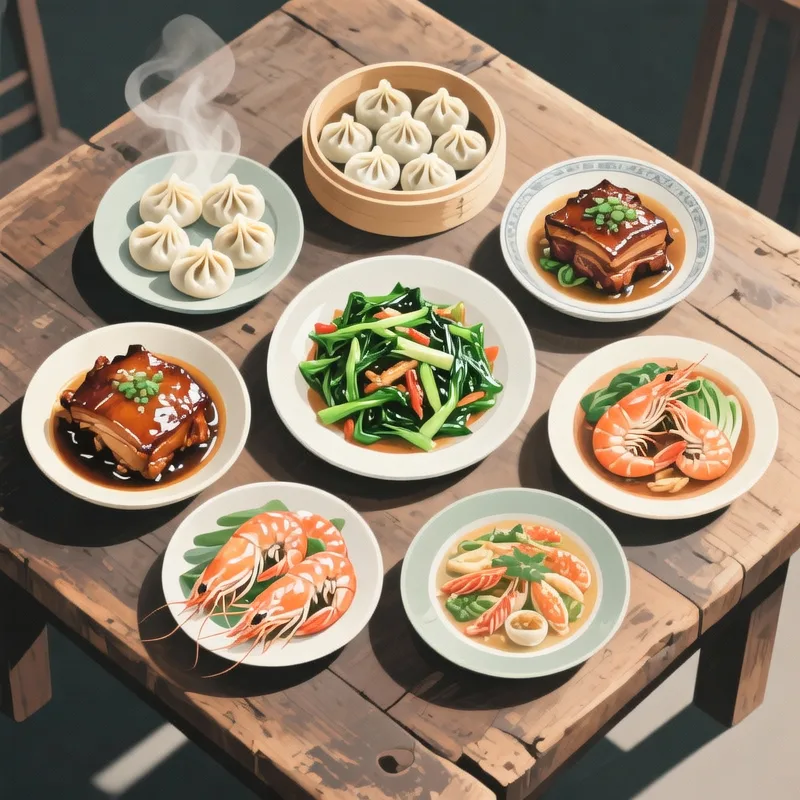
Su, or Jiangsu cuisine, covers the Yangtze delta and Huaiyang region. It favours mild, slightly sweet flavours, careful knife work and serious soups; lotus root, bamboo shoots and water chestnut are common, and xiao long bao soup dumplings are its best-known export. Zhe cuisine, from Zhejiang, is lighter still: Dongpo pork is braised slowly with wine and soy, while West Lake vinegar fish and Longjing shrimp keep the taste of the water and the tea leaves.
South and West
Yue, or Cantonese cuisine, draws on the Pearl River delta and the South China Sea. Freshness governs the kitchen: fish and shellfish are steamed, roast meats are hung in the window, and dim sum is served with tea in a yum cha session. Chuan, or Sichuan cuisine, is defined by ma la, the numbing-spicy pairing of chilli and Sichuan pepper; pixian broad-bean paste gives many dishes their fermented depth. Xiang cooking from Hunan uses chilli without the numbing note, often smoked or pickled, while Hui cuisine from Anhui makes much of mountain ingredients such as bamboo shoots and preserved mandarin fish.
Min and the Sea
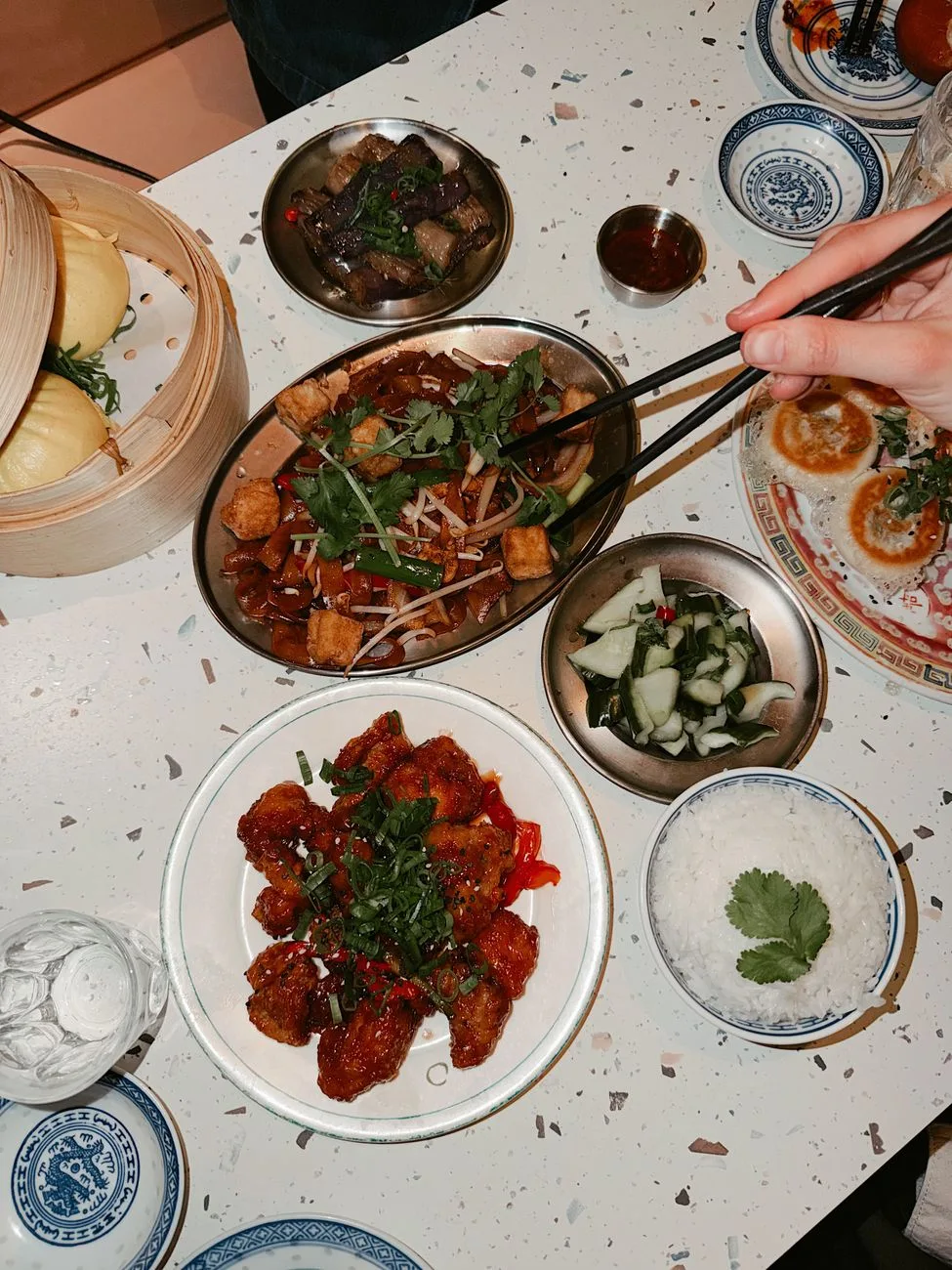
Min, or Fujian cuisine, is easy to overlook and hard to mistake. Fuzhou cooks are masters of soup and of hongzao, fermented red rice lees that colour and flavour pork, fish and river eels. Buddha jumps over the wall is a layered broth of shark fin, abalone, scallop, mushrooms and ham, named for a monk said to have leapt the wall for a taste. Coastal Fujian adds fish balls, oyster omelets and popiah-style crepes, reflecting a province oriented toward the sea and toward migration.
- Lu — Shandong: scallions, seafood, slow soups
- Chuan — Sichuan: ma la, chilli oil, broad-bean paste
- Yue — Guangdong: dim sum, steaming, roast meats
- Min — Fujian: red rice lees and layered soups
Beijing as a Crossroads
The eight-cuisine map describes provinces, but Beijing has always eaten beyond its own borders. Shandong technique supplied the basis of restaurant cooking, Mongol and Manchu tastes left their mark in mutton dishes and hotpot, and the Qing court staged the elaborate Manchu-Han feast. Bianyifang, founded in 1416, roasted ducks in a closed oven; Quanjude, opened in 1864 by Yang Quanren, popularised the hanging oven and the crisp skin served with pancakes, scallions and sweet bean sauce. A capital city turns regional styles into a shared vocabulary.
Eight cuisines are a map of climate and trade, written in oil, vinegar and fermented bean paste.
แหล่งข้อมูลและเอกสารอ่านเพิ่มเติม
- Chinese cuisine — สารานุกรมบริแทนนิกา
- Gastronomy in China — สารานุกรมบริแทนนิกา
- Lu cuisine — สารานุกรมบริแทนนิกา