ชีวิตและนิทานพื้นบ้าน
The Lunar Calendar
Timekeeping by Moon and Sun
China’s traditional calendar ties lunar months to solar seasons, and festivals to both.
- ส่วน
- ชีวิตและนิทานพื้นบ้าน
- ภูมิภาค
- ปักกิ่ง
- ยุค
- ข้ามยุคสมัย
- แท็ก
- ศุลกากร
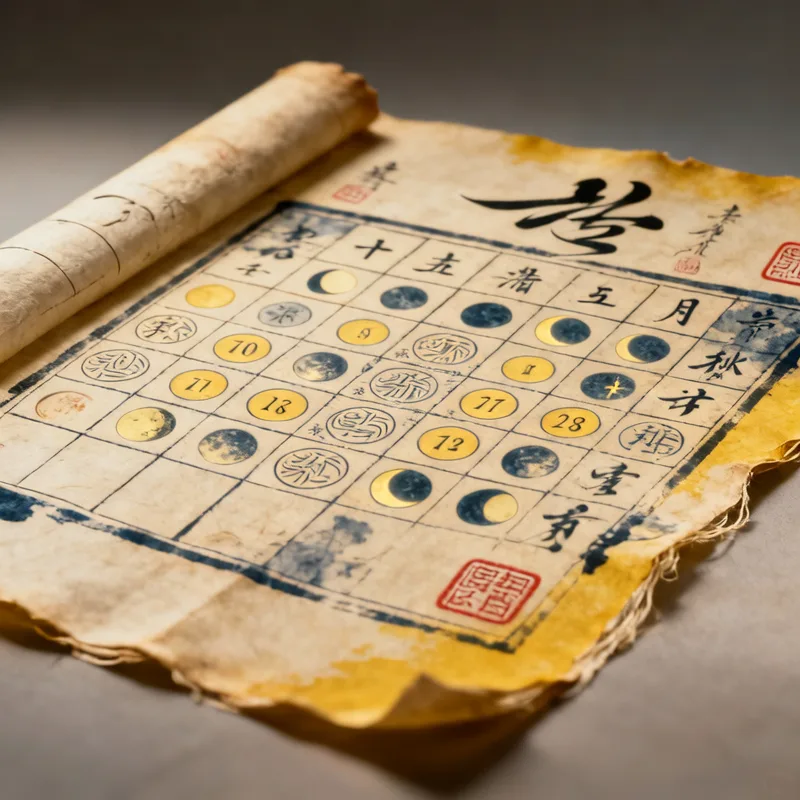
The Chinese calendar is lunisolar: its months follow the moon, while its years follow the sun. For more than two millennia, court astronomers and village farmers used the same system for different purposes — to date reigns and to know when to sow.
How the Calendar Works
Each month begins on the day of the astronomical new moon and lasts 29 or 30 days, so twelve lunar months total about 354 days — roughly eleven days short of a solar year. To keep spring in spring, intercalary months are inserted: seven extra months in every nineteen years, a cycle known as the Metonic cycle. A repeated month is numbered after the one it follows, hence a leap fourth month. Days are counted separately again by the sexagenary cycle, a pairing of ten heavenly stems and twelve earthly branches that labels each day and year with a combination such as jiachen.
Observation Becomes Science
The system grew out of observation. Oracle-bone inscriptions from the Shang dynasty (c. 1600–1046 BCE) record lunar months, eclipses and intercalary months, and the Spring and Autumn Annals preserves early eclipse records used later to test calculations. The Taichu calendar, adopted in 104 BCE under Emperor Wu of Han, fixed the year’s start at the first lunar month and established the nineteen-year intercalation rule. Later reforms refined it: Guo Shoujing’s Shoushi calendar of 1281, made for the Yuan capital at Dadu (Beijing), used a tropical year of 365.2425 days — the same length later adopted by the Gregorian reform.
Calendrical skill was political. A ruler who could predict eclipses and announce the new moon claimed the mandate of heaven; issuing the almanac to subordinate states was an act of authority. The Beijing Ancient Observatory, built in 1442, still holds Ming armillary spheres and a gnomon used for such work. Astronomers there worked alongside Jesuit missionaries in the seventeenth century, when the Qing court adopted European methods for predicting eclipses while retaining the lunar month structure. The calendar was thus a meeting point of statecraft, mathematics and observation.
The Twenty-Four Solar Terms
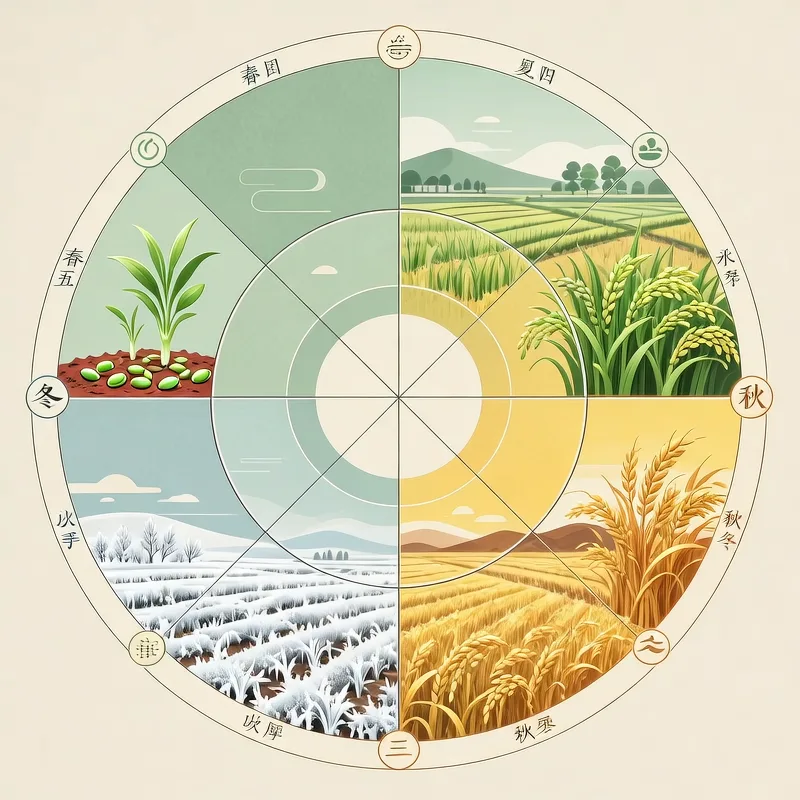
Running beside the lunar months is a solar calendar of twenty-four terms, each spaced fifteen degrees along the sun’s annual path. The sequence begins with Lichun, the Beginning of Spring, around 4 February, and includes Qingming (Pure Brightness) in early April, Xiazhi (Summer Solstice), Bailu (White Dew) and Dongzhi (Winter Solstice). Developed in the Yellow River region and applied nationwide, the terms tell farmers when to expect frost or rain; proverbs still link them to sowing and harvest. UNESCO inscribed the knowledge and practice on its Representative List in 2016.
A Calendar of Festivals
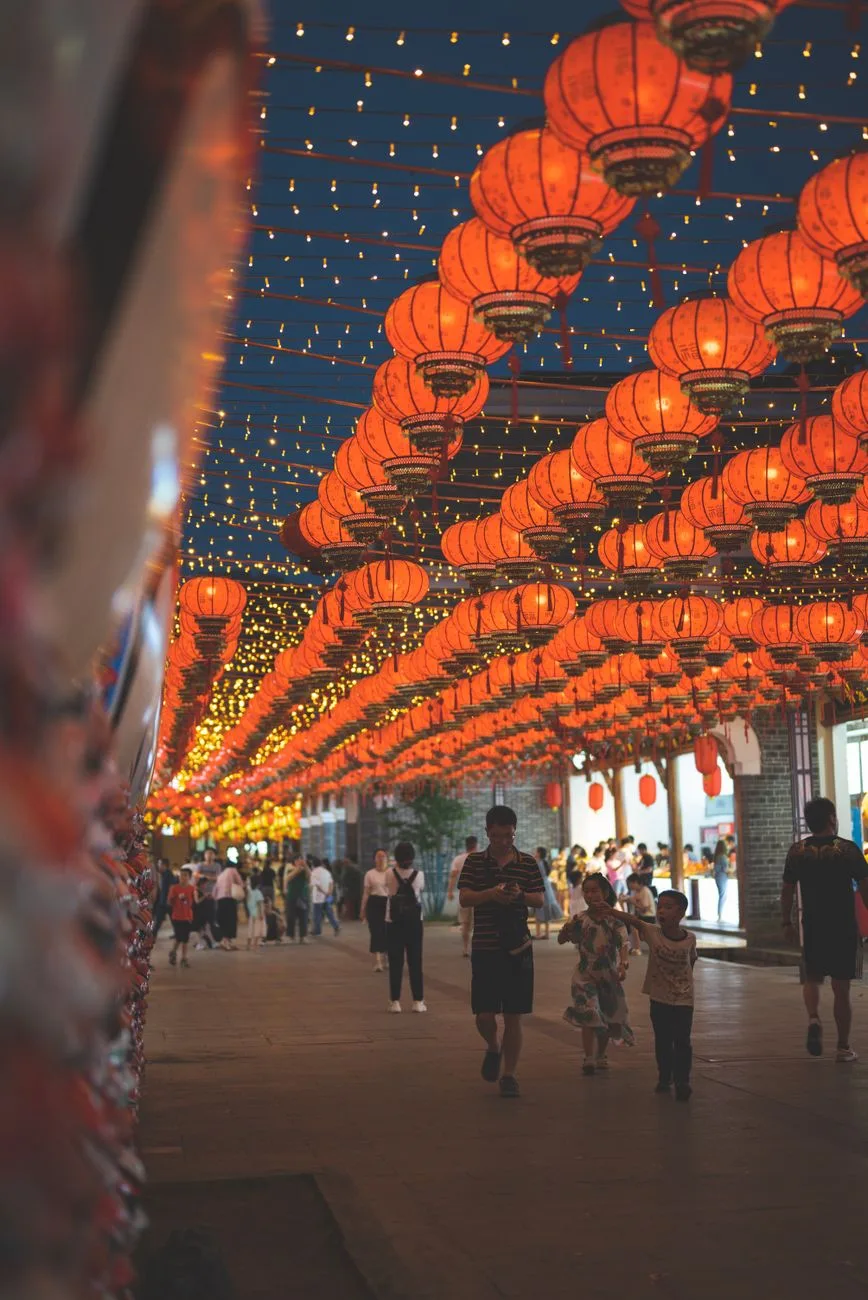
Because dates are counted from lunar months, festivals move against the Gregorian calendar. Spring Festival opens on the first day of the first lunar month and closes with the Lantern Festival on the fifteenth, when streets fill with lanterns. The Dragon Boat Festival falls on the fifth day of the fifth month, the Ghost Festival on the fifteenth of the seventh, and Mid-Autumn on the fifteenth of the eighth, when families gather under the full moon.
- Spring Festival — first day of the first lunar month
- Lantern Festival — fifteenth day of the first month
- Dragon Boat Festival — fifth day of the fifth month
- Mid-Autumn Festival — fifteenth day of the eighth month
- Qingming — a solar term around 4–6 April
Why It Still Matters
The lunar calendar survives because it carries social time as well as astronomical time. Ancestors are honoured on Qingming and on the anniversary of a death counted in lunar dates; weddings and funerals are often scheduled by almanac. The zodiac animal of a year, the eight characters of a birth, and auspicious days for moving house all depend on the same stem-branch scaffolding. In Beijing, temple fairs and lantern displays still follow the first lunar month, while rural communities consult the solar terms for field work. Two systems, one calendar.
The months follow the moon, but the year must answer to the sun.
แหล่งข้อมูลและเอกสารอ่านเพิ่มเติม
- The Twenty-Four Solar Terms, knowledge in China of time and practices developed through observation of the sun’s annual motion — มรดกทางวัฒนธรรมที่จับต้องไม่ได้ขององค์การยูเนสโก
- Chinese calendar — สารานุกรมบริแทนนิกา
- ตรุษจีน — สารานุกรมบริแทนนิกา