โครนิเคิล
The Han Dynasty
Four Centuries of an Imperial Order
The dynasty that settled the Qin framework and extended it across Inner Asia.
- ส่วน
- โครนิเคิล
- ภูมิภาค
- มณฑลฉานซี
- ยุค
- qin-han
- แท็ก
- History
The Han dynasty ruled from 202 BCE to 220 CE, with a brief interruption between 9 and 23 CE. It established the pattern of a Confucian-minded bureaucracy governing a large agrarian empire, and its name still marks the majority ethnic group and the written script.
Two Capitals
Liu Bang, a former Qin officer and rebel leader, defeated his rival Xiang Yu and founded the Han dynasty in 202 BCE, taking the title Emperor Gaozu. He established his capital at Chang’an, near modern Xi’an in Shaanxi, where the Han built walls, palaces, markets, and an imperial arsenal. In 9 CE, the minister Wang Mang seized the throne and founded the short-lived Xin dynasty. Liu Xiu, a descendant of the Han house, restored the dynasty in 25 CE and ruled from Luoyang. Historians call these periods Western Han and Eastern Han. The dynasty ended in 220 CE, when Cao Pi forced the last emperor to abdicate.
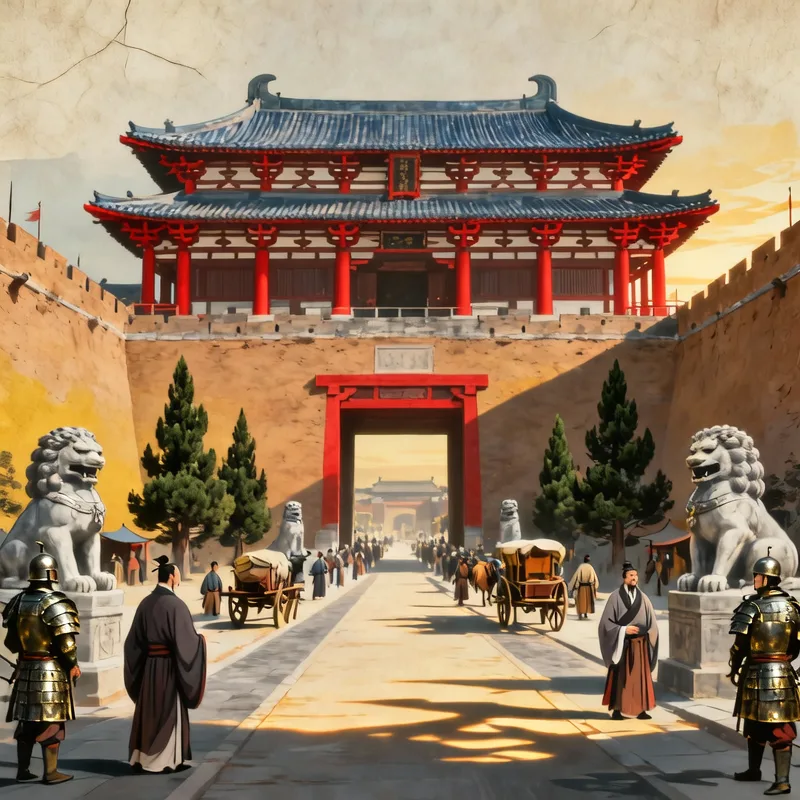
Governing with Classics and Counties
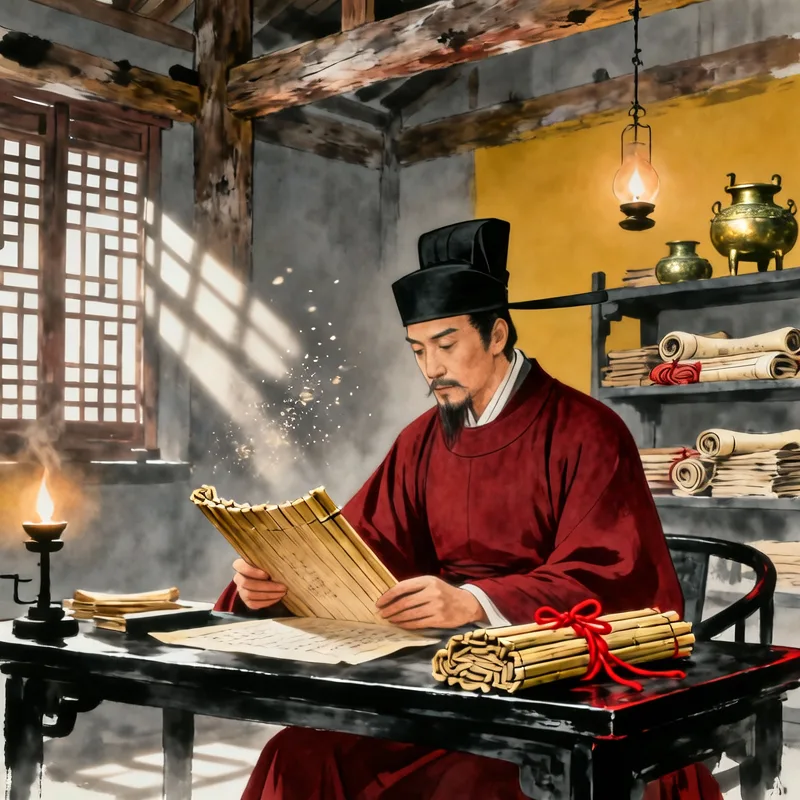
The Han kept Qin commanderies and counties but softened the image of rule. Emperor Wu, reigning from 141 to 87 BCE, adopted the proposals of Dong Zhongshu, who urged the court to exalt Confucian learning while retaining legal sanctions. The imperial academy, founded in 124 BCE, trained students in the classics and supplied officials. Local recommendation systems identified candidates considered morally upright, though powerful families often dominated them. The empire was divided into provinces supervised by inspectors, and revenues came from land taxes, poll taxes, and state monopolies on salt and iron. Granaries helped stabilise grain prices in bad harvests.
Wudi and the Frontiers
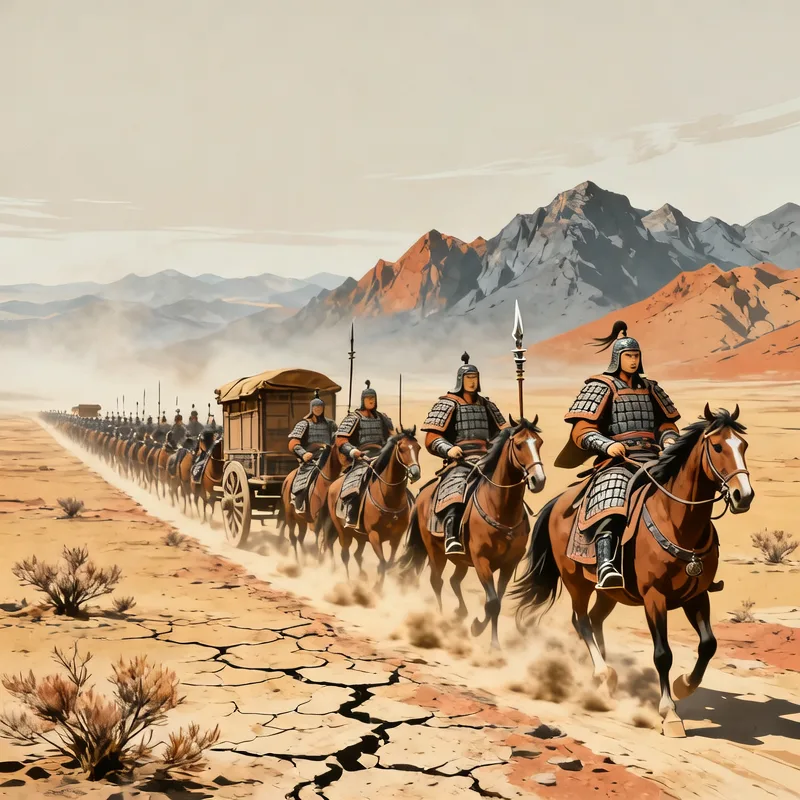
Emperor Wu turned outward. He sent Zhang Qian west in 138 BCE to find allies against the Xiongnu confederation, and later campaigns pushed Han control into the Hexi Corridor and the Tarim Basin. In 60 BCE, the court created the Protectorate of the Western Regions to oversee the oasis states. Han armies also took northern Korea in 108 BCE, and campaigns reached into the south. These wars cost heavily, and the emperor’s late years saw revolts and a retreat from expansion. Nevertheless, the routes opened under Wudi linked Chang’an to Central Asian markets, and silk became a diplomatic and commercial export.
Foundations of Daily Life
Han agriculture benefited from iron ploughs, ox-drawn equipment, and irrigation works, which supported a population counted at roughly 57 million in the census of 2 CE. Silk weaving, lacquerware, and pottery reached high technical standards, and Chang’an’s markets sold goods from the frontiers alongside local produce. Papermaking was known by the first centuries BCE and was improved by Cai Lun around 105 CE, when he presented a refined method to the court. The dynasty’s long duration made its institutions a model: later states copied its capital planning, bureaucratic ranks, and classical curriculum, and the name Han came to describe a people as well as a regime.
The Han turned conquest into administration, and administration into a lasting cultural identity.
แหล่งข้อมูลและเอกสารอ่านเพิ่มเติม
- Han dynasty — สารานุกรมบริแทนนิกา
- Silk Roads: the Routes Network of Chang’an-Tianshan Corridor — UNESCO World Heritage Centre.
- Han Dynasty — World History Encyclopedia.