Жизнь и фольклор
Calligraphy
The brush as a record of the hand
Chinese calligraphy turns writing into an art of pressure, rhythm, and restraint.
- Раздел
- Жизнь и фольклор
- Область
- Шэньси
- Эпоха
- На протяжении эпох
- Теги
- Customs, History
A line of Chinese calligraphy is made once: the brush touches paper, and the mark cannot be corrected. That irreversibility is part of its appeal. In Xi’an, the city’s stone steles preserve the work of centuries of calligraphers in a form anyone can still read.
The Four Treasures
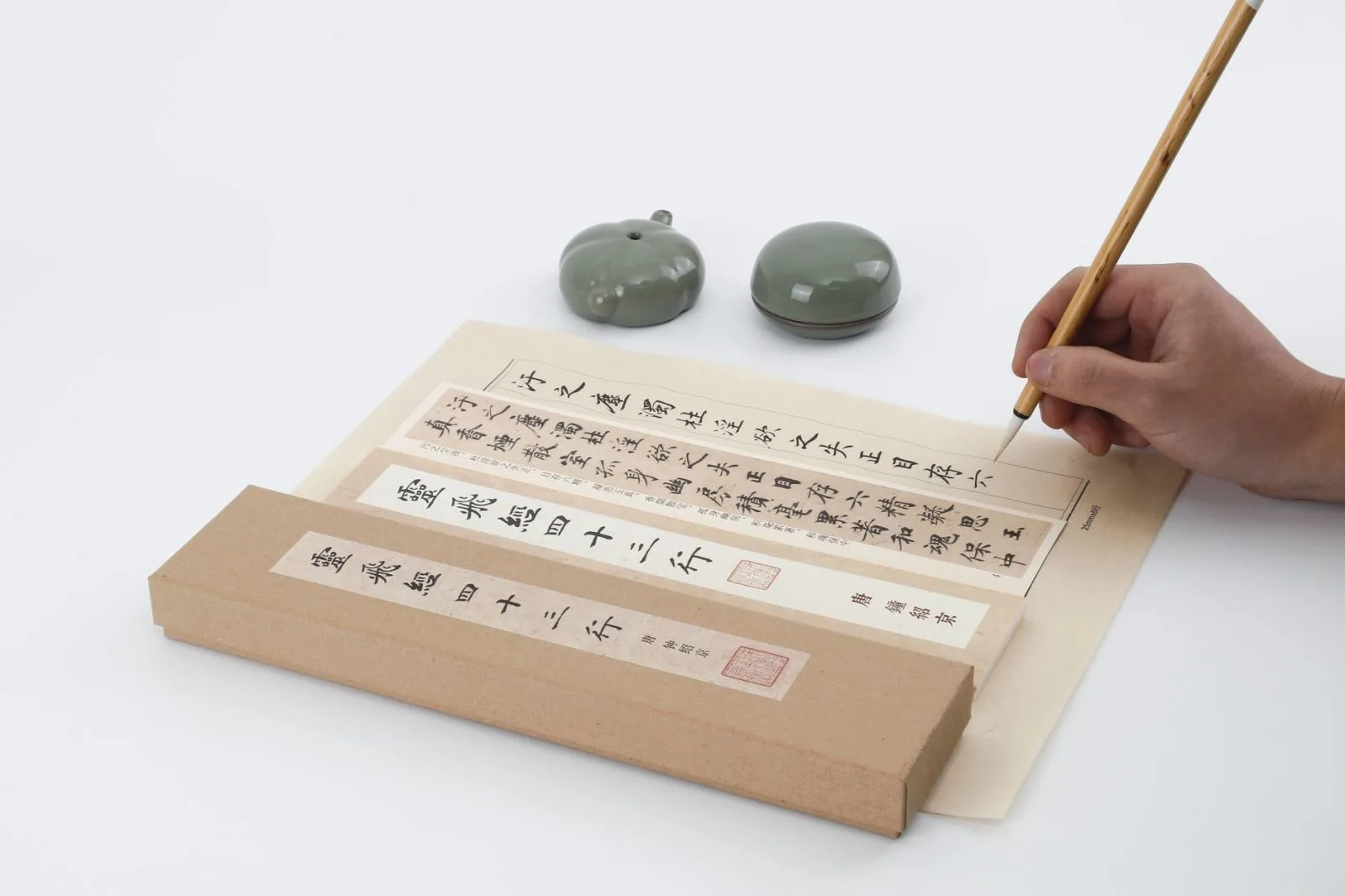
The tools are known as the Four Treasures of the Study: brush, ink, paper, and inkstone. A brush of animal hair is held upright between thumb and fingers, and pressure makes the stroke swell and thin. Ink comes as a solid stick ground with water on a stone; the density of the mixture changes the character of the line. Paper is absorbent, so hesitation shows as a blot. Practice begins with the basic strokes, then with copying a model character hundreds of times until the hand remembers its proportions. Students still learn by tracing the regular script of Tang dynasty masters such as Yan Zhenqing and Ouyang Xun. The aim is not decorative flourish but control: a steady wrist, an even rhythm, and a line that holds its centre.
Scripts and Masters
Chinese writing moved through several scripts, and calligraphers kept them all alive as styles. Seal script, with even, rounded lines, comes from the inscriptions on bronze and stone of the Zhou and Qin periods. Clerical script, formalised in the Han dynasty, flattened characters with a distinctive flared stroke. Regular script, settled by the Tang, is the model still taught in schools; each part of a character sits in a clear frame. Running script links strokes without losing legibility, while cursive script reduces them to rapid, connected gestures. Wang Xizhi’s Lantingji Xu, written in 353, is the famous example of running script; the original is lost, but copies carry its reputation. Later Song and Yuan artists, including Su Shi and Zhao Mengfu, made personal expression as important as correct form.
Stone Records in Xi’an
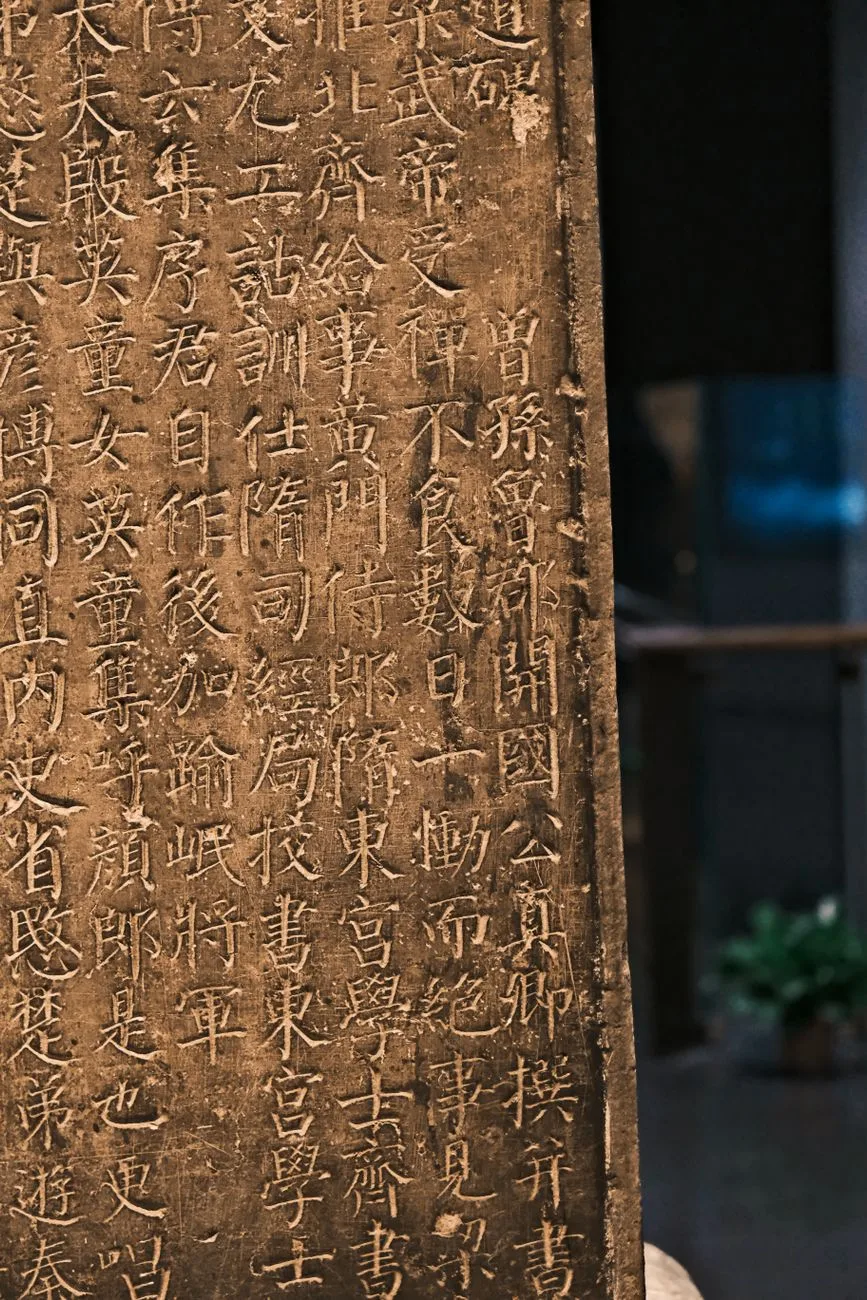
Xi’an, the former Chang’an, preserves calligraphy on stone at the Beilin Museum, the Forest of Stone Steles. The collection began in 1087, when the Confucian classics were carved onto more than a hundred steles and installed beside the city’s Confucius Temple. Centuries of additions followed: tombstones, imperial edicts, Buddhist texts, and poems cut in several scripts. Rubbing a stele with damp paper and ink was the traditional way to study and circulate a model, and museums still demonstrate the technique. One slab records a Tang emperor’s visit to a Nestorian Christian church; another carries a Song dynasty city diagram. Walking the covered galleries, you can compare the same character written in seal, clerical, and regular forms across a thousand years.
Living Practice
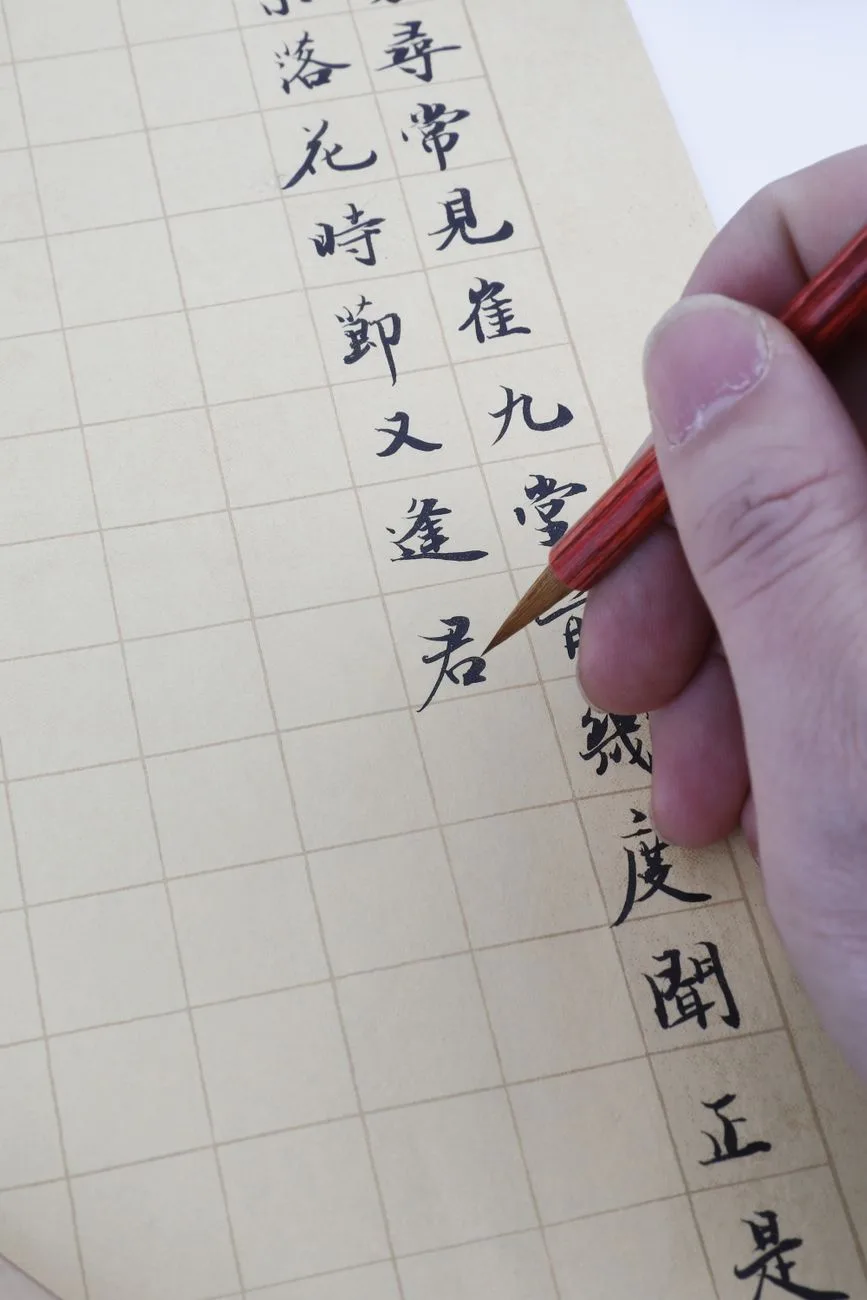
Calligraphy remains a daily practice rather than a museum relic. Around Spring Festival, shops sell red paper couplets, and a single character for good fortune is pasted on doors, sometimes upside down to suggest that fortune has arrived. Temple names, shop signs, and station plaques are often lettered by accomplished hands. Schoolchildren practise copying characters in grid books, and older residents gather in parks to write with large water brushes on the pavement, where the characters dry in minutes. Workshops in Xi’an let visitors try a brush and learn how a stroke begins with a pause and ends with a lift. You need not read every character to see the differences: one script sits square and calm, the next leans and races.
A stroke begins with a pause and ends with a lift; the paper keeps the record.
Источники и дополнительная литература
- Chinese calligraphy — Энциклопедия Британника.
- Chinese Calligraphy — Метрополитен-музей.
- Beilin Museum, Xi’an — China Highlights.
Посмотрите, как это выглядит на месте.
Перейдите по этой ссылке в регион, к которому она относится.
Исследуйте с помощью карты